
Faceless YouTube channels: how to start with AI (2026 guide)

Written by
Katherine Min

A practical 2026 guide to starting a faceless YouTube channel using AI. Covers niche selection, scripting, production tools, and a repeatable workflow for publishing videos without filming.
Faceless YouTube channels: how to start with AI (2026 guide)
Faceless YouTube channels are videos published without showing a creator on camera. They continue to grow across niches like finance, storytelling, education, and tech. Search interest in terms such as “YouTube automation,” “faceless YouTube,” and “AI video generator” has increased alongside tools that turn scripts into fully produced videos.
This guide explains how these channels work, how creators are using AI in production, and how to launch one with a repeatable workflow using tools like Miraflow.ai.
What is a faceless YouTube channel?
A faceless channel publishes videos using:
- voiceovers instead of on-camera hosts
- stock footage, animations, or AI avatars
- text, captions, and simple motion graphics
Common formats include:
- explainer videos
- list videos
- storytelling content
- YouTube Shorts
Channels like MagnatesMedia and How Money Works show that strong scripting and pacing can drive performance without a visible creator.


Why faceless channels are growing
Lower production barriers
No filming setup is required. Scripts and visuals can be created separately.
Repeatable formats
Once a format works, it can be reused across many topics.
AI-powered workflows
AI tools now handle scripting, voice generation, and video assembly. Platforms like this combine these steps into a single process, reducing production time.
For example, channels like MagnatesMedia regularly publish long-form videos using only voiceover and visuals, often reaching millions of views per upload.

Step-by-step: how to start a faceless YouTube channel with AI
1) Choose a niche with consistent demand
Focus on topics with steady interest and repeatable content formats.
Examples:
- personal finance
- AI tools and tutorials
- productivity
- storytelling
Narrow niches often rank faster and build stronger audiences.
2) Validate video ideas using search data
Check:
- YouTube autocomplete
- Google results
- existing high-performing videos
If similar content has consistent views and engagement, the topic is likely viable.
3) Write scripts optimized for retention
Most videos follow this structure:
Hook (first few seconds)
Introduce a surprising idea or question.
Context
Explain why the topic matters.
Main content
Break information into short, clear segments.
Ending
Optional CTA or continuation hook.
4) Turn scripts into video with AI
This is where tools like are used.
Instead of recording manually, creators can:
- convert text into voiceovers
- generate AI avatars to present content
- produce full videos directly from scripts
This reduces production time and allows faster testing of ideas.
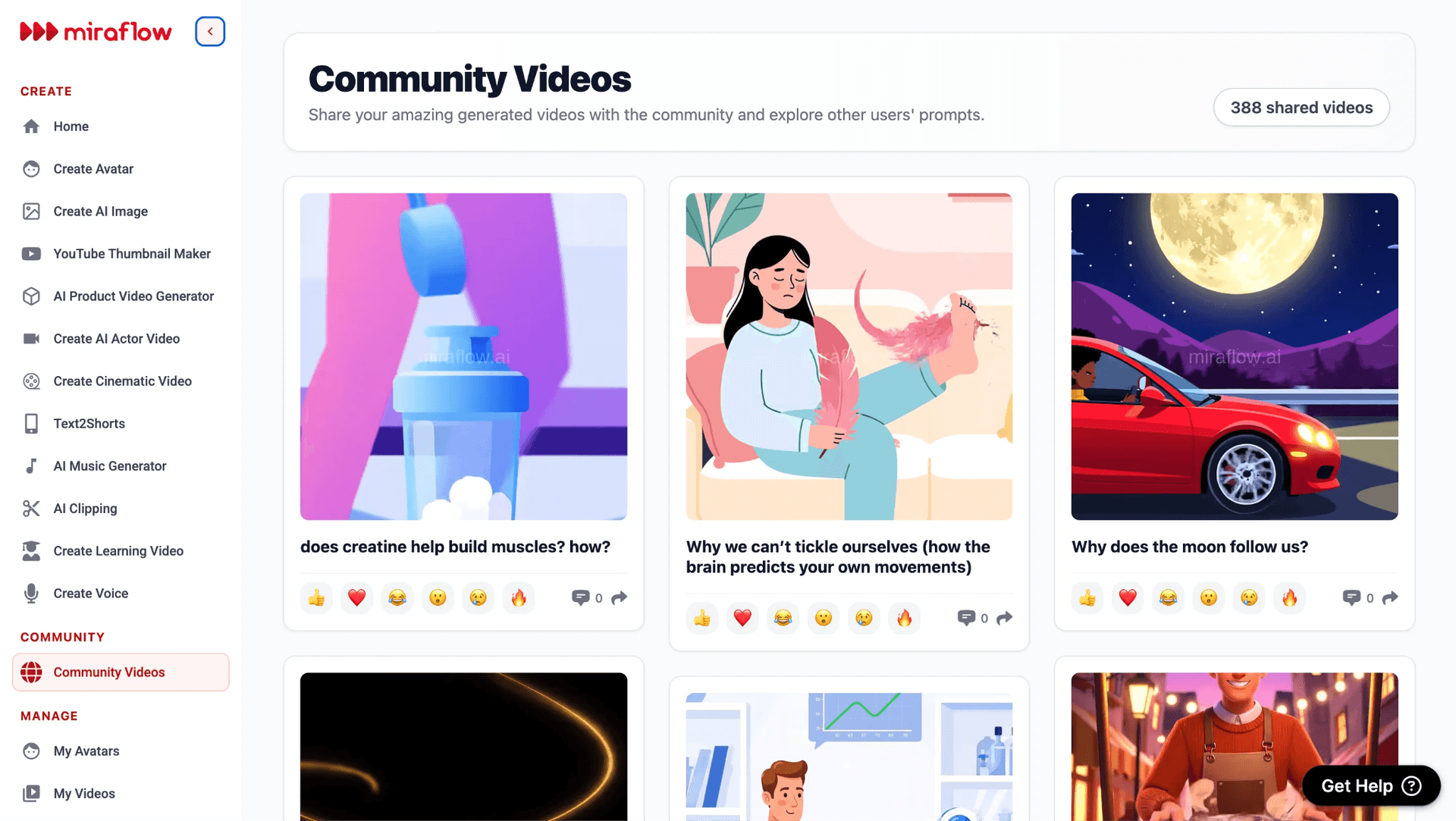
With Miraflow.ai, a simple script can be turned into a talking avatar video with voice, visuals, and captions in minutes, allowing creators to test multiple ideas quickly.
5) Add visuals and structure
Use:
- stock clips
- simple animations
- text overlays
High-performing videos prioritize clarity and pacing over heavy editing.
6) Edit for retention
Effective patterns include:
- quick cuts every few seconds
- subtitles
- visual changes aligned with narration
Content on platforms like YouTube Shorts and TikTok shows that faster pacing improves engagement.
7) Optimize for search
Use clear keywords in:
- titles
- descriptions
- captions
Example title:
“Faceless YouTube channels: how to start with AI”
Include terms like:
- faceless YouTube channel
- YouTube automation
- AI video generator
Consistency helps videos rank in search results.
Real formats that perform well
Across platforms, several patterns continue to work:
Question-based videos
Example: “How much should a 20-year-old have saved?”
Relatable educational content
Complex topics explained through humor or short examples
Comparison hooks
Framing content against a known tool or idea
These formats drive engagement because they create curiosity and discussion.
Common mistakes to avoid
Overproducing early content
Focus on testing ideas quickly.
Weak hooks
Viewers often leave within the first few seconds.
Too many topics
A clear niche helps build consistent growth.
Ignoring performance data
Use views and watch time to guide future content.
How miraflow fits into this workflow
Miraflow supports the full content pipeline:
- text-to-video generation
- AI avatars for presentation
- voice generation and cloning
- short-form video creation
Using , creators can move from idea to published video without filming. This enables faster iteration, which is critical for growth on YouTube.
Final takeaway
Faceless YouTube channels continue to expand because they reduce production friction and allow scalable content creation. Success depends on strong ideas, clear structure, and consistent testing.
AI tools make the process faster, but growth still comes from choosing the right topics and improving with each video.