Google's 2026 Alcohol Advertising Policy Update Explained

Written by
Aerin Kim

Google is rewriting its alcohol ad rules in two stages this fall: a global policy overhaul on September 30 and YouTube ad personalization on October 30.
Two separate changes to how Google Ads handles alcohol advertising are landing back to back this fall, and together they represent the biggest shift in Google's alcohol ad rules in years. On September 30, 2026, a rewritten Alcohol Advertising Policy takes effect, replacing a patchwork of country-specific rules with what Google is calling a more unified global framework. Alcohol mixers become explicitly allowed when targeting audiences of legal purchase age, and so does advertising for home brewing kits, distillation equipment, and homemade spirit-making supplies, categories that previously sat in a gray zone for a lot of advertisers. Then, exactly one month later on October 30, 2026, a second and separate change to the Personalized Advertising Policy opens the door for alcohol brands to use interest-based and remarketing targeting on YouTube specifically, in countries where it's locally permitted, with four notable exceptions.
If you run ads for a beverage brand, a beer, wine, or spirits importer, a home brewing or distilling supply company, or an agency that handles any of those accounts, both dates matter and they interact with each other in ways that are easy to miss if you only skim the headline. This post goes through exactly what changes on each date, what was already allowed before either update, what stays restricted no matter what, and what to actually do between now and October 30 so your campaigns aren't caught flat-footed.
TL;DR: What's Actually Changing and When
Here's the short version before the deep dive. Google is making two related but distinct changes:
- September 30, 2026 — The Alcohol Advertising Policy itself is rewritten. It introduces a unified global framework, expands the list of allowed advertising locations, explicitly permits alcohol mixers when targeting legal-purchase-age audiences, and explicitly permits advertising for home brewing kits, distillation equipment, and homemade spirit recipes. Advertisers running 0% alcohol content into Egypt, India, or Indonesia need to apply for a new certification, because all previous permissions in that category get revoked on this date.
- October 30, 2026 — A separate update to the Personalized Advertising Policy allows advertisers to use personalized (interest and remarketing-based) advertising for alcohol, alcohol-related products, and alcohol alternative beverages, but only on YouTube inventory, and only where locally permitted. Egypt, India, Indonesia, and Poland are excluded from this specific update. Google still prohibits targeting based on the Health sensitive interest category for alcohol, even after October 30.
These are not the same update wearing two dates. One rewrites what content and products can be advertised at all. The other rewrites how those already-approved ads can be targeted, and only on one piece of Google's inventory. Treat them as two separate compliance checklists, because your account can be affected by one, both, or neither depending on what you sell and where you advertise.
Why Google Restricts Alcohol Advertising in the First Place
Alcohol sits in a small category of product types Google treats with extra caution, alongside things like gambling, healthcare, and financial services. It's worth understanding the actual mechanics of that caution before looking at what changed, because the September 30 and October 30 updates don't remove the caution, they recalibrate it.
The legal-age problem
The core issue is that internet ad delivery doesn't naturally respect the legal drinking age the way a liquor store's ID check does. Google's answer has historically been demographic and geographic gating rather than personalization: show alcohol ads only in approved countries, exclude users Google believes are under 18 (or the locally applicable minimum age) from seeing them at all, and, until now, keep the actual ad selection non-personalized so that an alcohol ad can't follow a specific browsing history around the internet in a way that might target someone whose age Google can't verify with full confidence.
The regional legal variance problem
Alcohol law is not remotely uniform across the roughly 190+ countries where Google Ads serves. Some countries ban all online alcohol advertising outright. Some allow beer and wine ads but restrict spirits. Some, like Iceland (2.25% ABV cap for anything advertised outside the exempted category), Ecuador (5% ABV cap), and Vietnam (5.5% ABV cap), only allow advertising for low-alcohol beverages by policy, treating anything above that threshold the same as spirits for advertising purposes regardless of what it actually is. India and Indonesia, before this update, effectively required alcohol content to be 0% ABV to run at all. That's the patchwork the September 30 update is explicitly trying to simplify into what Google describes as a single global framework with clearer permission tiers, while still leaving country-by-country legal compliance as the advertiser's responsibility, not something Google's policy absorbs on their behalf.
The sensitive-category personalization problem
Separately from the legal-age and country-legality issues, Google classifies alcohol as a sensitive interest category for ad personalization purposes, the same general bucket that covers things like health conditions, sexual orientation, and financial hardship. Google's stated position is that using someone's actual behavior or interests to target them with ads in these categories carries a higher risk of feeling invasive or making assumptions about someone's private life, so historically these categories have been restricted to non-personalized, contextual-only targeting: an alcohol ad could run next to a cocktail recipe video, but it couldn't follow someone who had browsed whiskey review videos around YouTube using a remarketing list built from that behavior. That's precisely the restriction the October 30 update partially lifts, and only for YouTube.
The September 30, 2026 Alcohol Advertising Policy Update
This is the broader of the two changes, since it touches what can be advertised at all rather than just how it can be targeted. According to Google's own policy update page, announced on August 27, 2026 and effective September 30, 2026, the rewrite "introduces a more unified global advertising framework," revising country-specific guidelines, expanding the list of allowed advertising locations, and clarifying advertiser requirements and responsibilities that had previously been scattered across separate policy pages for alcohol sales versus alcohol information content.

What's newly and explicitly allowed
Two categories get called out specifically as newly permitted:
Alcohol mixers. Tonic water, ginger beer, bitters, cocktail syrups, and similar mixer products can now be advertised with personalization-eligible targeting toward audiences of legal purchase age, closing a gap where a mixer brand's ads sometimes got swept into the same restrictive bucket as the alcohol itself even though the product contains no alcohol at all.
Alcohol accessories, home brewing, and distillation equipment. Home brewing kits, distillation equipment, and content describing homemade spirit recipes are now explicitly permitted under the updated policy. This is a meaningful unlock for a real, growing hobbyist and small-business segment: craft home brewing supply retailers, distillation equipment manufacturers, and content creators who teach brewing or distilling techniques have historically had to navigate unclear or inconsistently enforced rules about whether their ads counted as "alcohol" advertising even when the product itself contains zero alcohol until a buyer uses it.
What changes for 0% ABV and low-ABV products
The update also tightens up how zero-alcohol and low-alcohol products are handled in specific countries. Advertisers running 0% alcohol content into Egypt, India, or Indonesia are required to apply for a new certification under the updated framework, and Google is explicit that all previous permissions in that category get revoked as of September 30, meaning an existing approval an advertiser already had does not automatically carry over. Anyone currently running 0% ABV alcohol-alternative ads into those three markets needs to treat September 30 as a hard cutover date, not a soft deprecation window, and re-apply before that date to avoid a service gap.
Country-specific ABV ceilings that already existed continue to apply as part of the unified framework rather than being removed: Iceland's 2.25% cap, Ecuador's 5% cap, and Vietnam's 5.5% cap remain in place, meaning a beverage above those thresholds is still treated under the stricter advertising rules for full-strength alcohol in those specific countries even if it would be classified differently elsewhere.
| Alcohol Advertising Policy update | Personalized Advertising Policy update | |
|---|---|---|
| Effective date | September 30, 2026 | October 30, 2026 |
| Announced | August 27, 2026 | September 3, 2026 |
| What it changes | What content and products can be advertised (mixers, home brewing kits, distillation equipment now explicitly allowed; unified global framework) | How eligible alcohol ads can be targeted (interest and remarketing-based personalization enabled) |
| Scope | All Google Ads inventory where alcohol advertising is permitted | YouTube inventory only |
| Exclusions | 0% ABV content in Egypt, India, Indonesia requires new certification; country ABV caps still apply (Iceland 2.25%, Ecuador 5%, Vietnam 5.5%) | Egypt, India, Indonesia, and Poland not yet available |
| Still restricted | Local law compliance always required; irresponsible-advertising creative rules unchanged | Health sensitive interest category targeting remains prohibited; under-18 exclusion remains in force |
| Primary source | support.google.com/adspolicy/answer/17452318 | support.google.com/adspolicy/answer/17598957 |
The rollout mechanics worth knowing about
One detail that's easy to miss but genuinely useful operationally: Google's own update notes flag that during the transition period, some accounts may temporarily see ads carrying multiple policy labels simultaneously, an old label and a new one overlapping, as the systems that classify content catch up to the new framework. Google states this will normalize automatically in the weeks following the change rather than requiring advertiser action. If you see a temporary double-labeling artifact in your policy status dashboard in early October, that's the expected transition behavior described in Google's own rollout notes, not necessarily a sign that something in your account is broken.
The update also revises the irresponsible alcohol advertising policy, the rule set governing creative content itself (never depicting minors or pregnant individuals consuming alcohol, never implying alcohol enhances social, sexual, or athletic performance, never encouraging excessive or rapid consumption). Violations of that policy, as before, can lead to account-level suspension rather than just a single ad getting disapproved, which is a meaningfully higher-stakes enforcement mechanism than most policy violations carry. If your agency handles multiple client accounts, this is a policy area worth a dedicated creative review pass before the update lands, not something to leave to automated review after the fact.
The October 30, 2026 Personalized Advertising Policy Update
This is the narrower but arguably more consequential change for anyone actually running performance campaigns, because it touches targeting mechanics rather than just content eligibility. Per Google's Personalized Advertising Policy update page, announced September 3, 2026 and taking effect October 30, 2026, Google will "allow for alcohol where locally permitted" on YouTube inventory specifically, letting advertisers personalize ads for alcohol, alcohol-related products, and alcohol alternative beverages.

What personalized advertising actually unlocks here
To understand why this matters, it helps to look at what alcohol advertisers on Google Ads could and couldn't do before October 30. Google's existing Alcohol in Personalized Advertising policy already carved out a specific, narrower list of allowed targeting methods for alcohol even under the old rules: predefined Google audiences, in-market segments, affinity segments, certain demographics, life events, location targeting, and custom segments were generally permitted, while advertiser-curated audiences, Customer Match lists, first-party data segments, audience expansion, and lookalike segments were not.
What the October 30 update changes on top of that baseline, specifically for YouTube, is enabling the kind of remarketing and interest-based personalization that had previously been off the table for sensitive categories on that inventory. In practice, that means a spirits brand running YouTube campaigns in an eligible country will be able to build and use audiences based on someone's actual demonstrated interest signals, someone who has recently watched cocktail-making content or browsed comparable beverage brands, rather than being limited to contextual placement or the narrower predefined-segment list alone. That's a real, meaningful shift from "show this ad next to relevant content" toward "show this ad to someone who has shown relevant interest," which is generally a far more efficient way to spend a media budget.
It's worth being precise about scope here, because it's the detail most likely to get flattened in secondary coverage: this update is YouTube-specific. It is not a blanket unlock across Google Search, Display, Discover, or Gmail inventory. An alcohol brand running Search or Display campaigns doesn't get expanded personalization options from this particular update; the change is scoped to YouTube ad inventory as described in Google's own policy notes.
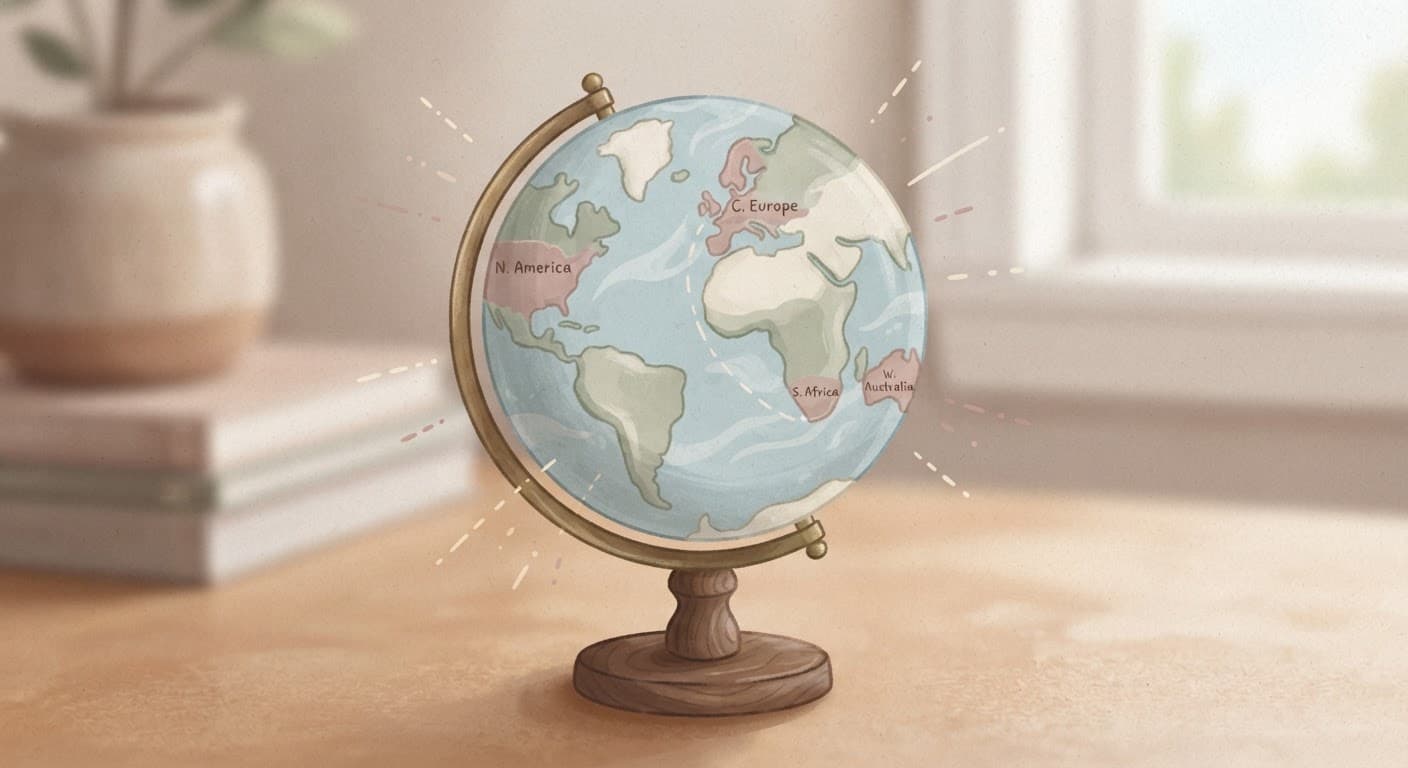
The four excluded countries
Google's update page is explicit that personalized alcohol advertising on YouTube "is not yet available" in four markets as of the October 30 rollout: Egypt, India, Indonesia, and Poland. The wording "not yet" is worth noting, since it implies these are markets Google may extend the update to later rather than a permanent structural exclusion, though no future date has been announced for that as of this writing.
Three of those four countries (Egypt, India, Indonesia) line up with the same markets that have the tightest alcohol-sale restrictions under the base Alcohol Advertising Policy (the 0% ABV requirement discussed above), which makes sense given those markets' underlying legal and regulatory alcohol restrictions generally. Poland's inclusion is a bit different since Poland doesn't carry the same 0% ABV restriction under the base sale policy; its exclusion here appears to be specific to the personalized-advertising update rather than a reflection of Poland's general alcohol-advertising eligibility, which is a useful reminder that eligibility for the base Alcohol Advertising Policy and eligibility for this personalization update are two separate checks, not one.
What still can't be targeted, even where personalization is allowed
The update is not a full removal of sensitive-category protections for alcohol. Google is explicit that it "continues to prohibit targeting of health information related to alcohol under our Health sensitive interest category," meaning an advertiser still cannot build or use an audience segment based on someone's health-related browsing or interest signals, for instance content related to alcohol use disorder, recovery, or liver health, to serve alcohol ads, even in a country where the broader personalization update applies. This is a deliberate, narrow carve-out rather than an oversight, and it's the kind of restriction worth building into a compliance checklist explicitly rather than assuming personalization means personalization without limits.
Age restrictions for minors also remain fully in force under the updated policy, as does the general requirement that users retain the ability to customize or opt out of the ad categories they see through Google's My Ad Center controls. None of that changes on October 30. What changes is specifically the availability of interest- and remarketing-based personalization for the alcohol category, on YouTube, in eligible countries, layered on top of everything else that already governed alcohol advertising.
How the Two Updates Interact on the Calendar
Because these are two genuinely separate policy documents with a month between their effective dates, it's worth mapping out what an advertiser actually experiences moving through that calendar rather than treating September 30 and October 30 as two isolated bullet points.
Between September 30 and October 30, the base Alcohol Advertising Policy rewrite is already live. Mixers and home brewing or distillation equipment ads can already run under the new, clearer permission structure. Advertisers with 0% ABV content targeting Egypt, India, or Indonesia should already be operating under the new certification, assuming they applied ahead of the cutover. But personalized targeting for alcohol on YouTube is not yet available during this window, meaning campaigns running in that gap are still limited to the pre-existing, narrower targeting methods described above.
From October 30 onward, both updates are in effect simultaneously. An alcohol brand with newly-clarified product eligibility under the September 30 framework, running YouTube campaigns in a country outside the four exclusions, gets access to both the expanded content permissions and the expanded targeting options at the same time.
The practical implication is that October 30, not September 30, is the date that actually changes campaign strategy and audience-building work for most performance-focused alcohol advertisers. September 30 mostly matters for content and creative eligibility, whether a specific product or content type can run at all, and in which countries, while October 30 is the date that changes how efficiently an already-eligible campaign can be targeted. Building your internal timeline around only one of the two dates is the most common way advertisers under-prepare for this rollout.
What Advertisers Get Wrong About This Update
A few misreadings of this rollout are common enough to call out directly, since getting any of these wrong risks either a missed opportunity or an actual policy violation.
Assuming this applies beyond YouTube. The single most likely misunderstanding is treating the October 30 update as a general Google Ads personalization unlock for alcohol. It's scoped specifically to YouTube inventory. Search, Display, Discover, and Gmail campaigns for alcohol brands do not gain new personalization options from this specific update, and running expanded remarketing audiences against alcohol ads outside YouTube inventory after October 30 would be a real policy violation, not a gray area worth testing.
Assuming the four excluded countries are permanent. Egypt, India, Indonesia, and Poland are excluded as of the October 30 rollout, described by Google with the phrasing "not yet available." Treating that as a fixed, permanent restriction rather than checking Google's policy pages periodically for an expansion could mean missing a real targeting opportunity once, or if, Google extends the update to additional markets.
Confusing the two effective dates. Because both changes affect "alcohol advertising" and both landed within about a month of each other, it's easy to conflate them into a single mental bucket. An advertiser who reads about mixer and home-brewing-equipment eligibility, the September 30 change, and assumes that automatically comes bundled with expanded YouTube remarketing, the October 30 change, will misjudge what's actually available to them on either date.
Forgetting the Health sensitive-category carve-out still applies. Even after October 30, in an eligible country, on YouTube, targeting based on health-related interest signals for alcohol content remains prohibited. An agency setting up new audience segments post-launch needs to explicitly exclude anything that touches the Health sensitive interest category, not assume the general alcohol carve-out covers it.
Not re-certifying 0% ABV products in the three affected countries. Google states plainly that previous permissions for 0% alcohol content targeting Egypt, India, and Indonesia are revoked on September 30, requiring a fresh application. Advertisers who assume an existing approval simply continues under the new framework risk a coverage gap the moment the cutover happens.
Ignoring local law because the platform allows it. Both Google policy pages are explicit that platform-level policy permission does not substitute for local legal compliance. A market where Google's policy now technically permits an ad type can still have local advertising, health, or consumer-protection law that restricts or bans it outright. Google's own Alcohol sale policy reiterates that advertisers remain responsible for complying with local laws and regulations in every country they target, independent of what Google's own policy allows.
A Practical Compliance Checklist Before October 30
For a beverage brand, importer, home brewing or distilling supply company, or an agency managing any of those accounts, here's a concrete sequence to work through between now and the October 30 cutover:
- Confirm your product category under the new framework. Check whether your product falls under the newly-clarified mixer or accessory categories, home brewing kits, distillation equipment, mixers, versus the standard alcohol-sale category, since the two carry different requirements.
- Re-apply for 0% ABV certification if you target Egypt, India, or Indonesia with alcohol-alternative products. Do this before September 30, since existing approvals are revoked on that date, not phased out gradually.
- Audit your current targeting setup for YouTube campaigns. Identify which alcohol-related campaigns currently run only contextual or predefined-segment targeting, since those are the campaigns positioned to benefit from expanded personalization on October 30.
- Confirm your target countries against the exclusion list. If your YouTube campaigns run into Egypt, India, Indonesia, or Poland, plan to keep those specific campaigns on the pre-existing, more limited targeting approach past October 30, since the update doesn't apply there yet.
- Build a Health-category exclusion into any new audience work. When setting up expanded remarketing or interest-based audiences after October 30, explicitly confirm none of the signals used touch Google's Health sensitive interest category.
- Re-review creative against the updated irresponsible-advertising rules. Since violations here can trigger account-level suspension rather than a single ad disapproval, this is worth a dedicated pass rather than relying on automated review to catch issues after the fact.
- Check country-specific ABV caps if your product sits near a threshold. Iceland (2.25%), Ecuador (5%), and Vietnam (5.5%) apply stricter advertising rules above those levels regardless of how the product is otherwise classified.
Advertisers who have already navigated Google's other 2026 policy shifts, like the changes covered in Miraflow's breakdown of Google Ads real-time policy reviews or the limited ad serving policy expansion, will recognize the general pattern here: a policy change frequently ships with a transition window where enforcement is inconsistent before it fully normalizes, and the advertisers who prepare their account structure ahead of the effective date tend to avoid the disruption that catches everyone else off guard in the first week or two.
Agencies juggling this alongside broader account structure changes, like the shift covered in Google Ads target bid strategy update, the automated upgrade path in Google Ads AI Max for Search auto-upgrade, or the newer controls covered in Performance Max optimization updates, will also want to double check that bidding and campaign-type changes elsewhere in the account don't collide with the specific targeting and creative work an alcohol campaign needs around this rollout. Beverage brands running Shopping campaigns for mixers or home brewing equipment should also glance at the Google Merchant Center shopping policy consolidation, since product feed eligibility for these newly-clarified categories is a separate check from the ad policy changes covered here.
Producing Compliant Creative Once the Category Opens Up
Getting the targeting and policy side right is only half the job. Once a beverage brand, mixer company, or home brewing supply retailer is actually cleared to run expanded campaigns, the practical bottleneck usually shifts to having enough distinct, on-brand ad creative to actually use that targeting well. Personalized YouTube campaigns typically perform best with multiple creative variants tested against different audience segments, which means a brand that suddenly has real remarketing capability on October 30 but only one or two existing video ads is going to leave a lot of that new targeting capacity unused.

This is where a tool built for fast, iterative ad creative production earns its place in the workflow rather than being an afterthought. Miraflow AI's Cinematic AI Video Generator is built for exactly this kind of product-ad and storytelling work, letting a brand generate polished, cinematic-feeling product clips from a written prompt rather than booking a full shoot every time a new creative angle needs testing. For a mixer brand wanting to visually separate its non-alcoholic product from a full-strength spirit in a lifestyle-style ad, or a home brewing supply company that wants to show equipment in use without an expensive product shoot, that kind of fast turnaround genuinely matters once campaigns are cleared to run under the updated policy.
The AI Image Generator on Miraflow covers the still-image side of the same need: text-to-image and image-to-image generation, plus inpainting and masking tools that let a brand swap a label design, change a background scene, or adjust packaging in an existing product photo without a full reshoot. That's a genuinely practical fit for compliance-sensitive categories like alcohol, where creative sometimes needs a quick adjustment, removing an implied age-inappropriate context, adjusting a background detail, to stay within Google's irresponsible-advertising rules without redoing the entire asset from scratch. Miraflow's AI image tools work equally well for a quick label mockup as for a full lifestyle scene.
For brands that also want to move fast on short-form video, whether that's a quick explainer on a new home-distillation kit or a lifestyle spot for a mixer line, Text2Shorts turns a written script into a finished vertical video in one pipeline, generating the script, scene visuals, and voice narration together. That's a useful production shortcut for a brand or agency that suddenly has a widened set of eligible ad formats to fill and a tight timeline before the October 30 window opens.
None of that replaces the compliance work described above. But once the targeting door actually opens, the brands that benefit fastest tend to be the ones that already have a pipeline for producing enough distinct creative to test, rather than the ones scrambling to brief a new video the week the policy change lands. Anyone new to the platform can start from Miraflow AI's homepage to see the full content pipeline, from script to visual to finished video, in one place, and browse the rest of the Miraflow blog for more Google Ads policy breakdowns like this one.
Frequently Asked Questions
Does this update mean alcohol can now be advertised on Google Search with personalized targeting?
No. The October 30, 2026 Personalized Advertising Policy update is scoped specifically to YouTube inventory. It does not extend personalized alcohol advertising to Search, Display, Discover, or Gmail. Those surfaces continue to operate under the existing, more restrictive personalization rules for the alcohol sensitive category.
If I'm already running alcohol ads on Google, do I need to do anything on September 30?
It depends on what you're advertising. If you sell mixers, home brewing kits, or distillation equipment, the September 30 update explicitly clarifies that these are now permitted, which is worth confirming against your current campaign setup. If you run 0% ABV alcohol-alternative products into Egypt, India, or Indonesia, you need to apply for the new certification before September 30, since existing permissions in that specific category are revoked on that date. Standard full-strength alcohol advertisers in already-approved countries generally see the framework simplified rather than requiring new action, though it's worth reviewing Google's policy page directly for your specific market.
Can I use Customer Match or my own first-party audience lists for alcohol ads on YouTube after October 30?
Based on Google's existing Alcohol in Personalized Advertising policy, advertiser-curated audiences, Customer Match, first-party data segments, audience expansion, and lookalike segments remain outside the allowed targeting methods for the alcohol sensitive category. The October 30 update expands what's possible within the personalization framework on YouTube specifically, but it doesn't appear to remove those pre-existing restrictions on first-party list-based targeting. Confirm current eligibility directly against Google's policy page before building a campaign around any specific targeting method, since this is exactly the kind of detail that can shift as Google rolls the update out.
Why are Egypt, India, Indonesia, and Poland excluded from the October 30 update?
Google's own update notes describe these four markets as "not yet available" without stating a specific reason for each. Egypt, India, and Indonesia already carry the tightest restrictions under the base Alcohol Advertising Policy, including the 0% ABV requirement for alcohol-alternative content, which plausibly extends to a more cautious approach on personalization in those same markets. Poland doesn't share that same 0% ABV restriction under the base policy, so its exclusion here seems specific to this particular update rather than a reflection of Poland's overall alcohol-advertising eligibility.
Does the Health sensitive interest category exclusion mean I can't advertise alcohol to anyone with a health-related search history at all?
Not exactly. It means you specifically cannot build or use an audience segment based on someone's health-related interest signals, browsing behavior tied to health topics, or membership in Google's Health sensitive interest category, to target alcohol ads, even where the broader personalization update applies. A user could still see an alcohol ad through other allowed targeting methods, predefined audiences, demographics, location; what's restricted is using health-related signals specifically as the targeting mechanism for alcohol content.
Will this update eventually extend to Search and Display, or to the four currently excluded countries?
Google hasn't announced a timeline for either extension as of this writing. The "not yet available" phrasing used for the four excluded countries suggests Google views this as an evolving rollout rather than a final, permanent boundary, but nothing in the current policy pages commits to a future expansion date or scope. Advertisers in the excluded markets, or those hoping for broader inventory eligibility beyond YouTube, should treat Google's policy update pages as the source to monitor rather than assuming an expansion is imminent.
Do these updates change anything about how minors are protected from seeing alcohol ads?
No. Age-based exclusion for users under 18, or the higher legal drinking age where applicable, remains fully in place under both updates. Neither the September 30 content-eligibility changes nor the October 30 personalization changes touch the underlying age-gating and minor-protection rules that already governed alcohol advertising on Google's platforms.
Conclusion
Google's alcohol advertising rules are changing meaningfully this fall, but the change comes in two distinct pieces that are worth tracking separately rather than as one combined headline. September 30, 2026 rewrites what can be advertised: mixers and home brewing or distillation equipment get explicit, clear permission, and the overall framework consolidates into something more globally consistent, with a hard certification cutover for 0% ABV content in Egypt, India, and Indonesia. October 30, 2026 rewrites how eligible alcohol ads can be targeted, but only on YouTube, opening up interest and remarketing-based personalization in most markets while explicitly excluding Egypt, India, Indonesia, and Poland, and while keeping the Health sensitive interest category off-limits everywhere.
For any brand or agency in this space, the practical move is to treat both dates as real deadlines on the calendar: confirm product eligibility and any needed certifications before September 30, and get YouTube targeting and creative production ready before October 30 so you can actually use the expanded personalization the moment it becomes available in your markets. And once the policy work is done, having a fast way to produce the actual ad creative, whether that's cinematic product video, refreshed product photography, or a quick vertical short, matters just as much as having the targeting cleared to run it.