YouTube's New Auto-Label System: Branded Content and AI Disclosure in 2026

Written by
Aerin Kim
YouTube now auto-labels undeclared sponsorships and undisclosed AI video. Here is exactly what triggers each label, what it means for monetization, and how to stay covered.
TL;DR
On September 3, 2026, YouTube's Help Center Community manager Natasha announced a change that quietly reshapes how disclosure works on the platform: YouTube's own systems will now automatically apply a disclosure label to videos containing branded content the creator never declared. The announcement came alongside a rewritten policy page, YouTube Branded Content Policies, and it is separate from, but philosophically connected to, an AI-content auto-labeling system YouTube began rolling out back on May 27, 2026, which automatically flags videos with significant photorealistic AI use that a creator did not disclose.
Both changes point in the same direction. YouTube is done relying purely on creator honesty for two specific categories of disclosure: paid promotion and AI-generated video. If you upload something that qualifies, the platform's own systems will now try to catch it whether you check the box or not.
That sounds alarming if you build videos using AI tools, but the actual trigger conditions are narrower than the headlines suggest. Making a video with the help of a YouTube Thumbnail Maker, an AI Video Generator, or an AI Music Generator does not, by itself, put you anywhere near either label. What actually triggers these systems, how the two mechanisms differ from each other, whether either one touches your monetization, and exactly what to check in your own upload workflow is what this guide walks through in full.
What Changed and When
It helps to separate this into two timelines, because the AI-content change and the branded-content change did not launch together and are not the same policy, even though a lot of coverage lumps them into one "YouTube cracking down" story.
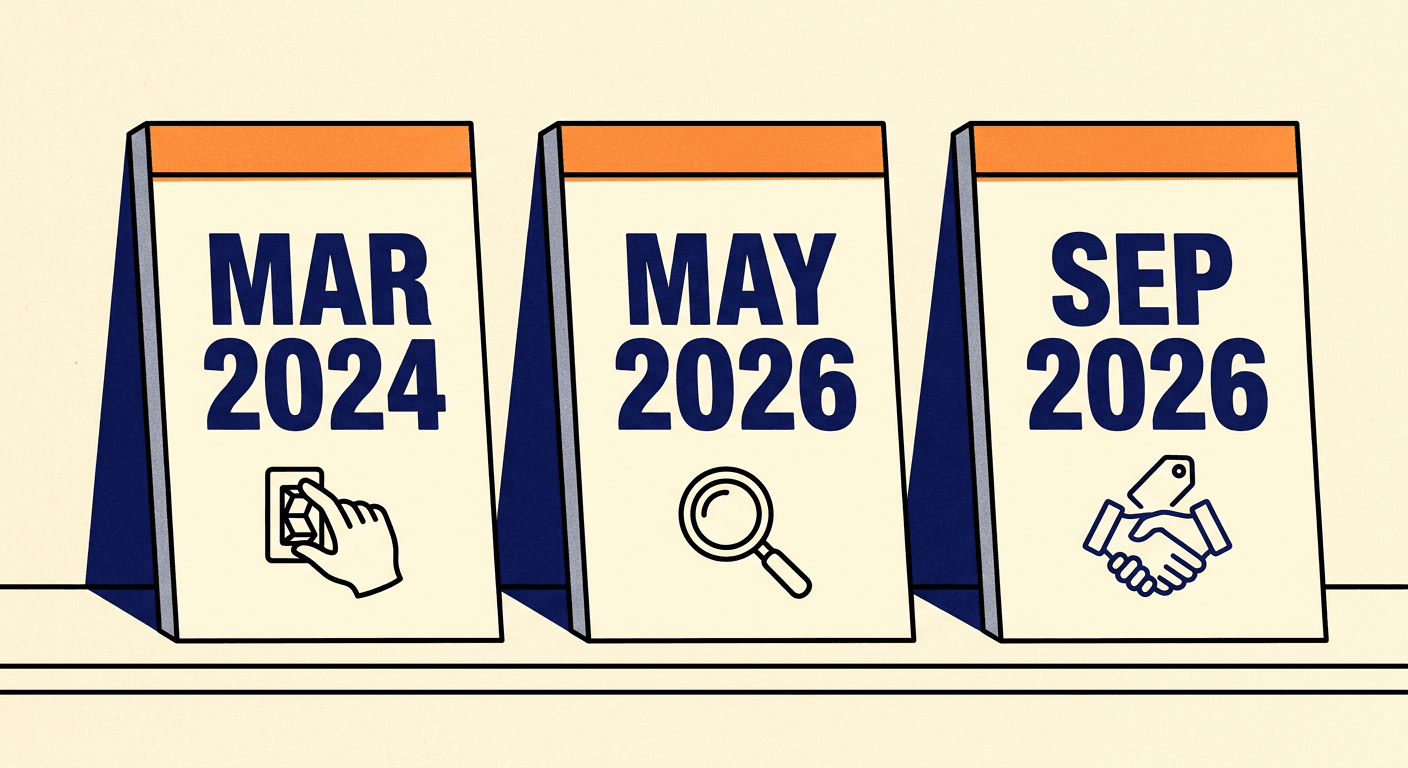
March 2024 is the actual starting point. This is when YouTube first introduced creator self-disclosure for altered or synthetic content, the toggle still found today in YouTube Studio under Details, then Attributes, then the AI use or Altered content field. At launch, YouTube was explicit that flipping this toggle on "won't limit a video's audience or impact its eligibility to earn money." That framing mattered a lot for creator trust in the tool, because it meant disclosure had no downside. It was a good-faith system: creators declared, viewers saw a small label, and nothing else happened mechanically.
May 27, 2026 is when that good-faith system got a backstop. YouTube's own blog post, "Improving AI labels for viewers and creators," announced that the platform would begin using internal detection signals, specifically reading C2PA content credentials and SynthID watermarking data embedded in files, to automatically apply the same disclosure label when a creator does not do it themselves. The company's own wording was direct: "if a creator doesn't specify whether or not they used AI, but our systems detect significant photorealistic AI use, we will now automatically apply a label." At the same time, YouTube moved the label itself to a much more visible spot: directly below the video player and above the description on long-form videos, instead of buried inside an expandable description box almost nobody opens, and as an on-screen overlay for Shorts.
September 3, 2026 is the second, separate change, and it is the one that gives this post its name. YouTube rewrote its Branded Content Policies page and posted an announcement in the Help Center Community describing four linked updates: a refreshed viewer-facing disclosure label, new age and geographic controls creators can set at the moment they declare branded content, an automated detection system for undeclared sponsorships, and a policy rewrite that formally adopts the term "branded content" across YouTube's documentation. The mechanism is close to a mirror image of the AI-content change nine months earlier: instead of relying only on creators to flip the paid promotion toggle, YouTube's systems now try to catch videos that contain sponsorship or product placement the creator did not declare.
The two systems share a philosophy but live in different parts of YouTube Studio, run on different detection signals, and, importantly, carry different levels of specificity about consequences. Treating them as one policy is the fastest way to misjudge your own risk, so the next two sections handle each on its own terms.
How the Branded-Content Auto-Label Works
Branded content, in YouTube's own definition, is any video content that was influenced by a brand partner in exchange for something of value. That is a wider net than most creators assume. It covers the obvious cases, a dedicated ad read, a "this video is sponsored by" segment, a product a brand paid you to feature, but it also covers arrangements that never involve a cash payment: a free product sent in exchange for a guaranteed mention, an affiliate arrangement with a required on-screen callout, or a brand-supplied script you were paid to read even once.
How you are supposed to disclose it. The correct path has not changed: in YouTube Studio's video details editor, there is a paid promotion section where you check "Yes, my video contains branded content" (on mobile, this lives under a "Paid promotion and brands" menu). Confirming this adds an automatic disclosure at the start of your video informing viewers, plus, as of the September update, new controls letting you restrict who sees that branded content by age and by country, which several brand partnership agreements and some regional advertising laws actually require.
What the automatic system does differently. According to YouTube's rewritten policy language, "if our systems detect your video includes branded content you have not disclosed, we may automatically apply a branded content label to your video and notify you." Coverage of the announcement, including reporting from ppc.land that reviewed both the Help Center Community post and the policy page directly, notes something worth taking seriously: neither document names a specific signal the detection system relies on, and neither publishes an expected false-positive rate. In practice, that means creators should expect the system to be a genuine best-effort classifier rather than a definitive legal determination, which is also why YouTube built in a correction path: if a video is auto-flagged incorrectly, creators reportedly have a conditional option to certify that the video does not, in fact, contain branded content, though the exact availability and process for that override was not spelled out in the initial announcement.
What happens to your monetization once branded content is declared. This is a common point of confusion, so it is worth stating plainly: declaring paid promotion does not remove you from the YouTube Partner Program's earning eligibility. Branded content remains eligible for ad revenue as long as you otherwise meet Partner Program standards. What does change is more surgical: YouTube may avoid serving an ad from a business that directly competes with your brand partner on that specific video, and any video marked as containing branded content is removed from the YouTube Kids app, consistent with YouTube's existing policies there. Neither of those is a penalty. They are guardrails that exist because a sponsor understandably does not want a competitor's ad running inside the video they paid for.
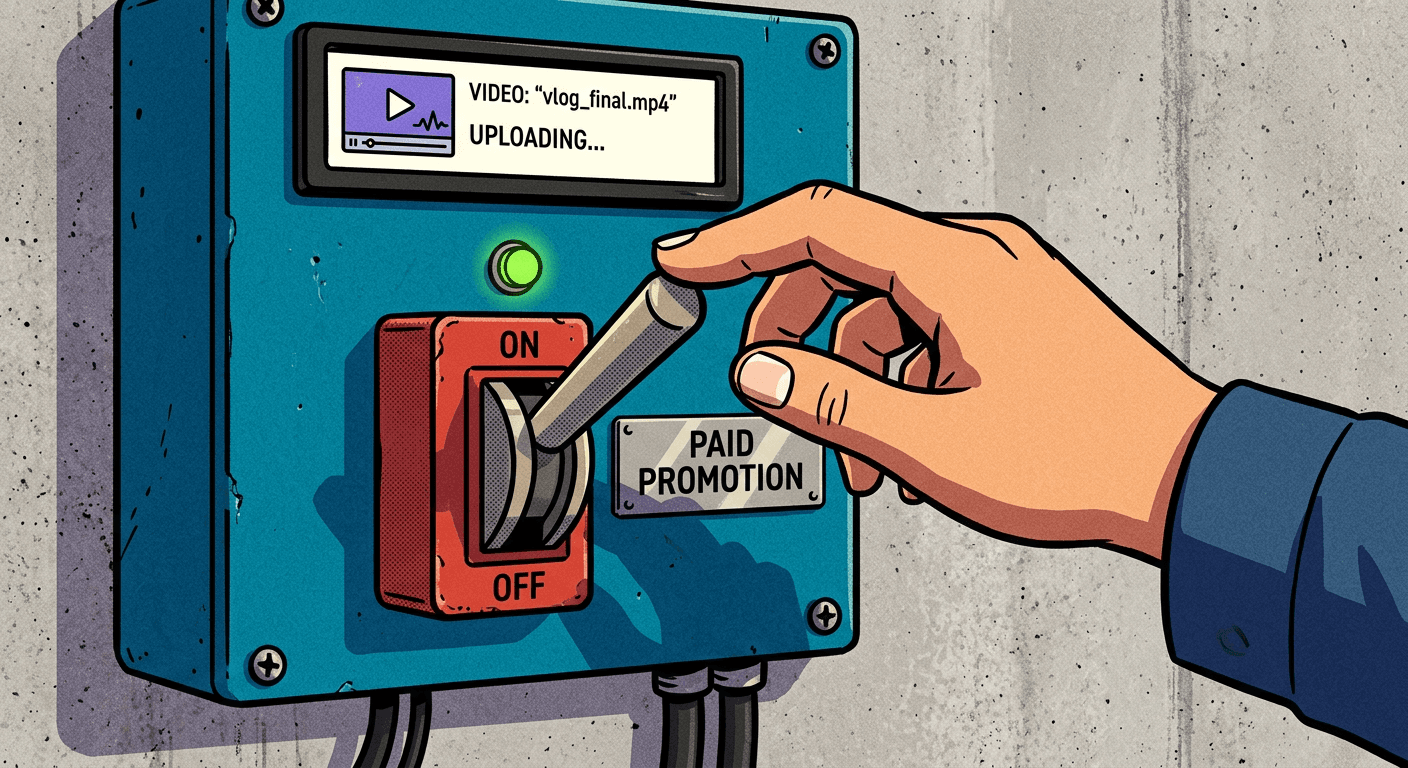
Where the real risk sits. The genuine consequence is not the label itself, it is what happens when the label appears because you did not declare something you were supposed to. YouTube's rewritten policy states that violations "may remove the content" and can have "other implications for your channel, YouTube Partner Program eligibility, or access to other features." Neither the Help Center post nor the policy page publishes an explicit strike count or timeline specific to branded content, and ppc.land's review was explicit on this point too: "there is no penalty schedule in either the community announcement or the Help Center policy page." What does exist, and what this almost certainly runs through, is YouTube's general Community Guidelines enforcement ladder: a first violation typically produces a warning that expires after 90 days if it is not repeated, a second violation inside that window becomes a strike, and three strikes within 90 days leads to channel termination. Treat an auto-applied branded content label the same way you would treat any other Community Guidelines warning: as a real signal that needs a real response, not background noise to dismiss.
For a creator who regularly reviews sponsored gear, films branded travel content, or edits sponsor segments into longer videos, this is exactly the kind of workflow where a YouTube Thumbnail Maker speeds up publishing multiple sponsored uploads a week, but speed is precisely why the paid promotion toggle needs to become a fixed step in your upload checklist rather than something you remember to do "most of the time."
How the AI-Content Auto-Label Works
The AI-content side of this story started earlier and is better documented, mostly because YouTube has been iterating on it publicly since March 2024 rather than announcing it once and moving on.
What actually triggers detection. YouTube's own language is specific: the system looks for "significant photorealistic AI use." That phrase is doing real work. It is not asking whether AI touched the video at all, it is asking whether the video shows something photorealistic, meaning it could pass for an unaltered recording of a real person, place, or event, that was substantially generated or altered by AI. A fully AI-generated talking-head video depicting what looks like a real human giving real commentary is the textbook case. A stylized animated explainer, a cartoon-style AI Short, or a video that clearly presents itself as illustrated rather than photographic is a different category entirely, because nothing about it claims to be an unaltered recording of reality in the first place.
How the system actually detects it. Reporting on the original May announcement describes YouTube's approach as "a combination of internal signals," specifically including two things: C2PA content credentials, the same open provenance-metadata standard several major AI image and video generators now embed automatically, and SynthID, Google's own invisible watermarking system used across some of its generative tools. YouTube has not published the full list of signals beyond these two, which is consistent with most platforms declining to detail exactly how a detection system works, since publishing the full method makes it trivially easier to evade.
Some disclosures are permanent, and that is worth knowing in advance. If content is created using YouTube's own generative tools, tools like Veo or Dream Screen inside YouTube's own creation suite, or if a file carries C2PA metadata that explicitly marks it as fully AI-generated, the resulting label cannot be removed or contested. This is different from a case where YouTube's classifier makes an educated guess and gets it wrong. If you believe your content was misidentified and it does not fall into one of those permanent categories, you can update the disclosure status directly inside YouTube Studio, generally by revisiting the same AI use question in Attributes and selecting the accurate answer.
Where the label appears. For long-form videos, the label now sits directly below the video player and above the description, a spot every viewer scrolls past whether they read descriptions or not. For Shorts, it appears as an overlay directly on the video. This is a meaningful visibility jump from the original 2024 rollout, where the label lived inside the expandable description and only surfaced automatically for sensitive categories like health, news, elections, or finance. Now every disclosed or auto-detected video carries a visible marker, regardless of topic.
Does the label affect monetization or reach? This is the specific question worth answering carefully, because the two policies genuinely differ here. For the AI-content label, the answer YouTube has given consistently, across both the original 2024 rollout and the May 2026 detection update, is no. YouTube's own blog post states it plainly: "a disclosure label alone does not change how a video is recommended or whether it's eligible to earn money." Reporting on the same announcement reinforced this in nearly identical language: the labels are described as informational, not punitive, and explicitly not something that penalizes recommendation reach or monetization eligibility. So the auto-detected AI label carries forward the exact same "no effect" framing that the original self-disclosure toggle had back in 2024. Flipping the toggle, or getting auto-flagged for a legitimate reason, is not treated as a violation on its own.
What is different, and this is the part creators tend to miss, is what happens with a pattern of avoiding disclosure rather than a single instance of it. YouTube's own Help Center documentation on altered content states this directly: "Creators who consistently choose not to disclose this information may be subject to manual application of a label, or penalties from YouTube, including removal of content or suspension from the YouTube Partner Program." Read that carefully. It is not describing what happens because a video got labeled. It is describing what happens because a creator repeatedly tries to avoid the label when they clearly should have used it. That distinction, one incident versus a pattern, is the single most important thing to understand about how this policy actually enforces itself.
Who Is Actually Affected and Who Isn't
Much of the anxiety around this update comes from creators reasonably wondering whether their entire AI-assisted workflow is now under a microscope. It isn't, and the boundary here is more specific than the alarmed headlines suggest.
Clearly not affected, routine AI-assisted production:
- Generating a thumbnail with an AI Image Generator or a dedicated YouTube Thumbnail Maker, even one that composites your face into a stylized scene. A thumbnail is not the video content itself and does not claim to be an unaltered recording of an event.
- Using AI-generated B-roll or cinematic cutaways from a tool like an AI Video Generator to illustrate a point, as long as the footage is presented as illustrative rather than as documentary proof of a real event actually happening.
- Scoring a video with an AI Music Generator, whether that is a custom instrumental built for the video or a quick background track. Music has never been part of either disclosure policy's trigger conditions.
- Turning a long video into short-form clips with AI Clipping or scripting a Short with Text2Shorts. Repackaging or clipping your own real footage does not introduce synthetic or misrepresented content, it is the same underlying recording presented in a shorter format.
- Editing dialogue, cutting pacing, color grading, or using AI-assisted editing tools generally. None of these alter what actually happened in the footage in a way that misrepresents a real event or person.
- A faceless channel that uses AI narration over stock or AI-generated illustrative visuals, provided the channel is not presenting a synthetic figure as if it were a real, specific human being. If you are building a channel like this, it is worth reading through a dedicated breakdown of how faceless YouTube channels built with AI actually work in 2026 and the separate question of whether those channels can be monetized at all, since the disclosure rules and the monetization rules are related but distinct concerns.
Clearly affected, the cases the policy actually targets:
- A video that presents an AI-generated, photorealistic depiction of a real, identifiable person doing or saying something they did not actually do or say, without disclosure. This is the core case both the March 2024 policy and the May 2026 detection update were built around.
- Fabricated "footage" of a real event, a natural disaster, a protest, a press conference, built entirely or substantially with AI and presented as if it were genuine unaltered recording.
- A sponsored segment, paid review, or affiliate-driven feature that a creator does not declare through the paid promotion toggle, regardless of whether money or product changed hands.
- A synthetic anchor or host persona built to look like a real unscripted human delivering commentary, when the channel does not disclose that the presenter is AI-generated.
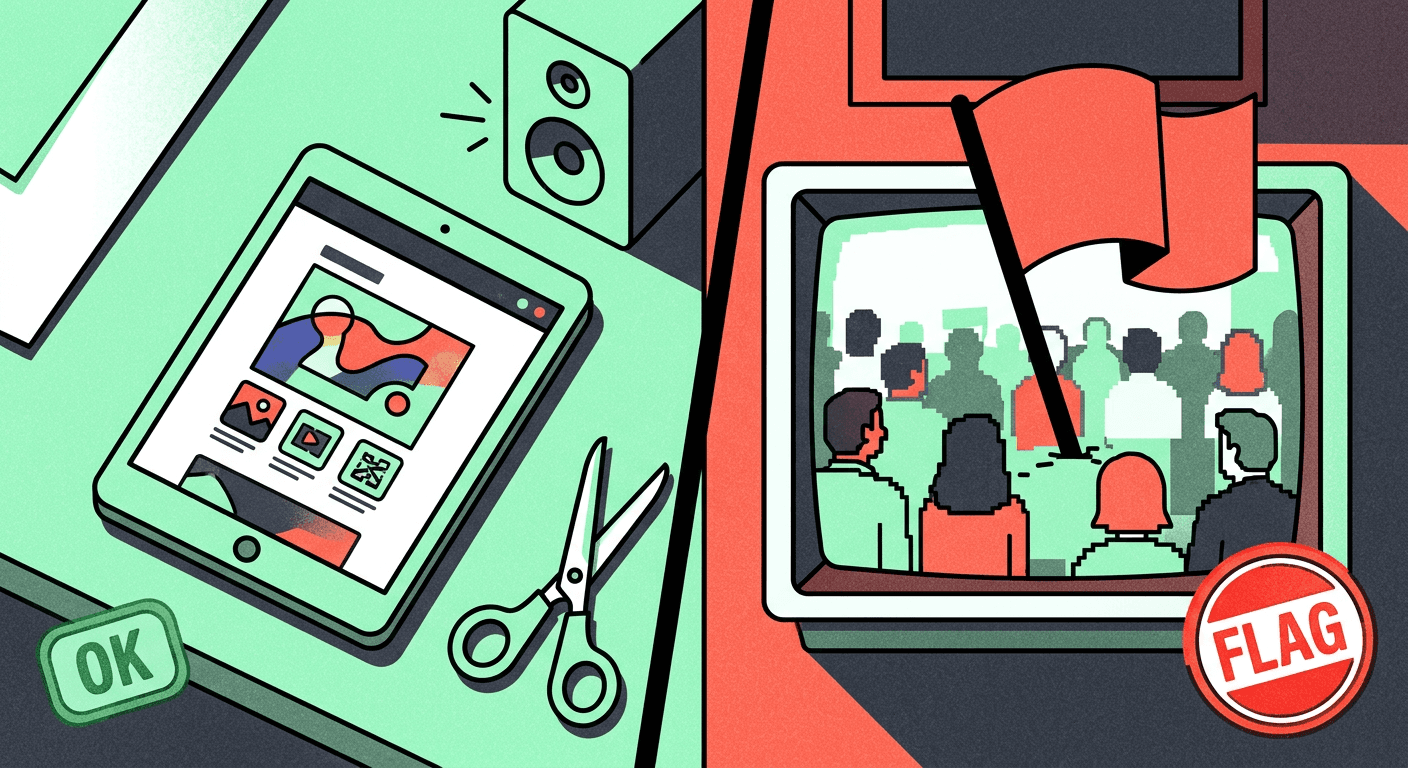
The genuine grey zone worth thinking through. AI voice cloning used for narration sits in an interesting middle ground. Cloning your own voice to speed up re-recording a script is generally a production choice, not a misrepresentation, since the words and ideas are genuinely yours. Cloning a voice to make it sound like a specific other real person speaking, without their involvement or disclosure, moves toward the category the policy is built to catch. The same logic extends to reused audio: if you are swapping a track over Content ID concerns, it is worth understanding how that process works separately, covered in a walkthrough of fixing a Content ID claim with an AI instrumental replacement, since that is a copyright question layered on top of, not a substitute for, the disclosure question covered here.
How to Make Sure You're Covered
A short, practical checklist beats a long explainer when you are trying to protect an existing channel. Walk through these in order, ideally before your next upload rather than after a label appears.
1. Audit your last ten uploads for undeclared paid content. Look specifically for gifted products with a required mention, affiliate segments, and any brand-supplied talking points, not just formal sponsorship contracts. If any of them qualify as branded content and the paid promotion toggle was not checked, go back and correct it in Studio now rather than waiting for an automatic flag.
2. Make the paid promotion toggle part of your actual publishing checklist, not something you remember when a deal feels big enough to count. Small affiliate mentions and modest gifted-product features count under YouTube's definition just as much as a five-figure sponsorship does.
3. Separate "AI-assisted" from "photorealistic and undisclosed" in your own head before you upload. Ask one question about each video: does any part of this claim to be an unaltered recording of a real person or event, when it actually isn't? If the honest answer is no, across the whole video, you are almost certainly fine without touching the AI use toggle at all.
4. When you are genuinely unsure, disclose. Both policies are explicit that disclosing AI use carries no monetization or reach penalty on its own. The downside of over-disclosing a borderline case is close to zero. The downside of under-disclosing a case that should have been flagged is a pattern-based penalty that can eventually reach your Partner Program standing.
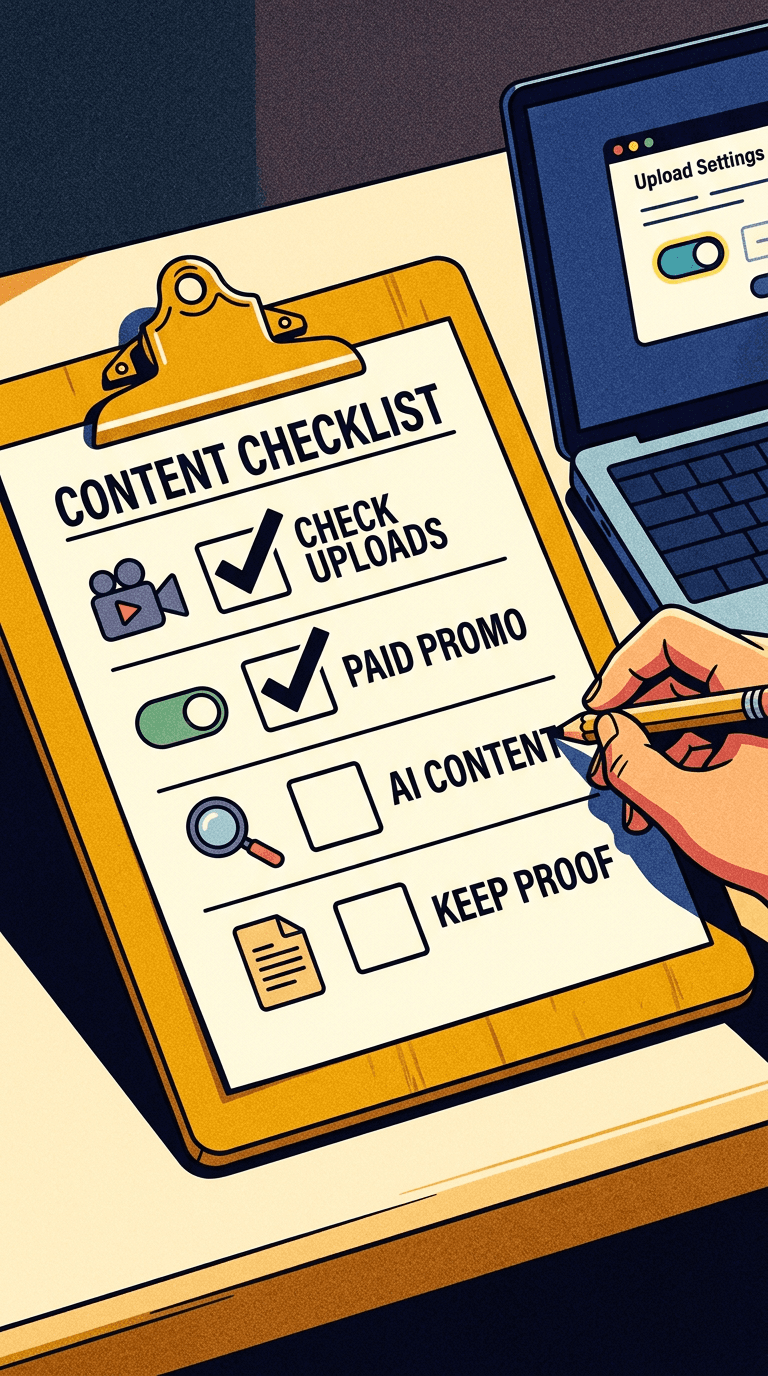
5. Watch your Studio notifications for auto-applied labels, and treat one as an action item, not a dismissible alert. If a label was applied in error and your content is not in one of the permanent categories, correct it through the same Attributes flow immediately. Letting an incorrect label sit unaddressed looks, from YouTube's side, indistinguishable from a creator who is simply ignoring the disclosure system.
6. Keep basic documentation on gifted or discounted products, even informal ones, a screenshot of the email offering the product in exchange for a mention is enough. This protects you in the rare case a brand partner disputes whether a video should have carried a disclosure.
7. Do not treat production tools as a liability. Building thumbnails, cinematic B-roll, Shorts, or a soundtrack with tools like Miraflow does not create disclosure risk by itself. The risk lives entirely in whether the finished video misrepresents a real person or event, or hides a paid relationship, not in which software touched the timeline.
How This Compares to YouTube's Older Policy and to Instagram
The cleanest way to understand the September 2026 change is as an enforcement upgrade to a policy that already existed, rather than a brand-new rule. YouTube's March 2024 self-disclosure system asked creators to be honest and did not verify anything. The May 2026 AI-detection layer and the September 2026 branded-content detection layer both add automated verification on top of the same underlying disclosure categories, without rewriting what needs to be disclosed in the first place. If you were compliant under the honor-system version of these rules, you remain compliant now. The change mainly affects creators who were quietly skipping disclosure and assuming nobody would check.
It is also useful to see how a different platform is handling a related but distinct problem. Instagram's approach, covered in detail in a breakdown of Instagram's AI-generated profile label and what it requires creators to do, targets a narrower and more specific case: an entire account whose persona is an AI-generated person, not a single video or post. YouTube's branded-content and AI-content labels, by contrast, apply per video, meaning the same channel can post one disclosed AI video and nine undisclosed ordinary ones without any conflict. The two platforms are converging on the same underlying idea, that a synthetic or misrepresented identity needs to be labeled, but they are drawing that line at different levels of the account structure.
The underlying detection technology also connects to a broader industry shift toward machine-readable provenance. C2PA metadata and SynthID watermarking, the two signals YouTube has confirmed it reads for AI-content detection, are the same category of technology increasingly built into generative tools across the industry, including the invisible watermarking Anthropic uses in Claude's own text output, explained in more technical depth in a walkthrough of how Claude's invisible SynthID-text watermark actually works. The direction of travel across platforms and model providers alike is the same: provenance data embedded at generation time, read automatically at the point of publication, rather than disclosure resting purely on the honor system.
Common Mistakes
Over-disclosing routine editing out of anxiety. Flipping the AI use toggle for a video that only used AI for a thumbnail, background music, or basic cutaways adds an unnecessary label to content the policy was never built to catch. It does not cause a penalty, but it does add friction and confusion for viewers over content that never needed a flag.
Assuming the branded-content label carries the same explicit "no effect" language as the AI-content label. It doesn't, at least not in the same documented way. YouTube's AI-content policy explicitly states labels do not affect monetization or reach. The branded-content policy instead describes revenue eligibility surviving disclosure and ad substitution to avoid competitor conflicts, a related but not identical guarantee, and it explicitly warns about channel-level consequences for undisclosed violations that the AI-content documentation frames more gently.
Ignoring an auto-applied label instead of correcting it. An incorrect automatic label sitting unaddressed in Studio is not a neutral state. Treat it as an active task, since a pattern of unaddressed labels reads the same as a pattern of avoided disclosure from the platform's side.
Assuming gifted products without a signed contract don't count. YouTube's definition of branded content is about anything of value exchanged for influence over the content, not the presence of a formal agreement. A free product sent with an expectation of coverage generally qualifies.
Confusing stylized AI content with photorealistic AI content. A clearly animated, illustrated, or stylized AI video is a different trigger category from a photorealistic one built to look like real footage. Both policies specifically use "photorealistic" language for the AI-detection trigger, so an obviously stylized explainer is not the kind of content this system is built to flag.
Treating AI production tools themselves as the risk. The actual variable is what the finished video claims to be, a real recording of a real thing, or a paid endorsement, not which software was involved in making it. A cinematic AI-generated establishing shot used honestly as an illustration carries no more disclosure risk than a stock photo would.
Frequently Asked Questions
Does using Miraflow's AI Video Generator or Thumbnail Maker automatically get my video flagged? No. Both detection systems are built around specific triggers, undisclosed paid promotion for the branded-content label, and significant photorealistic AI use presented as real footage for the AI-content label. Using an AI tool to build a thumbnail, cinematic B-roll, a Short, or a soundtrack does not itself meet either trigger.
What should I do if YouTube auto-labels my video by mistake? If the content does not fall into one of the permanent categories (content made with YouTube's own generative tools, or content carrying C2PA metadata explicitly marking it as fully AI-generated), you can update the disclosure status directly in YouTube Studio under the Attributes section. Do this promptly rather than leaving an incorrect label in place.
Does the branded content label reduce my ad revenue? No, declaring paid promotion does not remove your eligibility to earn ad revenue as a Partner Program member. What changes is narrower: YouTube may avoid running a directly competing brand's ad on that specific video, and the video is removed from the YouTube Kids app, consistent with existing branded-content policy.
Do I need to disclose a product a brand sent me for free, with no formal contract? Generally yes, if there was an expectation you would feature or mention it. YouTube's definition of branded content covers anything of value exchanged for influence over the content, not just paid sponsorships with signed agreements.
Is the AI content label the same for Shorts and long-form videos? The underlying detection and disclosure rules are the same, but placement differs. Long-form videos show the label below the video player, above the description. Shorts show it as an on-screen overlay directly on the video itself.
Can repeated undisclosed AI content actually get me suspended from the Partner Program? YouTube's own Help Center documentation states that creators who consistently choose not to disclose required information may face manual labeling or penalties, including content removal or Partner Program suspension. This applies to a pattern of avoided disclosure, not to a single instance of AI use or to a video that gets an informational label.
How does this compare to Instagram's AI label? Instagram's system, covered separately, targets whole accounts built around an AI-generated persona. YouTube's system operates per video, so a channel can post disclosed AI content and ordinary undisclosed content side by side without any conflict, as long as each individual video is labeled correctly.
Will disclosing AI use hurt how often my videos get recommended? No. YouTube's own documentation states directly that a disclosure label alone does not change how a video is recommended or whether it is eligible to earn money. This applies to the AI-content label specifically and has held consistently since the original 2024 rollout.
Conclusion
The headline version of this story, YouTube is now auto-labeling creators, makes it sound like every AI-assisted workflow just got riskier. The actual mechanics say something narrower and more manageable. Two specific categories, undeclared paid promotion and undisclosed photorealistic AI content meant to pass as real, now get caught by automated detection instead of relying purely on a creator remembering to check a box. Everything else, thumbnails, cinematic B-roll, Shorts, music, editing, and the broader creative pipeline that tools like Miraflow's AI Image Generator, AI Video Generator, Text2Shorts, and AI Clipping exist to speed up, sits well outside either trigger.
The practical move for any working creator is the same one this guide has walked through: treat the paid promotion toggle as a fixed step in every upload rather than a judgment call, understand that photorealistic misrepresentation is the actual line for AI disclosure rather than AI involvement in general, and respond to any auto-applied label quickly instead of letting it sit. Do that, and the difference between YouTube's honor-system 2024 policy and its verified 2026 version changes almost nothing about how you already make videos, it just closes the gap for the small number of creators who were quietly skipping disclosure and hoping nobody would check.