15 AI Prompts for Dark Moody Product Photography (Copy & Paste)

Written by
Jay Kim
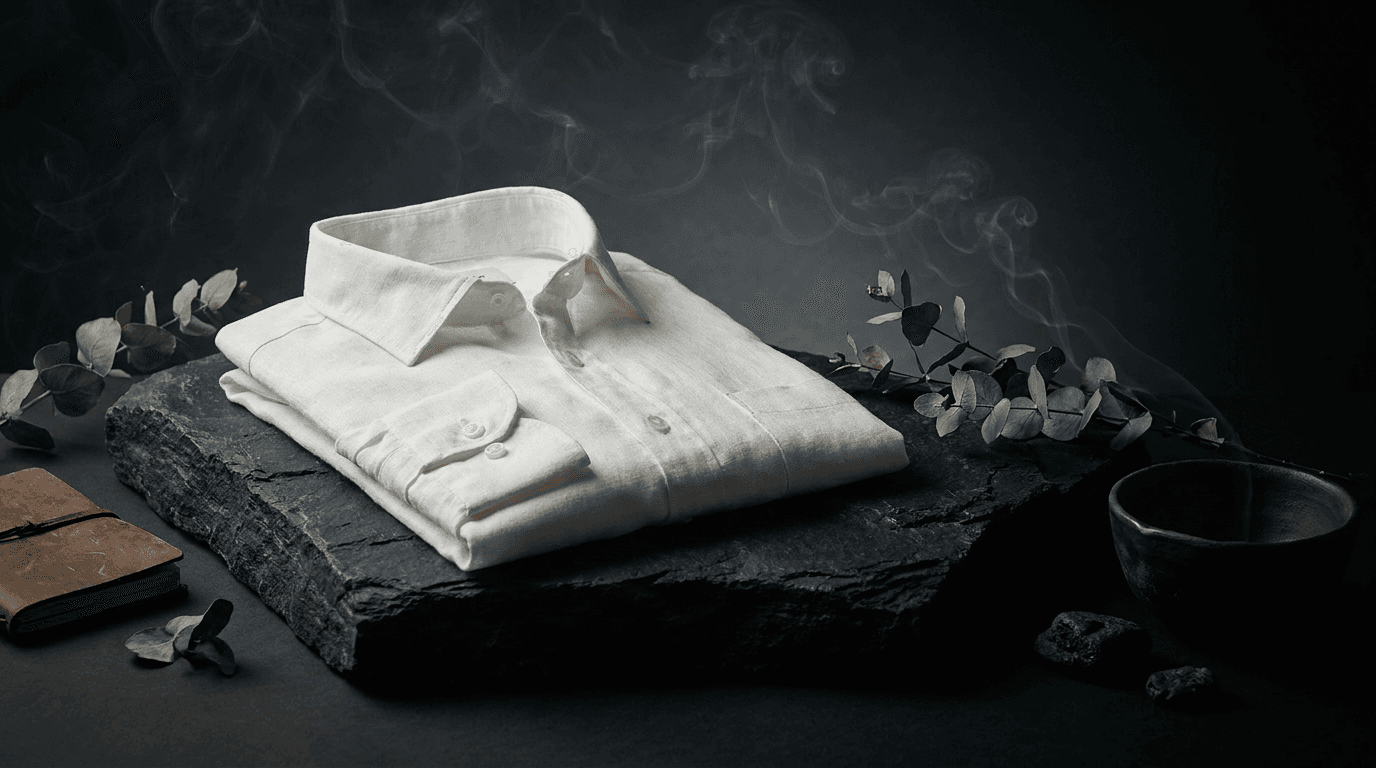
15 copy-paste AI prompts for dark moody product photography. Covers perfume, whiskey, skincare, candles, jewelry, watches, and more for editorial-quality results.
If you are trying to make product images that actually stop people from scrolling, flat white-background photography is working against you. The dark moody aesthetic, which leans into dramatic lighting, deep shadows, and rich atmospheric texture, is one of the most effective visual styles for premium products. The challenge is that most creators either lack studio access or struggle to get consistently strong results from AI image tools because they don't know what to put in the prompt.
This post gives you 15 ready-to-use AI prompts for dark moody product photography, covering fragrance, spirits, skincare, candles, jewelry, food, and more. Every prompt is written to be copy-pasted directly into an AI image generator and produce editorial-quality results without additional editing or setup.
What Makes Dark Moody Product Photography Work
Before jumping into the prompts, it helps to understand the visual principles behind this aesthetic, because knowing them makes you better at adapting these prompts to your own products.
The foundation of dark moody photography is chiaroscuro lighting, a technique borrowed from Renaissance painting that uses extreme contrast between light and shadow to give subjects a three-dimensional, sculptural quality. When one side of a product is brightly lit and the other fades into darkness, the eye reads depth and volume in a way that flat, even lighting never achieves.
The second key element is atmosphere. Smoke, steam, bokeh candlelight, and mist add environmental depth to a scene without competing with the product for attention. They fill the dark space with visual interest and contribute to the sensory suggestion of the image, making a candle feel warm, a whiskey glass feel cold and heavy, or a skincare serum feel precious and clinical at the same time.
Surface materials matter as much as lighting. Dark marble, aged wood, black velvet, charcoal concrete, and brushed metal all absorb and reflect light differently, and naming the surface in your prompt is one of the fastest ways to elevate a generic AI image result toward something that looks genuinely editorial.
Color temperature is the final variable. Warm dark moody images use amber, burgundy, brown, and gold tones, which work well for food, spirits, fragrance, and candles. Cold dark moody images use grey, steel blue, and charcoal tones, which work better for watches, tech accessories, and men's grooming products. Mixing both temperatures in the same image without intention tends to flatten the mood rather than deepen it.
How to Use These Prompts
Every prompt below is designed to work as a complete standalone input for any text-to-image tool. They are structured with a product subject, surface description, lighting direction, atmospheric elements, color temperature, and style reference, which together produce consistent dark moody results.
To customize them for your product, replace the product description at the beginning of the prompt with your specific item. Adding details like material, size, color, or distinctive shape features makes the output more accurate to your actual product.
The AI image generator on Miraflow AI supports both text-to-image and image-to-image generation, so you can either generate entirely from a prompt or upload a reference photo of your product and apply the dark moody style on top of it. The image-to-image approach is especially useful when product accuracy matters more than complete creative freedom.
Generate at least five variations of each prompt before choosing a final result, since even small differences between generations can produce dramatically different light placements and compositions.
15 Dark Moody AI Prompts for Product Photography
1. Luxury Perfume Bottle
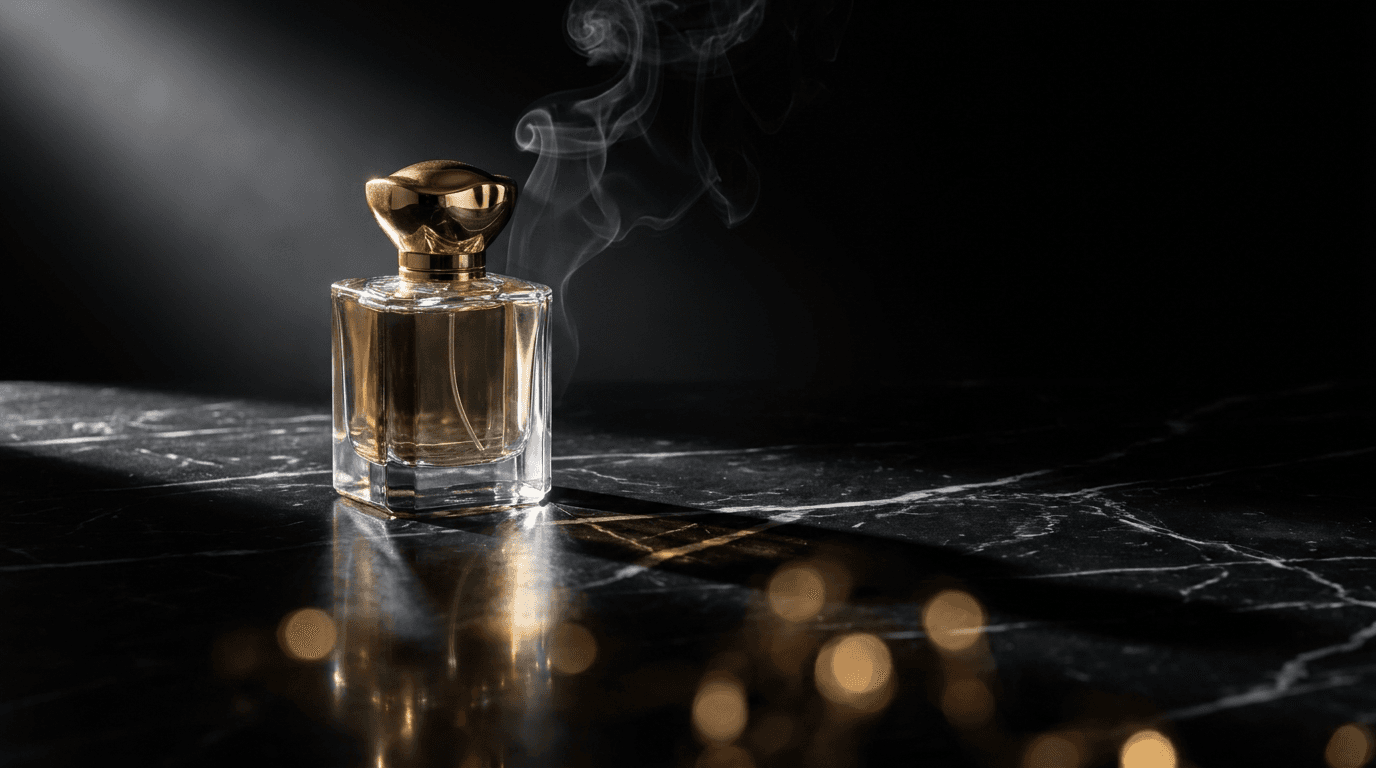
This prompt works for any high-end fragrance product and emphasizes glass texture and dramatic side lighting that makes perfume photography feel genuinely premium.
Prompt
Luxury perfume bottle on a dark polished marble surface, single directional spotlight from the left casting deep shadows across the marble, smoke wisps rising softly from behind the bottle, deep black background, bokeh reflections shimmering in the marble beneath, dark gradient shadow on the right side of the bottle, cinematic editorial product photography, 85mm lens shallow depth of field, ultra-detailed glass texture with light refracting through the stopper, gold cap catching the spotlight
2. Whiskey Glass with Ice
Spirits photography is one of the strongest applications of the dark moody style. The amber liquid, condensation, and cold ice cube all photograph beautifully against a dramatic dark background.
Prompt
Crystal whiskey glass filled with deep amber whiskey and a large clear ice cube, condensation droplets covering the entire glass surface, warm golden backlight shining through the liquid from behind, dark aged oak wooden surface beneath the glass, deep black background, blurred candle flames visible in the far background creating soft bokeh, dramatic low-key lighting, macro-level detail on the ice clarity and glass edge refraction, editorial spirits photography, ultra-realistic rendering, cinematic warm amber and dark brown color grade
3. Skincare Serum Bottle
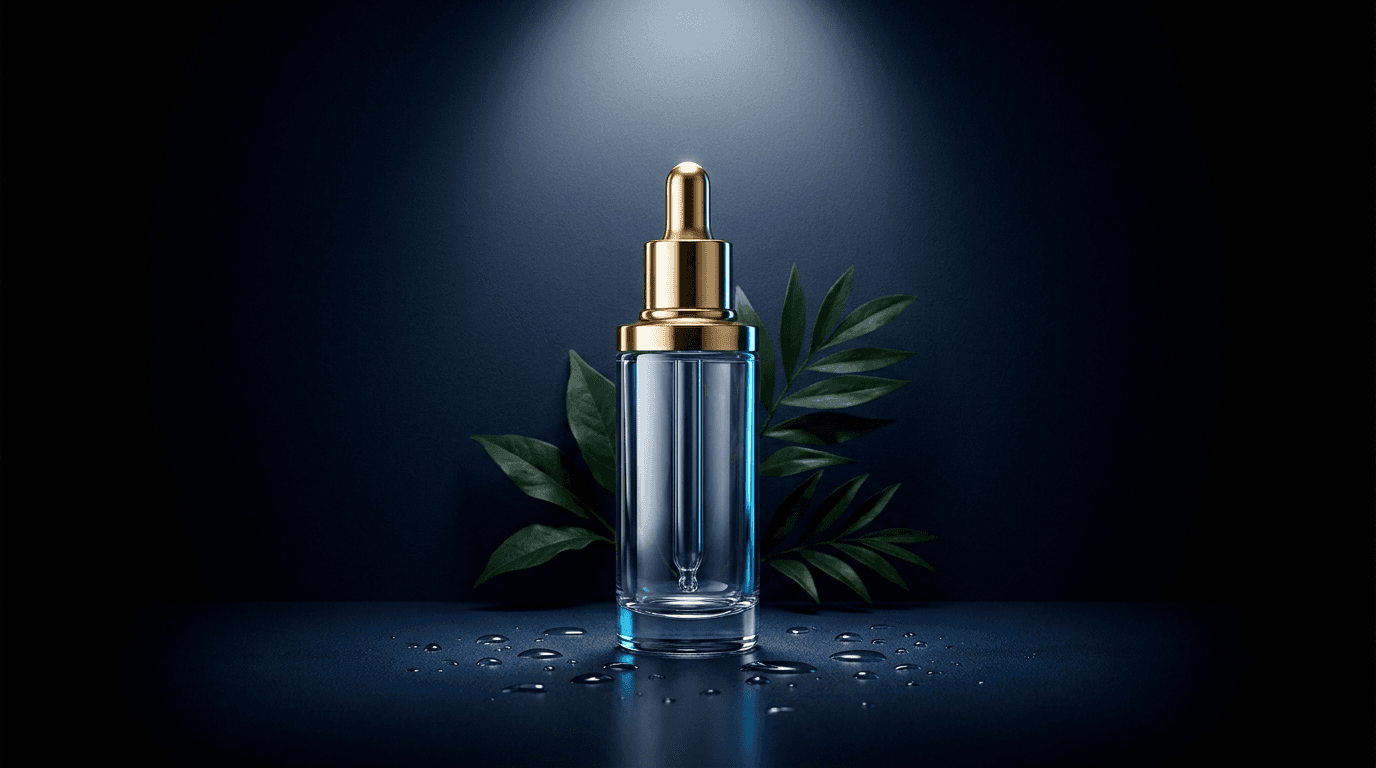
Premium skincare products photograph well in dark moody settings because the contrast between clinical precision and rich darkness reinforces the sense of luxury. This prompt adds botanical elements in the shadow to imply naturalness without cluttering the composition.
Prompt
Elegant glass skincare serum bottle with gold dropper cap, dark navy blue background, single soft spotlight diffused from above illuminating the bottle top, water droplets scattered across the dark surface beneath the product, deep green botanical leaves partially emerging from the shadows behind the bottle, shadow gradient fading to black on both sides of the frame, luxury skincare editorial photography, high-end cosmetic advertising aesthetic, sharp light reflections on the glass body, rich dark tones with one cool blue accent, professional studio product shot
4. Scented Candle
Candles provide their own light source in the scene, which makes them an ideal dark moody subject. This prompt positions the flame as the primary light and lets it cast everything else into warm shadow.
Prompt
Artisan scented candle with a burning flame centered in frame, dark rough linen fabric surface beneath the candle, deep shadow background fading to black at the edges, warm amber and orange candlelight spilling across the surrounding surface, melted wax pooling naturally at the wick base, thin smoke trail curling upward from the flame tip, bokeh background with additional out-of-focus candle flames visible in the distance, moody atmospheric luxury candle photography, editorial brand aesthetic, close-up crop, ultra-realistic flame glow and melted wax texture
5. Men's Cologne
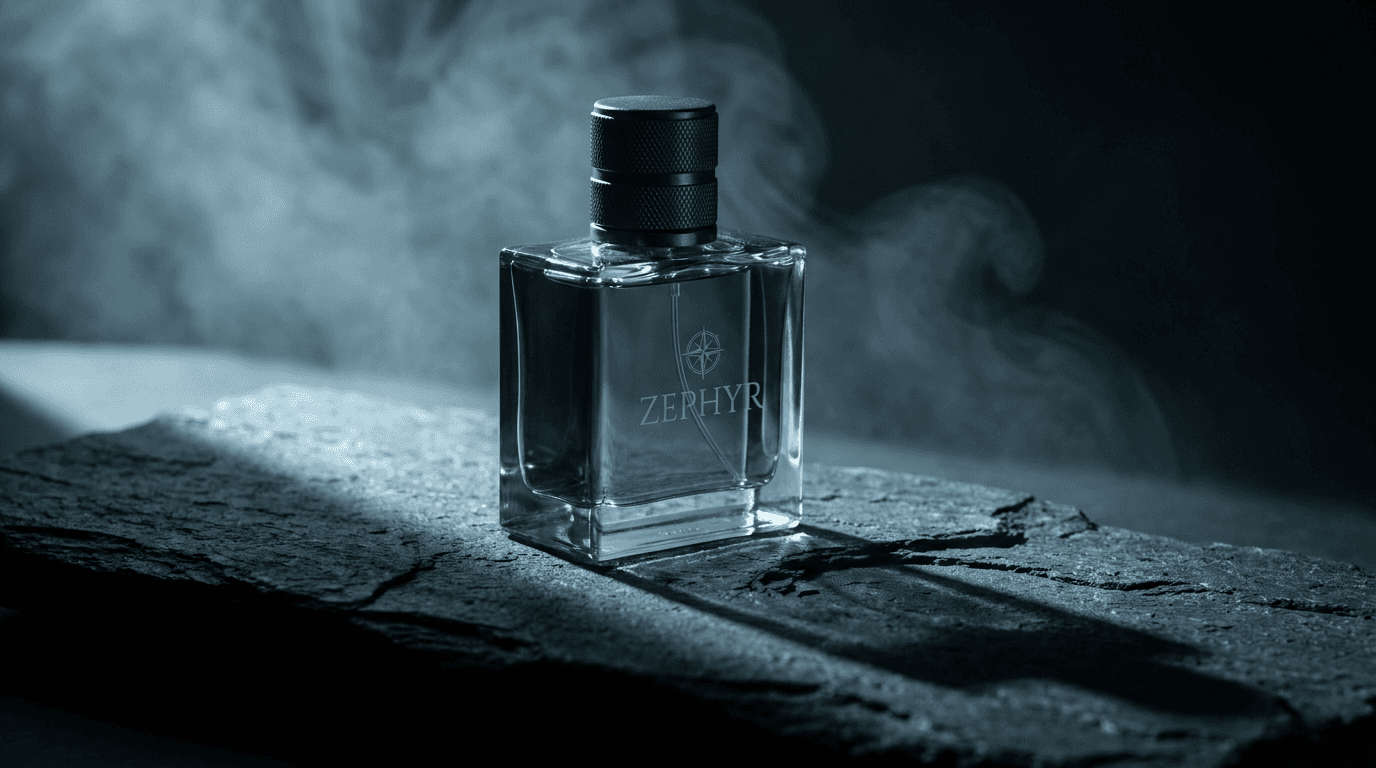
Men's fragrance photography tends to use colder, more architectural dark moody tones compared to women's perfume. This prompt emphasizes sharp edges, stone texture, and cool-toned light to create a distinctly masculine aesthetic.
Prompt
Men's cologne bottle on a dark charcoal cracked stone surface, cold blue-grey directional light from the side creating hard-edged shadows, fog drifting slowly behind the bottle against the dark background, masculine editorial grooming product photography, luxury cologne brand advertising aesthetic, strong contrast between the illuminated front face of the bottle and the deep shadow behind it, glass bottle edges refracting cold light, geometric and precise composition, 50mm lens perspective, cool desaturated color palette with no warm tones, cinematic product photography
6. Espresso Cup
Coffee photography rewards the dark moody treatment because steam, wood grain, and ceramic texture all look richly detailed under dramatic lighting. This prompt creates a sensory, atmospheric image that communicates warmth and morning ritual.
Prompt
Small ceramic espresso cup filled with dark black coffee, thin steam rising from the surface catching the light, placed on a dark weathered oak wooden table, soft warm backlight creating a halo glow around the steam column, dark muted background with no distracting elements, visible coffee crema on the liquid surface, chiaroscuro lighting with deep corner shadows, editorial cafe brand photography, warm amber and near-black color palette, close-up macro photography with shallow depth of field, ultra-realistic ceramic and wood grain texture
7. Diamond Ring on Velvet
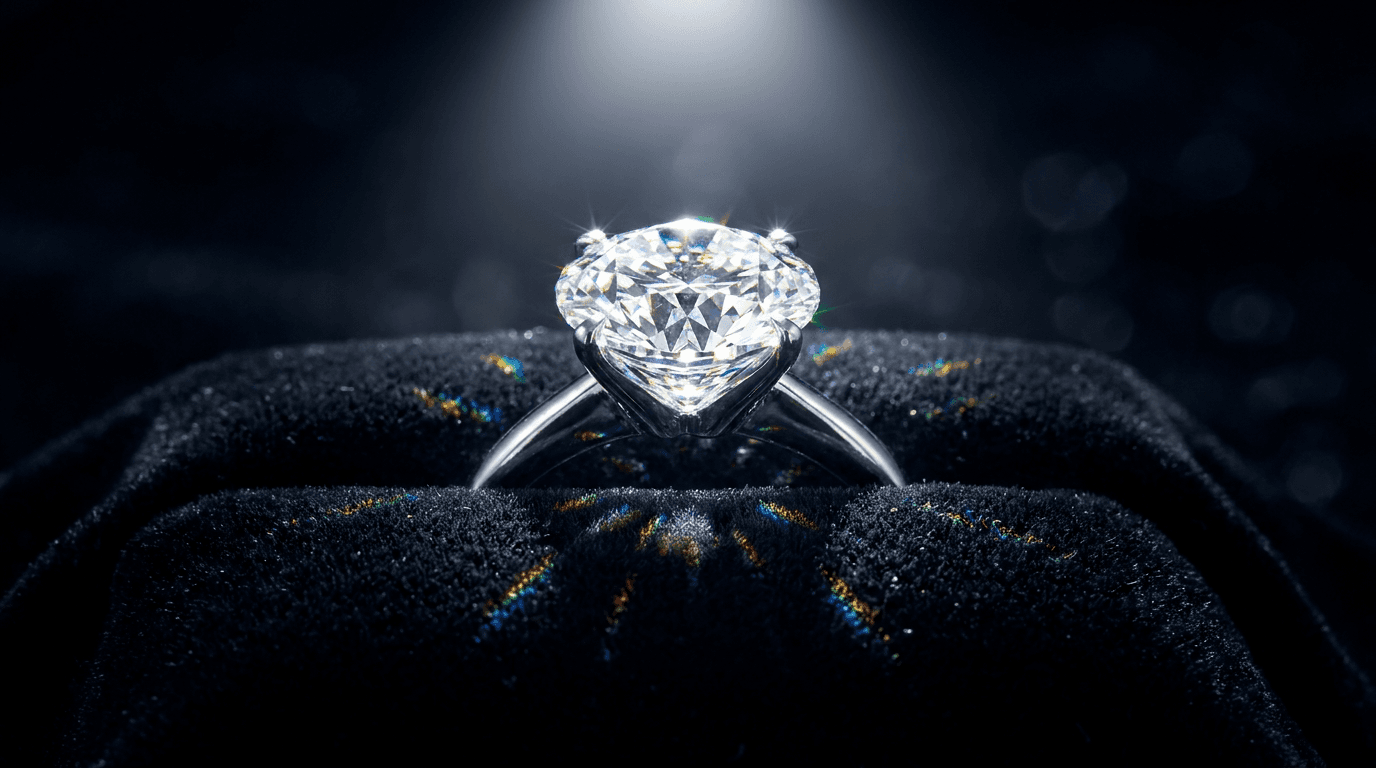
Diamonds and precious stones look their best surrounded by darkness, because the contrast amplifies the sparkle and makes the stone appear to glow from within. This prompt works for rings, necklaces, and earrings.
Prompt
Diamond solitaire ring resting on deep black velvet fabric, single focused overhead spotlight creating brilliant specular highlights on each diamond facet, dark studio background, stone refracting prismatic rainbow light onto the velvet surface in tiny streaks, moody luxury jewelry editorial photography, extreme macro detail on the ring setting and stone, richly saturated dark tones surrounding the glowing diamond, perfect contrast between the lit gem and the black velvet, advertising-quality product image, subtle bokeh in the deep background, cinematic color treatment with no desaturation on the diamond highlights
Generating multiple variations of each prompt often reveals unexpected compositions worth exploring. Inside the Miraflow AI image generator, you can refine your favorites using image-to-image iterations and inpainting to land on the exact mood you want without starting from scratch each time.
8. Red Wine Glass
Wine photography has natural cinematic qualities, and dark moody lighting intensifies all of them. This prompt uses warm candlelight refraction through the glass to create an image that feels almost painterly.
Prompt
Crystal wine glass filled with deep burgundy red wine, warm candlelight blurred in the background casting a soft amber glow through the glass, dark mahogany wooden surface beneath, wine legs visible running down the inside of the glass, deep shadow background fading to black, editorial wine brand photography, warm backlighting making the wine luminous from within, condensation visible on the lower glass stem, luxury fine dining aesthetic, cinematic depth of field, ultra-realistic glass and liquid rendering with light refraction and caustics visible on the surface
9. Luxury Mechanical Watch
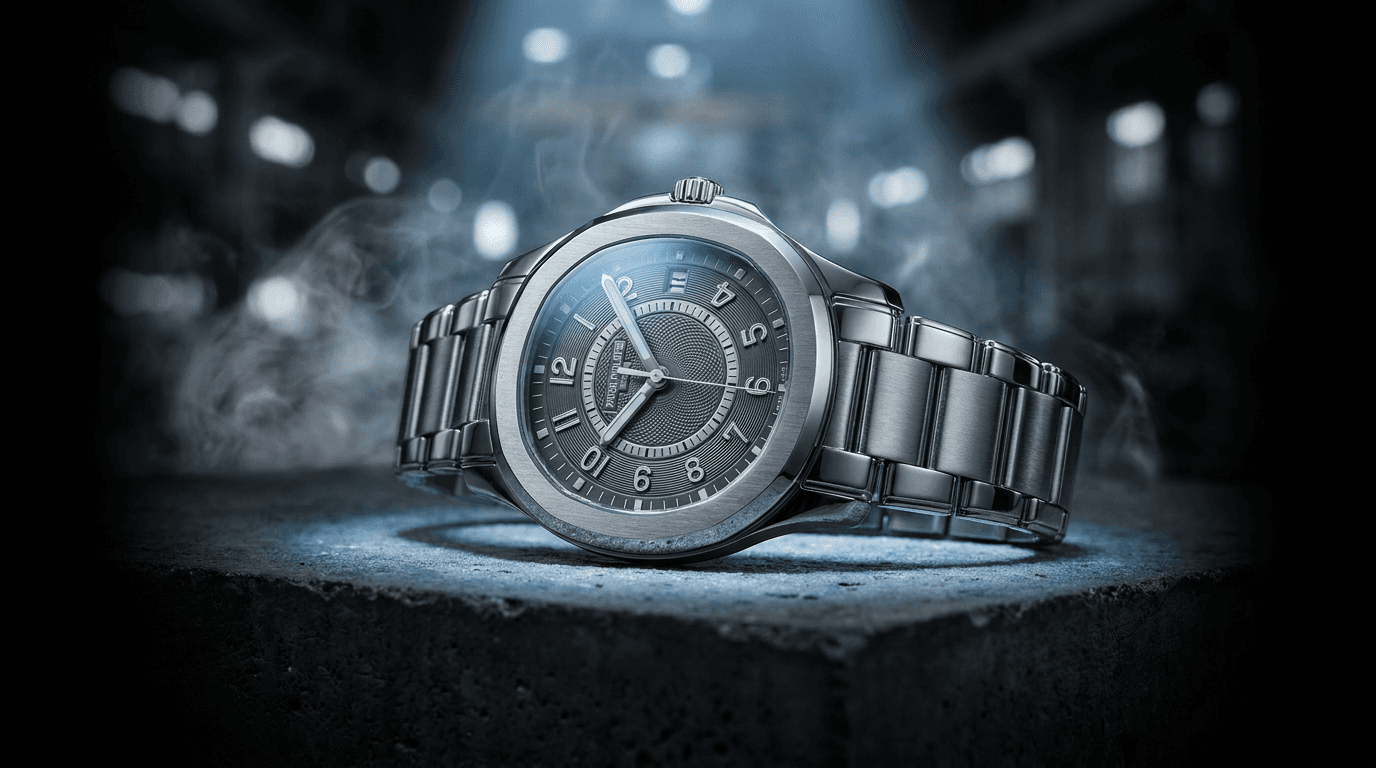
Watches are among the most iconic dark moody product photography subjects. The combination of metal, glass, and mechanical precision under harsh directional lighting communicates premium craftsmanship immediately.
Prompt
Luxury mechanical wristwatch lying on a dark concrete surface, single cold spotlight directly illuminating the watch dial and hands, deep shadow filling the outer frame edges, subtle smoke drifting in the background, metal bracelet reflecting cold blue light with visible brushed and polished surface contrast, extreme close-up macro showing hand and dial texture in high detail, cinematic dark editorial watch photography, luxury watch brand advertising aesthetic, monochromatic dark grey and silver tones, bokeh studio background, ultra-sharp rendering of the crystal glass surface and mechanical detail
10. Dark Chocolate Bar
Food photography almost always goes bright and cheerful, which makes dark moody chocolate photography stand out dramatically in a category dominated by light, clean imagery. This prompt leans fully into richness and indulgence.
Prompt
Broken dark chocolate bar with jagged edges on a dark slate stone surface, fine cocoa powder dusted around the broken pieces, single warm overhead spotlight casting long dramatic shadows from each chocolate segment, slow melted chocolate dripping from one broken edge catching the light, subtle steam rising behind the main product, deep brown and near-black tones, editorial luxury chocolate brand photography, close-up crop showing rich cross-section texture, chiaroscuro lighting with contrast between the shiny chocolate surface and the matte slate, ultra-realistic food photography render
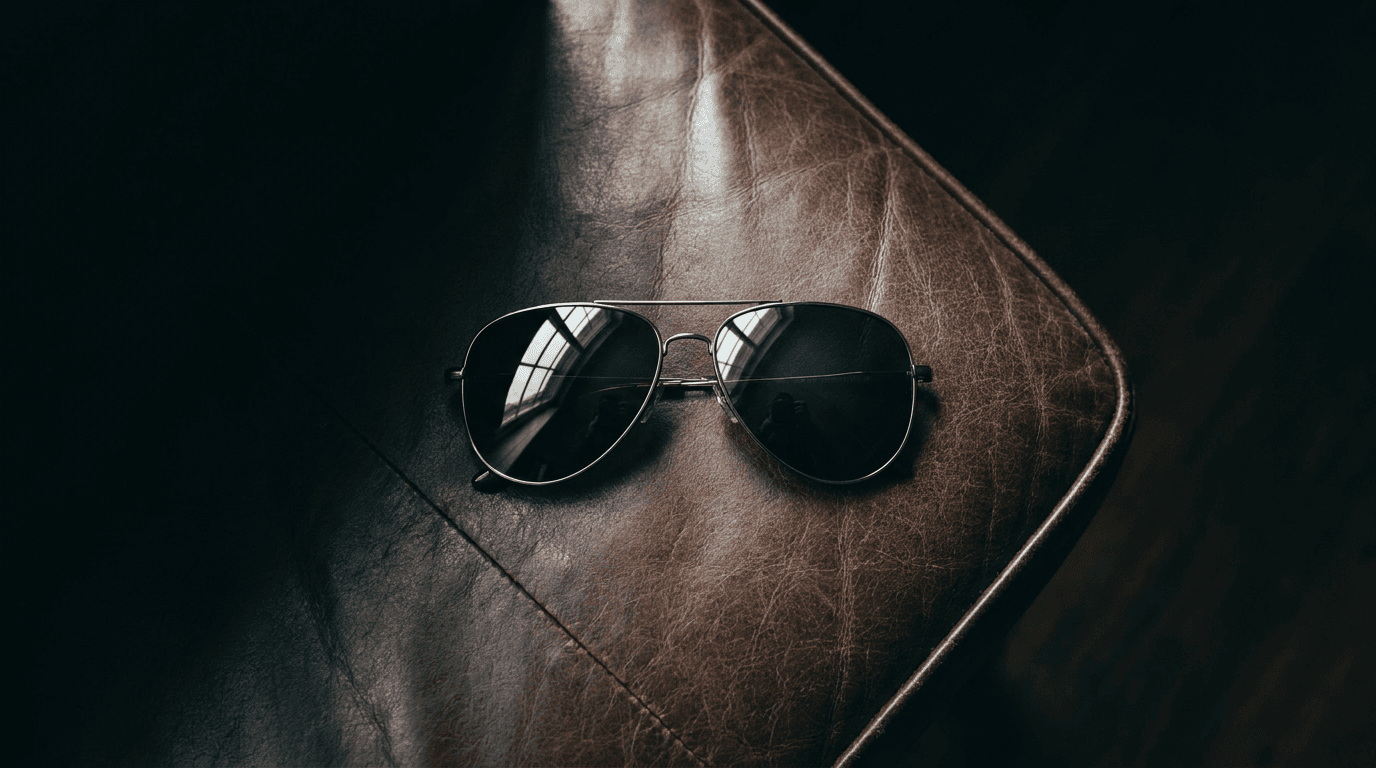
11. Sunglasses on Aged Leather
Fashion accessories like sunglasses benefit from high-contrast photography because the style communicates premium material quality and design precision before the viewer consciously processes the product.
Prompt
Premium aviator sunglasses resting flat on dark brown aged leather, single overhead directional light creating sharp lens reflections, dark deep background blending into shadow at the edges, fine leather grain texture visible in the foreground surface, lenses reflecting a faint abstract window light pattern, editorial fashion accessories photography, dark luxury brand campaign visual, deep shadow on one side of the frame creating visual tension, strong horizontal geometric composition, cinematic moody color treatment, only the sunglasses and leather visible in the frame
12. Face Cream in Glass Jar
High-end skincare products benefit from showing the product texture itself, and the contrast between clean white cream and a richly dark, textured environment creates compelling visual tension.
Prompt
Glass jar of premium face cream with the lid removed and set beside it, white creamy product texture visible inside the open jar, dark forest green marble surface beneath both components, single soft diffused spotlight from directly above, rose petals and small botanical elements partially visible in the surrounding darkness, deep shadow gradient behind the product fading to black, luxury beauty editorial photography, strong contrast between the pale cream interior and the dark environment, cinematic high-end brand aesthetic, ultra-sharp detail on the cream texture and glass jar material, rich dark green and black tones throughout the frame
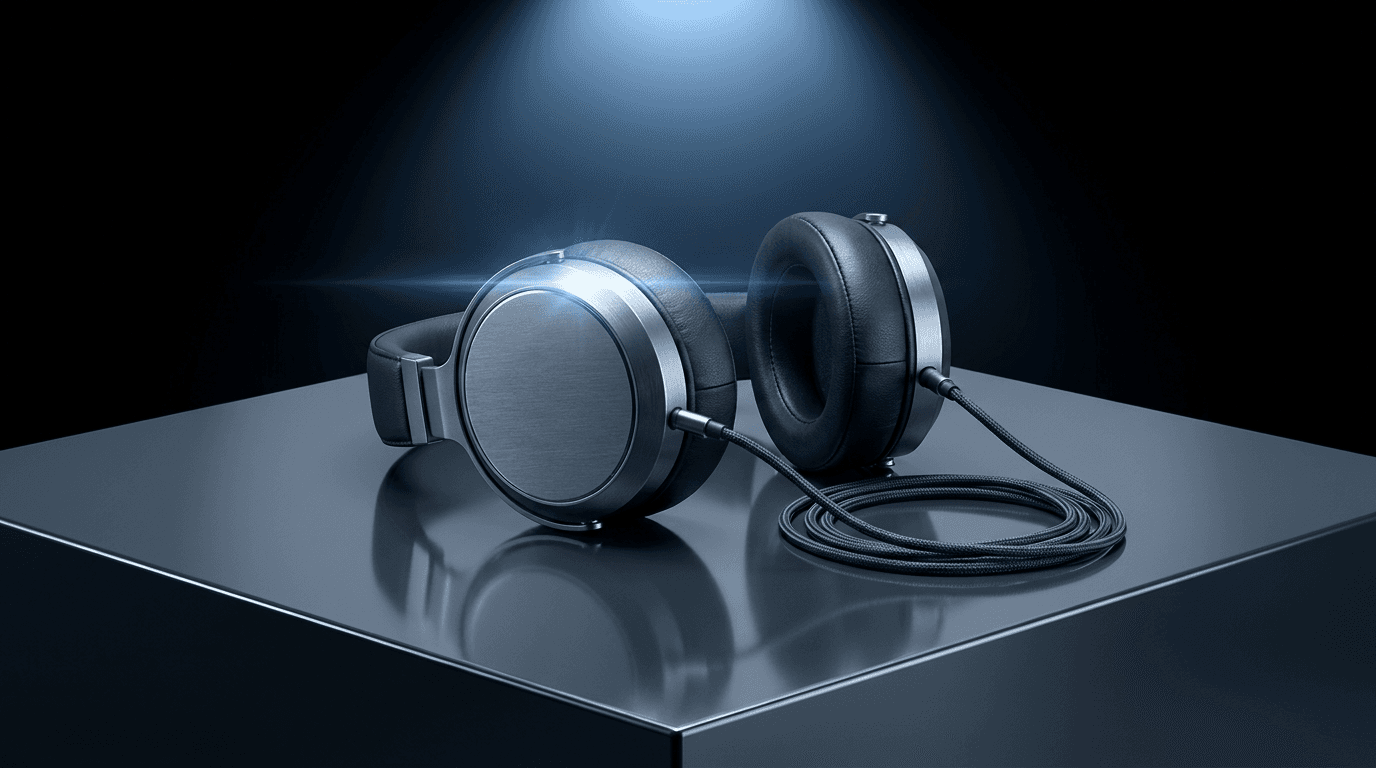
13. Headphones on Brushed Metal
Premium audio accessories photograph well in cold, minimalist dark moody settings because the aesthetic reinforces the engineering precision and material quality of the product.
Prompt
Premium over-ear headphones placed on a dark brushed gunmetal surface, single cold blue-tinted spotlight from directly above, lens flare catching the edge of the ear cup in a streak of light, deep black background, headphone cable loosely coiled beside the device, clean reflection of the headphone profile visible on the polished metal surface, editorial luxury audio brand photography, dark minimalist aesthetic, no warm tones anywhere in the frame, cool grey and near-black palette, cinematic product shot with editorial quality, shallow depth of field, ultra-realistic leather and metal material rendering
14. Spread Coffee Beans
This prompt works for coffee brand content, packaging design reference images, or cafe marketing. It emphasizes depth and texture over a single hero product, which creates a richly atmospheric composition.
Prompt
Roasted coffee beans spread across a dark textured stone surface, shallow depth of field with the nearest beans in sharp focus and the rest blending into soft bokeh behind them, warm amber low-angle spotlight casting long individual shadows from each bean, a small espresso cup partially visible at the right edge of the frame, steam rising from the cup catching the light, deep black and warm brown tones, moody artisan coffee brand photography, close-up crop with strong macro detail showing each bean's surface texture and center crease, atmospheric chiaroscuro lighting
15. Universal Dark Moody Template
This flexible prompt works as a starting point for any product category not covered above. Replace the bracketed text with your specific product and adjust the supporting props to match your brand context.
Prompt
[Describe your specific product here] on a dark stone surface surrounded by relevant props or botanicals that relate to the product story, dramatic side lighting from a single direction leaving half the frame in deep natural shadow, smoke wisps in the background adding atmospheric environmental depth, dark gradient background transitioning from deep grey to full black at the edges, rich editorial product photography, luxury brand visual, selective focus placing the product sharp and the background in bokeh, cinematic color grading with muted overall tones and one subtle color accent matching the product, highly detailed surface textures throughout the frame, professional advertising photography quality
Tips for Getting Stronger Dark Moody Results
Use Specific Light Direction Language
Vague lighting terms like "dramatic lighting" or "moody lighting" are interpreted inconsistently across AI image models. These specific lighting descriptions produce much more controlled results:
- "single spotlight from the left creating deep right-side shadows" focuses the light source precisely
- "soft diffused overhead light with hard edge shadows" keeps the scene bright but moody
- "backlit with rim lighting on the product edges" creates a glowing silhouette quality
- "candlelight from the lower right corner" adds organic warmth with a clear directional logic
- "cold blue-tinted studio light from a single softbox" communicates a commercial studio feel
The shadow direction is the visual anchor of dark moody photography, and naming the light source position gives the model a clear physical rule to follow rather than an aesthetic impression to interpret freely.
Name the Surface Material Explicitly
Surface texture is a supporting character in every great product image. These materials consistently produce strong results in dark moody AI product photography:
- Dark polished marble for a reflective, high-end finish
- Charcoal concrete for a rough, masculine, architectural feel
- Aged black oak wood for warmth and an artisanal quality
- Dark slate stone for a matte, natural, calm surface
- Brushed gunmetal for cool industrial precision
- Deep black velvet for softness and light absorption
- Weathered dark leather for aged, premium character
Mentioning the surface gives the image a grounded physical space and prevents the product from floating on an abstract, textureless background.
Add Atmospheric Background Elements
A dark background without any atmospheric depth can make product images feel digitally rendered rather than photographically real. Adding one or two atmospheric elements in the background consistently improves perceived quality and mood:
- "smoke wisps rising in the background"
- "bokeh candle flames blurred in the distance"
- "subtle ground fog surrounding the product base"
- "steam curling upward behind the product"
- "out-of-focus botanical elements emerging from the shadows"
None of these elements should compete with the product in focus. Their purpose is to fill the dark space with depth and texture while keeping all attention on the hero product.
Commit to a Color Temperature
Trying to blend warm and cold tones without deliberate intent is one of the most common reasons dark moody images look flat or tonally confused. Choosing one temperature and committing to it produces much more cohesive results.
Warm dark moody is built on amber, deep brown, burgundy, and gold. It works for food, spirits, candles, fragrance, and lifestyle products where warmth and indulgence are part of the brand story.
Cold dark moody uses grey, steel blue, charcoal, and silver. It works for technology, watches, men's grooming, and precision-focused brands where cool clarity reinforces the product positioning.
Explicitly naming the color palette at the end of your prompt removes ambiguity and produces much more consistent outputs across multiple generations.
Extending These Images Into Full Content Campaigns
A strong dark moody product image is a content foundation you can build from. Once you have the hero image, there are several ways to extend it into a full content set without starting over.

The Cinematic AI Video Generator on Miraflow AI can turn visual concepts from your prompts into short cinematic video clips, which are useful for product ads, social media campaigns, and brand storytelling content. If you want a moving version of the atmospheric product scene you have been generating images of, this is the most direct way to produce it without a separate production workflow.
For short-form social media content, Text2Shorts generates complete vertical videos from a text topic input, covering script, voiceover, and scene visuals in one workflow. It is a practical way to create Instagram Reels, YouTube Shorts, or TikTok content around a product launch without managing the full video production process manually.
The YouTube Thumbnail Maker lets you carry the dark moody visual style into your thumbnails, which helps create a consistent brand aesthetic across still images and video content. You can apply the same atmospheric, high-contrast look to channel art and video covers as you use for your product imagery.
If you are producing longer product videos and need to turn them into short clips, AI Clipping on Miraflow AI automatically identifies the most engaging moments, crops them vertically, and adds animated captions. This is useful when you have recorded a product review, brand story video, or behind-the-scenes session and want to distribute highlights as short-form content across multiple platforms.
You can also pair your dark moody product visuals with atmospheric background music using the AI Music Generator, which produces original tracks in under a minute. For product content that relies heavily on atmosphere and mood, matching the sonic texture to the visual texture adds a layer of production quality that stands out in branded content.
Common Mistakes That Flatten the Mood
Result is too bright. Add "dark low-key lighting," "shadow-dominant scene," and "black background" to the prompt. Adding "deliberately underexposed" or "candlelight as the only light source" reinforces the tonal direction when the model keeps generating bright results.
Background is too busy. Add "clean simple background," "background fading smoothly to black," or "minimal composition with only the product and surface visible." Competing background elements are usually caused by vague scene descriptions that the model fills with generic detail.
Product looks flat and two-dimensional. Describe the light reflection on the product material more specifically. For glass products, add "specular highlights on the glass surface" and "light refracting through the bottle." For metal, add "brushed metal surface catching directional light" or "polished edge with specular reflection."
Mood feels generic rather than editorial. Replace broad mood words with more specific references. Terms like "Rembrandt lighting," "chiaroscuro portrait-style lighting," "Dutch Golden Age still life aesthetic," and "luxury magazine editorial campaign" guide the model toward a recognizable visual tradition rather than an undefined general darkness.
Colors look muddy or inconsistent. Explicitly name the full color palette at the end of the prompt. Writing "deep burgundy, warm amber, and black tones throughout" or "cool grey, steel blue, and silver palette only" removes the ambiguity that causes models to blend incompatible color temperatures.
What Product Categories Work Best
The dark moody style produces consistently strong results across these product types.
Premium beverages, including whiskey, bourbon, rum, wine, cognac, craft beer, and specialty coffee, all photograph brilliantly under dramatic low-key lighting because the liquid, glass, and ice textures naturally catch and refract light in visually compelling ways.
Fragrance and cosmetics, including perfume, cologne, eau de parfum, serum, moisturizer, lipstick, and eye products, benefit from the style because the luxury positioning of most beauty brands aligns naturally with the editorial quality this aesthetic communicates.
Jewelry and watches depend on communicating craftsmanship and material quality. High-contrast lighting is the most reliable way to make a diamond shimmer or a watch dial glow against a dark background, and no other style does this as effectively.
Artisan food products, including dark chocolate, specialty cheese, aged charcuterie, truffle-based items, and luxury confectionery, benefit from a style that mirrors the indulgence and richness of the product itself.
Lifestyle and home accessories, including scented candles, leather goods, home fragrance, and premium stationery, rely on atmosphere and lifestyle aspiration, which the dark moody style communicates more effectively than most other visual approaches.
The style is generally not the right fit for products where vibrancy, approachability, or cheerfulness are core to the brand identity. Children's products, fresh produce, colorful fashion collections, and budget-oriented consumer goods typically perform better in high-key or brightly lit photography where the emphasis is on clarity and accessibility.
For more guidance on using AI tools for visual content creation, the Miraflow AI blog covers topics including image generation prompt strategies and visual content for YouTube and social media. You can also find broader guidance on visual social media content strategy through Sprout Social's content resources.
FAQ
Can I use these prompts in any AI image tool?
Yes. These prompts are written in a general format that works with most text-to-image AI tools. They are optimized for platforms that support detailed scene descriptions, lighting references, and style keywords. The AI image generator on Miraflow AI supports all of these parameters and runs directly in the browser without any installation.
Do I need the actual product to create dark moody images?
No. These prompts generate entirely AI-created product scenes. If you need the image to accurately represent your specific physical product, the image-to-image feature inside the Miraflow AI image generator is the better approach. You upload a photo of your actual product as a reference and apply the dark moody style on top of it.
How do I make the product look more photorealistic?
Add specific material descriptors for the product and include photographic reference terms at the end of the prompt. Words like "shot on Canon EOS R5," "commercial product photography," "ultra-realistic," and "photographic rendering" push most AI image models toward photographic realism rather than illustrated or stylized outputs.
What image dimensions work best for dark moody product photography?
For Instagram feed posts, a 4:5 ratio works well because it fills more vertical screen space. For YouTube thumbnails, a 16:9 landscape format is standard. For product listing images on e-commerce platforms, a 1:1 square format is most commonly required. Generating at your target aspect ratio avoids cropping important compositional elements after generation.
Can I extend these product images into video content?
Yes. Once you have a strong product image from text-to-image generation, you can use the Cinematic AI Video Generator on Miraflow AI to create short atmospheric video clips using the same visual concept. This creates matching still and video assets for a product campaign without two separate production workflows.
How many variations should I generate per prompt?
Generating at least five to ten variations of each prompt before selecting a final image is a reliable practice. Lighting placement, shadow depth, and compositional framing vary between generations even with identical prompts, and the range of options within ten generations is usually much wider than it appears from the first two or three results.
What is image-to-image and when should I use it for product photography?
Image-to-image generation uses an existing image as a starting reference and combines it with a text prompt to produce a new image that blends the original content with the described style. For product photography, it is the right choice when you need the specific shape and details of your actual product to appear accurately in the generated image while the background, lighting, and atmosphere follow the dark moody prompt style.
Can these prompts be used for e-commerce product listings?
Yes. AI-generated product images are widely used for e-commerce listings, social media, and advertising. For product listings that require white backgrounds, you can generate the dark moody version first and then use inpainting within the Miraflow AI image generator to replace the background while keeping the product rendering.
Conclusion
Dark moody product photography works because it creates a visual language that communicates premium quality, atmosphere, and brand intention without needing a word of copy. The 15 prompts in this post cover the most common product categories where this aesthetic performs strongly, from whiskey and fragrance to skincare, jewelry, watches, and specialty food.
The core principles behind every strong dark moody image are the same: specific light direction, named surface materials, atmospheric depth in the background, and a deliberate color temperature that commits fully to either warm or cold. Getting all four of these elements into your prompt consistently pushes AI-generated results from generic to genuinely editorial.
All of these prompts work directly in the AI image generator on Miraflow AI, where you can run text-to-image generation, upload a real product reference for image-to-image workflows, and use inpainting to refine specific elements of a generated image after the fact. From there, the full Miraflow AI platform lets you extend your product visuals into cinematic video, short-form social content, thumbnails, and atmospheric background music, all without leaving the browser.