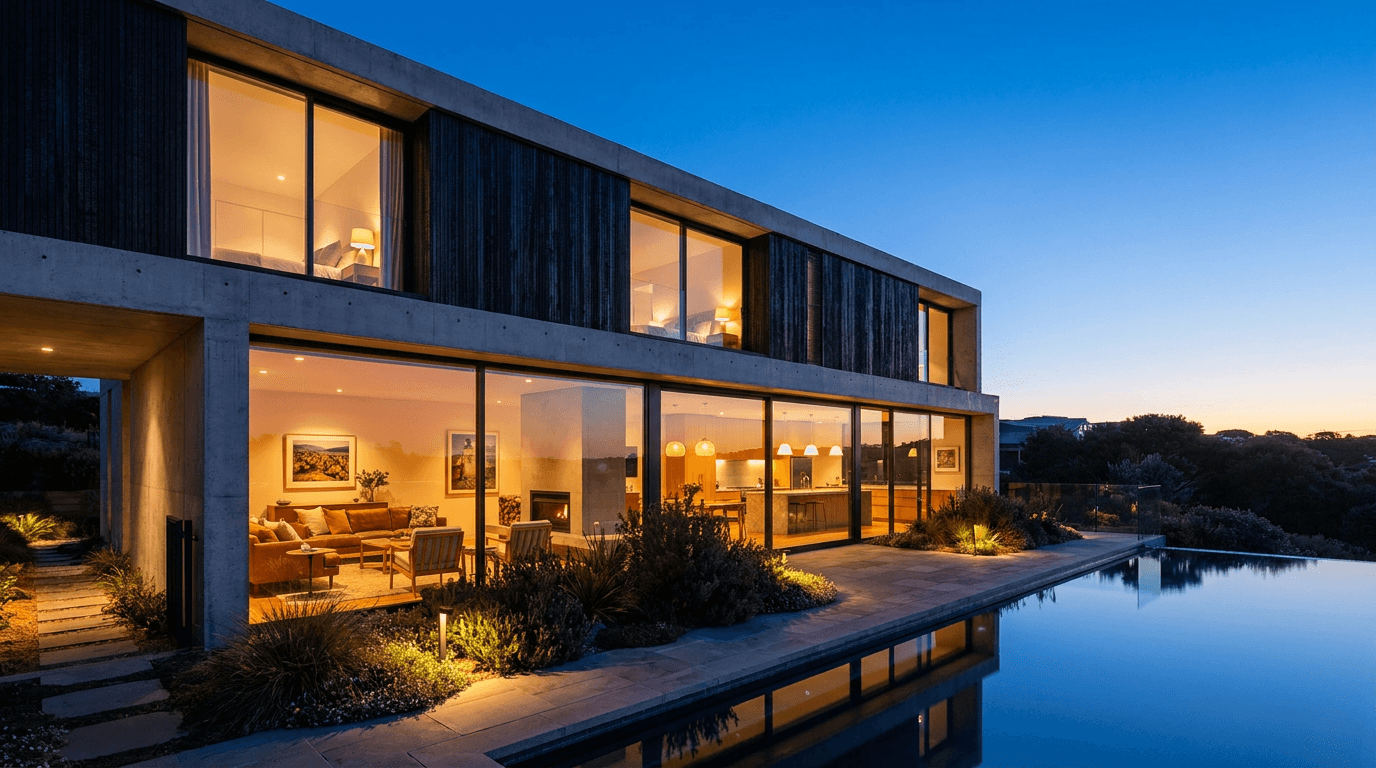
AI Prompts for Furniture Brand Content: 15 Lifestyle Visuals That Convert (Copy & Paste)

Written by
Jay Kim
15 copy-paste AI prompts for furniture brand lifestyle visuals that convert. Covers living rooms, bedrooms, dining, Scandinavian, MCM, Japandi, outdoor, and more.
Furniture is one of the hardest product categories to sell online, and the reason is almost always visual. A sofa on a white background tells a browser almost nothing useful: they cannot feel the fabric, understand the scale, or picture the piece in their own home. The same sofa photographed in a warm, well-lit living room with a throw casually draped over the arm, morning light on the cushions, and a coffee table styled with a few books tells a complete story about what it would feel like to own it. That difference in visual communication is what separates furniture brands with strong online conversion from those that consistently see traffic without sales.
Lifestyle visuals are not decoration in furniture marketing. They are the primary conversion mechanism. They answer the three questions every furniture buyer needs answered before they purchase: Will it look right in my home? Will it feel the way I want my space to feel? Is it worth what they are asking? Great furniture lifestyle photography answers all three in a single image.
This post gives you 15 ready-to-use AI prompt templates for furniture brand content, covering every major room type and design aesthetic from Scandinavian minimalism and mid-century modern to Japandi, industrial loft, cozy reading nook, and outdoor living. Every prompt is built to generate the kind of atmospheric, material-rich, architecturally grounded lifestyle imagery that furniture buyers respond to. You can run all of them directly in the AI image generator on Miraflow AI without any setup.
Why Lifestyle Context Is the Conversion Engine for Furniture Brands
Most product categories can survive a clean product image on a neutral background. Furniture cannot. The reason is rooted in how people actually make furniture purchasing decisions, which is fundamentally different from how they buy electronics, clothing, or accessories.
Furniture buyers are purchasing a version of their home that does not yet exist. They are not evaluating an object in isolation. They are evaluating how that object will change the feeling of a room they spend a significant part of their life in. This means the most important question they are trying to answer is not what the piece looks like but what their home will feel like with this piece in it.
Lifestyle photography answers that question by constructing a version of the desired home environment around the furniture piece. When the image shows soft morning light falling on a linen bedspread, a ceramic carafe on the nightstand, and a trailing plant in the corner, it is not just styling for aesthetics. It is constructing the emotional experience the buyer is actually purchasing, with the furniture piece as the vehicle for that experience.
This is why furniture brands that invest in room-context lifestyle photography consistently outperform those that rely on isolated product shots, and it is why the specific quality of the lifestyle context, the light, the room architecture, the accessories, and the emotional register, matters enormously for conversion.
Understanding the factors that drive furniture purchase decisions also helps prioritize which visual elements to build into your prompts. According to research on home goods e-commerce behavior, visual context that helps buyers imagine a product in their own home is the single most important feature of effective furniture product pages, significantly outperforming detailed specifications and even customer reviews in its influence on purchase decisions.
The Four Visual Variables That Make Furniture Images Convert
Before getting into the prompts, it is worth understanding the specific variables that separate high-converting furniture lifestyle imagery from imagery that simply looks nice.
Architectural space and scale. Furniture without architectural context has no scale reference. Buyers cannot tell if a sofa is 200cm or 280cm wide from a product-only image. Showing the furniture within a room, with visible walls, windows, flooring, and ceiling height, gives the piece a dimensional context that communicates scale more effectively than any specification. Building specific architectural details into your prompts is the single most conversion-relevant decision you make when generating furniture imagery.
Natural light quality and time of day. Light determines whether a room feels like a morning space, an evening space, a working space, or a resting space, and different furniture categories have different emotional contexts that correspond to different light qualities. Bedroom furniture converts best in soft morning or warm evening light. Living room furniture converts in warm afternoon or evening social light. Home office furniture converts in clean, even daylight. Matching the light quality to the room's emotional purpose makes the image feel true rather than staged.
Styling accessories as aspiration amplifiers. A sofa by itself communicates the sofa. A sofa with a thoughtfully placed throw, a coffee table with curated books and a small ceramic vase, and a potted plant in the corner communicates a complete aspirational domestic environment. The styling accessories are not background noise. They are the lifestyle signal that tells the viewer what kind of person lives in this room and whether they want to be that person.
Material rendering quality. Furniture buyers are paying significant amounts of money for pieces they cannot touch before purchase. The quality and realism of how fabric texture, wood grain, leather, and metal finishes are rendered in the image determines how much trust the image generates. Prompts that include specific material quality descriptors consistently produce more convincing, trust-generating imagery than those that describe materials generically.
Interior Design Style Aesthetics and Why They Matter for Targeting
Furniture buyers search and shop by aesthetic category as much as by product type. Someone searching for a sofa is often specifically searching for a Scandinavian sofa, a mid-century modern sofa, or an industrial-style sofa. The visual language of each aesthetic has its own color palette, material vocabulary, and lifestyle signal, and matching your generated imagery to your target aesthetic category dramatically improves how effectively it attracts and converts the right buyer.
Scandinavian and Nordic aesthetics use cool white and warm natural wood tones, functional clean-line furniture with organic shapes, natural materials like wool, linen, and oak, and generous empty space as an intentional design element.
Mid-century modern aesthetics use warm walnut and teak wood tones, tapered legs with visible joinery quality, saturated accent colors in mustard, burnt orange, and teal, and the interplay between organic forms and geometric graphic elements.
Contemporary and transitional aesthetics bridge multiple style influences and typically use a warm neutral palette with one material accent, clean upholstered forms, and styling that communicates effortless quality without strong period references.
Industrial loft aesthetics use exposed brick or concrete walls, leather and reclaimed timber, black steel frame details, and a rougher material palette that communicates authenticity and unconventional confidence.
Japandi aesthetics combine Japanese and Scandinavian influences in the most restrained and materially considered furniture visual language, using natural undyed textiles, very low furniture proportions, negative space as a compositional principle, and muted earthy natural tones.
Building the specific aesthetic vocabulary of your target style into every prompt ensures the generated imagery reaches and converts the audience that is already searching in that design language.
15 AI Prompt Templates for Furniture Brand Content
1. Living Room Sofa in Golden Afternoon Light
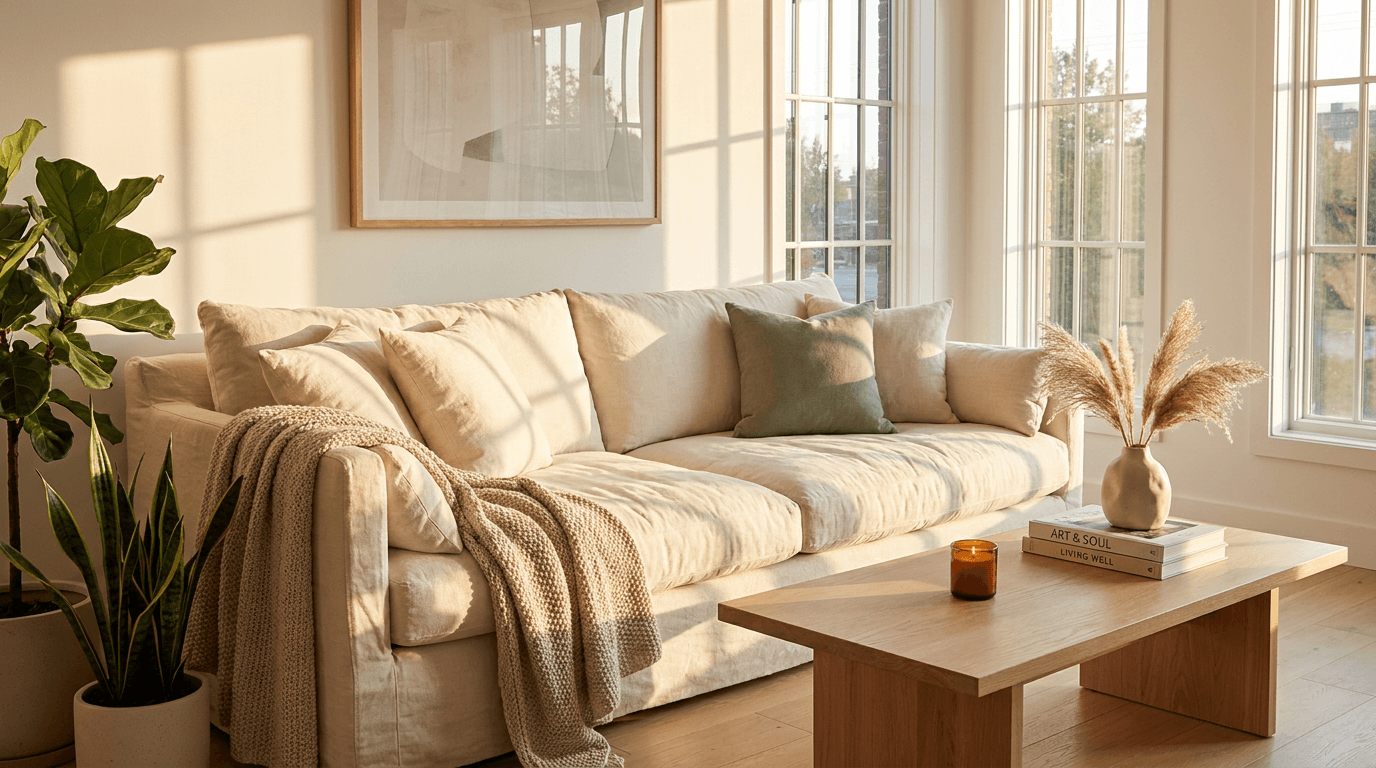
The living room sofa is the highest-consideration piece in most furniture buyer journeys, and the hero lifestyle image needs to communicate comfort, scale, and aspiration simultaneously. Golden afternoon light is the most emotionally effective light for sofa photography because it communicates warmth and the quality of hours spent at rest.
Prompt
Warm editorial lifestyle interior photograph of a large deep-seated sofa with loose linen cushions positioned in a bright contemporary living room, warm golden afternoon light streaming through tall windows onto the sofa fabric surface and the light natural oak wood flooring, a natural oak coffee table in front of the sofa styled with a small ceramic vase of dried pampas grass, two stacked art books, and a small candle, a textured knitted throw casually draped over one sofa arm, a large abstract art print in a thin frame on the white wall behind, the sofa fills approximately forty percent of the frame communicating scale in the room architecture, indoor plants at the left frame edge, warm cream and natural wood tones with a muted sage green accent cushion, editorial interior design lifestyle photography, ultra-realistic linen fabric texture and window light rendering on the sofa surface, the scene communicates daily comfort and aspirational domestic warmth, professional furniture brand campaign quality, no text no logos
2. Morning Bedroom Linen and Light
Bedroom furniture imagery converts most effectively when it communicates the specific feeling of a good morning in a beautiful room. The unmade but considered quality of morning bedding is more aspirational than a perfectly dressed hotel bed because it signals that real life in this room is genuinely comfortable.
Prompt
Soft morning lifestyle interior photograph of a solid wood platform bed with naturally layered linen bedding in warm white and oatmeal tones showing the fabric texture of a slept-in but beautiful morning, soft diffused morning light from sheer-curtained large windows creating a gentle directional glow that reveals the linen weave texture across the pillows and duvet, a low natural wood nightstand beside the bed with a small stack of books, a ceramic carafe of water, and a minimal table lamp with a warm glow, a single trailing indoor plant on a small rattan stool in the far corner, the bed frame material and headboard design are clearly lit and visible, warm white and natural oatmeal tones, editorial bedroom lifestyle photography, the image communicates the specific feeling of a well-rested morning in a room designed with care, ultra-realistic linen fabric weave texture and soft morning light rendering, professional furniture brand lifestyle photography quality, no text no logos
3. Dining Room Evening Gathering
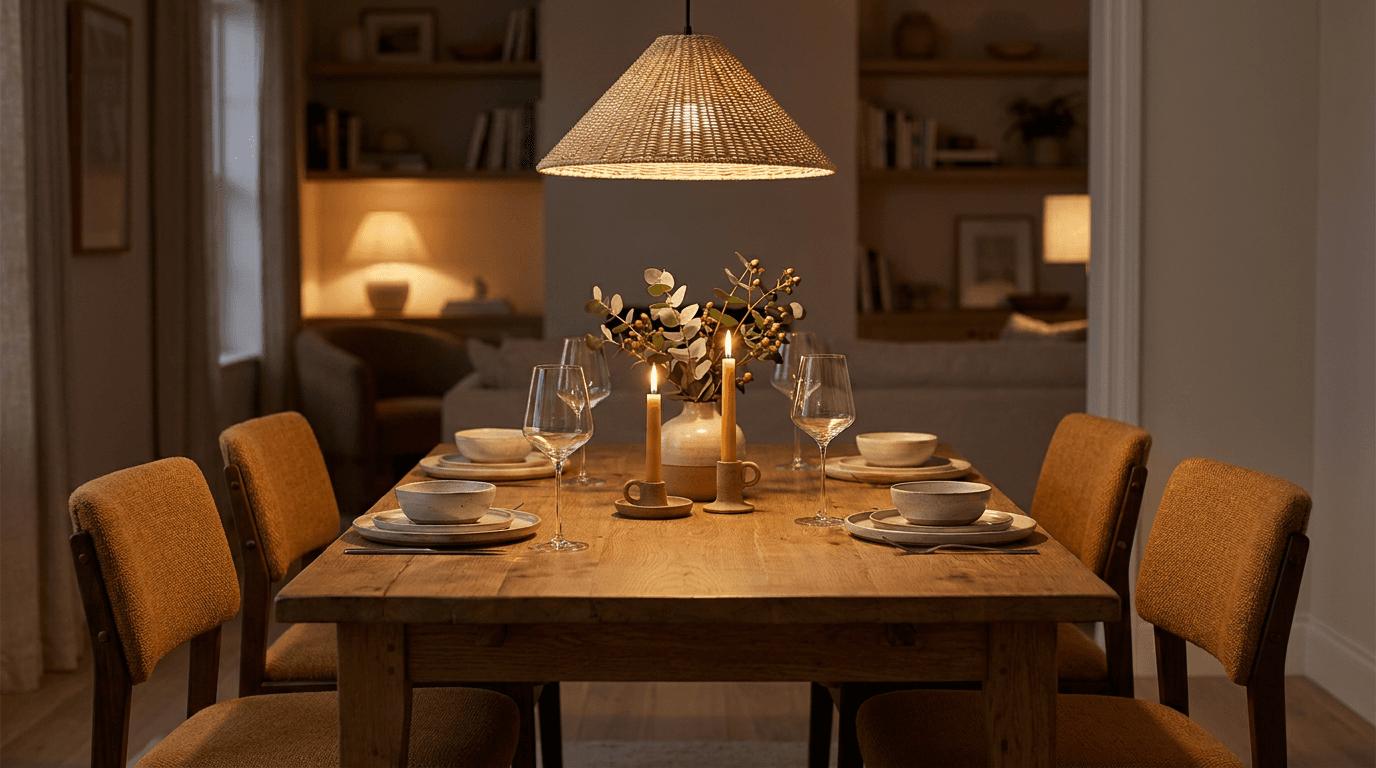
Dining furniture imagery needs to communicate the social warmth of gathering rather than the formal rigidity of a perfectly set table that no one has sat at. The evening light and the suggestion of a meal about to begin creates the emotional context that converts dining table buyers.
Prompt
Warm editorial interior photograph of a solid natural oak or walnut dining table set for an evening meal with four upholstered dining chairs positioned around it, a warm pendant light with a natural material shade hanging above the table center and casting a warm pool of light on the wood surface revealing the grain character and material quality, the table set with simple ceramic dinnerware, tall wine glasses catching the pendant light, two candles in ceramic holders, and a low arrangement of garden stems in a simple vase at the table center, the chairs show the upholstery fabric and leg joinery quality clearly, the room beyond the table is warm and softly lit suggesting a welcoming home environment, warm amber and deep wood tones, editorial interior lifestyle photography, the image communicates the social warmth and material quality of the furniture in a lived-in evening context, ultra-realistic wood grain and upholstery rendering, professional furniture brand campaign quality, no text no logos
4. Minimalist Scandinavian Living Room
Scandinavian furniture buyers make purchase decisions based primarily on the coherence and quality of the complete room aesthetic. The visual language of this aesthetic is one of the most specific in the furniture category, and every element of the prompt needs to reinforce the Nordic design vocabulary to convert this audience.
Prompt
Clean editorial interior photograph of a minimalist Scandinavian living room built around a low-profile natural oak wood sofa frame with light grey wool upholstered cushions, light natural oak hardwood flooring throughout, a simple geometric coffee table in pale ash wood with a small ceramic bowl and one art book on its surface, a single large-leafed indoor plant in a simple terracotta pot positioned in the room corner, a textured Scandinavian wool throw folded neatly over the sofa arm, white walls with one large framed architectural photograph in a thin black frame, large clean windows letting in cool even northern daylight, deliberate generous breathing space visible in the composition communicating the Scandinavian principle of purposeful emptiness, cool white and warm natural wood tones, editorial Nordic interior design photography, ultra-realistic wool upholstery and pale oak wood grain rendering, the image communicates calm and intentional quality, professional furniture brand campaign quality, no text no logos
5. Mid-Century Modern Interior
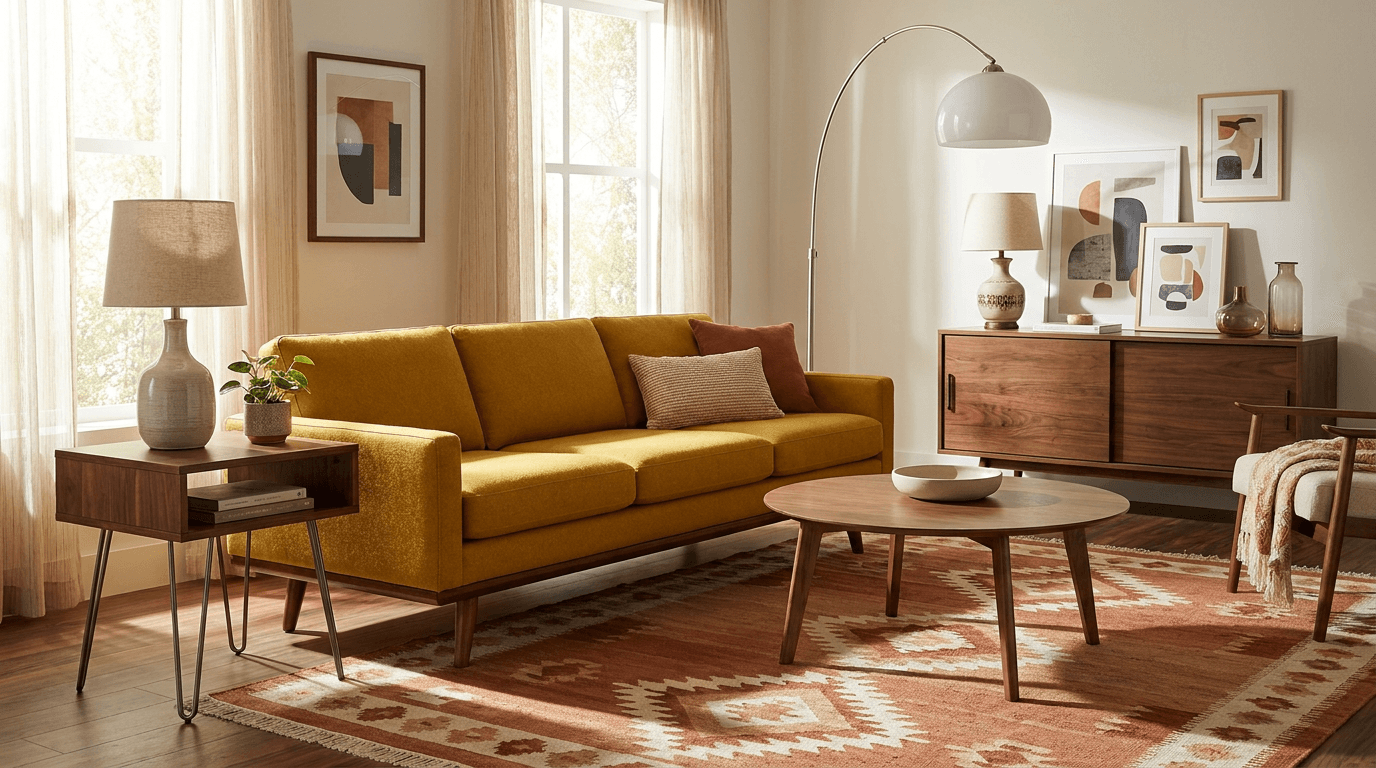
Mid-century modern furniture buyers are among the most visually educated in the furniture category. They recognize period-accurate details immediately and respond to imagery where the styling fully commits to the aesthetic vocabulary rather than mixing period references.
Prompt
Editorial interior photograph of a mid-century modern living room built around a low-profile walnut wood frame sofa with mustard yellow wool upholstery, tapered solid walnut legs with visible quality joinery, a matching walnut side table with hairpin metal legs, a round walnut coffee table with a simple ceramic bowl at the center, a large geometric area rug in warm terracotta and cream tones beneath the furniture grouping, a floor-standing arc lamp with a white dome shade positioned over the sofa reading area, a low walnut credenza against the back wall with period-appropriate objects including a ceramic table lamp and framed art prints above, warm walnut brown and mustard yellow with terracotta accent tones, editorial mid-century interior design photography, ultra-realistic walnut grain and wool upholstery rendering, the image communicates the timeless warmth and geometric confidence of the MCM aesthetic, professional furniture brand campaign quality, no text no logos
6. Industrial Loft Furniture Scene
Industrial aesthetic furniture buyers respond to visual evidence of material authenticity. Exposed brick, concrete, raw timber, and aged leather all need to look genuinely material rather than decoratively applied in imagery that converts this audience.
Prompt
Editorial interior photograph of an industrial loft living space with an exposed red brick wall as the room's defining architectural element, a leather upholstered deep sofa with a visible metal frame base in the foreground, a low reclaimed timber coffee table with natural edge detail on its surface, poured concrete flooring with a large woven natural fiber area rug beneath the furniture grouping, black powder-coated steel pipe pendant lights hanging above the seating area, factory-style large windows with steel frames letting in strong directional afternoon light, black steel open shelving against the brick wall holding curated books and ceramics, the furniture materials including aged leather, steel frame, and reclaimed timber are all visible and communicate genuine industrial material quality, warm aged leather and cool grey brick and steel tones, editorial industrial interior design photography, ultra-realistic aged leather grain and concrete floor texture rendering, professional furniture brand campaign quality, no text no logos
7. Japandi Serene Interior
Japandi is the fastest-growing furniture aesthetic segment precisely because it combines Nordic functionality with Japanese material philosophy in a way that communicates the most considered and peaceful version of a domestic interior. Imagery for this aesthetic needs to achieve genuine visual quiet.
Prompt
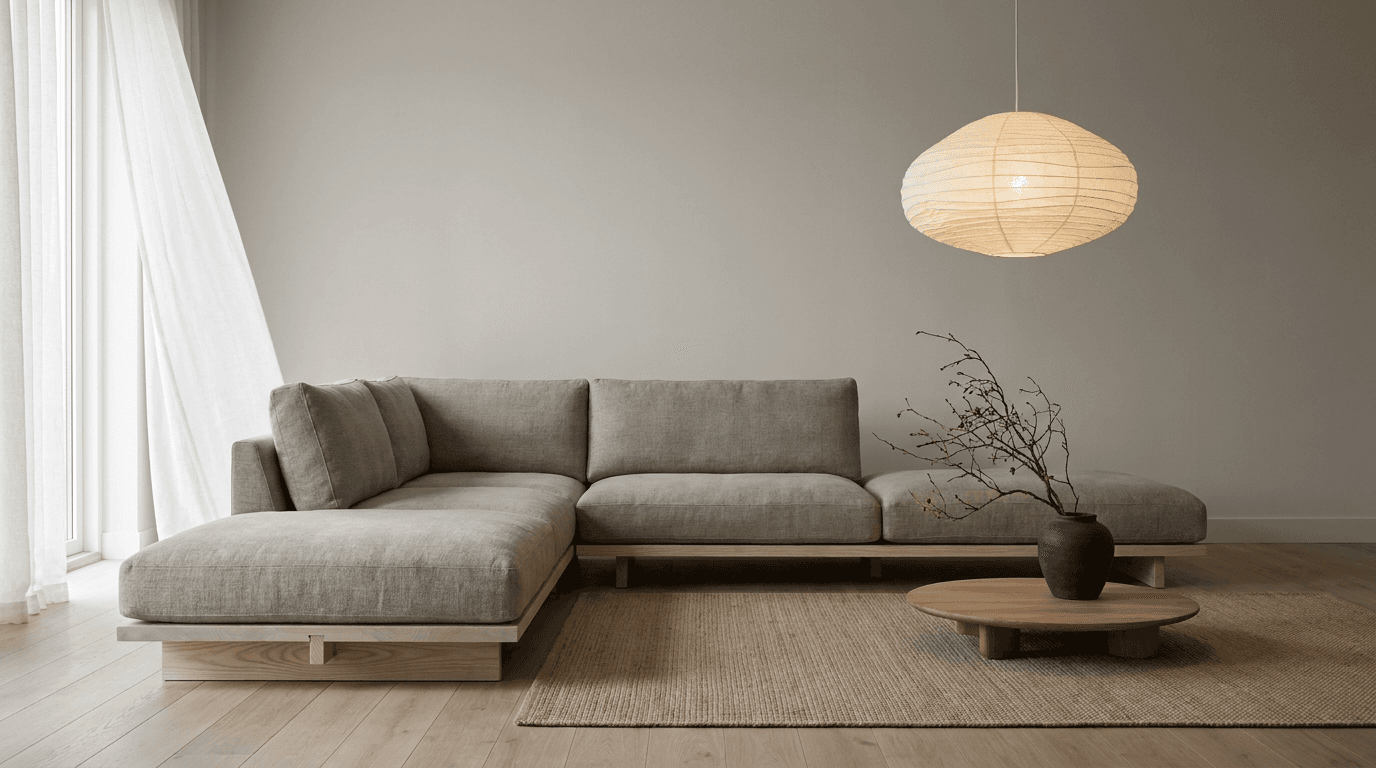
Serene editorial interior photograph of a Japandi-style living space built around an extremely low Japanese-proportioned platform sofa in natural undyed heavy linen fabric with a pale solid wood platform base showing the joinery quality, a simple asymmetric branch arrangement in a hand-thrown ceramic vase positioned on the floor beside a very low solid wood coffee table, natural fiber tatami-style rug on light pale wood flooring, a washi paper pendant lamp above creating warm diffused light, a single sheer white curtain panel moving slightly in a gentle light, the composition uses generous empty floor space as a primary visual element, muted natural tones of warm white, pale ash wood, greige undyed linen, and one element of dark charcoal ceramic, editorial Japandi interior design photography, ultra-realistic natural linen weave and pale wood material rendering, the image communicates profound domestic calm and material restraint, professional furniture brand campaign quality, no text no logos
The Miraflow AI image generator supports image-to-image generation, which lets you start from a reference photograph of your actual furniture piece and apply the room styling, lighting, and architectural context described in these prompts around it. This produces images where your specific furniture design appears accurately within the generated lifestyle scene rather than a generic version of the piece.
8. Cozy Reading Nook Armchair Scene
Reading nook and armchair imagery converts buyers who are making a highly personal purchase around a specific daily ritual. The warmth and specificity of the reading context in the image determines how strongly it resonates with the buyer's own aspirational version of that ritual.
Prompt
Intimate editorial interior photograph of a reading corner built around a deep cushioned armchair in warm oatmeal or moss green fabric, positioned at the junction of a white wall and a floor-to-ceiling bookshelf filled naturally with books of varying heights and tones, a small round solid wood side table beside the chair with a ceramic mug of tea, an open book face-down on the chair arm, and a small table lamp with a warm amber glow creating a pool of light on the chair and immediate surroundings, a soft wool throw folded over the chair arm, a small upholstered footstool in front of the chair, warm afternoon natural light from a window complementing the lamp warmth, warm amber lamp and cream bookshelf tones, editorial interior lifestyle photography, the image communicates the specific comfort and aspiration of a life organized around reading and rest, ultra-realistic upholstery fabric and warm lamp light rendering, professional furniture brand lifestyle photography quality, no text no logos
9. Home Office Productive Workspace
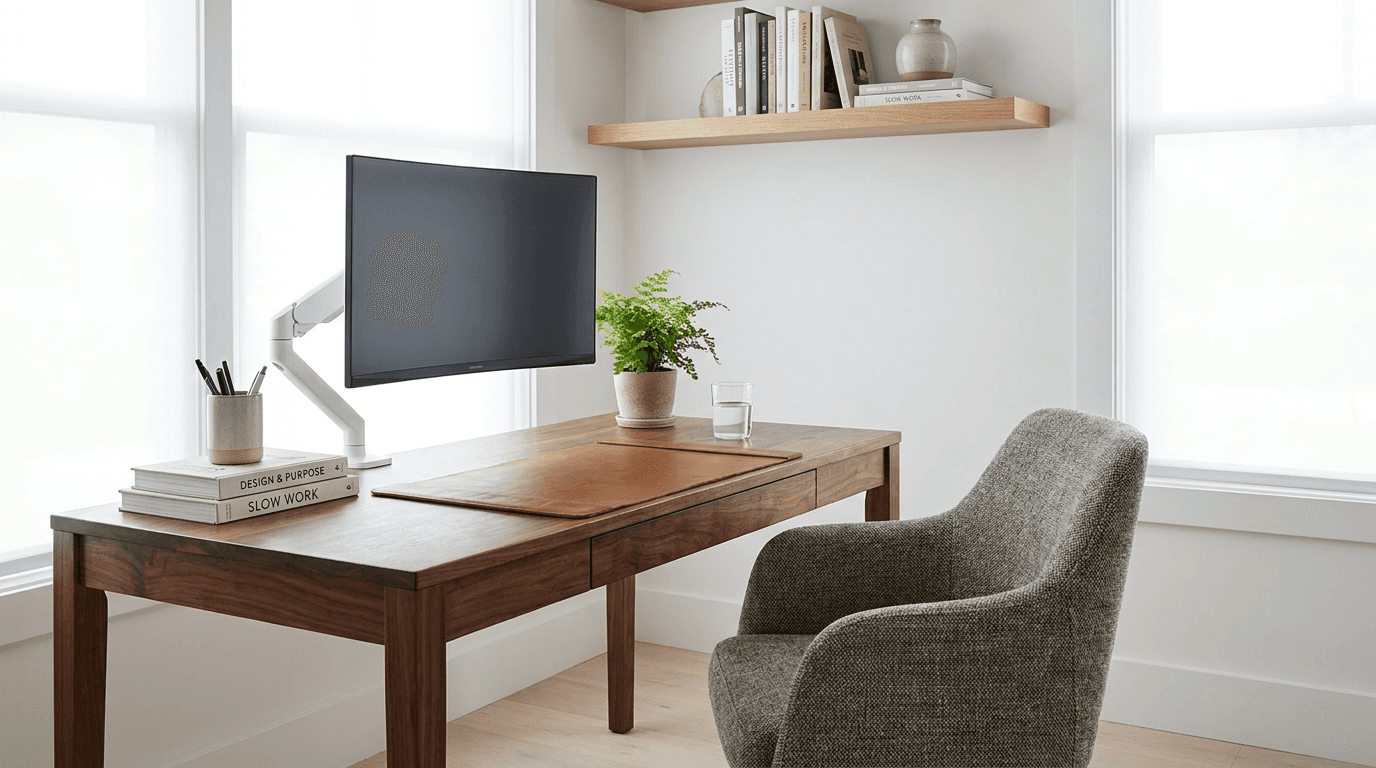
Home office furniture conversion depends on communicating a specific emotional state: the calm confidence of a well-organized mind working in a well-designed space. Clutter undermines conversion in this category because it suggests the furniture cannot create the productive clarity the buyer is purchasing.
Prompt
Clean editorial interior photograph of a well-considered home office workspace with a solid oak or walnut desk with a leather surface writing pad, a quality upholstered desk chair with visible material and construction quality, a monitor on a minimal arm mount at ergonomic height, a carefully considered desk surface arrangement including a small ceramic pen holder, two reference books stacked at the corner, a small indoor plant, and a clean glass of water, large windows with diffused white daylight as the primary light source creating clean even work lighting without shadows, a floating shelf above the desk with curated books and one or two small objects, white walls and warm natural wood tones, editorial workspace lifestyle photography, ultra-realistic wood grain desk surface and chair upholstery material rendering, the image communicates that this desk is the kind of place where good work happens and where a person feels in control of their professional life, professional furniture brand campaign quality, no text no logos
10. Outdoor Patio Living Scene
Outdoor furniture imagery converts most effectively when it communicates the aspirational quality of outdoor living as a genuine extension of interior domestic comfort rather than purely functional garden furniture. The garden and architectural context are as important as the furniture itself.
Prompt
Warm lifestyle editorial photograph of an outdoor terrace living space with an all-weather outdoor sofa with deep weather-resistant cushions in a natural stone or warm grey tone, positioned on a natural stone or large format concrete tile patio surface, a low teak or powder-coated metal frame coffee table in front of the sofa with a glass of cold water and a small ceramic bowl of summer fruit, the terrace is surrounded by lush garden planting including tall grasses, potted herbs, and climbing plants on a low wall, warm evening golden light creating long soft shadows across the patio surface and illuminating the surrounding garden with a warm green glow, outdoor wall lanterns partially visible contributing warm accent light, deep garden green and warm terracotta or pale grey stone tones, editorial outdoor living photography, ultra-realistic all-weather upholstery and natural stone patio surface rendering, the image communicates that this is a room that simply happens to be outdoors, professional outdoor furniture brand campaign quality, no text no logos
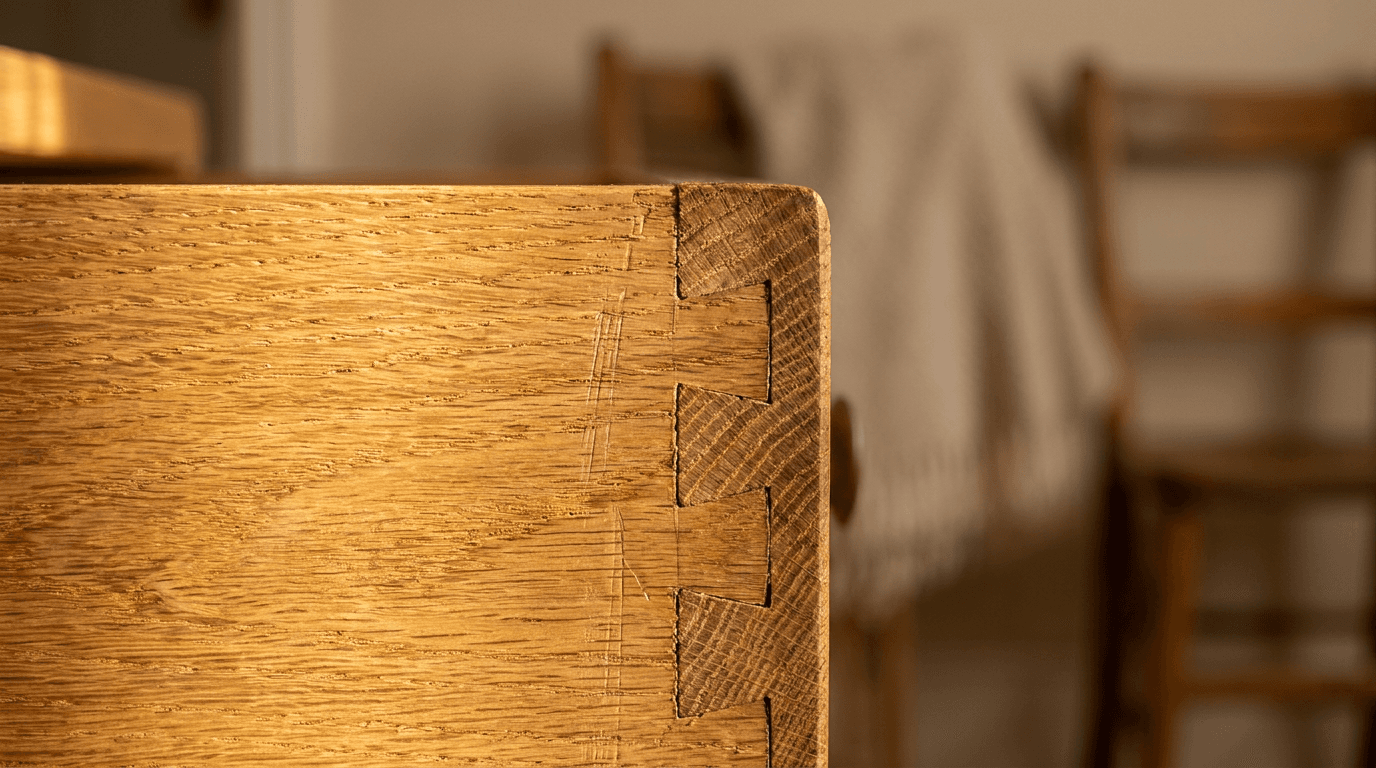
11. Furniture Material and Craftsmanship Detail
Material detail photography serves a specific and critical conversion function for premium furniture brands: it provides the visual proof of quality that buyers at the high end of the market need before they can justify a significant purchase without touching the piece. The quality of the detail rendering in this image type is the quality signal that unlocks high-value transactions.
Prompt
Extreme close-up detail photograph of premium furniture craftsmanship, the specific subject being a hand-cut dovetail joint on a solid oak drawer front showing the precise fit and wood grain alignment, a single directional warm light source from the left side raking across the wood surface at a low angle revealing every grain direction change, tool mark history in the wood surface, and the precision of the joint fit, the background shows a warm soft-focus room environment suggesting the furniture is in a real home rather than a studio, the joinery fills the majority of the frame with the room context softly visible at the edges, warm honey oak and amber tones, editorial furniture craftsmanship photography, ultra-realistic solid oak wood grain and surface texture rendering with every detail visible, the image communicates the irreplaceable quality of handmade joinery through visual material detail alone, professional premium furniture brand campaign quality, no text no logos
12. Full Bedroom Interior Collection Shot
Full room interior shots serve buyers who are considering a complete bedroom collection rather than individual pieces, and the conversion goal is communicating how the pieces work together as a designed environment. Scale in the full architectural context is the most important variable in this image type.
Prompt
Wide interior lifestyle photograph of a fully styled contemporary bedroom interior showing the complete room architecture including ceiling height and natural window placement, a large upholstered bed with a padded headboard in the center of the composition, matching natural wood nightstands with warm ceramic table lamps creating symmetrical ambient light, a low dresser or wide chest of drawers against the facing wall styled with a round mirror above, layered bedding in warm white and soft dusty rose with one textured linen cushion accent, a natural fiber area rug extending out from under the bed, the room communicates the complete bedroom as a coherent designed environment rather than a collection of individual pieces, warm cream and natural bedroom tones, editorial bedroom interior design photography, ultra-realistic upholstery and warm lamp light rendering, the architectural context communicates the scale of each piece in the real room environment, professional furniture brand lifestyle photography quality, no text no logos
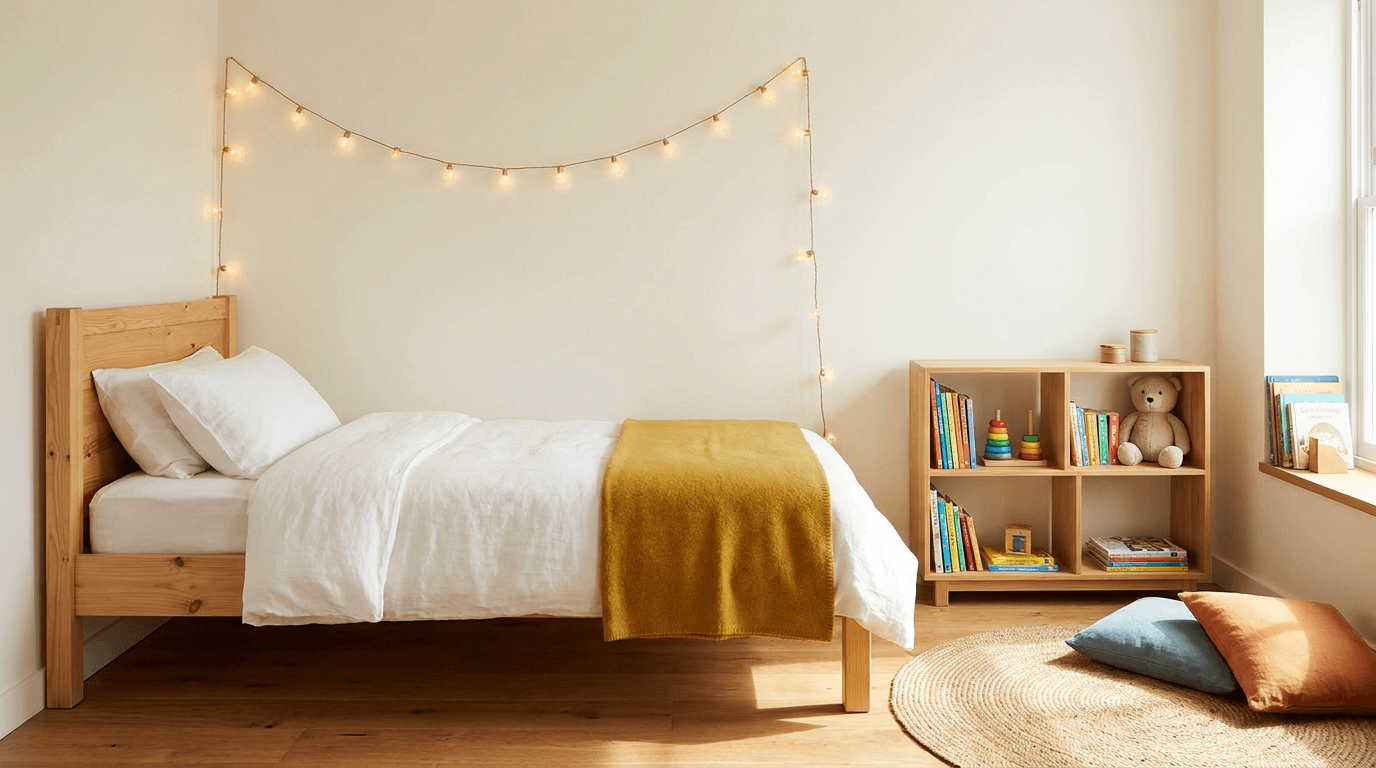
13. Children's Room Well-Designed Scene
Children's furniture imagery needs to communicate simultaneously to two different audiences: the parent who is buying based on quality, safety, and longevity, and the child whose imagination and enthusiasm for the room needs to be visible. The most effective children's furniture images achieve genuine warmth without looking chaotic.
Prompt
Bright cheerful editorial interior photograph of a well-considered children's bedroom with a solid natural wood single bed frame with a quality mattress and clean bedding, a low open bookshelf at child height filled with colorful children's books and a few small toys arranged naturally rather than posed, a small reading rug with cushions and a soft toy or two in the floor space, a string of warm small globe lights above the bed adding magical warmth to the room, the room architecture shows appropriate scale for a child's space with a low window and manageable proportions, the furniture communicates both quality construction for parents and a genuinely inviting environment for a child, warm white and natural pine wood tones with one warm accent color in the rug or bedding, editorial children's interior design photography, ultra-realistic natural wood and soft textile rendering, the image communicates furniture beautiful enough for parents and genuinely inviting for children, professional furniture brand campaign quality, no text no logos
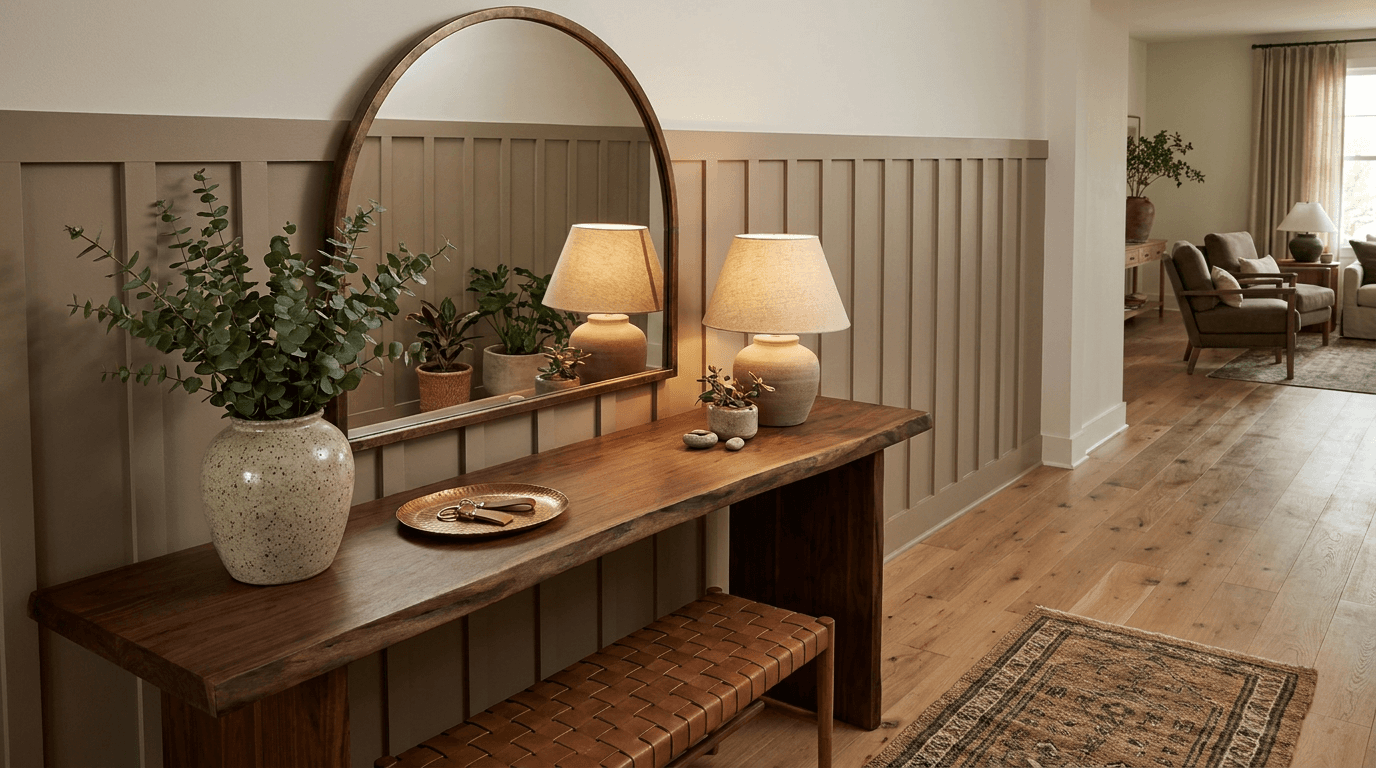
14. Entryway and Console Table Scene
Entryway furniture imagery is often underinvested by furniture brands despite the fact that the entryway is the first room visitors encounter and a strong styling signal about the quality of the entire home. Buyers of console tables and entryway benches are purchasing first impressions, and the imagery needs to communicate exactly that value.
Prompt
Editorial interior photograph of a beautifully styled home entryway with a solid wood or metal frame console table as the primary piece against a wall with architectural interest such as painted paneling or a tonal wallpaper in a warm neutral, above the console a large round arch mirror reflecting the warm interior light and the suggestion of the room beyond, the console surface styled with a hand-thrown ceramic vase holding fresh eucalyptus stems, a small textured tray holding keys and a few simple objects, and a warm table lamp with a linen shade, a natural wood or upholstered bench positioned below the console, a quality area runner on the natural wood flooring leading toward the console, warm natural tones with one warm accent material, editorial interior lifestyle photography, ultra-realistic wood grain console and mirror reflection rendering, the image communicates that a considered entryway sets the emotional tone for an entire home, professional furniture brand campaign quality, no text no logos
15. Universal Furniture Lifestyle Template
This flexible prompt works as a starting foundation for any furniture piece, room type, or design aesthetic not covered specifically by the prompts above. Replace each bracketed section with your specific product and campaign requirements.
Prompt
[Describe your specific furniture piece including type, material, color, and key design details here] as the central and largest element in a [living room, bedroom, dining room, home office, outdoor terrace, entryway, children's room] interior setting, styled in a [Scandinavian minimalist, mid-century modern, contemporary, industrial loft, Japandi, coastal, traditional] aesthetic, [describe the lighting quality: warm golden afternoon light from large windows, soft diffused morning light through sheer curtains, warm evening pendant and lamp light, clean even northern daylight], surrounded by [describe the styling elements: complementary furniture pieces, natural accessories such as plants and ceramics, textiles and throws, art and objects that suggest an aspirational lived-in home environment], the furniture piece occupies approximately thirty to forty-five percent of the frame with the room architecture visible around it communicating scale, [describe the color palette: warm cream and natural wood tones, cool Nordic white and pale oak, rich walnut and warm amber, muted natural and earthy tones], editorial interior lifestyle photography, ultra-realistic material and fabric texture rendering, the image communicates both the beauty and the daily quality of life the furniture enables, professional furniture brand campaign quality, no text no logos
How Different Room Types Require Different Conversion Approaches
Furniture buyers approaching different room categories are in different psychological and decision-making states, and the lifestyle imagery that converts effectively reflects that difference.
Living room furniture buyers are making the most social and visible purchase in the home. The living room is where they host guests, where visitors form their first impression of the home, and where the family spends collective time. Imagery for this category needs to communicate both personal comfort and a confidence that the room will look right to others. Both of these needs are present in the same decision, which is why living room furniture imagery that shows both intimacy and a degree of visual aspiration consistently outperforms imagery that shows only one.
Bedroom furniture buyers are making a deeply personal purchase around sleep, rest, and private life quality. Imagery for this category succeeds when it creates a genuine desire for the specific experience of waking up in that room. The emotional register should be calm, personal, and aspirational rather than social and impressive.
Dining furniture buyers are purchasing the stage for some of the most significant domestic social moments: family dinners, celebrations, holiday gatherings, and the ordinary weeknight meals that define family life. Imagery that communicates the warmth of gathering around the table converts this audience far more effectively than imagery that shows an unoccupied or formally set table.
Home office furniture buyers are making a purchase they will justify primarily on productivity and wellbeing grounds, even if aesthetic appeal is the actual deciding factor. Imagery that communicates calm professional control and an organized mind converts this buyer by giving them a visual language for the productivity argument they are building to justify the purchase.
Building a Complete Furniture Brand Content System
A strong furniture lifestyle image set forms the foundation of a content strategy that needs to extend across multiple formats and platforms throughout the year. The Miraflow AI platform provides the tools to extend static product imagery into a complete multimedia brand content system.

The Cinematic AI Video Generator on Miraflow AI lets you extend the visual concept of your furniture lifestyle prompts into short atmospheric video clips. A slow dolly through a morning bedroom scene, a warm evening living room ambience video, or a gentle camera move across a dining table as candlelight flickers are the kinds of video content that perform strongly for furniture brands on Instagram and Pinterest. Video content communicates the living quality of a space in ways that still photography cannot, and for furniture specifically, a room that feels like it is breathing with warmth and light communicates the product in a fundamentally different register than a still image.
For organic social media content, Text2Shorts on Miraflow AI generates complete vertical short videos from a topic description in a single workflow. Content around interior styling tips, seasonal refresh ideas, furniture care guides, room transformation stories, and design aesthetic breakdowns performs consistently well for furniture brands on TikTok and Instagram Reels, building the audience of design-engaged followers that converts into furniture buyers over time.
For furniture brands building a YouTube presence around room tours, design guides, or behind-the-scenes production content, the YouTube Thumbnail Maker on Miraflow AI lets you apply the same high-quality interior lifestyle aesthetic from your product photography to your video thumbnails. Consistent visual identity between product imagery and YouTube thumbnails communicates brand coherence that builds trust with design-conscious audiences.
Long-form content like room makeover videos, furniture collection launches, and design process documentaries can be repurposed into short-form social content using AI Clipping on Miraflow AI. The tool automatically identifies the most visually engaging moments from longer videos, crops them to vertical format with animated captions, and scores them by viral potential. This is particularly useful for furniture brands that produce full room reveal or before-and-after content, where the most impactful moments can be distributed across short-form platforms without additional editing.
For brand video content including product launches and collection films, the AI Music Generator on Miraflow AI produces original ambient and atmospheric tracks in under a minute. Generating a warm, unhurried acoustic piece for a bedroom collection film or a clean minimal contemporary composition for a Scandinavian range launch creates a sonic brand identity that matches the visual language of the furniture aesthetic and elevates the overall production quality of the content.
The Miraflow AI blog covers image generation techniques, visual content strategy, and platform-specific approaches for brands and creators in depth, which is useful alongside this prompt library for developing a complete seasonal content calendar.
Common Mistakes in Furniture Lifestyle Photography Prompts
The room looks staged rather than lived-in. Add "natural lived-in styling rather than perfect showroom arrangement" and "objects placed with casual intention rather than precise positioning" to any prompt. The most common failure in furniture imagery is styling that looks too perfect to belong to real domestic life. A slight diagonal on a book, a throw that falls naturally rather than being folded with mechanical precision, and a coffee cup that looks like it was placed by a person rather than a photographer all contribute to the authenticity that converts furniture buyers.
The furniture material does not render convincingly. Add highly specific material descriptors to every prompt. For upholstered pieces: "visible fabric weave structure and seat compression depth." For solid wood: "visible wood grain direction changes and natural color variation across the surface." For leather: "surface grain pattern and natural highlight variations." For metal: "precise edge finish and brushed grain direction." These descriptors push the generator toward realistic material rendering rather than flat, uniform surface approximations.
Scale is unclear. Add specific architectural references that provide scale context: "room ceiling visible at the upper frame edge," "skirting boards and flooring joint visible at the bottom of the frame," and "the furniture piece occupies approximately forty percent of the frame with room architecture visible around it." Without these references, furniture can look either enormous or miniature depending on how the generator interprets the scene.
The lighting looks artificial or studio-produced. Replace generic lighting terms with specific natural light source descriptions. "Warm afternoon sun from floor-to-ceiling west-facing windows creating long angled shadows across the flooring" produces a dramatically more authentic result than "good lighting." For evening scenes, specifying multiple light sources such as "warm pendant light supplemented by two table lamps creating layered ambient warmth" produces the complex, natural-feeling light of a real home evening rather than a single flat illumination source.
The accessories feel generic and unrelated to the furniture aesthetic. Each design aesthetic has its own accessory vocabulary, and mixing accessories from different aesthetic vocabularies produces incoherent imagery. Scandinavian spaces use simple ceramics, wool throws, and botanical elements. Mid-century spaces use vinyl records, ceramics in warm earth tones, and geometric art. Japandi spaces use hand-thrown ceramics, single-stem arrangements, and natural fiber textiles. Matching the accessory vocabulary precisely to the furniture aesthetic in every prompt produces the visual coherence that makes design-educated buyers trust the imagery.
Adapting These Prompts for Different Furniture Material Categories
Different furniture materials require different photographic treatments to communicate their quality effectively, and knowing how to specify these treatments in your prompts makes a significant difference in the trust-building quality of generated imagery.
Solid wood furniture communicates its value primarily through grain character, joinery quality, and the way its surface responds to light. Adding "single directional light raking across the wood surface from the side to reveal grain direction and natural color variation" to any solid wood furniture prompt dramatically improves how the material quality reads.
Upholstered furniture communicates value through the texture and weight of the fabric, the seat depth and compression quality, and the consistency of the cushion construction. Adding "the fabric weave structure visible in close mid-range photography," "visible seat compression depth communicating foam quality," and "cushion corners maintaining their shape" to upholstered furniture prompts produces more convincing fabric rendering.
Leather furniture communicates value through the grain character of the hide, the natural color variation across the surface, and the edge and stitching finish quality. Adding "natural leather grain pattern with subtle surface variation," "visible stitching detail on the cushion seams," and "the leather catching the light with a soft natural sheen rather than a plastic gloss" produces the authentic leather quality that converts buyers at the premium end.
Metal frame furniture communicates value through the precision of the finish, the visual weight and gauge of the material, and the quality of welding or joinery points. Adding "visible brushed grain direction on the metal surface," "precise weld points at the frame joints," and "powder coat finish with even consistent coverage" produces metal rendering that communicates quality over generic studio approximations.
FAQ
Why does furniture need lifestyle context when other products do not?
Furniture is bought to change how a space feels and how life in that space is experienced. Buyers are not evaluating a physical object in isolation. They are evaluating a transformation. Lifestyle imagery constructs that transformation visually and answers the fundamental question behind every furniture purchase, which is whether this piece will make my home feel the way I want it to feel. No product specification or isolated product image answers that question as effectively. The AI image generator on Miraflow AI allows you to generate that lifestyle context at scale for every piece in your catalog.
How do I communicate the actual dimensions of a piece through imagery?
Including specific architectural scale references in every prompt is the most effective approach. Specifying the height of the room ceiling, the width of the windows relative to the furniture, the flooring material extending beyond the furniture edges, and the proportion of the furniture piece relative to the total frame are all scale communication techniques that help buyers understand the true dimensions without relying on specification text alone.
Can I generate imagery for furniture pieces that have not yet been manufactured?
Yes. AI image generation is particularly useful for pre-production product development because it allows you to generate complete lifestyle imagery for furniture designs before physical prototypes exist. This supports marketing preparation, buyer presentations, and pre-order campaigns. Using highly specific material and design descriptions in the prompt produces results that closely represent the intended final product.
How do I maintain consistent visual style across a large furniture catalog?
Define a set of visual rules that apply across all imagery for your brand: a consistent light quality and time of day, a consistent architectural aesthetic for room styling, a consistent color palette range, and a consistent accessory vocabulary. By applying these rules systematically across prompts for different pieces, your generated imagery reads as a coherent brand visual system even when covering dramatically different room types and furniture categories.
What aspect ratio works best for furniture lifestyle photography?
For website product pages and e-commerce listings, a landscape 4:3 or 3:2 ratio works well for room interior shots because it captures the architectural width needed to communicate room context. For Instagram feed, a 4:5 portrait crop or 1:1 square works well and should be planned into the composition at the generation stage. For Pinterest, a 2:3 portrait ratio consistently outperforms other formats. Generate at a wide horizontal format first to capture the full room context, then crop for platform-specific requirements.
How do I show multiple pieces from a collection in a single image?
Specify all the furniture pieces from the collection in a single room setting prompt, describing each piece by name, material, and placement within the room. For example, "a walnut dining table at the center, six upholstered dining chairs around it, a matching walnut sideboard against the left wall, and a walnut and glass display cabinet visible in the right background." The image-to-image feature in the Miraflow AI image generator is useful for this approach when specific pieces from your actual catalog need to appear accurately in the generated room.
How many lifestyle images does a furniture product page need to convert effectively?
Research on furniture e-commerce conversion consistently shows that product pages with six or more images significantly outperform those with fewer. A complete furniture product image set typically includes a hero lifestyle room shot, two to three secondary lifestyle images from different angles or settings, one material detail close-up, and one scale reference image showing the piece with architectural context. For collection or range pages, a full room set image showing multiple pieces together is an additional high-conversion asset.
Can I use these images for paid advertising campaigns?
Yes. The lifestyle imagery these prompts generate is well-suited for paid social advertising on Meta, Pinterest, and Google Display for furniture brands. Warm, aspirational room imagery consistently outperforms product-only images in paid furniture advertising because the lifestyle context creates stronger emotional resonance before the viewer reads the ad copy. The Cinematic AI Video Generator on Miraflow AI can extend these still concepts into video ad creatives for platforms where video advertising delivers stronger reach.
Conclusion
Furniture brand content succeeds when it does what a furniture showroom does: it puts the buyer inside a version of the home they want to live in and shows them the specific piece that makes that version of home possible. The 15 prompt templates in this post cover every major room category and design aesthetic in the furniture market, from Scandinavian living rooms and morning bedrooms to mid-century dining rooms, Japandi interiors, industrial lofts, and outdoor living spaces. Every prompt is built around the four variables that drive furniture conversion: architectural context for scale, natural light quality matched to the room's emotional purpose, authentic lifestyle styling accessories, and realistic material rendering quality.
Getting all four of these elements into every prompt consistently produces imagery that converts at a higher rate than generic lifestyle photography because it answers the complete set of visual questions a furniture buyer needs resolved before they are confident enough to purchase.
All of these prompts work directly in the AI image generator on Miraflow AI, where text-to-image generation builds complete room scenes from scratch, image-to-image workflows incorporate your actual furniture pieces with material accuracy, and inpainting refines specific elements like accessory placement or light quality after generation. From there, the full Miraflow AI platform extends your furniture lifestyle imagery into atmospheric video content, short-form social media videos, YouTube thumbnails, and brand music, building a complete content system that communicates the quality and aspiration of your brand across every platform where your buyers are looking for their next home.