AI Prompts for Interior Design Portfolio Images: 20 Room Visuals Clients Love

Written by
Jay Kim
20 copy-paste AI prompts for interior design portfolio images. Living rooms, kitchens, bedrooms, bathrooms, offices, and styled vignettes that attract clients and showcase your design eye.
20 copy-paste AI prompts for interior design portfolio visuals. Living rooms, kitchens, bedrooms, bathrooms, home offices, dining rooms, and outdoor living spaces designed for interior designers, home stagers, design studios, renovation firms, and décor brands.
Interior design is a business built on visual persuasion. Before a client signs a contract, before a budget is discussed, before a single fabric swatch is presented, a potential client looks at a designer's portfolio and makes a judgment: does this person's work look like the home I want to live in? That judgment happens in seconds, and it is almost entirely visual. The quality, style, and emotional resonance of a designer's portfolio imagery is not a supplement to their talent. It is the primary evidence of their talent. A brilliant designer with mediocre portfolio images will lose clients to a competent designer with stunning ones, because the client cannot experience the physical space through a screen. They can only experience the photograph, and the photograph becomes the product.
The economics of portfolio photography have always created friction for interior designers at every career stage. Established firms with completed projects still face the challenge of coordinating professional photoshoots around client schedules, furniture delivery timelines, seasonal light conditions, and the reality that a finished room often needs to be restyled specifically for photography because lived-in reality and photographic idealism are different things. Emerging designers face a more fundamental problem: they may not yet have completed projects that represent the full range of their design capability, or their best work may be in spaces where photography access is limited. Design students and career changers have the vision but not the built portfolio. Home stagers need imagery that shows potential rather than current reality. Renovation firms need before-and-after visualization. In every case, the gap between the designer's actual capability and their visual portfolio creates a commercial limitation.
AI image generation has fundamentally changed this equation. With precisely written prompts, an interior designer can produce portfolio-quality room visuals that showcase their design sensibility, demonstrate their range across styles and room types, and present the kind of polished, editorially lit, magazine-worthy imagery that attracts clients, wins social media engagement, and communicates professional authority. The difference between AI-generated interior images that look like credible design work and those that look like generic renderings comes down to the specificity of the prompt. Interior design photography has its own visual language, its own conventions for composition, lighting, material rendering, and styling, and prompts that do not speak this language produce images that experienced design audiences immediately recognize as artificial.
If you have worked with AI-generated visuals before for product photography, e-commerce content, or social media imagery, the generation workflow will be familiar. Copy the prompt, customize it to reflect your specific design style and target aesthetic, generate, and deploy. What distinguishes the prompts in this post is that every template has been built around the compositional, material, and atmospheric standards of professional interior design photography. These are not generic room descriptions. They are design portfolio prompts engineered to produce images that look like they belong in Architectural Digest, Elle Decor, or a high-end designer's project gallery.
A note on responsible usage: AI-generated interior design images are ideal for portfolio mood boards, design concept presentations, social media content, website galleries showcasing your design aesthetic and capability, blog and editorial content, pitch decks, and client inspiration boards. If you are presenting images as completed projects, be transparent about whether the imagery is AI-generated concept work or photographs of built spaces. Clients and industry peers value honesty, and misrepresenting generated imagery as completed project photography can damage professional credibility. The strongest approach is to present AI-generated images explicitly as design concepts, style explorations, or aesthetic demonstrations that represent your vision, which is both honest and commercially compelling.
Why Portfolio Quality Controls Client Acquisition in Interior Design
The interior design industry operates on a referral-and-portfolio model where visual proof of capability is the primary driver of new business. A potential client searching for a designer does not evaluate credentials, certifications, or years of experience first. They evaluate the portfolio. They scroll through images and ask themselves a single question: do I want my home to look like this? If the answer is yes, they inquire. If the answer is no, or if the images fail to create any emotional response at all, they move on. This makes the portfolio the most commercially important asset an interior designer owns.
The visual standards for interior design portfolios have escalated dramatically over the past decade. Social media platforms, particularly Instagram and Pinterest, have trained design audiences to expect magazine-quality imagery as the baseline. A beautifully designed room photographed with a phone camera under overhead fluorescent lighting does not communicate the same design authority as the same room captured by a professional architectural photographer with controlled natural light, precise composition, and considered styling. The audience may not consciously articulate the difference, but they feel it. The feeling translates directly into whether the portfolio communicates "accomplished professional" or "talented amateur," and that perception determines the caliber of clients and the fee structure a designer can command.
The volume requirements compound the challenge. A compelling design portfolio needs to demonstrate range: different room types, different design styles, different scales from compact apartments to expansive homes, different color palettes, different moods from warm and cozy to sleek and contemporary. A designer who shows only living rooms, regardless of how beautiful they are, signals a limited capability. A designer who shows only one aesthetic, regardless of how refined it is, limits their potential client base to people who want exactly that one look. The ideal portfolio presents a coherent design identity while demonstrating versatility across the full spectrum of residential spaces. Producing that range through completed projects alone can take years. AI generation allows a designer to build a comprehensive, style-consistent portfolio in focused sessions, establishing their visual authority while their built project library grows.
The commercial applications extend well beyond the portfolio page. Interior designers use room visuals in client pitch presentations to show the direction a project could take before committing to detailed renderings. Home stagers use aspirational room imagery to show sellers what their space could look like with professional staging. Renovation companies use before-and-after concept imagery to help homeowners visualize the outcome of structural changes. Furniture and décor brands use styled room scenes to show their products in context. Design educators use curated room visuals for teaching composition, color theory, and spatial planning. In every application, the quality of the imagery determines its effectiveness, and these prompts are built to produce that quality.
The Visual Language of Interior Design Photography
Professional interior design photography follows specific conventions that have been established through decades of shelter magazines, design publications, and the Instagram-Pinterest ecosystem. Understanding these conventions is essential for writing prompts that produce images the design community recognizes as credible portfolio work.
Composition establishes spatial hierarchy and flow. The strongest interior photographs lead the viewer's eye through the space in a deliberate sequence: from a foreground anchor element through the primary design statement to a background that provides depth and context. This is not random framing. It is deliberate storytelling that communicates how the space is organized, how it flows, and how it feels to move through it. A well-composed interior photograph creates the sensation of standing in the room and knowing exactly where to look first, second, and third. Every prompt in this post specifies foreground, focal point, and background elements to create this layered spatial narrative.
Natural light quality is the single most important atmospheric element. Interior design photography lives and dies by the quality of light in the image. The warm, directional light of a late afternoon sun streaming through windows and casting soft shadows across surfaces is the gold standard for residential interiors. This light does three things simultaneously: it reveals the texture and quality of materials, it creates depth through highlight and shadow contrast, and it establishes an emotional warmth that makes the space feel inviting. The specific quality of the light, its color temperature, its direction, its softness or crispness, communicates time of day, season, and mood more powerfully than any other single element. Every prompt below specifies light quality, direction, and character because getting the light right is what separates a portfolio image from a catalog rendering.
Material rendering communicates design quality. Interior design is fundamentally about the selection and combination of materials. The way those materials appear in photography, how light interacts with their surfaces, how textures read at a distance, how finishes relate to each other, directly communicates the quality of the design. Marble should show its veining and subtle translucency. Linen should show its weave and organic drape. Walnut should show its grain depth and warm undertones. Brass should show its controlled reflectivity. Bouclé should show its dimensional texture. The prompts include material-specific descriptions because design-literate audiences evaluate material quality instinctively, and generic surface rendering immediately signals that an image is not a real design photograph.
Styling creates the "lived-in but curated" quality. The most effective interior design photographs show spaces that feel inhabited and alive but clearly curated. This means including decorative objects, books, plants, flowers, personal accessories, and small vignettes that suggest real life without clutter or randomness. A stack of art books on a coffee table, a ceramic vase with a single architectural branch, a cashmere throw draped naturally over a chair arm, a cluster of candles on a mantel. These styling elements are not decorative afterthoughts. They are deliberate compositional choices that communicate the designer's complete aesthetic vision, from architecture and furniture down to the smallest accessory. Every prompt includes specific styling details because unstyled rooms look like showrooms, and showrooms do not win the clients that editorial-quality imagery attracts.
Color palette coherence tells the design story. Professional interior photography maintains a deliberate, limited color palette that reads as an intentional design decision. This does not mean every room must be monochromatic, but the colors present in the image should feel selected rather than accidental. A warm neutral room with a single accent color reads as sophisticated. A room with six competing bold colors reads as chaotic unless the eclectic maximalism is clearly intentional and expertly balanced. The prompts define explicit color palettes because palette discipline is one of the most visible indicators of professional design capability.
Negative space and composition serve commercial needs. Interior design portfolio images frequently need to function as website hero banners, Instagram posts, Pinterest pins, presentation slides, and blog headers. Professional architectural photographers compose with these uses in mind, leaving areas of visual breathing room where text can be overlaid, where the composition can be cropped to different aspect ratios without losing its impact, and where the eye can rest between areas of detail and visual intensity. The prompts include compositional guidance that supports these commercial applications.
20 AI Prompt Templates for Interior Design Portfolio Imagery
Each template includes a design concept, the full copy-paste prompt, and deployment notes explaining where and how each image type performs best in design marketing. All prompts are formatted for the Miraflow AI Image Generator and compatible with any high-quality text-to-image tool. Generate at 3:2 or 16:9 for website portfolio galleries and blog headers, 4:5 for Instagram feed posts, 9:16 for Stories, Reels, and TikTok, 2:3 for Pinterest, or 1:1 for general social media use.
Template 1: Warm Contemporary Living Room with Fireplace
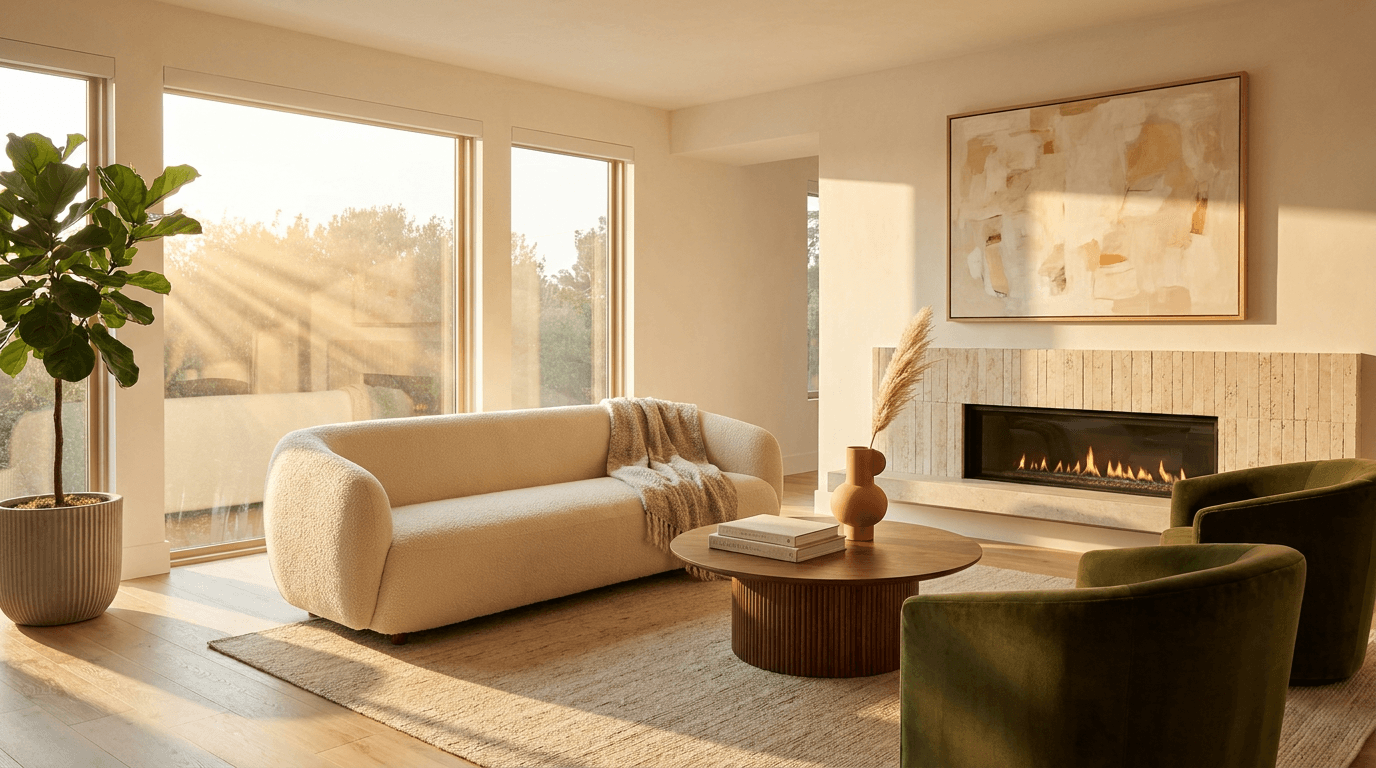
The living room is the signature image of any interior design portfolio. It is the room clients evaluate first, the image that establishes your design authority, and the composition that communicates your aesthetic identity most completely. This template produces a warm, sophisticated contemporary living room that balances modern clean lines with inviting, lived-in comfort.
Prompt:
wide editorial interior photograph of a warm contemporary living room at late afternoon, soft golden sunlight streaming through large floor-to-ceiling windows on the left wall casting long warm directional light across the space and creating gentle shadows on the light oak hardwood flooring, a low-profile modern sofa in a rich warm ivory bouclé fabric with rounded arms as the central seating element, two accent chairs in a deep olive green velvet flanking a round walnut coffee table with a fluted base, on the coffee table a stack of large art books with neutral linen covers and a sculptural ceramic vase in a matte warm terracotta holding a single dried pampas grass stem, a linear modern fireplace with a clean surround of vertically stacked natural limestone set into the far wall with a low warm flame, above the fireplace a large abstract painting in muted warm tones of cream ochre and soft blush in a slim natural oak frame, the walls are a warm off-white with a subtle plaster texture, a tall fiddle leaf fig plant in a ribbed cement planter stands in the far corner near the windows, a soft textured wool throw in oatmeal draped casually over one arm of the sofa, the floor features a large flat-weave area rug in warm sand and cream tones beneath the seating arrangement, warm ivory deep olive green walnut warm terracotta natural limestone and soft gold afternoon light as the color palette, the mood is sophisticated warmly inviting contemporary but deeply comfortable, editorial interior design photography with beautiful directional natural afternoon light, composed with the sofa and fireplace wall creating a balanced horizontal composition and open ceiling space in the upper third, sharp material detail throughout with gentle atmospheric depth toward the windows, no text, no logos, no brand names
Best for: Portfolio hero image, website homepage gallery, Instagram signature post, Pinterest living room board, client pitch presentations, design studio branding materials
Template 2: Minimalist Scandinavian Kitchen
The kitchen is one of the most commercially significant rooms in a design portfolio because kitchen renovations represent some of the highest-value projects designers undertake. This template produces a clean, bright Scandinavian-inspired kitchen that communicates the precise, functional beauty that drives kitchen design inquiries.
Prompt:
editorial interior photograph of a minimalist Scandinavian kitchen at bright midmorning, abundant cool-toned natural light flooding through a large window above the sink area, clean flat-panel cabinetry in a warm matte white with no visible hardware using integrated push-to-open mechanism, a long kitchen island with a waterfall edge countertop in a warm light grey quartz with very subtle fine veining, three modern counter stools in natural pale ash wood with black metal legs and frames lined along the island, open shelving on one wall in light natural oak holding a curated arrangement of white ceramic dishware, a few clear glass jars with dried goods, and a small potted herb plant, a slim matte black faucet and fixtures providing subtle contrast against the white cabinetry, a woven pendant light in natural rattan hanging centered above the island casting a soft warm light pattern, the backsplash is handmade-look ceramic subway tile in a warm white with slight irregularity, the flooring is wide-plank pale natural oak with a matte finish, on the island countertop a wooden cutting board with a small ceramic bowl of lemons and a linen tea towel folded beside it, warm white pale oak warm light grey matte black and natural rattan as the color palette, the mood is serene precisely organized functionally elegant and bathed in clean northern light, editorial kitchen design photography with bright natural light, composed with the island as the foreground anchor and depth extending along the counter toward the window, sharp detail on surfaces and materials with gentle depth softening the background, no text, no logos, no brand names
Best for: Kitchen design portfolio showcase, renovation company website galleries, Pinterest kitchen inspiration boards, Instagram design content, Houzz profile imagery, kitchen-specific client presentations
Template 3: Moody Luxe Primary Bedroom
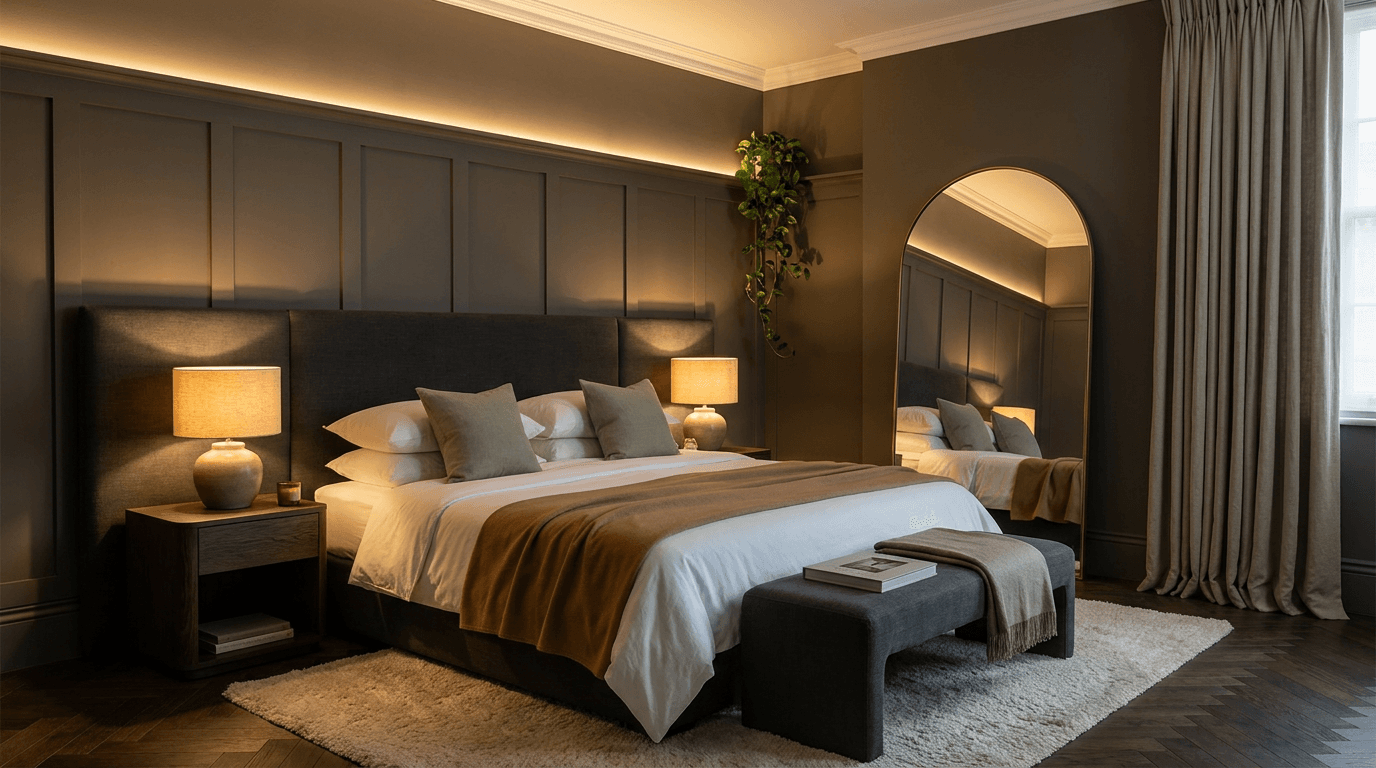
The bedroom portfolio image communicates a designer's ability to create intimate, restful environments. While living rooms sell the public design statement, bedrooms sell the private, personal quality of the design experience. This template produces a richly layered, moody-luxe bedroom with depth and sophistication.
Prompt:
editorial interior photograph of a luxurious primary bedroom at early evening with warm ambient lighting, a king-sized bed with an upholstered headboard in a deep charcoal performance linen that extends wide to function as a feature wall panel, the bed is layered with crisp white sheets a rich warm camel cashmere blanket folded at the foot and multiple pillows in white and a muted sage green linen, two bedside tables in dark fumed oak with warm rounded edges each holding a ceramic table lamp with a warm linen drum shade casting a soft golden pool of light, the walls are painted in a deep sophisticated warm greige creating an enveloping cocoon-like atmosphere, a large arched floor mirror in a slim brass frame leans against the far wall reflecting the warm lamplight and adding spatial depth, the flooring is dark rich walnut with a wide herringbone pattern partially covered by a plush high-pile area rug in warm cream, a small upholstered bench at the foot of the bed in the same deep charcoal linen holds a folded throw and a single hardcover book, a trailing pothos plant cascades from a high shelf in the corner adding organic movement, the window has floor-length curtains in a heavy warm greige linen that pool slightly on the floor, deep charcoal warm camel muted sage fumed oak warm brass and soft golden lamplight as the color palette, the mood is deeply cocooning romantically layered richly sophisticated and the kind of bedroom that makes you want to never leave, editorial bedroom design photography with warm intimate ambient lighting, composed with the bed centered and symmetric balance from the bedside lamps creating a restful horizontal composition, sharp textile detail with soft warm light gradients toward the room edges, no text, no logos, no brand names
Best for: Bedroom design portfolio, luxury residential client presentations, Instagram evening mood content, Pinterest bedroom design boards, design blog features, editorial submissions to shelter publications
Template 4: Bright Transitional Bathroom with Freestanding Tub
Bathroom design imagery communicates a designer's attention to detail, material selection expertise, and ability to create beauty in a functional space. This template produces a bright, elegant bathroom that showcases the material combinations and spatial planning that define high-end bathroom design.
Prompt:
editorial interior photograph of a bright transitional bathroom at late morning, soft warm natural light entering through a large frosted glass window diffusing evenly across the space, a freestanding oval soaking tub in matte white with a graceful organic profile positioned as the focal centerpiece, a floor-mounted tub filler in unlacquered brass with a warm patina, the floor is large-format natural marble tile in a warm Calacatta-style white with soft grey and gold veining that continues up the lower portion of the walls as wainscoting, the upper walls are a warm soft white with a smooth matte finish, a floating double vanity in warm natural white oak with a live-edge quality to the front panel, a thick slab countertop in honed white marble with a simple undermount basin, a large frameless rectangular mirror above the vanity reflecting the window light, wall-mounted brass sconces flanking the mirror with white cylindrical shades casting warm lateral light, neatly rolled white Turkish cotton towels stacked on a minimal freestanding brass towel rack, a small wooden bath tray across the tub holding a ceramic candle and a small glass bottle, a single tall eucalyptus stem in a slim glass vase on the vanity, warm Calacatta marble warm white oak unlacquered brass and soft diffused natural light as the color palette, the mood is spa-serene materially luxurious and elegantly restrained, editorial bathroom design photography with soft diffused natural light, composed with the tub as the central focal element and the vanity providing supporting detail to one side, sharp material and texture detail throughout, no text, no logos, no brand names
Best for: Bathroom design portfolio, renovation project galleries, Pinterest luxury bathroom boards, Houzz bathroom category, material selection presentations, tile and fixture brand collaborations
Template 5: Mid-Century Modern Home Office
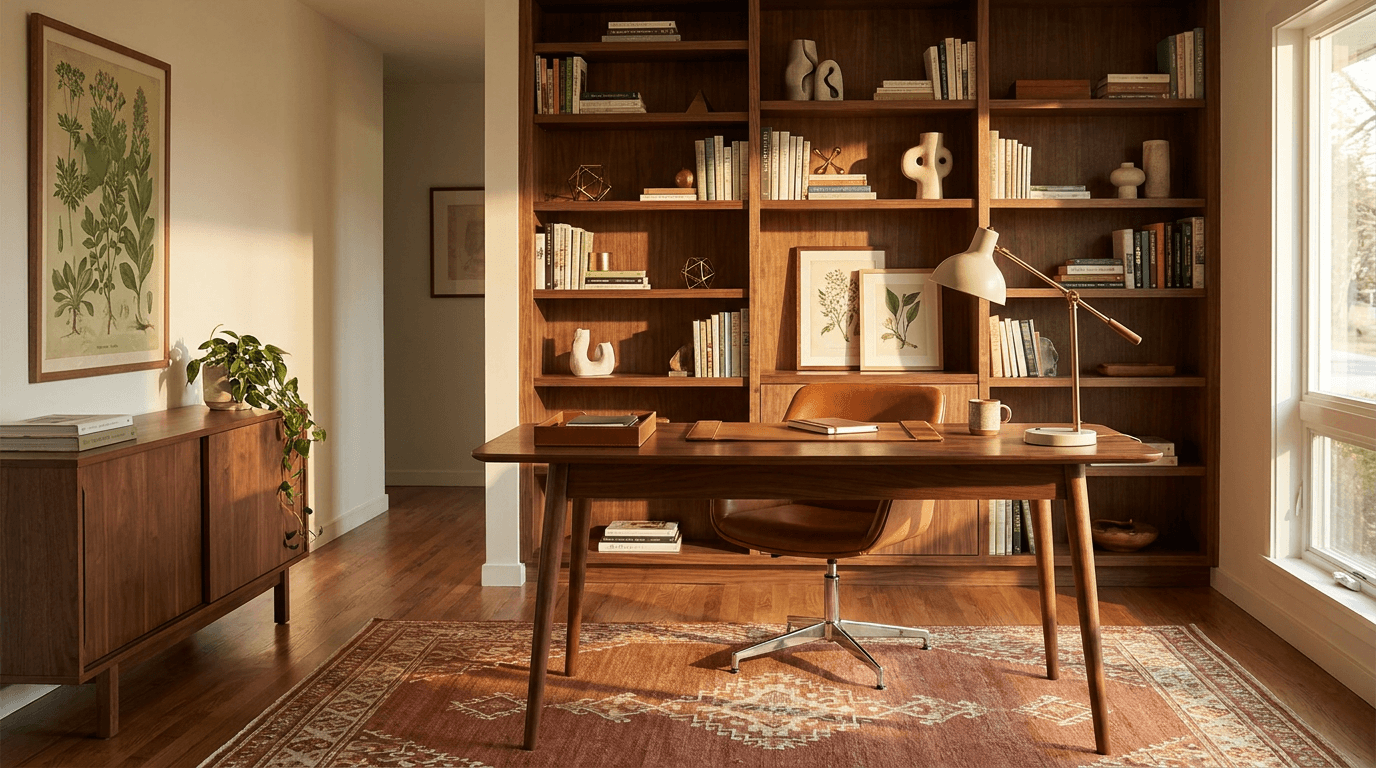
The home office has become a critical room type in design portfolios as remote work has permanently expanded the demand for professionally designed work-from-home spaces. This template produces a stylish, functional home office that communicates both productivity and design sophistication.
Prompt:
editorial interior photograph of a mid-century modern home office at early afternoon, warm natural light entering from a window to the right creating directional light across the desk surface, a walnut desk with tapered legs and a clean rectangular profile with subtle rounded edges positioned facing the room rather than the wall, a mid-century modern desk chair in cognac leather with a molded wood shell back and chrome swivel base, the wall behind the desk features floor-to-ceiling built-in bookshelves in warm walnut with a mix of books arranged both vertically and horizontally in clusters, small sculptural objects including a brass geometric form and a ceramic abstract piece, and a few small framed prints leaning casually against the shelf backs, the desk surface holds a ceramic desk lamp with an articulating brass arm, a small leather desk tray with a notebook and pen, and a ceramic mug, the opposite wall features a large framed vintage botanical print in warm muted greens, the flooring is warm medium-tone oak with a flat-weave wool rug in warm rust and cream geometric pattern beneath the desk, a low credenza in walnut with sliding doors against one wall holds a trailing plant that softens the geometric lines, warm walnut cognac leather warm brass muted rust and natural afternoon light as the color palette, the mood is intellectually refined creatively inspiring and a workspace that elevates the daily routine, editorial home office design photography with warm directional natural light, composed with the desk and bookshelf wall creating depth and the window light adding dimensional warmth, sharp detail on desk accessories and bookshelf styling with gentle depth, no text, no logos, no brand names
Best for: Home office design portfolio, work-from-home design service marketing, Instagram design content, Pinterest home office boards, design blog features on workspace design, client presentations for study and office projects
Template 6: Coastal Modern Dining Room
The dining room image showcases a designer's ability to create spaces for gathering, conversation, and shared experience. It is also one of the most versatile portfolio images because it simultaneously demonstrates furniture selection, lighting design, table styling, and spatial proportion. This template produces a light, airy coastal-modern dining room.
Prompt:
editorial interior photograph of a coastal modern dining room at golden hour, warm golden sunlight streaming through large glass sliding doors that open to an outdoor terrace with a distant ocean view softly visible beyond, a rectangular dining table in a warm light natural oak with a simple trestle base seating eight, upholstered dining chairs in a soft warm off-white performance linen with slim natural wood legs, a large woven pendant light in natural fiber with a drum shape hanging centered above the table casting a warm patterned shadow on the table surface, the table is set casually with simple white ceramic plates, clear glassware, linen napkins in a soft sage green, and a low centerpiece of a long driftwood tray holding three small glass vases with fresh wildflowers and greenery, the walls are a warm white shiplap paneling running horizontally adding subtle coastal texture, a long sideboard in warm natural oak against one wall holds a pair of ceramic table lamps with natural linen shades and a large abstract coastal painting in soft blues whites and sandy tones in a natural wood frame above, the flooring is wide-plank whitewashed oak with a natural grain showing through, warm white natural oak soft sage green ocean blue tones and warm golden hour light as the color palette, the mood is relaxed elegantly coastal warmly gathered and the kind of dining room where long evenings unfold naturally, editorial dining room design photography with warm golden hour window light, composed with the table as the central anchoring element and the sliding doors providing luminous background depth, sharp detail on table styling and materials with soft golden atmospheric light, no text, no logos, no brand names
Best for: Dining room design portfolio, coastal and beach house design specialization marketing, Instagram golden hour content, Pinterest dining room boards, tablescaping and entertaining content, client presentations for open-plan living and dining spaces
Template 7: Industrial Loft Open Living Space
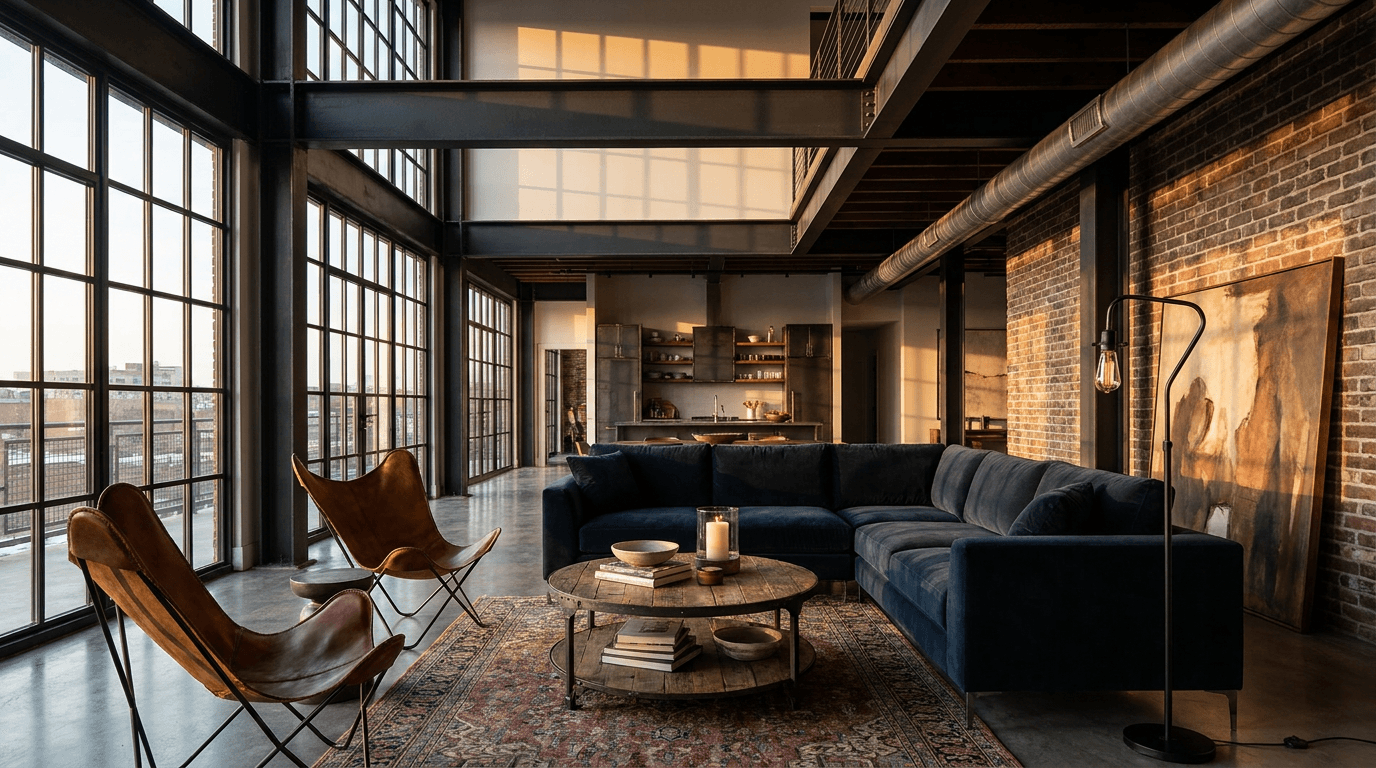
Demonstrating the ability to work with unconventional architectural spaces expands a designer's appeal to clients with loft apartments, converted warehouses, and urban industrial properties. This template produces a sophisticated industrial loft that balances raw architecture with refined residential comfort.
Prompt:
wide editorial interior photograph of an industrial loft living space at late afternoon, high double-height ceilings with exposed steel I-beams and ductwork painted in a matte warm dark charcoal, large factory-style steel-framed windows along one full wall flooding the space with warm directional afternoon light, exposed brick walls in a warm weathered red-brown tone on the far wall with natural patina and mortar texture, polished concrete flooring with a warm grey tone and subtle variation, a large deep-seated modern sofa in a rich dark navy performance velvet facing the window wall, a pair of leather butterfly chairs in warm tobacco brown flanking the sofa area, a large round industrial coffee table with a reclaimed wood top and black iron pedestal base, on the coffee table a collection of oversized photography books stacked with a ceramic bowl and a thick pillar candle, a large abstract painting in bold warm tones leaning against the brick wall on a low shelf, a tall industrial floor lamp with a matte black adjustable arm and an exposed warm Edison bulb, a vintage Persian rug in warm muted reds and navy blues defining the seating area on the concrete floor, open kitchen with dark steel and reclaimed wood visible in the background adding depth, warm brick dark navy tobacco leather warm reclaimed wood matte charcoal and warm afternoon industrial light as the color palette, the mood is architecturally dramatic warmly sophisticated and urban living at its most characterful, editorial loft design photography with dramatic directional afternoon light creating strong light and shadow, composed as a wide environmental view showing the full height and character of the space, sharp material texture detail with atmospheric depth, no text, no logos, no brand names
Best for: Urban and loft design portfolio, industrial aesthetic specialization, Instagram architectural design content, Pinterest loft living boards, editorial design features, design competition submissions, client presentations for urban residential projects
Template 8: Nursery and Children's Room
Children's room design demonstrates a designer's versatility and connects with a significant client demographic: new parents and growing families investing in their homes. This template produces a charming, sophisticated nursery that appeals to design-conscious parents.
Prompt:
editorial interior photograph of a beautifully designed nursery at soft midmorning, gentle warm natural light diffusing through sheer white curtains on a single window, walls painted in a soft warm sage green with a matte finish creating a calm enveloping atmosphere, a modern wooden crib in natural white oak with clean rounded spindles and a simple organic curved profile, dressed with a fitted sheet in white with a soft knitted blanket in cream draped over one rail, a comfortable nursing glider chair in a warm oatmeal bouclé fabric with a natural oak rocking base positioned beside the window, a small round side table next to the glider holding a ceramic lamp with a fabric shade and a small stack of children's picture books, a low bookshelf in white oak against one wall with a curated selection of children's books spine-facing outward showing colorful covers plus a few soft knitted animal toys, a handwoven wall hanging in natural cream and warm terracotta tones above the crib adding textile warmth, the flooring is warm light oak with a round woven jute rug beneath the crib, a small potted trailing plant on a high shelf out of reach adding greenery, a wooden mobile with simple abstract shapes in muted warm tones hanging above the crib, soft sage green warm white natural oak oatmeal and warm terracotta as the color palette, the mood is nurturing calm beautifully considered and a room that grows with the child, editorial nursery design photography with soft warm natural light, composed with the crib as the primary element and the glider adding a secondary focal point, sharp detail with a soft overall warmth, no text, no logos, no brand names
Best for: Children's room design portfolio, family-focused design services marketing, Instagram nursery design content with high save potential, Pinterest nursery inspiration boards, baby and maternity brand collaborations, design blog nursery features
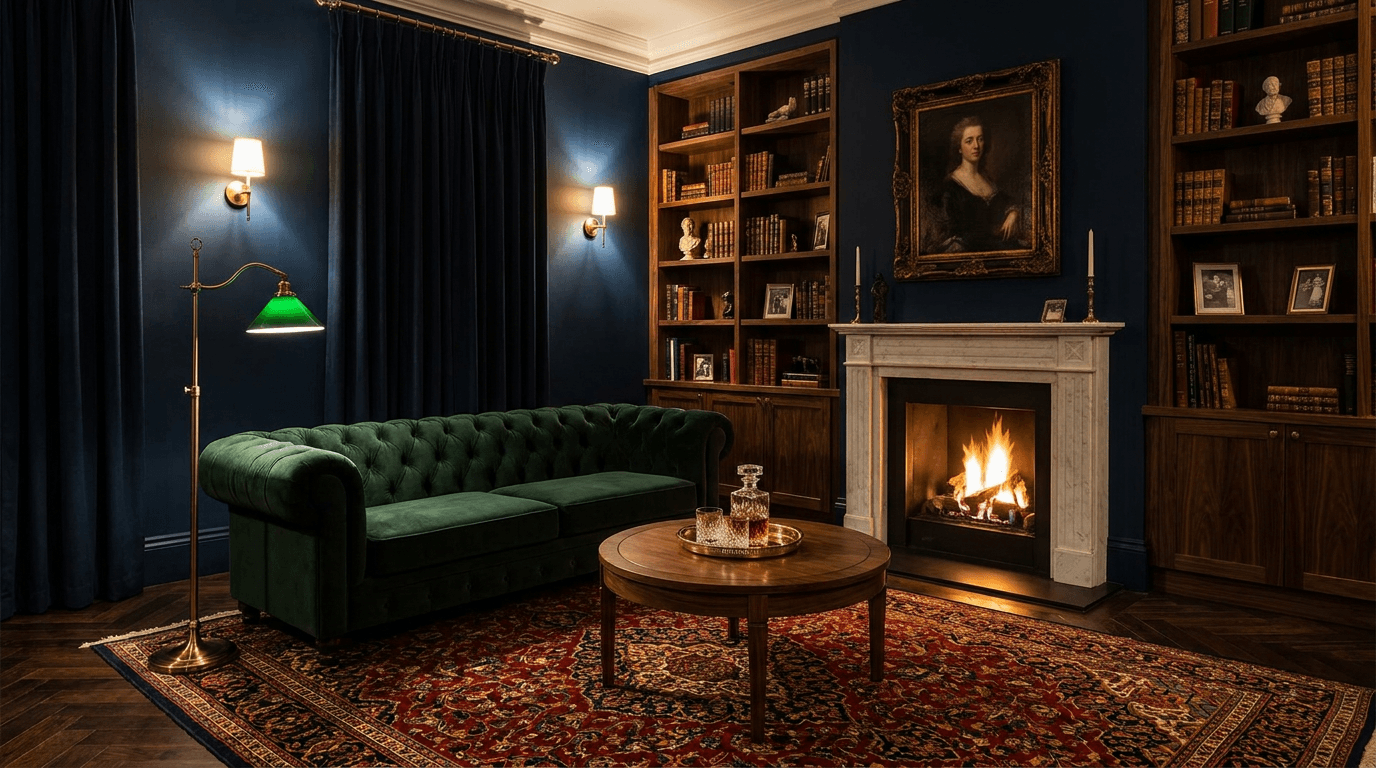
Template 9: Dramatic Dark Library and Study
A dark, moody room demonstrates a designer's command of depth, richness, and the sophisticated use of saturated color that many clients admire but feel uncertain executing without professional guidance. This template produces a dramatic library that showcases mastery of moody interior design.
Prompt:
editorial interior photograph of a dramatic dark library and study at evening with warm ambient lighting, walls painted in a deep rich navy blue with a subtle matte sheen that absorbs and softens the warm lamp light, floor-to-ceiling built-in bookshelves in dark stained walnut filled with books in warm leather bindings and cloth covers arranged with intentional variation, small sculptural objects and framed photographs interspersed among the books, a deep tufted Chesterfield sofa in a rich dark emerald green velvet positioned centrally facing a marble fireplace with a low warm glowing fire, a heavy round ottoman in the same dark walnut as the shelves serves as a coffee table holding a crystal decanter with amber liquid and two lowball glasses on a small brass tray, a pair of brass wall sconces with warm light flanking the fireplace casting golden pools upward along the navy walls, a large Persian rug in deep reds navy and gold on dark walnut herringbone flooring, a brass library floor lamp with a dark green glass shade casting focused warm light beside the sofa, heavy lined curtains in the same deep navy drawn closed creating a completely enveloping interior world, above the fireplace a classical oil painting in a ornate dark gold frame, deep navy dark emerald rich walnut warm brass amber and warm golden lamplight as the color palette, the mood is intellectually luxurious dramatically enveloping deeply atmospheric and a room for thinking reading and whisky, editorial library design photography with warm dramatic ambient lighting creating rich pools of light and deep shadow, composed with the fireplace and sofa as the central axis and bookshelves providing enclosing depth on both sides, sharp detail in the warm light areas with rich shadows that maintain texture, no text, no logos, no brand names
Best for: Luxury design portfolio, dramatic and moody design specialization, Instagram high-engagement atmospheric content, Pinterest library and study boards, editorial and shelter magazine submissions, design award entries, client presentations for home library and study projects
Template 10: Modern Farmhouse Mudroom and Entry
Practical spaces like mudrooms, laundry rooms, and entryways demonstrate a designer's ability to bring beauty to functional areas that clients interact with daily but often neglect. This template produces a stylish, organized mudroom that communicates the designer's "every room matters" philosophy.
Prompt:
editorial interior photograph of a modern farmhouse mudroom and entry at late morning, warm natural light from a window with a simple white Roman shade casting even illumination across the space, built-in bench seating in warm white painted wood with beadboard detailing on the front panel and a thick cushion upholstered in a durable warm grey ticking stripe fabric, four open cubbies above the bench with upper shelving and black iron hooks below for coats, each cubby containing a woven storage basket in natural seagrass, two cubbies hold neatly folded items and the others show hooks with a canvas tote bag and a lightweight jacket, beneath the bench open shoe storage showing a pair of clean boots and a pair of slip-on shoes neatly arranged, the floor is durable large-format cement tile in a warm grey and white geometric pattern, a narrow console table in reclaimed pine against the opposite wall holding a ceramic tray for keys a small vase with fresh greenery and a stack of mail, a round mirror with a thin black metal frame above the console, the walls are white shiplap paneling running vertically, a small doormat in natural coir with a simple border at the entry threshold, warm white natural seagrass reclaimed pine warm grey ticking stripe and black iron as the color palette, the mood is organized welcoming practically beautiful and the kind of entry that makes coming home a pleasure, editorial interior design photography with clean warm natural light, composed as a straight-on view showing the full mudroom system with the bench as the central functional element, sharp organizational detail throughout, no text, no logos, no brand names
Best for: Practical design portfolio sections, family home and farmhouse design specialization, Instagram organizational design content, Pinterest mudroom and entry boards, home builder and developer collaboration materials, client presentations showcasing design approach to functional spaces
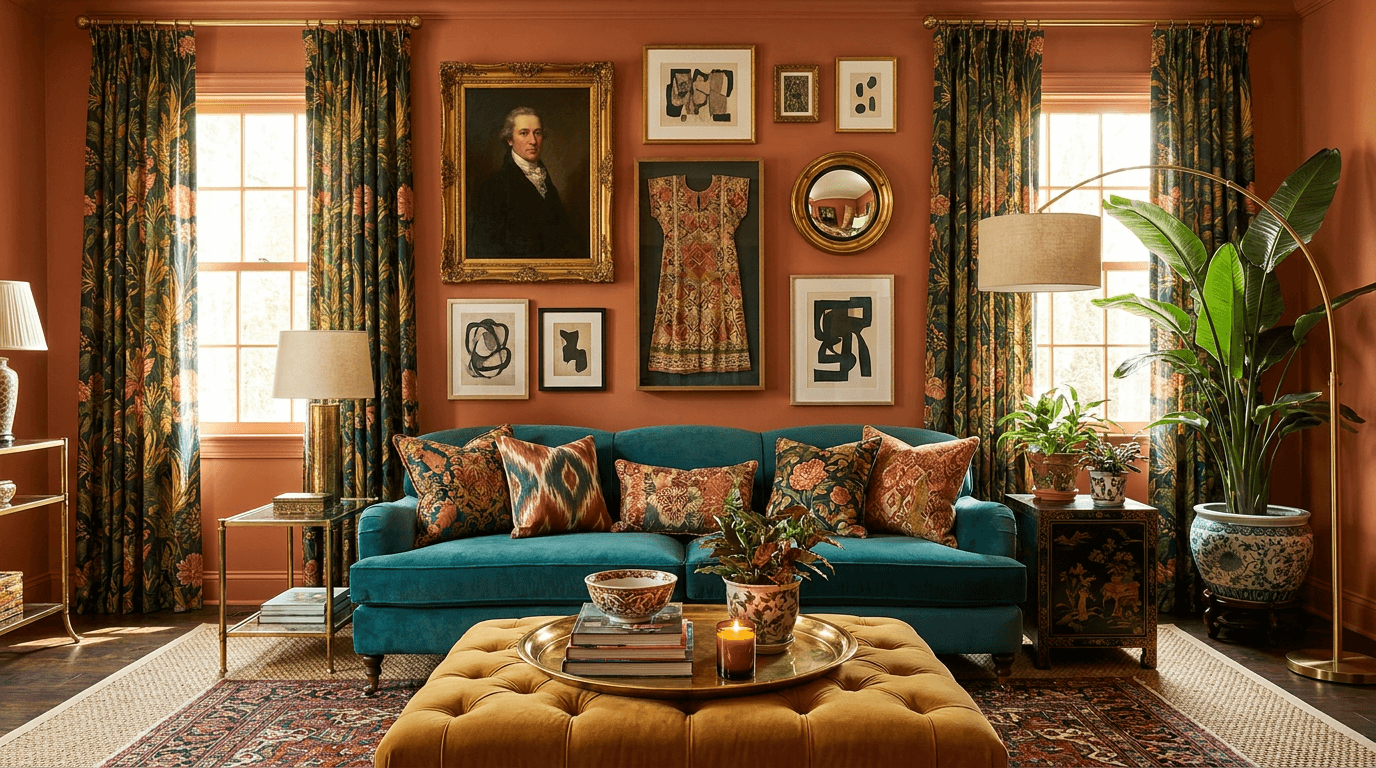
Template 11: Maximalist Eclectic Living Room
Demonstrating a maximalist or eclectic design aesthetic shows portfolio range and appeals to the growing audience of clients who want bold, personality-driven interiors rather than restrained minimalism. This template produces a richly layered, confidently maximalist living room.
Prompt:
editorial interior photograph of a maximalist eclectic living room at warm afternoon, rich natural light from two tall windows with bold patterned curtains in a warm botanical print of deep greens golds and coral on a dark background, the walls painted in a warm saturated terracotta with a gallery wall featuring an asymmetric collection of framed artwork in various sizes including an oil portrait in a gilded frame, abstract prints, a vintage textile in a shadow box, and a round convex mirror in brass, a large curved sofa in a rich jewel-tone teal velvet with an abundance of patterned and textured throw pillows mixing ikat floral and geometric patterns in coordinating warm tones, a pair of mismatched vintage side tables one in brass and glass and one in lacquered chinoiserie style, a large tufted ottoman in a warm mustard velvet serving as a coffee table with a large brass tray holding stacked books an ornate ceramic bowl and a candle, a vintage Persian rug in rich reds and blues layered over a natural sisal base rug on the floor, a large tropical plant in a patterned ceramic pot and a tall brass arc lamp with a fabric shade adding vertical elements, saturated terracotta jewel teal warm mustard deep botanical greens rich gilded gold and coral as the color palette, the mood is confidently bold joyfully layered richly personal and a room with a story in every corner, editorial maximalist interior photography with rich warm natural afternoon light enhancing the saturated colors, composed to show the abundance and intentional layering of the space with the gallery wall and sofa creating the central visual axis, sharp colorful detail throughout with warm atmospheric light, no text, no logos, no brand names
Best for: Eclectic and maximalist design portfolio, personality-driven design marketing, Instagram bold design content with high engagement, Pinterest maximalist boards, design blog features on bold color use, editorial and media features, design lecture and speaking engagement materials
Template 12: Japandi Bedroom Retreat
The Japandi aesthetic, blending Japanese minimalism with Scandinavian warmth, continues to resonate with design audiences who seek calm, intentional spaces. This template produces a serene Japandi bedroom that demonstrates the sophisticated restraint and material sensitivity this style demands.
Prompt:
editorial interior photograph of a Japandi-style bedroom at soft early morning, gentle diffused natural light filtering through a window with a simple unbleached linen Roman shade creating a soft even glow, a low platform bed in warm natural light ash with a simple rectilinear frame and no visible legs giving a grounded horizontal profile, the bed dressed simply with natural undyed linen bedding in a warm oatmeal tone with subtle texture, a single accent pillow in a deep muted indigo, a low bedside shelf integrated into the bed frame rather than a separate table holding a small handmade ceramic cup and a thin hardcover book, the walls finished in a warm natural lime plaster with a subtle hand-troweled texture in a soft warm putty tone, a single large ceramic vessel in a wabi-sabi style with an irregular organic form and a matte charcoal glaze sitting on the floor near the window, a slim wall-mounted light in blackened brass with a warm minimal glow above the bed, the flooring is warm natural pale ash to match the bed with a single thin tatami-style mat beside the bed, a shoji-inspired sliding screen panel in translucent rice paper and light ash partially visible along one wall, an ikebana-style single branch arrangement with one small bloom in a simple dark ceramic vase on a narrow floating shelf, warm oatmeal natural ash soft putty muted indigo and gentle morning light as the color palette, the mood is profoundly calm intentionally spare materially honest and a meditation on rest, editorial Japandi bedroom photography with soft diffused morning light, composed with the low bed creating a strong horizontal center and generous negative space above for visual breathing room, sharp detail on textures and handmade elements with an overall softness, no text, no logos, no brand names
Best for: Japandi and minimalist design portfolio, Japanese and Scandinavian design specialization marketing, Instagram serene design content, Pinterest minimalist bedroom boards, wellness and mindfulness lifestyle collaborations, design blog features on intentional living spaces
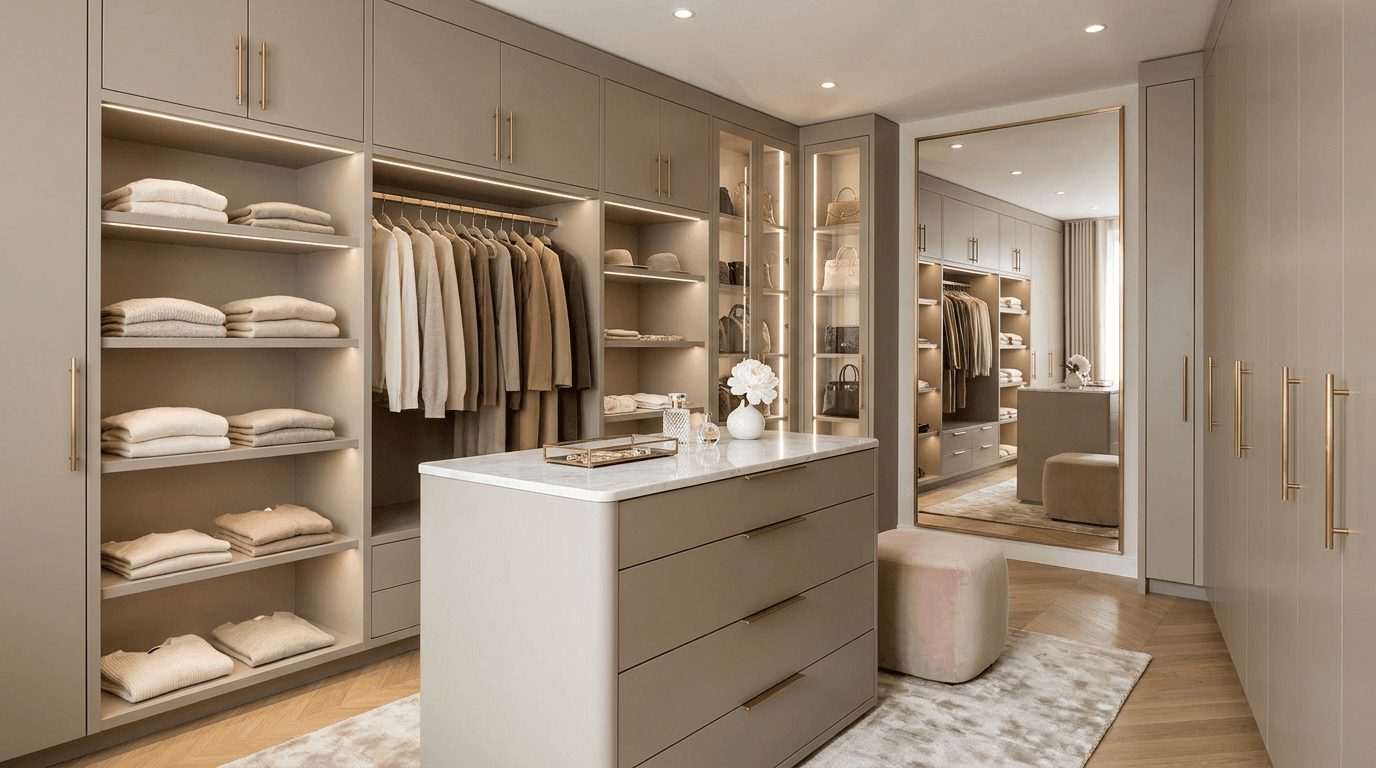
Template 13: Luxury Walk-In Closet and Dressing Room
The walk-in closet or dressing room is an aspirational space that generates extremely high engagement on social media and demonstrates a designer's ability to create luxury in a private, personal context. This template produces an elegant, organized closet that communicates refined daily living.
Prompt:
editorial interior photograph of a luxury walk-in closet and dressing room at midday with bright clean lighting, a spacious rectangular room with floor-to-ceiling built-in cabinetry in a warm greige matte lacquer with slim brass bar handles, open display shelving showing a curated selection of folded knitwear in neutral and soft tones neatly arranged, a section of hanging space visible with a row of garments in coordinating muted earth tones on matching velvet hangers, a central island dresser in the same warm greige finish with a white marble top surface holding a small jewelry tray in brass, a decorative perfume bottle, and a small vase with a single white peony, a full-length mirror in a slim brass frame built into one end wall reflecting the length of the closet, a small upholstered pouf or ottoman in soft blush velvet beside the island for seating, the flooring is light warm oak in a chevron pattern with a small plush rug beneath the pouf, recessed ceiling lighting and subtle LED strip lighting inside the open shelving creating bright even illumination with no harsh shadows, glass-fronted display cabinets in one section showing handbags on illuminated shelves, warm greige soft blush brass accents white marble and bright clean lighting as the color palette, the mood is impeccably organized quietly luxurious intimately personal and a daily ritual elevated to an experience, editorial closet design photography with bright clean mixed ambient lighting, composed as a perspective view down the length of the closet with the island as the foreground anchor and depth extending to the mirror, sharp organizational detail throughout, no text, no logos, no brand names
Best for: Luxury design portfolio, closet and custom cabinetry design specialization, Instagram aspirational design content with very high save rates, Pinterest closet organization boards, custom closet company collaborations, high-end residential client presentations
Template 14: Outdoor Living Room with Landscape
Outdoor living spaces demonstrate a designer's ability to extend their aesthetic beyond the building envelope and create cohesive indoor-outdoor experiences. This template produces an inviting outdoor living area that blurs the boundary between architecture and landscape.
Prompt:
editorial photograph of a designed outdoor living room on a covered patio at late afternoon golden hour, a pergola with natural warm-toned wood beams providing partial shade with warm golden sunlight filtering between the beams creating beautiful stripe-pattern shadows across the space, a large deep-seated outdoor sectional sofa in a warm charcoal all-weather wicker with thick cushions in a durable warm off-white fabric and accent pillows in muted terracotta and olive green, a rectangular outdoor coffee table in natural warm teak with a slatted top holding a ceramic lantern, a small succulent arrangement in a low concrete planter, and two stacked outdoor lifestyle books, a natural stone floor in a warm limestone with soft grey and sand tonal variation, a built-in outdoor fireplace or fire pit table in natural stone visible at one end of the seating area with a low amber flame, mature landscape planting visible beyond the patio edge including ornamental grasses, olive trees, and a manicured lawn extending into a softly blurred garden background, warm string lights draped along the pergola beams beginning to glow as the sun lowers, warm teak charcoal wicker warm off-white muted terracotta olive green natural limestone and golden hour light as the color palette, the mood is expansively relaxed seamlessly indoor-outdoor warmly social and the kind of outdoor room that becomes the true living room of the home, editorial outdoor living design photography with beautiful golden hour natural light, composed with the sectional as the foreground anchor and the landscape providing luminous depth beyond, sharp detail on furnishings and materials with atmospheric golden light, no text, no logos, no brand names
Best for: Outdoor living and landscape design portfolio, indoor-outdoor design specialization, Instagram lifestyle design content, Pinterest outdoor living boards, landscape architect and builder collaboration materials, warm-climate residential design presentations
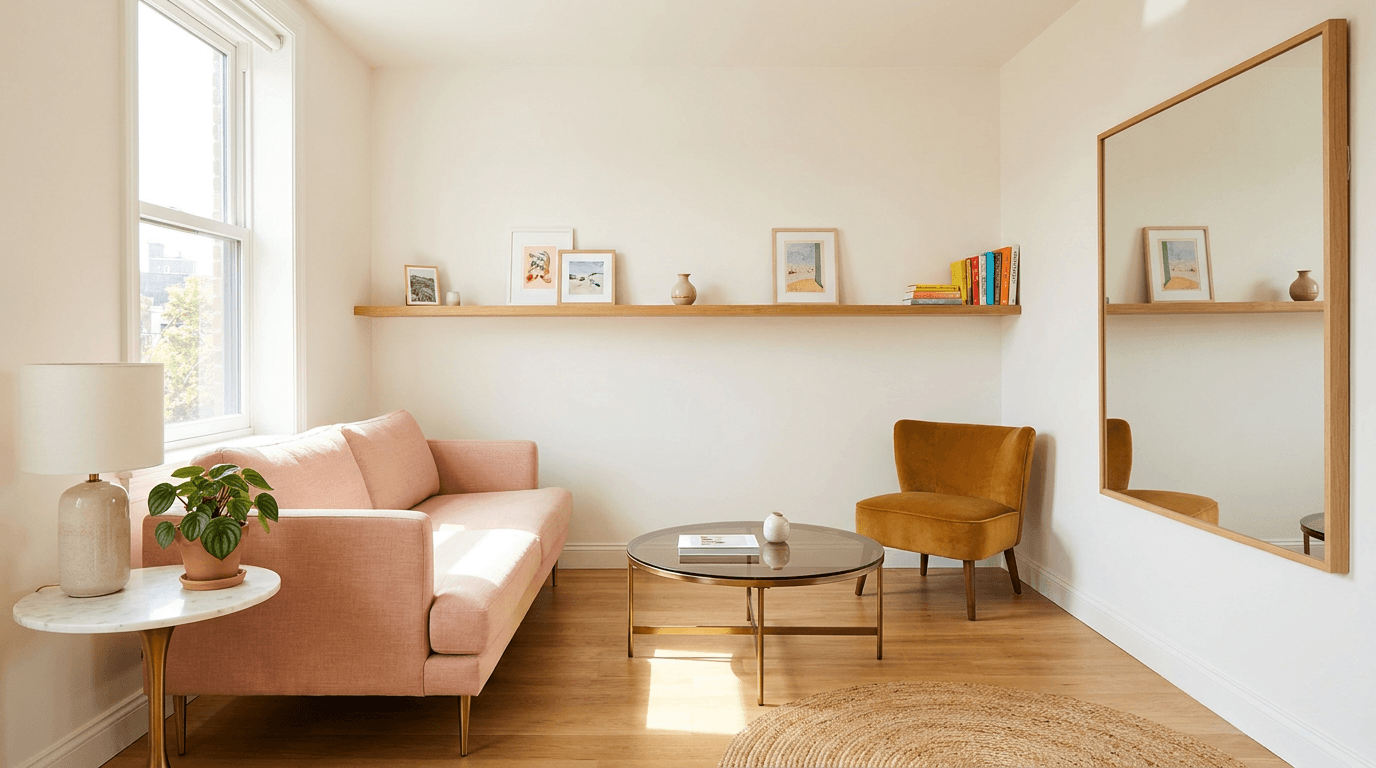
Template 15: Compact Apartment Living Room
Demonstrating effective design in compact spaces appeals to a large potential client base of urban apartment dwellers and shows the kind of problem-solving creativity that distinguishes excellent designers. This template produces a small but beautifully designed living room that proves great design is not dependent on square footage.
Prompt:
editorial interior photograph of a compact apartment living room at bright midday, generous natural light from a single large window making the small space feel bright and open, a small-scale modern sofa in a warm soft blush pink linen with slim arms and tapered brass legs maximizing seating without visual bulk, a slim round side table in white marble with a brass pedestal base holding a ceramic lamp and a small plant, a wall-mounted floating shelf in warm natural oak running the length of one wall at eye height displaying a curated selection of small framed art prints, a small ceramic vase, and a few books with colorful spines as a space-efficient alternative to freestanding bookshelves, a compact round coffee table in smoked glass and brass that maintains visual openness, a small accent chair in a warm mustard velvet tucked at an angle to create a conversational arrangement without crowding, a single large mirror in a slim natural oak frame on the wall opposite the window doubling the perceived space and reflecting the natural light, a small but lush trailing plant on the floating shelf adding life, the flooring is warm light oak with a small round woven jute rug defining the seating area, the walls are warm white and clean with the art shelf providing personality without visual weight, soft blush warm mustard natural oak brass white marble and bright natural light as the color palette, the mood is cleverly designed optimistically bright cheerfully sophisticated and proof that small spaces can feel generous with the right design choices, editorial small-space design photography with bright natural light emphasizing openness, composed to show the full room in context emphasizing how each element serves the space, sharp detail throughout with an airy bright overall feeling, no text, no logos, no brand names
Best for: Small-space design portfolio, urban apartment design specialization, Instagram relatable design content, Pinterest small-space boards with high save rates, rental-friendly design marketing, first-home design service promotions, design blog features on compact living
Template 16: Mediterranean-Inspired Bathroom
A strongly themed design demonstrates the designer's ability to create coherent narratives through material selection, color, and architectural detail. This template produces a warm Mediterranean bathroom that transports the viewer and showcases bold, place-inspired design.
Prompt:
editorial interior photograph of a Mediterranean-inspired bathroom at warm late morning, golden natural light entering through an arched window with no treatment letting the architectural shape stand as a design element, walls finished in a warm Venetian plaster in a soft sunwashed terracotta tone with natural tonal variation and a gentle luminous sheen, a walk-in shower area defined by a low step with handmade zellige tile in a rich warm cobalt blue covering the shower walls creating a stunning contrast with the terracotta plaster, a simple rainfall showerhead in aged brass, a curved pedestal sink in white porcelain with an elegant vintage-inspired profile and aged brass faucets, a round mirror in a thick rope frame above the sink, the floor is warm natural limestone tile in large format with a subtly textured surface showing natural fossil marks, a wooden stool in a rustic weathered teak holds a stack of folded white Turkish towels and a small terracotta dish with a bar of artisanal soap, a wall niche in the shower area holds glass bottles of bath products and a natural sponge, a large potted trailing plant on a high shelf near the window adding lush green against the terracotta, warm terracotta rich cobalt blue aged brass warm limestone natural teak and golden morning light as the color palette, the mood is warmly transportive artisanally rich sun-drenched and a daily escape to the Mediterranean coast, editorial bathroom design photography with warm golden natural light enhancing the terracotta warmth, composed with the arched window and zellige shower creating the two focal elements balanced across the frame, sharp material and texture detail throughout, no text, no logos, no brand names
Best for: Specialty style design portfolio, Mediterranean and European-inspired design marketing, Instagram bold material content, Pinterest bathroom design boards, tile and fixture brand collaborations, design blog features on destination-inspired interiors
Template 17: Modern Entryway and Foyer
The entryway sets the design tone for the entire home and demonstrates a designer's ability to create impact in a transitional space. This template produces an elegant, well-styled foyer that communicates the designer's complete-home design approach.
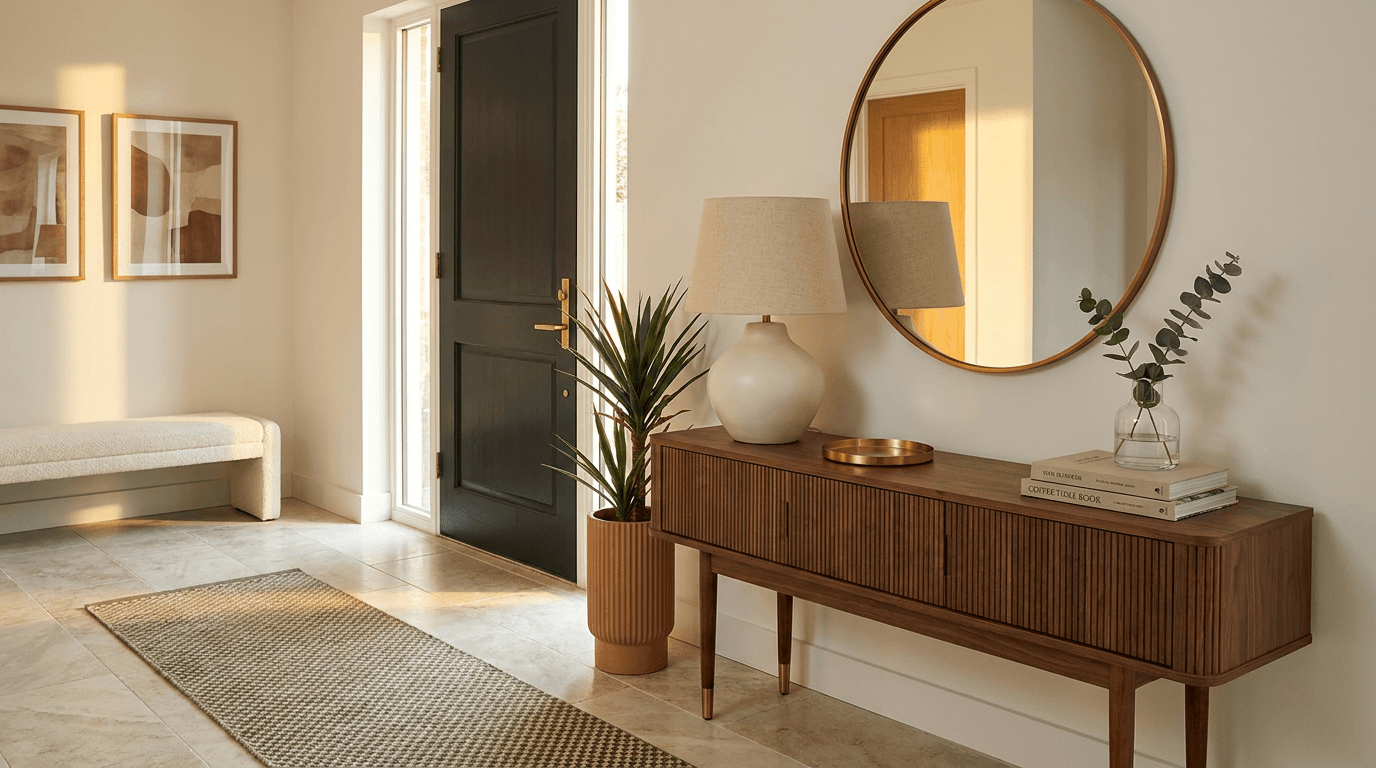
Prompt:
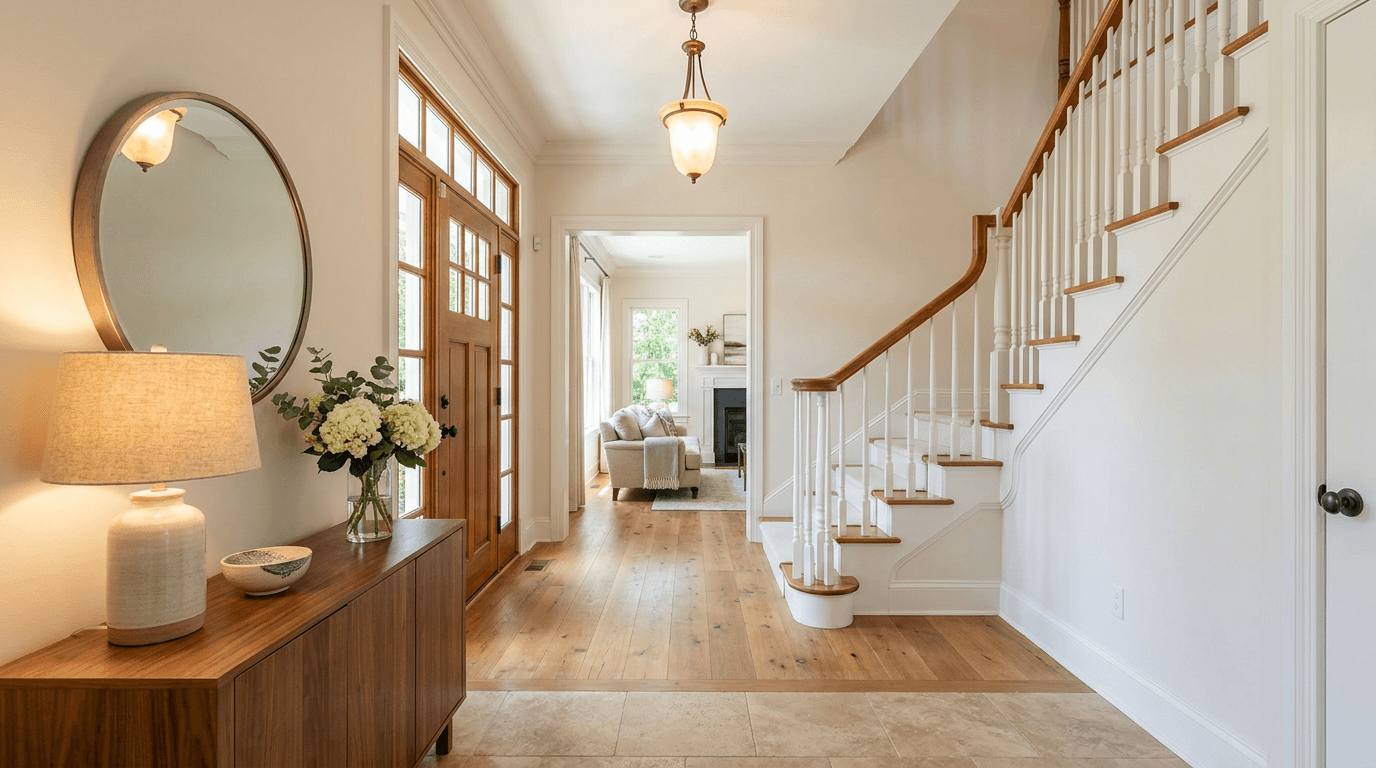
editorial interior photograph of a modern entryway and foyer at afternoon, warm natural light entering from a sidelight window beside the front door and reflecting off a large round mirror creating bright ambient illumination, a slim modern console table in warm walnut with fluted front detailing and tapered brass-capped legs positioned against the main wall, on the console a large ceramic table lamp with a sculptural organic base in a matte warm white and a natural linen shade, a small brass catchall tray, a single stem of fresh eucalyptus in a slim clear glass vase, and a stack of two coffee table books, the large round mirror in a slim warm brass frame hung above the console reflecting the light and the entry space, the front door is visible to one side in a rich dark paint with modern brass hardware, the floor is a warm natural stone in a large format with soft grey and cream tones, a runner rug in a warm muted geometric pattern in olive and cream extending from the door inward, a slim upholstered bench in warm ivory bouclé against the opposite wall beneath a pair of small framed abstract prints in coordinating warm tones, a tall architectural plant in a fluted ceramic planter on the floor beside the console, warm walnut brass accents warm ivory muted olive warm natural stone and afternoon light as the color palette, the mood is collected deliberately welcoming and a clear design statement from the first step inside, editorial entryway design photography with bright natural light, composed as a frontal view with the console and mirror as the central focal moment and depth provided by the visible hallway or room beyond, sharp styling detail with an inviting overall warmth, no text, no logos, no brand names
Best for: Complete-home design portfolio, entryway and foyer design specialization, Instagram first-impression design content, Pinterest foyer boards, real estate staging marketing, interior design blog features
Template 18: Warm Contemporary Kitchen Dining Nook
The kitchen dining nook or banquette shows a designer's ability to create functional, intimate dining solutions within kitchen spaces. This template produces a warm, inviting breakfast nook that combines custom millwork with comfortable, casual dining design.
Prompt:
editorial interior photograph of a warm contemporary kitchen dining nook at bright morning, warm morning light streaming through a large window behind the banquette seating creating a luminous backdrop, a built-in L-shaped banquette with a bench seat upholstered in a durable warm camel performance velvet with a cushioned back, a round pedestal dining table in warm white oak with a natural grain top seating four comfortably, two mid-century modern side chairs in warm walnut and cream boucle fabric on the open sides of the table, the banquette has a collection of rectangular lumbar pillows in mixed warm textures including a cream linen a warm terracotta stripe and a muted olive solid, the table is set for a casual breakfast with white ceramic plates, simple clear glasses, a wooden board with sliced bread, a small jar of honey, and a ceramic pitcher of fresh orange juice, the window above the banquette has a simple warm linen Roman shade in a soft oatmeal, the walls are warm white with a single large framed photograph of a warm landscape in earthy tones, the kitchen cabinetry in warm white is partially visible to one side providing context, warm camel warm white oak walnut cream terracotta and bright morning light as the color palette, the mood is warmly conversational family-centered casually elegant and the morning ritual made beautiful, editorial kitchen nook design photography with bright warm morning window light, composed with the banquette and table centered and the window providing a luminous backdrop, sharp detail on the food styling and upholstery with soft morning light atmosphere, no text, no logos, no brand names
Best for: Kitchen design portfolio supporting imagery, family-focused design marketing, Instagram breakfast and lifestyle crossover content, Pinterest kitchen nook boards, custom millwork portfolio, design blog features on built-in seating solutions
Template 19: Spa-Inspired Primary Bathroom Shower
A dedicated shower design image showcases the most design-intensive zone of the bathroom and demonstrates mastery of wet-room design, tile selection, and fixture specification. This template produces a stunning shower environment that highlights material expertise.
Prompt:
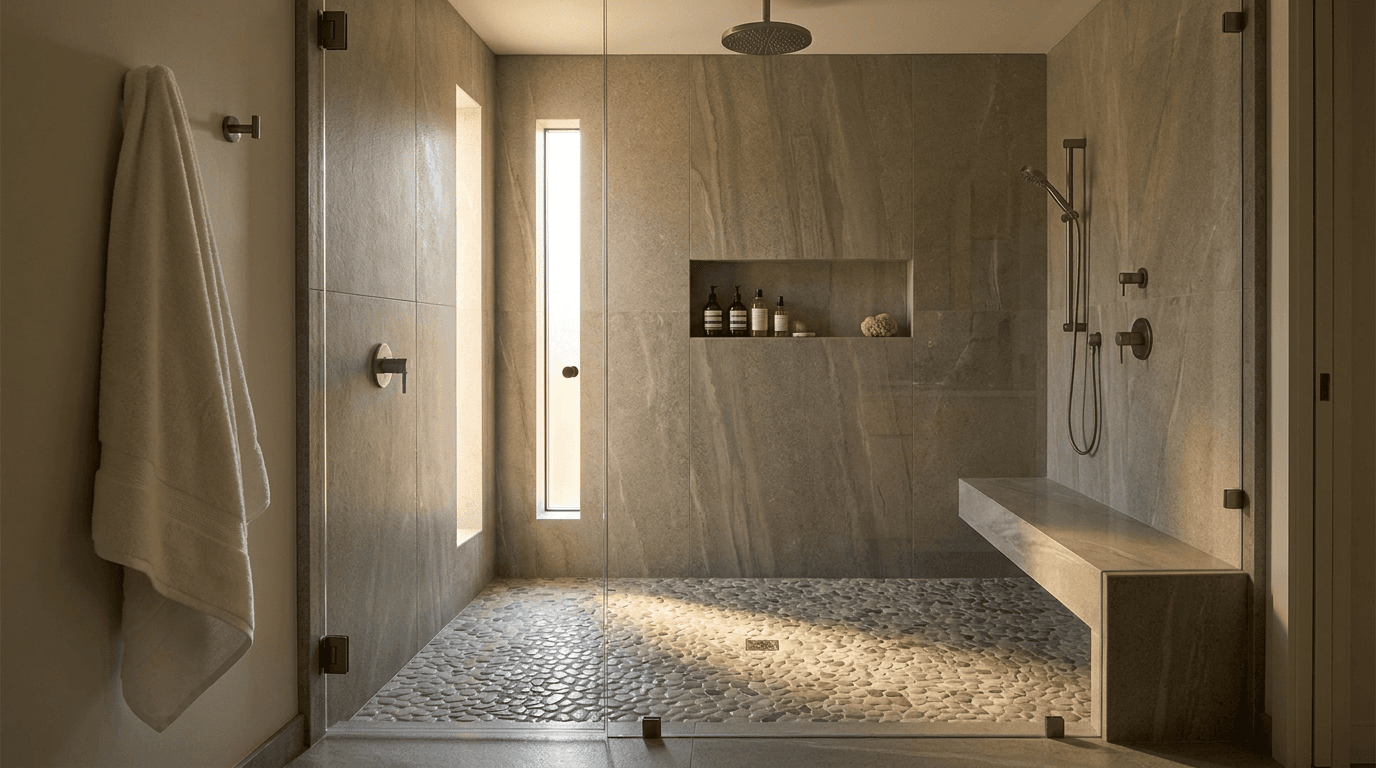
editorial interior photograph of a luxury spa-inspired primary bathroom shower at soft morning, gentle natural light entering from a narrow vertical window in the shower wall creating a soft bright column of illumination, a spacious walk-in shower with a frameless glass panel as the only enclosure maintaining visual openness, the shower walls covered in large-format natural stone slabs in a warm grey with subtle linear veining creating a dramatic vertical pattern, a built-in shower niche at eye level recessed into the stone holding artisanal glass bottles of shower products and a small natural sea sponge, a rainfall showerhead in brushed gunmetal flush-mounted into the ceiling and a secondary handheld fixture on a slim vertical bar, the shower floor is a pebble mosaic in warm smooth river stones in grey and sand tones creating a spa-like tactile surface, a small built-in bench ledge in the same natural stone extending from one wall providing a seating element, a large warm white Turkish cotton towel hangs on a minimal brushed gunmetal hook just outside the glass panel, the bathroom floor visible outside the shower is the same stone in large format maintaining material continuity, warm grey natural stone smooth pebble brushed gunmetal and soft natural morning light as the color palette, the mood is daily luxury spa-quality deeply material and a private retreat within a private retreat, editorial shower design photography with soft directional natural light creating beautiful stone surface highlights, composed as a slightly angled view through the glass panel showing the full shower interior with depth, sharp stone texture and water fixture detail, no text, no logos, no brand names
Best for: Bathroom design portfolio detail imagery, tile and stone specification showcase, Instagram material-focused design content, Pinterest luxury shower boards, contractor and builder collaboration materials, high-end renovation presentations
Template 20: Seasonal Styled Mantel and Fireplace Vignette
Detail vignettes and styled moments demonstrate a designer's decorative eye and accessorizing skill, the finishing touches that distinguish professional design from furniture arrangement. This template produces a beautiful mantel composition that showcases the art of the styled vignette.
Prompt:
editorial close-up photograph of a beautifully styled fireplace mantel vignette at soft late afternoon, the mantel is a substantial beam of warm natural reclaimed wood with a lightly textured surface and soft honey tones, mounted on a clean white wall above a simple modern fireplace opening with a low warm flame visible, on the mantel a carefully composed asymmetric arrangement featuring a large framed abstract art print in warm muted tones of blush cream and soft terracotta leaning against the wall as the primary vertical element, a pair of ceramic candlesticks in a matte warm off-white with tall tapered candles in a soft warm cream, a small sculptural object in warm brass with a geometric organic form, a low ceramic bowl in a warm sage green glaze holding a few decorative dried seed pods, and a single trailing stem of dried olive branch extending horizontally to soften the composition edge, the items are arranged with intentional asymmetric balance with varied heights and materials creating visual rhythm, the white wall above provides clean breathing space, the fireplace below shows the warm flame glow casting subtle upward warmth on the mantel underside, warm reclaimed wood soft blush warm brass matte sage warm cream and gentle firelight as the color palette, the mood is carefully composed seasonally appropriate decoratively masterful and the kind of detail that reveals a designer's true eye, editorial interior design detail photography with soft warm natural and firelight, shallow depth of field with the mantel arrangement in sharp focus and the background wall and fireplace softly diffused, no text, no logos, no brand names
Best for: Styling and decorative design portfolio, seasonal content rotation on social media, Instagram vignette and detail posts with high save rates, Pinterest mantel and fireplace styling boards, design blog features on accessorizing, client presentations demonstrating decorative approach, holiday and seasonal marketing content
How to Customize These Prompts for Your Design Identity
The 20 templates above produce strong design portfolio imagery in specific popular styles, but the images that build your career are the ones that feel distinctly yours. Customization transforms a good design image into your design image, and the following dimensions are where that personalization happens.
Embed your signature color palette across all templates. Every designer develops a palette they are known for, whether it is the warm neutrals and natural materials of a California organic modern aesthetic, the bold saturated jewel tones of a maximalist colorist, or the precise monochromes of an architectural minimalist. Before generating any images, define your three to five core colors and the accent tones you consistently use, and replace the color descriptions in each template with your own palette. This consistency across an entire portfolio set is what makes viewers recognize a cohesive design identity rather than a random collection of pretty rooms.
Specify the material vocabulary that defines your practice. If you consistently specify white oak, you should describe white oak in every prompt rather than allowing the AI to default to generic wood. If your signature material combination is unlacquered brass with honed marble and performance linen, those exact materials should appear throughout. The specificity of material description determines whether the generated image reads as a designer's intentional selection or a default rendering. Material vocabulary is the language of interior design, and your prompts should speak it as precisely as you speak it to clients and vendors.
Match architectural context to your market. A designer working in Brownstone Brooklyn should show rooms with period architectural details like crown molding, tall baseboards, and arched doorways. A designer working in modern new construction in Arizona should show clean drywall lines, expansive glass, and open floor plans. The architectural context of the room tells the viewer where this designer works and what kind of projects they take on. Replace the generic architectural descriptions with the specific building types, ceiling heights, window styles, and structural features that characterize your project portfolio.
Adjust scale and budget positioning. These templates generally depict high-end residential interiors, but they can be adjusted for different market positions. A designer targeting young professionals in their first apartments should scale down the room sizes, replace bespoke furniture with accessible modern pieces, and describe more compact proportions. A designer working on ultra-high-net-worth residences should scale up material descriptions to include rare stone, custom-fabricated metalwork, and collector-grade art. The perceived budget level of the portfolio imagery should align with the budget level of your target clients.
Add your styling signatures. Every designer has styling habits that make their work recognizable: a specific way of stacking books, a preference for certain flower varieties, a tendency to include a particular type of decorative object. If you always include a vintage ceramic piece, or you always style with branches rather than cut flowers, or your coffee tables always have a specific arrangement rhythm, write those signatures into every prompt. These details are invisible to non-designers but immediately recognizable to the design-savvy clients you want to attract.
For localized refinements to generated images, such as changing a specific material, adjusting a paint color, swapping a decorative object, or correcting a detail that does not match your vision, the Image Inpainting tool allows targeted editing of specific regions while preserving the overall composition.
Platform-Specific Deployment Strategy for Design Portfolio Imagery
Generating beautiful images is the production step. Deploying them strategically across the platforms where potential clients discover and evaluate designers is what converts visual quality into business.
Your portfolio website is the credibility foundation. The designer's own website is where serious clients evaluate the body of work before making contact. Organize your AI-generated portfolio imagery alongside photographed project work, clearly distinguishing between concept imagery and built projects if you present both. Website portfolio galleries benefit from the 3:2 or 16:9 horizontal format that shows room context and spatial depth. Use the wide room shots (Templates 1, 2, 6, 7, 14, 15) as category hero images and the detail shots (Templates 4, 13, 17, 20) as supporting imagery within each project or style category. Ensure your website loads images at full resolution on desktop and adapts gracefully to mobile with properly scaled versions.
Instagram is the primary discovery platform for interior design. The design community on Instagram is one of the most active and commercially significant audiences on the platform. Designers are discovered, evaluated, hired, and celebrated on Instagram more than any other single platform. Feed posts at 4:5 or 1:1 drive the highest engagement. The living room (Templates 1, 7, 11, 15), bedroom (Templates 3, 12), and styled vignette (Template 20) images consistently generate the highest engagement because they are the most emotionally resonant and saveable. Post consistently, use design-specific hashtags, and rotate between wide room shots and close-up detail images to maintain visual variety. Stories at 9:16 work well for behind-the-concept content and design process narratives. For additional Instagram strategies, that dedicated guide covers format optimization across all content types.
Pinterest drives the highest-intent design discovery. Pinterest users are actively planning home projects, saving design inspiration, and building mood boards for rooms they intend to create. This makes Pinterest the single most valuable platform for interior designers seeking project inquiries. Vertical images at 2:3 dramatically outperform other formats. Every template in this post can be generated in a vertical crop. The kitchen (Template 2), bathroom (Templates 4, 16, 19), closet (Template 13), and nursery (Template 8) templates perform particularly well on Pinterest because they match the most active search categories on the platform. Include descriptive text in your pin descriptions with specific style terms, room types, and material names to maximize search visibility.
Houzz connects portfolio imagery to active project leads. Houzz remains one of the most important platforms for interior designers seeking direct client leads. The platform's project-organized gallery structure rewards comprehensive room imagery with clear descriptions. Upload AI-generated design concept imagery in the appropriate room and style categories with detailed descriptions of the design approach, materials, and color palette. Houzz users search by specific room type and style, making categorization accuracy critical for visibility.
TikTok and Reels drive awareness among younger design audiences. Short-form video platforms are increasingly where younger homeowners and design enthusiasts first encounter designers. The most striking room templates, particularly the moody library (Template 9), maximalist living room (Template 11), and luxury closet (Template 13) — make excellent visual anchors for short design narration videos. For TikTok background imagery, that guide provides additional scene templates that complement design storytelling content.
Client pitch presentations benefit from aspirational concept imagery. Before a design project begins, designers present concept directions to clients. AI-generated room imagery serves as powerful mood board material that shows the intended direction in fully realized form rather than as a collage of reference images. Generate specific rooms that match the client's space type, preferred style, and discussed color palette to create presentations that feel custom and immediately understandable. The templates can be rapidly customized for each client's specific brief, generating concept imagery overnight rather than spending hours sourcing and assembling reference images.
Common Mistakes in Interior Design Portfolio Prompts
Avoiding these pitfalls ensures your generated images meet the quality threshold that design-literate audiences expect.
Generic material descriptions produce generic-looking rooms. Describing materials as "wood," "stone," or "fabric" without specifying the type, tone, finish, and character produces images that look like catalog renderings rather than designed spaces. Write "warm white oak with a matte satin finish and tight natural grain" rather than "wood." Write "honed Calacatta marble with soft grey and gold veining" rather than "marble countertop." Write "nubby oatmeal bouclé performance fabric" rather than "beige upholstery." Material specificity is the single most impactful improvement you can make to interior design prompts.
Overlooking the importance of lighting direction and quality. Many prompts describe a room's contents without specifying how light enters and interacts with the space. Without directional light specification, AI generators tend to produce flat, evenly lit images that look like product catalogs rather than architectural photography. Always specify the light source direction (from the left, from the right, from behind), the light quality (warm golden afternoon, cool bright morning, soft diffused overcast), and the light effects (casting shadows, creating highlights on surfaces, reflecting on glossy materials). The lighting specification is what transforms a description of objects into a photograph of a space.
Overfilling the room destroys spatial breathing room. In the desire to show design richness, it is tempting to describe every surface covered, every wall decorated, every corner filled. But the most effective interior photographs include deliberate negative space, areas of visual rest that allow the eye to move through the composition without fatigue. Include empty wall space, clear floor areas, and uncluttered surfaces in your prompts. The restraint of what you leave out communicates design sophistication as much as the quality of what you include.
Inconsistent style vocabulary within a single room. If your prompt describes mid-century modern furniture in a farmhouse kitchen with industrial lighting and Art Deco accessories, the generated image will look confused rather than eclectic. Intentional eclecticism, like Template 11's maximalist room, requires specific guidance about how disparate elements relate. Unintentional style mixing happens when the prompt lacks a clear design point of view. Before writing any prompt, define the single style direction or the intentional fusion, and ensure every element described is consistent with that direction.
Neglecting the vertical dimension of rooms. Many interior prompts describe only the horizontal plane: furniture, rugs, table accessories. But the most compelling room photographs include vertical elements that create height and draw the eye upward: tall plants, floor lamps, artwork hung at proper height, curtains that emphasize window height, pendant lighting, built-in shelving. Include at least two vertical elements in every room prompt to prevent the generated image from feeling squat and compressed.
Styling that looks staged rather than lived-in. An interior that looks like nobody has ever touched anything feels like a showroom rather than a designed home. Include small signs of intentional imperfection: a throw blanket draped rather than folded, a book left open, a plant that trails naturally rather than sitting in perfect symmetry. These details create the "curated but real" quality that distinguishes the best interior photography from sterile catalog imagery.
Using the same angle and composition for every room. A portfolio where every image is a straight-on wide shot from the doorway feels monotonous regardless of how beautiful individual rooms are. Vary your compositional approach: some rooms shot wide to show the full space, some at an angle to emphasize depth, some as close-up vignettes that focus on a styled corner or material detail. Templates 1 through 15 provide wide room contexts while Templates 17, 19, and 20 provide the close-up and detail variety that creates a dynamic portfolio experience.
Building a Complete Design Content Pipeline with AI
A competitive interior design practice in 2026 requires more than a static portfolio gallery. The most successful designers produce a continuous stream of visual content across static imagery, video, social media, client presentations, and editorial submissions. The prompts in this post establish the static imagery foundation, but that foundation supports a much broader content ecosystem.
From static room images to motion content. The same room compositions that work as portfolio photographs become even more engaging as slow camera movement videos: a gentle pan across a living room, a slow zoom toward a styled mantel, a soft dolly movement through a dining room. The Cinematic Video Generator inside Miraflow can produce interior design video clips from text descriptions that maintain the visual quality and style of your static portfolio imagery, creating the kind of immersive room tour content that performs exceptionally well on Instagram Reels and TikTok.
Short-form design narration videos at scale. Design process explanations, style breakdowns, room transformation narrations, and material education content are among the highest-performing design content formats on short-form video platforms. The Text2Shorts tool can transform design descriptions and educational content into complete short-form videos with generated visuals, scripts, and voiceover. Combined with your AI-generated room imagery, this enables continuous design content production without the time investment of traditional video creation.
Audio ambiance for design presentations. Client presentations and social media content benefit from atmospheric audio that complements the design imagery. The AI Music Generator can produce custom ambient soundscapes that match your brand aesthetic, from soft contemporary instrumentals for modern portfolio presentations to warm acoustic textures for cozy residential content.
Repurposing long-form design content. If you create longer-format content such as design talks, project walkthroughs, or educational seminars, the AI Clipping tool can automatically extract the most engaging moments into vertical shorts with captions, ready for distribution across social platforms.
YouTube channel presence for design authority. Designers building YouTube channels for educational content, project tours, or design commentary benefit from consistent visual branding. The YouTube Thumbnail Maker can produce thumbnails that carry your design portfolio's aesthetic, and the channel banner art guide covers how to extend that brand identity across your channel.
Emerging Visual Trends in Interior Design Portfolio Content
Staying current with evolving visual and content trends ensures your portfolio imagery feels contemporary and resonant with the design audience.
Process and concept content alongside finished rooms. Design audiences increasingly want to see the thinking behind the design, not just the final result. Showing concept imagery, material palettes, color studies, and design evolution narratives alongside finished room photographs creates a deeper connection with potential clients and positions the designer as a thoughtful problem-solver rather than just an aestheticist. AI-generated imagery can serve as concept visualization within this narrative framework, showing the design intention that guided the project.
Material-forward close-up content. The tight detail shot that highlights a specific material combination, a stone and brass junction, a fabric and wood relationship, a tile and grout detail, is generating increasingly high engagement on design-focused social media. These shots communicate connoisseurship and material expertise that wider room shots cannot. Templates 19 and 20 serve this trend, and you should generate material detail imagery from every room template as supplementary portfolio content.
Wellness and biophilic design emphasis. Imagery that communicates wellbeing through natural materials, abundant plants, natural light, and organic forms resonates with the growing client interest in homes that support physical and mental health. The Japandi bedroom (Template 12), the outdoor living room (Template 14), and the spa-inspired shower (Template 19) align with this wellness-oriented design aesthetic. Integrate natural elements into every room prompt, even in spaces where they are not the primary design story.
Realistic lifestyle context. The most engaging portfolio imagery is shifting from "perfect empty room" toward "beautiful room being lived in." A kitchen with breakfast being prepared, a living room with a blanket and book suggesting an afternoon of reading, a home office with work in progress. These lifestyle touches create emotional resonance and help potential clients imagine themselves in the designed space. Several templates include these lifestyle elements, and you should consider adding subtle human-use details to every room prompt.
Seasonal rotation keeps portfolios fresh. Designers who update their portfolio and social media imagery seasonally, swapping light summer styling for warm autumn tones and then cozy winter textures, maintain audience engagement through the year and demonstrate a responsive, evolving design sensibility. Generate seasonal variations of your core room templates by adjusting color palettes, styling details, and light quality to reflect the current season. A living room that shows fresh spring flowers in April and rich warm throws in November feels alive and maintained rather than static.
For more on visual trends and content strategies, the product photography prompts guide and the real-world-looking photo prompts collection offer additional templates that complement these design-specific approaches.
How Miraflow AI Supports Your Interior Design Content Workflow

Every prompt in this post can be generated inside Miraflow AI. Open the AI Image Generator, paste your customized prompt, select the appropriate aspect ratio for your target platform, and generate. Multiple aspect ratio options including 1:1, 4:5, 9:16, 16:9, 3:2, and 3:4 are available, covering every platform and format interior designers need.
For images that need localized refinements, such as changing a paint color, adjusting a material, swapping a decorative accessory, or correcting a design detail without regenerating the full composition, the Image Inpainting tool allows targeted editing of specific image regions while preserving the overall room composition.
The recommended workflow for building a comprehensive design portfolio image set is to generate by room type in focused sessions. Start with your signature room, the one that best represents your design identity, and generate five to eight variations to find the strongest composition. Then work through the remaining room types, ensuring each generation session carries forward the color palette, material vocabulary, and styling sensibility established in your signature room. Generate three to five variations per template, select the strongest outputs, refine any details with inpainting, and export at the resolutions and aspect ratios required for each deployment platform. This systematic approach ensures visual consistency across the complete portfolio.
For designers building a complete content ecosystem, Miraflow's suite extends the workflow beyond static imagery. The Cinematic Video Generator produces interior design video clips from text prompts. The Text2Shorts tool creates short-form design content with scripts, visuals, and voiceover. The AI Music Generator produces ambient audio for presentations and social media. The AI Clipping tool repurposes long-form design content into platform-ready shorts. Together, these tools allow a design practice to produce a complete quarter's visual and video content within a single integrated workflow.
FAQ
Can AI-generated images be used in a professional interior design portfolio?
AI-generated images are increasingly used by designers for concept visualization, style demonstration, mood board creation, and aspirational brand content. The key is transparency about what the images represent. Presenting AI-generated imagery as design concepts, style explorations, or aesthetic capabilities is both honest and commercially effective. Many designers use a mix of photographed completed projects and AI-generated concept imagery, clearly distinguishing between the two. This approach is particularly valuable for emerging designers building their visual presence before accumulating a large body of completed work. Industry peers and clients value transparency, and the quality of the design vision demonstrated in AI imagery is what attracts the right clients regardless of the generation method.
What aspect ratio works best for interior design portfolio images?
For portfolio website galleries, 3:2 horizontal is the most established format for architectural and interior photography, providing the width needed to show spatial context. For Instagram feed posts, 4:5 vertical maximizes screen real estate and engagement. For Pinterest, 2:3 vertical is optimal as the platform's feed structure rewards height. For website hero banners, 16:9 provides the cinematic width that works well across screen sizes. Generate each core image in multiple aspect ratios rather than cropping a single version, as the composition needs to be optimized for each format's proportions.
How do I make AI-generated rooms look like real photography rather than renderings?
Four elements separate photographic-quality room imagery from rendering-quality output. First, specify natural light with a clear direction and character, as real photographs always show directional light with natural falloff rather than flat ambient illumination. Second, include material imperfections and natural variation, as real marble has veining that is not perfectly symmetrical, real linen has organic creases, and real wood has grain variation. Third, add lived-in styling details that suggest human use: a draped blanket, an open book, a coffee cup. Fourth, describe atmospheric depth where background elements are slightly softer than foreground elements, mimicking the natural depth of field in actual photography. These four elements together create the perceptual markers that design audiences associate with real interior photography.
How many images do I need for a complete interior design portfolio?
A compelling portfolio typically includes eight to twelve room or space categories with two to four images per category: one wide establishing shot, one to two supporting angles or detail shots, and optionally a styled vignette or material close-up. This totals approximately 25 to 50 images for a comprehensive portfolio. The range should include at minimum a living room, kitchen, primary bedroom, bathroom, and one additional space that represents your specialization (home office, nursery, outdoor living, or similar). Beyond the core portfolio, social media content benefits from ongoing generation of seasonal variations, detail shots, and fresh compositions, which can add 10 to 20 additional images per quarter.
Should I generate images in a consistent style or show diverse styles?
This depends on your business strategy. If you are establishing a signature design aesthetic, generate all portfolio images with a consistent palette, material vocabulary, and mood to create a recognizable visual identity. If you serve a broad client base with diverse style preferences, generate rooms across different aesthetics but maintain consistent photography quality, composition standards, and styling quality across all styles. The strongest approach for most designers is to have a dominant signature style represented by 60 to 70 percent of portfolio images, with the remaining 30 to 40 percent showing versatility in complementary styles.
Can these prompts be used for client presentation renderings and concept boards?
These prompts are well-suited for client concept presentations. Customize the relevant room template with the client's specific style preferences, discussed color palette, mentioned materials, and desired mood. Generate several variations showing different interpretations of the brief, and present them as design directions for discussion. This approach gives clients a fully realized room visualization to respond to rather than asking them to imagine a finished room from swatches and reference photos. Always present AI-generated concept imagery as design directions rather than promises of exact outcomes, as the built result will naturally differ in specific details.
How do I maintain consistency when generating images for the same project?
Create a project brief document before your first generation that specifies: the exact materials (including wood species, stone type, metal finish, and fabric descriptions), the consistent color palette with specific tone descriptions, the light quality and time of day, the architectural style and proportions, and any signature styling elements that should appear across rooms. Paste this consistent specification section into every prompt for that project, changing only the room-specific furniture, layout, and function descriptions. This embedded consistency document is what prevents rooms from looking like they belong to different homes.
Conclusion
Interior design is a profession where the eye leads the business. Clients choose designers based on what they see, and what they see is the portfolio. The quality, style, and emotional resonance of that portfolio determines not just whether a client inquires but what caliber of client inquires, what project budgets they bring, and what level of trust and creative freedom they extend. A designer's portfolio is not a record of past work. It is a promise of future capability, and every image in it either strengthens or weakens that promise.
The 20 templates in this post cover the complete room vocabulary that a comprehensive interior design portfolio requires: living rooms that define your design identity, kitchens that demonstrate functional beauty, bedrooms that sell private luxury, bathrooms that showcase material mastery, home offices that address modern living, dining rooms that create gathering spaces, specialty rooms that show range and personality, outdoor spaces that extend design beyond walls, and styled details that reveal the finishing eye that distinguishes professional design from furnished rooms. Each template is engineered for the specific compositional, material, and atmospheric conventions of professional interior design photography, producing images that meet the visual standard of shelter publications and high-end design portfolios.
Copy the templates that match your design style and target aesthetic, customize them with your specific material palette, color identity, and styling signatures, generate them inside Miraflow AI, and deploy them across your portfolio website, social media platforms, client presentations, and editorial submissions. Build a workflow that generates new imagery seasonally, produces platform-specific formats for every channel, and maintains the visual consistency that transforms a collection of room photographs into a recognizable design brand. The designers who thrive are the ones whose portfolio is as compelling as their built work, and these templates give you the tools to ensure every image you present is worthy of the talent behind it.