16 AI Prompts for the 'How Different Our Lives Are' Trend (Copy & Paste)

Written by
Aerin Kim
The side-by-side 'how different our lives are' format is spreading fast on TikTok in 2026. Here are 16 grouped AI prompts, from the classic calm versus chaos split to creator persona twists.
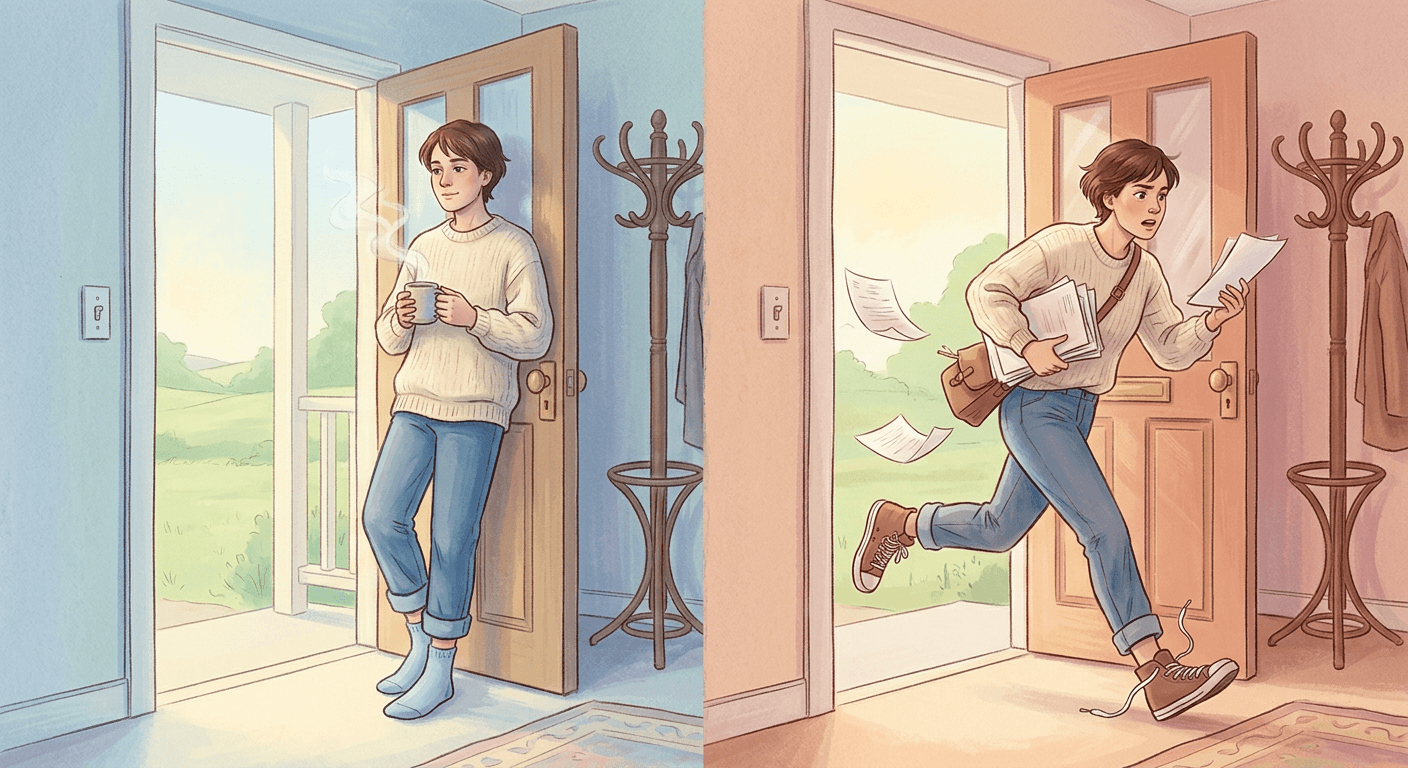
A split screen shows the same person twice. On one side, hair done, coffee in hand, walking calmly out the door. On the other side, the same outfit half buttoned, toast in their mouth, sprinting for the same door. That contrast, two versions of one life shown at once, is the format behind "How Different Our Lives Are," one of the side-by-side comparison trends currently spreading across TikTok alongside the repetition-based "Bob" trend and the direct-to-camera "worth the money" list format. It works because the joke, or the emotion, lands in under two seconds. A viewer does not need context, backstory, or a caption to understand what they are looking at, they just need both halves of the frame at once.
The trend started as a filmed format, two contrasting routines shot in short bursts and cut together for maximum contrast, but the same core idea translates directly into a single AI-generated image, one photo, one prompt, two versions of the same subject placed side by side in a believable shared frame. That translation is exactly what current-generation image-to-image models are good at, and it is why this trend is worth adapting into a still image even if you never touch a video editor.
Below are 16 ready-to-use prompts for this format, grouped into five variations on the same idea, built for the AI Image Generator in Miraflow AI, which handles the single-photo, image-to-image workflow this entire trend runs on directly in the browser.
How This Trend Actually Works
Every version of this format starts from one clear reference photo of the subject and asks the model to generate a second version of that same person in a contrasting state, then place both versions together in one frame with consistent lighting, proportions, and a believable shared setting. The two halves need to read as the same person at a glance, same face, same build, same identifying details, while everything else about their state, expression, posture, or surroundings shifts to create the contrast.
The strongest results come from picking a contrast that is instantly legible without a caption. Calm versus rushing works because everyone has lived both mornings. Put-together versus exhausted works for the same reason. The weakest results tend to come from contrasts that need explanation, an inside joke or a reference only the poster understands does not travel the way a universal, relatable split does. Keep the two sides of your prompt opposite enough that a viewer's eye can process the difference in the first second of a scroll.
A single well-lit, front-facing reference photo is enough for most of these prompts. If you want an even more literal recreation of the original filmed trend, you can generate two separate images from the same reference, one calm and one chaotic, and place them side by side yourself using any basic photo editor or the YouTube Thumbnail Maker in Miraflow AI, which supports uploading and combining images alongside text.
The clip below shows a closely related side-by-side format, filmed rather than AI-generated, and is a useful reference for how creators are pacing and framing this kind of contrast on camera before you adapt the same idea into a single generated image.
1) The Original Format: Calm You vs Chaotic You
The literal, most-recognized version of the trend. These four prompts recreate the classic morning-routine contrast that made the format spread in the first place.
1. The doorway split
Using the uploaded reference photo, generate a single continuous frame split down the middle showing the same person twice standing in the same doorway. Left half: hair neatly styled, calm relaxed expression, holding a coffee cup, stepping out unhurried, soft morning light. Right half: same outfit slightly rumpled, one shoe half on, mouth open mid-shout, papers falling from one arm, motion blur on the trailing leg. Match lighting, camera angle, and doorway framing exactly on both sides so it reads as one continuous scene, not two stitched photos.
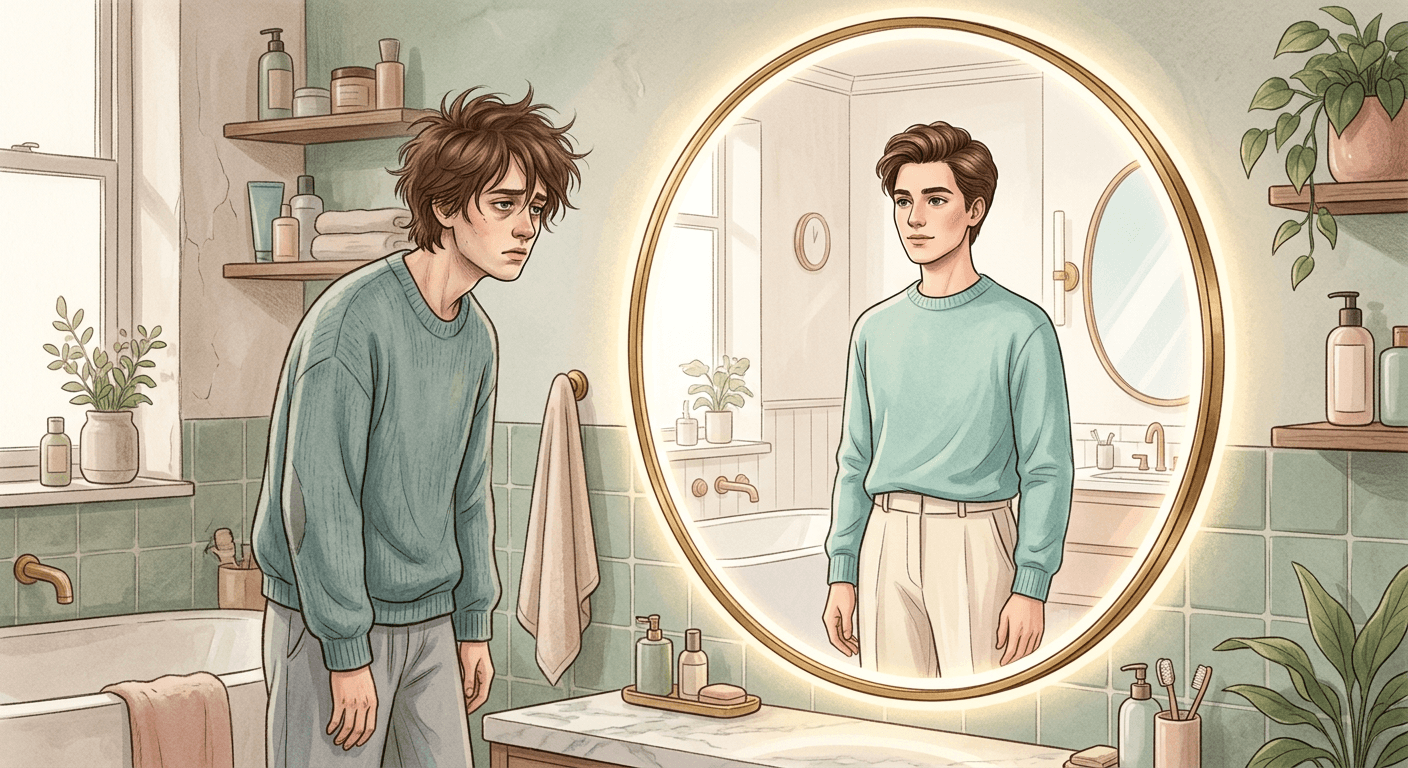
2. The mirror check
Using the uploaded reference photo, generate a single frame of the same person looking into a bathroom mirror, split so the reflection shows a contrasting version of them. Real person side: exhausted expression, messy hair, toothbrush in hand, slouched posture. Mirror reflection side: the same person polished and camera-ready, styled hair, confident posture, as if the mirror is lying. Consistent bathroom lighting and mirror framing across both halves, sharp reflection detail.
3. The commute contrast
Using the uploaded reference photo, generate a single wide frame split into two halves showing the same person's commute. Left half: walking briskly but composed, headphones in, relaxed shoulders, on a clear sidewalk. Right half: the same person sprinting full speed, bag swinging, hair flying, weaving around other pedestrians, motion blur on their legs. Same street, same time of day lighting, same camera height on both halves.
4. The desk arrival
Using the uploaded reference photo, generate a single frame split showing the same person arriving at their desk two different ways. Left half: sitting down calmly, laptop already open, a neat cup of coffee beside them, warm confident expression. Right half: the same person dropping into the chair off balance, bag still on one shoulder, papers scattering across the desk, wide-eyed expression. Identical desk, chair, and office lighting on both halves for a believable single scene.
2) Two Lives, Two Paths
A version of the trend built around a bigger contrast than one morning, the two different directions a life or career could have gone. This variation performs especially well for creators talking about career changes, side hustles, or "what if" content.
5. The corporate vs creative split
Using the uploaded reference photo, generate a single split frame comparing two career paths for the same person. Left half: in a tailored blazer, standing in a clean modern office, neutral professional expression, holding a tablet. Right half: in relaxed creative clothing, standing in a sunlit studio surrounded by cameras, props, and a ring light, genuine smiling expression, hands mid-gesture. Match the person's face and build exactly on both sides, contrast only the wardrobe, setting, and energy.
6. The stayed vs left split
Using the uploaded reference photo, generate a single split frame showing two versions of the same person's life choice. Left half: sitting at a familiar hometown kitchen table, warm nostalgic lighting, content expression. Right half: standing on a balcony overlooking an unfamiliar city skyline at dusk, city lights glowing, a mix of excitement and uncertainty in their expression. Same person, same age, clearly two different chosen paths, cinematic lighting on both sides.
7. The nine to five vs freelance split
Using the uploaded reference photo, generate a single split frame contrasting two working styles for the same person. Left half: seated in a formal cubicle under fluorescent office lighting, structured posture, a wall clock visible. Right half: seated cross-legged on a couch with a laptop, a dog or plant nearby, soft natural window light, relaxed posture, coffee mug within reach. Same face and identifying features on both halves, only the working environment and energy change.
8. The saved vs spent split
Using the uploaded reference photo, generate a single split frame showing two financial paths for the same person. Left half: standing in a modest, tidy apartment, calm satisfied expression, a small potted plant and a stack of books nearby. Right half: standing in front of a flashy sports car or designer shopping bags, an excited but slightly strained expression. Keep the same face and build on both sides, let the props and setting carry the contrast, no logos on any product or vehicle shown.
3) Two Eras, One Person
A nostalgic variation that pairs well with the meet-your-younger-self style of content already popular this year, showing the same person across two different time periods rather than two states in the same day.
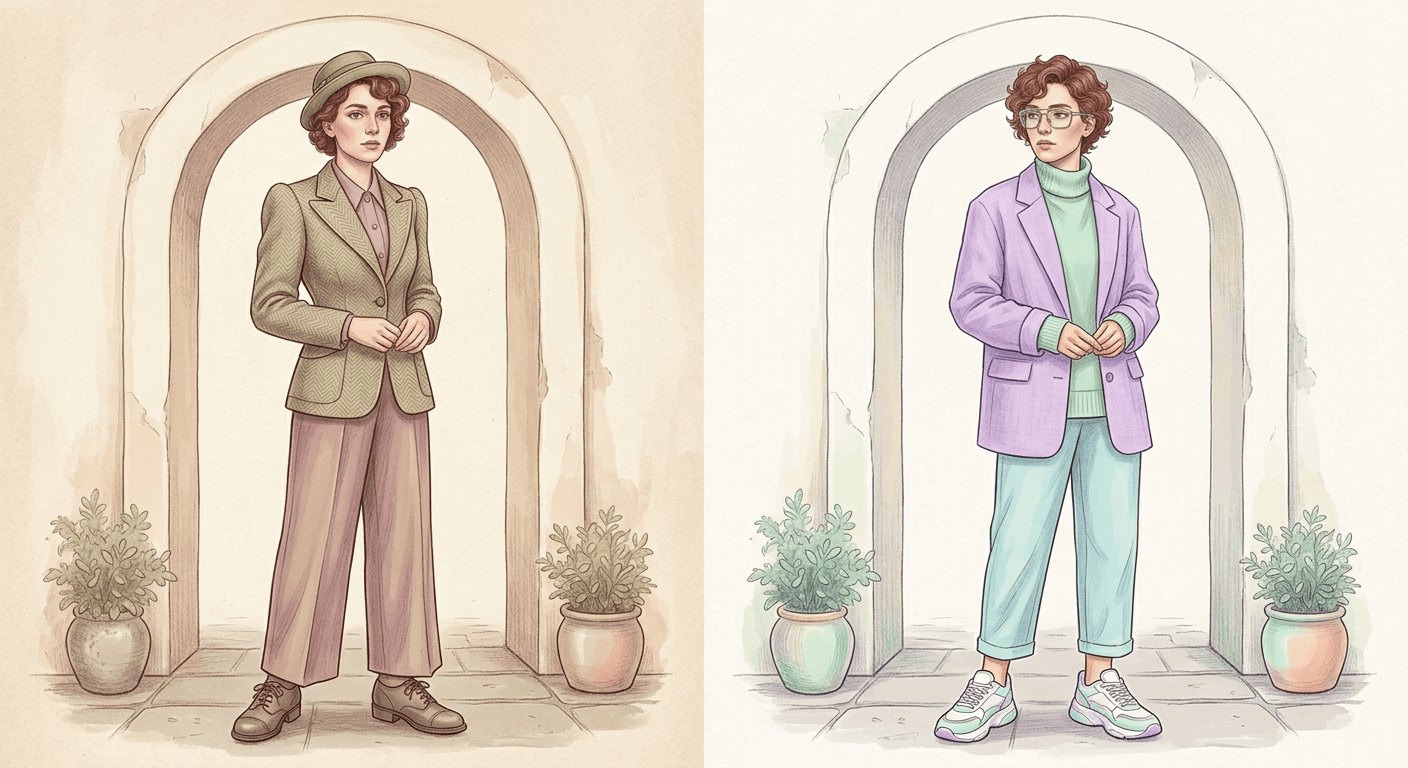
9. The decade jump
Using the uploaded reference photo, generate a single split frame showing the same person a decade apart in the same location. Left half: styled in fashion and hairstyle typical of ten years earlier, slightly desaturated warmer color grade suggesting an older photo. Right half: styled in current fashion and hairstyle, crisp modern color grade. Same pose and same background landmark on both halves so the location match is obvious, only the era-specific styling changes.
10. The trend cycle split
Using the uploaded reference photo, generate a single split frame showing the same person dressed in two different trend cycles. Left half: styled in an earlier, now-dated trend look with era-appropriate accessories. Right half: styled in the current trend look popular this year. Same studio backdrop and lighting on both halves, playful but not exaggerated styling, clearly the same person in both halves.
11. The first year vs now split
Using the uploaded reference photo, generate a single split frame showing the same person's first year in their field versus now. Left half: slightly nervous posture, simpler plain clothing, a small modest workspace or setup visible behind them. Right half: confident relaxed posture, an upgraded and more polished setup or environment behind them, subtle signs of growth like more equipment or a nicer backdrop. Same face and age progression kept realistic and subtle, not a full decade jump.
4) Two Personas, One Feed
Built specifically for creators and marketers, this variation shows the difference between an on-camera persona and an off-camera reality, a format that tends to perform well because it feels honest rather than staged.
12. The camera on vs camera off split
Using the uploaded reference photo, generate a single split frame showing a content creator on camera and off camera. Left half: bright ring light glow, energetic camera-ready smile, styled hair, looking directly at a phone or camera. Right half: same person seconds later, phone lowered, neutral tired expression, natural room lighting instead of the ring light glow. Same room and same outfit on both halves, only the expression and lighting quality shift to show the contrast between performance and reality.
13. The polished thumbnail vs raw filming split
Using the uploaded reference photo, generate a single split frame contrasting a finished thumbnail persona with the raw filming moment behind it. Left half: perfectly composed, bright saturated lighting, confident exaggerated expression typical of a YouTube thumbnail. Right half: the same person mid-take, tripod and phone visible in frame, natural lighting, a more candid neutral expression, a few scattered notes or props visible. Same person and same room on both halves, contrast only the polish level.
14. The confident pitch vs nervous prep split
Using the uploaded reference photo, generate a single split frame showing the same person before and during a big pitch or presentation. Left half: standing tall in front of a mirror or blank wall, rehearsing with a confident, composed expression, hand gestures mid-practice. Right half: the same person seated at a table across from an unseen audience, gripping notes tightly, a visibly nervous but determined expression, slight sheen of stress on their face. Same outfit and identifying features on both halves.
5) Two Worlds, One Frame
The environment itself carries the contrast in this final group, useful for travel, lifestyle, and relocation-focused content where the split is about place as much as mood.
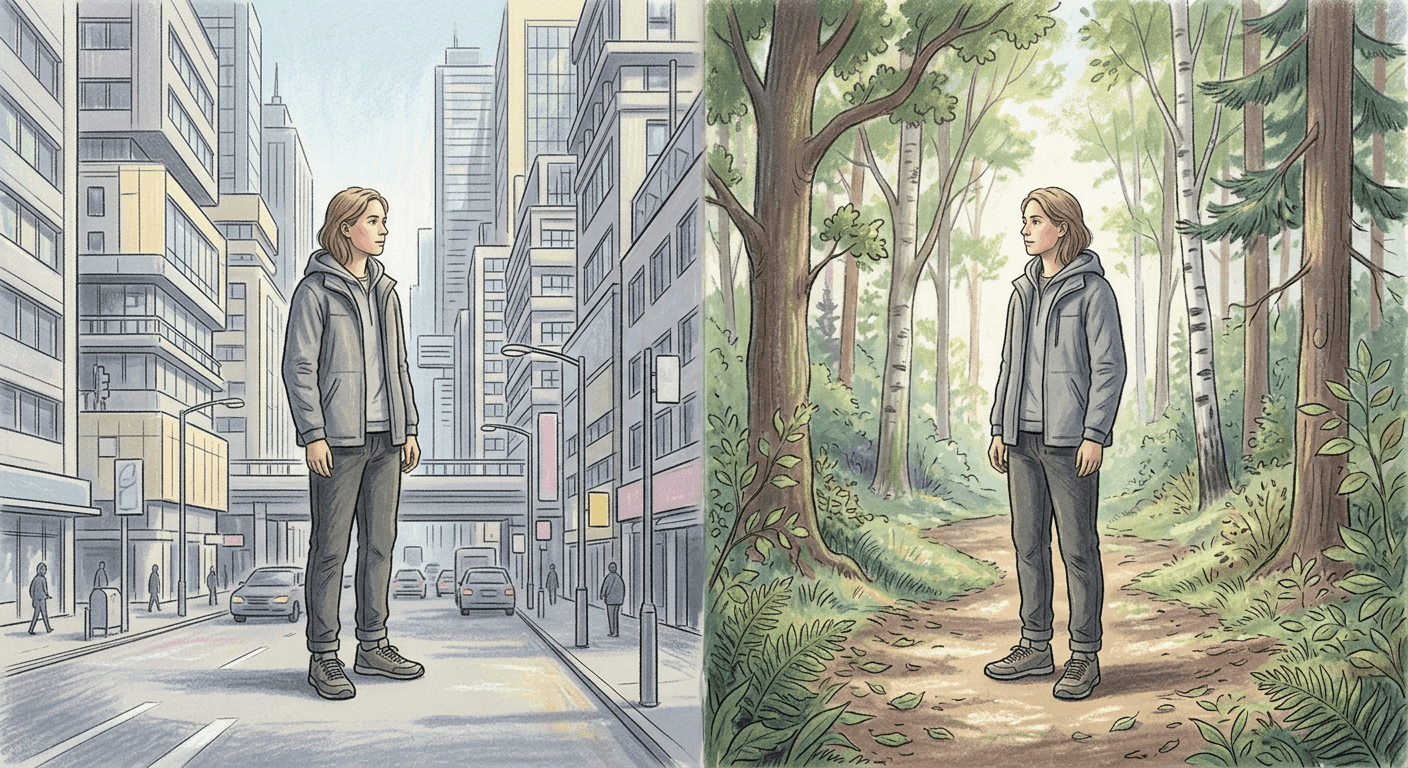
15. The city vs nature split
Using the uploaded reference photo, generate a single split frame showing the same person in two contrasting environments. Left half: standing on a busy city street, tall buildings and traffic blurred in the background, urban energy. Right half: standing in a quiet forest or mountain trail, natural light filtering through trees, calm expression. Same person, same rough time of day lighting logic on both halves, contrast only the setting and energy level.
16. The tiny apartment vs dream home split
Using the uploaded reference photo, generate a single split frame showing the same person in two contrasting living spaces. Left half: standing in a small, cluttered studio apartment, warm but cramped lighting, a content but tired expression. Right half: standing in a spacious sunlit home with large windows and clean modern furniture, relaxed confident expression. Same face and build on both halves, let the scale and finish of the space carry the visual contrast, no visible brand logos on any furniture or decor.
How to Customize These Prompts
Swap the specific details, the outfit, the room, the props, for whatever actually matches the story you are telling, but keep the underlying structure intact. Always describe both halves of the split in the same prompt so the model generates them together in one coherent frame rather than as two disconnected images, and always specify that the lighting, camera angle, and image style should match on both sides. If your first result looks like two separate photos stitched together rather than one continuous scene, add a phrase like "single continuous frame, matching lighting and camera angle on both sides" to your prompt and regenerate.
For subjects who want a more literal version of the original filmed trend rather than a single split image, describe the two states as separate short scenes in your prompt and specify a vertical 9:16 frame, then bring the result into Text2Shorts on Miraflow AI to add narration or captions and turn it into an actual short instead of a static post.
Common Mistakes Creators Make With This Trend
Making the contrast too subtle. If a viewer has to study the image to spot the difference, the format has already failed, the whole point is a split-second read.
Using two different reference photos taken in different lighting. This is the single biggest cause of a split that looks obviously stitched together instead of one believable scene. Start from one photo whenever possible, or explicitly instruct the model to match lighting across both halves.
Overcomplicating the setting. The strongest examples of this trend keep the background simple and let the contrast in the subject's state do the work. A busy, detailed background on both sides competes with the actual joke or emotion instead of supporting it.
Skipping a caption entirely. The image should work without one, but a short caption that names the two sides directly, "corporate me vs the me who almost quit," still helps a wider audience get the joke on the first watch, especially on platforms where captions display automatically.
Where to Generate These
The AI Image Generator in Miraflow AI handles the single-photo image-to-image workflow every prompt above depends on, upload a reference photo, apply one of the 16 prompts, and adjust the setting or expression without leaving the workspace. Once you have a result you like, Text2Shorts is a fast way to turn the same concept into a narrated short instead of a static post, and the YouTube Thumbnail Maker in Miraflow AI works well if you want to turn your favorite result into a thumbnail for a video about the trend itself. If this personal, before-and-after style of content is working for your account, the prompts in our meet your younger self trend guide and our AI figurine trend guide are natural formats to rotate alongside this one, and our before and after comparison prompt pack covers a closely related but distinct format worth trying too. For more on the image model family behind this kind of generation, see our Nano Banana Pro vs Seedream 5.0 Pro comparison. You can browse more prompt guides like this on the Miraflow AI blog, and every tool named here lives at miraflow.ai.
Frequently Asked Questions
Do I need two separate photos for this trend, or does one work? One clear, well-lit reference photo is enough for most of these prompts. The model generates the second, contrasting version itself. Two photos of the same person in similar lighting can work too, but a single photo is simpler and usually produces a more consistent result.
Why does my split image look like two photos stitched together? This almost always means the lighting, angle, or background style differs too much between the two halves. Add an instruction specifying a single continuous frame with matching lighting and camera angle across both sides, and regenerate.
What is the best type of reference photo for this trend? A recent, clear, front-facing photo with good lighting and the subject's face fully visible. Avoid heavily filtered photos, extreme angles, or low resolution images, all of which make it harder for the model to keep the two versions looking like a consistent match.
Is this the same as the before and after trend? It is closely related but not identical. A classic before and after usually shows a transformation over time or a change in appearance. This trend shows two versions existing at the same moment, two parallel states or paths rather than a progression from one to the other.
Can I use this format for a brand or product instead of a person? Yes. The same split structure works for showing a product in two different use cases, a workspace before and during a busy day, or any subject with two contrasting states worth showing side by side. Adjust the prompt language accordingly.
Which group of prompts tends to perform best? The original calm versus chaotic group tends to get the fastest, widest recognition since it matches the trend's most common existing execution. The two personas group tends to perform especially well with creator and marketing audiences specifically, since it feels more personal and less staged.
Conclusion
The reason this side-by-side format keeps spreading is the same reason most durable trends spread, it is low effort to try and it lands instantly. One reference photo and one well-built prompt is all it takes to show two versions of the same life in a single frame, whether that is a calm morning against a chaotic one, two career paths, two eras, or two worlds. The 16 prompts above cover five distinct angles on that same core idea, so there is a version here that fits whatever contrast is actually true for you or your brand. Start with your clearest reference photo, keep the lighting and framing consistent across both halves, and pick the specific contrast that feels most honest rather than the most dramatic one, that is usually the version that gets the best reaction.