18 AI Prompts for the 'Meet Your Younger Self' Photo Trend (Copy & Paste)

Written by
Aerin Kim
The 'meet your younger self' AI photo trend has taken over TikTok and Instagram in 2026. Here are 18 grouped prompts, from mirror reflections to park bench reunions, to copy and paste.
A single photo and one prompt is all it takes to start the AI trend currently filling TikTok and Instagram feeds: an adult standing face to face with their own childhood self, in one frame, as if the two of them actually met. It has picked up so much traction that even public figures have joined in, with Indian politician Shashi Tharoor sharing an AI-generated image of himself embracing his 22-year-old self and watching it spread across news coverage on its own. The trend goes by a few names, meet your younger self, the childhood versus present trend, the AI hug trend, but the format is the same everywhere: one uploaded photo, a prompt that asks the model to imagine a second version of the same person at an earlier age, and a composition that puts both of them in the same believable scene.
What makes this trend different from most viral AI photo formats is that it is not really about technical polish. It works because it is personal, it is easy to try with a single photo already sitting in someone's camera roll, and the result reliably gets an emotional reaction, from the person who made it and from whoever sees it in their feed. That combination, low effort to try and high emotional payoff, is exactly the kind of format that keeps generating fresh posts for weeks instead of burning out after a few days.
Below are 18 ready-to-use prompts for this trend, grouped into five styles, built for the AI Image Generator in Miraflow AI, which handles the image-to-image generation this format depends on directly in the browser.
How This Trend Actually Works
Every version of this trend starts from a single reference photo of the adult subject, a recent, clear photo works best, and asks the model to generate a second figure representing that same person as a child or teenager, then place both figures together in one coherent scene with consistent lighting, framing, and physical interaction. The model has to infer what the subject likely looked like at a younger age from the adult reference alone, since most people are not uploading an actual childhood photo alongside the current one, and this inference is exactly what current-generation image models have gotten noticeably better at handling convincingly.
The two most common finished formats are a warm, direct interaction, a hug, a hand on the shoulder, sitting together on a bench, and a mirror or reflection format, where the present self looks into a mirror and the reflection shows their younger self looking back. Both formats photograph well because they read instantly, a viewer understands the concept in under a second, which matters for a format that lives or dies on how quickly it lands in a fast scroll.
If you would rather start from an actual childhood photo instead of letting the model infer one, that works too, and can produce an even more accurate likeness. In that version, you are combining two real reference points, an old photo and a current one, into a single new scene, which is a slightly different but closely related workflow to the AI figurine trend covered in our action figure and toy box prompt pack, where a single reference photo is transformed into a completely different physical object rather than merged with a second reference.
1) Mirror Reflection Prompts
The mirror format is the most iconic version of this trend: the present-day subject stands in front of a mirror, but the reflection looking back is their younger self.

Prompt 1: Bathroom mirror at morning light
Using the reference photo, generate the subject standing in front of a bathroom mirror in soft morning light, but the reflection in the mirror shows the same person as a child around age eight, smiling back. Keep the bathroom simple and realistic, a towel on a hook, a plain sink, warm natural window light, photorealistic skin and fabric texture, consistent lighting between the real figure and the reflection.
Prompt 2: Bedroom mirror with childhood posters visible
Using the reference photo, generate the subject standing in front of a bedroom mirror, the reflection showing the same person as a child around age ten. The bedroom in the reflection has simple, generic childhood posters and a small shelf of toys visible behind the reflected figure, warm lamp lighting, photorealistic detail, no readable text on any poster.
Prompt 3: Full-length hallway mirror
Using the reference photo, generate the subject standing in front of a full-length hallway mirror, reflection showing the same person as a child around age seven, wearing simple everyday clothing. Natural daylight from a nearby window, realistic floor and wall texture, consistent shadow direction between the real figure and the reflection.
Prompt 4: Vanity mirror, warm evening light
Using the reference photo, generate the subject seated at a vanity mirror in warm evening lamp light, the reflection showing the same person as a child around age nine looking back with a gentle expression. Soft warm color grading, photorealistic detail, a few simple personal items on the vanity surface, no readable text.
All four of these assume a single clear, front-facing reference photo of the current subject. Upload it to the AI Image Generator in Miraflow AI and the model handles the age regression for the reflection side automatically.
2) Park Bench and Outdoor Reunion Prompts
This group places both versions of the subject together in an outdoor scene, sitting or standing side by side rather than facing each other, which tends to read as more contemplative than the direct-interaction group below.

Prompt 5: Park bench at golden hour
Using the reference photo, generate the subject sitting on a simple wooden park bench at golden hour, next to a second figure of the same person as a child around age eight, both looking out at the same view rather than at each other. Warm low sunlight, soft long shadows, photorealistic outdoor lighting and texture, natural park setting with generic trees and grass.
Prompt 6: Childhood home front porch
Using the reference photo, generate the subject sitting on the front porch steps of a simple, generic house, next to a second figure of the same person as a child around age seven. Warm late-afternoon light, a porch railing and a potted plant nearby, photorealistic detail, relaxed natural poses, no readable house numbers or signage.
Prompt 7: Playground swing set
Using the reference photo, generate the subject standing beside a simple playground swing set, with a second figure of the same person as a child around age six sitting on one of the swings mid-motion. Soft overcast daylight, photorealistic texture on the swing chains and rubber seats, natural candid framing, no readable signage.
Prompt 8: School hallway or classroom
Using the reference photo, generate the subject standing in a simple, generic school hallway lined with plain lockers, next to a second figure of the same person as a child around age nine wearing a backpack. Cool fluorescent hallway lighting, photorealistic texture on the lockers and floor tile, no readable text on any locker or sign.
The playground and school prompts tend to hit hardest emotionally because the location itself carries as much nostalgia as the two figures do. If the subject remembers a specific childhood location, mention its general type, a particular kind of house, a specific style of playground equipment, rather than a named real address, since the model works from description, not from actual GPS data.
3) Warm Embrace and Direct Interaction Prompts
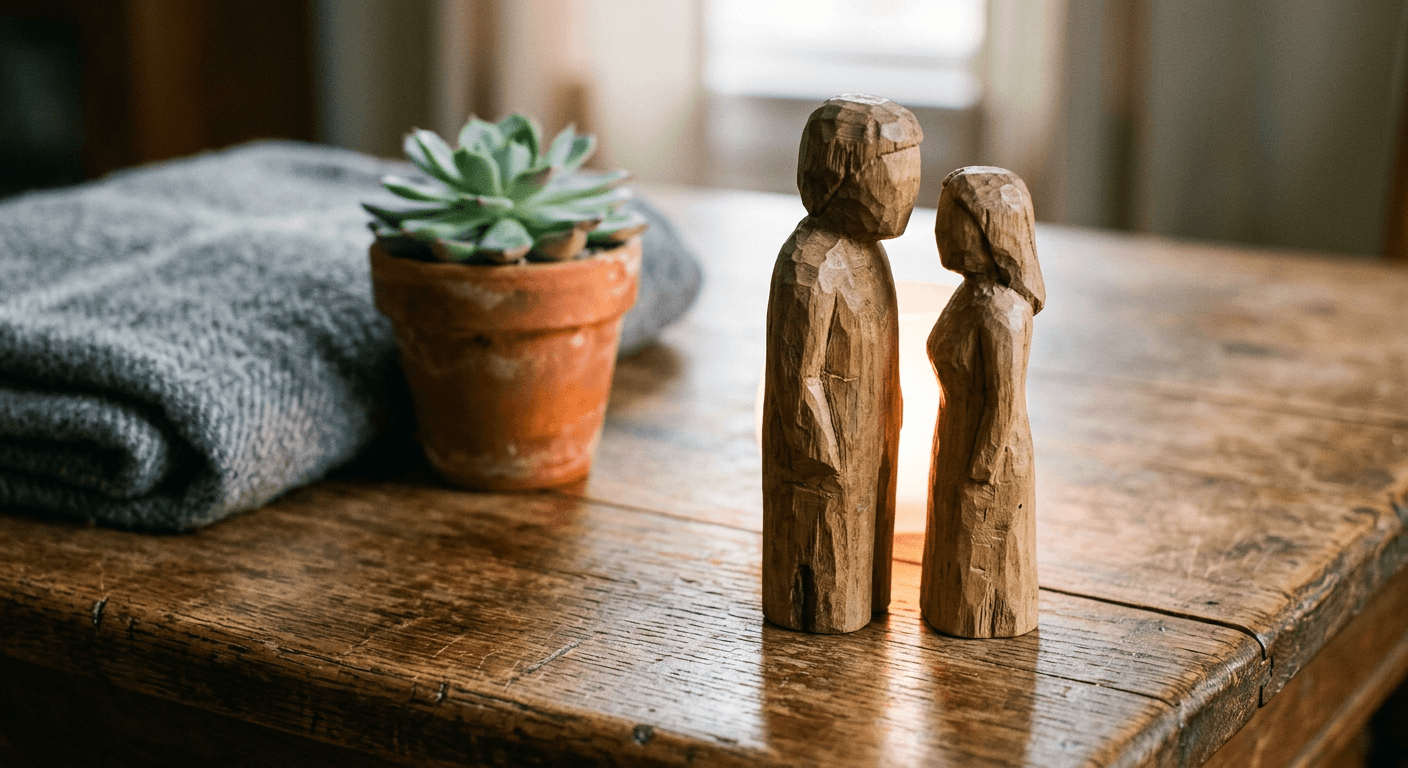
This is the format most closely associated with the trend going fully viral, the two figures physically interacting, a hug, a high five, a hand on the shoulder, rather than just sharing a frame.
Prompt 9: Gentle hug, soft outdoor light
Using the reference photo, generate the subject gently hugging a second figure of the same person as a child around age eight, standing outdoors in soft natural light with a simple park or garden background. Warm, candid emotional expression on both figures, photorealistic skin and fabric texture, natural unposed body language.
Prompt 10: High five between both selves
Using the reference photo, generate the subject giving a high five to a second figure of the same person as a child around age seven, both mid-motion with genuine smiling expressions, outdoors in bright natural daylight. Photorealistic motion and lighting, playful candid energy, simple natural background.
Prompt 11: Hand on shoulder, seated together
Using the reference photo, generate the subject seated beside a second figure of the same person as a child around age nine, one hand resting gently on the child's shoulder, both looking forward with warm expressions. Soft warm afternoon light, photorealistic detail, simple natural outdoor or porch setting.
Prompt 12: Piggyback pose, playful tone
Using the reference photo, generate the subject giving a playful piggyback ride to a second figure of the same person as a child around age six, both laughing, outdoors in soft golden hour light. Photorealistic motion blur on background elements only, sharp focus on both figures, natural candid framing.
A well-known public example of this exact format is the viral image of Shashi Tharoor embracing his 22-year-old self, which is a useful reference point for how natural and unforced the pose should look, not a stiff studio portrait, but something closer to a genuine candid moment.
4) Letter and Keepsake Detail Prompts
Instead of showing both figures in the same frame, this group focuses on a single object, a handwritten note, a photograph, a small keepsake, that implies the meeting rather than depicting it directly. This style performs especially well as a quieter, more reflective post in a feed otherwise full of the bigger hug-format images.

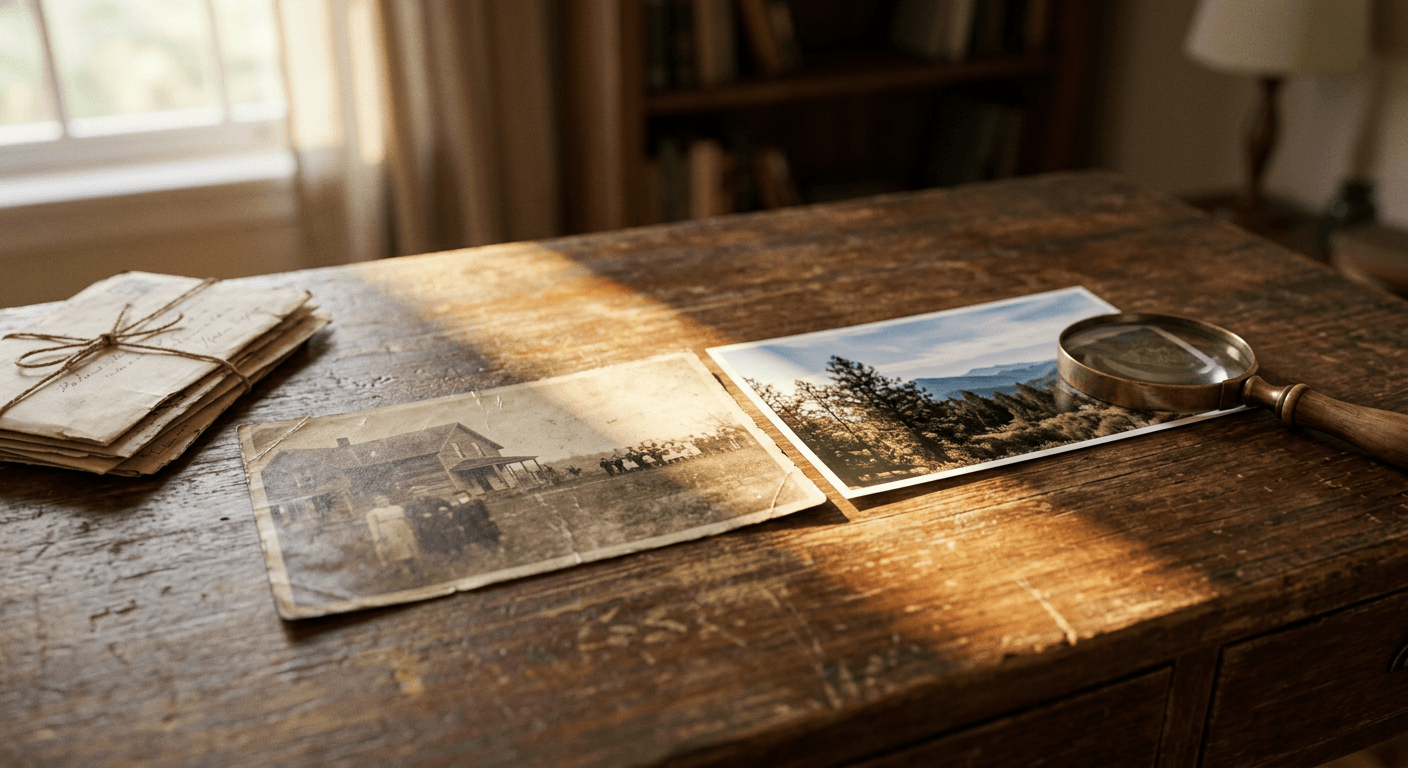
Prompt 13: Handwritten letter on a wooden desk
Generate a close-up still life of a handwritten letter lying open on a wooden desk, addressed in a warm, personal tone from a younger self to a present self, next to a small worn childhood toy and a cup of tea. Warm window light, photorealistic paper and ink texture, the letter's visible text kept illegibly scrawled rather than rendered as readable words.
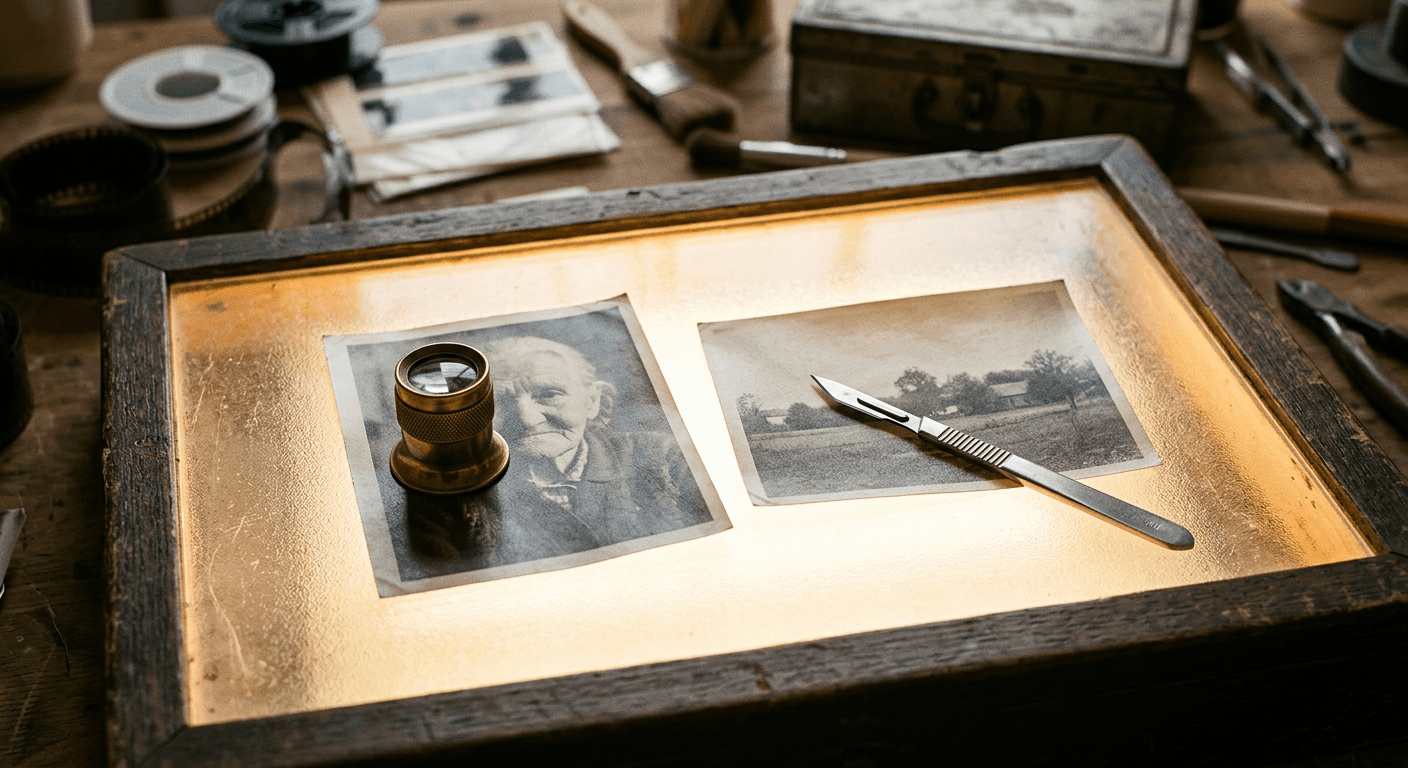
Prompt 14: Old photograph held in present-day hands
Generate a close-up photo of adult hands gently holding an old, slightly worn photograph, the photograph itself showing a faded, soft-focus image of a child at a park. Warm natural light, photorealistic skin and paper texture, shallow depth of field with the background softly blurred, no readable text on the photograph.
Prompt 15: Childhood object beside a current one
Generate a still life of a small worn childhood toy placed beside a modern everyday object it might have grown into, for example a toy car beside a set of car keys, arranged together on a simple wooden surface. Soft natural window light, photorealistic material texture on both objects, warm sentimental composition, no readable text.
5) Split-Frame and Side-by-Side Prompts
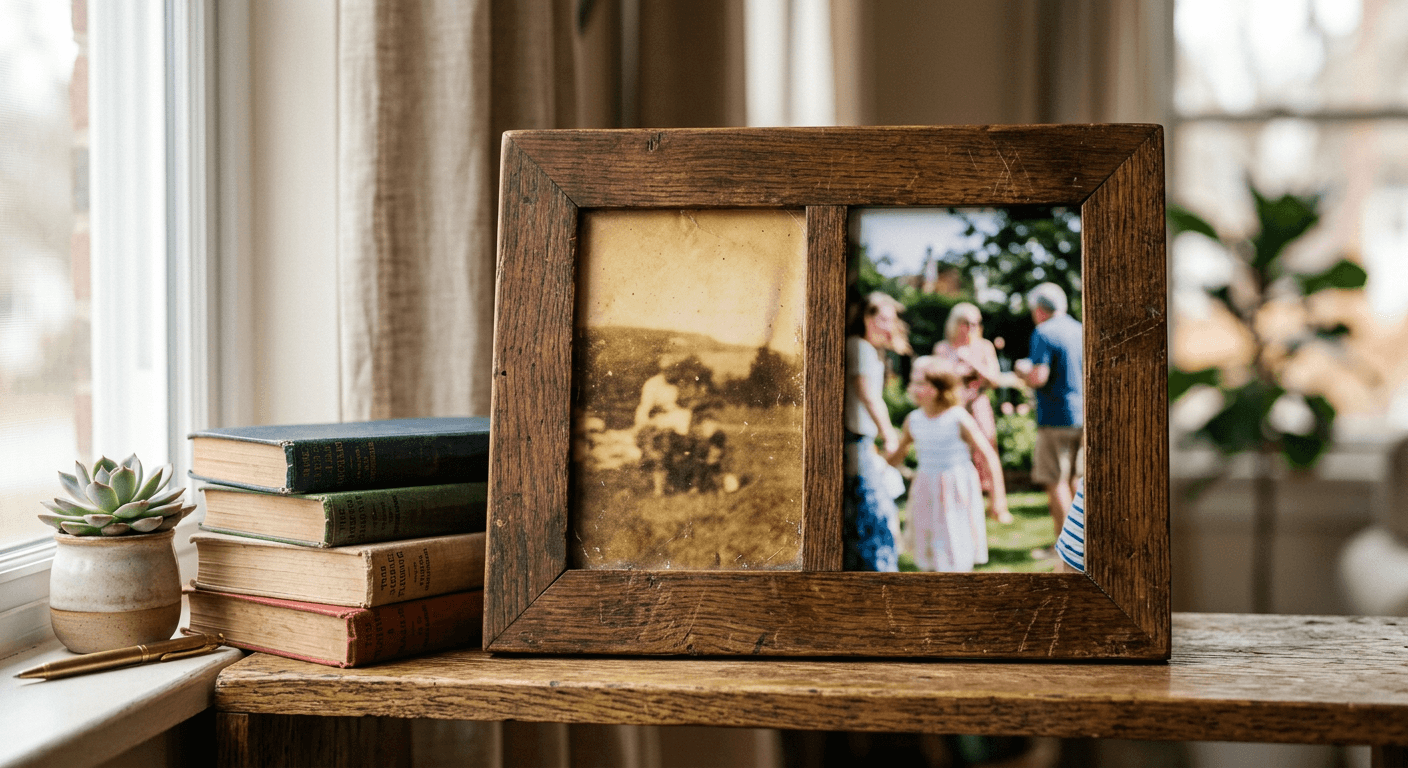
Rather than compositing both ages into one physical scene, this group keeps them visually separate, a clean split down the middle of the frame, which is a simpler technical ask of the model and tends to produce a more consistently accurate likeness on both sides since there is less scene compositing to get right.
Prompt 16: Vertical split, matching pose on both sides
Using the reference photo, generate a vertical split-frame image, the left half showing the subject as a child around age eight in a simple pose, the right half showing the same subject today in the closely matching pose and framing. A soft blended seam down the center, consistent lighting and color grading across both halves, photorealistic detail.
Prompt 17: Diagonal split with a soft blended seam
Using the reference photo, generate a diagonal split-frame image, one side showing the subject as a child around age seven, the other side showing the same subject today, blended together along a soft diagonal seam rather than a hard line. Warm consistent lighting across both halves, photorealistic detail, gentle color transition at the seam.
Prompt 18: Circular frame, present self large, younger self small in the corner
Using the reference photo, generate an image of the subject today shown large and in full focus, with a small circular inset in the corner showing the same subject as a child around age nine in a similar pose. Soft vignette around the circular inset, consistent warm lighting between both, photorealistic detail, no readable text.
For a full walkthrough of a creator actually running this trend from a single photo, start to finish, this video covers the workflow end to end, including how to phrase the age-regression request so the result stays recognizable.
How to Customize These Prompts for a Stronger Result
Start with the clearest, most front-facing reference photo available, since the model needs enough facial detail to preserve recognizably in a second, younger-looking figure. From there, the details worth adjusting are the specific setting, matching it to something meaningful to the actual subject makes the result land harder than a generic backdrop, the exact interaction or pose, and the lighting mood, warm golden hour light reads as nostalgic almost automatically, while flat daylight reads as more neutral and documentary. If the first generation ages the child figure incorrectly, too old, too young, or with an inconsistent build, add a more specific age range directly in the prompt, for example "around age eight," rather than the vaguer "as a child."
If you already have an actual childhood photo of the subject rather than relying on the model's inference, mention that a second reference photo is available and describe using it directly for the younger figure's likeness, which typically produces a more accurate result than pure inference from the adult photo alone.
Common Mistakes Creators Make With This Trend
- Using a blurry, heavily filtered, or extreme close-up reference photo, which gives the model too little clean detail to preserve a consistent likeness across both figures.
- Over-specifying a dramatic, cinematic scene when the trend's actual appeal is emotional simplicity. A plausible, ordinary setting usually outperforms an elaborate one.
- Forgetting to specify an approximate age for the younger figure, which leaves too much room for the model to guess and often produces an inconsistent result on a second attempt.
- Posting only the hug-format version. The mirror, keepsake, and split-frame groups above tend to stand out more specifically because they are less common in most people's feeds than the direct-embrace shot everyone tries first.
- Adding a real named location or landmark instead of a general description, which the model cannot reliably render accurately and which usually produces a worse result than a well-described generic setting.
Where to Generate These
The AI Image Generator in Miraflow AI supports the single-photo image-to-image workflow this entire trend runs on, upload a reference photo, apply one of the 18 prompts above, and adjust the setting or pose without leaving the workspace. Once you have a result you like, the YouTube Thumbnail Maker in Miraflow AI is a fast way to turn it into a thumbnail if you are making a video about the trend itself, and creators building a short-form video around their result can turn the same photo into a narrated clip with Text2Shorts. If nostalgic, personal content like this is working well for your account, the prompts in our AI figurine trend guide and our gaming setup and streamer brand content pack cover other personal-photo formats worth rotating alongside this one, and our pet-to-human transformation prompt pack is a natural next trend to try with the same reference-photo workflow. For more on the model family behind this kind of image-to-image generation, see our Nano Banana Pro vs Seedream 5.0 Pro comparison. You can browse more prompt guides like this on the Miraflow AI blog, and every tool named here lives at miraflow.ai.
Frequently Asked Questions
Do I need a childhood photo to try this trend? No. Most versions of this trend work from a single current photo, letting the model infer a plausible younger version of the subject. A real childhood photo can improve accuracy if you have one, but it is not required.
What is the best type of reference photo to use? A clear, front-facing, well-lit photo with the subject's face fully visible. Extreme angles, heavy filters, or low resolution all reduce how consistent the likeness looks across both figures in the final image.
Can I do this with two different photos of the same person at different ages instead of letting the model guess? Yes, and it often produces a more accurate result. Mention that you have both a current and a childhood reference and describe using both for the two figures.
Why does my younger self look like a different person? This usually means the reference photo did not have enough clear facial detail, or the prompt did not specify an age range. Try a clearer photo and add a specific age, like "around age seven," instead of a vague description.
Is this the same as the AI figurine trend? No, though both use a single reference photo and image-to-image generation. The figurine trend turns you into a collectible toy, while this trend keeps you as yourself, just shown at two different ages in one scene.
Which style gets the most engagement, the hug or the mirror version? Both perform well, but the mirror and keepsake styles tend to stand out more in a feed since so many creators default to the hug format first. Trying a less common style from the groups above can help a post feel more original.
Conclusion
The meet your younger self trend has spread as fast as it has because it asks almost nothing of the person trying it, one photo, one prompt, and it gives back something genuinely personal in return. The 18 prompts above cover five distinct ways to frame that same core idea, a mirror, a shared outdoor scene, a direct embrace, a quiet keepsake detail, or a clean side-by-side split, so there is a version here that fits whatever mood or platform you are posting to. Start with your clearest available photo, be specific about the age you want to see, and pick the framing that feels most true to an actual memory rather than the most dramatic one.