20 Anti-AI Film Grain Prompts for the Imperfect Photo Trend Taking Over 2026

Written by
Aerin Kim
The Imperfect by Design trend is taking over AI image feeds in 2026. 20 copy-paste film grain prompts across portraits, street, travel, product, and fashion.
If your AI images keep getting called out as "obviously AI" in the comments, you are running into the exact problem creators spent most of 2026 solving with a single trick: making the image look worse on purpose. The trend has a name now, Imperfect by Design, sometimes shortened to the anti-AI aesthetic, and it is one of the six viral AI image trends actually dominating TikTok, Instagram, and Pinterest feeds right now, alongside the toy figurine trend and the surreal "brainrot" edit style. Instead of chasing perfect lighting and flawless skin, creators are deliberately adding film grain, light leaks, soft focus, and warm vintage color casts so an image reads as a real 35mm photograph rather than AI art.
This post is a copy-paste prompt pack: 20 prompts across five categories, built around the specific vintage-film techniques driving this trend, plus the mistakes that make an "imperfect" prompt still read as obviously AI. Every prompt below works directly inside the AI Image Generator in Miraflow AI, which handles both text-to-image generation and image-to-image edits from a reference photo, the second of which matters a lot for this specific style. You can browse the full toolset behind these prompts at miraflow.ai.
Before the prompt pack, this video breaks down exactly why most AI images read as fake at a glance and what actually fixes it, which is the same underlying problem this trend solves through prompting rather than post-production:
Why "Imperfect" Is Winning in 2026
The logic behind this trend is straightforward once you say it out loud: a hyper-polished AI image has become as recognizable, and as skippable, as a generic stock photo used to be. The human eye has learned to associate certain signals, film grain, sensor noise, slightly imperfect focus, natural skin texture, with authenticity, because those are the artifacts a real camera produces and a smooth AI render usually does not. Creators who deliberately reintroduce those artifacts are, in effect, prompting against the model's own bias toward polish.
The most consistent techniques behind this look, pulled from what is actually working across current examples of the trend, come down to naming a specific film stock rather than a vague style word. "Vintage" alone tells a model very little. "Kodak Gold 200 film" or "Kodak Portra 400, authentic film grain, warm skin tones" gives it something concrete to reference. The other consistent element is a light source that reads as amateur rather than professional: a disposable camera's harsh direct flash, a phone camera's slightly overexposed highlights, an overcast sky through a window instead of a studio softbox.

If you want the more general version of this idea first, our earlier guide on how to make AI images look like real photos covers ten broader prompt tricks. This post goes narrower and deeper into the specific film-grain trend format that is actually driving engagement right now.
1) Portrait and Headshot Prompts
Portraits are where this trend started, and where the film-stock naming trick matters most, since skin texture is the first thing a viewer's eye checks for "AI smoothness."
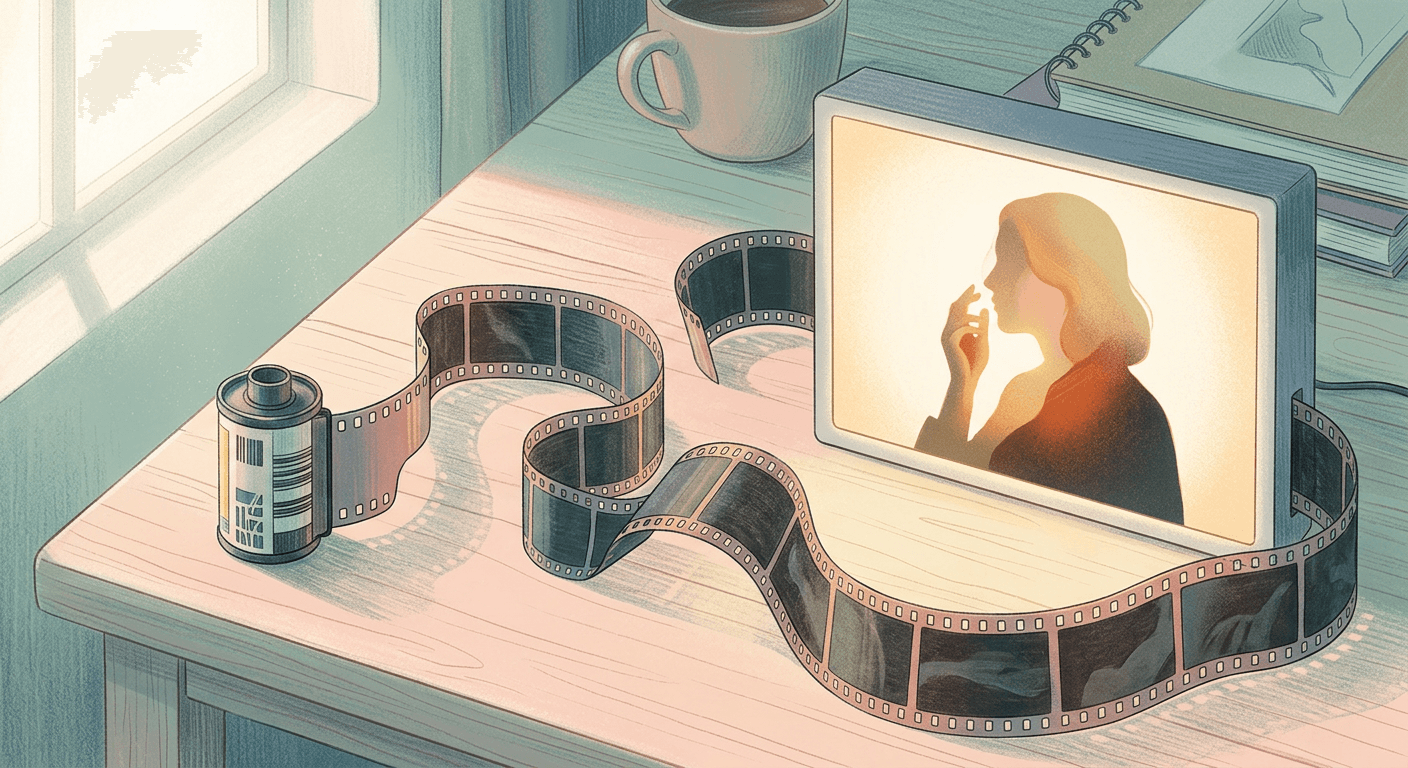
Prompt 1: Kodak Portra 400 natural light portrait
Close-up portrait shot on Kodak Portra 400 film, soft natural window light from one side, authentic fine film grain, warm and slightly muted skin tones, no retouching, subject not looking directly at camera, shallow depth of field, natural asymmetry in expression, 35mm film photograph aesthetic
Prompt 2: Disposable camera flash headshot
Direct on-camera flash headshot in the style of a 2000s disposable camera, slight overexposure on the forehead and nose, visible red-eye reduction glow, flat harsh lighting, grainy low-resolution film texture, candid unposed expression, dark background falling into shadow past the flash range
Prompt 3: Overcast window light portrait
Portrait lit only by an overcast sky through a nearby window, cool soft diffused light, visible natural skin texture including pores and minor blemishes, muted desaturated color grade, 35mm film grain, subject mid-blink or mid-laugh rather than posed, no studio lighting equipment visible
Prompt 4: Expired film color-shift portrait
Portrait photograph shot on expired 35mm film stock, visible color shift toward warm yellow and faded magenta, light leak streak across one corner of the frame, soft focus at the edges, authentic grain structure, imperfect exposure with slightly blown highlights, candid and unposed
2) Street and Candid Lifestyle Prompts
Street-style shots lean even harder into the amateur-camera signals, since the whole point of this format is that it looks caught rather than composed.
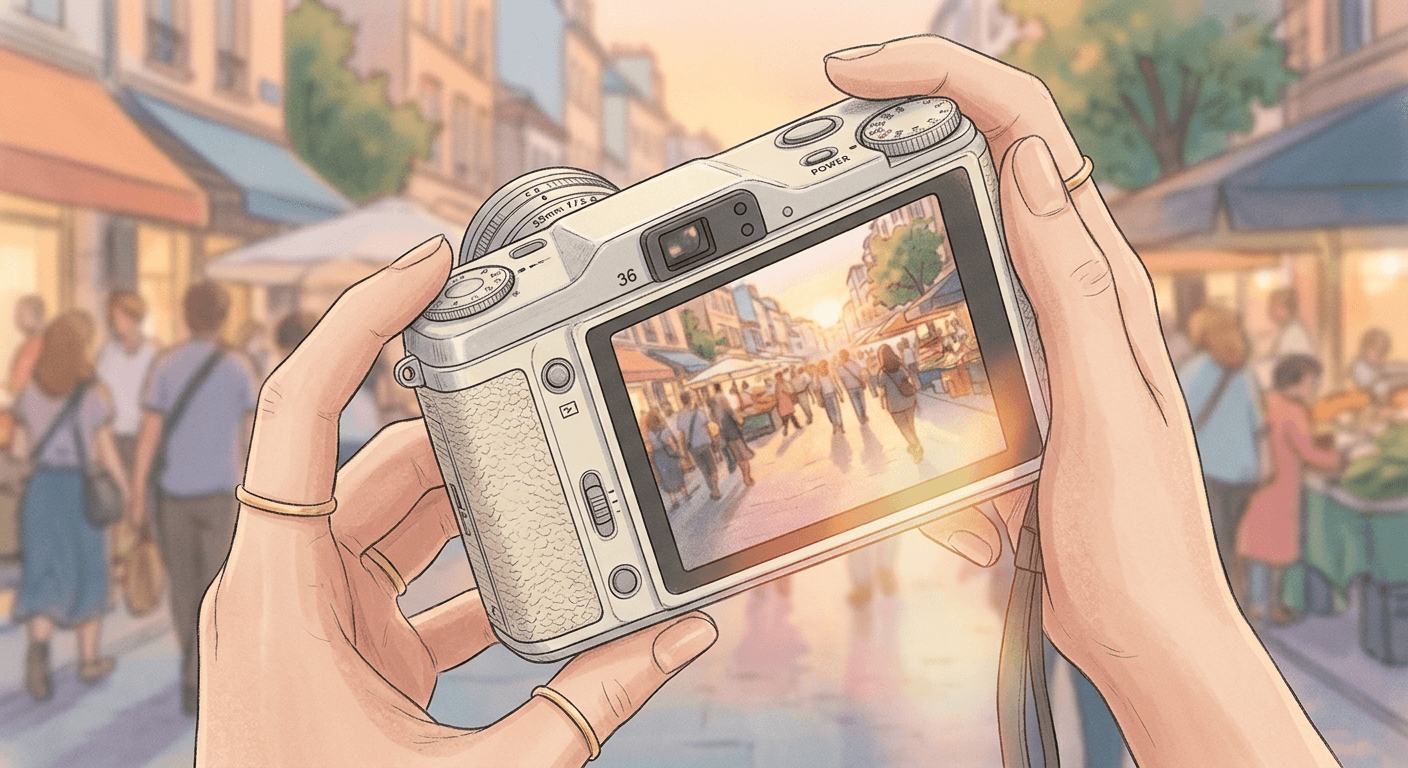
Prompt 5: Point-and-shoot city street scene
Candid street photograph shot on a compact point-and-shoot 35mm camera, slightly tilted horizon, motion blur on a passing figure in the background, visible film grain, muted urban color palette, natural late afternoon light, image slightly underexposed in the shadows
Prompt 6: Subway platform disposable flash
Candid subway platform photograph, harsh direct disposable camera flash lighting up the closest subject and letting the background fall into near black, visible grain, slight motion blur, unposed casual expression, authentic 2000s point-and-shoot aesthetic
Prompt 7: Golden hour walking shot
Candid walking photograph shot on 35mm film during golden hour, warm orange light flare partially overexposing one side of the frame, soft natural grain, subject mid-stride and not posed for the camera, slightly off-center composition as if shot quickly
Prompt 8: Rainy window street photo
Street photograph shot through a rain-streaked window from inside a car or cafe, soft focus from the water droplets, muted cool color grade, visible film grain, ambient street light reflections slightly blown out, candid framing with no clear subject centering
3) Travel and Road Trip Prompts
Travel content benefits from the vintage-Kodachrome look specifically, since it plays into a nostalgic "old family photo album" association that performs well for this trend.
Prompt 9: Kodachrome road trip landscape
Wide landscape photograph in the style of 1970s Kodachrome film, warm saturated but slightly faded colors, visible fine grain, a car dashboard or steering wheel partially in frame as if shot from inside a moving vehicle, soft natural haze on the horizon
Prompt 10: Vintage postcard beach scene
Beach scene photographed to look like a vintage travel postcard, slightly faded and warm color grading, visible film grain and minor scratches, soft focus at the frame edges, candid figures in the distance rather than posed, overexposed sky
Prompt 11: Airport terminal candid
Candid airport terminal photograph shot on grainy 35mm film, fluorescent overhead lighting creating a slight green color cast, visible grain and soft focus, unposed figures walking through frame, authentic amateur travel-photo composition
Prompt 12: Roadside diner interior
Interior photograph of a roadside diner shot on film, warm tungsten lighting creating an amber color cast, visible grain, slightly underexposed corners, candid unposed framing, authentic 1990s snapshot aesthetic with minor motion blur
4) Product and Still Life Prompts
Even product shots are picking up this trend, since a slightly imperfect, hand-photographed look reads as more trustworthy for small and independent brands than an obviously AI-polished render.

This same hand-photographed logic applies to food and small-batch product content too, and pairs well with the ideas in our Shopify product photography prompt pack if you want a wider range of studio-free product angles beyond the film-grain treatment.
Prompt 13: Film-shot product flat lay
Overhead flat lay product photograph shot on 35mm film, natural window light, visible fine grain, slightly warm color cast, minor asymmetry in prop placement, soft shadow falloff, no studio lighting equipment, authentic amateur product photography aesthetic
Prompt 14: Disposable camera product shot
Product photograph lit with a direct disposable camera flash against a plain background, slight overexposure on the product's highlights, visible grain, authentic 2000s point-and-shoot aesthetic, background falling into soft shadow past the flash range
Prompt 15: Vintage catalog product photo
Product photograph styled like a 1980s mail-order catalog page, warm slightly faded color grade, visible grain and minor film scratches, soft even lighting, product placed at a natural candid angle rather than perfectly centered
Prompt 16: Golden hour outdoor product shot
Product photograph shot outdoors during golden hour on film, warm light flare partially overexposing one edge of the frame, visible grain, natural shadow from surrounding foliage, authentic unpolished outdoor lifestyle product photography aesthetic
5) Fashion and Editorial Prompts
Fashion content uses this trend to signal "shot on a real camera by a real photographer" rather than "generated," which matters a lot for creators building a personal style brand.
Creators building a full personal-branding kit around this look may also want the personal branding photo prompts as a companion set for more polished shots to mix in alongside the deliberately imperfect ones.
Prompt 17: Y2K disposable flash fashion shot
Full-body fashion photograph lit with direct disposable camera flash against a plain wall, slight overexposure, visible grain, candid pose mid-movement rather than a studio stance, authentic early-2000s point-and-shoot fashion photography aesthetic
Prompt 18: Editorial film portrait with light leak
Editorial fashion portrait shot on 35mm film, a warm orange light leak streaking across one side of the frame, soft natural grain, muted color palette, subject looking slightly off-camera, authentic analog editorial photography aesthetic
Prompt 19: Backstage candid film shot
Candid backstage-style fashion photograph shot on grainy film, mixed lighting with a slight color cast, visible grain and soft focus, unposed casual expression, authentic behind-the-scenes photography aesthetic rather than a polished final shot
Prompt 20: Vintage magazine editorial spread
Fashion photograph styled like a scanned vintage magazine editorial page, warm faded color grade, visible film grain and minor print texture, soft studio lighting with intentional imperfections, subject in a natural candid pose
How to Customize These Prompts
Swap the named film stock to shift the entire mood of a prompt without rewriting anything else. Kodak Portra 400 reads warm and flattering, good for portraits and lifestyle content. Kodachrome reads saturated and nostalgic, good for travel and outdoor shots. A plain "expired film" or "disposable camera flash" reads rawer and more candid, good for street and behind-the-scenes content. Keep the light source description specific: naming where the light comes from and what kind of source it is (window, overcast sky, direct flash, golden hour) does more work than a generic lighting adjective.
If you are starting from an existing photo rather than generating from scratch, the AI Image Generator in Miraflow AI handles image-to-image edits, so you can apply any prompt above directly to a photo you already have instead of generating a new subject from text alone. That workflow tends to produce more convincing results for this specific trend, since the underlying photo already has real-camera geometry and lighting for the model to build the film-grain treatment on top of.
Common Mistakes Creators Make With This Trend
- Using only the word "vintage" or "retro" without naming an actual film stock. Vague style words give the model nothing concrete to reference and usually just apply a generic sepia filter instead of authentic grain and color science.
- Combining film grain with otherwise perfect studio lighting. The whole point of the trend is that the light source itself should read as amateur, not just the texture layered on top.
- Over-smoothing skin in the same prompt that asks for film grain. Natural skin texture and film grain are supposed to work together, not fight each other.
- Centering every subject perfectly. Real candid photography has natural asymmetry, and a dead-centered composition undercuts the "caught, not posed" feeling this trend depends on.
- Forgetting that this look still needs to be technically clean where it matters. Grain and light leaks are additive; a subject with warped hands or a nonsensical background will still read as broken AI output no matter how much grain is layered on top.
Where to Take This Next
This anti-AI aesthetic pairs naturally with a few other formats already popular on this blog. Creators combining vintage portraits with the toy figurine trend can check our action figure and toy box prompt pack for a completely different but equally viral direction. If the goal is short-form video rather than static images, Text2Shorts in Miraflow AI can turn a script built around this same nostalgic, candid visual language into a finished vertical video, and the cinematic AI video generator supports the same film-look treatment for motion content built on Veo 3.1. For creators building out a personal brand around this aesthetic, the YouTube Thumbnail Maker in Miraflow AI can apply the same film-grain, candid-flash look to thumbnails so the channel's visual identity stays consistent across formats.
You can browse more prompt packs and trend breakdowns like this one on the Miraflow AI blog.
Frequently Asked Questions
Why do AI images look "too perfect" by default? Most image models are trained to optimize for clean, well-lit, symmetrical output by default, since that reflects the bulk of high-quality training data. Naming a specific imperfection, like a film stock, a harsh flash, or natural skin texture, counteracts that default bias.
Does naming a real film stock like Kodak Portra actually change the output? Yes. Naming a specific, well-documented film stock gives the model a concrete reference for grain structure and color science, which produces a noticeably different and more convincing result than a generic word like "vintage."
Will this trend work for product photography, not just portraits? Yes. The product and still life prompts in this pack apply the same film-grain and amateur-lighting logic, and it can work especially well for small or independent brands where a hand-photographed feel builds more trust than an obviously polished render.
Is this the same as just adding a grain filter in editing software? Not exactly. A filter applied after the fact often looks like exactly that, a filter. Prompting the model to generate the image with authentic grain and period-accurate color science baked into the lighting and exposure tends to produce a more convincing result than a post-processing overlay.
How many of these prompts should I use in one content batch? Most creators pick one film stock and lighting style per project to keep a consistent visual identity, then vary the subject and composition across the 20 prompts rather than mixing multiple film looks in the same post or video.
Can I combine this look with a real photo of myself? Yes, and it tends to work better than pure text-to-image generation for this specific trend. Uploading a reference photo and applying one of the prompts above through image-to-image editing keeps your actual likeness while adding the film treatment.
Conclusion
The Imperfect by Design trend is one of the more interesting shifts in AI image prompting this year, not because the technique is complicated, but because it inverts the instinct most people start with. Instead of prompting for maximum polish, the highest-performing prompts right now deliberately ask for a specific film stock, an amateur light source, and natural imperfection. The 20 prompts above give you a working starting point across portraits, street photography, travel, product shots, and fashion, and the customization notes should make it easy to build variations that fit your own content once you have tried a few of them inside the AI Image Generator in Miraflow AI.