
Compliance Training Videos: AI-Powered Creation Guide for 2025

Written by
Sam Cho

Learn how to create effective compliance training videos with AI. Covers OSHA, sexual harassment, data privacy training, and proven best practices for 2025.
Compliance training videos are mandatory educational materials that teach employees about workplace regulations, legal requirements, and company policies. Organizations use these videos to meet legal obligations, reduce liability, and create safer work environments. With AI video generation platforms, companies can now produce professional compliance training in hours instead of weeks.
Most L&D teams know the drill: compliance deadlines approaching, outdated training materials, and budget constraints that make traditional video production impossible. AI-powered platforms solve this by turning compliance policies into engaging video content without cameras, studios, or production crews.
What Are Compliance Training Videos?
Compliance training videos are instructional materials designed to educate employees about laws, regulations, and workplace policies they must follow. These videos cover everything from sexual harassment prevention to OSHA safety protocols.
The purpose is straightforward: ensure workers understand their legal obligations and the consequences of non-compliance. Organizations are legally required to provide certain types of compliance training depending on their industry, location, and workforce size.
Videos have become the preferred delivery method for good reasons. They provide consistent messaging across all employees, allow for easy updates when regulations change, and create verifiable completion records for audits. When a state labor board or OSHA inspector asks for proof of training, video completion records provide that documentation.
Most compliance training videos fall into two categories: regulatory compliance (mandated by law) and policy compliance (required by company standards). Both types protect organizations from legal liability while creating safer, more equitable workplaces.
Why Compliance Training Videos Matter for Organizations
Compliance training videos reduce organizational risk by ensuring every employee receives identical, documented training on critical topics. Unlike in-person training sessions where quality varies by instructor, videos deliver consistent messaging every time.
The financial stakes are high. Companies face an average of $14.82 million in non-compliance costs annually, according to 2025 regulatory data. Sexual harassment lawsuits alone average $75,000 in settlement costs, not including legal fees or reputational damage. Proper training demonstrates due diligence, often reducing penalties if violations occur.
Videos also solve practical training challenges that L&D teams deal with daily. New hires can complete mandatory training on their first day without waiting for scheduled sessions. Remote workers receive the same quality training as on-site employees. When regulations change (and they always do), updated videos ensure immediate compliance across all locations.
Completion tracking matters during audits. Learning management systems record exactly who watched which videos, when they completed training, and their quiz scores. This documentation proves invaluable during regulatory audits, investigations, or legal proceedings. Try producing that level of detail from in-person training sessions held two years ago.

Types of Compliance Training Videos Companies Need
Organizations require different compliance training videos based on their industry, size, and workforce composition. Here are the most common types:
Sexual Harassment Prevention Training
Required in California, New York, Delaware, Connecticut, Illinois, and Maine for companies meeting certain size thresholds. These videos must cover definitions of sexual harassment, reporting procedures, bystander intervention, and consequences for violations. Training duration varies by state but typically ranges from 1 to 2 hours.
The requirements keep expanding. California updated its mandate in 2024 to cover more worker categories, and other states are following suit.
OSHA Safety Training
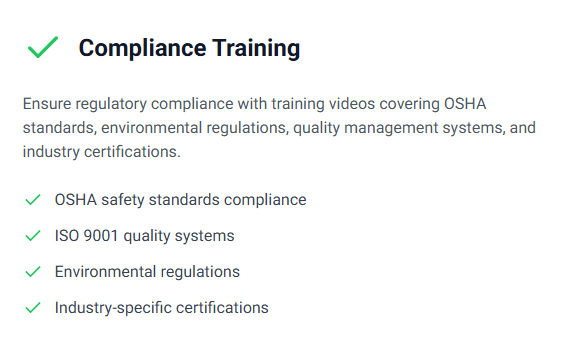
Occupational Safety and Health Administration regulations mandate specific safety training for workplace hazards. Common topics include hazard communication, bloodborne pathogens, lockout/tagout procedures, and personal protective equipment. Construction, manufacturing, and healthcare industries have the most extensive OSHA training requirements.
OSHA doesn't care if your training budget is tight. The regulations still apply, and the fines for non-compliance can shut down operations.
Data Privacy and Cybersecurity
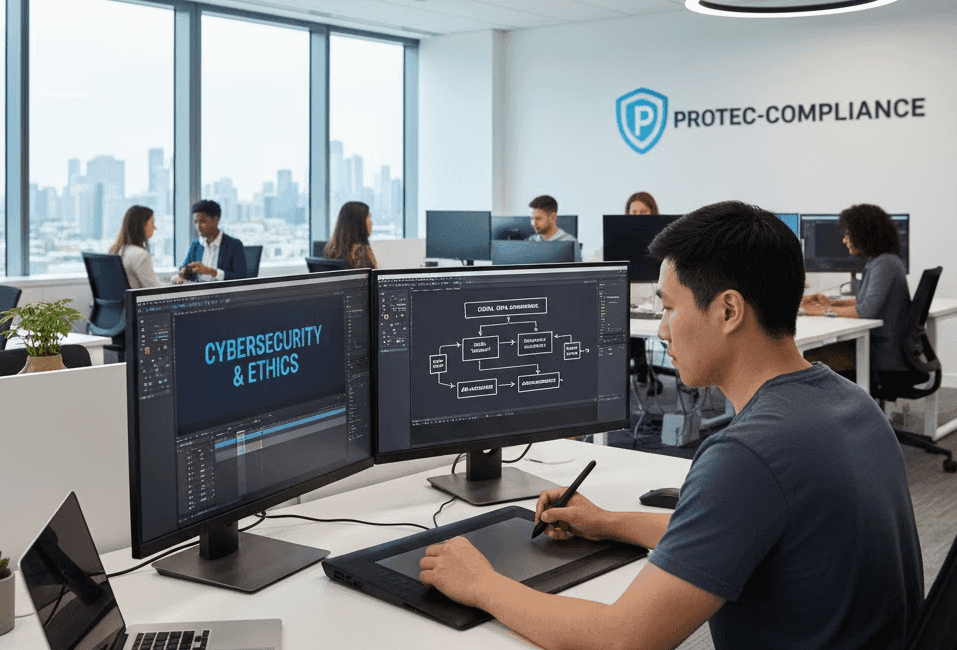
GDPR, CCPA, and other privacy regulations require employee training on handling customer data, recognizing phishing attempts, and following security protocols. These videos teach employees to identify sensitive information, use secure communication channels, and report potential breaches.
Data breaches cost companies an average of $4.45 million per incident in 2025. Training employees to recognize threats before they click malicious links is cheaper than dealing with the aftermath.
Anti-Discrimination and DEI Training
Federal and state laws prohibit workplace discrimination based on protected characteristics. Training videos cover equal employment opportunity principles, unconscious bias, accommodation requests, and creating inclusive work environments.
This training protects both the organization and individual employees from discrimination claims.
Code of Conduct and Ethics
While not always legally mandated, ethics training protects companies from fraud, conflicts of interest, and reputational damage. Topics include gift policies, vendor relationships, financial reporting accuracy, and whistleblower protections.
Industry-Specific Compliance
Certain industries face unique requirements:
- Healthcare: HIPAA privacy, infection control, patient rights
- Financial services: Anti-money laundering, insider trading, fiduciary duty
- Food service: Food safety, allergen awareness, health inspections
- Transportation: DOT regulations, hours of service, vehicle inspections
How to Create Compliance Training Videos with AI
AI video generation platforms let L&D teams create compliance training videos without traditional production resources. Here's how it works:
Step 1: Gather Your Compliance Content
Start with your existing compliance materials. Most organizations already have policy documents, employee handbooks, or training presentations covering mandatory topics. These text documents become your video scripts.
Review current regulations to ensure your content is up to date for 2025. Compliance requirements change frequently, and outdated training creates liability rather than reducing it. Check with legal counsel or compliance officers to verify accuracy before filming anything.
Step 2: Structure Your Training Content
Break complex compliance topics into digestible segments. A 60-minute training session works better as six 10-minute videos than one long recording. Shorter videos improve completion rates and allow employees to pause between topics without losing their place.
Each video should follow this structure:
- Introduction explaining why the topic matters
- Key definitions and concepts
- Real-world scenarios demonstrating correct and incorrect behaviors
- Company-specific policies and procedures
- Reporting mechanisms and resources
- Knowledge check questions
Step 3: Write Clear, Direct Scripts
Compliance training must be unambiguous. Use simple language that employees at all education levels can understand. Save the legal jargon for the policy documents.
Include specific examples relevant to your workplace. Generic scenarios feel abstract and employees tune them out. "Don't share passwords" becomes more concrete as "When a coworker asks to use your computer because theirs is slow, this violates our security policy even if you trust them."
Write the way people actually talk. If your compliance training sounds like it was written by a law firm, employees will check out mentally within the first two minutes.
Step 4: Generate Videos with AI Platforms
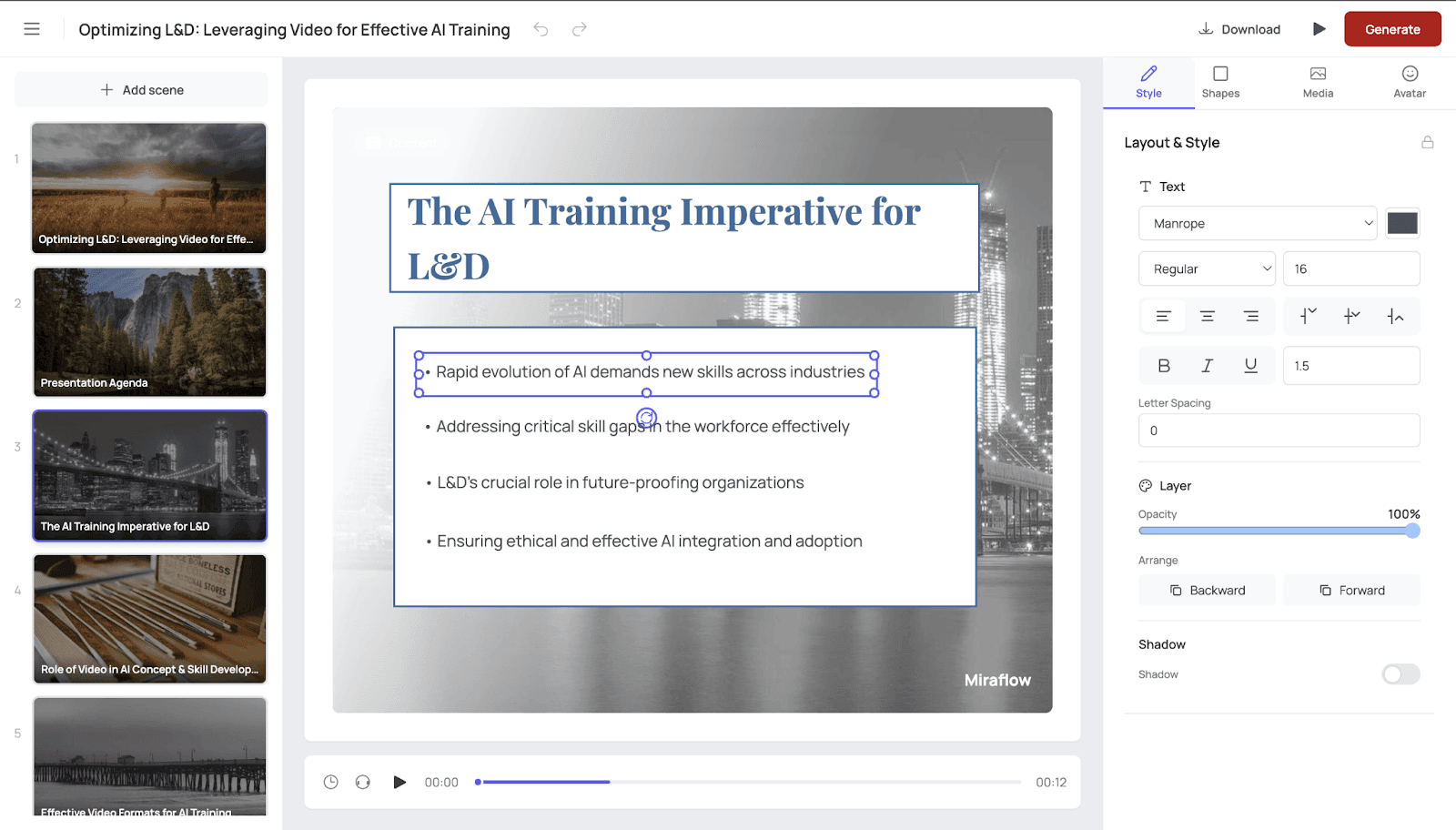
AI video generation platforms for learning and development convert your scripts into professional training videos. Upload your text, select an AI avatar to present the material, and choose a voice that matches your company culture.
The practical advantages for compliance training are significant. You can create multiple language versions for global workforces without hiring translators and re-filming everything. The AI presenter delivers consistent tone and appearance every time. When regulations change (and they will), you update the script and regenerate the video in hours instead of scheduling another production day.
No more coordinating schedules with subject matter experts who have limited availability. No more dealing with on-camera talent who freeze up during filming. The AI avatar shows up on time, never gets sick, and delivers the material exactly as scripted.
Step 5: Add Interactive Elements
Passive watching doesn't equal learning. Include knowledge checks every 5-7 minutes to reinforce key concepts. Multiple-choice questions work well for testing understanding of policies and procedures.
Scenario-based questions are particularly valuable. Present a workplace situation and ask employees to identify the correct response. This tests whether they can apply knowledge, not just memorize definitions.
Step 6: Implement Multilingual Training
Organizations with diverse workforces must provide training in languages employees understand. AI localization creates versions in Spanish, Mandarin, Arabic, or other languages while maintaining consistent messaging across all versions.
Simply running text through Google Translate isn't sufficient. Cultural context matters in compliance training, particularly for topics like harassment or discrimination. Have native speakers familiar with workplace norms in different cultures review translated content before rolling it out.
Compliance Training Video Best Practices
Following proven best practices improves both training effectiveness and legal protection:
Keep Videos Under 10 Minutes
Attention spans drop significantly after 10 minutes of video content. Break longer topics into multiple short videos rather than creating marathon training sessions. Employees retain more information from three 8-minute videos than one 24-minute video covering the same material.
Your completion rates will thank you. Long videos lead to employees pausing halfway through and never coming back.
Use Real Scenarios, Not Generic Examples
Employees tune out compliance training that feels irrelevant to their daily work. Create scenarios specific to your industry, job roles, and actual workplace situations. Retail employees need different harassment prevention examples than office workers or construction teams.
If your warehouse workers are watching office-based examples that don't apply to their environment, they'll assume the training doesn't apply to them either.
Show Both Right and Wrong Behaviors
Demonstrate what to do and what not to do. Seeing incorrect behavior helps employees recognize violations they might otherwise miss. Always follow negative examples with correct alternatives so training ends on proper procedures.
People learn from mistakes, including the mistakes of others depicted in training scenarios.
Make Reporting Procedures Crystal Clear
Employees who don't know how to report violations won't report them. Every compliance video should include specific steps for reporting concerns, including contact information, reporting channels, and what happens after a report is filed. Emphasize protection against retaliation.
Vague guidance like "report to your supervisor" falls apart when the supervisor is the problem. Provide multiple reporting options and be explicit about each one.
Update Content Annually
Compliance requirements change. California's sexual harassment training mandate expanded in 2024 to include more worker categories. OSHA updates safety standards regularly. Schedule annual reviews of all compliance training to ensure accuracy.
Training employees on outdated regulations creates a false sense of security. You're still liable if the training doesn't reflect current requirements.
Document Everything
Maintain detailed records of who completed which training, when they finished, their quiz scores, and any questions they asked. Store completion certificates and acknowledgment forms. This documentation demonstrates good faith compliance efforts if violations occur.
During audits or legal proceedings, "we think everyone completed training" doesn't cut it. You need names, dates, and scores.
Test Comprehension
Watching a video doesn't guarantee understanding. Require employees to pass a quiz with at least 80% accuracy before receiving completion credit. Allow multiple attempts, but require review of missed content before retaking assessments.
If someone fails the quiz three times, that's a signal they need additional support or the training needs clearer explanation.
Measuring Compliance Training Video Effectiveness
Track these metrics to evaluate your compliance training program:
Completion Rates
What percentage of required employees finished the training by the deadline? Completion rates below 95% indicate problems with accessibility, scheduling, or technical issues. Address barriers quickly to maintain compliance.
Time to Completion
How long does it take employees to finish mandatory training after assignment? Long delays suggest training is too lengthy, confusing, or difficult to access. The goal is completion within one week of assignment for most compliance topics.
Quiz Performance
Average scores reveal whether training content is clear and memorable. Scores below 75% indicate the material needs simplification or better examples. Questions that most employees answer incorrectly highlight concepts requiring clearer explanation.
Look at which specific questions people are missing. That tells you exactly where the training is failing to communicate.
Repeat Violations
Monitor whether trained employees continue violating policies. Persistent violations after training suggest either inadequate training or insufficient consequences. Investigate root causes and strengthen training content or enforcement.
Training alone won't fix behavior problems if there's no accountability for violations.
Employee Feedback
Survey participants about training clarity, relevance, and technical quality. Low satisfaction scores predict poor retention and engagement. Common complaints about specific sections guide content improvements.
Employees will tell you if the training is confusing, boring, or full of irrelevant examples. Listen to them.
Audit Readiness
Can you produce complete training records for any employee within minutes? Disorganized documentation defeats the purpose of training during regulatory audits or legal discovery. Test your record-keeping systems regularly.
The time to discover your LMS isn't tracking completions properly is not during an OSHA audit.
Incident Rates
Track workplace incidents related to compliance topics. Effective safety training should reduce OSHA recordable incidents. Strong harassment prevention training correlates with fewer HR complaints. Increasing incident rates despite training indicate content problems.
Compliance Training Video Examples and Templates
Here are proven templates for common compliance training videos:
Sexual Harassment Prevention Template
- Legal definition of sexual harassment (quid pro quo and hostile work environment)
- Examples of harassing behavior (verbal, physical, visual)
- Bystander intervention strategies
- Company reporting procedures
- Investigation process and timelines
- Anti-retaliation protections
- Manager-specific responsibilities (if applicable)
- Scenario-based knowledge checks
Duration: 60-90 minutes (split into 6-9 modules)
OSHA Hazard Communication Template
- Purpose of hazard communication standard
- Chemical hazard classification systems
- Reading and understanding Safety Data Sheets
- Container labeling requirements
- Personal protective equipment selection
- Emergency response procedures
- Location of SDS binders and online resources
- Practical exercises identifying hazards
Duration: 45-60 minutes
Data Privacy Compliance Template
- Types of sensitive data your company handles
- GDPR, CCPA, or other applicable regulations
- Proper data collection and storage procedures
- Recognizing phishing and social engineering
- Secure data transmission methods
- Breach notification requirements
- Employee responsibilities and consequences
- Incident reporting procedures
Duration: 30-45 minutes
Code of Conduct Template
- Company values and ethical principles
- Conflicts of interest definitions and examples
- Gift and entertainment policies
- Accurate record-keeping requirements
- Protecting confidential information
- Social media guidelines
- Reporting ethics violations
- Scenario-based decision-making exercises
Duration: 30-45 minutes
Each template should be customized with your company's specific policies, reporting contacts, and real workplace examples. Generic training fails to resonate with employees or provide adequate legal protection.
Ready to create compliant, engaging training videos that protect your organization? Miraflow AI transforms your compliance documents into professional training videos with AI avatars, multilingual support, and easy updates when regulations change.