Google's New Agentic Commerce Updates for Holiday 2026, Explained

Written by
Aerin Kim
Google's holiday 2026 agentic commerce update adds AI Performance Insights, Business Agent for YouTube Ads, UCP checkout upgrades, and richer product feeds. Here is what to change this week.
TL;DR
Google just rolled out a new round of agentic commerce updates aimed squarely at holiday 2026, and this batch is different from the AI Max and Performance Max changes the industry spent most of the year absorbing. It is not about how campaigns are built. It is about what happens on the surfaces where shoppers now actually discover and buy things: AI Mode, AI Overviews, and YouTube itself. Four pieces matter most: AI Performance Insights inside Merchant Center, a new Business Agent for YouTube Ads beta, an updated Universal Commerce Protocol (UCP) that adds cart transfer and checkout testing, and a set of product feed upgrades built around conversational attributes and loyalty data. None of these require a new campaign type. All four reward the same thing retailers have always needed for the holidays: a clean, detailed Merchant Center feed and a deep bench of real ad creative ready before Black Friday traffic hits. That second part is where a tool like Miraflow's Cinematic AI Video Generator earns its keep this year, because Business Agent for YouTube Ads and the new video-linked feed attributes both assume you already have holiday-specific video and imagery sitting in the asset library, not something you plan to shoot in November.
This post walks through all four updates in depth, what changed from what existed before, who benefits most, and exactly what to touch in Merchant Center and Performance Max this week while there is still runway before the holiday surge.
Why Google Is Doing This Now, and Why It Is Different From the Usual Google Ads Update
Most of the Google Ads news cycle in 2026 has been about campaign mechanics: the AI Max auto-upgrade rollout, the reporting columns that followed it, Performance Max asset experiments, and Gemini Omni landing inside Asset Studio for one-click video generation. Those changes all live inside the advertiser's own console. This new batch, published by Google under the title "Boost your holiday sales with these agentic commerce updates", lives somewhere else entirely: on the shopper's side of the transaction, inside AI Mode, AI Overviews, and YouTube itself.
The framing matters because it explains why Google is bundling four seemingly unrelated features into one announcement. Google's own consumer research, cited alongside this update, found that a meaningful share of U.S. shoppers have already shifted at least part of their product discovery to AI surfaces rather than a traditional search results page or a retailer's own site search. When a shopper's first touchpoint with a product is an AI Overview summary or a conversational AI Mode session instead of ten blue links, three things change for a retailer. First, the retailer needs visibility into whether their brand is even showing up in those AI-generated answers, since a normal search-position report does not capture that. Second, the retailer needs a way for shoppers to get real answers to real product questions without bouncing off the ad entirely to go searching for size charts or compatibility info. Third, checkout itself needs to survive being initiated from inside an AI conversation rather than from a shopping cart page the retailer fully controls.
AI Performance Insights answers the first problem. Business Agent for YouTube Ads answers the second. The UCP updates answer the third. And the feed optimization changes make all three actually work well, because none of them function without a feed detailed enough for an AI system to match a shopper's specific question to a specific product. That is the throughline connecting all four pieces, and it is worth holding onto as you read through each one, because the mistake most retailers will make this holiday season is treating these as four separate to-do items instead of one connected system.
1. AI Performance Insights: Finally Seeing How AI Surfaces Discover Your Brand
For most of 2026, retailers have had a real blind spot. Standard Search Console and Google Ads reporting tell you how you rank and perform on a conventional results page. Neither tool has told you much about whether your products are actually being surfaced when a shopper asks Google's AI Mode something like "what's a good waterproof hiking boot under $150" or gets an AI Overview summarizing the best options for a gift category. Retailers have been optimizing blind for the fastest-growing discovery surface on the platform.
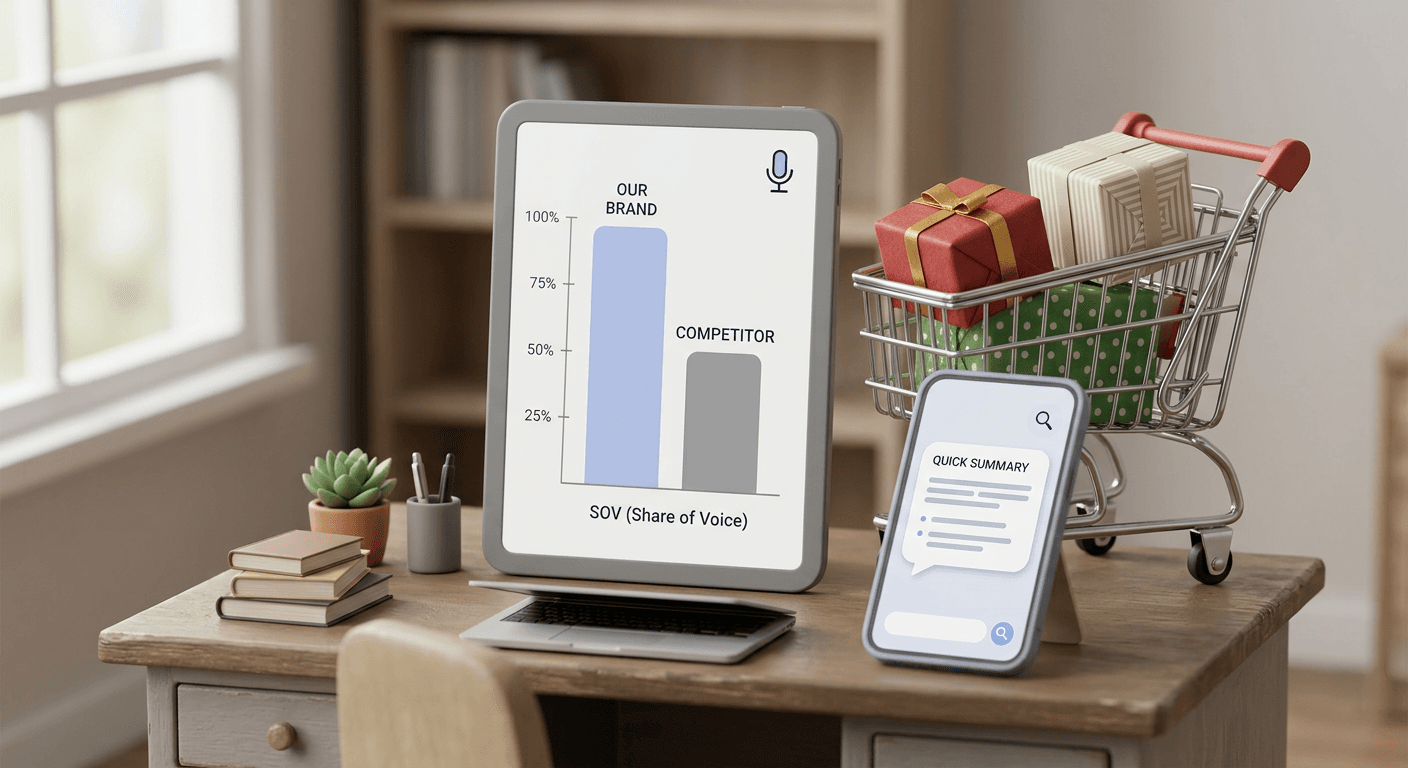
AI Performance Insights closes that gap. It lives inside Merchant Center and gives retailers a direct comparison of their own share of voice against other brands specifically on AI Mode and AI Overviews surfaces, not blended into a generic impression count. As of this update it is live for businesses in Australia, Canada, India, New Zealand, and the United States, with other markets expected to follow the same staged pattern Google has used for most of its 2026 shopping features.
How it actually works inside Merchant Center
Rather than a raw traffic number, AI Performance Insights is built around relative visibility. It shows how often your brand and products are appearing in AI-generated answers for the queries relevant to your category, set against a comparison group of other brands competing for the same shopper intent. That framing matters. A retailer whose absolute AI Mode traffic is small might still be doing well if they are capturing a large share of a small but growing surface, and a retailer with more total traffic could still be losing ground if their share of voice is shrinking relative to competitors who have cleaner feeds and better-covered product attributes.
A worked example: a mid-size outdoor gear retailer
Picture a mid-size outdoor retailer selling insulated jackets, camp stoves, and hiking boots, doing solid Shopping and Performance Max volume through the usual channels. Before this update, their Merchant Center dashboard told them conversion rate, impressions, and clicks by product group, but nothing about whether a shopper asking Google's AI Mode "best insulated jacket for a ski trip under $200" ever saw their brand mentioned at all. After enabling AI Performance Insights, they discover their jackets have a healthy share of voice for broad category queries but essentially zero visibility for more specific, attribute-heavy questions like "packable jacket that layers under a ski coat." That is a specific, actionable gap, and it points directly at the fourth update in this post: their feed is missing the conversational attributes that would let an AI system match that exact phrasing to their product.
The edge case: brands with almost no existing AI-surface presence
Not every retailer will see a usable comparison right away. A very small or newly listed brand may not have enough query volume in AI Mode or AI Overviews yet to generate a meaningful share-of-voice reading, similar to how a brand-new Google Ads account sometimes needs a data-gathering period before Smart Bidding has enough signal to optimize well. If your dashboard shows thin or inconclusive data in the first weeks, that is not a sign the tool is broken. It is a sign your first priority should be improving feed depth and product attribute coverage, covered in full further down, rather than trying to read too much into an early report.
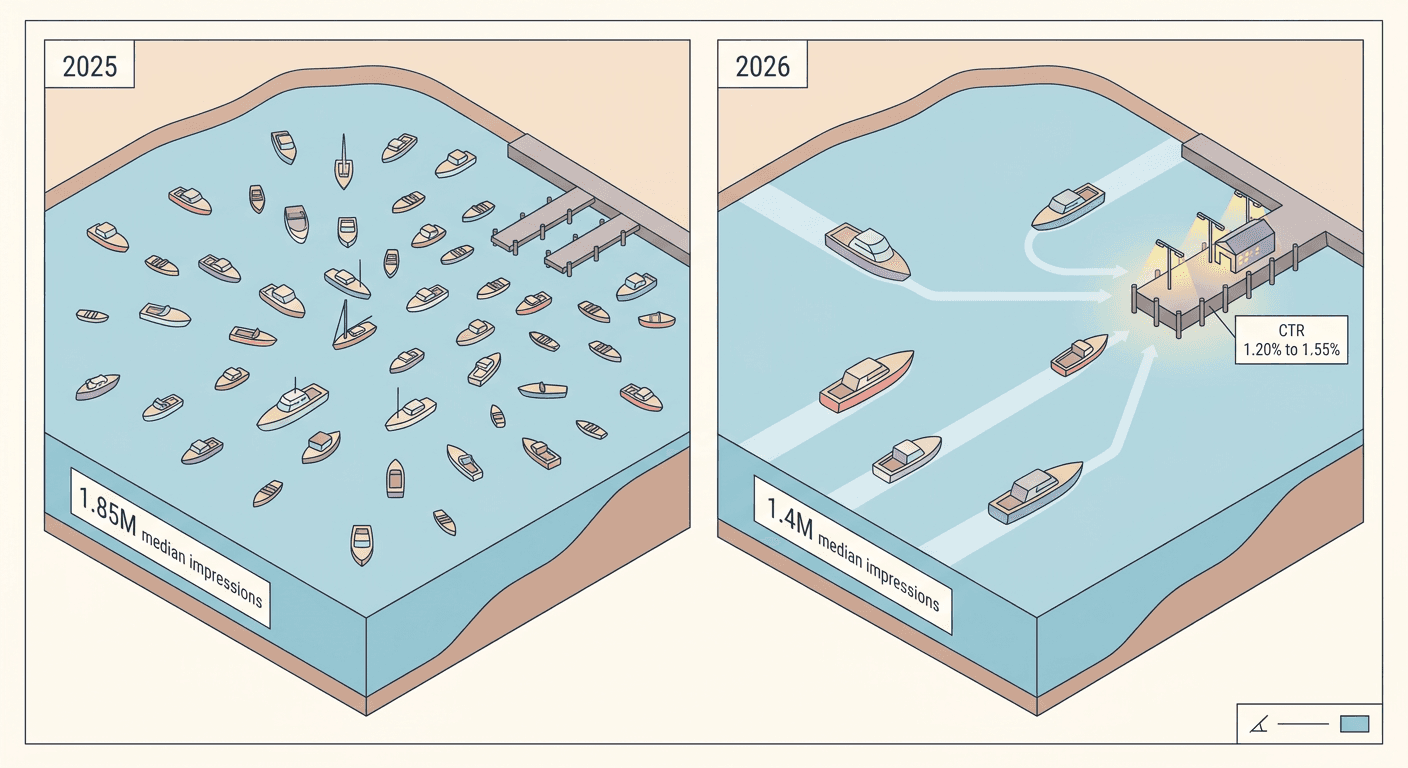
If you have already been watching the shift in shopping impressions and click-through rate that AI surfaces have caused, this pairs directly with what falling Shopping ad impressions and rising CTR have actually meant elsewhere on this blog. AI Performance Insights is effectively the missing half of that picture: instead of inferring AI-surface impact from indirect signals in your existing reports, you now get a direct read.

2. Business Agent for YouTube Ads: Answering Questions Without Losing the Viewer
The second major piece is a beta program called Business Agent for YouTube Ads, launching first in the United States. It embeds inside a YouTube ad itself, letting a viewer ask complex product questions and get tailored guidance without ever leaving the video they are watching. Google is explicit that this builds directly on the success of the original Business Agent format, which first shipped for Search and for lead-generation advertisers earlier in the year.
How this differs from the original Business Agent for Leads
If you have already read about Business Agent for Leads on this blog, the conceptual shift here is straightforward: the same conversational AI sales-associate idea that Google shipped for Search results and lead-gen forms is now moving into video, during the ad itself, rather than after a click. The original Business Agent format answers questions on a landing surface the shopper reaches after clicking. Business Agent for YouTube Ads answers questions while the viewer is still inside the video player, watching your creative, before they have decided whether to click at all. That is a meaningfully earlier point in the funnel, and it changes what the ad creative itself needs to accomplish. A video ad no longer has to cram every product detail into thirty seconds, because the agent is there to field the follow-up questions a script cannot anticipate. The video's job becomes getting attention and establishing enough interest that a viewer wants to ask a question in the first place.
A worked example: a holiday gift-guide video ad
Imagine a mid-size jewelry brand running a holiday gift-guide style YouTube ad featuring a rotating cast of pendant necklaces, each on screen for a few seconds. Before this update, a viewer curious about one specific piece, say whether the pendant comes in rose gold or whether the chain length is adjustable, had exactly two options: click through immediately and hope the landing page answers it, or scroll past and forget about the brand entirely. With Business Agent for YouTube Ads active, that same viewer can ask "does this one come in rose gold" directly inside the ad experience and get an answer sourced from the brand's actual product data, in the brand's voice, without the ad stopping or the viewer losing their place in the video. For a holiday shopper doing research across a dozen open tabs at once, removing that one point of friction is often the difference between a bounce and a saved product.
The edge case: products with variants that change mid-question
Products with real variant complexity, like apparel with multiple sizes, colors, and fit types, are exactly where this format either shines or falls flat, depending on feed quality. A well-fed variant structure lets the agent answer "do you have this in a men's medium tall" correctly. A thin or poorly structured feed means the agent either gives a vague non-answer or, worse, states something inaccurate about stock or fit. This is not a hypothetical risk: it is the direct reason Google is bundling feed optimization guidance into the same announcement as the agent features themselves. An agent is only as reliable as the data behind it, and a retailer who rushes into the Business Agent beta without first auditing variant-level attributes in their feed is setting the agent up to answer holiday shoppers with guesses.
How to apply, and what to prepare before you do
Since this is a beta, U.S. retailers currently need to apply through a signup form rather than flipping it on directly inside their account, similar to how early access worked for other Business Agent formats and for Gemini Omni inside Asset Studio when Gemini Omni first landed in Asset Studio for one-click video ad generation. Before applying, it is worth treating your product feed's question-and-answer style attributes as a prerequisite, not an afterthought, since those are exactly what the agent draws on when a viewer asks something your video script never mentioned.

3. The Updated Universal Commerce Protocol: Cart Transfer and Real Checkout Testing
The Universal Commerce Protocol is not new for 2026. Google, together with Shopify, Etsy, Wayfair, Target, and Walmart, introduced UCP earlier in the year as an open standard meant to give AI agents and commerce systems a common language for discovery, buying, and post-purchase support, compatible with other emerging agent protocols like Agent2Agent and Model Context Protocol. What is new in this holiday-focused update is specific and practical: UCP now supports cart transfer directly to a merchant's own site, plus enhanced checkout flow testing tools, with deeper analytics coming afterward.
What cart transfer actually solves
Before this update, a shopper who started building a cart inside an AI Mode conversation or a Google shopping surface faced a real handoff problem. Either the entire purchase had to complete inside Google's own checkout flow, which not every retailer supports or wants, or the shopper had to manually recreate their cart on the retailer's own site, re-adding every item by hand. Cart transfer removes that manual step. A cart assembled during an AI-assisted shopping session can now hand off directly to the retailer's own site with the items already in place, letting the retailer's existing checkout, promotions, loyalty pricing, and payment options take over from there rather than forcing everything through a generic Google-hosted flow.
A worked example: how a multi-brand retailer used this
Google specifically points to Tapestry, the parent company behind Coach and Kate Spade, as an early adopter that integrated UCP to support selling directly through Search and the Gemini app. The practical version of this for a smaller retailer looks similar in shape even without that scale: a shopper researching a holiday gift inside an AI Mode session builds up a small cart of candidate items across a browsing session, then transfers that cart to the retailer's actual site to finish checkout using their normal payment methods and any loyalty member pricing that only applies on the retailer's own domain. The retailer keeps ownership of the final transaction and the customer relationship, while Google's agentic surfaces handle the discovery and comparison-shopping legwork that used to happen across a dozen open browser tabs.
The rollout timeline and who is eligible first
This piece is rolling out gradually in the United States first, with Australia and Canada expected to follow in early 2027. The protocol itself is built to scale to hundreds of thousands of brands and retailers connected across Google's commerce surfaces, but individual features like cart transfer and the enhanced checkout testing tools are being staged in, not switched on universally overnight, which matches the same phased pattern Google used for the original UCP launch and for AI Performance Insights above.
The edge case: retailers not yet on a UCP-compatible platform
Not every retailer runs on a platform with native UCP support out of the box. Shopify, Etsy-hosted, and several other major platforms have direct integration paths since they helped co-develop the standard, but a retailer on a custom or legacy ecommerce stack may need actual development work before cart transfer and checkout testing apply to them at all. If that describes your setup, the realistic near-term priority is not chasing UCP access before the platform work is ready. It is making sure the surfaces you can control right now, your Merchant Center feed and your Performance Max asset groups, are in the best shape possible so you are not leaving easy wins on the table while the checkout-side integration catches up. If you want a refresher on where Performance Max steering and reporting controls currently stand heading into this holiday push, Performance Max optimization in 2026 covers the newest levers in depth.
4. Product Feed Optimization: Conversational Attributes, Video Links, and Loyalty Data
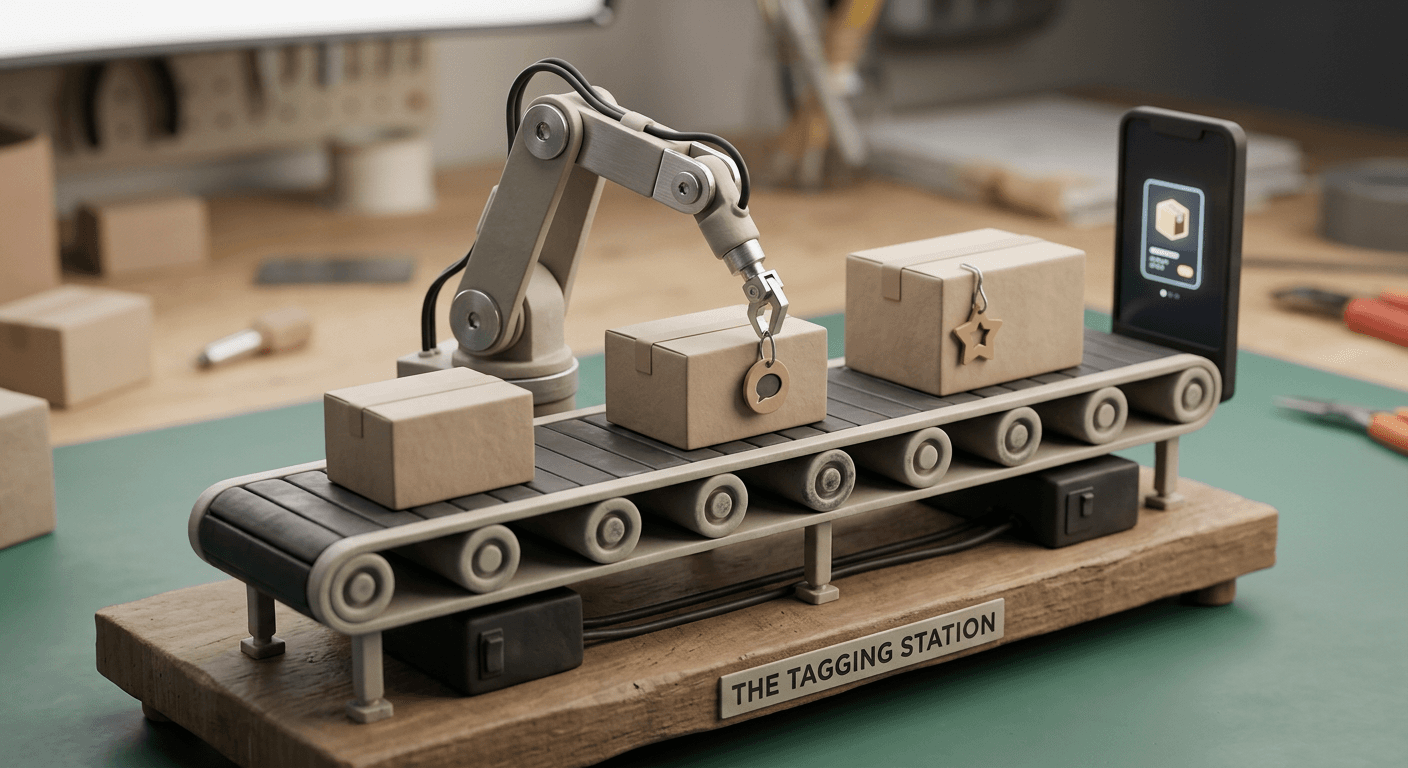
This fourth piece is the one that quietly makes the other three actually work, and it is also the one most retailers can act on immediately without waiting on a beta application or a platform integration. It covers three distinct feed upgrades: conversational attributes, a video link attribute, and loyalty data integration.
Conversational attributes, and why lululemon's number matters
Conversational attributes let a retailer add the kind of contextual product detail a shopper would naturally ask about in conversation rather than the rigid, spec-sheet style fields a traditional product feed was built around. Instead of only listing "material: nylon," a conversational attribute can capture something closer to how a real shopper phrases a question, like whether a jacket is genuinely packable, machine washable, or true to size. Google cites lululemon's own testing showing these conversational attributes were incorporated into relevant product recommendations inside AI Mode fifty percent of the time. That is a substantial number. It means that for roughly half of the AI Mode recommendation moments where lululemon's conversational attributes were even eligible to matter, they actually shaped what the AI system surfaced to the shopper. For a retailer sitting on the sidelines of this feature, that is roughly half of a real, measurable opportunity being left on the table for every product that lacks these fields.
The video link attribute
Alongside conversational attributes, Google is rolling out a video link attribute that lets a feed connect a specific product directly to video creative, which automatically powers more visually rich, shoppable ad formats. This is the single clearest point of overlap between this update and the Business Agent for YouTube Ads feature above: a feed with strong video links gives Google's systems real creative to build shoppable, visual formats around, while a feed without them limits the retailer to static image treatment even when better video assets exist somewhere in the brand's library. This is precisely the gap a tool like Miraflow's Cinematic AI Video Generator is built to close quickly, since a retailer can generate holiday-specific product video clips in bulk rather than waiting on a traditional video shoot calendar that was never going to fit before Black Friday anyway.
Loyalty data integration, with a real example
The third piece connects a retailer's loyalty program directly into the shopping experience, so member pricing and loyalty perks can actually display to eligible shoppers on Google's surfaces instead of staying locked inside the retailer's own logged-in site experience. Google's own example here is Minted, whose loyalty program can now show member pricing for holiday cards directly through this integration. For a holiday season where personalized greeting cards, photo gifts, and other high-repeat-purchase categories depend heavily on returning customers, surfacing that member price at the point of AI-assisted discovery, rather than only after a shopper logs in on-site, is a meaningful nudge toward completing the purchase on the spot instead of comparison shopping elsewhere first.
The number that ties all of this together
Google also shared a broader benchmark worth remembering on its own: merchants who adopt core Merchant Center feed best practices see a five percent increase in conversions the following month. That number is not specific to conversational attributes, video links, or loyalty data individually. It is a general signal that feed quality work, the unglamorous kind that never shows up as a flashy new feature announcement, keeps paying off at a steady, compounding rate regardless of which specific attribute a retailer prioritizes first.
A worked example: what changes for a home goods retailer this week
Take a mid-size home goods retailer selling holiday decor, gift wrap, and small kitchen appliances. This week, before any beta application or platform work, they can pull their highest-traffic holiday SKUs and add conversational attributes answering the questions customer service already fields every December: is this ornament set safe for real candles, does this gift wrap roll cover a standard shoebox-sized box, is this electric kettle safe for someone with a shellfish allergy in the household given shared manufacturing facilities. None of that requires new photography or a platform migration. It requires sitting down with the feed and writing the answers a shopper would actually ask in an AI Mode conversation, then mapping product video assets to the video link attribute wherever holiday-specific video already exists or can be generated quickly with a tool built for exactly that turnaround.
The edge case: retailers without a formal loyalty program
Not every retailer has a loyalty program to integrate at all, and that is a completely normal starting point rather than a disadvantage worth solving this week. Conversational attributes and the video link attribute do not depend on having a loyalty program in place, so a retailer without one loses nothing by prioritizing those two pieces first and treating loyalty integration as a longer-term project for 2027 rather than a holiday 2026 deadline.
If you have been keeping Local Inventory Ads or product-level bid strategy current heading into the holidays, this feed work pairs naturally with the changes covered in Google Ads turning on Local Inventory Ads by default and in Product Value Optimization, since a richer feed makes both of those systems work with better signal too.
| Update | What existed before | What changes for holiday 2026 |
|---|---|---|
| Visibility on AI surfaces | No direct way to see brand visibility inside AI Mode or AI Overviews; only conventional Search and Ads reporting | AI Performance Insights in Merchant Center shows share of voice against other brands directly on AI Mode and AI Overviews |
| Answering questions in video ads | Viewers had to click through to a landing page or scroll past unanswered questions | Business Agent for YouTube Ads (US beta) lets viewers ask questions and get answers inside the ad itself |
| Cart and checkout handoff | AI-assisted shopping sessions had limited ways to hand a cart back to the retailer's own site | UCP adds cart transfer to the merchant's own site plus enhanced checkout flow testing, rolling out in the US first |
| Product feed depth | Feeds mostly limited to rigid spec-style fields (size, color, material) | Conversational attributes, a video link attribute, and loyalty data integration let feeds answer real shopper questions and connect to richer ad formats |
Who Benefits Most: Small Retailers vs. Large Retailers
It is tempting to assume a feature set this technical mostly favors large retailers with dedicated feed management teams, and there is some truth to that for the UCP checkout piece specifically, since custom platform integrations genuinely cost more for a smaller operation to pursue. But for the other three pieces, the advantage tilts more evenly, and in a few specific ways actually favors smaller, more agile retailers.
A large retailer with thousands of SKUs across dozens of categories faces a real scale problem writing conversational attributes by hand. Even with efficient tooling, covering that much catalog with genuinely useful conversational detail, not generic filler, takes real organizational effort and cross-team coordination that a smaller retailer simply does not need to navigate. A small or mid-size retailer with a few hundred SKUs can realistically get through a meaningful chunk of their highest-traffic holiday products by hand in a week, and can move faster on the video link attribute too, since there is no internal approval chain slowing down which product gets new video creative first.
On AI Performance Insights, a large, well-known brand often already has a reasonable AI-surface presence built up from years of general brand recognition, so the tool mostly confirms what they likely suspected. A smaller or newer brand gets something closer to a genuine discovery: a direct, previously invisible read on whether they are being mentioned at all next to bigger competitors, which is exactly the kind of gap that a focused conversational-attribute push can close faster than a large brand's slower-moving catalog work.
Business Agent for YouTube Ads and the UCP checkout features are the two areas where scale still matters more directly, since beta access, platform integration effort, and a large enough YouTube ad spend to make the beta worthwhile all favor bigger, more established advertisers in the first wave. A smaller retailer's realistic move for holiday 2026 specifically is to treat feed optimization and AI Performance Insights as this year's priority, while getting UCP-ready platform-side and preparing a Business Agent application for whenever the beta opens more broadly next year.
Before and After: A Realistic Holiday 2026 Scenario
Consider a mid-size apparel retailer heading into November with a typical setup: a functional but sparse Merchant Center feed, a handful of static Performance Max asset groups built around last year's creative, and no visibility at all into AI Mode or AI Overviews performance. Before this update, their holiday season looks the way most holiday seasons have looked for the past few years: Shopping and Performance Max carry most of the volume, Search Console and Google Ads reporting are the only performance signals available, and any AI-surface visibility is a total blind spot they cannot even measure, let alone improve.
After adopting even a partial version of this update, the picture shifts meaningfully. AI Performance Insights reveals their share of voice is thin for specific, attribute-heavy queries like "cropped puffer jacket that layers well," which points them directly at which conversational attributes to prioritize first. They add those attributes to their top fifty holiday SKUs, map existing and newly generated video to the video link attribute using Miraflow's Cinematic AI Video Generator for the products missing usable video, and apply for the Business Agent for YouTube Ads beta on their highest-spend evergreen holiday campaign. None of this guarantees a specific lift, and no honest retailer post should promise one, but it does mean this retailer enters Black Friday with actual visibility into a discovery surface they previously could not measure at all, and with a feed built to make every other system, Performance Max included, work with better signal than it had the year before.
Common Mistakes Retailers Make With These Updates
Treating AI Performance Insights as a vanity metric instead of a feed-gap finder. A low share-of-voice reading for a specific query type is not just a number to note and move on from. It is a direct pointer at which conversational attributes to write first, and skipping that connection wastes the entire point of the insight.
Applying for the Business Agent for YouTube Ads beta before auditing variant data. An agent embedded in a video ad is only as good as the product data behind it. Applying for early access while your size, color, and stock data is thin or inconsistent risks the agent giving vague or inaccurate answers to real shoppers during your highest-traffic season, which does more damage to brand trust than simply not having the feature yet.
Assuming UCP eligibility applies automatically. Cart transfer and checkout testing are rolling out gradually and depend partly on platform-side integration. A retailer who assumes it is already active for them without checking their Merchant Center account and platform documentation risks building holiday messaging or promotions around a checkout flow that is not actually live for their store yet.
Writing conversational attributes as marketing copy instead of real answers. The whole value of a conversational attribute is that it answers a genuine shopper question accurately. Filling the field with promotional language instead of a real, specific answer (fabric weight, true-to-size guidance, compatibility with other products) defeats the purpose and can actually mislead an AI system into surfacing your product for the wrong query.
Waiting until late November to touch any of this. Every piece of this update, from feed attributes to new video creative to a beta application, takes real lead time to show results. A retailer starting this work in the last week of November is optimizing for a holiday season that has already mostly happened.
Neglecting the creative side while focusing only on data attributes. A perfectly optimized feed still needs real, holiday-specific video and imagery behind it, especially with the new video link attribute and Business Agent for YouTube Ads both depending on having genuine creative assets ready. Feed work and creative production need to happen in parallel, not sequentially.

Producing the Holiday Creative These New Surfaces Actually Need
Every one of the four updates above assumes a retailer already has real, current creative sitting in their asset library: video for the video link attribute and for Business Agent for YouTube Ads, and strong imagery for the products getting new conversational attribute coverage. That is exactly where a lot of retailers, especially smaller ones without an in-house video team, run out of runway before the holidays hit.
Miraflow gives retailers a practical way to close that gap in the weeks before Black Friday rather than after it. Generating holiday-specific product video clips through the Cinematic AI Video Generator on Miraflow, built on models like Veo3 and Veo3.1, lets a small marketing team produce the kind of short, polished product footage that used to require a studio shoot, then map that footage directly to the new video link attribute in the feed and reuse the same clips as the visual backbone for a Business Agent for YouTube Ads beta application. Miraflow's AI Image Generator handles the still-image side of the same problem, including image-to-image editing for quick seasonal variations of existing product photography, like swapping a plain product shot into a holiday-themed scene without reshooting from scratch, or using inpainting to update just the background or packaging on an existing image. And for the YouTube side specifically, the YouTube Thumbnail Maker on Miraflow helps make sure the ad itself earns the click that leads a viewer into a Business Agent conversation in the first place, since a strong thumbnail and a Business Agent feature only pay off together if the click happens.
None of this requires a production pipeline overhaul. A retailer can generate an initial batch of holiday video and imagery directly inside Miraflow, in the browser, in the same week they update their Merchant Center feed, which matches the actual timeline these Google updates are rewarding this year.

Frequently Asked Questions
Do I need to apply for anything to get AI Performance Insights? No. It is available directly inside Merchant Center for eligible businesses in Australia, Canada, India, New Zealand, and the United States, unlike Business Agent for YouTube Ads, which currently requires a beta signup form.
Is Business Agent for YouTube Ads the same feature as Business Agent for Leads? They share the same underlying conversational AI concept but apply to different placements. Business Agent for Leads operates on Search results and lead-generation formats after a shopper has already clicked or engaged. Business Agent for YouTube Ads operates inside the video ad itself, letting a viewer ask questions without leaving the video.
Does the Universal Commerce Protocol require me to give up my own checkout? No. Cart transfer is designed to hand a cart built during an AI-assisted shopping session back to your own site, where your existing checkout, payment options, and loyalty pricing take over. It supplements your checkout rather than replacing it.
Will these updates hurt my current Shopping or Performance Max performance if I do nothing? Nothing about this update forces a change to existing campaigns, so there is no direct penalty for inaction in the way a required migration deadline would create one. The real risk is opportunity cost: competitors who adopt conversational attributes, video links, and loyalty integration ahead of the holidays are likely to capture a growing share of AI-surface discovery that a static feed cannot compete for.
How long does it realistically take to add conversational attributes to a feed? It depends heavily on catalog size, but a focused team can typically cover a retailer's top fifty to one hundred holiday SKUs with genuine, accurate conversational attributes within a week or two, which is enough runway to matter for late November and December traffic if started now rather than in November.
Do I need a loyalty program to benefit from this update? No. Loyalty data integration is one of three feed improvements in this update, and it is entirely optional. Conversational attributes and the video link attribute apply regardless of whether a retailer runs a formal loyalty program.
What happens to my Merchant Center feed if I do not add a video link attribute? Nothing breaks. Your feed continues functioning normally with static image treatment. You simply miss out on the more visually rich, shoppable ad formats that the video link attribute is specifically built to unlock, and you lose the direct connection between your feed and features like Business Agent for YouTube Ads that benefit from having real video mapped to a product.
Conclusion
The shift underneath this announcement is bigger than any single feature inside it. Google is explicitly building for a holiday season where a meaningful share of shoppers start their research inside an AI conversation rather than a traditional search results page, and every one of these four updates is really the same instruction restated four different ways: make sure your brand and your products can actually be found, understood, and purchased inside that kind of conversation. AI Performance Insights tells you whether you are currently visible. Business Agent for YouTube Ads lets a shopper get real answers without leaving your ad. The updated Universal Commerce Protocol lets a cart built during an AI-assisted session hand off cleanly to your own checkout. And the feed optimization work, conversational attributes, video links, and loyalty data, is what makes the other three actually function well instead of guessing.
None of this requires waiting for a future rollout to start acting. A retailer can audit their Merchant Center feed for conversational attribute gaps this week, start applying for the Business Agent for YouTube Ads beta now rather than in November, and use the remaining weeks before the holiday surge to build a real bench of holiday-specific video and imagery. Miraflow's Cinematic AI Video Generator, AI Image Generator, and YouTube Thumbnail Maker exist specifically to make that last piece achievable on a real holiday timeline instead of a theoretical one, so the creative gap does not become the reason a retailer misses out on a discovery surface that is only going to keep growing through the 2026 holiday season and beyond.