Google Ads Business Agent for Leads Explained: The Conversational AI Chat Format (2026)

Written by
Aerin Kim
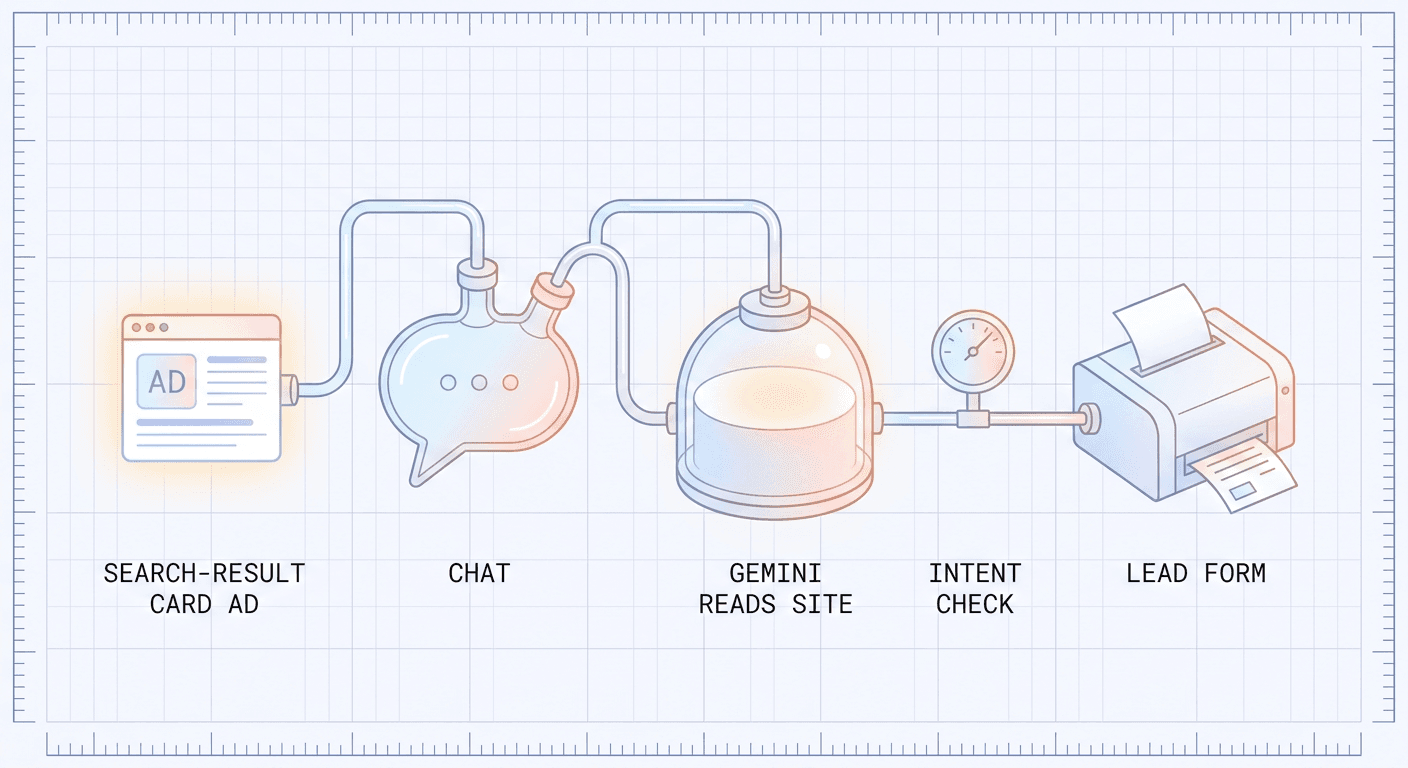
Business Agent for Leads puts a Gemini chat agent inside your Search ad, grounded in your own site content. Here is how the beta actually works.
For as long as lead generation ads have existed on Google, the form itself has been a dead end. A shopper clicks an ad, lands on a page, and is asked to fill in a name, phone number, and email before they have had a single real question answered. Most of them do not fill it in. The ones who do are often just testing the water, not seriously ready to buy, which is exactly why sales teams complain that half their "leads" go cold the moment someone actually calls back.
At Google Marketing Live on May 20, 2026, Google introduced something that attacks that problem directly instead of tweaking the form around the edges. Business Agent for Leads is now in open beta as of September 2026 for US advertisers, and it is the first Google Ads format that replaces the static lead form inside a Search ad with a live, Gemini-powered conversational agent grounded in the advertiser's own website content. Instead of a shopper filling out a blind form, they chat with an agent that has actually read the dealership's inventory pages, the school's program catalog, or the brokerage's active listings, gets a real answer to a real question, and only then has a pre-filled lead form submitted on their behalf.
This post walks through exactly how that flow works end to end, who currently qualifies for the beta, what it actually changes about lead quality and sales workflow, and the part advertisers tend to underestimate: once an AI agent is representing your business conversationally in real time, the actual content sitting on your website stops being a passive brochure and becomes the material the agent is judged on. That is also where Miraflow fits naturally into this story. If your automotive, education, or real estate site is leaning on thin or dated product photography, Miraflow's AI Image Generator and Cinematic AI Video Generator are practical ways to keep the pages this new agent reads from actually worth reading, and to keep the AI Max and Performance Max campaigns this feature requires stocked with fresh creative.
Here is the short version before the full walkthrough: what it is, how the conversation actually plays out, who qualifies today, and what changes for your sales team.
| Vertical | Campaign type required | What triggers the chat agent | What happens after |
|---|---|---|---|
| Automotive | AI Max for Search, or Performance Max with text customization enabled | Shopper taps the Chat button on the ad and asks about a specific vehicle, trim, or financing terms | Agent answers from the dealership's real inventory and financing pages, then a pre-filled lead auto-submits once buying intent is shown |
| Education | AI Max for Search, or Performance Max with text customization enabled | Shopper asks about a specific program, cost, duration, or format | Agent answers from the school's real program pages, then a pre-filled lead auto-submits once buying intent is shown |
| Real Estate | AI Max for Search, or Performance Max with text customization enabled | Shopper asks about a specific listing, price, or property detail | Agent answers from the brokerage's real listing pages, then a pre-filled lead auto-submits once buying intent is shown |
What Business Agent for Leads Is, and Why Google Built It Now
Business Agent for Leads is best understood as the customer-facing half of a pattern Google has been building out across its ads stack all year. Miraflow already covered Ask Advisor, the Gemini-powered agent announced at the same Google Marketing Live event that sits across Google Ads, Analytics, Merchant Center, and Marketing Platform to help an advertiser plan and manage a campaign. Ask Advisor is an internal copilot. It talks to the person running the account, not to the shopper on the other end of the ad. Business Agent for Leads is the mirror image of that idea: an agent that talks directly to the customer, embedded inside the ad itself, at the exact moment a purchase decision is being formed.
That distinction matters because it marks a real shift in where Google is putting its agentic bets. AI Max, which Miraflow covered in depth in the AI Max auto-upgrade rollout and again in the reporting changes that followed it, automates how an ad matches a search and which landing page it sends someone to. Ask Advisor automates the strategic layer behind the account. Business Agent for Leads automates something neither of those touches: the actual conversation that happens between a business and a prospective customer before a lead ever reaches a CRM. Put together, these three releases describe a single direction. Google is not just optimizing which ad shows and where it sends traffic anymore. It is starting to sit inside the interaction itself, on both the advertiser side and the customer side, at the same time.
The reasoning Google has given for building this specific format centers on a problem every performance marketer running lead-gen campaigns already knows by name: a lead form captures intent to fill out a form, not intent to buy. A shopper who glances at a landing page for eight seconds and taps through a form because the ad promised a discount is technically a lead, but sales teams have learned the hard way that this kind of lead converts at a much lower rate than someone who actually engaged with real information first. Business Agent for Leads is a direct answer to that gap. By putting a real conversation in front of the form instead of behind it, the theory is straightforward: anyone who reaches the point where the form actually submits has already asked a specific question, gotten a specific, content-grounded answer, and made an active choice to keep going. That is a meaningfully different signal than a blind form fill, and it is the core bet behind the entire feature.
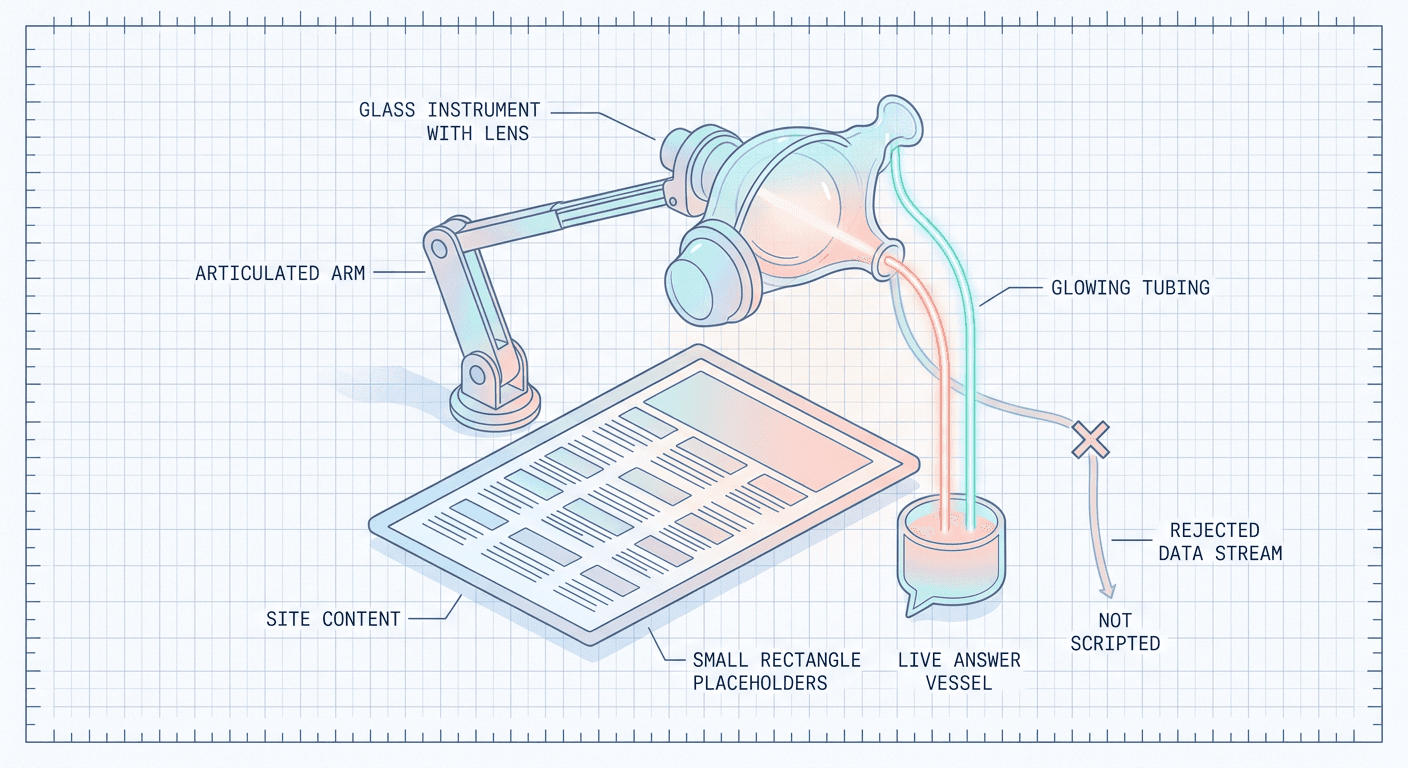
It is also worth being clear about what makes this format different from a scripted chatbot, since advertisers who have been burned by a canned FAQ-bot bolted onto a landing page will reasonably be skeptical. The agent is not following a script the advertiser wrote in advance. It is generated live by Gemini, reading the advertiser's actual website content at the moment of the conversation and responding to whatever the shopper actually asks, in natural language, rather than routing them through a fixed decision tree of pre-written answers. That is both the feature's biggest strength and, as the section on preparing your website further down explains, its biggest new source of risk.
How the Customer-Facing Flow Actually Works, Step by Step
The cleanest way to understand Business Agent for Leads is to walk through a full conversation from the shopper's side, since the mechanics only really click once you see the sequence in order rather than as a bullet list of features.
Picture a regional car dealership running AI Max for Search on a campaign targeting searches like "new SUVs under 40k near me" and similar in-market automotive terms, with Business Agent for Leads enabled on that campaign. A shopper searches for something close to that phrase inside Google's AI Mode, and the dealership's ad appears with a Chat button sitting next to the usual ad copy and site links. The shopper is not ready to talk to a salesperson yet. They are still comparing options. Instead of clicking through to a generic inventory landing page and bouncing after a few seconds, they tap Chat.
The conversation that follows is where the format actually earns its name. The shopper types something specific: "Do you have the 2027 Highlander XLE in stock, and what are the financing terms right now." This is exactly the kind of question a static ad or a generic landing page cannot answer, because it depends on real-time inventory and current financing offers, not general marketing copy. The Gemini-powered agent reads the dealership's actual website content, its live inventory listing pages and its financing or promotions page, and responds directly: confirming whether that specific trim is currently on the lot, what color options exist, and what the current financing rate or lease terms are, based on what is actually published on the dealership's site rather than a hardcoded answer written weeks earlier by a marketing team. If the shopper follows up asking about a trade-in estimate or a specific add-on package, the agent keeps responding in the same grounded, real-time way, reading whatever relevant page exists for that follow-up.
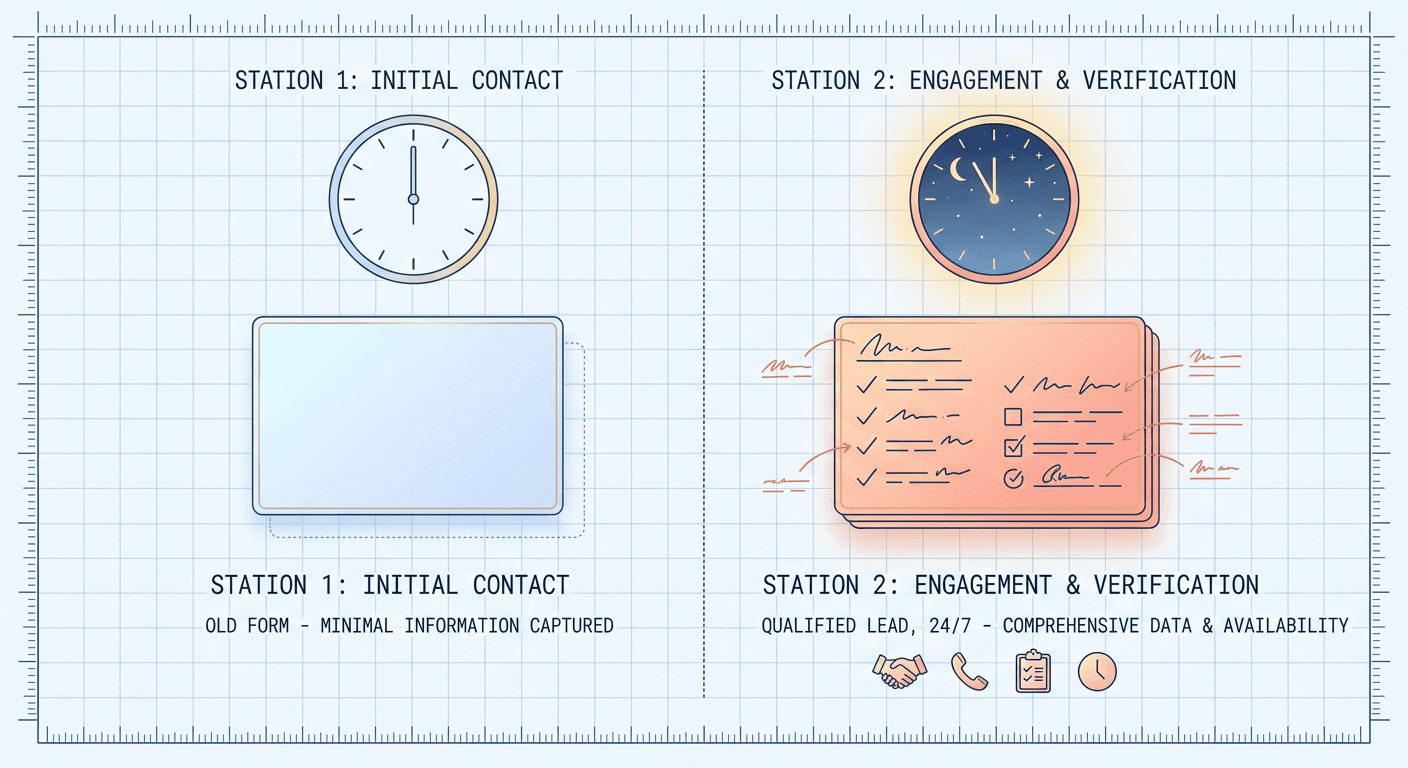
At some point in that exchange, the conversation crosses a threshold Google's own systems are evaluating in the background: does this exchange show genuine buying intent. A shopper asking about a specific trim, real financing terms, and a trade-in estimate for their own vehicle is a very different signal than someone asking a single vague question and going quiet. Once that threshold is judged to have been crossed, a lead form is automatically submitted to the advertiser, pre-filled using the information already gathered over the course of the conversation, the specific vehicle discussed, the financing question asked, whatever contact detail the shopper provided along the way. The shopper never has to separately go fill out a blank form from scratch after already explaining what they want in the chat. The dealership's sales team receives a lead that already includes the vehicle trim, the financing question, and the actual conversation transcript, instead of a bare name and phone number with zero context about what the person actually wants.
The part of this flow that deserves its own callout is that it runs 24 hours a day, seven days a week, independent of the dealership's actual business hours. A shopper doing this kind of research at 11pm on a Tuesday, well after the sales floor has closed and no human rep is available to respond, still gets a real, grounded answer and still generates a qualified, pre-filled lead sitting in the CRM by the time the sales team opens the next morning. For lead-gen verticals where buying research genuinely happens outside a 9-to-5 window, home shopping, program research for a fall semester, evening car shopping after work, that always-on availability is arguably as significant a change as the conversation quality itself, since it captures intent the business would previously have simply missed entirely.

A genuine edge case worth walking through here: what happens when the agent gets a question it cannot actually answer from the site's content. Say the same shopper asks something the dealership's website simply does not cover, a specific question about a manufacturer recall notice, or a highly specific finance qualification scenario tied to their personal credit situation. Because the agent is explicitly grounded in the advertiser's real website content rather than inventing plausible-sounding answers, the honest expectation is that it should decline to answer definitively and redirect the shopper toward a human follow-up rather than guess. That grounding is precisely what keeps the format from becoming a liability, but it also means a website with genuinely thin content will produce more of these dead-end moments, more shoppers hitting a wall mid-conversation exactly when they were showing real intent, which is the direct throughline into why website content quality now matters so much more, covered in its own section below.
Eligibility and Beta Mechanics: The Three Verticals and the Campaign Requirement
Business Agent for Leads is not available to every advertiser who wants to turn it on today, and understanding the actual gating logic matters before you spend time planning around a feature your account cannot yet access.
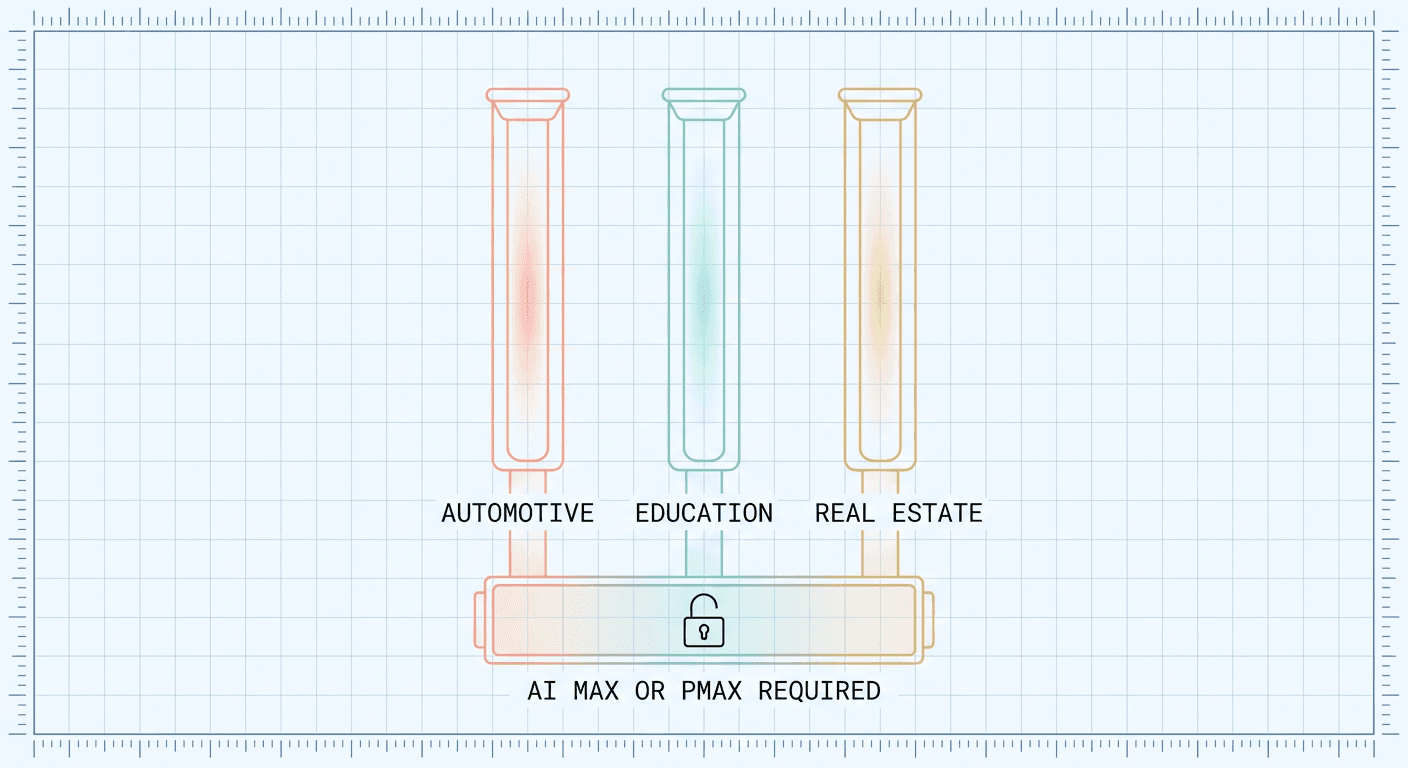
As of September 2026, the beta is open specifically to US advertisers in exactly three verticals: automotive, education, and real estate. That is not an arbitrary starting list. All three share a specific pattern that makes them well suited to a first rollout: high-consideration purchases where a shopper typically has several genuinely specific questions before committing, inventory or program details that change often enough that a static landing page goes stale quickly, and existing website content substantial enough, vehicle listings, program pages, active property listings, for a grounded agent to actually have real material to draw from. A vertical with thin, mostly static marketing pages and no real underlying inventory data would give the agent much less to work with, which is likely part of why the initial beta stayed narrow rather than opening broadly on day one.
The second eligibility requirement sits at the campaign level rather than the account level, and it is easy to miss if you are only checking vertical eligibility. Business Agent for Leads is not available as a standalone ad format. An advertiser has to already be running either AI Max for Search or Performance Max with text customization enabled before Business Agent for Leads becomes available on top of it. This is not a small technical footnote. It means an automotive dealership still running traditional Search campaigns with fully manual keywords and no AI Max involvement is not eligible for the chat agent at all, regardless of vertical, until that underlying campaign is actually migrated. If your account already went through the AI Max migration Miraflow covered back in September, campaign-level broad match or Automatically Created Assets campaigns converting to AI Max automatically, you are closer to eligible than an account that opted out of that migration or is still running exclusively legacy Search campaign types.
Here is a concrete scenario that shows why this two-layer gate matters in practice. A real estate brokerage in Texas wants to run Business Agent for Leads on its listings campaigns. The vertical qualifies. But if that brokerage's Search campaigns are still structured around manually chosen exact-match keywords with Automatically Created Assets turned off, the underlying campaign never became eligible for AI Max in the first place, and Business Agent for Leads has nothing to attach to. The practical first step for that brokerage is not requesting beta access to the chat feature directly, it is first getting the underlying Search campaigns onto AI Max for Search, or building a Performance Max campaign with text customization turned on, and only then checking whether Business Agent for Leads shows as available inside that campaign's settings.
For an advertiser in one of the three eligible verticals who wants to actually prepare for a wider rollout rather than wait passively, a few concrete steps make sense right now. First, confirm your Search campaigns are actually on AI Max, or build out a Performance Max campaign with text customization enabled, since that is the hard technical gate regardless of vertical. Second, treat your website's own content quality as a live project rather than something to revisit later, since that is the material the agent will eventually be grounded in and eligibility can expand faster than a content refresh can happen after the fact. Third, if you are an agency managing multiple client accounts across these three verticals, it is worth checking Business Agent for Leads availability inside each eligible client's AI Max or Performance Max campaign settings directly rather than assuming beta access rolls out uniformly across every account in a vertical at once, since Google's beta rollouts for adjacent features like Ask Advisor and the AI Max migration itself have both shown a staggered, account-by-account pattern rather than a single global switch.
The edge case worth flagging here is what happens to an account that sits right on the boundary, a real estate brokerage that also lists a handful of commercial properties, for instance. Vertical eligibility for a beta this new is likely to be judged at the account or campaign level based on the primary business category Google has on file, not a strict per-listing basis, so a mixed-vertical account should not assume every single campaign automatically qualifies just because the account broadly operates in an eligible space. Checking availability at the individual campaign level, rather than assuming account-wide access, avoids planning a launch around a campaign that turns out not to actually have the feature available yet.
What This Means for Lead Quality and the Sales Team's Actual Workflow
The headline benefit Google is making here is straightforward to state and worth taking seriously rather than treating as marketing language: by the time a lead reaches an advertiser's CRM through this flow, that person has already read real content from the business's own site, asked a specific question, received a specific answer grounded in that content, and made an active decision to keep going rather than abandon the conversation. That is a meaningfully different lead than someone who glanced at a landing page for a few seconds and filled out a blind form because a headline promised something. A sales team receiving the first kind of lead knows exactly what the prospect asked about and what they were told, before the first phone call ever happens.
Working through the practical downstream effect on a sales team makes the change concrete. Under the old static form model, a sales rep calling back a lead typically starts from zero: a name, a phone number, maybe a generic "interested in a vehicle" note, and no idea what specifically the person wants until the rep asks. Under this new flow, that same rep opens a lead record that already includes a real transcript, the specific trim asked about, the financing question raised, whatever detail came up in the conversation. The first call can start with "I saw you were asking about the XLE trim and our current financing rate" instead of "So what are you looking for today." That shift alone changes how a sales team should think about lead routing and response time, since a lead this well-qualified is worth prioritizing for immediate follow-up rather than sitting in a generic queue behind less-qualified form fills.
The 24/7 angle compounds this further for any vertical where buying research genuinely happens outside business hours. A real estate brokerage whose showings and calls happen during the day still has prospects browsing listings and asking questions at 10pm, and under the old model that after-hours interest either went nowhere or waited until morning with zero information captured about what the person actually wanted. Under this flow, the conversation happens in real time regardless of the hour, and by the time a human agent is back at their desk, there is already a qualified, pre-filled, content-grounded lead waiting, not just a missed-opportunity notification.
But there is a real edge case here that deserves honest treatment rather than being glossed over, and it is specific to compliance-sensitive verticals like automotive financing. Financing terms, APR disclosures, and lease conditions are exactly the kind of specific, factual claims that carry real regulatory weight if stated incorrectly, and an AI agent generating live responses grounded in a dealership's financing page still needs that underlying page to be accurate, current, and legally reviewed, since the agent is only as reliable as the source material it reads from. A dealership whose financing page has not been updated in months, still listing a rate that expired weeks ago, is not just giving a stale answer to a human visitor anymore. It is putting that stale, potentially non-compliant figure directly into a live conversation an AI agent is having with a prospective customer, in the advertiser's own voice, at scale. The practical implication is that any advertiser in a compliance-sensitive vertical needs to treat the specific pages this agent draws from, financing terms, program pricing, listing details, as living documents requiring the same review rigor a compliance team would apply to printed marketing material, not a page that gets updated whenever someone happens to remember to do it.
This pattern of moving lead capture earlier and making it richer is not entirely new territory for Google Ads. Miraflow's earlier post on Local Services direct booking expanding to 500+ partners covers a related idea from a different angle, letting a customer book an appointment directly from the ad rather than just submitting an inquiry and waiting for a callback. Both features share the same underlying logic: the more a customer can actually accomplish inside the ad experience itself before a human gets involved, the more qualified and further along the funnel that eventual human interaction starts. Business Agent for Leads pushes that idea further by making the pre-human step a genuine two-way conversation rather than a scheduling form, which is precisely what makes the lead-quality claim stronger here than it would be for a booking widget alone.
Preparing Your Website Content for an AI Agent That Represents You Live
This is the section advertisers in the eligible verticals should not skip, because it is the part of this rollout that has the least visibility and the most downstream consequence. Every previous discussion of website content in a Google Ads context has treated the site as something a human eventually lands on and reads at their own pace, forgiving of a slightly outdated photo or a paragraph that has not been refreshed since last year. Business Agent for Leads changes that calculus completely, because the site's content is no longer just something a browsing human might skim. It is the literal material an AI agent reads from and represents, conversationally, in real time, in the advertiser's own voice, to a prospect actively deciding whether to buy.
Think through what that actually means for a page that used to be a low-priority afterthought. A used-inventory page that has not been updated in three weeks, still listing a vehicle that already sold, does not just show a stale photo to an occasional human visitor anymore. It becomes the source material for a live conversation in which the agent confidently tells a shopper that specific vehicle is available, when it is not, directly ahead of what could have been a genuinely good lead. A real estate listing page missing square footage or lot details does not just look thin to a human scrolling past it. It becomes a gap the agent cannot fill when a shopper asks the obvious follow-up question, forcing the conversation to a dead end at exactly the moment intent was building. An education program page with vague, generic copy about "a rewarding career path" instead of actual program length, cost, and format details gives the agent almost nothing concrete to work with when a prospective student asks something specific like program duration or whether it is offered online.
The practical response to this is to treat the pages a Business Agent conversation is likely to draw from, inventory listings, program details, active property listings, financing and pricing pages, with the same seriousness a business would apply to training an actual salesperson. If a real human sales rep would be expected to know current inventory, accurate financing terms, and specific property details before ever getting on a call with a prospect, the website now needs to carry that same level of accuracy and specificity, because it is functionally the material this AI agent studies before every single conversation it has.
This is also where fresh visual content becomes a bigger deal than it might first appear, and it is a natural, non-forced place to bring in a practical tool rather than a marketing pitch. A shopper who chats with an agent about a specific SUV trim, gets a confident, well-grounded answer about availability and financing, and then clicks through to a listing page with a single blurry stock photo from three years ago experiences a jarring mismatch between the quality of the conversation and the quality of the actual page backing it up. The same is true for a real estate listing with dated, poorly lit photos, or an education program page with no real imagery of the actual campus or facility being discussed. Miraflow's AI Image Generator is a practical way to keep this kind of page-level content current, producing fresh product and lifestyle imagery for a vehicle trim, a property, or a campus facility without waiting on a full photo shoot every time inventory or listings turn over. For advertisers running the Performance Max or AI Max campaigns this feature actually requires, Miraflow's Cinematic AI Video Generator covers the video assets those same campaigns increasingly lean on, since a Performance Max asset group with fresh video variants generally has more material to work with than one running the same handful of static images it has used for months.
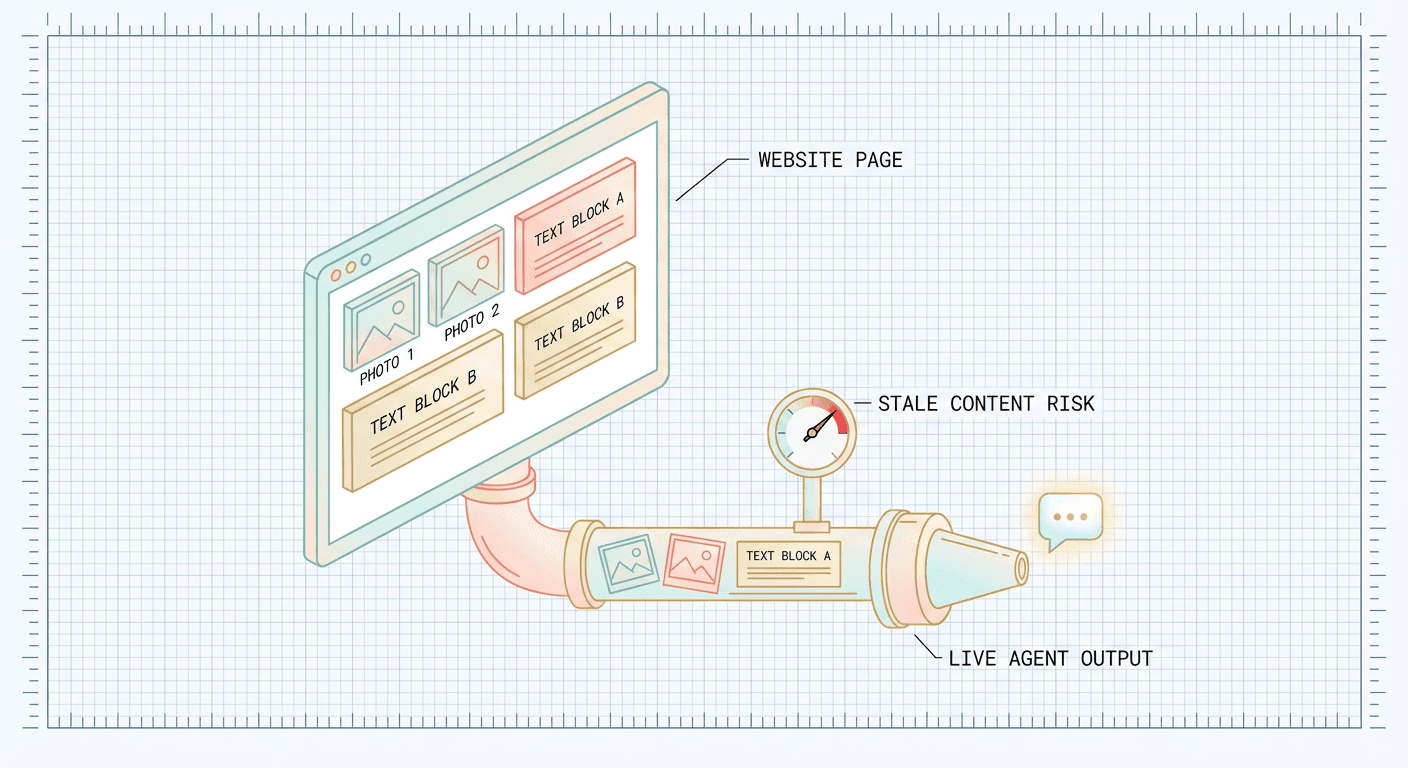
A genuine edge case worth naming here: seasonal or time-sensitive content is a particular risk once an AI agent is reading it live. A real estate listing marked "open house this Saturday" that quietly ages past that date without being taken down or updated is a minor annoyance on a page a human might skim past. Read live by an agent mid-conversation with a shopper actually planning their weekend around that detail, it becomes a specific, confidently wrong answer delivered directly to someone showing real buying intent. Any advertiser relying on this feature needs a real process for retiring or updating time-sensitive content promptly, not just publishing it and letting it sit.
Common Mistakes Advertisers Are Likely to Make With This Feature
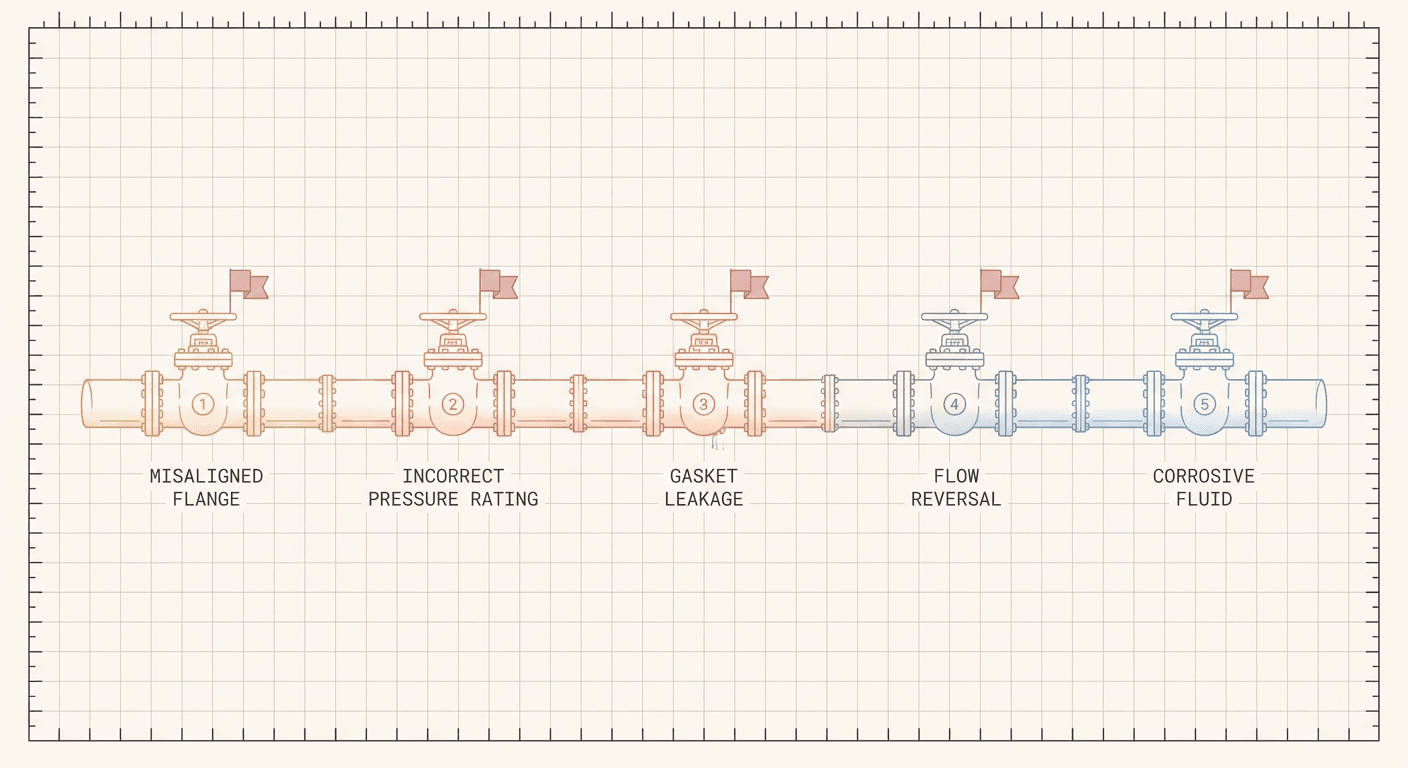
The most common mistake will be treating Business Agent for Leads as a plug-and-play toggle that works the moment it becomes available, without first auditing whether the underlying website content is actually ready to be read and represented by an AI agent in real time. A dealership, brokerage, or school that turns this on without first checking its inventory, listing, or program pages for accuracy is effectively handing an AI agent outdated material and asking it to represent the business confidently anyway, which is a recipe for exactly the kind of dead-end or incorrect conversation described above.
The second mistake is assuming eligibility is a single account-wide switch rather than a two-part gate. Being in one of the three eligible verticals is necessary but not sufficient. The underlying campaign also has to be running AI Max for Search or Performance Max with text customization enabled, and an advertiser who checks vertical eligibility, confirms they qualify, and then wonders why the feature never shows up has very likely skipped checking the campaign-level requirement entirely.
The third mistake is under-preparing for the compliance review this format actually demands in a sensitive vertical like automotive financing. Because the agent generates responses live rather than following a pre-approved script, the compliance burden shifts earlier, onto the source pages themselves, rather than onto reviewing a fixed set of chatbot scripts the way a legal team might have done for an older, scripted chat widget. Treating the underlying financing or pricing pages as low-priority content that gets updated whenever convenient is a mistake that carries more weight now than it used to.
The fourth mistake is ignoring the 24/7 angle when planning sales team staffing and response times. A lead generated at 11pm through a real, qualified conversation deserves the same fast follow-up priority the next morning that a qualified lead generated during business hours would get, but a sales team that has not adjusted its morning routine to specifically check for and prioritize overnight Business Agent leads risks letting a genuinely warm, well-qualified prospect go cold simply because nobody looked at the queue with the right priority in mind.
The fifth mistake, and one that connects directly back to the section above, is treating the website refresh this feature calls for as a one-time project rather than an ongoing discipline. A dealership that cleans up its inventory pages once, right when Business Agent for Leads launches, and then lets that same content drift stale again over the following months has solved the problem only temporarily. The agent reads whatever is live at the moment of each conversation, not a snapshot from launch day, so content accuracy needs to be maintained continuously, the same way inventory and pricing already have to be for basic business reasons, not just for this one ad feature.
Getting Your Assets and Campaigns Ready With Miraflow
Once a shopper's first real interaction with your business happens entirely through a text conversation on a search results page, the assets that get that ad clicked in the first place, and the site content the agent draws its answers from afterward, both matter more than they did when a static form was the entire experience. A weak or generic ad image is one less shopper who ever taps the Chat button to begin with, and thin site content is one more conversation that hits a dead end right when a prospect was showing real intent.
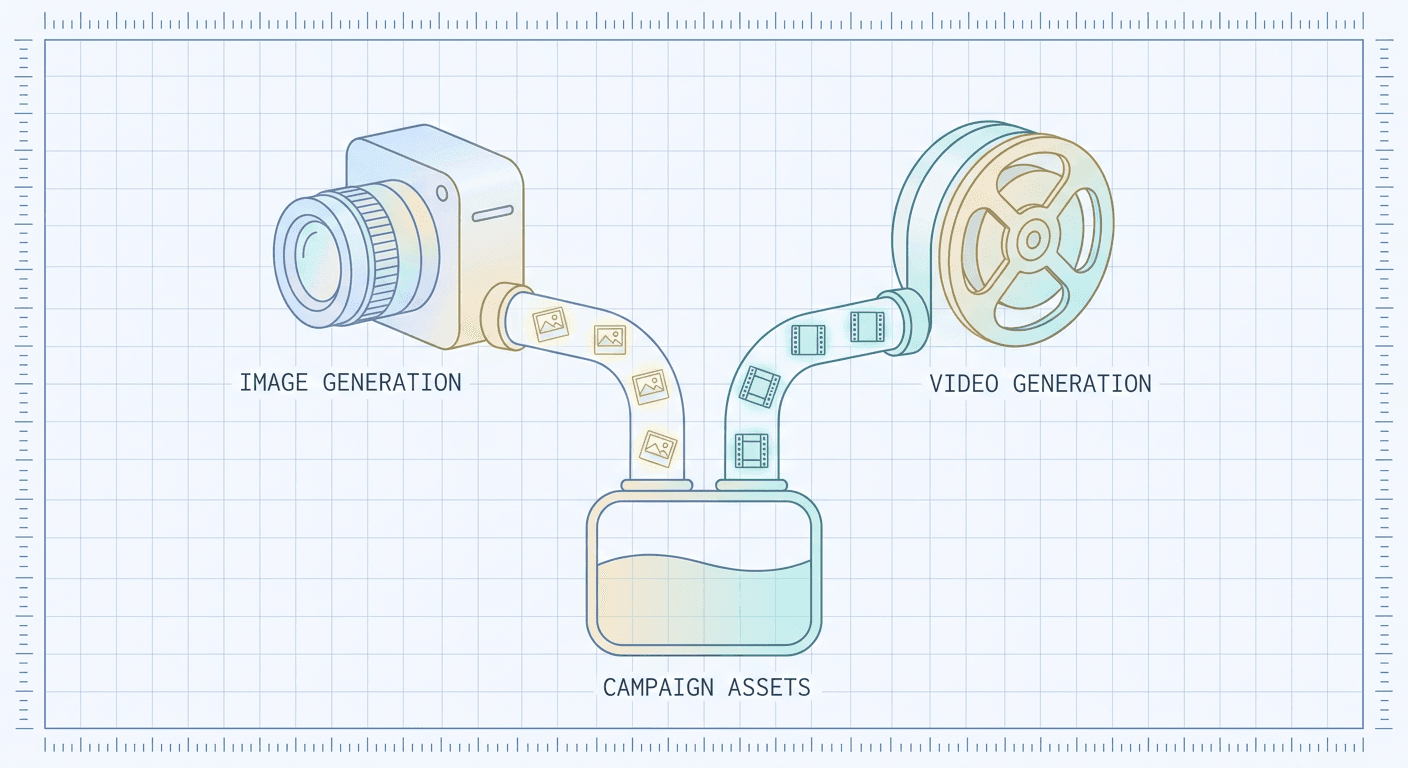
Miraflow's AI Image Generator covers text-to-image generation, image-to-image editing, and inpainting, which makes it a practical way to keep vehicle, property, or program imagery current without waiting on a full photo shoot every time inventory turns over, exactly the kind of fresh visual material both the ad creative and the grounding website content need under this new format. For the video side of the same campaigns, since Business Agent for Leads requires an underlying AI Max for Search or Performance Max campaign with text customization enabled, Miraflow's Cinematic AI Video Generator produces the video assets those asset groups increasingly rely on, without the lead time of scheduling a traditional video shoot. Both tools run directly in the browser, which matters when a beta feature like this one rewards advertisers who can refresh their creative and their site content quickly rather than on a slow quarterly production cycle.
If your account is also navigating the broader shift toward AI-driven Search formats, Miraflow's coverage of the AI Max auto-upgrade, the AI Max reporting changes that followed it, and Ask Advisor are worth reading together with this post, since all three describe the same underlying direction from Google: less manual control over the exact mechanics of matching and lead capture, paired with more automated help on both the advertiser side and now, with Business Agent for Leads, the customer-facing side as well. Advertisers running Performance Max campaigns that could feed this feature once eligibility expands may also find Miraflow's piece on structured asset experiments for Performance Max useful for testing which creative actually earns the click that starts one of these conversations in the first place, and the recent Gemini Omni Asset Studio coverage is a good companion read on how Google is simultaneously making the video side of asset production faster. Miraflow as a whole covers the rest of the content pipeline, from idea to script to visual to finished video, in one place, which is a useful thing to have on hand once a single ad format starts depending this directly on both your creative and your website content being genuinely current.
Frequently Asked Questions
What is Google Ads Business Agent for Leads?It is a Google Ads feature, announced at Google Marketing Live on May 20, 2026 and now in open beta as of September 2026, that replaces the static lead form inside a Search ad with a Gemini-powered conversational agent grounded in the advertiser's own website content. Shoppers chat with the agent directly from the ad, and a pre-filled lead form is automatically submitted once the conversation shows genuine buying intent.
Which advertisers can access the beta right now?US advertisers in exactly three verticals: automotive, education, and real estate. The advertiser also needs to already be running AI Max for Search or Performance Max with text customization enabled, since Business Agent for Leads is not available as a standalone ad format outside those two campaign types.
Is the AI agent following a script the advertiser writes?No. The agent is generated live by Gemini, reading the advertiser's actual website content at the moment of the conversation and responding to whatever the shopper asks in natural language, rather than working through a fixed decision tree of pre-written answers.
What happens once the conversation shows buying intent?A lead form is automatically submitted to the advertiser, pre-filled using the information already gathered during the conversation, so the shopper does not have to separately fill out a blank form from scratch after already explaining what they want.
Does this work outside normal business hours?Yes. The agent operates 24 hours a day, seven days a week, which means it can qualify and capture leads even when no human sales rep is available to respond, a meaningful change for verticals where buying research often happens in the evening or overnight.
How is this different from Ask Advisor?Ask Advisor is a Gemini agent that helps the advertiser manage their own account, spanning Google Ads, Analytics, Merchant Center, and Marketing Platform. Business Agent for Leads is customer-facing, embedded directly inside the ad, and talks to the shopper rather than the advertiser.
What happens if the agent gets a question it can't answer from the website?Because the agent is grounded in the advertiser's real site content rather than generating unsupported answers, the expectation is that it should decline to answer definitively rather than guess, and redirect the shopper toward a human follow-up. This is also why thin or missing website content becomes a bigger practical liability under this format, since it directly limits what the agent can actually address.
Do I need to rewrite my whole website to use this feature?Not necessarily rewrite, but you do need to treat the specific pages the agent will draw from, inventory, listings, program details, pricing, and financing terms, as accurate and current, the same standard you would hold a live salesperson to, since the agent represents your business using exactly that content.
Conclusion
Business Agent for Leads is a genuine structural change to how a lead-gen ad works, not a cosmetic update to an existing form. Moving the actual conversation ahead of the form, instead of asking a shopper to commit to contact information before getting a single real answer, changes what a lead means by the time it reaches a CRM, and the 24/7 availability captures buying intent that a form-only flow would have simply missed outside business hours. The beta staying narrow, three verticals, and gated behind an existing AI Max or Performance Max campaign, means most advertisers cannot turn this on today, but the underlying idea, an AI agent grounded in real business content talking directly to a customer, is clearly the direction Google is building toward across its ads stack, alongside Ask Advisor's account-side agent and AI Max's campaign-side automation.
The advertisers who get the most out of this once it reaches them will be the ones who treated the wait as prep time rather than downtime: getting the underlying AI Max or Performance Max campaign in place now, and treating the specific website content this agent will read from as material worth actively maintaining rather than a page that gets updated whenever convenient. Miraflow's AI Image Generator and Cinematic AI Video Generator are practical tools for keeping that content, and the campaigns it feeds, genuinely current, so that by the time a shopper's first real interaction with your business is a live conversation instead of a blank form, everything backing that conversation is actually worth the trust the shopper is putting in it.