YouTube Shorts RPM in 2026: Typical Ranges by Niche + What Actually Changes Your Pay

Written by
Jay Kim
Most creators in 2026 see YouTube Shorts RPM around $0.01–$0.07 per 1,000 views, but your actual number depends far more on viewer country mix, music licensing deductions, and ad demand than “niche” alone. Here’s what’s confirmed, what’s reported, and how to estimate your own RPM.
If you’ve searched 'YouTube Shorts RPM in 2026', you’ve probably seen numbers all over the place.
That’s normal, because Shorts don’t pay a fixed 'per-view' rate. Shorts earnings come from a pool-based revenue share model, and your RPM changes based on where your viewers are, your share of eligible engaged views, and overall ad demand.
This guide breaks down:
- what’s confirmed about how Shorts monetization works,
- reported RPM ranges creators commonly see in 2026,
- what 'by niche' really means for Shorts,
- a simple calculator for 100K → 10M views,
- and how to increase revenue without chasing fake numbers.
What Shorts RPM means
RPM = how much you earned per 1,000 views on average.
For Shorts, RPM is usually lower than long-form because ads run between Shorts in the feed, and revenue is pooled, so you’re earning a share of a monthly pool, not your video’s ads.
How YouTube Shorts monetization works
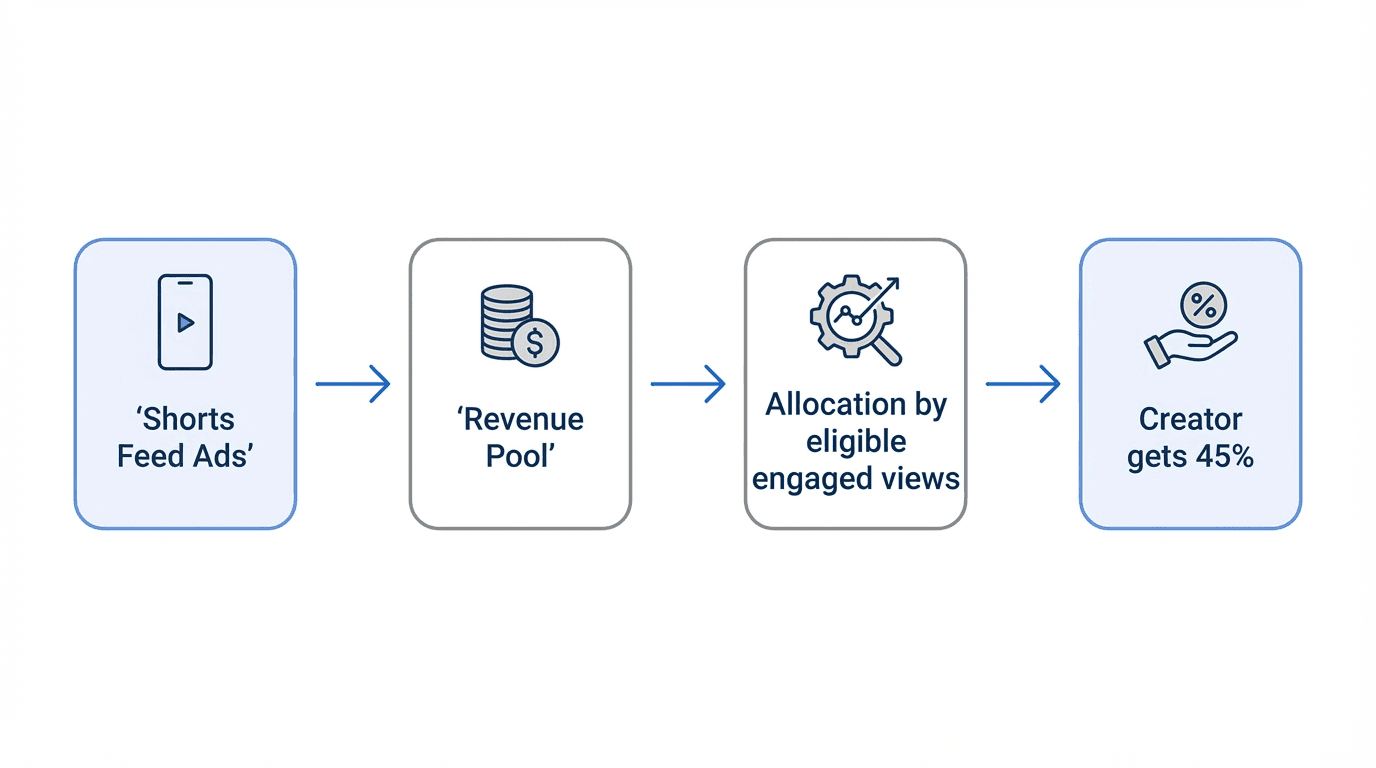
Here’s the official model, simplified:
- YouTube collects revenue from ads shown in the Shorts feed.
- That money goes into a pool (often described as the Creator Pool after certain allocations).
- Your share is based on your percentage of eligible engaged views (often measured per country).
- Once your allocation is calculated, YouTube applies the revenue split: creators earn 45% of their allocation.
YouTube’s own Help Center even provides a numeric example that ends with the creator receiving 45% of the allocation.
The 'real' Shorts RPM in 2026 (reported ranges)
YouTube doesn’t publish an official RPM-by-niche table. So the best fact-based approach is:
- cite YouTube for the mechanics (pool + 45% share),
- cite reputable industry/creator-education sources for reported RPM ranges.
A commonly repeated 2025–2026 estimate is:
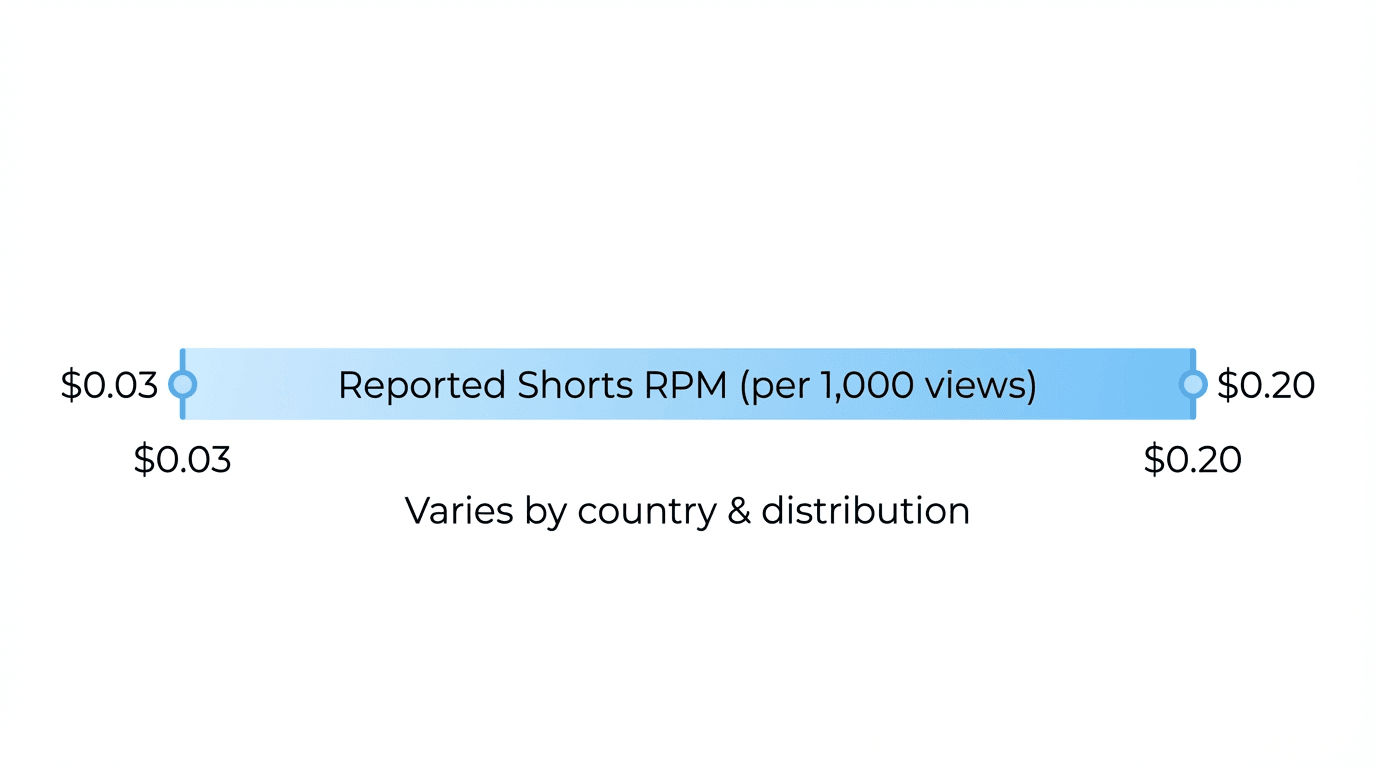
- ~$0.03 to $0.10 per 1,000 Shorts views (reported range many creators fall into).
Another widely shared range across creator reports and summaries is: - ~$0.03 to $0.20 per 1,000 views (still highly variable).
Translation (rough math):
- 1M views → about $30 to $200 in many reported cases
- 10M views → about $300 to $2,000
(Your actual number can be outside these ranges, especially depending on audience country mix.)
'RPM by niche' for Shorts: the honest way to talk about it
For long-form YouTube, niche strongly affects RPM (finance often pays more than memes). For Shorts, niche still matters, but it’s usually less powerful than:
- country mix (where your viewers are),
- your share of eligible engaged views,
- ad demand and seasonality.
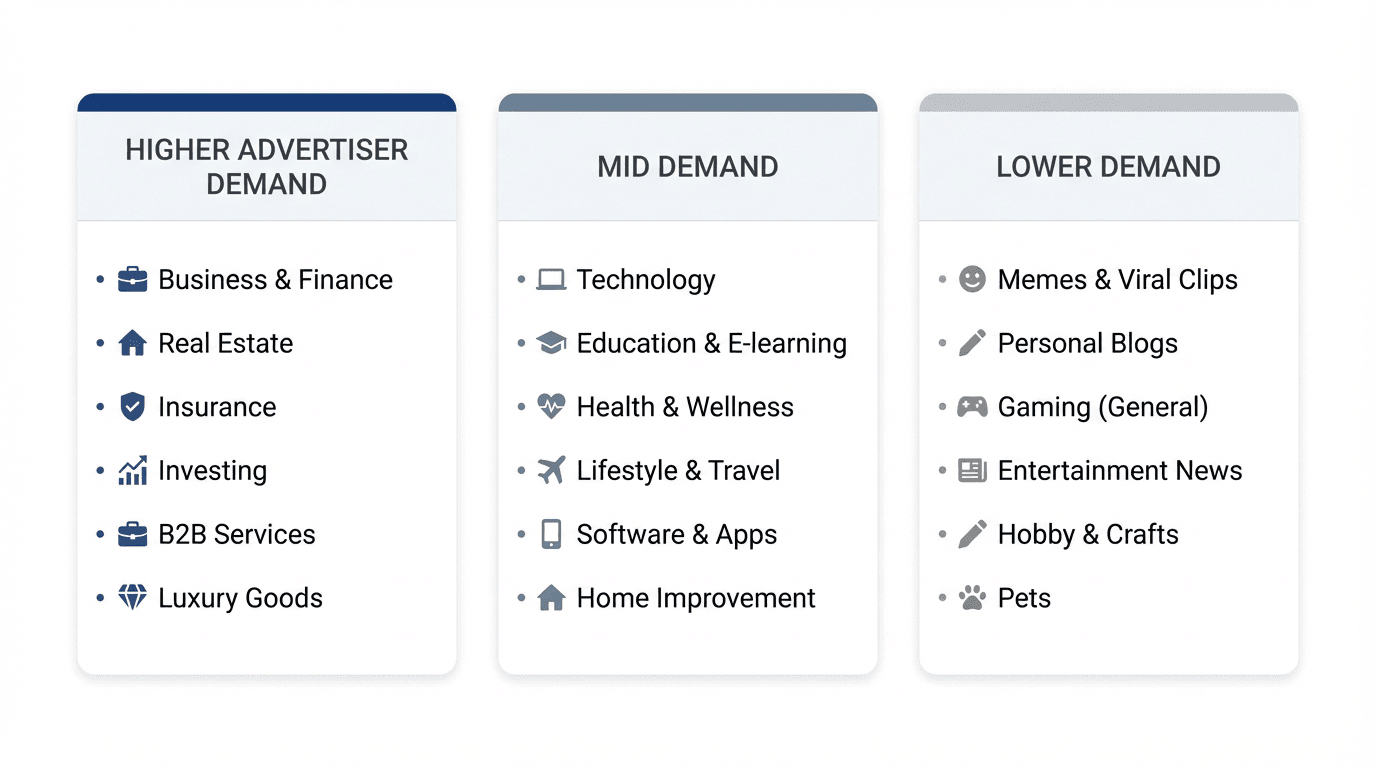
So instead of pretending there’s a precise 'Shorts RPM by niche chart', use tiers and explain the drivers.
Reported Shorts RPM tiers (practical expectations)
These are not guarantees, they’re a useful way to set expectations.
| Niche type (examples) | Typical RPM tendency for Shorts (reported) | Why it tends to land there |
|---|---|---|
| High advertiser demand (business, finance, B2B tools, career) | More likely to be upper end of reported ranges | Advertisers often pay more in these categories, especially in Tier-1 viewer geos |
| Mid demand (general tech, education, productivity, consumer apps) | Often mid-range | Broad audiences + mixed geos |
| Lower demand (memes, repost-style entertainment, generic clips) | Often lower end | Less advertiser intent + more volatile distribution |
If you want to be extra credible: say 'niche affects RPM indirectly (via advertiser demand), but Shorts allocation is still heavily shaped by where views come from and how the pool is distributed.'
The 3 biggest levers that change Shorts RPM in 2026
1) Audience country mix (usually the #1 lever)
YouTube allocates revenue based on your share of eligible engaged views and discusses country-based allocation in its official explanation/examples.
If your Shorts suddenly reach more Tier-1 countries, RPM can rise, without you changing niche.
2) Eligible engaged views (quality of distribution)
Not every view has the same value in a pool-based model. Improving 'people who chose to watch' signals (strong hook, retention, rewatches) can change how your Shorts get distributed, which changes your country mix and pool share.
3) Ad demand & seasonality
Even if your content stays the same, RPM can move with ad spend trends and market demand (many creators observe this year-to-year).
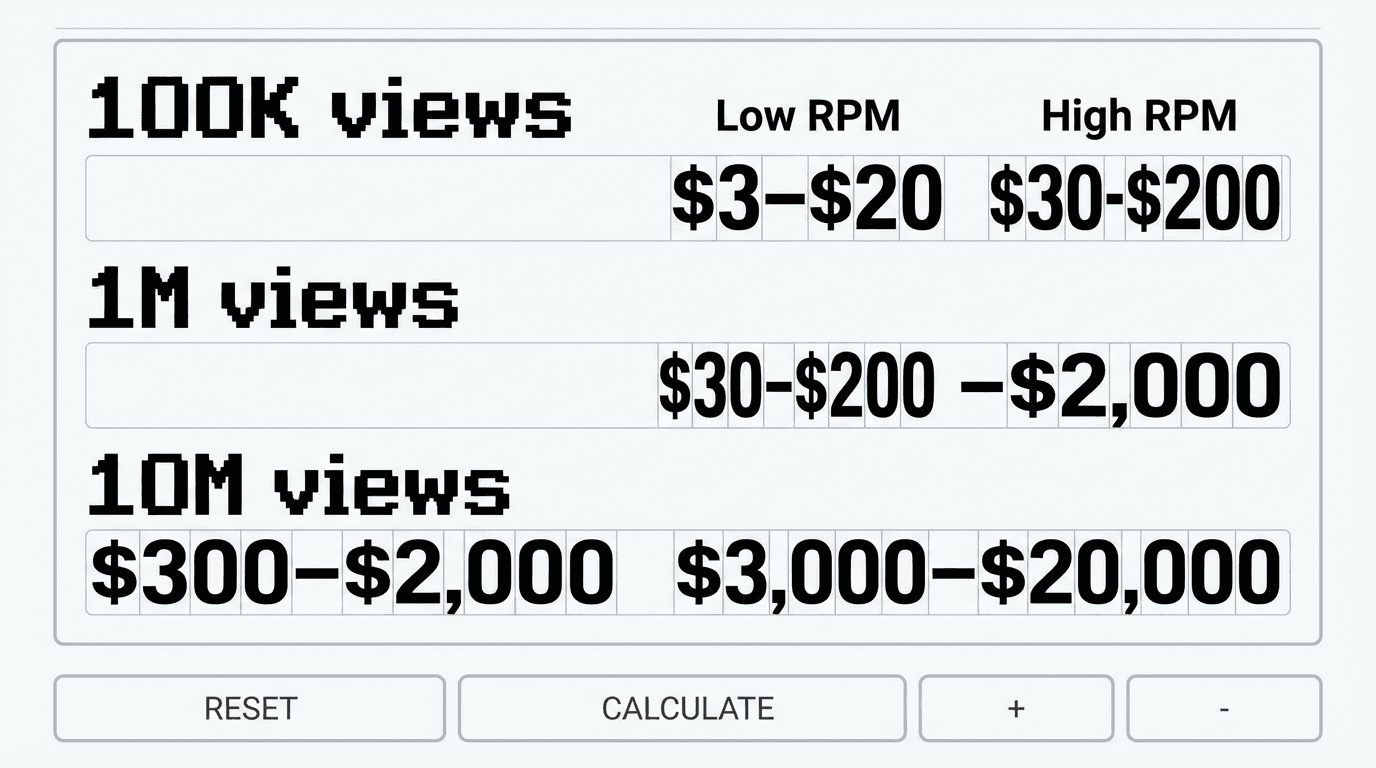
Shorts RPM calculator (copy/paste math)
Estimated earnings = (views ÷ 1,000) × RPM
Using reported RPM bands like $0.03 → $0.20:
- 100,000 views → $3 to $20
- 1,000,000 views → $30 to $200
- 10,000,000 views → $300 to $2,000
So, is Shorts worth it?
Often yes, because Shorts can be a distribution engine. Many creators use Shorts to gain subscribers, then monetize more heavily via:
- long-form videos,
- products/services,
- sponsorships,
- email/community.
How to increase Shorts earnings (without chasing myths)
Make Shorts 'advertiser-friendly' and retention-friendly
- Clean visuals, clear topic, strong first second
- Avoid confusing edits or 'too niche to understand'
- Use formats with buying intent: quick tutorials, comparisons, tool demos
Use thumbnails strategically
On surfaces where thumbnails show (channel pages, search, suggested areas), a clear thumbnail can improve click behavior.
Iterate fast: 3 variants per idea
Make one change per variant:
- hook line,
- on-screen wording,
- pacing/cuts,
- thumbnail text.
Conclusion: The RPM game is mostly a distribution game
In 2026, YouTube Shorts RPM is not a fixed niche rate. It’s the result of a pool-based system where your payout is shaped most by:
- Audience country mix
- Eligible engaged views (retention + rewatches + low swipe-away)
- Ad demand / seasonality
- and only then, topic/niche as an indirect factor.
So if your Shorts RPM feels random, it usually isn’t. It’s just sensitive to where your views come from and how your Shorts are distributed.
The practical strategy that wins in 2026
If your goal is revenue (not just views), do this:
- Use Shorts to scale reach (fast testing + volume)
- Convert Shorts viewers into higher-RPM outcomes
- long-form videos
- email/community
- sponsorship packages
- product/app traffic
- Track what actually moves your RPM
- country mix shifts
- retention improvements
- formats with higher intent (how-to, tools, comparisons)
Quick 7-day action plan
- Publish 7 Shorts (one per day) with the same idea but different hooks/text
- Make 3 thumbnail variants for the top 2 performers
- Double down on the format that produces:
- higher rewatches
- lower swipe-away
- better search discovery (titles/captions)
If you want to grow faster
The creators who win Shorts in 2026 don’t guess, they ship variants quickly.
Miraflow AI helps you iterate faster by generating:
- Youtube thumbnails (prompt-only or reference-based)
- AI music that matches your format
- product/video creatives for ad-style Shorts
More tests = more learning = better distribution = better RPM.