YouTube Shorts Algorithm Update: January 2026

Written by
Jay Kim
YouTube rolled out important Shorts updates in early 2026, including new search filters, popularity sorting, and feedback changes. Here’s what actually changed—and how creators should adapt.
If your Shorts have felt different lately, some taking off, others stalling harder than before, you’re not imagining it.
Around January 2026, YouTube started rolling out a set of updates that don’t completely replace the Shorts algorithm, but do change how Shorts are discovered, filtered, and judged by user feedback.
This post cuts through rumors and explains:
- What actually changed in early 2026
- What’s still the same about the Shorts algorithm
- How those updates affect creators in practical terms
- How to adjust your Shorts strategy going forward
Quick Recap: How the YouTube Shorts Algorithm Works in 2025–2026
Before we talk about updates, it’s important to remember: there is no single “Shorts score.”
YouTube’s recommendation system:
- Looks at how viewers behave when your Short is shown (do they watch, skip, stay, like, dislike, tap “not interested”, etc.)
- Compares that behavior to other viewers and videos with similar patterns
- Then decides whether to show your Short to more people or slow it down
Key signals for Shorts ranking still include:
- View choice – do people tap or stay when your Short appears, or do they swipe past?
- Average view duration & % viewed – how much of the Short people actually watch
- Engagement & satisfaction – likes, dislikes / “not interested”, comments, plus periodic user surveys
- Session behavior – whether Shorts keep people watching overall
For a deeper breakdown of how these signals interact, how the YouTube Shorts algorithm responds to daily uploads covers the behavioral patterns YouTube tracks most closely.
So the core principle has not changed:
Shorts that keep real people watching and satisfied get more distribution.
What has changed is how viewers find Shorts, how their feedback is collected, and how some metrics are counted.
Update #1: New Search Filters With a Dedicated “Shorts” Type
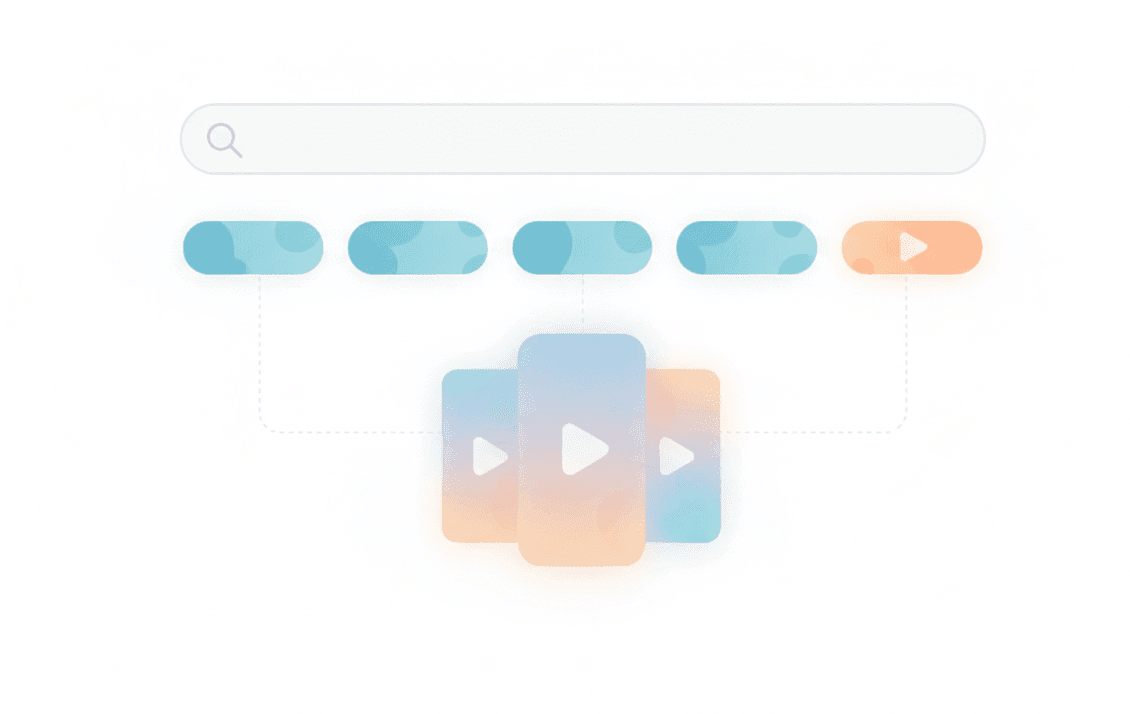
In early January 2026, YouTube announced a redesign of its search filters, including a dedicated “Shorts” filter in the “Type” menu.
Key points:
- Users can now explicitly filter search results to show only Shorts
- Long-form results are separated under “Videos”
What this means for creators
- Shorts are now a first-class search result type.
People who search and tap “Shorts” are signaling they want quick, vertical content. Good news if you make Shorts that answer specific questions or ride searchable topics. - Search-optimized Shorts become a real growth channel.
Tutorials, quick tips, “how to…” Shorts, listicles, and news-style explainers can now win both in the feed and in search results, if structured well.
If you want to see which Short formats are winning in search right now, AI Shorts formats that go viral in 2026 breaks down the structures that perform across both feed and search discovery.
Update #2: Dislike + “Not Interested” Feedback Tests on Shorts
In the same January 2026 wave, YouTube also began testing a change to how viewer feedback is collected on Shorts:
- For some users, “dislike” and “not interested” are being merged into a single control in the Shorts interface.
- YouTube found many people treated them similarly anyway, so they’re consolidating the feedback and sometimes following up with short surveys to refine their recommendation system.
From YouTube’s own documentation on Shorts discovery, we know that negative feedback (skip, “not interested”, dislikes, low % viewed) already affects how a Short is ranked.
What this means for creators
- Low-quality or misleading Shorts get punished faster.
If viewers frequently give negative signals, such as instant swipes, “not interested”, survey responses saying “not relevant”, then it’s more likely your Short’s reach will stall early. - Clickbait titles or thumbnails that don’t match the Short are riskier.
Users now have one strong negative action, not two soft ones. Misaligned expectations can trigger more explicit negative feedback.
Your thumbnail and cover frame are often the first thing triggering that expectation. YouTube Shorts thumbnail strategy in 2026 covers how to keep your visuals honest and high-converting at the same time. - Clarity and honesty matter more than ever.
The promise (idea/title/hook) and the payoff (what the Short actually delivers) need to align tightly. If people feel tricked, the feedback YouTube collects will work against you.

Update #3: View Counting Changes from 2025 Still Matter
While not “January 2026” specifically, a major Shorts view-count update from March 31, 2025 is still very relevant now:
- Views on Shorts now register as soon as a Short starts playing or replays, similar to TikTok and Reels.
- YouTube still tracks “engaged views” separately (used for monetization and Partner Program calculations).
So, you might see:
- Higher view counts than before (because every instant play counts),
- But revenue and algorithmic “quality” still rely more on engaged views and watch behavior, not just raw starts.
What this means in practice
- Don’t be fooled by bigger view numbers, retention and satisfaction still matter more.
- The Shorts algorithm is still driven by how far people watch, not just how often they briefly see your video.
For a full breakdown of what the view count change actually means for your channel, why Shorts views changed after the new view count era explains what shifted and what you should actually be tracking now.
What Did Not Change in January 2026
Despite the headlines, there was no secret “Shorts Algorithm 2.0” switch flipped in January.
The core ranking logic is the same:
- YouTube’s recommendation system is designed to keep viewers watching content they find satisfying and relevant.
- For Shorts, the system still looks at:
- How often viewers choose to watch when your Short appears
- How much of it they watch (% viewed, watch time)
- Whether they swipe, like, dislike / not interested
- How similar viewers respond to similar videos
YouTube Shorts watch time in 2026 covers exactly how much watch time your channel needs and how retention patterns affect distribution.
The January 2026 updates mostly affect:
- How Shorts are surfaced in search (Shorts filter + Popularity sorting)
- How viewer feedback is captured in the UI (dislike / not interested consolidation)
Under the hood, the algorithm is still obsessed with one thing:
Are viewers happy they watched this?
How to Adapt Your Shorts Strategy in Early 2026
Here’s how to update your content strategy based on what actually changed.
1. Design Some Shorts Specifically for Search
With a dedicated Shorts filter in search, it now makes sense to create Shorts that:
- Answer clear questions (“How to…”, “Why this happens…”)
- Summarize longer topics in 15–45 seconds
- Use strong visual hooks but also topic clarity
Think of them as micro search results:
- Clear visual context
- Clean topic focus
- Fast delivery of value
YouTube Shorts titles and descriptions in 2026 has copy-paste templates for writing Short titles that work in both the feed and search results.
These Shorts can win both in the Shorts feed and when users filter for Shorts in search.
2. Optimize for “Popularity” (Watch Time + Views), Not Just Views
Because YouTube’s new system focuses on both watch time and views, creators should:
- Aim for high completion rates, especially under ~20 seconds
- Avoid dead time at the start or middle of the Short
- Keep structure tight: hook → value → payoff, with minimal fluff
If you want to understand what strong completion looks like across different Short lengths, how long should YouTube Shorts be in 2026 covers the retention data by duration.
Shorts that are watched all the way through have a better chance at being flagged as “popular” than slightly longer, lower-retention ones with similar view counts.

3. Reduce Negative Feedback Risk
Since dislike and “not interested” are being combined (for some users) and YouTube explicitly uses these signals for Shorts ranking, you should:
- Avoid misleading hooks or thumbnails that promise something the Short doesn’t deliver
- Keep titles and visuals aligned with the actual content
- Make sure the payoff is clearly connected to the opening setup
A good internal test:
If a viewer watched your Short and then got a survey asking,
“Did this match what you expected?”
you want that answer to be “yes”.
4. Build Around Sessions, Not Single Shorts
Shorts that work well together can:
- Pull viewers from one Short to the next
- Increase overall watch time and satisfaction on your channel
Consider:
- Series formats (“Day 7 of…”, “Episode 3 of…”)
- Themed content blocks (several related Shorts in a row)
- Consistent visual and narrative style
This way, if YouTube tests one Short with a viewer and they enjoy it, there are others ready to be recommended immediately.

Where Miraflow AI Fits Into the 2026 Algorithm Reality
All of these updates point in one direction:
- The algorithm is less about tricks
- More about consistent delivery of clear, satisfying content
The hard part for creators isn’t understanding this.
It’s producing enough Short-form content to test ideas, formats, hooks, and series without burning out.
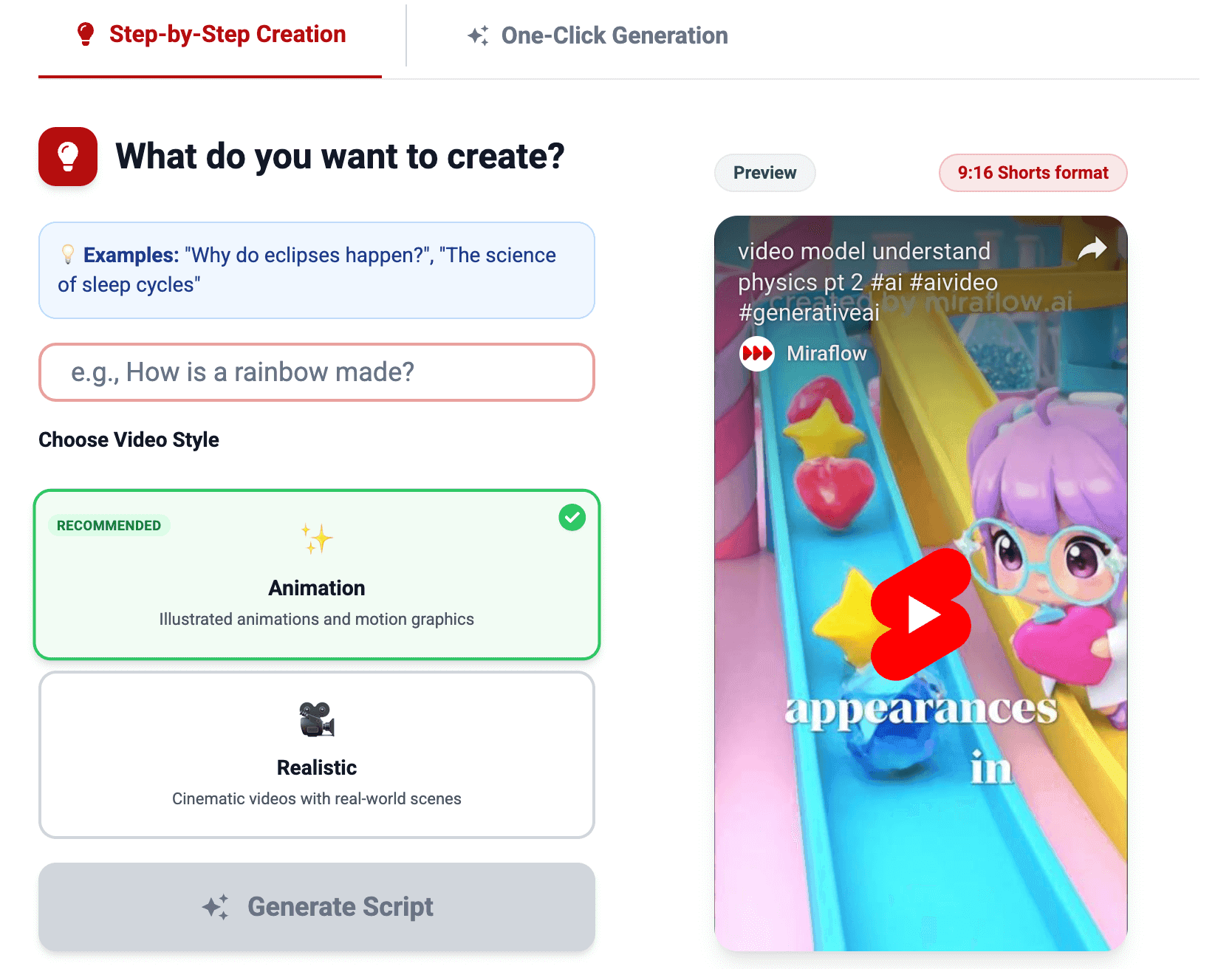
This is where Miraflow AI’s Text2Shorts can help practically:
- You start with a topic or idea (e.g. “Why my Shorts get 0 views”, “AI tools creators should know”, “3 tips in 30 seconds”)
- Text2Shorts automatically:
- Generates a script and structure
- Breaks it into multiple Shorts segments
- Aligns pacing with short-form norms (fast openings, clear progression)
- You can regenerate scripts, tweak wording, and produce multiple variations quickly
Instead of spending hours manually scripting and editing each Short, you spend time on:
- Picking better ideas
- Testing more hooks
- Building series that match the 2026 Shorts ecosystem
You can also generate original background music for each Short directly inside Miraflow AI's music generator, so your audio matches your content without copyright risk. And if you need thumbnails or cover frames, the YouTube thumbnail maker lets you generate consistent visual branding across your entire channel.
For a detailed walkthrough of Text2Shorts, you can check this guide:
👉 From Prompt to Reel: Text2Shorts AI Shorts
For creators building faceless channels, faceless YouTube Shorts AI niches in 2026 covers which topic areas are producing the strongest algorithm results right now without any on-screen presence.
No Magic Switch, Just a Smarter System
The January 2026 YouTube Shorts changes are not a brand-new algorithm, they’re refinements that:
- Give Shorts a clearer place in search
- Emphasize watch time and relevance
- Collect viewer feedback in a more unified, powerful way
For creators, the playbook is:
- Treat Shorts as serious, searchable content
- Prioritize retention and honest expectations
- Reduce the cost of experimentation so you can learn faster
The algorithm is evolving, but it’s still doing what it has always done:
Showing viewers more of what they actually watch and enjoy.
For a complete look at what successful Shorts channels are doing differently this year, YouTube Shorts best practices for 2026 pulls together the full strategy in one place. And if you are ready to start producing Shorts with an AI-assisted workflow, Miraflow AI lets you go from idea to finished Short entirely in your browser.
If you design your Shorts and your workflow, around that principle, you’re already aligned with the 2026 update.