20 AI Future Career Prompts for the Viral TikTok Career Trend (Copy & Paste, 2026)

Written by
Aerin Kim
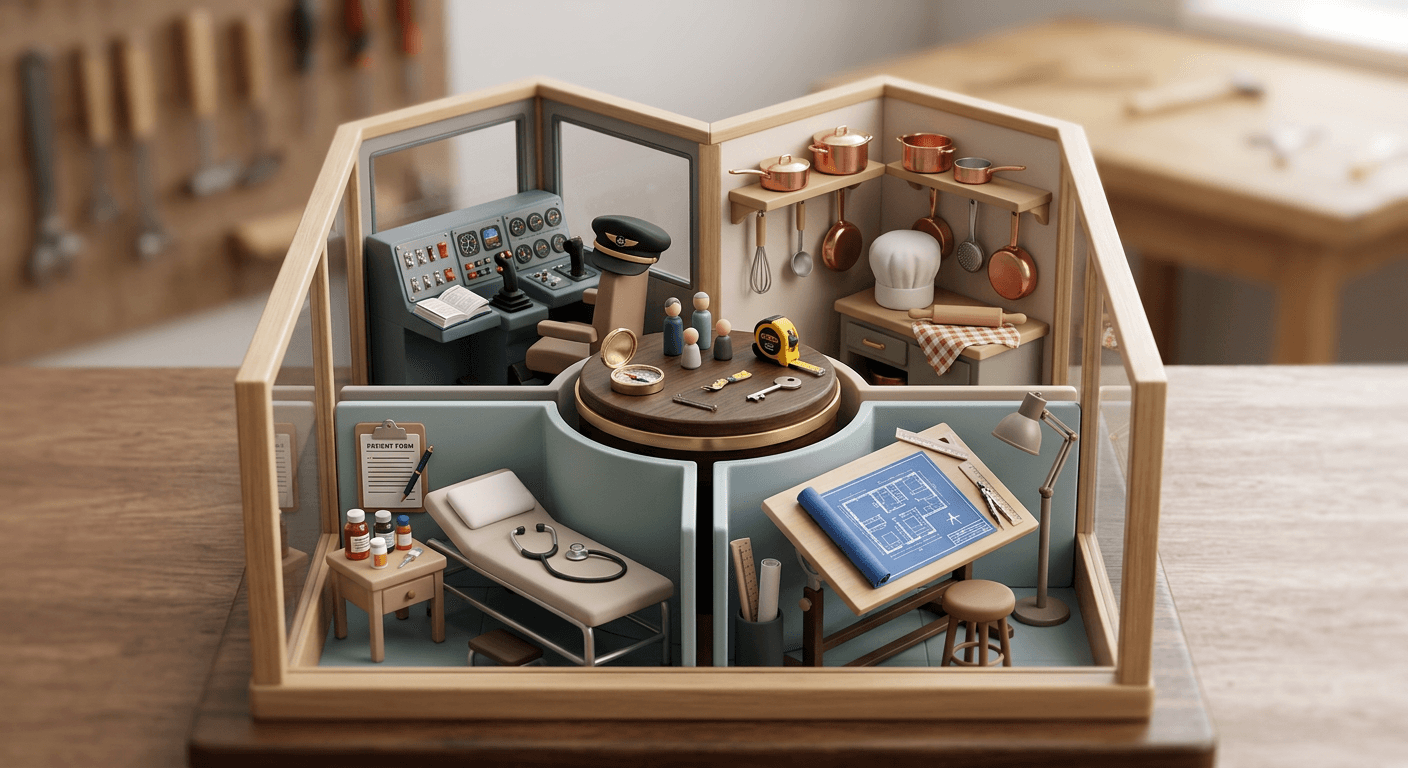
The future career filter trend turns one photo into a doctor, pilot, chef, or astronaut while keeping your face intact. Here are 20 grouped prompts plus the Miraflow workflow to make it.
If your feed has recently turned into a parade of friends dressed as doctors, airline pilots, and blacksmiths, all with their actual faces perfectly intact, you have already run into the future career filter trend. Creators upload one clear photo of themselves and an AI tool sends back a version of them fully outfitted for a specific profession, correct uniform, correct props, correct setting, while their real face stays exactly as recognizable as it was in the source photo. It has been circulating steadily across TikTok and Reels discovery pages under labels like "your future career trend" and "career TikTok trend," and it belongs to the same family of identity-preserving AI edits that keep outperforming plain filters, because the payoff only lands when the viewer can immediately tell it is really them.
This is fundamentally an image-to-image transformation, not a text-to-image generation from scratch, and that distinction is why some results look convincing and others look like a stranger wearing a costume. Miraflow's AI Image Generator supports exactly this kind of edit, uploading a real reference photo and transforming the clothing, setting, and styling around a preserved face, which is the whole mechanic this trend depends on. Below are 20 distinct, copy-paste prompts across four real career groups, plus the technique for getting a convincing result instead of a generic AI-costume look, the mistakes that give this format away as fake, and answers to the questions people keep asking about it.
Why the Future Career Filter Trend Actually Works
Every version of this trend is doing the same underlying job: hold a face constant while rebuilding everything else in the frame. That is a meaningfully harder task than a full style transfer or a cartoon avatar, because a cartoon filter is allowed to reinterpret the whole face, while this trend only works if a friend scrolling past can tell it is genuinely you within about a second. The AI has to treat the face region as fixed reference material and treat the clothing, props, background, and lighting as the part it is free to rebuild from the prompt.
That is why a strong, clear reference photo matters more here than almost any single word choice in the prompt itself. A front-facing or slightly angled photo with even lighting and no heavy shadow across half the face gives the model the clearest possible read on real bone structure, eyes, and skin tone to hold onto. A photo shot in harsh backlight, or cropped tight enough to lose the hairline, gives the model less real information to preserve, so it fills gaps with something generic instead. This is the same lesson that shaped how well the AI action figure trend results turned out: a clean source photo does more work than a longer prompt.
The second reason this trend produces convincing results, when it is done well, is prop specificity. A generic prompt like "make me a scientist" gives the model almost nothing concrete to render, so it defaults to a stock lab coat and a beaker, the same two props every "scientist" image on the internet already uses. A prompt that instead names the exact tools a marine biologist actually carries, a water-sample vial, a mesh specimen bag, a clipboard, on the deck of a research boat rather than a generic laboratory, gives the model real, checkable detail to work from. The same goes for a pilot's epaulettes versus a vague "uniform," or a blacksmith's leather apron and glowing forge coals versus a generic "workshop." Every profession has a small set of instantly recognizable visual signatures, and naming them specifically is what separates a career transformation that reads as real from one that reads as an AI guess.
Lighting continuity is the third piece, and it is the one people skip most often. A doctor's exam room reads as fluorescent and slightly cool. A blacksmith's forge reads as warm and dramatic, lit mostly by the glowing coals themselves. A cockpit at sunrise reads as warm golden light spilling through the windshield mixed with a cooler instrument-panel glow. When the prompt names a light source that actually matches how that profession's real environment is lit, the whole scene reads as photographed rather than composited, which is the single biggest visual cue that separates a convincing result from an obvious AI edit.
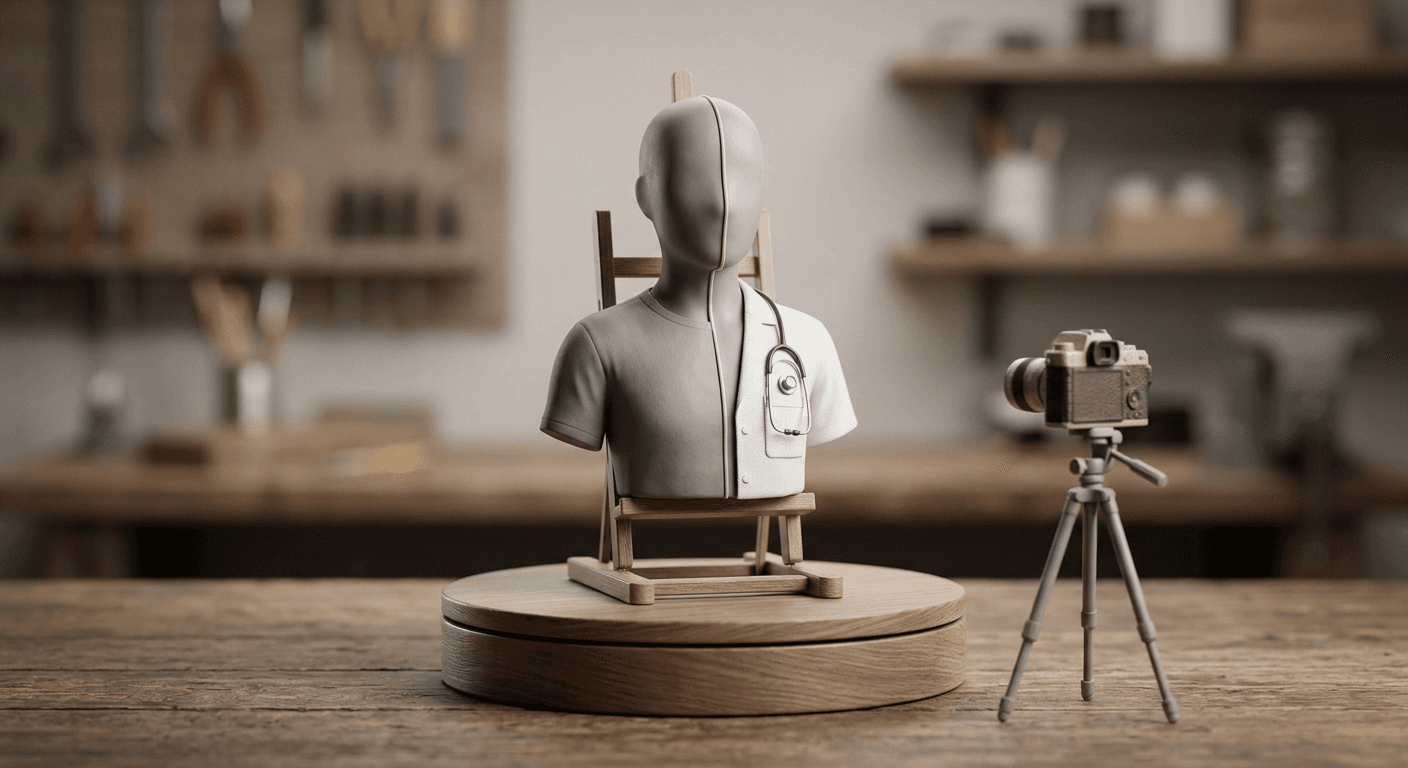
1) Professional and Corporate Career Prompts
These are the careers most people reach for first, since they are instantly readable from a uniform or a setting alone: a white coat, a courtroom, a drafting table. The five prompts below name the specific props and settings that separate a genuine doctor, lawyer, architect, engineer, or diplomat result from a vague "professional" look, since the corporate world has plenty of near-identical settings that blur together without a concrete detail anchoring each one.

Prompt 1: Emergency Room Doctor
A hospital exam-room transformation with a white coat, stethoscope, and ID badge, built for a hospital setting rather than a generic medical stock photo.
Transform this photo into a future-career portrait of an emergency room doctor. Keep the person's facial features, bone structure, skin tone, and identity exactly recognizable throughout, and change everything else around them. Dress the subject in a long white coat open over navy scrubs, a stethoscope draped around the neck, a hospital ID badge clipped to the chest pocket, and a pen visible in the pocket. Place them in a busy exam room with a wheeled vital-signs monitor, a supply cart stocked with gauze and tubing, and a whiteboard with a shift schedule faintly visible in the background. Light the scene with cool overhead fluorescent hospital lighting mixed with a warm accent light from a desk lamp on a nearby counter, medium three-quarter shot with a shallow depth of field softly blurring the exam room behind them. No warped or duplicated hands, no garbled text on the badge or whiteboard, no plastic-looking skin texture, no change to the person's actual facial features.
Prompt 2: Courtroom Attorney
A wood-paneled law-office scene built around a tailored suit, a leather portfolio, and shelves of real legal volumes rather than a plain office backdrop.
Transform this photo into a future-career portrait of a courtroom attorney. Keep the person's facial features, bone structure, skin tone, and identity exactly recognizable throughout, and restyle everything else. Dress the subject in a tailored charcoal suit with a crisp white shirt and a silk tie, holding a leather portfolio folder under one arm. Place them standing in a wood-paneled law office lined with tall shelves of bound legal volumes, a brass banker's lamp glowing on a mahogany desk nearby. Light the scene with warm directional light from the desk lamp mixed with soft ambient light from a tall window, medium shot with shallow depth of field keeping the bookshelves softly blurred behind them. No warped hands, no garbled text on any book spine, no plastic-looking skin, no change to the person's real facial structure.
Prompt 3: Architect at the Drafting Table
A studio scene anchored to a real drafting table, a scale model, and a ruler, the specific tools that separate an architect from a generic office setting.
Transform this photo into a future-career portrait of an architect. Keep the person's facial features, bone structure, skin tone, and identity exactly recognizable throughout, and change the styling and setting completely. Dress the subject in a rolled-sleeve button-down shirt with safety glasses pushed up on their head, standing over a large drafting table covered in blueprint sheets and holding a metal scale ruler. Place a small white scale model of a building on the table beside a cup of drafting pencils. Light the scene with bright natural daylight pouring in from a large studio window to one side, medium shot with shallow depth of field softly blurring the studio behind them. No warped hands, no garbled or illegible blueprint text, no plastic-looking skin, no change to the person's actual facial features.
Prompt 4: Startup Software Engineer
A standing-desk scene built around dual monitors, a system diagram on a whiteboard, and sticky notes, the specific tech-office detail that reads as engineer rather than generic office worker.
Transform this photo into a future-career portrait of a startup software engineer. Keep the person's facial features, bone structure, skin tone, and identity exactly recognizable throughout, and restyle the wardrobe and setting around them. Dress the subject in a casual button-down shirt with sleeves rolled up, seated at a standing desk with two large monitors showing code and a system architecture diagram. Place a small whiteboard with a rough system flowchart sketched on it in the background, along with a stack of sticky notes. Light the scene with cool blue light from the monitors mixed with a warm desk lamp glow, medium shot with shallow depth of field softly blurring the open office behind them. No warped hands, no garbled code or illegible whiteboard text beyond a plausible sketch, no plastic-looking skin, no change to the person's real facial features.
Prompt 5: Foreign Service Diplomat
A conference-room scene with a flag pin, a row of national flags, and a name placard, the small details that read as diplomatic rather than generic business travel.
Transform this photo into a future-career portrait of a diplomat. Keep the person's facial features, bone structure, skin tone, and identity exactly recognizable throughout, and change everything else. Dress the subject in a formal dark suit with a small enamel flag pin on the lapel, seated at a long conference table holding a leather folio. Place a row of small national flags softly blurred in the background along with a name placard on the table in front of them. Light the scene with warm, even conference-room lighting from overhead fixtures mixed with soft daylight from a tall window, medium shot with shallow depth of field. No warped hands, no garbled text on the placard, no plastic-looking skin, no change to the person's actual facial structure.
2) Creative and Artistic Career Prompts
Creative careers are where the trend gets visually the most fun, since a stage, a film set, or a painter's studio gives a prompt a lot more to work with than a plain office. The five prompts below cover a touring musician, a film director, a fashion designer, a painter, and a video game designer, each anchored to the one or two props that make that specific creative field instantly recognizable rather than a generic "artist" vibe.
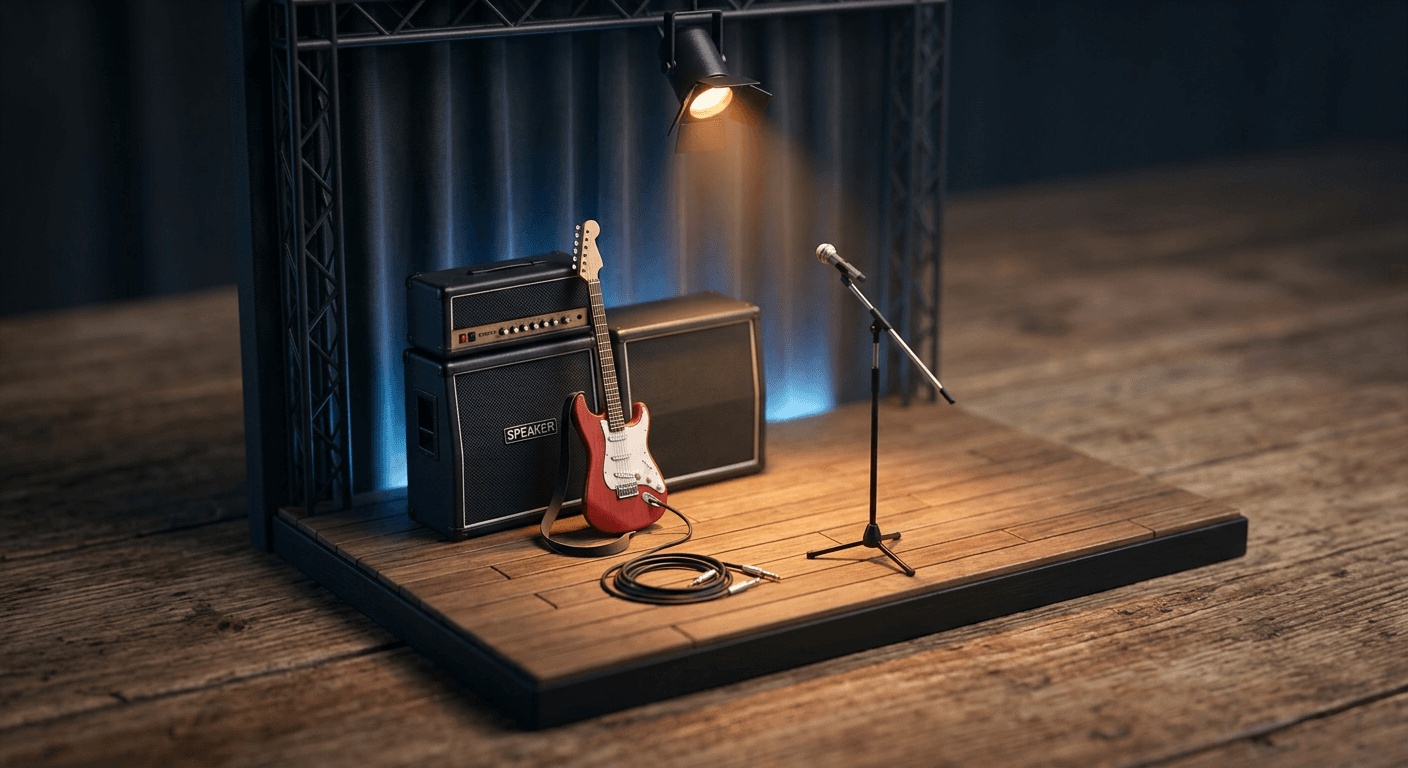
Prompt 6: Touring Musician
A concert-stage scene with an electric guitar, an amp wall, and colored stage lighting, built specifically for a live-performance read rather than a generic band photo.
Transform this photo into a future-career portrait of a touring musician. Keep the person's facial features, bone structure, skin tone, and identity exactly recognizable throughout, and restyle the wardrobe, setting, and lighting completely. Dress the subject in a worn leather jacket over a graphic band tee, holding an electric guitar slung low across the body. Place them center stage with a wall of amplifiers behind them and a microphone stand angled in front. Light the scene with dramatic colored stage spotlights, a warm amber key light from one side and a cooler blue rim light from behind, medium shot with a faint haze in the air and shallow depth of field blurring the amps. No warped hands, no garbled text on any amp or poster, no plastic-looking skin, no change to the person's real facial features.
Prompt 7: Film Director on Set
A working film set with a director's chair, a clapperboard, and visible camera and lighting rigs, rather than a generic Hollywood backdrop.
Transform this photo into a future-career portrait of a film director on set. Keep the person's facial features, bone structure, skin tone, and identity exactly recognizable throughout, and change everything else around them. Dress the subject in a casual field jacket with a director's viewfinder hanging around the neck, seated in a canvas director's chair. Place a film camera on a tripod and a boom microphone softly blurred in the background, with a clapperboard resting on the chair's armrest. Light the scene with a warm key light from a nearby softbox and a cooler fill light from the opposite side, medium shot with shallow depth of field blurring the set equipment behind them. No warped hands, no garbled text on the clapperboard, no plastic-looking skin, no change to the person's actual facial features.
Prompt 8: Fashion Designer
A sewing studio scene with a tape measure, a draped dress form, and bolts of fabric, the specific workshop detail that separates a designer from a generic creative office.
Transform this photo into a future-career portrait of a fashion designer. Keep the person's facial features, bone structure, skin tone, and identity exactly recognizable throughout, and restyle everything else. Dress the subject in a simple fitted top with a tape measure draped around the neck and a wrist pincushion, standing beside a dress form draped in half-finished fabric. Place bolts of colorful fabric and a sketch pad with rough fashion sketches on a nearby table. Light the scene with soft, even studio light from a large window, medium shot with shallow depth of field softly blurring the fabric bolts behind them. No warped hands, no garbled sketch text, no plastic-looking skin, no change to the person's real facial features.
Prompt 9: Painter in the Studio
A sunlit painting studio with a loaded palette, an easel, and a work-in-progress canvas, anchored to real oil-painting materials rather than a vague artsy backdrop.
Transform this photo into a future-career portrait of a painter in their studio. Keep the person's facial features, bone structure, skin tone, and identity exactly recognizable throughout, and change the wardrobe and setting completely. Dress the subject in a paint-splattered canvas apron over casual clothes, holding a wooden palette loaded with mixed oil colors and a fine brush. Place a large canvas on an easel in front of them showing a work in progress, with jars of brushes and tubes of paint scattered on a side table. Light the scene with warm natural light pouring through a tall studio window from one side, medium shot with shallow depth of field blurring the studio clutter behind them. No warped hands, no garbled text, no plastic-looking skin, no change to the person's actual facial structure.
Prompt 10: Video Game Designer
A creative-studio desk with concept art on dual monitors, a drawing tablet, and painted character figurines, the small details that read as game design rather than generic tech work.
Transform this photo into a future-career portrait of a video game designer. Keep the person's facial features, bone structure, skin tone, and identity exactly recognizable throughout, and restyle the wardrobe and setting around them. Dress the subject in casual creative-studio clothing, seated at a desk with two monitors showing concept art and a level layout, a drawing tablet and stylus in hand. Place a few small painted character figurines lined up on the desk beside a stack of reference sketches. Light the scene with cool ambient light from the monitors mixed with a warm accent light from a desk lamp, medium shot with shallow depth of field. No warped hands, no garbled on-screen text, no plastic-looking skin, no change to the person's real facial features.
3) Uniformed and Public Service Career Prompts
Uniformed careers tend to perform especially well in this trend, because the uniform itself is doing most of the visual storytelling before a viewer even registers the setting. A pilot's epaulettes, a firefighter's turnout gear, an astronaut's mission patches, all read instantly. The five prompts below cover a commercial pilot, a firefighter, an astronaut, a park ranger, and a paramedic, each paired with the specific setting and lighting that profession's real work environment actually has.
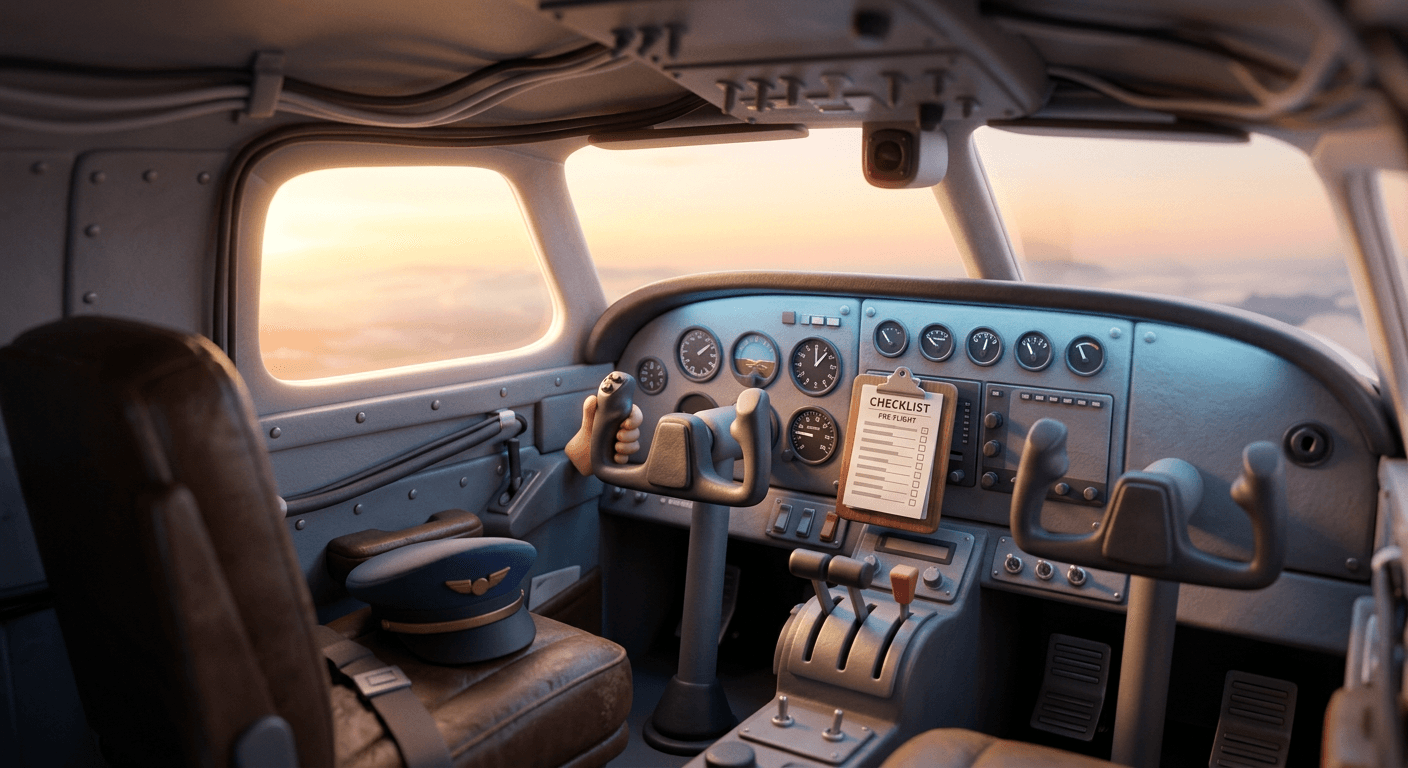
Prompt 11: Commercial Airline Pilot
A cockpit scene with a full instrument panel, a control yoke, and a sunrise glow through the windshield, built for a genuine flight-deck read.
Transform this photo into a future-career portrait of a commercial airline pilot. Keep the person's facial features, bone structure, skin tone, and identity exactly recognizable throughout, and change everything else. Dress the subject in a pilot's uniform with gold epaulettes and a captain's cap, seated in a cockpit with a full instrument panel and control yoke in front of them. Place a checklist clipboard on their lap and a view of clouds visible through the cockpit windshield. Light the scene with warm golden sunrise light streaming through the windshield mixed with the cool glow of instrument panel displays, medium shot with shallow depth of field. No warped hands, no garbled instrument labels, no plastic-looking skin, no change to the person's actual facial features.
Prompt 12: Firefighter
A fire-engine scene with full turnout gear and a coiled hose, using the truck's own beacon light rather than a generic action-movie glow.
Transform this photo into a future-career portrait of a firefighter. Keep the person's facial features, bone structure, skin tone, and identity exactly recognizable throughout, and restyle everything else. Dress the subject in full turnout gear, a reflective-striped fire coat and a firefighter's helmet either worn or tucked under one arm, with a coiled hose draped over the opposite shoulder. Place them standing in front of a red fire engine with its equipment compartments open, warm emergency lighting glowing in the background. Light the scene with dramatic warm light from the truck's beacon mixed with a soft haze in the air, medium shot with shallow depth of field. No warped hands, no garbled text on the truck, no plastic-looking skin, no change to the person's real facial structure.
Prompt 13: Astronaut
A spacecraft-interior scene with a mission-patched suit and glowing control panels, using cool ambient light rather than a generic starfield backdrop.
Transform this photo into a future-career portrait of an astronaut. Keep the person's facial features, bone structure, skin tone, and identity exactly recognizable throughout, and change the wardrobe and setting completely. Dress the subject in a white space suit with mission patches on the chest and shoulder, helmet held under one arm rather than worn, standing inside a spacecraft interior with control panels and softly glowing switches around them. Light the scene with cool blue-white ambient light from the panels mixed with a single warm accent light on the face, medium shot with shallow depth of field softly blurring the control panels behind them. No warped hands, no garbled patch text, no plastic-looking skin, no change to the person's actual facial features.
Prompt 14: National Park Ranger
A forest-trail scene with a campaign hat and binoculars, lit with real dappled canopy light instead of a flat studio background.
Transform this photo into a future-career portrait of a national park ranger. Keep the person's facial features, bone structure, skin tone, and identity exactly recognizable throughout, and restyle everything else. Dress the subject in a green ranger uniform with a wide-brim campaign hat and a pair of binoculars around the neck, standing at the edge of a dense forest trail with tall pines behind them. Place a field notebook and a small radio clipped to their belt. Light the scene with soft dappled natural sunlight filtering through the tree canopy, medium shot with shallow depth of field blurring the forest behind them. No warped hands, no garbled text on the notebook, no plastic-looking skin, no change to the person's real facial features.
Prompt 15: Paramedic
An ambulance-bay scene with a medical kit and visible equipment through the open doors, mixing warm interior light with cooler daylight.
Transform this photo into a future-career portrait of a paramedic. Keep the person's facial features, bone structure, skin tone, and identity exactly recognizable throughout, and change everything else. Dress the subject in a fitted EMT uniform with a radio clipped to the shoulder strap, standing at the open back doors of an ambulance with a medical kit bag in hand. Place visible equipment, an oxygen tank and a folded stretcher, inside the ambulance behind them. Light the scene with practical warm interior ambulance lighting mixed with cooler exterior daylight, medium shot with shallow depth of field. No warped hands, no garbled text on the ambulance, no plastic-looking skin, no change to the person's actual facial structure.
4) Craft and Hands-On Career Prompts
Craft careers reward specificity more than any other group here, since the whole appeal is watching someone convincingly handle real tools and materials. A chef's copper pans, a marine biologist's field kit, a blacksmith's glowing forge, a furniture maker's hand planes, a winemaker's oak-barrel cellar, these all depend on the prompt actually naming the real tool rather than a generic stand-in. The five prompts below cover an executive chef, a marine biologist, a blacksmith, a furniture maker, and a winemaker.
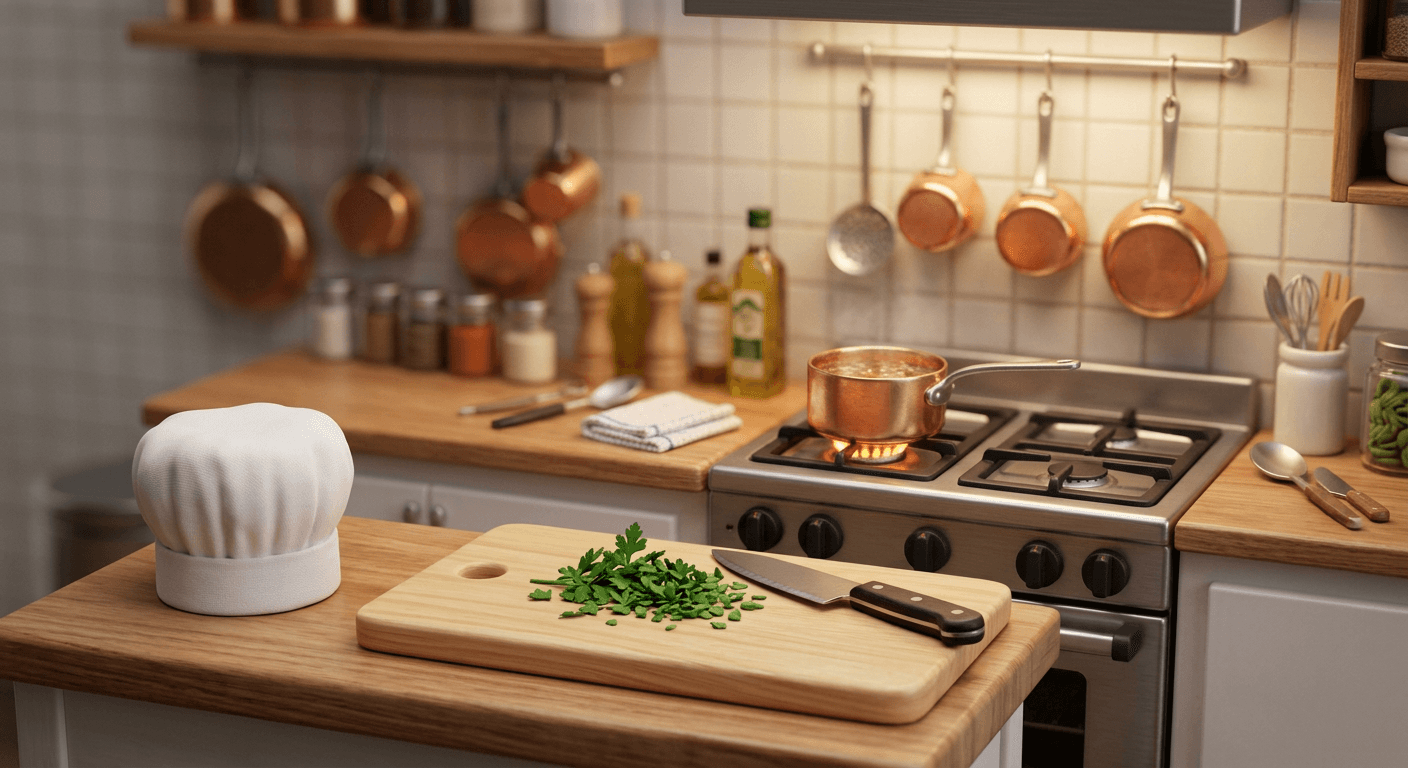
Prompt 16: Executive Chef
A stainless kitchen counter scene with copper pans and a stove flare, anchored to real professional-kitchen tools rather than a home-kitchen backdrop.
Transform this photo into a future-career portrait of an executive chef. Keep the person's facial features, bone structure, skin tone, and identity exactly recognizable throughout, and restyle the wardrobe and setting completely. Dress the subject in a double-breasted chef's whites with a tall toque, standing behind a stainless steel kitchen counter lined with copper pans, fresh herbs, and a chef's knife resting on a wooden board. Place a lit gas range with a pan mid-sizzle just behind them. Light the scene with warm overhead kitchen lighting mixed with a soft flare from the stove flame, medium shot with shallow depth of field blurring the kitchen behind them. No warped hands, no garbled text, no plastic-looking skin, no change to the person's real facial features.
Prompt 17: Marine Biologist
A research-boat deck scene with a water-sample vial and specimen bag, lit with real coastal daylight rather than a generic lab setting.
Transform this photo into a future-career portrait of a marine biologist. Keep the person's facial features, bone structure, skin tone, and identity exactly recognizable throughout, and change everything else. Dress the subject in a fitted wetsuit rolled down to the waist over a field shirt, standing on the deck of a small research boat with a clipboard and a water-sample vial in hand. Place a coil of rope and a mesh specimen bag on the deck nearby, with open ocean visible behind them. Light the scene with bright natural coastal daylight and soft reflected light bouncing up off the water, medium shot with shallow depth of field. No warped hands, no garbled clipboard text, no plastic-looking skin, no change to the person's actual facial features.
Prompt 18: Blacksmith
A forge scene with an anvil, a hammer, and glowing coals as the actual light source, rather than a generic warm-toned filter.
Transform this photo into a future-career portrait of a blacksmith. Keep the person's facial features, bone structure, skin tone, and identity exactly recognizable throughout, and restyle everything else. Dress the subject in a heavy leather apron over a rolled-sleeve shirt, gripping a hammer beside an anvil with a glowing orange piece of metal resting on it. Place a stone forge with visible glowing coals just behind them, tools hanging on a nearby wall. Light the scene with dramatic warm light radiating from the forge coals mixed with cooler ambient shop light, medium shot with shallow depth of field. No warped hands, no garbled text, no plastic-looking skin, no change to the person's real facial structure.
Prompt 19: Furniture Maker
A workshop scene with hand planes, chisels, and a half-finished chair, using real workshop window light rather than a studio setup.
Transform this photo into a future-career portrait of a furniture maker in their workshop. Keep the person's facial features, bone structure, skin tone, and identity exactly recognizable throughout, and change the wardrobe and setting completely. Dress the subject in a canvas work apron with a pencil tucked behind one ear, standing beside a half-finished wooden chair on a workbench scattered with hand planes and chisels. Place fine sawdust visible on the bench and floor around them. Light the scene with warm natural light streaming through a workshop window, medium shot with shallow depth of field blurring the tool wall behind them. No warped hands, no garbled text, no plastic-looking skin, no change to the person's actual facial features.
Prompt 20: Winemaker
A stone wine cellar scene with stacked oak barrels and a wine thief, lit with warm sconce light rather than a bright modern tasting room.
Transform this photo into a future-career portrait of a winemaker. Keep the person's facial features, bone structure, skin tone, and identity exactly recognizable throughout, and restyle everything else. Dress the subject in a casual button-down shirt with sleeves rolled up, holding a glass of red wine up toward the light, standing in a stone wine cellar lined with stacked oak barrels. Place a wine thief and a small tasting notebook resting on a barrel beside them. Light the scene with warm low amber light from wall sconces mixed with a single soft highlight catching the wine glass, medium shot with shallow depth of field blurring the barrels behind them. No warped hands, no garbled label text, no plastic-looking skin, no change to the person's real facial features.
How to Customize These Prompts
Every prompt above is a starting point, not a fixed script. The variable worth changing first is the specific profession detail, if you want a pediatrician instead of an ER doctor, swap the exam room for a bright, colorful waiting area and the stethoscope stays but the coat gets a small cartoon pin. If you want a corporate lawyer instead of a courtroom attorney, keep the tailored suit but swap the law-office bookshelves for a glass-walled conference room. Changing the setting and small props while keeping the "keep facial features, bone structure, skin tone, and identity exactly recognizable" clause intact is almost always safer than rewriting a prompt from nothing.
Combining two careers works, and it is one of the more shared formats within this trend. A common variation shows a split image, half doctor, half astronaut, or a single scene that blends two professions into one styled shot, a chef's whites paired with a marine biologist's dive gear, framed as "what if you had two callings." To do this, describe both halves explicitly in one prompt rather than running two separate generations and hoping they combine cleanly, naming which side of the frame gets which uniform and which props, and keep a single consistent light source across both halves so the merged image does not look like two different photos stitched together.
Matching a signature aesthetic means picking one visual mood, cinematic and moody, bright and editorial, warm and documentary, and applying it consistently across every prompt you run for one photo set. If your first result used warm, dramatic single-source lighting, keep describing warm dramatic lighting in every subsequent prompt rather than switching to flat, even studio light for the next career. A creator posting a full set of six or eight career transformations gets a much stronger "who is this person" effect when every image looks like it was shot by the same photographer, rather than each image using a different lighting mood.
Keeping skin texture photoreal instead of plastic-looking is mostly about what you do not ask for. Words like "flawless," "airbrushed," or "smooth glowing skin" push a model toward over-smoothing real skin texture into a doll-like finish. If you want a polished, professional look without losing real texture, ask for "even, well-lit skin with natural texture retained" rather than "flawless skin," and keep the explicit preservation clause doing the heavy lifting instead of a beautification word doing it for you. If a result already looks slightly plastic, it is usually faster to remove any beautifying adjective from the prompt and rerun it than to add a new instruction trying to counteract it.
Once you have a set of transformations you like, Miraflow's AI Image Generator makes it easy to keep iterating on the same source photo across several prompts from this pack without starting from zero every time, since each result can be fed back in as a fresh reference for the next variation.
Common Mistakes Creators Make With This Trend
Vague profession descriptions. A prompt that says "make me a scientist" or "turn me into a businessperson" gives the model almost nothing concrete to render, so it defaults to the single most generic stock image of that job it has seen, a plain lab coat and a beaker, a plain suit in a plain office. Every prompt above names the specific tools, uniform pieces, and setting details that actually define that profession, because that specificity is what makes the result read as real rather than as an AI guess at a category.
Skipping the facial preservation instruction. The single most common failure in this trend is a prompt that describes the career styling in detail and simply assumes the model will keep the face the same. It often will not, especially when a strong styling instruction is pulling in the opposite direction. Every prompt in this pack states explicitly what should not change, and that phrasing is doing real work, not just filling space.
Ignoring lighting continuity with the original photo. If your reference photo was shot in flat daytime light but the prompt asks for a dramatic forge-lit blacksmith scene, the model has to reconcile two very different implied lighting setups, and the face often ends up lit inconsistently with the rest of the scene, which is one of the fastest ways a result reads as obviously composited. It helps to pick career scenes whose natural lighting is not wildly different from your source photo's lighting when you are just starting out, and to save the more dramatic lighting swaps, a forge, a cockpit at sunrise, for a reference photo that already has some directional light in it.
Outfit details that do not match how that profession actually dresses. A "doctor" in a plain white lab coat with no stethoscope, ID badge, or scrubs underneath reads as a Halloween costume rather than a real physician, because real doctors are almost never photographed in just a coat with nothing else. The same goes for a "pilot" without epaulettes, or a "chef" without a toque or knife nearby. Naming two or three real, specific garment and accessory details, not just the top-level job title, is what makes the uniform read as authentic rather than as a costume-shop placeholder.
Posting the transformation with no context. A single career-styled photo with no caption or comparison reads as a nice picture rather than the intended "wait, is that really them, dressed as a pilot" moment that drives the trend's engagement. Pairing the result with the original reference photo, or captioning it clearly as an AI transformation of a real photo, gives the viewer the actual before-and-after contrast the format depends on.
Generating Your Future Career Filter Photos on Miraflow
The full workflow for this trend runs inside Miraflow's AI Image Generator, which supports image-to-image editing from a real photo you upload, exactly the mechanic this trend needs to keep a face recognizable while rebuilding everything around it. Upload a clear, well-lit reference photo, paste in any prompt from this pack, and generate a result. If one detail is slightly off, a prop, a background element, a garbled patch of text on a badge or a sign, the tool's inpainting and masking features let you regenerate just that one region instead of starting the whole image over.
Once you have a set of career transformations you like, there are two natural next steps. If you want to turn a strong result into a piece of standalone content with a bold headline over it, Miraflow's YouTube Thumbnail Maker can drop the same photo into a finished thumbnail layout in a couple of extra steps. And because a full set of career transformations is really a before-and-after story told across several images, that same set of stills is a natural fit for a quick vertical video walking through each career one at a time, which Miraflow's Text2Shorts can turn into a captioned, voiced short built for TikTok, Reels, or YouTube Shorts without any separate editing software. Both tools, along with the AI Image Generator, run directly in the browser and live at miraflow.ai, alongside more prompt packs like this one on the Miraflow AI blog.
Frequently Asked Questions
What exactly is the future career filter trend? It is an AI image trend where a creator uploads one clear photo of themselves and an AI tool generates a version of them dressed, styled, and set in a specific profession, a doctor, a pilot, a chef, an astronaut, and so on, while their actual face stays recognizable. It has been circulating on TikTok and Reels discovery pages under labels like "your future career trend" and "career TikTok trend."
Do I need a specific app for this, or can I use any AI image tool? The underlying technique, image-to-image editing that restyles clothing and setting while preserving a face, works in any capable AI image tool, including Miraflow's AI Image Generator. What matters is that the tool supports uploading and editing your own photo rather than only generating new images from a text description alone.
Why does my result sometimes look like a stranger instead of me? This usually comes down to a missing or weak preservation instruction in the prompt, or a source photo that did not give the model enough clear information to work from. Every prompt in this pack includes an explicit instruction to keep facial features, bone structure, skin tone, and identity recognizable, but a clear, evenly lit, mostly front-facing source photo still matters more than any single word in the prompt.
Can I combine two careers in one image? Yes, and it is a genuinely popular variation of this trend. Describe both careers' outfits and props explicitly within a single prompt, naming which half of the scene gets which styling, rather than generating two separate images and trying to merge them afterward. The customization section above covers this in more detail.
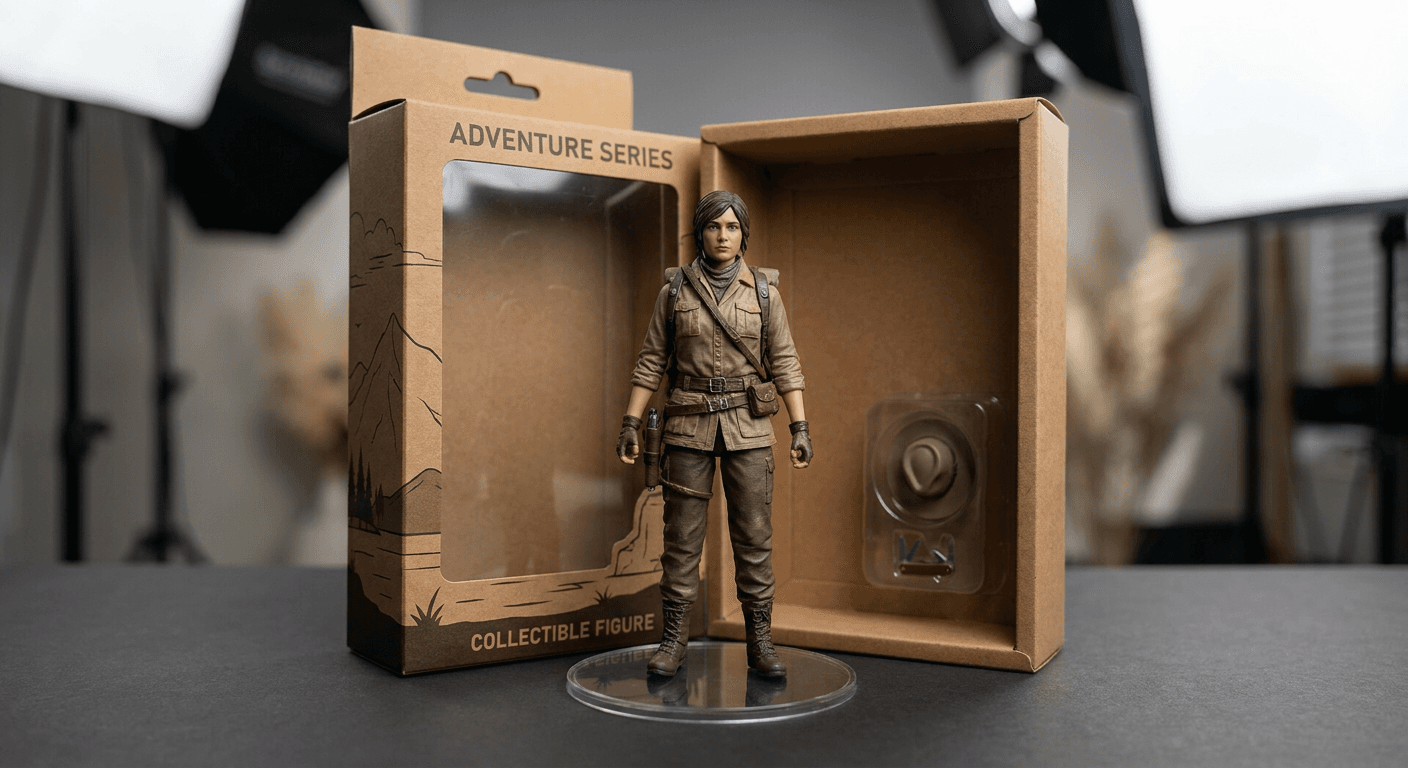
How is this different from the AI action figure trend? They both start from a real reference photo, but they render very different end results. The action figure trend turns a person into a boxed toy figurine with accessories, a clearly artificial, packaged object. This trend keeps the person looking like a real photographed human being in a real scene, just wearing a different profession's outfit. Neither one is a stand-in for the other.
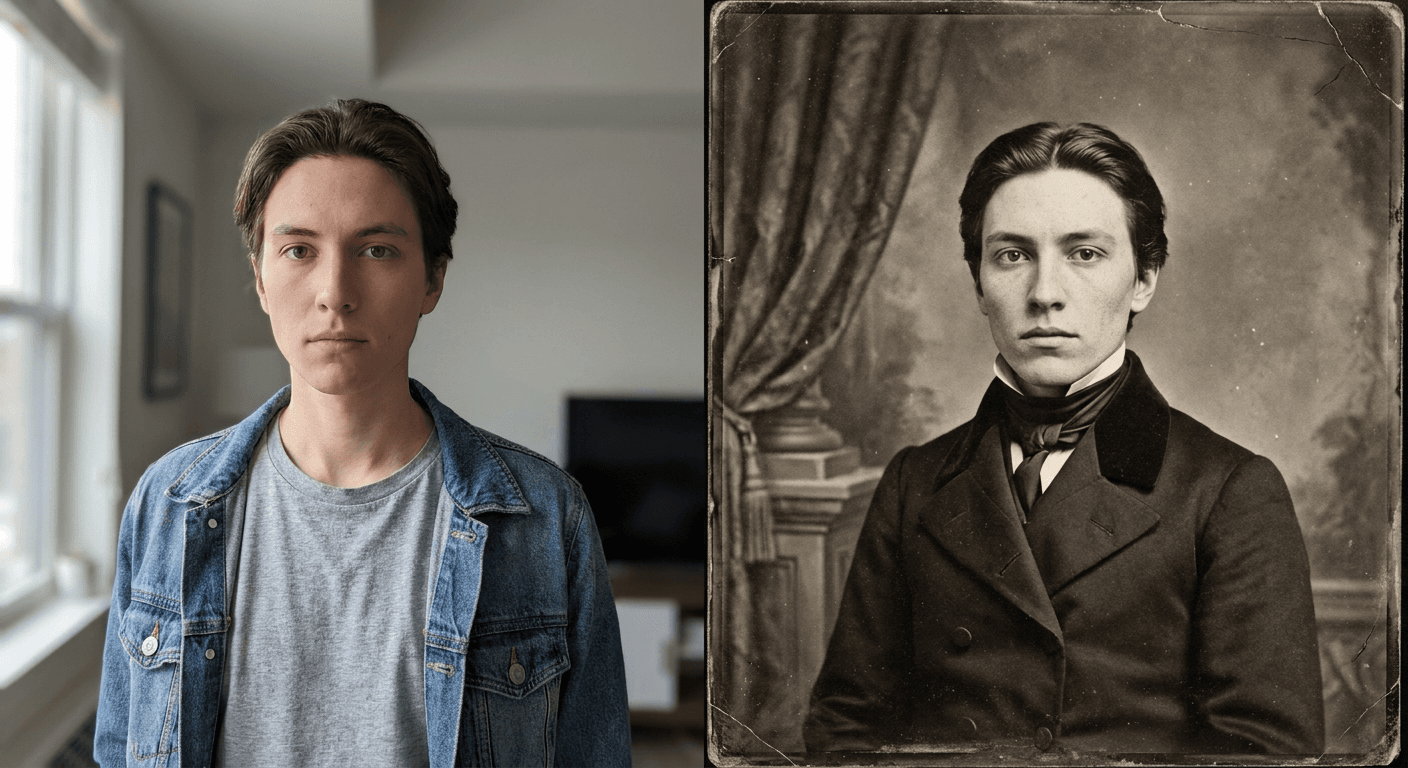
Is this the same as the decade progression or ancestor photo trends? No, they use a related image-to-image technique but tell a different story. The decade progression trend ages a place or subject across a timeline of years, and the ancestor photo prank trend reimagines a person as a historical relative in an old family photo. The future career filter is about profession and setting, not about time period, and the prompts above are written specifically for that.
What makes a source photo work well for this trend? A clear, well-lit, mostly front-facing photo with your face fully visible and not obscured by heavy shadow, hair, or an extreme angle. The same principle behind the pet-to-human transformation prompts applies here too, the model needs enough real detail in the source photo to preserve a genuinely convincing likeness through the transformation.
Do I need to generate a video, or is the still image enough? The still image works as a standalone post, but a set of several career transformations strung together into a short video, cycling through each profession, tends to get a stronger reaction than any single still, since the format's appeal is partly the range of transformations from one starting photo. Miraflow's Text2Shorts can turn a set of stills into a captioned short built for that format.
Conclusion
The future career filter trend works for the same reason most identity-preserving AI trends do: it asks a viewer to briefly do a double take, then confirms it really is the person they think it is, just dressed for a completely different life. The 20 prompts above cover that idea across professional and corporate careers, creative and artistic careers, uniformed and public service careers, and hands-on craft careers, each written with the specific outfit, props, setting, and lighting that profession actually has, not a generic placeholder version of it.
Start with a genuinely clear, well-lit reference photo, keep the facial preservation language intact even as you customize the styling, and match your lighting choices to what that profession's real environment actually looks like. Generate every prompt in this pack directly inside Miraflow's AI Image Generator, upload your own photo, and see yourself as a pilot, a chef, an astronaut, or a blacksmith in a couple of minutes.