Google Ads' New Search Experiments: Multi-Campaign Budget and ROI Testing Explained

Written by
Aerin Kim
Google delayed the DSA to AI Max deadline to February 2027, but a quieter September 2026 update lets you A/B test budget and ROI changes across multiple Search campaigns at once.
If you manage Google Ads accounts, you have probably seen two contradictory headlines about AI Max this month. One says Google pushed the Dynamic Search Ads deadline back to February 2027, so relax. The other says Google Ads is already auto-upgrading Search campaigns to AI Max in September 2026, so act now. Both are true at the same time, about different campaigns, and mixing them up is the easiest way to either panic over a deadline you don't actually have yet, or miss one that already landed on your account this month.
That confusion is only half the story, though. Buried under the delay headlines, Google also shipped a genuinely new set of Search experimentation tools this September: the ability to A/B test budget and ROI target changes across multiple Search campaigns at once, AI Max experiments that no longer force you to switch off Brand Controls to get a clean read, and a Performance Planner that can preview a bid or budget change's impact before you touch a live account. Almost nobody covering the DSA delay has walked through what these tools actually do or how to use the extra runway they hand you. That's what this post is for.
The Two Clocks Running in Your Account Right Now
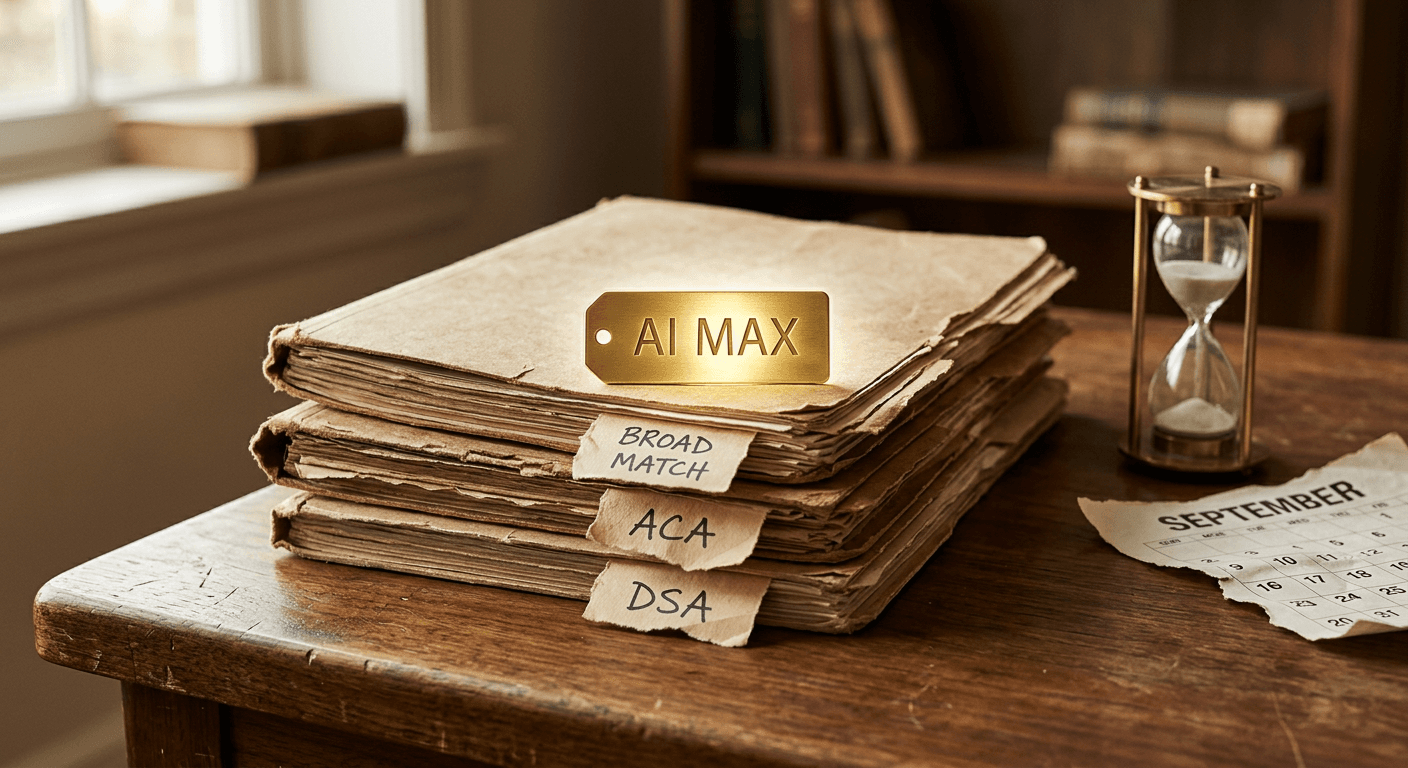
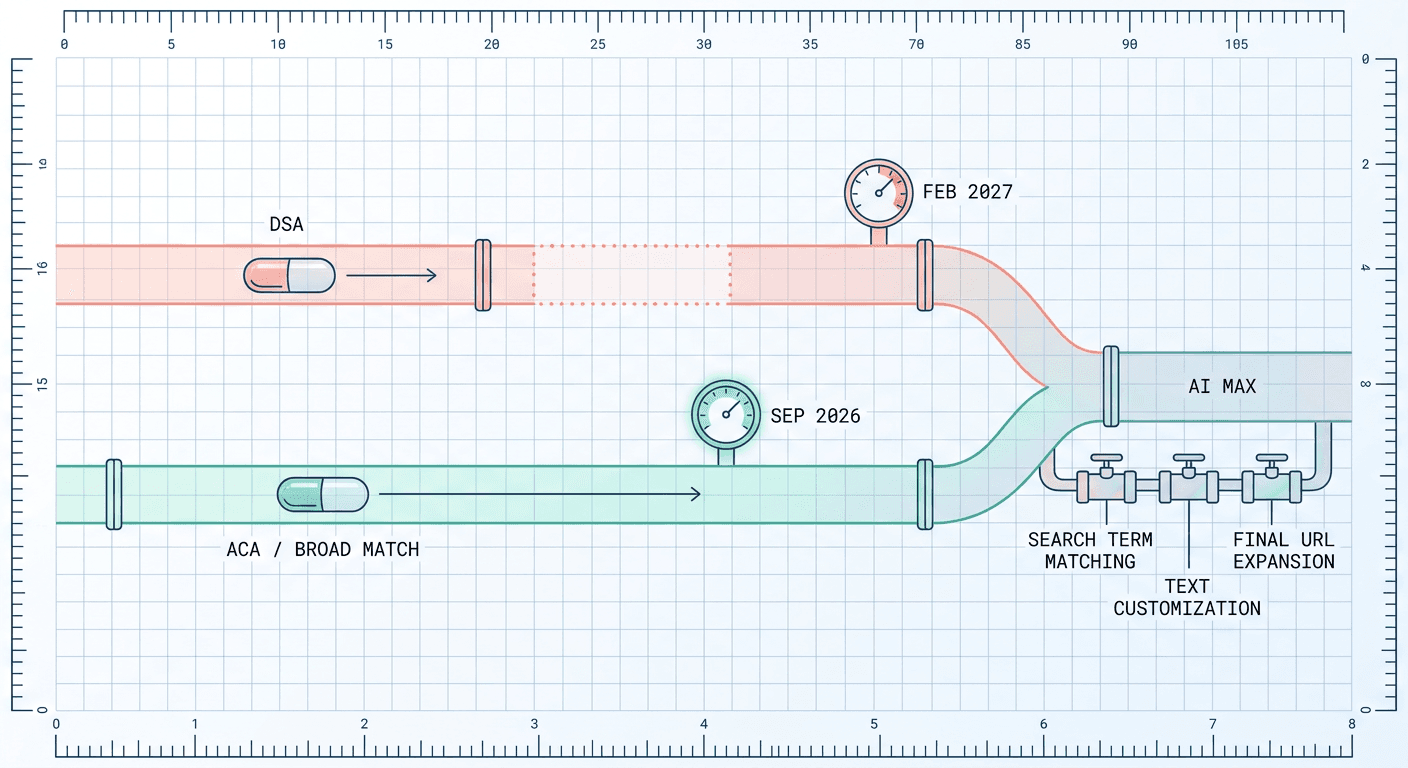
Here's the mix-up in one sentence: Dynamic Search Ads got a five-month reprieve, but Automatically Created Assets (now called Text Customization) and campaign-level Broad Match did not. Both migrate into AI Max, both share the same underlying AI Max feature set, and both live inside the same September 2026 news cycle, but they are on completely different clocks.
Google's own explanation for the DSA extension, from its official Ads & Commerce blog, is direct: "We heard your feedback: you need more time to complete the transition from Dynamic Search Ads (DSA) to AI Max. To protect your business results and the performance of your campaigns, we are extending the timeline." That single sentence is the reason a lot of advertisers now assume the entire AI Max migration slipped to 2027. It didn't. Only the DSA piece did.
| Date | Dynamic Search Ads (DSA) track | ACA / campaign-level Broad Match track | What it means for you |
|---|---|---|---|
| June 15, 2026 | New DSA campaign creation restored | No change | DSA advertisers got their ability to launch new DSA campaigns back |
| August 3, 2026 | No change | New ACA and campaign-level Broad Match creation blocked | Last call to launch new broad-match style campaigns the old way |
| September 1-30, 2026 | In-account notices begin encouraging voluntary AI Max upgrade | Automatic migration to AI Max runs this month | Two different campaign types are migrating on two different clocks, in the same window |
| September 2026 (ongoing) | New cross-campaign Search experiment tools roll out account-wide | Same tools available | Available regardless of whether your account uses DSA, ACA, or neither |
| January 15, 2027 | Reminder notifications sent to accounts still running legacy DSA | Already migrated months earlier | Last warning before the DSA automigration window opens |
| February 1-28, 2027 | Automatic migration runs for any remaining active DSA campaign; new DSA ad group creation permanently removed | Already migrated | DSA advertisers hit their real deadline here |
Read that table carefully if you manage more than a handful of accounts, because the two tracks genuinely do overlap in the same calendar month. An advertiser who runs DSA campaigns and reads "extended to February 2027" can reasonably relax about DSA specifically. An advertiser who also runs campaign-level Broad Match or has Automatically Created Assets turned on in the same account needs to know that piece is migrating on the original schedule, right now, regardless of what happened with DSA. Agencies managing both types of campaigns across a client roster are the group most likely to get this backwards, because the natural instinct after reading a delay announcement is to stop watching for auto-upgrade notices altogether.
A 30-Second Refresher: What's Actually Being Consolidated
AI Max for Search folds three separate legacy systems into one unified feature set: Search Term Matching (the successor to broad match, using expanded relevance signals beyond exact keyword text), Text Customization (AI-generated headlines and descriptions, the evolution of what used to be Automatically Created Assets for Search and the dynamic ad text DSA generated from your site), and Final URL Expansion (routing a click to whichever page on your site the system judges most relevant, rather than a single fixed landing page you specified). Google reports that campaigns running the full combination average roughly 7% more conversions or conversion value at a similar CPA or ROAS compared to running search term matching alone, a number worth treating as a real optimization lever rather than a footnote once you're deciding how aggressively to test.
If you want the deeper walkthrough of what each of those three features does and a step-by-step audit checklist for figuring out which of your campaigns are affected, we already covered that in detail in our guide to the September auto-upgrade. This post assumes you already know roughly what AI Max is and focuses on what changed after that: the delay itself, and the new tools that came with it. For a closer look at how AI Max experiments fit alongside Google's other bid strategy changes, see our breakdown of Google's ended Target Overperformance bid strategy.
The Real News: Multi-Campaign Search Experiments
This is the part of September's update that deserves more attention than it's gotten. Google Ads experiments have existed for years, but until this rollout, every Search experiment lived inside a single campaign. You picked one campaign, split its traffic against a control, and measured the difference. If you wanted to test a strategy across five campaigns, you ran five separate experiments, each with its own control group, its own statistical noise, and its own timeline to reach significance.
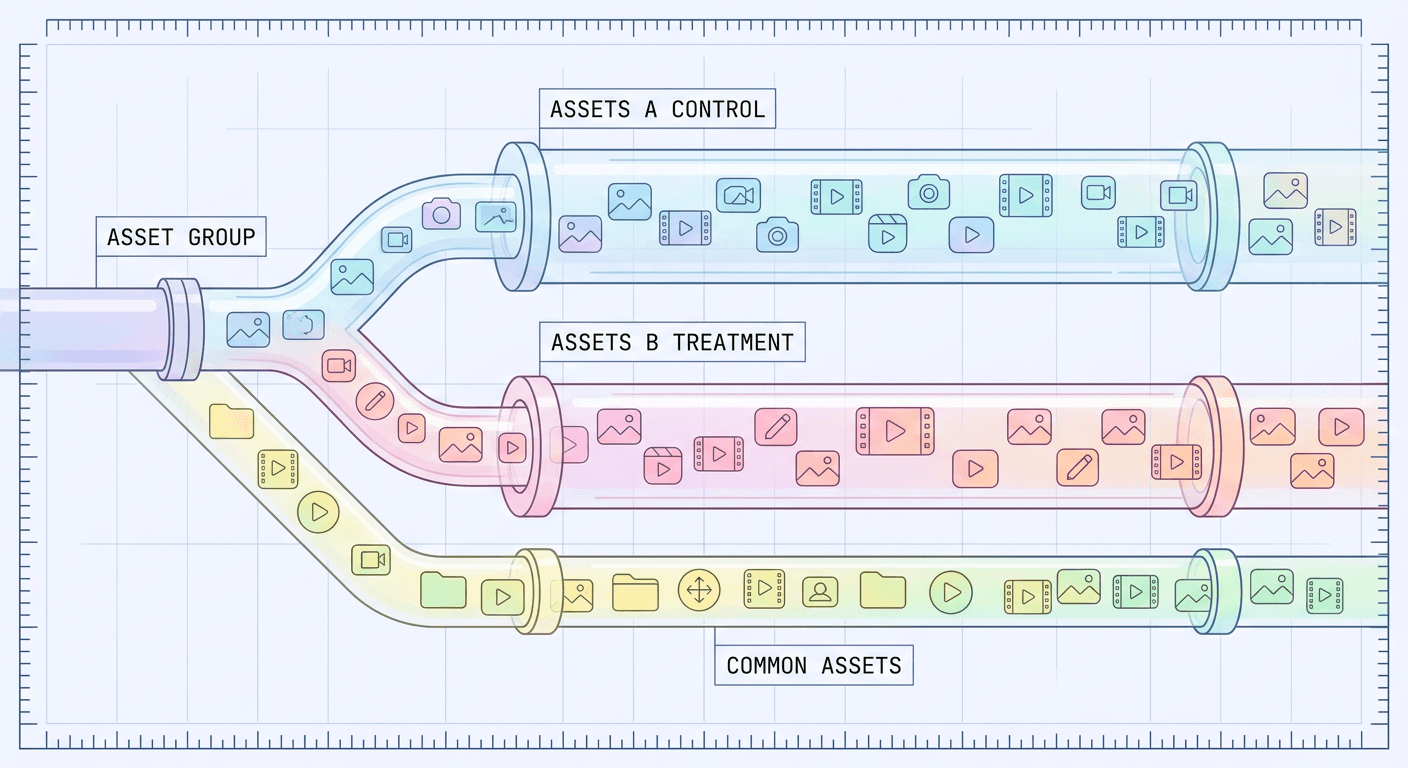
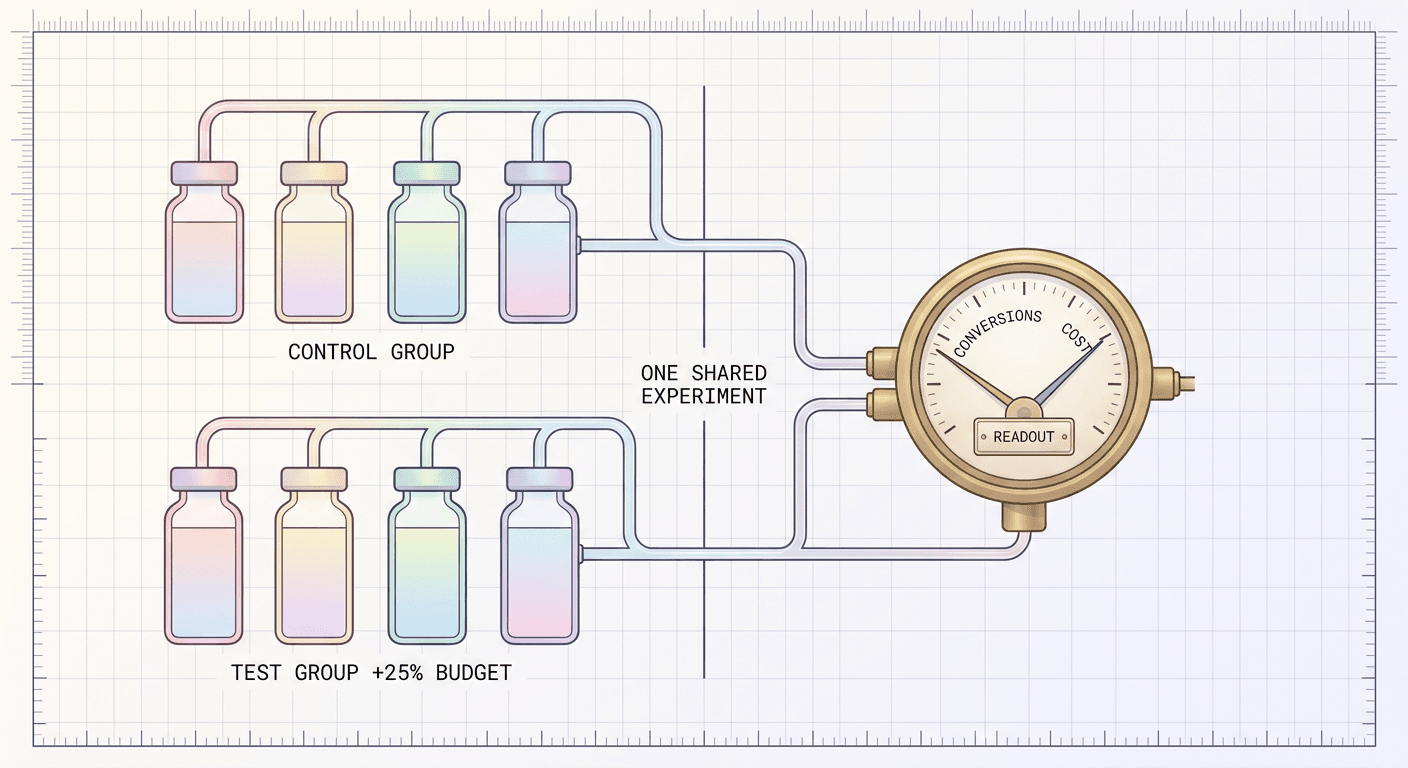
Starting in September 2026, you can test budget and ROI target changes across multiple Search campaigns inside a single A/B experiment. Instead of testing "what happens if I raise the budget on Campaign A" five separate times, you test "what happens if I raise the budget by 20% across this entire group of campaigns" once, with one shared control group held back and one combined result to read.
| Capability | Before September 2026 | Now |
|---|---|---|
| Multi-campaign budget/ROI testing | Test one campaign's budget or ROI target at a time, with a separate experiment and control group per campaign | Test the same budget or ROI target change across multiple Search campaigns inside one A/B experiment with a shared control group |
| Brand Controls during AI Max experiments | Had to disable brand and location restrictions to run a valid test | Can launch an experiment with Brand Controls and location settings left on |
| Performance Planner | Mostly used for single-campaign or account-level budget forecasting after the fact | Previews how a specific bid or budget change would have affected recent performance, applied one-click and reversible through Bulk Actions |
| Cross-campaign-type testing | Not available; each experiment lived inside one campaign | Campaign Mix Experiments (beta) tests different campaign type, budget, and setting combinations across up to five experiment arms at once |
The table above captures the shift in one place: everything on the right side of it either didn't exist or required a workaround before this September. If you've been running Performance Max asset experiments already, this will feel like a familiar upgrade pattern, Google previously brought structured A/B testing to Performance Max asset groups for the same reason: advertisers were making blind creative and budget decisions without a real control group to compare against.
How Cross-Campaign Budget and ROI Testing Actually Works
Picture a mid-size ecommerce account running eight Search campaigns split by product category, spending roughly 60,000 dollars a month combined. The account lead wants to test whether a 25% budget increase, paired with a slightly more aggressive Target ROAS, would scale spend profitably or just buy more expensive, lower-intent traffic. Under the old single-campaign experiment model, testing that hypothesis meant either picking one category as a proxy for the whole account, which risks a false read if that category behaves differently from the rest, or running eight parallel experiments and manually reconciling eight sets of results with eight different confidence levels.
With multi-campaign experiments, that same account lead selects the relevant campaigns as one group, sets the budget and ROI target change as the test arm, and lets Google hold back a matched control group drawn from comparable traffic. The result comes back as one portfolio-level read: did the group of campaigns that got the higher budget and looser ROI target actually deliver more conversion volume at an acceptable cost, or did it just inflate spend without moving the number that matters. That is a fundamentally different kind of question than any single-campaign test could answer, because it captures how campaigns interact and share auction pressure with each other, not just how one campaign performs in isolation.
This sits alongside a related beta feature, Campaign Mix Experiments, which goes a step further: it lets you test different combinations of campaign types, budgets, and settings inside one unified experiment, with up to five separate experiment arms running against each other. Where the budget/ROI test above compares one change against a control, Campaign Mix Experiments lets you compare several different strategies side by side in the same test window, useful when you genuinely don't know in advance which of two or three approaches will win and don't want to burn a full testing cycle on each one sequentially. It's the same instinct behind the new steering and reporting controls Performance Max picked up earlier this year: giving advertisers a real lever to compare strategies instead of trusting one automated black box outright.
Brand Controls No Longer Have to Be Switched Off to Test
Before this update, testing AI Max meaningfully required disabling Brand Controls and location restrictions for the duration of the experiment. That was a real problem, not a minor inconvenience. A branded-terms-only account, or one with legally sensitive geographic targeting (licensed professionals restricted to specific states, franchise businesses with strict territory rules, regulated categories like alcohol or financial services), simply couldn't run a clean AI Max experiment without temporarily loosening controls it needed to keep in place for compliance reasons. The choice was either test AI Max with controls off, which doesn't represent how the campaign would actually run in production, or skip testing and migrate blind when the deadline arrived.
Google Ads experiments can now launch with Brand Controls and location settings enabled from the start. The test conditions match production conditions, because the guardrails that would exist after migration are already active during the test. For any advertiser in a regulated category, or any brand that has ever had an agency or automated system accidentally bid on a competitor's name, this closes a real gap between what got tested and what actually went live.
Performance Planner Now Previews the Blast Radius Before You Commit
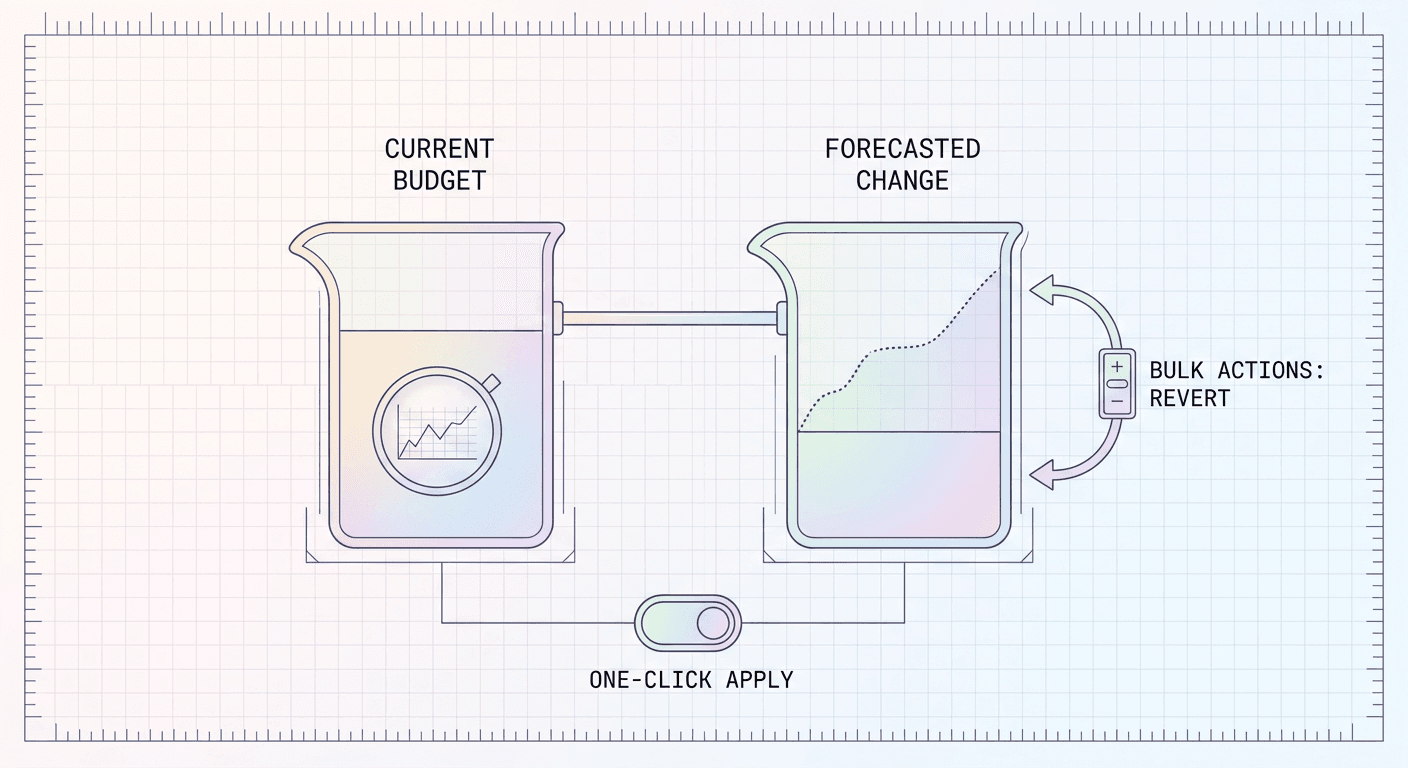
The third piece of this update is a quieter but genuinely useful change to Performance Planner. It can now show how a specific bid or budget change would have affected recent performance before you apply it live, at the campaign level, with the change itself applied through a one-click action and fully reversible through the Bulk Actions section if the real-world result doesn't match the forecast.
That reversibility matters more than it sounds. Advertisers have historically treated budget and bid strategy changes as effectively one-directional: you raise a budget, performance shifts, and unwinding that change cleanly, especially disentangling it from whatever the automated bidding system already adapted to in response, has never been simple. A change that's explicitly framed as reversible through a dedicated Bulk Actions flow changes the calculus for how experimental an account manager can afford to be. Testing a 30% budget increase on a campaign feels very different when you know exactly how to put it back the way it was if the forecast doesn't hold up. If you'd rather have a second set of eyes sanity-check a planned change before committing, Google's own Ask Advisor AI agent is worth pairing with Performance Planner's forecast for exactly that kind of pre-commitment review.
What Physically Changes When a DSA Ad Group Becomes an AI Max Ad Group
Whenever your DSA campaigns do migrate, whether you upgrade voluntarily during the extended window or get swept up in the February 2027 automigration, the mechanics are worth understanding rather than just accepting as a black box. A Dynamic Search Ads campaign is built around dynamic ad groups: instead of keywords, DSA crawls your website and generates ad targets from your own page content, then writes headlines dynamically to match what a searcher typed.
During migration, that dynamic ad group structure converts into a standard ad group. All three AI Max features get enabled on it: Search Term Matching takes over the job DSA's page-crawl targeting used to do, Text Customization takes over dynamic headline generation, and Final URL Expansion takes over final URL selection. Any legacy URL controls you had configured, page exclusions, specific URL rules, category restrictions, are preserved through the conversion rather than reset to defaults. Google also runs this as a parallel rollout rather than a hard cutover: the system generates new Responsive Search Ads based on your existing assets and submits them to policy review first, and only pauses the legacy DSA ads and puts them into a view-only state once those new RSAs pass review and go active. Historical performance data and account settings carry over, specifically so a campaign's reporting history doesn't reset the moment it migrates.
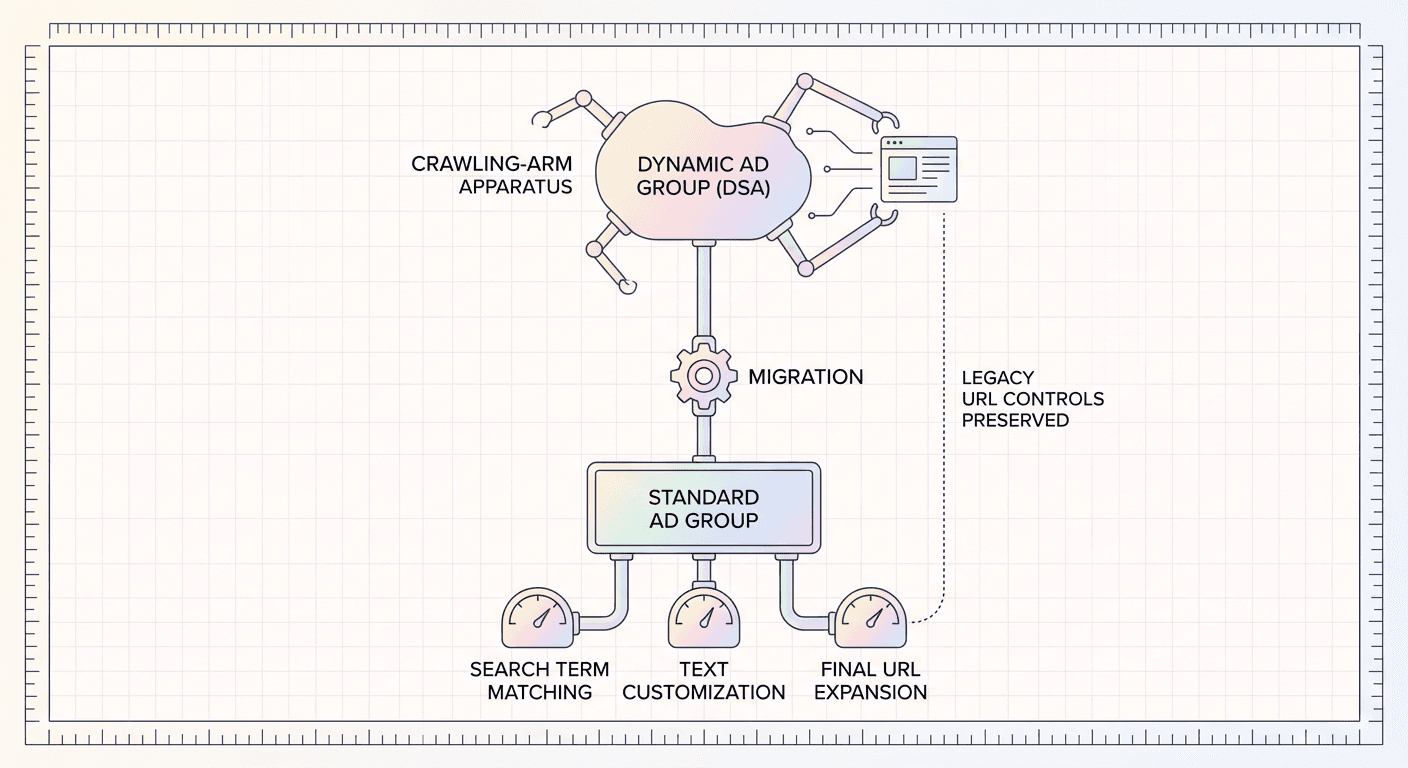
The practical upshot: nothing about the underlying migration mechanism changed with the February 2027 delay. What changed is purely the calendar. The conversion process itself, dynamic ad group to standard ad group, three AI Max features enabled, legacy URL controls preserved, parallel RSA rollout before DSA pause, is exactly what was already planned for September and simply now happens five months later for DSA specifically.
How to Use the Extra Five Months Without Wasting Them
A pushed-back deadline is only useful if you actually do something with the extra time. Treating February 2027 as a reason to ignore AI Max until January is the single most common way advertisers end up exactly where Google's extension was meant to prevent: rushed, untested, migrating under deadline pressure during a busy quarter instead of on their own schedule.
If You Run DSA Campaigns
You now have a genuine testing window instead of a forced cutover, and the tools covered above are built for exactly this. Pick one or two representative DSA campaigns and voluntarily upgrade them to AI Max now, using the rollout tools Google surfaces in-account (look for the upgrade prompts appearing on affected campaigns starting this month). Run a real experiment against your remaining legacy DSA campaigns using the new cross-campaign testing tools rather than eyeballing before-and-after performance, and keep Brand Controls active in that test since you no longer have to strip them out to get a valid read. Use Performance Planner to forecast what a broader rollout would do to spend and conversions before you commit the rest of your DSA campaigns. By the time January 15, 2027 reminder notifications land in your account, you should already know what AI Max does to your specific account's performance, not be learning it for the first time under deadline pressure.
If You Run ACA or Broad Match Campaigns
None of the delay applies to you, and this is the group most likely to get blindsided precisely because the delay headlines are everywhere right now. Your migration runs on the original September 2026 schedule. If you haven't already checked, go look for the in-account pop-up banners Google has been surfacing on affected campaigns, and confirm your Brand Controls, location settings, and text guidelines are configured the way you want before the automatic migration finishes running this month, not after. If your account also leans on Shopping or local inventory campaigns, it's worth a quick check of whether Local Inventory Ads defaulted on for your Shopping campaigns in the same recent wave of default-setting changes.
If You Run Neither Yet
If your account is still on standard keyword-based Search campaigns without DSA, ACA, or broad match in the mix, none of this forces your hand today. But the new multi-campaign experimentation tools are worth exploring regardless of your migration status, since they work for testing any budget or ROI target change across a group of Search campaigns, not just AI Max-related ones. It's a genuinely useful capability independent of the DSA and ACA timeline entirely.
Common Mistakes Advertisers Are Making With This Update
Assuming the February 2027 delay covers everything. This is the mistake driving most of the confusion right now. The delay is specific to Dynamic Search Ads. Campaign-level Broad Match and Automatically Created Assets/Text Customization are migrating on the original September 2026 timeline with no extension attached. Check which feature each affected campaign is actually using before deciding how urgently to act.
Treating the extra runway as a reason to wait until January 2027. The whole point of the extension, in Google's own words, was to give advertisers time to test thoroughly, not to give them permission to procrastinate. Waiting until the January 15 reminder notification to start testing puts you back in exactly the rushed, deadline-driven migration the delay was meant to avoid, just five months later.
Not using the new experiments before committing budget. With cross-campaign A/B testing and a Performance Planner that can forecast the impact of a change before you apply it, there is very little excuse for migrating a meaningful chunk of spend to AI Max without first testing it against a real control group. Skipping straight to a full voluntary upgrade because the deadline feels far away wastes tools built specifically to de-risk that decision.
Ignoring the new Brand Controls compatibility and testing with them off anyway, out of habit. If your account has run AI Max tests before this update, with Brand Controls disabled because that used to be a requirement, revisit that setup. An old test run under loosened controls does not accurately predict how the campaign performs once controls are back on, which is how it will actually run in production.
Confusing the migration mechanism with the deadline. Some advertisers hear "delayed" and assume Google is also reworking how the DSA-to-AI-Max conversion itself works, holding off on any prep until a supposedly revised process gets announced. It isn't being reworked. The conversion mechanics, dynamic ad group to standard ad group, historical data preserved, parallel RSA rollout before DSA pause, are unchanged from the original plan. Only the date moved.
Where Miraflow Fits Into This Workflow
None of the tools above touch the creative side of a Search campaign, and creative quality matters more, not less, once Text Customization is writing headlines and Final URL Expansion is choosing landing pages from whatever your site actually has. A campaign migrating into AI Max leans harder on the assets, images, and page content already sitting in your account, which makes it a reasonable moment to refresh what you're feeding it rather than migrating stale creative as-is.
If part of your test plan for the extra runway includes refreshing ad assets or landing page visuals before a voluntary upgrade, Miraflow's AI Image Generator can produce new product and lifestyle visuals directly from a prompt, including image-to-image editing and inpainting for swapping out a specific detail (changing a background, updating a product color, replacing an outdated visual) without redoing an entire shoot. For advertisers who also run video creative alongside Search, Miraflow's cinematic AI video generator, built on Veo3 and Veo3.1, can generate short product or storytelling clips worth testing alongside a budget or ROI experiment. And if your migration prep includes repurposing an existing long-form video into shorter promotional clips to support the campaigns you're testing, Miraflow's AI Clipping tool can pull viral-worthy moments from a video you already have and auto-generate captioned vertical clips ranked by a viral score. Landing pages tied to Search campaigns often need a matching thumbnail or hero image too; Miraflow's YouTube Thumbnail Maker works just as well for generating blog and social visuals to accompany a refreshed campaign, all inside Miraflow AI, without needing a separate editing tool.
Frequently Asked Questions
Does the February 2027 delay apply to my Performance Max campaigns too? No. This delay is specific to Dynamic Search Ads migrating to AI Max for Search. Performance Max is a separate product with its own asset group structure and its own experimentation tools, covered in our guide to Performance Max asset experiments and our look at Local Customer Optimization inside Performance Max.
If I already voluntarily upgraded a DSA campaign to AI Max, can I revert it? Google has generally kept a return path available during the voluntary upgrade window, but the safer approach is to treat a voluntary upgrade as something you validate with a real experiment first, using the new cross-campaign testing tools, rather than upgrading and hoping the result works out.
Do the new multi-campaign experiments work on campaigns that already migrated to AI Max? Yes. The budget and ROI target testing tools work on Search campaigns generally, whether they're running AI Max, standard Search targeting, or a mix, which makes them useful well beyond just DSA/ACA migration testing.
How many campaigns can I include in one multi-campaign experiment? Google has not published a hard cap in its own documentation, and Campaign Mix Experiments specifically supports up to five experiment arms in its current beta. Start with a focused, comparable group of campaigns (same category, similar spend level) rather than mixing wildly different campaign types into one test, since a cleaner comparison group produces a more trustworthy read.
What happens if I do nothing at all before February 2027? Your remaining active DSA campaigns automatically migrate to AI Max sometime during the February 1 to 28, 2027 window, using the same conversion process described above, and the ability to create new DSA ad groups is permanently removed at that point. There is no opt-out from the eventual migration, only a choice about whether you test and prepare beforehand or migrate untested on Google's timeline.
Should I still be worried about the September 2026 ACA/broad match migration if I've never used DSA? Yes, if your account uses campaign-level Broad Match or has Automatically Created Assets enabled, that migration is running on the original September 2026 schedule regardless of whether you've ever touched Dynamic Search Ads. Check your campaign settings directly rather than assuming the DSA delay covers you.
Conclusion
The headline that Google delayed DSA's move to AI Max until February 2027 is real, but it's easy to walk away from that headline with the wrong takeaway. The delay is narrow, it covers one specific legacy feature, and a different set of campaigns in the exact same accounts is migrating this same month on the original schedule. The part actually worth your attention this September is quieter: real cross-campaign budget and ROI testing, AI Max experiments that finally respect your Brand Controls, and a Performance Planner that lets you see a change's likely impact before you commit to it. Use the extra runway Google handed DSA advertisers to actually run those tests, on your own schedule, instead of letting it turn into five more months of not looking at the problem.