Wan 2.7 Explained: Open and Advanced Large-Scale Video Generative Models

Written by
Jay Kim
Wan 2.7 is Alibaba's most advanced AI video model with first/last frame control, 9-grid input, voice cloning, and instruction-based editing. Here is everything creators need to know.
If you create video content with AI, you have probably run into the same problem over and over again. You generate a clip that looks great for the first two seconds, and then the character's face starts to shift, the lighting changes for no reason, or the scene drifts in a direction you never asked for. You end up running 15 or 20 generations just to get one usable result, and even that one needs heavy editing before it goes anywhere near your timeline.
That frustration is exactly why Wan 2.7 is getting so much attention right now. Released by Alibaba's Tongyi Lab in early 2026, Wan 2.7 represents the biggest upgrade the Wan model family has ever shipped, and it directly addresses the control problem that has plagued AI video generation since the beginning. Instead of just giving you a better generator, it gives you tools that let you direct the output, edit existing clips with text commands, and lock a character's face and voice across multiple shots.
Whether you create YouTube Shorts, cinematic product videos, social media content, or educational material, Wan 2.7 is a model you need to understand. This guide covers everything from the technical architecture to the practical features, who it competes with, how to access it, and how it fits into a modern AI content creation workflow alongside tools like Miraflow AI.
Who Made Wan 2.7 and Where Did It Come From
Wan 2.7 is the latest evolution of Alibaba's open-source AI video generation model, and it is a state-of-the-art video generation model developed within Alibaba's Qwen ecosystem.[3] The Wan series (also known as Wanxiang in Chinese) has been building momentum since its first public release, and each version has pushed the boundary of what open-weight AI video models can do.
Wan 2.1 launched in early 2025 and made waves almost immediately because of its quality-to-accessibility ratio.[7] It was one of the first AI video models that delivered strong results while also being fully open-source under the Apache 2.0 license. That meant developers could download the weights, run the model locally, fine-tune it for specific use cases, and integrate it into commercial products without licensing restrictions.
Wan 2.6 was released in December 2025, and Alibaba had released Wan 2.2 as an open-source model in July 2025.[10] Each version brought meaningful improvements in visual quality, motion dynamics, and audio generation. But Wan 2.7, which became available in March and April 2026, represents a fundamentally different kind of upgrade.
Alibaba's Tongyi Lab officially released Wan 2.7 as the latest major upgrade to its Wan (Wanxiang) AI series, featuring innovative "Thinking Mode", hyper-realistic character consistency, precise color control, superior long-text rendering, and advanced video editing capabilities.[1]
For creators who are also producing thumbnails and visual content for their channels, understanding AI-powered visual tools is becoming essential. If you are looking for ways to improve your YouTube visuals right now, you can explore AI prompts for YouTube thumbnails or try the YouTube Thumbnail Maker inside Miraflow AI to generate eye-catching thumbnails alongside your video content.
The Technical Architecture Behind Wan 2.7
Understanding what makes Wan 2.7 different starts with knowing how it is built under the hood.

Built on a 27-billion-parameter Mixture-of-Experts (MoE) architecture, Wan 2.7 generates cinematic 1080P HD videos from text descriptions and images.[3] But the MoE design is critical here, because it means the model does not activate all 27 billion parameters for every generation. The model has 27 billion total parameters, but only 14 billion are active per inference pass, which halves the compute needed for high-quality synthesis.[3]
The Wan series runs on a Diffusion Transformer (DiT) architecture with a Full Attention mechanism. In practical terms, the model processes spatial and temporal relationships across the entire video sequence at once, not frame by frame.[7] This is a key architectural decision that explains why Wan 2.7 maintains much better character consistency and scene stability than older diffusion-based video models that process frames sequentially.
Wan 2.7 Video uses a Diffusion Transformer with MoE routing, where high-noise and low-noise experts specialize in different phases of the denoising process.[3] In simpler terms, the model has separate specialized components that handle the initial layout and composition (high-noise phase) versus the fine detail and texture refinement (low-noise phase). This specialization is what allows the model to produce results that feel deliberately crafted rather than randomly generated.
The image generation side of Wan 2.7 takes this further with a unified generation-and-understanding architecture. Wan 2.7 Image uses a unified generation-and-understanding architecture that maps text and visual semantics into a shared latent space. Rather than treating image generation and image comprehension as separate tasks, the model couples them from the start.[3]
If you want to explore AI image generation for your own content right now, the AI Image Generator inside Miraflow AI lets you create stunning visuals from text prompts or edit existing images with features like inpainting and style transformation.
The 7 Major Features That Make Wan 2.7 Different
Wan 2.7 does not just produce better-looking video. It introduces a set of professional-grade controls that change how creators interact with AI video generation at a fundamental level. Here are the features that matter most.
1. First and Last Frame Control (FLF2V)
This is probably the most talked-about feature in Wan 2.7. Rather than generating a video from a text prompt alone, you can now specify both the first frame and the last frame, and the model generates everything in between.[7]
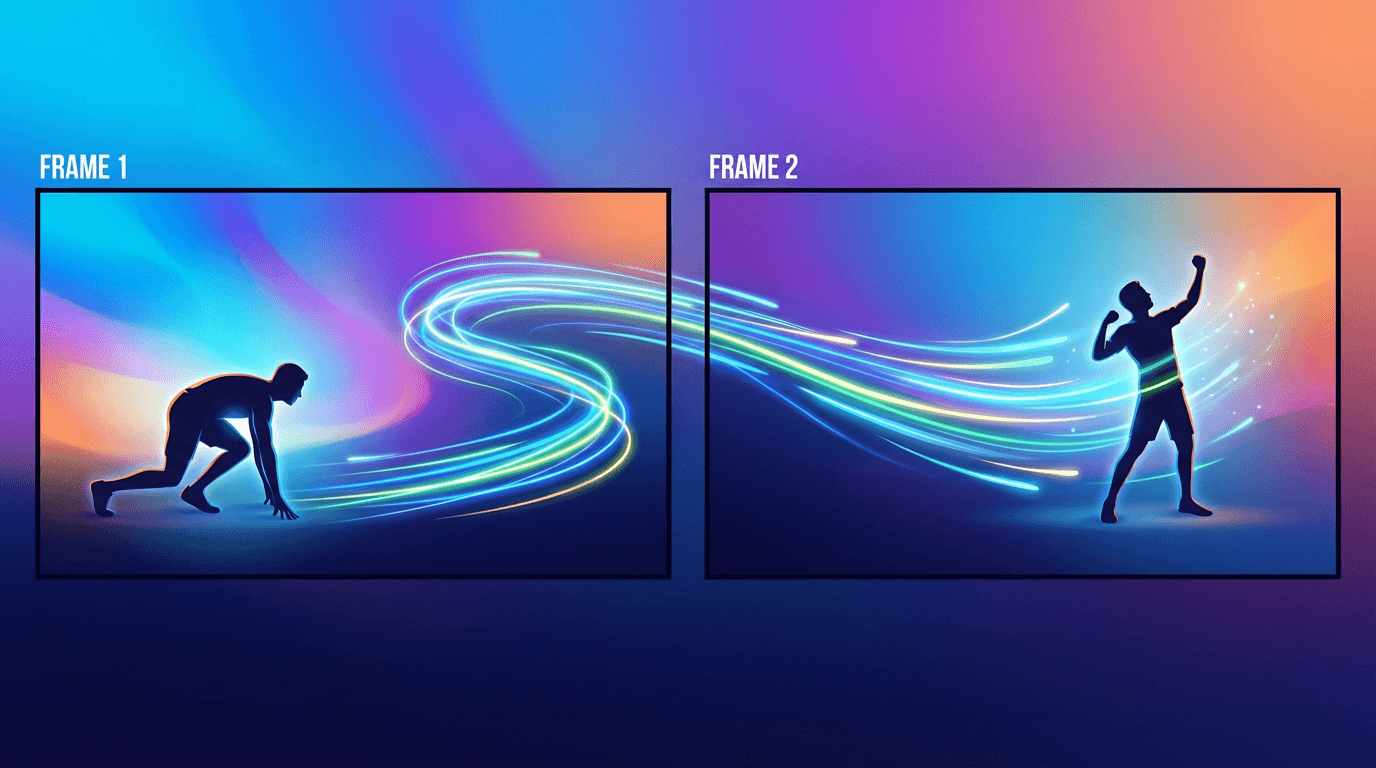
This solves one of the biggest frustrations with earlier AI video models. It significantly reduces the trial-and-error problem that plagues text-only video generation, where you might run 20 generations trying to get the camera to land in the right place.[7] With first and last frame control, you define where the shot starts and where it ends, and the model handles the motion, transitions, and everything in between while maintaining consistent subject identity.
This is useful when you need a product shot to start and end at specific angles, when you are animating a character through a prescribed arc, or when you are building a transition between two approved compositions.[9]
For creators who produce YouTube Shorts or short-form vertical content, this feature is particularly powerful because every second counts in a 15-second clip, and having control over both endpoints means you can storyboard with precision instead of hoping the AI lands somewhere useful.
2. 9-Grid Image-to-Video
This is the most structurally novel feature in 2.7. Rather than a single reference image, the 9-grid layout accepts a 3x3 arrangement of images, allowing you to feed multi-angle references, sequential poses, or scene variants into a single I2V generation. The model uses this structured visual input to improve scene composition and reduce drift.[2]

You upload a 3x3 arrangement of still images and Wan 2.7 converts them into a single continuous video. Each panel becomes a distinct scene or moment, stitched together with smooth transitions and consistent visual style, with no manual editing required.[5]
The grid reads left-to-right, top-to-bottom, so the sequence of your panels determines the sequence of scenes in the output.[7] This makes it possible to plan multi-scene narratives, product demonstrations, and storyboard-driven content in a single generation call.
3. Instruction-Based Video Editing
This is the feature that moves Wan 2.7 from being a generation tool to something closer to a video editing platform. Given an existing video clip, Wan 2.7 can apply natural language instructions to modify it. Examples include changing the background from white to dark wood, changing the jacket color from red to navy, making the lighting warmer, or adding rain to the environment.[9]
In Wan 2.6, if a generated clip was 90% right but needed one change, the option was to re-prompt and regenerate entirely, consuming time and cost. Instruction-based editing makes targeted revisions possible without full regeneration.[9]
This is a significant workflow improvement for anyone producing content at scale. If you generate 20 clips for a project and 15 of them need minor adjustments, you no longer have to start over from scratch for each one.
4. Subject and Voice Reference
Subject referencing lets you provide a reference image of a person, object, or character and have the model maintain that visual identity throughout a generated video. This addresses one of the most persistent frustrations in AI video: characters who don't look the same from frame to frame.[7]
Wan 2.7 combines this with voice cloning in a single workflow. You upload one voice sample, and Wan 2.7 generates videos with perfectly synchronized speech and natural lip movements. You can create a digital spokesperson that sounds exactly like you.[4]
This is the first open-source model that locks both visual identity and voice to a character.[3] For creators building recurring characters, branded spokespersons, or AI influencer content, this combined reference system is a genuine game-changer.
If you are already creating AI avatar content, you might also want to explore how AI Actor Videos work inside Miraflow AI, where you can create professional videos with 100+ AI avatars that deliver authentic expressions and perfect lip-sync.
5. Thinking Mode
Wan 2.7 introduces "Thinking Mode" technology where the model first deeply understands the prompt, logically plans the composition, and then generates the final output. This results in significantly higher coherence, fewer artifacts, and truly professional-grade results.[4]
This matters most for prompts that describe specific spatial arrangements, multi-element compositions, and scenes requiring logical consistency. Single-pass models often lose coherence on these kinds of prompts, and thinking mode reduces those failures.[3]
The trade-off is generation time. Thinking mode adds a reasoning step, so each image takes slightly longer to produce. For simple prompts, the quality gain is minimal. For complex prompts, the improvement in composition and spatial accuracy is significant.[3]
6. Precise Color Control and Text Rendering
Wan 2.7 supports HEX codes and color palettes for exact brand-accurate visuals.[10] This is something that matters enormously for professional creators, marketers, and brands who need generated content to match specific brand guidelines. You can input exact color codes directly into your prompts and expect the model to respect them.
On the text rendering side, it handles 3,000+ tokens and can perfectly render long text, tables, formulas, and 12 languages with crystal clarity.[10] Text rendering inside AI-generated images has historically been a weak point for most models, and Wan 2.7 addresses this with a level of precision that makes it suitable for creating marketing materials, product labels, and informational graphics.
If you work with text overlays in your content, you will also find the text features inside the YouTube Thumbnail Maker useful. It lets you add bold, prominent text to your thumbnails, which is one of the 10 rules for YouTube thumbnails that actually get clicks.
7. Native Audio Synchronization
The model generates background music, ambient sound, and character vocals that feel matched to the scene. Audio is no longer an afterthought. With Wan 2.7, sound and visuals are generated as a unified output from the start.[5]
Since the release of Wan 2.5, Alibaba's Wan AI video models have introduced native audio generation. Wan 2.7 has even made further improvements in audio-visual synchronization. This model can generate videos with ambient sound, dialogue-matched lip-sync, or background music in one run, so you do not need to align the audio with the visuals frame by frame.[9]
For creators who also need standalone music for their content, the AI Music Generator in Miraflow AI lets you describe the style, mood, and instruments you want, and it composes a full track in under a minute.
Wan 2.7 Quick Specs Overview
Here is a practical summary of the model's specifications that you can reference when comparing it against other tools in your workflow.
Wan 2.7 is built on a 27-billion-parameter Mixture-of-Experts architecture.[3] Only 14 billion parameters are active per inference pass.[3] It generates 1080P videos up to 15 seconds with first/last-frame control, 9-grid image-to-video, subject and voice cloning, and precise instruction-based editing.[5] Duration control supports video outputs ranging from 2 to 15 seconds.[10] It supports aspect ratios including 16:9, 9:16, and 1:1[6], making it suitable for everything from widescreen YouTube videos to vertical YouTube Shorts and square social media posts. You can export in MP4, MOV, or WebM, and Wan outputs include commercial usage rights so you can publish, advertise, and localize without friction.[6]
Example Videos made with Wan 2.7
Cinematic City
prompt:
A dramatic aerial tracking shot descending through golden hour clouds over a futuristic city skyline, camera slowly pushing forward revealing glass towers reflecting warm sunset light, volumetric fog between buildings, birds flying past in slow motion, cinematic color grading with warm amber and deep teal tones, 1080P, hyper-realistic, professional cinematography
Product Showcase
prompt:
A sleek wireless headphone rotating slowly on a glossy black surface, soft studio lighting with rim light highlighting the metallic finish, camera orbiting 180 degrees around the product, subtle reflections on the surface below, clean minimal background with gentle gradient, premium product photography style, cinematic lighting
Wan 2.7 vs Other AI Video Models in 2026
The AI video generation space in 2026 is crowded. Wan 2.7 is Alibaba's latest entry in the AI video generation space, and it arrives at a moment when the competition is genuinely fierce. Models like Seedance from ByteDance, Sora from OpenAI, and Veo from Google are all competing for the same ground.[7]
So how does Wan 2.7 stack up?
When it comes to control and flexibility, Wan 2.7 has a clear advantage. Wan 2.7 offers open weights, better feature flexibility including first-and-last-frame control, subject referencing, and advanced camera control, along with more favorable economics for high-volume use.[7] The combination of first/last frame control, 9-grid input, instruction-based editing, and combined subject and voice reference in a single model is something no other suite currently matches under one architecture.
Wan 2.7 is more flexible on cost. Local deployment eliminates per-generation API costs, and for high-volume use cases, this adds up quickly. For teams running thousands of video generations per month, the economics of open-weight models like Wan 2.7 look substantially better than closed API models.[7]
It won't beat Seedance 2 or Kling 3 on raw visual quality, but no other model matches its creative freedom and workflow completeness. It's the best open-source option in 2026.[3]
For creators who want to start generating cinematic AI video clips right now without worrying about model setup, the Cinematic Video Generator inside Miraflow AI lets you create stunning cinematic videos from text prompts with premium AI models directly in your browser.
How to Access Wan 2.7 Right Now
There are several ways to start using Wan 2.7 depending on your technical setup and needs.
Wan 2.7 is the latest video generation model from Alibaba's Tongyi Lab. It was made available in March 2026 via the WaveSpeedAI API and through Alibaba Cloud's DashScope platform, with an official GitHub release pending.[6]
The Wan 2.7 Text-to-Video model is available on Together AI Serverless Inference starting at $0.10 per second of generated video.[10]
For the image generation side, Wan 2.7 Image is a unified generation-and-editing model from Alibaba Tongyi Lab, released April 1, 2026. It introduces thinking mode, where the model reasons about composition, spatial relationships, and prompt logic before generating.[3]
On April 1, 2026, Alibaba officially released Wan2.7-Image-Pro, the first 4K-level image generation model with a built-in reasoning mode. It marks a significant breakthrough in text rendering, precise color control, and multi-reference image consistency.[8]
Regarding open-source availability, unlike closed-source alternatives, Wan 2.7 is fully open source, giving developers, researchers, and creators complete access to the model weights, architecture, and training methodology. This transparency has made it one of the most popular AI video models on GitHub, with over 15,000 stars and an active community of contributors.[3]
The official Wan-Video GitHub organization is the best place to monitor for the latest weight releases and integration updates.
Who Should Care About Wan 2.7
Wan 2.7 is relevant for a wide range of creators, but some groups will benefit more than others.
Content creators who produce short-form video for platforms like YouTube, TikTok, and Instagram will find the 9:16 aspect ratio support and 15-second duration ceiling particularly useful. If you are building a faceless YouTube channel where AI-generated visuals are your primary content, Wan 2.7's character consistency and instruction-based editing can significantly reduce your production time per video.
Marketers and brand teams will appreciate the precise color control with HEX code support and the subject reference feature that keeps branded characters looking identical across dozens of video variations. The ability to edit existing clips with natural language commands also means faster iteration cycles when producing ad variations for A/B testing.
Indie filmmakers and storytellers will benefit most from the first and last frame control feature. Being able to define both endpoints of a shot means you can storyboard a sequence and have the model fill in the motion, which is closer to traditional directing than anything previous AI video tools offered.
Developers building AI video into their products can access Wan 2.7 through API endpoints from Together AI and Alibaba's DashScope platform, with local deployment possible once open weights are fully available.
If you are a creator looking to build a complete content pipeline from idea to finished video, platforms like Miraflow AI let you handle the entire workflow in one place, covering everything from AI images to YouTube Shorts to cinematic video clips to thumbnails to music.
Practical Prompt Tips for Getting the Best Results with Wan 2.7
Because Wan 2.7 has significantly better prompt adherence than earlier versions, the quality of your prompts matters more than ever. Here are some practical tips based on what the creator community has found works best.
Be specific about camera movement. Instead of writing "a woman walking down a street," try writing "a tracking shot following a woman walking down a neon-lit Tokyo street at night, camera moves laterally at walking speed, shallow depth of field with bokeh lights in the background." The Wan 2.7 AI video generator understands detailed text prompts much better than earlier versions.[5]
Use the multi-shot prompt structure. Wan 2.7 supports multi-shot narrative control directly through prompt language, which means you can describe different shots within a single prompt and the model will generate them as a sequence. This is especially useful for creating content that tells a story within 15 seconds.
When using subject references, provide high-quality reference images with clear lighting and neutral expressions. The model will anchor the character's appearance to your reference, but the quality of the reference directly impacts the quality of the output.
For instruction-based editing, be precise about what you want changed and what should stay the same. Simple, direct commands like "change the background to a beach sunset" or "make the character's jacket blue" tend to produce better results than vague instructions.
These same principles of descriptive, specific prompting apply to other AI content creation tools as well. If you are creating thumbnails for your videos, specific prompts produce dramatically better results. You can see examples of this approach in 10 AI prompts for YouTube Shorts thumbnails and 25 YouTube thumbnail text ideas that get more clicks in 2026.
The Bigger Picture: What Wan 2.7 Means for AI Content Creation in 2026
Wan 2.7 represents a shift in what creators can expect from AI video tools. The conversation is moving beyond "can AI generate a video clip" toward "can AI help me direct, edit, and refine video content with the precision I need for professional work."
WAN 2.7 is shaping up to be a functional expansion more than a pure quality jump.[6] The visual quality improvements are real, but the bigger story is the expansion of control surfaces. First and last frame control, instruction-based editing, 9-grid input, and combined subject and voice reference are all features that reduce the gap between AI-generated content and traditionally produced content.
Pick Wan 2.7 when quality, consistency, and creative control matter, for campaigns, storyboards, client-facing content, and anything with multi-shot or voice. Wan 2.6 generates video, while Wan 2.7 goes further with generation, editing, and recreation.[5]
For creators who want to leverage these advances in their daily workflow, the ideal setup in 2026 combines specialized tools for different parts of the content pipeline. You might use Wan 2.7 for generating raw video clips, then use the AI Image Generator in Miraflow AI for creating thumbnails and promotional images, the Text2Shorts generator for turning topics into complete YouTube Shorts with script, visuals, and voice, and the AI Music Generator for producing background tracks.
The trend in 2026 is clear: the creators who grow fastest are the ones who can move from idea to published content in the shortest time while maintaining quality. Understanding models like Wan 2.7 and knowing when to use which tool is becoming a core creator skill. If you are building your YouTube thumbnail strategy or optimizing your thumbnail sizing, AI tools are accelerating every step of the process.
Common Mistakes Creators Make with Wan 2.7
Even though Wan 2.7 is more capable than previous versions, there are some common pitfalls that can waste your time and credits.
Using vague prompts when the model is designed for specificity is probably the most common mistake. The model follows your inputs, but if your prompts are vague or your reference images are weak, the output reflects that. The ceiling on quality is high, but so is the floor on what you need to bring to the table.[7]
Ignoring the 9-grid feature for multi-scene content is another missed opportunity. Many creators continue to generate scenes one by one and stitch them together manually, when the 9-grid input was specifically designed to handle multi-scene generation with better consistency in a single call.
Not taking advantage of instruction-based editing also leads to wasted resources. If a clip is 90% of what you need, editing it with a text command is almost always faster and cheaper than regenerating from scratch.
Finally, forgetting about aspect ratio planning before generation can create problems downstream. Wan 2.7 supports 16:9, 9:16, and 1:1 outputs, and choosing the right ratio before you generate saves you from awkward cropping or black bars later.
What Comes Next After Wan 2.7
Alibaba has pre-announced Wan 3.0 with 60 billion parameters, targeting 4K resolution and 30-second generation, expected mid-2026 under Apache 2.0. The prompting techniques and workflows you build on Wan 2.7 will carry forward.[3]
This means the time you invest in learning how to write effective prompts, structure 9-grid inputs, and use instruction-based editing will continue to pay off as the model family evolves. The architectural patterns and workflow structures will remain consistent, even as the capabilities expand.
The AI video generation space is moving incredibly fast in 2026, and staying informed about the tools available is just as important as mastering any single one of them. Whether you use Wan 2.7 directly, access its capabilities through third-party platforms, or use complementary tools like Miraflow AI's cinematic video generator for your daily content production, the key is building a workflow that lets you create more with less friction.
Conclusion
Wan 2.7 is more than an incremental update to an existing model. It represents a meaningful shift in what open-source AI video generation can accomplish in 2026. The combination of first and last frame control, 9-grid image-to-video, instruction-based editing, combined subject and voice referencing, thinking mode, precise color control, and native audio synchronization creates a model that functions less like a simple generator and more like a complete video production toolkit.
For creators, marketers, filmmakers, and developers, the practical takeaway is straightforward: if you are working with AI-generated video in any capacity, Wan 2.7 belongs on your radar. The control it offers over the generation process reduces waste, speeds up iteration, and produces results that are closer to what you actually intended.
And for creators who want to build their complete content pipeline, pairing the capabilities of models like Wan 2.7 with an all-in-one platform like Miraflow AI means you can go from idea to script to video to thumbnail to music without switching between a dozen different tools. That kind of streamlined workflow is what separates creators who publish consistently from those who get stuck in the production process.
Start exploring Miraflow AI to see how AI-powered tools can transform your entire content creation pipeline in 2026.
Frequently Asked Questions
What is Wan 2.7?
Wan 2.7 is an AI video and image generation model developed by Alibaba's Tongyi Lab. It is built on a 27-billion-parameter Mixture-of-Experts architecture and generates cinematic 1080P HD videos up to 15 seconds from text prompts, images, and reference videos. It includes features like first/last frame control, 9-grid image-to-video, instruction-based editing, and combined subject and voice referencing.
Who developed Wan 2.7?
Wan 2.7 was developed by Alibaba Group's Tongyi Lab as part of their Wan (Wanxiang) AI series, which is their flagship multimodal generative AI platform focused on delivering production-ready image and video content.
When was Wan 2.7 released?
Wan 2.7 Video launched on cloud platforms in late March 2026, and Wan 2.7 Image was released on April 1, 2026. API access through platforms like Together AI and Alibaba's DashScope became available shortly after.
Is Wan 2.7 open source?
The Wan model series has a strong open-source history, with Wan 2.1 and Wan 2.2 released under the Apache 2.0 license. Wan 2.7 weights have been made available on GitHub and Hugging Face, continuing the open-source tradition of the series.
How much does Wan 2.7 cost to use?
Pricing varies by platform. On Together AI, the text-to-video endpoint starts at $0.10 per second of generated video. Running it locally with open weights eliminates per-generation API costs, making it cost-effective for high-volume workflows.
What is the maximum video length Wan 2.7 can generate?
Wan 2.7 supports video generation from 2 to 15 seconds in a single generation call, at up to 1080P resolution. This is a significant increase from Wan 2.6, which topped out at approximately 5 seconds.
What is Thinking Mode in Wan 2.7?
Thinking Mode is a feature where the model first analyzes and plans the composition, spatial relationships, and prompt logic before generating the output. It produces more coherent results for complex prompts, at the cost of slightly longer generation time.
Can Wan 2.7 generate audio with video?
Yes. Wan 2.7 generates background music, ambient sound, and character vocals that are synchronized with the visual content in a single generation pass. You do not need to add audio separately.
What is the 9-grid feature in Wan 2.7?
The 9-grid feature lets you upload a 3x3 arrangement of still images, and the model converts them into a single continuous video with smooth transitions between scenes. Each panel in the grid becomes a distinct scene, read left-to-right and top-to-bottom.
How does Wan 2.7 compare to Sora and Veo?
Wan 2.7 offers more creative freedom and workflow completeness than most competitors, especially with its open-source availability and combined control features. While closed models like Sora and Veo may match or exceed visual quality in some cases, Wan 2.7's economics and flexibility make it the preferred choice for high-volume and customizable workflows.
- GitHub - Wan-Video/Wan2.2: Wan: Open and Advanced Large-Scale Video Generative Models · GitHub
- Alibaba Launches Wan 2.7: Breakthrough AI Image & Video Generation Model with Thinking Mode | FinancialContent
- Wan AI: Leading AI Video Generation Model
- WAN 2.7: New Features, API Access & Upgrade Path | by WaveSpeedAI | Mar, 2026 | Medium
- WAN 2.7 vs WAN 2.6: Feature Diff & Upgrade Decision | WaveSpeedAI Blog
- Wan 2.7 AI Video Suite Rolls Out on Together AI Starting with Text-to-Video Generation
- About Wan 2.7 - The Open-Source AI Video Generation Model
- Wan 2.7 Text-to-Video API | Together AI
- Run Wan 2.7 Video in the Browser - No installs – Floyo model
- How to Use Wan 2.7 in 2026: Complete Guide to the Best Op... - Alici.AI
- Wan27ai
- FinancialContent - Alibaba Launches Wan 2.7: Breakthrough AI Image & Video Generation Model with Thinking Mode
- Wan · GitHub
- Wan 2.7 - AI Video Generator with First & Last Frame Control | Dzine
- Wan2.7 vs Wan2.6: Same Prompt, Different Output - A2E
- GitHub - Wan-Video/Wan2.1: Wan: Open and Advanced Large-Scale Video Generative Models · GitHub
- Alibaba Launches Wan 2.7: Breakthrough AI Image & Video Generation Model with Thinking Mode
- Wan 2.7 AI Video – Cinematic Quality from Text & Images
- WAN 2.7: New Features, API Access & Upgrade Path | WaveSpeedAI Blog
- Wan 2.7 Open Source: quando chega e o que muda pra você
- Wan 2.7: Alibaba's New Video Model with First-Frame Control and 15-Second Clips | Seedance 2.0 AI
- What Is the Wan 2.7 AI Video Model? Features, Release Timeline, and Comparison to Seedance | MindStudio
- 🎬 Wan 2.7 AI Video Generator: Multi-Modal, 1080P & Pro-Grade Control - Beginners - Hugging Face Forums
- Wan 2.7 Review: Overhyped or the Best AI Video Model of 2026?
- Aivid
- In-depth analysis of Wan2.7-Image-Pro: A new benchmark for AI image generation with 4K quality, reasoning mode, and 12-language text rendering - Apiyi.com Blog
- Wan-AI/Wan2.2-T2V-A14B · Hugging Face
- Wan on X: "🎬 Meet the Speakers: Wan2.7 Creator Webinar Next-Gen Workflows: Automating Creativity with Wan2.7+ AI Agents April 8, 2026 13:00 UTC / 06:00 PDT YouTube | X | LinkedIn Tongyi Lab & Alibaba Cloud We're thrilled to announce the incredible lineup joining us for the English https://t.co/9pFZg7tIzK" / X
- Wan 2.7 AI Video Generator: Generate or Recreate Videos with Wan 2.7 Online - EaseMate AI
- Wan 2.7 vs Wan 2.6: What Actually Changed | Seedance 2.0 AI
- Is WAN 2.5 going to be open source? · Issue #184 · Wan-Video/Wan2.2
- Alibaba Launches Wan 2.7: Breakthrough AI Image & Video Generation Model with Thinking Mode – Eandtnews
- Wan 2.7 now available on Together AI
- What Is Wan 2.6 Image? The Latest Open-Source Image Model from Wan | MindStudio
- Alibaba Launches Wan 2.7: Breakthrough AI Image & Video Generation Model with Thinking Mode | MarketScreener