YouTube Trends to Watch for the Rest of 2026

Written by
Jay Kim

Discover the biggest YouTube trends shaping the rest of 2026, from Shorts algorithm changes and thumbnail design shifts to AI production workflows and community engagement strategies.
If you have been creating YouTube content the same way since January, there is a good chance you are already falling behind. The platform has shifted significantly in the first half of 2026, and the creators who adapt to what is coming next will be the ones who see real growth in the second half of the year. YouTube's algorithm, viewer behavior, content formats, and discovery systems are all evolving faster than most creators realize, and staying on top of these changes is what separates channels that stagnate from channels that break through.
This guide covers every major YouTube trend that is shaping the rest of 2026, from short-form strategy shifts and thumbnail psychology to AI-assisted production workflows and audience engagement patterns. Whether you run a faceless channel, a personal brand, or a business account, understanding these trends gives you a clear roadmap for what to focus on, what to experiment with, and what to stop wasting time on for the remainder of the year.
Short-Form Video Is Becoming the Primary Discovery Channel
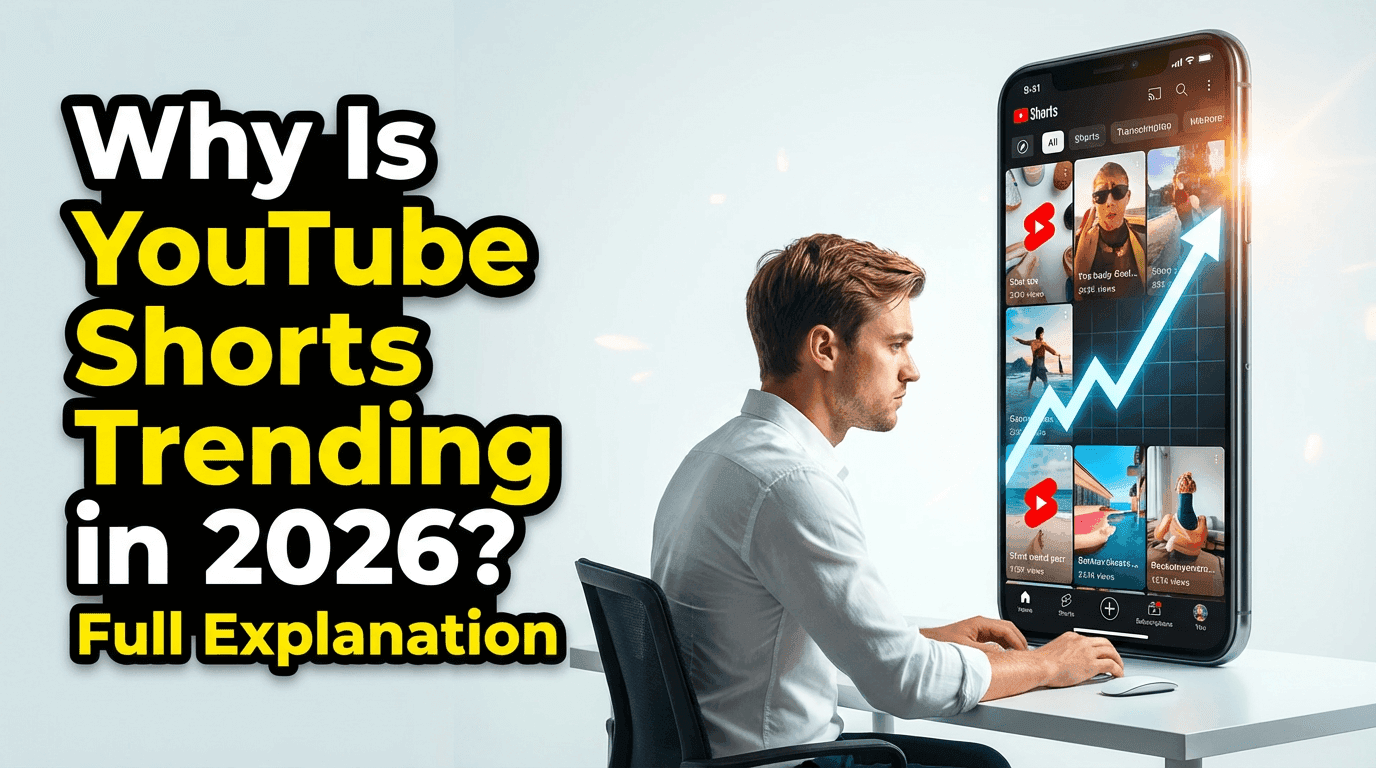
YouTube Shorts have been growing steadily since their launch, but 2026 is the year where Shorts are genuinely becoming the main entry point for new audiences to discover creators. The Shorts feed is now one of the highest-traffic surfaces on the entire platform, and YouTube has been investing heavily in improving how Shorts are recommended and monetized throughout the year.
What makes this trend especially important for the rest of 2026 is how the relationship between Shorts and long-form content has matured. Earlier in YouTube's Shorts era, many creators treated Shorts as throwaway content or simple repurposed clips. That approach no longer works because viewers have developed higher expectations for short-form quality, and the algorithm now evaluates Shorts with more nuanced signals than just swipe-through rate.
The creators who are growing fastest right now use Shorts as a deliberate funnel into their long-form content. Each Short serves a specific purpose within a larger content strategy, whether that is teasing a full video, covering a standalone micro-topic, or building familiarity with a new audience segment. The comparison between YouTube Shorts and long-form for channel growth breaks down exactly how each format contributes to different growth metrics and helps you decide how to balance both for the rest of the year.
For creators who want to produce Shorts consistently without spending hours on each one, the Text2Shorts generator on Miraflow AI lets you enter a topic, choose between animation and realistic visual styles, and generate a complete Short with script, scenes, and voice narration in minutes. This kind of workflow is becoming essential for keeping up with the publishing frequency that Shorts require without burning out on production.
Faceless Channels Are Growing Faster Than Ever
One of the most notable trends in 2026 is the continued rise of faceless YouTube channels across virtually every niche. Channels that never show a face on camera are competing directly with personality-driven channels in categories like finance, technology, history, health, motivation, cooking, and education. The stigma around faceless content has largely disappeared, and many of the fastest-growing channels launched this year operate without any on-camera presence at all.

Several factors are driving this trend. AI tools have made it significantly easier to produce high-quality visuals, voiceovers, and animations without traditional production equipment. Audiences have also become more comfortable with channels that deliver value through information, storytelling, and visual quality rather than through a host's personality. And from a creator's perspective, faceless channels are more scalable because they remove the bottleneck of requiring one specific person to appear in every video.
The thumbnail challenge for faceless channels is real, though, because thumbnails with human faces and emotional expressions have traditionally outperformed thumbnails without them. The 10 YouTube thumbnail ideas specifically designed for faceless channels covers proven visual strategies that maintain high click-through rates without relying on face-based thumbnails.
If you are considering starting a faceless channel or already running one, the breakdown of why YouTube Shorts work better without a face cam in 2026 explores how the Shorts algorithm specifically evaluates faceless content and what formats perform best without an on-camera host.
AI-Generated Visuals Are Becoming Standard in Production
The use of AI-generated images and video clips in YouTube content has gone from experimental to mainstream in 2026. Creators across every niche are incorporating AI visuals for b-roll, thumbnails, scene illustrations, product mockups, and storytelling sequences. Viewers are increasingly comfortable with AI-assisted visuals, especially when they are used to enhance the content rather than replace genuine value.
For the rest of 2026, the trend is moving toward creators who use AI visuals strategically rather than as a shortcut. The channels that are gaining traction are the ones using AI to create visuals that would have been impossible or prohibitively expensive to produce manually, like cinematic establishing shots, stylized character animations, and concept illustrations that perfectly match the narration.
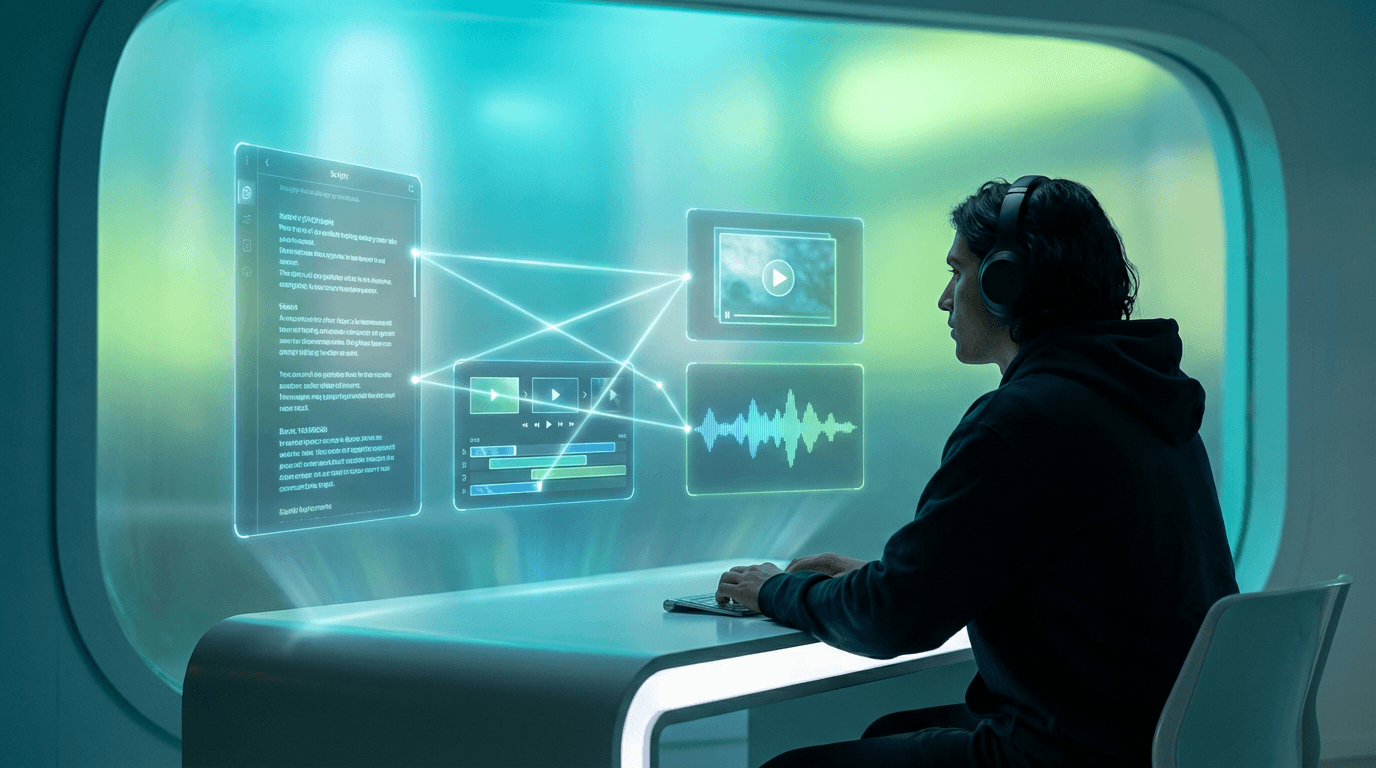
The AI Image Generator on Miraflow AI supports text-to-image, image-to-image editing, and image inpainting, which means creators can generate completely new visuals from prompts or modify existing images by masking specific regions and replacing them. Popular use cases include creating custom b-roll images, transforming photos into different styles like collectible figurines or comic panels, and generating editorial-quality promotional images for social media.
For video b-roll specifically, the Cinematic Video Generator on Miraflow AI produces hyper-realistic 8-second video clips from text prompts. Creators are using these clips for everything from product ad sequences and storytelling cutaways to atmospheric scene-setters that elevate the production quality of their content far beyond what stock footage libraries can offer. The example prompts on the page, ranging from cyberpunk alleyway chases to serene Kyoto cherry blossom paths, show the range of what is possible with detailed prompts and a premium AI model.
Thumbnail Design Is Shifting Toward Cleaner, Bolder Composition
YouTube thumbnail trends have undergone a noticeable shift in 2026. The cluttered, text-heavy, shock-expression thumbnails that dominated in previous years are gradually losing their effectiveness as viewer fatigue has set in. The thumbnails that perform best right now lean toward cleaner composition, fewer visual elements, bolder color contrast, and more intentional use of negative space.
This does not mean that faces and expressions have stopped working in thumbnails. Faces are still one of the highest-performing visual elements in a thumbnail because humans are biologically drawn to look at other faces. What has changed is that the expressions need to feel more authentic and the overall design needs to communicate the video's promise in a single glance without requiring the viewer to read multiple lines of text or decode a busy composition.
The 10 rules for YouTube thumbnails that actually get clicks lays out the specific design principles that are driving high CTR in 2026, and the 10 YouTube thumbnail trends for 2026 covers the visual styles that are currently gaining traction across different niches.
For creators who want to experiment with these new thumbnail styles quickly, the YouTube Thumbnail Maker on Miraflow AI includes professionally designed templates for various niches like finance, entertainment, gaming, vlogging, fitness, cooking, education, and psychology. You can enter a prompt describing your thumbnail concept, upload your face or a reference image, add text, and generate the thumbnail in seconds. The tool also lets you paste a YouTube video URL to fetch your existing thumbnail for editing, which makes A/B testing different styles across your catalog straightforward.
The guide to YouTube thumbnail text ideas that get more clicks is especially relevant to this trend because the shift toward cleaner design means choosing the right thumbnail text, and knowing when to use no text at all, is more important than ever.
Watch Time Per Session Is Becoming More Important Than Views
YouTube's recommendation system has been gradually shifting its emphasis from individual video metrics toward session-level engagement signals. What this means in practice is that the algorithm increasingly cares about whether your content contributes to longer overall viewing sessions on the platform, not just whether a single video gets a lot of views or a high retention rate in isolation.
This trend has significant implications for how you structure your content strategy for the rest of 2026. Channels that create strong binge pathways, where one video naturally leads the viewer to watch another and then another, are rewarded with more impressions because they keep people on the platform longer. This is why playlists, content series, and thematic clusters are becoming more valuable than standalone viral hits.
To take advantage of this trend, think about your content calendar in terms of interconnected topics rather than isolated videos. If you publish a video about YouTube SEO, follow it up with a video about writing better titles, then a video about thumbnail design, and then a video about analytics interpretation. Each video becomes a natural next watch for someone who watched the previous one, which builds the session depth that YouTube is looking for.
End screens, cards, and pinned comments that guide viewers to related content on your channel are also becoming more impactful under this system because they directly influence whether a viewer continues their session on your channel or leaves for someone else's.
AI Music and Audio Are Changing How Creators Handle Soundtracks
Background music and audio design have always been important for viewer retention, but finding the right music has traditionally been one of the most tedious parts of video production. Most creators either cycle through the same royalty-free tracks that every other creator uses or spend significant time searching through music libraries for tracks that match their video's mood and pacing.
In 2026, AI music generation has reached the point where creators can describe the exact sound they want and receive a custom track in under a minute. This changes the audio workflow from searching and settling to designing and generating, which means every video can have a unique soundtrack that perfectly matches its tone.
The AI Music Generator on Miraflow AI offers two modes for this. Simple Mode lets you type a description of the music you want, like "upbeat electronic with soft synths and a driving beat, energetic and motivating," and generates a complete track. Custom Mode adds controls for lyrics structure, duration, BPM, key, and scale, which is useful when you need a track that fits a specific video length or editing rhythm. The platform also supports an instrumental toggle for creators who only need background music without vocals.
For the rest of 2026, expect to see AI-generated music become increasingly common in YouTube content, especially among creators who publish frequently and need a steady supply of fresh, unique tracks that avoid the "I have heard this background music on 50 other channels" problem.
Vertical Content Is Getting Its Own Algorithm Signals
One of the more technical trends to watch for the rest of 2026 is how YouTube is differentiating its recommendation signals for vertical content versus horizontal content. Shorts and standard videos have always been evaluated somewhat differently, but the gap is widening as YouTube builds out a more sophisticated recommendation engine specifically for the Shorts feed.
Vertical content is increasingly being evaluated based on completion rate (how many viewers watch the full Short), replay rate (how many viewers watch it more than once), and share rate (how many viewers send it to someone else). These signals matter more in the Shorts feed than traditional metrics like watch time minutes because the content is so short that raw watch time is not a meaningful differentiator.
What this means for creators is that optimizing your Shorts for loop potential, shareability, and rewatchability is becoming more important than optimizing for length or information density. Shorts that end with a payoff that makes viewers want to watch again, or that deliver a surprising insight worth sharing, tend to outperform longer Shorts that simply try to pack in as much content as possible.
The 10 AI prompts for YouTube Shorts thumbnails covers how to create visuals for vertical content that stop viewers mid-scroll, which is the critical first step before any of these algorithmic signals even come into play.
Title and Thumbnail Pairing Is Getting Smarter
In the first half of 2026, one of the clearest patterns among high-performing videos is that the title and thumbnail are designed as a single unit rather than as two separate assets. The best-performing creators are treating the title and thumbnail as two halves of the same promise, where each element communicates something different but together they create a complete and compelling reason to click.
For example, instead of having a thumbnail that shows a shocked face and a title that says "You Won't Believe This," which is vague and formulaic, the high-CTR approach in 2026 is to have the thumbnail show a specific visual (like a before-and-after transformation or a dramatic scene) and the title provide the context that makes the viewer curious about the full story behind that visual.
The 10 AI prompts for YouTube thumbnails that stop the scroll provides specific prompt templates designed to create thumbnails that pair naturally with curiosity-driven titles. And the 10 AI prompts for YouTube titles that get clicks gives you copy-and-paste title formulas that complement those visual styles.
The key principle behind this trend is that your thumbnail should make the viewer wonder "what is happening here?" and your title should make them think "I need to find out." Neither element should try to do both jobs at the same time, because when they overlap too much, the packaging feels redundant and the click-through rate suffers.
Community Engagement Is Becoming a Ranking Factor
YouTube has been gradually increasing the weight it gives to community engagement signals throughout 2026. This includes comments, community post interactions, membership activity, and even how often viewers return to a specific channel versus discovering it through search or recommendations.

For creators, this means that building an active community around your channel is becoming a competitive advantage in the algorithm, not just a nice-to-have for brand loyalty. Channels with high comment rates, strong community post engagement, and active memberships are seeing their content recommended more broadly because YouTube interprets these signals as evidence that the channel delivers consistent value to a dedicated audience.
Practical ways to leverage this trend include ending your videos with genuine questions that invite discussion rather than generic "like and subscribe" calls to action, posting regular community posts that give your audience reasons to interact with your channel between uploads, and responding to comments in a way that encourages deeper conversation rather than one-word replies.
The community content section on Miraflow AI showcases trending content created by other users, which can serve as inspiration for the kinds of community-driven content that generates engagement in your niche.
AI-Powered Workflows Are Becoming the Norm for Consistent Creators
The creators who are publishing the most consistently in 2026 are almost universally using AI-powered workflows to handle the repetitive and time-consuming parts of their production process. This includes scripting, visual generation, thumbnail creation, music selection, and editing assistance. The trend is not about replacing human creativity with AI, but about using AI to eliminate the bottlenecks that prevent creators from publishing as frequently as they would like.
A typical AI-assisted workflow in 2026 looks something like this: the creator generates a script outline from a topic prompt, refines it with their own expertise and personality, uses AI to generate scene visuals and b-roll, records or generates the voiceover, assembles the video, creates a thumbnail using an AI thumbnail generator, and produces a custom background track.
Platforms like Miraflow AI consolidate this entire pipeline into a single browser-based workspace. From the Text2Shorts generator for producing complete vertical videos to the YouTube Thumbnail Maker for creating click-worthy thumbnails and the AI Music Generator for composing original background tracks, the entire workflow from idea to published content can be handled without switching between multiple tools or platforms.
This consolidation matters because one of the biggest productivity killers for creators is context switching between different tools, accounts, and interfaces. When everything lives in one place, the creative process flows more smoothly, which directly translates to more consistent output and faster growth.
Niche Channels With Strong Visual Branding Are Outperforming Generalists
Another clear trend for 2026 is the growing advantage of niche channels that have developed a strong, recognizable visual identity. Generalist channels that cover a wide range of topics without a cohesive visual style are finding it harder to build the kind of loyal audience that drives algorithmic recommendations, while niche channels with consistent branding across their thumbnails, intros, color palettes, and editing style are seeing compounding growth.
This visual branding trend extends to every touchpoint on your channel, including your banner, your thumbnails, your video intros, your end screens, and your community posts. When a viewer sees one of your thumbnails in their feed, they should be able to recognize it as yours before they even read the title.
The 10 YouTube banner ideas for every niche with AI prompts provides niche-specific banner concepts that help you establish this visual identity from the moment someone lands on your channel page. And the 10 YouTube thumbnail ideas for every niche gives you template styles that you can adapt into a consistent thumbnail format for your channel.
Using the AI Image Generator on Miraflow AI to create a cohesive set of channel visuals, including banners, thumbnails, community post images, and social media promotional graphics, ensures that everything matches your brand identity without requiring graphic design skills or expensive freelancers.
Longer Shorts Are Getting More Traction
YouTube expanded the maximum length for Shorts to three minutes earlier in the cycle, and the impact of this change is becoming increasingly clear as we move through 2026. While 15 to 30-second Shorts still work well for certain types of content like quick tips and visual hooks, the 60 to 90-second range is emerging as the sweet spot for many niches because it allows enough time to deliver real value while still being short enough to maintain a high completion rate.
The three-minute maximum has also opened up new content formats for Shorts that were not possible before, including mini-tutorials, condensed product reviews, short storytelling sequences, and bite-sized educational content that goes deeper than a simple fact or tip.
Creators who are experimenting with longer Shorts should pay close attention to their completion rate metrics in YouTube Analytics. If your longer Shorts are being watched to the end at a rate comparable to your shorter ones, the algorithm will reward them with significantly more impressions because they accumulate more watch time per view.
For producing longer Shorts that maintain viewer attention throughout, the Text2Shorts tool on Miraflow AI helps by structuring the script with clear segments, generating matching visuals for each scene, and pacing the narration to keep energy levels consistent from beginning to end.
Thumbnail Size and Technical Optimization Still Matter
While creative strategy gets most of the attention, the technical side of thumbnail optimization continues to matter in 2026. YouTube displays thumbnails at different sizes across different surfaces, from large desktop home page tiles to tiny mobile search results, and thumbnails that are not optimized for small sizes lose significant click-through rate on mobile, which is where the majority of YouTube traffic comes from.
The YouTube thumbnail size guide for 2026 covers the exact dimensions, file size limits, and aspect ratio requirements you should follow, along with tips for ensuring your thumbnails remain clear and compelling at every display size.
The most common technical mistake creators make with thumbnails is using text that is too small to read on mobile or including details that disappear when the thumbnail is displayed at its smallest size. Always preview your thumbnails at roughly the size of a postage stamp before publishing, because that is approximately how they will appear in many mobile contexts.
What Most Creators Will Miss About 2026 YouTube Trends
The overarching theme connecting all of these trends is that YouTube in 2026 rewards creators who think systematically about their content rather than treating each video as an isolated event. The algorithm is getting better at identifying channels that deliver consistent value to a defined audience, and it is getting better at surfacing that content to the right viewers at the right time.
Creators who will miss out on these trends are the ones who continue to chase individual viral moments without building a cohesive channel strategy, who neglect their visual branding because they think content quality alone is enough, or who refuse to adopt AI tools that could multiply their output without sacrificing quality.
The second half of 2026 is shaping up to be a pivotal period for YouTube creators. The platforms and tools available today, from AI video generators and thumbnail makers to music composition engines and automated Shorts production, make it possible for a single creator to produce at the level of a small production team. The question for the rest of the year is not whether these tools are good enough to use, but whether you can afford not to use them while your competitors already are.
Frequently Asked Questions
What is the biggest YouTube trend for the rest of 2026?
The most impactful trend is the growing role of YouTube Shorts as the primary discovery channel for new audiences, combined with the increasing sophistication of how the Shorts algorithm evaluates content based on completion rate, replay rate, and shareability.
Are faceless YouTube channels still growing in 2026?
Yes, faceless channels are growing faster than ever across a wide range of niches. AI tools for visual generation, voiceover, and music have made it significantly easier to produce professional-quality content without any on-camera presence, and audiences have become increasingly comfortable with this format.
How long should YouTube Shorts be in 2026?
The sweet spot for most niches is between 60 and 90 seconds, although shorter Shorts in the 15 to 30-second range still work well for quick tips, hooks, and visual-first content. The extended three-minute maximum is opening up new formats like mini-tutorials and condensed reviews, but longer Shorts need to maintain high completion rates to benefit from the additional watch time.
Do YouTube thumbnails still matter in 2026?
Thumbnails are more important than ever because they directly determine your click-through rate, which is one of the strongest signals the algorithm uses to decide how broadly to distribute your content. The trend in 2026 is toward cleaner, bolder compositions with fewer visual elements and more intentional use of color and negative space.
How is AI changing YouTube content creation in 2026?
AI is primarily being used to accelerate the production pipeline rather than replace human creativity. Creators are using AI for script outlining, visual generation, thumbnail creation, music composition, and video assembly, which allows them to produce more content at higher quality with less time spent on repetitive tasks. Platforms like Miraflow AI consolidate these tools into a single workspace that covers the full content creation workflow.
What type of YouTube content performs best in 2026?
Content that serves a specific niche audience with consistent visual branding and strong title-thumbnail pairing is outperforming generalist content. Channels that build interconnected content clusters, where each video leads naturally to the next, are also seeing stronger algorithmic rewards because they contribute to longer viewer sessions on the platform.
Should I focus on Shorts or long-form videos for the rest of 2026?
The most effective strategy is to use both formats together, with Shorts serving as a discovery engine that brings new viewers to your channel and long-form content serving as the conversion mechanism that turns casual viewers into loyal subscribers. Planning your Shorts as companions to your long-form videos creates a growth flywheel that benefits both formats.
How often should I post on YouTube for the rest of 2026?
Consistency matters more than frequency. A channel that publishes two high-quality long-form videos and four Shorts per week on a predictable schedule will generally outperform a channel that publishes daily but inconsistently. Find a pace that you can sustain without sacrificing quality and stick with it through the end of the year.
Conclusion
The YouTube landscape for the rest of 2026 is defined by several interconnected trends that all point toward the same conclusion: systematic, visually branded, AI-assisted content strategies are outperforming reactive, one-off publishing approaches. Shorts are becoming the primary discovery surface for new audiences, thumbnail and title design is evolving toward cleaner and more intentional composition, watch time per session is growing in algorithmic importance, and AI-powered production workflows are becoming the standard for creators who want to publish consistently at high quality.
Understanding these trends is the first step, but acting on them is what will actually move your channel forward. Start by auditing your current content strategy against the trends outlined in this guide, identify the biggest gaps between what you are doing now and what the platform is rewarding, and use the tools available to you through platforms like Miraflow AI to close those gaps efficiently. The creators who adapt to these trends before the end of the year will be the ones entering 2027 with real momentum, a loyal audience, and an established channel that the algorithm actively promotes.