AI Prompts for YouTube Hooks in 2026 (Copy & Paste)

Written by
Jay Kim
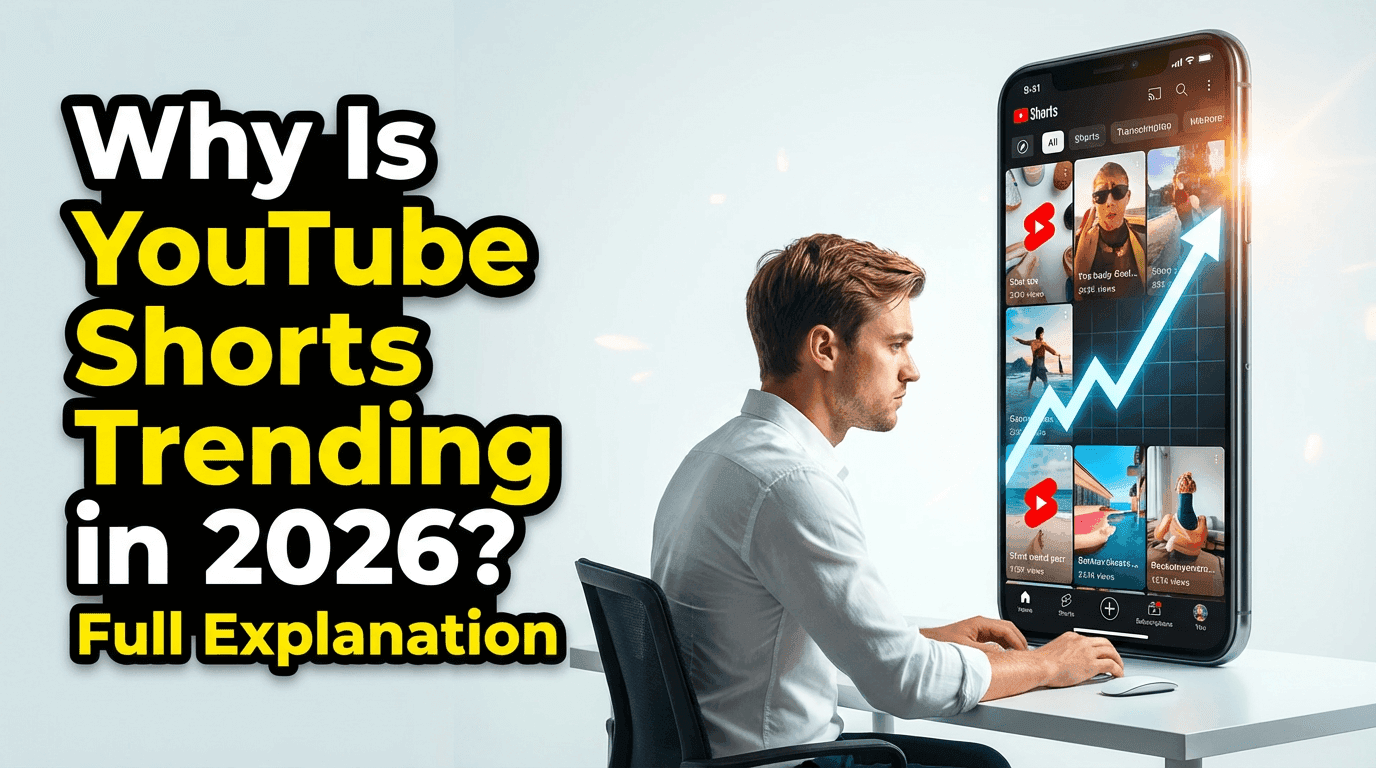
Need better YouTube Shorts scripts in 2026? These 30 copy-paste AI prompts help you write stronger hooks, faster pacing, better payoffs, and cleaner calls to action.
If your videos are getting skipped fast, the problem is often not the topic.
It is the hook.
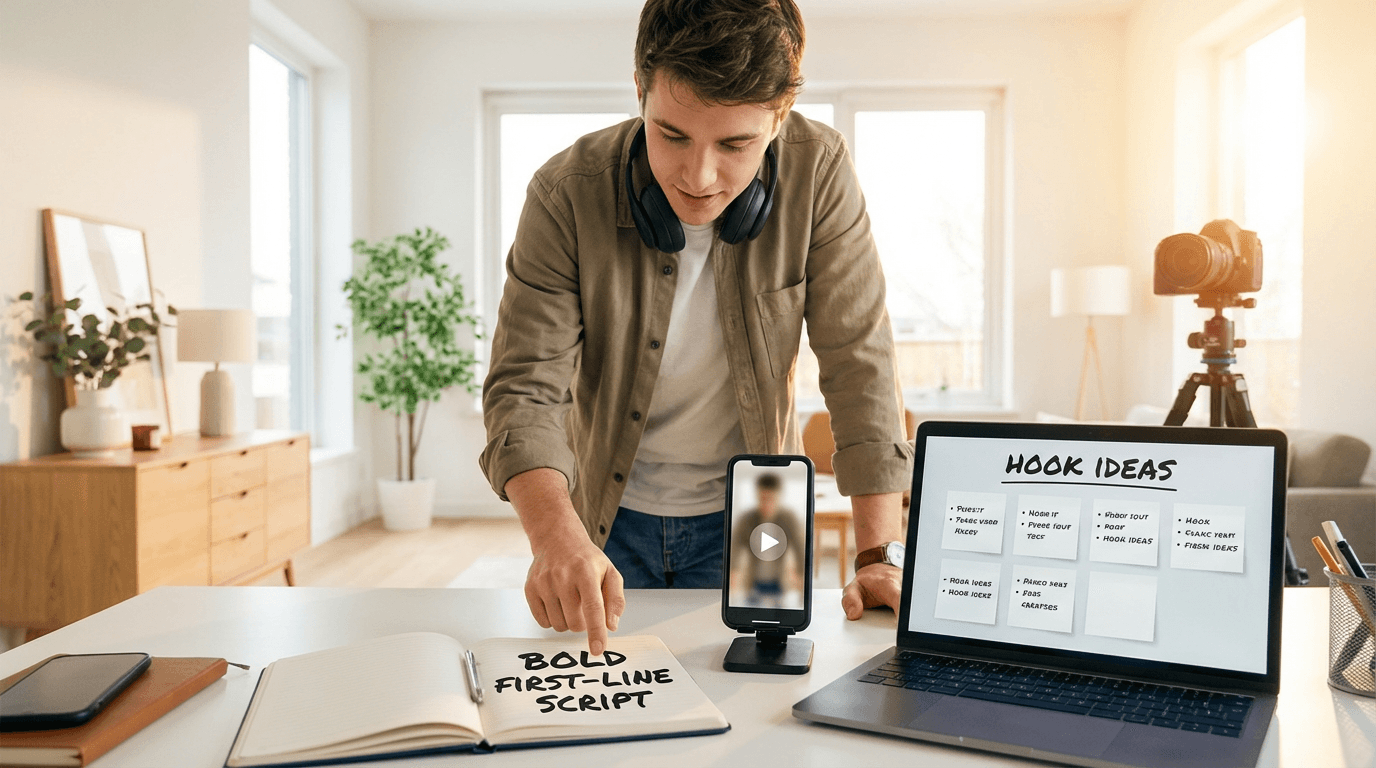
A lot of creators have decent ideas, solid editing, and even good thumbnails, but the opening line does not create enough curiosity, clarity, or urgency to earn the next few seconds. That matters because YouTube creator guidance keeps stressing the same thing: get to the point quickly, use engaging hooks, and make it clear what viewers are about to watch. A YouTube creator feature also specifically says the first 3 seconds of Shorts should be thumb-stopping and clear about the promise of the video.
This guide gives you practical, copy-paste AI prompts for writing better YouTube hooks in 2026. It focuses on hooks for Shorts, faceless videos, tutorials, product videos, story-based clips, ranking videos, and personal-brand content.
Why hooks matter more in 2026
Hooks matter because viewers usually decide very quickly whether to keep watching. YouTube’s own guidance says viewers often see the thumbnail and title first, then decide whether the video looks worth watching. Once they tap in, the opening has to match that promise fast. That makes the hook the bridge between click and retention.
This is especially important for Shorts. YouTube says Shorts can run up to 3 minutes, but the platform still recommends concise pacing, engaging openings, and standalone value. More time does not mean you should start slower. It means you have more room after the hook, not before it.
What a strong YouTube hook usually does
A strong hook usually does one of these:
- creates a curiosity gap
- promises a fast payoff
- names a problem clearly
- challenges what the viewer assumes
- shows a result first
- makes the viewer feel, “Wait, what?”
- tells the viewer exactly why they should care
That structure aligns well with YouTube’s official advice to be clear about what viewers are about to watch and to get to the point quickly.
The biggest mistake creators make
Most creators do not actually write hooks.
They write introductions.
An introduction explains. A hook pulls. A weak opening sounds like this:
“Hey guys, today we’re going to talk about…”
A stronger opening sounds like this:
“I tested this for 30 days, and the result was not what I expected.”
The difference is simple. One starts with context. The other starts with tension.
The best base AI prompt for YouTube hooks
Use this when you want a solid starting point before the niche-specific prompt pack.

Prompt
Write 15 YouTube hook options for a video about [topic].
Requirements:
- Audience: [target audience]
- Format: [Shorts / long-form / faceless / tutorial / story / product demo]
- Tone: [bold / funny / curious / direct / dramatic / calm]
- Each hook must be 1 sentence only
- Each hook should be easy to say out loud
- Prioritize curiosity, clarity, and quick payoff
- Avoid generic intros
- Avoid "Hey guys" style openings
- Make each hook feel different from the others
Also label each hook by type:
- curiosity
- surprise
- mistake
- challenge
- result-first
- story
- comparison
40 AI prompts for YouTube hooks in 2026
Below are 40 copy-paste prompt templates grouped by hook style.
1) Curiosity hooks
1. Curiosity gap prompt
Prompt
Write 10 YouTube hook lines about [topic] that create strong curiosity without sounding fake or clickbait.
Each hook should make viewers want the next sentence immediately.
Keep them natural, short, and spoken-language friendly.
2. “You won’t expect this” prompt
Prompt
Write 10 YouTube hooks for a video about [topic].
Make each hook feel like the result or answer is unexpected.
Do not use cheesy clickbait language.
Keep each hook under 14 words.
3. Hidden reason prompt
Prompt
Write 12 hook lines about [topic] that imply there is a hidden reason, hidden mistake, or hidden pattern the viewer does not know yet.
Make them sound sharp and modern.
4. “Nobody talks about this” prompt
Prompt
Write 10 YouTube hooks about [topic] using the energy of "Nobody talks about this" or "Most people miss this."
Make them feel bold but believable.
5. Open loop prompt
Prompt
Write 12 first-line hooks for a YouTube video about [topic].
Each hook should open a loop that makes the viewer need the next sentence.
No filler, no greetings, no generic setup.
2) Surprise and shock hooks
6. Surprising fact prompt
Prompt
Write 10 YouTube hooks about [topic] that start with a surprising fact, unexpected number, or unusual outcome.
Make them easy to say aloud.
7. Wrong assumption prompt
Prompt
Write 12 hook lines for a video about [topic] that begin by flipping a common assumption.
Use a strong spoken style.
8. “I thought this would fail” prompt
Prompt
Write 10 first-line YouTube hooks for [topic] using the energy of "I thought this would fail" or "I didn’t expect this to work."
Make them sound personal and real.
9. Instant disbelief prompt
Prompt
Write 10 hook lines about [topic] that feel instantly surprising and make viewers think "Wait, really?"
Keep them short and natural.
10. Result shock prompt
Prompt
Write 10 YouTube hooks for a video about [topic] that reveal the result first in a surprising way.
The viewer should immediately want to know how it happened.
If your content also depends on stronger packaging after the hook, YouTube Shorts Thumbnail Strategy 2026 and AI Prompts for YouTube Titles fit well here.
3) Mistake and problem hooks
11. Common mistake prompt
Prompt
Write 12 YouTube hooks for a video about [topic] that open with a common mistake people make.
Make the tone direct and useful.
12. “This is why you’re stuck” prompt
Prompt
Write 10 hook lines about [topic] that sound like "This is why you’re stuck" or "This is why it’s not working."
Keep them helpful, not insulting.
13. Pain point prompt
Prompt
Write 12 opening hooks for [topic] that name a painful or frustrating problem clearly in the first line.
The viewer should feel instantly understood.
14. Warning hook prompt
Prompt
Write 10 first-line hooks about [topic] that sound like an important warning.
Do not make them sound fake or fear-based.
Make them clear and believable.
15. Slow-results prompt
Prompt
Write 10 YouTube hooks for a video about [topic] built around the frustration of trying hard and getting slow or weak results.
Use concise spoken language.
4) Result-first hooks
16. Outcome-first prompt
Prompt
Write 12 YouTube hooks for [topic] that begin with the final result first.
The viewer should instantly understand what happened and want the explanation next.
17. Before-and-after hook prompt
Prompt
Write 10 hook lines about [topic] that imply a strong before-and-after transformation in one sentence.
Make them clean and not overdramatic.
18. Speed-result prompt
Prompt
Write 10 YouTube hooks about [topic] that emphasize a fast result, quick win, or short timeline.
Keep each hook believable and conversational.
19. Experiment result prompt
Prompt
Write 12 opening hooks for a video about testing [topic].
Start with the result, then imply that the process or explanation is worth watching.
20. “Here’s what happened” prompt
Prompt
Write 10 YouTube hook lines about [topic] using the energy of "Here’s what happened" after a test, challenge, or experiment.
Keep them sharp and spoken.
5) Tutorial and education hooks
21. Beginner hook prompt
Prompt
Write 10 YouTube hooks for beginners learning [topic].
Each hook should feel practical and immediate.
Avoid sounding like a textbook intro.
22. “If you’re new, do this first” prompt
Prompt
Write 10 opening lines for a video about [topic] using the idea "If you’re new, do this first."
Make each one feel clear, useful, and fast.
23. “Do this, not that” hook prompt
Prompt
Write 10 YouTube hooks for a tutorial on [topic] using a "do this, not that" angle.
Make the contrast obvious in the first sentence.
24. Fast-explainer prompt
Prompt
Write 12 hook lines for a video explaining [topic].
The hook should promise that the explanation will be simple and fast.
Keep them natural and not overly salesy.
25. One-tip payoff prompt
Prompt
Write 10 opening YouTube hooks about [topic] that promise one specific tip, fix, or shortcut.
Each hook should feel worth watching for that single payoff.
6) Story and personal-brand hooks
26. Storytime hook prompt
Prompt
Write 10 YouTube hooks for a story about [experience].
Each hook should start at the most dramatic, awkward, surprising, or emotional moment.
27. “I learned this the hard way” prompt
Prompt
Write 10 first-line hooks for a video about [topic] using the energy of "I learned this the hard way."
Make them feel honest and personal.
28. Regret hook prompt
Prompt
Write 10 YouTube hook lines about [topic] built around regret, missed time, or a lesson learned late.
Keep them simple and relatable.
29. “I wish I knew this earlier” prompt
Prompt
Write 12 hooks for a video about [topic] inspired by the phrase "I wish I knew this earlier."
Make them feel personal but still broadly useful.
30. Turning-point hook prompt
Prompt
Write 10 story-driven YouTube hooks about [topic] that begin at the turning point instead of the background.
Make the viewer want the full story immediately.
7) Comparison hooks
31. X vs Y hook prompt
Prompt
Write 10 YouTube hooks comparing [X] vs [Y].
Each hook should make clear who the comparison is for and why it matters right away.
32. Best choice prompt
Prompt
Write 10 opening hooks for a video about the best [tool/product/strategy] for [goal].
Make each hook feel decisive and useful.
33. Cheap vs expensive hook prompt
Prompt
Write 10 YouTube hooks comparing cheap vs expensive options for [topic].
Start with the most interesting difference first.
34. Ranking hook prompt
Prompt
Write 10 hook lines for a ranking video about the top [number] [things] for [goal].
Each hook should promise a clear payoff quickly.
35. “What I’d choose” hook prompt
Prompt
Write 10 YouTube hooks for a video about what I would choose if I were starting [goal] in 2026.
Make them opinionated, useful, and clear.
8) Product and business hooks
36. Product problem-solution hook
Prompt
Write 10 YouTube hooks for a video about a product that solves [problem].
Open with the pain point or relief as fast as possible.
Keep the tone natural, not overly salesy.
37. Demo hook prompt
Prompt
Write 10 hook lines for a product demo about [tool/product].
Each hook should make the result feel worth watching before the explanation begins.
38. Founder insight hook prompt
Prompt
Write 10 YouTube hooks for a founder or business video about [topic].
Make them sound credible, sharp, and experience-based.
39. Objection hook prompt
Prompt
Write 10 first-line hooks for a video answering the objection "[objection]" about [product/topic].
Each hook should sound direct and confident.
40. Experiment-and-proof hook prompt
Prompt
Write 10 YouTube hooks for a video where I tested [topic].
The first line should imply proof, not just opinion.
Make the viewer want the details.
The 6 hook styles that usually work best
These are the formats I would test most often:
Curiosity hook
Makes the viewer feel there is something important they do not know yet.
Result-first hook
Shows the payoff immediately, then pulls them into the explanation.
Mistake hook
Works well for tutorials and self-improvement content.
Story hook
Best when the emotion or moment is stronger than the explanation.
Comparison hook
Good for tools, products, strategies, and creator decisions.
Challenge hook
Strong when the content questions a common belief or habit.
That overall approach matches YouTube’s own advice to open clearly, get to the point quickly, and make the viewer understand the promise fast.
A better formula for writing your own hook prompts
Use this when you want tighter results than the templates above.
Prompt
Write 20 YouTube hook options for a video about [topic].
Audience: [who this is for]
Format: [Shorts / long-form / faceless / tutorial / story / demo]
Goal: [teach / entertain / persuade / convert / provoke curiosity]
Tone: [bold / calm / funny / dramatic / sharp / helpful]
Hook styles to include:
- curiosity
- surprise
- mistake
- result-first
- story
- comparison
Rules:
- 1 sentence each
- easy to say aloud
- no greetings
- no filler
- no generic intros
- no repeated structure
How to turn hooks into better-performing videos
A practical workflow usually looks like this:
- generate 15 to 20 hook options
- pick the 3 strongest
- say them aloud
- keep the one that sounds most natural and most immediate
- build the rest of the script around that promise
- make sure the title and thumbnail match the same promise
That last part matters because YouTube says viewers usually see the thumbnail and title first, and also recommends experimenting with titles and thumbnails. If you have access to YouTube’s testing feature, the winning title-thumbnail combination is chosen by highest watch time.
You can turn that whole flow into a faster content system inside Miraflow AI by moving from topic to hook, then script, then visuals, then thumbnail and final short-form asset.
What most people misunderstand about hooks
Most people think a hook has to be loud.
Usually, it just has to be clear.
A great hook does not always sound extreme. It just makes the viewer understand, very quickly, why the next few seconds are worth their attention. That fits closely with YouTube’s creator guidance about clarity and thumb-stopping openings, especially in Shorts.
FAQ
What is the best AI prompt for YouTube hooks in 2026?
Usually, it is a prompt that specifies the audience, format, tone, and hook type, then asks for multiple one-sentence openings. Broad prompts like “write a viral hook” usually produce weaker results.
How long should a YouTube hook be?
Usually one short sentence works best, especially for Shorts and fast-paced openings. The exact length can vary, but YouTube’s creator guidance emphasizes getting to the point quickly and making the promise clear early.
Are hooks different for Shorts and long-form videos?
Yes. Shorts usually need faster, more immediate openings because viewers swipe quickly, while long-form videos can sometimes hold a little more setup. Even so, YouTube’s official advice still emphasizes engaging hooks and clarity for both.
Should the title and hook match each other?
Yes. That is a strong practical rule. YouTube says viewers often see the thumbnail and title first, so the opening should follow through on that promise rather than feeling disconnected.
What is more important, the thumbnail or the hook?
They do different jobs. The thumbnail and title help earn the click, while the hook helps keep the viewer watching after the click. YouTube’s own guidance supports that split.
How can this post get better average position in Google?
There is no guaranteed trick, but Google’s own documentation consistently points to people-first content, descriptive titles, helpful snippets, and pages that genuinely satisfy readers.
Conclusion
If your videos are underperforming, do not just blame the topic.
The opening may be the real problem.
A better AI prompt can give you sharper first lines, stronger curiosity, cleaner problem statements, and openings that actually sound like they belong in a real YouTube video. That is why prompt packs like this are useful in 2026. They make it easier to test better hooks quickly instead of defaulting to slow intros.
Start with the base prompt, generate 15 to 20 options, say them aloud, and keep the one that makes you want to hear the next sentence. That is usually the hook worth building on.