AI Prompts for Luxury Watch & Accessories Brand Content: 15 Editorial Visuals (Copy & Paste)

Written by
Jay Kim
15 copy-paste AI prompts for luxury watch and accessories brand visual content. Hero product portrait compositions, wrist shot and on-body lifestyle presentations, dial and movement macro detail close-ups, lifestyle and occasion context builds, material and craftsmanship examinations, collection lineup arrangements, editorial flat lay compositions, brand heritage and archive narratives, packaging and unboxing presentations, brand ambassador portraits, limited-edition launch visuals, travel and adventure lifestyle shots, workshop and atelier craftsmanship scenes, social media campaign graphics, and boutique and retail environment showcases designed for luxury watch houses, fine jewelry brands, premium leather goods, designer eyewear, and any accessories brand building premium visual content that communicates material quality, design intelligence, craftsmanship, and the story behind the object.
15 copy-paste AI prompts for luxury watch and accessories brand visual content. Hero product portrait compositions, wrist shot and on-body lifestyle presentations, dial and movement macro detail close-ups, lifestyle and occasion context builds, material and craftsmanship detail examinations, collection and lineup portfolio arrangements, flat lay and editorial still life compositions, brand heritage and archive narratives, packaging and unboxing experience presentations, brand ambassador and portrait contexts, seasonal and limited-edition launch visuals, travel and adventure lifestyle action shots, workshop and atelier craftsmanship scenes, social media promotional and campaign announcement graphics, and store and retail environment showcase scenes designed for luxury watch houses and independent watchmakers, fine jewelry and precious accessories brands, premium leather goods and handbag houses, designer eyewear and sunglasses brands, high-end writing instrument makers, luxury belt and small leather goods producers, premium cufflink and men's accessories brands, bespoke jewelry designers, heritage and legacy watch manufacturers, independent and artisan horologists, fashion house accessories lines, premium tie and silk accessories brands, luxury pen and stationery houses, high-end tech accessories and smart-luxury wearable brands, estate and vintage watch dealers, watch complication specialists, precious metal and gemstone jewelry brands, luxury travel accessories producers, couture accessory houses, and any brand that creates an object designed to be worn, held, carried, or displayed on the body as a signal of taste, status, craftsmanship, investment, and personal identity.
The object sits under glass. Behind the glass of the display case, behind the glass of the sapphire crystal, behind the glass of the boutique window, behind the glass of the phone screen. Glass upon glass upon glass between the consumer and the thing they desire. The watch on its display cushion. The bracelet on its velvet tray. The bag on its illuminated shelf. The ring in its presentation box. The pen in its lacquered case. The consumer sees every one of these objects through glass — the physical glass of the retail environment and the digital glass of the screen through which most luxury purchase journeys now begin. The object cannot be touched before it is desired. Cannot be weighed in the hand before the aspiration has taken hold. Cannot be felt against the wrist, the neck, the shoulder before the consumer has already decided, through the eye alone, that this is the object they want against their skin. The luxury accessories purchase is a visual seduction conducted entirely through surfaces — the polished surface of the case, the brushed surface of the bracelet, the hand-stitched surface of the leather, the faceted surface of the stone, the lacquered surface of the dial — and the quality of the visual that presents those surfaces determines whether the seduction succeeds or fails before the consumer ever enters the boutique, contacts the dealer, or adds the object to the cart.
This is the fundamental operating condition of the luxury accessories market. The product is small. The product is detailed. The product is defined by material quality, finishing precision, and design subtlety that can only be communicated through visual content of extraordinary resolution, lighting specificity, and compositional intelligence. A watch dial is thirty millimeters across. The finishing on a movement bridge is invisible to the unaided eye at arm's length. The grain of a leather strap, the setting of a stone, the brushwork on a case flank, the beveling of a hand — these are details measured in fractions of millimeters, and they are the details that justify price points measured in thousands or tens of thousands or hundreds of thousands of dollars. The visual content must bridge the gap between the microscopic scale of the craftsmanship and the macroscopic scale of the price. The image must make visible what the eye alone cannot see and, in doing so, make comprehensible what the mind alone cannot justify. The visual content is not the marketing of the luxury accessory. The visual content is the argument for the luxury accessory — the evidence presented to the consumer that the object is worth what it costs, that the craftsmanship is real, that the materials are genuine, that the design is intentional, that the heritage is authentic, and that the object on the wrist, the neck, the finger, the shoulder will communicate exactly what the consumer needs it to communicate about who they are.
If you have worked with AI prompts for product photography, fashion and lifestyle brand content, or social media visuals, the methodology will be familiar. Copy the prompt, adjust the details to match your specific luxury watch or accessories brand — your product type (mechanical watch, quartz watch, smartwatch-luxury hybrid, fine jewelry ring, necklace, bracelet, earring, brooch, leather handbag, clutch, wallet, belt, eyewear, sunglasses, writing instrument, cufflink, tie bar, silk scarf, luxury tech accessory), your specific product design and material composition, your brand colors and visual personality, your positioning (haute horlogerie and high complication, heritage and legacy, modern luxury and contemporary, fashion-forward and trend-driven, artisan and bespoke, accessible luxury and entry-level premium, investment-grade and collectible), your heritage and founding narrative, your retail context (own-brand boutique, authorized dealer, multi-brand luxury retail, online direct-to-consumer, auction and secondary market), and the specific visual identity that distinguishes your object from every other object competing for the same wrist, the same neck, the same desire — generate, and deploy. What distinguishes these prompts from general product photography templates is that every element has been engineered specifically for the luxury watch and accessories context: the hero product portraits that capture the case finishing, the dial detail, the material quality, and the design precision at a scale that justifies the price (the single most important image in the entire luxury brand visual ecosystem), the wrist shot and on-body presentations that show the object in its intended context against human skin and in human life, the dial and movement macro details that reveal the finishing and the complication work invisible to the unaided eye, the lifestyle and occasion context builds that connect the object to the aspirational life in which it belongs, the material and craftsmanship detail examinations that make the quality argument at microscopic scale, the collection and lineup portfolio arrangements that communicate range and design coherence, the flat lay and editorial still life compositions that position the object within the curated world of taste, the brand heritage and archive narratives that ground the object in history and tradition, the packaging and unboxing experience presentations that extend the luxury from the object to its presentation, the brand ambassador and portrait contexts that humanize the brand through the wearer, the seasonal and limited-edition launch visuals that create urgency and collectibility, the travel and adventure lifestyle action shots that prove the object's place in the real world, the workshop and atelier craftsmanship scenes that show the human hands behind the object, the social media promotional and campaign announcement graphics that convert attention into desire, and the store and retail environment showcase scenes that sell the complete brand experience. These are not generic product photography prompts applied to expensive objects. They are precision-engineered visual systems designed to solve the specific challenge of making small, detail-defined, craftsmanship-intensive, heritage-dependent, aspiration-driven luxury objects irresistible through a screen.
Why Visual Precision Is the Defining Competitive Advantage for Luxury Watch & Accessories Brands
The luxury watch and accessories industry operates through purchase-decision mechanisms that are unlike any other consumer category. Understanding how consumers discover, aspire to, evaluate, and commit to a luxury accessories purchase reveals why visual precision — the ability to communicate material quality, finishing detail, design intelligence, heritage depth, and the promise of a specific identity transformation — has become the decisive competitive advantage in a category where the product is small, the details are microscopic, the prices are significant, and the competition for the consumer's desire is conducted almost entirely through visual channels.
The product is defined by invisible details. A luxury watch is a miniature machine. The movement's finishing — the Côtes de Genève striping, the beveled edges, the polished screw heads, the hand-engraved balance cock — exists at a scale that is invisible on the wrist. The case finishing — the alternating brushed and polished surfaces, the sharp edges between finishing zones, the precision of the bezel alignment — is perceptible to the touch but not readable at conversational distance. The dial details — the applied indices, the sunburst or guilloché pattern, the lume application, the printing precision — require close examination to appreciate. The same principle applies across luxury accessories: the hand stitching on a leather bag that distinguishes it from machine-stitched alternatives, the setting of stones in fine jewelry where the metal work disappears behind the gems, the lacquer layers on a writing instrument built up and polished over days. The visual content must make these invisible details visible. The macro photograph, the detail close-up, the precisely lit craftsmanship shot — these images do what the naked eye on the retail floor cannot: they reveal the quality that justifies the price. Without this visual revelation, the consumer cannot understand the difference between a $500 watch and a $50,000 watch, because at arm's length, both tell the same time.
Price justification is primarily visual in the pre-purchase phase. The consumer considering a luxury watch, a fine jewelry piece, or a premium leather accessory cannot evaluate the object's craftsmanship quality through any channel other than visual before purchase. The weight in the hand, the feel on the wrist, the tactile quality of the leather, the play of light on the stone — these confirm the visual impression, but the visual impression comes first. The consumer who has not been visually convinced of the craftsmanship quality will never enter the boutique to experience the tactile confirmation. The visual content must make the price feel not merely justified but inevitable — the viewer should look at the image and think "of course this costs what it costs, look at the quality of every surface, every edge, every detail." The image converts price resistance into price acceptance by making the quality undeniable before the object is ever held.
Aspiration is the primary purchase driver, and aspiration is visual. Luxury accessories are not purchased for function. A $200 quartz watch keeps better time than a $20,000 mechanical watch. A $50 wallet holds the same cards as a $500 wallet. The purchase is driven by aspiration — the desire to own an object of exceptional quality, to wear a signal of taste and achievement, to possess a piece of heritage or artistry, to feel the specific satisfaction of choosing the best. This aspiration is created and sustained almost entirely through visual channels: the advertisement that positions the watch on the wrist of a life the consumer desires, the Instagram image that makes the bracelet look like it belongs against a backdrop of travel and beauty, the website hero that presents the bag as an object of such quality that owning it changes how the owner moves through the world. The visual creates the aspiration. The aspiration creates the desire. The desire creates the purchase.
The category is intensely competitive at every price tier. From entry-level luxury (accessible luxury watches, premium fashion accessories) through mid-range luxury (established brands with heritage and recognition) to ultra-luxury (haute horlogerie, high jewelry, bespoke goods), the competition for the consumer's desire is fierce. At every tier, well-designed, well-made products compete for the same aspiration, the same wrist, the same budget. In this environment, the visual brand identity — the quality, the consistency, the premium-communicating power of every image — is the primary differentiator that determines which brand captures the consumer's aspiration. The brand with the most compelling visual identity captures the desire before the consumer ever compares specifications, reviews, or prices. The visual identity is not an element of the competitive strategy. It is the competitive strategy.
Social media has become the primary discovery and aspiration engine. Instagram, TikTok, YouTube, Pinterest, and watch and fashion enthusiast communities have become the dominant channels through which luxury watch and accessories brands build awareness, generate aspiration, and initiate purchase journeys. The visual content on these platforms creates the desire that sends the consumer to the boutique, the authorized dealer, the brand website, or the secondary market. A single perfectly photographed watch on a wrist in a lifestyle context, a macro detail of a movement's finishing, or an editorial flat lay can generate more brand desire than months of traditional print advertising. The brands that master visual content on social platforms dominate the aspiration cycle.
The retail experience is being disrupted, making visual content more critical. The traditional luxury retail experience — the boutique visit, the relationship with the sales associate, the physical examination of the object — is increasingly supplemented or replaced by digital discovery and purchase. Consumers research online before visiting retail. They purchase from brand websites, authorized online dealers, and secondary-market platforms where the object is represented entirely by images. The visual content is no longer a supplement to the retail experience; it is increasingly the retail experience itself, and the quality of that visual retail experience determines whether the consumer commits.
Heritage and provenance are communicated visually. A watch brand's 150-year history, a jewelry house's founding-family tradition, a leather goods maker's generations of artisanal expertise — these heritage narratives are the brand's emotional moat, and they are communicated primarily through visual elements: the archival imagery, the vintage product photography, the workshop scenes, the heritage-object compositions, the visual language of time and tradition that cannot be claimed but must be shown. The consumer who encounters these visual heritage stories develops a relationship with the brand that transcends the current collection and creates the loyalty that sustains multi-generational brand equity.
The object is a signal, and the signal must be visible. A luxury watch or accessory worn on the body is a social signal — a communication to the world about the wearer's taste, achievement, knowledge, and values. The effectiveness of this signal depends on visual recognition: the distinctive case shape of a specific watch, the recognizable pattern of a specific leather house, the iconic design element of a specific jewelry brand. The brand's visual content trains the viewer to recognize the signal — to see the watch on someone's wrist and know what it is, to see the bag across the room and recognize its provenance. This visual recognition is built through consistent, high-quality visual content that makes the product's distinctive design elements familiar and desirable.
The Visual Language of Luxury Watch & Accessories Photography
Luxury watch and accessories brands that successfully communicate premium quality and generate aspiration employ a specific visual vocabulary — a set of aesthetic conventions, lighting approaches, material-rendering techniques, and compositional strategies refined over decades of luxury editorial and advertising photography.
The object is precious. The foundational principle of luxury accessories photography is that the object must look precious — rare, valuable, worth protecting, worth desiring, worth sacrificing for. Every lighting decision, every surface treatment, every compositional choice serves this principle. The object is never casual, never incidental, never merely present. The object is presented. The object is offered. The object is elevated to a status that matches its price and its emotional significance. The lighting is deliberate, the composition is considered, the styling is intentional — every element of the image communicates that this object deserves the attention it is receiving.
Material quality is the visual hero. In luxury accessories, the material is the message. The polished steel catching light with its mirror-bright surface. The brushed titanium showing its matte, industrial-sophisticated texture. The rose gold glowing with its warm, precious-metal luminosity. The platinum with its cool, dense, blue-white weight. The leather showing its grain, its hand, its patina potential. The sapphire crystal with its absolute clarity and its edge-catching light refraction. The gemstone with its fire, its depth, its color saturation. The lacquer with its depth and its mirror-like gloss. Every material in a luxury accessory has a specific visual character that must be rendered with precision — the correct highlight shape, the correct reflection behavior, the correct surface texture — because the consumer reads material quality through visual cues. The polished surface must look polished. The brushed surface must look brushed. The leather must look like the specific leather it is. The stone must show its specific fire and color. Material accuracy is not merely an aesthetic preference; it is a credibility requirement.
Scale manipulation is the defining technique. The most critical technique in luxury accessories photography is the manipulation of apparent scale — making a 40mm watch dial fill a frame that could contain a landscape, making a 2mm movement jewel look like a cathedral window, making a bracelet clasp mechanism look like a piece of architecture. This scale manipulation is what makes invisible details visible and, in doing so, makes incomprehensible prices comprehensible. When the consumer sees a movement bridge finishing that looks like a polished marble floor, they understand the craftsmanship. When they see a case edge that looks as sharp and precise as a blade, they understand the manufacturing quality. When they see a leather stitch that looks like a carefully placed rope, they understand the handwork. The macro photograph, the detail close-up, the extreme magnification — these are not aesthetic choices but economic necessities: they convert microscopic quality into visible value.
Light is the material revealer. In luxury accessories photography, light does not merely illuminate — it reveals material identity. The specific behavior of light on different materials is what allows the consumer to read the material quality through the image. Polished metal produces sharp, bright, mirror-like specular reflections. Brushed metal produces elongated, directional, softer highlights. Satin-finished surfaces produce broad, diffused glows. Leather produces soft, diffused reflections with texture-revealing directional shadows. Gemstones produce internal fire and refraction patterns. Each material responds to light in a characteristic way, and the photographer's job is to position and shape the light to reveal each material's specific visual character. A single image of a luxury watch might contain six or eight different material surfaces (polished case top, brushed case side, polished hands, matte dial, applied metal indices, leather strap, sapphire crystal, case back engravings), each requiring its own light response to be rendered correctly. This material-specific lighting is what separates luxury product photography from general product photography.
Contrast zones communicate finishing quality. One of the hallmarks of fine watchmaking and luxury accessories craftsmanship is the deliberate alternation between different surface finishes — polished and brushed, matte and glossy, textured and smooth. These contrast zones are a primary quality signal: the sharper the transition between finishes, the higher the manufacturing quality. The photography must capture these transitions with precision — the exact point where the polished case top meets the brushed case flank, the sharp line between the mirror-polished bezel and the matte dial, the crisp edge between finishing zones on a movement bridge. This requires directional lighting that makes both finishes simultaneously visible and the transition between them sharp and readable.
Dark environments communicate luxury positioning. The dark background — deep black, charcoal, dark gradient, dark material surface — is the dominant convention in luxury watch and accessories photography. The dark background accomplishes several simultaneous objectives: it isolates the object and eliminates visual competition, it creates the contrast that makes metallic highlights and material qualities pop from the frame, it communicates the exclusive, curated, rarefied atmosphere of luxury, it provides the blank canvas against which the object's intrinsic beauty is the only subject, and it separates the visual language of luxury accessories from the bright, cluttered visual language of fashion and mass-market accessories. The dark background is a positioning tool that immediately communicates premium tier.
The wrist is the theater. For watches and bracelets, the wrist is the object's intended environment — the context that gives the object its purpose and its human dimension. The wrist shot is among the most important images in the luxury watch visual ecosystem because it answers the consumer's most fundamental question: "What will this look like on me?" The wrist shot transforms the object from an abstract precious thing into a personal possession — something worn, lived with, seen by others. The wrist provides scale reference (how large is this watch on a human body?), style context (how does this object look with clothing, in a life setting?), and human warmth (the skin, the hand, the gesture that makes the object part of a living person rather than a museum display).
Negative space communicates exclusivity. In luxury visual language, emptiness is not waste — it is a signal of exclusivity. The generous use of negative space around a luxury object communicates several things: that the object does not need to compete for attention, that it is important enough to occupy space alone, that the brand has the confidence to let the product speak without visual support, and that the viewer's attention is being directed with the precision of a museum curator spotlighting a masterwork. Cluttered compositions communicate mass-market. Generous negative space communicates luxury. The ratio of object to space in the frame is itself a positioning statement.
Color temperature communicates brand personality. In luxury accessories photography, the overall color temperature of the image communicates the brand's personality. Warm tones (golden light, amber reflections, warm material surfaces) communicate heritage, tradition, warmth, and approachability. Cool tones (blue-white light, silver reflections, cool material surfaces) communicate modernity, precision, technology, and edge. Neutral tones communicate balance, sophistication, and timelessness. The brand's chosen color temperature should be consistent across all visual content, creating the immediate emotional identification that builds recognition over time.
The background surface communicates the brand world. In studio-based luxury accessories photography, the surface on which the object rests communicates the brand's aesthetic universe. Dark leather communicates traditional masculine luxury. Polished black or dark stone communicates modern, architectural luxury. Textured concrete communicates contemporary, industrial-meets-luxury. Fine fabric (silk, velvet, cashmere) communicates tactile luxury and softness. Brushed metal communicates precision and technology. Raw, natural materials (wood, stone, linen) communicate artisan authenticity. The surface is the first page of the brand's story — the material context that frames the object before a single design element is examined.
Typography and visual restraint signal confidence. The most prestigious luxury brands use the least visual noise. Clean compositions, restrained styling, minimal color palettes, and generous negative space communicate the confidence of a brand that knows its product speaks for itself. Visual restraint — the deliberate choice to show less rather than more, to style with fewer elements rather than many, to let the object occupy the frame with quiet authority rather than competing with lifestyle clutter — is one of the most powerful luxury signals in visual content.
15 AI Prompt Templates for Luxury Watch & Accessories Brand Content
Each template includes a content concept, the full copy-paste prompt, and deployment guidance. All prompts are formatted for the Miraflow AI Image Generator and compatible with any high-quality text-to-image tool. Adjust the bracketed descriptive elements in each prompt to match your specific luxury watch or accessories brand — your product type, your specific design and material composition, your brand colors and personality, your positioning, your heritage narrative, your retail context, and the particular visual identity that distinguishes your object from every other object competing for the same desire. Generate at 1:1 for social media and profile images, 4:5 for Instagram feed, 16:9 for website banners and YouTube, 9:16 for Stories and vertical content, 3:2 for e-commerce and portfolio, and 2:3 for poster and promotional art.
Template 1: The Hero Product — Signature Object Portrait
This is the foundational image of the luxury watch or accessories brand — the single, precisely lit, immaculately composed product portrait that introduces the consumer to the object's design, material quality, and premium presence. The hero product portrait is the image upon which every other visual in the brand ecosystem is built.
Prompt:
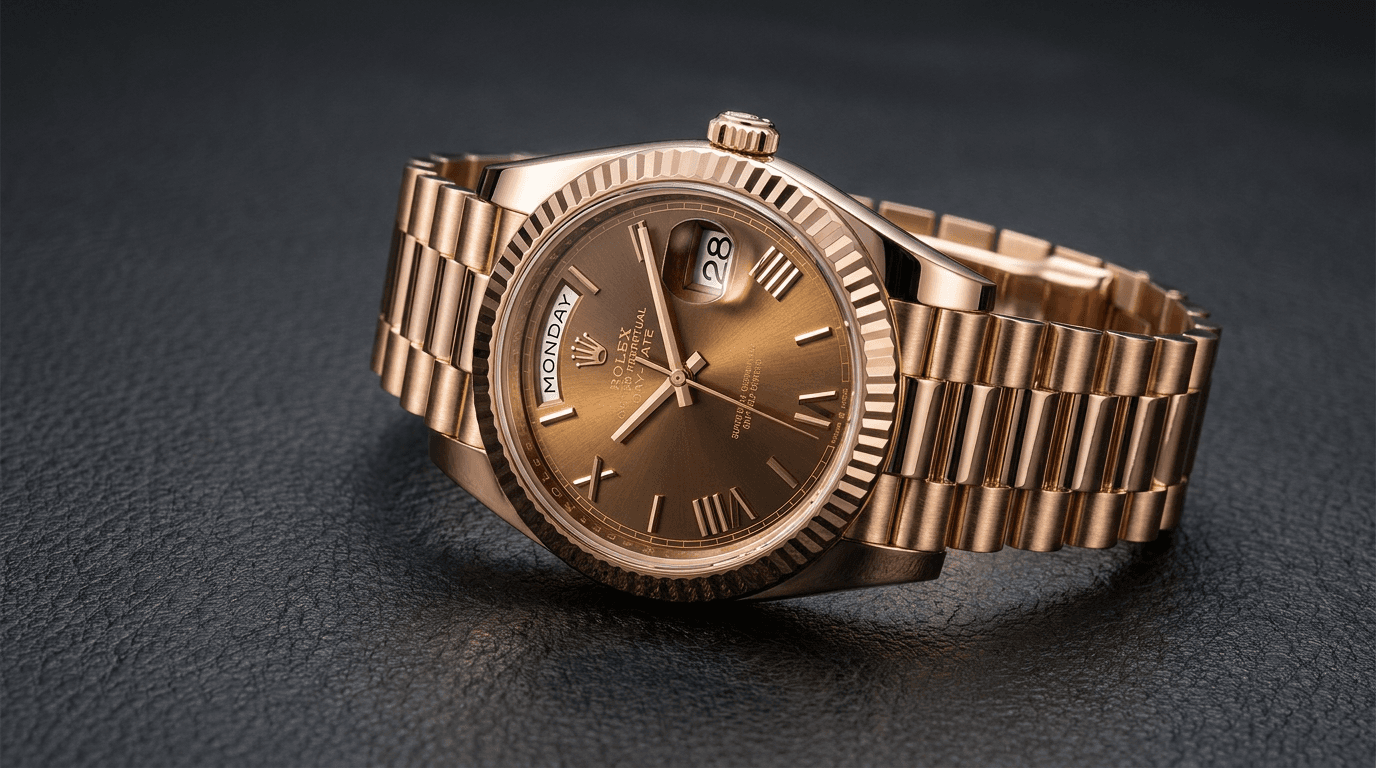
hero product portrait of [a single, precisely lit, premium-communicating luxury watch or accessory — the object presented as the definitive visual statement of the brand's design intelligence, material quality, and market positioning: the object is a specific product — the particular watch, jewelry piece, leather good, eyewear, or accessory that is the brand's hero or flagship offering: the object's form communicates the design language — specify the exact product form: a luxury watch with its specific case shape (round, tonneau, rectangular, cushion, asymmetric), case material (stainless steel, rose gold, yellow gold, white gold, platinum, titanium, ceramic, bronze, carbon fiber), case finishing (polished top surface transitioning to brushed flanks, fully polished, fully brushed, satin-finished, micro-blasted), bezel type (smooth polished, fluted, ceramic insert with engraved markings, gem-set, coin-edge), dial design (sunburst finish in a specific color — deep blue sunburst, silver-white sunburst, anthracite, champagne, black — with applied indices, printed indices, Roman numerals, Arabic numerals, stick markers, baton hands, dauphine hands, sword hands, skeleton or open-heart revealing the movement), crown and pushers (screw-down crown with branded logo, chronograph pushers), case back (solid with engraving, exhibition case back revealing the movement), and strap or bracelet (leather strap in a specific color and texture — black alligator, brown calfskin, navy blue rubber — or a metal bracelet with its specific link design and clasp); or a fine jewelry piece — a ring, necklace, bracelet, or earring with its specific metal type, stone setting, design elements, and distinctive features; or a luxury leather good — a handbag, wallet, belt, or small leather good with its specific leather type, hardware, stitching, and design details; or luxury eyewear — frames with their specific material, shape, and finishing; or a writing instrument — with its specific material, clip design, nib detail, and barrel finishing; or any luxury accessory with its complete design specification described — the object's form itself as a design-quality and positioning signal, the materials are specific and quality-communicating — every material surface identifiable and rendered to show its specific visual character: the polished steel catching light with its mirror-bright, sharp specular highlight, the brushed surfaces showing their directional, linear texture, the gold or precious metal glowing with its warm, dense, weighty luminosity, the ceramic showing its smooth, scratch-resistant, deep-colored surface, the leather showing its grain, its suppleness, its specific texture (the scale pattern of alligator, the fine grain of calfskin, the natural texture of suede), the gemstones showing their fire, their color depth, their faceted brilliance — every material surface communicating its specific quality through its light-response behavior, the design details are visible and sharp — the specific design elements that define the product's identity: the applied indices on the dial, the logo on the crown, the serial number, the distinctive design features that make this specific product recognizable and unique within its category, the overall impression is unmistakably precious — the viewer should feel the quality, the weight, the design intention, the material investment, the craftsmanship in every visible surface — the hero product portrait as the foundational premium-communicating image that establishes the brand's visual standard and makes the price comprehensible] in a tight, product-focused, precision-lit portrait composition, the object fills the primary frame — the full form visible in its dimensional glory, the proportions, the material surfaces, and the design details all readable, the object is presented with authority — positioned with the deliberate, museum-quality precision that a luxury object deserves, the angle chosen to reveal the maximum number of design elements and material surfaces simultaneously (for a watch: a three-quarter angle that shows the dial face, the case side, and the crown; for jewelry: the angle that reveals the primary design face and the setting; for leather goods: the angle that shows the form, the hardware, and the leather quality; for eyewear: the angle that shows the frame design and the material quality), the design details are sharp — the specific product features, logos, text, indices, hardware, and distinctive elements in razor-sharp focus, the material surfaces are accurately rendered — each surface showing its correct light response: polished surfaces with their sharp specular highlights, brushed surfaces with their linear directional reflections, matte surfaces with their soft diffused glow, leather with its texture, stones with their fire, the background is dark and luxury-establishing — a deep, rich, dark background that creates the contrast, the isolation, and the luxury atmosphere: deep black or near-black that frames the object in the visual language of premium presentation, or a dark, premium surface (dark leather, dark stone, dark brushed metal, dark fabric) that adds material context to the dark atmosphere — the dark background as the positioning statement that says "this is a precious object in a curated presentation," the depth of field is precisely controlled — the primary design face and the critical details in razor-sharp focus (for a watch: the dial and the nearest case surface in absolute sharpness, the far side of the case and the strap falling into smooth, controlled blur; for jewelry: the primary stone and its setting in sharp focus with supporting elements in softer depth; for leather goods: the primary hardware and the leather surface in focus with the form falling into depth) — the shallow-to-moderate depth isolating the object and creating the three-dimensional, physically present quality that makes the product feel real and touchable through the screen, the lighting is the specific quality that makes luxury objects precious — the deliberate, material-revealing, surface-specific illumination that is the hallmark of professional luxury product photography: a carefully shaped key light from one side and slightly above — the primary illumination creating the defining characteristics of luxury product photography: the key light revealing the dial or the primary design face with its detail-communicating, texture-revealing quality — for a watch dial: the light raking across the sunburst or guilloché pattern to reveal its radiating texture, illuminating the applied indices with their dimensional, three-dimensional quality (the indices casting tiny shadows that communicate their raised, applied construction), rendering the hands sharp and readable, showing any complications (date window, subdials, power reserve) with their functional detail; for jewelry: the light positioned to activate the gemstone's fire and the metal's reflective quality simultaneously; for leather: the light raking across the surface to reveal the grain texture, the stitching, and the material character, the key light sculpting the object's form — the dimensional quality created by the directional light modeling the three-dimensional shape through highlight-to-shadow transitions: the bright highlight zone on the case or surface nearest the light, the gradual transition through mid-tones that create the dimensional curve, and the shadow zone on the far side that gives the object its weight and its volume, a secondary fill light or reflector — a softer, dimmer, opposing light that opens the shadow side enough to reveal detail without eliminating the dimensional shadow that gives the object its three-dimensional quality: the fill keeping the shadow side readable (material surfaces, design details visible in the shadow) while preserving the high-end, sculpted quality of the directional key, specular highlights placed with precision on every material surface — the small, bright, intense highlights on polished metal (sharp and bright, communicating mirror-like quality), the elongated directional highlights on brushed surfaces (communicating the linear finish), the broad soft highlights on satin or matte surfaces (communicating the diffused quality), the fire points in gemstones (the internal refraction creating the sparkle), the soft glow on leather (communicating suppleness) — each highlight deliberately placed by the light position to reveal the specific material identity, a subtle rim light or edge light to separate the object from the dark background — the fine luminous outline along the object's edge that provides dimensional separation and prevents any surface from merging into the dark background, the rim light defining the silhouette and adding the professional-quality dimensional edge, the overall illumination warm or cool to match the brand personality — warm-toned light for heritage, traditional, golden brands; cool-toned light for modern, technical, silver-and-steel brands; neutral for balanced, timeless positioning — the color temperature consistent with the brand's visual identity, hero product palette — the object's specific material tones (specify: [your product's materials, e.g., stainless steel with sunburst blue dial and black alligator strap; rose gold with champagne dial and brown leather; platinum with black dial and steel bracelet; black leather bag with gold hardware; diamond ring in white gold setting]) — the dark, premium background tone — warm or cool directional lighting matching the brand personality — and the precious, material-rich, brand-specific palette of a luxury product hero in professional dark-field lighting as the color palette, the mood is unmistakably precious quietly authoritative material-quality-visible and the specific product message — this is the definitive presentation of this object, the quality is visible in every surface, every edge, every detail, the design intelligence and the material investment are communicated through the light and the composition — the hero product as the foundational brand image that establishes the visual standard and makes the price comprehensible, professional luxury product photography with precisely shaped directional lighting and material-specific highlights against a dark premium background with controlled depth of field, composed as a full-product portrait with the design details and the material quality and the dimensional presence as the primary premium focal points, dark premium palette with material-specific tones and precisely placed highlights, no text overlays, no watermarks
Best for: Website homepage hero and product page primary imagery, e-commerce and direct-to-consumer product listings, retail and authorized dealer sell sheets and sales materials, paid advertising primary creative, Instagram and social media signature product content, email marketing header and product features, print advertising primary product imagery, press and media kit primary product visual, wholesale and retail partner presentation materials, awards and editorial submission imagery, brand-book and identity documentation primary product reference
Template 2: The Wrist Shot — On-Body and Lifestyle Presentation
This template presents the watch or accessory on the body — worn on the wrist, the neck, the hand, the shoulder — the on-body presentation that transforms the object from an abstract precious thing into a personal possession and answers the consumer's fundamental question: "What will this look like on me?"
Prompt:
luxury watch or accessory wrist shot and on-body lifestyle photograph of [the specific luxury watch or accessory worn on the body — on the wrist, the neck, the hand, the finger, the shoulder — the object in its intended context against human skin and in human life: the on-body presentation involves a specific product on a specific person — the watch, bracelet, ring, necklace, bag, or accessory visible and identifiable on the wearer: a luxury watch on the wrist — the watch worn on the wrist with the dial visible, the case and strap or bracelet conforming to the wrist's curve, the watch's size and proportion relative to the wrist providing the scale reference that boutique visits provide in person: the dial facing the viewer with its details readable, the case showing its material quality and finishing on the wrist, the strap or bracelet showing its drape and its fit, the crown and any pushers visible at the case edge, the overall watch-on-wrist image answering "this is how large it wears, this is how it sits, this is what it looks like in real life"; or a jewelry piece on the body — the necklace against the décolletage, the ring on the finger, the bracelet on the wrist, the earring visible against the neck and the jaw: the jewelry against skin showing its scale, its design, its material quality, the precious metal and the stones in their intended context; or a luxury bag carried or held — the bag on the shoulder, in the hand, against the body: the bag's proportion relative to the person, the hardware visible, the leather quality apparent, the carry style showing the product's intended use; or eyewear worn on the face — the frames on the wearer, the design and the proportion relative to the facial features, the material quality visible, the wearer represents the brand's target consumer — dressed appropriately to the brand's positioning (formally for heritage and prestige brands, casually for modern and accessible luxury, stylishly for fashion-forward brands), groomed appropriately, the clothing and the styling complementing the product without competing with it, the wearer's clothing showing enough context to establish the lifestyle (the cuff of a well-tailored shirt visible beyond the watch, the collar of a quality garment framing the necklace, the outfit context surrounding the bag), the lifestyle context provides the aspirational atmosphere — the setting visible in the background or implied by the styling: an urban environment suggesting professional success and sophistication; or a travel context suggesting worldliness and adventure; or a social setting suggesting confidence and style; or a refined interior suggesting taste and curated living — the context blurred but identifiable and mood-setting, the product is the sharp focus of the composition — the watch face, the jewelry piece, the bag hardware in sharp detail while the human context provides the warm, living, aspirational frame, the overall composition communicates: this is what the product looks like on a person, in a life, on a wrist or a body that could be yours — the wrist shot as the try-before-you-buy, scale-revealing, lifestyle-connecting image that makes the product feel personal and attainable] in a medium-close, on-body-focused composition, the product on the body is the hero — the watch, the jewelry, the bag, the accessory in its worn or carried position, visible and identifiable, the body provides the human context — the wrist, the hand, the neck, the shoulder providing the human scale and the skin-against-object warmth, the product details are readable — the dial, the design elements, the material quality visible even in the on-body context, the clothing and styling are appropriate — the wearer's presentation complementing the product's positioning, the lifestyle context is atmospheric — the background or the setting establishing the aspirational life moment, the depth of field is moderately shallow — the product and the immediate body context in sharp focus with the clothing, the background, and the lifestyle environment in atmospheric, mood-establishing bokeh, the lighting is natural-feeling, warm, and lifestyle-appropriate — the illumination that makes an on-body luxury shot feel real, aspirational, and editorially polished: natural-appearing, warm, directional lifestyle light — the illumination quality of an aspirational moment: soft, directional natural light (as if by a large window, in golden outdoor light, or in well-designed ambient light) creating the warm, dimensional, flattering quality that lifestyle and editorial photography uses to make both the product and the wearer look their best: the product catching the natural-feeling light with its material quality — the watch dial illuminated to show its detail, the case reflecting the directional light with its material identity, the strap or bracelet showing its texture and quality; or the jewelry catching the light with its stone fire and its metal brilliance; or the leather catching the light with its grain and its quality, the skin catching the warm light with healthy, natural, human quality — the warmth of the skin providing the human counterpoint to the precious object, the clothing catching the light with its texture and quality — the fabric supporting the product's positioning, the lifestyle background catching the atmospheric light with its aspirational quality — the setting blurred but tonally consistent with the brand's visual world, wrist shot palette — the product's specific material tones on the body (specify: [your product on body, e.g., stainless steel watch with blue dial on a wrist with white shirt cuff; gold necklace against skin with black clothing; brown leather bag against a navy outfit]) — the wearer's skin tone and clothing tones — the lifestyle background tones — warm, natural-feeling, directional lifestyle lighting — and the human-warm, product-focused, lifestyle-aspirational palette of a luxury accessory on the body in natural lifestyle light as the color palette, the mood is personally aspirational effortlessly worn lifestyle-connected and the specific wrist shot message — this is how it looks on you, in your life, on your wrist or your body, the product is at home on a person — the wrist shot as the personal, scale-revealing, lifestyle-connecting image that transforms the object from a display piece to a personal possession, professional editorial and lifestyle photography with natural-feeling warm directional light and moderately shallow depth of field, composed as an on-body product portrait with the worn or carried product and the human context creating the personal-aspiration narrative, the product readability and the human warmth and the lifestyle aspiration as the wrist shot focal points, warm lifestyle palette with material-specific product tones, no text overlays, no watermarks
Best for: Instagram and social media primary lifestyle content (highest engagement for watch and accessories brands), website product and lifestyle sections, paid advertising lifestyle-aspiration creative, authorized dealer and retail partner materials, social media Reels and Stories on-body content, email marketing lifestyle and product features, print advertising editorial creative, influencer content direction and mood boarding, e-commerce lifestyle product imagery, YouTube and video content lifestyle-product sequences
Template 3: The Dial & Movement Macro — Craftsmanship Detail
This template zooms to the extreme close-up — the dial detail, the movement finishing, the jewel setting, the stitching quality — the macro-scale examination that reveals the craftsmanship invisible to the unaided eye and makes the quality argument that justifies the premium price.
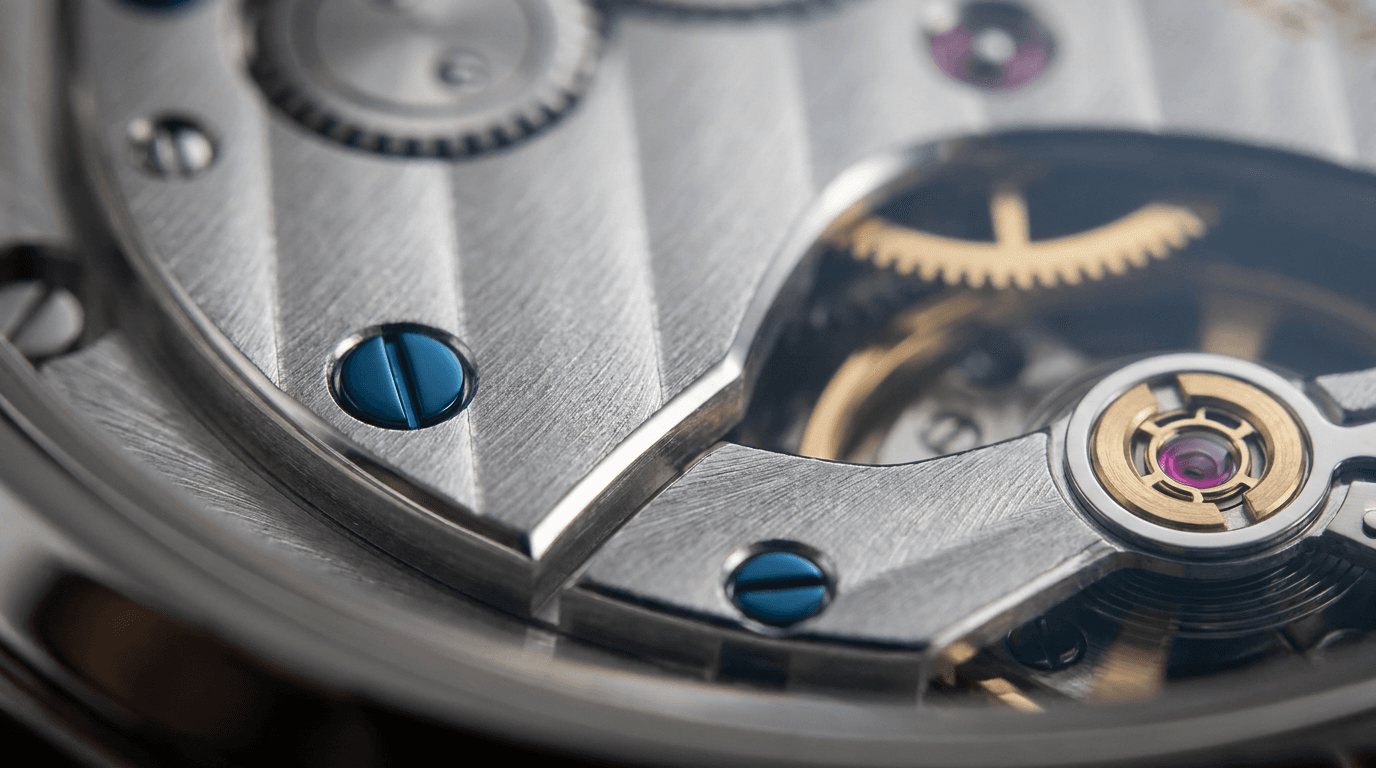
Prompt:
luxury watch dial and movement or accessory craftsmanship macro detail photograph of [the craftsmanship detail — the dial texture, the movement finishing, the stone setting, the leather stitching, the hardware construction — examined at extreme close range where the quality that justifies the premium becomes visible: the detail is specific and craftsmanship-revealing — the particular element examined at macro scale: a watch dial detail — the sunburst finish visible as a radiating pattern of hairline grooves catching light across the dial surface, the applied indices visible as three-dimensional objects rising from the dial with their faceted, polished surfaces reflecting the light, the text printing visible at microscopic precision, the hands visible as separately finished components with their own polished or blued surface quality, the lume application visible in the recesses of the indices or on the hands, any dial texture (guilloché pattern with its engine-turned, geometric, repeating pattern; fumé or graduated dial showing its color transition from center to edge; enamel dial showing its vitreous, deep, lustrous surface; aventurine dial showing its mineral, starry, shimmer) visible at the macro scale where the technique becomes the visual subject; or a movement detail — the Côtes de Genève striping visible as parallel, alternating bright-and-shadow stripes across a bridge surface, the beveled edges of bridges and plates visible as polished 45-degree chamfers that catch light like tiny mirrors, the polished screw heads visible as perfect, mirror-bright, flat circles with their precisely cut slots, the jewel settings visible as the rubies in their polished gold chatons, the spring visible as a delicate, coiled mechanism, the gear trains visible through any openworked or skeleton areas, the engraving visible on a balance cock or a rotor, the hand-finishing visible at the scale where machine finishing and hand finishing are distinguishable; or a jewelry craftsmanship detail — the stone setting visible at macro scale where the metalwork that holds the stone becomes the subject: the prongs or the bezel or the pavé setting showing the precision of the metalwork, the stone visible at a scale where the facets and the internal fire and the color depth are the visual content, the metal finishing (polished, matte, hammered, textured) visible at craft-revealing scale; or a leather craftsmanship detail — the hand stitching visible at macro scale where each stitch's precision, angle, and thread quality are readable, the leather grain visible at the scale where the specific hide character is the texture, the edge painting or burnishing visible as a finished, sealed, quality edge; or a hardware detail — the clasp mechanism, the buckle construction, the hinge engineering visible at the scale where the manufacturing precision is the visual subject, the overall examination communicates: this is why it costs what it costs, the quality is real, the craftsmanship is extraordinary, the invisible details are the most impressive — the macro detail as the quality-argument, price-justification image that makes the premium comprehensible] in an extreme close-up, macro-scale, craftsmanship-revealing composition, the detail fills the frame — the specific craftsmanship element at a scale where the technique, the precision, and the quality are the visible subjects, the craftsmanship is the content — the finishing technique, the material quality, the manufacturing precision all readable at the intimate macro scale, the context is minimal — just enough of the surrounding product visible to locate the detail within the whole (the edge of the dial visible beyond the macro-focused index, the surrounding leather visible beyond the focused stitch), the depth of field is extremely shallow — the nearest surface of the detail in razor-sharp focus with surrounding elements falling rapidly into smooth, atmospheric softness, the extremely shallow depth isolating the specific craftsmanship detail and creating the microscopic, quality-examining intimacy of the macro perspective, the lighting is precise, detail-revealing, and material-specific — the close-range illumination that makes each craftsmanship technique look its most impressive: precise, directional, craftsmanship-enhancing light — the macro-scale illumination that reveals every detail of the finishing technique: the light raking across textured surfaces at a low angle to reveal the dimensional pattern (the Côtes de Genève stripes catching directional light to show their alternating bright/shadow pattern; the sunburst dial showing its radiating grooves; the guilloché pattern showing its engine-turned geometry; the leather grain showing its textural depth) — the directional, surface-raking quality essential for revealing three-dimensional finishing in close-up, the light catching polished surfaces with their intense, specular, mirror-like highlights — the polished screw heads, the beveled edges, the polished indices, the mirror-bright case edges all showing their precise, sharp specular reflections that communicate the mirror-quality finishing, the light activating any stones with their specific optical properties — the faceted surface breaking the light into spectral fire, the color depth of the stone visible through the illumination, the internal clarity or inclusion character readable, the light revealing the precision of construction — the joints, the seams, the transitions between materials, the exactness of the craftsmanship visible at a scale where any imperfection would be equally visible (and the absence of imperfection is the quality proof), the overall illumination precise and clinical with just enough warmth to maintain the precious, human-crafted quality of the object, macro detail palette — the specific material tones at macro scale (specify: [your detail subject, e.g., silver Côtes de Genève stripes with ruby jewels and gold chatons; blue sunburst dial with rhodium-plated indices and blued steel hands; black alligator leather with hand-stitched white thread and polished steel buckle; white gold prong setting with round brilliant diamond]) — the precise, directional, surface-raking illumination tones — and the craftsmanship-revealing, material-specific, precision-communicating palette of a luxury detail in macro directional lighting as the color palette, the mood is craftsmanship-revealed precision-visible quality-undeniable and the specific macro message — this is the quality that justifies the price, the craftsmanship is real, the details invisible to the naked eye are the most extraordinary — the macro detail as the quality-argument and price-justification image that converts microscopic craftsmanship into visible value, professional macro and detail photography with precise directional raking light and extremely shallow depth of field, composed as a craftsmanship-detail close-up with the finishing technique and the material precision and the quality evidence as the focal points, material-specific macro palette in precise directional light, no text overlays, no watermarks
Best for: Instagram and social media detail-appreciation and enthusiast content (high engagement and save rate), website craftsmanship and product-detail sections, paid advertising quality-argument and price-justification creative, email marketing craftsmanship and quality features, Pinterest detail and craftsmanship content, YouTube and video content craftsmanship-detail sequences, press and media kit craftsmanship imagery, enthusiast community and forum content, print advertising detail-focused creative, authorized dealer craftsmanship-selling materials, awards and competition submission craftsmanship imagery
Template 4: The Lifestyle Context — Occasion and Aspiration
This template places the product in the full lifestyle context — the dinner, the travel, the professional achievement, the social moment — the aspirational scene that connects the luxury object to the life the consumer desires and positions the product as the natural accessory of that life.
Prompt:
luxury watch or accessory lifestyle and occasion context photograph of [the product in its full aspirational lifestyle context — the luxury accessory as a natural, integral element of the life the consumer desires: the lifestyle context is specific and aspirationally calibrated — the particular life moment that matches the brand's aspirational positioning: a professional success moment — the watch visible on the wrist as the wearer conducts a high-level meeting, signs an important document, commands a room with authority, the watch as the signal of achievement worn during the professional moment that validates the investment; or a travel and worldliness moment — the accessory visible as the wearer moves through an aspirational travel context: the watch at an airport lounge, the bag in a luxury hotel lobby, the eyewear on a Mediterranean terrace, the jewelry at a destination dinner, the travel context communicating worldliness, freedom, and the luxury of movement; or a social and entertaining moment — the accessory visible during a high-quality social occasion: the watch at a dinner party, the jewelry at a gala, the bag at a cultural event, the social context communicating sophistication, taste, and social confidence; or an active and adventure moment — the watch visible during an active pursuit: sailing, driving, skiing, diving, the sport or adventure matching the product's capability and the brand's lifestyle positioning (a dive watch in a marine context, a sport chronograph in a motorsport context, a field watch in an outdoor context), the activity communicating vitality and capability; or a quiet luxury and personal ritual moment — the accessory in a refined, private context: the watch during a morning coffee ritual, the pen during a journaling moment, the jewelry during a private dressing moment, the quiet context communicating personal satisfaction and intimate luxury, the product is visible but not dominant — the accessory is present, identifiable, and naturally integrated into the scene rather than awkwardly showcased, the product looking like it belongs in this life rather than being inserted into it, the aspirational environment is fully realized — the setting is rich with contextual detail that communicates the specific lifestyle: the quality of the furnishings, the caliber of the location, the style of the clothing, the level of the experience — every environmental element reinforcing the aspirational message, the human presence provides the identification point — the viewer projects themselves into the person wearing the accessory, the wearer's presentation appropriate to the brand's target demographic (age, style, demeanor), the overall composition communicates: this is the life in which this product exists, the accessory is natural to this context, wearing this product is part of living this way — the lifestyle context as the aspiration-building, desire-creating image that connects the product to the consumer's imagined best self] in a medium-to-wide, lifestyle-and-context-establishing composition, the lifestyle scene is the primary frame — the environment, the activity, the social context visible and aspirational, the product is identifiable within the scene — the watch, the jewelry, the bag visible and readable without dominating the composition, the environment communicates the aspirational context — the location, the activity, the social setting providing the lifestyle frame, the human presence provides the personal connection — the wearer living the aspirational moment naturally, the depth of field is moderate — the scene readable and atmospheric with the product in slightly sharper focus than the surrounding context, establishing the visual hierarchy without isolating the product from the lifestyle, the lighting is natural, atmospheric, and environment-appropriate — the illumination of the specific aspirational moment: natural, environment-specific, aspirationally beautiful lighting — the illumination quality of the lifestyle moment at its most aspirational: the warm, golden, natural light of a Mediterranean afternoon for the travel context; or the soft, warm, designed ambient light of a sophisticated interior for the professional or social context; or the dramatic, natural light of the outdoor adventure for the active context; or the intimate, warm, personal light of the private ritual context — the lighting establishing the emotional atmosphere of the aspirational moment while keeping the product visible and quality-communicating within the scene, the product catching the environmental light with its material identity — the watch dial visible, the metal reflecting the scene's light, the leather showing its quality, the stones catching available light — the product's premium quality readable even within the wider lifestyle context, the environment catching the atmospheric light with its aspirational quality — the setting, the furnishings, the context elements all contributing to the lifestyle message, lifestyle context palette — the environment's aspirational tones (specify: [your target lifestyle context, e.g., warm Mediterranean travel with blue sea and golden stone; sophisticated urban professional with charcoal and navy; social evening with warm amber and deep tones; outdoor adventure with natural greens and sky blue]) — the product's material tones within the scene — the wearer's clothing tones — natural, environment-specific, aspirationally beautiful lighting — and the lifestyle-aspirational, product-integrated, environment-rich palette of a luxury accessory in its desired life context as the color palette, the mood is aspirationally lived naturally luxurious contextually authentic and the specific lifestyle message — this is the life, the product belongs here, wearing it is part of living this way — the lifestyle context as the aspiration-creating, desire-building image that connects the product to the consumer's imagined best life, professional editorial and lifestyle photography with natural environment-specific lighting and moderate depth of field, composed as a lifestyle scene with the product naturally integrated into the aspirational context, the aspirational environment and the product presence and the human identification as the lifestyle focal points, environment-specific aspirational palette with product material tones, no text overlays, no watermarks
Best for: Instagram and social media aspirational and lifestyle content, paid advertising lifestyle and aspiration campaign creative, website lifestyle and brand-world sections, email marketing lifestyle and occasion features, print advertising editorial and lifestyle creative, Pinterest lifestyle and aspiration content, YouTube and video content lifestyle sequences, influencer content direction and mood boarding, brand-book lifestyle positioning documentation, seasonal marketing and occasion-specific campaign content
Template 5: The Material Close-Up — Surface and Finish Examination
This template isolates the material quality — the metal surface, the leather character, the stone quality, the finish precision — at a scale where the material itself becomes the subject and the material quality becomes the visible justification for the premium.
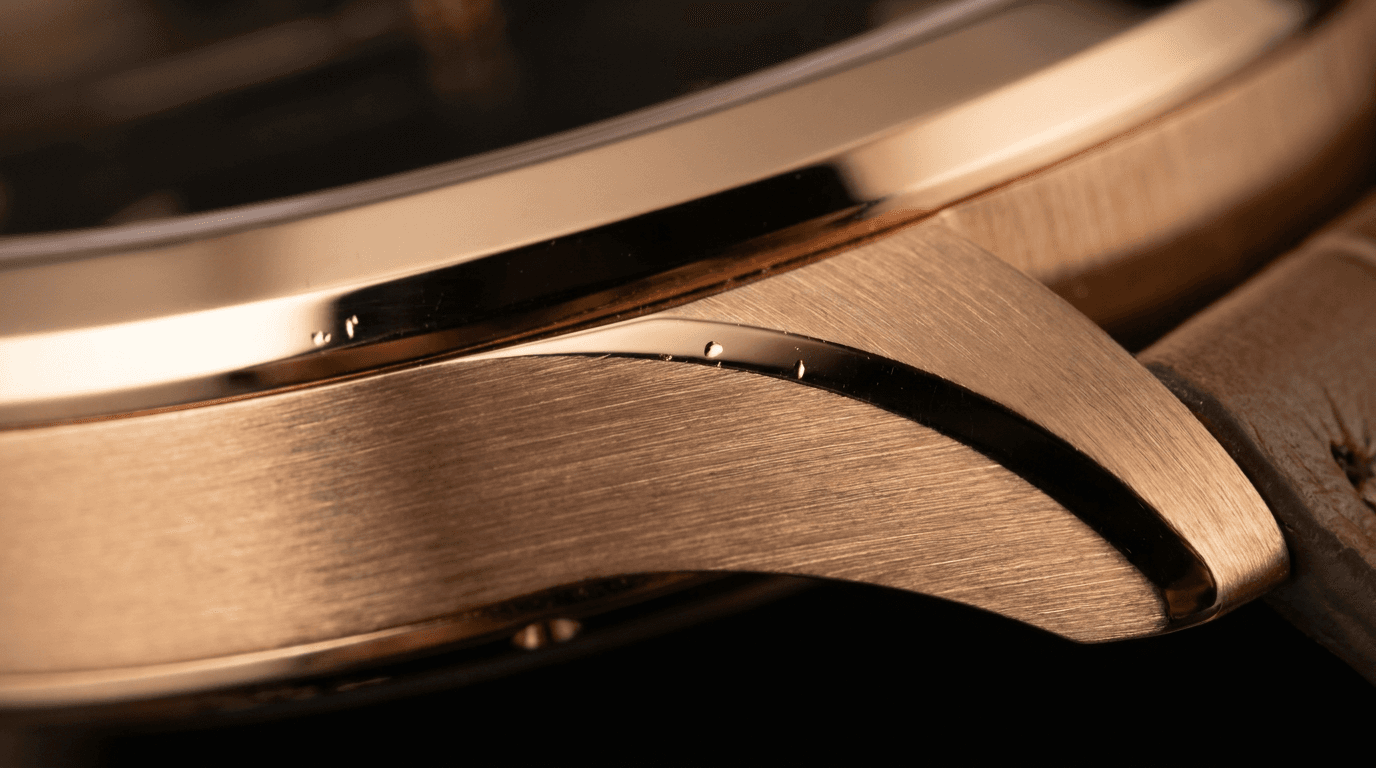
Prompt:
luxury watch or accessory material and surface quality close-up photograph of [the material quality — the specific surface finish, the metal character, the leather texture, the stone brilliance, the material composition — examined at close range where the material itself is the subject: the material examination is specific — the particular surface or material quality being revealed: a metal surface examination — the polished stainless steel showing its mirror-bright, reflection-carrying surface quality at close range: the highlight sharp, the reflection clear, the surface appearing as deep and precise as a liquid mirror; or the brushed or satin-finished metal showing its directional, linear, industrial-sophisticated texture: the fine parallel lines of the brushing visible, the highlight elongated and directional, the surface communicating precision manufacturing; or the rose gold showing its warm, dense, precious-metal glow: the color between copper and gold, the surface weight implied by the color density, the precious-metal quality unmistakable; or the titanium showing its light, technical, matte-gray character; or the ceramic showing its deep, uniform, scratch-resistant surface — each metal at close range showing its specific material identity; or a leather surface examination — the specific leather showing its characteristic grain and texture: the alligator or crocodile showing its distinctive scale pattern with its raised, individual, geometric scales catching light across their curved surfaces; or the calfskin showing its fine, even, supple grain; or the cordovan showing its dense, mirror-polishable, shell-like surface; or the suede showing its soft, napped, directional texture; or the exotic leather (ostrich, lizard, stingray) showing its distinctive, recognizable texture — the leather at close range showing both the specific hide character and the quality of the finishing (dyeing, edge treatment, suppleness); or a stone quality examination — the gemstone showing its specific optical properties at close range: the diamond showing its brilliant-cut facet pattern and its spectral fire breaking white light into colored flashes; or the colored stone (sapphire, ruby, emerald) showing its deep, saturated body color and its specific brilliance; or the pearl showing its orient and its lustrous, light-reflecting surface quality; or a surface finish transition — the precise point where one finish meets another: the polished-to-brushed transition on a watch case showing the sharp, clean, manufacturing-precision line where two finishes meet; or the transition from one material to another (metal to leather, metal to stone, leather to hardware) showing the precision of the joint and the quality of the transition — the material transitions as quality evidence, the overall examination communicates: this material is real, this finish is exceptional, this quality is visible and undeniable — the material close-up as the material-authenticity and quality-evidence image that makes the consumer trust the premium] in a close-up, surface-focused, material-examining composition, the material surface fills the frame — the specific surface texture, finish, or quality visible at intimate, material-reading scale, the material character is the subject — the viewer is looking at the material itself, reading its quality, its authenticity, its specific character, the context is minimal — just enough of the product visible to identify the material's location on the object (the case edge, the strap surface, the stone in its setting), the depth of field is very shallow — the nearest material surface in sharp focus with surrounding elements falling into smooth, atmospheric depth, the extremely shallow focus creating the intimate, magnified quality of a material examination, the lighting is precise, material-specific, and quality-revealing — the illumination that makes each material show its authentic character: precise, material-specific, surface-revealing illumination — the lighting designed for the specific material being examined: for polished metal — a large, shaped, reflected light source that creates the clean, geometric, mirror-like highlight on the polished surface, the highlight's shape and brightness communicating the mirror quality of the polish, the dark-to-bright transition across the polished surface communicating the depth and the reflection quality; for brushed or satin metal — directional light that crosses the brushing direction to reveal the linear texture, the light catching the tiny grooves and creating the bright-dark alternation that makes the brushed pattern visible; for leather — a directional, raking light from one side that catches the grain's three-dimensional texture, every bump and scale and pore of the grain casting tiny shadows that communicate the leather's specific character, the light also showing the leather's color depth and its finished quality; for gemstones — a small, bright, point-source or multi-source light that activates the facets and creates the internal fire and brilliance, the light entering the stone and exiting through multiple facets as spectral or colored flashes; for finish transitions — a directional light that makes both finishes simultaneously visible and the transition line sharp and readable, material palette — the specific material tones at intimate close-up scale (specify: [your material subject, e.g., mirror-polished stainless steel with blue-toned reflection; warm rose gold with satin side finish; black alligator leather with gold-toned stitching; cushion-cut sapphire in white gold bezel setting]) — precise, material-specific illumination — dark background providing the isolation — and the material-authentic, surface-specific, quality-communicating palette of a luxury material examination in precision lighting as the color palette, the mood is material-quality-undeniable surface-precise authenticity-visible and the specific material message — this material is real, this finish is exceptional, this surface quality is the physical evidence of the premium — the material close-up as the authenticity and quality image that makes the consumer trust what they are seeing and buying, professional macro and material photography with precise material-specific lighting and very shallow depth of field, composed as a surface-and-material close-up with the material character and the finish quality as the focal points, material-specific palette in precision lighting, no text overlays, no watermarks
Best for: Instagram and social media material-appreciation and enthusiast content, website material and craftsmanship sections, paid advertising quality-argument creative, email marketing material and quality features, Pinterest detail and design content, authorized dealer and retail partner quality-selling materials, press and media kit material-quality imagery, brand-book and identity documentation material reference, print advertising material-focused creative, e-commerce product-detail imagery
Template 6: The Collection Lineup — Portfolio and Range Presentation
This template presents the collection — multiple products arranged together as a visual family — communicating range, design coherence, portfolio depth, and the brand's ability to serve multiple desires within a consistent design language.
Prompt:
luxury watch or accessories collection lineup and portfolio photograph of [multiple products from the brand's collection arranged as a visual family — the lineup that communicates range, coherence, and the brand's design depth: the collection includes specific products — the particular watches, jewelry pieces, accessories, or product family arranged together: a watch collection lineup — three to five watches from the brand's collection showing the range: different models within a family (the dive watch, the dress watch, the chronograph from the same brand) or different configurations within a model (the steel bracelet version, the leather strap version, the precious-metal version), the watches arranged to show their individual character while communicating the family resemblance — the shared design DNA visible across different expressions; or a jewelry collection — multiple pieces from a collection (the necklace, the ring, the bracelet, the earrings) showing the design language carried across different forms; or a leather goods collection — the bag, the wallet, the belt, the card case showing the brand's material and hardware language at different scales; or a mixed accessories lineup — watches, jewelry, and accessories arranged as a curated lifestyle edit, the arrangement communicates design coherence — the products positioned to show both their individual identity and their family relationship, the shared design language (the case shape DNA, the hardware style, the material vocabulary, the design elements that repeat across the collection) visible through the arrangement, the differences are visible — different sizes, different materials, different colors, different complications or configurations showing the breadth of the range while the similarities hold the family together, the presentation surface supports the collection — a premium surface appropriate to the brand's positioning that unifies the arrangement (dark leather, dark stone, dark fabric, dark brushed metal), the overall composition communicates: this brand has range and coherence, the design language is consistent and deep, the collection invites the consumer to explore and to collect — the collection lineup as the portfolio-communicating, range-demonstrating visual] in a medium-to-wide, lineup-encompassing composition, the collection fills the frame — the products arranged with deliberate, curated spacing and positioning, the individual products are identifiable — each product's distinctive features readable and its individual identity clear, the family relationship is visible — the shared design language, the material vocabulary, the design DNA readable across the lineup, the differences communicate range — different sizes, materials, colors, configurations showing the breadth, the presentation surface unifies the arrangement — the consistent premium surface creating the curated, collection context, the depth of field is moderate to deep — the full lineup in readable focus with the background in atmospheric context, all products readable and their details visible, the lighting is even, collection-appropriate, and material-revealing — the illumination that makes a multi-product lineup readable and premium: even, controlled, multi-product-appropriate lighting — the clean, dimensional illumination that renders multiple products fairly (no product favored over another by lighting position) while maintaining the sculpted, premium quality of individual product photography: the key light broad enough to illuminate the full lineup while directional enough to create dimensional modeling on each product, each product catching the light with its specific material identity — the steel showing its highlights, the gold showing its warmth, the leather showing its texture, the different dial colors showing their specific characters — the lighting even across the lineup while material-specific for each product, the presentation surface catching the light with its premium quality — the dark surface providing the uniform base that unifies the collection, collection lineup palette — the range of material and color tones across the collection (specify: [your collection, e.g., steel chronograph with black dial, rose gold dress watch with cream dial, steel diver with blue dial, all on dark leather presentation surface]) — the unified presentation surface tone — even, controlled, collection-appropriate lighting — dark background — and the multi-product, range-communicating, design-coherent palette of a luxury collection in even premium lighting as the color palette, the mood is collection-proud range-deep design-coherent and the specific collection message — this brand has depth, each product is distinct, the design language is consistent and inviting — the collection lineup as the portfolio-showcasing visual that communicates range and invites exploration, professional luxury product photography with even directional lighting and moderate-to-deep depth of field, composed as a collection lineup with the design coherence and the individual product identity and the range depth as the visual subject, the design family and the material range and the portfolio breadth as the collection focal points, multi-product range palette in even premium light against dark background, no text overlays, no watermarks
Best for: Website collection and portfolio sections, Instagram and social media collection and range content, authorized dealer and retail partner portfolio presentations, paid advertising portfolio and range creative, email marketing collection and range features, print advertising collection creative, press and media kit collection imagery, brand-book collection documentation, retail display and visual merchandising reference, trade show and exhibition display imagery
Template 7: The Flat Lay — Editorial Still Life Composition
This template creates the editorial flat lay — the curated, overhead or styled arrangement that positions the luxury accessory within a world of complementary objects, textures, and lifestyle elements that define the brand's taste universe and communicate the broader aesthetic in which the product exists.
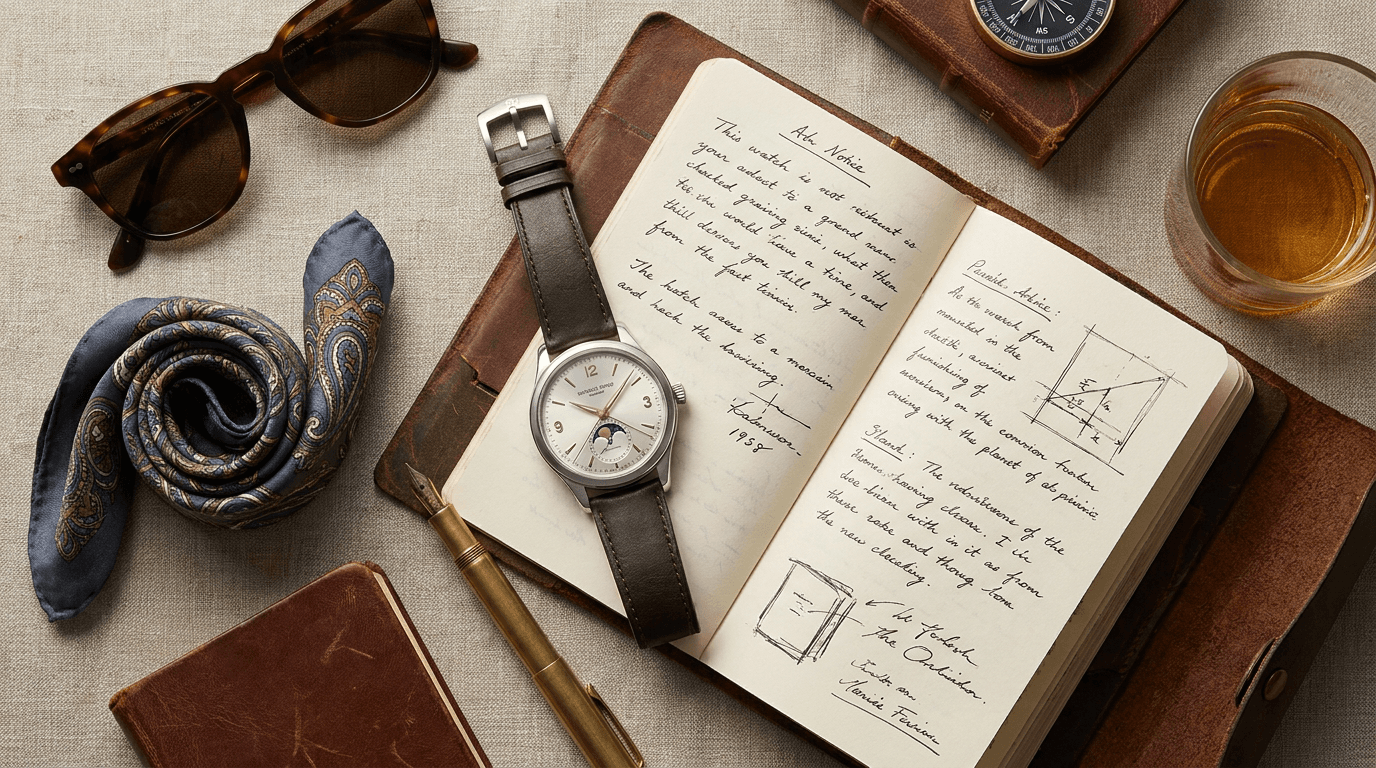
Prompt:
luxury watch or accessory editorial flat lay and still life composition of [a curated, editorially styled arrangement that positions the luxury product within a world of complementary objects, textures, and taste signals — the flat lay as a window into the brand's aesthetic universe: the composition includes the hero product and its curated context — the specific accessory surrounded by carefully chosen objects that define the taste world: the hero product at the composition's center or focal point — the watch, the jewelry piece, the leather good, the accessory in its most visually compelling position, the product the clear star of the arrangement while the surrounding objects provide context and taste cues, the complementary objects communicate the brand's lifestyle universe — objects chosen to define the taste, the interests, the aesthetic sensibility of the brand's ideal consumer: for a heritage watch brand — vintage photographs, a well-worn leather notebook, an antique map, a quality pen, a linen pocket square, a pair of quality leather shoes at the composition's edge, a whiskey glass — the objects communicating tradition, knowledge, travel, and considered taste; for a modern luxury brand — a sleek phone, design magazines, architectural photographs, minimalist accessories, quality sunglasses, a black notebook, clean geometric objects — the objects communicating contemporary design awareness, simplicity, and editorial modernity; for a jewelry brand — fresh flowers, fine fabric, a perfume bottle, quality stationery, silk ribbon, a beauty object — the objects communicating femininity, refinement, and sensory luxury; for an adventure or sport brand — a quality compass, a camera, travel-worn leather, a field notebook, natural elements — the objects communicating capability, exploration, and the outdoors, the textures create material richness — the flat lay includes a diversity of high-quality textures: leather, metal, paper, fabric, glass, wood, stone — the tactile diversity creating a visually rich surface that the eye explores and that communicates the brand's appreciation for material quality, the color palette is deliberate — the objects and surfaces chosen for their tonal coherence, the overall flat lay reading as a considered, designed, curated color composition (a warm palette of cognac leather and cream paper and gold metal; or a cool palette of gray and navy and silver; or a neutral palette of black and white and charcoal with a single color accent), the arrangement is editorially precise — each object placed with the deliberate, considered, asymmetric balance that editorial styling achieves: not symmetrical, not random, but carefully composed with the specific spacing, the specific overlap, the specific angular relationships that create visual interest and movement through the composition, the overall composition communicates: this is the world in which this product exists, the brand's taste is visible in the curation, the consumer who desires this product also desires this aesthetic universe — the flat lay as the taste-communicating, lifestyle-curating, editorial image that defines the brand's aesthetic world] in a flat lay or near-overhead, editorially styled composition, the arrangement fills the frame — the products and the complementary objects creating a full, visually rich, editorially balanced composition viewed from directly above or at a near-overhead angle, the hero product is the focal point — the watch, the jewelry, the accessory in the position of visual primacy within the arrangement, the complementary objects provide the taste context — each object contributing its specific lifestyle, texture, and aesthetic signal, the material diversity creates visual richness — leather, metal, paper, fabric, glass creating the tactile variety that rewards the viewer's exploration, the color palette is cohesive — the overall tonal composition deliberate and harmonious, the editorial styling is precise — the asymmetric, considered, visually balanced arrangement that defines editorial flat-lay quality, the depth of field is moderate to deep — the flat-lay plane in focus from foreground to background of the arrangement, the overhead perspective keeping the full arrangement in readable focus, the lighting is clean, even, editorially bright, and material-revealing — the illumination that makes editorial flat lays look their most polished: clean, soft, overhead-to-slightly-directional editorial lighting — the bright, even, slightly directional illumination that is the standard for editorial flat-lay photography: a large, soft light source positioned slightly to one side to create subtle directional quality (soft shadows on one side of each object that create dimensional modeling without harsh contrast), the light bright enough to render all textures and materials clearly, the product catching the editorial light with its material quality — the watch or accessory showing its design and its material character in the clean, bright illumination, each object catching the light with its specific texture and material quality — the leather, the paper, the metal, the fabric, the glass all showing their individual material character in the editorial illumination, the surface beneath the arrangement visible as a foundational texture — the background surface (marble, linen, leather, wood, paper) providing the base tone and the foundational texture for the arrangement, flat lay palette — the deliberate, curated tonal palette of the arrangement (specify: [your flat lay palette, e.g., warm cognac leather, cream stationery, gold watch, amber whiskey, dark wood surface; or cool gray cashmere, silver watch, white paper, black leather, pale marble surface]) — the hero product's material tones as the palette anchor — clean, soft, slightly directional editorial lighting — and the editorially curated, material-rich, taste-communicating palette of a luxury lifestyle flat lay in clean editorial light as the color palette, the mood is editorially curated taste-defined aesthetically precise and the specific flat lay message — this is the world of this brand, the taste is visible in the curation, the product exists in an aesthetic universe — the flat lay as the taste-defining, lifestyle-curating editorial image that communicates the brand's aesthetic world and positions the product within it, professional editorial and still-life photography with clean editorial lighting and moderate-to-deep depth of field, composed as a flat-lay or near-overhead editorial arrangement with the product and the curated lifestyle objects creating the taste narrative, the editorial curation and the material richness and the brand-world communication as the flat lay focal points, curated editorial palette with material diversity, no text overlays, no watermarks
Best for: Instagram and social media editorial and curated content (high save rate and aspirational engagement), website lifestyle and brand-world sections, paid advertising editorial creative, Pinterest lifestyle and curation content, email marketing lifestyle and gift-guide features, print advertising editorial creative, influencer content direction and styling reference, content marketing and blog lifestyle articles, brand-book lifestyle and aesthetic documentation, seasonal marketing curated-edit content
Template 8: The Brand Heritage — History, Archive, and Legacy
This template tells the brand's history through visual composition — the founding era, the archival objects, the generational evolution, the heritage narrative that grounds the luxury object in a story of time and tradition that new brands cannot claim and existing brands must honor.
Prompt:
luxury watch or accessories brand heritage and archive composition of [a visually narrative, history-communicating composition that tells the brand's story through heritage elements — the visual evidence of time, tradition, craft lineage, and generational commitment: the heritage elements are specific to the brand's history — the particular visual evidence of the brand's past and its continuity: vintage products — the brand's historical watches, jewelry, or accessories alongside or in relationship with current products: a vintage watch from the brand's early decades beside the current model that descends from it, the design evolution visible across the pairing, the vintage piece showing its aged, patinated, time-marked character (the faded dial, the aged lume, the worn case, the patina of decades on the wrist) while the current piece shows its contemporary refinement — the visual conversation between then and now; or original tools and instruments — vintage watchmaking tools (loupes, tweezers, hand tools, staking sets, historical workbench implements), historical jewelry-making tools, original leatherworking equipment — the tools of the craft showing their use-worn, time-marked, authentic patina; or archival documents and drawings — original design sketches, patent drawings, historical catalog pages, founding documents, early advertising materials, correspondence — the paper artifacts of the brand's administrative and creative history; or historical photographs — the founders, the original workshop, the early retail presence, the historical moments in the brand's story — the photographic evidence of the human history presented in vintage prints or frames; or awards and milestones — historical competition medals, observatory chronometer certificates, royal warrants, patent awards, significant commissions — the physical evidence of recognized achievement across the brand's history; or architectural heritage — the historical building, the original workshop location, the heritage site that connects the current operation to its founding geography, the modern product is present — the current collection piece connecting the heritage elements to the present, the visual relationship between past and present explicit: the brand's journey from its founding to its current expression visible in a single composition, the arrangement communicates lineage — the historical elements and the contemporary product arranged to read as a timeline, a progression, a conversation between eras: the heritage elements showing their authentic age (patina, wear, the unmistakable character of genuine old objects) while the contemporary elements show their current vitality, the brand identity bridges the eras — the brand name, the logo, the design DNA visible in both the historical and the contemporary elements, the visual thread that connects the founding vision to the current expression, the overall composition communicates: this brand has earned its history, the tradition is genuine, the craft lineage is real, the quality has been sustained across time — the heritage visual as the legacy-communicating, authenticity-proving image that creates the emotional depth only time can provide] in a medium, heritage-narrative composition, the heritage elements and the contemporary product together fill the frame — the historical and the current in visual dialogue, the historical objects show their authentic age — the patina, the wear, the time-marked character of genuine artifacts, the contemporary product shows its current quality — the modern expression in its best light, demonstrating the brand's continued excellence, the lineage is the narrative — the visual relationship between past and present readable as a story of continuity and evolution, the brand identity connects the eras — the name, the design elements, the visual DNA bridging the timeline, the depth of field is moderate — the primary heritage and product elements in focus with supporting context in atmospheric depth, the lighting is warm, nostalgic, and history-communicating — the illumination that makes heritage stories feel genuine and emotionally resonant: warm, soft, golden, archive-and-legacy-toned lighting — the warm, diffused, time-evoking illumination that communicates memory, tradition, and the emotional warmth of heritage: the golden, slightly amber-toned light suggesting the character of old workshop light, of aged documents under warm illumination, of the specific light quality that photography uses to communicate "this is the past, honored and preserved," the heritage objects catching the warm light with their aged, authentic character — the vintage watch showing its patinated dial and case in the warm illumination, the old tools showing their use-worn surfaces, the archival documents showing their aged paper quality, the historical photographs showing their sepia or monochrome character within the warm ambient, the contemporary product catching the warm light with its current premium quality — the modern piece showing that the heritage continues in present excellence, heritage archive palette — the aged, time-marked tones of the historical elements (warm sepia, aged gold, patinated metal, worn leather, faded paper, darkened wood) — the contemporary product's current material tones — warm, golden, archive-and-legacy lighting — and the time-layered, heritage-communicating, lineage-visible palette of a brand heritage narrative in nostalgic warm lighting as the color palette, the mood is historically grounded legacy-proud lineage-visible and the specific heritage message — this brand has earned its history through decades of craft, the heritage is genuine, the quality has been sustained, the present honors the past — the heritage visual as the brand-depth and legacy image that creates emotional connection and proves the authenticity that justifies the premium, professional editorial and still-life photography with warm nostalgic lighting and moderate depth of field, composed as a heritage-narrative arrangement with historical and contemporary elements in visual dialogue, the historical authenticity and the brand continuity and the emotional resonance of legacy as the heritage focal points, warm nostalgic heritage palette with contemporary product accents, no text overlays, no watermarks
Best for: Website about, history, and heritage sections, Instagram and social media brand-story and heritage content, packaging design heritage-element reference, email marketing brand-story and milestone features, press and media kit brand-history imagery, authorized dealer and retail partner heritage presentations, print advertising heritage and tradition creative, brand-anniversary and milestone campaign content, brand-book and identity documentation heritage pages, exhibition and museum display content, collector community and enthusiast content
Template 9: The Unboxing — Packaging and Presentation Experience
This template presents the packaging — the box, the presentation case, the wrapping, the unboxing sequence — extending the luxury from the object to its presentation and communicating that the brand experience begins before the product is ever worn.
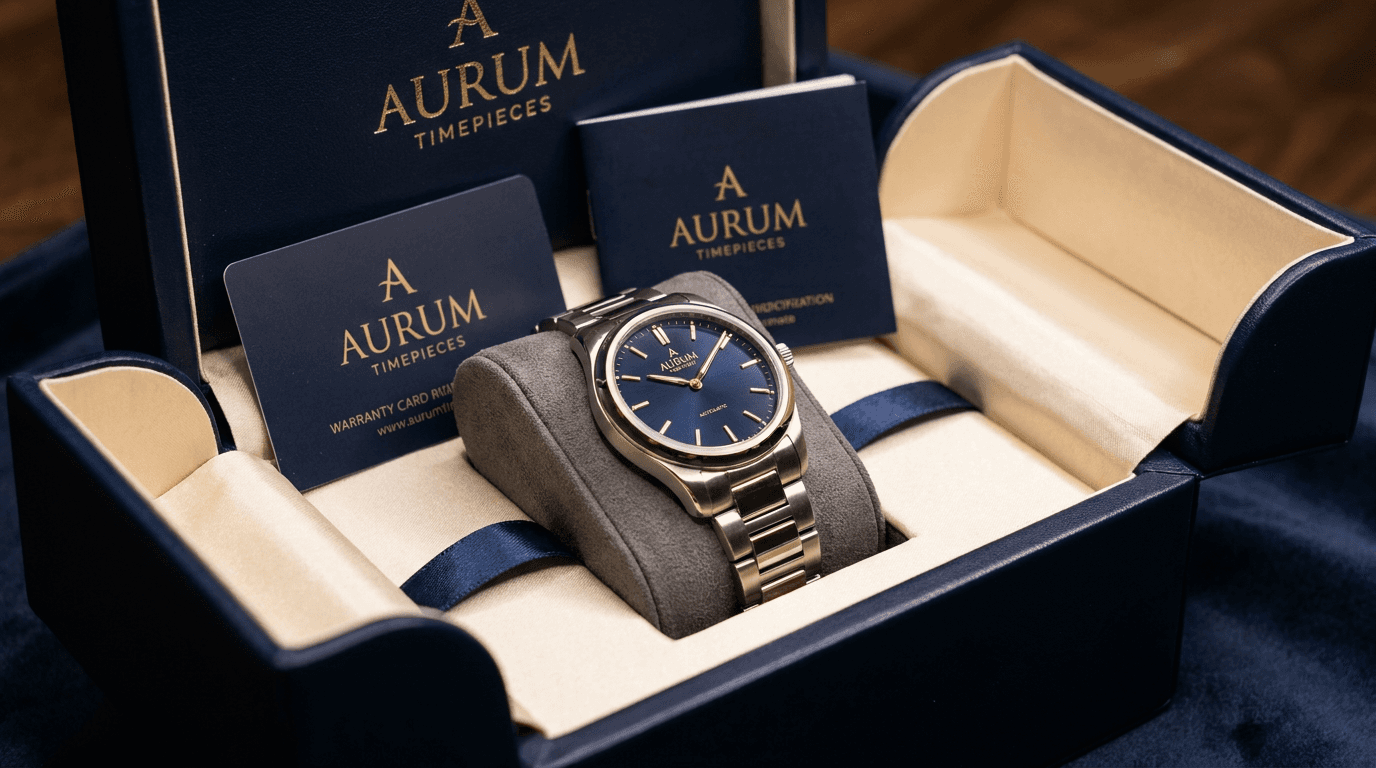
Prompt:
luxury watch or accessories packaging and unboxing experience photograph of [the packaging and presentation experience — the box, the case, the wrapping, the unboxing moment — the luxury that precedes the product and sets the emotional stage for the first encounter with the object: the packaging is specific and premium-communicating — the particular presentation format: a watch presentation box — the branded box in its opened state revealing the watch on its cushion or display: the outer box showing its material quality (leather-covered, lacquered, fabric-lined, branded with embossing or printing), the interior showing its fitted, product-specific, quality-lined construction (silk, suede, velvet, or Alcantara-lined interior), the watch displayed on its cushion with the dial facing the viewer, the complete unboxing narrative visible: the outer packaging, the inner case, the product in its presentation position, the warranty cards and documents visible, the overall reveal communicating the ceremony of receiving a luxury object; or a jewelry presentation case — the jewelry box opened to reveal the piece: the case showing its quality construction (leather, lacquered wood, fabric), the interior showing its fitted, cushioned, product-specific presentation (the ring in its slot, the necklace in its form, the bracelet on its cushion), the jewelry piece revealed in its presentation context; or a leather goods presentation — the bag in its dust bag, the dust bag in its branded box, the tissue and the ribbon, the unboxing of the leather good showing the layers of protection and presentation that communicate the brand's care; or a complete packaging ecosystem — the full set of brand packaging elements arranged as a composition: the outer box, the inner case, the product, the documentation, the branded elements (ribbon, tissue, cards, certificate, manual) — the complete ecosystem of presentation visible as a curated arrangement, the packaging materials show their specific quality — the box materials (leather, wood, lacquer, fabric), the interior materials (silk, velvet, suede), the closure mechanisms (magnetic, clasped, ribbon-tied), the documentation (printed on quality stock, with quality typography and design), the small details (branded tissue, ribbon in the brand's color, care instructions on premium paper) — every packaging element communicating that the brand extends its quality commitment beyond the product to its entire presentation, the product is the reveal — the luxury object visible within the packaging in its presentation position, the packaging framing the product as the precious content of the presentation, the overall composition communicates: the luxury experience begins with the packaging, the presentation is part of the product, the brand's quality extends to every element the consumer touches — the unboxing as the experience-extending, quality-amplifying image that communicates the complete luxury of the brand encounter] in a medium-close, unboxing-focused, presentation-revealing composition, the opened packaging fills the primary frame — the box or case open, the interior visible, the product revealed, the packaging quality is the secondary subject — the materials, the construction, the lined interior, the brand's packaging investment visible, the product is the primary subject within the packaging — the watch, the jewelry, the accessory visible in its presentation position, the documentation and accessories contribute to the complete picture — the cards, the ribbon, the supporting elements visible, the depth of field is moderate — the product within the packaging in sharp focus with the box edges and surrounding context in softer atmospheric depth, the lighting is warm, inviting, and luxury-appropriate — the illumination that makes a luxury unboxing feel special and ceremonial: warm, soft, inviting, ceremony-appropriate lighting — the warm, dimensional, slightly directional illumination that makes packaging materials look their most luxurious: the light catching the box surface with its material quality (the leather glow, the lacquer sheen, the fabric texture), the interior materials catching the light with their soft, lined, quality character (the velvet or silk interior catching the warm light with its plush, light-absorbing quality), the product catching the warm light with its maximum premium presence within the packaging context, unboxing palette — the packaging's specific material tones (specify: [your packaging, e.g., navy blue leather box with gold embossed logo, cream silk interior, watch on gray suede cushion; or black lacquered case with white gold hardware, black velvet interior, diamond necklace on black silk display]) — the product's material tones as revealed in the packaging — warm, soft, inviting lighting — and the premium, ceremony-communicating, experience-extending palette of a luxury unboxing in warm presentation light as the color palette, the mood is ceremonially luxurious experience-beginning quality-surrounding and the specific unboxing message — the luxury begins before the product is worn, the packaging is part of the experience, the brand's quality extends to everything the consumer touches — the unboxing as the experience-extending image that communicates the complete luxury of the brand encounter from the first moment of contact, professional product and editorial photography with warm inviting lighting and moderate depth of field, composed as a packaging-and-product reveal with the opened case and the product presentation as the visual subject, the packaging quality and the product reveal and the experience ceremony as the unboxing focal points, warm premium unboxing palette, no text overlays, no watermarks
Best for: Instagram and social media unboxing and reveal content, YouTube unboxing and review video thumbnails and frames, website product and shopping sections, e-commerce and DTC product listing supporting imagery, email marketing purchase-experience and gift features, paid advertising gifting and experience creative, Pinterest gift and unboxing content, influencer content direction for unboxing features, retail and authorized dealer gifting-presentation materials, holiday and gifting campaign creative
Template 10: The Brand Ambassador — Portrait and Product in Context
This template presents a person — the wearer, the collector, the style figure — as the human embodiment of the brand's values, the identification point that allows the consumer to project themselves into the brand world through a relatable, aspirational human presence.
Prompt:
luxury brand ambassador and portrait with product photograph of [a person who embodies the brand's values and aesthetic — the wearer presented as the human expression of what the brand represents, the product visible on their body as the natural complement to who they are: the person embodies the brand's identity — the specific human characteristics that align with the brand's positioning: a person of quiet confidence and evident taste — dressed in clothing that communicates the brand's aesthetic (classically tailored for a heritage brand, architecturally modern for a contemporary brand, effortlessly casual for an accessible luxury brand), groomed and presented with the care that matches the product's premium, their demeanor communicating the specific quality that the brand values (authority, creativity, adventure, elegance, knowledge, independence), the person not performing luxury but inhabiting it — the product a natural extension of who they are rather than an addition to who they are, the product is visible and identifiable — the watch on the wrist, the jewelry against the skin, the bag in the hand or on the shoulder, the eyewear on the face — the product visible within the portrait without being the portrait's sole subject, the product and the person in balanced visual relationship: the person provides the human identity, the product provides the brand identity, together they create the aspirational composite that the consumer desires, the person is in an environment that matches the brand — the background or context appropriate to the brand's lifestyle positioning: a refined urban environment, a sophisticated interior, a meaningful professional context, a beautiful natural setting — the environment adding the lifestyle dimension that completes the portrait, the expression and the posture communicate the brand's emotional register — the person's facial expression and body language conveying the specific emotion that the brand owns: quiet confidence, creative intensity, relaxed authority, joyful sophistication, contemplative depth — the emotional quality that the viewer attributes to both the person and the product, the overall composition communicates: this is who wears this brand, this is the human expression of the brand's values, the product looks right on this person because this person embodies what the brand represents — the brand ambassador portrait as the human-identification, aspiration-building image that gives the brand a face the consumer wants to be] in a medium, portrait-focused composition with product and environment, the person is the primary subject — the face, the expression, the posture, the human presence occupying the frame with presence and personality, the product is visible and contextual — the watch, the jewelry, the accessory identifiable and natural on the person without dominating the portrait, the environment provides the lifestyle context — the background establishing the aspirational setting appropriate to the brand, the clothing and styling complement the product — the wardrobe supporting the product's positioning without competing, the depth of field is moderate — the person's face and the product in focused relationship with the environment in atmospheric, mood-establishing depth, the lighting is portrait-quality, warm, and dimensional — the illumination that makes a person look their most compelling while keeping the product visible: warm, dimensional, portrait-quality lighting — the warm, directional, sculpting illumination that is the standard of quality portrait photography: a key light creating dimensional modeling on the face (the highlight-to-shadow transition that gives the portrait its depth and its emotional quality), the light warm enough to communicate the human warmth and the approachability of the person, the face well-lit and emotionally readable, the product catching the portrait light with its material identity — the watch or jewelry or accessory visible in the same warm illumination that flatters the person, the product's material quality readable without a separate product-specific light destroying the portrait's natural quality, the environment catching the ambient light with its atmospheric, lifestyle character, ambassador portrait palette — the person's skin tone and clothing tones — the product's material tones visible on the body — the environment's atmospheric tones — warm, dimensional, portrait-quality lighting — and the human-warm, product-integrated, aspirationally personal palette of a brand ambassador portrait in warm dimensional light as the color palette, the mood is humanly aspirational quietly confident brand-embodying and the specific ambassador message — this is who wears this brand, the product is natural on this person, the consumer sees themselves in this portrait — the brand ambassador as the human-identification and aspiration image that gives the brand a face and makes the product personal, professional editorial portrait photography with warm dimensional lighting and moderate depth of field, composed as a portrait with product and environment creating the aspirational-identity narrative, the human presence and the product identity and the lifestyle context as the ambassador focal points, warm portrait palette with product material accents, no text overlays, no watermarks
Best for: Instagram and social media portrait and lifestyle content, paid advertising brand-identity and aspiration campaign creative, website brand-world and ambassador sections, email marketing brand-story and lifestyle features, print advertising editorial portrait creative, YouTube and video content interview and profile contexts, press and media kit brand-ambassador imagery, brand-book lifestyle and identity documentation, seasonal marketing campaign creative, influencer content direction and partnership mood boarding
Template 11: The Limited Edition — Special Release and Collector Launch
This template creates the limited-edition, special-release, numbered-series, or collaboration launch visual — the dramatic, scarcity-communicating, collector-minded image that announces a new offering with the visual intensity that drives immediate desire and acquisition.
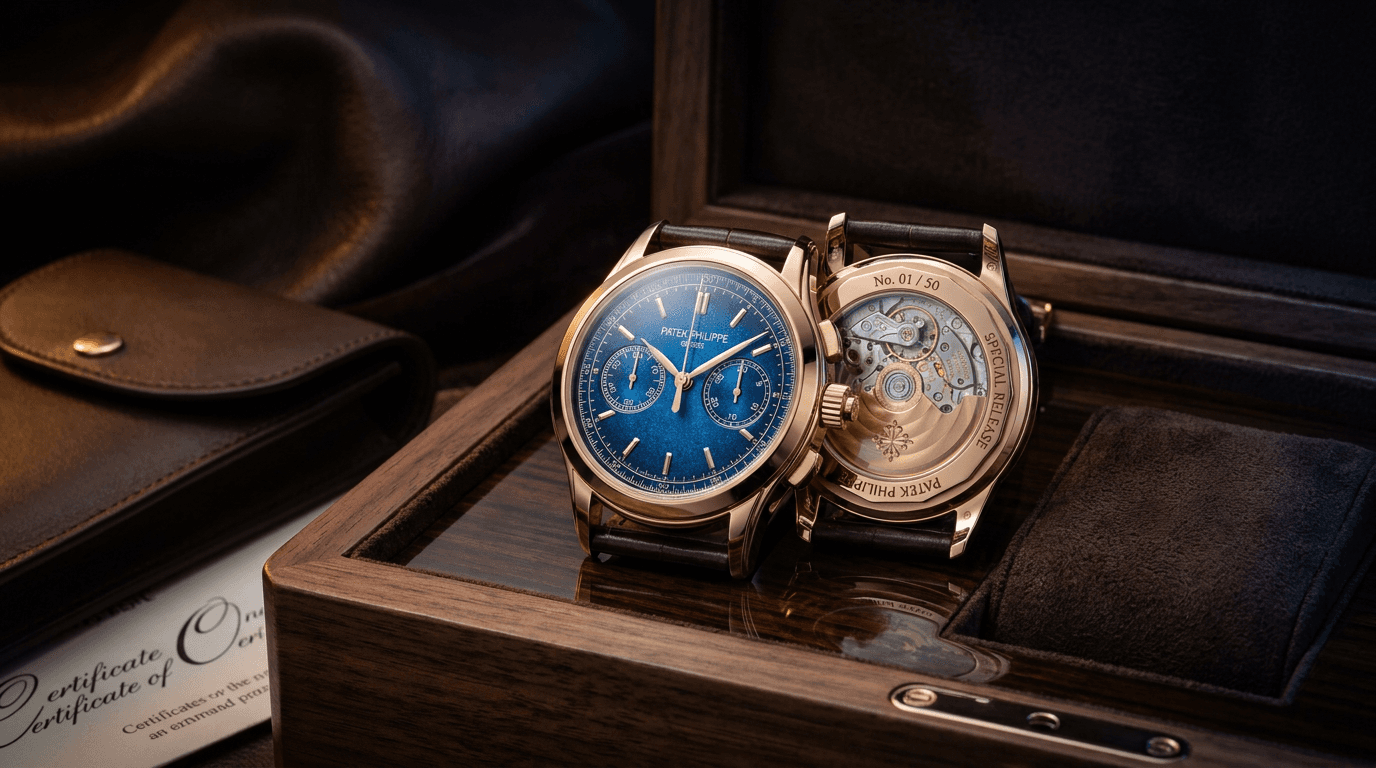
Prompt:
luxury limited-edition or special-release launch visual of [a dramatic, scarcity-and-exclusivity-communicating composition that announces a new limited edition, a collaboration, a numbered series, or a special release — the visual creating the urgency and the collector desire that drives immediate acquisition: the limited edition is the visual hero — the special product presented with maximum visual impact and exclusivity signaling: the product shows the specific limited-edition character — the particular special-release features that distinguish it from the standard collection: a unique dial color or material (a meteorite dial, a grand feu enamel dial, an aventurine dial, a unique color not available in the standard collection), a special case material or treatment (a unique metal, a special finish, a gem-set bezel, a colored ceramic), a limited-edition case back with its specific engraving (edition number "XX/100," special design, collaboration partner identity), a unique strap or bracelet (a special leather, a unique bracelet, a collaboration-specific material), special packaging (a unique box, a presentation case, a collector's set), companion elements (a book, a certificate, a branded accessory included with the piece); or for non-watch accessories: the limited-edition material, the collaboration design element, the unique color, the special construction, the numbered or identified limited-production detail, the exclusivity signals are prominent — the elements that communicate scarcity and collectibility: the edition numbering visible (the "XX of 100" or the limited-edition designation), the special materials visible and distinct from the standard offering, the unique design elements immediately differentiating this from the regular collection, the presentation materials and packaging (if included) showing their limited-edition quality, the composition amplifies the premium — the limited-edition product presented with even more visual drama and precision than the standard hero portrait: the lighting more dramatic, the background more exclusive, the overall visual impact communicating "this is above the standard, this is the elevated expression," the overall composition communicates: this is new, this is limited, this is the piece that collectors and enthusiasts will compete for, this is available now and will not be available when it is gone — the limited-edition visual as the scarcity-signaling, desire-amplifying, collector-targeting image that drives immediate acquisition] in a medium, product-hero composition with exclusivity context, the limited-edition product is the hero — the special release visible, dramatically presented, and immediately distinguishable from the standard collection, the exclusivity signals are prominent — the edition number, the unique materials, the special design elements, the limited-edition packaging visible, the brand identity is clear — the brand name and identity connecting the special release to the established brand equity, the premium is amplified — the product at maximum visual drama and desirability, the depth of field is precisely controlled — the limited-edition product in detailed focus with supporting exclusivity elements in atmospheric depth, the lighting is dramatic, elevated, and scarcity-communicating — the illumination that makes the limited edition feel like the most precious expression of the brand: dramatic, rich, premium-elevated lighting — the warm-to-cool directional illumination taken to its most dramatic expression: the contrast heightened, the key light more precisely shaped, the highlights more intense, the shadows deeper, the overall effect more cinematic and more exclusive than the standard hero — the elevated lighting communicating that this is the special expression, the limited piece, the collector's target, the product catching the dramatic light with amplified material quality — every surface, every detail, every unique limited-edition element rendered at maximum visual impact, the exclusivity elements catching the dramatic light — the edition number, the special packaging, the companion elements showing their quality, limited edition palette — the limited-edition product's specific material and color tones (specify: [your limited edition, e.g., PVD-coated black titanium with green meteorite dial and matching green alligator strap; rose gold with special grand feu enamel blue dial, numbered case back, wooden collector's box]) — dramatic, elevated, cinematic lighting — dark, exclusive background — and the dramatically premium, scarcity-signaling, collector-targeting palette of a limited-edition launch in elevated dramatic lighting as the color palette, the mood is exclusively available collector-targeted dramatically precious and the specific limited edition message — this is new, this is limited, this is the expression that rewards the attentive and the committed — the limited-edition visual as the scarcity-and-desire image that drives immediate collector acquisition, professional luxury product photography with dramatic elevated lighting and precise depth of field against a dark exclusive background, composed as a limited-edition product hero with exclusivity signals and collector context, the premium amplification and the scarcity communication and the brand identity as the launch focal points, dramatic exclusive palette with limited-edition material tones, no text overlays, no watermarks
Best for: Instagram and social media release and launch announcements, paid advertising limited-edition campaign creative, website new-release and special-edition sections, email marketing launch and announcement features, collector and enthusiast community content, press and media kit release imagery, print advertising limited-edition creative, authorized dealer launch and new-product materials, auction and secondary-market listing imagery, brand-anniversary and collaboration announcement content
Template 12: The Travel & Adventure — Active Lifestyle Action
This template places the luxury accessory in the real world — the travel, the adventure, the active life — proving that the object is not merely a display piece but a companion designed for the life the consumer actually lives, the wear and the world adding character rather than diminishing value.
Prompt:
luxury watch or accessory travel and adventure lifestyle photograph of [the product in the real, active, lived world — the luxury accessory as a companion through travel, adventure, and the active life that proves the product's utility beyond the display case: the action context is specific and product-appropriate — the particular travel or adventure scenario that matches the product's capability and the brand's lifestyle positioning: a luxury watch in a travel context — the watch visible on the wrist as the wearer navigates an aspirational travel environment: the watch amid the architectural beauty of a world city, the watch at the helm of a sailing yacht, the watch at altitude on a mountain trail, the watch poolside at a luxury resort, the watch at the controls of a performance vehicle — the travel context communicating worldliness, capability, and the watch as the constant companion through a life of movement; or a sport-specific context — the dive watch in or near the ocean, the chronograph at a racing circuit or timing an athletic pursuit, the pilot's watch in an aviation context, the field watch in an expedition setting — the product in the environment for which it was designed, the capability matching the context; or a luxury bag in a travel context — the bag at an airport, in a luxury hotel, on a train, in a new city — the bag as the functional, beautiful travel companion; or any luxury accessory in its real-world context — the product proving its place in an active, lived, traveled, experienced life rather than a static, display-case existence, the environment is real and beautiful — the natural landscape, the architectural environment, the marine setting, the urban scene — the world as a backdrop that is itself aspirational and that positions the product within a life of experience and discovery, the product is visible and contextual — the watch, the bag, the accessory identifiable and present within the active scene, the product looking like a natural, lived-with companion rather than a prop placed in a scene, the human element provides the action — the wearer engaged with the environment: hiking, sailing, driving, exploring, the body in motion or in engagement with the world, the product on the body through all of it, the overall composition communicates: this product goes where you go, it is designed for the world not the display case, the adventure and the luxury coexist — the travel and adventure image as the real-world-utility, active-lifestyle image that proves the product's place in a life fully lived] in a medium-to-wide, action-and-environment composition, the environment is prominent — the travel or adventure setting visible and aspirational, the product is identifiable within the action — the watch, the bag, the accessory readable and present, the human element provides the activity — the wearer engaged with the environment and the adventure, the product is natural in the context — the accessory looking like it belongs in this world, the depth of field is moderate — the scene readable with the product in slightly sharper focus, the lighting is natural, dramatic, and environment-specific — the real-world illumination of the specific travel or adventure context: natural, dramatic, environment-specific light — the real-world illumination of the adventure moment: the bright, high, clear light of a mountain summit or a tropical coast; the golden, warm, late-afternoon light of a European city or a desert landscape; the dramatic, overcast, moody light of a northern maritime setting; the dappled, filtered light of a forest trail; the bright, reflective light of a marine environment — the natural light of the specific setting creating the atmospheric quality and the environmental authenticity, the product catching the natural light with its material quality even in the active context — the watch crystal reflecting sky, the case catching sunlight, the leather showing its texture in natural light, the metal maintaining its premium identity in the real world, the environment catching the natural light with its specific geographic and atmospheric character, travel adventure palette — the environment's natural tones (specify: [your adventure context, e.g., deep blue ocean and white sail with steel dive watch; golden desert and ancient stone with heritage chronograph; alpine green and granite gray with field watch; urban architecture and warm stone with travel bag]) — the product's material tones within the environment — natural, dramatic, environment-specific lighting — and the adventure-aspirational, real-world, active-life palette of a luxury accessory in its natural travel or adventure context as the color palette, the mood is adventurously alive real-world-proven actively aspirational and the specific adventure message — this product goes where you go, the world is the context, the luxury and the adventure coexist — the travel and adventure image as the active-life, real-world-utility visual that proves the product's place beyond the display case, professional editorial and lifestyle photography with natural dramatic environment lighting and moderate depth of field, composed as an adventure-lifestyle scene with the product and the environment and the activity creating the real-world narrative, the environmental beauty and the product presence and the active life as the adventure focal points, natural adventure-environment palette with product material tones, no text overlays, no watermarks
Best for: Instagram and social media adventure and travel content, paid advertising lifestyle and capability creative, website lifestyle and brand-world sections, email marketing travel and adventure features, YouTube and video content travel and capability sequences, Pinterest travel and adventure content, print advertising active-lifestyle creative, influencer content direction for travel and adventure features, brand-book lifestyle and capability documentation, seasonal marketing and travel-occasion content
Template 13: The Workshop & Atelier — Craftsmanship in Process
This template shows the making — the workshop, the atelier, the bench, the hands — the human craftsmanship process that transforms raw materials into finished luxury objects, communicating the skill, the patience, and the handwork that mass-production cannot replicate.
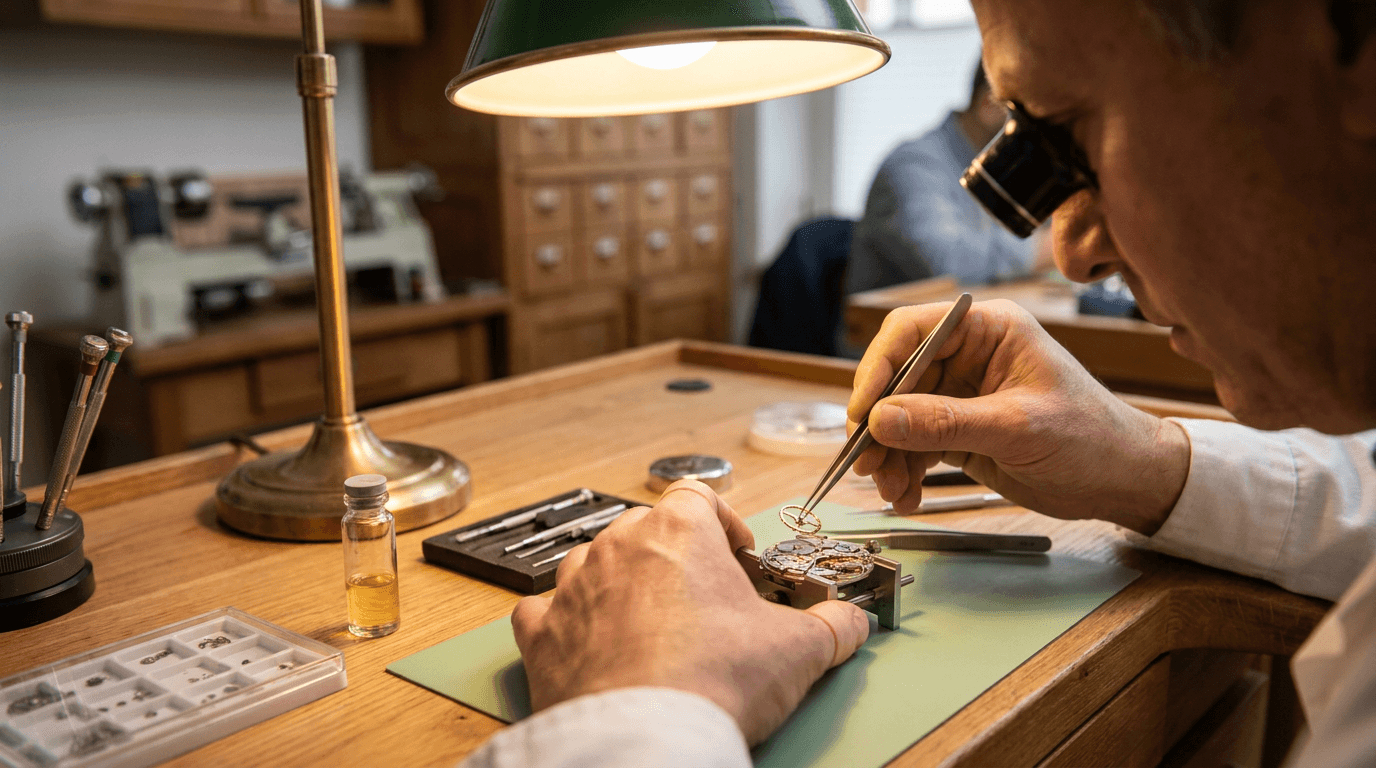
Prompt:
luxury watch or accessories workshop and atelier craftsmanship photograph of [the workshop, the atelier, the bench — the production environment where skilled hands transform raw materials into finished luxury objects: the workshop scene shows a specific craft process — the particular step in the production that communicates the human skill and the handwork investment: a watchmaker at the bench — the watchmaker seated at the traditional watchmaking bench with its specific equipment visible: the loupe (eyepiece magnifier) in the eye or at the forehead, the movement or the component held in the hand or in a movement holder, the specialized tools (tweezers, screwdrivers, hand tools, staking tools) arranged on the bench, the bench lamp providing the focused work light, the watchmaker's hands in the precise, controlled, miniature-scale work that defines the craft: setting a jewel, adjusting a regulator, assembling a movement, finishing a bridge, decorating a surface — the specific handwork visible at a scale where the skill is readable; or a jeweler or stone-setter at work — the jeweler at the bench with the loupe, the precision tools, the piece in progress: setting stones with the specific tools (pusher, beading tool, graver), soldering, polishing, hand-finishing metal — the specific jewelry-making handwork visible; or a leather craftsperson at the bench — the artisan cutting, stitching, assembling, or finishing leather: the hand stitching with the saddle stitch and the twin needles, the cutting with precision tools, the edge finishing with burnishing or painting, the specific leatherworking handwork visible; or a polishing or finishing operation — the worker at the polishing wheel or the finishing station, the component taking its final surface quality under the skilled hand, the hands are the hero — the skilled, experienced hands performing the precise, craft-specific work that machines cannot replicate: the hands showing their practiced control, their specific grip on the tools, their relationship with the miniature or detail-scale work, the hands as the bridge between the raw material and the finished luxury object, the workshop environment is visible — the bench, the tools, the lamp, the materials, the work-in-progress components creating the professional context that establishes the maker's expertise and the operation's seriousness, the brand identity may be present — the brand's finished product visible in the workshop, or the component being worked on identifiable as part of the brand's product, the overall composition communicates: these are the hands that make the product, this is the skill that justifies the premium, this is the human craftsmanship that mass-production cannot replicate — the workshop image as the craft-proof, skill-honoring, authenticity-communicating visual] in a medium-close, workshop-and-hands-focused composition, the hands and the work are the primary subject — the craftsperson's hands engaged with the specific task, the tools and the component visible, the workshop environment provides the professional context — the bench, the equipment, the materials establishing the working environment, the skill is visible — the precision, the control, the specific craft technique readable in the hand position and the tool use, the work-in-progress or the component is visible — the object being created or finished identifiable and the process understandable, the depth of field is moderately shallow — the hands and the work in sharp focus with the workshop environment in atmospheric, contextual depth, the lighting is workshop-authentic, warm, and craft-revealing — the illumination of the working environment: warm, directional, workshop-motivated lighting — the specific illumination of a craft workshop: the focused bench lamp or task light providing the intense, directed work illumination on the hands and the component — the bright, focused pool of light that workshop practice requires, the hands and the work caught in this intense, detailed, craft-revealing illumination, every detail of the handwork visible under the task light, the workshop environment in lower ambient light around the focused work zone — the bench, the tools, the materials in the warmer, dimmer ambient that surrounds the intensely lit work area, the task-light-to-ambient contrast creating the dramatic, focused, craft-honoring atmosphere that is the visual signature of workshop photography, the hands and the component catching the focused task light with craft-revealing precision — every fingertip position, every tool angle, every surface of the component in sharp, bright, detailed illumination, workshop palette — the workshop's material tones (warm wood bench, metal tools, the component's material character) — the craftsperson's hands and clothing — the focused task-light warmth — the dimmer ambient workshop tones — and the warm, craft-authentic, workshop-atmospheric palette of a luxury craftsmanship scene in focused task lighting as the color palette, the mood is craft-focused skillfully precise humanly made and the specific workshop message — these hands make the product, this skill is the source of the quality, this human craftsmanship is what you are paying for — the workshop image as the craft-proof and skill-honoring visual that communicates the human source of the product's quality, professional editorial and documentary photography with focused task lighting and moderately shallow depth of field, composed as a workshop craftsmanship scene with the hands and the work and the environment telling the making story, the skilled hands and the craft process and the workshop atmosphere as the craftsmanship focal points, warm workshop palette in focused task light, no text overlays, no watermarks
Best for: Website craftsmanship and atelier sections, Instagram and social media behind-the-scenes and craftsmanship content, YouTube and video content workshop and making-of sequences, press and media kit craftsmanship imagery, paid advertising heritage and craft creative, email marketing craftsmanship and quality features, print advertising craftsmanship creative, brand-book and identity documentation craft process reference, authorized dealer craftsmanship-selling materials, exhibition and museum display content, collector community and enthusiast content
Template 14: The Social Promo — Campaign and Announcement Canvas
This template creates the promotional-ready visual canvas — the atmospheric, text-ready composition designed to carry collection launches, event announcements, seasonal campaigns, and brand messages while maintaining the luxury brand's premium visual identity.
Prompt:
luxury watch and accessories brand promotional announcement visual canvas of [an atmospheric, text-ready composition designed as the premium background for luxury brand promotions — the visual foundation that carries collection launches, event invitations, seasonal campaigns, limited-edition announcements, and brand messaging while maintaining the brand's premium visual identity: the image provides a dramatic, brand-consistent, text-supporting background — atmospherically layered with the visual vocabulary of luxury accessories premium and the brand's specific identity: a background built from the brand's visual world — atmospheric, blurred, or partially abstracted luxury elements: the soft, out-of-focus glow of polished metal catching light, the atmospheric suggestion of a watch or accessory as an abstract form of reflected highlights and material tones, the textural quality of leather or metal as a background element, the dark, premium, luxury-photography atmosphere as the dominant visual quality, the brand's signature material tones (the warm gold of a rose-gold brand, the cool steel of a contemporary brand, the rich leather tones of a leather-goods house) blended into the atmospheric background, the brand colors are prominently integrated — the specific brand palette (specify: [your brand colors, e.g., deep navy and gold, black and silver, burgundy and cream, charcoal and rose gold]) present as dominant atmospheric tones, the colors consistent with the brand's visual identity across all touchpoints, the luxury category atmosphere is maintained — the viewer recognizes the image as belonging to a luxury accessories brand, the dark, sophisticated, precious-object visual vocabulary providing the category identification and the premium positioning, the composition is deliberately zoned for text — a large, clear, consistent-tone area where promotional text will sit with strong legibility: the text zone sufficient for a headline ("New Collection | Autumn-Winter 2026"), a supporting line ("Now available at authorized retailers"), a call-to-action ("Discover the collection"), and the brand logo — the text hierarchy accommodated, the background tone in the text zone consistent and dark enough for light text or light enough for dark text, the canvas works across promotional types — flexible enough to support a collection launch, an event invitation, a boutique opening, a collaboration announcement, a seasonal campaign, or any luxury brand communication, the overall composition communicates: this is an official communication from a luxury brand, the visual quality matches the product quality, the promotion deserves the viewer's attention — the promotional canvas as the brand-consistent, premium-maintaining visual foundation for every brand communication] in a text-ready, atmospherically-zoned premium composition, the composition is structured for text overlay — clear text zones and atmospheric visual zones deliberately arranged, the brand's visual identity dominates — the brand colors and material tones integrated with the luxury visual vocabulary, the luxury visual vocabulary is atmospheric — dark tones, metallic highlights, material textures, premium reflections in soft atmospheric rendering, the text zone is clearly defined — large, consistent, high-legibility area for promotional content, the depth of field is atmospheric — all elements in soft-to-deep focus preventing competition with overlaid text, the lighting is atmospheric, dark, and premium — the illumination that maintains the brand's luxury positioning: warm or cool atmospheric, premium-maintaining lighting — the low, directional, shaped illumination that maintains the luxury brand's dark, precious, exclusive visual quality in a text-supporting promotional composition, promotional canvas palette — the brand's specific colors as the dominant chromatic identity (specify: [your brand colors]) — atmospheric luxury tones (metallic highlights, dark surfaces, material textures) — text-zone consistent tonality — atmospheric premium-maintaining lighting on dark background — and the branded, premium-maintaining, promotion-ready palette of a luxury brand announcement canvas as the color palette, the mood is premium-branded promotionally ready luxuriously restrained and the specific promotional message — this is an official brand communication, the visual quality matches the product quality, the promotion deserves attention — the promotional canvas as the text-ready, premium-consistent, brand-identified foundation for every luxury brand promotion, professional atmospheric photography with premium-maintaining lighting and atmospheric depth of field in a text-zone-structured composition, designed for multi-purpose promotional text overlay, the text readability and the brand identity and the premium consistency as the canvas focal points, dark premium palette with brand-color accents in atmospheric light, no text overlays in this base image (text to be added for specific promotions), no watermarks
Best for: Instagram and social media promotional posts and announcements, paid advertising campaign backgrounds, email marketing promotional headers and banners, website promotional banners and popup backgrounds, event and boutique opening invitation graphics, authorized dealer promotional materials, seasonal and collection-launch campaign graphics, limited-edition and collaboration announcement canvases, cross-platform promotional consistency, retail and point-of-sale promotional materials
Template 15: The Boutique & Retail — Store Environment and Experience
This template showcases the retail environment — the brand boutique, the authorized dealer, the luxury retail space — the physical environment where the brand is experienced in its most curated, controlled, aspirational form and where the in-person purchase journey begins.
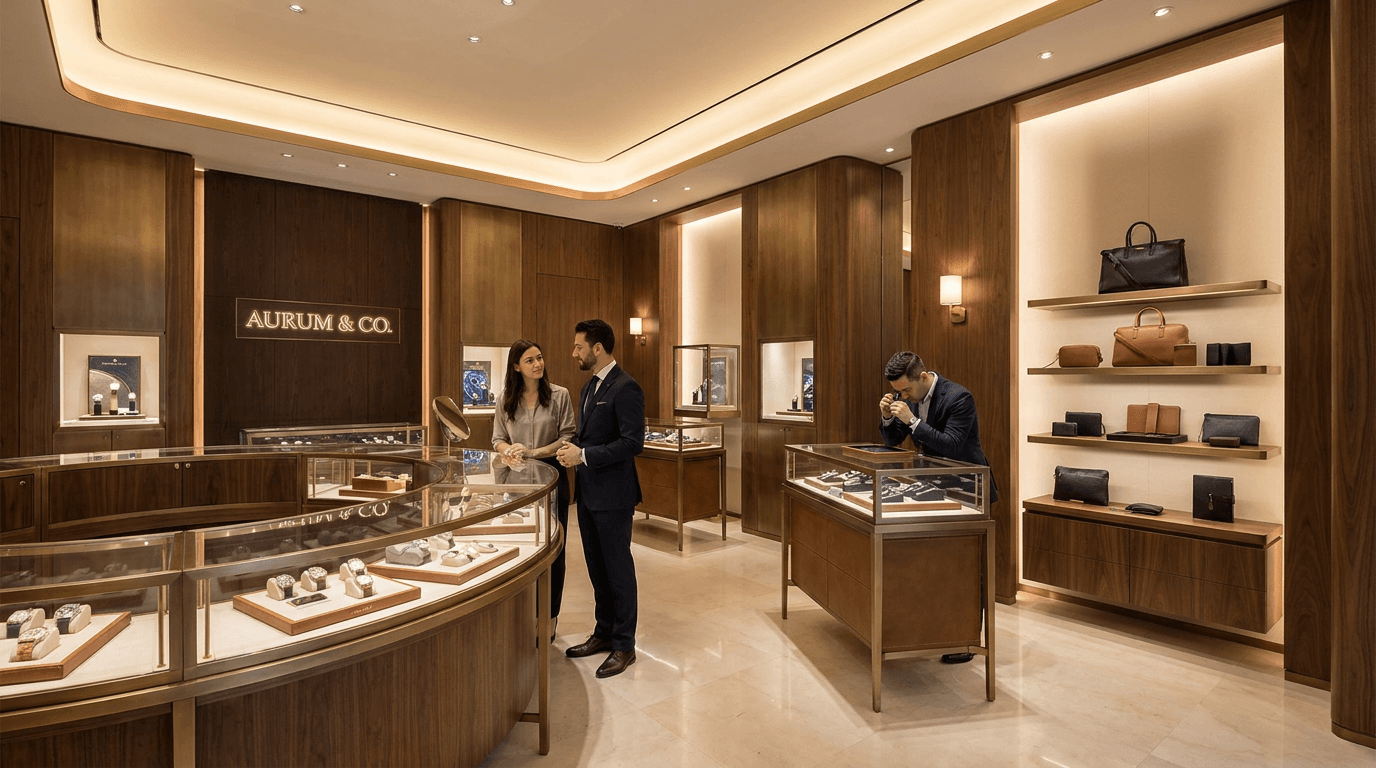
Prompt:
luxury watch or accessories boutique and retail environment photograph of [the brand's retail environment — the boutique, the authorized dealer, the luxury retail space where the product is experienced in its most curated, controlled, aspirational physical form: the retail environment is a specific, premium-communicating space — the particular store or boutique that represents the brand at its most controlled: a brand boutique — the own-brand retail space designed to immerse the visitor in the brand world: the interior architecture communicating the brand's aesthetic (classical and heritage-rich with warm wood, brass, and traditional display cases for a heritage brand; minimalist and architecturally precise with clean lines, cool materials, and gallery-like display for a contemporary brand; warm and material-rich with leather, stone, and warm metal for a luxury lifestyle brand), the display cases presenting the products under perfect illumination (the products in their cases visible as small, precious objects under focused display lighting, each piece presented with the isolation and the attention it deserves), the materials communicating quality throughout (the floor, the walls, the ceiling, the fixtures all at the quality level that matches the products they contain), the brand identity expressed architecturally (the logo, the brand colors, the design language of the brand visible in the retail architecture and the fixture design); or an authorized dealer or multi-brand environment — the brand's presence within a luxury retail setting: the brand's dedicated display area, the branded cabinet or wall display, the brand-within-brand presence showing the product range in its retail context; or a window display — the boutique window presenting the brand to the street: the window design, the product presentation, the brand identity visible from outside, drawing the consumer into the space, the products are visible in their display context — the watches, the jewelry, the accessories in their cases or on their displays, the products appearing as precious objects under perfectly controlled display lighting, the human element may be present — a sales associate engaging with a client, a visitor examining a piece, the human interaction that defines the luxury retail experience, the architectural and interior quality is premium — every surface, every material, every fixture at the quality level that matches the brand's positioning, the overall composition communicates: this is where the brand is experienced in person, the physical environment matches the product quality, the retail space is itself a luxury experience — the boutique image as the retail-experience, brand-immersion visual that sells the complete brand encounter] in a medium-to-wide, environment-revealing composition, the retail space fills the frame — the interior architecture, the displays, the fixtures, the materials visible, the products are visible in their display context — the pieces in cases or on displays, under controlled lighting, the architectural quality communicates the brand — the materials, the design, the fixtures all at premium level, the human element (if present) adds the service dimension — the associate, the client, the interaction, the brand identity is expressed in the space — the logo, the design language, the brand's visual presence in the architecture, the depth of field is moderate to deep — the retail space readable from foreground to background, the architectural depth of the space communicating its scale and its quality, the lighting is the specific quality of luxury retail — the precise, controlled, product-and-atmosphere-optimizing illumination: luxury retail-specific lighting — the precise, designed illumination of a professional luxury retail environment: the display-case lights providing focused, product-highlighting illumination (small, intense, directional spots on each product creating the focused, precious-object presentation), the ambient architectural lighting providing the overall spatial atmosphere (warm, low, designed ambient that creates the sophisticated, curated mood), the accent lighting highlighting architectural and design features, the combined lighting creating the layered, designed, professional quality that luxury retail environments are specifically engineered to achieve — the light levels low and warm in the general space with focused brightness on the displayed products, creating the drama and the product-focus that luxury retail uses to make objects feel precious, the products catching the display lighting with their material brilliance — the watches and jewelry and accessories appearing as illuminated precious objects in their darkened display environment, the architectural elements catching the ambient light with their material quality — the wood, the stone, the metal, the glass of the retail environment showing their premium character, boutique palette — the retail environment's designed palette (specify: [your retail aesthetic, e.g., warm walnut wood and brass with cream stone floors and warm ambient lighting; cool gray and white with glass and steel and clean modern lighting; rich dark wood and leather with warm spotlighting]) — the product display tones under focused lighting — the architectural material tones — luxury retail-specific layered lighting — and the architecturally premium, retail-experience, brand-immersive palette of a luxury boutique in professional retail lighting as the color palette, the mood is retail-immersive architecturally premium brand-experiential and the specific boutique message — this is where the brand lives in the physical world, the space is the experience, the retail environment matches the product quality — the boutique image as the brand-experience and retail-aspiration visual that makes the viewer want to visit, to be immersed, to experience the brand in person, professional architectural and interior photography with luxury retail-specific layered lighting and moderate-to-deep depth of field, composed as a retail environment scene with the architecture and the displays and the brand presence creating the immersive experience, the architectural quality and the product display and the brand identity as the boutique focal points, luxury retail palette in professional display lighting, no text overlays, no watermarks
Best for: Website boutique and retail sections, Instagram and social media retail-experience and boutique content, paid advertising retail and experience campaign creative, authorized dealer and retail partner promotional materials, Google Business and retail listing imagery, email marketing store-event and boutique-visit features, print advertising retail creative, press and media kit retail imagery, brand-book retail environment documentation, real-estate and development materials for new retail locations, trade and distributor presentations (retail-capability positioning)
How to Customize These Prompts for Your Specific Luxury Watch or Accessories Brand
The templates produce compelling luxury visual content, but the most effective imagery reflects your actual brand — your specific product type, your real design details, your genuine materials, your brand personality, your positioning, and the particular visual identity that differentiates you from every other luxury object competing for the same desire.
Specify your product type and its visual conventions precisely. A mechanical dive watch, a dress watch, an haute horlogerie complication, a gold bracelet, an engagement ring, a leather tote, aviator sunglasses, and a fountain pen each have distinct visual languages, presentation conventions, material palettes, and consumer expectations. A dive watch hero should show the rotating bezel, the lume, the bracelet, and the tool-watch character. A haute horlogerie piece should show the complication, the finishing, the movement. Define your category precisely and the generated imagery will reflect the correct visual conventions.
Replace generic descriptions with your actual product design. Your product's specific design is your identity. "A 41mm stainless steel case with polished top and brushed flanks, blue sunburst dial with applied rhodium indices, steel bracelet with polished center links" generates dramatically different imagery than "a luxury watch." Describe your actual product: the exact case shape, size, and material; the specific dial design, color, and texture; the hand style; the bezel type; the strap or bracelet; and every distinctive design detail. For jewelry, describe the specific metal, the stone cuts and settings, the design motif. For leather goods, describe the specific leather type, the hardware, the stitching style. The specificity produces imagery that represents your actual product.
Define your brand personality and positioning with precision. "A heritage Swiss watch house with 180 years of history, known for classical design and technical excellence" produces fundamentally different content than "a contemporary independent watchmaker focused on avant-garde design and material innovation." Specify the personality: haute horlogerie and high complication, heritage and legacy, modern luxury and contemporary, fashion-forward and trend-driven, artisan and bespoke, accessible luxury and entry-level premium, investment-grade and collectible, or your specific personality blend.
Match the lifestyle context to your target consumer. If your brand's ideal wearer is a CEO in a boardroom, describe that context. If your ideal wearer is an adventurer on a mountain, describe that. If your ideal wearer is a creative in a studio, describe that. The lifestyle imagery should depict the specific life your target consumer leads or aspires to lead, with the product as the natural companion in that life.
For hero product shots, photograph your actual product. Use the AI-generated compositions as lighting, styling, and atmospheric references, then invest in a professional luxury product photography session with your actual pieces. Luxury consumers are extraordinarily detail-literate — they will notice discrepancies between generated imagery and the real product. The Image Inpainting tool can enhance the atmosphere, adjust the lighting quality, and bring the production standard of your actual product photography up to the premium benchmark that the generated references establish, while preserving the authentic product appearance.
Match the color temperature to your brand's metal. Warm lighting for gold and rose gold products. Cool lighting for steel and platinum products. This seemingly small detail has an outsized impact on how the product's material reads in the image. A rose gold watch under cool lighting loses its warmth and appears diminished; a steel watch under warm lighting loses its clean, technical character. Match the lighting temperature to the dominant metal.
Platform-Specific Deployment for Luxury Watch & Accessories Brands
Each platform where luxury brands build awareness, generate aspiration, and initiate purchase journeys has specific content expectations, audience behaviors, and format requirements.
Instagram is the dominant discovery and aspiration platform for luxury watches and accessories. Instagram's visual-first format and its concentration of luxury-interested audiences make it the most important social platform for the category. The content mix should maintain approximately 30% hero product and detail content (Templates 1, 3, 5 — the precision product imagery), 25% lifestyle and on-body content (Templates 2, 4, 12 — the aspirational, worn, lived-with content), 20% craft and heritage content (Templates 8, 13 — the depth-building, authenticity-proving content), 15% editorial and curation content (Templates 6, 7 — the collection, flat lay, editorial-curation content that generates saves), and 10% promotional and launch content (Templates 11, 14 — the new-release, campaign, and promotional content). Use 4:5 for feed posts, 9:16 for Stories and Reels, 1:1 for maximum compatibility. For Instagram-specific strategies, additional guidance covers platform optimization.
YouTube serves long-form storytelling, review, and craftsmanship content. YouTube is where luxury watch and accessories brands build deeper narratives through collection presentations, craftsmanship documentaries, workshop tours, heritage stories, and detailed product reviews. Templates 3 (dial and movement macro), 8 (heritage archive), 13 (workshop atelier), and 4 (lifestyle context) serve YouTube's long-form needs. Use 16:9 for all YouTube content.
TikTok is the emerging discovery platform for younger luxury consumers. TikTok's reach among younger demographics who are entering luxury consumption makes it increasingly important. Templates 2 (wrist shot), 3 (macro detail — satisfying close-up content performs well), 9 (unboxing), and 12 (adventure lifestyle) produce content suited to TikTok's format. Use 9:16 exclusively.
Pinterest drives aspiration and gift-giving discovery. Pinterest is strong for accessories brands because the platform's audience actively seeks gift ideas, style inspiration, and aspirational lifestyle content. Templates 7 (flat lay), 2 (wrist shot), 6 (collection lineup), and 9 (unboxing) perform well on Pinterest. Use 2:3 vertical format.
The brand website is the premium conversion hub. The website should deploy Template 1 (hero product for homepage and product pages), Template 2 (wrist shot for product and lifestyle sections), Template 3 (macro for craftsmanship and product-detail sections), Templates 8 and 13 (heritage and workshop for about and craftsmanship sections), Template 6 (collection for collection and portfolio sections), Template 9 (unboxing for shopping and experience sections), Template 15 (boutique for retail sections), and Template 14 (promotional for campaigns). The website represents the brand's most controlled premium environment.
Luxury e-commerce platforms require specific product imagery. Brand websites, authorized online retailers, and secondary-market platforms require clean, accurate, detail-revealing product photography. Templates 1 (hero product) and 3 (macro detail) provide the precision product imagery these platforms demand.
Authorized dealer and retail partner materials require a specific approach. Materials for authorized dealers, retail partners, and wholesale presentations need to balance premium brand identity with the commercial information dealers need. Templates 1 (hero product), 6 (collection lineup), 15 (boutique), and 11 (limited edition) serve dealer communication needs effectively.
Common Mistakes in Luxury Watch & Accessories Visual Identity
Luxury watch and accessories brands fail in specific, identifiable visual ways that directly impact premium perception, consumer trust, and long-term brand equity.
Using flat, even lighting that eliminates material identity. The single most damaging mistake in luxury product photography is flat lighting that prevents the viewer from distinguishing polished from brushed, gold from steel, or one material surface from another. Flat lighting makes every surface look the same — it eliminates the specular highlights that identify polished metal, the directional reflections that identify brushed surfaces, the soft glow that identifies satin finishes, the texture shadows that identify leather. Without material-specific lighting, the product looks like a rendering, not a real object, and the material quality that justifies the price becomes invisible.
Failing to show the product at a scale where craftsmanship is visible. Many brands photograph their products at a scale where the object is identifiable but the craftsmanship is invisible — the watch is recognizable as a watch, but the dial details, the case finishing, the movement quality are all invisible. Templates 3 and 5 address this directly. If the consumer cannot see the quality that distinguishes your product from a product at half the price, the consumer has no visual basis for paying the premium.
Over-cluttering compositions. Luxury visual language communicates through restraint. A product image crowded with lifestyle props, competing textures, multiple objects, and visual noise communicates mass-market rather than luxury. The generous negative space, the clean composition, the isolated product presentation described in Template 1 communicate the confidence and the exclusivity that luxury consumers expect. Every element in the frame should earn its place; if it doesn't contribute to the product's premium presentation, it detracts from it.
Using bright, white backgrounds for all content. While clean white-background product photography has its place (particularly for e-commerce technical listings), the dark-background convention in luxury accessories photography exists for sound reasons: dark backgrounds create the contrast that makes metallic highlights pop, they communicate the sophisticated, curated, rarefied atmosphere of luxury, and they provide the visual separation from the bright-background language of fashion and mass-market accessories. The dark background should be the default for premium positioning imagery.
Inconsistent material rendering across the product line. A brand that photographs its steel products with warm lighting and its gold products with cool lighting, or renders its leather in different color temperatures across different images, undermines the visual coherence that builds brand recognition. Establish a consistent material-rendering standard — the same lighting temperature, the same reflection quality, the same overall visual treatment — and apply it across the entire product line.
Neglecting the wrist shot and on-body context. A brand that produces only studio product portraits without any on-body or lifestyle imagery creates a product identity but not a personal identity. The consumer needs to see the product on a body to project themselves into the wearing experience. Template 2 addresses this directly. The wrist shot is not supplementary to the studio portrait — it is equally essential, because it answers the question the studio portrait cannot: "What will this look like on me?"
Showing the workshop without showing the skill. Workshop and atelier imagery that shows the environment but not the hands at work, or shows hands but not the precision of what those hands are doing, fails to communicate the craftsmanship. Template 13 emphasizes the hands and the specific technique. The workshop image should show the skill, not merely the setting.
Ignoring the packaging and the unboxing experience. For luxury brands, the packaging is the first physical touchpoint — the first moment the consumer physically experiences the brand. Template 9 addresses the packaging presentation specifically. Brands that invest in exceptional packaging but fail to photograph and showcase it are losing the marketing value of the investment.
Failing to differentiate limited editions visually. A limited-edition or special release photographed in exactly the same manner as the standard collection fails to communicate its special status. Template 11 addresses the visual amplification that limited editions require — more dramatic lighting, more intense presentation, the specific exclusivity signals that differentiate the special from the standard.
Building a Complete Luxury Watch & Accessories Visual Identity System
A successful luxury visual identity is a cohesive system that communicates material quality, design intelligence, heritage depth, and the aspirational promise that sustains premium pricing, brand loyalty, and multi-generational brand equity.
Establish your visual positioning before building content. Define the core decisions: your brand personality (heritage, contemporary, avant-garde, accessible, bespoke), your visual aesthetic (dark and dramatic, clean and modern, warm and heritage, cool and technical), your brand colors, your material palette and its associated color temperatures, your styling vocabulary, your photographic mood, and your competitive visual differentiation. Document these decisions and apply them rigorously.
Build a content calendar that balances product precision with brand depth. A luxury visual identity requires product content (hero portraits, macro details, material examinations, collection lineups), lifestyle content (wrist shots, occasion contexts, travel and adventure, editorial flat lays), craft and heritage content (workshop scenes, heritage archives, maker and ambassador portraits), and promotional content (limited-edition launches, campaign canvases, boutique showcases). Balance these across a monthly calendar, with the mix weighted toward the content types that serve your primary channel (product-heavy for e-commerce and authorized dealer support, lifestyle-heavy for social media and aspiration building, heritage-heavy for brand building and collector engagement).
Invest in a professional luxury product photography session. Luxury product photography requires specific expertise: the ability to light multiple reflective and semi-reflective material surfaces simultaneously, to render brushed and polished finishes distinctly within a single frame, to manage specular highlights on curved metallic surfaces, to capture dial details with the correct combination of sharpness and atmosphere, and to create the dark-field, precision-lit, material-revealing compositions that define the category's visual standard. A specialist luxury product photographer with experience in watch, jewelry, or accessories photography produces dramatically better results than a generalist. Use the AI-generated templates as shot-list references and visual benchmarks.
Create multi-format versions of every key visual. Every important image should exist in 1:1, 4:5, 9:16, 16:9, 2:3, 4:3, and print-ready formats. A single hero product image reformatted for Instagram feed, Instagram Story, website banner, e-commerce listing, dealer sell sheet, print advertisement, and retail display maintains visual consistency across every consumer and trade touchpoint.
Develop video content for the craft-and-detail platforms. Luxury watch and accessories video content — the movement in motion, the craftsmanship process, the wrist reveal, the unboxing, the macro exploration — is compelling on Instagram Reels, TikTok, and YouTube. The Cinematic Video Generator creates atmospheric video from luxury product sequences. The Text2Shorts tool produces promotional short-form content. The AI Music Generator creates mood-appropriate audio — refined classical for a heritage brand, electronic-minimal for a contemporary brand, ambient sophistication for a lifestyle brand. The AI Clipping tool extracts compelling moments from workshop and event footage. Visual consistency between still and video content reinforces the premium identity.
Track which visual content drives actual engagement and purchase behavior. Monitor which content types drive website visits, boutique visits, inquiry submissions, and social media saves (a particularly strong indicator of future purchase intent in luxury). In most luxury brands, hero product imagery and macro detail content drive the most immediate engagement and purchase inquiry, while heritage, workshop, and lifestyle content builds the long-term brand relationship that sustains loyalty and supports premium pricing. Understanding the difference allows optimization for both immediate conversion and long-term brand equity.
How Miraflow AI Supports Your Luxury Visual Identity Workflow
Every prompt in this post can be generated inside Miraflow AI. Open the AI Image Generator, paste your customized prompt with your specific product type, design details, materials, brand colors, positioning, heritage elements, and brand personality, select the appropriate aspect ratio, and generate. Multiple aspect ratios including 1:1, 4:5, 16:9, 9:16, and 5:4 are available, covering every deployment from Instagram feed to website hero to dealer presentation to print advertisement.
For the most effective luxury visual workflow, these AI-generated images serve as visual direction, mood boards, styling references, quality benchmarks, and supplementary atmospheric content for your complete visual system. They establish the lighting approach, the styling direction, the compositional standard, the dark-field premium atmosphere, and the material-rendering quality that your real product photography should achieve. When you invest in a professional photography session, share these generated references with your photographer as the visual standard — the lighting quality, the composition, the material rendering, the mood, the specific surface-revealing techniques — that the session should target. The references communicate what words alone cannot: the exact premium visual quality the brand requires.
For your real product photography and existing visual content that needs targeted enhancement — improving the specular highlight quality on a case surface, adjusting the dark-background consistency across a product line, extending a composition's background for a wider format, removing an unwanted reflection from a crystal, or enhancing the dial detail visibility in an otherwise strong product image — the Image Inpainting tool allows precise editing of specific image regions while preserving the authentic photographic content. This tool is particularly valuable for luxury brands because the most credible content is the real product photography — your actual watch, your actual jewelry, your actual leather, your actual boutique — and the enhancement brings the quality up to the premium standard without replacing the authentic product appearance.
The recommended workflow operates in three phases. The conceptual phase uses these AI prompts to generate visual direction for every content type — establishing the lighting approach, the dark premium atmosphere, the compositional standard, and the material-rendering benchmark before any production begins. The production phase creates your actual brand content — the professional luxury product photography session for hero products and details, the ongoing content production for social media and marketing, the real-product-focused content informed by the generated visual direction. The enhancement phase uses inpainting to bring your production materials to the highest premium standard — adjusting highlight quality, improving dark-field consistency, optimizing material rendering, and maintaining brand consistency across the visual ecosystem.
For brands building a complete visual ecosystem including motion and audio content, Miraflow's suite extends the capability. The Cinematic Video Generator creates atmospheric video from luxury product sequences. The Text2Shorts tool produces promotional short-form content for social platforms. The AI Music Generator creates audio that matches the brand's personality. The AI Clipping tool extracts compelling moments from craftsmanship, event, and lifestyle footage. The YouTube Thumbnail Maker creates thumbnails for brand video content. Together, these tools allow a luxury watch or accessories brand to produce a complete visual and motion identity system that maintains premium quality and brand consistency across every platform and format.
FAQ
Can AI-generated images replace real product photography for my luxury watch or accessories brand?
For supplementary applications — mood boards, atmospheric content, promotional canvases, conceptual direction, social media atmospheric posts, campaign backgrounds — AI-generated images provide exceptional visual quality. However, for your most consumer-facing applications — the hero product on your website, the product image on your e-commerce listing, the detail shot that reveals your specific craftsmanship — real product photography remains essential. Luxury consumers are extraordinarily detail-literate and brand-specific in their visual expectations. They will notice discrepancies between generated imagery and the actual product. AI-generated imagery excels as visual direction (showing your photographer exactly the lighting, composition, and mood you require), atmospheric content (backgrounds, environments, promotional canvases), and quality benchmarks (setting the premium standard that production photography should meet). The Image Inpainting tool bridges the gap by enhancing your real product photography to meet the premium standard.
What is the single most important visual for a luxury watch or accessories brand?
The hero product portrait (Template 1). This is the image that establishes your brand's premium visual standard, communicates the design and material quality, and serves as the foundational visual across every platform and material. If you invest in one professionally photographed, precisely lit product image, make it the hero portrait — the dark-field, directionally lit, material-revealing, dimensionally present product image that makes the quality visible and the price comprehensible. Every other visual builds from this foundation.
How do I photograph highly reflective objects like polished watch cases and jewelry?
This is the fundamental technical challenge of luxury product photography. Polished metal and gemstones are essentially mirrors — they reflect everything in their environment, including the camera, the photographer, and any messy studio elements. The professional approach uses controlled reflections: large, shaped white or gray cards or fabric positioned to create the desired highlight shapes on the polished surfaces, while dark cards or flags create the desired shadow zones. The camera and photographer are hidden behind dark material. The highlights on the product are not the result of the light itself but of what the product's reflective surface sees and reflects. This is why luxury product photography is a specialized skill — it requires understanding the physics of reflection and the deliberate placement of reflection sources rather than light sources. The AI-generated references from these templates show the desired final result — the exact highlight shapes, the exact material rendering, the exact dark-field atmosphere — so a skilled photographer can plan the setup.
Should I use warm or cool lighting for my products?
Match the light temperature to the dominant material. Warm lighting (2800K-3500K range, golden tone) for gold, rose gold, warm bronze, and warm leather products. Cool lighting (5000K-6500K range, blue-white tone) for steel, platinum, white gold, ceramic, and cool-toned materials. Neutral lighting (4000K-4500K range) for brands with mixed-material collections where you need a compromise, or for brands positioning as balanced and timeless. This matching ensures that the material reads correctly — gold looks golden, steel looks steely — rather than being color-shifted by the lighting.
How do I build a consistent visual identity across a diverse product line?
Establish visual constants that persist across all products: the same background tonality (your specific dark), the same lighting angle and quality (your specific directional approach), the same compositional format (your specific framing and negative-space ratio), and the same overall color temperature (your specific warm, cool, or neutral). The individual product variations — different case shapes, different materials, different colors — provide the diversity within the consistent framework. The result is a portfolio that is immediately recognizable as one brand while allowing each product its individual identity.
How important is macro and detail photography for luxury brands?
Essential. Macro and detail photography (Templates 3 and 5) is the visual evidence that justifies the premium. At normal viewing distance, the consumer cannot see the finishing quality that distinguishes a $5,000 watch from a $50,000 watch, the setting precision that distinguishes a $2,000 ring from a $20,000 ring, or the stitching quality that distinguishes a $500 wallet from a $2,000 wallet. The macro photograph makes these invisible differences visible. Without macro and detail photography, the consumer has no visual basis for understanding the craftsmanship premium.
How should I handle limited-edition and special-release content differently from the standard collection?
Template 11 addresses this specifically. The key principle is visual amplification: the limited edition should look more dramatic, more precious, and more exclusive than the standard collection through elevated lighting (more contrast, more intensity), heightened presentation (more exclusive staging, more dramatic composition), and explicit scarcity signals (edition numbering, special packaging, unique details). The consumer should immediately perceive that this is a step above the standard offering through visual cues alone.
What about the balance between studio and lifestyle content?
Both are essential and serve different purposes. Studio content (Templates 1, 3, 5, 6) communicates the product's intrinsic quality — the design, the materials, the craftsmanship, the precision. Lifestyle content (Templates 2, 4, 10, 12) communicates the product's aspirational context — the life, the person, the experience, the occasion. A brand that publishes only studio content creates a museum; a brand that publishes only lifestyle content creates a fashion brand that could be selling anything. The balance between product precision and lifestyle aspiration is what creates a luxury brand that is both credible (the quality is visible) and desirable (the aspiration is compelling).
Conclusion
The object sits under glass. The watch behind the crystal. The ring in the case. The bag on the shelf. The pen in the box. Glass upon glass upon glass between the consumer and the desire. The consumer cannot reach through the screen. Cannot feel the weight of the case on the wrist. Cannot sense the smoothness of the leather under the fingers. Cannot experience the satisfying click of the clasp engaging. Cannot see the movement's finishing without a loupe. Cannot smell the leather or feel the temperature of the metal or sense the quality that lives in the details measured in fractions of millimeters and justified by prices measured in thousands.
All the consumer can do, in the moment before the commitment, is see. See the image. See the surface. See the light on the metal, the texture of the leather, the fire in the stone, the precision of the edge, the design intelligence of the form. The consumer sees the craftsmanship through the image — sees the decades of skill development in the watchmaker's beveled bridge, sees the heritage in the workshop's patinated tools, sees the material quality in the highlight that only genuine polished steel produces, sees the design intention in the case shape that references a century of evolution. The image is the intermediary between the object's physical quality and the consumer's understanding of that quality. The image does the work that the hand cannot do through the screen.
The visual content does not replace the object's quality. Nothing replaces the quality. A brand that invests in extraordinary imagery for mediocre products will fail the moment the consumer holds the object. But the brand that creates extraordinary objects and invests in mediocre imagery will never get the chance to prove the object's quality, because the consumer's desire is never ignited. The visual is the spark. The premium visual ignites the desire. The object's quality sustains the relationship. But without the spark, there is no fire.
The 15 templates in this post address the complete premium visual identity system a luxury watch or accessories brand needs: the hero product portrait that establishes the premium standard, the wrist shot that makes the product personal, the macro detail that reveals the invisible craftsmanship, the lifestyle context that connects the product to the aspirational life, the material examination that proves the surface quality, the collection lineup that demonstrates portfolio depth, the editorial flat lay that defines the brand's taste universe, the heritage archive that proves the history, the unboxing presentation that extends the luxury experience, the brand ambassador portrait that humanizes the aspiration, the limited-edition launch that creates collector urgency, the travel and adventure shot that proves real-world utility, the workshop scene that honors the hands behind the product, the promotional canvas that converts attention into desire, and the boutique showcase that sells the complete brand experience.
Copy the templates that serve your brand. Customize them with your actual product type, your real design details, your specific materials and finishes, your genuine heritage elements, your authentic production methods, and the particular premium positioning that makes your object the one worth desiring. Generate them inside Miraflow AI to establish your visual direction, use them as references when you invest in the professional luxury product photography that captures your actual watches, your actual jewelry, your actual leather, and the real objects that your consumers will hold, wear, and treasure. Enhance your production photography with the Image Inpainting tool to achieve the premium quality that the generated references establish.
The object sits under glass. The light falls on the case. The highlight moves across the polished surface with the slow, liquid precision of perfect craftsmanship made visible. The consumer's eye finds the object, reads the surfaces, evaluates the quality, imagines the weight on the wrist, the warmth of the gold, the precision of the movement ticking inside, and desires. Everything the brand has built — every generation of craft, every innovation, every hour at the bench, every design refinement, every material selection, every quality decision that chose the better over the merely good — arrives at this visual moment. The product is extraordinary. Make the visual worthy of what it is. The premium starts with the eye.