AI Prompts for Fashion Lookbook Images: 15 Editorial Visuals (Copy & Paste)

Written by
Jay Kim
15 copy-paste AI prompts for fashion lookbook images. Studio shots, street style, flat lays, detail close-ups, and seasonal editorials for brands and creators.
15 copy-paste AI prompts for fashion lookbook images. Studio shots, street style, flat lays, detail close-ups, and seasonal editorials designed for brands, designers, and content creators.
A fashion lookbook is the single most persuasive marketing asset a clothing brand can produce. It is the bridge between a product listing and a purchase decision, the visual story that transforms a garment on a hanger into a piece of someone's identity. When a buyer scrolls through a lookbook, they are not evaluating stitching and fabric weight. They are asking a much simpler question: can I see myself wearing this? The lookbook's job is to make the answer feel obvious.
The problem is that producing lookbook imagery at a professional level has always been brutally expensive. A single editorial shoot requires a photographer, a stylist, hair and makeup, a model or several models, a location or studio rental, and hours of post-production retouching. For an independent fashion brand, a direct-to-consumer label, or a boutique designer launching a new collection, that cost can easily run into thousands of dollars for a set of images that will be used for one season before the next collection demands a fresh shoot. The economics punish smaller brands and reward those with the deepest pockets, which means the visual quality gap between a startup label and an established fashion house has historically been enormous.
AI image generation has compressed that gap dramatically. With the right prompts, you can produce editorial-quality fashion lookbook images that communicate the same level of sophistication, styling, and brand identity as a professionally photographed campaign. You can generate images for every piece in a collection, in multiple styles and settings, without booking a single model or renting a single studio. The key is that the prompts need to be specific, technically informed, and calibrated for the visual conventions that fashion audiences recognize and respond to. Generic prompts produce generic results that look like stock photography with clothes in them. The templates in this post are designed to produce something much more useful: images that look like they belong in a curated editorial lookbook from a brand that knows exactly what it is doing.
If you have used AI prompts before for visual content like Instagram post images, e-commerce product photos, or YouTube thumbnails, the workflow here is the same. You copy the prompt, customize it to match your brand and garments, generate the image, and deploy it. The difference is that fashion lookbooks demand a very particular combination of composition, lighting, color grading, and styling that separates editorial fashion photography from every other type of product visual. Every template below is built around those demands.
Important note on usage: AI-generated fashion lookbook images are best used for brand mood boards, social media content, website lifestyle imagery, pre-production concept visualization, seasonal campaign planning, and marketing materials where the garments shown represent a design direction rather than a specific SKU currently available for purchase. If you are using AI-generated images to represent actual products for sale, ensure the visuals accurately reflect what the buyer will receive, and disclose when imagery is AI-generated or conceptual rather than photographed.
Why Fashion Lookbooks Are the Most Valuable Visual Asset in Apparel Marketing
The fashion industry runs on visual storytelling in a way that most other industries do not. A lookbook is not a product catalog. A catalog shows items. A lookbook sells a world. It communicates the lifestyle, the attitude, the cultural moment, and the identity that a brand occupies. When a buyer looks at a lookbook from a brand they connect with, they are seeing a version of themselves reflected back, and that emotional identification is what drives purchase intent far more effectively than a grid of product shots on white backgrounds.
This is why lookbook quality has such a direct impact on commercial outcomes. Fashion buyers, whether they are wholesale buyers evaluating a new brand for their store or individual consumers browsing an online shop, use the lookbook as their primary quality signal. The photography, the styling, the casting, the locations, the color grading, and the overall production value of the lookbook communicate whether this is a brand worth investing in. A beautifully produced lookbook from a small brand can position it alongside labels ten times its size in the buyer's mind. A poorly produced lookbook from an otherwise talented designer can make the clothes look cheap regardless of their actual quality.
The volume demands compound the cost problem. A typical seasonal collection needs multiple lookbook images for each key piece or outfit, often in different settings and compositions to serve different marketing channels. The hero images for the website need to be different from the images optimized for Instagram, which need to be different from the images formatted for Pinterest, which need to be different from the images used in email campaigns and wholesale presentations. A single shoot might produce 30 to 50 usable images, but a comprehensive multi-channel marketing strategy for a full collection can easily require two to three times that number.
AI-generated lookbook imagery solves the volume problem without sacrificing the visual quality that fashion marketing demands. You can generate studio shots, street style scenes, flat lays, detail close-ups, and seasonal editorial compositions from the same set of prompts, customized for each garment, each platform, and each audience segment. The investment shifts from production logistics to creative direction, which is where fashion brands should be spending their energy in the first place.
The Visual Principles Behind Editorial Fashion Photography
Understanding the visual language of fashion photography is essential for writing prompts that produce results audiences will take seriously. Fashion photography has specific conventions that have been refined over decades of magazine editorials, campaign shoots, and brand marketing. These conventions signal to the viewer that what they are looking at is fashion content, and deviating too far from them produces images that feel off even when the technical quality is high.
Directional lighting sculpts the garment and the body. Fashion photography uses light to reveal fabric texture, create dimensional depth on the body, and establish mood. Flat, even lighting that shows everything equally is the hallmark of catalog photography, not editorial work. Editorial fashion lighting is intentional and often dramatic: a key light from one direction creates highlight and shadow that gives the image depth and visual interest. Side lighting emphasizes fabric draping and texture. Backlighting creates separation and atmosphere. The prompts in this post specify lighting direction and quality because this single element has the largest impact on whether an image reads as editorial fashion or as a generic product photo.
Color grading establishes brand identity. Every fashion brand has a color story, and the most effective lookbooks maintain a consistent color grade across all images. Warm, desaturated earth tones communicate a different brand personality than high-contrast black and white, which communicates something entirely different from vibrant saturated color. The color grade is not just an aesthetic preference. It is a brand signal that tells the viewer what kind of person this brand is for. The templates below include color palette descriptions that you should customize to match your brand's specific visual identity.
Composition follows editorial conventions. Fashion editorial images use compositional rules that differ from other photography genres. Full-length shots show the complete outfit with space above and below the subject. Three-quarter shots crop at the thigh or calf, never at the knee or ankle, because those crop points feel awkward and unintentional. Close-ups isolate specific details like a collar, a sleeve, a pocket, or an accessory. The camera angle is almost always at eye level or slightly below for full-length shots, creating a subtle sense of elevation that makes the subject and the clothing look aspirational.
Styling details communicate authenticity. Professional fashion photography includes small styling details that signal intentionality: a sleeve casually pushed up, a jacket held open with one hand, a scarf caught mid-motion, a bag carried with a specific grip. These details make the difference between an image that looks like someone wearing clothes and an image that looks like fashion content. The prompts below include these lifestyle styling cues because they are what push AI-generated fashion imagery past the uncanny valley of looking too posed or too perfect.
Negative space is a design tool. Fashion lookbook images almost always include intentional negative space, areas of the composition that are relatively empty, to give the clothing room to breathe visually and to allow for text overlay in marketing applications. Cramped, tightly framed images feel claustrophobic and make it difficult to appreciate the garment's silhouette and proportions. Every prompt specifies compositional breathing room because it is essential for both visual impact and practical marketing deployment.
Background and environment tell the brand story. The background in a fashion lookbook image is not neutral filler. It is an active participant in the brand narrative. A raw concrete wall communicates something different from a sunlit Parisian cafe, which communicates something different from a clean white studio. The background selection tells the viewer where this brand exists culturally and socially. Choose your background contexts deliberately to match the world your brand inhabits.
15 AI Prompt Templates for Fashion Lookbook Images
Each template below includes the creative concept, the complete ready-to-copy prompt, and deployment notes explaining which brand types and marketing contexts it best serves. All prompts are formatted for the Miraflow AI Image Generator and are compatible with any high-quality AI image generation tool. Generate at 4:5 for social media lookbook posts, 3:2 or 16:9 for website hero images and horizontal editorial layouts, or 9:16 for vertical Story and Reels content.
Template 1: Full-Length Editorial Street Style
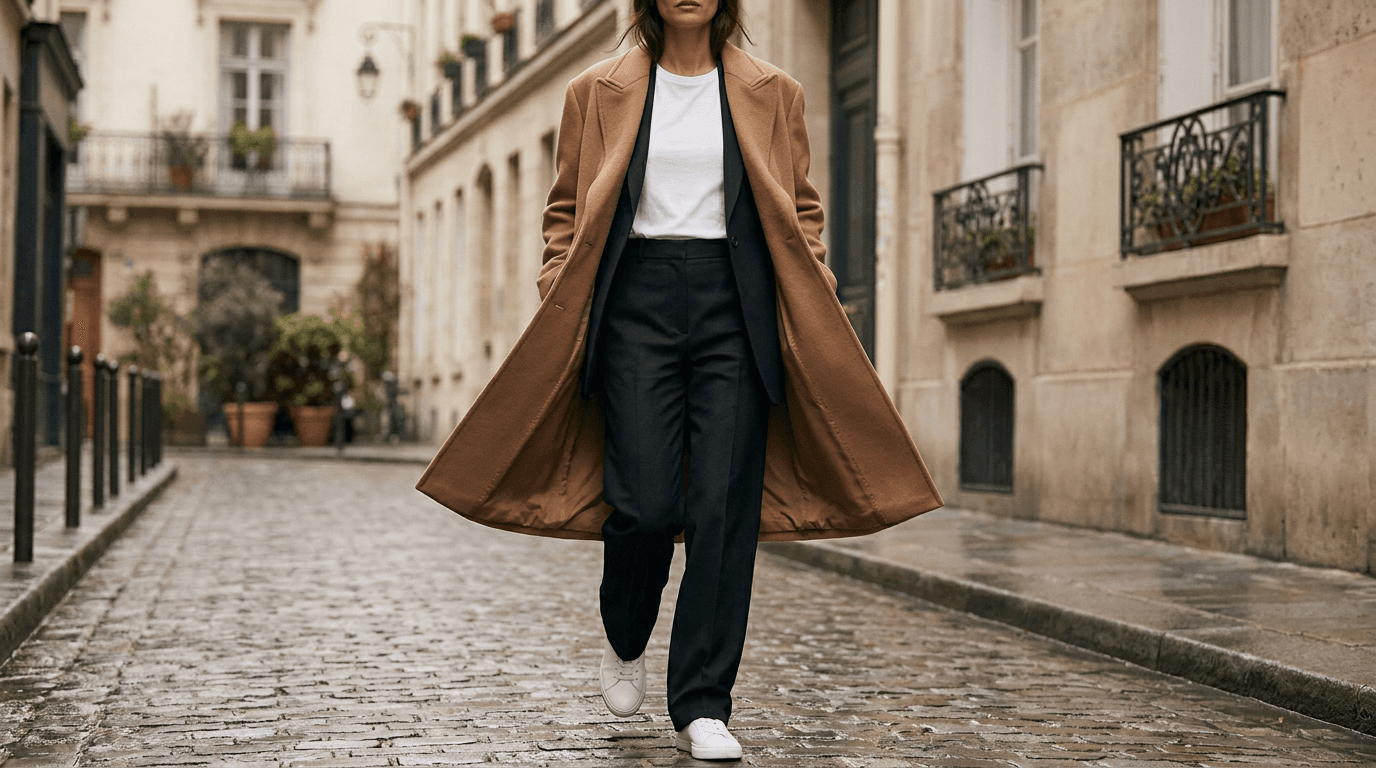
The full-length street style shot is the backbone of contemporary fashion lookbooks. It shows the complete outfit in a real-world urban environment, communicating how the clothing looks and moves in everyday life. This is the image that makes a viewer think "I want to wear that today." The street context grounds the fashion in reality rather than fantasy, which is exactly what drives purchase intent for most contemporary and streetwear brands.
Prompt:
full-length editorial fashion photograph of a person walking confidently down a quiet city sidewalk, wearing a structured oversized camel coat over a white crewneck tee and wide-leg dark tailored trousers with clean white leather sneakers, the coat is slightly open and moving with the stride, shot from a slightly low angle at approximately chest height of the photographer looking up which elongates the silhouette, soft overcast natural daylight providing even flattering illumination with no harsh shadows, the street behind is a clean european-style block with muted stone buildings and subtle greenery softly blurred in the background, the pavement is clean and slightly wet suggesting recent rain adding subtle reflections, warm neutral color palette of camel cream charcoal and white with muted urban tones in the background, the overall mood is confident relaxed and effortlessly stylish, editorial street style fashion photography with natural color grading, shallow depth of field keeping the subject sharp and background gently blurred, full body visible with space above the head and below the feet, no text, no logos, no brand names visible
Best for: Contemporary fashion brands, streetwear labels, seasonal collection hero images, Instagram feed posts, website landing page lookbooks, wholesale presentation decks
Template 2: Clean Studio Catalog Shot With Editorial Edge
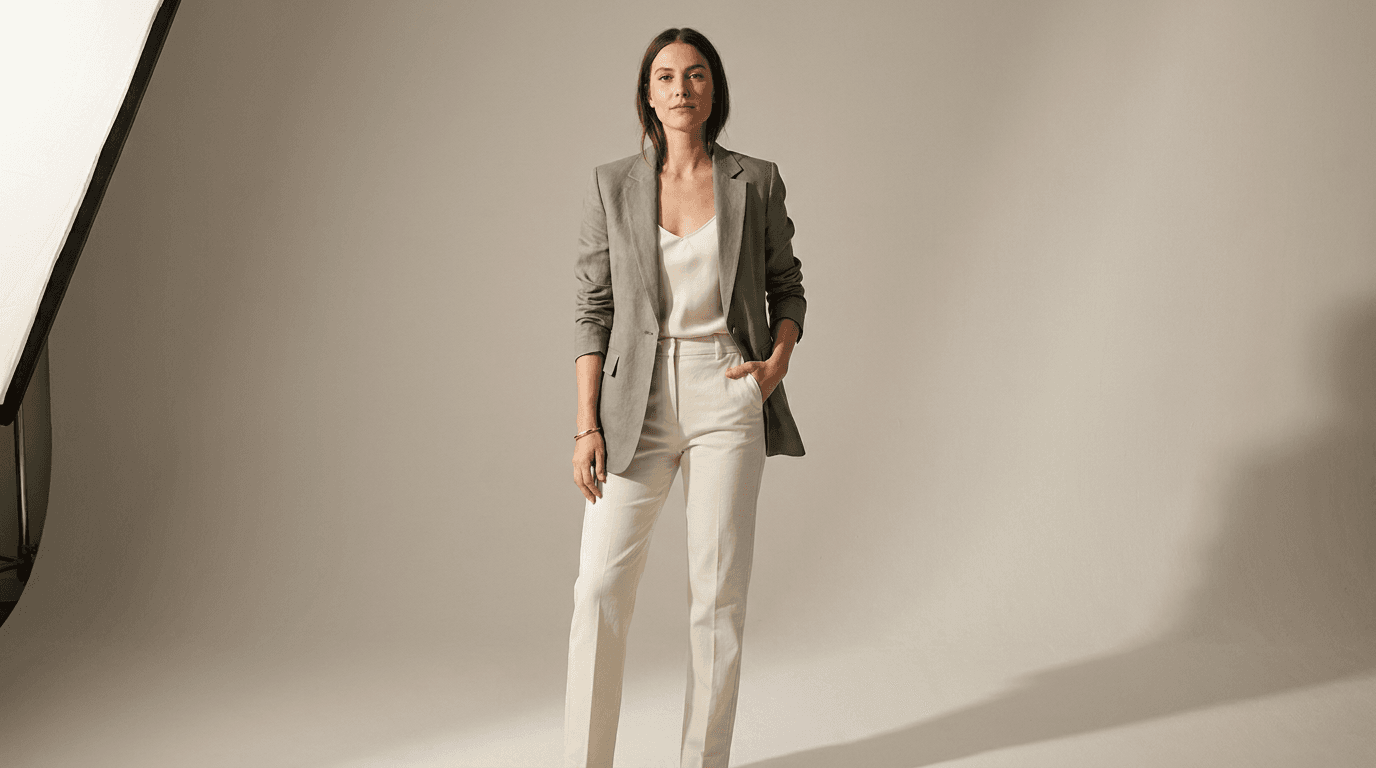
The studio shot serves a dual purpose in fashion marketing: it provides the clean, distraction-free view of the garment that buyers need for evaluation, while the editorial lighting and styling elevate it beyond basic catalog photography. This template produces the kind of studio image that works equally well on an e-commerce product page and in a curated Instagram grid.
Prompt:
full-length fashion studio photograph of a person standing in a relaxed natural pose against a seamless warm light gray backdrop, wearing a tailored linen blazer in soft sage green over a cream silk camisole tucked into high-waisted straight-leg ecru trousers, one hand casually in a trouser pocket creating a natural asymmetry in the pose, clean directional studio lighting with a large softbox from camera left creating soft dimensional shadows on the right side of the body that reveal fabric draping and texture, a subtle fill light from camera right preventing shadows from going completely dark, the fabric textures are clearly visible showing the linen weave of the blazer and the smooth sheen of the silk camisole, the subject stands centered with generous negative space on both sides and above, the floor shows a subtle soft shadow grounding the figure, muted sage cream and warm gray color palette, the mood is calm composed and quietly luxurious, editorial studio fashion photography, sharp focus across the entire outfit, no text, no logos, no visible accessories except a simple thin gold bracelet
Best for: E-commerce product pages, lookbook PDFs for wholesale buyers, email campaign hero images, brand website collection pages, Shopify product photography enhancement
Template 3: Warm Neutral Minimalist Portrait
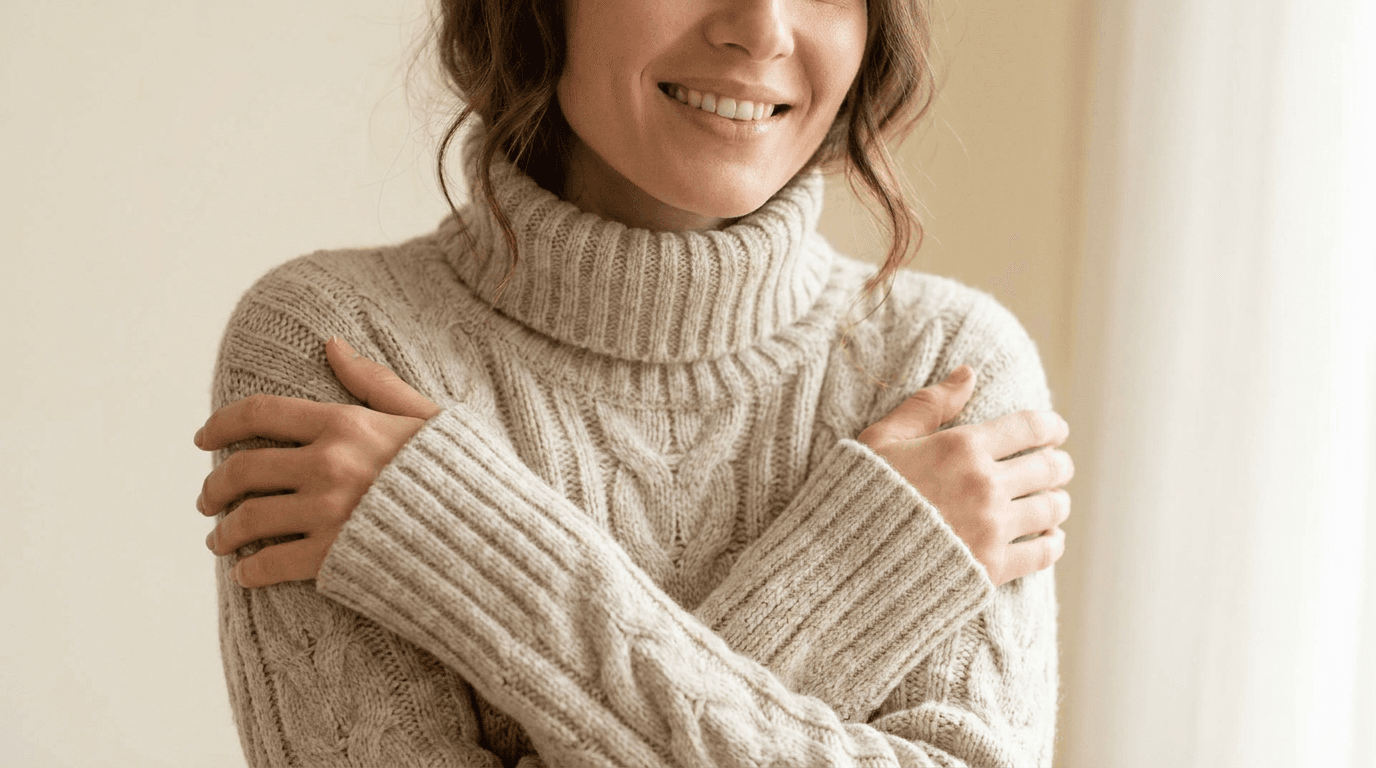
The minimalist fashion portrait focuses on the upper body and face, making it ideal for tops, knitwear, scarves, jewelry, and any garment where the upper body is the selling feature. The tight crop and warm neutral tones create an intimate, magazine-editorial feel that performs exceptionally well on Instagram and Pinterest.
Prompt:
medium close-up fashion portrait from the waist up of a person wearing a chunky oversized turtleneck sweater in oatmeal cream, arms crossed loosely at chest level with hands gently gripping the opposite arm creating a cozy self-embrace pose, soft diffused natural window light from camera right creating gentle warmth on the face and sweater texture, a subtle warm glow across the image, the background is a clean warm cream wall slightly out of focus, visible knit texture on the sweater showing the cable pattern and yarn weight, natural minimal makeup, relaxed genuine expression with a hint of a soft smile, hair styled naturally with a few pieces falling across the forehead, warm cream beige and soft white color palette throughout, the mood is quiet intimate and comfortably luxurious, editorial knitwear photography with warm natural color grading, shallow depth of field with sharpest focus on the sweater texture and face, no text, no logos, generous negative space above the head
Best for: Knitwear and cold weather collections, Instagram carousel posts, Pinterest fashion pins, email newsletter headers, brand storytelling content
Template 4: Golden Hour Outdoor Editorial
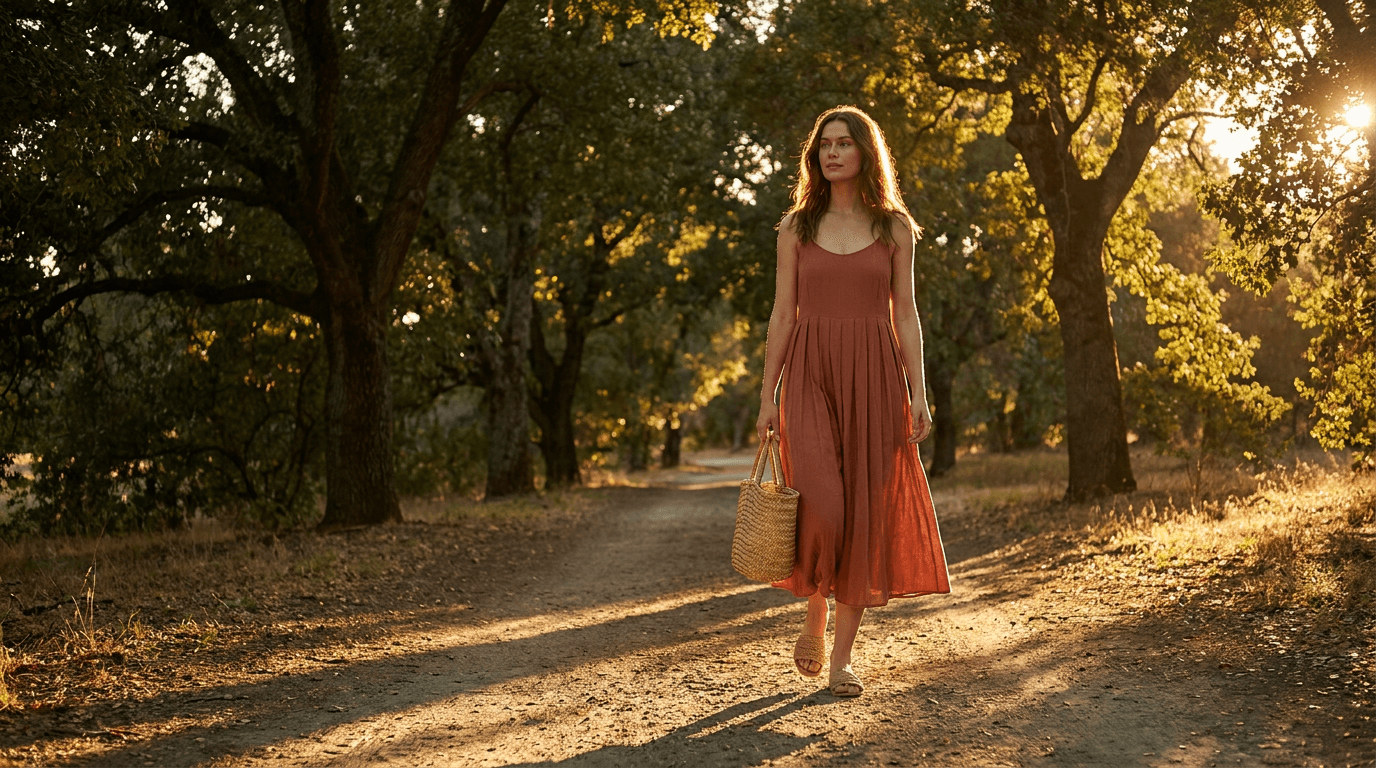
Golden hour fashion photography is the most universally flattering and emotionally compelling lighting condition available. The warm directional light, long shadows, and rich color temperature create images that feel simultaneously aspirational and authentic. This template produces the kind of outdoor editorial that makes viewers feel the warmth and lifestyle the brand represents.
Prompt:
full-length editorial fashion photograph shot during golden hour approximately thirty minutes before sunset, a person walking along a quiet tree-lined path with warm golden sunlight filtering through the foliage creating dappled light patterns, wearing a flowing midi dress in dusty terracotta with subtle pleating that catches the golden light as the fabric moves, paired with flat woven sandals, a woven straw tote bag carried casually in one hand, the golden light illuminates the subject from behind and slightly to the right creating a warm rim light around the hair and shoulders with the face lit by soft reflected ambient light, long warm shadows stretch across the ground, the tree-lined path recedes into soft warm bokeh behind the subject, the overall color palette is warm gold terracotta deep green and amber, the atmosphere is warm relaxed and quietly confident, editorial outdoor fashion photography with rich golden hour color grading, the full outfit is visible with compositional space on all sides, no text, no logos
Best for: Spring and summer collection launches, resort wear marketing, lifestyle brand imagery, social media campaigns, website hero banners, brand look and feel establishment
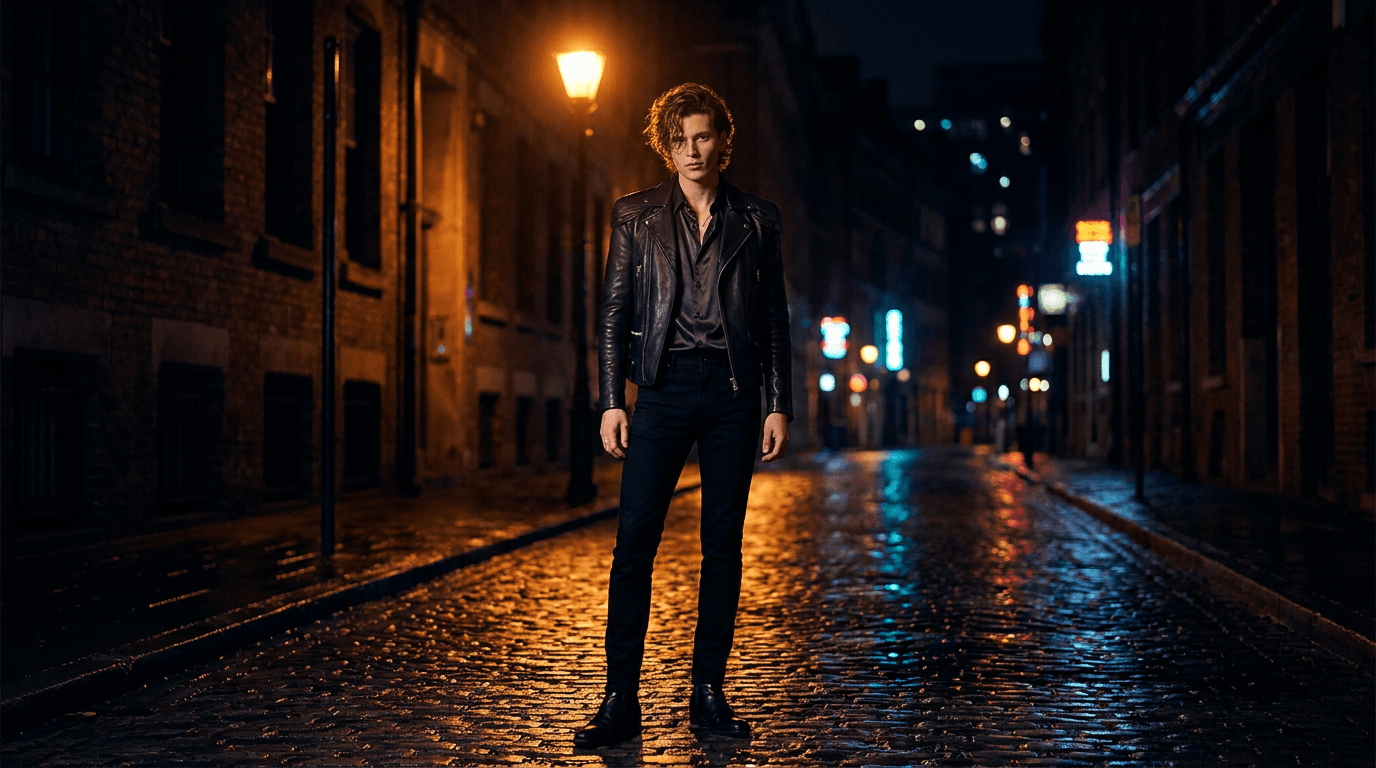
Template 5: Moody Urban Night Lookbook
Nighttime editorial photography creates a completely different emotional register from daytime work. The combination of artificial city lighting, deep shadows, and selective illumination produces images with cinematic intensity that resonates with contemporary fashion, evening wear, and brands with an edgier positioning. This template produces lookbook imagery with the visual weight of a fashion film still.
Prompt:
full-length editorial fashion photograph taken on a quiet urban street at night, a person standing under a single warm streetlight that creates a pool of amber illumination, wearing a fitted black leather jacket over a dark silk shirt with black slim trousers and polished black boots, the streetlight from above and slightly behind creates dramatic highlights on the leather jacket surface and a warm glow on the hair, the rest of the street falls into deep moody shadow with distant city lights creating soft colorful bokeh points in the background, wet pavement reflects the streetlight and distant neon creating subtle warm color reflections on the ground, the subject's pose is still and confident with weight on one leg and hands relaxed at sides, deep black warm amber and subtle cool blue accent color palette, the atmosphere is cinematic confident and slightly mysterious, editorial night fashion photography with dramatic lighting and rich shadow detail, full body visible with the subject occupying the center third of the frame, no text, no logos
Best for: Evening wear and going-out collections, leather and outerwear features, brands with darker or more urban positioning, fall and winter campaigns, TikTok video background aesthetics, editorial social media content
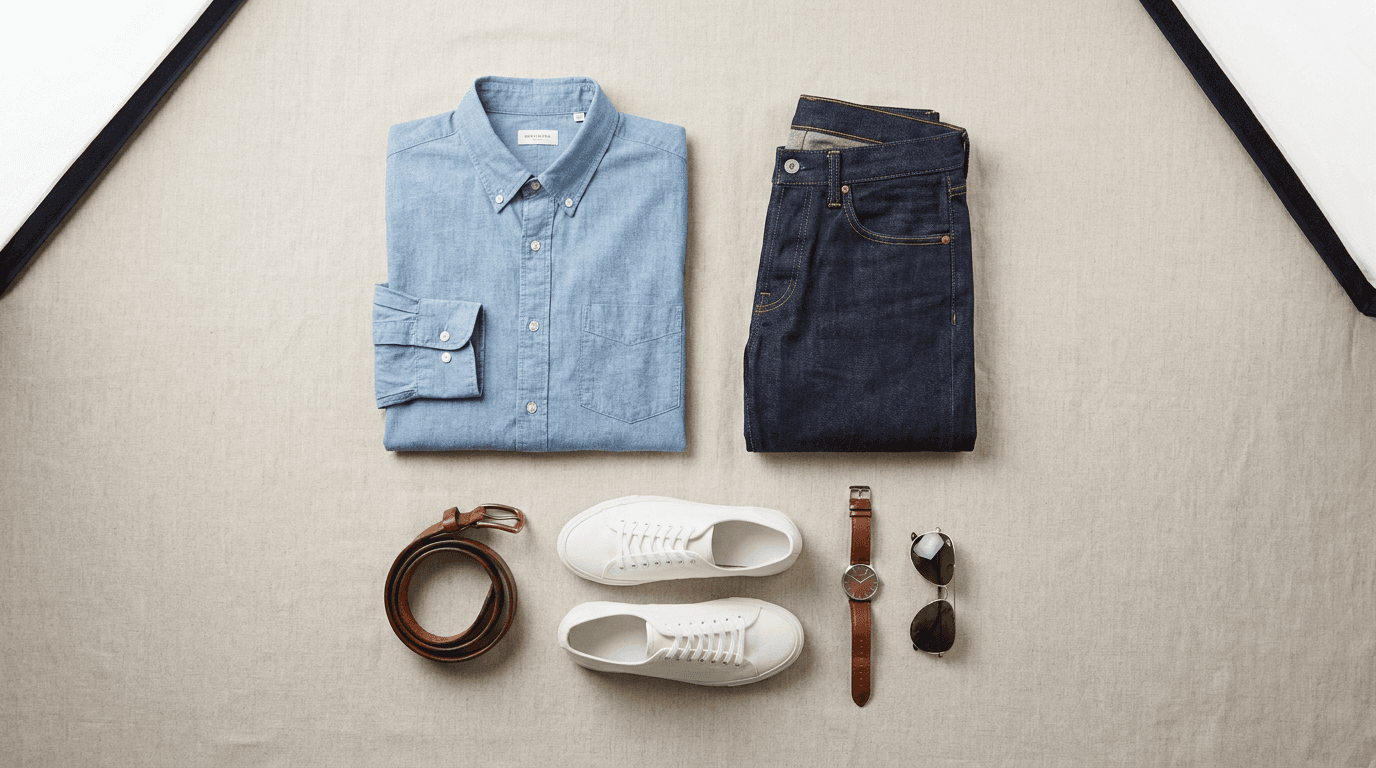
Template 6: Overhead Flat Lay Outfit Arrangement
The flat lay is the workhorse of fashion social media content. It shows the complete outfit deconstructed into its individual pieces, arranged on a surface as a curated composition. This format helps viewers understand how the pieces work together while also showcasing each item individually. It is one of the most saved and shared image formats on Instagram and Pinterest for fashion content.
Prompt:
perfectly overhead flat lay photograph of a complete outfit arranged on a clean light linen textured surface, the items include a folded cotton button-down shirt in light chambray blue, a pair of neatly folded dark indigo selvedge denim jeans, a brown leather belt coiled naturally, a pair of clean white canvas sneakers, a simple leather watch, and a pair of aviator sunglasses, all pieces are arranged with intentional spacing in a balanced asymmetrical composition that fills the frame without feeling crowded, large diffused overhead softbox lighting providing even illumination with subtle soft shadows beneath each item, the fabric textures are clearly visible showing the chambray weave and denim surface, the leather shows natural grain detail, small styling touches include a sleeve of the shirt casually unfolded and the sunglasses placed at a slight angle, warm neutral and indigo color palette on the light linen surface, the mood is organized considered and casually stylish, editorial fashion flat lay photography, sharp focus across all items, no text, no visible brand labels, no logos
Best for: Instagram feed posts, Pinterest outfit boards, men's and women's fashion content, seasonal outfit guides, email marketing visuals, Etsy listing photos for apparel sellers
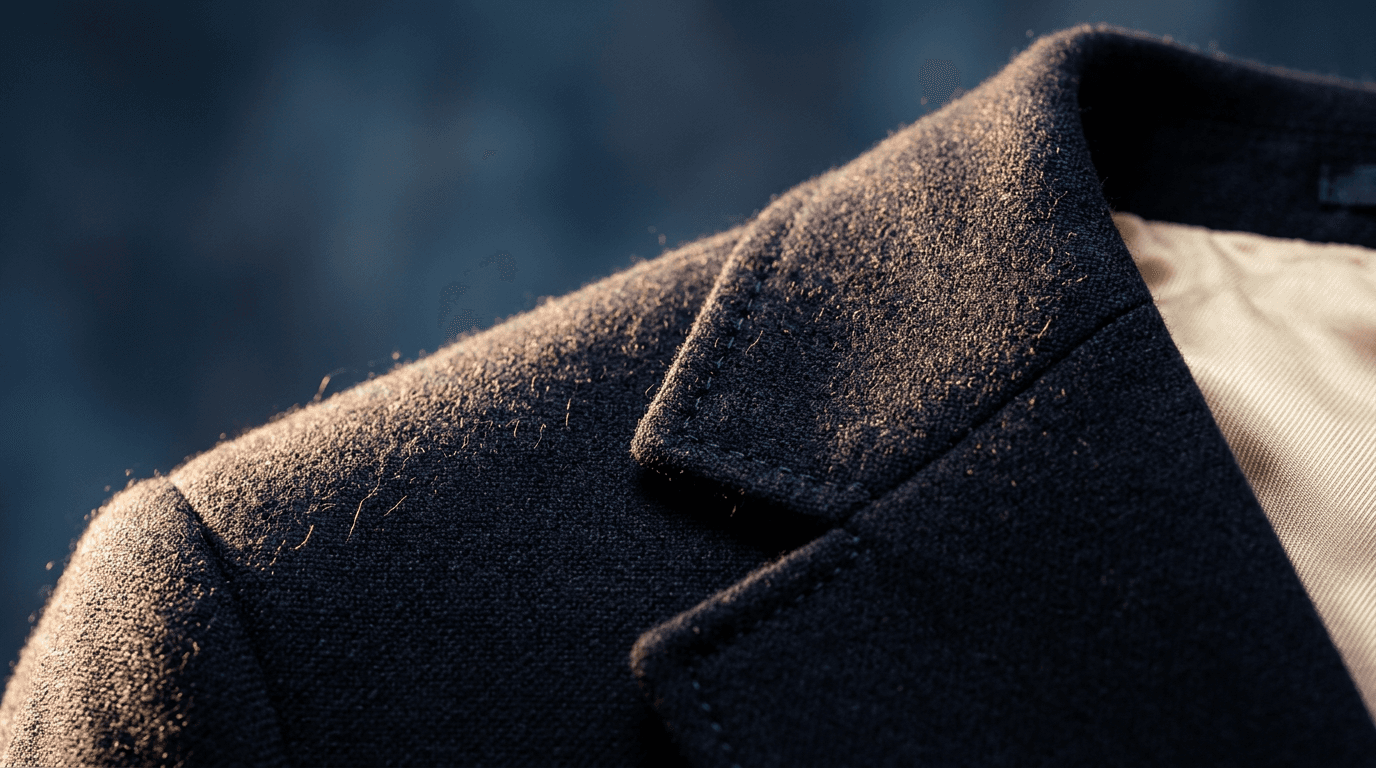
Template 7: Fabric and Detail Close-Up
The detail close-up is the trust-building image in any fashion lookbook. It shows the material quality, the construction details, and the tactile character of the garment in a way that full-length shots cannot. For brands that differentiate on fabric quality, craftsmanship, or unique design details, this image type is essential for converting browsing interest into purchase confidence.
Prompt:
extreme close-up macro fashion photograph focusing on the collar and shoulder area of a structured wool blazer in rich navy, single directional light from camera left at a raking angle creating dramatic texture depth across the woven wool surface, every fiber of the fabric is visible showing the quality and density of the weave, the stitching along the lapel edge is sharply rendered showing precise even craftsmanship, a partial view of a cream silk lining is visible where the lapel folds back, the background falls into smooth soft bokeh of the same navy tone, shallow depth of field with only the lapel and collar area in sharp focus creating a natural depth progression, warm highlights from the directional light contrasting with cool shadow areas in the fabric folds, rich navy cream and warm highlight color palette, the mood is premium detailed and quality-focused, editorial fashion detail photography with precise focus, no text, no visible labels, no logos
Best for: Premium and luxury brand content, fabric quality storytelling, product page detail images, behind-the-brand content, wholesale presentation materials, craftsmanship-focused social media posts
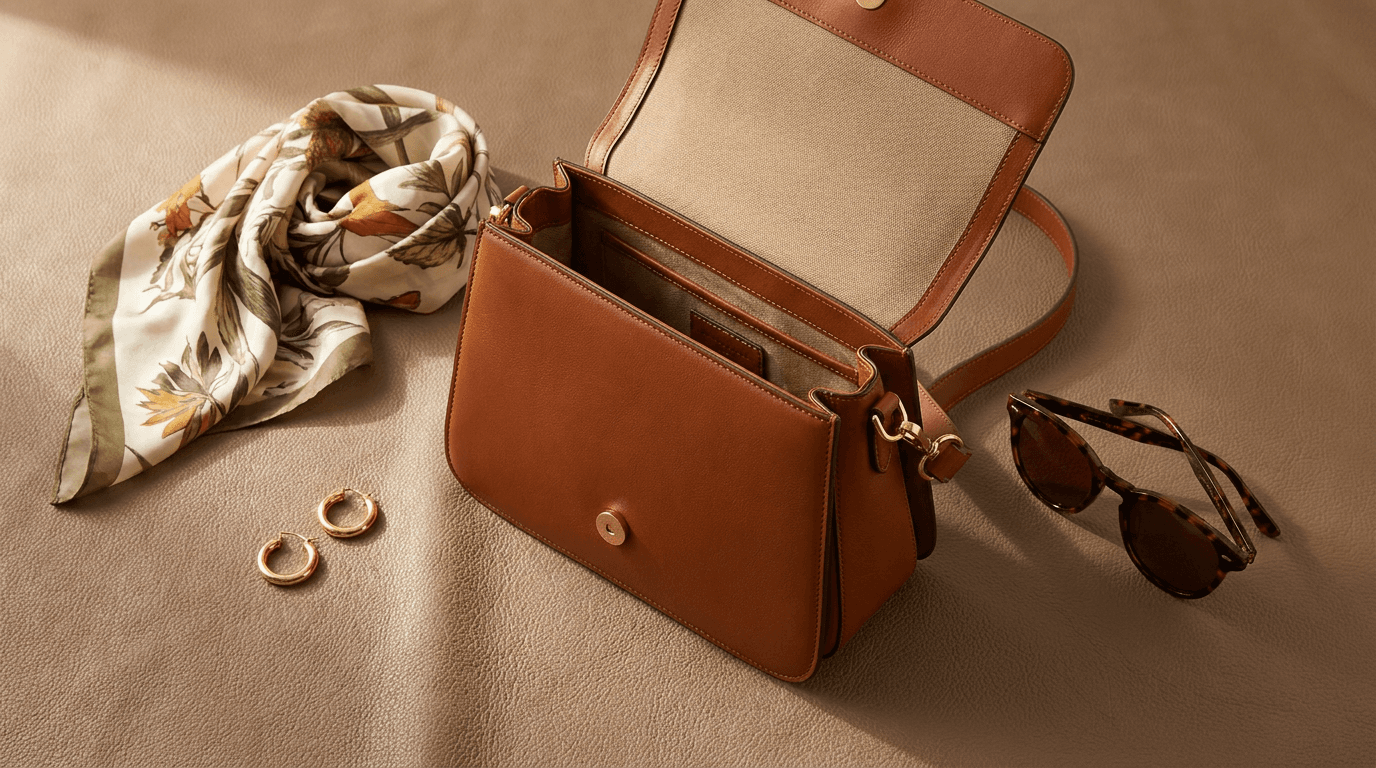
Template 8: Accessories Hero Shot
Accessories often represent a significant revenue share for fashion brands, and they deserve dedicated lookbook imagery that showcases them with the same editorial quality as garment photography. This template produces a styled accessories composition that communicates luxury and desirability through careful lighting and surface selection.
Prompt:
editorial product photograph of a curated arrangement of fashion accessories on a smooth warm taupe leather surface, a structured leather handbag in cognac brown as the central hero piece with the flap open showing the interior, a pair of gold hoop earrings placed casually near the bag, a silk scarf in muted botanical print folded loosely beside it, and a pair of tortoiseshell sunglasses resting at an angle, soft warm directional studio light from upper left creating gentle shadows and highlights that reveal the leather grain and metallic shine, the leather surface beneath shows natural texture adding tactile richness, the composition is balanced with the bag as the clear focal point and smaller items supporting it, warm cognac gold cream and muted green color palette, the overall mood is refined curated and aspirational, editorial accessories fashion photography, sharp focus on the hero bag with supporting items slightly softer, no text, no visible brand names, no logos
Best for: Accessories collection launches, handbag and jewelry features, Instagram shopping posts, gift guide imagery, Pinterest product pins, fashion email campaigns
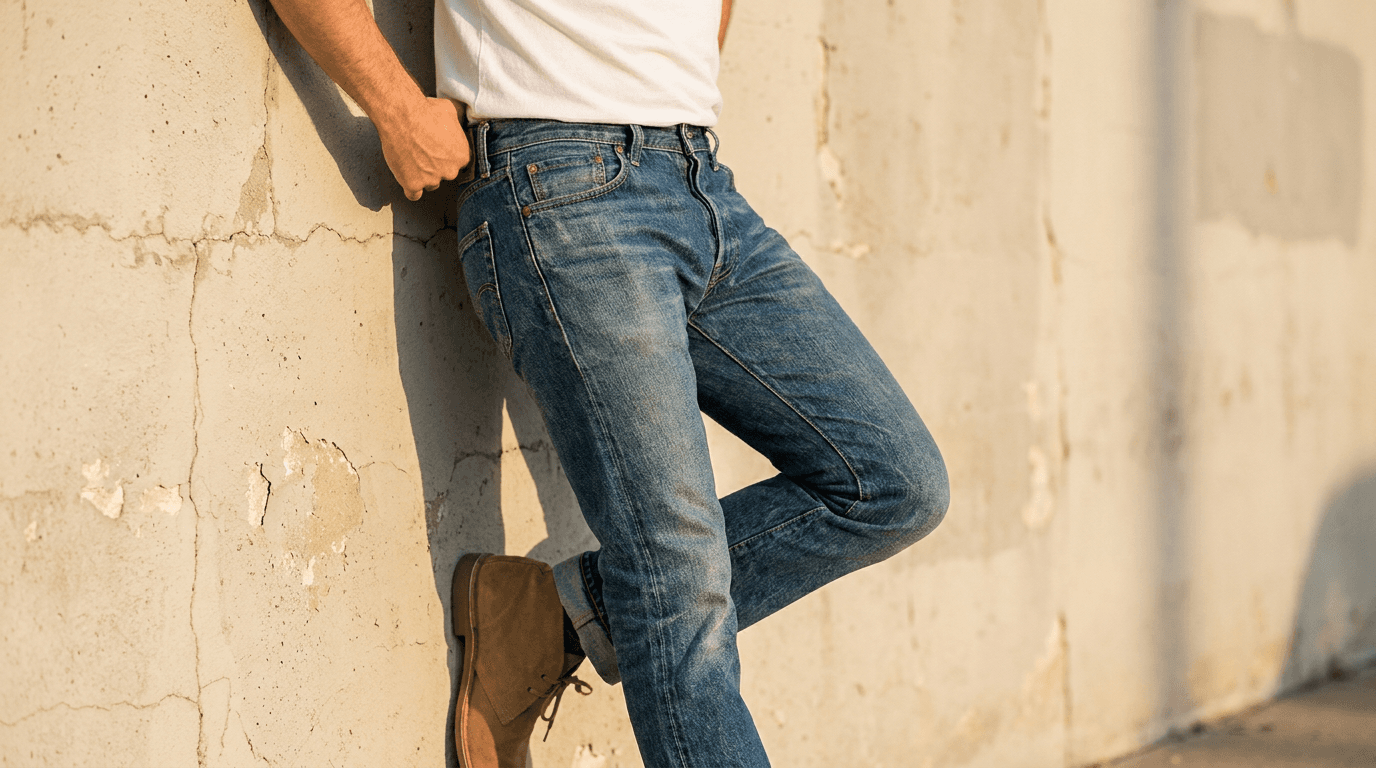
Template 9: Relaxed Denim Editorial
Denim is a category unto itself in fashion marketing, and denim lookbook imagery has its own visual conventions. The best denim photography emphasizes the texture, wash, and fit of the jeans with a relaxed, lived-in energy that makes the viewer feel the comfort and versatility of the product. This template captures that specific denim editorial aesthetic.
Prompt:
three-quarter length editorial fashion photograph from approximately mid-thigh up of a person leaning casually against a sun-warmed concrete wall, wearing a perfectly fitted pair of medium wash denim jeans with natural fading at the thighs and a clean hem break over tan suede desert boots, paired with a simple tucked white t-shirt, one thumb hooked into a front belt loop in a natural relaxed gesture, soft warm afternoon sunlight from camera right illuminating the denim texture and creating visible highlights along the fading pattern, the concrete wall behind has warm natural texture and subtle aging, the denim surface texture is clearly rendered showing the twill weave and natural wear patterns, warm natural color palette of blue denim white warm tan and sun-bleached concrete, the mood is relaxed authentic and effortlessly cool, editorial denim fashion photography with natural warm color grading, shallow depth of field keeping the denim in sharpest focus, no text, no logos, no visible brand names
Best for: Denim brand lookbooks, casual wear collections, men's and women's fashion content, lifestyle brand imagery, retail marketing materials, social media storytelling content
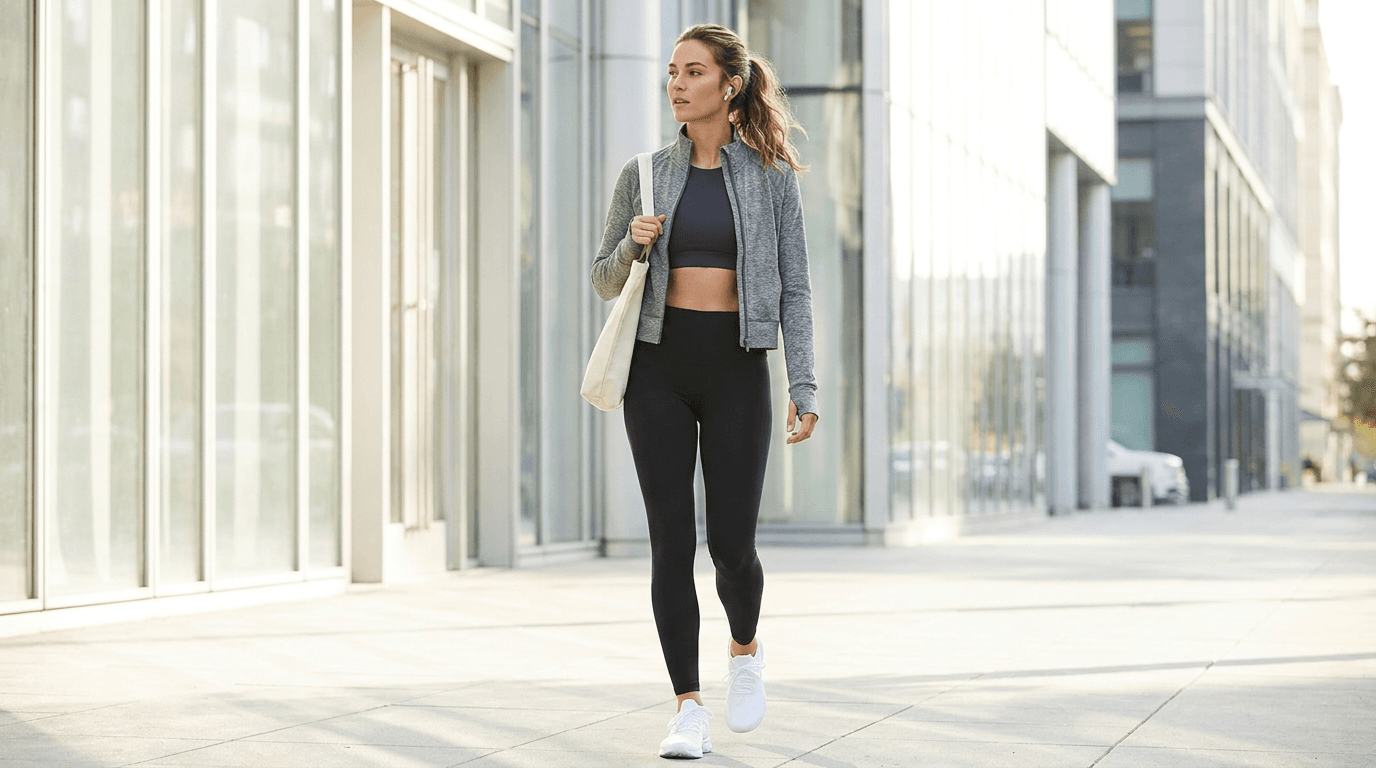
Template 10: Athleisure Lifestyle Shot
Athleisure exists at the intersection of performance and style, and the lookbook imagery needs to communicate both. The visual language is cleaner and brighter than traditional fashion photography but more styled and aspirational than straightforward activewear product shots. This template produces the elevated lifestyle aesthetic that athleisure brands need to position their products as fashion rather than just gym clothes.
Prompt:
editorial lifestyle fashion photograph of a person in a modern athleisure outfit walking through a bright airy urban space, wearing a cropped zip-up performance jacket in soft heather gray over a high-neck sports bra visible at the neckline, paired with high-waisted black leggings and clean white running sneakers, carrying a minimal canvas tote and wearing small wireless earbuds, the setting is a wide clean sidewalk beside a modern glass building with soft morning light reflecting off the surfaces, the subject mid-stride with natural athletic movement and confident posture, bright even natural morning light creating a clean high-key exposure with soft subtle shadows, the athleisure fabrics show their technical stretch and smooth texture, clean cool color palette of heather gray black white and soft silver with warm skin tones, the mood is energetic polished and effortlessly active, editorial athleisure fashion photography with bright clean color grading, full body visible with generous compositional space, no text, no logos, no brand names
Best for: Athleisure and activewear brands, sport-to-street collections, fitness brand content crossover, lifestyle brand social media, wellness-adjacent fashion marketing, website collection pages
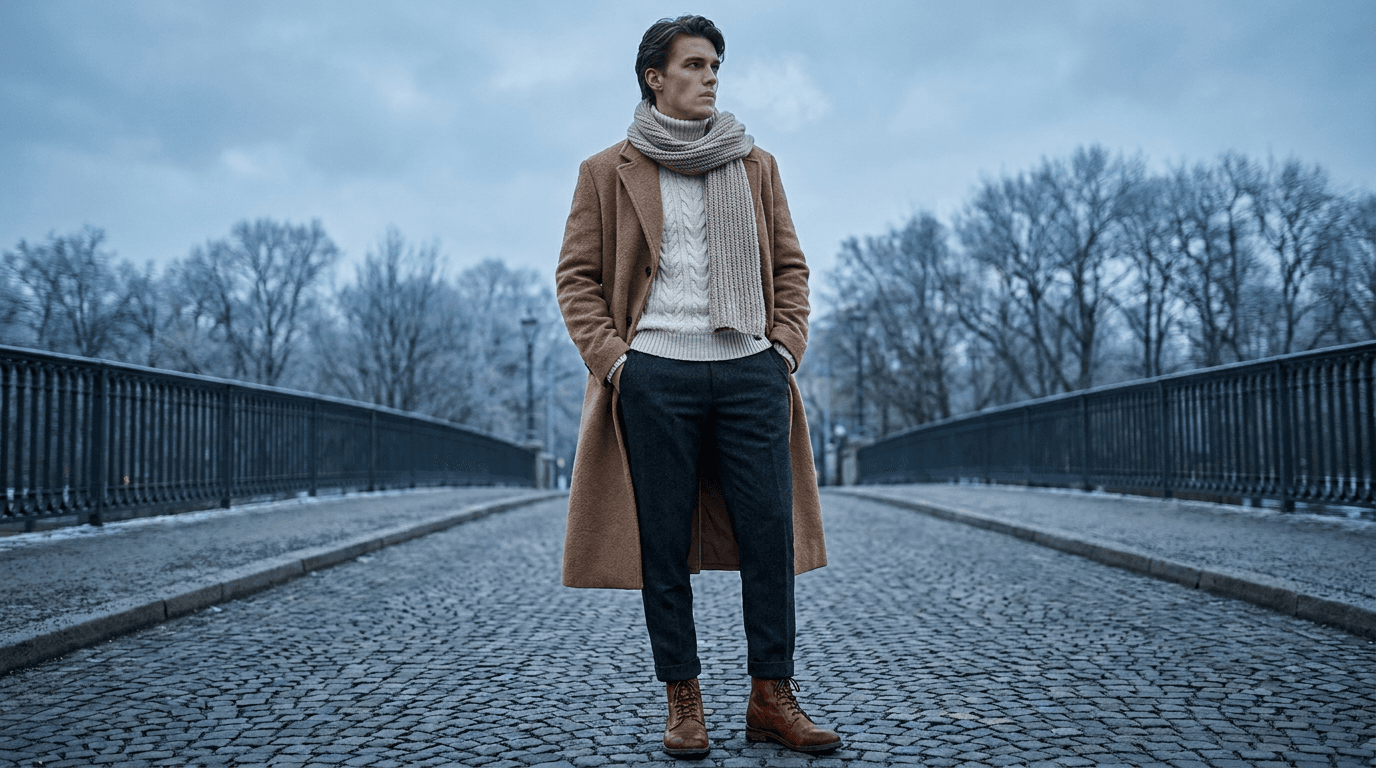
Template 11: Layered Winter Fashion Editorial
Winter fashion lookbooks face the unique challenge of making heavy, bulky garments look desirable rather than shapeless. The key is showing the layering system, the texture contrast between different materials, and the cozy warmth of the ensemble without losing the subject's silhouette. This template solves that challenge with deliberate composition and lighting that celebrates winter layering.
Prompt:
full-length editorial fashion photograph of a person standing on a quiet city bridge on a cold winter morning, wearing a long camel wool overcoat over a cream cable-knit turtleneck sweater visible at the neckline, dark tailored wool trousers, and cognac leather lace-up boots, a thick knit scarf in oatmeal cream wrapped loosely around the neck with the ends falling naturally, hands tucked into coat pockets, soft cool morning winter light providing even illumination with a slight blue-gray quality to the ambient light, the cold atmosphere is suggested by the light quality and the visible breath-like softness in the air, urban bridge architecture and bare winter trees create the background in soft focus, the wool textures of the coat and scarf are clearly visible showing the quality of the materials, color palette of camel cream cognac charcoal and cool winter gray, the mood is composed warm despite the cold and sophisticatedly bundled, editorial winter fashion photography with cool-toned natural color grading, full body visible with space around the subject, no text, no logos, no brand names
Best for: Fall and winter collection launches, outerwear and knitwear features, cold weather styling guides, editorial email campaign headers, seasonal social media content, brand website seasonal hero images
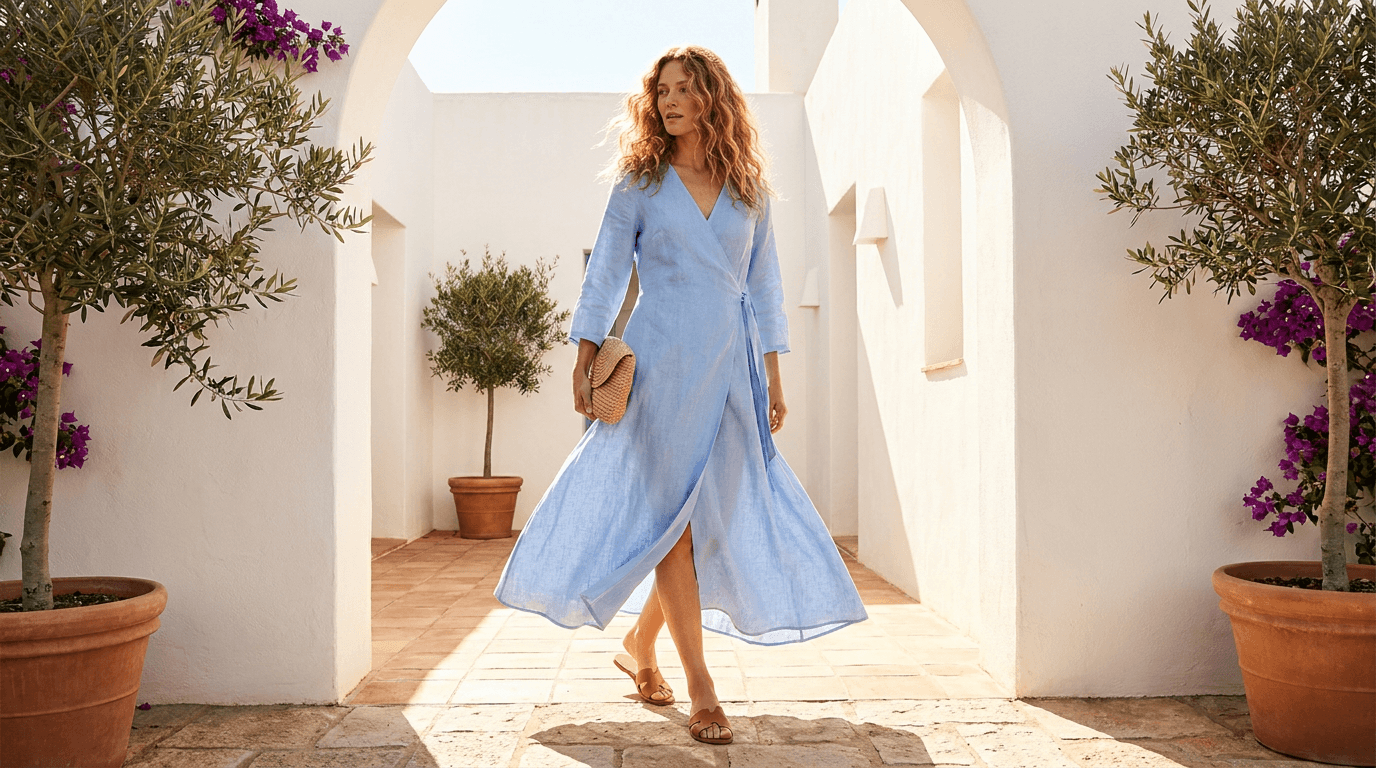
Template 12: Summer Resort Lookbook
Resort and summer collections call for imagery that transports the viewer to a warm, leisurely, aspirational environment. The visual language is brighter, lighter, and more relaxed than other fashion photography, with sun-drenched lighting and breezy fabric movement that communicates vacation energy and effortless style.
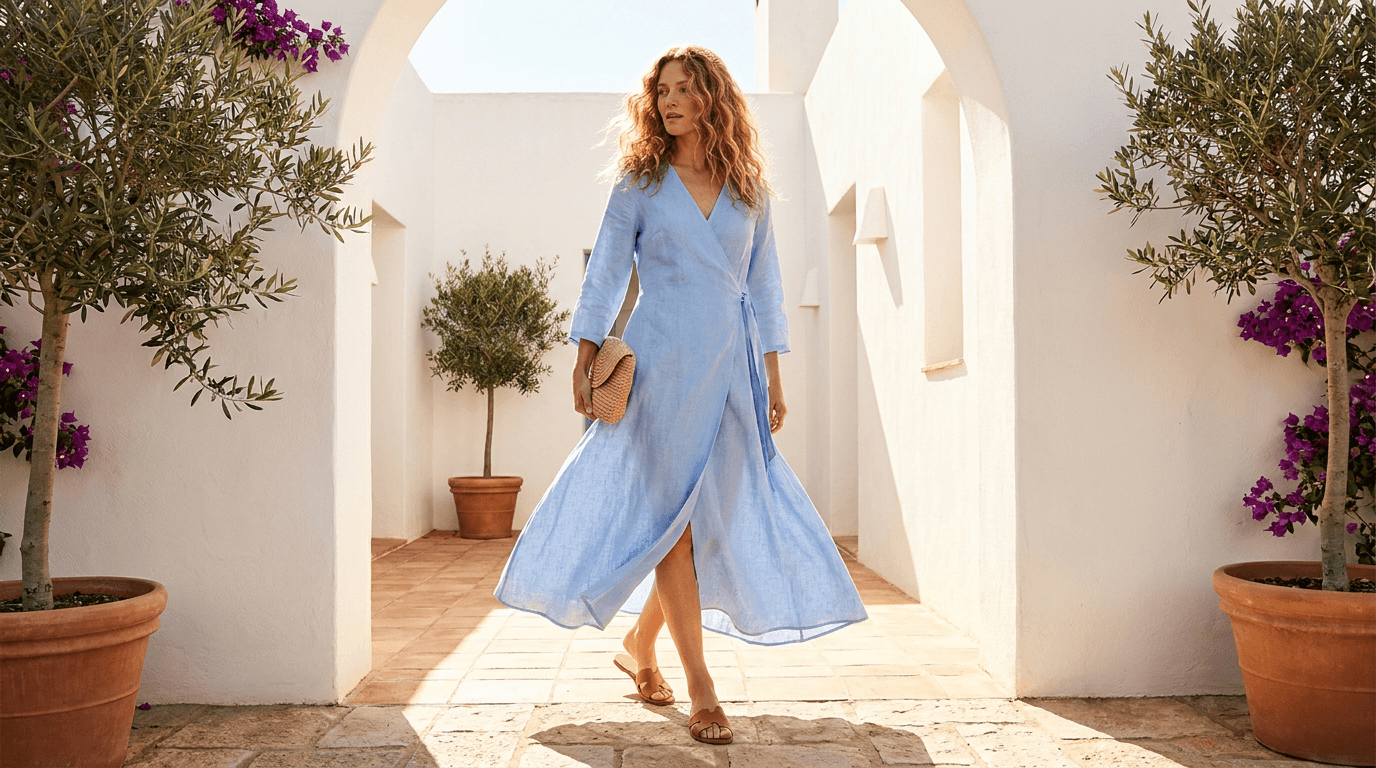
Prompt:
full-length editorial fashion photograph in a bright mediterranean-style courtyard with white stucco walls and terracotta accents, a person walking through a sun-drenched archway wearing a flowing linen wrap dress in soft powder blue that moves with the stride, paired with tan leather slide sandals and a woven raffia clutch, loose natural hair catching the bright sunlight, the courtyard is bathed in bright warm overhead midday sunlight with strong defined shadows from the architecture creating graphic patterns on the ground, a few potted olive trees and bougainvillea flowers add natural color to the white surroundings, the linen fabric shows its natural texture and translucency where the sunlight passes through, bright warm color palette of powder blue white terracotta natural green and sun-bleached neutrals, the mood is effortless sun-drenched and sophisticated without trying, editorial resort fashion photography with bright warm high-key exposure, full body visible with architectural framing, no text, no logos, no brand names
Best for: Spring and summer collections, resort wear and vacation capsules, travel-adjacent fashion marketing, warm weather email campaigns, Instagram and Pinterest visual content, brand lifestyle imagery
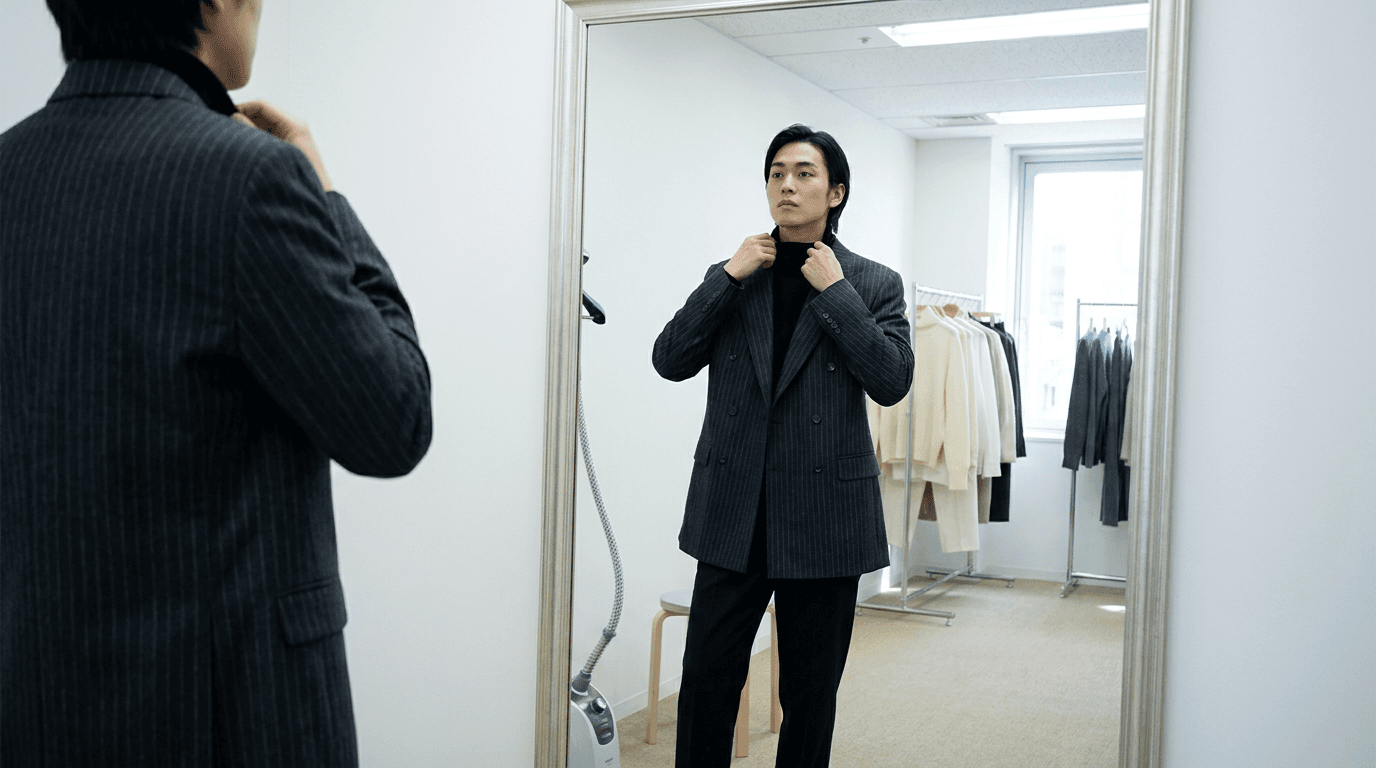
Template 13: Behind-the-Scenes Fitting Room
Behind-the-scenes content has become one of the highest-engagement formats in fashion social media because it feels authentic and gives the viewer a sense of access to the creative process. This template produces a styled fitting room moment that looks candid and natural while still showcasing the garment with enough clarity for commercial use.
Prompt:
candid editorial fashion photograph inside a bright well-lit fitting room or styling space, a person standing in front of a large mirror adjusting the collar of a structured double-breasted blazer in charcoal pinstripe over a simple black turtleneck, the mirror reflection shows the back view of the blazer simultaneously, clothing racks with garments in neutral tones are softly blurred in the background establishing the styling room context, bright overhead fluorescent mixed with soft natural light from a window creating a realistic slightly cool fitting room atmosphere, the pose is natural and mid-action as though caught during an actual fitting rather than deliberately posed, the blazer fabric shows its pinstripe pattern and structured tailoring clearly, the fitting room has a minimal professional aesthetic with white walls and a neutral carpet, cool neutral color palette of charcoal black cream and soft white, the mood is focused creative and authentically behind-the-scenes, documentary-style fashion photography with natural unforced lighting, three-quarter length framing showing the blazer as the subject, no text, no logos
Best for: Instagram Stories and Reels covers, behind-the-brand content, designer and stylist personal brand content, fashion process storytelling, social media engagement posts, Instagram Reels covers
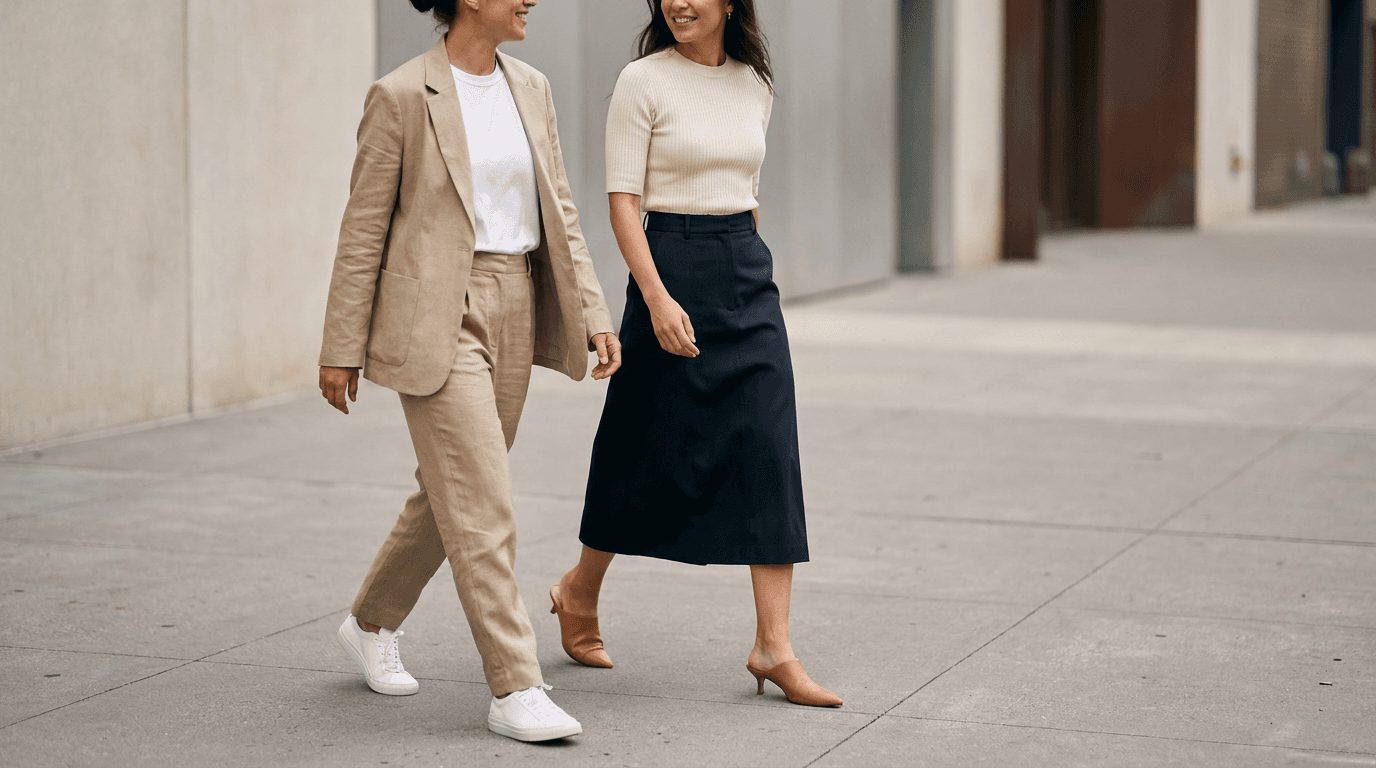
Template 14: Editorial Duo Composition
Two-person editorial images add visual energy and narrative dimension to a lookbook. They communicate the social context of fashion, showing how clothing functions in the world of human interaction rather than in isolation. Duo shots are also highly effective for showing contrasting pieces from the same collection.
Prompt:
editorial fashion photograph of two people walking side by side on a wide clean concrete sidewalk in soft overcast daylight, the first person wears a relaxed oversized beige linen suit with a white tee underneath and minimalist white sneakers, the second person wears a fitted dark navy midi skirt with a tucked cream knit top and tan pointed-toe mules, both walking in stride with natural confident body language and a slight conversation-like dynamic between them, the overcast light provides even flattering illumination that shows the contrasting fabric textures and silhouettes of both outfits equally, a clean modern urban environment with minimal architectural elements softly blurred in the background, the two figures occupy the center of the frame with equal visual weight, warm neutral color palette of beige navy cream white and tan with muted urban background tones, the mood is composed effortlessly stylish and companionable, editorial street fashion photography with clean natural color grading, full-length framing with both outfits completely visible, no text, no logos, no brand names
Best for: Collection overview imagery, contrasting outfit storytelling, social media feature posts, website lookbook spreads, campaign imagery showing collection range, editorial email and blog content
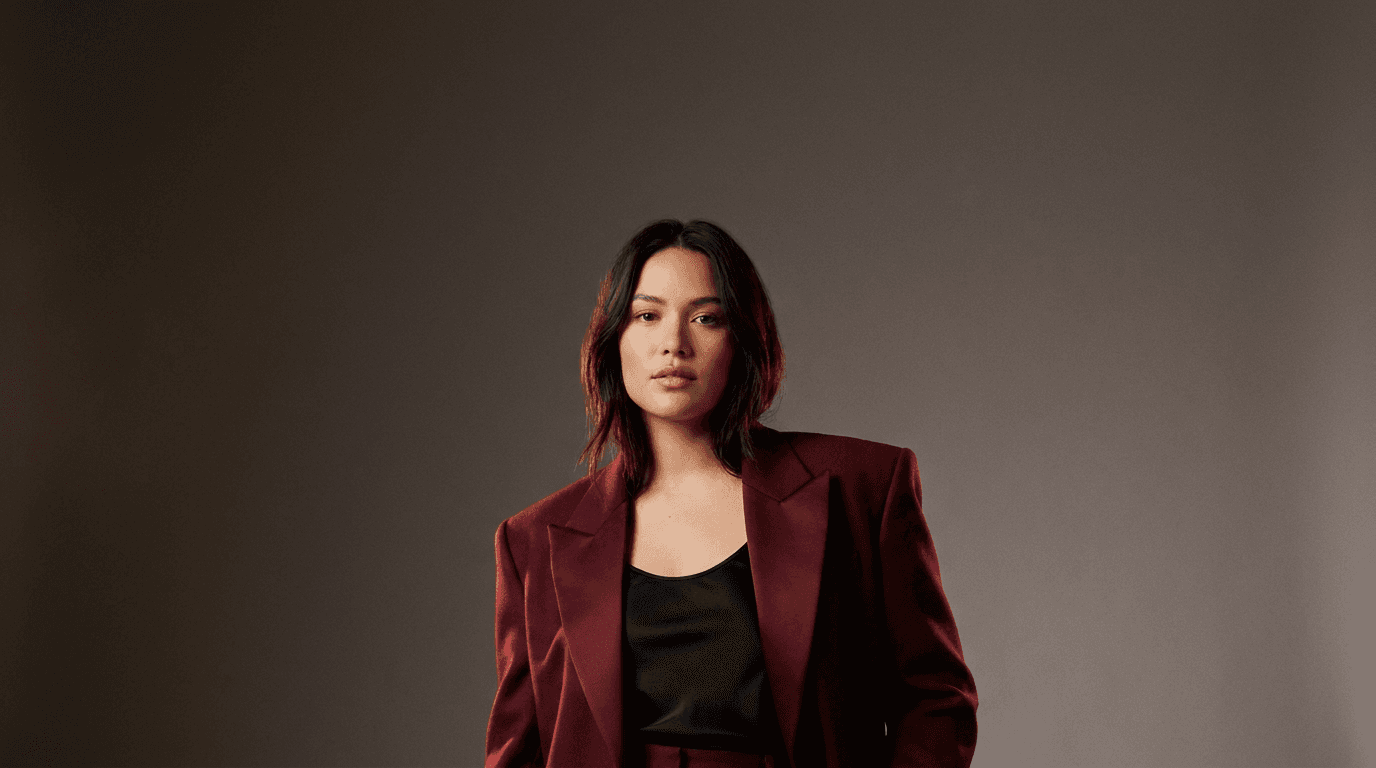
Template 15: Magazine Cover Style Portrait
The magazine cover composition is the most aspirational and brand-defining image format in fashion photography. It combines a striking portrait with enough compositional space for headline text, creating an image that feels immediately high-fashion. Even when no text is actually added, the composition itself signals editorial authority and visual confidence.
Prompt:
editorial fashion portrait in magazine cover composition, a person standing facing the camera with a direct confident gaze and relaxed shoulders, wearing an architectural statement blazer in rich burgundy with strong shoulder structure over a simple black silk top, the subject is positioned in the lower two-thirds of the frame with generous empty space above the head for potential text placement, soft directional studio lighting with a large key light from camera left creating dimensional modeling on the face and sculpting the blazer's architectural lines, a subtle warm rim light from behind adding separation from the background, the background is a smooth gradient from warm charcoal to soft mid-gray, the blazer fabric shows its structured form and rich color saturation under the studio lighting, the overall composition follows classic fashion magazine cover layout conventions with centered subject and vertical orientation, rich burgundy deep black warm gray and subtle gold from the lighting color palette, the mood is commanding elegant and editorially polished, high-fashion portrait photography with precise studio lighting, waist-up framing with the blazer as the focal garment, no text, no logos, no brand names visible
Best for: Brand hero imagery, collection launch announcements, social media profile images, press and media kit visuals, seasonal campaign anchors, website homepage features, fashion brand authority positioning
How to Customize These Prompts for Your Brand
The 15 templates above cover the core visual formats that fashion lookbooks require, but the highest-performing lookbook images are the ones tailored to a specific brand's identity, aesthetic, and target audience. Here are four dimensions of customization that make the difference between a generic fashion image and one that feels like it belongs to your brand.
Substitute your actual garments and materials. Every prompt describes specific clothing items, fabrics, and colors. Replace these with the actual pieces from your collection. If you are launching a collection of linen trousers in olive, terracotta, and slate, swap those specific details into the relevant templates. The more precisely you describe your actual product, its fabric weight, its draping quality, its color, its construction details, the more accurately the generated image will represent what you are selling.
Lock in your brand's color palette. Consistency across a lookbook is what makes it feel curated rather than random. Before generating any images, define three to five core colors that will appear across all your lookbook images. This might be the actual colors of the collection, or it might be the environmental and styling tones that surround the garments. Either way, use the same color palette language in every prompt so the complete set feels like one cohesive visual story.
Match the environment to your brand positioning. A minimalist Scandinavian brand should not generate lookbook images in ornate Baroque interiors. A streetwear label should not generate images in serene countryside settings. The environments in your lookbook images need to match the cultural context your brand occupies. Review each template and substitute environments that align with your brand's world. Urban concrete for street brands. Clean white studios for minimalist labels. Sun-drenched Mediterranean settings for resort wear. The environment tells the viewer who this brand is for.
Adjust the model description to match your audience. The templates deliberately keep model descriptions general so you can customize them for your specific needs. If your brand serves a specific demographic or champions a particular aesthetic, adjust the descriptions accordingly. Inclusivity in casting is not just ethically important, it is commercially smart, because buyers purchase more confidently when they see themselves reflected in the imagery.
For localized adjustments to specific parts of a generated image, like changing a garment color or modifying a background element without regenerating the entire composition, the Image Inpainting tool in Miraflow allows targeted editing of specific image regions.
Deploying Fashion Lookbook Images Across Marketing Channels
Generating the images is step one. Deploying them strategically across your marketing channels requires attention to platform-specific requirements, image sequencing, and format optimization.
Instagram feed and Stories. Instagram remains the primary discovery platform for fashion brands in 2026. For feed posts, generate lookbook images at 4:5 aspect ratio to maximize screen real estate. For Stories, generate at 9:16 vertical format. Maintain a cohesive grid aesthetic by alternating between full-length shots, detail close-ups, and flat lays. The editorial duo shot (Template 14) and behind-the-scenes fitting room (Template 13) tend to generate higher engagement rates because they feel more dynamic and authentic than posed studio shots. For more Instagram-specific visual strategies, the Instagram post images template guide covers additional prompt formats that complement these lookbook templates.
Website lookbook pages. Your website lookbook should follow a narrative sequence. Open with the strongest editorial image (often Templates 1 or 4) as the hero. Follow with studio shots (Template 2) that show individual pieces clearly. Intersperse detail close-ups (Template 7) to build trust in material quality. Close with the aspirational lifestyle shots that reinforce the brand's emotional positioning. Generate website images at higher resolutions and wider aspect ratios (16:9 or 3:2) to fill hero sections effectively.
Pinterest. Pinterest is a high-intent discovery platform for fashion, and vertical images dramatically outperform horizontal ones. Generate Pinterest-specific versions of your lookbook images at 2:3 or 9:16 vertical aspect ratio. Full-length outfit shots and flat lays perform particularly well on Pinterest because they provide the complete visual information that pinners are looking for when planning outfits.
Email marketing. Lookbook imagery in email campaigns should prioritize clean, high-impact visuals that load quickly and communicate the collection's energy at a glance. The studio shots (Template 2) and magazine cover portrait (Template 15) work well as email hero images because they are visually striking without requiring surrounding context to make sense.
Wholesale and retail presentations. If you sell wholesale, your lookbook PDF is one of the most important sales tools you have. Generate a complete set of images covering every template type, organized by outfit or collection story, with studio shots for product clarity and editorial shots for brand positioning. The professional quality of AI-generated lookbook imagery can significantly elevate a wholesale presentation compared to the smartphone photos many smaller brands rely on.
Short-form video content. Static lookbook images can be transformed into engaging video content for Reels, TikTok, and YouTube Shorts. The Text2Shorts tool can generate short-form video content from collection descriptions, while the Cinematic Video Generator can produce polished fashion video clips from text prompts that match your lookbook's visual style. Combining still lookbook images with motion content across platforms creates a more complete and engaging brand presence.
Common Mistakes That Undermine Fashion Lookbook Quality
Understanding what goes wrong helps you avoid the pitfalls that make AI-generated fashion content look obviously artificial or off-brand.
Inconsistent styling across the lookbook. If one image shows a minimalist Scandinavian aesthetic, the next shows a maximalist bohemian vibe, and the third shows urban streetwear, the lookbook tells no coherent story. Before generating, commit to a single design direction and maintain it across all images. Consistency is what makes a collection of images feel like a lookbook rather than a random assortment of fashion photos.
Over-accessorizing and over-styling. The most common prompting mistake in fashion imagery is adding too many accessories, too many styling details, and too much environmental clutter. Professional fashion photography is defined by restraint. A single well-chosen accessory communicates more luxury than five competing pieces. When in doubt, remove elements from your prompt rather than adding them.
Unrealistic body proportions or poses. AI generators can sometimes produce figures with proportions that look subtly wrong or poses that no human body would naturally adopt. Review every generated image for anatomical accuracy before publishing. If a pose looks stiff or a proportion seems off, regenerate rather than publishing imagery that erodes trust. The Image Inpainting tool can also fix localized issues without requiring a full regeneration.
Flat, even lighting that reads as catalog rather than editorial. The difference between a product catalog image and an editorial lookbook image is largely the lighting. If your generated images look evenly lit from all directions with no visible shadow or highlight direction, the prompt needs stronger lighting specifications. Go back to the lighting descriptions in the templates and ensure you are specifying light direction, quality, and the shadow behavior you want.
Ignoring fabric texture and behavior. Fashion audiences notice when fabric does not look right. A linen blazer should show natural wrinkles and a slightly textured surface. A silk dress should show subtle sheen and fluid draping. Knits should show stitch definition. Always include material-specific texture descriptions in your prompts, because these details are what make an AI-generated garment look like a real piece of clothing rather than a painted surface.
Generating only one image type. A lookbook that consists entirely of full-length shots is visually monotonous. A lookbook that only shows close-ups does not let the viewer understand the complete outfit. The most effective lookbooks use a deliberate mix of shot types: full-length for silhouette, three-quarter for styling details, close-up for material quality, flat lay for outfit composition, and environmental shots for brand context. Use multiple templates from this guide for each collection to build a complete visual story.
Beyond the Lookbook: Additional Applications for AI Fashion Imagery
The templates in this post are designed primarily for lookbook content, but AI-generated fashion imagery has applications across the broader fashion business.
Pre-production design visualization. Before committing to production, designers can generate concept images showing how a proposed garment or collection will look when photographed and styled. This is valuable for internal design reviews, investor presentations, and pre-orders where the physical product does not yet exist.
Social media content at scale. Fashion brands need to post frequently across multiple platforms to maintain visibility. The lookbook templates can be adapted for daily social content by customizing the garment descriptions, environments, and compositions for each post while maintaining the brand's visual consistency. Combine these image prompts with the AI Music Generator for custom audio on video content and the AI Clipping tool for repurposing longer video content into short-form clips.
Seasonal campaign planning. Generating concept lookbook imagery months before a collection shoots helps creative teams align on visual direction, select locations and models, and present campaign concepts to stakeholders. The AI-generated concepts serve as high-fidelity mood boards that are far more useful than traditional collaged reference boards.
Trend research and experimentation. Fashion brands can use AI generation to quickly visualize how emerging trends, color palettes, or styling approaches would look within their brand aesthetic before investing in production. Generate test images showing your brand's silhouettes in trending colors or your existing pieces styled in new combinations to evaluate potential directions.
Content for YouTube and video platforms. Fashion brands increasingly need video content alongside static imagery. The YouTube Thumbnail Maker can produce thumbnails for haul videos, styling tutorials, and collection reveal content that matches your lookbook aesthetic. For brands producing fashion content on YouTube, consistent visual branding between thumbnails and lookbook imagery strengthens brand recognition across platforms. The YouTube channel banner art guide covers how to extend your visual brand to your channel page.
How Miraflow AI Supports Your Fashion Content Workflow
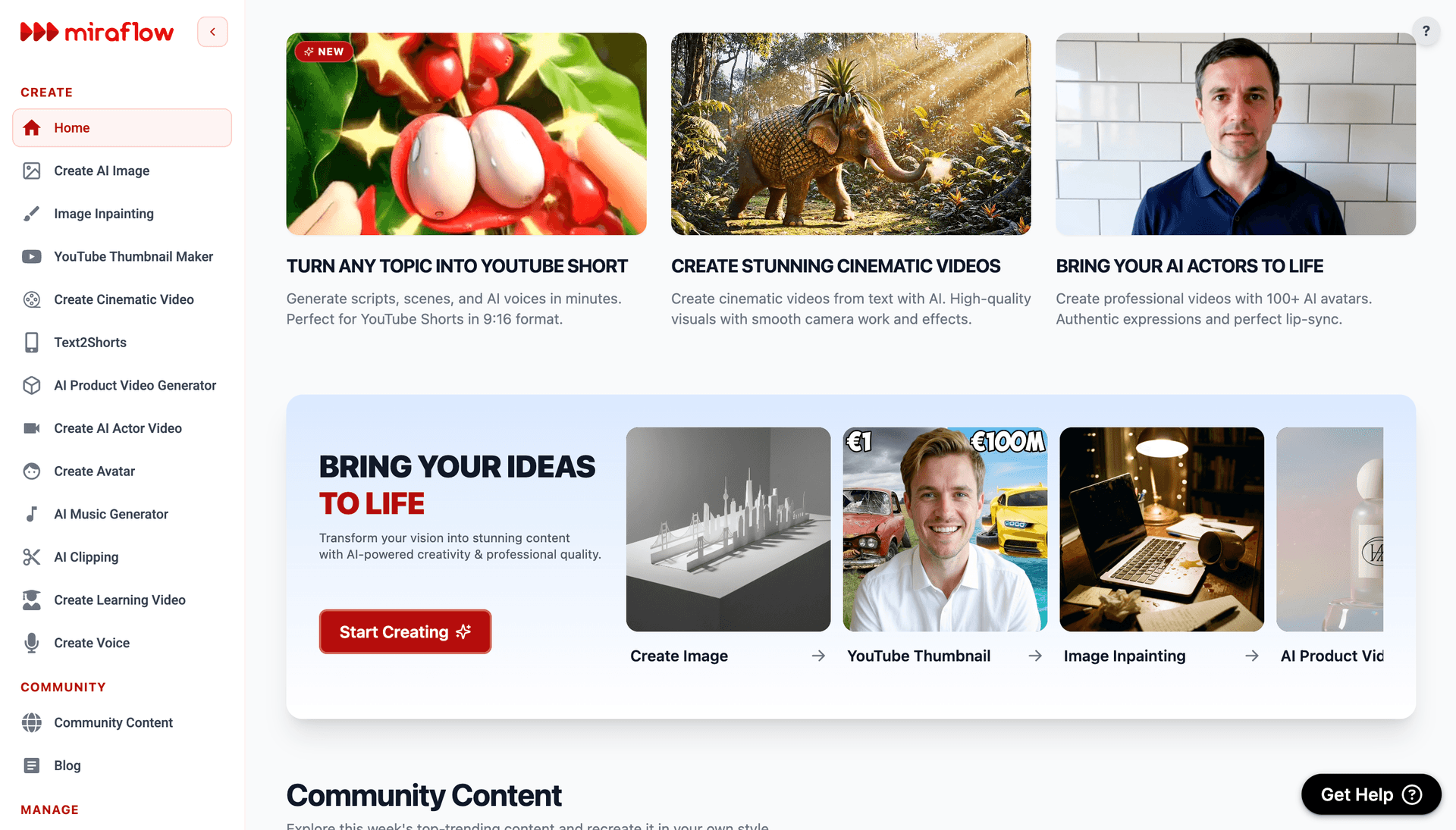
Every template in this post can be generated inside Miraflow AI. Open the AI Image Generator, paste your customized prompt, select the appropriate aspect ratio for your target platform, and generate. If an image needs localized adjustments, like changing a garment color, modifying a background element, or correcting a specific detail, the Image Inpainting tool allows targeted editing without regenerating the full image.
For fashion brands building video content alongside their lookbook imagery, the Cinematic Video Generator can produce short fashion film clips from text descriptions, creating motion content that matches the visual style of your static lookbook. The Text2Shorts tool can transform collection descriptions or styling tips into short-form vertical videos for Instagram Reels, TikTok, and YouTube Shorts. Combined with the AI Music Generator for custom background tracks, you can produce complete video lookbook content entirely from AI-generated assets.
The recommended workflow for seasonal collection launches is to generate the full lookbook image set in a single batch session. Work through the relevant templates, customize each one for the specific garments and brand aesthetic, generate multiple variations of each, select the strongest outputs, refine any details with inpainting, and export the final set at the resolutions and aspect ratios required for each marketing channel. This batched approach ensures visual consistency across the entire collection while maximizing production efficiency.
For brands that also want to create product-specific studio shots for individual items or realistic lifestyle images that feel like genuine candid photography, those dedicated prompt guides complement the lookbook templates here by covering additional visual formats within the same platform workflow.
FAQ
Can AI-generated lookbook images be used for commercial fashion marketing?
AI-generated lookbook images are widely used for commercial fashion marketing including social media content, website imagery, email campaigns, and advertising. The key considerations are accuracy and transparency. If the images represent actual products available for purchase, they should accurately reflect what the buyer will receive, or be clearly labeled as concept or styling visualization imagery. Most AI image generation platforms allow commercial use of generated outputs, but always verify the specific terms of service for the tool you are using.
What aspect ratio should I use for fashion lookbook images?
The optimal aspect ratio depends on where the images will be published. For Instagram feed posts, 4:5 portrait format maximizes screen space and engagement. For website hero sections and horizontal layouts, 16:9 or 3:2 works best. For Pinterest and Instagram Stories, 9:16 vertical format performs strongest. For lookbook PDFs and print materials, standard print ratios like 8.5x11 or A4 proportions are appropriate. Generate each image at the correct ratio for its intended platform rather than cropping afterward.
How do I maintain a consistent aesthetic across an entire AI-generated lookbook?
Define your visual parameters before generating any images: your color palette (three to five core tones), your lighting style (warm and natural, cool and editorial, dramatic and moody), your environmental context (urban, studio, outdoor, interior), and your composition approach (centered, rule-of-thirds, dynamic angles). Embed these same parameters into every prompt you generate. Using the same style, lighting, and color descriptors across all templates creates the visual cohesion that makes a collection of images feel like a unified lookbook rather than a random set of fashion photos.
Can these prompts be adapted for menswear lookbooks?
All 15 templates work for menswear by substituting the garment descriptions with men's clothing items. Replace a midi dress with tailored trousers and a linen shirt. Replace a silk camisole with a crew-neck tee. Replace a structured blazer with a bomber jacket or an unstructured sport coat. The compositional structures, lighting setups, and environmental contexts in the templates are gender-neutral and will produce equally strong results for menswear, womenswear, or unisex collections.
How many lookbook images should I generate for a collection?
A comprehensive lookbook for a typical seasonal collection usually needs 15 to 30 images covering full-length outfit shots, detail close-ups, flat lays, and environmental context images. For each key outfit or look in the collection, plan on three to five images across different shot types. Generating multiple variations of each prompt (three to five per template) gives you enough options to select the strongest image from each batch, which consistently produces better results than trying to perfect a single generation.
Should I use AI-generated lookbook images alongside real photography?
Many fashion brands use a hybrid approach where professional photography covers the flagship campaign imagery and key hero shots, while AI-generated images fill the volume gaps for social media content, secondary marketing materials, and platform-specific visual variations. When mixing AI-generated and photographed images, ensure the color grading, lighting quality, and styling aesthetic are consistent across both so the overall brand presentation feels cohesive.
What is the best way to show fabric texture in AI-generated fashion images?
Include specific fabric descriptions in your prompt: the type of weave, the weight, the surface quality (matte, sheen, textured, smooth), and how the fabric behaves (drapes, holds structure, wrinkles naturally). Then specify lighting that reveals texture, which means directional light from one side rather than flat even illumination. Terms like "raking angle light revealing textile surface detail" or "directional light showing the natural weave and drape of the linen" help the generator prioritize fabric realism.
Can I use these templates for accessories-only brands?
The accessories hero shot template (Template 8) is designed specifically for accessories, and the flat lay template (Template 6) adapts easily to accessories-only compositions. For jewelry, handbags, shoes, scarves, and other accessories, customize the prompts with your specific product descriptions and appropriate surface materials. The studio product photography prompts guide provides additional templates specifically optimized for product-focused imagery that complements the lifestyle approach in this lookbook guide.
Conclusion
The fashion lookbook is where brand identity and commercial ambition meet. It is the visual story that makes buyers care about your clothing before they have touched a single garment. The brands that invest in compelling, editorially styled lookbook imagery consistently attract more attention, generate more engagement, and convert more sales than those that rely on basic product photos or inconsistent visual content.
The 15 templates in this post cover the complete visual vocabulary of fashion lookbook photography: full-length editorial shots on the street and in the studio, intimate detail close-ups that build trust in material quality, flat lay compositions for social media, golden hour and nighttime editorials for atmospheric storytelling, seasonal variations for resort and winter collections, behind-the-scenes content for authenticity, duo compositions for narrative energy, and magazine cover portraits for brand authority. Each one is engineered for the specific lighting, composition, color, and styling conventions that fashion audiences recognize and respond to.
Copy the templates that match your brand and collection needs, customize them with your specific garments and visual identity, generate them inside Miraflow AI, and deploy them across your marketing channels with the confidence that your visual content meets the editorial standard the fashion industry demands. Build a workflow that generates the complete lookbook set for every collection as a standard part of your launch preparation, and watch the difference that polished, intentional fashion imagery makes in your brand's visibility, engagement, and sales velocity. The brands that win in fashion are the ones that look like they belong at the top, and these templates give you the tools to make every collection look exactly that way.