GPT Image 2 vs Nano Banana Pro vs Nano Banana 2: Full Side-by-Side Comparison

Written by
Jay Kim
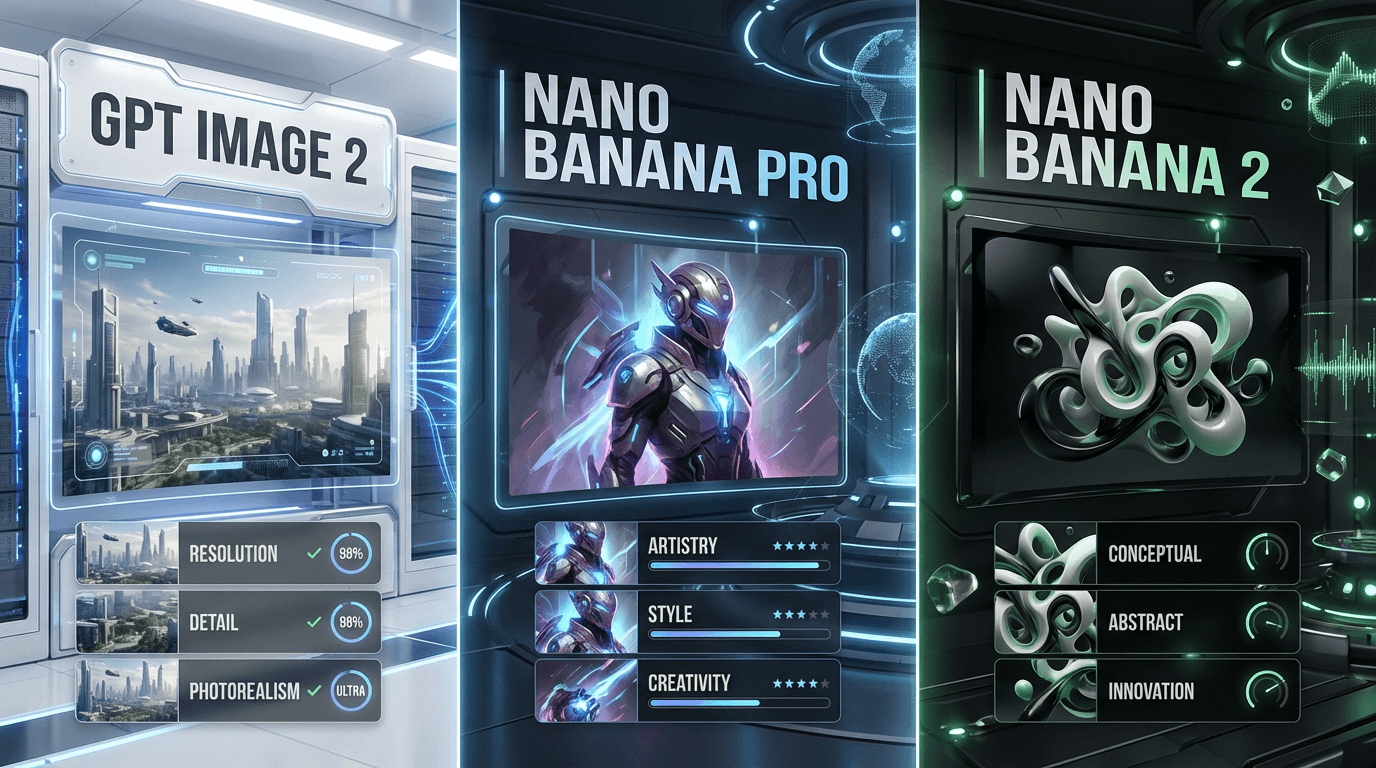
GPT Image 2 has leaked on LMArena with near-perfect text rendering and photorealism that reportedly surpasses Nano Banana Pro. Meanwhile, Nano Banana 2 delivers 95% of Pro's quality at half the cost and 3-5x the speed. This full side-by-side comparison covers architecture, text rendering, photorealism, resolution, speed, pricing, editing, character consistency, and world knowledge across all three models — with practical guidance on which to choose for every workflow.
The AI image generation landscape just experienced its most disruptive month in history. In early April 2026, three anonymous models appeared on LMArena under the codenames maskingtape-alpha, gaffertape-alpha, and packingtape-alpha — and within hours, testers were declaring a new king. On April 4, 2026, three anonymous image models showed up on LM Arena. Developer Pieter Levels and venture investor Justine Moore were among the first to publicly flag the models. Several other community members tested them extensively before they disappeared. All three models were pulled from the Arena within hours.[3]
The stunning image quality they displayed shocked testers — featuring near-perfect text rendering, the elimination of the yellow color cast that plagued previous generations, and an incredible grasp of "world knowledge." A few hours later, these three models vanished from the platform. The community quickly concluded: this is OpenAI's upcoming GPT-Image-2.[2]
Meanwhile, Google DeepMind's Nano Banana family — Nano Banana Pro and the newer Nano Banana 2 — had already been reshaping what creators and developers expected from AI image generation since late 2025. Prior to the GPT Image 2 leak, Google DeepMind's Nano Banana Pro had established itself as the industry benchmark for AI image generation in early 2026.[4]
This article provides the definitive side-by-side comparison of all three models: GPT Image 2 (based on pre-release leaks and early tester reports), Nano Banana Pro (Google's quality-first flagship), and Nano Banana 2 (Google's speed-optimized successor). For creators evaluating AI image generation tools for professional workflows, understanding the architectural differences, capability trade-offs, and pricing economics between these models is the most consequential tool decision of 2026.
Important caveat: As of April 17, 2026, OpenAI has made no official announcements about GPT Image 2.[7] All GPT Image 2 information in this article is derived from leaked Arena evaluations and community analysis, not from confirmed specifications. Treat GPT Image 2 details as preliminary until OpenAI publishes official documentation.
The Three Models at a Glance
Before diving into the granular comparison, here is the fundamental positioning of each model.
GPT Image 2 (OpenAI — Unreleased)
GPT Image 2 is OpenAI's upcoming flagship image generation model — the successor to GPT Image 1 (released March 2025) and GPT Image 1.5 (released December 2025).[4] Multiple sources report a shift from a two-stage inference process to single-pass inference, which would explain both the quality improvement and the expected speed gains. New metadata tags have also been detected in PNG file outputs from suspected GPT Image 2 generations. This architectural overhaul matters because it suggests OpenAI is not just iterating. They're rebuilding the image generation stack from the ground up.[3]
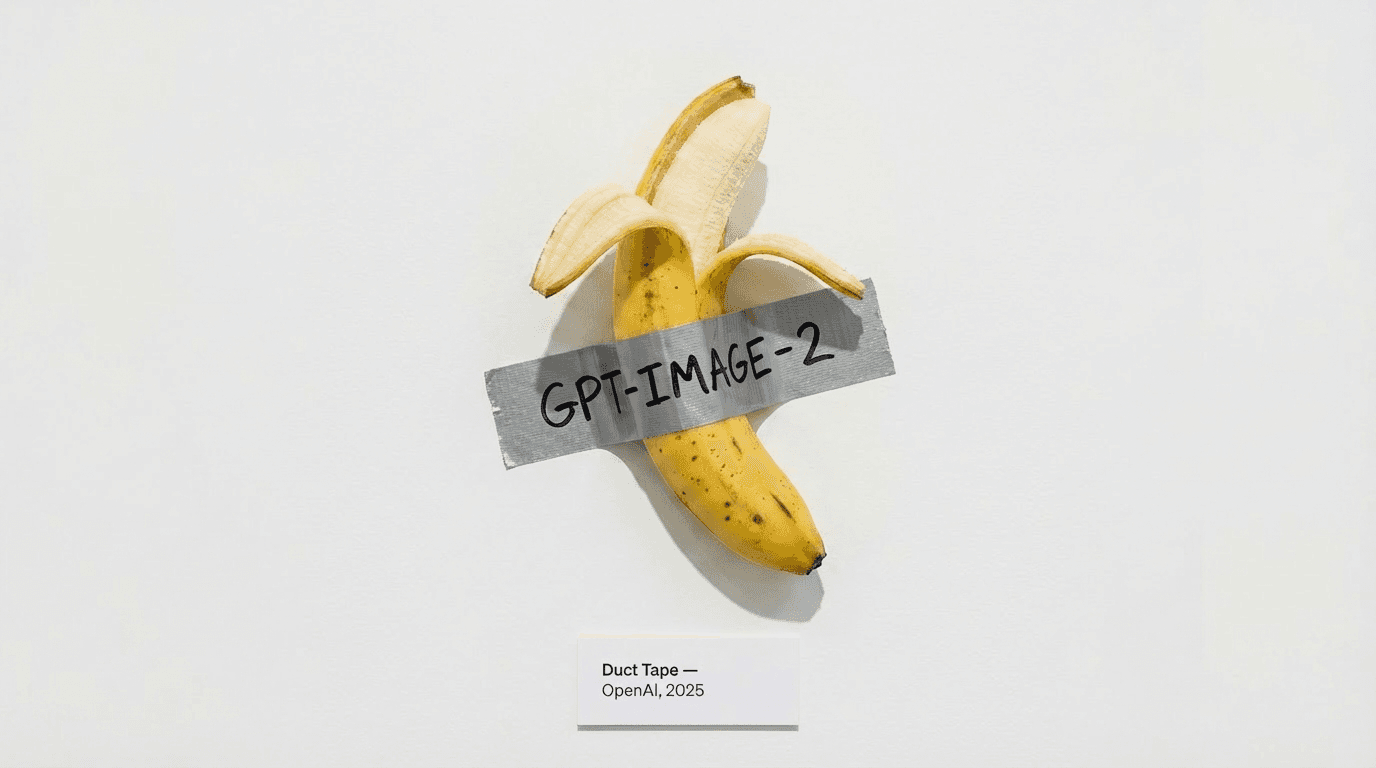
GPT Image 2 has been spotted in A/B tests inside ChatGPT, and the early signals are genuinely interesting: near-perfect text rendering inside images, realistic UI screenshots, and a noticeable step up in photorealism.[4]
Nano Banana Pro (Google DeepMind — Released November 2025)
Nano Banana Pro is Google's new image generation and editing model from Google DeepMind.[1] Nano Banana Pro is the next-generation AI image generation model developed by Google. It is the successor to the original Nano Banana and is built on the advanced capabilities of the Gemini 3.0 Pro.[8]
Built on Gemini 3 Pro, Nano Banana Pro uses Gemini's state-of-the-art reasoning and real-world knowledge to visualize information better than ever before. Nano Banana Pro can help you visualize any idea and design anything — from prototypes, to representing data as infographics, to turning handwritten notes into diagrams. With Gemini 3's advanced reasoning, Nano Banana Pro doesn't just create beautiful images, it also helps you create more helpful content.[1]
Nano Banana 2 (Google DeepMind — Released February 26, 2026)
Introducing Nano Banana 2 (Gemini 3.1 Flash Image), Google's latest state-of-the-art image model. Now you can get the advanced world knowledge, quality and reasoning you love in Nano Banana Pro, at lightning-fast speed. Nano Banana 2 brings the high-speed intelligence of Gemini Flash to visual generation, making rapid edits and iteration possible.[7]
Whatever your needs, Google now offers the perfect tool for every workflow: Nano Banana Pro for high-fidelity tasks requiring maximum factual accuracy, or Nano Banana 2 for rapid generation, precise instruction following and integrated image-search grounding.[7]
Architecture: The Foundation That Determines Everything
The architectural differences between these three models are not cosmetic — they determine the speed, quality ceiling, cost, and ideal use cases for each model.
GPT Image 2: A New Architecture From Scratch
This is not an incremental update to GPT-4o's image capabilities. It's built from scratch, suggesting OpenAI has been working on a dedicated image generation pipeline rather than bolting image output onto a multimodal model.[9]
The architectural innovation involves moving from a two-stage process to single-step inference, with speed expected to increase by 3x.[7]
This is a significant departure from the GPT Image 1 and 1.5 lineage. OpenAI's image generation journey started with DALL-E back in 2021, but the real shift happened in March 2025 when the company released GPT Image 1. Unlike DALL-E, which was a separate diffusion-based model called through a tool, GPT Image 1 generated images natively inside the language model itself. It was autoregressive, meaning it produced images token by token, just like text.[3]
Architectural shift: from the diffusion models of DALL-E to the autoregressive models of GPT Image 1, and now to the all-new independent architecture of GPT Image 2 — OpenAI has implemented major underlying architectural transformations with every generation.[6]
Nano Banana Pro: Gemini 3 Pro's Deep Reasoning
Nano Banana Pro is built on Gemini 3 Pro, Google's flagship Large Language Model for reasoning. It offers deeper reasoning capabilities, complex scene understanding, and higher-quality output.[1]
There's a very big difference: as Gemini 3 Pro is a model that forces "thinking" before returning a result and cannot be disabled, Nano Banana Pro also thinks.[4]
Unlike standard image generators, the Gemini 3.0 backbone understands how the world works. From accurate fluid dynamics to complex object relationships, the model simulates gravity and causal logic before it renders a single pixel.[8]
The deep reasoning architecture is what makes Nano Banana Pro the quality benchmark, but it comes with a speed trade-off. Nano Banana Pro takes more time to process each image because it "thinks through" the generation — considering spatial relationships, lighting physics, composition rules, and creative intent.[4]
Nano Banana 2: Flash Speed Meets Pro Intelligence
Nano Banana 2 (codenamed GEMPIX2) is based on the Gemini 3.1 Flash architecture, while Nano Banana Pro is built on the Gemini 3 Pro architecture. Their core positioning is distinct: NB2 focuses on speed and cost-effectiveness, while Pro aims for ultimate image quality and reasoning depth.[1]
Nano Banana Pro runs on Gemini 3 Pro Image, the larger model that allocates more compute to understanding relationships between elements in your scene. Nano Banana 2 runs on Gemini 3.1 Flash Image, which distills that same multimodal reasoning into a faster architecture. It reasons about your prompt, but it does so at Flash-tier speed. The result is 2-3x faster generation with good compositional accuracy in most real-world scenarios.[3]
Nano Banana and Nano Banana Pro are different models (despite some using the terms interchangeably), but Nano Banana Pro is not Nano Banana 2 and does not obsolete the original Nano Banana — far from it.[4]
The analogy that best captures the relationship: Think of it like this: Pro is the studio camera. Flash is the smartphone camera. Both take great photos, but they're designed for different situations.[4]
Text Rendering: The Feature That Changed Everything
Text rendering inside AI-generated images has historically been the Achilles' heel of the entire field. In 2026, it has become the primary competitive battleground — and the most decisive differentiator between models.
GPT Image 2: Near-Perfect Accuracy
Text rendering accuracy has improved from approximately 90-95% to over 99%, the yellow color cast issue has been eliminated, world knowledge understanding has seen a major leap, and resolution is expected to support 2048×2048 or even 4K.[2]
The model's text rendering ability was cited across multiple reports as a key improvement. Rather than floating text awkwardly over images — a persistent limitation in most AI image generators — GPT-Image-2 integrates written language into scenes naturally, including handwritten medical notes with convincing penmanship and comic book panels with readable speech bubbles.[10]
The "tape" series models demonstrated nearly 100% accuracy, correctly rendering even long and complex text like NeurIPS poster titles.[7]
This is especially meaningful because GPT Image 1.5 had notable weaknesses here. While GPT Image 1.5 has already achieved about 95% accuracy for English text, it still struggles with non-Latin scripts like CJK (Chinese, Japanese, Korean) and Arabic. GPT Image 2 is expected to boost text rendering accuracy to over 99% and provide full support for multilingual text.[6]
Nano Banana Pro: The Established Text Champion
Nano Banana Pro is the best model for creating images with correctly rendered and legible text directly in the image, whether you're looking for a short tagline, or a long paragraph. Gemini 3 is great at understanding depth and nuance, which unlocks a world of possibilities with image editing and generation — especially with text. Now you can create more detailed text in mockups or posters with a wider variety of textures, fonts and calligraphy. With Gemini's enhanced multilingual reasoning, you can generate text in multiple languages, or localize and translate your content.[1]
In head-to-head tests against GPT Image 1.5, Nano Banana Pro was declared the superior choice for text rendering, infographics, and complex editorial layouts. GPT Image 1.5 was declared a close second that handles general editing well but is less consistent with dense text. The final ranking: Nano Banana Pro > GPT Image 1.5 > Nano Banana > GPT Image 1.[1]
Nano Banana 2: Nearly Pro-Level at Flash Speed
Both models support multilingual text rendering inside images, but their strengths differ. Pro scores slightly higher on pure character accuracy (~94% vs ~92%), but Nano Banana 2 handles complex Chinese layouts and global campaign visuals more effectively.[9]
Nano Banana 2 treats text as a first-class element, not a visual texture. It can generate legible headlines, product labels, UI mockups, and even translate or localize text within the image across languages and scripts.[5]
The Text Rendering Verdict
Based on available evidence, GPT Image 2 appears to have leapfrogged both Google models in pure text accuracy. In blind comparisons on LM Arena, the leaked GPT Image 2 models consistently beat Nano Banana Pro on realism, text rendering, and world knowledge. One tester noted the difference "makes NBP look like DALL-E." Google has since released Nano Banana 2, which narrows the gap, but GPT Image 2 still appears to lead on text accuracy.[3]
However, this comparison carries a significant asterisk: GPT Image 2 is unreleased, and pre-release samples do not always reflect production quality.
Photorealism and Image Quality
The quality of AI-generated images has reached a point where the differences between top models are often perceptible only under close inspection. But those differences matter enormously for professional workflows.
GPT Image 2: Closing the Realism Gap
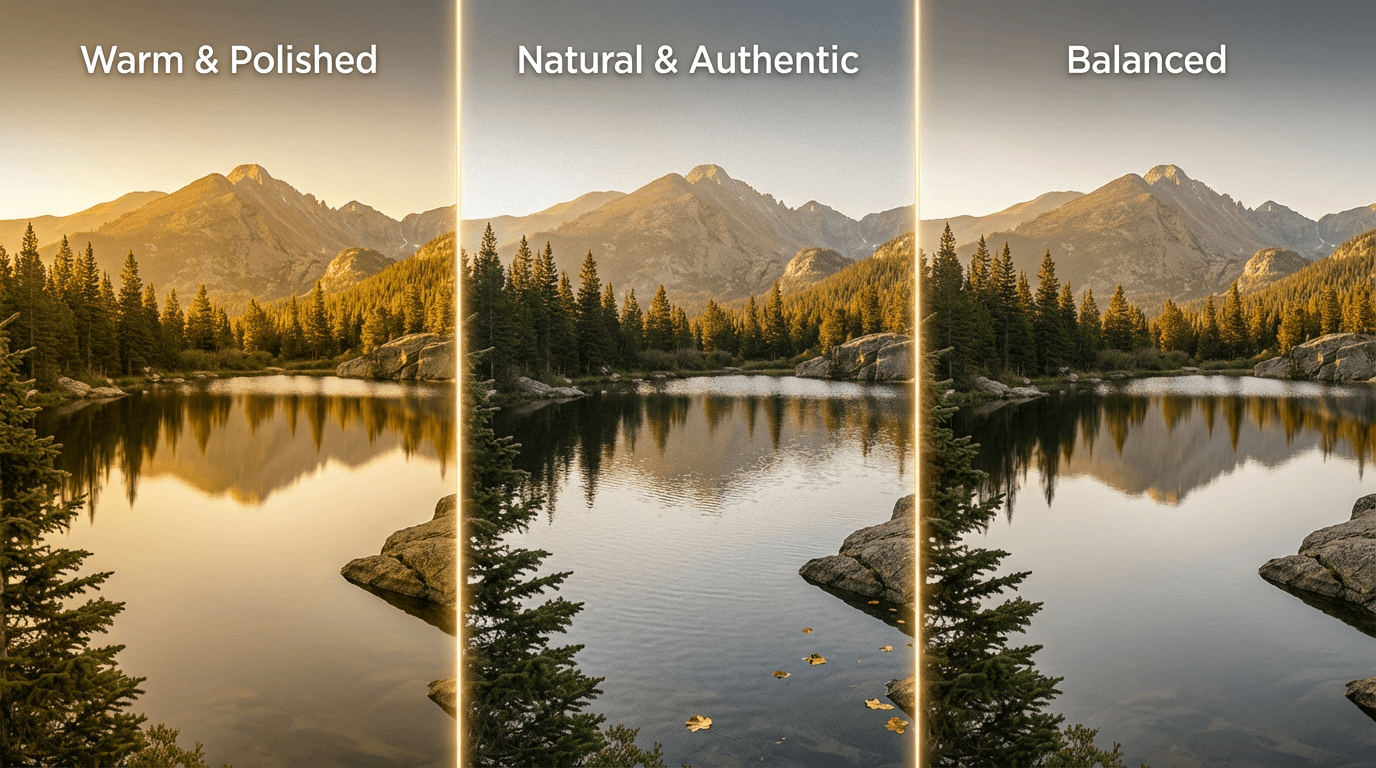
Photorealistic images from GPT Image 2 are significantly more convincing, with natural lighting, consistent shadows, and material details that approach real photography. The gap with specialized models like Nano Banana Pro is closing.[8]
The "yellow cast" (where images appear slightly yellowish), a long-standing complaint about GPT Image 1.5, has been completely eliminated in GPT Image 2. Color reproduction is now at a level indistinguishable from real photography. LM Arena testers repeatedly compared results using the same set of real-world photos. Images generated by GPT Image 2, such as "selfies with Sam Altman" or "Stanford campus scenes," were mistaken for real photos by over 70% of participants in blind tests.[7]
The yellow tint elimination is particularly significant because it was one of the most criticized aspects of earlier GPT Image models. The most consistent observation from users was the distinct "vibe" of the training data. By being too good, GPT Image 1.5 could fall into the "Uncanny Valley" of perfection.[10]
Nano Banana Pro: The Photorealism Standard
In terms of photorealism and end-result quality, Nano Banana Pro maintains its reputation for producing ultra-clean, highly realistic results. In side-by-side tests, users often say it nails camera realism, fine surface detail, and natural skin tones in a single pass. GPT Image 1.5 has closed much of that gap and regularly produces polished, cinematic images with strong composition. But for pixel-level realism, Nano Banana Pro tends to keep a slight edge.[7]
What makes Nano Banana Pro's realism distinctive is its authenticity. Nano Banana Pro: The winner for true-to-life realism. It captures the imperfections, awkward lighting, and "messiness" of the real world. GPT Image 1.5: The winner for aesthetic perfection. It creates polished, professional-grade images that look like high-budget stock photography or curated Instagram posts.[10]
Nano Banana Pro is more camera-like — with natural lighting and a less synthetic or glossy finish. GPT Image 1.5 produces a more ad-ready, refined look — with sharp edges and balanced contrast.[8]
Nano Banana 2: 95% of Pro at 3-5x the Speed
Pro still holds the edge in absolute image quality — richer textures, more natural lighting and shadows, and superior spatial composition. However, Nano Banana 2 reaches approximately 95% of Pro's quality in most real-world scenarios, and the difference is barely visible without pixel-level inspection.[9]
In independent testing, one reviewer noted: "My first impression of the Nano Banana 2 output is that the woman looks extremely real, noticeably more so than the Pro version. And the details it chose to add are spot on."[8]
The Image Quality Verdict
For photorealism as of April 2026, the hierarchy based on available evidence appears to be: GPT Image 2 (leaked) ≥ Nano Banana Pro > Nano Banana 2 > GPT Image 1.5 — but the margins between the top three are extremely narrow. The GPT Image 2 early samples suggest OpenAI has not only closed the gap but may have surpassed Nano Banana Pro in all three categories simultaneously — a rare "sweep" that would represent a significant competitive shift.[4]
Resolution and Output Quality
Resolution determines whether an AI-generated image can be used for professional printing, large displays, or only for digital-first applications.
GPT Image 2: Expected 4K Support
The maximum resolution for GPT Image 1.5 is 1536×1024. GPT Image 2 is expected to support native 4K output (2048×2048 or 4096×4096), along with a 16:9 widescreen aspect ratio, meeting the needs of professional content creation and commercial printing.[6]
The previous version only supported 1:1, 3:2, and 2:3 ratios. GPT Image 2 adds 16:9 widescreen support, making it much better for video thumbnails, presentation slides, and web banners.[7]
Nano Banana Pro: Native 4K Already Available
Nano Banana Pro has higher-resolution options — with 1K, 2K, and 4K available as outputs, plus 4096x4096 for 4K (varies by aspect ratio). Google's enterprise documentation confirms 4K support at multiple aspect ratios.[8]
It supports generation of images up to 4K resolution with advanced control over effects like lighting, focus, and color grading. Gemini 3 Pro demonstrates substantial improvements in resolution clarity, artifact reduction, and physical accuracy versus predecessor Nano Banana.[5]
Nano Banana 2: 4K at Flash Speed
Nano Banana 2 generates directly at 4096×4096 resolution without upscaling artifacts.[4]
Nano Banana 2 supports 14 aspect ratios versus Pro's 10. The four additions — 1:4, 4:1, 1:8, and 8:1 — cover ultra-wide banners, vertical formats, and app splash screens that Pro simply can't output natively. For multi-platform content strategies, this flexibility matters more than it might initially seem.[9]
The Resolution Verdict
Nano Banana Pro and Nano Banana 2 both ship with production-ready 4K support today. GPT Image 2 is expected to match this when released. Nano Banana 2 offers the widest range of aspect ratios, making it the most versatile for multi-format content pipelines. For creators using Miraflow's AI image generator, the resolution output of the underlying model determines how the images can be used across thumbnails, social media, and print.
Speed and Generation Time
For production workflows, the speed at which a model generates images directly impacts iteration cycles, creative output volume, and the feasibility of real-time applications.
GPT Image 2: Expected 3x Speed Improvement
The architectural innovation involves moving from a two-stage process to single-step inference, with speed expected to increase by 3x.[7]
If these speed gains materialize, GPT Image 2 would close the performance gap with the Flash architecture. For context, GPT Image 1.5 was already significantly faster than GPT Image 1. In December 2025, OpenAI launched GPT Image 1.5 with up to 4x faster generation and 20% cheaper API costs.[3]
Nano Banana Pro: Quality Over Speed
Nano Banana Pro typically generates an image in 10-20 seconds, depending on prompt complexity and resolution.[3]
Nano Banana Pro delivers 1K images in about 10-15 seconds, while GPT Image 1.5 is usually closer to 30-45 seconds at 1K.[8]
The thinking step adds latency but improves output quality. One annoying aspect of the thinking step is that it makes generation time inconsistent: generations can take anywhere from 20 seconds to one minute, sometimes even longer during peak hours.[4]
Nano Banana 2: The Speed Champion
Speed is where Nano Banana 2 wins decisively. At 1K resolution, NB2 generates images in 4–6 seconds, compared to 10-20 seconds for Pro. At 4K, Nano Banana 2 takes 15-30 seconds versus Pro's 30-60 seconds. For API-driven products or bulk workflows requiring thousands of images, this 3-5x speed advantage is transformative.[9]
When you're iterating on a prompt, trying to dial in a specific look for a marketing campaign, the difference between 5-second and 15-second feedback loops compounds fast. Over 50 iterations, that's roughly 4 minutes with Nano Banana 2 versus 12 minutes with Pro. For production pipelines generating hundreds or thousands of images, the math is even more decisive. Nano Banana 2 can process a 500-image batch in the time Pro handles 150-200.[3]
The Speed Verdict
Nano Banana 2 is the clear winner for speed-sensitive workflows. Nano Banana Pro trades speed for quality depth. GPT Image 2's speed improvements are expected but unconfirmed in production environments.
World Knowledge and Contextual Understanding
"World knowledge" refers to a model's ability to accurately depict specific real-world objects, landmarks, brands, cultural references, and physical properties — not just generic aesthetic patterns.
GPT Image 2: A Major Leap
When it comes to specific landmarks, brands, UI elements, and architectural details, the "world knowledge" of GPT Image 2 has improved significantly.[7]
World knowledge that shows. The model does not just know what things look like aesthetically.[1] It knows what they look like specifically — a critical distinction for commercial applications where brand accuracy and real-world fidelity matter.
The model demonstrates world knowledge integration that goes beyond simple image generation. It understands context, physics, lighting, and material properties at a level that suggests genuine comprehension rather than pattern matching.[9]
Nano Banana Pro: Search-Grounded Knowledge
You can get accurate educational explainers to learn more about a new subject, like context-rich infographics and diagrams based on the content you provide or facts from the real world. Nano Banana Pro can also connect to Google Search's vast knowledge base to help you create a quick snapshot for a recipe or visualize real-time information like weather or sports.[1]
One of the more viral use cases of Nano Banana Pro is its ability to generate legible infographics. However, since infographics require factual information and LLM hallucination remains unsolved, Nano Banana Pro now supports Grounding with Google Search, which allows the model to search Google to find relevant data to input into its context.[4]
Nano Banana 2: Search Grounding Plus Speed
Nano Banana 2 ships with two capabilities Pro doesn't have. Image Search Grounding lets the model retrieve real-world reference images via Google Search during generation — dramatically improving accuracy for landmarks, logos, and well-known subjects. Thinking Mode offers three levels (Minimal, High, Dynamic), letting developers tune the speed-quality balance per request.[9]
A major distinction in the Nano Banana Pro vs Nano Banana 2 comparison is internet connectivity. Nano Banana 2 has the unique ability to search the web during generation. This means it can pull in current information, recent trends, or specific references, making it highly adaptable for timely content. In contrast, Nano Banana Pro does not have web access, as its processing power is entirely dedicated to rendering intricate local details and complex compositions.[10]
The World Knowledge Verdict
All three models demonstrate advanced world knowledge. Nano Banana 2's Image Search Grounding gives it a unique advantage for real-time and factual content. GPT Image 2's world knowledge improvements over its predecessor appear substantial based on leaked samples. Nano Banana Pro's deep reasoning allows it to render physically accurate scenes but without real-time web access.
Character Consistency
The ability to maintain a character's identity — face, clothing, proportions — across multiple generated images is essential for storyboarding, brand asset creation, and sequential visual content.

GPT Image 2: Expected Improvements
GPT Image 1.5 can maintain identity across chained edits on the same image. But generating multiple images of the same character or scene from scratch — without a reference image — still produces drift. True multi-image character consistency would unlock comic strips, storyboards, and brand asset generation at scale.[3]
Character and face consistency — improved performance on multiple faces and repeated characters.[5] This is listed as one of the key rumored improvement areas for GPT Image 2.
Nano Banana Pro: Industry-Leading Consistency
Nano Banana Pro offers dramatically better text rendering with SOTA accuracy for infographics, slides, and layouts with legible multi-language text, cleaner more accurate visuals, and advanced composition control that maintains consistency across 14 input images with up to 5-person identity preservation in complex scenes.[3]
It generates complex scenes in under 10 seconds and maintains 95% character identity across different angles and shots for consistent storytelling.[8]
In character consistency tests, Nano Banana Pro demonstrated that the character feels naturally embedded in each environment, with lighting, shadows, and poses that adapt to the scene. GPT Image 1.5 felt more like a "background swap" — the character looks pasted onto different backdrops rather than truly inhabiting the space.[2]
Nano Banana 2: Strong Consistency at Speed
The model maintains character consistency for up to 5 distinct characters and tracks fidelity of up to 14 objects in a single workflow. This makes it practical for storyboarding, multi-character scenes, and complex compositions — without identity drift.[5]
Character consistency with a single input image, across 10 generations, is a genuinely strong result and exactly the kind of real-world improvement that matters.[8]
The Consistency Verdict
Nano Banana Pro currently leads in character consistency, with Nano Banana 2 offering nearly equivalent performance at significantly higher speed. GPT Image 2's character consistency improvements are expected but not yet verified in production scenarios.
Pricing and Economics
For developers and professional creators, pricing determines not just whether a model is affordable but whether it is economically viable at scale.
GPT Image 2: Pricing TBD
API pricing is expected to be between $0.15 and $0.20 per image.[2]
For reference, the current GPT Image models are priced at the following: Both GPT Image 1.5 and Nano Banana Pro cost roughly the same per image (~$0.14).[2]
GPT Image 1.5 supports 1024x1024 — plus portrait and landscape results at 1024x1536 or 1536x1024.[8] At those resolution limits, GPT Image 1.5's pricing is competitive. But for equivalent 4K output (if GPT Image 2 delivers it), the per-image cost may be higher.
Nano Banana Pro: Premium Quality, Premium Price
$0.15/image.[9]
Nano Banana Pro Edit prioritizes advanced reasoning through Gemini 3's architecture for nuanced natural language instructions at $0.15 per edit.[8]
The image generation pricing for Nano Banana 2 is just $0.0672 per image, which is exactly half the cost of Nano Banana Pro's $0.134.[7]
Nano Banana 2: Dramatically More Affordable
Nano Banana 2 (Gemini 3.1 Flash Image) API pricing ranges from $0.045 to $0.151 per image depending on resolution, with a 50% discount available through the Batch API.[2]
At $0.067 per 1K-resolution image through the standard API, NB2 costs exactly 50% less than Nano Banana Pro's $0.134 for the same resolution. This price gap widens further when you factor in the Batch API discount: NB2 at $0.034 per image represents a 75% cost reduction compared to NB Pro's standard rate. For teams generating thousands of images monthly — marketing departments, e-commerce platforms, content agencies — this pricing shift can translate to thousands of dollars in monthly savings without a proportional quality sacrifice.[8]
Nano Banana 2's pricing disrupts the AI image generation market by offering premium features — photorealism, subject consistency, multi-image fusion, SynthID watermarking, and 4K output — at costs that start at zero and scale efficiently. The "Flash" architecture that enables its speed also enables its pricing: faster inference means lower compute costs, which translate to lower prices for users.[6]
Free tier access is also available: The Gemini Free tier handles 200 images/month for most freelancers at zero cost.[6]
The Pricing Verdict
Nano Banana 2 is the clear winner on price-to-performance ratio. It delivers approximately 95% of Pro's quality at roughly 50% of the cost. GPT Image 2's pricing remains unconfirmed but is expected to be in the $0.15–$0.20 range, making it the most expensive option. For volume-heavy workflows, the pricing differences between these models compound into substantial budget implications.
Image Editing Capabilities
Modern AI image models are not just generators — they are editors. The ability to modify existing images through natural language instructions is increasingly critical for professional workflows.
GPT Image 2: Building on 1.5's Editing Strength
GPT Image 1.5's key breakthrough was image preservation — the ability to make precise edits while keeping unrelated pixels constant. GPT Image 2 appears to build on this while dramatically expanding every other capability dimension.[4]
On LM Arena's April 2026 single-image-edit leaderboard, chatgpt-image-latest-high-fidelity ranks first — above gpt-image-1.5-high-fidelity in fifth place. That gap is real.[5]
Nano Banana Pro: Surgical Precision
Nano Banana Pro is often praised for precision work — clean compositing, subtle retouching, and consistent characters across multiple images. In practice, Nano Banana Pro feels more "surgical," while GPT Image 1.5 feels like a fast, flexible creative studio.[7]
Unlike traditional image editors requiring masks, layers, or precise selection tools, Nano Banana Pro Edit interprets natural language instructions and applies them contextually across your provided reference images. The model leverages Gemini 3 Pro's reasoning architecture to understand spatial relationships, object boundaries, and semantic intent.[8]
Nano Banana 2: Fast Iteration Editing
Nano Banana 2 is excellent when you want to make practical changes quickly. For example, you might want to swap a background, change colors, simplify a scene, adjust a mood, or turn a product photo into a cleaner ad concept. It feels like a responsive editing assistant.[6]
The Nano Banana 2 API understands intent — "remove the glare," "swap the mug for a glass," "make the background warmer." Built on Gemini 3.1 Flash's reasoning engine, it applies changes while preserving the rest of the scene. No masks, no layers. Describe the outcome, get the result.[5]
The Editing Verdict
All three models support sophisticated image editing through natural language. Nano Banana Pro excels at high-precision, complex edits. Nano Banana 2 excels at rapid iteration and practical changes. GPT Image 2 appears to have made a significant leap in editing capability based on Arena leaderboard positions.
The Competitive Context: How GPT Image 2 Changes the Landscape
The arrival of GPT Image 2, even in pre-release form, has fundamentally altered the competitive dynamics.
The most telling result: in blind Arena comparisons, testers noted that the tape models made Nano Banana Pro "look like DALL-E." One tester said they "outperform NBP in realism, text rendering, and world knowledge simultaneously."[3]
It already makes Nano Banana Pro look outdated. The early GPT-Image-2 examples suggest most of those problems are solved. And the people who compared it directly to Nano Banana Pro said it wins across most categories. Nano Banana Pro was the photorealism benchmark for most of early 2026. If that has already changed before the model is even publicly released, the next few weeks are going to be interesting.[1]
The timeline adds urgency. OpenAI has officially announced that DALL-E 2/3 will be fully retired on May 12, 2026. They need a replacement ready before then to prevent migration headaches for enterprise users and developers. GPT Image 2 is the natural successor.[7]
The Sora video generation product was taken offline on March 24, 2026, freeing up a massive amount of GPU compute resources. It's widely speculated that this capacity is being funneled into the final training stages and large-scale beta testing for GPT Image 2.[7]
For Google's side, GPT Image 2 is set to form a three-way standoff with Nano Banana Pro/2, with potential leads in text rendering and world knowledge dimensions.[2]
Which Model Should You Choose?
The right choice depends entirely on your specific workflow, budget, and quality requirements.
Choose GPT Image 2 (When Available) If:
You need the absolute best text rendering accuracy. You require superior world knowledge for brand-specific or location-specific imagery. You are already integrated into the OpenAI/ChatGPT ecosystem. You are willing to pay a premium for maximum quality. If GPT Image 1 made text in images "sometimes usable," GPT Image 2 seems to make it "reliably usable" — which is the difference between a feature and a workflow.[4]
Caveat: OpenAI has not released any official documentation for GPT Image 2. Everything known so far comes from the April 2026 LMArena leak and early tester reports. Treat all specifics as based on pre-release, non-final builds.[4]
Choose Nano Banana Pro If:
You need the highest possible image quality for final deliverables. Your work involves complex multi-subject scenes with strict consistency requirements. You need maximum photorealism for commercial applications. You are producing high-value assets where quality matters more than speed. Nano Banana Pro is a better fit when the edit is more demanding and you care about the finish. If you need stronger design control, more refined instruction-following, or more premium-looking results, Pro is more appealing.[6]
Choose Nano Banana 2 If:
You need high-volume image generation at competitive cost. Speed and iteration velocity are critical to your workflow. You want Pro-level quality at approximately half the cost. You need real-time web search grounding for factual content. You are building API-driven products that serve end users. If you want the safest recommendation for most users, choose Nano Banana 2. It is easier to fit into everyday creative work, especially when speed, iteration, and convenience matter. It is the more intuitive choice for people who want to generate, revise, and move on.[6]
The Hybrid Approach
Start in Nano Banana 2 for ideation and revisions. Move to Pro when you want the strongest final output. That gives you the best of both worlds.[6]
GPT Image 1.5 wins on precision, iteration speed, and instruction adherence. Nano Banana Pro wins on photorealism, resolution, and visual consistency. Hybrid workflows win on versatility and production efficiency. The smartest approach? Understand the strengths of each model, choose based on your specific task, and don't be afraid to switch between tools as your project evolves.[5]
For creators using Miraflow's cinematic video tools and AI image generator, the optimal strategy in 2026 is not choosing one model permanently — it is building workflows that leverage the right model for each specific task.
What Comes Next
The competitive trajectory in AI image generation is accelerating rapidly.
The most likely release window for GPT Image 2 is late April to mid-May 2026. The fact that DALL-E is scheduled to shut down on May 12 further supports the assessment that GPT-Image-2 will be released on or before that date — OpenAI needs to ensure a smooth transition for its users.[2]
If the same cadence holds, GPT Image 2 could arrive between mid-2026 and late 2026. But competitive pressure from Midjourney V8, Google Imagen 4, and Flux 2 could accelerate the timeline.[3]
Google is also not standing still. Nano Banana 2 will replace Nano Banana Pro across the Fast, Thinking and Pro models in the Gemini app.[7] Google AI Pro and Ultra subscribers will keep access to Nano Banana Pro for specialized tasks by regenerating images via the three-dot menu.[7]
One thing is clear: 2026 is shaping up to be the year AI image generation becomes truly production-ready.[9]
The era of choosing between "good enough" AI images and "actually useful" AI images is over. All three of these models — GPT Image 2, Nano Banana Pro, and Nano Banana 2 — produce images that are genuinely production-ready for commercial applications. The question is no longer whether AI image generation works. The question is which model best fits the specific demands of your workflow, your budget, and your creative ambitions.
Frequently Asked Questions
Is GPT Image 2 officially released?
No, it hasn't. As of April 17, 2026, OpenAI has made no official announcements. The rumors about a "release" stem from three anonymous "tape" series models that briefly appeared on the LM Arena before being taken down, as well as A/B testing within ChatGPT that reached a small number of users. These are "canary release leaks," not an official launch.[7]
What is the difference between Nano Banana Pro and Nano Banana 2?
Nano Banana Pro was about craftsmanship, control, and deliberate design. Nano Banana 2 is about speed, accessibility, and creative flow at scale. Neither replaces the other completely — they serve different mindsets. If you are polishing a final asset, Pro fits better.[2]
How much does Nano Banana 2 cost compared to Pro?
At $0.067 per 1K-resolution image through the standard API, NB2 costs exactly 50% less than Nano Banana Pro's $0.134 for the same resolution.[8] The Batch API brings the floor to $0.022 per image — making Nano Banana 2 one of the most cost-effective AI image generators available in 2026.[8]
When will GPT Image 2 be released?
The expected release is between late April and mid-May 2026, with the May 12th shutdown of DALL-E serving as a key time anchor.[2]
Which model has the best text rendering?
Based on leaked pre-release data, GPT Image 2's text rendering accuracy has reportedly reached over 99%.[2] Among released models, Nano Banana Pro is the superior choice for text rendering, infographics, and complex editorial layouts.[1]
Can I use Nano Banana 2 for free?
Yes. The Gemini Free tier handles 200 images/month for most freelancers at zero cost.[6] Nano Banana Pro can be accessed for free using the Gemini chat app with a visible watermark on each generation.[4]
Which model is fastest?
Nano Banana 2 generates images in 4–6 seconds at 1K resolution, compared to 10-20 seconds for Pro.[9] GPT Image 1.5 is usually closer to 30-45 seconds at 1K.[8] GPT Image 2's speed is expected to improve 3x over 1.5 but remains unconfirmed.
Which model is best for professional product photography?
When product images need to look authentic and drive conversions, Nano Banana Pro's photorealistic capabilities and natural aesthetics are unmatched. The model captures that crucial "shot on iPhone" authenticity that makes UGC-style content so effective for social commerce.[5]
Which model is best for high-volume batch generation?
For production pipelines generating hundreds or thousands of images, the math is decisive. Nano Banana 2 can process a 500-image batch in the time Pro handles 150-200.[3]
References
- GPT Image 2: Rumours, Leaks & Release Date (2026) — getimg.ai
- GPT Image 2 Just Leaked: Everything We Know (April 2026) — FelloAI
- Nano Banana Pro: Gemini 3 Pro Image Model — Google DeepMind
- Nano Banana 2: Google's Latest AI Image Generation Model — Google Blog
- Nano Banana Pro vs Nano Banana 2: What's The Difference? — fal.ai
- GPT Image 1.5 vs Nano Banana Pro Comparison — getimg.ai
- Nano Banana 2 vs Nano Banana Pro: 7 Key Differences — Dzine
- GPT Image 2 Leaked: Prompts and Workflow Guide — The AI Corner
- GPT Image 1.5 vs Nano Banana Pro: Comparison — Cybernews
- Nano Banana Pro vs GPT-Image 1.5: 10 Tests — Vidguru
- Developers Can Build with Nano Banana Pro — Google Blog
- Nano Banana 2 Pricing Explained — Flowith Blog
- GPT-Image-2 Leaked: What We Know — Frontierbeat
- What Will GPT Image 2 Be? — WaveSpeedAI
- GPT Image 1.5 vs Nano Banana Pro: The Definitive Guide — Vertu
- Nano Banana 2 vs Pro: Tested With 4 Real Prompts — aitoolssme
- GPT Image 1.5 vs Nano Banana Pro: Which Is Better? — Bind AI
- Nano Banana Pro is the Best AI Image Generator, With Caveats — Max Woolf