How to Make Passive Income With Faceless AI YouTube Shorts in 2026

Written by
Jay Kim
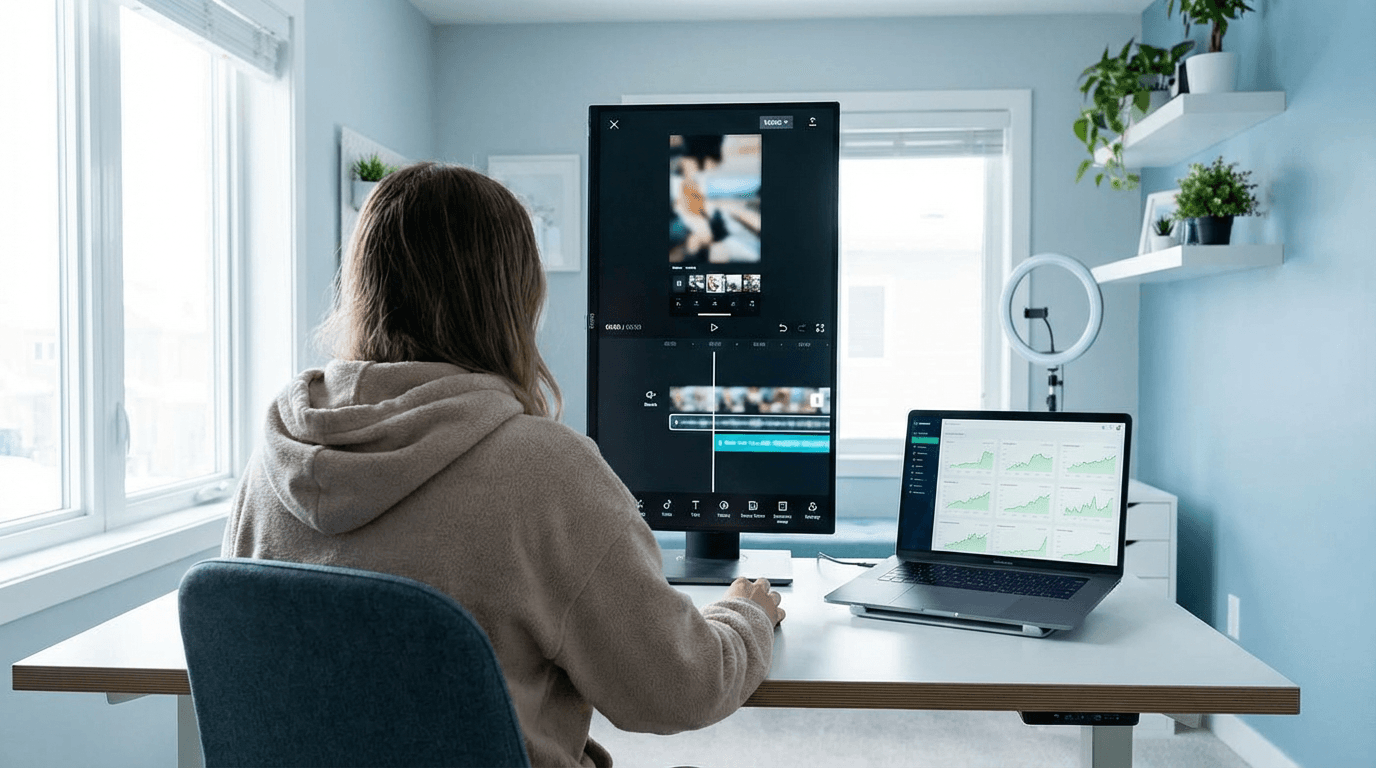
Learn how to build passive income with faceless AI YouTube Shorts in 2026 using original content systems, Shorts monetization, affiliate revenue, and scalable AI workflows.
If you are trying to build passive income with faceless AI YouTube Shorts in 2026, the biggest mistake is thinking the money comes from uploading lots of random clips.
That approach usually fails because YouTube rewards original content, monetizable topics, and multiple revenue streams. In 2026, YouTube still pays eligible creators for Shorts through ad revenue sharing and YouTube Premium, but only after they qualify for the YouTube Partner Program and accept the Shorts Monetization Module.
In eligible markets, earlier YPP access can start at 500 subscribers for fan funding and some shopping features, while full Shorts ad revenue sharing still requires 1,000 subscribers plus either 4,000 valid public watch hours or 10 million valid public Shorts views in the last 90 days.
That is why the real play is not posting AI clips and hoping for the best.
The real play is building a faceless channel that publishes original Shorts consistently, turns those videos into searchable assets, and stacks revenue from Shorts ads, affiliate offers, shopping, sponsorships, and digital products.
YouTube has also expanded Shopping opportunities, and in March 2026 it announced broader Shopping access for creators with 500 subscribers in the YouTube Partner Program in eligible markets.
In this guide, you will learn which faceless Shorts models are easiest to scale, how to avoid reused-content problems, how to build a workflow with AI, and how to turn Shorts into something closer to recurring income instead of constant one-off effort.
Why Faceless AI Shorts Still Matter in 2026
Faceless channels are still attractive because they remove several bottlenecks at once. You do not need to be on camera, you can test more formats quickly, and you can build channel systems around scripts, visuals, voice, and editing instead of personal filming.
But 2026 is also less forgiving.

YouTube’s monetization rules still focus heavily on original and authentic value. Its monetization policy says reused content can monetize when viewers can clearly tell there is a meaningful difference and added value, but unedited clips, simple reposts, or compilations with no original contribution can be ineligible for Shorts revenue calculations or broader monetization approval.
That means faceless works best when you build around:
- original scripting
- original narration or clear transformation
- distinctive editing structure
- topic expertise or curation
- repeatable series formats
If you want a broader view of where faceless formats fit, this topic also pairs well with related subjects like faceless YouTube Shorts niches and the broader creator stack built around Shorts, Reels, and TikTok.
What Passive Income Really Means for Shorts Creators
Passive income is a useful phrase, but for YouTube Shorts it usually means delayed income from systems you built once and optimized well, not income that appears without any work.
A better definition is this:
You create a production system once, then each new Short takes less effort, each winning format can be reused across dozens of videos, and each video can keep earning through more than one path.
For faceless AI Shorts, those paths usually look like this:
1. Shorts ad revenue sharing
Eligible creators who accept the Shorts Monetization Module can earn from ads shown between Shorts in the Shorts Feed and from YouTube Premium revenue tied to eligible Shorts. Shorts views from before acceptance do not count toward Shorts ad revenue sharing.
2. Affiliate income
YouTube Shopping affiliate tools now give eligible creators more ways to tag products in content, and YouTube also says creators can continue using other affiliate links in video descriptions.
3. Sponsorships and brand deals
YouTube requires creators to disclose paid promotions and use the paid promotion setting when appropriate.
4. Digital products
Templates, prompt packs, guides, niche databases, PDFs, mini courses, and memberships often outperform ad revenue early because they do not require massive view counts.
5. Traffic to long-form or evergreen assets
Shorts can still act as discovery. They may not be your highest-paying unit by themselves, but they can drive people into long-form videos, playlists, offers, or other monetized content.
If you want more on Shorts earnings mechanics, related topics like Shorts monetization and Shorts RPM by niche are useful follow-up reads.
The 5 Faceless Shorts Channel Models Most Likely to Scale
Not every niche works equally well for passive-style systems. The best categories are the ones that let you publish repeatedly without legal gray areas or heavy daily research.

1. Product recommendation Shorts
Examples:
- best budget desk setups
- useful kitchen gadgets
- study tools for students
- AI tools for creators
- travel items under $25
Why it works:
You can monetize through affiliate links, Shopping tags, and sponsorships. This model works especially well now that YouTube Shopping is expanding for eligible creators.
2. Explainer Shorts
Examples:
- finance basics
- productivity systems
- language learning hacks
- software tutorials
- career tips
Why it works:
Explainers are easier to keep original. The value comes from the script, structure, and clarity, not the raw footage.
3. Story-based Shorts
Examples:
- business stories
- startup lessons
- historical mini stories
- surprising facts with context
- what happened next format
Why it works:
This format is perfect for faceless channels because narrative editing adds transformation and original value.
4. Visual listicle Shorts
Examples:
- 5 websites that save time
- 3 tools every designer should try
- 7 side hustles students can start
- top travel spots by budget
- underrated books for discipline
Why it works:
List formats are easy to batch, easy to test, and very friendly for Shorts retention.
5. Ambient utility Shorts
Examples:
- daily affirmation visuals
- calming quote loops
- study motivation snippets
- white-noise themed visual loops
- micro-guides with caption-led storytelling
Why it works:
These can become part of a publishing system, but they need stronger originality than many people assume. Thin repetition with generic stock visuals is exactly the kind of channel structure that can create monetization problems later.
What Most Creators Misunderstand About Faceless AI Shorts
The common misunderstanding is thinking AI makes the content original automatically.
It does not.
Originality comes from the final viewer experience. If the idea, wording, edit, narration, selection, arrangement, and added explanation feel meaningfully yours, you are in a far better position. If the result feels like an automated repost machine, that is where channels get into trouble.
YouTube explicitly calls out non-original Shorts such as unedited clips from movies or TV, reuploads from other creators, and compilations without original content as ineligible for Shorts payment calculations.
So when building a faceless AI channel, ask:
- Did I write or heavily transform the script?
- Did I add narration, commentary, or a unique point of view?
- Did I edit the pacing and visual sequence for a new purpose?
- Would a reviewer instantly understand what value my channel adds?
If the answer is weak, the channel is not built for passive income yet.
A 6-Step System for Building a Faceless AI Shorts Income Engine

1. Pick a niche with buyer intent, not just view potential
A channel with random viral facts may get occasional spikes, but a channel around software tools, creator gear, study resources, business breakdowns, or practical recommendations is easier to monetize beyond ads.
Good niche filters:
- easy to explain in under 45 seconds
- allows series-based publishing
- has related products or services
- can support affiliate links or sponsorships
- stays relevant for months, not hours
This is where evergreen formats help most.
2. Build 3 repeatable content series
Do not launch a channel with 30 different styles.
Start with three series only.
Example for an AI tools niche:
- Series 1: 1 tool, 1 use case, 30 seconds
- Series 2: 3 hidden features in 40 seconds
- Series 3: before and after workflow improvements
This keeps production consistent and makes analytics easier to read.
3. Use AI to compress production time, not to replace judgment
A practical faceless workflow in 2026 looks like this:
- research recurring questions in one niche
- generate script variations
- turn the script into scene prompts
- create supporting visuals
- generate voiceover
- edit for pace and clarity
- publish with a title structure that matches search intent
Creators can do this directly inside Miraflow AI with a workflow that moves from idea to script, visual, video, thumbnail, and music in one place.
4. Treat the first 2 seconds like your business model
On Shorts, weak openings kill distribution before monetization even becomes relevant.
Your hook should do one of these quickly:
- reveal a surprising payoff
- promise a measurable result
- show a before and after contrast
- expose a common mistake
- create a curiosity gap that resolves fast
5. Monetize from day one, even before ad revenue
Waiting for YPP is too slow.
Before you qualify for ad sharing, you can still build:
- affiliate descriptions
- product-led Shorts concepts
- email capture via profile ecosystem
- long-form companion videos
- downloadable resources
- sponsor-ready formats
This matters because Shorts ad revenue alone is often not enough to create meaningful passive income early. A stronger approach is to let ad revenue become one layer on top of a broader revenue stack.
6. Build a content library, not a viral lottery ticket
Passive income increases when old Shorts still help new viewers discover your channel, your offers, or your products.
That means:
- titles that stay useful over time
- niche consistency
- visual consistency
- recurring topics with proven demand
- playlists or long-form bridges where relevant
This is where content systems beat random trends.
A Practical Faceless Shorts Workflow You Can Actually Run Every Week
Here is a weekly system that is realistic for a solo creator.
Monday
Research 20 content angles in one narrow niche.
Tuesday
Turn the best 10 into short scripts.
Wednesday
Batch visuals, voice, and edits for 5 to 10 Shorts.
Thursday
Create matching titles, descriptions, and simple thumbnail assets for channel pages, search surfaces, and reused cross-platform publishing.
Friday
Schedule uploads and prepare affiliate placements or product tags where relevant.
Weekend
Review retention, engaged views, saves, comments, and topic performance.
You do not need to create everything manually. Use AI where it meaningfully speeds up scripting, visuals, and music, but keep the structure and judgment human.
If you are also improving packaging, topics like Shorts thumbnail strategy, thumbnail generation, and click-through-rate improvement fit naturally into this workflow.
Copy-Paste Prompt Templates for Faceless AI Shorts
These are built for idea generation and scripting, not for generic spam.
Prompt 1: Find monetizable subtopics
Use this when choosing niches that can support affiliate or digital product revenue.
Prompt
Generate 30 faceless YouTube Shorts topic ideas in the niche of [NICHE].
Each idea must fit in 20 to 45 seconds, solve one clear problem, and have monetization potential through affiliate products, sponsorships, digital products, or YouTube Shopping.
For each idea, include:
- short title
- viewer pain point
- ideal hook
- monetization angle
- whether it is evergreen or trend-based
Prompt 2: Write a Shorts script with a strong hook
Prompt
Write a faceless YouTube Shorts script about [TOPIC].
Target length: 35 seconds.
Structure:
- 1-sentence hook in the first 2 seconds
- fast explanation with clear value
- one surprising detail or comparison
- simple ending that encourages curiosity or action
Style: practical, direct, high-retention, no filler, no hype language, easy for voiceover.
Prompt 3: Turn a script into scene directions
Prompt
Break this Shorts script into 6 visual beats.
For each beat, write:
- on-screen action
- camera framing
- visual style
- B-roll or generated image direction
- caption idea
The visuals must feel original, modern, clear, and built for a faceless AI YouTube Shorts channel.
Prompt 4: Create affiliate-friendly content ideas
Prompt
I run a faceless YouTube Shorts channel about [NICHE].
Give me 20 Shorts ideas that naturally let me recommend products without sounding salesy.
For each one, include:
- the viewer problem
- a product type that fits
- a non-pushy call to action
- a risk to avoid so the Short stays useful and credible
Prompt 5: Generate series-based concepts
Prompt
Create 10 repeatable faceless Shorts series for a YouTube channel in [NICHE].
Each series should be easy to batch, easy to monetize, and easy to recognize as part of one channel brand.
Include:
- series name
- format structure
- ideal video length
- why viewers would return
- monetization path
How Shorts Revenue Sharing Actually Works
Shorts money is not paid like classic mid-roll revenue on long-form videos. YouTube says Shorts ad revenue comes from ads shown between videos in the Shorts Feed. That revenue is pooled, a Creator Pool is calculated partly based on engaged views and music usage, and monetizing creators keep 45 percent of their allocated revenue.
If a Short uses music, part of the revenue associated with those views may be used to cover music licensing before creator allocation.
That leads to two practical points for faceless creators:
- You should not assume view count alone tells you earnings.
- Building revenue outside ad sharing is still the smartest path.
It also means original music or carefully chosen audio strategy can matter more than many creators realize.
The Best Revenue Stack for Faceless Shorts in 2026

If your goal is passive income, this is the model I would recommend:
Layer 1: Shorts discovery
Shorts bring reach, new viewers, and frequent testing.
Layer 2: Affiliate or Shopping revenue
Use product-driven content where recommendations are natural. Eligible creators can use YouTube Shopping affiliate features, and YouTube also allows other affiliate links in descriptions.
Layer 3: Ad revenue sharing
Once you reach full YPP eligibility and accept the Shorts Monetization Module, your eligible engaged views can generate Shorts feed revenue.
Layer 4: Sponsors
Once you have a repeatable audience profile, sponsors care less about whether you are faceless and more about whether your viewers act. Paid promotions must be disclosed properly in YouTube.
Layer 5: Your own product
Templates, prompt packs, mini-consulting, swipe files, niche reports, or memberships usually create the strongest margins.
This is the difference between a channel that gets views and a channel that becomes an asset.
Common Mistakes That Kill Passive Income Potential
Publishing generic AI visuals with no viewpoint
If viewers can get the same thing from thousands of other channels, you do not have a monetizable advantage.
Building around copyrighted or low-transformation media
This is one of the fastest ways to create monetization and eligibility problems later.
Chasing random niches every week
You lose audience clarity and advertiser relevance.
Ignoring titles and packaging
Even on Shorts, your title, topic framing, and channel consistency still shape discovery and click behavior in search, browse, and channel surfaces.
Waiting for ad money before adding revenue layers
By the time many creators start thinking about affiliate systems, they have already wasted months.
Failing to disclose paid relationships
YouTube requires disclosure for paid product placements, sponsorships, endorsements, and similar commercial relationships.
A Simple 30-Day Plan
Days 1 to 3
Choose one niche and three repeatable series.
Days 4 to 7
Create 20 script ideas and select the best 10.
Days 8 to 14
Publish 1 to 2 Shorts daily and test hooks aggressively.
Days 15 to 21
Double down on the best-performing format only.
Days 22 to 30
Add revenue paths:
- affiliate links
- product tags if eligible
- simple resource or lead magnet
- sponsor-friendly format notes
If you want a more detailed publishing structure, a 30-day YouTube Shorts plan is a natural next step.
Conclusion
Faceless AI YouTube Shorts can absolutely become a real income stream in 2026, but the channels that grow are usually the ones built like systems, not experiments.
A lot of creators start with the wrong assumption. They think passive income comes from posting a huge number of AI videos and waiting for the algorithm to do the rest. In practice, the channels that last usually focus on original scripting, strong hooks, repeatable formats, and a clear monetization path from the beginning. That path might include Shorts revenue sharing, affiliate links, digital products, sponsorships, or traffic into longer content and offers.
That is why faceless Shorts still matter. They are efficient to produce, easy to test, and highly scalable when you build the right workflow. If you can consistently turn ideas into scripts, scripts into visuals, and visuals into Shorts that hold attention, you are building more than content. You are building a content engine that can keep working over time.
This is also where the right tools make a real difference. Instead of stitching together five separate apps, creators can move from idea to script, visual, video, thumbnail, and even music in one place with Miraflow AI. That kind of workflow makes it much easier to publish consistently without losing quality.
The biggest opportunity in 2026 is not just making more Shorts. It is making Shorts that are original enough to monetize, useful enough to earn trust, and strategic enough to lead viewers somewhere valuable. When you approach faceless AI Shorts that way, passive income stops sounding like hype and starts looking like a realistic creator business model.
FAQ
Can you really make passive income with faceless AI YouTube Shorts in 2026?
Yes, but it works best when you think in systems instead of single videos. Most creators do better when they combine Shorts with affiliate offers, sponsorships, digital products, or other monetization layers instead of relying only on ad revenue.
Do faceless YouTube Shorts still work in 2026?
Yes. Faceless Shorts still work very well because they are fast to produce, easy to batch, and adaptable across many niches. They work best when the content has original scripting, a clear point of view, and strong editing rather than generic AI output.
What kind of faceless Shorts channels make the most money?
Channels with buyer intent usually have better monetization potential. Examples include product recommendations, AI tools, software tutorials, productivity tips, finance explainers, learning content, and niche education channels.
Can AI-generated Shorts be monetized on YouTube?
They can be monetized if the content adds original value and follows YouTube’s monetization rules. The safest approach is to create your own scripts, add narration or meaningful transformation, and avoid low-effort reused formats.
Is YouTube Shorts ad revenue enough by itself?
Usually not at the beginning. For most small and mid-sized creators, Shorts income becomes more meaningful when combined with affiliate revenue, YouTube Shopping, sponsorships, or products of their own.
What is the best niche for faceless AI Shorts?
The best niche is usually one that meets three conditions: people care about it, it can be explained quickly, and it has a clear monetization path. That is why tool reviews, creator education, personal finance basics, productivity, study content, and practical recommendation channels tend to perform well.
How often should you post faceless YouTube Shorts?
Consistency matters more than forcing volume. A repeatable schedule that lets you maintain quality is usually better than posting constantly with weak hooks or low-value content. Many creators grow faster when they batch strong content and improve based on performance data.
Do you need to show your face to build a successful Shorts channel?
No. Many successful Shorts channels never show a face. What matters more is whether the content is useful, engaging, clearly packaged, and memorable enough for viewers to return.
What tools help make faceless Shorts faster?
Creators usually need help with script writing, visuals, editing, thumbnails, and music. A browser-based workflow like Miraflow AI can make that much easier because it lets creators move from idea to final content without switching across multiple tools.
What is the biggest mistake people make with faceless AI Shorts?
The biggest mistake is treating AI as the strategy. AI is only the tool. The real strategy is choosing a niche with monetization potential, creating original value, building repeatable content formats, and improving the videos based on retention and viewer response.