How to Make Money Online in 2026 (Realistic Methods That Work)

Written by
Jay Kim

Learn 12 realistic ways to make money online in 2026, from YouTube Shorts and freelancing to digital products and AI content services. Practical methods with no hype.
Most advice about making money online is either outdated, exaggerated, or designed to sell you a course. If you have searched for realistic ways to earn income from your laptop in 2026, you have probably seen the same recycled list of ideas that worked five years ago but ignore how the landscape has actually changed.
The reality is that making money online is more accessible than ever, but the methods that work today look very different from what worked in 2020 or even 2024. AI tools have lowered the barrier to content creation. Short-form video platforms are paying creators directly. Digital products can be built and sold without inventory or shipping. And freelance services built around AI skills are in high demand.
This guide covers 12 realistic methods that people are actually using to earn money online in 2026. No hype. No fake income screenshots. Just practical breakdowns of what each method involves, how long it takes to see results, and what you need to get started.
Why Making Money Online Looks Different in 2026
Three major shifts have changed how people earn income online.
The first shift is AI-powered content creation. Tools for generating videos, images, music, and written content have matured to the point where a single person can produce what used to require a small team. This means lower startup costs, faster production, and more competition in every content niche.
The second shift is platform monetization expanding. YouTube now pays for Shorts. TikTok has its own creator fund and monetization programs. Instagram is investing in creator incentives. Substack and similar platforms pay writers directly. The number of platforms willing to pay creators has grown significantly, which means more pathways to revenue.
The third shift is the demand for AI skills in the freelance market. Businesses need people who can create AI-generated product videos, design thumbnails, write prompts, and manage AI content pipelines. These are real services that companies pay for, and the supply of skilled freelancers has not caught up to demand.
Understanding these shifts helps you pick the right method and avoid wasting time on approaches that no longer generate meaningful income.
Method 1: YouTube Shorts Monetization
YouTube Shorts is one of the most accessible ways to start earning money from content in 2026. The YouTube Partner Program now includes Shorts monetization, which means creators earn a share of ad revenue from their short-form videos.

The barrier to entry is relatively low. You need 1,000 subscribers and either 4,000 watch hours on long-form videos or 10 million Shorts views in the past 90 days to qualify for monetization. The 10 million number sounds large, but Shorts can accumulate views quickly when they hit the algorithm.
Revenue from Shorts varies by niche. Some creators report earning between a few cents and several dollars per thousand views, depending on the audience demographics and advertiser interest. The real RPM ranges by niche break down what creators in different categories are actually earning.
What makes this method realistic is that you do not need a camera, a studio, or even your face on screen. Faceless Shorts channels have become a legitimate content category. Creators use AI tools to generate visuals, voiceovers, and music, then publish consistently. The faceless YouTube Shorts guide covers which niches work best for this approach.
The key to success with Shorts is consistency and understanding what the algorithm rewards. Publishing daily, nailing the first three seconds, and choosing the right format all matter more than production quality.
What you need to start: A Google account, a content niche, and a way to produce short-form videos. Free AI tools can handle the visual and audio production.
Time to first income: Typically 2 to 6 months to reach monetization thresholds, depending on how frequently you post and whether your content gains traction.
Income potential: Ranges widely. Some creators earn a few hundred dollars per month from Shorts alone. Others combine Shorts revenue with affiliate links, sponsorships, and digital products to reach several thousand per month.
Method 2: Faceless AI Content Channels
This is an extension of the Shorts method, but it deserves its own section because it has become a distinct business model in 2026.
A faceless AI content channel is a YouTube channel, TikTok account, or Instagram page where the creator never appears on camera. Instead, all visuals are AI-generated, voiceovers are either AI or recorded without showing the creator, and the content is built around a specific niche.

Popular niches for faceless channels include history and mythology, science explainers, motivational content, scary stories, finance tips, cooking recipes, travel destinations, and nature content.
The workflow for running a faceless channel typically looks like this. You choose a topic, write or generate a script, create visuals to match the script, add a voiceover and background music, then publish. The entire process can be done in a browser without specialized software.
Creators using tools like Text2Shorts can automate much of this pipeline. You enter a topic, and the system generates the script, visuals, and narration automatically. This makes it possible to produce multiple Shorts per day without spending hours editing.
The 30-day YouTube Shorts plan provides a practical roadmap for launching this type of channel from scratch.
What you need to start: A content niche, a publishing schedule, and access to AI content creation tools.
Time to first income: 2 to 6 months for YouTube monetization. Faster if you combine with affiliate marketing or digital products.
Income potential: Varies by niche and volume. Channels publishing daily in profitable niches can reach $500 to $3,000 per month within the first year, though results depend heavily on content quality and niche selection.
Method 3: Freelance AI Content Creation
Businesses in 2026 need AI-generated content, but most of them do not have the skills or time to create it themselves. This creates a real freelance opportunity.
The types of AI content services that businesses pay for include product videos for e-commerce listings, social media Reels and Shorts, YouTube thumbnails, blog images and graphics, promotional videos, and branded visual content.
A freelancer who can take a client's product photos and turn them into polished promotional videos, or generate scroll-stopping thumbnails for a YouTube channel, provides clear value that businesses are willing to pay for.
The rates for AI content freelancing vary, but even entry-level freelancers can charge $50 to $200 per project for tasks like thumbnail creation or short video production. More experienced creators who offer full content packages, including scripting, visuals, and editing, can charge significantly more.
Platforms like Fiverr, Upwork, and direct outreach through social media are all viable ways to find clients. The key differentiator is your portfolio. Having a collection of high-quality AI-generated content that demonstrates what you can produce makes it much easier to win projects.
You can build this portfolio at no cost using browser-based AI tools. Generate sample thumbnails, create example product videos, and produce demo Shorts for fictional brands. The work itself becomes your marketing.
What you need to start: A portfolio of sample work, a profile on freelance platforms, and proficiency with AI content tools.
Time to first income: As fast as 1 to 4 weeks if you actively pitch clients and have a strong portfolio.
Income potential: $500 to $5,000+ per month depending on client volume, service pricing, and specialization.
Method 4: Selling Digital Products
Digital products have near-zero production costs, no inventory, and can be sold repeatedly without additional work per sale. In 2026, the types of digital products people are buying include prompt packs, templates, presets, guides, toolkits, and educational resources.
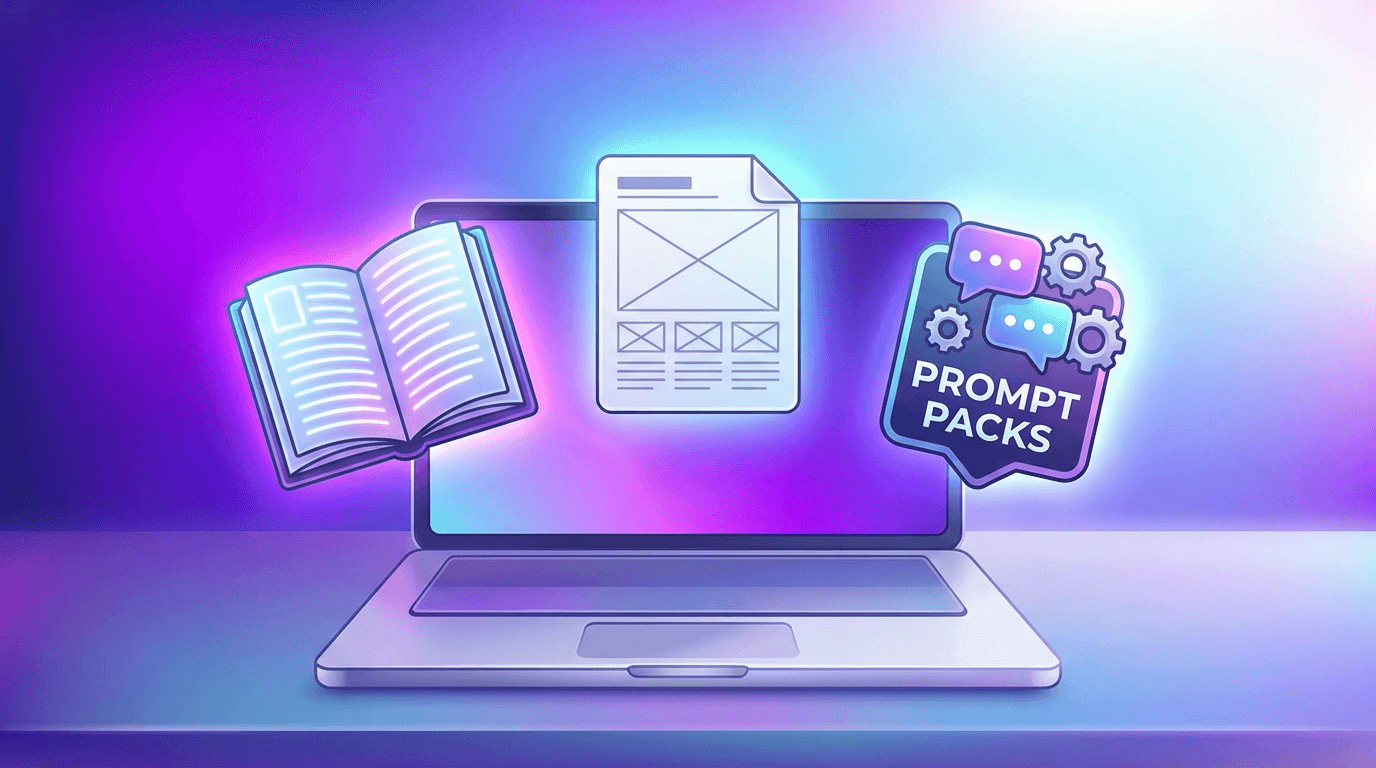
Prompt packs are an interesting example because they are native to the AI era. A well-organized collection of AI prompts for a specific use case, such as YouTube thumbnails, product photography, or social media content, has real value for creators who want results without the trial and error.
Other digital products that sell well include Notion templates for content planning, social media content calendars, video script templates, and niche-specific guides.
The platforms for selling digital products include Gumroad, Lemonsqueezy, Etsy for digital downloads, and your own website. Marketing typically happens through social media content. You create content related to your niche, demonstrate the value of your product within that content, and direct interested viewers to your product page.
For example, a creator who makes YouTube Shorts about AI image generation could sell a prompt pack containing their best-performing prompts. The Shorts serve as both content and marketing for the product.
What you need to start: A digital product idea, a way to create it, and a platform to sell it.
Time to first income: 1 to 8 weeks depending on how quickly you build the product and your existing audience size.
Income potential: Ranges from a few hundred dollars per month for niche products to $5,000+ per month for well-marketed products with a strong audience funnel.
Method 5: Affiliate Marketing Through Content
Affiliate marketing works by recommending products or services and earning a commission when someone purchases through your link. In 2026, affiliate marketing still works well, but the approach has shifted.
The old model was to build a website, write SEO-optimized review articles, and wait for Google traffic. That still works to some extent, but competition is intense and Google's algorithm changes have made it harder for thin affiliate sites to rank.
The model that works better in 2026 is building an audience through content, earning trust, and then recommending products you genuinely use. This can happen through YouTube videos, Shorts, blog posts, email newsletters, or social media content.
YouTube is one of the strongest channels for affiliate marketing because video builds trust faster than text. A creator who demonstrates a tool, shows real results, and includes an affiliate link in the description can earn meaningful commissions without a massive audience.
For AI tools specifically, many platforms offer affiliate or referral programs. If you create content teaching people how to use AI for content creation, the tools you recommend become natural affiliate opportunities.
The key to making affiliate marketing work is choosing products that genuinely solve problems for your audience and being transparent about affiliate relationships.
What you need to start: Content creation ability, affiliate program sign-ups, and a platform to publish on.
Time to first income: 1 to 3 months if you already have an audience. 3 to 6 months if building from scratch.
Income potential: Highly variable. Some affiliates earn $100 per month. Others with established audiences earn $10,000+ per month.
Method 6: AI Music for Content and Licensing
AI music generation has created a new income path that did not exist a few years ago. Creators can now generate original music tracks and use them in their own content, sell licenses, or offer music creation as a service.

The demand for royalty-free music is constant. Every YouTube video, podcast, Instagram Reel, and TikTok needs background music. Creators who can produce original tracks without licensing headaches provide real value.
The no-copyright music generation guide explains how creators are using AI to produce tracks specifically designed for content. Background music for study playlists, workout videos, cooking content, and ambient channels all have consistent demand.
There are several ways to monetize AI-generated music. You can use it in your own monetized content to avoid copyright claims. You can sell individual tracks or packs on music licensing platforms. You can offer custom music creation as a freelance service. Or you can build a YouTube channel around music playlists, which is a proven evergreen content format.
Ambient music channels, lo-fi study playlists, and relaxation music videos continue to perform well on YouTube because they accumulate watch time. A single long-form music video can generate views and ad revenue for months or years after publishing.
What you need to start: Access to an AI music generator and a platform to publish or sell on.
Time to first income: 1 to 3 months for content monetization. Faster for freelance music services.
Income potential: $200 to $2,000+ per month for music channels. Variable for licensing and freelance work.
Method 7: Print on Demand with AI-Generated Designs
Print on demand lets you sell physical products like t-shirts, mugs, posters, and phone cases without holding inventory. You create a design, upload it to a print-on-demand platform, and the platform handles printing, shipping, and customer service. You earn the margin between the base cost and your selling price.
AI image generation has made this model more accessible because you no longer need graphic design skills to create sellable designs. You can generate original artwork, typography-based designs, and niche-specific visuals using AI tools and then upload them to platforms like Printful, Redbubble, or Merch by Amazon.
The challenge with print on demand is standing out. The market is crowded, so success depends on finding underserved niches and creating designs that resonate with specific audiences. Trending topics, seasonal themes, and community-specific humor all perform well.
Marketing is the biggest factor. Most successful print-on-demand sellers drive traffic through social media content, particularly short-form video. A TikTok or Instagram Reel showing the design process or the finished product on a real item can drive significant sales.
What you need to start: AI image generation tools, a print-on-demand account, and a marketing channel.
Time to first income: 2 to 8 weeks for first sale. Building consistent income takes longer.
Income potential: $100 to $3,000+ per month depending on niche selection and marketing effort.
Method 8: Online Courses and Educational Content
If you have knowledge or skills that others want to learn, packaging that knowledge into a course or educational content is one of the highest-margin online income methods.
The format has evolved in 2026. Full-length courses on platforms like Udemy or Skillshare still work, but shorter, more focused educational products are gaining traction. Mini-courses, workshop recordings, and skill-specific tutorials can be sold for $20 to $200 and often convert better than expensive comprehensive courses.
The topics that sell well online include AI skills and tools, content creation workflows, specific software tutorials, business and marketing strategies, creative skills, and profession-specific knowledge.
Short-form video is a powerful marketing channel for courses. Creators who publish educational Shorts and Reels build an audience of people who already trust their expertise. Converting a portion of that audience into course buyers becomes much easier than selling to cold traffic.
You can create course promotional content, including trailers and preview clips, using AI video tools. This reduces the production overhead and lets you focus on the teaching material itself.
What you need to start: Expertise in a specific area, a platform to host the course, and content to market it.
Time to first income: 4 to 12 weeks to create and launch a course. Marketing determines how quickly sales come in.
Income potential: $500 to $10,000+ per month for well-marketed courses in popular niches.
Method 9: Blogging and SEO Content
Blogging is not dead in 2026. It has changed, but it still works as an income source when done correctly.
The bloggers who earn meaningful income in 2026 share a few characteristics. They focus on specific niches rather than broad topics. They create genuinely helpful, comprehensive content that outperforms what already ranks. They use multiple revenue streams including ads, affiliates, and digital products. And they publish consistently over time.
Google's algorithm in 2026 prioritizes content that demonstrates real experience and expertise. Thin, generic content does not rank. But in-depth posts that answer specific questions, provide practical frameworks, and include original insights continue to attract search traffic.
The most profitable blog niches include finance, technology, health and wellness, software reviews, and creator economy topics. Ad networks like Mediavine and AdThrive pay bloggers based on traffic volume, while affiliate links and digital product sales add additional revenue streams.
AI tools help bloggers produce content faster, but the content still needs human experience and editorial judgment to rank well. Using AI to draft, then editing heavily to add your own perspective and examples, is the approach that works.
Blog thumbnails and featured images matter for click-through rates in search results and social sharing. Creators can generate custom blog images using AI tools rather than relying on generic stock photos. The blog thumbnail generation guide explains how to create these visuals efficiently.
What you need to start: A domain, a content management system, and expertise in a niche.
Time to first income: 6 to 12 months for significant search traffic. Can be faster with an existing audience.
Income potential: $500 to $20,000+ per month for established blogs with consistent traffic.
Method 10: Social Media Content Management
Small businesses and personal brands need social media content, and many of them do not have the time or skills to create it consistently. Managing social media content for clients is a service-based income method that works well in 2026.
The scope of this service typically includes planning a content calendar, creating visual content including images and short-form videos, writing captions, scheduling posts, and reporting on performance.
AI tools have made this service much easier to deliver. You can generate social media visuals, produce short videos, write captions, and plan content calendars in a fraction of the time it used to take. This means higher margins per client and the ability to manage more accounts simultaneously.
The new creator stack outlines how AI tools fit into modern content creation workflows. Understanding this stack and being able to execute it for clients is a valuable, billable skill.
What you need to start: Social media knowledge, AI content tools, and clients.
Time to first income: 2 to 6 weeks with active outreach.
Income potential: $500 to $5,000+ per month depending on number of clients and service scope.
Method 11: AI Product Video Services for E-commerce
E-commerce brands need product videos for listings, ads, and social media. Traditionally, producing these videos required photographers, studios, and editors. In 2026, AI tools can generate professional-quality product videos from photos and text prompts.
This creates a clear service opportunity. E-commerce sellers, especially on Amazon, Shopify, and Etsy, need video content but often cannot afford traditional production. A freelancer who can take product photos and turn them into polished promotional clips fills a real gap.
The workflow involves receiving product images from the client, writing prompts that describe the desired video style and content, generating the video, and delivering the final result. Platforms like Miraflow AI allow you to generate cinematic video clips from text prompts, which makes producing these videos fast and cost-effective.
Pricing for AI product video services typically ranges from $50 to $500 per video depending on complexity and the client's budget. Bulk packages for clients who need ongoing content are a good way to build recurring income.
What you need to start: Proficiency with AI video generation tools and a way to find e-commerce clients.
Time to first income: 1 to 4 weeks with active outreach.
Income potential: $1,000 to $5,000+ per month depending on client volume.
Method 12: Newsletter and Email-Based Income
Email newsletters have become a standalone income source in 2026. Platforms like Substack, Beehiiv, and ConvertKit make it possible to build an audience, publish consistently, and monetize through paid subscriptions, sponsorships, or product recommendations.
The advantage of email over social media is ownership. You own your email list. Algorithm changes on YouTube, TikTok, or Instagram cannot take away your audience. This makes email one of the most stable income channels online.
Successful newsletters tend to focus on a specific niche and deliver consistent, actionable value. Topics that work well include industry news and analysis, curated resources and tools, weekly tutorials or tips, and trend reports.
Monetization happens through paid subscriptions where readers pay monthly for premium content, sponsorships where brands pay to reach your audience, and affiliate recommendations where you earn commissions on products you recommend.
Building a newsletter audience takes time, but short-form video is an effective growth channel. Creators who publish Shorts and Reels that provide value and direct viewers to subscribe to their newsletter can grow an email list alongside their social media presence.
What you need to start: A newsletter platform, a niche, and a growth strategy.
Time to first income: 2 to 6 months for sponsorships or paid subscriptions. Faster for affiliate revenue.
Income potential: $500 to $10,000+ per month for newsletters with engaged audiences.
7 Common Mistakes That Keep People From Earning Online
Before you pick a method and start, here are the patterns that consistently prevent people from making real income online.
Switching methods too often. The biggest mistake is trying one method for two weeks, seeing no results, and jumping to the next thing. Every method on this list requires at least 2 to 3 months of consistent effort before you can evaluate whether it is working. Switching too early means you never build momentum anywhere.
Optimizing before starting. Spending weeks researching the perfect niche, the perfect tool, the perfect strategy, and never actually publishing anything. The information you need most comes from doing the work and seeing real results, not from consuming more content about doing the work.
Ignoring the audience. Every method on this list ultimately depends on providing value to other people. Whether you are creating content, selling products, or offering services, the people paying you need to receive something useful. Focus on what your audience wants rather than what you want to create.
Underpricing services. Freelancers especially tend to price their services too low when starting out. Low prices attract low-quality clients and create a cycle of overwork for minimal income. Research market rates for the service you are offering and price competitively, not desperately.
Not publishing consistently. Content-based income methods like YouTube, blogging, and newsletters all reward consistency. The YouTube Shorts algorithm responds positively to daily uploads, and the same principle applies across platforms. Irregular publishing makes it nearly impossible to build an audience.
Spending money before earning money. You do not need expensive tools, courses, or equipment to start earning online. Most of the methods in this guide can be started at zero cost. Invest money into your online business after it starts generating revenue, not before.
Ignoring analytics. If you are creating content, your analytics tell you what is working and what is not. The YouTube Shorts analytics guide explains how to read your performance data and make informed decisions about what to create next.
How to Pick the Right Method for You

With 12 methods on the table, choosing where to start can feel overwhelming. Here is a simple framework.
If you want the fastest path to first dollar, freelance services like AI content creation or product video services are the quickest because you are exchanging time for money directly. You do not need to build an audience first.
If you want passive or semi-passive income, content-based methods like YouTube Shorts, blogging, or music channels take longer to start generating revenue but can produce income with less ongoing time investment once established.
If you have existing knowledge or expertise, educational products like courses and newsletters leverage what you already know and tend to have high margins.
If you have zero budget, start with content creation on platforms that are free to use. YouTube, TikTok, and Instagram cost nothing to publish on. AI tools with free tiers let you produce visuals and videos without upfront investment.
If you want to combine methods, the most effective approach is to pick one content platform as your primary growth channel and layer additional income methods on top. For example, a YouTube Shorts channel can generate ad revenue directly, drive affiliate sales through descriptions, and market digital products to its audience.
The worst choice is no choice. Pick one method, commit to it for 90 days, and evaluate based on real data rather than feelings.
Getting Started with Zero Budget in 2026
Every method in this guide can be started with little to no upfront cost. Here is what a zero-budget start looks like for the most popular methods.
For YouTube Shorts and faceless channels, you need a Google account and AI tools with free tiers for visual and audio production. Miraflow AI offers free credits for video generation, image creation, and music, which means you can produce content without paying anything upfront.
For freelancing, you need a portfolio of sample work and profiles on platforms like Fiverr or Upwork. The sample work can be created using free AI tools. Your portfolio is your investment, not money.
For digital products, you need a Gumroad or similar account (free to create) and the product itself. If you are selling prompt packs or templates, the creation cost is essentially zero.
For blogging, free platforms like WordPress.com or Medium let you publish content without paying for hosting. You can upgrade later once the blog generates revenue.
The pattern is clear. In 2026, the primary investment for making money online is time and effort, not money. The tools exist to produce professional-quality content at no cost. What separates people who earn income online from those who do not is consistent execution over time.
The AI Content Creation Workflow That Powers Multiple Income Streams
One practical advantage of AI content tools in 2026 is that the same workflow can support multiple income methods simultaneously.
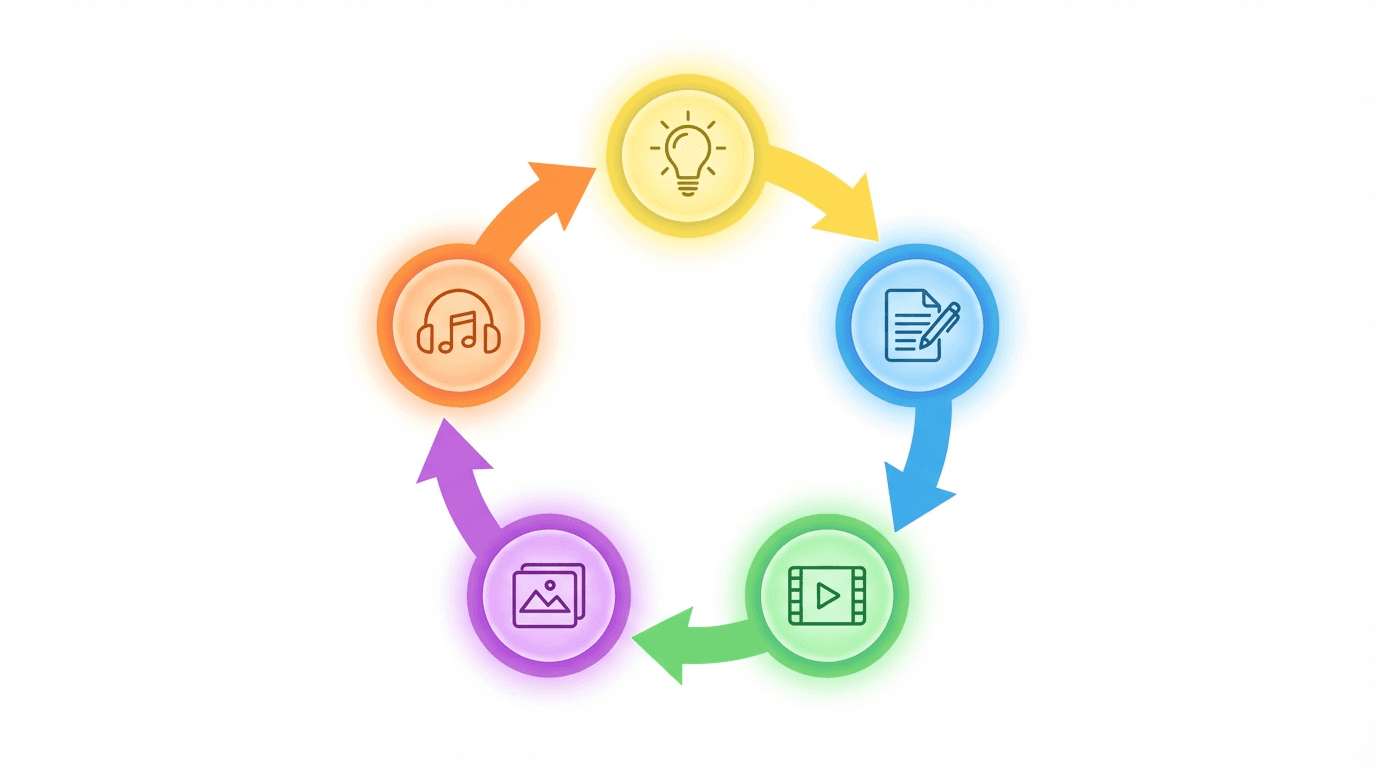
Here is how a single content creation session can feed several revenue streams. You start with a topic or idea. You generate a short-form video for YouTube Shorts or Instagram Reels. You create a thumbnail for that video. You produce a longer blog post on the same topic. You generate background music for the video. And you create promotional images for social media.
That single session produces content for your YouTube channel (ad revenue), your blog (ad and affiliate revenue), your social media profiles (audience growth and affiliate marketing), and potentially your freelance portfolio (demonstrating skills to prospective clients).
This is the idea-to-content pipeline that platforms like Miraflow AI are built around. You go from idea to script to visual to video to thumbnail to music, all in one place. The viral Shorts formats guide shows which content formats perform best on each platform, helping you prioritize what to create first.
The creators who build the most sustainable online income in 2026 are not necessarily the most talented. They are the ones who build efficient content systems and execute consistently.
Conclusion
Making money online in 2026 is realistic, but it requires choosing a method, committing to it, and executing consistently over time. The 12 methods in this guide all work. The question is which one fits your skills, your goals, and your willingness to put in the effort.
AI tools have reduced the production barrier for nearly every online income method. You can create professional videos, images, music, and written content without expensive equipment or specialized skills. That means the competitive advantage is no longer access to tools. It is consistency, quality, and the ability to provide genuine value to an audience.
Start with one method. Give it 90 days of real effort. Track your results. Adjust based on data. And remember that the people earning significant income online in 2026 started with the same uncertainty you might be feeling right now. The difference is they started.