20 Liminal Space AI Photo Prompts (Copy & Paste, 2026)

Written by
Aerin Kim
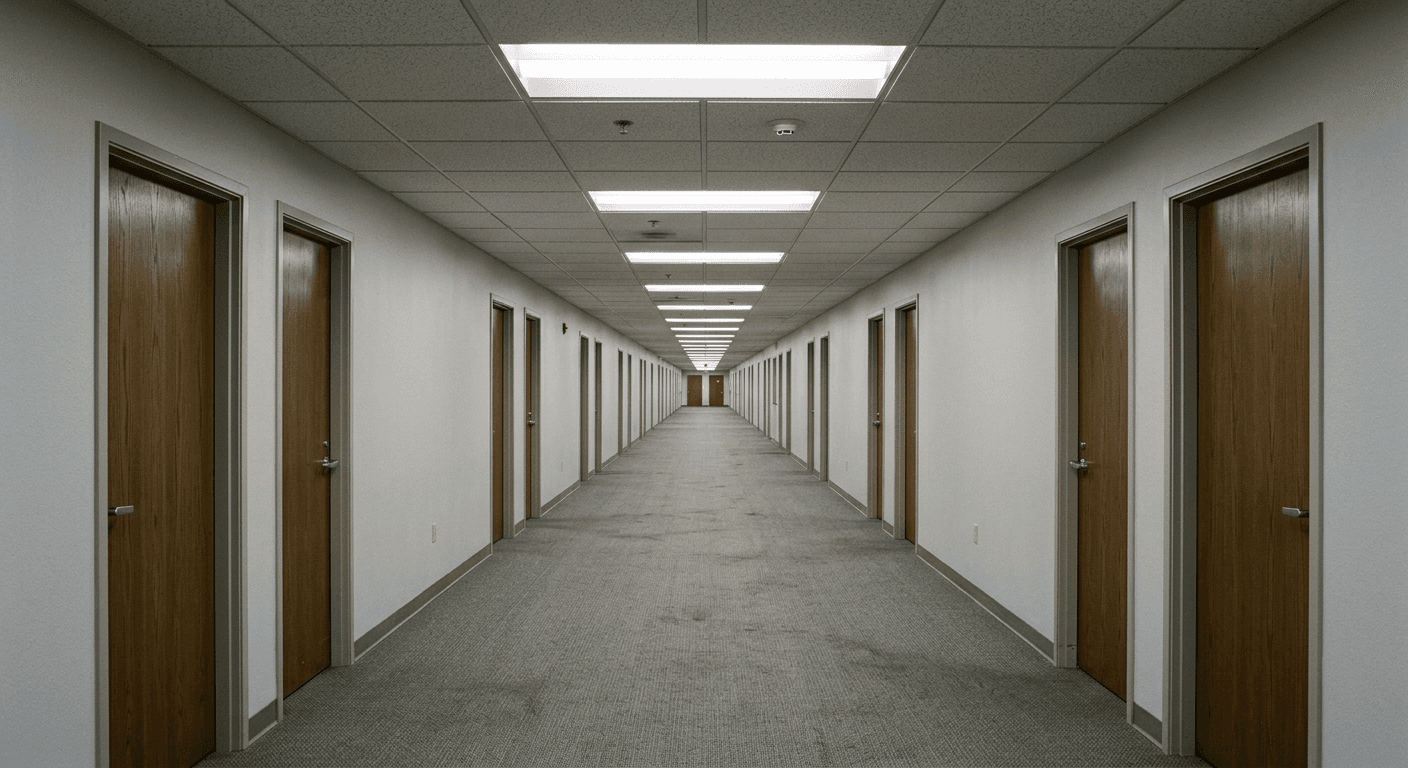
Empty hallways, drained pools and dead malls are the AI photo trend of late 2026. 20 realistic, copy-paste liminal space prompts grouped by scene, plus the lighting and lens details that sell them.
You know the photo before you even finish reading the caption. A hallway with too many doors, and none of them look like they lead anywhere in particular. Carpet that does not quite match the walls. A fluorescent tube humming somewhere just out of frame. Nobody is standing in the shot, and somehow that absence is the entire point. Something about the space feels correct and wrong at the same time, like a place you have stood in a dream but never in real life.
That feeling has a name, and by late September 2026 it has fully crossed over from a niche internet subculture into one of the clearest AI photo trends going mainstream right now. Liminal space photography started years ago as a specific genre of real photos, empty hallways, drained pools, abandoned malls, shared on Reddit's r/LiminalSpace and the SpaceLiminalBot accounts that helped popularize the look. What changed in 2026 is that AI image generators finally got precise enough with lighting, lens perspective and architectural detail to produce a genuinely convincing version of that same unease from a single detailed prompt, instead of a flat, obviously synthetic render. Creators are now generating the look directly rather than hunting for real abandoned locations to photograph, and the results are showing up everywhere from standalone feed posts to eerie background plates for edits and shorts.
Every prompt in this post is built to run inside Miraflow's AI Image Generator, which handles both a from-scratch text-to-image generation and an image-to-image pass if you already have a real empty-space photo you want pushed further into the look. Because this trend lives or dies on whether the photo actually reads as real, every prompt and every image in this post is written as a straightforward realistic photography brief, not a stylized illustration or a miniature stand-in for the subject. Forcing a pastel or tabletop-diorama treatment onto a post about judging photorealism would undercut the whole point, so you will not find that here.
Why Liminal Space Photography Is Everywhere Right Now
The timing is not random. On May 29, 2026, A24 released Kane Parsons's feature film Backrooms, an adaptation of the found-footage liminal space universe Parsons built online years earlier, starring Chiwetel Ejiofor and Renate Reinsve. It went on to gross more than 402 million dollars worldwide, making it A24's highest-grossing release to date and pushing Parsons into position as the youngest filmmaker ever to open at number one at both the domestic and global box office. A July re-release added new footage and kept the film in theaters through the summer. That kind of box office result does not happen inside a niche subculture, it happens when a genuinely underground internet aesthetic gets handed a mainstream audience all at once, and the AI photo trend built on top of it is the direct downstream effect.
The underlying aesthetic itself is older and has been building for years before the movie. The term liminal space describes a built environment associated with passage or temporary use, a hallway, a waiting room, a parking garage, where the usual signs of human activity are missing and the familiar setting starts to feel uncanny instead. The r/LiminalSpace subreddit and accounts like SpaceLiminalBot built a large, dedicated following on this idea well before 2026, and the TikTok hashtag #liminalspaces has accumulated billions of views over the years as the aesthetic spread well beyond its original photography-forum roots. What AI image tools added in 2026 is accessibility. You no longer need to find and photograph an actual abandoned mall or an empty motel at the right hour to get the shot. You can describe the exact hallway, the exact light source and the exact hour, and generate it.
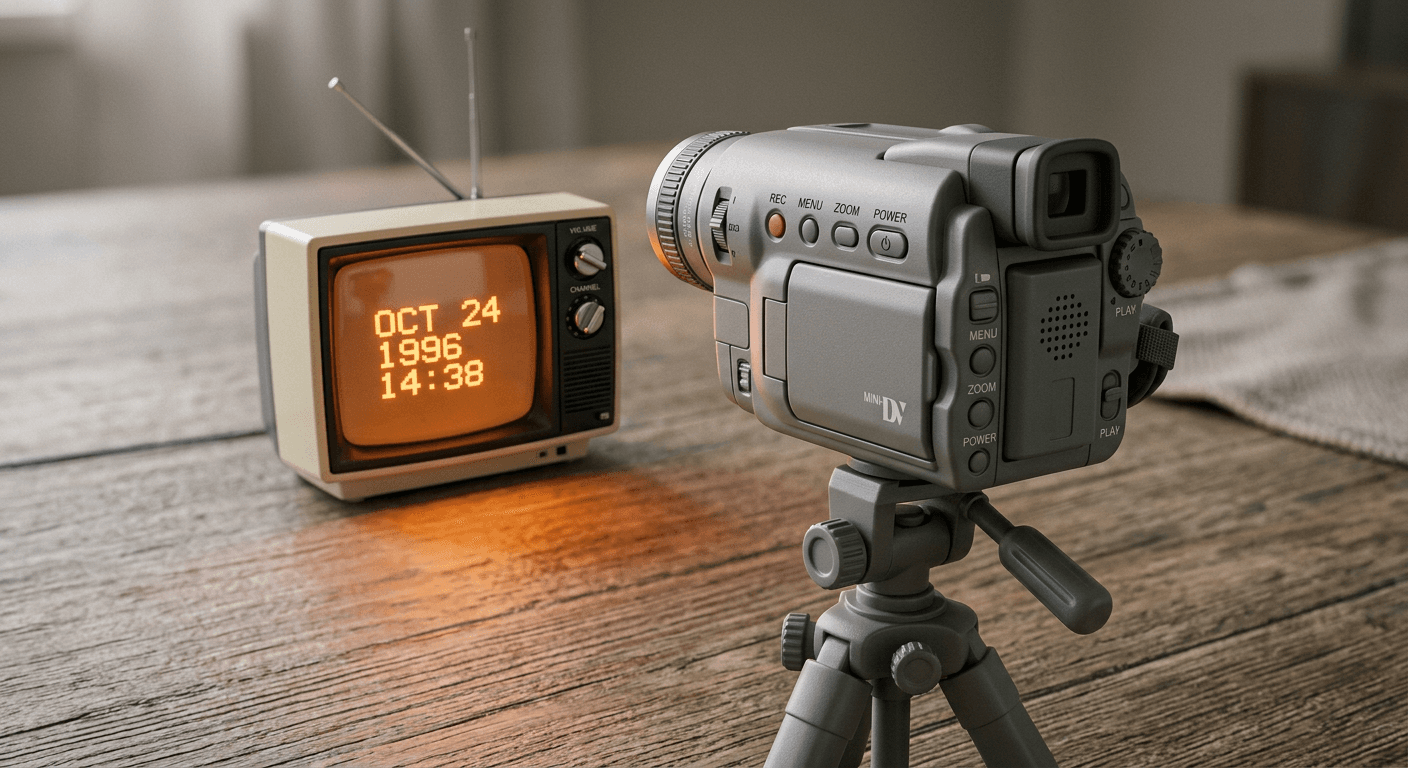
There is also a nostalgia component that is doing real work here, similar to what has made other 2026 photo trends stick. The architecture liminal space photography leans on hardest, drop ceiling tiles, industrial carpet, boxy CRT televisions, fluorescent tube lighting, mid-century institutional design, is architecture a lot of people over roughly thirty grew up around directly. It reads as instantly familiar and slightly dated at the same time, which is close to the same emotional territory our Y2K camcorder trend prompt pack covers from a different angle. Both trends are betting on the same idea, that a very specific, technically accurate recreation of an earlier era's physical spaces or hardware reads as more emotionally real than a clean, modern, polished photo ever could.
The Sub-Styles Actually Trending Right Now
Liminal space is not one look. Creators researching this trend right now are pulling from a handful of distinct sub-styles, and knowing which one you are actually going for changes what you should be putting in your prompt.
Backrooms-style yellow corridors are the most recognizable version, directly descended from the original 2019 forum post that started the whole aesthetic: damp beige carpet, sickly yellow wallpaper, a low drop ceiling with buzzing fluorescent tubes repeating into the distance, no doors that lead anywhere sensible. This is the specific look the Backrooms film brought to a mainstream audience, and it remains the single most-requested variant.
Dead malls are their own well-established subgenre, focused on vast, mostly or fully vacated shopping mall interiors, empty atriums, dark storefronts behind security gates, a skylight letting in flat gray daylight over a space built for crowds that are no longer there.
Hospitalcore leans into white-tiled floors, pale institutional walls and clinical fluorescent lighting that suggests sedation or illness without showing anything explicitly medical, an empty gurney or a closed exam room is usually enough.
Weirdcore and dreamcore push the aesthetic further into a more distorted, low-quality, dreamlike register, closer to a half-remembered nightmare than a real photo, and are generally handled with more digital glitch and grain than the straight photographic prompts in this post.
A related but distinct aesthetic some creators reach for is the so-called DOOM-style early-2000s render look, named for the washed-out, low-polygon, harshly-lit feel of early first-person shooter level geometry from that era. It is worth knowing about because it shows up constantly in liminal space mood boards, but it is a rendered-game aesthetic rather than photography, so it sits outside the scope of this specific prompt pack, which is built entirely around convincing real-photo results rather than a stylized render.
Motel hallways and DMV-style waiting rooms round out the most requested categories right now, both leaning on a very specific, very recognizable kind of American institutional or roadside architecture, numbered doors under a metal railing, rows of connected vinyl chairs facing a number display, that most people have stood in at some point without ever thinking of it as a photo subject.
All five of those real-photography sub-styles get their own prompts below, grouped so you can jump straight to the specific scene you are after.
What Actually Makes a Liminal Space Photo Read as Real
Before the prompt list, it is worth understanding the handful of technical details that separate a genuinely convincing liminal space photo from something that reads as an obvious AI render with a filter over it. Every prompt below is written with these deliberately built in.
A specific practical light source, named exactly. Real liminal spaces are almost never lit for a photo. They are lit by whatever was already installed, flat overhead fluorescent tubes in an office or school, harsh unfiltered midday sun through tall windows in a gym or classroom, dim emergency lighting or a single flickering tube in a hallway at night, warm sodium-vapor lamps in a parking garage at dusk. Naming the actual fixture and its color temperature, rather than a vague "moody lighting," is what keeps the result from looking staged.
A true wide-angle architectural lens perspective. The genre's signature look comes from a wide lens held roughly at eye level, capturing a full hallway or room with everything in reasonably sharp focus rather than a shallow, cinematic depth of field. A photo that looks like it was shot with a long lens and a blurred background reads as a portrait accidentally set in an empty room, not a liminal space photo.
Accurate, boring architecture. Drop ceiling grids need to actually line up. Carpet patterns need to repeat consistently. Door spacing needs to stay even down a hallway. The uncanny effect liminal space photography is known for comes from a completely mundane, physically plausible space, not a surreal or impossible one, so any prompt that lets an AI model invent a doorway that opens onto nothing or a hallway that bends in a way real architecture cannot has already broken the illusion.
Absence, or at most one anonymous figure. The empty-space feeling is the entire subject. When a person does appear at all in this genre, it is a lone, anonymous silhouette, seen from behind or in low light with no distinguishing features, never a posed or gendered subject, since the moment a clearly depicted person enters the frame the photo stops being about the space and starts being about them.
No impossible geometry, no garbled signage. This is the most common way a generation fails this specific genre: a hallway where the vanishing point does not match the ceiling lines, a sign with warped or unreadable lettering, a reflection that does not match what it is supposedly reflecting. Every prompt below closes with a specific clause ruling these failure modes out, the same way a real photographer's shot brief would rule out camera shake or a blown highlight.
1) Backrooms and Corridor Prompts
This is the category the whole trend is named after, and the one most directly tied to the aesthetic the Backrooms film brought into the mainstream this year. Every prompt here is a hallway, corridor or lobby shot straight down its own length.
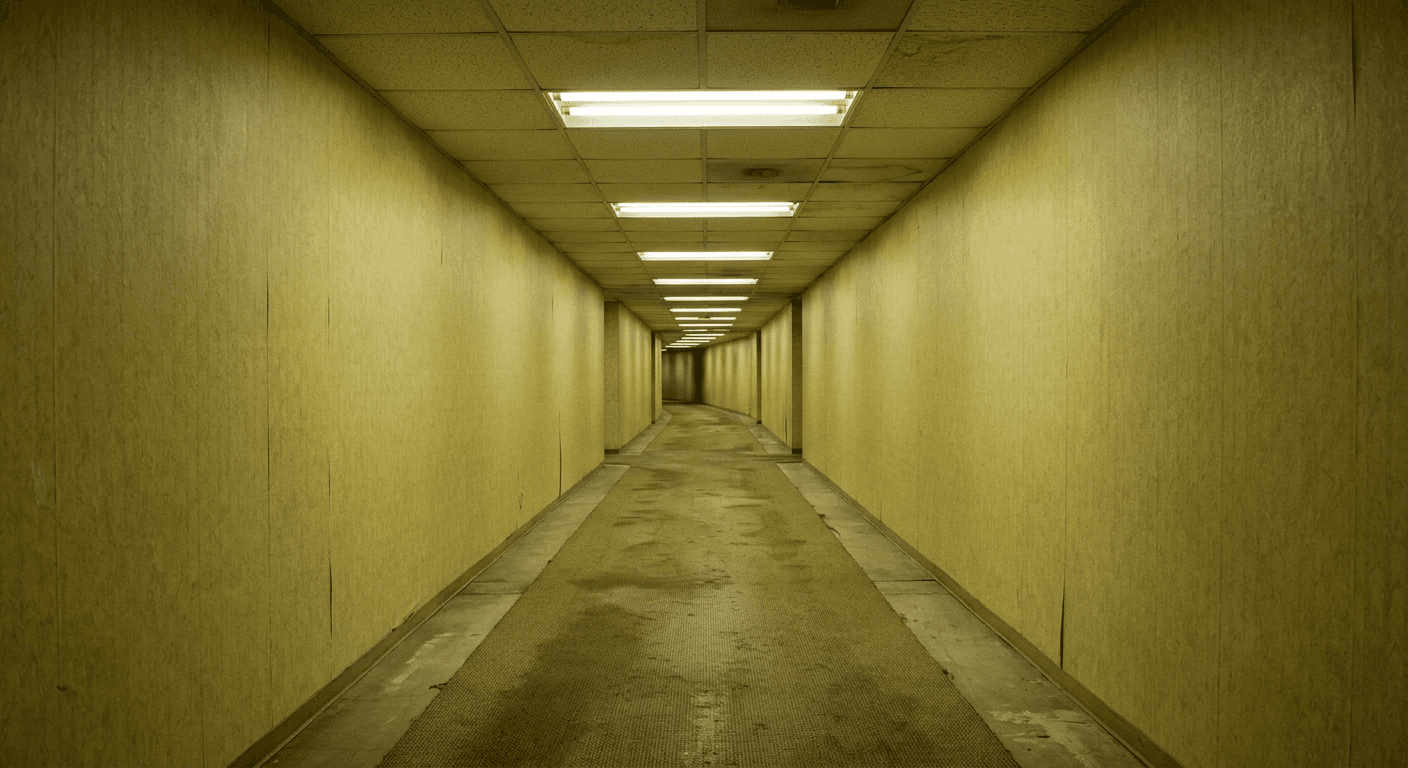
Prompt 1: Classic yellow backrooms corridor
Realistic photograph of an endless drab yellow-wallpapered office corridor, damp beige carpet underfoot, buzzing fluorescent tube lights embedded in a low drop ceiling repeating into the distance, doorless walls on both sides, shot with a wide-angle 16mm-equivalent lens from eye level looking straight down the corridor's vanishing point, flat overhead fluorescent light with a faint yellow-green color cast and no natural light source, no people in frame, no warped or impossible architecture, no garbled signage text, no watermark.
Prompt 2: Flickering office hallway at 3am
Realistic photograph of an empty office hallway shot at night, acoustic drop ceiling tiles, gray industrial carpet tile, a single flickering fluorescent light tube roughly two-thirds down the hallway while the tubes nearer the camera stay lit, closed unmarked doors spaced evenly along both walls, wide-angle lens capturing the full depth of the hallway in sharp focus, the only light source coming from the ceiling fixtures themselves against near total darkness beyond any window, no people, no warped architecture, no impossible geometry, no garbled text on the doors, no watermark.
Prompt 3: Empty school hallway between class periods
Realistic photograph of a public school hallway between class periods, rows of metal lockers lining both walls, checkerboard linoleum floor, one trophy case visible in the middle distance, shot with a wide-angle lens from waist height looking down the hallway's centerline, flat overhead fluorescent lighting with faint natural daylight bleeding in from a distant exterior door window, no students or staff in frame, no warped locker rows, no impossible perspective, no garbled hallway signage, no watermark.
Prompt 4: Hospitalcore corridor with an empty gurney
Realistic photograph of an empty hospital corridor, white ceramic floor tile reflecting the ceiling lights, pale green walls, a single empty gurney parked against one wall, fluorescent tube lighting recessed into a white drop ceiling running the length of the hall, wide-angle lens shot from eye level centered on the corridor's vanishing point, no doctors or patients visible, no warped tile lines, no impossible corridor angles, no garbled wall signage, no watermark.
Prompt 5: Windowless elevator lobby
Realistic photograph of a windowless elevator lobby, two sets of brushed metal elevator doors facing each other, mismatched patterned carpet where an older section meets a newer renovation, recessed ceiling downlights as the only light source, wide-angle lens shot from the center of the lobby capturing both elevator banks in frame, no people, no warped door frames, no impossible reflections in the metal doors, no garbled floor-indicator text, no watermark.
These five work well as pure text-to-image generations since none of them depend on a specific real location, but they also work as an image-to-image pass if you already have a photo of a plain, empty hallway you want pushed toward the yellow-wallpaper backrooms look specifically. A real corridor with even, repeating architecture gives the model the cleanest structure to build the fluorescent lighting and carpet texture onto.
2) Abandoned Public Space Prompts
Malls, pools, waiting rooms and classrooms built for crowds that are not there anymore make up the second core category, and this is where the trend's dead-mall and DMV sub-styles live.
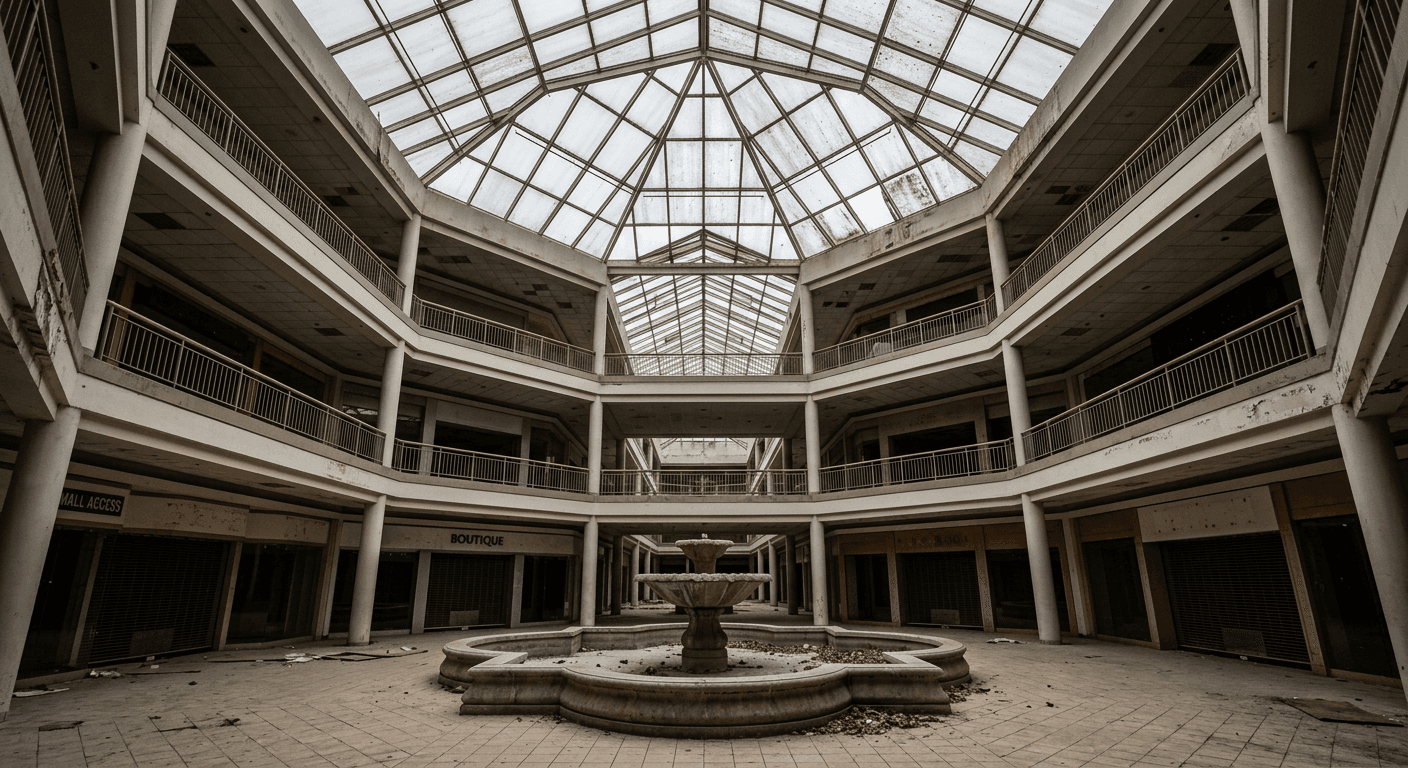
Prompt 6: Abandoned shopping mall atrium
Realistic photograph of an abandoned shopping mall atrium, three empty tiled walkways visible on upper floors, a dry decorative fountain at the center, a large dusty skylight overhead letting in flat gray daylight, potted plants left dried out near closed storefront gates, wide-angle lens shot from ground level looking up toward the skylight, natural overcast daylight mixed with a few working fluorescent fixtures, no shoppers or staff, no warped railings, no impossible skylight geometry, no garbled store signage, no watermark.
Prompt 7: Drained public swimming pool
Realistic photograph of a drained public swimming pool inside an indoor natatorium, cracked pale blue tile lining the pool basin, a rusted metal ladder bolted to the pool wall, tall arched windows along one side letting in harsh late-afternoon light, wide-angle lens shot from the pool deck looking down into the empty basin, natural directional sunlight through the windows as the only light source, no swimmers or lifeguards, no warped tile grid, no impossible pool geometry, no garbled pool-rule signage, no watermark.
Prompt 8: DMV-style government waiting room
Realistic photograph of a government waiting room, rows of connected vinyl bucket chairs facing a wall-mounted number display, worn carpet tile floor, a service counter with frosted glass windows in the background, flickering fluorescent panel lighting overhead, wide-angle lens shot from the back row of chairs looking toward the counter, flat institutional overhead lighting with no natural light source, no visitors or staff, no warped chair rows, no impossible counter geometry, no garbled number-display digits, no watermark.
Prompt 9: Empty classroom at midday
Realistic photograph of an empty classroom, rows of individual desks facing a green chalkboard with faint unreadable chalk smudges, tall windows along one wall letting in harsh midday sunlight in a hard rectangular pattern across the floor, ceiling-mounted fluorescent fixtures switched off, wide-angle lens shot from the doorway looking toward the chalkboard, natural harsh midday light as the dominant source, no students or teacher, no warped desk rows, no impossible window light pattern, no garbled chalkboard text, no watermark.
Prompt 10: Open-plan cubicle office floor after hours
Realistic photograph of an open-plan office floor after hours, rows of fabric-walled cubicles extending toward a bank of dark windows, low drop ceiling with most fluorescent panels off except one section still lit, a single desk lamp glowing on an otherwise bare desk, wide-angle lens shot from the main aisle looking down the row of cubicles, mixed practical light from the one lit ceiling section and the desk lamp against surrounding dimness, no employees, no warped cubicle walls, no impossible ceiling grid, no garbled desk paperwork text, no watermark.
The drained pool and dead mall prompts in this group tend to be the two most-shared formats of the whole trend, since both lean on a space most people instantly recognize as normally full of people, which makes the emptiness read faster than a hallway that could plausibly always look like that.
3) Nostalgic and Domestic Liminal Prompts
This category pulls the aesthetic into warmer, more personal territory, a motel, a childhood bedroom, a diner, spaces that carry real nostalgia alongside the uncanny stillness rather than pure institutional dread.
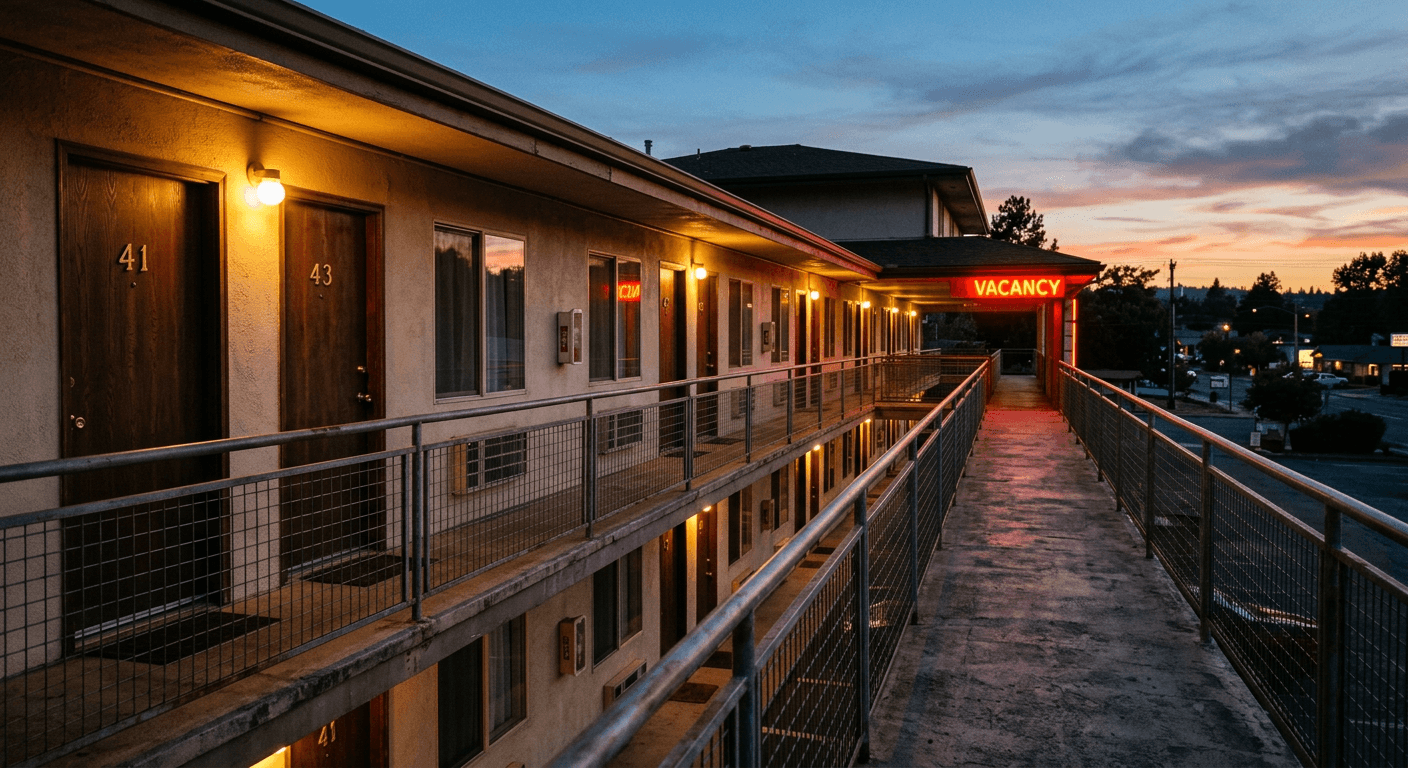
Prompt 11: Motel exterior walkway at dusk
Realistic photograph of a two-story motel exterior walkway at dusk, numbered doors spaced evenly along a metal railing, an illuminated red neon sign reading VACANCY glowing at the far end, exposed incandescent bulbs lighting each doorway, wide-angle lens shot from one end of the walkway looking down its length, warm dusk sky mixing with the incandescent doorway lights and the neon sign's red glow, no guests, no warped railing or door spacing, no impossible perspective on the stairwell, no garbled text beyond the short VACANCY sign, no watermark.
Prompt 12: Untouched mid-2000s childhood bedroom
Realistic photograph of a nostalgic mid-2000s children's bedroom left untouched, a boxy CRT television on a wooden dresser, a bunk bed with a plain striped comforter, dated floral wallpaper, faded daylight coming through half-closed blinds casting soft striped shadows on the floor, wide-angle lens shot from the doorway capturing the full room, soft directional daylight through the blinds as the only light source, no people, no warped furniture proportions, no impossible shadow angles, no garbled poster or spine text, no watermark.
Prompt 13: Empty roadside diner at closing time
Realistic photograph of an empty roadside diner interior at closing time, a row of red vinyl booths along a window wall, black and white checkered floor tile, a lit neon menu board glowing behind an empty counter, overhead fluorescent tube lighting mixing with the neon's colored glow, wide-angle lens shot from the center aisle looking down the row of booths, mixed fluorescent and neon practical lighting, no customers or staff, no warped booth spacing, no impossible tile perspective, no garbled menu board text, no watermark.
Prompt 14: Closed car dealership showroom at night
Realistic photograph of a closed car dealership showroom floor at night, a single sedan parked under a grid of bright fluorescent ceiling fixtures, floor-to-ceiling glass walls reflecting the empty parking lot outside, polished concrete floor, wide-angle lens shot from the showroom entrance looking across the open floor, even overhead fluorescent grid lighting as the dominant source with faint exterior streetlight visible through the glass, no salespeople or customers, no warped glass reflections, no impossible ceiling grid spacing, no garbled window signage, no watermark.
Prompt 15: Late-night laundromat
Realistic photograph of a laundromat interior late at night, rows of front-loading washing machines lining both walls, one machine mid-cycle with its round window lit from inside, worn linoleum floor, flat fluorescent overhead lighting, wide-angle lens shot from the entrance looking down the center aisle between machine rows, cool fluorescent overhead light as the only source, no customers, no warped machine rows, no impossible aisle perspective, no garbled machine-panel text, no watermark.
The motel walkway and childhood bedroom prompts in this group are worth generating a couple of variations of before picking a favorite, since the specific decade cues, the wallpaper pattern, the CRT model, the neon sign's exact glow, land differently depending on how the model interprets the prompt each time.
4) Night and Low-Light Liminal Prompts
Low light is where this genre gets its most cinematic results, since a single practical light source against a dark background does most of the emotional work. This group leans fully into dusk and nighttime scenes.
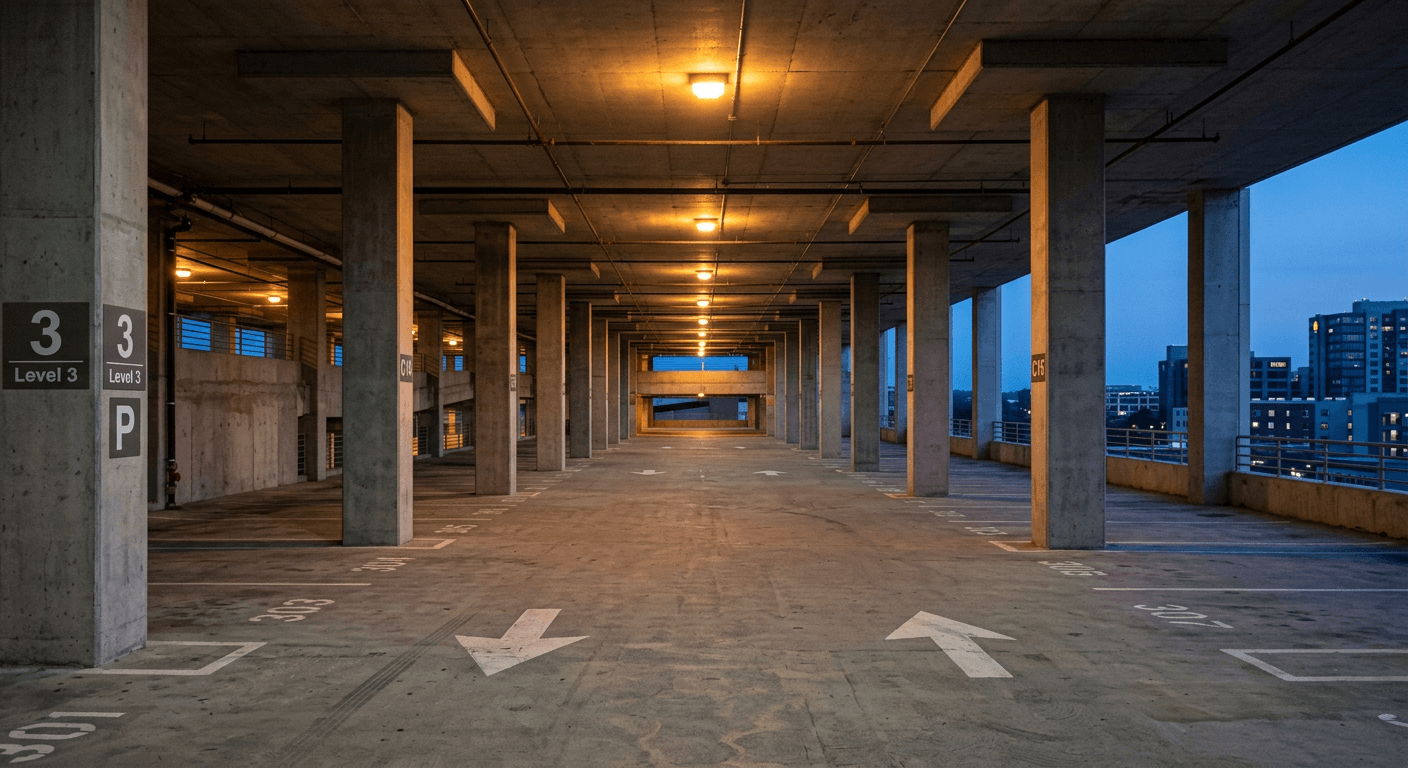
Prompt 16: Parking garage at dusk
Realistic photograph of a multi-level concrete parking garage at dusk, painted directional arrows and faded numbered spaces on the floor, thick square support pillars receding into the distance, amber sodium-vapor lights beginning to switch on along the ceiling as daylight fades, wide-angle lens shot from one end of the level looking down the row of pillars, mixed fading blue dusk light and warm amber sodium lighting, no cars or people, no warped pillar spacing, no impossible ceiling geometry, no garbled parking-level signage, no watermark.
Prompt 17: Empty gas station forecourt at night
Realistic photograph of an empty gas station forecourt at night, a wide flat canopy overhead lit by bright rectangular panel lights, rows of empty fuel pumps beneath it, the convenience store behind glowing faintly through its windows, wide-angle lens shot from the edge of the forecourt looking toward the pumps and canopy, harsh overhead canopy lighting against a dark night sky, no customers or attendants, no warped canopy lines, no impossible pump spacing, no garbled price-sign digits, no watermark.
Prompt 18: Late-night subway platform
Realistic photograph of an empty subway platform late at night, glazed tile walls in a repeating pattern, a single bench bolted to the platform edge, a lone overhead light fixture buzzing above the empty tracks, wide-angle lens shot from the platform's center looking down its length toward the tunnel opening, cool fluorescent overhead lighting as the only source with the tunnel fading to black, no passengers, no warped tile pattern, no impossible track perspective, no garbled platform signage, no watermark.
Prompt 19: Motel parking lot at night with a lone silhouette
Realistic photograph of a motel parking lot at night, a red neon sign glowing above the office entrance, empty painted parking spaces under a few working sodium lights, a single anonymous figure in silhouette walking away from the camera toward a distant lit doorway, gender-neutral clothing with no distinguishing features visible, wide-angle lens shot from across the lot capturing the full building facade, mixed neon and sodium practical lighting against a dark sky, no other people, no warped building lines, no impossible shadow direction, no garbled sign text beyond the short neon word, no watermark.
Prompt 20: Highway rest-stop restroom at night
Realistic photograph of a highway rest-stop restroom interior at night, white subway tile walls, a row of closed stall doors, a bank of sinks under a long mirror, flat humming fluorescent tube lighting overhead, wide-angle lens shot from the entrance looking down the row of sinks and stalls, harsh clinical fluorescent light as the only source, no people, no warped tile grid, no impossible mirror reflection, no garbled stall-door signage, no watermark.
Prompt 19 is the one prompt in this pack that includes a person at all, and it is worth reading closely before adapting it. The figure is described as anonymous, gender-neutral and seen only in silhouette from behind, which keeps the focus on the empty space rather than turning the shot into a portrait. If you want to add a subject to any of the other 19 prompts, use that same restraint as your model.
How to Customize These Prompts
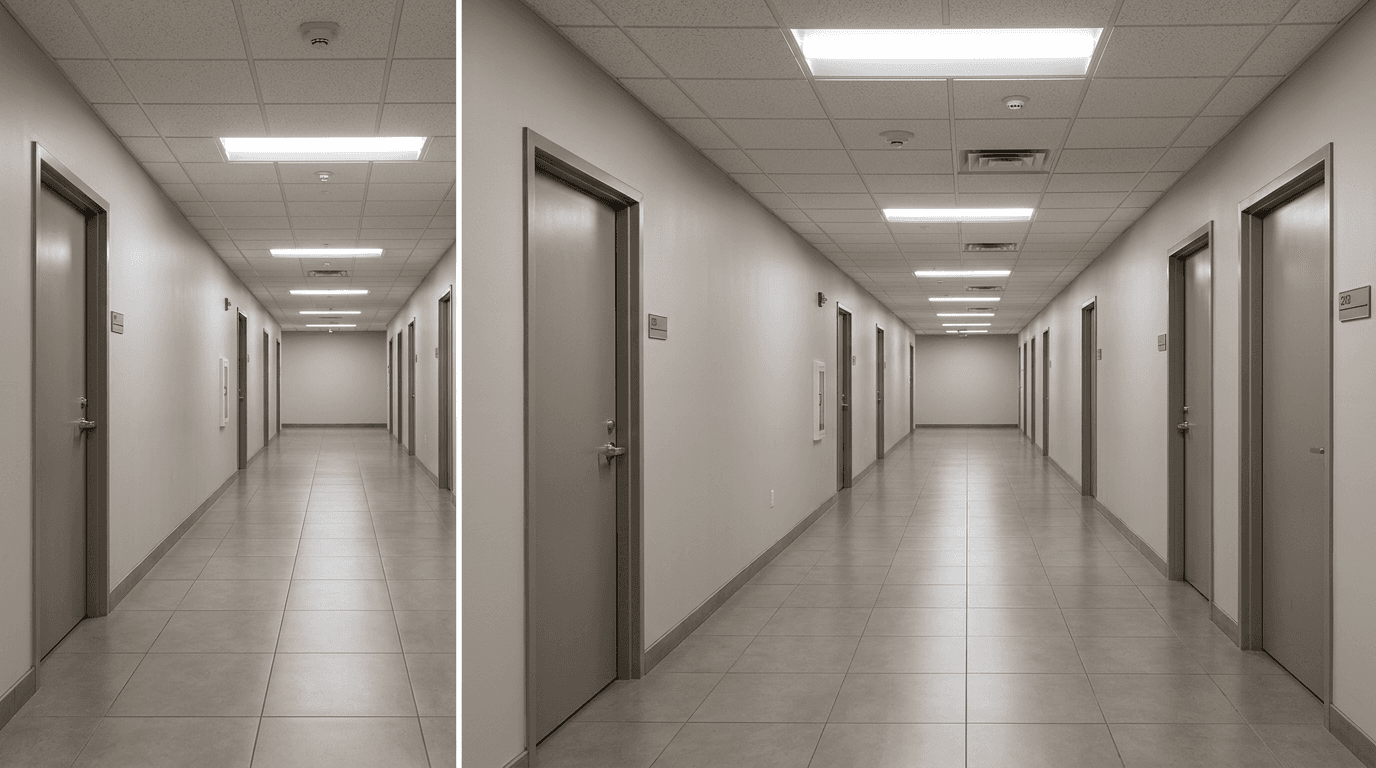
Every prompt above is a solid starting point, but a few adjustments make a real difference depending on where the photo is actually going.
Match the aspect ratio to the platform. A wide 16:9 or a 4:3 frame reads best for a feed post or a blog header, since it gives a hallway or a room enough horizontal space to show the repeating architecture that sells the look. For a Story or a Reel, switch to a vertical 9:16 composition and say so directly in the prompt, a tight vertical crop down the center of a corridor or through a doorway often reads as even more claustrophobic and effective than the wide version, not less. Do not just crop a horizontal generation down to vertical after the fact, since that usually cuts off exactly the ceiling and floor detail that makes the space read as architecturally real. Regenerate with the aspect ratio specified up front instead.
Adjust for phone framing versus a professional camera look. Most of the prompts above are written for a true wide-angle architectural lens, closer to what a professional photographer would use for a real estate or interior shoot, which is deliberate, since that lens choice is a big part of why these read as authentic. If you want a slightly different feel, a version that reads more like someone's own phone photo rather than a professional shoot, add a line like "slight handheld tilt, phone camera perspective, minor lens distortion at the frame edges" to soften the polish. Our guide to making AI images look like real photos goes deeper into the specific camera and lens language that separates a phone snapshot from a professional frame if you want more control over that distinction.
Mixing in a subject changes the genre, so do it carefully. As covered above, a lone anonymous silhouette can work without breaking the mood, but a clearly visible, posed or gendered subject turns a liminal space photo into a portrait with an unusual background, which is a different kind of photo entirely. If you do want a person in frame, keep them small in the composition, facing away from the camera, and lit by the same practical light source as the rest of the scene rather than a separate flattering key light, the way prompt 19 above is written.
Name the exact decade or era for a nostalgic version. Just like the Y2K camcorder trend we cover in our camcorder and CRT prompt pack, naming a specific year or decade rather than a vague "retro" produces a noticeably more accurate result. A prompt asking for "early 1990s" office carpet and lighting reads differently from one asking for "early 2000s," and the model picks up on that distinction when you are specific about it.
Common Mistakes Creators Make With This Trend
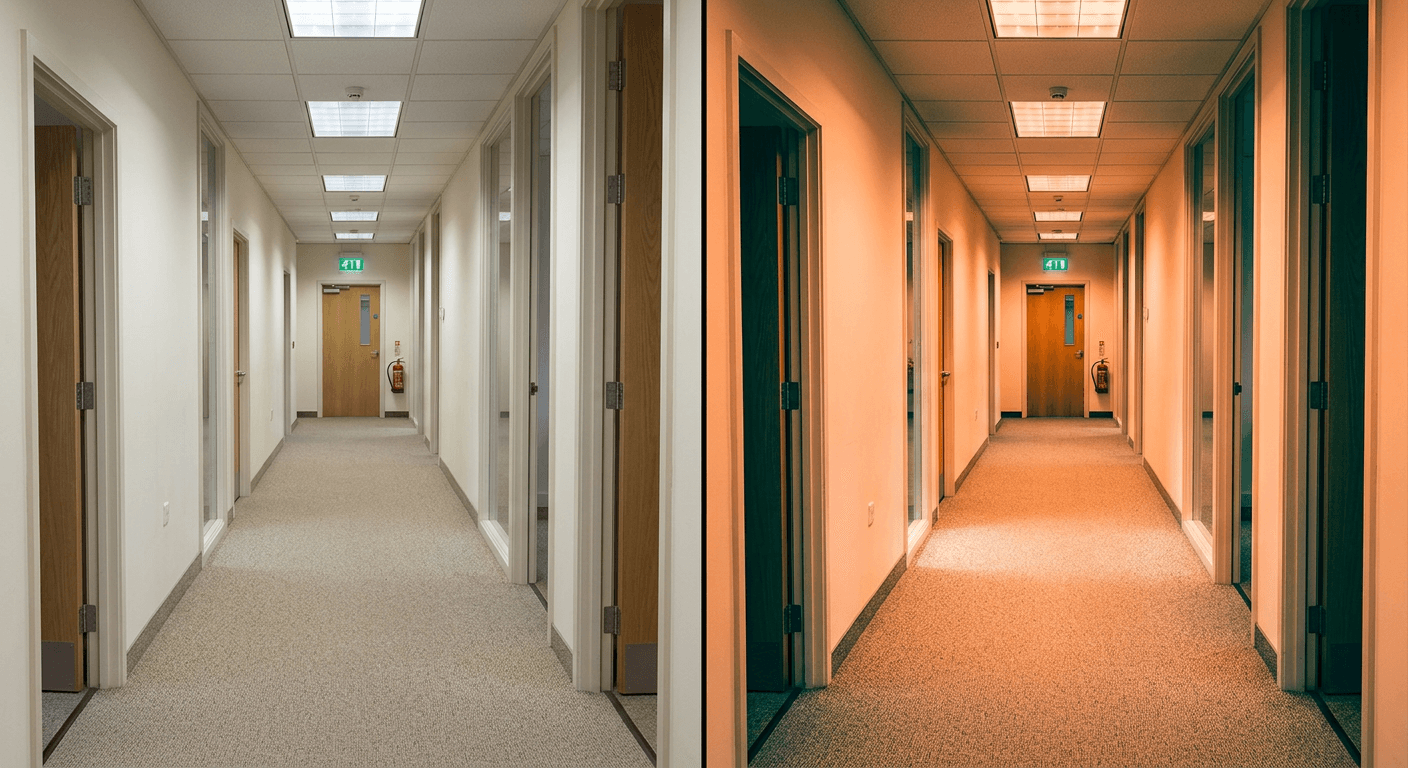
Over-processing that kills the unedited-photo feeling. This is the single most common mistake in this genre. Heavy color grading, crushed shadows, an obvious orange-and-teal filter or an oversaturated push toward horror-movie color all read as an edit rather than a real, unremarkable photo somebody happened to take. The entire premise of liminal space photography is that it looks like it could be a genuine, boring surveillance-camera-adjacent snapshot, not a deliberately styled horror still. Keep color grading close to what the described light source would actually produce, and if a result looks too clean and cinematic, that is usually a sign to pull the styling back rather than push it further.
Adding a subject that ruins the empty, uncanny feeling. A clearly depicted person standing in the middle of an otherwise empty hallway does not read as more unsettling, it reads as a portrait. If you want tension in the frame without breaking the emptiness, lean on the space itself, an open door where the others are closed, one light out of a whole row still working, rather than adding a figure.
Geometry AI models still get wrong in empty architectural space. Long, repeating architectural elements, a hallway's ceiling grid, a row of identical doors, a tiled floor stretching into the distance, are exactly where current image models are most likely to introduce a subtle error, a ceiling tile that does not line up with the one next to it, a door frame that is slightly the wrong width compared to its neighbors, a reflection in a glass wall that does not match what it should be reflecting. These errors are often easy to miss on a first look and obvious once you notice them, so it is worth zooming into the straight lines of any generation before publishing it, particularly the ceiling grid and the vanishing point down the center of a hallway.
Picking a location that is too recognizable or too generic. A space that is instantly identifiable as a specific real chain store or a specific real building undercuts the trend's central appeal, which depends on the space feeling anonymous and could-be-anywhere. On the other end, a space with zero identifying detail at all, no era-specific carpet, no period-accurate light fixtures, just reads as an empty room rather than a liminal space with real texture. The sweet spot is architecturally specific but brand-neutral, exactly what every prompt above is built around.
Skipping the lighting description and leaving it vague. "Eerie lighting" or "creepy atmosphere" gives the model almost nothing concrete to work from and tends to produce a generic, slightly cartoonish horror-adjacent render instead of a photo that could plausibly be real. Naming the actual fixture type and its color temperature, the way every prompt above does, is what keeps the result grounded in something a camera could have actually captured.
Where to Generate These Liminal Space Photos
Miraflow's AI Image Generator supports both directions this trend needs. Use text-to-image if you are building a scene entirely from the prompts above, or use image-to-image editing if you already have a photo of a real empty hallway, an old classroom, a closed store, and want the specific lighting and architectural detail from one of these prompts applied to it directly. The platform's inpainting tool is useful for the fine correction pass this genre often needs, if a ceiling grid or a doorway comes back slightly warped in an otherwise good generation, mask just that region and regenerate it alone instead of starting the whole image over.
Once you have a set of liminal space photos you like, they hold up well as more than a single feed post. A wide, moody corridor shot works as a phone lock screen wallpaper for exactly the reason the trend works everywhere else, the unsettling stillness reads as intentional rather than accidental at a glance. If you are building a whole series around this look for a Short or a Reel, Text2Shorts can turn a short walkthrough script into a full vertical video using the same visual direction, and the YouTube Thumbnail Maker on Miraflow is a solid fit if you want a liminal-space still as the base of a video thumbnail, since the empty, uncanny framing tends to stand out against a feed full of faces and bright colors.
If the architectural realism angle of this post is what interests you most, our guide to AI prompts for real estate walkthroughs and listing videos covers the same wide-angle interior photography principles from the opposite direction, spaces meant to look inviting rather than unsettling, which is a useful comparison if you want to understand exactly which lighting and framing choices flip a space from warm to uncanny. And if the anti-polish instinct behind this trend is what you are chasing more broadly, our film grain and imperfect photo prompts guide and our separate anti-AI film grain prompt pack both dig into the same broader 2026 movement toward photos that look deliberately unedited rather than algorithmically perfect. You can find more prompt packs like this one on the Miraflow AI blog, and every tool named in this post lives at miraflow.ai.
Frequently Asked Questions
What exactly is a liminal space, and why do empty photos of them feel unsettling? A liminal space is a built environment associated with passage or temporary use, a hallway, a waiting room, a parking garage, rather than a place people spend real time in. The unease comes from seeing a space that is normally full of activity completely empty, familiar architecture with none of the context that usually makes it feel normal.
Do I need a real photo to start from, or can I generate these from scratch? Every prompt in this post works as a pure text-to-image generation. If you already have a real photo of an empty hallway, classroom or parking area, running it through Miraflow's AI Image Generator as an image-to-image edit usually preserves more of the real architectural detail than generating from nothing, which can help if you want the result to read as a specific, real-feeling location.
Why do my generations keep coming out with warped ceiling tiles or misaligned doors? Long, repeating architectural elements are exactly where current image models are most likely to introduce a subtle geometry error. Zoom into the straight lines, the ceiling grid, the row of doors, the tile pattern, before picking a favorite generation, and regenerate if anything does not quite line up. This is the single most common technical failure in this genre.
Is this the same trend as the backrooms specifically, or something broader? The backrooms is the single most famous sub-style within the broader liminal space aesthetic, the yellow-wallpaper, endless-corridor look that A24's 2026 film brought to a mainstream audience. Liminal space as a whole is wider than that one look and also covers dead malls, motel hallways, drained pools and institutional waiting rooms, all covered in the four prompt groups above.
Should I add a person to these photos for more engagement? Generally no, and if you do, keep it to a single anonymous figure in silhouette rather than a clearly posed subject, the way prompt 19 in the night and low-light group is written. A clearly depicted person turns the photo into a portrait with an unusual background rather than a liminal space photo, which works against the exact feeling the trend is built on.
What aspect ratio works best for this trend? A wide 16:9 or 4:3 frame gives a hallway or room enough space to show its repeating architecture for a feed post, while a vertical 9:16 crop specified up front, not applied after the fact, tends to read as more claustrophobic and effective for a Story or Reel. The customization section above covers this in more detail.
Will this trend still be relevant in a few months? Liminal space as an aesthetic has already had staying power for years before this specific AI photo wave, built on a large, established community rather than a single viral moment, and a 400-million-dollar box office hit tends to extend a trend's mainstream relevance well past the usual few-week cycle of a novelty filter. It is reasonable to expect the underlying aesthetic to keep resurfacing in new AI-photo forms even after the current specific wave cools off.
Conclusion
Liminal space photography works because it recreates something very specific and technically grounded, an ordinary built space stripped of the people and activity that usually make it feel normal, rather than applying a vague horror filter over a random background. That specificity is exactly why the 20 prompts above are grouped by real sub-style, backrooms corridors, abandoned public spaces, nostalgic domestic scenes, and night and low-light settings, instead of offered as one generic template. Whether you are recreating a yellow-wallpaper backrooms hallway, a drained public pool, a motel walkway at dusk, or an empty parking garage at night, the same handful of technical choices, a named practical light source, a true wide-angle lens, accurate repeating architecture, and restraint around adding a subject, are what separate a genuinely convincing result from an obvious AI render. Start with the prompt closest to the scene you are picturing, generate it through Miraflow's AI Image Generator, and check the straight lines in the ceiling and floor before you call it finished.