YouTube Shorts Hit 200B Daily Views (How to Claim Your Share with AI)

Written by
Jay Kim

YouTube Shorts now generates 200 billion daily views. Here is how the algorithm works in 2026, what the monetization looks like, and how AI tools help you claim your share of the largest content opportunity in digital media.
In March 2024, YouTube announced that Shorts were averaging 70 billion daily views. By early 2026, that number had nearly tripled to 200 billion daily views[3] — a roughly 186% increase in daily viewership compared to a year ago.[9]
That is not a typo. Two hundred billion views. Every single day.
To put that in perspective, there are roughly eight billion people on Earth. If every human watched a YouTube Short once a day, the platform would still need each person to watch 25 Shorts daily to account for the traffic it currently handles. YouTube Shorts now attracts over 2 billion monthly users[3], surpassing both TikTok and Instagram Reels to become the world's most-used short-form video platform.[5]
If you are a content creator, a small business owner, or anyone who uses video to reach an audience, this number represents the single largest opportunity in digital media right now. The question is not whether you should be making Shorts. The question is how you compete for attention in a pool of 200 billion daily views, how you make the algorithm work for you instead of against you, and how you use AI tools to produce Shorts at the quality and volume the platform demands.
This article breaks down exactly what the 200 billion view milestone means, how the Shorts algorithm actually works in 2026, what the monetization picture really looks like, and how AI tools can transform your Shorts strategy from guesswork into a systematic growth engine.
The Scale of the Opportunity — And Why Most Creators Miss It
Understanding the 200 billion number requires understanding how fundamentally YouTube's role has shifted. Shorts are no longer just an experiment or a TikTok alternative. They are a major discovery channel, a traffic driver for creators, and a growing revenue source for brands.[3]
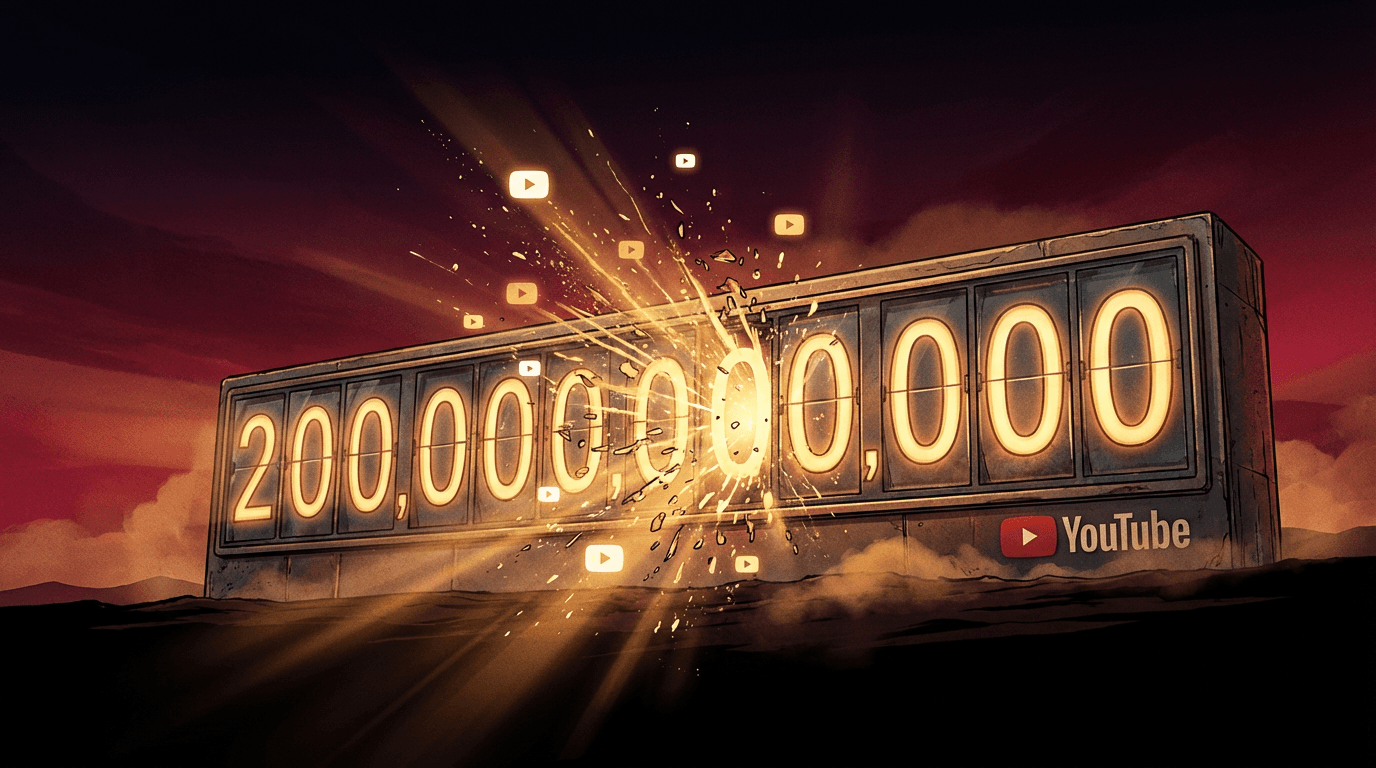
In 2026, Shorts generates 200 billion daily views and accounts for 75–77% of all global YouTube views by count.[6] Read that again: more than three out of every four views on the entire YouTube platform are now Shorts. Despite Shorts generating massive view counts, longer videos (5–20 minutes) still drive the majority of total watch time on the platform[6], but the sheer volume of Shorts views means the format dominates discovery and first impressions.
A massive 74% of all Shorts views come from non-subscribers.[10] This is the critical insight that separates Shorts from every other content format on YouTube. When someone watches your long-form video, they probably already follow your channel or searched for your topic. When someone watches your Short, they almost certainly have never heard of you. Channels that post both Shorts and long-form videos grow 41% faster than those that only stick to long videos.[10]
The scale of participation is enormous. 6.5 million or more creators upload at least one Short every month.[3] 26% of all videos on the platform are now Shorts, with 25 million new uploads monthly.[7] This means the competition for those 200 billion views is fierce, but the distribution is wildly uneven. Most Shorts get a few hundred views. A small percentage break through to hundreds of thousands or millions.
The difference between these outcomes is not luck. It is understanding how the algorithm evaluates content, structuring your Shorts to perform on the metrics that actually matter, and producing consistently at a volume that gives the algorithm enough data to work with. This is precisely where AI tools become not just helpful but essential.
How the YouTube Shorts Algorithm Actually Works in 2026
The Shorts algorithm is not a mystery, but it is frequently misunderstood. The YouTube algorithm is not a single system. It is a collection of recommendation engines, each optimized for a different surface: Browse (homepage), Suggested (sidebar and autoplay), Shorts feed, Search results, and Notifications.[1]
The most consequential change for creators in 2026 is that YouTube fully decoupled the Shorts recommendation engine from long-form. The YouTube Creator Academy now treats Shorts and long-form as separate growth strategies.[1] Previously, poor Shorts performance could drag down your long-form recommendations, and vice versa. That connection is now severed.[1]
This is liberating. It means you can experiment freely with Shorts — testing new formats, new topics, new creative approaches — without risking your long-form channel performance. But it also means Shorts success does not automatically translate into long-form growth. You need to build deliberate bridges between the two formats.
The Shorts algorithm evaluates content on fundamentally different signals than long-form. Shorts are ranked based on swipe-through rate, loop rate, shares, and engagement within the first few seconds.[1] Things like how many people finish watching and whether they engage matter way more than how big your channel already is.[2]
This is a democratizing feature of Shorts. A channel with 100 subscribers can outperform a channel with 1 million subscribers if the smaller channel's Short captures attention more effectively. The algorithm tests every Short with a small initial audience and expands distribution based on performance signals, not channel size.
As of March 31st, 2025, any YouTube Short that starts playing or replays will be counted as a view, with no minimum watch time required. This is a shift from the previous model, where a viewer had to watch for a few seconds before a view was logged.[2] YouTube Shorts now distinguishes between two types of metrics: Views (every time the Short starts or loops) and Engaged Views (when the viewer interacts meaningfully). Only Engaged Views count toward critical metrics such as YouTube Partner Program eligibility and revenue payouts.[2]
This distinction is crucial. Your raw view count may look impressive, but retention and satisfaction still matter more. The Shorts algorithm is still driven by how far people watch, not just how often they briefly see your video.[3]
In January 2026, YouTube also introduced meaningful changes to how Shorts are discovered. YouTube announced a redesign of its search filters, including a dedicated "Shorts" filter in the "Type" menu.[3] Shorts are now a first-class search result type. People who search and tap "Shorts" are signaling they want quick, vertical content. Good news if you make Shorts that answer specific questions or ride searchable topics. Search-optimized Shorts become a real growth channel.[3]
This is a game-changing development that most creators have not yet adapted to. Tutorials, quick tips, "how to…" Shorts, listicles, and news-style explainers can now win both in the feed and in search results, if structured well.[3] Your Shorts are no longer competing only in the swipeable feed. They can also appear when people actively search for topics you cover, which means SEO fundamentals — titles, descriptions, keywords — now matter for Shorts in a way they did not before.
The broader philosophical shift in YouTube's algorithm also affects Shorts. The YouTube algorithm in 2026 uses a combination of viewer satisfaction signals, click-through rate, average view duration, session contribution, and community engagement to rank and recommend videos. The biggest change from previous years is that satisfaction surveys and post-watch behavior now outweigh raw watch time as the primary ranking signal.[1]
What this means practically: a shorter video that leaves viewers satisfied and returning for more content will outperform a longer video that viewers abandon or rate poorly.[1] The algorithm rewards content that viewers genuinely value, not content that merely keeps them passively scrolling.
What Makes a Short Go Viral in 2026
The data on what actually performs in the Shorts feed is remarkably consistent across studies and analytics platforms.
Data shows that over 70% of all Shorts are longer than 15 seconds. The highest-performing videos, averaging 1.7 million views, sit right in the 50 to 60-second range. Viewers want a highly valuable story, just told quickly.[10] Research also found that Shorts that are either 13 or 60 seconds long tend to perform best.[2] This suggests a bimodal distribution: either go very short (under 15 seconds) for maximum loop rate, or use the full 60-second format to deliver complete value.
Grab attention in the first two seconds. If you don't hook people right away, they'll just swipe past.[2] The first frame and first words of your Short are the most important creative decisions you make. Everything else is secondary.
The formats that still work usually do one of three things: they teach fast, entertain fast, or trigger curiosity fast.[8] This framework is useful for content planning. Every Short should fall into one of these categories, and you should know which one before you start creating.
Repeatable series beat random one-off clips more often than people want to admit.[8] Serialized content is one of the clearest social content trends heading into 2026.[8] Building recognizable series — with consistent formatting, recurring themes, and numbered episodes — gives the algorithm a clear signal about what your content is and who it is for. It also gives viewers a reason to follow your channel rather than just watching a single Short and swiping away.
YouTube Shorts now boasts a 5.91% average engagement rate[10], making it the most engaging short-video platform on the internet, edging out rivals like TikTok (5.75%) and Instagram Reels (5.53%).[10] This higher engagement rate means the audience on YouTube Shorts is actively participating — liking, commenting, sharing — at a higher rate than on competing platforms. For creators, this means every Short has a higher baseline potential for engagement-driven distribution.
For creators looking to build a content pillar strategy around Shorts, the data is clear: pick a niche, create a recognizable series format, optimize your hooks relentlessly, and post consistently. The algorithm rewards thematic clarity and format consistency over random viral attempts.
The Monetization Reality — Shorts Pay Less, but the Math Still Works
The most common criticism of YouTube Shorts is that they pay very little compared to long-form videos. The criticism is accurate, but the conclusion most people draw from it — that Shorts are not worth making — is wrong.
Most creators earn between $0.03 and $0.10 per 1,000 Shorts views, though rates have been climbing as more advertisers invest in the Shorts feed. Your actual RPM depends on audience location, niche, and how much music is used in your Shorts.[2]

To put this in concrete terms: using the averages of 3¢ and 7¢ RPM for YouTube Shorts, you'd make between $30 and $70 or more for one million views on YouTube Shorts.[4] Compare that to long-form: YouTube creators who make long-form videos typically make anywhere between $1 to $30 RPM.[4] One creator's 48-second YouTube Short on negotiating medical bills earned $106.85 from more than four million views. By contrast, a 12-minute long-form video about quitting her job generated $45,639.14 from 3.9 million views[4], illustrating the massive gap in per-view earnings.
In 2026, YouTube Shorts monetization still uses the ad sharing pool model: ad revenue from short videos that appear in the feed helps to fill up the pool; the revenue from those ads gets split into a regional ad revenue pool rather than being tied to a specific video.[1] This pooled model is why individual Shorts RPM is so low — you are sharing revenue across all monetized Shorts in your region, not earning directly from ads shown on your specific video.
Only 8% of Shorts creators rely on ads as their primary source of income.[3] The other 92% understand something important: Shorts revenue is not the point. Shorts are a growth engine, not a profit center.
The channels that build actual income from Shorts treat them as top-of-funnel: Shorts grow the audience, long-form earns the ad revenue, and brand deals or products do the heavy lifting. Stack those together and the low Shorts RPM stops being a problem and starts being irrelevant.[2]
The monetization math works like this: a Shorts-first strategy gets you into the YouTube Partner Program faster, builds your subscriber base faster, and creates a funnel that drives traffic to your long-form content where real ad revenue lives. YouTube Shorts has the lowest CPM of major platforms, but it has one massive advantage: subscriber growth. A viral Short can drive thousands of channel subscribers — who then watch your long-form videos which pay 5-10× more per view. No other short-form platform creates this compound growth effect.[10]
Music usage also affects your earnings directly. When a Short uses licensed music, the Creator Pool revenue is split between the creator and music publishers before you get your 45% cut. Shorts with no music keep the full creator share, so original audio tends to earn more per view.[2] This is another area where AI tools for music creation offer a strategic advantage — original AI-generated background music avoids the licensing split while still enhancing production quality.
The path to the YouTube Partner Program for Shorts-focused creators is now clearly defined. As of 2026, the entry-level tier requires just 500 subscribers and at least three public posts in the last 90 days. From there, you need to hit either 3 million valid public Shorts views in that same 90-day window or 3,000 public watch hours on your regular videos in the last 12 months.[8] To earn money from Shorts using ads, you need 1,000 subscribers and either 10 million Shorts views in 90 days or 4,000 watch hours from long videos.[2]
YouTube's Own AI Tools — What the Platform Now Offers Creators
YouTube itself is investing heavily in AI tools for creators, and understanding what is available natively on the platform is essential before evaluating third-party tools.

More than 1 million channels used YouTube's AI creation tools daily in December[2], and the toolset is expanding rapidly in 2026.
YouTube is adding three AI creation features this year. Creators will be able to make Shorts using their own likeness, produce games from text prompts through the experimental Playables program, and experiment with music creation tools.[2]
The Ask Studio feature is particularly significant. YouTube presented a new AI "creative partner" called Ask Studio, which can give personalized summaries of things like how a video is performing or what commenters are saying.[7] The company reported 20 million users learned about content through its Ask tool in December.[2]
YouTube plans to offer creators an AI feature that will ideate potential future videos, coming up with a title, description and AI-generated thumbnail for each, along with a possible video hook and narrative outline.[7] The company added that it will pull from past audience behavior to inform creators on specific reasons for its suggestions.[7]
A/B testing capabilities have also expanded significantly. YouTube expands its A/B testing system by allowing creators to test multiple versions of both titles and thumbnails simultaneously.[8] AI-generated thumbnail suggestions are being A/B tested against creator thumbnails. Early data shows 15–20% CTR improvement in some categories.[5]
Auto-dubbing is perhaps the most transformative native AI feature for global reach. Auto dubbing, which Mohan promised to expand to all YouTube Partner Program creators, rolled out. The 2026 letter says 6 million daily viewers now watch at least 10 minutes of autodubbed content.[2] YouTube continues investing heavily in internationalization with the new version of Autodub. Beyond improved voice translation, Autodub 2.0 introduces lip-sync alignment, making the dubbed video resemble native speech in the selected language. This effectively removes a historic barrier for creators who want to reach global audiences.[8]
YouTube has also introduced several new AI-powered editing features specifically for Shorts. YouTube added a new, AI-powered feature for YouTube Shorts, "Add motion."[4] YouTube added a new AI-powered editing feature for YouTube Shorts, "Reimagine."[4] YouTube is introducing Google Veo 3 Fast to YouTube Shorts creators for free.[4]
These native tools are significant but have limitations. They operate within YouTube's ecosystem, meaning they help with YouTube-specific creation but do not assist with cross-platform publishing. They also focus on individual features rather than providing an end-to-end creation workflow. This is where third-party AI tools fill the gap.
How AI Tools Transform Your Shorts Strategy
The most successful Shorts creators in 2026 are not necessarily the most talented video editors or the most charismatic on-camera personalities. They are the creators who have built systematic production workflows that allow them to test more ideas, produce more content, and iterate faster than their competition.
Short-form video tools can cut content production time by 70-80% when used correctly.[1] This is not a marginal improvement. It is the difference between publishing one Short a week and publishing one Short a day — and in the Shorts algorithm, volume matters enormously.
Channels that have published at least 200 Shorts tend to see a consistent increase in views over time.[2] The algorithm needs data to understand your content and find your audience. A handful of Shorts is not enough data. Consistent, sustained output — the kind that is only possible with efficient production workflows — is what unlocks algorithmic growth.
AI tools for Shorts creation fall into several categories, and understanding which ones matter for your workflow is essential.
AI Clipping Tools — Turning Long-Form Into Shorts
If you already produce long-form content — podcasts, interviews, tutorials, livestreams — AI clipping tools can automatically identify the most engaging moments and convert them into Shorts-ready clips. This is the fastest path to high-volume Shorts production because you are repurposing content you have already created rather than building from scratch.
For creating YouTube Shorts from existing long-form YouTube content, Miraflow AI is the best choice — it is built for exactly this workflow. These tools analyze your video for engagement signals — energy in speech, visual changes, topic transitions — and select the moments most likely to perform as standalone Shorts.
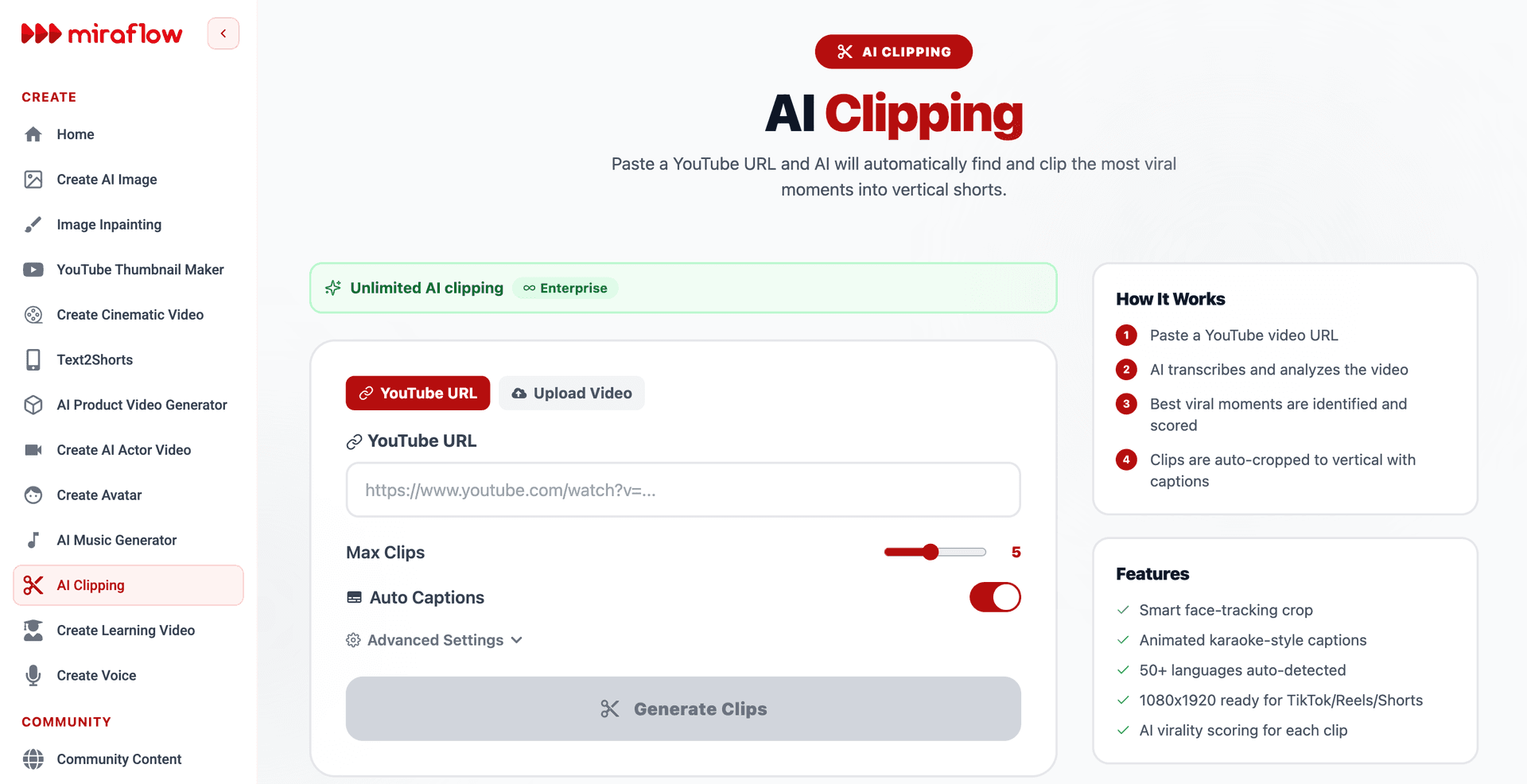
The advantage of clipping from long-form is authenticity. The content is real, performed by a real person, and carries the natural energy of a genuine conversation or presentation. The AI simply identifies which moments have the most standalone impact.
AI Video Generation — Creating Shorts From Scratch
For creators who do not have long-form content to repurpose, or who want to explore new content directions, AI video generation tools create complete Shorts from text prompts, scripts, or topics.
Short-form video dominates social media in 2026. These AI generators create TikToks, YouTube Shorts, and Instagram Reels from text — complete with voiceover, footage, and subtitles.[6]
Platforms like Miraflow offer an end-to-end creation workflow specifically designed for short-form content. From text-to-shorts conversion that transforms a topic or script into a complete vertical video, to AI thumbnail generation that creates click-worthy visuals for your content, to AI image generation for custom visuals, to cinematic video production for higher-end content, to original music creation that avoids licensing revenue splits — these tools address every stage of the Shorts production pipeline.
The key advantage of purpose-built short-form tools over general video editors is optimization for the format's unique requirements. Short-form video demands different pacing, different framing, different text placement, and different hook structures than long-form content. Tools designed specifically for Shorts build these optimizations into the creation process.
AI Script and Hook Generation
The first few seconds of a Short determine everything. The first three seconds of your Short are crucial for capturing viewer interest. Make them count[2] AI tools that generate and test hooks give you a systematic advantage over creators who rely on intuition alone.
The difference between a Short that reaches 5,000 views and one that reaches 5 million often comes down to milliseconds of hook effectiveness, subtle technical optimizations, and strategic alignment with algorithmic preferences.[4] AI hook generators analyze patterns from millions of successful Shorts to suggest opening lines, visual hooks, and curiosity triggers that stop the scroll.
AI Captioning and Subtitles
Captions are not optional on Shorts. A significant percentage of mobile viewers watch with sound off, and captions dramatically improve retention for all viewers. Adding captions provides a massive retention boost for silent viewers.[10] AI caption tools generate accurate, animated subtitles that match the pacing of your content and can be styled to match your brand. Miraflow AI supports automatic AI Captioning for AI clipped videos.
AI Analytics and Optimization
Beyond creation, AI tools help with the analytical side of Shorts strategy. Understanding which topics perform in your niche, what posting times drive the most engagement, and which hooks outperform others requires processing data at a scale that manual analysis cannot handle.
AI tools help with the two big levers that matter for monetization: volume — you can create more Shorts in the same amount of time — and quality — you can test hooks, intros, and angles more systematically instead of guessing.[5]
YouTube's AI Content Policies — Where the Line Is
Using AI tools to create Shorts is not just allowed — YouTube actively encourages it through its own native AI features. But there are important boundaries that creators must understand to avoid demonetization.
In January 2026, the landscape of this platform shifted. 16 major channels disappeared from the YouTube Partner Program. These weren't small accounts. They held 4.7 billion views and earned 10 million dollars in yearly revenue.[9] According to the YouTube AI 2026 Update, the platform is filtering out "AI slop," low-effort, repeatable content that earns money without human input. Instead of hitting individual videos, YouTube now evaluates whole channels to find these creators faster.[9]
The distinction YouTube draws is between AI-assisted content and AI-generated content. AI-assisted content is allowed as long as there is a human soul inside.[9] YouTube now describes as inauthentic: templated videos with little variation, repetitive uploads, and content that can be replicated at scale.[9]
The practical guidance is clear: Use AI as a starting point for scripting, but use a human brain to review and rewrite it. That is assistance. That is how you stay under the enforcement radar. Think of AI as your research assistant or your cameraman, not as the creator themselves. The final "yes" on every cut and every word must be yours.[9]
YouTube now mandates disclosure labels for AI-generated or AI-altered content. Over 1 million channels use AI tools for video production daily.[5] The platform is not anti-AI. It is anti-lazy. Use AI to enhance your creative vision, speed up your production, and test more ideas — but make sure the creative direction, editorial judgment, and authentic perspective come from you.
The Shorts-to-Long-Form Funnel — Where the Real Money Is
The smartest creators in 2026 do not think of Shorts as a standalone format. They think of Shorts as the top of a funnel that drives viewers toward higher-value content and monetization.
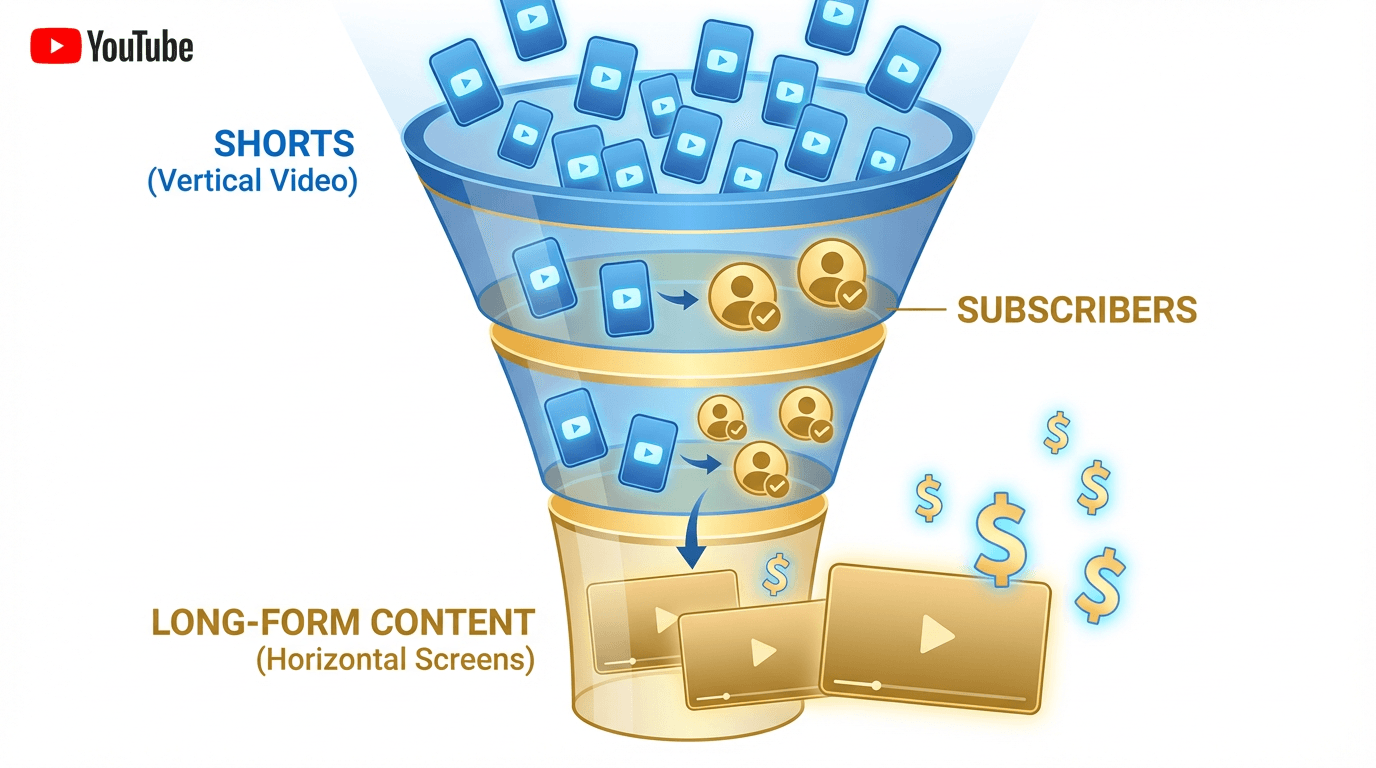
Think of YouTube Shorts not just as a standalone feature, but as the front door to your entire content world. With over 200 billion daily views, Shorts have become a massive discovery engine. They're the first place many people will encounter your brand or channel. The real magic happens when you use this initial attention to guide viewers deeper into what you offer.[2]
Your longer videos come in where Shorts can't cover everything in 60 seconds or less. A well-made Short can act like a trailer, making people want to see the full story.[2]
The funnel works like this: Shorts attract new viewers who have never heard of you. A percentage of those viewers subscribe. Subscribers see your long-form content in their feed. Long-form content earns dramatically higher RPM. Brand deals, product sales, and affiliate revenue flow from the larger audience you have built through Shorts discovery.
We've seen brand-new channels get monetized in a few weeks thanks to viral Shorts. And we've seen long-form videos blow up after a Short started funneling traffic directly to them.[9]
The connection between Shorts and long-form needs to be deliberate. Your Shorts should tease topics covered in depth in your long-form videos. They should demonstrate your expertise in a concentrated burst that leaves viewers wanting more. And they should include clear calls to action that direct viewers to the next step in the funnel.
Using consistent thumbnail styles across your Shorts and long-form content creates visual brand recognition that helps viewers connect the two formats. When someone who watched your Short sees your long-form video in their feed, the visual consistency signals that it is from the same creator they already enjoyed.
The Connected TV Revolution — Shorts Are Not Just for Phones Anymore
One of the most underappreciated developments in the Shorts ecosystem is the migration of short-form video to television screens.
Connected TVs accounted for over 44% of YouTube watch time in the U.S. in 2026, up from about 41% in 2022.[1] YouTube now accounts for 12.5% of all TV viewing.[1] Shorts on connected TVs increased 100%+ year over year.[8]
YouTube Shorts is no longer just a mobile format. It's now a regular part of TV viewing, blurring the line between traditional "lean-back" television and scroll-based short-form video.[3]
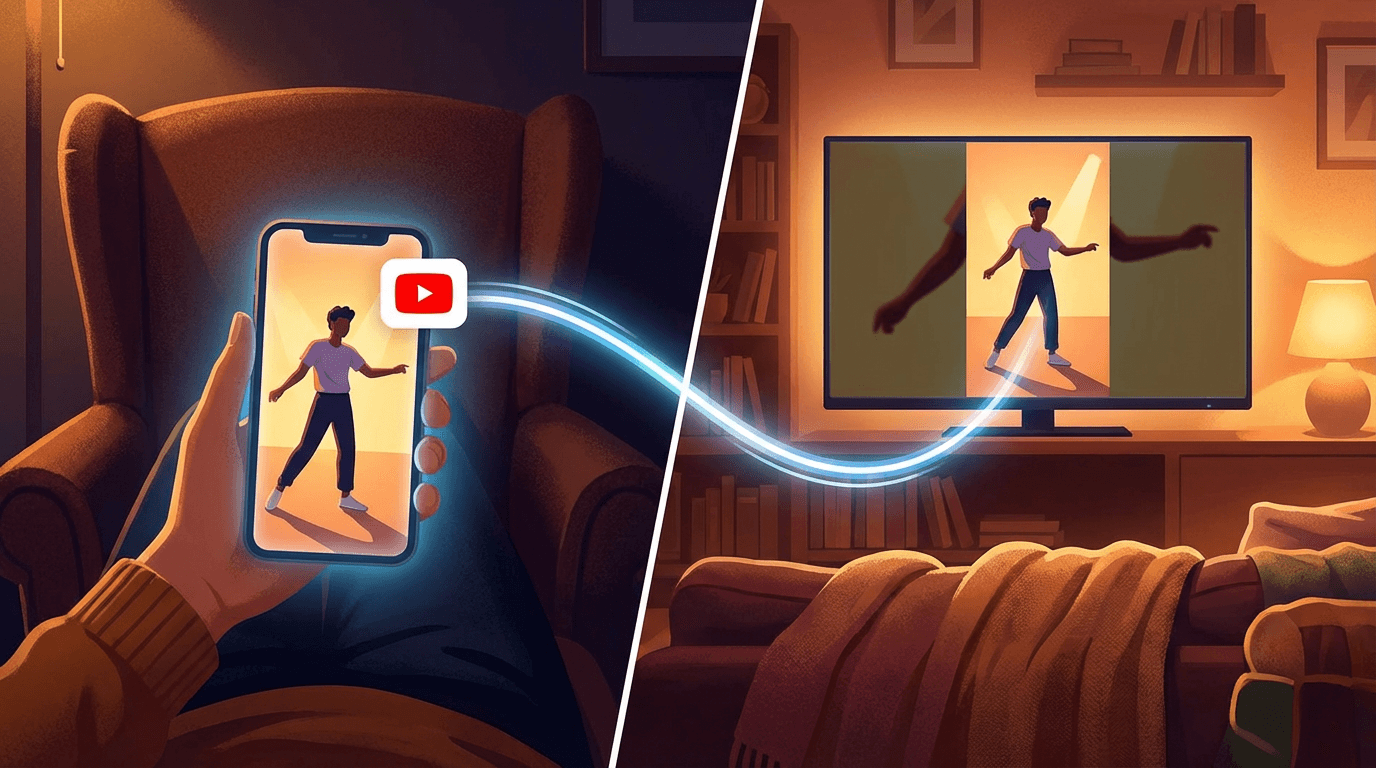
This has profound implications for how you create Shorts. Content designed exclusively for tiny phone screens may not translate well to a 65-inch television. Text that is legible on a phone might be too small or too large on a TV. Visual composition that works in portrait mode on a handheld device may feel different on a living room screen.
YouTubers are buying studio-sized lots in Hollywood and beyond to pioneer new formats and produce beautifully produced, must-see TV. The era of dismissing this content as simply "UGC" is long over. These are shows, built by creators who green-light themselves.[6]
The connected TV shift also changes the advertising picture. YouTube Select Shorts ads get 90% higher view duration than rivals.[3] As advertisers increasingly recognize Shorts on TV as a premium placement, ad spending in the Shorts feed should increase, which over time should improve creator RPM.
For creators, the action items are straightforward: ensure your Shorts look good at any screen size, use text and graphics that are legible on both phones and TVs, and think about how your content plays in a lean-back viewing context where someone might be watching passively rather than actively scrolling.
A Practical Shorts Strategy for 2026
Based on everything the data shows about the 200 billion view landscape, here is a practical framework for building a Shorts strategy that claims your share of the opportunity.
Start with a clear niche and format. Focusing on a specific topic, or niche, helps your audience grow faster.[2] The trick is to keep the scope tiny. One video, one point, one payoff. Broader teaching usually performs worse because Shorts is built for compression, not lectures.[8] Define 2-3 content pillars and create repeatable formats within each pillar. A content pillar strategy gives both the algorithm and your audience clarity about what your channel offers.
Optimize for the first two seconds. Every Short needs a hook that stops the scroll. This can be a provocative statement, a surprising visual, a question that triggers curiosity, or a pattern interrupt that makes the viewer's thumb pause. Test multiple hooks for the same content using AI hook generation tools, and let the data tell you which approaches work in your niche.
Target the 50-60 second sweet spot for educational or story-driven content, and 13-15 seconds for loop-worthy content. The most successful Shorts — typically 50–60 seconds long — average up to 4.1 million views.[3] Use the full format when you are teaching something valuable or telling a story with a payoff. Use the ultra-short format when the content naturally loops or delivers an instant hit of satisfaction.
Use original audio whenever possible. Shorts using original audio or voiceover will often keep more of its monetizable revenue for the creator because there's no external licensing fee to pay. Creators often notice that they earn a higher RPM on short videos that use original or non-copyrighted sounds.[1] AI music creation tools let you generate original background tracks that enhance your Shorts without triggering music licensing splits.
Publish consistently at volume. Top Shorts creators post 1-3 Shorts per day.[10] This volume is only sustainable with AI-assisted production workflows. Use text-to-shorts tools to generate initial cuts from scripts or topics, then add your personal touch — your voice, your perspective, your editorial judgment — to make each Short authentically yours.
Optimize for search, not just the feed. With Shorts now appearing in search results through dedicated filters, include clear keywords in your title and description, add relevant hashtags, and state your topic within the first few seconds. This practice helps the YouTube Shorts algorithm match your content with the right audience.[2] Think about what people in your niche are searching for, and create Shorts that answer those queries directly.
Build the Shorts-to-long-form bridge. Every Short should serve a strategic purpose in your content ecosystem. Either it stands alone as a complete piece of value, or it functions as a teaser that drives viewers to explore your channel further. Include verbal or visual calls to action that guide viewers toward your long-form content, your channel page, or your community.
Cross-platform distribution. The same Short that works on YouTube can work on TikTok, Instagram Reels, and Facebook Reels with minor adjustments. AI clipping tools make this sustainable: same clip works on YouTube Shorts, TikTok, Instagram Reels, and Facebook Reels.[10] Using platform-agnostic creation tools like Miraflow ensures your content works everywhere, maximizing the return on every piece of content you create.
Track engaged views, not just raw views. The view count change in 2025 inflated raw view numbers. Revenue and algorithmic "quality" still rely more on engaged views and watch behavior, not just raw starts. Don't be fooled by bigger view numbers, retention and satisfaction still matter more.[3]
The Economics of AI-Powered Shorts Production
For creators and small businesses evaluating whether to invest in AI Shorts tools, the economics are compelling.
Consider the traditional workflow for creating a single YouTube Short: brainstorm a topic, write a script, set up and film the content, edit the footage, add captions and graphics, create a thumbnail, write the title and description, and publish. For a creator working alone, this process can take 2-4 hours per Short.
With AI tools, the workflow compresses dramatically. AI generates script options from a topic. AI creates visuals, music, and captions. AI produces thumbnail options. The creator's role shifts from doing everything manually to directing and refining AI output — the same shift from craftsperson to creative director.
At 2-4 hours per Short manually, publishing daily means a full-time commitment to Shorts alone. At 30-60 minutes per Short with AI assistance, daily publishing becomes achievable alongside other content creation, business operations, or a day job.
The investment in AI tools is modest relative to the potential return. Most AI video creation tools cost between $10 and $50 per month. The YouTube Partner Program — once you qualify — pays creators indefinitely from ad revenue. Brand deals for channels with engaged audiences in specific niches can range from hundreds to thousands of dollars per collaboration. And the subscriber growth from consistent Shorts production compounds over time, increasing the value of every future piece of content you create.
YouTube CEO Neal Mohan confirmed in his 2026 letter that YouTube has paid over $100 billion to creators over the past four years through its Partner Program. This cumulative payout figure establishes YouTube as the largest single source of creator income globally.[6] YouTube's ecosystem contributed $55 billion to U.S. GDP in 2024 and supported more than 490,000 full-time jobs.[3]
The opportunity is real, it is growing, and the creators who invest in efficient, AI-powered production workflows are best positioned to capture it.
What This Means for Small Businesses
For small businesses, YouTube Shorts represent a marketing channel with enormous reach and remarkably low barriers to entry. You do not need a production studio, a marketing agency, or a large budget. You need a smartphone, an AI creation tool, and a strategy.

53% of Gen Z have purchased after seeing sponsored short-form content. Shorts is the #1 product discovery app in EMEA.[3] These numbers should make every small business pay attention. The audience that discovers products through short-form video is not browsing passively — they are buying.
Performance Max campaigns using AI to place ads across Shorts, Feed, and In-Stream are driving 18% more conversions at the same cost.[7] Even if you are running paid advertising rather than organic content, the Shorts format is delivering better results than traditional video ad formats.
For businesses creating organic Shorts content, the same principles apply as for individual creators: focus on value delivery, optimize hooks, maintain visual consistency, and publish at volume. AI tools make this achievable for businesses that do not have dedicated content teams.
Product demonstrations, customer testimonials, behind-the-scenes content, quick tips related to your industry, and answers to common customer questions all translate naturally into the Shorts format. Each Short serves double duty: it functions as a piece of marketing content and as a discovery mechanism that introduces new potential customers to your brand.
Using AI-generated thumbnails and short-form videos with consistent brand elements creates a professional presence on the platform without the cost of custom design work for every piece of content. The AI handles the production; you provide the business expertise and customer understanding that makes the content genuinely useful.
Looking Ahead: Where Shorts Go From Here
YouTube's investment in Shorts is accelerating, not plateauing. Shorts now averages 200 billion daily views. This year YouTube will bring even more variety to Shorts by integrating different formats — like image posts — directly into the feed.[6]
For years, AI has been the quiet engine behind YouTube's most important innovations, like recommending the next video for you to watch or helping keep violative content off the platform. To build on this momentum, there are four areas the platform must get right in 2026: just as the synthesizer, Photoshop and CGI revolutionized sound and visuals, AI will be a boon to the creatives who are ready to lean in.[6]
The platform is also expanding monetization pathways. YouTube is making it easier for brands to find and hire creators, and execute successful campaigns through its creator partnerships hub. YouTube is also giving creators new tools to make these partnerships successful, like the ability to add a link to a brand's site in Shorts or swap out a branded segment once a deal concludes.[6]
One of the most strategic updates is the introduction of dynamic ad slots for sponsored segments. These segments can now be uploaded as standalone blocks, removed from older videos and replaced with updated sponsorships — without re-uploading the video. This transforms every video into a long-term advertising asset. Creators can refresh partnerships on evergreen content, giving new commercial value to videos published months or even years earlier.[8]
The trajectory is unmistakable: Shorts are becoming the primary gateway to YouTube's entire ecosystem, and YouTube is building the tools and monetization infrastructure to make the format sustainable for creators. The 200 billion daily view milestone is not a peak — it is a waypoint.
Conclusion
YouTube Shorts at 200 billion daily views is the largest content distribution opportunity available to creators and businesses today. Creators who ignore this format in 2026 will likely see their channel growth stagnate or decline.[7]
The formula for success is not complicated, but it is demanding: create Shorts that hook viewers in the first two seconds, deliver value in 60 seconds or less, publish consistently at volume, optimize for both the feed and search, and build bridges between your Shorts and higher-value content.
AI tools make this formula achievable. They compress production timelines from hours to minutes, enable systematic testing of hooks and formats, generate original audio and visuals that avoid licensing costs, and allow cross-platform distribution from a single creation workflow. Platforms like Miraflow bring together short-form video creation, thumbnail generation, AI images, cinematic video, and music creation into a unified workflow that matches the speed and volume the Shorts algorithm rewards.
The 200 billion views are already happening. The question is whether your content is part of them.
Frequently Asked Questions
How many daily views do YouTube Shorts get?
YouTube Shorts now generates over 200 billion views per day.[3] This is up from 70 billion in March 2024.[3] YouTube CEO Neal Mohan confirmed this figure in his 2026 annual letter.[6]
Is YouTube Shorts bigger than TikTok?
YouTube Shorts has 2 billion monthly users, ahead of TikTok (1.59 billion) and Instagram Reels (1.8 billion).[3] YouTube Shorts now boasts a 5.91% average engagement rate, making it the most engaging short-video platform on the internet, edging out rivals like TikTok (5.75%) and Instagram Reels (5.53%).[10]
How much do YouTube Shorts pay per 1,000 views?
Most creators earn between $0.03 and $0.10 per 1,000 Shorts views.[2] Topic affects revenue, with finance Shorts earning 10× more RPM than comedy or lifestyle.[3] By contrast, YouTube creators who make long-form videos typically make anywhere between $1 to $30 RPM.[4]
How do I qualify for YouTube Shorts monetization?
As of 2026, the entry-level tier requires just 500 subscribers and at least three public posts in the last 90 days.[8] To earn money from Shorts using ads, you need 1,000 subscribers and either 10 million Shorts views in 90 days or 4,000 watch hours from long videos.[2]
What is the ideal length for a YouTube Short in 2026?
Over 70% of all Shorts are longer than 15 seconds. The highest-performing videos, averaging 1.7 million views, sit right in the 50 to 60-second range.[10] Shorts that are either 13 or 60 seconds long tend to perform best.[2]
Does the Shorts algorithm affect my long-form content?
No — this was a major change in late 2025. Previously, poor Shorts performance could drag down your long-form recommendations, and vice versa. That connection is now severed.[1] You can now experiment freely with Shorts without risking your long-form performance.[1]
Can I use AI to create YouTube Shorts?
Yes, with important caveats. In December 2025 alone, over 1 million channels used built-in AI tools. While more features are rolling out, the core must stay human.[9] The problem is how you use AI.[9] Use AI for production assistance — scripting, editing, captions, thumbnails, music — but ensure the creative direction and editorial judgment are yours.
Does using copyrighted music in Shorts reduce my earnings?
Yes. When a Short uses licensed music, the Creator Pool revenue is split between the creator and music publishers before you get your 45% cut. Shorts with no music keep the full creator share, so original audio tends to earn more per view.[2] AI music creation tools can generate original tracks that avoid this revenue split.
How often should I post YouTube Shorts?
Top Shorts creators post 1-3 Shorts per day.[10] Channels that have published at least 200 Shorts tend to see a consistent increase in views over time.[2] Consistency matters more than volume spikes — publishing daily at a sustainable pace beats publishing ten Shorts in one day followed by two weeks of silence.
Are YouTube Shorts worth it if the RPM is so low?
Yes, because Shorts are a growth engine, not a profit center by themselves. YouTube Shorts has the lowest CPM of major platforms, but it has one massive advantage: subscriber growth. A viral Short can drive thousands of channel subscribers — who then watch your long-form videos which pay 5-10× more per view. No other short-form platform creates this compound growth effect.[10]
References
- YouTube Algorithm Updates 2026: Every Change Creators Need to Know | OutlierKit Resources
- YouTube Shorts RPM in 2026: How Much Creators Really Earn - Mediacube
- 20 Best AI Short-Form Video Tools in 2026 (Tested)
- As YouTube grows on TV, it eyes more interactive video across formats | TechCrunch
- What’s New in YouTube Studio for 2026: Exciting Features & Upcoming Updates
- Beyond 200 Billion Daily Views: A Complete Shorts SEO Strategy for 2026
- How Does the YouTube Shorts Algorithm Work in 2026?
- YouTube Shorts Monetization in 2026: Requirements, RPM, and How Much You Get Paid
- 12 Best Short Video Maker Tools for 2026 (AI, Editing & Social-Ready Creation)
- YouTube Launches Enhanced Shorts Viewing Experience for Connected TVs | Social Media Today
- YouTube CEO Announces AI Creation Tools, In-App Shopping For 2026
- YouTube Shorts Statistics 2026: Usage, Growth, And Monetization Data
- YouTube Shorts Statistics 2026 (Global Users & Demographics)
- YouTube Shorts Algorithm Update: January 2026
- The 18 best AI video generators in 2026 | Zapier
- YouTube's 2026 Roadmap: AI Creation Tools, In-App Shopping, and Platform Updates from CEO Neal Mohan | ALM Corp
- YouTube Shorts Engagement 2026: 200B Views Strategy Guide | Marketeze
- YouTube’s NEW Shorts Algorithm Update Explained for 2026 (GET MORE SUBSCRIBERS FAST!) - YouTube
- YouTube Shorts Monetization: Requirements & Pay (2026) - Shopify UAE
- 10 Best YouTube Shorts Generators (2026 Reviews & Guides) Vozo
- How to Watch YouTube Shorts on Connected TVs, Devices
- (April 7) 2026 YouTube updates, news, and features - SocialBee
- YouTube Marketing Statistics 2026 | Trends & Revenue Insights
- YouTube’s NEW Shorts Algorithm Change Explained for 2026 (GROW MORE SUBSCRIBERS FAST) - YouTube
- YouTube Shorts Monetization in 2026: How Much Do Shorts Really Pay?
- The 15 Best AI Video Generators in 2026 (Tried & Tested)
- Watch YouTube Shorts on your TV - YouTube
- How YouTube's Algorithm Works in 2026: A Complete Guide
- YouTube Statistics 2026: Users, Revenue, Watch Time & Key Data
- How does the YouTube algorithm work in 2026? - SocialBee
- YouTube Monetization Statistics 2026: Ad Revenue, CPM Rates & Creator Earnings - AutoFaceless Blog
- 5 Best AI Short-Form Video Generators in 2026
- YouTube CEO Neal Mohan’s 2026 Letter: The Future of YouTube - YouTube Blog
- Best AI YouTube Tools for Creators in 2026 : Pricing, Features, Reviews
- YouTube Statistics 2026: Users, Revenue & Shorts Data
- YouTube’s NEW Shorts Algorithm Update Explained for March 2026 (GET SUBSCRIBERS FASTER!) - YouTube
- How Much YouTube Shorts Pay for 1 Million Views in 2026 (Real Case Study)
- OpusClip: #1 AI video clipping tool to create viral shorts
- YouTube Brandcast 2026 Date Confirmed: What Advertisers Should Expect on May 13 at Lincoln Center | ALM Corp
- YouTube announces expanded suite of tools for creators in latest AI push
- YouTube Shorts Ideas That Still Get Views in 2026
- YouTube algorithm changes to expect in 2026 – MilX
- YouTube Shorts Monetization Requirements 2026 (Both YPP Tiers)
- quso.ai: Long To Short Video AI & Social Media Scheduling (formerly vidyo.ai)
- YouTube Screen Time Statistics 2026: 48.7 Min/Day Average UpdatedUpdatedUpdated
- YouTube Updates 2026: The New Features Reshaping Creation, Testing and Monetization
- YouTube Shorts Now Averages 200 Billion Daily Views - IMDb
- YouTube Shorts Algorithm Update Explained for 2026 (Hacks to Get 100K+ Subscribers FAST) - YouTube
- YouTube Shorts RPM: what to expect in 2026 – AIR Media-Tech
- Revid AI - Ideate, Publish, Go Viral | #1 AI Video Generator
- YouTube 2026 Vision: AI, TV, Safety & More - Nomadz Blog
- YouTube’s AI content crackdown in 2026: What changed, who is at risk, how to adapt – ScaleLab
- Cool Stats And Facts About YouTube - GrowViews
- YouTube's Short's New Algorithm For March 2026 Explained in 30 Seconds - YouTube
- YouTube Shorts Monetization 2026: How Much Shorts Pay + How to Earn More | Ssemble
- Free AI Video Generator - Steve AI
- YouTube Marks New Milestone in Connected TV Viewing, Adds TV Channel Pages | Social Media Today
- YouTube AI updates include auto dubbing expansion, age ID tech, and more | TechCrunch