Content Pillar Strategy for Short-Form Creators in 2026: How to Choose, Rotate, and Scale Your Themes

Written by
Jay Kim

Learn how to build a content pillar strategy for YouTube Shorts, Reels, and TikTok in 2026. Includes pillar selection, weekly rotation templates, and scaling tips.
Thirty days in, and you are already stuck. You have been posting consistently, maybe even daily, and some videos performed fine. But most did not. The frustrating part is not the low views. It is that you cannot figure out why one video worked and another one identical in effort did not. And every single morning starts with the same draining question: what should I post today? That question is costing you more than you realize.
That daily question is the symptom. The actual problem is deeper. You do not have a content pillar strategy, and without one, every day is a blank page.
A content pillar strategy gives your channel a repeatable structure. Instead of starting from zero every day, you rotate through defined content themes that serve your audience, reinforce your brand, and give the algorithm consistent signals about what your channel is about.
In 2026, short-form platforms like YouTube Shorts, Instagram Reels, and TikTok reward creators who stay focused. Channels that jump between random topics get scattered impressions. Channels that build around clear pillars grow faster, retain subscribers better, and produce content more efficiently.
This guide breaks down exactly how to build a content pillar strategy for short-form video. You will learn how to choose pillars that match your niche, how to rotate them into a weekly schedule, how to avoid the most common mistakes, and how to produce pillar content at scale without burning out.
A content pillar strategy is a system where a creator defines three to five recurring content themes and rotates through them on a fixed schedule. Each pillar represents a topic category the audience consistently engages with, such as tutorials, myth-busting, behind-the-scenes, or trend reactions. By assigning specific days to specific pillars, the creator eliminates the daily decision of what to post, gives the algorithm clear topic signals, and builds a channel identity that viewers recognize and return to. In 2026, content pillar strategies are especially important for short-form platforms like YouTube Shorts, Instagram Reels, and TikTok, where algorithmic distribution depends heavily on topic consistency and audience matching.
What Content Pillars Actually Are (And What They Are Not)
A content pillar is a recurring theme or category that defines one dimension of your channel. Think of it as a bucket. Every video you publish goes into one of your buckets.
Most successful short-form creators operate with three to five pillars. Fewer than three makes the channel feel repetitive. More than five makes it feel scattered.
For example, a personal finance creator might build around these four pillars: budgeting tips, investing basics, money mindset, and real-life money challenges. Every single Short, Reel, or TikTok they publish falls into one of those four categories. Viewers always know what to expect. The algorithm always knows what the channel is about. And the creator always knows what to make next. That last point matters more than it sounds. Decision fatigue is one of the top reasons short-form creators burn out, and content pillars eliminate it almost entirely.
Content pillars are not the same as content formats. A format is how you present something, like a talking head, a text overlay video, or a montage. A pillar is what you talk about. You can use multiple formats within the same pillar, and you should. That combination of consistent themes with varied formats is what keeps a channel feeling fresh without losing focus.
This distinction between pillars and formats is something most creators confuse, and getting it right changes how you think about your entire content calendar.
Why Content Pillars Matter Even More for Short-Form Than Long-Form
Long-form YouTube channels can sometimes get away with a looser content strategy. A 15-minute video has enough time to establish context, tell a story, and satisfy a search query. Even if the topic is slightly outside the channel's usual focus, the depth of the content can compensate.
Short-form does not work that way. A 30 to 60 second video has no room for context-setting. The viewer either instantly recognizes what kind of content this is and decides to watch, or they scroll past. That recognition comes from familiarity, and familiarity comes from consistency.
When your channel has clear pillars, returning viewers develop expectations. They follow your channel because they know what they will get. And when a new viewer discovers one of your Shorts, the rest of your content reinforces the same themes, which increases the chance they subscribe.
The algorithm also benefits from pillar consistency. YouTube's Shorts algorithm, for example, tracks topic signals and audience behavior patterns to decide who to show your content to. If your channel covers a clear set of related topics, the algorithm has an easier time finding the right audience. If your topics are all over the place, the algorithm struggles to classify your content and your reach suffers. This is not speculation. Creators who tighten their topic focus consistently see impressions increase within two to four weeks, because the algorithm can finally match their content to a defined audience.
For a deeper look at how the algorithm handles posting patterns, the guide on how the YouTube Shorts algorithm responds to daily uploads covers what happens when consistent creators publish regularly versus sporadically.
How to Choose Your Content Pillars (The 3-Filter Method)
Choosing the right pillars is the most important step. Get this wrong and the entire strategy falls apart. Get it right and everything else becomes easier.
There are three filters every pillar should pass through.
Filter 1: Does this topic have consistent audience demand?
A good pillar is something people search for, ask about, or engage with repeatedly. It should not be a one-time trending topic that disappears in a week. Look for themes that come up again and again in your niche. Check YouTube search suggestions, TikTok comments, Reddit threads, and Quora questions. If the same type of question keeps appearing, that is a strong pillar candidate. A pillar built on recurring audience demand will never run out of content ideas, because the audience keeps generating them for you.
Filter 2: Can you produce content on this topic at scale?
A pillar only works if you can make dozens of videos about it over months. If you can only think of three video ideas within a pillar, it is too narrow. Aim for pillars where you can easily brainstorm 20 or more individual video ideas without stretching.
Filter 3: Does this pillar connect to your other pillars?
Your pillars should not be isolated from each other. They should overlap slightly, so that a viewer who enjoys one pillar is likely to enjoy the others. This overlap is what builds a cohesive channel identity. If one of your pillars attracts a completely different audience than the rest, it will dilute your channel's focus. The test is simple. Ask yourself whether a viewer who loves your Pillar 1 content would also watch your Pillar 3 content. If the answer is no, one of those pillars needs to change.
Here is an example of how this works in practice for a fitness creator:
Pillar 1: Quick home workouts. Pillar 2: Nutrition and meal prep tips. Pillar 3: Fitness myths debunked. Pillar 4: Progress check-ins and real results.
All four pillars serve the same audience. A viewer who likes home workouts is very likely to be interested in nutrition tips and myth-busting. And progress check-ins build trust and personal connection. The pillars reinforce each other. Notice that every pillar in this example could stand on its own as a content series, but together they form a channel that feels complete. That completeness is what makes viewers subscribe instead of just watching a single video.
Content Pillar Examples by Niche (5 Real Structures You Can Adapt)
Choosing pillars is easier when you can see how other niches approach it. Here are pillar structures for several popular short-form niches in 2026.
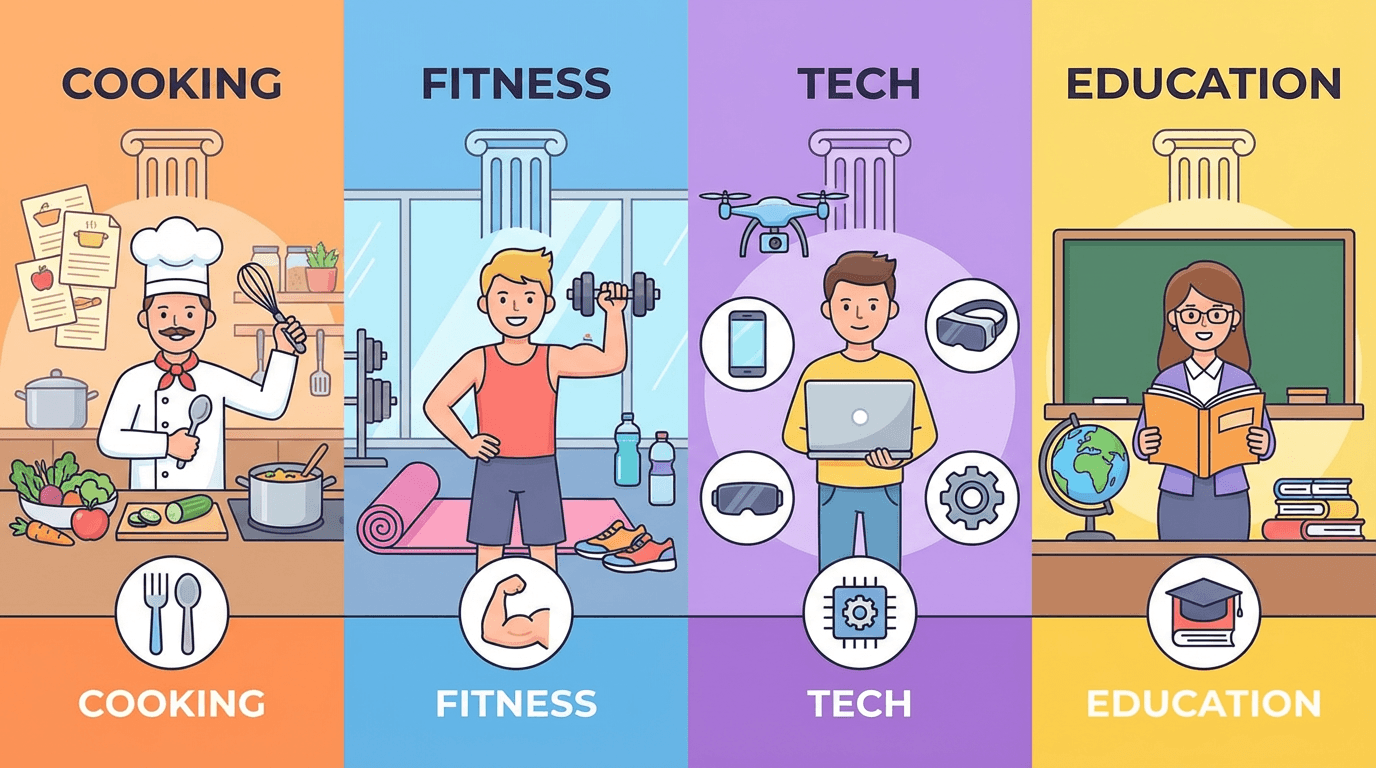
Tech and gadgets. Product reviews, comparison breakdowns, hidden feature tips, tech news reactions, and setup or desk tours. These five pillars cover the full spectrum of what tech audiences consume in short-form video.
Cooking and food. Quick recipe tutorials, ingredient spotlights, kitchen hack tips, food trend reactions, and restaurant or street food reviews. Each pillar serves a different viewing intent while keeping the audience consistent.
Personal development. Productivity tips, book summaries, habit building strategies, mindset shifts, and real-life application stories. This structure works because it mixes practical advice with personal storytelling.
E-commerce and small business. Behind the scenes of running the business, product showcases, customer story highlights, packing and shipping content, and tips for other small business owners. This structure builds community while also serving as soft marketing.
Education and explainers. How things work, common misconceptions, historical facts, quick science experiments, and real-world applications. Channels like these do well on YouTube Shorts because the content is evergreen and search-friendly.
For more on which formats and niches perform well in short-form, the breakdown of AI Shorts formats that go viral in 2026 covers current trends across platforms. These examples are starting points. Your specific pillar structure should reflect the unique intersection of what your audience wants, what you can produce consistently, and what the algorithm rewards in your niche. Use these as templates, not as prescriptions.
Building a Weekly Rotation Schedule That You Will Actually Follow
Once your pillars are defined, the next step is building a rotation schedule. This is where the strategy turns into a system.
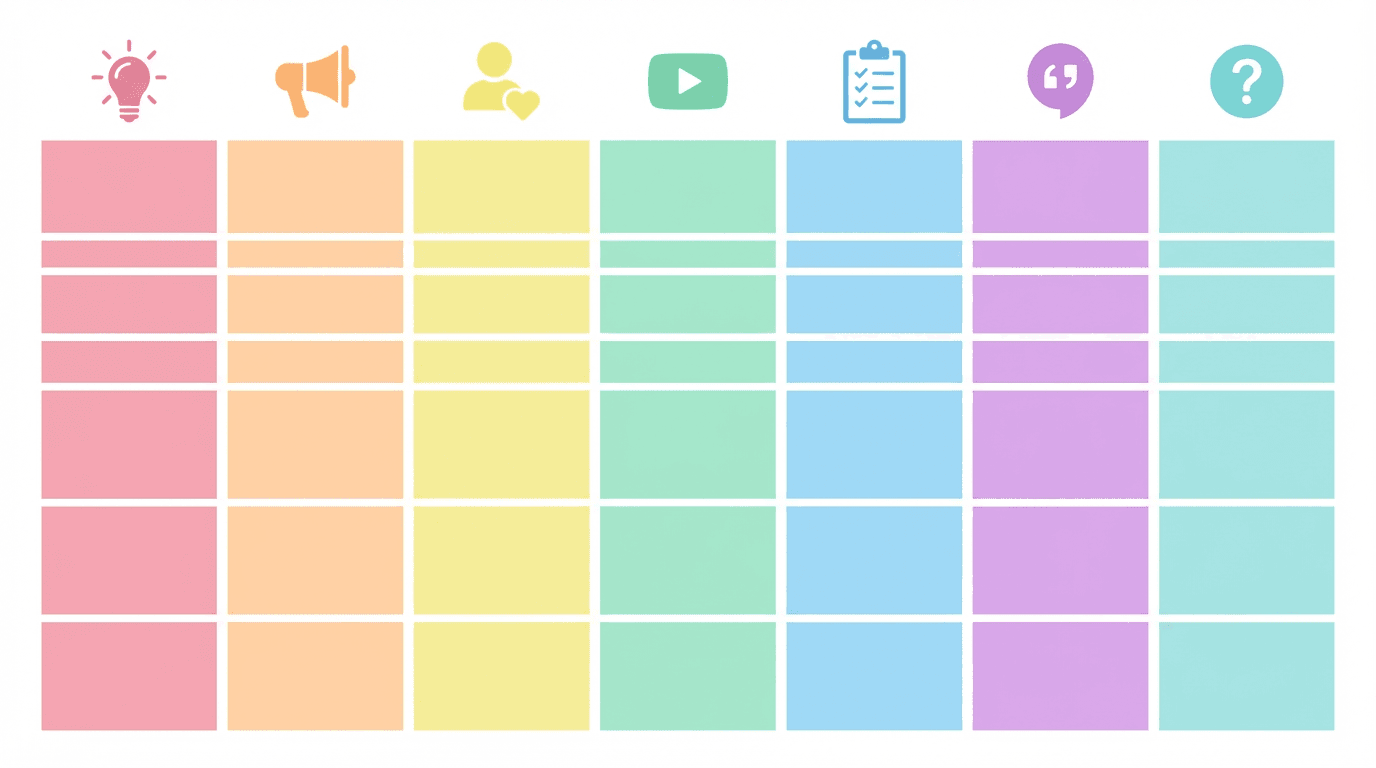
A rotation schedule assigns each day of the week to a specific pillar. This removes the daily decision of what to post and replaces it with a predictable rhythm that you can follow without thinking.
Here is an example for a five-pillar creator posting daily:
Monday: Pillar 1. Tuesday: Pillar 2. Wednesday: Pillar 3. Thursday: Pillar 4. Friday: Pillar 5. Saturday: Best performer repeat or variation. Sunday: Pillar 1 again.
The Saturday slot is flexible. Use it to revisit your best performing video from the week and create a variation. This takes advantage of topics that are already resonating with your audience. Treating Saturday as your amplification day means you are never wasting a posting slot on an untested idea when you could be doubling down on proven performance.
If you post less frequently, like three to four times per week, rotate through your pillars in order. The key is that over the course of any two-week period, every pillar gets roughly equal coverage.
This approach has a few benefits beyond just saving time. First, it prevents over-indexing on one pillar. Many creators unconsciously favor the pillar they enjoy most, which leads to an unbalanced channel. A rotation schedule forces equal distribution. Second, it makes batch production easier. You can sit down and produce all your Pillar 1 videos in one session, all your Pillar 2 videos in another, and so on. Most creators who adopt batch production for the first time report that their weekly production time drops by 40 to 50 percent, because they eliminate the context-switching that slows down creative work.
For a full production plan that maps out daily posting with specific content types, the 30-day YouTube Shorts plan for 2026 provides a template you can adapt to your own pillar strategy.
How Pillars and Formats Work Together to Multiply Your Content Ideas
Pillars define what you talk about. Formats define how you present it. Keeping these two concepts separate is important because it multiplies your content possibilities.
A single pillar can be expressed through many different formats. Take a cooking channel with a "quick recipe" pillar. That one pillar could produce videos in these formats: a 30-second sped-up recipe, a talking head explaining the recipe step by step, a text overlay slideshow of ingredients and instructions, a before-and-after transformation of the dish, or a reaction to someone else attempting the recipe.
That is five different videos from one pillar and one recipe. Multiply that across all your pillars and you have more content ideas than you can produce in a month.
This is also how you keep your channel feeling fresh. If viewers see the same format every day, they get bored even if the topic changes. But if the format changes while the topic stays within your pillar structure, the channel feels dynamic and consistent at the same time.
The formats that perform best on short-form platforms right now include hook-first explainers, list-based tips, before-and-after reveals, POV storytelling, and comparison breakdowns. Matching these formats to your pillar topics is where the real creative work happens.
For a detailed look at which formats are driving the most engagement on Shorts right now, the YouTube Shorts best practices guide for 2026 covers format selection, pacing, and structure.
How to Generate Pillar Content at Scale with AI
One of the biggest challenges with a content pillar strategy is production speed. If you are posting daily across three to five pillars, that is a significant volume of content to produce, edit, and publish.
This is where AI tools change the equation.
Instead of scripting, filming, editing, and exporting every video manually, creators in 2026 are using AI to handle large portions of the production pipeline. The creative decisions, choosing pillars, picking topics, deciding the angle, still come from the creator. But the execution, turning that idea into a finished video, can be dramatically accelerated.
On Miraflow, the Text2Shorts tool lets you enter a topic, choose a visual style, and generate a complete short-form video with script, visuals, voiceover, and pacing handled automatically. This means a creator with a five-pillar strategy can produce an entire week of content in a single session.
The workflow looks like this. Open Text2Shorts, type in a topic from your Pillar 1 list, choose between animation or realistic style, generate the video, review it, and move on to the next pillar. Each video takes minutes instead of hours. If the script needs adjustment, you can edit it before generating visuals. If you want more control, use the step-by-step mode to refine each scene individually.
For creators who prefer cinematic visuals, the Cinematic Video Generator produces high-quality 8-second clips from text prompts. These clips can be used as standalone Shorts or combined into longer sequences.
The practical effect of this is that a content pillar strategy, which would have been exhausting to execute manually at daily volume, becomes sustainable when AI handles the repetitive parts of production. The creator focuses on strategy and ideas. The tools handle assembly.
For a full breakdown of how this pipeline works, the guide on creating 1-minute AI Shorts with Text2Shorts walks through both one-click and step-by-step creation modes.
Pillar Performance Tracking: What to Measure
A content pillar strategy is not something you set once and forget. You need to track how each pillar performs and adjust over time.
The metrics that matter most for short-form pillar tracking are completion rate, impressions, and subscriber conversion.

Completion rate tells you whether viewers are watching your videos to the end. If one pillar consistently has lower completion rates than the others, the content within that pillar may need a format change or a different angle. The topic might still be valid, but the execution might not be holding attention.
Impressions tell you how many times the algorithm is showing your content. A pillar with low impressions might be targeting a topic the algorithm does not know how to distribute. This can happen when a pillar is too niche or when the topic does not match what your existing audience engages with.
Subscriber conversion tells you which pillars are driving growth. Some pillars attract viewers who watch but never subscribe. Others convert at a higher rate. Knowing this helps you decide which pillars to emphasize and which to reduce over time.
Track these metrics per pillar, not just per video. The easiest way to do this is to tag each video by pillar in a simple spreadsheet. After 30 days, you will have enough data to see clear patterns.
If a pillar consistently underperforms across all three metrics, consider replacing it. If a pillar overperforms, consider splitting it into two more specific pillars to give it more room.
For more on reading your Shorts analytics and understanding what the numbers mean, the YouTube Shorts analytics guide explains each metric and how to interpret the graphs.
Common Content Pillar Mistakes
Too many pillars. Creators who try to cover six or seven pillars end up spreading too thin. The audience never develops a strong association with any single theme. Three to five is the range that works for most creators.
Pillars that do not overlap. If your pillars attract completely different audiences, your channel will struggle to grow. Each new video might reach a different group of people, and none of them see enough consistent content to justify subscribing. Keep your pillars related enough that one viewer would enjoy all of them.
Ignoring pillar data. Many creators choose their pillars based on personal interest and never revisit the decision. Personal interest matters, but it needs to be validated by performance data. If a pillar you love is consistently getting zero traction, it might not be what your audience wants. The guide on why videos get zero views covers the most common reasons content fails to gain traction.
Making every video within a pillar feel the same. Pillar consistency does not mean visual or structural repetition. Vary your formats, hooks, and angles within each pillar. The pillar is the theme. How you explore that theme should change from video to video.
Not having an evergreen pillar. At least one of your pillars should be evergreen, meaning the content stays relevant for months or years after posting. Evergreen pillars provide a foundation of search-driven traffic that compounds over time, even when your trend-driven pillars slow down. For ideas on what evergreen content looks like, the evergreen YouTube video ideas guide covers formats that attract search traffic consistently.
Skipping the rotation schedule. Having pillars in your head is not the same as having a schedule on paper. Without a written rotation, most creators drift back toward their comfort pillar and lose balance. Write the schedule down and follow it.
Pillar Strategy for Faceless Channels
Faceless short-form channels have an even greater need for strong content pillars. Without a human face to build recognition around, the channel's identity is defined entirely by its content themes and visual style.
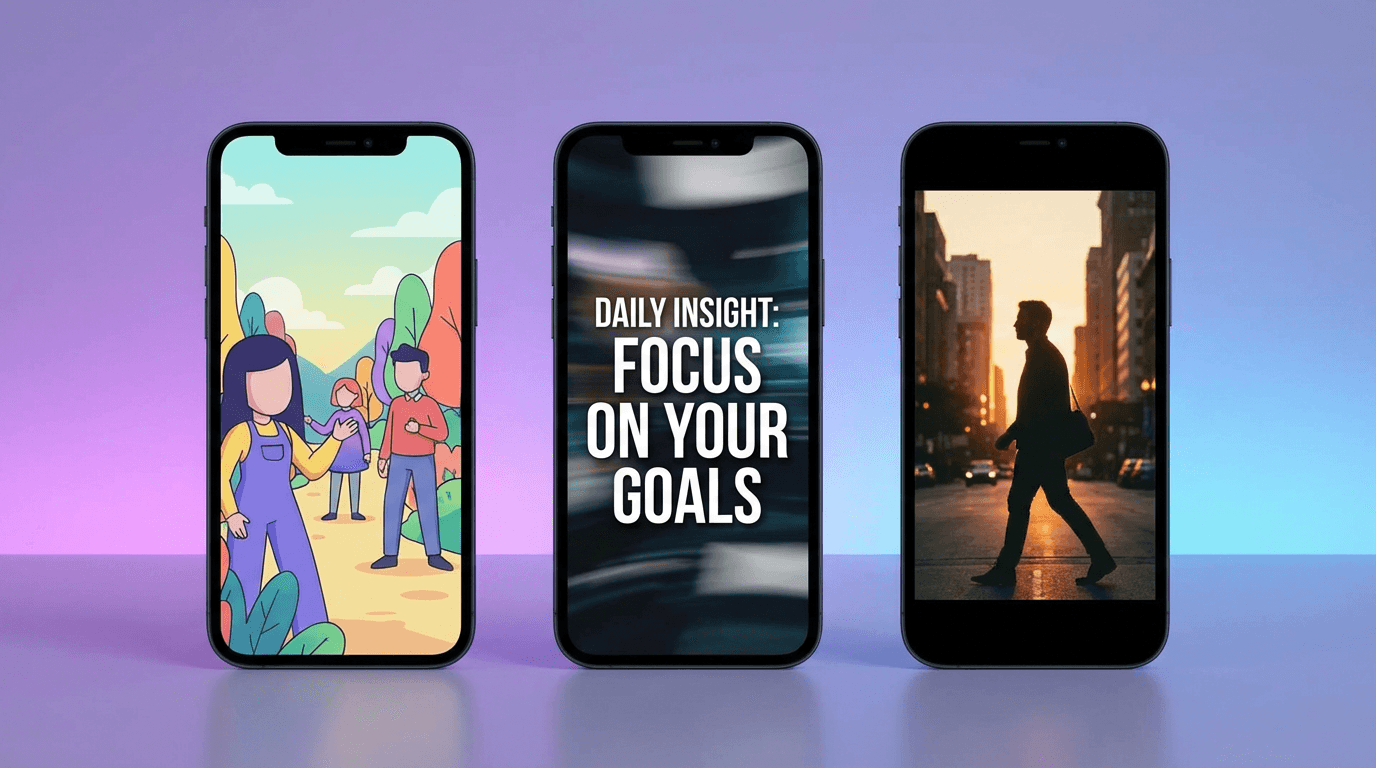
For faceless creators, each pillar should have a distinct visual template or format that makes it immediately recognizable. For example, a faceless history channel might use animated maps for one pillar, archival photos for another, and illustrated timelines for a third. The visual differentiation helps viewers distinguish between pillars even without reading titles.
AI tools make this particularly effective. You can generate consistent visual styles for each pillar using the AI Image Generator for thumbnails and cover images, and Text2Shorts for the videos themselves. By keeping the visual prompts consistent within each pillar, you build a visual brand that viewers recognize instantly.
The faceless YouTube Shorts niches guide for 2026 covers which niches are performing best for faceless creators right now and how to structure content within those niches.
How Content Pillars Support the Algorithm
Platform algorithms in 2026 are built to understand what a channel is about and match it with the right audience. When your channel has clear, consistent content pillars, you are making the algorithm's job easier.
YouTube's recommendation system, for example, looks at viewing patterns to determine which audience segments are most likely to enjoy your content. If your channel consistently publishes videos about three related topics, the algorithm can confidently recommend your new videos to people who watched your previous ones. The topic signal is strong and clear.
When a channel publishes random, unrelated content, the algorithm receives mixed signals. It might show your cooking video to someone who watched your finance video, and the mismatch leads to low engagement, which teaches the algorithm to reduce your reach.
This is especially true for YouTube Shorts, where the Shorts shelf and the Shorts feed both rely on rapid audience matching. The algorithm needs to decide in milliseconds who to show your Short to. Clear pillar signals make that decision faster and more accurate.
TikTok and Instagram Reels work similarly. While the exact algorithmic mechanisms differ, all three platforms reward channels that establish consistent topic authority over time.
For more on how the current YouTube algorithm update affects Shorts distribution, the YouTube Shorts algorithm update from January 2026 covers the latest changes and what they mean for creators.
Content Pillar Strategy Template
Here is a template you can use to define and document your pillar strategy. Fill in each section for your own channel.
Channel niche: (Your broad topic area)
Pillar 1: (Theme name)
Description: (What this pillar covers in one sentence)
Audience need: (What problem or interest this serves)
Example video topics: (List 5 specific video ideas)
Primary format: (The format you will use most often for this pillar)
Posting frequency: (How many times per week)
Pillar 2: (Theme name)
Description:
Audience need:
Example video topics:
Primary format:
Posting frequency:
Pillar 3: (Theme name)
Description:
Audience need:
Example video topics:
Primary format:
Posting frequency:
Pillar 4 (optional): (Theme name)
Description:
Audience need:
Example video topics:
Primary format:
Posting frequency:
Pillar 5 (optional): (Theme name)
Description:
Audience need:
Example video topics:
Primary format:
Posting frequency:
Weekly rotation schedule:
Monday:
Tuesday:
Wednesday:
Thursday:
Friday:
Saturday:
Sunday:
Review cadence: (How often you will review pillar performance. Recommended: every 30 days)
Print this out, pin it above your desk, and follow it. The structure alone will make your content production faster and your channel growth more predictable.
Adapting Pillars Over Time
Your content pillars are not permanent. They should evolve as your channel grows, as your audience gives you feedback, and as platform trends shift.
The best approach is to review your pillar performance every 30 days. Look at the metrics for each pillar, identify which ones are growing and which are stagnating, and make one small adjustment. That might mean swapping out an underperforming pillar, splitting a high-performing pillar into two more specific themes, or changing the primary format within a pillar.
Avoid making dramatic changes all at once. If you replace three out of five pillars simultaneously, your existing audience will feel disoriented and the algorithm will need to relearn what your channel is about. One change per month is enough to keep your strategy current without disrupting momentum.
Also pay attention to what your audience tells you directly. Comments, DMs, and questions are a goldmine for pillar refinement. If viewers keep asking about a subtopic within one of your pillars, that subtopic might deserve its own pillar.
Combining Pillars with AI Music and Thumbnails
A strong pillar strategy extends beyond just the video content. Your thumbnails, music, and visual identity should also reflect your pillar structure.
For thumbnails, consider creating a distinct visual template for each pillar. Pillar 1 might use a blue color scheme with bold text. Pillar 2 might use warm tones with a different layout. This visual consistency helps viewers identify which pillar a video belongs to before they even click. The YouTube Thumbnail Maker on Miraflow lets you generate thumbnails with custom prompts and templates, making it easy to maintain pillar-specific visual styles.
For background music, each pillar can have its own sonic identity. A tutorial pillar might use calm lo-fi beats. An entertainment pillar might use upbeat electronic tracks. The AI Music Generator lets you describe the mood and style you want and generate tracks that you can reuse across all videos within a pillar.
This multi-layered consistency, where the topic, visual style, and audio all reinforce each other, is what builds a channel that feels professional and intentional. It is also what makes your content instantly recognizable in a crowded feed.
According to YouTube's official creator guidelines, channels that establish a clear and consistent identity tend to build stronger audience relationships and earn more recommendations over time. Content pillars are one of the most effective ways to build that identity.
The new creator stack for AI-powered Shorts, Reels, and TikTok covers how all of these tools fit together in a modern content production workflow.
How Pillar Content Compounds Over Time
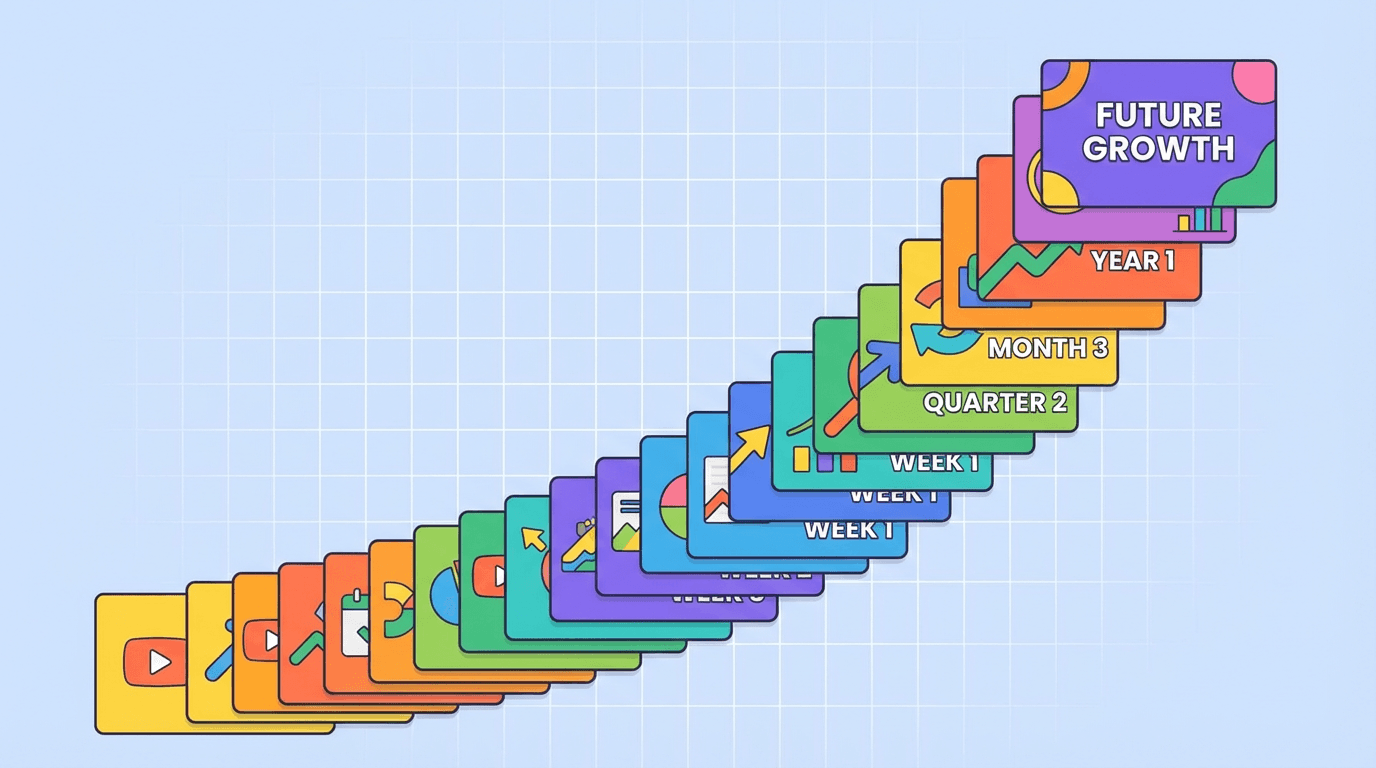
One of the most underappreciated benefits of a content pillar strategy is the compounding effect. Every video you publish within a pillar adds to the total body of work on that topic. Over months, your channel becomes the go-to resource for those specific themes.
According to Think with Google's research on viewer behavior, viewers who discover a channel through one video are significantly more likely to watch additional videos if the channel has a clear, organized content library. Content pillars make your library navigable and logical, even on platforms where traditional playlists do not exist.
On short-form platforms specifically, the compounding works through the algorithm. Each new video within a pillar signals to the platform that your channel is an authority on that topic. As more videos perform well within a pillar, the platform becomes increasingly confident about who to show your next video to. This creates a positive feedback loop where established pillars get better distribution over time.
Creators who stick with their pillar strategy for three to six months almost always see this compounding effect. The first month feels slow. The second month shows signs of pattern recognition from the algorithm. By month three, certain pillar topics start gaining traction consistently. By month six, the channel has a reliable base of content that continues to attract views long after publishing.
This compounding curve is why creators who abandon their pillar strategy after 30 days miss the entire payoff. The first month is setup. The real returns start in month two and accelerate from there.
This is also why the evergreen pillar matters so much. Trend-based content spikes and fades. Evergreen pillar content accumulates views steadily, providing a floor of traffic that grows as you add more videos to that pillar.
Conclusion
A content pillar strategy is not a creative constraint. It is a creative framework that makes everything else easier. Choosing what to post, maintaining consistency, tracking performance, and scaling production all become simpler when your channel is built around defined themes.
In 2026, the creators who grow fastest on short-form platforms are not the ones with the most talent or the best equipment. They are the ones with the clearest strategy and the most consistent execution. Content pillars provide both.
Start with three pillars. Build a weekly rotation. Track performance monthly. Adjust as needed. And use AI tools to handle the production load so you can focus on the ideas that matter.
The difference between a creator who posts randomly and a creator who posts with a pillar strategy is never visible in any single video. It only becomes visible when you zoom out and look at the trajectory over three, six, and twelve months. One channel flatlines. The other compounds. Content pillars are what separate the two. And the best time to start building yours was a month ago. The second best time is today.
Frequently Asked Questions About Content Pillar Strategy
How many content pillars should a short-form creator have?
Most successful short-form creators operate with three to five content pillars. Fewer than three makes the channel feel repetitive and limits the range of content you can produce. More than five spreads your focus too thin and makes it harder for the algorithm to identify what your channel is about. Start with three pillars and add a fourth or fifth only after the first three are performing consistently.
What is the difference between a content pillar and a content format?
A content pillar is the topic or theme of your video, like budgeting tips, workout routines, or product reviews. A content format is how you present that topic, like a talking head, a text overlay, a before-and-after reveal, or a list countdown. You can use multiple formats within a single pillar, which is how you keep your content varied without losing thematic focus.
How often should I change my content pillars?
Review your pillar performance every 30 days, but avoid making more than one pillar change per month. If a pillar consistently underperforms across completion rate, impressions, and subscriber conversion over a 60-day period, it is a strong candidate for replacement. High-performing pillars should be kept and potentially expanded into more specific sub-pillars as your channel grows.
Can I use the same content pillars across YouTube Shorts, Instagram Reels, and TikTok?
Yes. Your content pillars should stay the same across platforms because they define your channel identity, not your platform strategy. What changes across platforms is the format, packaging, and optimization. A tutorial pillar might use text overlays on TikTok, a polished visual style on Instagram Reels, and a thumbnail-optimized approach on YouTube Shorts. The topic stays consistent while the presentation adapts to each platform's audience expectations.
Do content pillars work for faceless channels?
Content pillars are even more important for faceless channels than for personality-driven ones. Without a recognizable face to build audience loyalty around, the channel's identity depends entirely on its thematic consistency and visual branding. Faceless channels should pair each pillar with a distinct visual template or style so that viewers can identify the pillar within the first second of the video.
How do I come up with content ideas within my pillars?
Start by listing 20 specific video ideas for each pillar before you begin posting. Draw ideas from YouTube search suggestions, TikTok comment sections, Reddit discussions in your niche, frequently asked questions on Quora, and your own analytics showing which past topics performed best. If you cannot generate at least 20 ideas for a pillar, it may be too narrow to sustain long-term production.
What is an evergreen content pillar?
An evergreen content pillar covers topics that remain relevant and searchable for months or years after the video is published. Examples include how-to tutorials, beginner guides, common mistake breakdowns, and explainers about fundamental concepts in your niche. At least one of your pillars should be evergreen because these videos accumulate search-driven views over time, providing a stable baseline of traffic even when your trend-based pillars slow down.