20 AI Greek God and Goddess Portrait Prompts for the Viral Mythology Trend (Copy & Paste 2026)

Written by
Aerin Kim
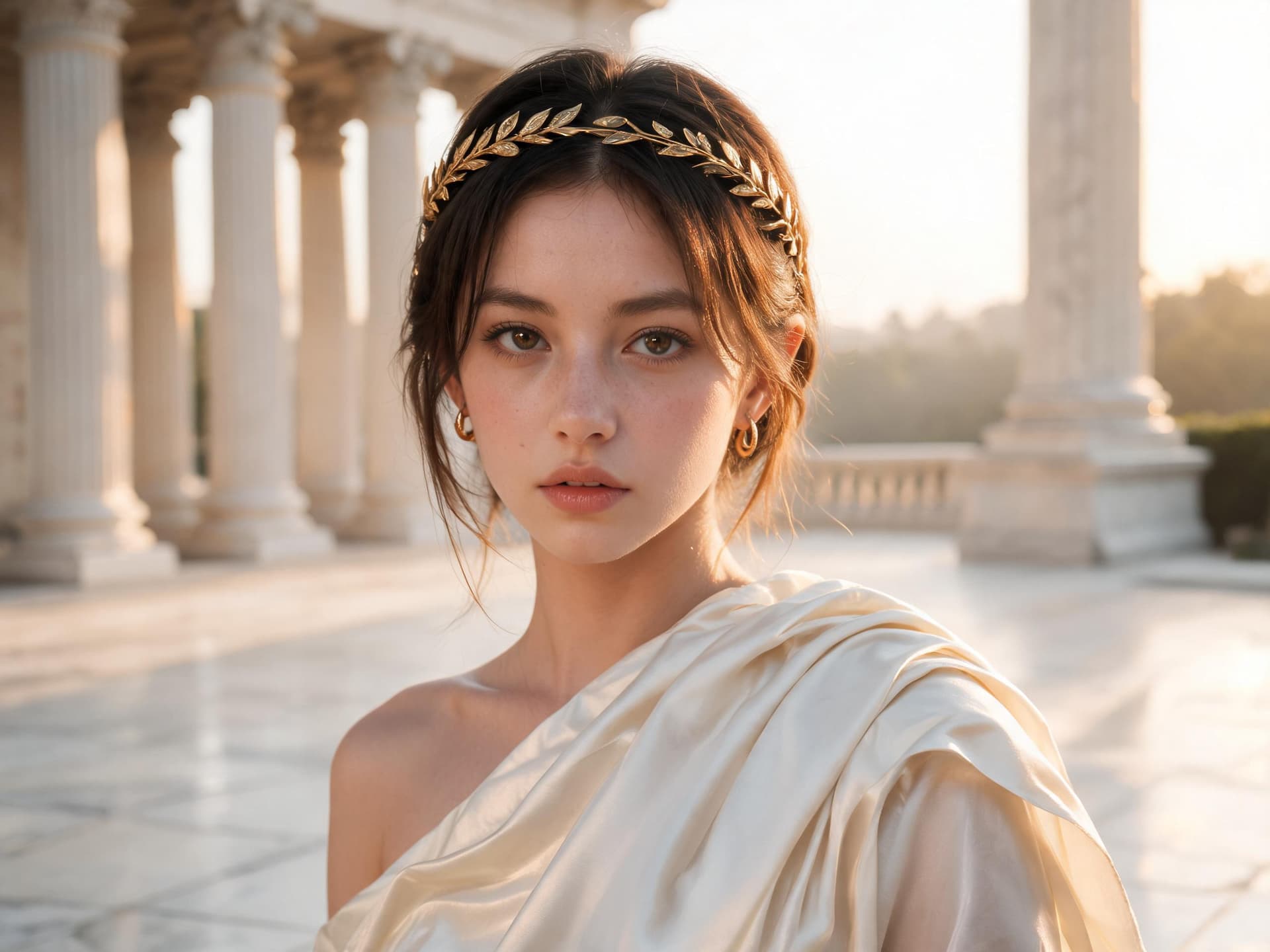
20 copy-paste AI prompts for the viral Greek god and goddess portrait trend, built around real reference photos so draped fabric, laurel wreaths, and divine lighting stay convincing and recognizable.
Scroll TikTok or Instagram for more than a few minutes right now and the odds are good you will land on someone standing in front of what reads like a sunlit marble colonnade, wrapped in heavy draped fabric, wearing a laurel wreath or a thin gold circlet, lit like the inside of a temple at golden hour. The caption is usually some version of "apparently I was always Aphrodite" or "not me finding out I'm basically Zeus." This is the Greek god and Greek goddess AI portrait trend, and it is not a one-off meme that already peaked and faded. Both TikTok and Instagram currently run dedicated discovery pages for "greek goddess trend," "greek god trend picture," and "gods and goddesses ai," which is the clearest sign that real, ongoing search and watch demand exists for this exact format right now, not just a single viral post that happened to blow up once.
The format depends on one hard requirement that trips up almost everyone who tries to recreate it with a plain text prompt: the finished portrait still has to look like the actual person who posted it. A stranger wearing a toga and holding a thunderbolt prop is just a costume photo. A friend you genuinely recognize, draped in the same fabric, lit with the same dramatic warm light, wearing the same laurel wreath, suddenly reads as transformed, because your brain is running a real comparison between the face in front of you and the mythological styling wrapped around it. That comparison only works with image-to-image generation anchored to a real reference photo, not a generic description of what a goddess or a god is supposed to look like. Miraflow's AI Image Generator is built around exactly that workflow: upload a selfie or a reference photo, keep the face locked to the real photo, and let the prompt handle the drapery, the lighting, the backdrop, and the mythological props around it.
This post works through why the trend has caught on so fast, what actually separates a convincing divine portrait from an obvious costume photo, and 20 ready-to-use prompts covering goddess archetypes, god archetypes, divine couple pairings, full friend-group pantheons, and dramatic lighting-focused close-ups, plus three platform formats people are actually posting these to right now.
Why the Greek God and Goddess Trend Has Spread So Fast
Mythology aesthetics carry a kind of instant visual shorthand that most AI photo trends have to build from scratch. A laurel wreath already means victory and divinity before anyone reads a caption. A marble column already means temple, permanence, and old-world grandeur. Warm, directional light pouring across draped fabric already looks like a Renaissance painting or a film still, not a random filter. The trend borrows a visual language that has already been culturally loaded for roughly three thousand years rather than inventing a new one, which is a huge part of why a single still image reads as "epic" within half a second of someone's thumb stopping on it.
It also solves a problem that a lot of AI portrait trends run into without realizing it: most of them quietly skew toward one gender, and viewers notice. The Greek pantheon has always included both gods and goddesses as equally central, equally dramatic figures, so the trend naturally supports a man posting a Zeus-inspired thunder portrait and a woman posting an Athena-inspired portrait in the same feed without either one feeling like an afterthought version of the other. That built-in gender balance is part of why the trend has spread across such a wide range of creators instead of staying confined to one demographic the way some AI beauty filters do.
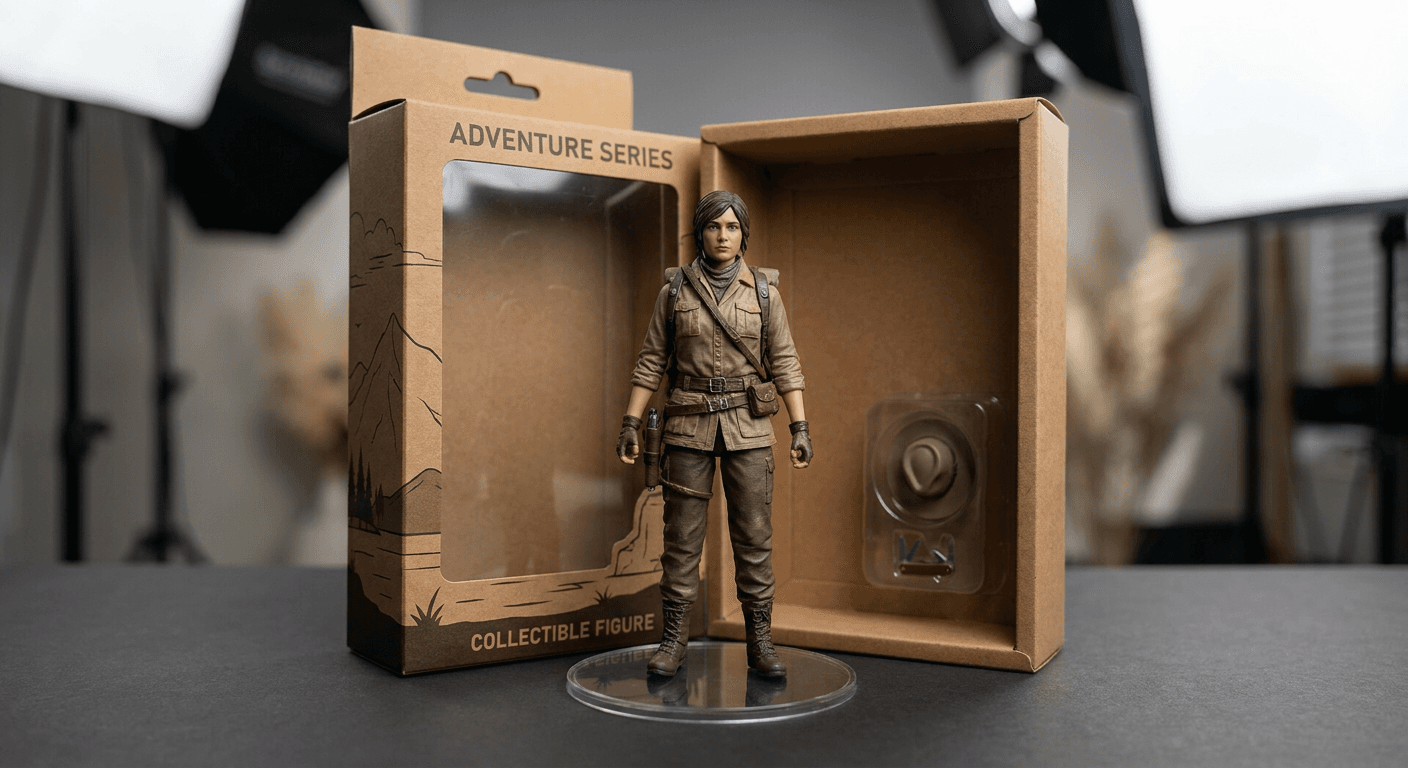
The other driver is pure cost of entry. Nobody is renting a toga, building a marble set, or hiring a lighting crew. One selfie and one well-written prompt is the entire production. Compare that to the effort behind an actual mythological-themed photoshoot, and the appeal of getting a comparable result from a phone in under a minute explains a lot of the volume. It sits in the same lineage as other recent one-photo AI transformation trends, the action figure and toy box trend and the Pixar-style 3D portrait trend both work the same way, one reference photo in, one dramatically different but still recognizable version out, which is exactly the formula that keeps performing well on both platforms right now.
What Actually Makes a Divine Portrait Convincing
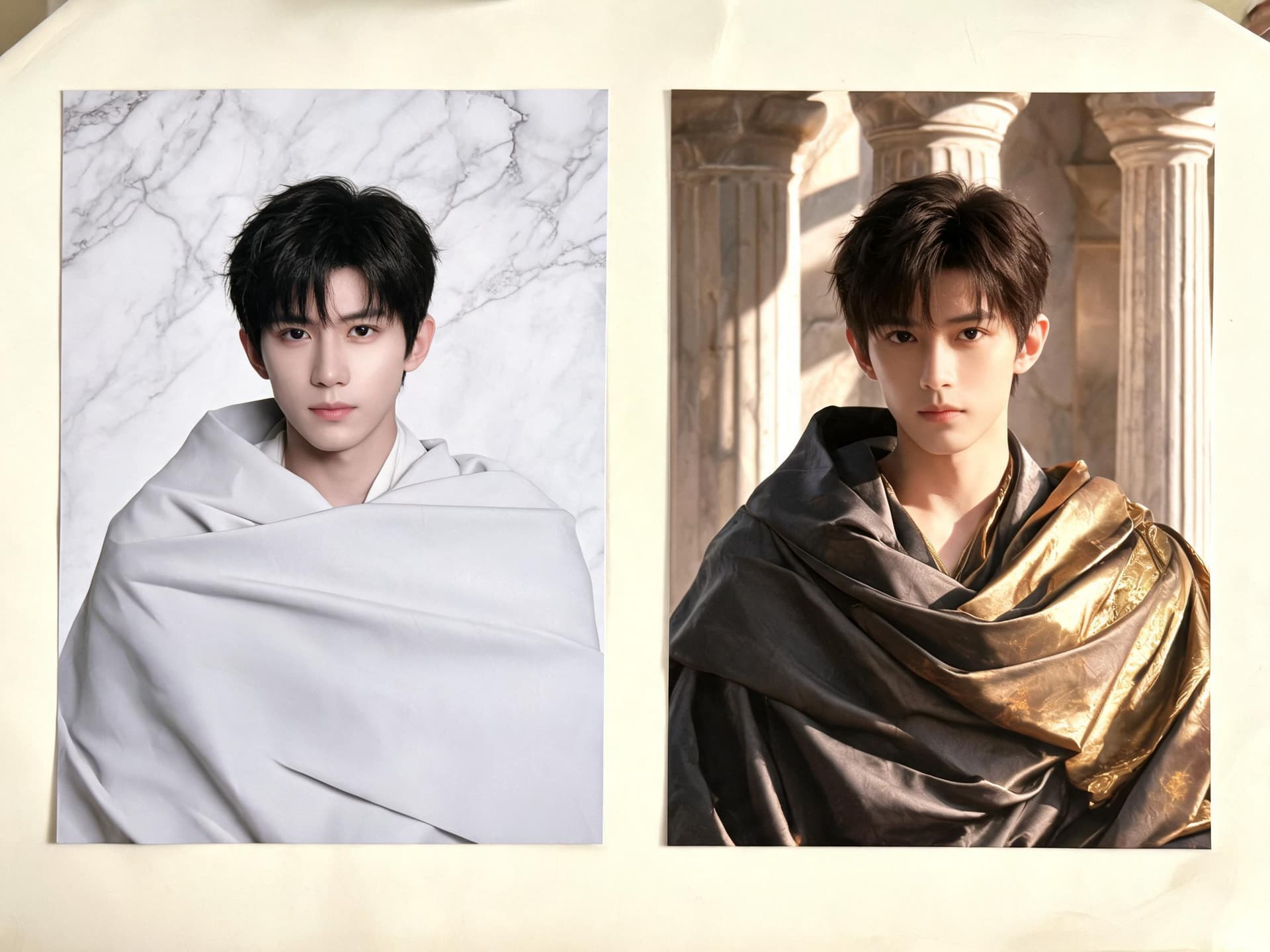
A convincing Greek god or goddess portrait and an obvious costume photo are built from the same four ingredients, draped fabric, a mythological prop or symbol, a marble or cloud backdrop, and warm dramatic lighting. The difference between the two almost never comes down to the idea. It comes down to whether each of those four ingredients is specified with enough real physical detail that an image model renders it convincingly instead of guessing at a generic version.
Draped fabric is the first place a weak prompt falls apart. Real fabric has weight. It pools at the shoulder, creases where it wraps an arm, and catches a highlight differently than skin does because the material is different. A prompt that just says "wearing a toga" tends to produce something that looks closer to a bedsheet stapled onto a person than actual woven cloth with real drape and shadow. Naming the fabric type directly, heavy ivory silk, matte linen, fine pleated chiffon, and describing exactly where it gathers and where light hits it, is what makes the difference between fabric that looks physically real and fabric that looks like a flat texture pasted over a body.
Lighting is the second major tell. A flat, evenly lit portrait with a marble backdrop pasted behind it reads instantly as fake, because real divine imagery, from Renaissance paintings to actual temple photography, is built around one strong, warm, directional light source, late afternoon sun slanting through columns, firelight from one side, a single shaft of light breaking through clouds. Naming the light source and its direction explicitly is what gives a portrait that "lit by the gods" quality instead of looking like a product photo with a toga filter slapped on top.
The third tell is identity. This is the one that matters most and the one creators get wrong most often, because it is tempting to lean on heavy skin smoothing to get that glowing, otherworldly look. Smoothing away real skin texture, pores, fine lines, the small asymmetries that make a face actually belong to a specific person, is exactly what makes friends stop recognizing who posted the photo. Image-to-image generation that locks onto a real reference photo and explicitly preserves the person's actual features, the way covered in more depth in the guide to making AI images look like real photos, is what keeps a portrait looking like a stylized version of a real person instead of a generic stock photo of "a goddess."
The fourth ingredient, the prop or symbol, matters less for realism and more for instantly communicating which archetype is being depicted. A laurel wreath, a trident, a thunderbolt, a bow, or a crescent moon detail does a lot of work in a single glance, which is why every prompt below names a specific, period-appropriate symbol rather than leaving the model to invent something generic.
The Anatomy of a Prompt That Actually Pulls This Off
Every prompt in this post follows the same five-part structure, and understanding why each part matters will let you adapt any of the 20 below or build new ones of your own.
An explicit instruction to use the uploaded reference photo, with a direct identity-preservation clause. Phrases like "using the photo I upload as a reference, keep the exact facial structure, proportions, and real features unchanged" anchor the output to a real face instead of letting the model invent a generic one that merely resembles the idea of a person.
A named fabric with real physical behavior. "Heavy ivory silk draped over one shoulder, pooling in soft folds at the waist" gives the model an actual material to render, instead of a vague "wearing robes" that tends to produce flat, costume-like fabric.
A specific, period-appropriate symbol or prop tied to the archetype. A laurel wreath for victory and divinity, a trident for the sea, a thunderbolt for the sky, a bow for the hunt, gives the viewer an instant visual cue for which god or goddess the portrait is referencing, without needing a caption to explain it.
A real backdrop with depth and a named light source and direction. "Sunlit marble columns receding into soft haze, warm late-afternoon light coming from the left" does far more work than "epic background," because it tells the model exactly where the shadows should fall and how far back the architecture should recede.
A closing clause ruling out the most common failure modes. Every prompt below ends with language addressing the specific ways this trend goes wrong: no flat or plastic-looking fabric, no blank or featureless face, no warped hands if a prop is held, no mismatched lighting between the subject and the backdrop, no watermark or logo.
Swap the archetype, the fabric color, or the backdrop freely. The framework underneath is what actually makes the result look like a real, dramatically lit photograph instead of a filter.
20 AI Greek God and Goddess Portrait Prompts to Copy and Paste
These are grouped into six categories: goddess archetypes, god archetypes, divine couple pairings, group and pantheon shots, dramatic lighting close-ups, and the three platform formats people are actually posting to right now. Each prompt is a full, descriptive paragraph meant to be copied exactly as written into the AI Image Generator on Miraflow alongside your own uploaded reference photo, then adjusted from there.
1) Goddess Portrait Prompts
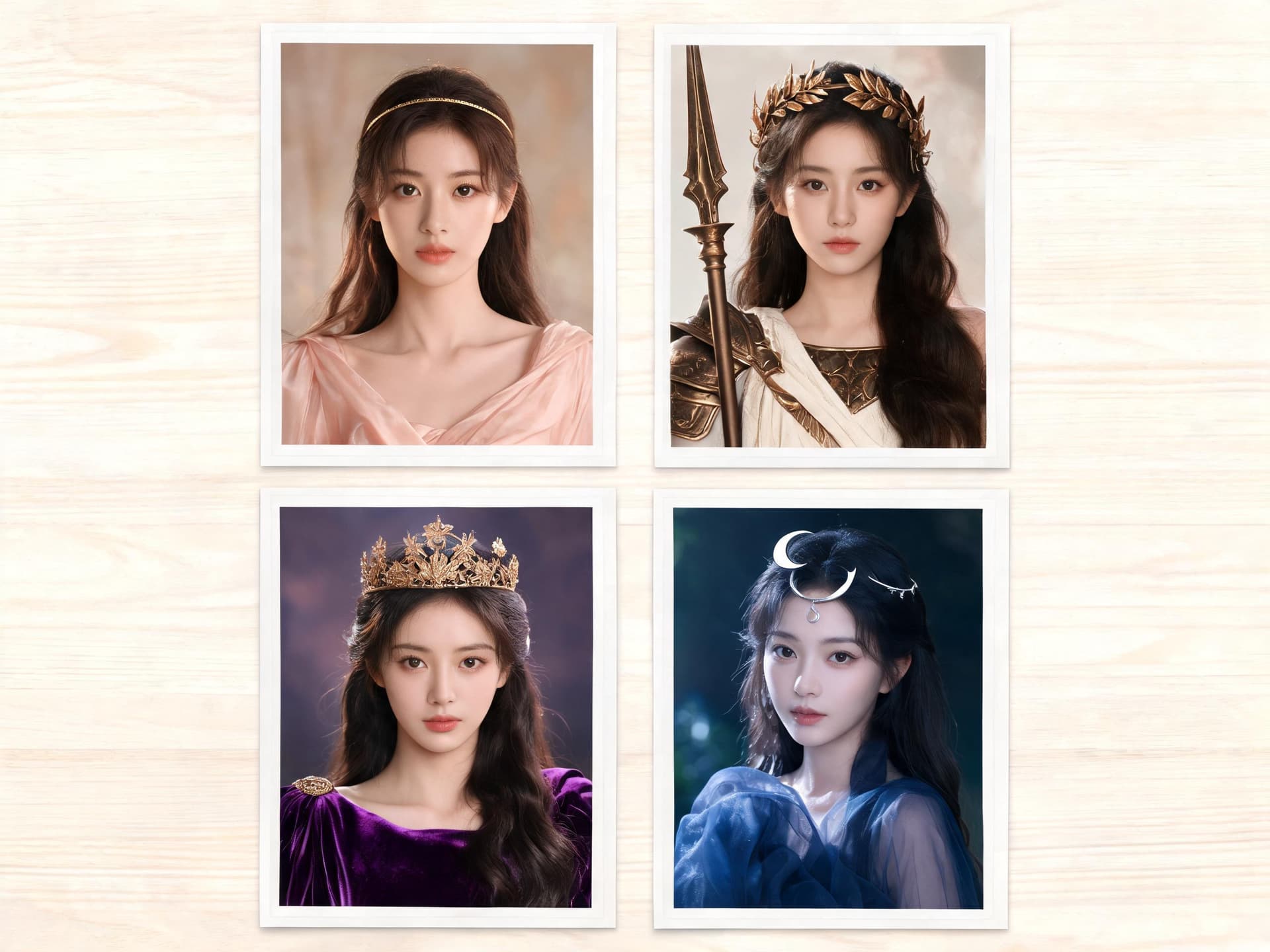
These four cover the most recognizable goddess archetypes driving the trend right now, love and beauty, wisdom and war, home and authority, and night and the moon.
Prompt 1: Aphrodite-Inspired Goddess of Love and Beauty Portrait
Using the photo I upload as a reference, keep the exact facial structure, proportions, skin texture, and real features unchanged, and generate a goddess-of-love-inspired portrait. Dress the subject in flowing, soft blush-pink silk draped loosely over one shoulder and gathered at the waist, with visible soft folds and natural weight in the fabric. Add a delicate thin gold circlet resting in the hair and simple gold drop earrings. Place the subject against a sunlit marble terrace backdrop with soft climbing roses and distant sea haze, warm golden-hour light coming from the right, catching the fabric and skin with a soft glow and a visible catchlight in the eyes. Natural skin texture with real pores and fine detail preserved, shallow depth of field with the background softly out of focus. No flat or plastic-looking fabric, no blank or featureless face, no warped hands, no watermark or logo.
Prompt 2: Athena-Inspired Goddess of Wisdom and War Portrait
Using the photo I upload as a reference, keep the exact facial structure, proportions, and real features unchanged, and generate a goddess-of-wisdom-inspired portrait. Dress the subject in structured ivory and bronze draped fabric with a fitted bronze breastplate detail over one shoulder, the cloth falling in sharp, deliberate folds rather than soft ones. Add a simple bronze laurel-leaf circlet and have the subject hold a tall spear at a slight angle, hand positioned naturally around the shaft with correct finger count and proportion. Place the subject against a backdrop of weathered stone columns and a distant owl perched on a ledge, cool early-morning light from directly above casting defined, intentional shadows across the face and fabric. Natural skin texture, sharp focus on the face and fabric with a softly blurred stone background. No warped or extra fingers on the hand holding the spear, no flat lighting, no blank or featureless face, no watermark or logo.
Prompt 3: Hera-Inspired Regal Goddess of the Hearth and Home Portrait
Using the photo I upload as a reference, keep the exact facial structure, proportions, and real features unchanged, and generate a regal queen-of-the-gods-inspired portrait. Dress the subject in deep royal purple velvet-weight draped fabric with a wide gold embroidered trim, the cloth falling heavily and pooling at the floor rather than floating loosely. Add a tall, ornate gold crown rather than a simple circlet, with a peacock feather detail tucked beside it, and simple heavy gold bracelets on the wrist. Place the subject seated on a carved marble throne against a backdrop of tall arched columns, warm torchlight glowing from both sides of the frame and reflecting off the gold details. Natural skin texture and real fabric weight and sheen, a composed, authoritative expression. No flat gold that looks painted on, no blank or featureless face, no distorted crown shape, no watermark or logo.
Prompt 4: Selene-Inspired Moonlit Goddess of the Night Portrait
Using the photo I upload as a reference, keep the exact facial structure, proportions, and real features unchanged, and generate a moon-goddess-inspired portrait. Dress the subject in sheer, dark midnight-blue chiffon layered over a deeper navy underlayer, the fabric catching cool light along its folds while the body beneath stays modestly covered. Add a thin silver crescent-moon circlet resting just above the forehead and small silver star-shaped details woven near the hairline. Place the subject against a night sky backdrop with a large, softly glowing full moon behind one shoulder and distant stars, cool blue-silver light coming from the moon itself as the dominant light source, with a warmer rim light from a hidden torch lightly outlining the opposite side of the face. Natural skin texture, soft focus on the night sky background, sharp focus on the face. No flat or glowing-plastic skin, no blank or featureless face, no distorted hands, no watermark or logo.
2) God Portrait Prompts
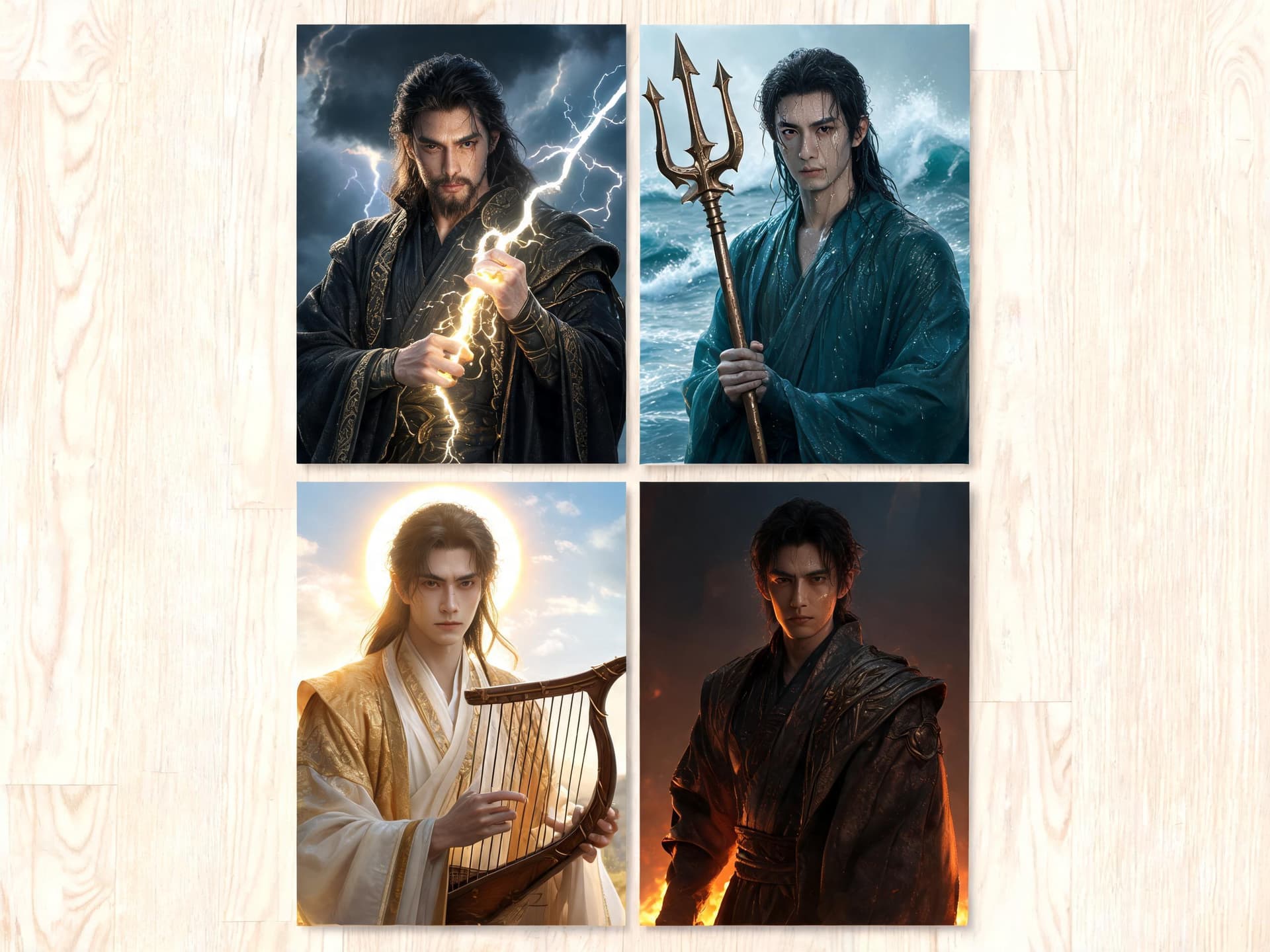
These four cover the most recognizable god archetypes, sky and thunder, the sea, sun and light, and the underworld, so the trend reads as equally dramatic for men posting it as it does for the goddess prompts above.
Prompt 5: Zeus-Inspired God of Sky and Thunder Portrait
Using the photo I upload as a reference, keep the exact facial structure, proportions, and real features unchanged, and generate a sky-and-thunder-god-inspired portrait. Dress the subject in heavy charcoal-and-gold draped fabric wrapped across one shoulder and chest, leaving the other shoulder bare, with thick, deliberate folds that suggest real weight. Add a simple gold laurel crown and have the subject hold a glowing thunderbolt prop at chest height, gripped naturally with correct hand and finger proportions. Place the subject against a dramatic stormy sky backdrop with dark clouds parting around a shaft of bright light directly behind the subject, strong rim lighting outlining the shoulders and jaw, with a secondary cool blue-white glow coming from the thunderbolt itself. Natural skin texture with visible pores and real muscle definition, sharp focus on the face and chest. No warped or extra fingers on the hand holding the thunderbolt, no flat or cartoonish lightning glow, no blank or featureless face, no watermark or logo.
Prompt 6: Poseidon-Inspired God of the Sea Portrait
Using the photo I upload as a reference, keep the exact facial structure, proportions, and real features unchanged, and generate a sea-god-inspired portrait. Dress the subject in deep teal and sea-green draped fabric with a wet, slightly clinging texture along the edges, as though just emerged from water, while staying fully and modestly covered. Add a simple woven seaweed-and-coral circlet and have the subject hold an ornate bronze trident upright beside them, gripped with correct hand proportions. Place the subject against a backdrop of crashing waves and wet dark rocks, with fine sea spray visibly catching light in the air, cool blue-green ambient light from the water below mixed with a warm late-afternoon sun from one side for contrast. Realistic water droplets on the skin and fabric, natural skin texture underneath. No distorted hand on the trident, no flat painted-looking water, no blank or featureless face, no watermark or logo.
Prompt 7: Apollo-Inspired God of Sun and Light Portrait
Using the photo I upload as a reference, keep the exact facial structure, proportions, and real features unchanged, and generate a sun-and-light-god-inspired portrait. Dress the subject in warm gold and white draped fabric with a soft matte sheen, wrapped diagonally across the chest and falling in loose folds to one side. Add a radiant gold laurel crown with a subtle warm glow along its edges and have the subject hold a simple lyre resting against one forearm. Place the subject against a backdrop of bright sunlit marble steps and distant hills, strong warm sunlight coming from directly behind the subject as a soft backlit halo effect, with a secondary fill light keeping the face clearly visible and not silhouetted. Natural skin texture with a healthy warm glow, shallow depth of field on the distant hills. No blown-out overexposed face, no blank or featureless face, no distorted lyre strings, no watermark or logo.
Prompt 8: Hades-Inspired God of the Underworld Portrait
Using the photo I upload as a reference, keep the exact facial structure, proportions, and real features unchanged, and generate an underworld-god-inspired dramatic portrait. Dress the subject in deep black and dark bronze draped fabric with a stiff, structured drape rather than a soft flowing one, one shoulder fully covered and the other left bare. Add a simple dark bronze circlet and have a two-headed dog silhouette rendered subtly and realistically in the far background rather than as a cartoon shape. Place the subject against a backdrop of dark volcanic rock and a distant river of glowing orange light, with that glow acting as the single dominant light source from below and the side, casting dramatic upward shadows across the face. Natural skin texture even under the unusual lighting angle, sharp focus on the face. No flat or glowing-plastic fabric, no blank or featureless face, no warped background creature, no watermark or logo.
3) Divine Couple Pair Prompts
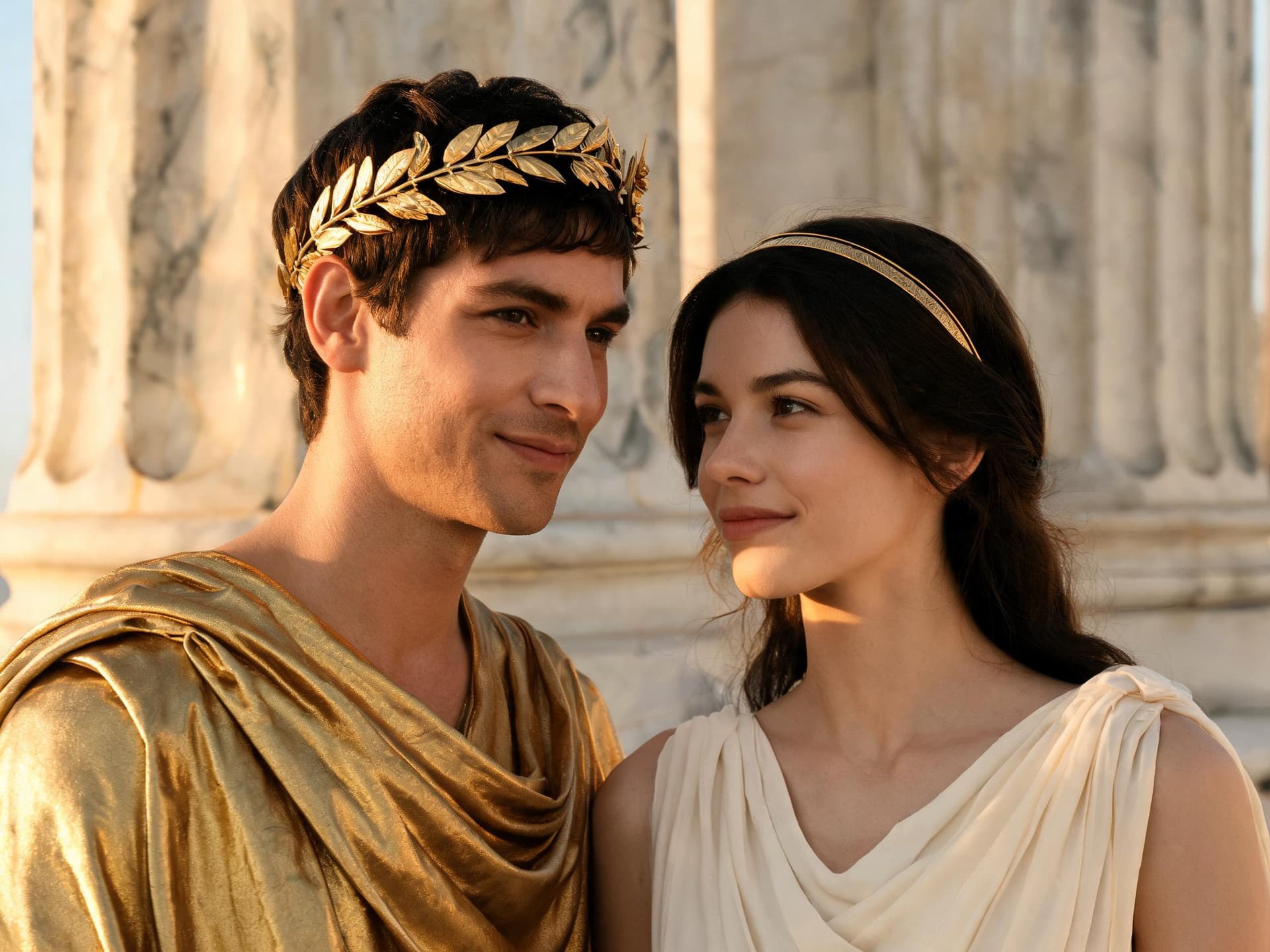
Two people styled as a matched god-and-goddess pairing is one of the fastest-growing sub-formats of this trend, since it works for real couples, best friends, and siblings alike.
Prompt 9: Classic God-and-Goddess Couple Portrait
Using the two photos I upload as references, keep the exact facial structure, proportions, and real features of both people unchanged, and generate a matched god-and-goddess couple portrait standing close together. Dress one person in warm gold draped fabric with a laurel crown and the other in soft ivory draped fabric with a matching gold circlet, both fabrics sharing the same warm color family so the pairing reads as coordinated rather than random. Place both subjects against a shared marble-column backdrop with warm late-afternoon light coming from one consistent direction across both people, matching shadow length and color temperature on each person so the image reads as one coherent photograph rather than two composited ones. Natural skin texture on both faces, both facing slightly toward each other with a calm, confident expression. No mismatched lighting between the two people, no blank or featureless faces, no watermark or logo.
Prompt 10: Best-Friend Goddess Duo Portrait
Using the two photos I upload as references, keep the exact facial structure, proportions, and real features of both people unchanged, and generate a two-goddess best-friend-duo portrait standing side by side. Dress one person in deep blue flowing fabric referencing the moon and the other in warm pink flowing fabric referencing love and beauty, each with a distinct matching circlet style, so the two looks feel like a coordinated pair rather than identical copies. Place both subjects against the same sunlit marble terrace backdrop, consistent warm directional light across both people, matching color grading and shadow direction on each side of the frame. Natural skin texture on both faces, relaxed natural expressions, slightly turned toward each other. No mismatched skin tone rendering between the two people, no blank or featureless faces, no watermark or logo.
Prompt 11: Brother-Gods Duo Portrait
Using the two photos I upload as references, keep the exact facial structure, proportions, and real features of both people unchanged, and generate a two-god brothers-duo portrait standing shoulder to shoulder. Dress one person in charcoal-and-gold fabric referencing the sky and thunder and the other in teal-and-bronze fabric referencing the sea, each holding their respective prop, a small thunderbolt and a trident, with correct hand and finger proportions. Place both subjects against a dramatic coastal cliff backdrop with a storm rolling in over the water, one consistent warm rim light outlining both subjects from the same direction. Natural skin texture and real fabric weight on both figures, serious but not exaggerated expressions. No warped hands on either prop, no mismatched lighting between the two figures, no watermark or logo.
Prompt 12: Divine Wedding-Styled Couple Portrait
Using the two photos I upload as references, keep the exact facial structure, proportions, and real features of both people unchanged, and generate a divine wedding-styled couple portrait facing each other, foreheads close but not touching. Dress one person in heavy ivory silk with gold trim and a tall ornate crown, and the other in matching ivory and gold fabric with a simpler gold circlet, both styles clearly coordinated as a pair rather than two unrelated looks. Place both subjects against a backdrop of sunlit marble archways scattered with white flower petals caught mid-fall in the air, warm golden-hour light from one side casting soft matching shadows on both faces. Natural skin texture on both faces, soft genuine expressions. No mismatched lighting or color temperature between the two people, no blank or featureless faces, no watermark or logo.
4) Group and Pantheon Prompts
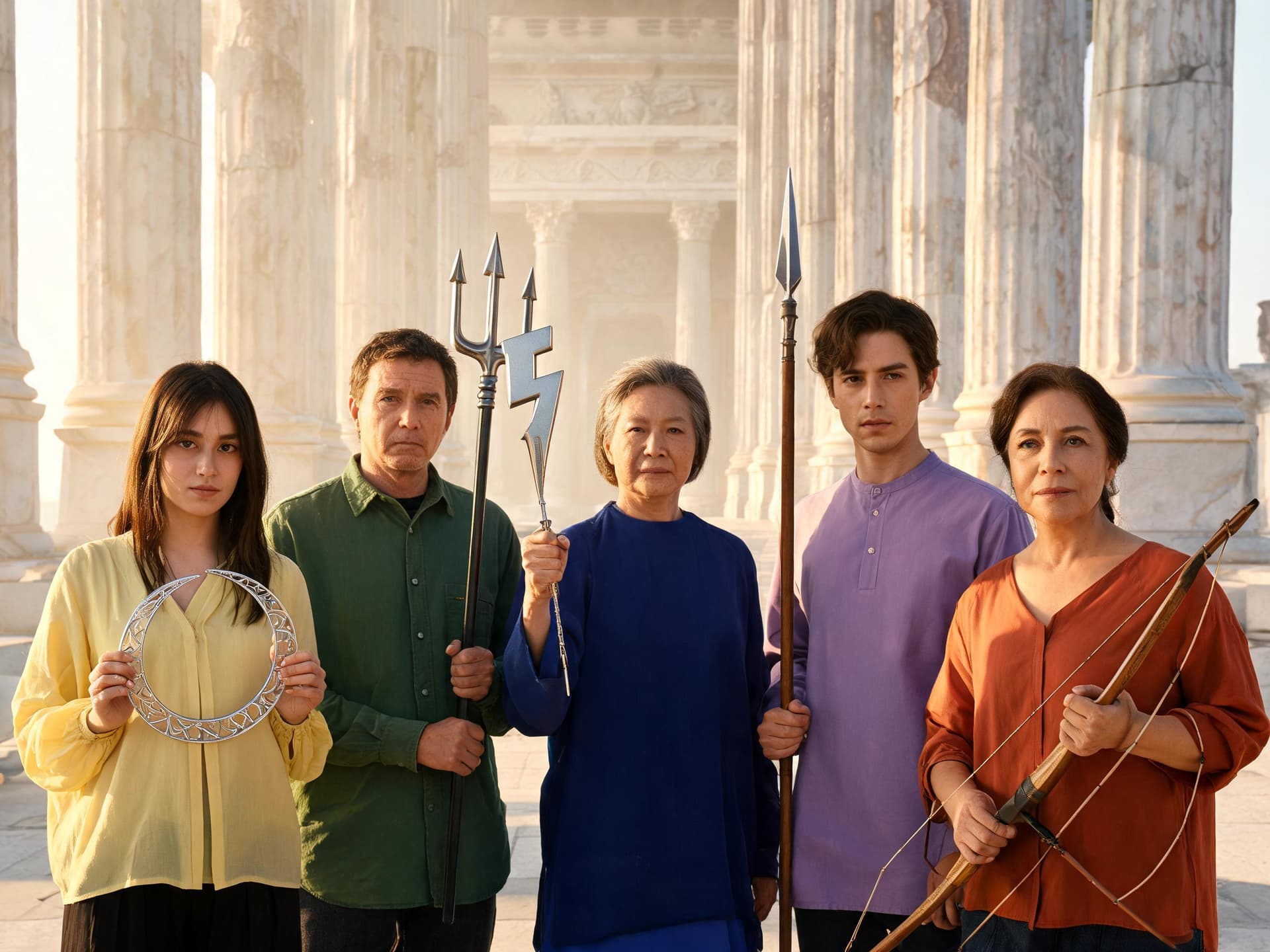
Styling an entire friend group, sibling set, or wedding party as a full pantheon is the version of this trend built specifically for a group photo rather than a solo or couple shot.
Prompt 13: Friend-Group Full Pantheon Portrait
Using the photos I upload as references for each person in the group, keep the exact facial structure, proportions, and real features of every person unchanged, and generate a full-pantheon group portrait of four to six people standing together in a loose semicircle. Assign each person a distinct archetype, sky and thunder, the sea, wisdom and war, love and beauty, the hunt, and the moon, each in a different but harmonizing fabric color so the group reads as a coordinated set rather than mismatched individuals, and give each person a prop or symbol matching their archetype with correct hand and finger proportions wherever a prop is held. Place the whole group against a wide marble-temple backdrop with tall columns receding into soft haze, one consistent warm directional light source across every person so shadows fall the same way on each face. Natural skin texture preserved on every person, varied genders and ages represented naturally across the group rather than all one type. No mismatched lighting between individuals, no blank or featureless faces, no distorted hands on any prop, no watermark or logo.
Prompt 14: Sibling-Trio Pantheon Portrait
Using the three photos I upload as references, keep the exact facial structure, proportions, and real features of all three people unchanged, and generate a three-person sibling pantheon portrait standing close together, arranged by height. Give each sibling a distinct archetype and matching prop, for example the sun, the sea, and the hunt, each in a different fabric color within the same warm palette so the trio looks deliberately coordinated. Place the group against a sunlit marble courtyard backdrop with climbing vines along the columns, warm late-afternoon light from one consistent direction across all three faces. Natural skin texture and real family resemblance preserved accurately on all three faces, relaxed natural expressions. No mismatched lighting across the three siblings, no blank or featureless faces, no watermark or logo.
Prompt 15: Bridal-Party Pantheon Portrait
Using the photos I upload as references for each person, keep the exact facial structure, proportions, and real features of every person unchanged, and generate a bridal-party pantheon portrait with one central figure in an elaborate gold crown and ivory fabric, flanked symmetrically by the rest of the group in simpler matching ivory and gold circlets. Place the group against a backdrop of sunlit marble steps scattered with white petals, one soft warm light source from above and slightly to one side, casting consistent, flattering shadows across every face in the group. Natural skin texture on every person, genuine warm expressions throughout the group. No mismatched lighting or color grading between individuals, no blank or featureless faces, no watermark or logo.
5) Dramatic Close-Up Lighting and Detail Prompts
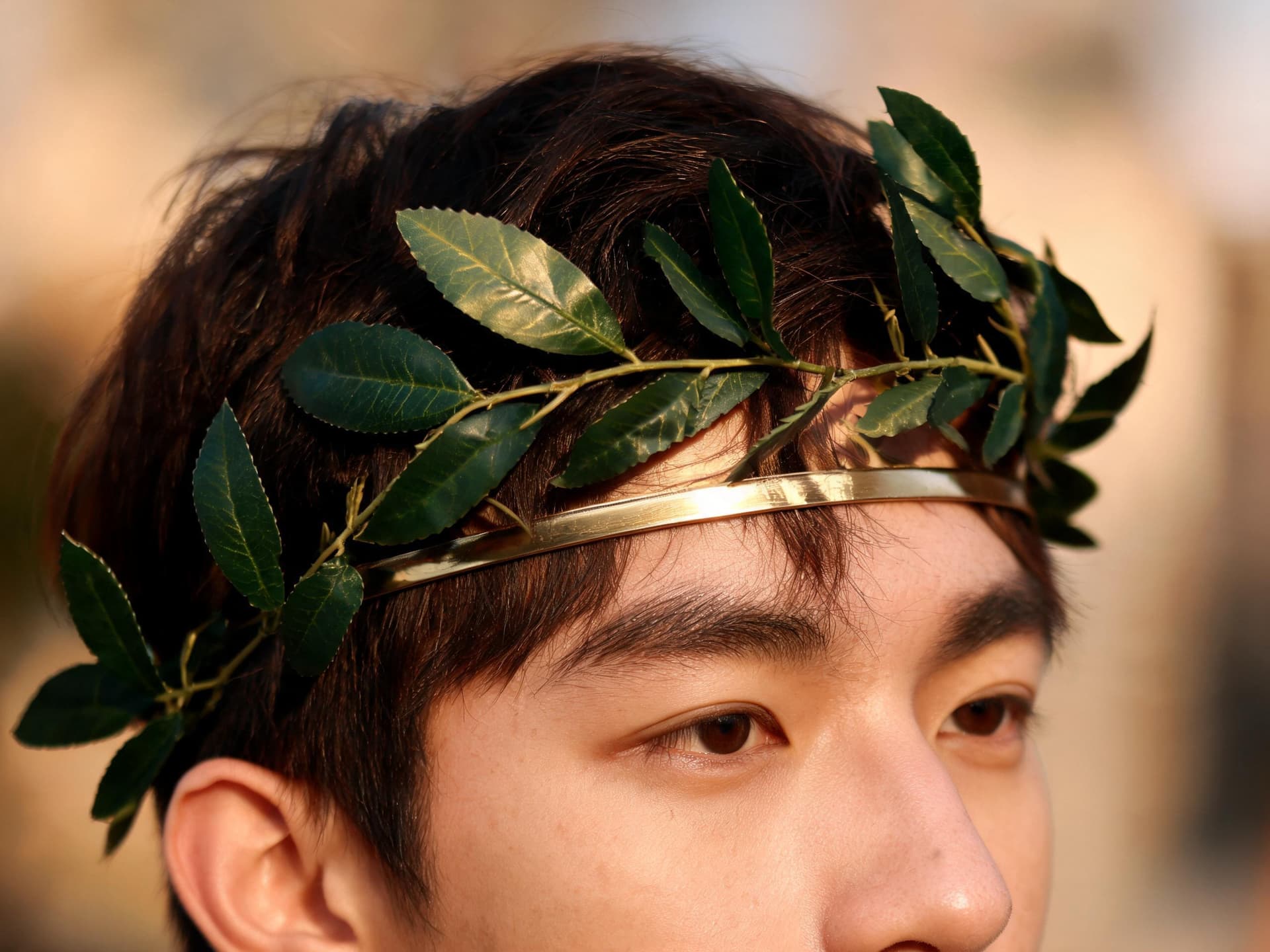
These three strip away the wider scene entirely and focus on the lighting, jewelry, and fabric detail that actually sells the "divine" feeling, which tends to perform especially well as a tightly cropped single image or a second slide in a carousel.
Prompt 16: Golden Hour Rim-Light Close-Up Portrait
Using the photo I upload as a reference, keep the exact facial structure, proportions, and real features unchanged, and generate a tight close-up portrait from the shoulders up. Dress the subject in a simple warm gold-trimmed fabric at the shoulder, visible only at the edge of the frame. Light the subject with a single strong warm rim light coming from directly behind one shoulder, catching the edge of the hair and jaw with a bright golden outline while the front of the face stays softly lit by a gentle fill light, with a visible catchlight in both eyes. Shallow depth of field with the background reduced to a soft out-of-focus warm glow. Natural skin texture with real pores and fine detail, no smoothing that erases the person's real features. No blown-out overexposed highlights, no blank or featureless face, no watermark or logo.
Prompt 17: Gold Jewelry and Circlet Macro Detail Portrait
Using the photo I upload as a reference, keep the exact facial structure, proportions, and real features unchanged, and generate a close-up portrait focused on a detailed gold circlet resting in the hair and matching gold drop earrings. Render the gold with realistic brushed and polished metal texture, catching distinct, accurate highlights rather than a flat painted-on gold color. Light the scene with soft warm directional light from one side, strong enough to show real metal reflections on the jewelry without overexposing the skin. Natural skin texture around the jewelry, shallow depth of field with the ear and side of the face in sharp focus. No flat or plastic-looking gold, no blank or featureless face, no warped ear or jewelry shape, no watermark or logo.
Prompt 18: Woven Laurel Wreath Close-Up Detail Portrait
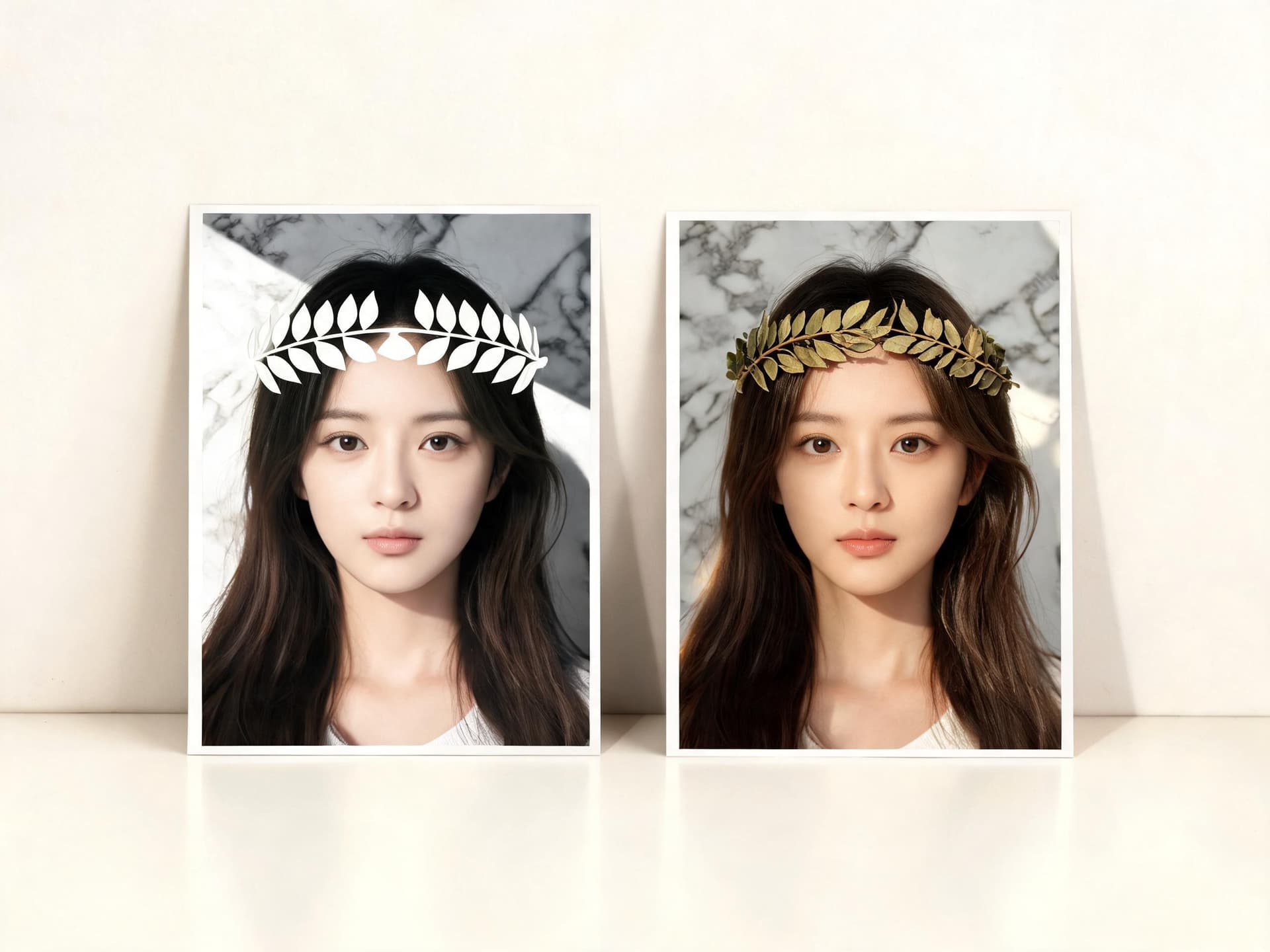
Using the photo I upload as a reference, keep the exact facial structure, proportions, and real features unchanged, and generate a close-up portrait focused on a laurel wreath resting on the head. Render the laurel leaves as an actual woven physical object with individually distinct leaves, visible stems, and slight natural irregularity in how they overlap, not a flat symmetrical clip-art shape. Light the wreath and face with soft warm late-afternoon light from one side, casting small realistic shadows from individual leaves onto the hair and forehead. Natural skin texture on the face, shallow depth of field with the background softly blurred. No flat or clip-art-looking leaves, no perfectly symmetrical or plastic-looking wreath, no blank or featureless face, no watermark or logo.
6) Platform-Specific Formats
The same divine portrait reads differently depending on where it gets posted, and a wide composition built for a feed photo will crop awkwardly if dropped straight into a vertical video thumbnail. These two account for the formats people are actually posting to right now.
Prompt 19: Instagram Carousel Square Format
Using the photo I upload as a reference, keep the exact facial structure, proportions, and real features unchanged, and generate a square 1:1 divine portrait designed as the opening slide of an Instagram carousel. Dress the subject in flowing draped fabric and a simple gold circlet matching their chosen archetype, with generous even headroom around the face and shoulders so the composition still reads clearly inside Instagram's square crop. Place the subject against a sunlit marble backdrop with warm directional light from one side, composed so the face sits comfortably in the upper two-thirds of the square frame. Natural skin texture, inviting and natural expression suited to a post people will want to swipe through. No cropped-off crown or prop at the frame edge, no blank or featureless face, no watermark or logo.
Prompt 20: TikTok Vertical Video Thumbnail Format
Using the photo I upload as a reference, keep the exact facial structure, proportions, and real features unchanged, and generate a tall vertical 9:16 divine portrait designed to work as a TikTok video thumbnail. Dress the subject in flowing draped fabric and a chosen archetype's prop or symbol, composed with the face and shoulders centered in the upper half of the frame so it reads clearly even at a small thumbnail preview size. Place the subject against a marble-column backdrop with warm dramatic directional light and slightly boosted contrast so key details stay visible when scaled down. Natural skin texture, confident and clear expression. No important detail cropped at the top or bottom edge of the vertical frame, no blank or featureless face, no watermark or logo.
How to Customize These Prompts for Your Own Reference Photo
Start with a reference photo that is well-lit, front-facing, and reasonably high resolution, the same rule that matters for any image-to-image trend. A dim, heavily filtered, or extreme-angle selfie gives the model less real detail to anchor the identity-preservation instruction to, which tends to produce a result that drifts further from your actual face the more dramatic the lighting and props around it get.
Swapping the archetype is usually as simple as changing the fabric color, the prop, and the circlet style while keeping the rest of the prompt structure identical. A thunderbolt becomes a trident, a gold laurel crown becomes a silver crescent circlet, charcoal fabric becomes deep teal, and the underlying instructions for identity preservation, fabric physics, light source, and failure-mode exclusions carry over unchanged. This is the same principle covered in more depth in the guide to consistent AI portrait prompts for LinkedIn and professional photos, where the underlying lighting and identity-preservation language stays constant across very different finished looks.
If you want a specific archetype that is not listed above, Hermes, Artemis, Demeter, and Dionysus are all easy to build from the same five-part structure. Pick a fabric color and texture that fits the archetype, name a real, specific prop or symbol, describe a backdrop with real depth and a named light direction, and close with the same failure-mode clause used throughout this post.
For a couple or group version, match the color palette across everyone in the shot before generating rather than after. Two completely unrelated fabric colors read as two separate costumes, while two or three colors drawn from the same warm or cool family read as one coordinated pantheon, which is the detail that actually makes a group version look planned rather than thrown together.
If your first result is close but the lighting on the backdrop does not quite match the lighting on the face, or the laurel wreath comes out looking a little too symmetrical and clip-art-like, a targeted fix on just that region usually gets you to a convincing result faster than regenerating the whole image from scratch and hoping for better luck on the next attempt.
Common Mistakes Creators Make With the Greek God and Goddess Trend
Fabric that looks pasted on instead of draped. Flat, stiff, bedsheet-like fabric with no real folds, creases, or shadow depth is the single fastest way to turn a divine portrait into an obvious costume photo. Naming the actual material, heavy silk, matte linen, fine pleated chiffon, and describing exactly where it gathers and pools, is what gives the model enough to render real drape instead of a flat texture.
Lighting that does not match a real divine light source. A portrait lit with flat, even light and then composited onto a dramatically lit marble backdrop never reads as one coherent photograph. Every prompt in this post names a specific light source and direction for exactly this reason, because the gap between the subject's lighting and the backdrop's lighting is the first thing a viewer's eye catches, even if they could not explain why the image looks slightly off.
Over-smoothing the skin until the face stops looking like the real person. It is tempting to lean on heavy skin smoothing to get that glowing, otherworldly look, but smoothing away real pores, fine lines, and small natural asymmetries is exactly what makes friends and followers stop recognizing who actually posted the photo. The entire emotional payoff of this trend depends on people recognizing the real face underneath the styling, not admiring a generic stock photo of a goddess.
A generic clip-art laurel wreath instead of a real woven object. A perfectly symmetrical, flat-looking wreath with identical repeating leaves reads as a sticker slapped onto the head rather than an actual physical object resting in real hair. Prompt 18 above specifically asks for individually distinct leaves with slight natural irregularity for this reason, and the same principle applies to any crown, circlet, or jewelry in the other prompts.
Mismatched lighting or color grading in a couple or group shot. When two or more people are styled together, one person lit warmer or brighter than the other is the fastest way to make a pairing or pantheon look like two separate edits pushed together rather than one coordinated scene. Every couple and group prompt in this post explicitly asks for one consistent light source across every person in the frame for exactly this reason.
Forgetting the platform crop before generating. A wide, beautifully composed feed photo that gets squeezed or cropped into a tall vertical video frame can clip off a crown, a prop, or part of the face. Generating directly at the aspect ratio you plan to post in, as Prompts 19 and 20 do, avoids this entirely instead of fixing a bad crop after the fact.
How Miraflow's AI Image Generator Fits This Trend
Every prompt in this post depends on starting from a real reference photo rather than a text description alone, which is exactly the workflow Miraflow's AI Image Generator is built around. Upload a clear selfie or reference photo, paste in one of the prompts above, and generate using image-to-image mode so the real face anchors the output instead of the model inventing a generic stand-in. Because the tool runs directly in the browser, there is nothing to install before testing a handful of archetypes side by side, swapping the fabric color, the prop, or the backdrop without starting over from scratch each time.
If a result comes back close but not quite right, the same workspace's inpainting tools let you mask and fix just the wreath, the lighting on one side of the face, or a stray detail in the backdrop, without touching the rest of the image or regenerating the face from scratch. That targeted fix is almost always faster than rewriting the whole prompt and hoping for a cleaner result on the next attempt.
Once you have a divine portrait you actually like, it is also a strong candidate for Miraflow's YouTube Thumbnail Maker if you make videos around this trend, a reaction, a tutorial breaking down how you got the look, or a ranking of the best divine portraits you tried. The thumbnail tool lets you drop in that same generated portrait, add bold thumbnail text over it, and adjust the crop specifically for a thumbnail's dimensions, which turns a single strong portrait into both a feed post and a click-worthy video cover without generating two completely separate images. Between the two tools and the full pipeline on Miraflow's homepage, the entire path from one reference photo to a finished, platform-ready divine portrait stays inside a single browser tab.
A Related Family of Viral AI Portrait Trends
The Greek god and goddess trend is not happening in isolation. It sits in a broader wave of one-photo AI transformation trends that have traded places at the top of both platforms' discovery pages throughout 2026, and knowing how it differs from its neighbors helps explain why the identity-preservation instruction matters so much here specifically. The Pixar-style AI portrait trend deliberately stylizes the face into a 3D-animated look, where some departure from the real photo is expected and even desired. The AI family look-alike split-face trend blends two real faces together rather than styling one face in dramatic costuming. The AI couple selfie trend keeps both faces fully realistic with no mythological styling at all.
The Greek god and goddess trend sits closest to the realistic end of that spectrum despite the dramatic costuming, because unlike the Pixar-style trend, the entire point here is that the face underneath the toga and the laurel wreath stays completely recognizable. That is exactly why the prompts in this post lean so heavily on explicit identity-preservation language and real material and lighting detail rather than letting the model take creative liberties with the face itself, the same discipline covered in the LinkedIn and professional headshot prompt guide and the movie poster prompt pack, both of which depend on the same real-identity-plus-dramatic-styling balance this trend needs to actually land.
Frequently Asked Questions
Do I need a professional photo, or will a regular selfie work? A regular selfie works fine as long as it is well-lit, front-facing, and not heavily filtered or cropped at an extreme angle. The model needs enough real detail in the reference photo to preserve your actual features once the dramatic lighting, fabric, and props from the prompt are layered on top.
Why does my generated portrait not really look like me anymore? This almost always comes down to either a low-quality or extreme-angle reference photo, or a prompt that does not explicitly ask the model to preserve the real facial structure and features. Every prompt in this post opens with that instruction directly for this reason, and it is the single most important line in any version you write yourself.
Can I do this with a group of friends instead of just one person? Yes. Prompts 13 through 15 are built specifically for a group or sibling set styled as a full pantheon, and the same coordinated-color-palette principle from the couple prompts applies, keep everyone's fabric colors in the same warm or cool family so the group reads as planned rather than mismatched.
Is it okay to make my portrait look like a specific celebrity who has gone viral for this trend? Keep any portrait built from your own reference photo as a stylized version of yourself rather than an attempt to recreate a specific named public figure. The whole appeal of this trend is seeing your own real face transformed, not an impression of someone else's.
Should I pick a male or female archetype, or does it matter which gender I am? The archetype is about the visual aesthetic, not a strict requirement tied to gender. Plenty of creators pick whichever fabric color, prop, and mood they personally like best regardless of whether the mythological figure is traditionally described as a god or a goddess.
What is the biggest difference between a convincing result and an obvious costume photo? Lighting consistency and fabric physics, more than the idea itself. A portrait where the subject's lighting clearly matches the backdrop's lighting, and where the draped fabric has real visible folds and weight instead of looking flat, reads as a real photograph. Review the Common Mistakes section above for the specific tells to watch for in your own results.
Can I turn my favorite result into a YouTube thumbnail? Yes. A strong divine portrait works well as a starting point in Miraflow's YouTube Thumbnail Maker, where you can add bold text and adjust the crop specifically for a thumbnail's dimensions without generating a second, completely separate image.
How do I fix a detail that came out wrong, like an asymmetrical wreath or a prop with distorted fingers? Use targeted inpainting to mask and regenerate just that region instead of the whole image. This fixes the specific flaw while leaving the rest of the portrait, including your real preserved face, exactly as it was.
Conclusion
The Greek god and goddess trend works because it borrows a visual language that already means something, victory, divinity, old-world grandeur, warm dramatic light, and applies it to a face people actually recognize instead of a generic stock model. Getting a convincing version has very little to do with finding the perfect archetype and almost everything to do with three details most people skip: starting from a real, well-lit reference photo, naming an actual fabric with real physical weight instead of a vague robe, and matching the lighting on the subject to the lighting on the backdrop so the whole image reads as one coherent photograph. The 20 prompts above cover every major archetype, couple and group pairings, dramatic lighting-focused close-ups, and the two platform formats people are posting to right now. Start with Prompt 1 or Prompt 5 depending on which archetype fits you best, run it through Miraflow's AI Image Generator with your own reference photo, and build out a few variations from there until you get the one that actually looks like a god or goddess version of you, not a stranger in a costume.