The AI Image Generation Arms Race: Why 2026 Is the Year Everything Changes

Written by
Jay Kim
The AI image generation landscape in 2026 has reached an inflection point. GPT-4o's native image generation, Gemini's rapid improvements, Midjourney's expansion beyond Discord, Flux's open-source power, and Ideogram's text rendering breakthroughs have collectively redefined the category. Complete guide covering every major model, technical breakthroughs, the text rendering revolution, copyright landscape, practical workflows, and where the arms race goes next.
The first months of 2026 have made one thing clear: the AI image generation landscape has shifted from a slow-burn competition between a handful of specialized models into a full-blown arms race where every major AI company is shipping visual generation capabilities at a pace that makes last year look glacial. OpenAI's native image generation inside GPT-4o, Google's Gemini image capabilities, Midjourney's push beyond Discord, Black Forest Labs' Flux models going mainstream, Ideogram's text rendering breakthroughs, and a dozen open-source challengers have collectively redefined what "good enough" means for AI-generated imagery.
This is not a story about any single model winning. It is a story about the entire category reaching an inflection point where the gap between AI-generated images and professional photography or illustration has narrowed to the point that the distinction matters less than the workflow. The question is no longer "can AI make a good image?" but "which AI makes the right image for this specific use case, at this speed, at this cost, with these controls?"
This post covers the major models competing in 2026, the technical breakthroughs that made this year different, the shift from dedicated image models to multimodal systems, how text rendering went from embarrassing to reliable, the copyright and legal landscape that is still catching up, practical workflow considerations for creators and businesses, and where the technology is heading next. Whether you are a solo creator producing AI-generated thumbnails for your YouTube channel, a marketing team scaling visual content production, or a developer building image generation into a product, this guide covers the competitive landscape you need to understand.
The Catalytic Moment: GPT-4o Native Image Generation
If there is a single event that accelerated the 2026 arms race into its current intensity, it was OpenAI's launch of native image generation within GPT-4o in late March 2025. The feature did not just add image generation to ChatGPT — it redefined the category by demonstrating that a multimodal model could produce images that were conversationally steerable, contextually aware, and capable of rendering legible text.[1]
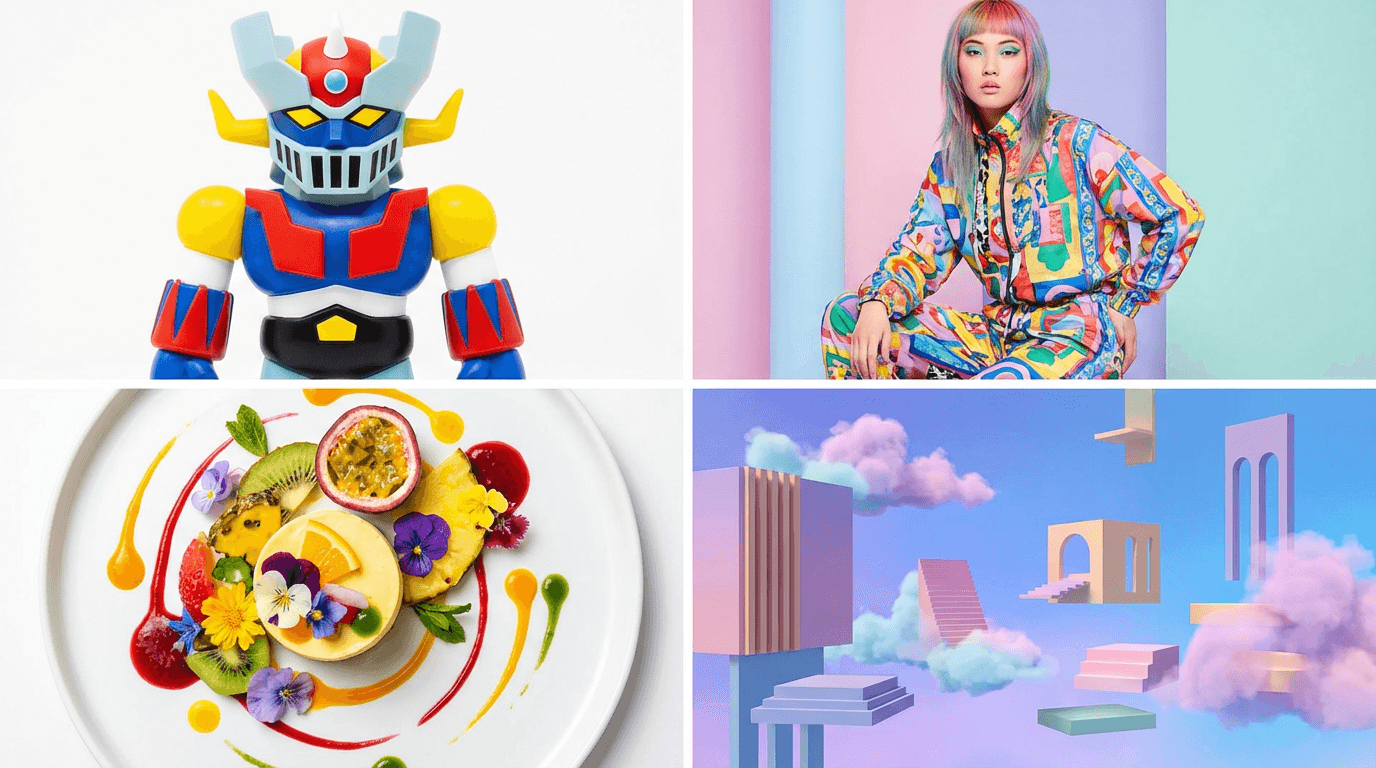
Within the first week, the response was staggering. OpenAI reported that approximately 700 million images were generated in a single week — about 1,200 images per second.[2] The viral Studio Ghibli trend — where users transformed their photos into Ghibli-style anime illustrations — became the fastest-spreading AI use case since ChatGPT itself launched. The trend was so pervasive that it sparked debates about artistic style appropriation and prompted Hayao Miyazaki's studio to publicly distance itself from the phenomenon.[3]
What made GPT-4o's image generation different from DALL-E 3, which it effectively replaced, was the integration depth. Users could have a conversation with ChatGPT, describe modifications to an image mid-dialogue, reference previous messages for context, and iterate on results with natural language feedback. The model understood spatial relationships, could maintain character consistency across multiple generations, and rendered text with a reliability that previous models could not match.[1]
The immediate impact was that every competitor had to respond. Google accelerated Gemini's image capabilities. Midjourney pushed its web interface and editor features. Stability AI doubled down on its open-source ecosystem. The bar had moved, and it moved in a direction that favored integrated, conversational workflows over standalone generation tools.
For creators building visual content at scale — whether blog thumbnails, social media graphics, or YouTube channel art — the GPT-4o moment changed the calculus. The default choice was no longer a specialized image tool. It was whatever model was already in your workflow.
The Major Contenders: A Landscape Survey
Understanding the 2026 arms race requires mapping the major players, their strengths, their weaknesses, and where each fits in the broader ecosystem.
OpenAI: GPT-4o and the Multimodal Advantage
OpenAI's position in image generation is built on integration rather than raw image quality. GPT-4o generates images natively within the same model that handles text, code, and reasoning. This means the model understands the full context of a conversation when generating an image, can modify specific elements of a generated image based on natural language instructions, and can generate images that incorporate text accurately.[1]
The practical advantage of this integration is most apparent in iterative workflows. A user can say "make the background darker," "move the text to the upper left," or "change the character's expression to something more confident" and the model understands these instructions in context. This conversational steerability is something that standalone image models — which take a single prompt and return a result — cannot replicate as naturally.
GPT-4o excels at text rendering in images, maintaining consistency across a series of related images, following complex compositional instructions, and producing images that match specific brand guidelines when given examples. Its weaknesses include occasional oversmoothing of fine details, a tendency toward a particular "GPT aesthetic" that experienced users can identify, and generation speed that lags behind some competitors for batch workflows.[4]
The pricing model — bundled into ChatGPT Plus and Pro subscriptions with daily generation limits — makes it the default choice for users who are already paying for ChatGPT, but creates friction for high-volume production workflows where per-image API pricing from competitors may be more cost-effective.
Google Gemini: The Fast Follower That Caught Up
Google's entry into the image generation arms race accelerated dramatically in 2025 and early 2026. Gemini's image generation capabilities, powered by iterations on the Imagen architecture, went from notably behind GPT-4o at launch to competitive within months.[5]
Gemini 2.0 Flash introduced native image generation and editing capabilities that mirror GPT-4o's conversational approach.[5] The model can generate images from text prompts, edit existing images through conversation, and maintain context across a multi-turn interaction. Google's advantage lies in its integration with the broader Google ecosystem — Gemini's image generation works within Google Workspace, can pull from Google Photos for reference images, and benefits from Google's search infrastructure for understanding visual concepts.
In direct comparisons, Gemini tends to produce more photorealistic results in certain categories — particularly landscapes, food photography, and architectural visualization — while GPT-4o maintains an edge in illustration styles, text rendering, and complex compositional scenes.[4] The quality gap between the two has narrowed to the point where preference is often subjective and use-case dependent rather than objectively measurable.
Google's SynthID watermarking technology, which embeds invisible metadata into Gemini-generated images, represents a significant differentiator on the responsibility front. Every image generated by Gemini carries this watermark, which can be detected by compatible tools even after the image has been cropped, resized, or lightly edited.[5]
Midjourney: The Aesthetic Leader Evolving Beyond Discord
Midjourney built its reputation as the aesthetic quality leader in AI image generation, and its position in 2026 reflects both the strength and the challenge of that identity. Midjourney V6 and its subsequent iterations produce images with a distinctive artistic quality — rich lighting, dramatic composition, cinematic color grading — that resonates with creative professionals and has made it the preferred tool for concept art, editorial illustration, and high-end visual content.[6]
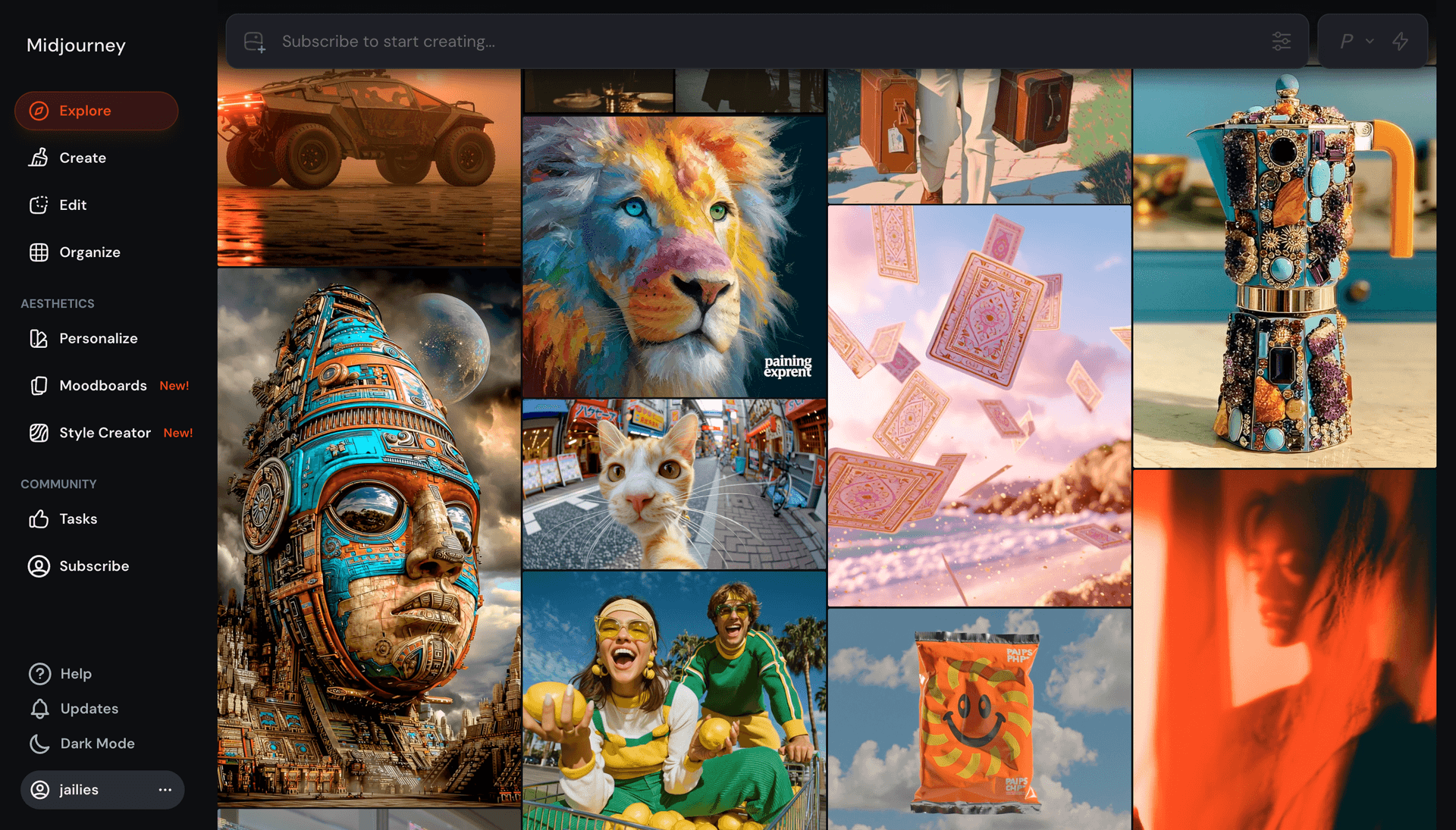
The company's evolution beyond its Discord-only interface was a critical strategic move. The web-based editor, which launched in phases through 2025, provides a more traditional creative tool experience with an image canvas, inpainting, outpainting, and style reference capabilities that go beyond what a chat-based interface can offer. For professional users who found the Discord workflow limiting, this was a necessary maturation.[6]
Midjourney's strengths remain in artistic image quality, particularly for illustration, concept art, fashion photography, and architectural visualization. Its community-driven approach — where users can browse and remix public generations — creates a discovery and inspiration layer that no competitor has replicated effectively. The model's understanding of artistic styles, lighting techniques, and compositional principles remains best-in-class for creative applications.
Where Midjourney falls behind in the 2026 landscape is in text rendering (still less reliable than GPT-4o), conversational iteration (the web editor helps but is not as fluid as a chat-based workflow), and integration with broader productivity tools. It is a specialized creative tool competing against general-purpose multimodal models, and the strategic question is whether specialization remains an advantage or becomes a limitation as the general-purpose models continue to improve.
Flux by Black Forest Labs: The Open-Source Power Play
Black Forest Labs' Flux models have emerged as the most significant open-source challenger in the image generation space. Founded by former Stability AI researchers, Black Forest Labs released Flux.1 in mid-2024 and has iterated rapidly since then, with Flux Pro, Flux Dev, and Flux Schnell serving different points on the quality-speed tradeoff curve.[7]
Flux's significance in the 2026 landscape is less about any single model and more about what it represents for the ecosystem. As an open-weight model available for local deployment, Flux enables workflows that closed-source models cannot: complete privacy for sensitive image generation, custom fine-tuning for specific visual styles or brand assets, integration into production pipelines without per-image API costs, and deployment in air-gapped environments.[7]
The quality of Flux Pro outputs approaches that of the best closed-source models in many categories, and the Flux ecosystem — including community-developed LoRA adaptations, ControlNet integrations, and custom training pipelines — provides a flexibility that no single-vendor solution can match. For developers building AI image generation into products, Flux represents the most viable path to production deployment without ongoing per-image costs.
Flux Schnell, the fastest variant, can generate images in under a second on consumer hardware, making it viable for real-time applications. Flux Dev sits in the middle of the speed-quality spectrum and has become the default choice for many ComfyUI and automatic1111 users. Flux Pro requires API access and targets professional quality levels.
Ideogram: The Text Rendering Specialist
Ideogram carved out its niche by solving one of the hardest problems in AI image generation: accurate text rendering. While other models struggled with legible text in images — producing garbled letters, missing characters, or spatially distorted typography — Ideogram focused specifically on this capability and achieved results that were notably ahead of the competition.[8]
In the 2026 landscape, Ideogram 3.0 generates images with near-perfect text rendering across a wide range of fonts, sizes, and visual contexts. This makes it the preferred tool for specific use cases: social media graphics with overlaid text, logo concepts, poster designs, product mockups with labels, and any application where text legibility is non-negotiable.[8]
The limitation of Ideogram's specialization is that its general image quality — while good — does not match the artistic sophistication of Midjourney or the photorealistic capabilities of the best GPT-4o outputs. It is the right tool for a specific category of work, and for that category, it remains the best choice.
For creators producing content like YouTube thumbnails where bold, readable text is essential to click-through rates, Ideogram's text rendering capabilities make it a go-to tool even when other aspects of the image might be generated elsewhere.
Stability AI and the Stable Diffusion Ecosystem
Stability AI's trajectory through 2025 and into 2026 has been turbulent from a corporate perspective, but the Stable Diffusion ecosystem it spawned remains one of the most important forces in AI image generation. Stable Diffusion 3.5, SDXL, and the broader ecosystem of fine-tuned models, ControlNet extensions, and community tools constitute the largest open-source image generation infrastructure in existence.[9]
The Stable Diffusion ecosystem's strength is its extensibility. Through tools like ComfyUI and the automatic1111 web interface, users can build complex generation pipelines that chain multiple models, apply conditional controls (pose, depth, edge detection), perform targeted inpainting, and automate batch generation workflows. This pipeline approach is fundamentally different from the single-prompt, single-output model of ChatGPT or Midjourney.[9]
For production environments — design agencies, game studios, e-commerce platforms — the Stable Diffusion ecosystem offers a level of control that API-based services cannot match. Custom-trained checkpoints that produce on-brand imagery, ControlNet pipelines that ensure compositional consistency, and batch processing workflows that generate hundreds of variations from a single template are all standard capabilities in the SD ecosystem.
The challenge for Stability AI as a company is monetization. The open-source nature of the models means that the most sophisticated users are running everything locally and paying nothing for generation. The company's API services, enterprise licensing, and commercial partnerships represent the revenue model, but the competitive pressure from Flux and the continued development of community-maintained alternatives creates ongoing strategic tension.
Adobe Firefly: The Enterprise Safety Play
Adobe Firefly occupies a unique position in the AI image generation landscape: it is the only major model designed specifically for commercial safety. Trained exclusively on Adobe Stock imagery, openly licensed content, and public domain works, Firefly generates images that Adobe guarantees are safe for commercial use with IP indemnification for enterprise customers.[10]
In the 2026 landscape, Firefly's image quality is competitive but not leading. It produces clean, professional imagery that works well for corporate marketing, stock photography replacement, and product visualization. Where it falls short compared to Midjourney, GPT-4o, or Flux is in artistic range, stylistic flexibility, and the ability to produce distinctive or unusual visual concepts.[10]
Firefly's strategic advantage is its integration with the Adobe Creative Suite. Generative Fill in Photoshop, Text to Image in Illustrator, and the Firefly-powered features in Premiere Pro and After Effects put AI generation directly into the tools that professional designers already use daily. For enterprise customers with existing Adobe contracts, Firefly is the path of least resistance — no new vendor to evaluate, no new tool to learn, no legal risk to assess.
The Technical Breakthroughs That Define 2026
Several technical advances converged in 2025 and early 2026 to produce the current generation of image models. Understanding these breakthroughs explains why the quality jump feels so sudden and why certain capabilities that were impossible a year ago are now routine.
Native Multimodal Generation
The most consequential technical shift is the move from dedicated image generation models to natively multimodal systems. GPT-4o and Gemini do not use separate image generation modules bolted onto a language model. They process and generate images within the same architecture that handles text, using shared representations that allow the model to understand the relationship between visual concepts and linguistic descriptions at a deeper level than was possible with the pipeline approach.[1]
The practical consequence of native multimodality is that the model does not just translate text to pixels — it reasons about the image. When you ask GPT-4o to "add a shadow consistent with the light source in the upper right," the model understands light physics, spatial relationships, and visual consistency in a way that a text-to-image model receiving a prompt string cannot. This reasoning capability is why iterative editing works so much better in multimodal models than in dedicated generators.
The same architectural principle powers the text rendering improvements. Because the model processes text and images in a unified space, it understands typography as a visual element with semantic content, not just a pattern of pixels. This dual understanding — visual and semantic — is why GPT-4o can reliably render text that is both legible and stylistically appropriate.
Diffusion Transformer Architectures
The transition from U-Net based diffusion models to transformer-based diffusion architectures (DiT) has been one of the key technical enablers of 2026-era image quality. Flux, Stable Diffusion 3, and several other models use transformer architectures that scale more effectively with compute, handle higher resolutions more naturally, and produce images with better global coherence.[7]
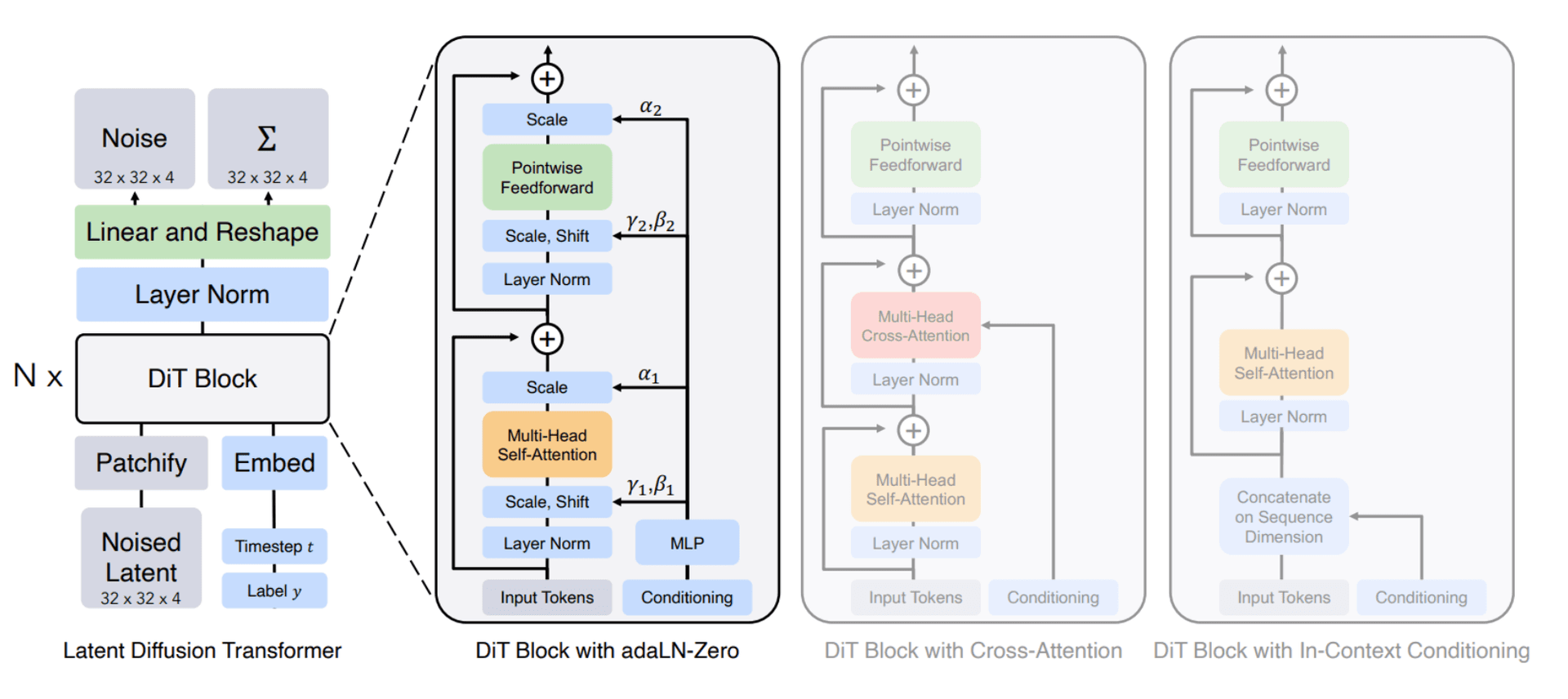
The transformer architecture's attention mechanism gives these models a better understanding of the relationships between distant parts of an image. A U-Net processes the image through a sequence of downsampling and upsampling operations that can lose long-range spatial information. A transformer can attend to any part of the image from any other part, which means compositional elements maintain better consistency — a shadow falls correctly relative to the light source, a reflection in a window matches the scene outside it.
Flow Matching and Rectified Flows
The mathematical framework underlying generation has also evolved. Flow matching, used by Flux and related models, offers advantages over the traditional noise-scheduling approach of earlier diffusion models. Rather than learning to reverse a fixed noise process, flow matching learns a direct transport path from noise to image, which typically requires fewer sampling steps to achieve equivalent quality.[7]
In practical terms, this means faster generation times at equivalent quality, or higher quality at equivalent generation times. The Flux Schnell model's ability to generate coherent images in four sampling steps — compared to the twenty or more steps typical of earlier diffusion models — is a direct consequence of this architectural choice.
ControlNet, IP-Adapter, and Compositional Control
The control mechanism ecosystem has matured significantly. ControlNet, which allows conditioning image generation on structural inputs like edge maps, depth maps, pose skeletons, and segmentation masks, is now standard across most major open-source models and increasingly available through API providers.[9]
IP-Adapter technology, which enables style and subject transfer from reference images without fine-tuning, has become the practical tool for brand consistency. A designer can provide a reference image — a previous marketing asset, a brand photography example, a product photo — and generate new images that maintain the visual identity of the reference. This capability bridges the gap between "generate any image from text" and "generate images that fit within an existing visual system."
For creators managing consistent visual identities across channels — producing AI-generated thumbnails that maintain a recognizable style, or building visual content libraries for brand marketing — these control mechanisms are the difference between AI generation being a novelty and being a production tool.
The Text Rendering Revolution
Text rendering in AI-generated images deserves its own section because the improvement has been so dramatic and so consequential for practical applications. As recently as early 2024, asking any AI image generator to include text was a gamble — the results were frequently garbled, misspelled, or spatially distorted. By 2026, accurate text rendering has become an expected capability.[8]
GPT-4o, Ideogram 3.0, and recent Flux models can all render text with high reliability across a range of typographic styles. The improvement is not merely cosmetic. It unlocks entire categories of visual content that were previously impractical to generate: social media graphics with headline text, poster and flyer designs, product mockups with labels and packaging text, infographic elements, presentation slides, and any image where text is a critical compositional element.
The technical mechanism behind the improvement varies by model. In multimodal models like GPT-4o, text rendering benefits from the model's unified understanding of language and vision — it knows what the text should say and can verify the visual rendering against the semantic content. In diffusion models, text rendering improvements have come from training data curation (including more text-heavy imagery in training sets), architectural modifications that dedicate capacity to character-level rendering, and post-processing steps that verify text accuracy.[1]
For YouTube content creators, the text rendering improvement is directly tied to the thumbnail production workflow. A YouTube thumbnail with clear, bold text overlaid on a compelling visual is the single most important click-through asset on the platform. Previously, creators generated the visual with AI and added text manually in Canva or Photoshop. Now, the entire thumbnail — visual and text — can be generated in a single prompt, iterated on conversationally, and exported directly.
The same capability transformation applies to blog post featured images, where title text integrated into the visual creates more engaging social sharing previews than a generic image with text overlaid programmatically.
The Photorealism Threshold
A persistent question in the AI image generation space is when AI-generated images would become reliably indistinguishable from photographs. The answer in 2026 is: for many categories, they already have, and for the remaining categories, the gap is closing rapidly.
Portrait photography was one of the first categories to cross the photorealism threshold. Current models can generate faces with skin texture, pore-level detail, accurate iris reflections, and natural hair rendering that fool casual observers consistently. Professional photographers can still identify tells — certain patterns in how light interacts with skin, characteristic behaviors of generated hair, subtle symmetry artifacts — but these tells are increasingly model-specific rather than category-wide.
Product photography is another category where AI generation has reached commercial viability. E-commerce companies are generating product images — a supplement bottle on a marble countertop, a pair of shoes on a wooden floor, a piece of jewelry against a fabric backdrop — that are indistinguishable from studio photography. The cost difference is orders of magnitude: a professional product photoshoot costs hundreds to thousands of dollars, while an AI-generated equivalent costs cents.[10]
Landscape and architectural photography are close to the threshold but retain identifiable artifacts in complex scenes. AI models still struggle with certain types of natural complexity — dense foliage where every leaf should be distinct, water surfaces where reflections should match the surrounding environment perfectly, and scenes with multiple light sources that create complex shadow interactions.
The categories furthest from the photorealism threshold are those involving precise physical interactions: a hand accurately holding a specific tool, fabric draping realistically over a moving body, or food photography where the textures of different ingredients must all be individually convincing. These categories improve with each model generation but still produce results that experienced observers can identify.
The Copyright and Legal Landscape
The legal framework surrounding AI-generated images remains one of the most unsettled areas of technology law, and the developments in 2025 and 2026 have added complexity rather than clarity.
The core legal question — whether AI models trained on copyrighted images constitute copyright infringement — remains unresolved in most jurisdictions. Multiple lawsuits filed by artists, photographers, and stock image companies against Stability AI, Midjourney, and others are working through the court system, with significant rulings expected but not yet finalized.[11]
The U.S. Copyright Office has maintained its position that AI-generated images without significant human creative input cannot receive copyright registration. This means purely AI-generated imagery is in the public domain by default — anyone can use it, and the creator has no exclusive rights. Images with sufficient human creative contribution — through extensive prompting, editing, selection, and arrangement — may qualify for copyright, but the threshold is determined case by case.[12]
The European Union's AI Act, which began implementation phases in 2025, requires AI-generated content to be labeled as such, creating a transparency requirement that affects how AI imagery can be used in commercial contexts. The practical implications for marketers, publishers, and advertisers are still being interpreted, but the direction is toward mandatory disclosure rather than prohibition.
For creators and businesses making practical decisions today, the safest approach is: use Adobe Firefly for any application where copyright exposure matters, as it is the only major model with IP indemnification. For non-commercial or low-risk applications, any model is fine. For commercial applications using other models, maintain documentation of the creative process to support a claim of human authorship if challenged. Tools like Miraflow's AI image generator that provide transparent generation processes help creators maintain the documentation trail that may matter for rights questions.
The Workflow Revolution: From Single Images to Production Pipelines
Perhaps the most significant change in 2026 is not any single model's capability but the maturation of AI image generation from a novelty — "look what the AI made!" — into a production tool integrated into professional workflows. This shift manifests in several concrete patterns.
The Content Pipeline Pattern
For content creators producing YouTube channels, blogs, newsletters, or social media accounts, AI image generation has become a pipeline component rather than a standalone tool. A typical workflow might look like this: the creator writes a blog post or scripts a video, then generates a thumbnail or featured image using AI, iterates on the result until it matches the content's tone and message, generates variations for different platforms (square for Instagram, landscape for YouTube, portrait for Pinterest), and publishes across channels.
This pipeline approach means the creator is not spending twenty minutes in Canva or Photoshop per image. The generation step takes seconds, the iteration step takes minutes, and the multi-format variation step is automated. For a creator publishing daily content across multiple platforms, this represents hours saved per week.
The same pipeline thinking applies to YouTube Shorts production, where visual assets need to be generated rapidly and at volume. A creator producing a 30-day Shorts plan needs dozens of visual assets, and AI generation makes that volume feasible for a solo creator in a way that manual design never could.
The Brand Consistency Pattern
For businesses, the challenge has shifted from "can AI generate a good image?" to "can AI generate images that are on-brand?" The answer in 2026 is yes, but it requires deliberate workflow design.
The pattern involves creating a brand reference library — a set of approved images, colors, styles, and examples — and using IP-Adapter or style-reference features to condition generation on those references. Some teams maintain custom fine-tuned models (using LoRA or DreamBooth techniques on open-source bases like Flux or SD 3.5) that have been trained on their specific brand assets. Others use the style reference features built into Midjourney or the reference image capabilities of GPT-4o.
The result is AI-generated imagery that maintains visual consistency across hundreds of pieces of content — a consistency that would require a dedicated designer to achieve manually. For marketing teams producing social media content, email campaigns, and digital advertising at scale, this pattern represents a fundamental shift in the production model.
The Concept-to-Final Pattern
For creative professionals — illustrators, concept artists, designers — the workflow pattern that has emerged is AI as a concept development tool that accelerates the path from initial idea to final execution. Rather than replacing the creative, AI generation serves as a rapid ideation layer where dozens of visual concepts can be explored in minutes rather than hours.
A concept artist might generate fifty variations of an environment concept in twenty minutes, identify the three strongest directions, refine those using AI editing and inpainting tools, and then use the refined concepts as reference for a final piece executed in their traditional medium — digital painting, 3D rendering, or physical media. The AI did not replace the artist's final work, but it compressed the exploration phase from days to minutes.
The Emerging Convergence: Image, Video, and Music
One of the defining trends of 2026 is the convergence of AI generation across media types. The distinction between an AI image generator, an AI video generator, and an AI audio generator is blurring as multimodal models expand their capabilities and as pipelines connect specialized tools.

The image-to-video pipeline has become a standard capability. Models can take a static AI-generated image and animate it — adding camera movement, subject motion, environmental effects — to produce short video clips. This means that AI-generated images are no longer endpoints but starting points for cinematic video content.
Similarly, the text-to-image-to-video pipeline enables entirely AI-generated visual content from a text description. A creator can describe a scene, generate a still image, animate it into a video clip, add AI-generated music, and produce a complete multimedia piece without any traditional production tools. Platforms like Miraflow that integrate these capabilities into a single workflow — image generation, video creation, and music production — represent the convergence in practice.
This convergence has particular implications for short-form video content. The text-to-Shorts pipeline — where a text script is automatically converted into a visual short-form video with generated imagery, animations, and audio — represents a new category of content production that was not technically feasible eighteen months ago. The quality of each individual component (image, animation, audio) has crossed the viability threshold, and the integration between them has matured enough to produce cohesive results.
Open Source vs. Closed Source: The Strategic Divide
The 2026 arms race has crystallized a strategic divide between open-source and closed-source approaches to AI image generation, and the implications of this divide extend beyond technology into business model and ecosystem questions.
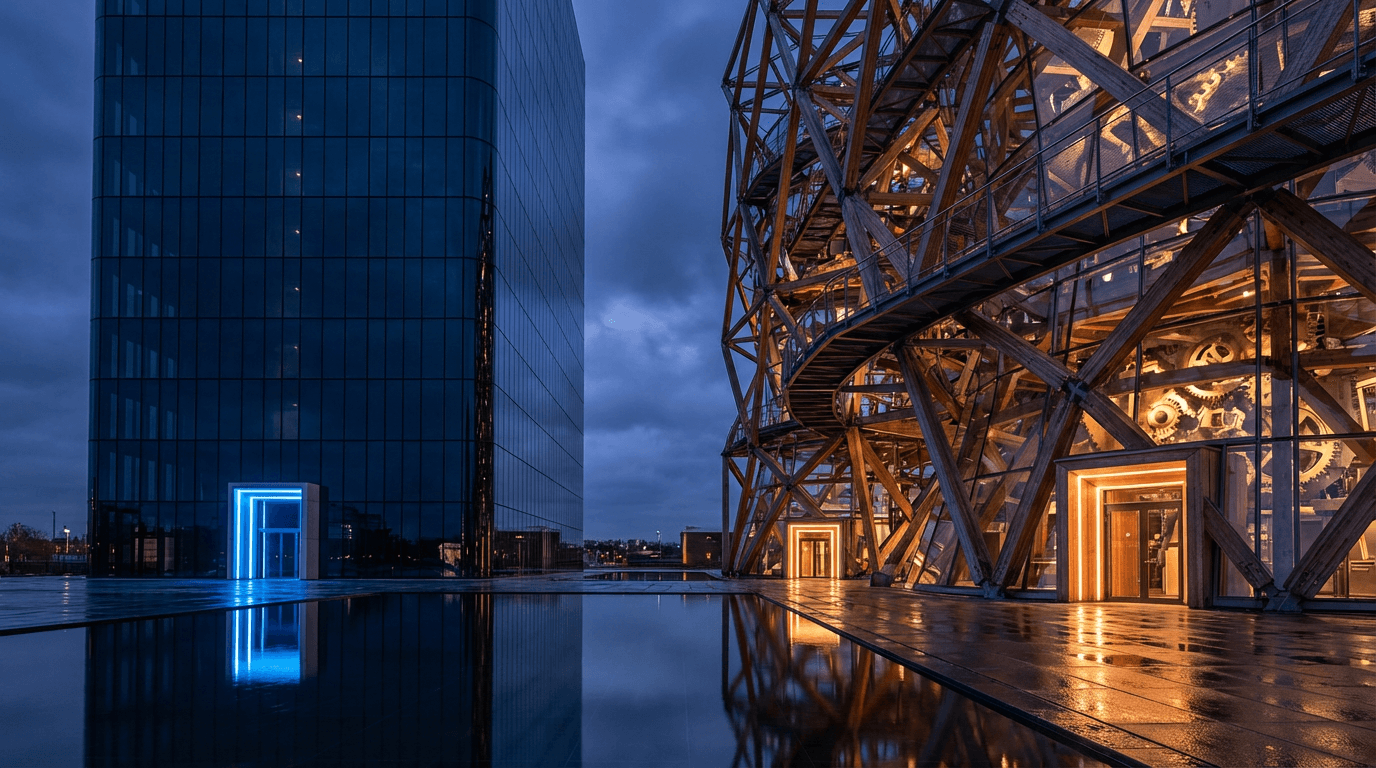
The closed-source camp — GPT-4o, Gemini, Midjourney — offers the best out-of-the-box experience for non-technical users. You type a prompt, you get an image, you iterate in conversation. The quality is high, the interface is polished, and the user does not need to understand anything about model architecture, sampling parameters, or pipeline configuration. The tradeoff is cost (subscription or per-image fees), control (you cannot customize the model), privacy (your prompts and images pass through third-party servers), and dependency (you are subject to the provider's content policies, pricing changes, and availability decisions).
The open-source camp — Flux, Stable Diffusion ecosystem, community LoRAs and ControlNets — offers maximum control and flexibility at the cost of technical complexity. Running Flux locally requires capable hardware (a modern GPU with sufficient VRAM), software setup (ComfyUI, automatic1111, or a custom pipeline), and knowledge of model parameters and workflow configuration. But once set up, the user has complete control: no per-image costs, no content policy restrictions beyond their own judgment, complete privacy, and the ability to fine-tune models for specific applications.[7]
The practical reality for most users in 2026 is a hybrid approach. They use closed-source models for quick, conversational generation tasks — brainstorming visuals, generating one-off social media images, iterating on concepts. They use open-source models for production workflows where volume, customization, or privacy matters — batch generating product images, running a content pipeline that produces dozens of images daily, or generating imagery that involves sensitive brand assets.
For developers building applications that incorporate AI image generation, the choice between open-source and closed-source has direct implications for cost structure, scalability, and user experience. API-based closed-source models offer simplicity and quality but create per-unit costs that scale linearly with usage. Self-hosted open-source models require upfront infrastructure investment but offer near-zero marginal cost per generation.
The Ethics and Responsibility Landscape
The capabilities of 2026's image generation models have outpaced the frameworks for managing their impact, creating a set of ethical challenges that the industry, regulators, and society are grappling with simultaneously.
Deepfakes and non-consensual imagery remain the most acute concern. The ability to generate photorealistic images of real people in fabricated scenarios — or to generate explicit imagery of real individuals without their consent — is a capability that current models have, despite content filters designed to prevent it. The filters are effective against casual misuse but are routinely circumvented by determined actors, particularly through open-source models where no content filtering exists by default.
The economic impact on visual creative professionals is another dimension of the ethical landscape. Stock photographers, illustrators, and graphic designers have seen their markets disrupted as AI generation replaces work that previously required human creation. The disruption is not uniform — high-end creative work, custom illustration, and complex design projects remain in demand — but the commodity end of the visual content market has been significantly affected.
Misinformation through fabricated imagery is a growing concern, particularly in political contexts. The ability to generate convincing fake photographs of events that never happened, people in places they never visited, or documents that were never written creates challenges for media verification that existing tools and institutions are struggling to address. Google's SynthID and similar watermarking initiatives represent technical countermeasures, but their effectiveness depends on adoption across all major models, which remains incomplete.[5]
Content provenance standards — the C2PA (Coalition for Content Provenance and Authenticity) initiative, which embeds cryptographic metadata in images to verify their origin and modification history — are gaining adoption among major platforms but are not yet universal. The standard's effectiveness is limited by the fact that many distribution channels strip metadata during upload, and bad actors can remove provenance data intentionally.
Practical Recommendations for Different User Types
The breadth of the 2026 image generation landscape means that the right tool depends heavily on the user's specific needs, technical comfort level, and budget constraints.
For Solo Content Creators
If you are producing YouTube content, blog posts, newsletters, or social media and you need visual assets consistently, the most efficient approach is to build your workflow around the model that is already in your primary tool. If you use ChatGPT daily, GPT-4o's image generation is the path of least resistance. If you are in the Google ecosystem, Gemini's integration makes it the natural choice. Supplement with specialized tools as needed — Ideogram for text-heavy graphics, Miraflow for integrated visual content production across thumbnails, videos, and music.
The key insight for solo creators is that consistency and speed matter more than absolute quality. An image that is 90% as good as the perfect result but produced in thirty seconds is more valuable than the perfect result that takes fifteen minutes, because the time savings compounds across every piece of content.
For Design Teams and Agencies
For professional design environments, the recommendation splits by workflow phase. Use Midjourney for initial concept exploration and moodboarding — its aesthetic quality makes the exploration phase more inspiring. Use GPT-4o or Gemini for iterative refinement where you need conversational control over specific elements. Use Flux or Stable Diffusion for production pipelines where volume, customization, and cost control matter. Use Adobe Firefly for any client-facing work where copyright safety is a requirement.
Investing in a custom fine-tuned model based on Flux or SD 3.5, trained on your agency's style and your clients' brand assets, is the single highest-ROI move for teams producing consistent visual content at scale. The upfront cost of model training is recouped quickly when the alternative is manually ensuring brand consistency across hundreds of generated images.
For Developers Building Products
If you are integrating AI image generation into a product, the decision tree starts with volume and cost. Low volume (hundreds of images per day) — use the API of whichever closed-source model produces the best results for your use case. Medium volume (thousands per day) — compare API costs against the infrastructure cost of self-hosting Flux or another open-source model; the crossover point is usually in this range. High volume (tens of thousands or more per day) — self-hosting is almost certainly the right choice economically.
The technical considerations include latency requirements (how fast does the user need the image?), customization needs (does the model need to understand domain-specific concepts?), and content safety (does the application need content filtering, and if so, how robust?).
For Enterprise Marketing Teams
For marketing teams at scale, the recommendation is Adobe Firefly as the baseline for all commercial content (IP safety), supplemented by GPT-4o or Gemini for creative exploration and campaign concepting, with a clear policy on which generated images require human review before publication and which can be approved automatically.
Establishing a governance framework — who can generate what, which models are approved, how generated images are labeled and archived, what review process applies before publication — is more important than choosing the "best" model. The best model in the world is useless if its output creates legal or brand risk.
Where the Arms Race Goes Next
The trajectory of the image generation arms race points toward several developments that will likely define the next twelve to eighteen months.
Real-time generation is approaching viability. Models that can generate images in response to user input with latency measured in milliseconds rather than seconds will enable new categories of interactive applications — games, virtual environments, and creative tools where the image updates live as the user adjusts parameters.
Video generation is the next frontier where the same dynamics playing out in image generation — quality improvements, model competition, open-source vs. closed-source tension, ethical concerns — will repeat at a larger scale. The companies that lead in image generation are already applying the same architectures and training approaches to video, and the quality trajectory in video generation in 2025-2026 mirrors where image generation was in 2023-2024. Platforms that already integrate AI video creation are positioned at the leading edge of this convergence.
3D generation from 2D images is an emerging capability that will bridge the gap between AI image generation and spatial computing. Models that can infer 3D structure from a single generated image, producing assets that can be placed in AR/VR environments or used in game engines, will extend the value chain from "an image on a screen" to "an object in a space."
Personalization at the model level — where the base model is fine-tuned to individual users' preferences, style, and creative sensibilities — will shift the competitive axis from "which model generates the best images" to "which model generates the best images for me." This is already happening through LoRA fine-tuning in the open-source ecosystem, but the closed-source platforms will inevitably offer personalization as a premium feature.
The arms race will not produce a single winner. The future is a diverse ecosystem where different models serve different needs, where workflows combine multiple tools, and where the competitive advantage accrues to the creators and businesses that build the most effective processes around these tools rather than to the users of any single model. The companies and individuals who understand this — who invest in workflow design rather than model allegiance — will extract the most value from what is already the most transformative shift in visual content production since the invention of digital photography.
For creators ready to build those workflows today, Miraflow AI offers an integrated platform spanning AI image generation, YouTube thumbnail creation, text-to-Shorts conversion, cinematic video production, and AI music creation. The platforms that integrate across media types — rather than excelling in a single category — will define how the next generation of content is produced.
Frequently Asked Questions
Which AI image generator produces the best results in 2026?
There is no single best generator. GPT-4o excels at conversational iteration and text rendering. Midjourney produces the most aesthetically refined images for artistic and editorial applications. Flux offers the best open-source quality for local deployment. Ideogram leads in text rendering accuracy. Adobe Firefly provides the best copyright safety for commercial use. The right choice depends on your specific use case, technical requirements, and workflow preferences.
Is AI-generated imagery copyrightable?
In the United States, purely AI-generated images without significant human creative contribution cannot receive copyright registration. Images where a human has made substantial creative choices — through detailed prompting, extensive editing, careful selection, and deliberate arrangement — may qualify for copyright protection, but the threshold is determined case by case by the Copyright Office. The legal landscape is evolving, and significant court decisions are pending.
Can AI image generators create photorealistic images of real people?
Current models can generate photorealistic images that resemble real people, and most major platforms have content policies prohibiting the generation of images depicting specific real individuals without their consent. These policies are enforced through content filters in closed-source models. Open-source models running locally do not have these filters by default, which creates significant ethical and legal concerns around non-consensual imagery.
How much does AI image generation cost?
Costs vary widely by model and usage pattern. ChatGPT Plus (includes GPT-4o image generation) costs $20/month with daily generation limits. Midjourney plans range from $10 to $120/month depending on generation volume. API pricing from various providers typically ranges from $0.01 to $0.10 per image depending on resolution and model. Open-source models running on local hardware have no per-image cost but require GPU hardware investment, typically $500 to $2,000 for a capable consumer setup.
What hardware do I need to run AI image generation locally?
For running Flux or Stable Diffusion locally, the minimum practical setup is a GPU with 8GB VRAM (NVIDIA RTX 3060 or equivalent), though 12-16GB VRAM (RTX 4070 or better) provides a significantly better experience. Apple Silicon Macs with 16GB or more unified memory can also run these models through optimized inference frameworks like MLX, though generation is typically slower than on NVIDIA hardware. For the fastest Flux Schnell generations, a high-end GPU like the RTX 4090 with 24GB VRAM is recommended.
How do I maintain brand consistency with AI-generated images?
The most effective approach is to create a brand reference library containing approved images, color palettes, style examples, and typography guidelines. Use IP-Adapter or style-reference features (available in Midjourney, Flux, and SD ecosystem tools) to condition generation on these references. For teams producing at volume, training a custom LoRA model on your brand assets provides the most reliable consistency. Platforms like Miraflow offer integrated workflows that help maintain visual consistency across generated content.
Will AI image generation replace photographers and illustrators?
The impact is uneven. Commodity visual content — stock photography, simple illustrations, basic product shots — is being significantly displaced. High-end creative work — editorial photography, custom illustration, art direction, and complex design projects — continues to require human expertise. The most likely outcome is a shift in the professional landscape rather than wholesale replacement: fewer entry-level production roles, more emphasis on creative direction and AI-augmented workflows, and new job categories focused on AI pipeline design and prompt engineering.
Are AI-generated images detectable?
Detection tools exist but are imperfect. Google's SynthID watermarking survives most common image modifications but only applies to Gemini-generated images. Third-party detection tools can identify AI-generated images with moderate accuracy, but the accuracy varies by model and decreases with image editing. C2PA provenance metadata provides the most reliable verification when present, but it can be stripped and is not universally adopted. The practical reality is that sophisticated AI-generated images can be difficult to distinguish from photographs, and detection technology lags behind generation capability.
References
- Introducing 4o Image Generation — OpenAI
- ChatGPT's New Image Generator Is Impressively Good and Wildly Popular — TechCrunch
- OpenAI's ChatGPT Ghibli Trend Sparks Artistic Style Debate — BBC News
- ChatGPT vs Gemini Image Generation Compared — Tom's Guide
- Gemini Image Generation — Google Blog
- Midjourney Documentation
- Black Forest Labs — Flux
- Ideogram Blog — AI Image Generation
- Stability AI
- Adobe Firefly — AI Image Generation
- Every Major AI Copyright Lawsuit — The Verge
- U.S. Copyright Office — AI and Copyright
- C2PA Content Provenance Standard
- ComfyUI — Open Source AI Image Generation Interface
- ControlNet: Adding Conditional Control to Text-to-Image Diffusion Models
- Miraflow AI — Integrated AI Content Creation Platform
- How to Generate Blog Thumbnails with AI for Free — Miraflow
- Best AI Prompts for YouTube Thumbnails 2026 — Miraflow
- 30-Day YouTube Shorts Plan 2026 — Miraflow
- EU AI Act Implementation Timeline — European Commission