Google Ads Data Strength Uplift Metric: The September 2026 Measurement Update Explained

Written by
Aerin Kim
Google's September 10, 2026 Data Strength Uplift Metric, Data Manager upgrades, and Meridian GeoX release quantify first-party data with real numbers: 14%, 20%+, 26%, and 11% uplift advertisers can act on now.
On September 10, 2026, Google published one of the biggest first-party-data measurement updates to Google Ads since the post-cookie transition started reshaping how advertisers track conversions. The official announcement, written by Nipoon Malhotra, Google's VP of Ads Analytics, Insights, and Measurement, introduces a brand new metric called the Data Strength Uplift Metric, three real enhancements to Data Manager, and the global general availability of Meridian GeoX, Google's open-source library for causal geo-experiments.
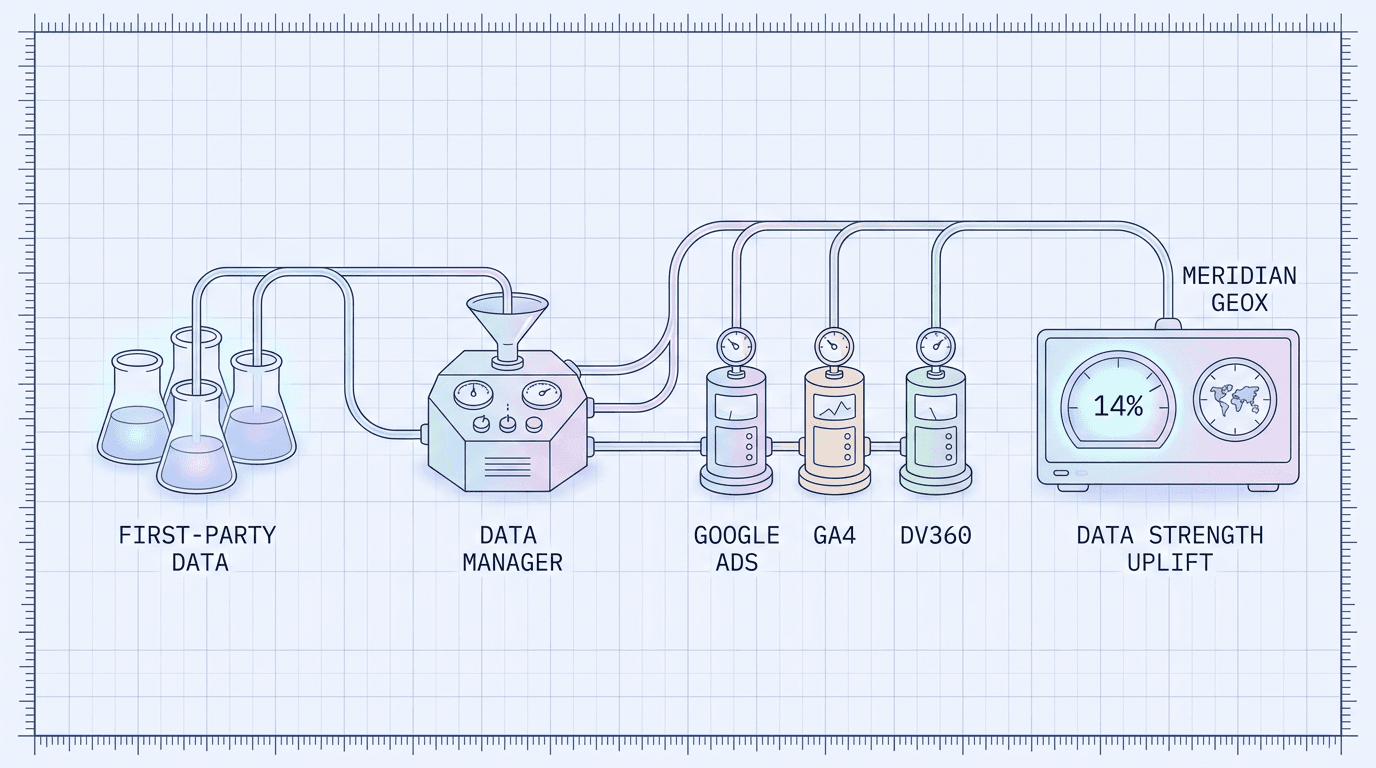
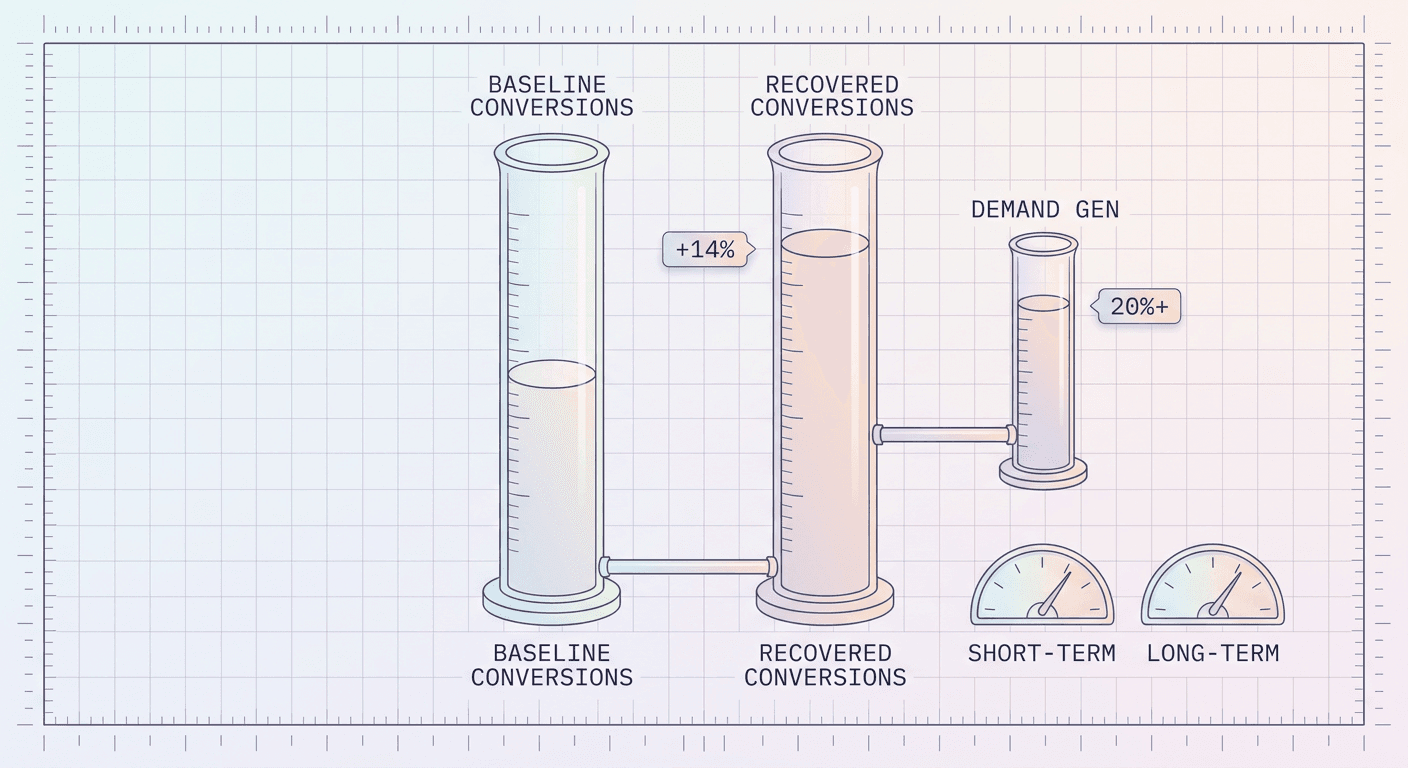
Unlike most platform updates that arrive with vague promises about "better performance," this one shipped with real numbers advertisers can act on immediately. Advertisers using Google tag gateway saw an average 14% conversion uplift. Demand Gen campaigns saw more than 20% uplift. Connecting offline and app data through Data Manager produced an average 26% increase in incremental ROAS. Enhanced Conversions, now live inside Google Analytics and Display & Video 360, delivered an average 11% increase in Search conversions. Those four numbers are the spine of this post, and every one of them is tied to a specific mechanism you can actually turn on in your own account this week.
If you run paid campaigns and have spent the last two years fighting signal loss from cookie deprecation, ITP, and ad blockers, this update matters more than another AI Max rollout or asset group tweak. It is Google's clearest attempt yet to put a real, in-account number on the value of your first-party data setup, and to give you the tooling to close the gaps that setup still has. This guide walks through exactly what changed, how each piece actually works under the hood, how to turn it on, and where the common setup mistakes will quietly cap the uplift you should be seeing.
| Feature | Reported Uplift | What It Actually Measures | Data Source It Depends On |
|---|---|---|---|
| Data Strength Uplift Metric | 14% avg (Google tag gateway) / 20%+ (Demand Gen) | Additional conversions recovered by your first-party data setup, shown as short-term and long-term value | Google tag gateway, Enhanced Conversions, and other connected conversion sources |
| Data Manager: GA4 + DV360 integration | 26% avg increase in incremental ROAS | Cross-platform activation of the same first-party data across Google Ads, GA4, and DV360 | Offline sales feeds and in-app purchase events connected through Data Manager |
| Enhanced Conversions in GA4 and DV360 | 11% avg increase in Search conversions | Deterministic hashed-identity matching that recovers cross-device and cross-session conversions | Hashed email, phone, or address data captured client-side or server-side |
| Meridian GeoX (global general availability) | Causally verified incremental lift per experiment; reported lower-cost geo-testing since GA | Real causal incrementality from geo-based test and control experiments, standalone or feeding an MMM | Geo-level ad spend and outcome data across matched test and control regions |
What Google Actually Announced on September 10
Google Ads measurement has spent the last several years reacting to signal loss. Third-party cookies eroded, Safari's Intelligent Tracking Prevention and Firefox's Enhanced Tracking Protection cut off cross-site tracking, and iOS App Tracking Transparency did the same on mobile. Advertisers responded by building first-party data pipelines: server-side tagging, Customer Match lists, offline conversion imports, hashed email and phone matching. The problem was never that these tools did not exist. The problem was that nobody could easily answer a simple question in the Google Ads interface: is my first-party data setup actually doing anything, and how much?
That is the gap this release closes. Rather than one feature, it is four connected pieces that all point at the same goal, quantifying and improving the value of first-party data inside the systems advertisers already use every day.
The four pieces, in the order this post covers them, are the Data Strength Uplift Metric itself, three enhancements bundled into Data Manager (cross-platform integration, Enhanced Conversions in GA and DV360, and a universal Data Manager API), and Meridian GeoX reaching general availability worldwide. Each solves a distinct problem, but they are designed to work together: Data Manager feeds clean, matched first-party data into Google Ads, GA, and DV360, the Data Strength Uplift Metric shows you the payoff of that data inside your account, and Meridian GeoX lets you independently verify that payoff with a real causal experiment instead of trusting a single in-platform number.
If you have been reading the other Google Ads coverage on this blog, you have likely seen a steady stream of campaign-structure changes this year: the AI Max auto-upgrade for Search campaigns, the new AI Max reporting columns, Performance Max asset A/B testing, and the Demand Gen migration of standalone Display campaigns. This announcement sits underneath all of that. Campaign types and bidding strategies decide where your budget goes. This update decides whether the data feeding those decisions is any good in the first place. You can browse the rest of that coverage anytime on the Miraflow blog, including the newer Ask Advisor Gemini agent Google shipped for surfacing exactly this kind of account-level diagnosis in plain language.
The Data Strength Uplift Metric, Explained
The Data Strength Uplift Metric is a new number that appears inside your Google Ads conversion reporting, and it answers one specific question: how many additional conversions did your first-party data setup recover that a bare, unenhanced setup would have missed. Google's own framing is that it "calculates the additional conversions recovered by your first-party data setup to help quantify impact," and the metric is designed to show both short-term and long-term value from unified data signals, not just a single snapshot number.
To understand why this is a genuinely useful metric and not just another dashboard vanity number, it helps to walk through how the underlying gap actually happens. Say a mid-sized ecommerce advertiser runs a $50,000 monthly Search budget with a standard website conversion tag. Some share of real purchases never gets reported back to Google Ads at all, because the browser blocked the conversion pixel, the customer converted in a different browser session than the one that clicked the ad, or a privacy setting stripped the click identifier before the conversion could be matched back to it. That advertiser's Google Ads account reports, say, 1,000 tracked conversions a month, while the business's own order data shows a meaningfully higher number of orders that actually originated from a Google Ads click.
Now the advertiser deploys Google tag gateway, Google's first-party server-side tagging layer that routes conversion pings through the advertiser's own domain instead of a third-party request that browsers are increasingly likely to block, and layers Enhanced Conversions on top so that hashed customer identifiers (email, phone, address) get matched against Google's logged-in signal graph when the raw click ID is unavailable. Some of the previously invisible conversions now get recovered and correctly attributed. If that recovery adds roughly 140 additional conversions to the 1,000 baseline, the account is showing almost exactly the 14% average conversion uplift Google reported for advertisers using Google tag gateway. That 14% is not a modeled guess about future performance, it is Google's own reported average of conversions that were genuinely happening already and simply were not being counted until the first-party data setup caught them.
The short-term and long-term split Google mentions matters here too. The short-term value is that immediate jump in reported conversions inside the current reporting window, the 140 extra conversions in the example above. The long-term value compounds on top of that: Smart Bidding strategies like Target ROAS and Maximize Conversions train on whatever conversion data they can see, and a cleaner, more complete signal means the bidding algorithm is optimizing against a more accurate picture of what is actually working. Over several weeks, that typically shows up as the algorithm shifting spend toward the keywords, audiences, and assets that were quietly outperforming all along but looked weaker in the old, signal-leaky data. That compounding effect is a real part of why Google separates short-term from long-term uplift instead of reporting one flat number.
Demand Gen campaigns show a materially higher uplift, over 20%, and the mechanism for why is straightforward once you know where Demand Gen actually runs. Demand Gen serves across YouTube, Discover, and Gmail, surfaces that lean more heavily on modeled and probabilistic conversion attribution than Search does, because the click-to-conversion journey on those surfaces is longer, more cross-device, and harder to track with a simple click ID. That means Demand Gen had more signal loss to begin with, so first-party data closes a proportionally bigger gap. If you are running both Search and Demand Gen and only see the uplift metric on one campaign type so far, that gap in where the signal loss originally lived is the most likely reason, not a bug in your setup.
One caution worth flagging early, and revisited in the Common Mistakes section below: the Data Strength Uplift Metric is a modeled, in-platform estimate of recovered conversions, calculated from the same conversion data Google Ads already has access to. It is a genuinely useful number, but it is not the same thing as an independent, causally verified incrementality result the way a Meridian GeoX experiment is. Treat it as a strong internal signal to act on, and pair it periodically with the kind of independent geo-experiment covered later in this post if you want a second, platform-independent confirmation.
Data Manager's Three New Enhancements
Data Manager is Google's hub for connecting first-party data sources, things like CRM exports, offline sales records, app purchase events, and Customer Match audiences, into Google's advertising and analytics products. It launched as its own product in December 2025, and this September update gives it three concrete upgrades that all reduce the friction between having good first-party data and actually getting value from it.
Direct integration into Google Analytics and Display & Video 360
Before this update, Data Manager's connections lived mostly around Google Ads. If you also wanted the same first-party data flowing into Google Analytics for on-site behavior modeling, or into Display & Video 360 for programmatic remarketing and bidding, you typically had to build and maintain a separate integration for each product, often with slightly different schema requirements and match logic. That duplication is exactly the kind of setup tax that causes teams to only ever finish the Google Ads integration and never get around to GA or DV360.
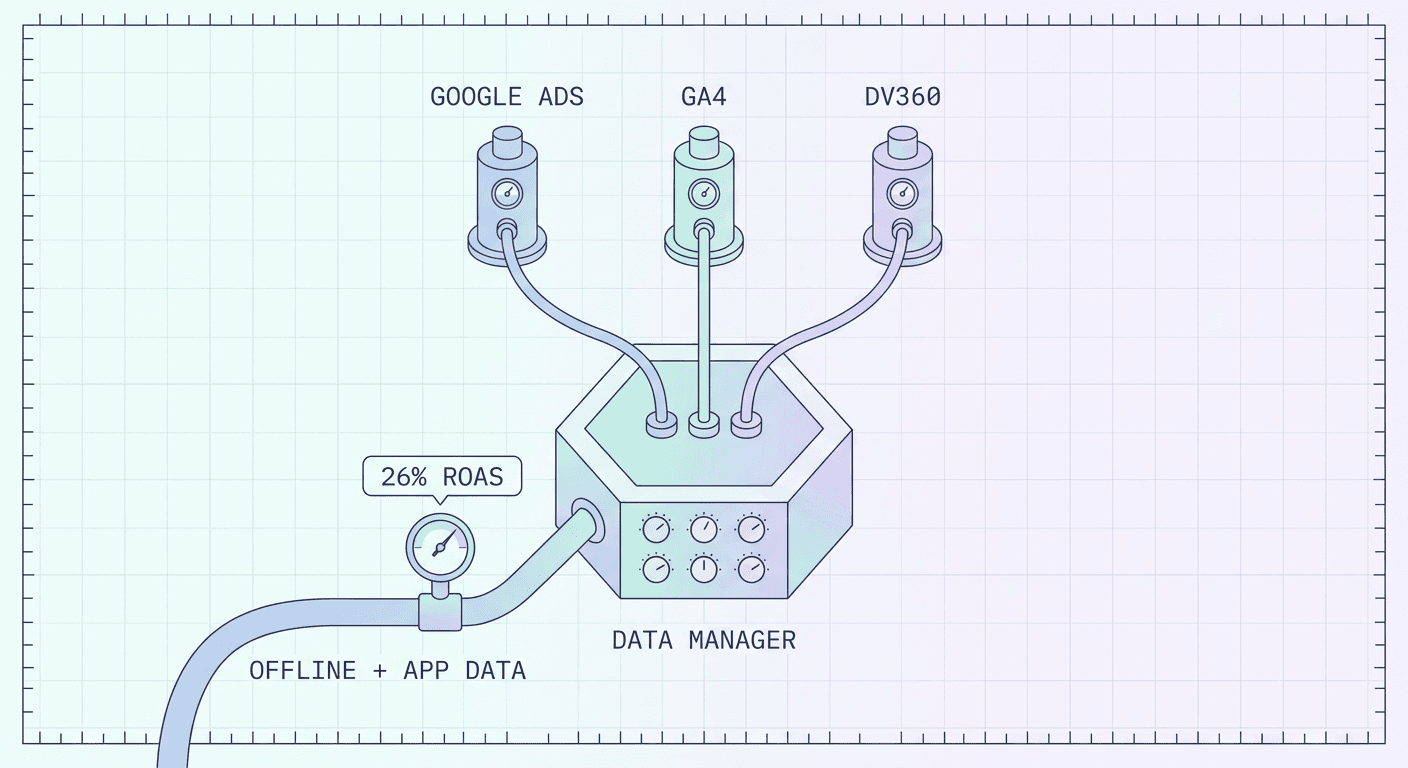
The September update collapses that into one connection. Data Manager now sits inside Google Analytics' admin settings and DV360's partner and advertiser settings directly, so a first-party data source mapped once feeds all three products without re-building the integration per tool.
Consider a mid-market retailer with a Shopify storefront and a loyalty program. Before this change, connecting their offline purchase feed to Google Ads for conversion value optimization was already done, but the same purchase data never made it into GA4 for on-site behavior modeling, and DV360's programmatic remarketing was still bidding off click and view proxies instead of real purchase outcomes. With the direct integration, that same offline purchase feed, mapped once, now also informs GA4's conversion modeling and gives DV360's bidding algorithms real revenue outcomes to optimize toward instead of a weaker engagement proxy.
That is exactly the mechanism behind the reported number here: advertisers connecting offline and app data through Data Manager saw an average 26% increase in incremental ROAS. Retailers already piping in-store sales into Google Ads through the Local Customer Optimization and Store Sales toolkit are especially well positioned here, since that same offline sales feed is exactly the kind of data source this integration was built to carry into GA and DV360 as well. The lift is not really about Data Manager itself, it is about DV360 and GA finally getting real purchase and revenue signals to bid and model against, instead of inferring value from clicks and views that only loosely correlate with actual outcomes. A programmatic campaign that used to optimize toward "most likely to click" now optimizes toward "most likely to actually buy," and those are not the same audience.
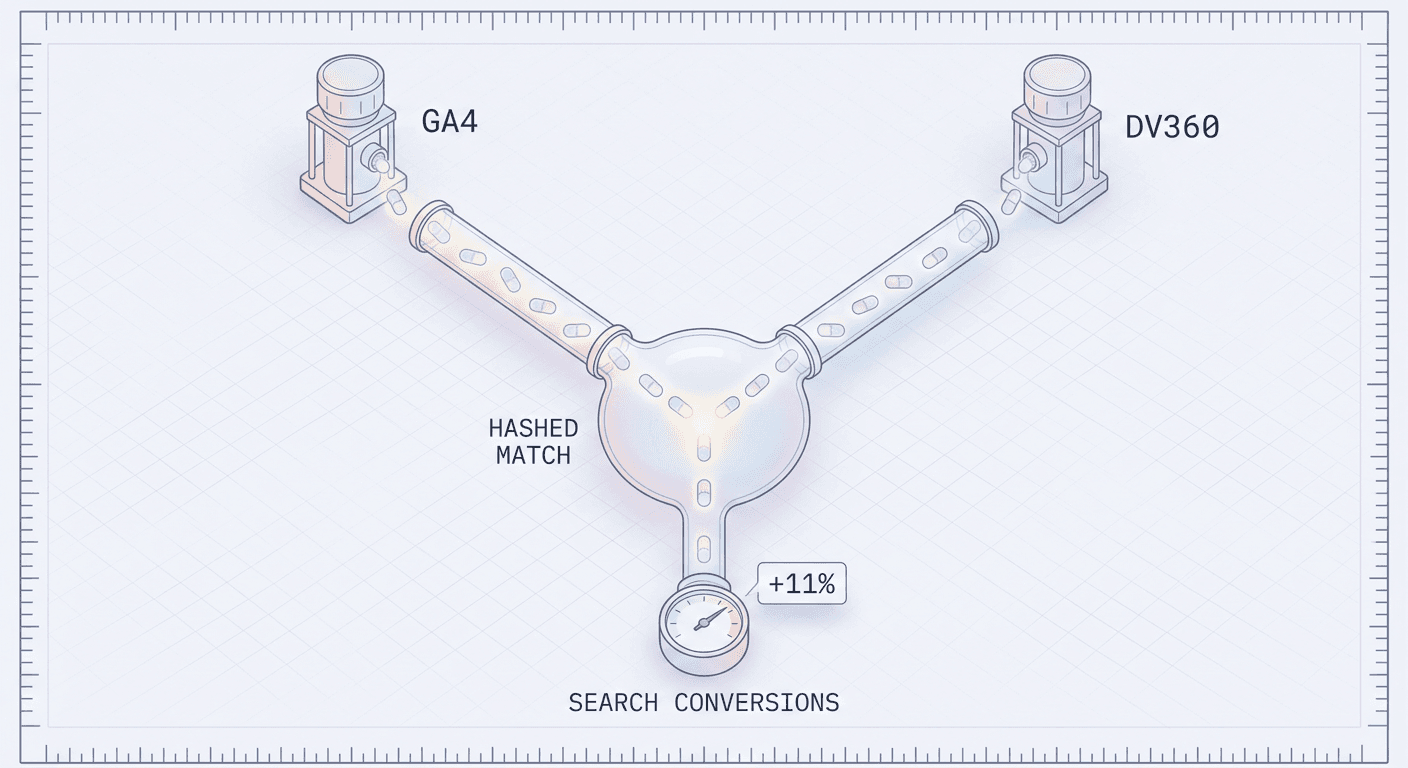
Enhanced Conversions, now live in Google Analytics and DV360
Enhanced Conversions has existed in Google Ads for a while as a way to improve conversion measurement accuracy by securely matching hashed first-party customer data, typically email, phone number, or address, against Google's own signed-in user graph. The mechanism is deterministic matching: your site or server hashes the customer's identifying information using a one-way hash function like SHA-256 before it ever leaves your systems, and Google compares that hashed value against its own hashed user graph to confirm a match, without either side ever seeing the other's raw, unhashed data.
Until this update, that capability was mostly siloed inside Google Ads conversion actions. The September release extends it natively into Google Analytics conversion events and DV360 conversion tracking, so the same deterministic matching logic that used to only help your Search and Shopping conversion actions now also strengthens your GA4 analytics data and your DV360 campaign measurement.
Picture a subscription software company that tracks trial signups and paid conversions in GA4, while also running upper-funnel video campaigns through DV360 to build awareness before those signups happen. Before Enhanced Conversions reached GA and DV360, a prospect who saw a DV360 video ad on their phone, then converted three days later on their laptop while logged into a different browser profile, was effectively invisible to DV360's own reporting, because there was no shared click ID connecting the two sessions. With Enhanced Conversions live in both products, the deterministic match on the customer's hashed email, captured at signup, links that laptop conversion back to the phone impression regardless of device or cookie state.
That closing of cross-device and cross-browser attribution gaps is exactly why Google reported an average 11% increase in Search conversions from this change. Cookie deprecation and browser privacy protections hit cross-session and cross-device journeys hardest, and Enhanced Conversions recovers exactly those conversions by relying on a deterministic identity match instead of a fragile click ID that frequently does not survive the journey.
A genuinely universal Data Manager API, built on the IAB Tech Lab's ECAPI standard
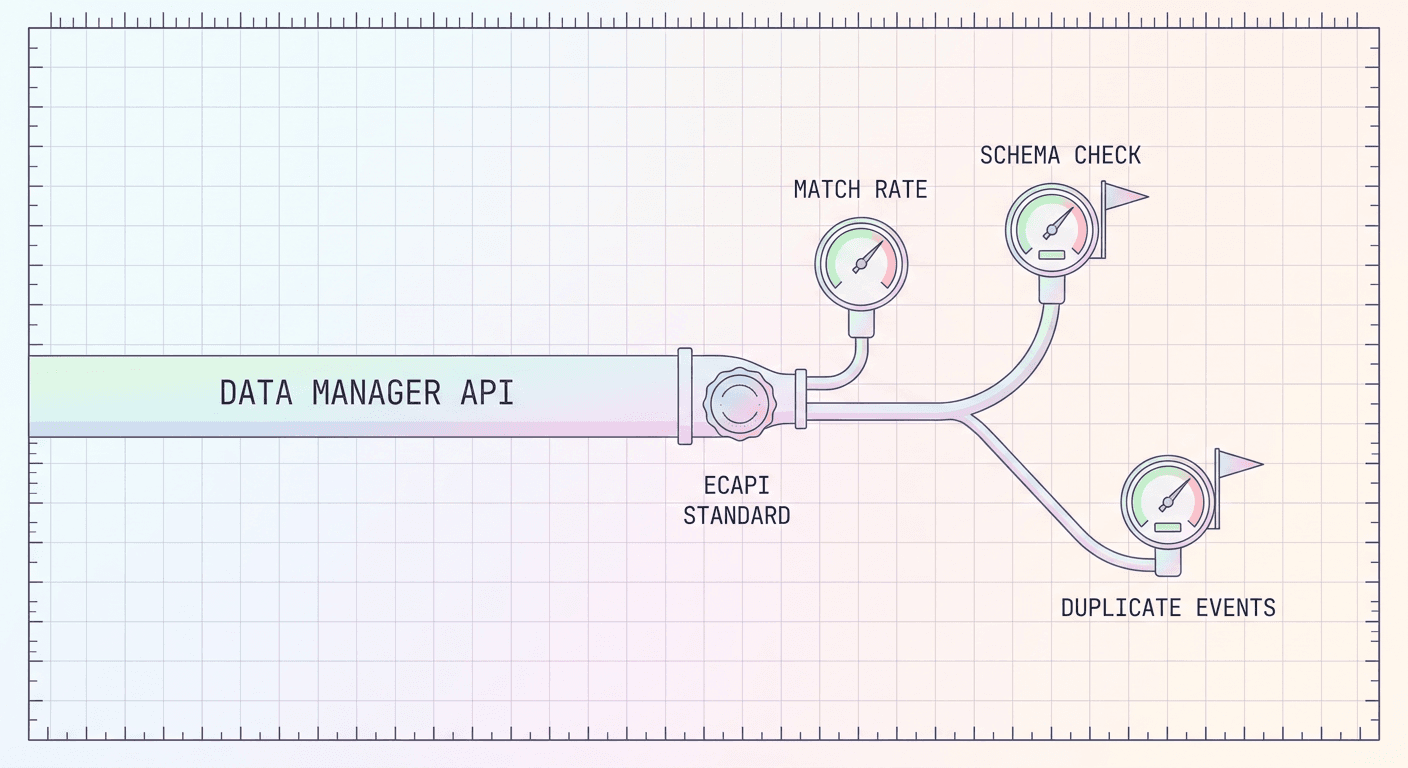
The third enhancement is more technical, and it matters most for larger advertisers, agencies, and anyone with engineering resources managing first-party data pipelines at scale. The Data Manager API, first launched in December 2025 as Google's implementation for sending event and conversion data programmatically, is now described as "universal," built on the IAB Tech Lab's Event and Conversions API standard, known in the industry as ECAPI.
Here is why that standardization actually matters rather than being a footnote. Before a shared industry standard like ECAPI existed, connecting your server-side event data to multiple advertising platforms meant building a separate, bespoke integration for each one, Google's schema was not Meta's schema was not TikTok's schema, and every platform update risked breaking one connector without touching the others. ECAPI is an attempt by the IAB Tech Lab, the standards body for digital advertising, to define one common event and conversion schema that participating platforms can implement. A Data Manager API built on that standard means an agency or advertiser can build one ECAPI-compliant server-side event pipeline and, as more platforms adopt the same standard, feed audiences and measurement to multiple ad platforms without maintaining a custom connector for each destination.
The practical scenario this helps most is an agency managing first-party data for a dozen retail clients across Google Ads, DV360, and other channels. Instead of a dozen bespoke integrations multiplied by however many ad platforms each client runs on, one ECAPI-based pipeline per client becomes the shared foundation, with Google's Data Manager API as one of its real destinations today and a genuinely reusable investment as more platforms catch up to the same standard.
The other half of this enhancement is built-in diagnostics that automatically identify and help fix data issues before they quietly erode campaign performance. Diagnostics catches things like a sudden drop in match rate, a malformed event schema after a website update, duplicate event firing, or missing required identifiers, and surfaces them directly rather than leaving you to notice a CPA creep three weeks later and reverse-engineer the cause. That diagnostic layer is arguably the most underrated part of this whole release, because a broken conversion pipeline that fails silently is one of the most common ways advertisers lose weeks of accurate bidding data without realizing it. It pairs naturally with Google's move toward auto-classifying customer lists earlier this year, since a clean, correctly labeled customer list is exactly the kind of input the new diagnostics are built to check.
Meridian GeoX Goes Generally Available: The MMM Blind Spot It Actually Fixes
The fourth piece of this announcement is Meridian GeoX, Google's open-source library for running causal geo-experiments across any advertising platform, not just Google's own. It was previewed earlier and has now reached general availability globally, meaning any advertiser, agency, or data science team can pull it down and run it against their own data without a waitlist or regional restriction.
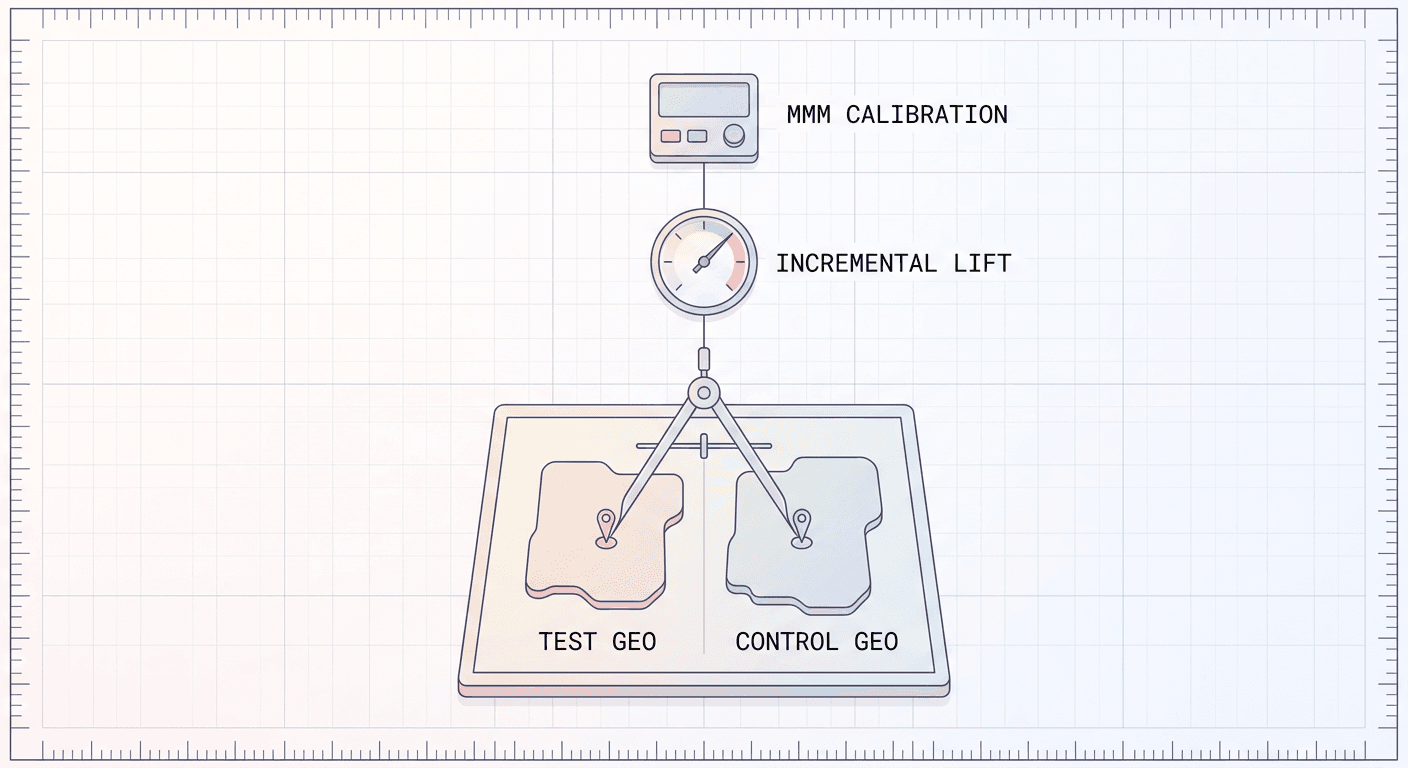
To understand why this matters, it helps to be precise about what a causal geo-experiment actually is, because the term gets used loosely. A geo-experiment splits your advertising footprint into geographic regions, that could be DMAs, states, countries, or zip code clusters depending on your scale, and randomly or matched-assigns those regions into a test group, where you change something about your advertising (increase spend, pause a channel, launch a new campaign), and a control group, where everything stays the same. You then measure the actual difference in outcomes, sales, conversions, revenue, between the test regions and the control regions over the experiment window. Because the control group gives you a real counterfactual, what would have happened without the change, the measured difference is a genuine causal estimate of incremental impact, not a correlation.
That is a fundamentally different kind of measurement than a Marketing Mix Model. An MMM is a regression-based model that looks at historical time series of spend and outcomes across all your channels at once and tries to statistically attribute how much of your revenue came from each channel. MMMs are useful and widely trusted, but they have a specific, well-known blind spot: simultaneity. When multiple channels move together, your Performance Max spend goes up the same week you run a seasonal promotion and increase your email cadence, a regression model has a genuinely hard time cleanly separating how much of the resulting revenue bump came from each individual cause. Add in unobserved confounders like a competitor's price change or a macro demand shift that the model never sees as a variable, and an MMM can produce results that look internally consistent, a plausible R-squared, channel attribution shares that sum neatly to 100%, while still being confounded underneath. The model can be wrong in a way that never shows up as an obvious red flag in its own output.
A geo-experiment sidesteps that confound directly, because the control regions genuinely did not receive the treatment. There is no simultaneity problem to untangle, because nothing else changed differently between the test and control geos by design. That is the specific gap Meridian GeoX is built to close: it lets you either run a standalone incrementality experiment to answer a specific question (did this new PMax campaign actually add incremental revenue, or did it mostly cannibalize branded search that would have converted anyway), or feed the experiment's causally clean results back into an MMM as a calibration input, so the mixed model's channel attribution shares are anchored to at least one real, ground-truth measurement instead of being purely correlational across every channel.
Take a national direct-to-consumer brand whose MMM shows Performance Max delivering strong ROAS, on paper one of the best-performing channels in the mix. What the MMM cannot easily tell the marketing team is whether that spend is incremental or whether it is partly cannibalizing branded Search traffic that would have converted through an organic listing or a branded Search ad anyway, at a lower cost. Running a Meridian GeoX experiment, holding PMax spend flat or reduced in a matched set of control DMAs for six weeks while it runs normally everywhere else, and then comparing the actual conversion difference between test and control regions, answers that question directly with a real counterfactual instead of a regression coefficient's best guess.
Independent coverage of this release from ppc.land also noted Google's own claim that GeoX enables meaningfully cheaper geo-experiments than prior approaches, and that the release folds in agentic capabilities for automated auditing and error resolution inside the marketing mix model workflow itself, reducing the manual analyst time it used to take to set up and validate a clean experiment design. That coverage also flagged that these uplift figures are Google's own self-reported averages rather than independently audited numbers, worth keeping in mind as you read them, which is exactly why pairing them with your own Meridian GeoX experiment matters. That lower operational cost is part of why this GA release matters beyond just larger advertisers who already had dedicated data science teams: it lowers the bar for mid-sized advertisers to run their first real causal experiment instead of relying entirely on platform-reported metrics.
How to Actually Turn This On for Your Account
Each piece of this release has a different setup path and a different bar for who can realistically use it today. Here is what to actually do, in the order that unlocks the most value fastest.
Start with your conversion tracking foundation. The Data Strength Uplift Metric will not show meaningful numbers if your underlying tracking is thin. Confirm Google tag (gtag.js) or Google Tag Manager's server-side container is deployed, and specifically check whether Google tag gateway is active, since that server-side routing layer is the single biggest lever behind the 14% average conversion uplift Google reported. If you have not touched your tagging setup since the original cookie deprecation scramble, this is worth a real audit rather than assuming it still works the way it did two years ago.
Turn on Enhanced Conversions everywhere it applies, not just in Google Ads. Since GA4 and DV360 now support it natively, go into each product's conversion or event configuration and enable the Enhanced Conversions toggle. Decide between client-side hashing, which captures and hashes customer data directly on your website at the point of conversion, and server-side or offline import hashing, which pushes hashed data from your CRM or backend systems after the fact. If a meaningful share of your qualifying conversions happen off-site, phone sales, in-store purchases, sales-assisted signups, client-side-only hashing will systematically miss them, and this is one of the most common gaps worth checking first.
Connect Data Manager once, broadly, rather than narrowly per product. Go into Data Manager's now-unified settings (accessible from Google Ads, GA4 admin under Data Collection, and DV360 partner settings) and map your real first-party sources: CRM exports, offline sales records, app purchase events, and Customer Match audiences. The 26% average incremental ROAS figure specifically came from advertisers who connected both offline and app data, so if you have only ever wired up your website conversion pixel, that is the single highest-leverage gap to close next.
For engineering-resourced teams and agencies, evaluate the universal Data Manager API. If you are already running or considering server-side event tracking, building it against the ECAPI standard through Data Manager API gives you a foundation that is not purely Google-specific, and the built-in diagnostics are worth enabling from day one rather than treating them as an optional extra. Check the diagnostics tab regularly rather than only when performance already looks off.
Run your first Meridian GeoX experiment on your highest-uncertainty question, not everything at once. Meridian GeoX is open-source and requires some data science setup, historical geo-level spend and outcome data, and either in-house analytics resources or an agency partner who can run the causal inference model. Rather than trying to validate your entire channel mix at once, pick the single channel or campaign type where your MMM confidence is lowest, a new Performance Max rollout, a Demand Gen expansion, a channel you suspect is cannibalizing another, and design one clean geo-experiment around that specific question first. If you have less analytics capacity, Google Ads' own guided experiments inside campaign-level testing, covered in the Search Experiments multi-campaign budget and ROI testing guide, are a reasonable starting point before graduating to a full Meridian GeoX setup once you have enough geo-level data volume.
Common Mistakes to Avoid
Treating the Data Strength Uplift Metric as a vanity number instead of an actual signal. It is genuinely useful, but it is a modeled, in-platform estimate calculated from data Google Ads can already see, not an independently verified causal result. Teams that see a strong uplift number and stop questioning their measurement entirely are skipping the step that actually confirms it: an independent check like a Meridian GeoX experiment, run periodically rather than never.
Connecting too few conversion sources to Data Manager and then wondering why no uplift shows up. The reported 26% ROAS lift and 11% Search conversion lift both depend on breadth of connected first-party signals, not just depth on one source. An advertiser who only ever connects their basic website purchase tag and never gets around to offline sales, app events, or CRM data is working with a fraction of the signal the reported numbers assume, and the uplift simply will not materialize at the same scale.
Defaulting to client-side-only Enhanced Conversions hashing when most conversion volume happens off-site. This is a subtle but common setup mistake. A B2B company whose real conversion event is a closed sale weeks after a form fill, or a retailer with meaningful phone and in-store sales, needs the server-side or offline import hashing path, not just an on-page script. Client-side-only hashing quietly caps how much of the 11% average Search conversion uplift a given account can realistically see.
Assuming your MMM already works fine, so Meridian GeoX is not worth the setup effort. An MMM can look statistically healthy, a good fit to historical data, plausible attribution shares, while still being confounded by simultaneity or unobserved variables in ways that never surface in its own diagnostics. The whole point of a geo-experiment is that it catches exactly the blind spot an MMM cannot see about itself. Skipping it because the model "seems to work" is skipping the one check actually designed to catch a model that looks right and is not.
Ignoring diagnostics warnings from the universal Data Manager API because the dashboard still shows conversions flowing. A partial data pipeline failure, a duplicate event, a schema mismatch after a site update, a dropping match rate, often does not stop conversions from reporting entirely, it just quietly degrades them. Silence in the top-line numbers is not the same as confirmation that everything is healthy, and the diagnostics tab exists specifically to catch what a glance at total conversions would miss.
Where Miraflow Fits: Pairing Better Measurement With Faster Creative Testing
None of this measurement work changes what your ads actually look like, and that is worth sitting with for a second. A more accurate Data Strength Uplift Metric, a cleaner Data Manager pipeline, and even a properly run Meridian GeoX experiment can tell you, with real confidence, which campaigns and channels are genuinely incremental. What they cannot do is generate the creative variety you need to actually act on that confidence. If you only have two or three ad images and one video running in a Performance Max asset group, more accurate measurement mostly just tells you, more precisely, that you are testing very little.
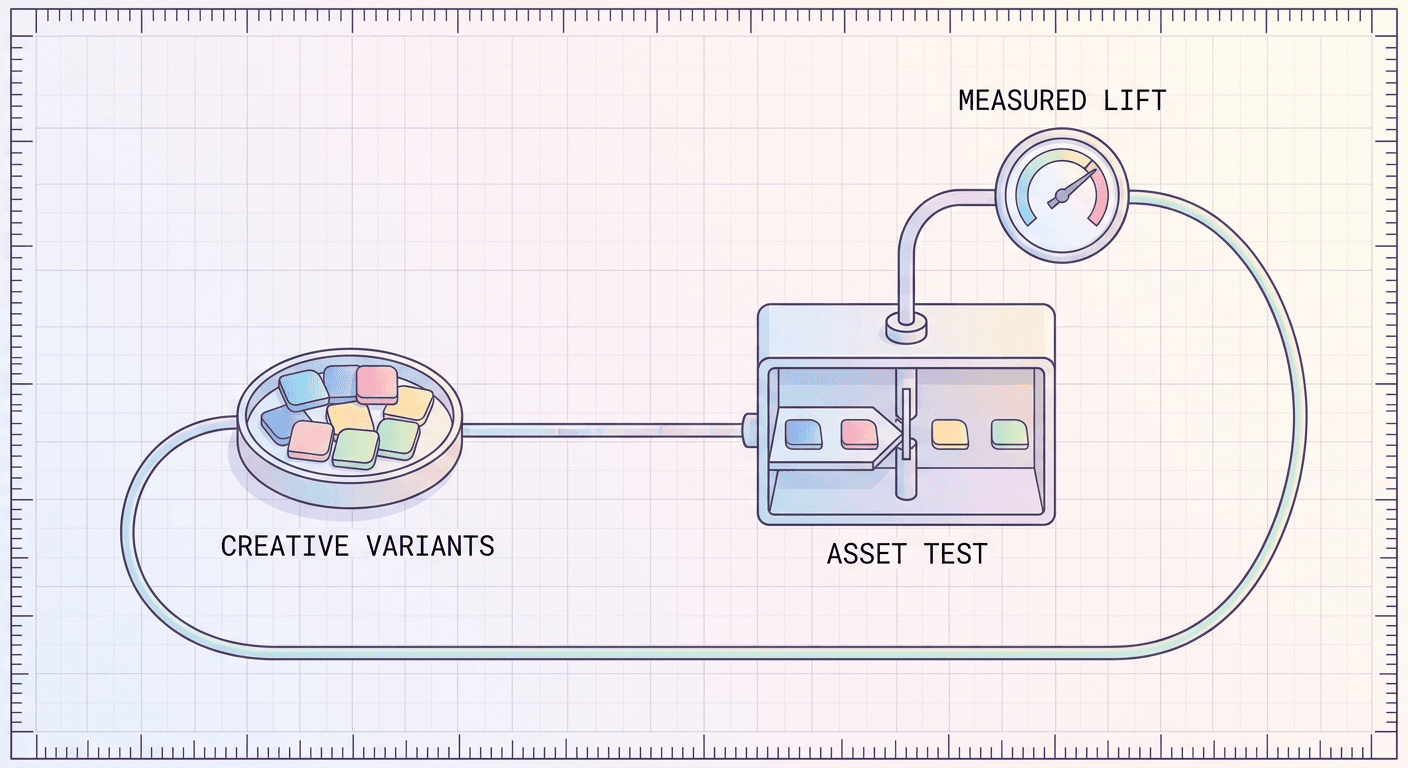
This is where the loop closes for teams also producing their own ad creative. Advertisers pairing this kind of first-party measurement upgrade with fast creative iteration are in a genuinely stronger position than those doing either alone: accurate incrementality data is far more useful when you have enough real creative variants for Performance Max's asset A/B testing or asset experiments to actually find a meaningful winner, instead of picking between two similar options.
Miraflow's AI Image Generator is built for exactly this kind of rapid variant production, generating multiple distinct product angles, backgrounds, and styles for Performance Max and Demand Gen image assets in the time it used to take to brief a single new creative concept. For video, Miraflow's Cinematic AI Video Generator, running on Veo3 and Veo3.1 models, produces short cinematic ad variants that work well alongside the kind of AI-generated video assets Google's own Gemini Omni Asset Studio update is pushing advertisers toward. The point is not to replace strategic creative direction, it is to make sure that once your measurement can actually tell winners from losers with confidence, you have enough real variants in the test for that confidence to mean something.
Frequently Asked Questions
What exactly is the Data Strength Uplift Metric, and where do I find it in my account? It is a new metric inside Google Ads measurement and conversion reporting that calculates the additional conversions your first-party data setup recovered compared to a baseline without it, shown as both a short-term and long-term figure. It surfaces in your account's conversion and data quality reporting once you have enough connected first-party data sources and matched conversion volume for the calculation to be meaningful.
Do I need Google tag gateway specifically to see an uplift number? Google tag gateway is the mechanism behind the reported 14% average conversion uplift, so it is the single highest-leverage piece to deploy if you want to see that specific number move. Enhanced Conversions and Data Manager connections contribute their own uplift as well, so you can see some improvement without gateway, but the two work best layered together.
Is Enhanced Conversions the same thing as Consent Mode? No. Consent Mode adjusts how Google's tags behave based on a user's cookie consent choice, and can trigger modeled conversions when consent is denied. Enhanced Conversions is a separate, deterministic matching mechanism using hashed first-party customer data to confirm conversions Google's systems might otherwise miss. Many advertisers run both together, but they solve different problems.
Does Meridian GeoX cost anything to use? No, it is an open-source library, free to download and run against your own data. The real cost is the analytics setup, historical geo-level data, and either in-house data science time or an agency partner to design and run a clean experiment, not a licensing fee.
Can a smaller advertiser without a dedicated analytics team realistically use Meridian GeoX? It is more approachable now that it is generally available with lower reported setup costs and built-in agentic auditing, but it still assumes some comfort with geo-level data and causal inference concepts. Smaller advertisers without that capacity are better served starting with Google Ads' own guided campaign experiments and graduating to Meridian GeoX once they have accumulated enough geo-level volume and either hired analytics help or partnered with an agency that runs it.
Does the universal Data Manager API replace the conversion import tools I already use in the Google Ads API? It does not replace existing conversion import functionality so much as standardize the underlying event schema using the IAB Tech Lab's ECAPI standard, which matters most if you are building or maintaining a server-side pipeline that needs to work across more than just Google's own products.
How is the Data Strength Uplift Metric different from the data strength indicator Google Ads already showed for conversion actions? The existing data strength indicator is a qualitative rating (roughly weak, good, or great) based on how many matched identifiers a conversion action has connected. The Data Strength Uplift Metric goes a step further and quantifies the actual conversion impact of that data strength in real numbers, short-term and long-term, rather than just a qualitative label.
Will any of this directly change how Performance Max or Demand Gen bidding behaves, or is it purely reporting? Both. The reporting itself (the uplift metric, diagnostics) is new visibility, but the underlying mechanisms, Enhanced Conversions, Google tag gateway, cleaner Data Manager connections, feed real signal into the same Smart Bidding systems Performance Max and Demand Gen already use, so better-connected first-party data measurably changes what those systems optimize toward, not just what you see in the dashboard.
Conclusion
Google's September 10, 2026 measurement update is a genuinely substantive release, not a cosmetic dashboard refresh. The Data Strength Uplift Metric puts a real, checkable number on something advertisers have struggled to quantify since cookie deprecation began: whether their first-party data setup is actually recovering conversions or just adding complexity. The three Data Manager enhancements, cross-platform integration, Enhanced Conversions in GA and DV360, and a universal ECAPI-based API with real diagnostics, close specific, mechanical gaps that were previously costing advertisers measurable ROAS and Search conversions. Meridian GeoX reaching global general availability gives any advertiser, not just ones with a data science team, a path to independently verify that a channel's reported performance is real and not a confound in disguise.
The advertisers who get the most out of this release will be the ones who treat it as connected, not four separate features to skim past. Deploy the tracking foundation that unlocks the uplift metric, connect Data Manager broadly rather than narrowly, and use Meridian GeoX to sanity-check the channels your budget depends on most. Then make sure you have enough genuinely different creative running through that newly accurate measurement to actually find out what wins, whether that creative comes from your existing production pipeline or from generating variants quickly with tools like Miraflow's AI Image Generator and Cinematic AI Video Generator. Accurate measurement and real creative variety are supposed to work together. This release just made the measurement half a lot harder to ignore.