OpenAI's 'Duct Tape' Strategy: What Anonymous Arena Testing Tells Us About AI Product Launches

Written by
Jay Kim
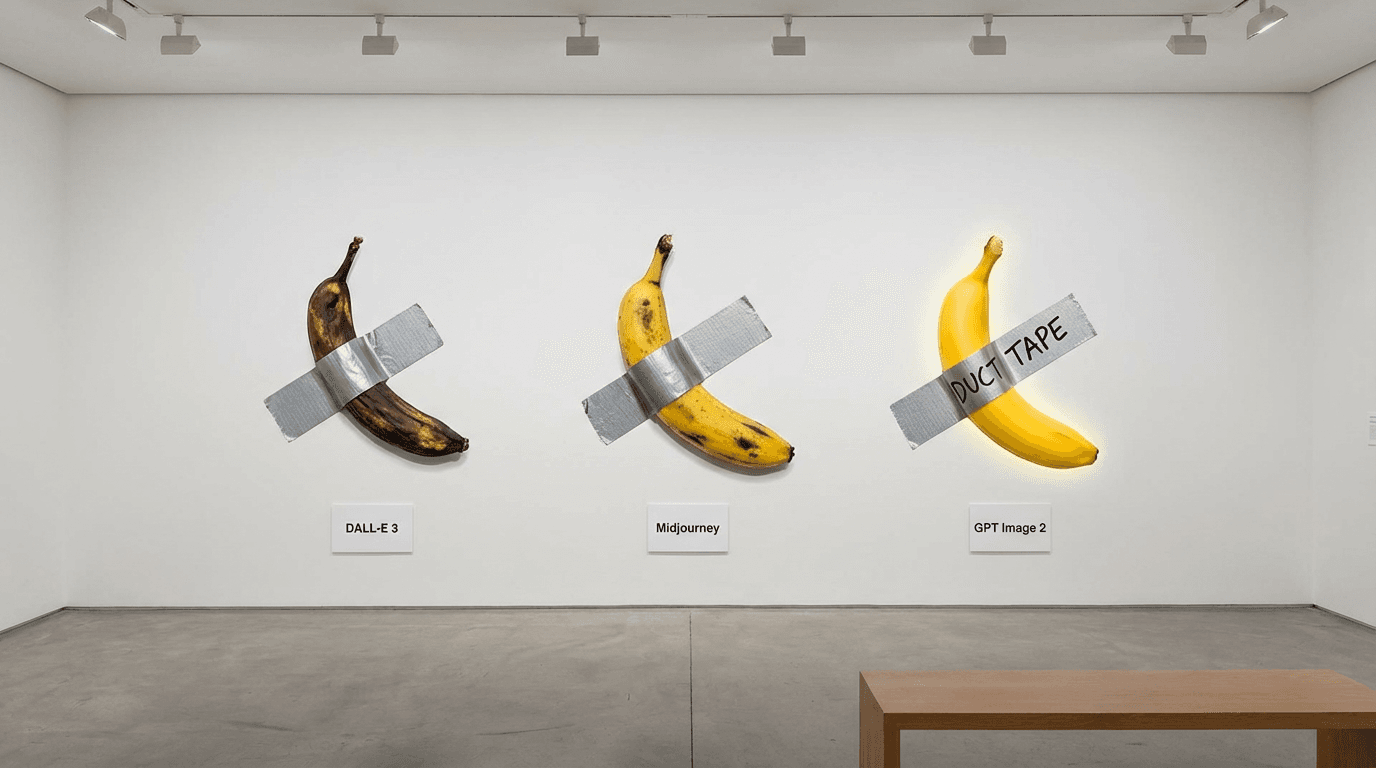
Three anonymous image models nicknamed "Duct Tape" appeared on LM Arena on April 4, 2026, widely believed to be OpenAI's GPT Image 2. They followed the same anonymous testing playbook OpenAI used with Chestnut/Hazelnut and Zenith/Summit, and that Google pioneered with Nano Banana. This guide covers the full timeline, what community testing revealed, the Sora shutdown connection, Arena methodology, and why blind testing has replaced traditional AI product launches.
On April 4, 2026, three anonymous image models quietly appeared on LM Arena — the platform where users compare AI models in blind tests. They had names that sounded like they belonged in a hardware store, not on the bleeding edge of AI research. Within hours, the AI community had figured out what they were. Within days, the internet lost its mind.[6]
"Duct Tape" is the community nickname for three anonymous AI image generation models that appeared on LM Arena on April 4, 2026, under adhesive-tape-themed codenames: maskingtape-alpha, gaffertape-alpha, and packingtape-alpha.[6] They are widely believed to be OpenAI's upcoming GPT Image 2 model, though OpenAI has not officially confirmed this.[6]
The Duct Tape incident is not a one-off leak. It is the latest and most dramatic instance of a pattern that has become standard practice across the AI industry: testing unreleased models anonymously on public benchmarking platforms to gather unbiased data and generate organic buzz before launch. AI companies routinely test upcoming models on public leaderboards under anonymous names to gather unbiased benchmark data. But the community is getting better at sniffing these out.[6]
This article examines what the Duct Tape episode reveals about how major AI labs now approach product launches, why Arena-first strategies have replaced traditional product announcements, what the pattern tells us about the competitive dynamics between OpenAI and Google, the role of the Sora shutdown in accelerating this timeline, the limitations of Arena-based validation, and what it means for developers, creators, and anyone building workflows around frontier AI tools.
For anyone working with AI image generation tools, YouTube thumbnail creation, or AI-powered content pipelines, the Duct Tape story carries direct practical implications — it signals which image generation capabilities are months away from being generally available and how the competitive landscape between OpenAI, Google, and other labs is reshaping what creators can expect.
What Is Arena and Why Does It Matter?
To understand why anonymous model testing has become the standard launch strategy for major AI labs, you first need to understand the platform where it happens.
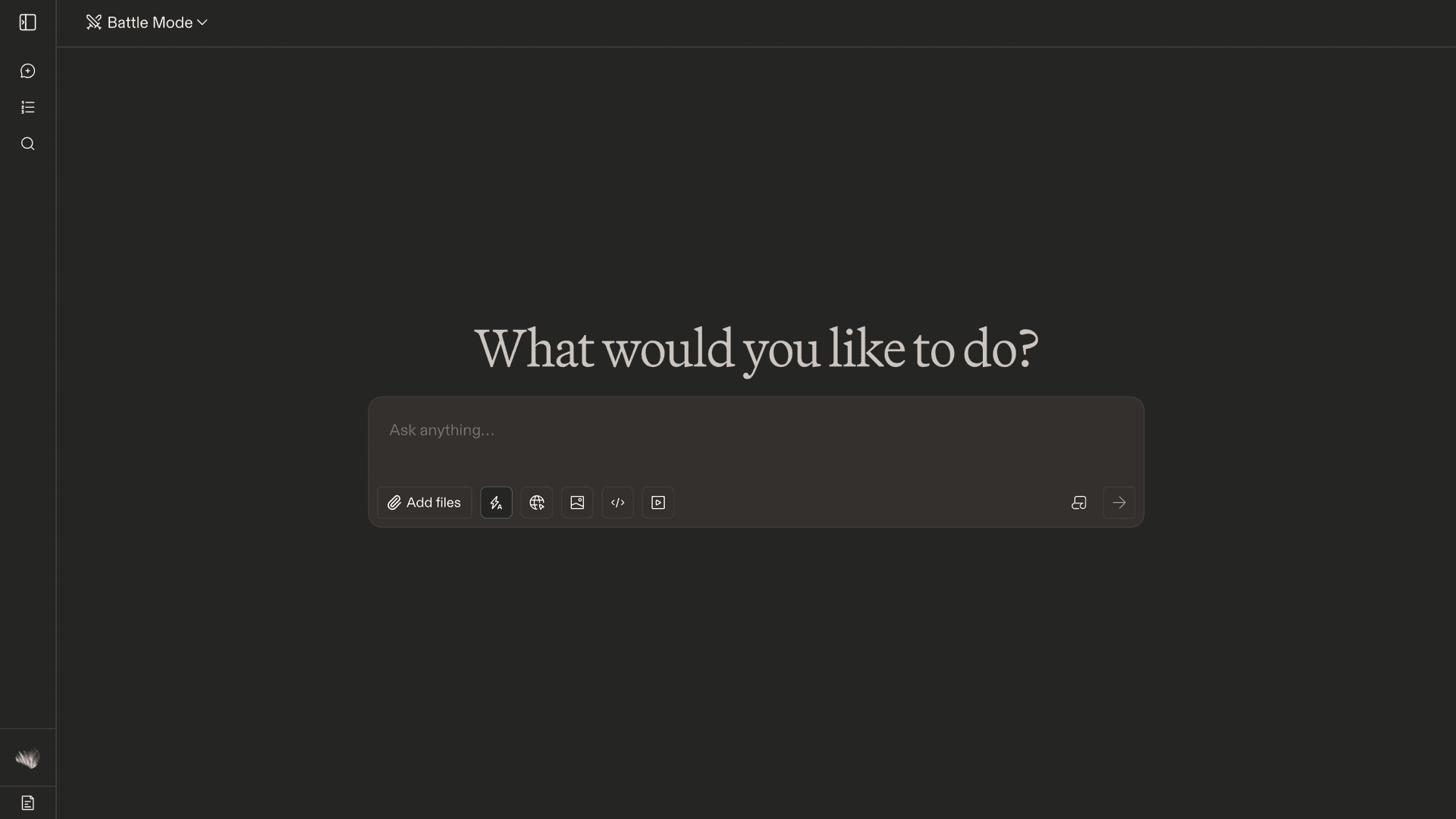
Arena (formerly LMArena and Chatbot Arena) is a public, web-based platform that evaluates large language models (LLMs). Users enter prompts for two anonymous models to respond to and vote on the model that gave the better response, after which the models' identities are revealed.[10]
Chatbot Arena (now branded simply as Arena, and previously known as LMArena) is a crowdsourced evaluation platform for large language models that ranks AI systems based on human preferences through anonymous pairwise comparisons. Created by researchers at UC Berkeley in May 2023, the platform has grown from a small academic project into one of the most widely cited and trusted sources for comparing the capabilities of frontier AI models. By early 2026, Arena had collected over 6 million user votes across hundreds of models and rebranded as an independent company valued at $1.7 billion.[1]
The ranking mechanism is borrowed from competitive gaming. Your votes directly shape the model rankings through the Bradley-Terry rating system, a statistical model originally developed for paired comparison experiments. It is similar to the Elo rating system developed for ranking players in competitive games like chess.[7]
The fundamental advantage Arena provides over curated benchmarks is that it captures actual human preference rather than performance on pre-selected test cases. Arena scores matter more than published benchmarks: Published benchmarks are curated and can be gamed through training data contamination; Arena scores reflect real-world user preferences through blind testing with unpredictable tasks.[3]
What makes Arena particularly powerful as a launch platform is the anonymity mechanism itself. Brand recognition creates systematic bias in evaluation: Users tend to rate responses from known brands higher. When models are hidden behind codenames, the only thing that matters is the actual output quality.[1] This means that when an anonymous model dominates the leaderboard, the signal is unusually clean — it earned its rank through output quality alone, not through brand recognition or marketing.
The website has been used for preview releases of upcoming models. Chinese company DeepSeek tested its prototype models in the Arena months before its R1 model gained attention in Western media. Other notable pre-release models include OpenAI's GPT-5 under the codename "summit" and Google DeepMind's Gemini 2.5 Flash Image (an image-generation and editing model) under the codename "Nano Banana".[10]
Arena has expanded well beyond text. Separate evaluation tracks for text, web development, vision, text-to-image, and video.[6] The text-to-image arena is where the Duct Tape story unfolded, and where the most dramatic pre-launch model testing now happens.
For creators who use AI image generation in their workflows, Arena serves as the most reliable early warning system for capability jumps — when a new anonymous model dominates the image leaderboard, the capability it demonstrates will be available through commercial APIs within weeks.
The Complete Timeline of the Duct Tape Incident
The Duct Tape story moved fast. Here is the sequence of events.
On April 4, 2026, three anonymous image models showed up on LM Arena (the platform formerly known as Chatbot Arena where users compare AI models in blind tests).[1] Three unnamed image generation models showed up on LM Arena on Friday under the codenames maskingtape-alpha, gaffertape-alpha, and packingtape-alpha.[1]
Within hours, the AI community had a working theory: this is OpenAI's GPT-Image-2, tested in the wild using the exact playbook Google used with Nano Banana last August.[1]
Developer Pieter Levels was among the first to call it out on X, posting that the models showed "extremely good world knowledge and great text rendering" and speculating they could outperform Nano Banana Pro.[1]
Hundreds of blind A/B renders were captured and screenshotted before the models disappeared.[1]
They vanished within hours. All three models were pulled from the Arena within hours.[1]
There is no official statement from OpenAI.[1]
The community reaction was immediate and intense. The community quickly adopted "Duct Tape" as a collective shorthand — partly because it is catchier than saying three separate tape names, and partly because the viral posts on X and Threads used it to describe the model family.[6]
The community testing before the models were pulled revealed several notable capability jumps. Prompts naming specific locations — a "Shibuya Scramble at 4 AM in the rain" test circulated widely — returned building layouts, chain logos, and lane counts that matched Street View.[1] Photorealism was the third. Skin, eye highlights, and hair-end specular handling all improved noticeably versus gpt-image-1.5.[1]
But the models were not perfect. Duct-tape still fails the Rubik's Cube reflection test, the community benchmark for mirror-image physical correctness. Content filters also ran more aggressive than gpt-image-1.5, with refusals on prompts that previously passed.[1]
Why Three Codenames? The Multi-Variant Testing Strategy
One detail that deserves closer examination: OpenAI tested three models simultaneously, not one or two. Three separate code names running simultaneously suggests OpenAI was testing multiple variants, probably with different safety or quality tuning, to see which performed best in blind evaluations before picking one to ship.[6]
Testing three variants simultaneously suggests that OpenAI was conducting a final comparative evaluation of candidate models rather than early prototype testing.[2] This distinction matters: if these were early prototypes, the models would be expected to have rougher edges and wider performance gaps. Three final candidates being compared against each other suggests that OpenAI is close to selecting a version for public release.
The choice of the "adhesive tape" theme (masking tape, gaffer tape, packing tape) suggests that these are iterations of the same base model with different configurations or optimizations.[7] The community has speculated that the three variants likely represent different tradeoffs between safety filtering, output quality, and inference cost.
The Playbook: OpenAI's Arena Testing History
The Duct Tape incident is not an isolated event. It follows a clear, documented pattern that OpenAI has established over multiple product cycles.
Chestnut and Hazelnut — GPT Image 1.5 (December 2025)
In December 2025, two anonymous models appeared on LM Arena under the codenames "Chestnut" and "Hazelnut." They were tested briefly, removed, and weeks later OpenAI shipped GPT Image 1.5.[1]
December 9, 2025, San Francisco — Several independent testers discovered today that OpenAI is conducting small-scale blind tests on two new image generation models codenamed "Chestnut" and "Hazelnut" on the AI evaluation platforms Design Arena and LM Arena.[4]
The two models were believed to represent different tiers of the same architecture. Chestnut is believed to be a lightweight version (corresponding to the future "Image-2-mini"), while Hazelnut is likely the flagship version (corresponding to "Image-2").[4]
The testing pattern matches GPT Image 1.5. In December 2025, anonymous models ("Chestnut" and "Hazelnut") appeared on LM Arena, were pulled quickly, and GPT Image 1.5 launched within weeks. The tape models follow the same pattern.[1]
Zenith and Summit — GPT-5 (August 2025)
When OpenAI was preparing to launch GPT-5, they quietly placed two variants on the Arena as "zenith" and "summit." The AI community figured it out within days, and the models topped the leaderboard before anyone officially confirmed what they were.[2]
GPT-5's dual-variant strategy was OpenAI's first public use of the flagship + reasoning pattern: Zenith dominated in general tasks — fast, articulate, broadly capable. Summit excelled in math, logic, and complex reasoning — slower but more deliberate.[1]
The GPT-5 testing cycle also included additional codenames. AI sleuths have identified at least six anonymous models—Zenith, Summit, Lobster, Nectarine, Starfish, and o3-alpha—that are supposedly outperforming nearly every other known model.[4]
Vortex and Zephyr — GPT-5.3 (February 2026)
February 25, 2026 — OpenAI is at it again. Two new mystery models just appeared on LMSYS Chatbot Arena under the codenames "vortex" and "zephyr" — and all signs point to GPT-5.3.[2]
GPT-5's codenames (zenith, summit) evoked "peak" and "height." GPT-5.3's codenames (vortex, zephyr) evoke "air" and "wind" — possibly hinting at speed or lightness improvements.[2]
Galapagos — GPT-5.4 (March 2026)
Shortly after, a mysterious model codenamed Galapagos appeared in anonymous battles on Chatbot Arena, with multiple code leaks pointing to a new flagship model with a 2 million token context window.[8]
The pattern is now so well-established that the community can predict launch timelines based on Arena appearances. Arena testing precedes release by 2-6 weeks: OpenAI consistently tests models anonymously on Chatbot Arena before launch.[3]
The Pattern Summarized
OpenAI now follows a consistent multi-step launch protocol: anonymous Arena testing under codenames to gather unbiased preference data, rapid community identification and analysis, model removal from the leaderboard within hours to days, and public release two to six weeks later. The Duct Tape models are following this exact sequence.
For content creators following the AI image generation landscape, this pattern provides a practical early warning system. When adhesive-tape codenames appeared on the Arena leaderboard, creators who started experimenting with the prompt structures that excelled — detailed real-world references, text-heavy compositions, product mockups — positioned themselves to take immediate advantage when the model officially launches.
Google's Nano Banana: The Strategy That OpenAI Copied
The Duct Tape story cannot be told without understanding where the playbook came from. OpenAI would then have successfully copied the exact Arena-first strategy that caught it flat-footed eight months ago.[1]
Initially appearing as an anonymous model under the codename "nano-banana" on the benchmarking platform LMSYS Chatbot Arena in August 2025, the model quickly outperformed existing competitors like Midjourney and Flux in blind tests.[8]
The Nano Banana story is the template. A mysterious AI image generator called Nano Banana has been quietly dominating blind tests on LMArena, consistently outperforming established models in head-to-head comparisons. What started as anonymous wins in online testing platforms has evolved into something a lot bigger — with industry insiders and former Google employees now openly discussing it as Google's next major AI image generator release.[4]
The origin of the name itself captures the spontaneity of the approach. The name, the way Nano Banana was created, was by a PM named Nina. And when you submit a model anonymously to LM Arena, you need to give it a placeholder name.[10] At 2:30 in the morning, Nina had a moment of brilliance to call the placeholder Nano Banana.[10]
The impact on Arena itself was massive. After nano-banana started the blind test on LMArena, it attracted over 5 million total votes in just two weeks and won over 2.5 million direct votes alone, setting a record for the highest participation ever.[6]
Google confirmed on August 26, 2025, that "nano-banana" was the internal codename for Gemini 2.5 Flash Image.[8] Google ended up adopting and "hugging" that name after the official launch because people kept using the placeholder name instead of the official one. Google took it even further, adding a banana emoji in the Gemini app to signal that Nano Banana support is available to users.[10]
The Nano Banana playbook proved that anonymous Arena testing could generate more authentic buzz than any traditional product launch. The Arena-first approach makes strategic sense: blind testing generates organic buzz that no marketing budget can replicate.[1]
Google later repeated the approach at a larger scale. It started as a strange, anonymous entry on the LMArena image generation leaderboard in late January 2026. Within a week it was sitting at the top, beating every named model by margins that nobody could explain.[5] Within 72 hours of its first vote, it was 80 Elo points clear of the next model. By the end of its first week it was 140 points clear, which is the largest single-model lead the image arena has ever recorded.[5]
The adhesive-tape naming convention for the Duct Tape models even feels like a deliberate nod to Google's fruit-based approach. The adhesive-tape naming convention even feels like a direct nod to Google's fruit-based codename.[1]
What the Community Testing Revealed About the Model
Despite the brief window of availability, the community extracted substantial information about what the Duct Tape model can do.
Text Rendering
The most frequently cited improvement was text rendering. Reports indicate that GPT-Image-2's text rendering accuracy has reached over 99%.[2] This represents a fundamental capability shift. Earlier gen image models can do vibes. They struggle with letters that stay letters.[10]
The practical significance of text rendering cannot be overstated. It is half of modern content: thumbnails, posters, product mockups, app screens, pitch decks, social ads, merch designs.[10]
For creators building YouTube thumbnails or blog thumbnails with AI, near-perfect text rendering eliminates the most time-consuming post-generation step: manually fixing garbled text in an image editor.
World Knowledge
In blind comparisons on LM Arena, the leaked GPT Image 2 models consistently beat Nano Banana Pro on realism, text rendering, and world knowledge.[1]
Photorealism
Something the original Russian-language post flagged deserves more attention: some of the generated images are getting hard to distinguish from photographs. The poster admitted they couldn't always tell whether users were uploading real camera photos to troll, or whether the generations had simply gotten that good.[1]
Prompt Adherence
The most immediate shift reported by testers was higher prompt adherence, especially on prompts that typically cause models to drop details or mash concepts together.[10]
The aggregate assessment from creators focused on commercial usability. The "tape" models seem optimized for commercial grade usability more than pure art flex.[10]
Limitations
The model is impressive, but it is not perfect. Spatial reasoning still has gaps, content filtering can produce odd artifacts, and the version that eventually ships publicly may be different from the testing build that appeared on Arena.[1]
The Sora Connection: Compute Reallocation and Strategic Timing
The timing of the Duct Tape appearance — 11 days after a major OpenAI product shutdown — is not coincidental.
OpenAI shut down Sora on March 24, 2026, citing compute reallocation and a focus shift to world simulation for robotics. Estimated inference cost was ~$15 million per day; total lifetime in-app revenue was $2.1 million — the gap was not closable.[1]

The Sora shutdown freed enormous GPU capacity. The Sora shutdown frees up significant GPU capacity that can be redirected toward these higher-margin businesses.[2]
While a whole team inside OpenAI was focused on making Sora work, Anthropic was quietly winning over the software engineers and enterprises that drive revenue. Claude Code, in particular, was eating OpenAI's lunch. So CEO Sam Altman made the call: kill Sora, free up compute, and refocus.[4]
OpenAI shut down its video generation tool Sora on March 24, 2026, citing unsustainable costs ($15M/day in inference). The massive GPU capacity freed by the shutdown appears to have been redirected toward GPT Image 2 development, with the tape models appearing on Arena just 11 days later.[6]
The connection between the Sora shutdown and the Duct Tape appearance illuminates a broader strategic calculation. If the tape models represent GPT-Image-2, it is OpenAI doubling down on the one consumer AI category where viral adoption is actually happening, right as Google just released Nano Banana 2 a couple weeks ago.[1]
For creators who relied on Sora for video content creation, the strategic reallocation is clarifying: OpenAI has determined that image generation, not video generation, is the consumer AI category worth investing compute in. Tools like Miraflow's cinematic video generator and text-to-Shorts pipeline fill the video gap, while the image generation frontier continues advancing rapidly.
The Silent ChatGPT A/B Testing Layer
The Arena testing was only one channel. A large number of users on X (formerly Twitter) have reported that when the ChatGPT Images feature generates complex images (such as those containing significant amounts of text, UI elements, or product shots), it randomly switches to a noticeably different new model, with output quality significantly higher than GPT Image 1.5.[5]
Beyond the Arena tests, several ChatGPT users have reported randomly activating GPT Image 2 during normal image generation sessions. These reports indicate that OpenAI is conducting silent A/B testing, showing the new model to a random percentage of users without any announcement.[7]
OpenAI doesn't A/B test products that are months away from launch.[1] This observation cuts through the speculation: if OpenAI is already serving the model to real ChatGPT users through A/B testing, the public release is not far away.
Arena Testing as a Launch Strategy: Three Advantages
The Arena-first approach gives major AI labs three distinct strategic advantages that traditional product launches cannot match.
Unbiased Performance Data
Anonymous testing gives OpenAI three critical advantages: Honest Elo rankings — Know exactly how the model performs against competitors before committing to release.[1]
This is likely a deliberate strategy by OpenAI—validating model strength and gathering community feedback through anonymous testing, ensuring that when it's officially released, it already has the backing of "community-verified" data.[5]
Organic Buzz Generation
Soft launch — Build community buzz ("what is this mystery model?") without the pressure of an official announcement.[1]
The mystery model dynamic creates engagement that no marketing campaign can replicate. When the AI community spots an anonymous model outperforming established leaderboard entries, the resulting investigation, speculation, and testing generates far more authentic attention than a press release.
Risk-Free Category Assessment
Category insights — See where the model excels (coding, math, creative writing) and where it falls short.[1]
If a model underperforms in Arena testing, the lab can pull it without any public acknowledgment of failure. There is no product announcement to retract, no marketing to unwind, no disappointed customers. The model simply disappears from the leaderboard, and no one outside the testing community knows it was there.
The Limitations of Arena-Based Validation
Arena testing is not a complete validation methodology. Understanding its limitations is critical for anyone making decisions based on leaderboard performance.
Arena voting favors wow moments and first impressions. That is great for spotting leaps, but it is not the same as verifying consistency across thousands of generations, different aspect ratios, or production constraints.[10]
A model can look incredible in a handful of Arena prompts and still be painful in production if it is slow, expensive, or inconsistent under load.[10]
Some models are suspected of being optimized specifically for Arena prompts rather than overall utility.[4]
The preference-versus-accuracy distinction matters. The system measures preference rather than accuracy.[6] A model that produces visually appealing but factually incorrect images can still rank well on Arena if voters prefer the aesthetic quality over correctness.
The key question is whether OpenAI will maintain the model's current quality at launch or dial it back for cost and safety reasons, a pattern the company has followed before.[9]
For creators building production workflows around AI-generated images, Arena performance should be treated as a strong signal of relative capability improvement but not as proof of production reliability. The model that ships may differ from the model that tested.
When GPT Image 2 Will Actually Ship
Multiple signals converge on a narrow launch window.
Based on this information and OpenAI's historical release cadence (typically 2-4 weeks from LM Arena anonymous testing to official release), the most likely release window is late April to mid-May 2026.[2]
The DALL-E deadline creates urgency. DALL-E 2 and 3 shut down May 12, 2026. Launching GPT Image 2 before that date gives developers a clear migration target.[1]
Three simultaneous test variants suggest final evaluation. Testing three model variants at once (maskingtape, gaffertape, packingtape) suggests OpenAI is comparing final candidates, not early prototypes.[1]
The convergence of Arena testing, ChatGPT A/B testing, the DALL-E shutdown deadline, and the freed Sora compute creates a compelling case for a launch within weeks of this article's publication.
What the Model Shift Means for Creators and Developers
The practical question underlying all the Arena drama is straightforward: what changes for people who actually build things with image generation?
What matters now is how many steps in your workflow disappear when the model ships. The useful question is no longer "is the output better" but "what does the output let me stop doing."[1]
If the "tape" models are truly an upcoming OpenAI image system, the most important shift is not aesthetic. It is operational.[10]
Creators do not lose hours because models cannot make pretty pictures. They lose hours because models cannot reliably follow instructions, cannot render text, and cannot keep compositions stable. The real upgrade is when the model stops acting like an improvisational artist and starts acting like a dependable collaborator.[10]
For practical workflow preparation, the community consensus points toward specific prompt strategies. Start learning the prompt structures that play to the new model's strengths: specific real-world references, text-heavy scenes, product mockups, and interface screenshots.[1]
Developers face a more immediate timeline concern. If you are still on the DALL-E API, start migrating immediately — DALL-E 2 and 3 shut down May 12.[1]
The AI Image Generator inside Miraflow AI lets creators practice prompt architecture across multiple models today, building the skills that transfer directly when GPT Image 2 officially launches. The same applies to YouTube thumbnail workflows, blog thumbnail generation, and AI-generated music covers where the output quality ceiling keeps rising with each model generation.
The Broader Pattern: How AI Labs Now Launch Products
The Duct Tape episode represents the maturation of a launch strategy that has been developing throughout 2025 and into 2026. Google's multi-stage release pipeline illustrates how formalized this has become.
Google DeepMind operates a multi-stage release pipeline for any frontier model. Stage one is internal evaluation against a fixed benchmark suite. Stage two is anonymous preference testing on public arenas like LMArena, where human voters compare outputs blind. Stage three is a quiet rollout to a small group of trusted testers. Stage four is the named public launch.[5]
OpenAI's process follows the same structure but adds the ChatGPT A/B testing layer between stages two and four. The industry has essentially converged on a shared playbook: build internally, test anonymously on Arena, observe community reaction, A/B test with existing users, then launch publicly.
Since March 2024, we've helped test proprietary and open source models from major labs and small teams. This includes pre-release models, meaning the community's feedback directly influences how new AI models are developed, refined, and released.[8]
The implications for the AI industry are significant. Traditional product launches — with embargoed press briefings, coordinated reviews, and splashy keynotes — are being replaced by a model where the community discovers the product before the company announces it. The "announcement" becomes a confirmation of what the community has already figured out.
What to Watch For Next
Based on the patterns documented in this article, several near-term developments are predictable.
The DALL-E shutdown date of May 12, 2026 creates a hard deadline for GPT Image 2's official release. Launching GPT Image 2 before that date gives developers a clear migration target.[1]
If maskingtape-alpha and its sister models maintain their lead in ongoing community testing, the Elo rating will serve as a testament to the model's capabilities without any marketing spend.[5]
For the broader model landscape, the next anonymous Arena appearance to watch for is related to OpenAI's reported "Spud" model. OpenAI's next major model — internally codenamed 'Spud,' likely releasing as GPT-5.5 or GPT-6 — completed pretraining around March 24, 2026.[9] If Spud follows the same Arena-first playbook, anonymous codenames related to root vegetables or potatoes appearing on the text Arena leaderboard would signal imminent release.
Meanwhile, Google is unlikely to sit still. OpenAI doubling down on the one consumer AI category where viral adoption is actually happening, right as Google just released Nano Banana 2 a couple weeks ago.[1] The image generation leaderboard will continue to be the primary competitive battlefield for consumer-facing AI in 2026.
Frequently Asked Questions
What is the "Duct Tape" AI model?
"Duct Tape" is the community nickname for three anonymous AI image generation models that appeared on LM Arena on April 4, 2026, under adhesive-tape-themed codenames: maskingtape-alpha, gaffertape-alpha, and packingtape-alpha. They are widely believed to be OpenAI's upcoming GPT Image 2 model, though OpenAI has not officially confirmed this.[6]
Has OpenAI confirmed this is GPT Image 2?
No. As of April 16, 2026, OpenAI has not officially announced or released GPT Image 2.[6]
Can I try the Duct Tape model right now?
You cannot access it directly, but there is a chance of triggering it through ChatGPT's image generation feature. Community reports suggest that generating complex images containing significant text, UI elements, or detailed real-world references increases the probability of being served the new model.[6]
What happened to the DALL-E API?
DALL-E 2 and 3 shut down May 12, 2026. Launching GPT Image 2 before that date gives developers a clear migration target.[1]
Why did OpenAI test three models instead of one?
Testing three variants simultaneously suggests that OpenAI was conducting a final comparative evaluation of candidate models rather than early prototype testing.[2] The three codenames likely represent different safety, quality, or cost configurations of the same base model.
How long between Arena testing and official release?
Arena testing precedes release by 2-6 weeks: OpenAI consistently tests models anonymously on Chatbot Arena before launch.[3]
Is Google doing the same thing?
Yes. "Nano Banana" was the internal codename used by Google developers during the model's blind testing phase on the LMSYS Chatbot Arena in August 2025.[8] Google has repeated this approach with Nano Banana 2 and other models.
What does the Sora shutdown have to do with GPT Image 2?
OpenAI shut down its video generation tool Sora on March 24, 2026, citing unsustainable costs ($15M/day in inference). The massive GPU capacity freed by the shutdown appears to have been redirected toward GPT Image 2 development, with the tape models appearing on Arena just 11 days later.[6]
How does Arena testing eliminate brand bias?
Brand recognition creates systematic bias in evaluation. When models are hidden behind codenames, the only thing that matters is the actual output quality.[1]
What are the limitations of Arena testing?
Arena voting favors wow moments and first impressions. That is great for spotting leaps, but it is not the same as verifying consistency across thousands of generations, different aspect ratios, or production constraints.[10]
Conclusion
The Duct Tape story is not really about three anonymous image models on a leaderboard. It is about how the AI industry now launches products. The shift from keynote announcements to community-discovered blind testing represents a fundamental change in the relationship between AI companies and their users. When the best marketing strategy is letting people discover your product through anonymous testing, the product has to speak for itself.
Model releases used to be judged on whether they were "prettier." That axis is dead. What matters now is how many steps in your workflow disappear when the model ships.[1]
For developers migrating from DALL-E before the May 12 shutdown, for creators building content workflows around AI image generation, and for anyone tracking the competitive dynamics between OpenAI and Google, the message from the Duct Tape episode is practical: the next generation of image generation is already being served to real users, and the official release is weeks away, not months.
The Arena-first strategy works because it aligns what the company needs (unbiased performance data) with what the community wants (early access to frontier capabilities). It generates more authentic excitement than any press event. And it produces the most reliable signal in AI: whether real people, making real choices with no knowledge of which company made which model, actually prefer your output.
Whether you are building with the Miraflow AI image generator, creating YouTube thumbnails, producing AI-generated music, converting text to YouTube Shorts, or building any creative pipeline that depends on frontier AI capabilities, the Duct Tape story carries one clear lesson: watch the Arena leaderboard. The next capability jump will appear there first, under a silly codename, weeks before any official announcement.
References
- OpenAI's "Duct Tape" Model Explained: GPT Image 2 Is Already Here and It's Terrifying — Miraflow AI
- How to Use the "Duct Tape" AI Image Model: A Complete Guide to Arena and Triggering GPT Image 2 — Miraflow AI
- GPT Image 2 Just Leaked: Everything We Know (April 2026) — Fello AI
- GPT Image 2: OpenAI's New Model Leaked on Chatbot Arena — Pasquale Pillitteri
- OpenAI's 'duct-tape' model appeared on Arena — then vanished — DEV Community
- GPT Image 2 Arena Leak — Aihola
- OpenAI Tape Leak: Real Gains for Image Creators — Blue Lightning
- OpenAI Arena Codenames Explained: Zenith, Summit, Vortex, Zephyr — NxCode
- GPT-5.3 Spotted on Chatbot Arena as 'Vortex' and 'Zephyr' — NxCode
- Arena (AI platform) — Wikipedia
- How Arena Works — Arena
- Full Interpretation of GPT Image 2 Grayscale Leak — Apiyi.com Blog
- OpenAI tests next-gen Image V2 model on ChatGPT and LM Arena — Testing Catalog
- Nano Banana Prompt: The Real Official Google Guide — Pasquale Pillitteri
- The Nano Banana origin story — Arena YouTube
- Nano Banana: The Guide to Google's Image Generation AI — DataNorth
- Google Finally Explains Why It Chose The Name 'Nano Banana' — BGR
- OpenAI Killed Sora: The Real Numbers Behind the Shutdown — Revolution in AI
- Why OpenAI really shut down Sora — TechCrunch
- GPT-5.4 Appears on Chatbot Arena: Developer Readiness Guide — NxCode