18 AI Miniature Diorama Prompts for the Viral Tiny-World Trend (Copy & Paste)

Written by
Aerin Kim
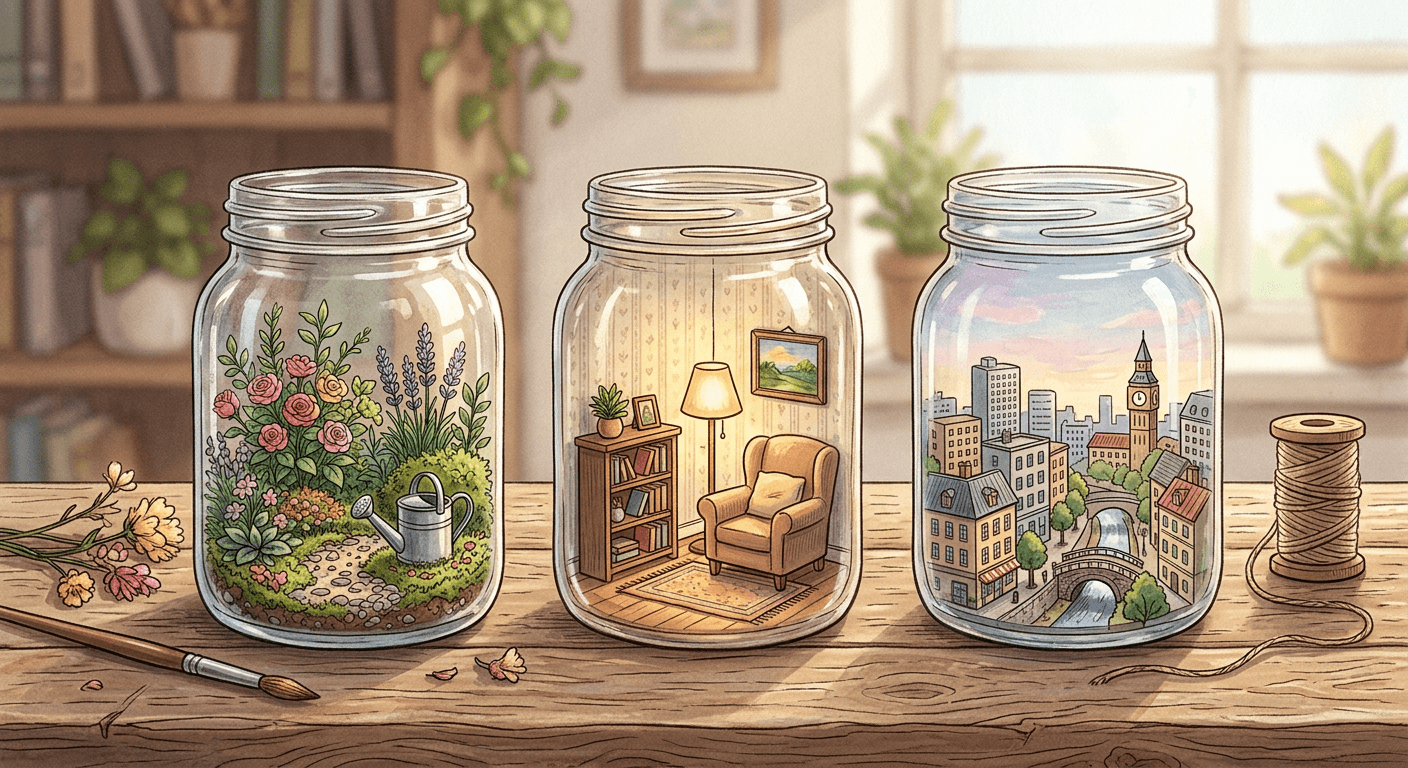
The viral miniature diorama trend shrinks any photo into a jar-sized tiny world. Here are 18 copy-paste Nano Banana prompts to recreate it with Miraflow's AI Image Generator.
If your feed has suddenly filled up with tiny glass jars holding entire miniature worlds inside them, a dollhouse-scale living room, a matchbox-sized city skyline, a pet shrunk down to fit inside a bottle, you have run into the miniature diorama trend, and by August 2026 it has become one of the dominant AI photo formats on TikTok and Instagram. Creators upload a normal photo, a selfie, a pet, a landmark, even a sneaker, and an image model rebuilds it as a hyper-detailed, physically plausible miniature scene, complete with macro-photography lighting, tiny hand-scaled props, and a real object like a coin or a matchstick placed beside it to prove just how small the world actually is.
Tom's Guide has covered this alongside several other Nano Banana photo trends reshaping how people use AI image generators day to day, and the mechanics line up with what creators are actually posting: correct macro lens behavior, believable lighting physics, careful structural layering so the tiny world reads as a real physical object rather than a flat illustration, and often a glass jar or bottle used as the display case for the whole scene. The models doing the heavy lifting here are Google's Nano Banana Pro and Nano Banana 2 (Gemini 3 Pro Image and Gemini 3.1 Flash Image), both of which hold scale, lighting direction, and material texture consistently enough across a single generation to make a shrunken world actually look shrunken rather than just blurred.
This post is 18 prompts built around that exact technique, grouped by the kind of subject creators are turning into tiny worlds right now. Every one of them is written to run directly inside the AI Image Generator in Miraflow AI, which supports the image-to-image transformation this trend depends on, so you can upload your own photo and get a real result instead of reading about one.
Why the Miniature Diorama Trend Actually Works
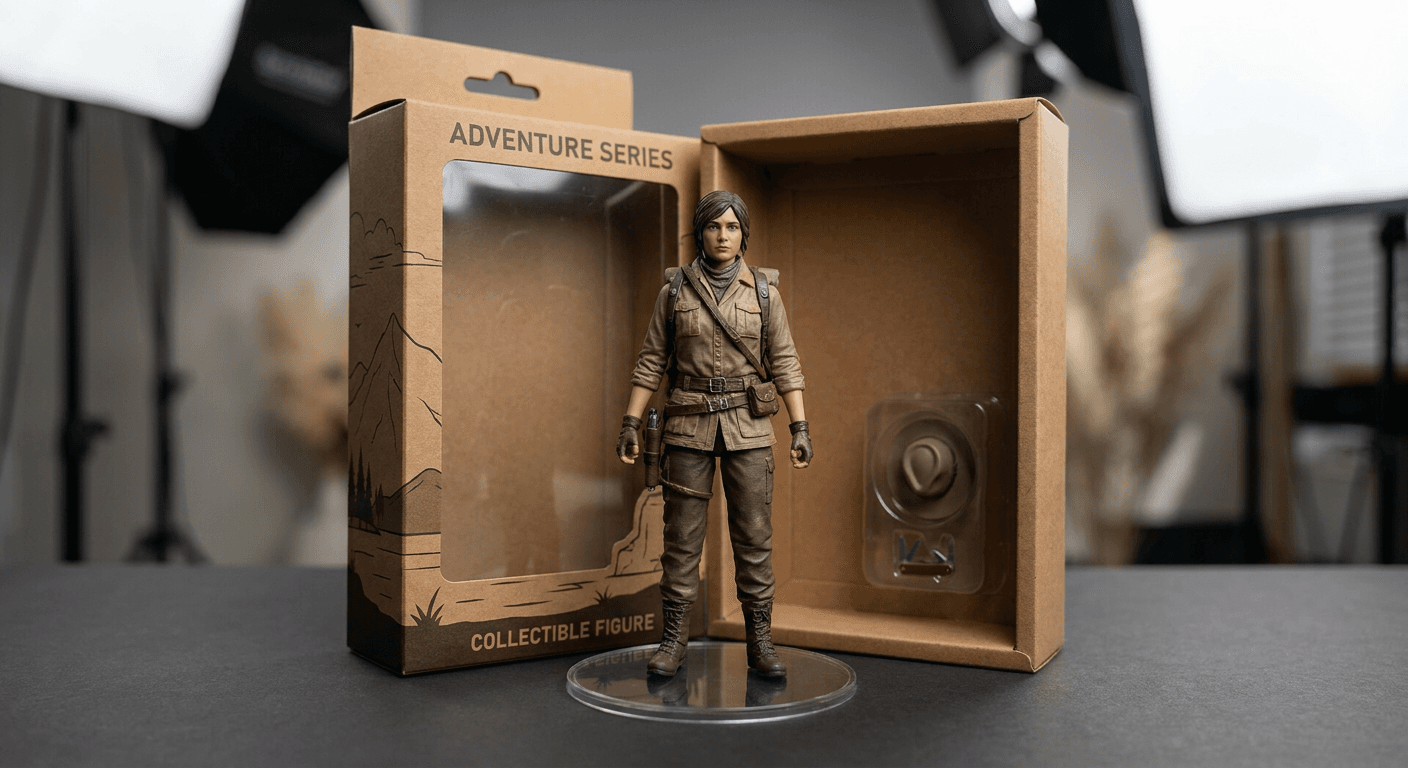
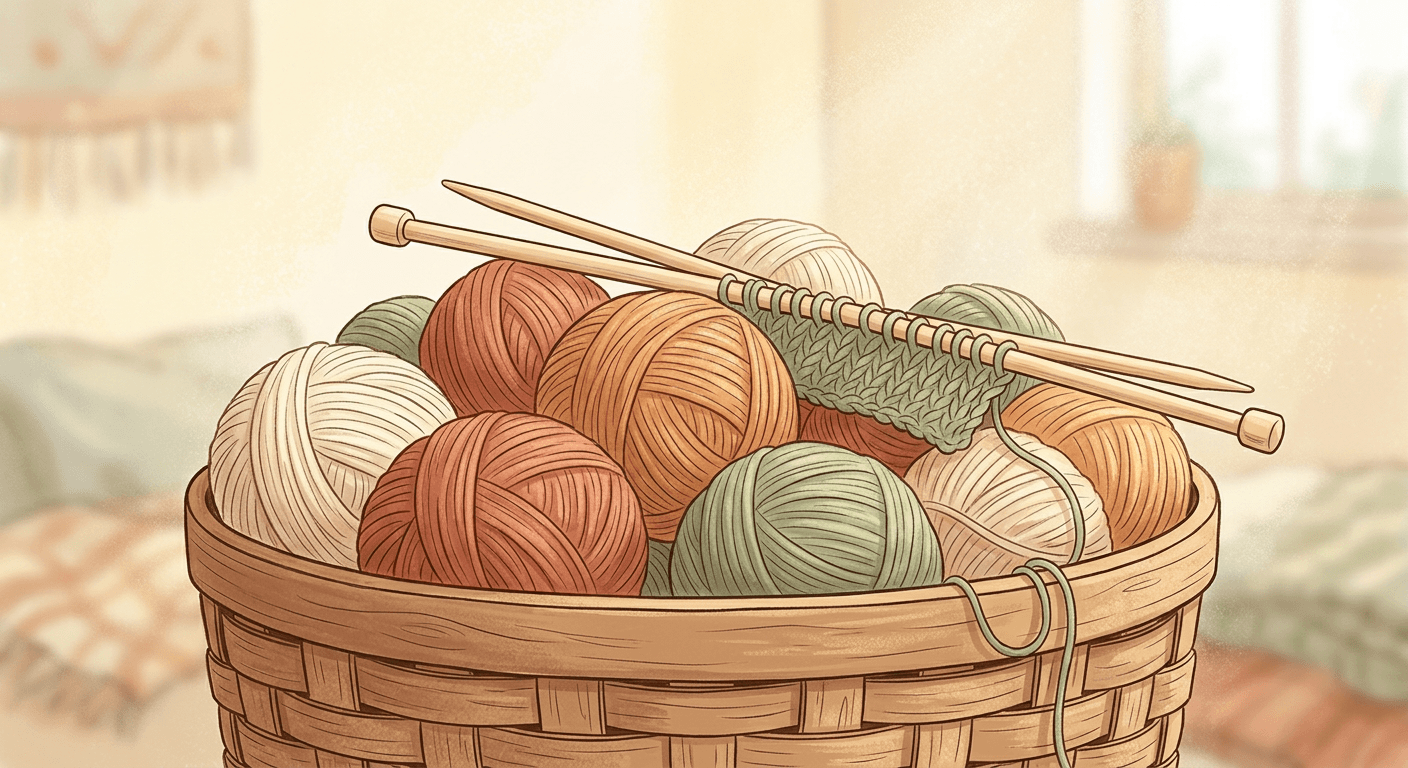
A convincing miniature diorama is a genuinely hard image generation problem, which is exactly why it is so satisfying when it lands. The model has to shrink an entire scene down to toy scale while keeping every material behaving like it actually belongs at that scale, glass has to refract light correctly, fabric has to fold the way real fiber folds at a smaller size, and a shadow cast by a tiny figure has to be proportionally tiny too. That is a different challenge than the toy-collectible look behind our AI action figure and toy box prompts, which turns a subject into a single boxed figurine rather than an entire scaled-down world, and it is a different challenge again from the soft fiber texture behind our AI knitted world prompts, which reinterprets surface material rather than physical scale.
The scale cue is what makes this trend so shareable. Almost every viral post in this style includes something ordinary sitting right next to the tiny world, a real coin, a sewing pin, a fingertip, specifically so the eye has an instant, unmistakable reference for just how small the scene actually is. Skip that detail and a miniature diorama can read as a normal-sized model photographed up close instead of a genuinely tiny world, which is the single biggest difference between a prompt that goes viral and one that just looks like a nice photo.
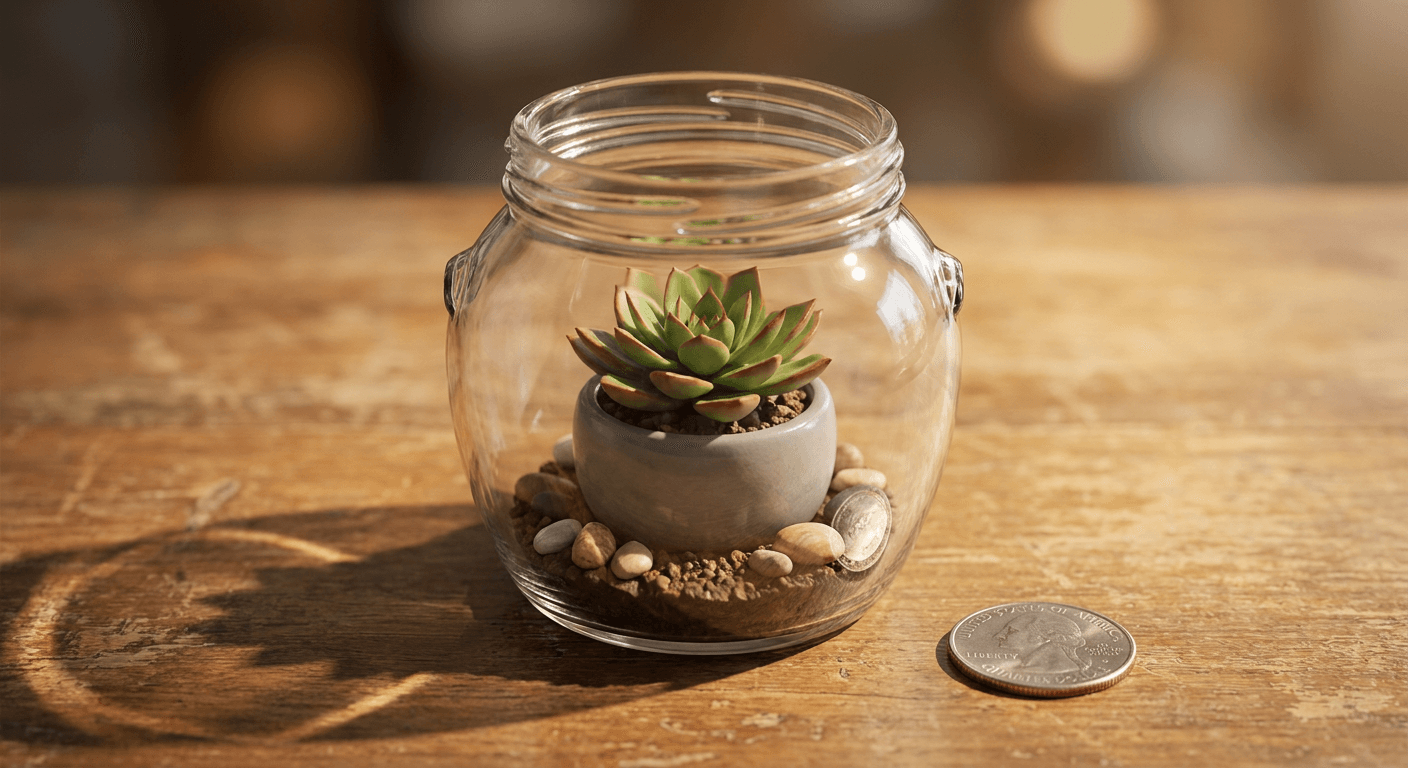
Every prompt below follows the same underlying structure real diorama photographers and creators use: preserve the original subject's exact shape, color, and pose, describe the physical materials the miniature version is built from (clay, resin, felt, hand-painted foam), specify real macro lens behavior (shallow depth of field, a narrow plane of focus, soft background bokeh), and include one explicit scale reference object. If you want to compare how Nano Banana Pro handles this kind of detailed physical scene against an alternative model, our Nano Banana Pro vs Seedream 5 Pro comparison breaks down how each one holds up on demanding, detail-heavy prompts like these.
1) Glass Jar and Bottle Worlds
This is the signature staging of the whole trend, an entire tiny scene built inside or right beside an open glass jar or bottle, which instantly reads as a display case and gives the model an obvious, physically grounded scale reference to work from.
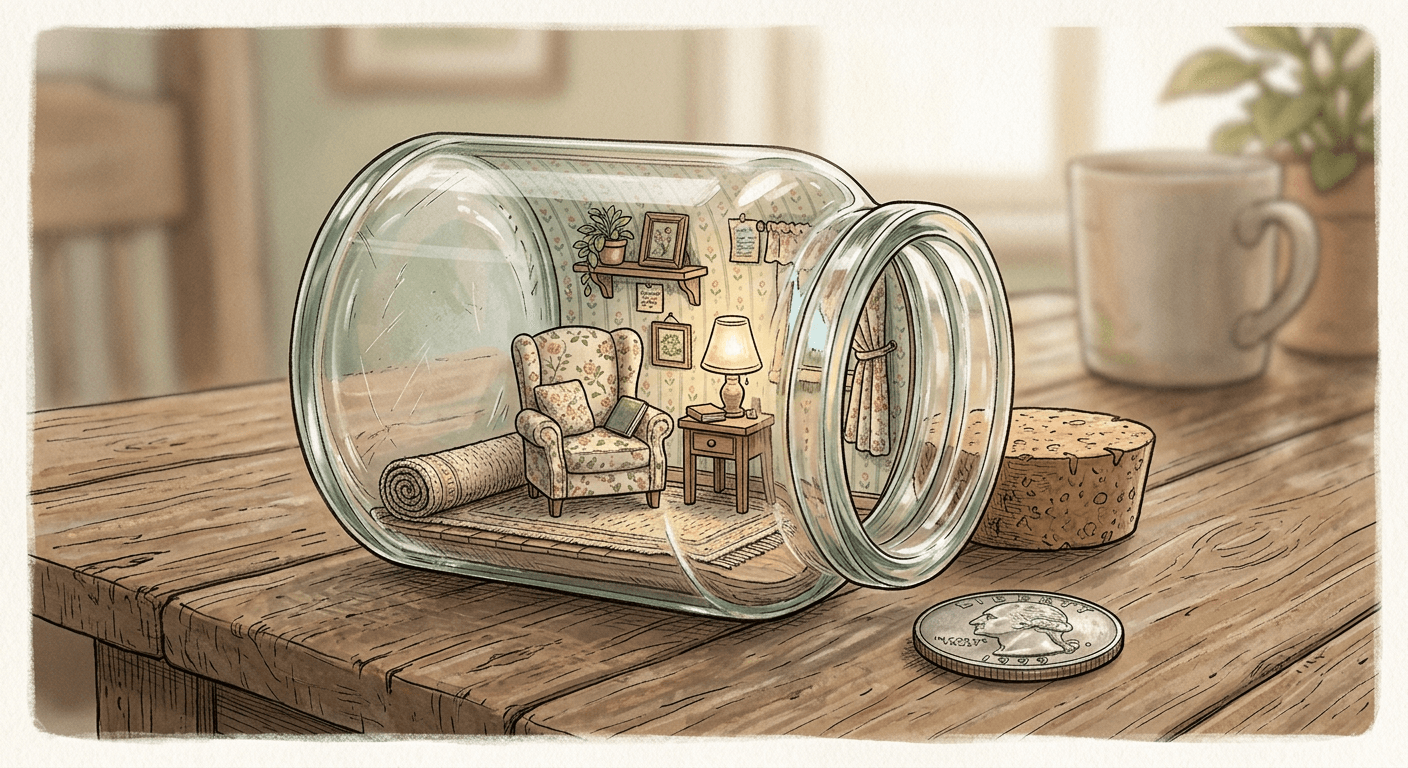
Prompt 1: Portrait figure inside a glass jar
Transform this portrait photo into a hyper-detailed miniature diorama figure of the same person, standing inside a clear glass jar with a cork lid resting on a wooden tabletop, preserving their exact facial features, hairstyle, outfit colors, and pose from the original photo, tiny hand-sculpted clay-like skin texture and fabric folds, a miniature floor made of painted foam board with a few scattered dust particles catching the light, shot with an 85mm macro lens at f/1.8 for a shallow depth of field and soft background bokeh, a direct softbox key light casting a realistic shadow beneath the figure and a small catchlight in the eyes, a real coin resting beside the jar for scale reference, physically plausible lighting and proportions throughout, no watermark, no logos.
Prompt 2: Pet world inside an open jar
Transform this pet photo into a miniature diorama version of the same animal, seated inside an open glass jar lying on its side like a cozy den on a wooden tabletop, preserving the pet's exact fur pattern, coloring, and pose from the original photo, tiny handmade props scaled correctly around it such as a matchstick-sized food bowl and a thumbnail-sized folded blanket, soft window-style macro lighting with a gentle rim light along the fur, shallow depth of field with the room behind the jar melting into soft bokeh, fine dust motes visible in the light beam, a real button placed beside the jar for scale, no watermark, no logos.
Prompt 3: City skyline inside a glass bottle
Transform this city skyline photo into a miniature scale-model diorama of the same skyline, built at true miniature scale and displayed inside a tall clear glass bottle resting on its side on a wooden table, preserving each building's relative height, footprint, and lighting direction from the original photo, tiny individually placed light-up windows, miniature streets with matchstick-sized lamp posts and grain-of-rice sized cars, macro photography lighting with a warm key light simulating sunset raking across the rooftops, shallow depth of field softly blurring the bottle's curved glass edges, visible light refraction and caustic patterns on the tabletop from the glass, physically accurate scale throughout, no watermark, no logos.
Prompt 4: Cozy room diorama beside a jar
Transform this room or home interior photo into a miniature diorama version of the same room, built as a dollhouse-scale cutaway model displayed just beside an open glass jar on a tabletop, preserving the exact furniture layout, wall colors, and window placement from the original photo, tiny hand-stitched felt cushions, miniature books the size of a fingernail, a working scale desk lamp casting a warm practical light, macro lens shallow depth of field with the edges of the room softly blurred, a real sewing pin placed beside the model for scale reference, dust particles catching the key light, no watermark, no logos.
Glass introduces its own lighting rules the model needs to respect, refraction bending the background slightly, a soft caustic pattern where light passes through the curved surface, and a believable reflection on the tabletop underneath. Naming those details explicitly, rather than just saying "glass jar," is what keeps the result from looking like a flat sticker pasted onto a jar shape. You can run all four of these directly inside the AI Image Generator on Miraflow using your own reference photo.
2) Pocket-Sized Landscapes and Rooms
Full scenes, a mountain range, a beach, an entire room, are where this trend gets its most technically impressive results, since the model has to keep dozens of tiny elements consistent with each other at once.
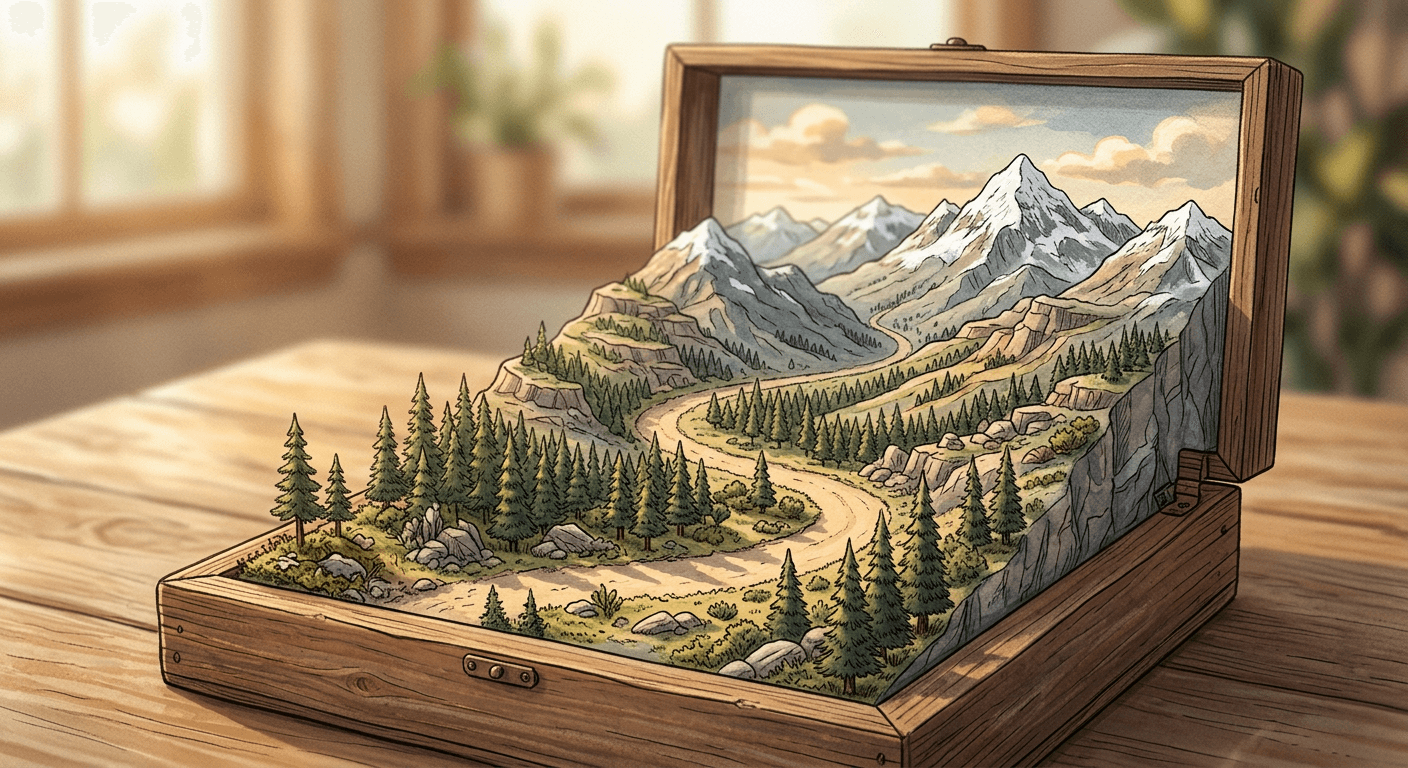
Prompt 5: Miniature mountain range diorama
Transform this mountain or landscape photo into a miniature tabletop diorama of the same scene, built from hand-textured resin and foam terrain sitting inside a shallow open wooden display box, preserving the mountain silhouettes, snow line, and lighting direction of the original photo, tiny hand-painted pine trees no taller than a matchstick, a thin path of real fine sand for the trail, a macro tilt-shift photography effect with a narrow plane of focus across the ridge line and soft bokeh at the front and back edges, a real pencil laid beside the box for scale, warm directional light simulating golden hour, no watermark, no logos.
Prompt 6: Miniature beach scene diorama
Transform this beach photo into a miniature diorama version of the same coastline, built inside a shallow glass-fronted display box with real fine sand and a thin layer of clear resin poured to mimic small breaking waves, preserving the shoreline shape and lighting direction of the original photo, tiny beach umbrellas the size of a fingertip and grain-sized shells scattered along the tide line, macro lens shallow depth of field with soft bokeh over the distant water, a real seashell placed beside the box for scale reference, bright overhead sunlight with visible tiny shadows cast by each miniature prop, no watermark, no logos.
Prompt 7: Miniature cafe interior diorama
Transform this cafe or restaurant photo into a miniature diorama cutaway model of the same interior, displayed on a tabletop beside an open glass jar, preserving the counter layout, seating arrangement, and lighting from the original photo, tiny hand-built wooden tables and chairs scaled to matchstick height, a miniature espresso machine the size of a thumbnail with a wisp of steam rendered in soft haze, warm tungsten macro lighting with visible practical light sources inside the model, shallow depth of field blurring the far wall into soft bokeh, a real paperclip placed beside the model for scale, no watermark, no logos.
Prompt 8: Miniature garden diorama in a terracotta pot
Transform this garden or backyard photo into a miniature diorama version of the same space, built inside a real terracotta pot base with actual moss and small pebbles standing in for garden beds, preserving the layout of plants, pathways, and lighting direction from the original photo, tiny hand-sculpted flowers no larger than a grain of rice, a miniature watering can the size of a fingertip, soft overcast macro lighting that keeps colors true without harsh highlights, shallow depth of field with the background falling into gentle bokeh, a real small coin placed beside the pot for scale, no watermark, no logos.
If you are planning to generate a whole series of these, one landscape a day for a week, our batch generation prompt guide covers how to queue up multiple variations efficiently instead of running each prompt one at a time.
3) Everyday Objects Made Miniature
Turning something ordinary, a sneaker, a coffee cup, a car, into its own tiny scaled world is one of the fastest entry points into this trend, since a single object gives the model a clear anchor to build the rest of the scene around.
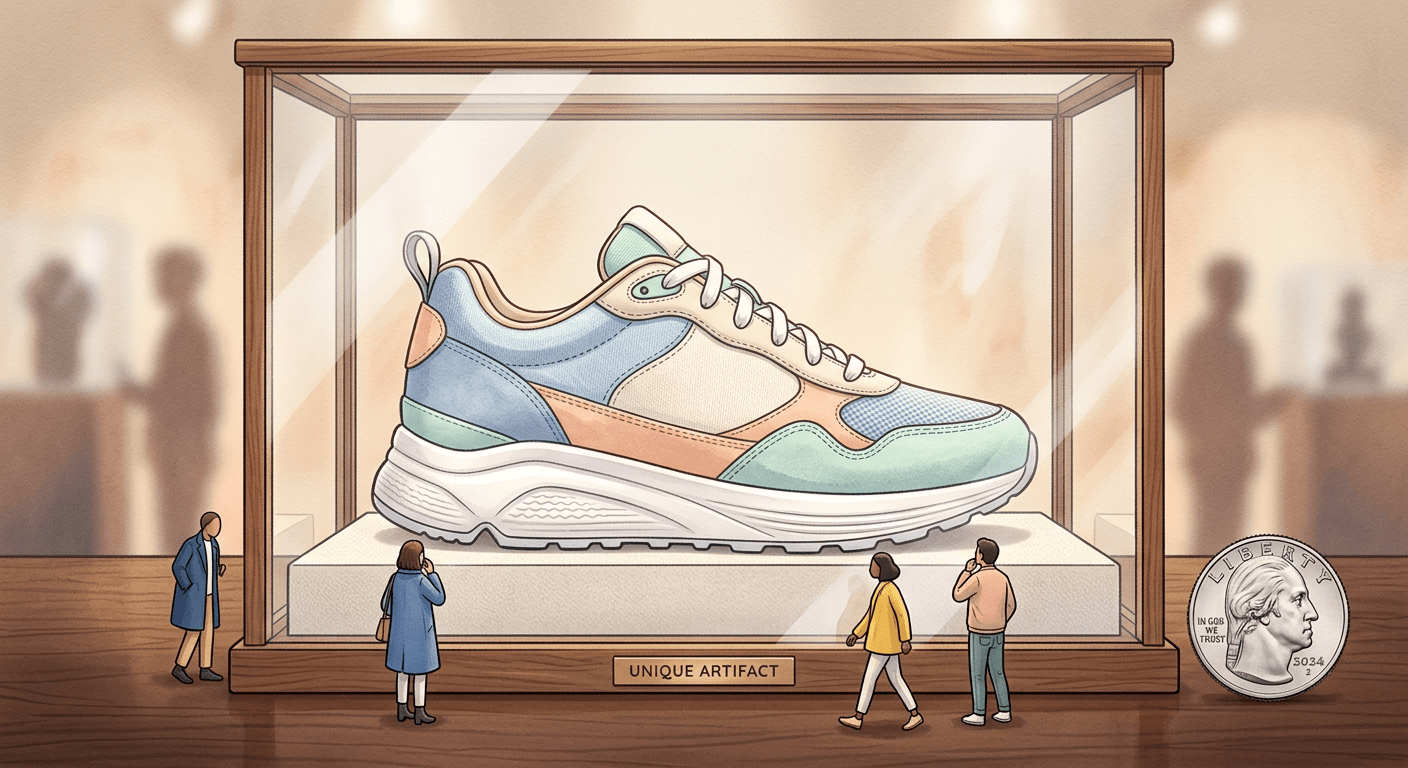
Prompt 9: Sneaker display-case diorama
Transform this sneaker or shoe photo into a hyper-detailed miniature diorama scene where the shoe becomes a scale-model display piece inside a small glass display case, preserving its exact color scheme, materials, and lacing pattern from the original photo, tiny figures the height of a fingernail posed as if browsing around it like a shoe store display, macro lens photography with realistic stitching and fabric texture visible up close, soft studio softbox lighting with a clean catchlight on the leather or mesh panels, shallow depth of field blurring the display case edges into bokeh, a real coin placed beside the case for scale, no watermark, no logos.
Prompt 10: Coffee cup miniature world
Transform this coffee or drink photo into a miniature diorama scene built around the same cup, the cup rendered as an oversized landmark inside a tiny cafe tabletop world with matchstick-sized chairs and thumbnail-sized plates scattered nearby, preserving the cup's exact color, shape, and design from the original photo, wisps of steam rendered in soft macro-lens haze, warm practical lighting simulating a window-lit morning, shallow depth of field with the background dissolving into soft bokeh, a real sugar cube placed beside the scene for scale reference, no watermark, no logos.
Prompt 11: Car scale-model diorama
Transform this car photo into a miniature scale-model diorama of the same vehicle, preserving its exact color, body shape, and proportions from the original photo, displayed on a small diorama base with a painted asphalt-texture road, miniature traffic cones and a matchstick-sized lamp post beside it, macro photography lighting with a hard key light creating realistic paint reflections and a soft fill light preventing harsh shadows, shallow depth of field with the background falling into gentle bokeh, a real coin or paperclip placed next to the model for scale, visible tiny dust and light scratches on the display base for realism, no watermark, no logos.
Prompt 12: Houseplant miniature world
Transform this houseplant photo into a miniature diorama scene where the plant becomes a giant canopy over a tiny world built around its base, preserving the plant's exact leaf shape, color, and pot design from the original photo, a small painted clay path winding between the roots with matchstick-sized benches and a thumbnail-sized watering can, soft diffused macro lighting simulating window light filtering through the leaves, shallow depth of field with the background gently blurred into bokeh, a real coin placed at the base of the pot for scale, fine dust particles catching the light near the soil, no watermark, no logos.
These object prompts work especially well as a themed daily series, the same format that made the flash-filter and knitted-world trends spread as fast as they did. Our AI flash filter prompts post covers a completely different photographic recipe if you want to rotate a second viral style alongside this one.
4) Pet and Portrait Dioramas
People and pets are the most personal application of this trend, and the four prompts below cover the framings creators use most, a single pet, a solo portrait bust, and a full group.
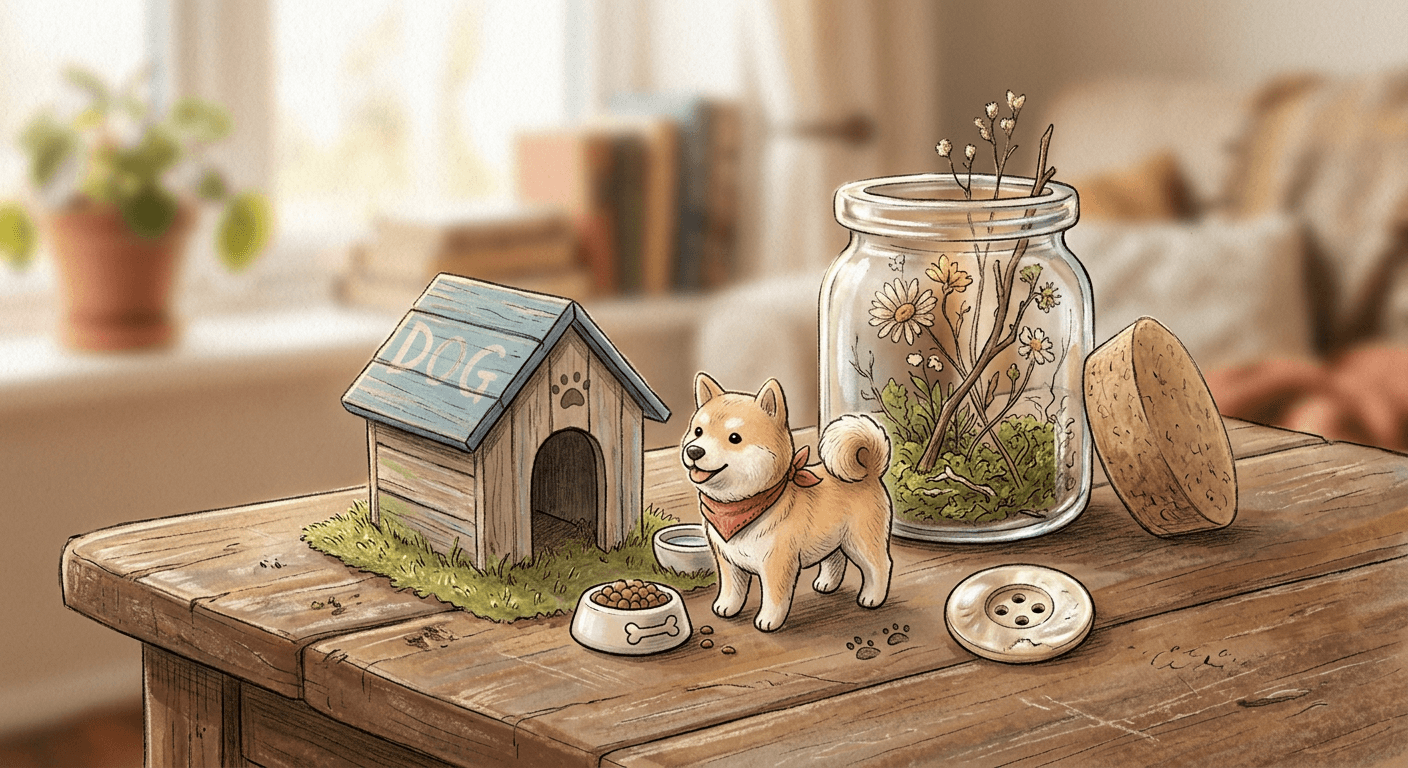
Prompt 13: Dog miniature diorama
Transform this dog photo into a miniature diorama figure of the same dog, preserving its exact breed proportions, fur pattern, and pose from the original photo, standing inside a small display box beside a tiny hand-built doghouse and a thumbnail-sized food bowl, macro lens photography with visible individual fur strands rendered in fine clay-like detail, soft studio key light with a gentle rim light along the back to separate the figure from the background, shallow depth of field with the background melting into soft bokeh, a real coin placed beside the display box for scale reference, no watermark, no logos.
Prompt 14: Cat miniature diorama
Transform this cat photo into a miniature diorama figure of the same cat, preserving its exact fur coloring, facial proportions, and pose from the original photo, seated beside an open glass jar on a wooden tabletop with a thumbnail-sized ball of yarn nearby, macro photography with fine individually rendered whiskers and fur texture, soft window-style key light with a small catchlight in the eyes, shallow depth of field blurring the background into gentle bokeh, a real button or coin placed next to the figure for scale, faint dust particles visible in the light beam, no watermark, no logos.
Prompt 15: Portrait bust diorama
Transform this portrait photo into a miniature diorama bust figure of the same person from the shoulders up, preserving their exact facial features, hairstyle, and expression from the original photo, displayed on a small round wooden base beside an open glass jar, fine hand-sculpted clay-like skin texture and individually rendered strands of hair, macro lens photography at f/1.8 with a shallow plane of focus across the face and soft bokeh behind, a soft key light from one side with a warm fill light preventing harsh shadows, a real coin placed beside the base for scale reference, no watermark, no logos.
Prompt 16: Group photo diorama
Transform this group photo into a miniature diorama scene of the same people, preserving each person's exact pose, relative position, outfit colors, and expression from the original photo, the whole group built as a small tabletop scale model standing on a painted foam base beside an open glass jar, fine clay-like texture on skin and fabric for every figure, macro photography lighting with a soft overhead key light and gentle shadows extending from each miniature figure, shallow depth of field blurring the background into bokeh, a real ruler placed along the base to indicate true scale, no watermark, no logos.
A close, evenly lit reference photo with a plain background consistently produces the cleanest miniature figure, since harsh shadows or a busy background give the model more surfaces to misinterpret at scale. If this personal, upload-your-own-photo format is what you are after, our meet your younger self prompts and our pet-to-human transformation prompts use the same single-photo workflow applied to a different outcome entirely.
5) Landmark Dioramas and Animated Tiny Worlds
Landmarks make for the trend's most museum-like results, a real building or skyline rebuilt as a scale model you would expect to see behind glass in an architecture exhibit, and once a diorama is finished, some creators are taking it one step further by animating it into a short clip.
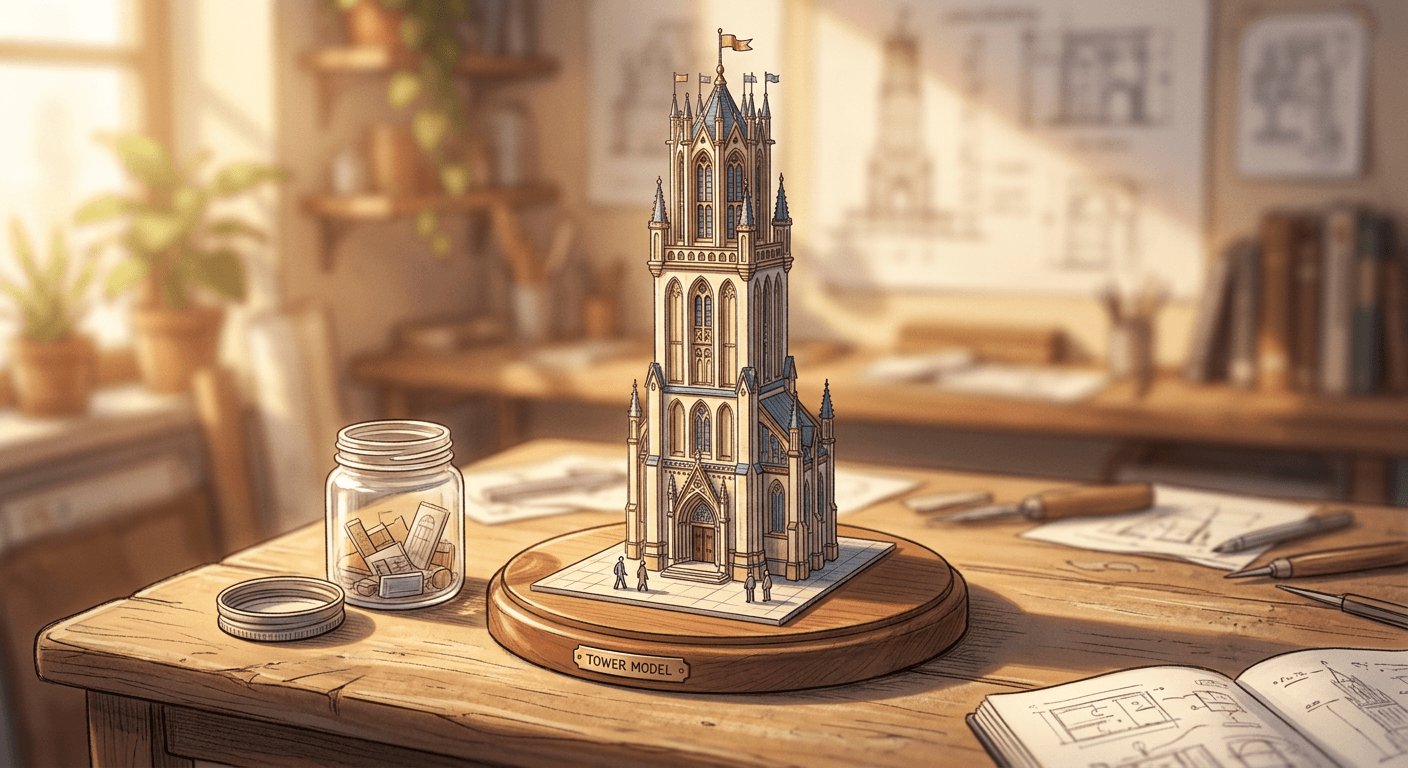
Prompt 17: Landmark scale-model diorama
Transform this landmark photo into a miniature museum-style scale-model diorama of the same landmark, preserving its exact architectural proportions, structure, and lighting direction from the original photo, displayed on a wooden base beside an open glass jar with tiny figures the height of a grain of rice walking near its entrance for scale, macro tilt-shift photography effect with a narrow plane of focus across the facade and soft bokeh at the edges, warm directional light simulating late afternoon sun raking across the surface, visible fine texture in the stonework or metal at true miniature scale, no watermark, no logos.
Prompt 18: Subtle motion animation of a finished diorama
Animate this finished miniature diorama scene with a slow, subtle motion, tiny dust particles drifting gently through the macro-lit air, a faint flicker in any miniature light source inside the scene, the camera performing a very slow creeping dolly move a few millimeters closer as if a real macro lens is being adjusted by hand, no change to the overall lighting direction or color, shallow depth of field maintained throughout, cozy handcrafted mood, no watermark.
Generate the still diorama first using one of the prompts above, then feed that finished image into an image-to-video workflow with the motion prompt. The cinematic AI video generator in Miraflow AI supports exactly this two-step still-then-motion pipeline, so the dust particles drifting through the light and the faint flicker of a tiny lamp can carry into a few seconds of real movement without switching tools.
How to Customize These Prompts
Every prompt above follows the same four-part structure: preserve the subject's exact shape, color, and pose from the source photo, describe the physical material the miniature version is built from, specify real macro lens behavior, and include one explicit scale reference object. When you adapt any prompt to a new subject, keep those four pieces intact, since the scale reference line in particular is what separates a genuinely tiny-looking world from a normal-sized model shot up close. Swapping in the exact color of a pet's fur, a landmark's real facade material, or a sneaker's actual colorway, rather than leaving color up to the model, consistently produces a more convincing result. All of this runs the same way inside the AI Image Generator in Miraflow AI, whether you are starting from a portrait, a pet, or a full landscape photo.
Common Mistakes Creators Make
- Skipping the scale reference object. A coin, a matchstick, or a fingertip placed beside the tiny world is the single detail that convinces a viewer's eye the scene is actually small, and leaving it out is the most common reason a result reads as a normal photo instead of a diorama.
- Forgetting to preserve the original subject's exact shape and color. Without that instruction, the model tends to invent a generic miniature figure instead of a recognizable shrunken version of your actual pet, landmark, or photo.
- Using a busy or cluttered background photo. A cluttered source image gives the model too many competing surfaces to shrink down consistently, and simple, clearly lit photos produce dramatically cleaner results.
- Ignoring glass physics when a jar or bottle is part of the scene. A jar without any refraction, caustic light, or reflection on the tabletop looks pasted on rather than genuinely displayed inside real glass.
- Jumping straight into video animation before the still diorama actually looks convincing. A weak static image exposes every inconsistency once it starts moving, so nail the still first.
- Picking the wrong model for a detail-heavy scene. Some models flatten fine texture on tiny props and lose the macro depth-of-field effect entirely. Our Nano Banana Pro vs Seedream 5 Pro comparison is worth a look before you commit to a workflow for a whole batch of these.
Where to Generate These
The AI Image Generator in Miraflow AI handles the image-to-image transformation every prompt above depends on, including inpainting if one small part of a generation, a prop that came out the wrong size, or a jar reflection that looks off, needs a fix without regenerating the whole scene. Because these results are naturally eye-catching and a little surreal, several creators have started reusing their favorite diorama generation as a video cover image, and the YouTube Thumbnail Maker in Miraflow AI makes it easy to drop one straight into a thumbnail layout with text over it. Once you have a finished still, the cinematic AI video generator can carry it into the short motion clips covered in the landmark section above, and Text2Shorts can turn a themed week of these into one narrated vertical video for YouTube Shorts, Instagram Reels, or TikTok.
For more of the same photo-trend format applied to a different visual idea, our AI action figure and toy box prompts, AI knitted world prompts, and anti-AI film grain prompts are all worth a look, and you can browse the full library of prompt packs on the Miraflow AI blog.
Frequently Asked Questions
What model should I use for the miniature diorama effect? Nano Banana Pro and Nano Banana 2 are the models most associated with this trend's cleanest results, since both hold scale, lighting direction, and material texture consistently across a full image-to-image generation. Our Nano Banana Pro vs Seedream 5 Pro comparison covers how they differ on detail-heavy prompts like these.
Why does every photo in this trend include a coin or a small object next to the diorama? That object is the scale reference the human eye uses to register the scene as genuinely tiny. Without something ordinary and recognizably sized sitting right beside it, a miniature diorama can read as a normal-sized model photographed up close instead.
Does this work on any kind of photo? A simple, clearly lit photo with a single obvious subject and an uncluttered background produces the most convincing result. Busy scenes with a lot of competing detail give the model more surfaces to shrink down inconsistently.
Is this the same as the AI figurine or action figure trend? No, though both trends share the appeal of turning a real subject into an unexpected physical scale. The figurine trend produces a single boxed collectible figure, while the miniature diorama trend builds an entire scaled-down scene or world around the subject.
Can I animate a finished diorama into a video? Yes. Generate the still image first, then run that finished result through an image-to-video workflow with a subtle motion prompt, as covered in the landmark and animation section above.
Can I use these prompts inside Miraflow AI? Yes. These prompts describe a general image-to-image transformation technique rather than app-specific syntax, so they work directly inside the AI Image Generator in Miraflow AI.
Conclusion
The miniature diorama trend has spread as fast as it has because it turns something completely ordinary, a pet, a face, a landmark, a sneaker, into a tiny, physically convincing world that looks like it belongs behind glass in an exhibit. The 18 prompts above cover the five ways creators are actually building that effect right now, jar and bottle worlds, full landscapes and rooms, everyday objects, pets and portraits, and landmarks with a short animated finish, each one built around the same core instructions to preserve the subject's real shape and color, describe the physical materials at true scale, and always include one object that proves just how small the scene really is. Start with a simple, well-lit photo, keep the scale reference line in every prompt you customize, and try the first one inside Miraflow's AI Image Generator to see how close you can get to the tiny worlds everyone is posting right now.