22 AI Pinterest Scrapbook Aesthetic Prompts for the Viral Moodboard Photo Trend (Copy & Paste)

Written by
Aerin Kim
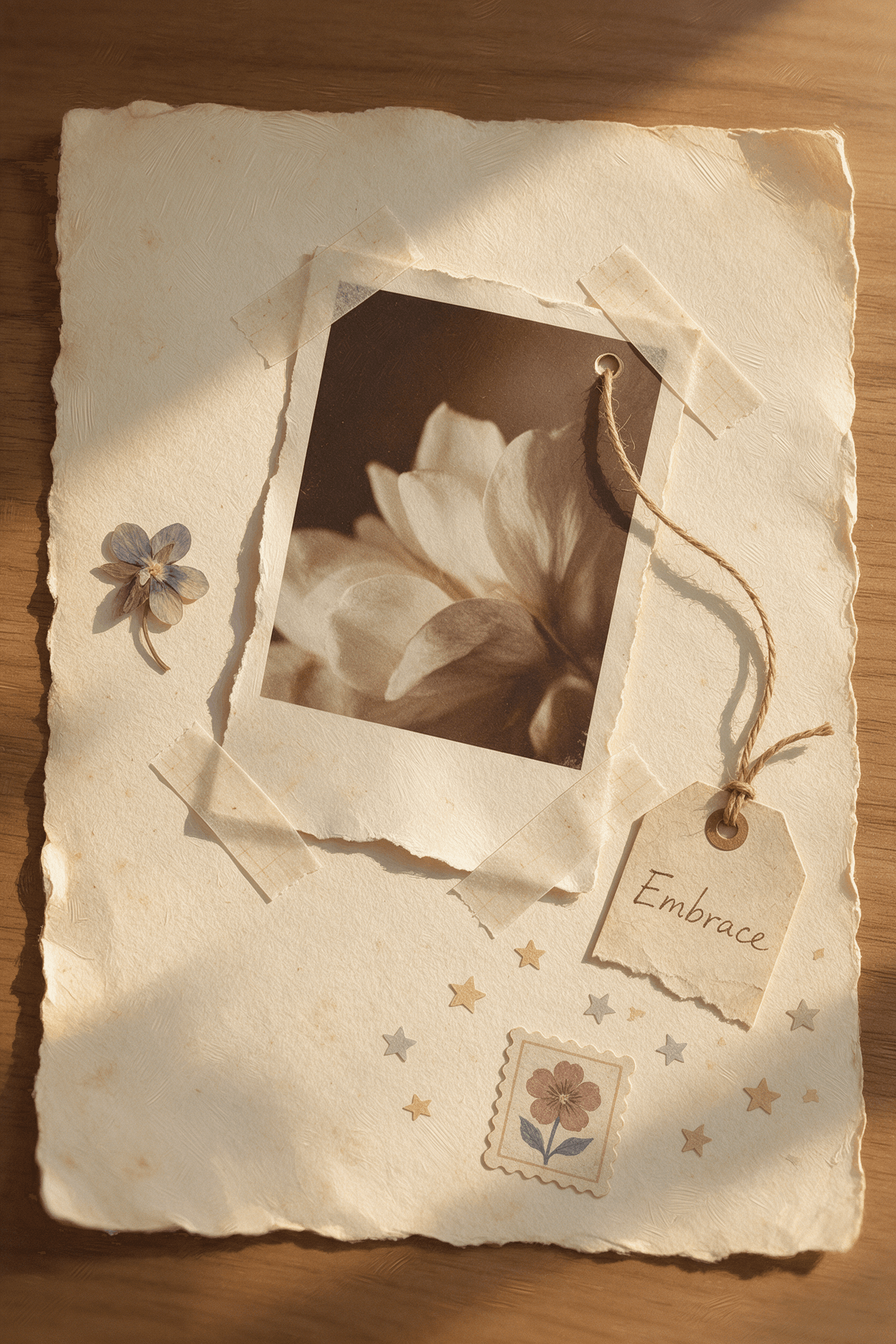
The Pinterest scrapbook aesthetic is the viral AI edit turning ordinary photos into torn-paper moodboard pages. Here are 22 grouped, copy-paste prompts to recreate it.
Open Pinterest right now and the moodboards do not look like moodboards anymore. They look like someone's actual, physical scrapbook got photographed under warm window light: torn paper edges, strips of washi tape, a pressed flower, a handwritten caption tag tied on with string. Except nobody cut or glued anything. The whole page, photo and paper texture and tape and all, came out of a single AI prompt.
This is the Pinterest scrapbook aesthetic, and it has spread fast through late September and early October 2026 because it solves a problem the last few AI photo trends never quite did: it makes a single ordinary photo look intentional, crafted, and personal instead of just filtered. It is a different move from the plain film grain and old-photo trend, which degrades an image to look aged, and different again from a decade or younger-self progression, which composites a person across time. The scrapbook aesthetic does not touch the photo's age or the person's age at all. It builds a whole physical, tactile page around the photo: collage styling, not time travel and not degradation.
Below are 22 grouped, copy-paste prompts for recreating this look across the situations creators are actually using it for right now: personal portraits, travel memories, pets and family, brand moodboards, and milestone celebrations. Every prompt is written for the image-to-image workflow this trend depends on, which you can run directly inside the AI Image Generator in Miraflow AI: upload your real photo, paste a prompt, and let the model build the paper, tape, and props around it while keeping your actual photo intact underneath.
Why the Scrapbook Aesthetic Is Spreading Right Now
Three separate forces are feeding this trend at once, and understanding them is what makes the prompts below actually work instead of producing a flat, generic collage.
The first is the broader pullback from over-polished AI output. For most of 2026, the loudest complaint about AI images has been that they look too perfect, too smooth, too obviously synthetic. Tools like Nano Banana Pro and Gemini's image models got good enough at photorealism that the next wave of trends started deliberately reintroducing imperfection and texture on purpose, not because the model cannot do better, but because flawless skin and studio lighting stopped reading as interesting. A scrapbook page is one of the most efficient ways to add that texture back in a single generation: torn edges, paper grain, and tape are inherently imperfect, so the whole image reads as handmade even though a model rendered it in seconds.
The second force is Pinterest itself shifting what a moodboard is supposed to look like. Pinterest's own 2026 trend reporting has pointed at exactly this shift, away from clean grid layouts and toward collage and scrapbook-style boards that feel assembled by a real person with real materials. A flat image grid reads as a content calendar. A scrapbook page reads as a diary entry. For creators building a personal brand, a travel account, or a small product line, that second read is worth far more engagement, because it invites a comment instead of a scroll past.
The third force is specific to how current image models handle physical texture. Nano Banana Pro, Gemini's image tooling, ChatGPT's image generator, and Seedream have all gotten noticeably better in the last two model generations at rendering convincing paper fiber, fabric weave, and small physical props like washi tape and pressed flowers inside the same frame as a real reference photo, without losing the identity of the person or pet in that photo. That is a genuinely new capability. Eighteen months ago, asking a model to tuck your actual selfie under a strip of tape on a textured paper background usually either flattened your face into the illustration style or left the tape looking like a flat sticker pasted on top. Current models blend the reference photo and the surrounding scrapbook elements into one coherent scene, which is the entire reason this specific trend became possible now rather than a year ago.
What Actually Makes a Scrapbook Prompt Work
The difference between a convincing scrapbook page and a flat, obviously-fake one almost always comes down to four specific elements, and every prompt below is built around getting all four right rather than just naming the aesthetic and hoping the model fills in the details.
First, a torn or deckled photo edge, not a clean rectangle. A perfectly square photo corner with tape on it reads as a sticker slapped on a background, not a page. Second, at least one tactile fastening element: washi tape, a ribbon, a brass pin, or a loop of string. This is what sells the idea that someone physically assembled the page. Third, a small handwritten-feeling element, a tag, a caption, a doodled arrow, kept deliberately short since long AI-generated handwriting reliably comes out garbled. Fourth, one organic or botanical touch, a pressed flower, a dried leaf, a sprig of something, which is the detail that pushes a page from "collage" to specifically "scrapbook," the aesthetic this trend is named for.
Miss any one of these four and the result tends to look like a generic moodboard graphic rather than the specific viral look. Keep all four and even a simple single-photo prompt reads convincingly handmade.
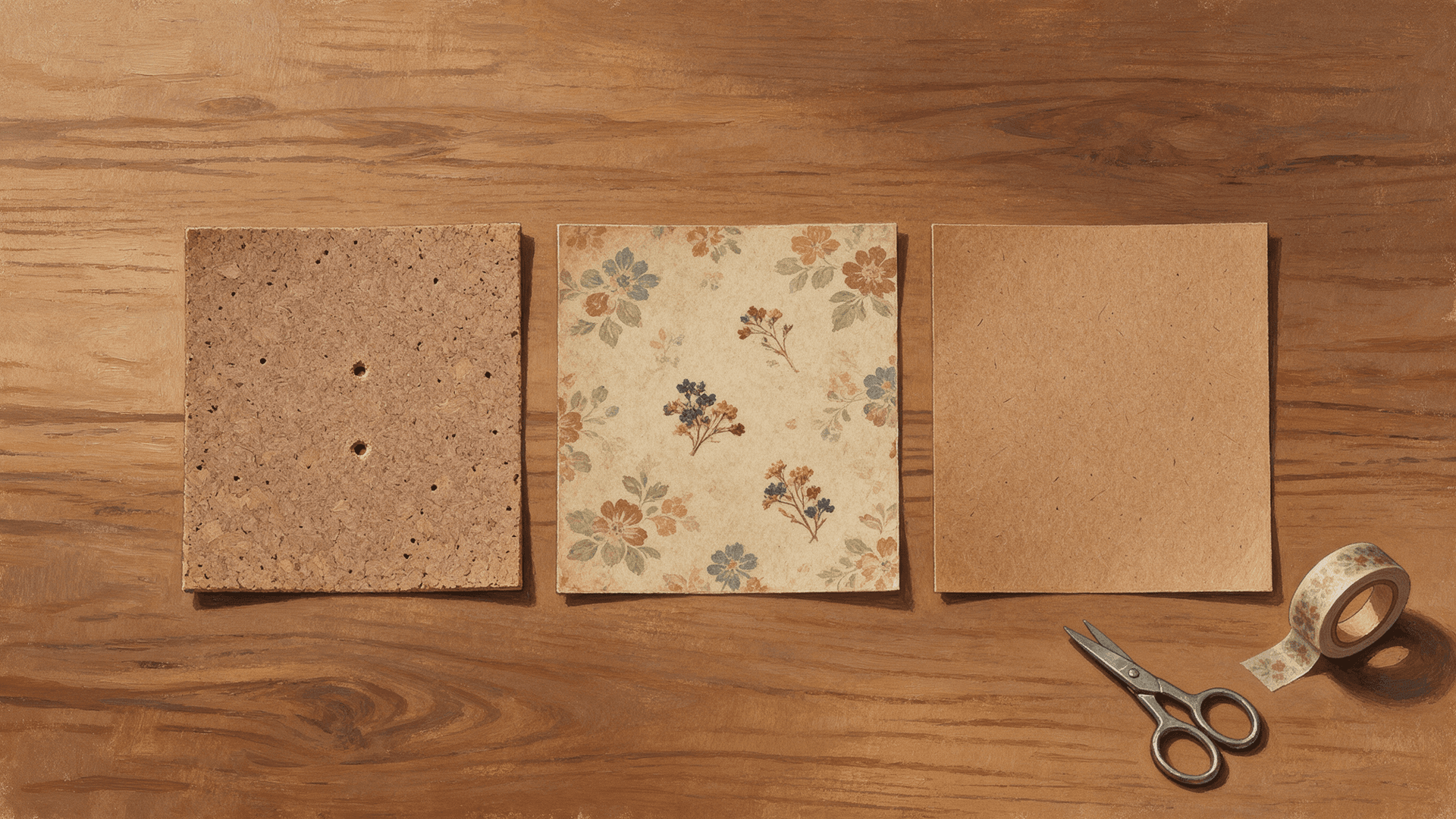
One more variable worth deciding before you start generating: the background paper itself. Warm cream or kraft paper is the most versatile and the easiest for a model to render convincingly. Cork board reads more like a bulletin board or vision board than a diary page, which is the right call for the full-spread prompts later in this guide. A faded floral or botanical patterned paper pushes the whole page toward a softer, more romantic feel, which tends to work best for anniversary and family pages. None of the prompts below hardcode this choice, so swap the paper description in any prompt to match the mood you actually want.
1) Scrapbook Portrait Prompts
These four prompts turn a single reference photo, or a small set of them, into a personal scrapbook page, the format most creators are posting as a standalone "about me" or personal-brand piece.
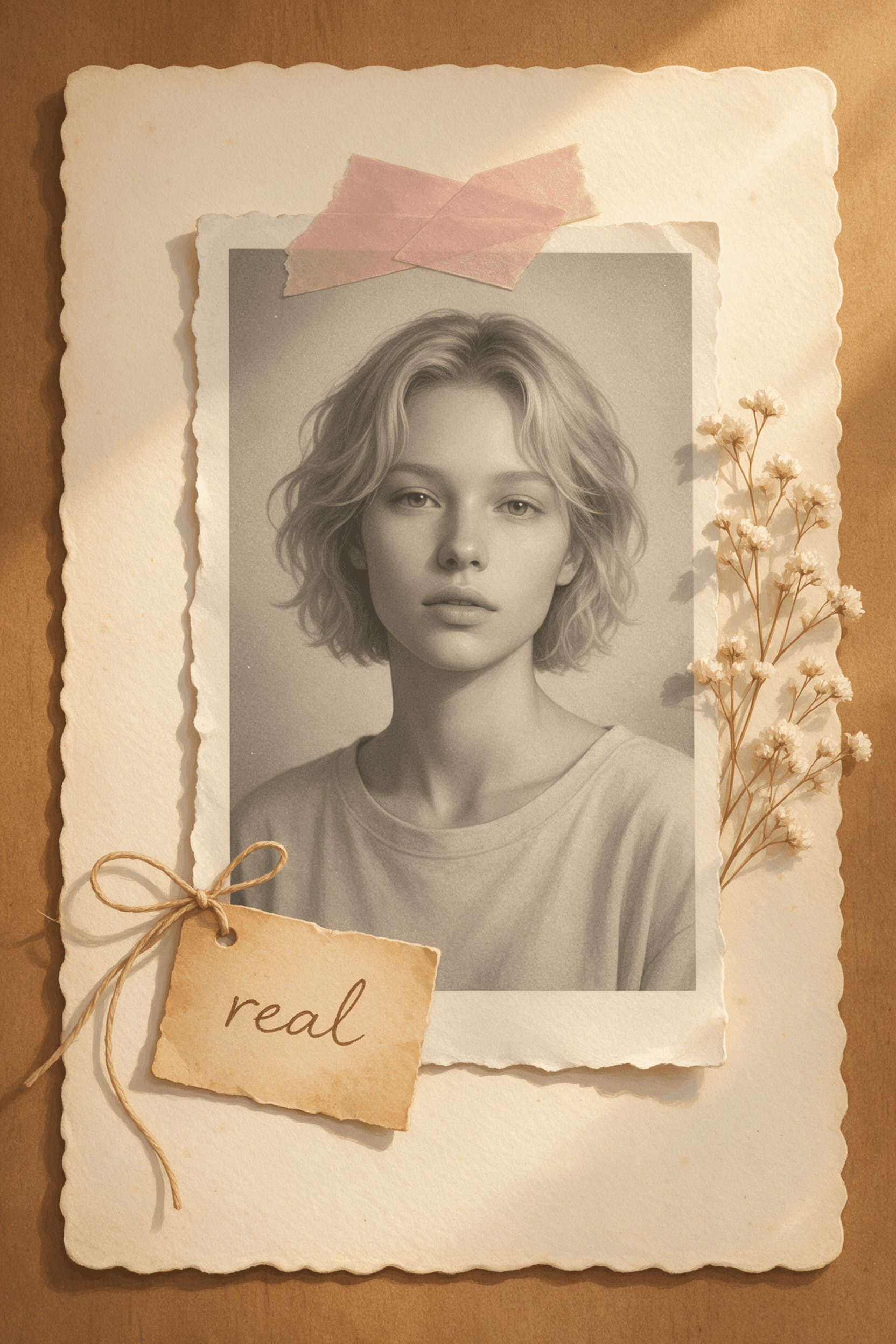
Prompt 1: Classic single-photo scrapbook page
Turn the person in the reference photo into a single scrapbook page on warm cream paper. Keep the photo itself torn at the edges like a hand-torn print, held down at two corners with strips of pastel washi tape, add a small pressed flower tucked beside it, a loop of twine tied to a blank paper tag in the corner, and soft warm directional lighting across the whole page like it was photographed on a wooden desk. Keep the person's face and features true to the reference photo, do not stylize the face itself, only the surrounding page.
Prompt 2: Polaroid-style multi-photo grid
Using three different reference photos of the same person, create one scrapbook moodboard page with all three printed as small torn-edge polaroid-style photos arranged at slightly different angles, each with a thin white border, overlapping corners tucked under strips of washi tape, a handwritten-style caption word on a small tag beneath one photo, and a scatter of tiny paper stars across the page. Warm cream paper background, soft lamp lighting, keep every face true to its original reference photo.
Prompt 3: Handwritten journal-style page
Turn the reference photo into a scrapbook journal page where the photo sits torn at one corner on the left side of the page, and the right side shows a lined notebook paper cutout with a few short handwritten-style lines and a small doodled arrow pointing from the writing to the photo. Add one strip of washi tape across the photo's top edge and a dried leaf pressed in the lower corner. Warm paper tones, soft window light, keep the face in the photo true to the reference image.
Prompt 4: Year-in-review spread
Using four reference photos of the same person from different moments, build one scrapbook spread titled as a year-in-review page, each photo torn at the edges and arranged in a loose grid, connected by thin string, with small paper tags under two of the photos and a cluster of pressed flowers in one empty corner. Warm cream background with light texture, soft even lighting, keep each face consistent with its own reference photo, no blending the faces together.
All four assume a clear, reasonably well-lit reference photo as the base. The model is doing two jobs at once here, preserving your actual face and building a convincing paper scene around it, and a blurry or heavily cropped source photo makes the first job harder, which tends to show up as a slightly flattened or over-smoothed face in the result.
2) Travel and Memory-Page Prompts
Travel content is where the scrapbook aesthetic arguably fits best, since postcards, ticket stubs, and pressed flowers have been part of real travel scrapbooking for decades, long before any of this was AI-generated. These four prompts lean into that history rather than inventing a new metaphor.
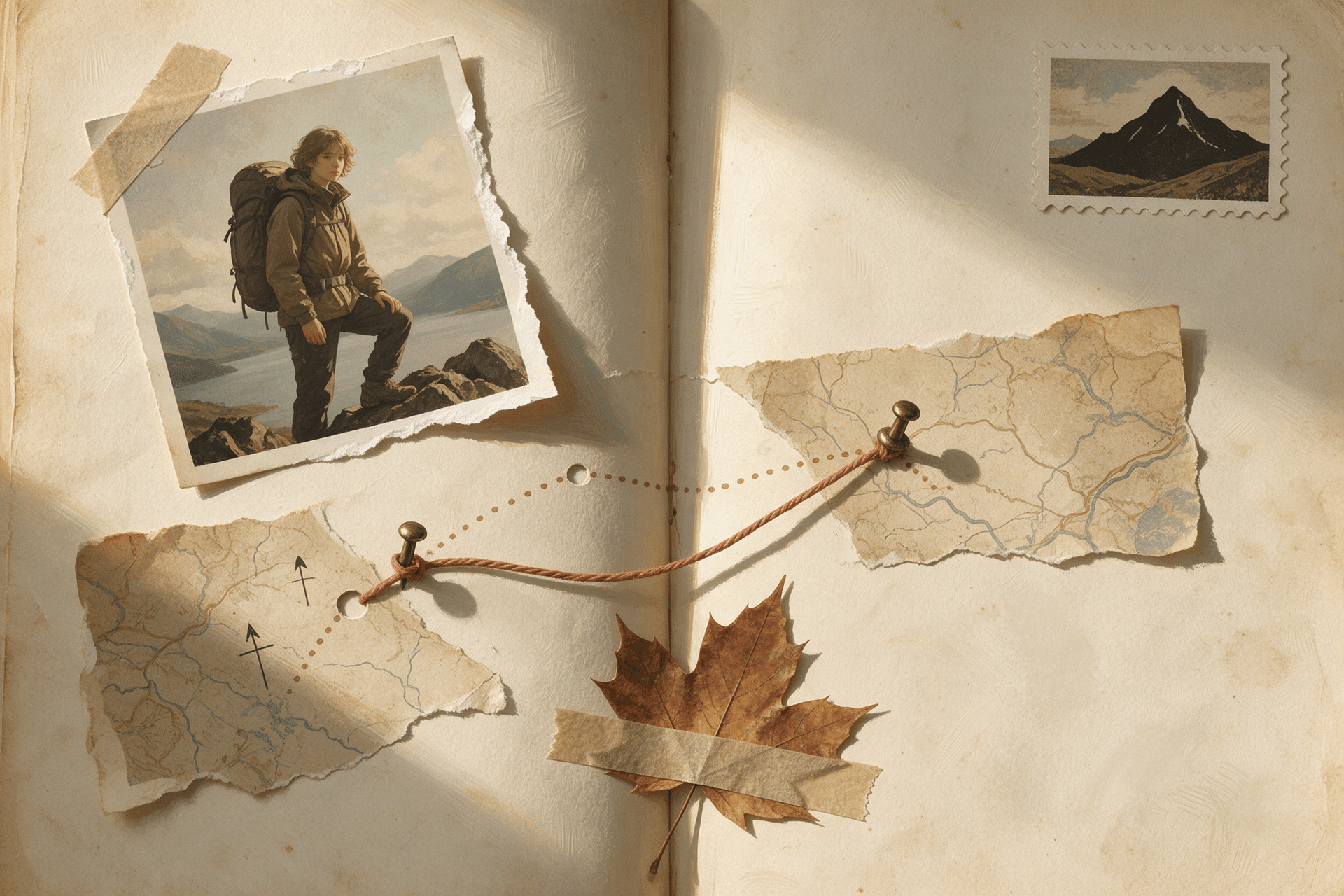
Prompt 5: Postcard-style travel page
Turn the reference travel photo into a scrapbook postcard page: the photo torn at the edges like a vintage print, a small postage-style stamp sticker in the top right corner, a thin washi tape strip across the bottom holding it down, and a short handwritten-style caption tag tied with string beside it. Add a small pressed fern leaf in the opposite corner. Warm antique paper tones, soft directional light, keep the scene and any people in the photo true to the original.
Prompt 6: Map and route page
Create a travel scrapbook page combining the reference travel photo with a hand-cut paper fragment shaped like a simple dotted map route, the photo torn at one edge and tucked under the map fragment with a strip of kraft tape, plus a small compass rose doodle sticker in one corner and a pressed flower along the bottom edge. Warm cream paper, soft window light from the side, keep the photo's real content and any faces unchanged from the reference image.
Prompt 7: Ticket-stub collage page
Build a scrapbook collage page from the reference travel photo surrounded by a small cluster of simple paper ticket-stub shapes with torn perforated edges, a boarding-pass style strip tucked beneath the photo, and a loop of twine holding a tag that reads a short word. Add a dried leaf and a tiny paper airplane cutout near the corner. Warm paper tones, soft even lighting, no real airline names or logos, keep the photo content true to the reference.
Prompt 8: Pressed-flower botanical travel page
Turn the reference travel photo into a botanical scrapbook page, the photo torn at the edges and bordered on two sides by real-looking pressed flowers and leaves, a thin ribbon crossing one corner, and a small hand-lettered tag tied with string reading a short word beneath the photo. Warm desaturated paper background with visible fiber texture, soft lamp light from above, keep the photo's real scene and any people unchanged.
If you are already building travel content with a double-exposure or poster treatment, these pair well as a second format from the same trip's photos. Our AI double exposure travel poster prompts guide covers that complementary style if you want to post both from one set of vacation photos without repeating yourself.
3) Pet and Family Scrapbook Prompts
Pets and family photos are where the organic, tactile detail of this trend lands hardest, since a dried flower or a hand-tied tag next to a photo of a pet or a parent reads as genuinely sentimental rather than stylized.
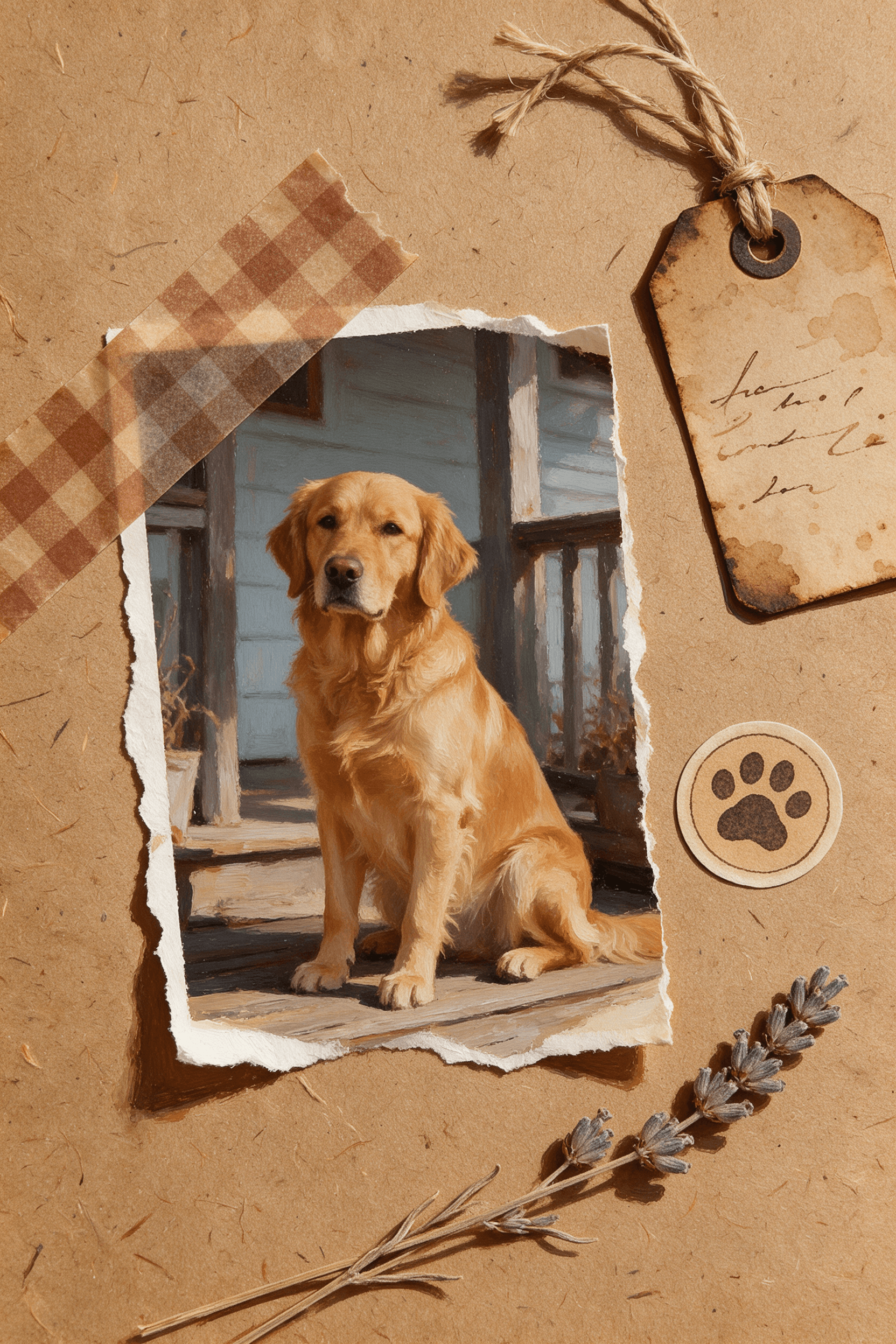
Prompt 9: Single pet portrait page
Turn the reference pet photo into a scrapbook page on warm kraft paper, the photo torn at the edges and held under a strip of checkered washi tape, a small round paw-print sticker beside it, a dried lavender sprig along the bottom edge, and a hand-lettered paper tag tied with twine giving the pet's name in short handwritten-style text. Soft lamp lighting, visible paper texture, keep the pet's breed, coloring and features true to the reference photo.
Prompt 10: Family reunion page
Using the reference family photo, build a scrapbook page with the photo torn at one corner, a strip of floral washi tape across the top, a small cluster of pressed flowers in the opposite corner, and two tiny paper hearts doodled near the bottom edge. Add a short handwritten-style caption tag tied with string beneath the photo. Warm cream paper, soft window light, keep every face in the photo true to the reference image, no blending or distorting any family member's features.
Prompt 11: Kid's milestone page
Turn the reference photo of a child's milestone moment into a scrapbook page with the photo torn at the edges, a strip of pastel polka-dot washi tape across one side, a small paper star sticker cluster in the corner, and a hand-lettered tag tied with ribbon noting the milestone in short text. Add a pressed daisy along the bottom edge. Warm soft paper tones, gentle lamp lighting, keep the child's face and features true to the reference photo.
Prompt 12: Couple anniversary page
Using the reference couple photo, create a scrapbook anniversary page with the photo torn at the edges and framed by a thin red ribbon looping across one corner, a small paper heart cutout beside it, a strip of washi tape holding down the opposite edge, and a hand-lettered tag tied with twine reading a short word. Warm cream paper background, soft directional lighting, keep both faces in the photo true to the original reference image.
If a pet photo is the anchor, double check the model has kept the animal's real markings and proportions accurate after the edit, since fur texture and paper texture can occasionally blend into each other at the photo's torn edge. Regenerating with a sharper, well-lit source photo usually fixes this on the first retry. For pet content specifically, these pages also work well alongside the playful side of our pet-to-human transformation prompts if you want one serious, sentimental post and one purely fun one from the same photo set.
4) Product and Brand Moodboard Prompts
This is the group that turns the trend from a personal aesthetic into an actual marketing asset. A product photo styled as a scrapbook moodboard page communicates brand tone, ingredients, or aesthetic direction in a single image, without needing a paragraph of copy to explain it.
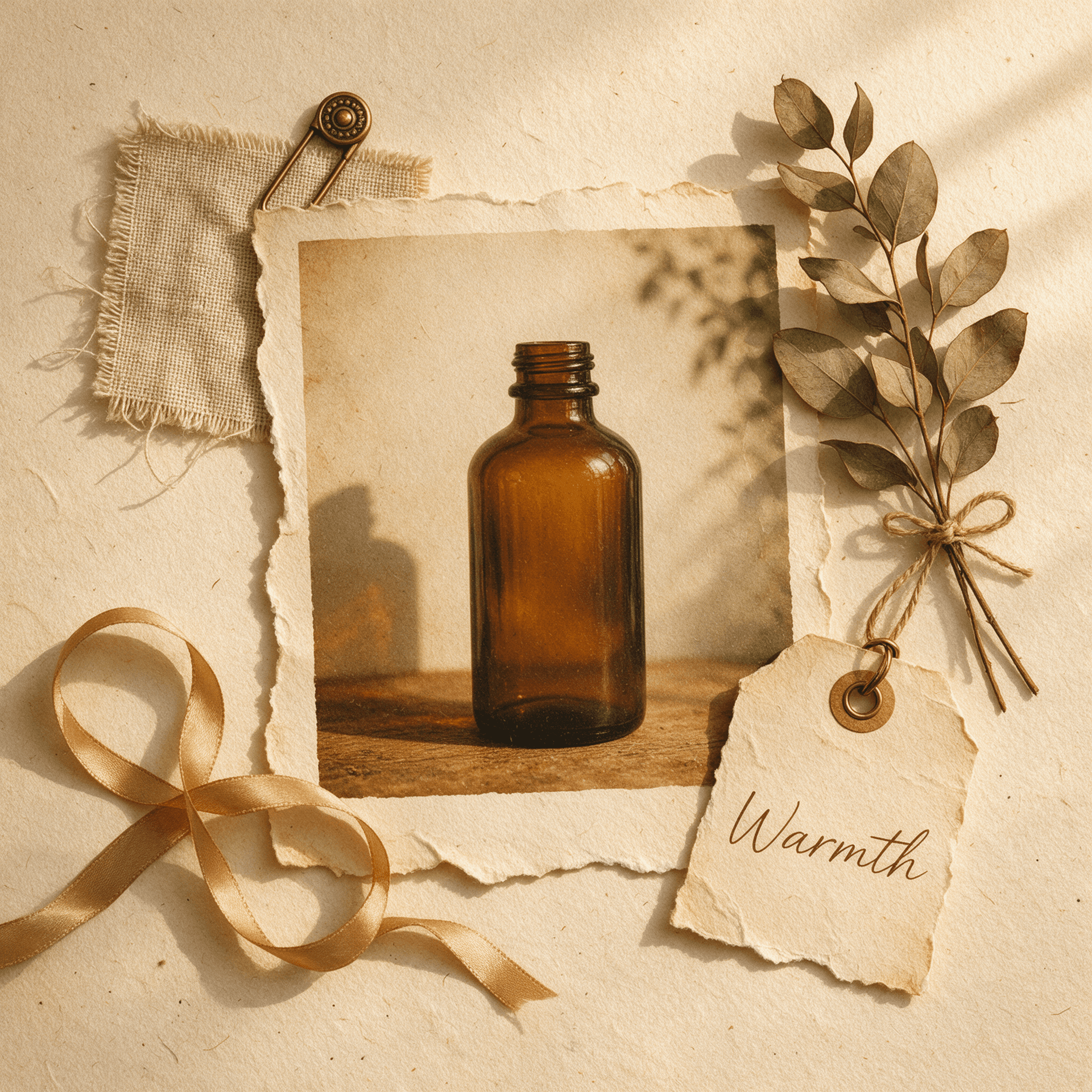
Prompt 13: Product launch moodboard page
Turn the reference product photo into a brand moodboard scrapbook page on warm cream paper, the product photo torn at one edge and pinned down with a brass pin, a small square of fabric swatch beside it tied with thread, a dried botanical sprig tucked along the bottom, and a hand-lettered paper tag naming the product line in short text. Soft window light from the side, visible paper texture, no real brand names or logos, keep the product's shape and color true to the reference.
Prompt 14: Ingredient-story page
Build an ingredient-story scrapbook page for the reference product photo, the product torn-edge photo placed beside a small cluster of the product's real key ingredient represented as a dried botanical or textured swatch, a thin kraft paper label tied with string listing the ingredient in short handwritten-style text, and a strip of washi tape across the top corner. Warm antique paper tones, soft lamp lighting, no real competitor brand names, keep the product's real appearance unchanged.
Prompt 15: Full brand-aesthetic boardroom page
Create a full brand-aesthetic scrapbook moodboard page using the reference product photo as the anchor image, surrounded by a small fabric swatch, a color palette strip of three torn paper squares in the brand's real colors, a short ribbon, and a hand-lettered tag reading the brand's tone in one short word like warm or bold. Warm cream paper background, soft even lighting, visible brushwork and paper grain, no real logos, keep the product photo's real details unchanged.
Prompt 16: Small-business menu-style page
Turn the reference photo of a small business's product or storefront into a scrapbook page styled like a handmade menu or price sheet, the photo torn at the edges and bordered by a thin ribbon, a small pressed herb sprig in one corner, and a hand-lettered tag tied with twine. Warm kraft paper background, soft directional light, no readable long text beyond a short word on the tag, no real logos, keep the photographed subject true to the reference image.
This group works especially well for categories that already lean into tactile, handmade branding: skincare, candles, florists, small-batch food brands, and independent clothing lines. If you are building a full visual identity around a product rather than a single post, it is worth pairing this moodboard treatment with more conventional product shots. Our UGC-style product and lifestyle ad prompts cover the complementary, more straightforward side of that same content calendar.
5) Milestone and Celebration Scrapbook Prompts
Birthdays, graduations, new homes, new jobs, and holidays are the occasions people already physically scrapbook in real life, which makes this group the most intuitive to adapt and often the highest-engagement of the five.
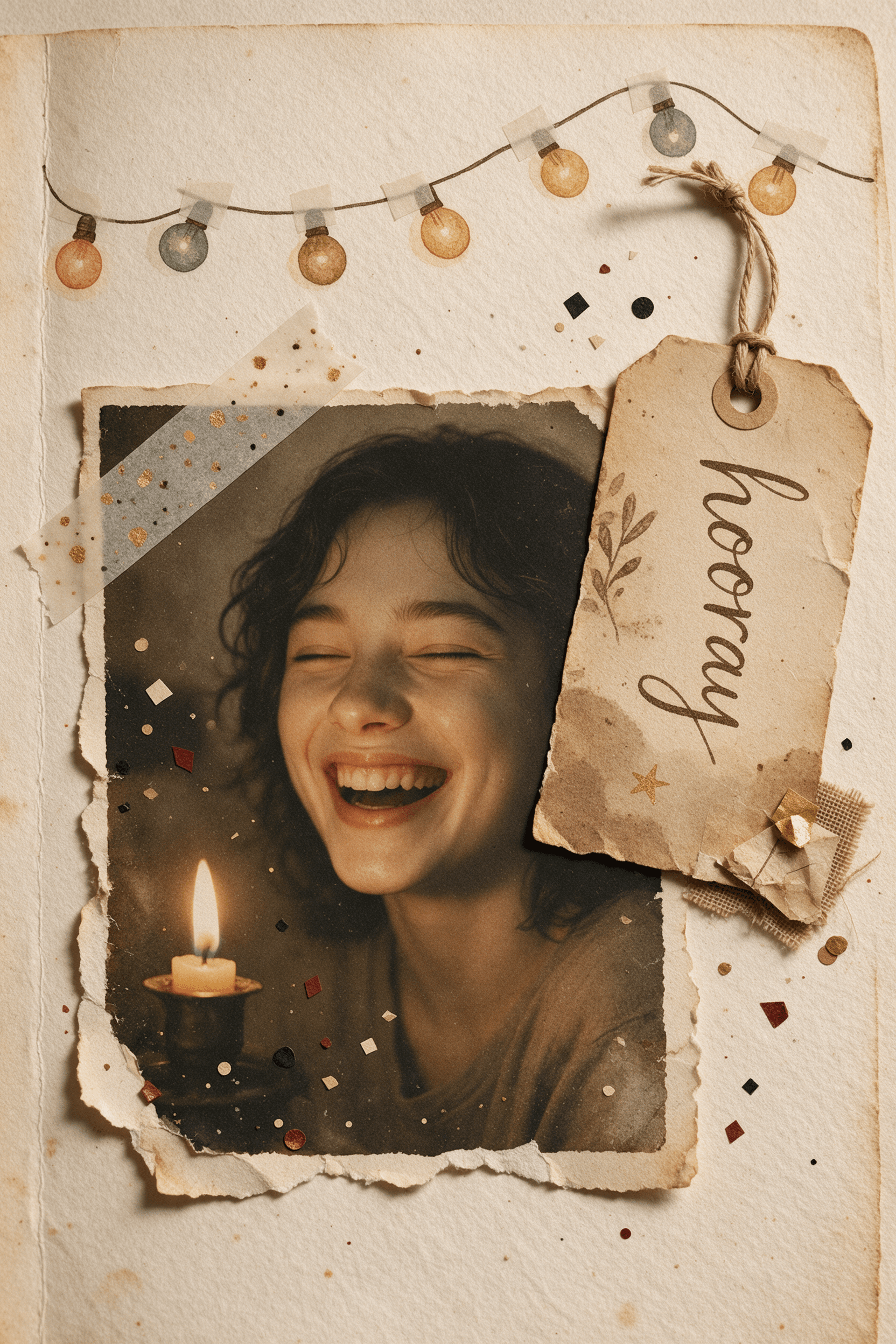
Prompt 17: Birthday celebration page
Turn the reference birthday photo into a celebratory scrapbook page, the photo torn at the edges and held under a strip of gold-flecked washi tape, a small scatter of paper confetti cutouts nearby, a doodled string-light sticker arcing along the top edge, and a hand-lettered tag tied with ribbon noting the occasion in short text. Warm lamp lighting, visible paper texture, keep the person's face and the candle or cake detail true to the reference photo.
Prompt 18: Graduation page
Using the reference graduation photo, build a scrapbook page with the photo torn at one edge, a small paper tassel cutout pinned beside it, a strip of washi tape across the opposite corner, a pressed flower along the bottom edge, and a hand-lettered tag tied with twine giving the year in short text. Warm cream paper background, soft window light, keep the graduate's face and gown details true to the reference photo.
Prompt 19: New chapter page (new job, home, or city)
Turn the reference photo of a new home, new job, or new city moment into a scrapbook page with the photo torn at the edges, a small key-shaped or box-shaped paper cutout beside it depending on the occasion, a strip of kraft tape across one corner, a dried sprig tucked along the bottom, and a hand-lettered tag reading a short word like onward or new. Warm antique paper tones, soft lamp lighting, keep the real scene and any faces true to the reference photo.
Prompt 20: Holiday page
Using the reference holiday photo, create a festive scrapbook page with the photo torn at the edges and framed by a thin ribbon in a seasonal color, a few small paper snowflake or leaf cutouts scattered nearby depending on the season, a strip of washi tape across one corner, and a hand-lettered tag tied with twine. Warm cream paper background, soft directional lighting, keep every face in the photo true to the reference image.
If a birthday photoshoot is already part of your content plan, these pages make a strong second post from the same shoot. Our AI birthday photoshoot prompts cover the main shoot styling, and prompt 17 above turns one of those same photos into the recap post a few days later.
6) Full-Spread Cork-Board and Vision-Board Prompts
The last two prompts scale the aesthetic up from a single page to a full board, the format that performs best when you have several photos from one trip, event, or season and want one image that ties them together.
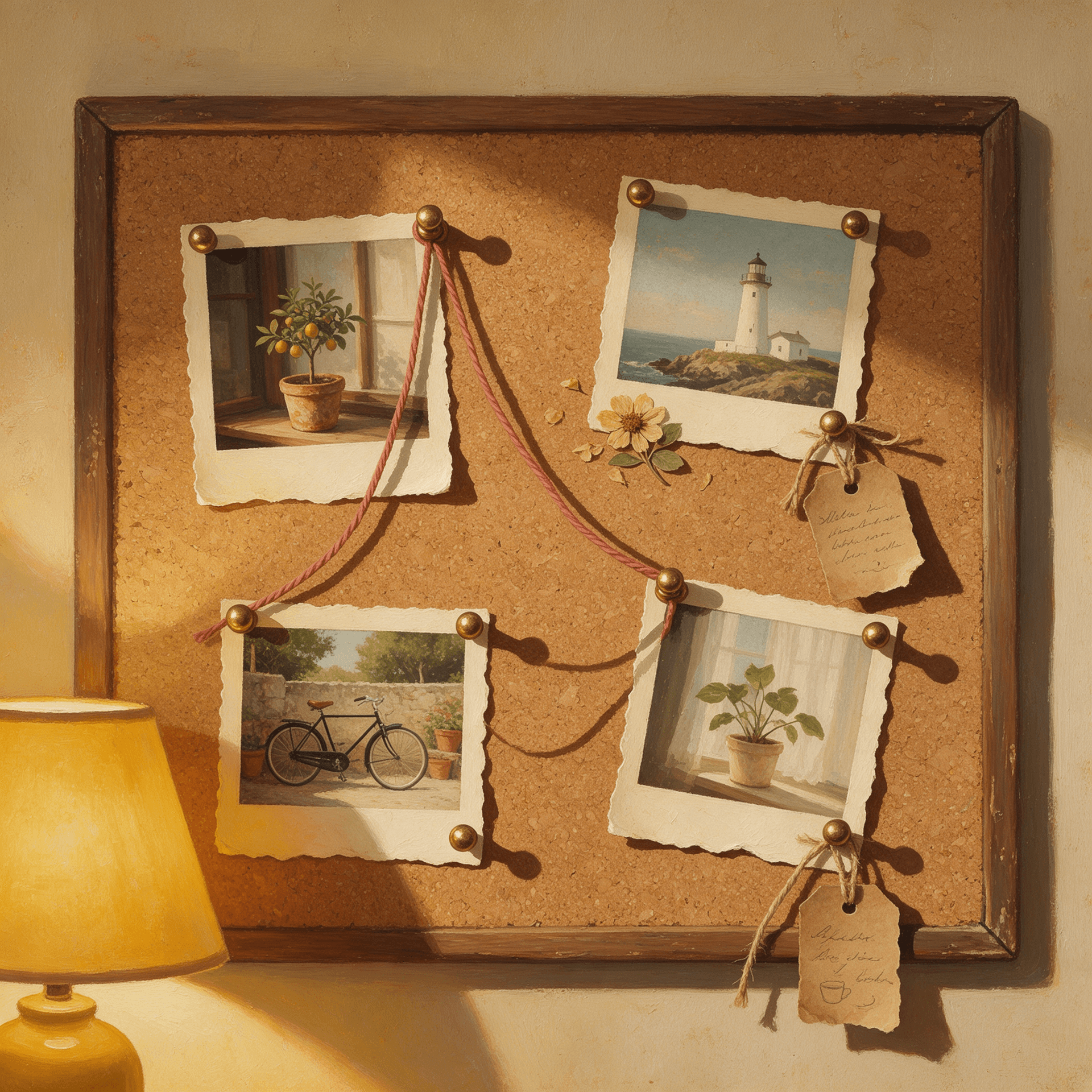
Prompt 21: Full vision-board spread
Build a full cork-board vision board page using four to six reference photos representing different goals or memories, each torn at the edges and pinned at the corners with brass pins, thin colored string looping between several of the pins to connect related photos, two or three small hand-lettered paper tags tied on with twine, and a dried flower pressed under one photo corner. Warm lamp lighting from one side, visible cork and paper texture, keep every face in each photo true to its own reference image.
Prompt 22: Cork-board weekly planner page
Turn a set of reference photos from the past week into a cork-board weekly planner scrapbook page, each photo torn at the edges and pinned in a loose row, a strip of washi tape across two of the photos, a small hand-lettered tag at one end noting the week in short text, and a pressed leaf tucked along the bottom edge. Warm antique tones, soft even lighting, visible cork texture, keep every face true to its reference photo.
A full-spread board takes noticeably longer to look right than a single-photo page, since the model has to keep three to six separate faces or scenes consistent with their own reference photos while also arranging convincing string, pins, and tags between them. Expect to regenerate a full board once or twice more often than a single page, and consider generating it at a higher resolution setting if your tool offers one, since the smaller details, string, pin heads, tag text, are the first thing to blur out at lower resolutions.
How to Customize These Prompts
Start with the four-element checklist from earlier in this guide, a torn edge, a fastening element, a short handwritten touch, and an organic detail, and treat everything else as a dial you can turn. Swap the paper background between cream, kraft, cork, or floral depending on the mood. Swap the fastening element between washi tape, ribbon, string, or a brass pin depending on how formal or playful the page should feel; tape reads casual and youthful, ribbon and pins read more polished and intentional. Swap the organic detail to match the season or the subject, a pressed flower for spring content, a dried leaf for autumn, a sprig of evergreen for winter holiday pages.
The handwritten tag is the one element worth being deliberately conservative with. Current image models still struggle to render more than three or four words of legible handwriting reliably, so every prompt above asks for "a short word" or "short text" rather than a full caption. If you want an actual readable caption on the finished page, it is usually faster and cleaner to generate the scrapbook page first and add real text afterward in a simple photo editor, rather than fighting the model for legible handwriting across several regenerations.
For brand and product pages specifically, keep the real product's actual shape, label, and color accurate in every prompt rather than letting the model restyle the product itself. The scrapbook treatment should change the paper and props around the product, not the product.
Common Mistakes Creators Make With This Trend
- Asking for too many props at once. A page with tape, string, stickers, stamps, confetti, and three different flowers in one prompt usually comes out visually cluttered and busy rather than crafted. Pick two or three elements and let them breathe.
- Using a clean rectangular photo with sharp corners instead of asking explicitly for a torn or deckled edge. Without that instruction, the photo often renders as a flat sticker pasted onto the paper rather than a photo that belongs on the page.
- Requesting long handwritten captions. Anything beyond a few words frequently comes out garbled or illegible, which immediately breaks the illusion of a real handmade page.
- Starting from a blurry, dark, or heavily cropped reference photo. The model has to do more work preserving a recognizable face or pet when the source photo is already low quality, and that extra strain is usually where distorted features show up.
- Treating every scrapbook page the same regardless of occasion. A birthday page and a travel page should not use identical props; matching the detail (a ticket stub, a candle, a graduation tassel) to the actual occasion is what separates a thoughtful post from a template that was clearly reused without edits.
- Forgetting to keep faces and products true to the reference photo. A scrapbook page is meant to style the page around a real photo, not replace the subject with a stylized illustration of them. If a result starts looking painted rather than photographic where the person or product sits, regenerate with a stronger instruction to preserve the reference image's real details.
Where to Generate These
Every prompt above is built for an image-to-image workflow: you upload a real photo and the model builds the scrapbook page around it while keeping the photo itself intact. The AI Image Generator in Miraflow AI supports exactly this, so you can upload a reference photo, paste any of the 22 prompts, and regenerate individual pages without starting the whole project over if one element comes out wrong. Once a page is finished, it works well as a static post on its own, or as the opening frame of a short recap video; Miraflow's Text2Shorts tool can turn a handful of finished scrapbook pages into a short-form video with narration and music without leaving the same workspace.
If you are comparing which model actually renders paper texture and tape most convincingly, our Nano Banana Pro vs Seedream 5.0 Pro comparison breaks down their relative strengths with reference-photo editing, and the Nano Banana 2 Lite batch generation guide is useful if you want to generate an entire multi-page scrapbook series, one page per month or per trip, in a single batch rather than one at a time. Browse more prompt guides like this one on the Miraflow AI blog, and every tool named in this guide lives at Miraflow AI.
Frequently Asked Questions
What is the Pinterest scrapbook aesthetic trend exactly? It is an AI photo editing trend where a real reference photo is rebuilt as a collage or moodboard page: torn paper edges, washi tape, handwritten-style tags, pressed flowers, and similar tactile scrapbook elements layered around the original photo, generated in a single pass rather than physically assembled.
How is this different from the old-photo or film grain trend? The film grain trend degrades the image itself, adding scratches, fading, and grain to make a photo look aged. The scrapbook aesthetic does not touch the photo's age at all; it builds a physical paper scene and props around an otherwise normal, current-looking photo. They can technically be combined, but they are solving different problems.
Which AI tools can generate this look? Any current image-to-image tool capable of blending a reference photo with new generated elements works, including Nano Banana Pro, Gemini's image generation, ChatGPT's image tools, Seedream, and the AI Image Generator in Miraflow AI. These prompts describe the technique rather than app-specific syntax, so they transfer across tools.
Why does my handwriting come out garbled? Current image models still render more than a few words of handwriting unreliably. Keep any handwritten element in the prompt to a single short word or phrase, and add a real readable caption afterward in a simple editor if you need one.
Can I use this for a business or brand account, not just personal photos? Yes. The product and brand moodboard group above is built specifically for that, turning a product photo into a tactile brand asset that communicates aesthetic and ingredients without needing caption copy to explain it.
What is the easiest prompt to start with if I have never tried this? Prompt 1, the classic single-photo scrapbook page, is the simplest version of the technique and the fastest way to judge whether your reference photo and the four core elements, torn edge, tape, tag, and a botanical touch, come out looking convincing before trying a more complex multi-photo spread.
Does this work with pet photos or only people? It works well with pets, and arguably looks even more natural there, since a dried flower or a hand-tied tag next to a pet photo reads as sentimental scrapbooking rather than a styled portrait. Prompt 9 above is built specifically for a single pet photo.
Conclusion
The Pinterest scrapbook aesthetic works because it borrows a genuinely old, familiar craft, physical scrapbooking, and makes it available to anyone with one photo and a prompt, rather than scissors, glue, and a drawer full of stickers. The 22 prompts above cover personal portraits, travel memories, pets and family, brand moodboards, milestone celebrations, and full cork-board spreads, so there is a direct starting point whether you are posting for yourself, documenting a trip, or building out a product's visual identity. Keep the four core elements in every prompt, a torn edge, a fastening detail, a short handwritten touch, and something organic, and the result will read as genuinely crafted rather than generic, no matter which specific occasion you are styling it for.