AI Prompts for Food Photography: 20 Restaurant-Quality Shots Without a Studio

Written by
Jay Kim
20 copy-paste AI prompts for food photography. Burgers, pasta, desserts, cocktails, breakfast spreads, and more — restaurant-quality shots without a studio or photographer.
Food photography is the single most persuasive form of visual marketing in the food industry. Before a customer walks through a restaurant door, before a reader tries a recipe, before a shopper adds a product to their cart, they see a photograph of food. That photograph — not the ingredient list, not the nutrition panel, not the written description — is what triggers the craving, the salivation, the desire that converts a passive scroller into a paying customer or an engaged reader. The phrase "we eat with our eyes first" is not a charming aphorism. It is a statement about neurobiology. Visual processing of food imagery activates the same reward circuitry in the brain that anticipates the pleasure of eating. A well-executed food photograph does not merely document a dish. It creates hunger.
This is why professional food photography has historically been one of the most specialized and expensive branches of commercial photography. A single hero shot of a burger for a national chain's menu board can involve a dedicated food stylist, a prop stylist, a photographer, an art director, hours of lighting adjustments, and thousands of dollars in production costs. The food itself is often inedible by the time the shot is captured — coated in glycerin for shine, propped with toothpicks for structural support, torched with a heat gun for color, spritzed with water-and-glycerin solutions for false condensation. The finished image looks effortless, natural, and mouthwatering. The process behind it is anything but.
AI image generation has fundamentally disrupted this equation. Today's AI tools can produce food photography that matches or approaches the quality of professional studio work — complete with precise lighting, styled props, mood-appropriate backgrounds, and the kind of close-up detail that makes textures almost tactile — in seconds rather than hours and at a fraction of the cost. This does not make professional food photographers obsolete. The highest-tier commercial work, editorial spreads for major publications, and campaign photography for global brands still benefit enormously from human expertise and physical craft. But for the vast middle of the food marketing landscape — restaurant social media, food blog content, recipe illustrations, menu imagery, food product marketing, meal kit branding, cookbook concept development, and the relentless daily content demands of digital food marketing — AI-generated food photography is a transformative tool that makes professional-quality imagery accessible to anyone who can write a detailed prompt.
This post provides 20 ready-to-copy prompt templates for AI-generated food photography, covering the major categories of dishes, the most effective photographic styles, and the visual moods that drive engagement and appetite in food marketing. Each template is engineered to produce images with the lighting quality, compositional precision, color richness, and textural detail that define professional food photography. Whether you are a restaurant owner building a social media presence, a food blogger illustrating recipes, a menu designer creating visual layouts, a food brand developing marketing assets, or a content creator in the food space, these templates give you a production-ready toolkit for generating restaurant-quality food images without a studio, without a photographer, and without a food stylist.
If you have worked with AI prompts for other visual marketing applications — such as blog featured images, product photography, or Instagram post images — the workflow will be familiar. You copy the prompt, customize the food item and styling details to match your specific needs, generate the image, and deploy it in your marketing. The difference with food photography prompts is that they require exceptionally precise attention to texture, color temperature, lighting angle, and styling details, because the human eye is extraordinarily sensitive to whether food looks appetizing or unappealing. A steak that is lit from the wrong angle looks gray instead of caramelized. A salad photographed on the wrong background looks clinical instead of fresh. The prompts in this post are calibrated to avoid these pitfalls and consistently produce images that make the viewer hungry.
Why Food Photography Quality Directly Drives Revenue
The connection between food imagery quality and business outcomes is not abstract. It is measurable and well-documented across every segment of the food industry.
For restaurants, the listing photos on platforms like Google Business Profile, Yelp, DoorDash, Uber Eats, and Instagram are the primary marketing assets that determine whether a potential customer chooses your restaurant or the one down the street. Studies consistently show that restaurants with high-quality, professional-looking food photography receive significantly more engagement, more clicks, more orders, and more foot traffic than those with low-quality or no food imagery. On delivery platforms specifically, where the customer cannot see, smell, or experience the restaurant atmosphere, the menu photos are effectively the entire sales pitch. A beautifully photographed chicken tikka masala on DoorDash will outsell an identical dish with a dark, blurry photo by a wide margin, even at the same price point. The photography is not a cosmetic addition to the listing. It is the listing's primary revenue driver.
For food bloggers and recipe content creators, image quality is the dominant factor in search engine image rankings, Pinterest performance, social media engagement, and the overall perceived authority and trustworthiness of the content. A recipe blog post with stunning, professionally styled hero images earns more clicks from search results, more saves on Pinterest, more shares on social media, and more time-on-page than an identical recipe with mediocre imagery. In the food content space, photography quality is effectively a proxy for content quality in the minds of the audience. Readers trust beautiful food photography. They scroll past ugly food photography.
For food product brands — everything from artisan hot sauces to frozen meals to specialty ingredients — product photography and recipe imagery are the core visual assets for e-commerce listings, packaging, advertising, social media, and website content. The cost of producing this imagery through traditional means can be prohibitive, especially for small and emerging brands that need dozens or hundreds of images across multiple product lines, use cases, and marketing channels. AI generation enables these brands to produce a volume of high-quality food imagery that would be economically impossible through traditional photography, leveling the visual marketing playing field between boutique producers and well-funded competitors.
The Visual Science of Appetizing Food Photography
Before working through the templates, it is important to understand the visual principles that make food photographs trigger appetite rather than indifference. These principles are grounded in how the human visual system processes food imagery and what specific visual cues signal freshness, flavor, texture, and desirability.
Warm, directional light is the foundation of all effective food photography. The lighting in a food photograph does more to determine whether the food looks appetizing than any other single factor. Warm light — in the golden, slightly amber range — makes food look rich, cooked, caramelized, and inviting. Cool light makes food look sterile, institutional, and unappetizing. Directional light — coming from a defined angle rather than evenly illuminating the scene — creates shadows and highlights that reveal the three-dimensional texture of food surfaces: the crust of bread, the char on grilled meat, the gloss on a sauce, the rough crystal structure of flaky sea salt. Every template in this post specifies warm, directional natural light because this is the non-negotiable foundation of food photography that works.
Texture is what separates a food photograph from a food snapshot. The human eye and brain are intensely attuned to food textures because texture is one of the primary ways we assess food quality and predict eating pleasure. A close-up photograph that reveals the crispy, shattering surface of fried chicken, the soft pull of fresh bread, the juicy grain of a medium-rare steak, or the creamy swirl of a ganache creates a sensory anticipation that flat, texture-free images cannot match. The prompts below include specific texture descriptions for each dish type because generating visible, detailed textures is what makes AI food photography feel real and appetizing.
Color saturation and contrast communicate freshness and flavor. Vibrant, saturated colors in food photography signal freshness, ripeness, and flavor intensity. A tomato that appears in vivid, slightly warm red looks ripe and delicious. The same tomato in desaturated, flat color looks old and mealy. The contrast between food colors and background tones — a warm golden curry against a dark moody surface, bright green herbs scattered over a muted brown steak — draws the eye and makes individual elements pop. The templates in this post specify rich, saturated food colors against complementary backgrounds to maximize this appetite-triggering color contrast.
The "hero angle" varies by dish type. Food photography uses specific camera angles depending on what needs to be emphasized about the dish. Flat dishes with surface detail — pizzas, salads, grain bowls, charcuterie boards — are best shot from directly overhead (the "flat lay" or top-down angle) because this shows the full composition and surface texture. Tall dishes with layers and height — burgers, stacked pancakes, layered cakes — are best shot from a low, straight-on angle (the "eye-level" or "hero" angle) that emphasizes height, layers, and the dramatic profile of the dish. Most plated dishes work best from a three-quarter angle — approximately 30 to 45 degrees above the plate — which shows both the surface detail and the dimensional shape of the food. Each template specifies the optimal angle for its dish type.
Negative space and composition direct viewer attention. Professional food photography uses intentional composition — often the rule of thirds, with the dish positioned slightly off-center — and controlled negative space (empty or background areas around the dish) to direct the viewer's attention to the food. A cluttered frame with competing elements dilutes impact. A clean frame with the dish as the clear focal point, surrounded by thoughtfully placed props and breathing room, creates the visual hierarchy that makes the food the undeniable star. The templates below specify compositional structure including prop placement and negative space management.
Props and surfaces tell the story. The background surface, tableware, linens, utensils, and surrounding ingredients visible in a food photograph are not decorative afterthoughts. They are narrative elements that communicate the context of the meal: rustic wooden boards suggest artisanal and home-cooked; dark marble or slate surfaces suggest upscale and refined; bright white plates suggest clean and modern; linen napkins suggest casual elegance; scattered raw ingredients suggest freshness and made-from-scratch quality. Every template includes specific prop and surface instructions calibrated to the story the image needs to tell.
20 AI Prompt Templates for Food Photography
Each template includes the creative concept, the complete ready-to-copy prompt, and deployment notes explaining which food marketing applications it best serves. All prompts are formatted for the Miraflow AI Image Generator and are compatible with any high-quality AI image generation tool. Generate at 4:5 vertical aspect ratio for Instagram and social media, 3:2 horizontal for blog and website hero images, or 1:1 square for versatile multi-platform use.
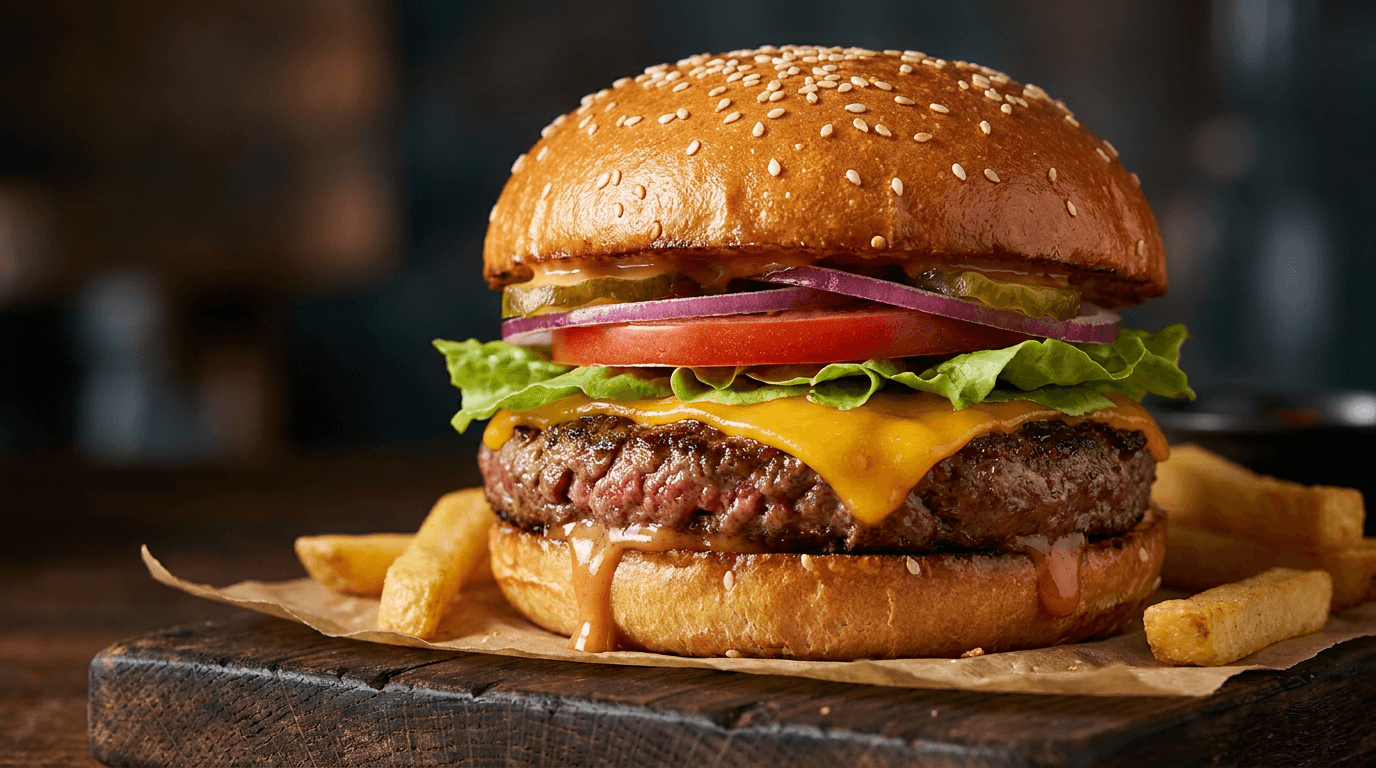
Template 1: The Classic Burger — Low-Angle Hero Shot
The burger is the benchmark dish of food photography. It tests every visual skill: height, layers, texture contrast, sauce drip, and the challenge of making something handheld look both structured and deliciously messy. This template produces the definitive low-angle burger portrait — the kind of shot that makes viewers physically hungry and is the gold standard for restaurant menu imagery and social media.
Prompt:
close-up low-angle food photograph of a gourmet burger shot at eye level with the camera positioned slightly below the bun line looking slightly upward, the burger is stacked tall on a brioche bun with a deep golden toasted surface showing visible sesame seeds, a thick juicy beef patty with a caramelized seared crust and a faint pink center visible at the edge, a slice of melted sharp cheddar draped over the patty with edges slightly melted and hanging over the sides, layers of crisp green butter lettuce a thick slice of ripe red tomato thin rings of red onion and a few slices of tangy dill pickle, a glossy smear of special sauce is visible between the layers with a single drip running slowly down the side of the bun, the burger sits on a sheet of natural brown parchment paper on a dark rustic wooden board, a few golden thick-cut french fries are scattered casually beside the burger, the background is dark and moody with a blurred suggestion of a restaurant setting, warm directional side lighting from the left creates dramatic highlights on the bun surface and the melted cheese edge while casting soft shadows that add depth and dimension, the overall color palette is warm golden brown rich red and deep green against the dark background, every texture is sharp and detailed from the sesame seeds to the meat grain to the crispy lettuce edges, professional food photography with shallow depth of field keeping the burger in tack-sharp focus and the background softly blurred, no people, no hands, no text, no brand logos
Best for: Restaurant menu boards and printed menus, burger restaurant social media, delivery platform menu images, food blog burger recipe posts, fast-casual brand marketing
Template 2: Overhead Pasta — The Italian Flat Lay
Pasta dishes are among the most photographed foods in the world, and the overhead flat-lay angle is the most effective way to showcase the surface detail, sauce distribution, and garnish artistry that makes a pasta dish look irresistible. This template creates a rich, warm, rustic Italian pasta scene that works equally well for a restaurant Instagram post and a recipe blog hero image.
Prompt:
overhead flat-lay food photograph of a beautiful pasta dish shot directly from above, a wide shallow ceramic bowl in a warm cream or off-white tone holds a generous portion of spaghetti or tagliatelle tossed in a rich glossy tomato-based sauce with visible chunks of roasted tomato and a sheen of olive oil catching the light, freshly grated Parmigiano-Reggiano is scattered generously over the top with visible shavings and fine gratings, a few whole fresh basil leaves are placed artfully on the surface adding vivid green contrast, a light crack of black pepper is visible on the cheese, the bowl sits on a rustic dark wood table surface with natural grain texture visible, surrounding props include a small ceramic bowl of extra grated cheese with a tiny spoon a linen napkin in a warm natural tone gathered casually beside the plate a few scattered fresh basil leaves on the table and a partial view of a glass of red wine at the edge of the frame, a drizzle of high-quality olive oil is visible glistening on the pasta surface, warm natural side light enters from one direction creating soft shadows from the bowl rim and props adding depth to the flat composition, the color palette is rich with warm reds golden pasta tones bright green basil creamy white cheese and the dark warm wood surface, every texture is detailed and sharp from the individual pasta strands to the sauce consistency to the cheese granules, professional food photography with even overhead lighting and warm color grading, no people, no hands, no text, no brand logos
Best for: Italian restaurant social media and menu imagery, pasta recipe blog posts and cookbooks, food delivery platform menus, Instagram food content, Pinterest recipe pins
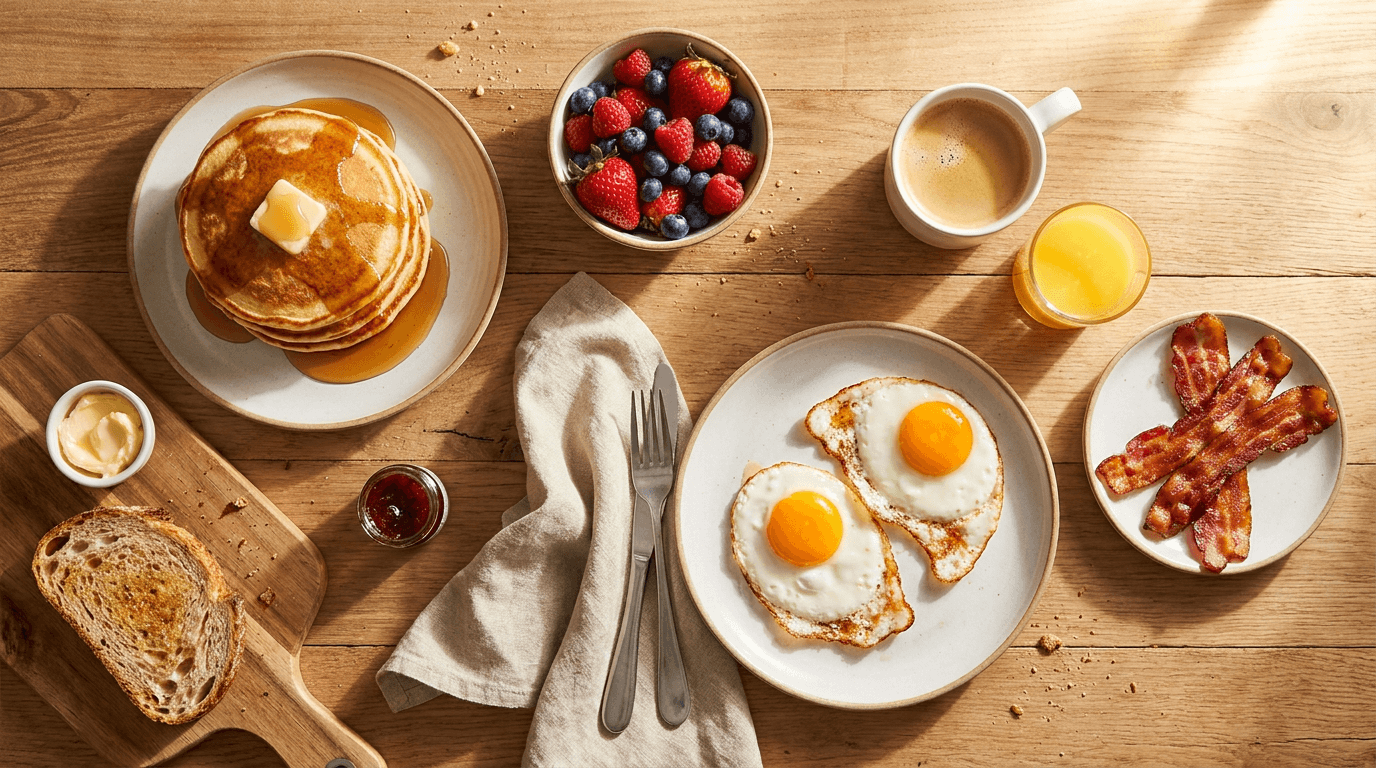
Template 3: Morning Breakfast Spread — Lifestyle Flat Lay
The breakfast flat lay is one of the most popular and versatile food photography compositions. It communicates warmth, abundance, the comfort of a slow morning, and the lifestyle aspiration of a beautifully prepared breakfast. This template creates a generous, sunlit breakfast scene that works for everything from café marketing to food blog headers to lifestyle brand content.
Prompt:
overhead flat-lay food photograph of a beautiful abundant breakfast spread on a bright natural wood table bathed in warm soft morning sunlight, the composition includes a plate of golden fluffy pancakes stacked three high with a pat of butter melting on top and a drizzle of amber maple syrup running down the sides, a small bowl of fresh mixed berries including bright red strawberries deep blue blueberries and raspberries, a plate with two perfectly cooked eggs sunny side up with vibrant orange yolks and crispy lacy white edges, a few strips of crispy bacon with visible caramelized texture on a small plate, a cup of coffee in a white ceramic mug with a thin crema visible on the surface, a small glass of fresh orange juice catching the morning light with a warm golden glow, a slice of sourdough toast with golden brown surface on a wooden cutting board, a small ramekin of butter and a tiny jar of fruit preserves, a linen napkin in a soft neutral tone and simple silver cutlery are arranged casually suggesting a meal about to be enjoyed, warm morning light enters from the upper right casting long soft shadows across the table adding depth and a sense of early morning atmosphere, the overall mood is warm bright inviting and abundant, golden warm tones dominate the palette with pops of berry reds and blues, professional food photography with bright natural lighting, no people, no hands, no text, no brand logos, no phones or devices visible
Best for: Café and brunch restaurant marketing, breakfast recipe content, food blog lifestyle headers, hospitality and hotel dining promotion, social media food content, lifestyle brand imagery
Template 4: Artisan Pizza — Overhead with Pull
Pizza photography has two iconic moments: the pristine overhead shot showing the full pie's composition, and the dramatic pull shot where a slice is being lifted with stretching cheese. This template captures the pull — the action shot that creates visual drama and the cheese-stretch that is one of the most appetite-triggering visual cues in food photography.
Prompt:
close-up food photograph at a slightly elevated three-quarter angle of a wood-fired artisan pizza with one slice being pulled away from the pie showing long dramatic stretchy strings of melted mozzarella connecting the slice to the rest of the pizza, the pizza has a charred bubbly crust with leopard-spotted black char marks and a puffy cornicione edge characteristic of Neapolitan-style baking, the toppings include rich red San Marzano tomato sauce visible in patches between generous pools of melted mozzarella a scattering of fresh green basil leaves and a drizzle of olive oil, the lifted slice reveals the thin crispy underside with slight char marks, the pizza sits on a round wooden peel or rustic dark wooden board, the background is dark and warm suggesting a pizzeria setting with soft out-of-focus warm ambient light, warm directional side lighting highlights the glossy cheese surface the char on the crust and the glistening olive oil, a light dusting of flour is visible on the board surface, the stretching cheese strings are the visual focal point catching the warm light and creating a dramatic appetizing moment, rich warm color palette of golden crust charred brown bright red sauce creamy white cheese and vivid green basil, professional food photography with shallow depth of field, no people visible but the slice appears to be held by an unseen hand just out of frame or lifted with a serving tool, no text, no brand logos
Best for: Pizzeria social media and marketing, pizza delivery platform menu images, Italian restaurant promotion, food blog pizza recipes, casual dining menu design
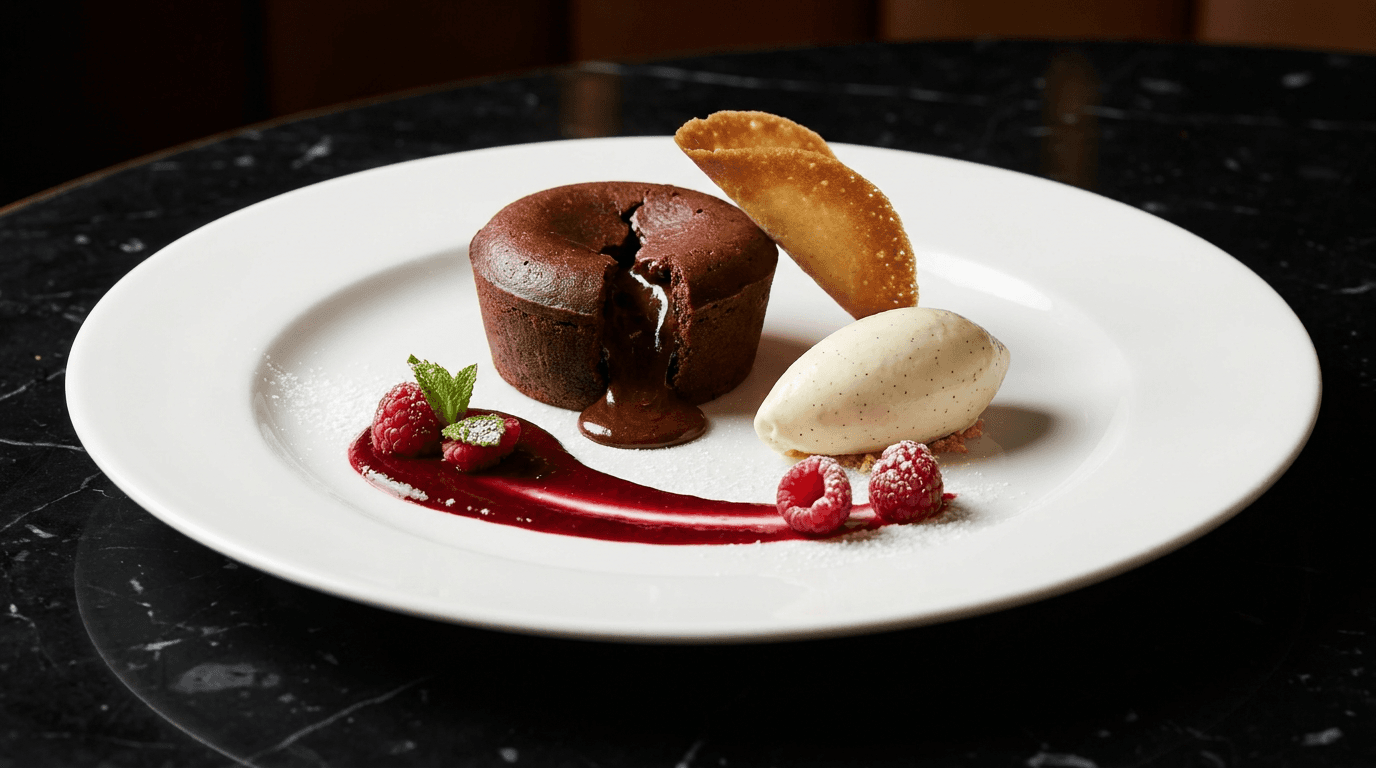
Template 5: Elegant Plated Dessert — Fine Dining Style
The fine dining dessert photo is where food photography becomes closest to art. It demands precision, elegance, negative space, and the kind of refined detail that communicates culinary mastery. This template produces a dessert image suitable for an upscale restaurant's marketing, a pastry chef's portfolio, or a premium food publication.
Prompt:
close-up food photograph at a three-quarter angle of an elegant plated dessert on a fine dining white porcelain plate with a wide rim, a rich dark chocolate fondant or lava cake sits centered with a perfectly smooth exterior and a visible crack on top where warm molten chocolate interior has begun to flow out in a glossy dark stream, a precise quenelle of vanilla bean ice cream or crème fraîche sits beside the fondant with visible vanilla bean specks, a delicate tuile or crisp wafer element leans against the cake adding height and architectural interest, a careful swoosh of berry coulis in vivid deep red arcs across part of the plate created with a spoon drag technique, a few fresh raspberries and a small sprig of fresh mint are placed with tweezers-level precision, a light dusting of powdered sugar catches the warm light on the plate surface, the plate sits on a dark polished surface like black marble or dark slate, warm focused lighting from one side creates a dramatic highlight on the chocolate surface and the ice cream while the dark background recedes, the overall composition has generous negative space emphasizing the refined precision of the plating, rich dark chocolate tones glossy highlights creamy white and vivid berry red create an elegant color palette, professional food photography with shallow depth of field and dramatic studio-quality lighting, no people, no hands, no text, no brand logos
Best for: Fine dining and upscale restaurant marketing, pastry chef portfolio imagery, dessert menu design, luxury food brand content, culinary arts program marketing, food publication content
Template 6: Fresh Sushi Platter — Precision and Color
Sushi photography demands a specific visual vocabulary: precision of cut, freshness of color, the glossy sheen of fish, the pure white of perfectly prepared rice, and the controlled artistry of Japanese plating. This template creates a sushi image that communicates the precision and freshness that sushi lovers respond to.
Prompt:
three-quarter angle food photograph of a beautiful sushi platter arranged on a rectangular dark slate or black ceramic serving plate, an assortment of nigiri sushi pieces arranged in a precise row includes salmon with a vivid coral-orange color and visible fat marbling, tuna with a deep ruby red color, yellowtail with a pale pink translucent appearance, and shrimp with a soft pink and white gradient, each nigiri piece shows a compact perfectly shaped pillow of white sushi rice beneath the fish with visible individual rice grains, beside the nigiri a set of maki rolls cut with precision shows a clean spiral cross-section of rice nori and filling with a few topped with thin avocado slices fanned in an overlapping pattern, a small mound of pickled ginger in pale pink a tiny cone of bright green wasabi and a small dish of dark soy sauce are arranged as accompaniments, a pair of dark wooden or lacquered chopsticks rest on a ceramic chopstick holder beside the plate, the platter sits on a clean dark wood or black surface, warm soft directional light from the side creates a gentle sheen on the fish surfaces and the soy sauce while casting subtle shadows that add dimension, the overall aesthetic is clean precise and fresh with vivid natural fish colors against the dark plate and surface, professional food photography with sharp detail and controlled lighting, no people, no hands, no text, no brand logos
Best for: Japanese restaurant and sushi bar marketing, Asian cuisine food delivery platforms, food blog Japanese recipe content, restaurant menu design, culinary arts portfolio imagery
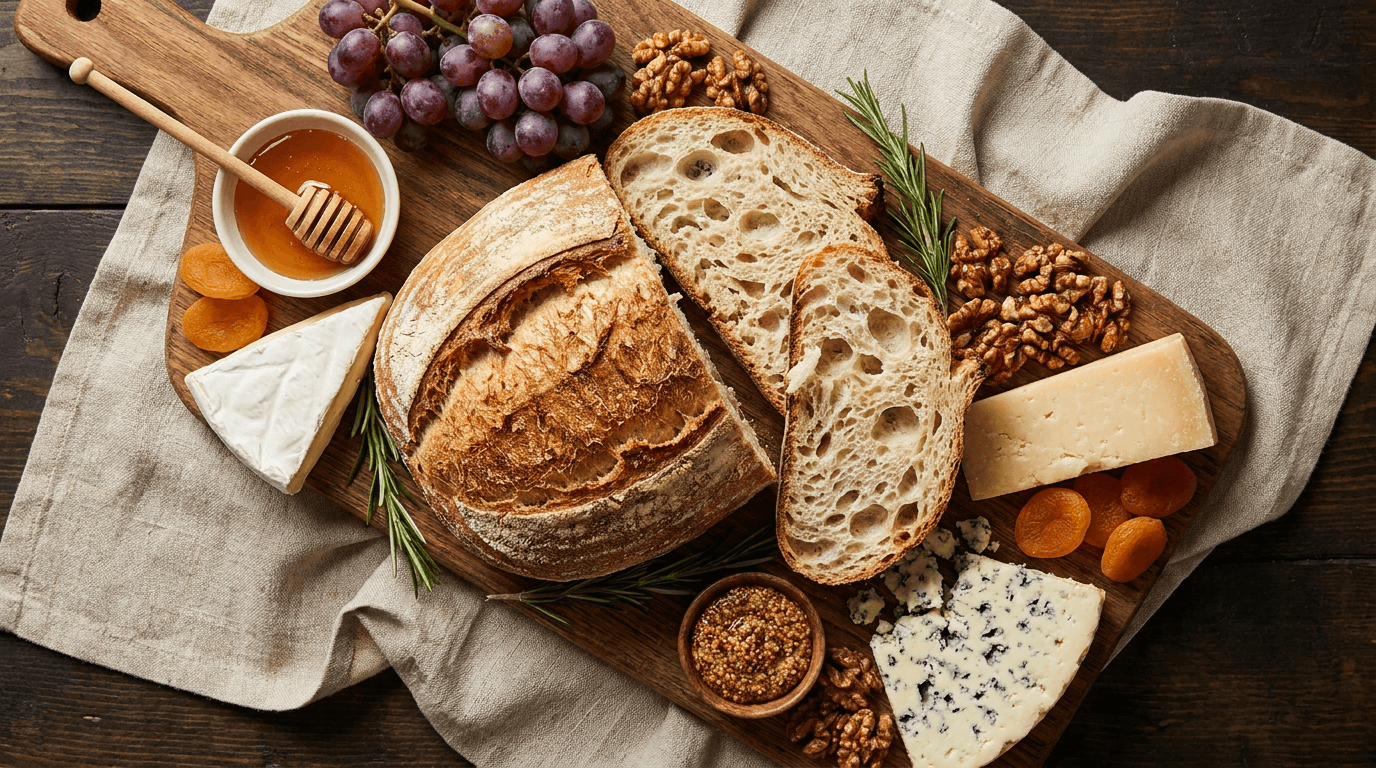
Template 7: Rustic Bread and Cheese Board — Artisanal Warmth
The bread and cheese board is one of the most emotionally evocative compositions in food photography. It speaks to artisanal craftsmanship, communal eating, slow living, and the kind of European-inspired food culture that has enormous aspirational appeal. This template creates a lush, abundant board scene that communicates artisanal quality and generous hospitality.
Prompt:
overhead flat-lay food photograph of a beautifully styled rustic bread and cheese board on a large wooden cutting board or natural wood surface, a freshly baked round artisan sourdough loaf with a deeply scored crust showing flour-dusted cuts and a rich dark golden-brown caramelized surface has been torn open to reveal the soft airy interior crumb structure with irregular holes, several wedges and slices of artisan cheeses are arranged including a creamy brie with a white rind partially cut to show the soft pale interior, a wedge of aged hard cheese with a crystalline granular texture, and a crumbly blue cheese with visible blue-green veining, accompaniments are scattered artfully around the board including clusters of deep purple grapes a small bowl of golden honey with a wooden dipper a handful of whole roasted walnuts a few dried apricots a small dish of grainy mustard and a few sprigs of fresh rosemary, a rustic linen cloth in a natural oatmeal tone is draped partially beneath the board, warm natural side light creates soft shadows and highlights the textures of the torn bread interior the cheese surfaces and the glossy honey, the overall mood is warm abundant artisanal and inviting suggesting a gathering of friends around good food, earthy warm tones of golden bread creamy cheese dark wood and natural linen dominate the palette, professional food photography with even overhead lighting and warm rich color grading, no people, no hands, no text, no brand logos, no wine bottles with visible labels
Best for: Artisan bakery and cheese shop marketing, wine bar and bistro social media, entertaining and hosting content, food blog charcuterie and cheese board posts, lifestyle brand content, farm-to-table restaurant promotion
Template 8: Vibrant Poke Bowl — Top-Down Color Explosion
The poke bowl and grain bowl have become iconic food photography subjects because their top-down composition showcases an array of vibrant, contrasting colors and textures in a single frame. The visual impact is immediate and striking — a rainbow of fresh ingredients that communicates health, freshness, and contemporary food culture. This template maximizes the color-impact potential of the bowl format.
Prompt:
overhead flat-lay food photograph shot directly from above of a vibrant colorful poke bowl in a deep round matte ceramic bowl in a dark charcoal or matte black tone, the bowl is filled with sections of contrasting ingredients arranged in a visually organized pattern: a base of white sushi rice or mixed grains visible at the edges, cubes of fresh deep red ahi tuna with a glistening raw surface, slices of creamy pale green avocado fanned in an overlapping arc, bright orange julienned carrots, vivid green edamame beans, thinly sliced deep purple red cabbage, bright yellow mango cubes, a small mound of white pickled ginger, scattered black and white sesame seeds, thin slices of green scallion, and a drizzle of glossy dark soy-based sauce creating a zigzag pattern across the top, the bowl sits on a clean light surface like white marble or a light natural wood table, a pair of chopsticks rest beside the bowl, a small dish of extra sauce and a few lime wedges are placed nearby, bright even natural light from directly above or slightly to one side illuminates the bowl evenly making every color pop with maximum vibrancy and saturation, the composition is clean and centered with the bowl as the dominant element and minimal props, vivid rainbow colors of red green orange purple yellow and white against the dark bowl create maximum visual contrast, professional food photography with sharp detail across the entire bowl surface, no people, no hands, no text, no brand logos
Best for: Health-focused restaurant and fast-casual marketing, Hawaiian and Asian fusion restaurant social media, food delivery platform hero images, food blog bowl and grain bowl recipes, wellness and healthy eating content, Instagram food content
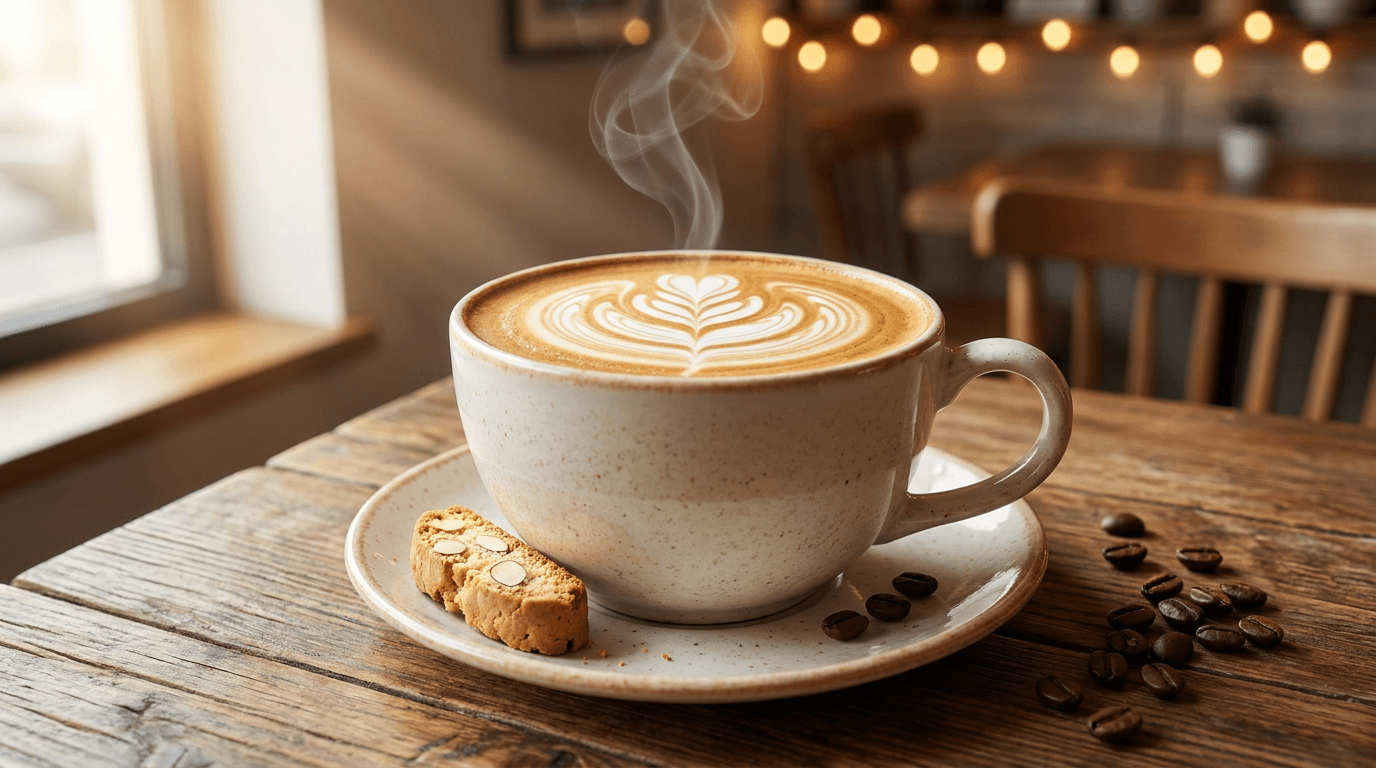
Template 9: Steaming Coffee and Latte Art — Café Culture Shot
Coffee photography occupies its own specialized niche within food imagery, driven by the enormous global café culture and the visual-first marketing of coffee brands, cafés, and coffee content creators. This template produces the intimate, warm, atmospheric coffee shot that defines café marketing and coffee lifestyle content — a beautiful latte with art, visible steam, and the warm ambient mood that coffee lovers crave.
Prompt:
close-up food photograph at a three-quarter angle of a freshly poured latte in a wide ceramic cup in a warm white or cream tone, the latte surface shows a detailed rosetta or tulip latte art pattern in contrasting cream and warm brown tones with clean precise lines, a thin wisp of steam rises from the surface catching the warm sidelight and adding a sense of freshness and warmth, the cup sits on a matching ceramic saucer on a warm natural wood table surface with visible grain, a small biscotti or pastry sits on the saucer beside the cup, the background is a soft warm blur suggesting a cozy café interior with warm ambient lighting and perhaps a soft bokeh of distant lights, warm directional natural light enters from a window to one side casting a soft golden glow across the cup and table and creating a gentle shadow from the cup on the saucer, a few coffee beans are scattered casually on the table near the saucer, the overall mood is warm intimate and inviting evoking the pleasure of a quiet moment with a perfectly made coffee, warm golden and brown tones dominate with the cream of the latte art as a bright focal point, professional food photography with shallow depth of field keeping the latte art in sharp focus and the background in a soft warm blur, no people, no hands, no text, no brand logos on the cup
Best for: Café and coffee shop marketing and social media, coffee brand promotional imagery, food blog coffee and café content, lifestyle and morning routine content, Instagram and Pinterest coffee aesthetic posts
Template 10: Grilled Steak — Dramatic Dark Mood
The steak photograph is the definitive test of savory food photography. The surface must show the caramelized Maillard reaction crust that signals perfect cooking technique, the interior must show the exact doneness color that triggers desire, and the lighting must create dramatic contrast that makes the steak look bold, rich, and deeply satisfying. This template produces the moody, dramatic steak portrait that works for steakhouse marketing, recipe content, and premium food branding.
Prompt:
close-up food photograph at a low three-quarter angle of a perfectly grilled thick-cut ribeye steak on a dark cast iron plate or wooden board, the steak surface shows a deeply caramelized dark brown sear crust with visible grill marks in a crosshatch pattern, the steak has been sliced partially to reveal a perfect medium-rare interior with a warm rosy pink center graduating to a thin gray band near the seared exterior edge, juices pool slightly on the cutting surface around the sliced area reflecting the warm light, a generous knob of herb compound butter sits melting on top of the steak with visible flecks of green herbs and garlic in the butter slowly running down the side, a sprig of fresh rosemary and a few whole garlic cloves roasted to a soft golden brown sit beside the steak on the board, coarse flaky sea salt crystals and cracked black pepper are visible on the steak surface catching the light, the background is very dark and moody nearly black creating dramatic contrast with the warm tones of the steak, warm dramatic side lighting from one direction creates strong highlights on the seared surface the melting butter and the juice pools while allowing the opposite side to fall into rich shadow, the color palette is dark and warm with deep browns caramelized golds rosy pink and the dark near-black background, professional food photography with shallow depth of field and dramatic chiaroscuro lighting, no people, no hands, no text, no brand logos
Best for: Steakhouse and grill restaurant marketing, premium meat brand promotion, food blog steak and grilling recipes, masculine food content and Father's Day marketing, dark moody food photography portfolios, restaurant menu hero images
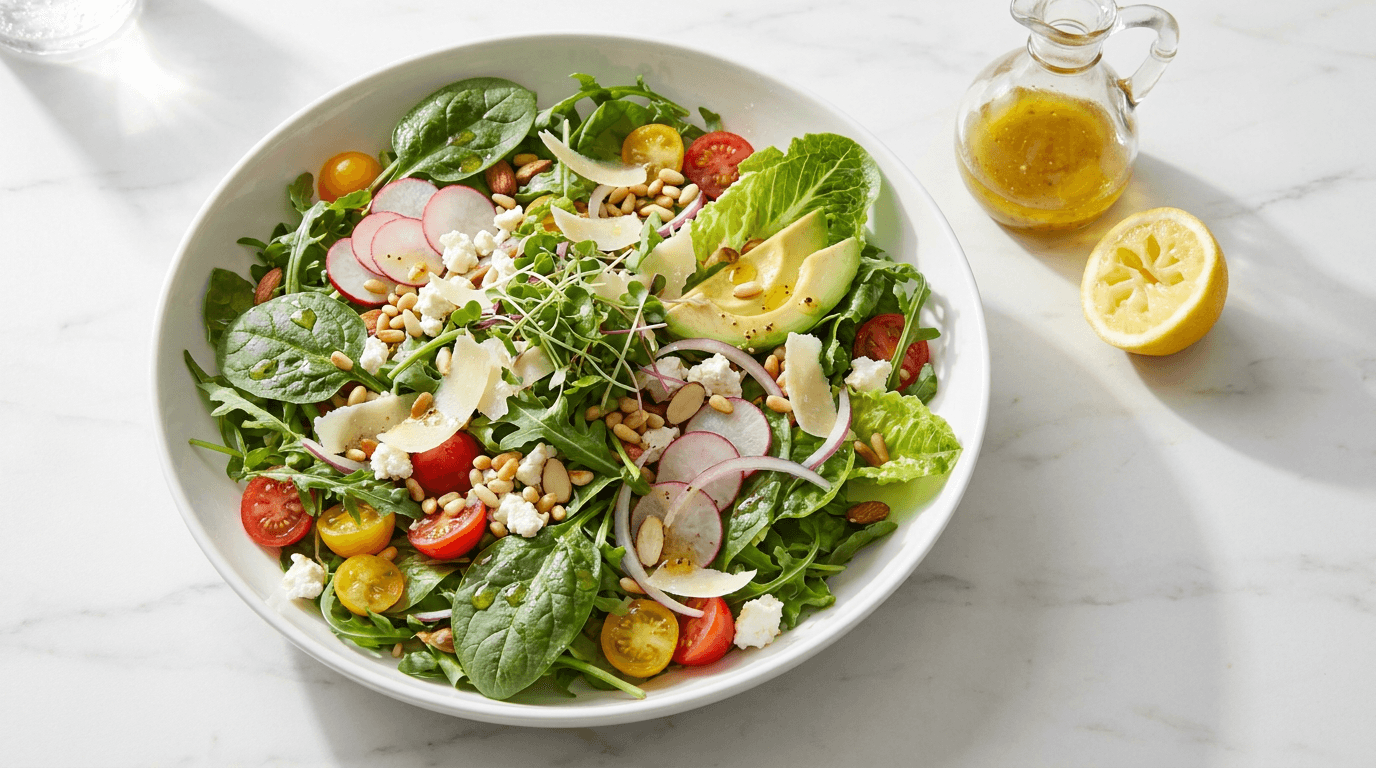
Template 11: Fresh Salad — Bright and Clean
The salad photograph needs to accomplish something subtly difficult: making raw vegetables look not just healthy but genuinely delicious and craveable. The key is freshness cues — vibrant colors, visible moisture on leaves, textural variety, and bright clean lighting that makes the ingredients look like they were just picked and assembled. This template creates a salad image that makes health food look as appealing as comfort food.
Prompt:
overhead food photograph at a slight angle of approximately twenty degrees of a large vibrant fresh salad in a wide shallow white ceramic bowl, the salad features a generous mix of bright green mixed greens including tender baby spinach peppery arugula and crisp romaine with leaves that appear fresh and slightly dewy, toppings include halved cherry tomatoes in vivid red and yellow showing glistening seed interiors, thinly sliced radishes in bright pink and white, crumbled white feta cheese in irregular chunks, shaved Parmesan curls, toasted pine nuts and sliced almonds with golden brown color, thin slices of ripe creamy avocado, a few very thin red onion rings, and a scattering of microgreens or fresh herbs on top, a light vinaigrette dressing glistens on the leaves with small droplets visible catching the light, the bowl sits on a bright clean white marble surface, a small glass cruet of golden olive oil dressing sits beside the bowl, a lemon half and a few scattered ingredients create a natural prop arrangement, bright clean natural light floods the scene from one side creating a fresh airy atmosphere with soft shadows, the colors are vivid saturated and fresh with greens reds yellows white and golden tones against the clean white surface, the overall mood is bright healthy fresh and appetizing, professional food photography with clean bright exposure and sharp detail on every leaf and ingredient, no people, no hands, no text, no brand logos
Best for: Health food restaurant and fast-casual marketing, salad recipe blog posts, wellness and diet content imagery, clean eating brand marketing, food delivery platform healthy category images, spring and summer seasonal food content
Template 12: Decadent Chocolate Cake — Indulgence Close-Up
Chocolate cake photography operates on pure indulgence psychology. The image needs to communicate richness, density, moisture, and the deep, complex flavor of quality chocolate through visual cues alone. Glossy ganache, moist crumb structure, layered construction, and dark dramatic lighting are the visual vocabulary of chocolate cake photography. This template produces the kind of close-up that makes viewers abandon their diets.
Prompt:
close-up food photograph at a slightly low three-quarter angle of a slice of rich layered chocolate cake on a dark plate, the slice shows three distinct layers of dark moist chocolate sponge cake with a deeply brown almost black color and a visible tender crumb structure, between the layers thick smooth chocolate ganache filling in a slightly lighter tone creates defined stripes, the entire exterior is covered in a glossy dark chocolate ganache coating that is smooth and reflective catching the warm light with a liquid-looking sheen, a few delicate chocolate shavings or curls sit on top of the slice, the cake crumb where the slice was cut shows a moist tender texture with tiny air pockets, a thin drizzle of chocolate sauce pools slightly on the plate around the base of the slice, the plate sits on a dark surface like black slate or dark marble, a fork rests on the plate with a small bite already taken from the tip of the slice showing the moist interior, the background is dark and moody, warm dramatic lighting from one side creates a rich highlight on the glossy ganache surface emphasizing its liquid smooth quality while the rest of the scene remains in dark warm shadow, the color palette is almost entirely dark rich chocolate brown ranging from near-black to warm cocoa with the glossy highlights providing contrast, professional food photography with shallow depth of field and rich dark mood lighting, no people, no hands, no text, no brand logos
Best for: Bakery and patisserie marketing, dessert menu hero images, food blog chocolate and baking recipes, café and restaurant dessert promotion, Valentine's Day and indulgence-themed content, chocolate brand marketing
Template 13: Tacos on the Street — Vibrant Casual Food
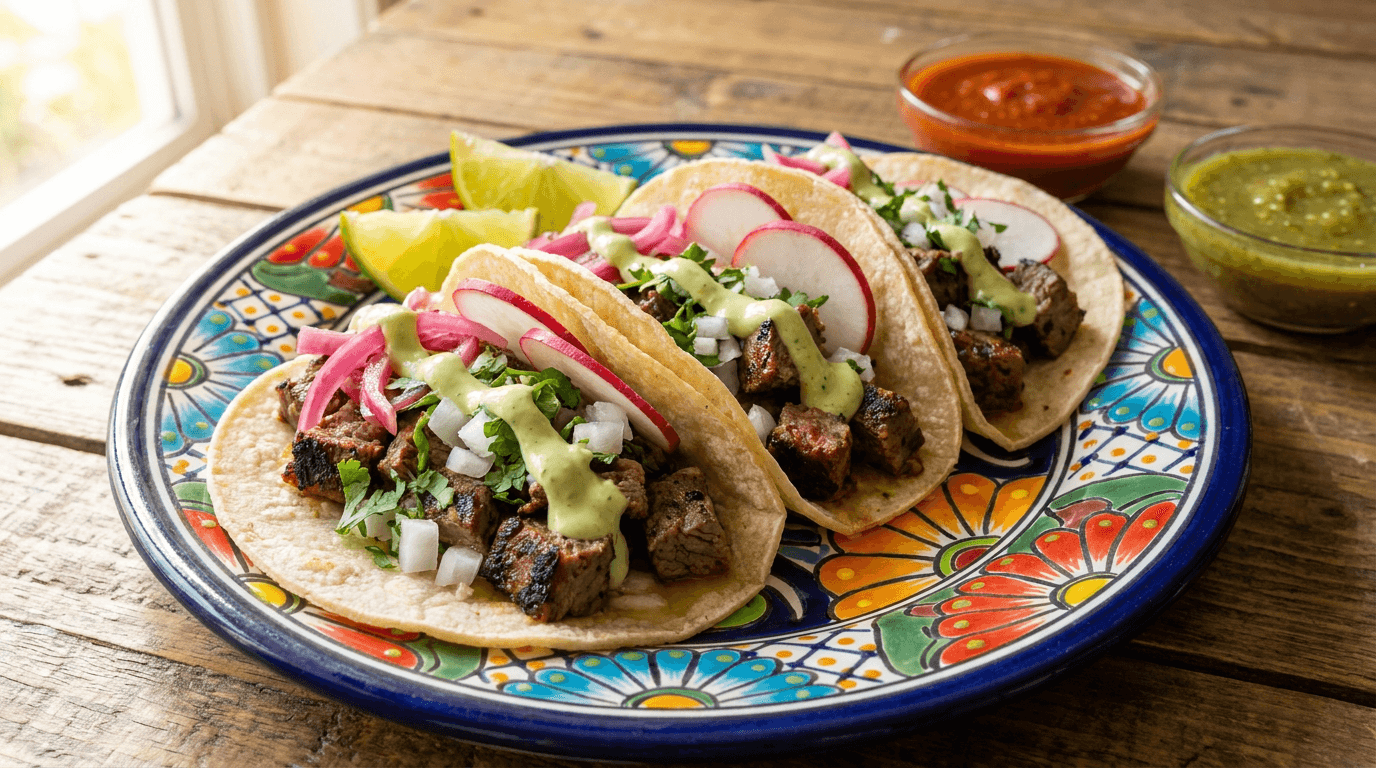
Taco photography bridges the gap between casual street food energy and the visual precision of professional food imagery. The best taco photos look spontaneous and authentic while being carefully composed to show the filling, the toppings, the garnishes, and the tortilla in their most appetizing light. This template creates a vibrant, colorful taco scene with the casual energy of street food culture.
Prompt:
close-up food photograph at a low eye-level angle of three soft corn tortilla tacos lined up in a row on a colorful Mexican-style ceramic plate or a simple metal tray lined with natural parchment, each taco is generously filled with seasoned grilled meat visible in pieces with charred caramelized edges, topped with a generous pile of fresh toppings including finely diced white onion chopped fresh cilantro with vivid green leaves a squeeze of bright green lime juice glistening on the surface and a drizzle of creamy pale green salsa or crema, a few slices of bright red radish and pickled red onion in magenta pink add color contrast, lime wedges with vivid green-yellow flesh are placed beside the tacos, a small bowl of vibrant red salsa roja and a small bowl of green salsa verde sit nearby, the tacos sit on a rustic wooden table or a colorful tiled surface, warm natural daylight illuminates the scene from above and to one side creating a bright fresh outdoor eating atmosphere, the overall mood is vibrant casual festive and authentically delicious, bright vivid colors of green cilantro and lime red salsa warm golden tortilla charred brown meat and pink pickled onion create a lively color palette, professional food photography with sharp detail and bright vibrant color grading, no people, no hands visible, no text, no brand logos
Best for: Mexican restaurant and taqueria marketing, street food and casual dining social media, food blog taco and Mexican cuisine recipes, food truck promotion, Cinco de Mayo and fiesta-themed content, food delivery platform taco category images
Template 14: Steaming Ramen Bowl — Comfort in a Bowl
Ramen photography has become one of the most recognizable food photography genres on social media, driven by the dish's photogenic qualities: the rich glossy broth, the precise arrangement of toppings, the coiled noodles, and the essential visual element of rising steam that communicates warmth and fresh preparation. This template creates the definitive ramen portrait.
Prompt:
close-up food photograph at a three-quarter angle of a steaming bowl of ramen in a large deep traditional ceramic bowl, the bowl is filled with a rich golden-amber tonkotsu-style broth with a glossy surface showing small pools of chili oil and rendered fat catching the warm light, thin wavy ramen noodles are partially lifted above the surface with chopsticks or arranged in a coiled nest in the bowl, arranged toppings include a halved soft-boiled egg with a jammy deep orange yolk slightly oozing, two slices of chashu pork with caramelized seared edges and tender interior visible, a small bundle of blanched green vegetables like bok choy or spinach, a sheet of dark green nori seaweed standing upright in the broth, thin slices of green scallion scattered across the surface, a few drops of chili oil or rayu creating small red pools on the broth surface, and a sprinkle of white sesame seeds, visible wisps of steam rise from the broth surface catching the warm side light, the bowl sits on a dark wooden table surface or a simple dark tray with a ceramic soup spoon beside it, warm moody side lighting creates highlights on the broth surface and the glossy egg yolk while the background remains dark and atmospheric, the overall mood is warm comforting and deeply satisfying, rich amber golden and warm brown tones with accents of deep green and orange, professional food photography with sharp detail on the toppings and noodle texture, no people, no hands, no text, no brand logos
Best for: Japanese restaurant and ramen shop marketing, Asian food delivery platform imagery, food blog ramen and noodle recipes, comfort food content, winter seasonal food marketing, Instagram food content
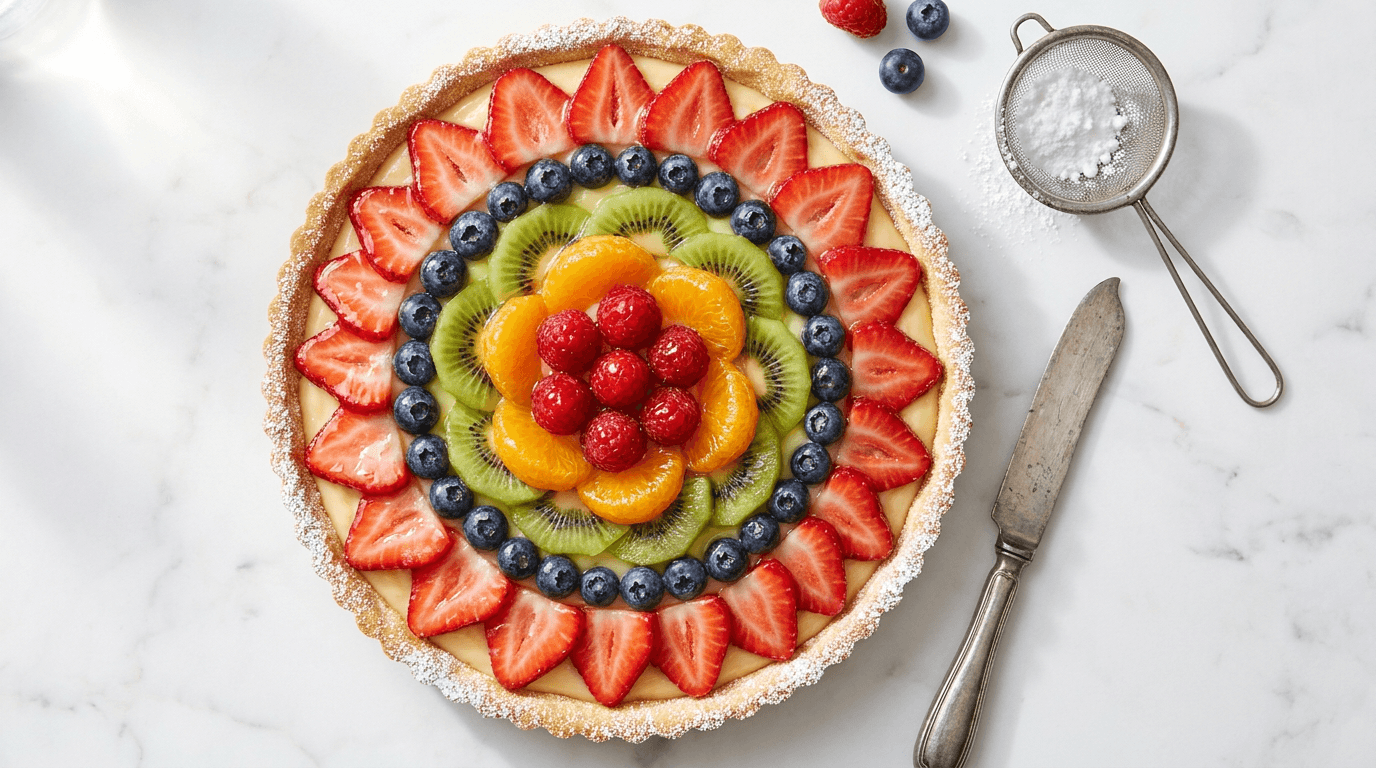
Template 15: Fresh Fruit Tart — Patisserie Elegance
The fruit tart is one of the most visually stunning subjects in pastry photography because it combines geometric precision, vivid color, and the artistry of pastry craft in a single frame. The glazed fruit, the clean tart shell edge, and the visible pastry cream create a composition that is as much about visual art as it is about food. This template produces a patisserie-quality tart image suitable for premium bakery marketing.
Prompt:
overhead food photograph shot directly from above of a beautiful fresh fruit tart on a white marble surface, the tart has a golden buttery pâte sucrée shell with a perfectly even fluted edge showing a rich golden-brown baked color, the surface is filled with pastry cream in a smooth even layer and topped with an exquisite arrangement of fresh fruits including thinly sliced strawberries arranged in concentric circles showing vivid red with visible seeds, plump whole blueberries in deep blue-purple, slices of kiwi in bright green with visible seed pattern, segments of mandarin orange in bright orange, and a few whole raspberries in vivid red, the entire fruit surface is glazed with a thin coat of apricot or clear glaze giving each fruit piece a glossy jewel-like shine that catches the light, a light dusting of powdered sugar is visible on the tart edge and the marble surface, a few fresh berries and a small sifter of powdered sugar are placed beside the tart as props, a vintage cake server or tart knife sits nearby, soft bright natural light illuminates the tart from one side creating gentle shadows and making the glazed fruit surfaces sparkle, the colors are vivid jewel-like and saturated with reds blues greens oranges against the golden shell and white marble, the overall mood is elegant refined and artisanal, professional food photography with sharp overhead detail and clean bright exposure, no people, no hands, no text, no brand logos
Best for: Bakery and patisserie marketing and social media, pastry chef portfolio imagery, dessert menu design, food blog tart and pastry recipes, baking content, culinary arts educational materials
Template 16: Cocktail and Bar Photography — Evening Elegance
Cocktail photography sits at the intersection of food photography and lifestyle marketing. The image needs to make the drink look refreshing and delicious while also communicating the atmosphere and occasion that the cocktail represents — an evening out, a celebration, sophistication, relaxation. This template creates an elegant cocktail portrait with moody bar atmosphere that sells both the drink and the experience.
Prompt:
close-up food and drink photograph at a low three-quarter angle of an elegant cocktail in a crystal coupe glass, the cocktail is a rich jewel-toned color like deep amber for an old fashioned or vibrant coral-pink for a cosmopolitan or clear pale gold for a French 75 with tiny effervescent bubbles rising through the liquid, a perfect garnish is placed with precision: a thin curl of citrus peel or a skewered Luxardo cherry or a fresh herb sprig adding an elegant finishing detail, the glass sits on a dark polished bar surface like black marble or dark lacquered wood with a few small drops of condensation on the surface near the glass base, a large clear ice cube or sphere is partially visible in the glass catching the light and showing crystalline clarity, the background is a dark moody suggestion of a sophisticated bar interior with warm amber bokeh lights and the soft blur of bottles on back-bar shelving, warm dramatic side lighting catches the liquid in the glass creating a luminous glow through the drink as if backlit by candlelight, a cocktail napkin and perhaps a small bar tool are barely visible at the edge of the frame, the overall mood is intimate sophisticated and alluring evoking an elegant evening cocktail experience, rich amber warm tones and jewel colors against a dark atmospheric background, professional food and beverage photography with shallow depth of field and dramatic bar lighting, no people, no hands, no readable text on any bottles, no brand logos
Best for: Bar and cocktail lounge marketing, restaurant bar menu imagery, spirits brand marketing, cocktail recipe content, nightlife and entertainment venue promotion, lifestyle and occasion marketing
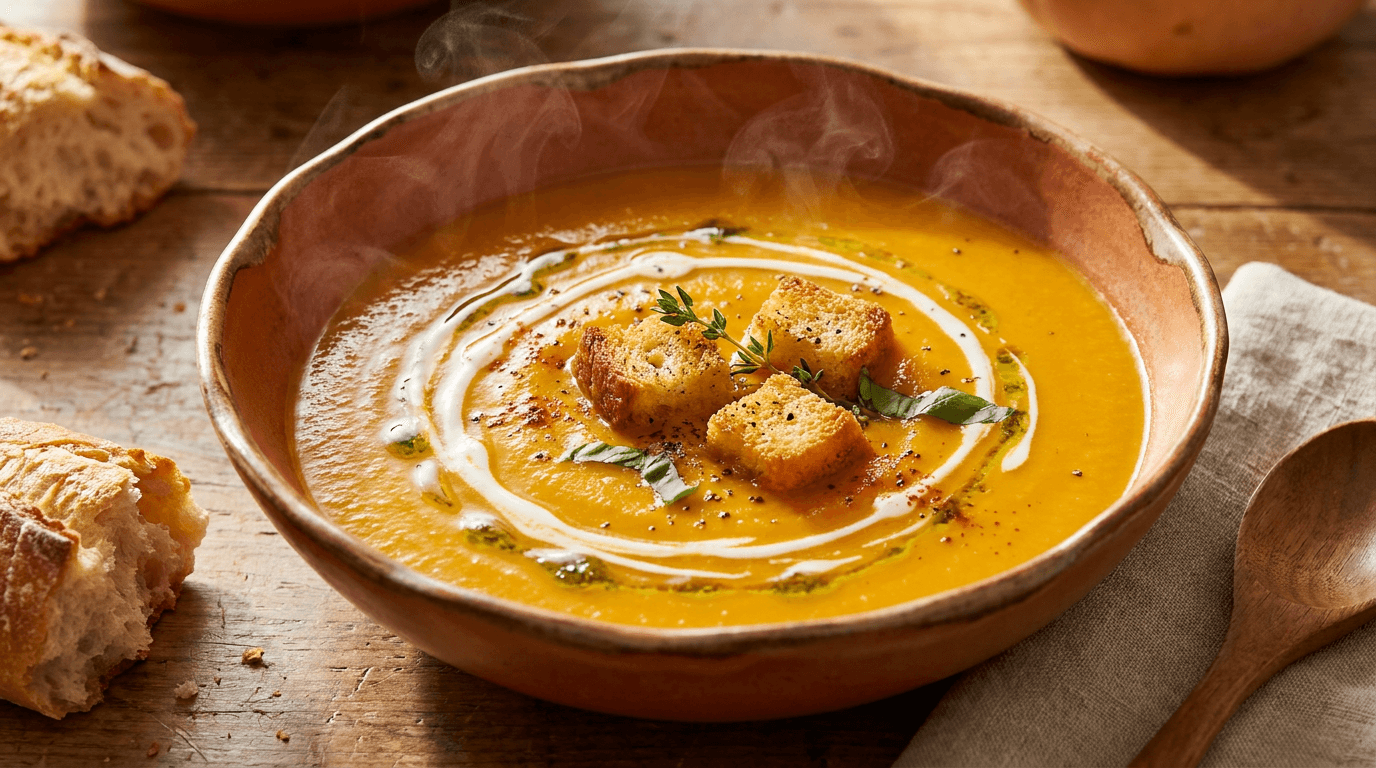
Template 17: Rustic Homemade Soup — Comfort Food Warmth
Soup photography presents a unique challenge: making a liquid dish in a bowl look textured, substantial, and appetizing rather than flat and uniform. The solution is surface detail — visible garnishes, floating ingredients, glossy oil drizzles, cream swirls, herbs, and croutons that break the surface and add visual interest. This template creates a warm, comforting soup image that communicates homemade quality and cozy satisfaction.
Prompt:
close-up food photograph at a three-quarter angle of a bowl of rustic homemade soup in a wide ceramic bowl with a slightly irregular handmade quality in a warm cream or terracotta tone, the soup is a rich vibrant color like deep orange for a butternut squash or tomato bisque with a smooth velvety surface, a decorative swirl of white cream or crème fraîche creates an elegant spiral pattern on the surface, a generous drizzle of green herb-infused olive oil adds color contrast and glossy texture, a few toasted croutons with golden crispy surfaces float on the soup near the center, a light sprinkle of smoked paprika or freshly cracked black pepper adds speckled detail, a small sprig of fresh thyme or a few torn basil leaves sits on the surface as a final garnish, visible wisps of steam rise from the surface catching the warm side light, the bowl sits on a rustic wooden table with a natural linen napkin folded beside it, a torn piece of crusty artisan bread sits next to the bowl ready for dipping, a wooden handled soup spoon rests on the table, warm natural side lighting creates a cozy intimate atmosphere with soft shadows and highlights on the glossy soup surface and the cream swirl, the overall mood is warm comforting homemade and deeply satisfying, warm autumn tones of orange cream golden brown and green, professional food photography with warm color grading and soft natural lighting, no people, no hands, no text, no brand logos
Best for: Comfort food restaurant marketing, soup recipe blog posts, autumn and winter seasonal food content, homestyle and farm-to-table restaurant social media, food brand soup product marketing, cookbook imagery
Template 18: Charcuterie and Grazing Board — Abundance Display
The charcuterie board has become one of the most popular food photography subjects on social media due to its visual abundance, color variety, and the inherent appeal of a lavish spread. This template creates a full, overflowing grazing board that maximizes the abundance factor while maintaining the organized composition that makes the chaos look intentional and appetizing.
Prompt:
overhead flat-lay food photograph of a large abundant charcuterie and grazing board covering most of the frame, arranged on a very large rustic wooden board or directly on a natural wood table surface, the board is densely filled with a carefully arranged abundance of items including: several varieties of cured meats such as thinly sliced prosciutto folded into rosettes and ribbons deep red soppressata rounds and salami slices showing white fat marbling, multiple cheese varieties including a soft brie wheel with a wedge cut out showing creamy interior a block of aged cheddar with orange hue sliced into pieces and small cubes of manchego, clusters of green and red grapes cascading across sections of the board, small bowls of accompaniments including whole grain mustard fig jam or preserves with a deep purple color and mixed olives in green and dark purple, rows of crisp artisan crackers and thin breadsticks, scattered nuts including whole almonds and walnuts, dried fruits like apricots and figs, fresh elements including cherry tomatoes on the vine fresh figs cut in half showing pink interior and fresh herbs like rosemary sprigs tucked into gaps, small honeycomb piece dripping golden honey, every section of the board is full with items overlapping and cascading creating a sense of generous abundance, warm natural light from one side creates soft shadows adding depth and highlighting the glossy surfaces of fruits and the texture of meats and cheeses, the color palette is rich and varied with pinks reds creams oranges purples greens and golden tones against the warm wood surface, professional food photography with sharp overhead detail and rich warm color grading, no people, no hands, no text, no brand logos, no wine with visible labels
Best for: Catering and event company marketing, entertaining and hosting content, food blog charcuterie and appetizer posts, wine bar and bistro social media, holiday entertaining promotion, food styling portfolio imagery, wedding and event vendor marketing
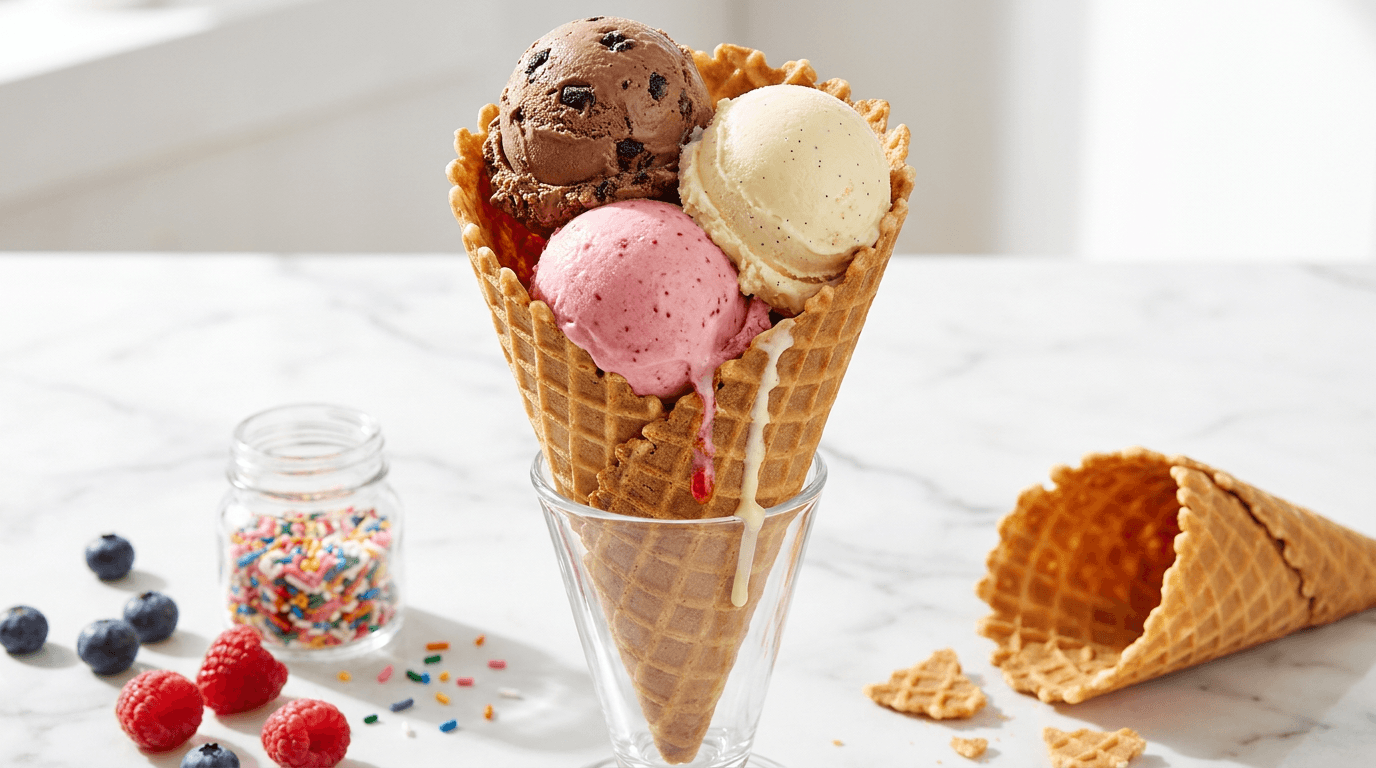
Template 19: Ice Cream Scoops — Summer Joy
Ice cream photography captures pure joy, indulgence, and the vibrant energy of warm weather. The visual challenge is communicating the creamy texture and flavor intensity of ice cream while managing the implicit melt factor — the image needs to look freshly scooped and pristine, not melted and runny. This template creates a colorful, joyful ice cream image with the summer energy that drives seasonal marketing.
Prompt:
close-up food photograph at a low eye-level angle of a generous waffle cone held upright in a simple cone stand or balanced in a small glass, the cone is a golden freshly pressed waffle cone with a visible grid pattern and slightly irregular artisanal edges, two or three perfectly rounded scoops of ice cream are stacked on top in different vibrant flavors: a rich deep brown chocolate with visible chocolate chips or cocoa swirls a vivid pink strawberry with tiny fruit flecks and a creamy pale yellow French vanilla with visible vanilla bean specks, the scoops are perfectly smooth and rounded with a fresh just-scooped appearance showing the slight ridges from the ice cream scoop, a single drip of melted ice cream runs slowly down the side of the cone catching the light, the cone sits on a bright clean surface like white marble or a light pastel-colored table, a few fresh berries or a small dish of sprinkles are placed nearby as props, a few scattered waffle cone pieces add textural interest, bright cheerful natural light illuminates the scene evenly creating a fresh bright summery atmosphere, the overall mood is joyful colorful playful and indulgent, vivid ice cream colors against the golden cone and bright background create a cheerful palette, professional food photography with sharp detail on the ice cream textures and cone pattern, no people, no hands, no text, no brand logos
Best for: Ice cream shop and gelateria marketing, summer seasonal food content, dessert menu imagery, food blog frozen dessert recipes, children's party and family content, social media summer food posts, food truck and stand promotion
Template 20: Farm-to-Table Ingredient Spread — Raw Beauty
The raw ingredient spread is a versatile food photography composition that works for multiple marketing purposes: communicating freshness and quality sourcing for restaurants, illustrating recipe ingredients for food bloggers, showcasing product variety for food brands, and conveying a farm-to-table philosophy through visual storytelling. This template creates a lush, abundant raw ingredient composition that celebrates the natural beauty of food before it is cooked.
Prompt:
overhead flat-lay food photograph of a beautiful arrangement of fresh raw ingredients spread across a large rustic wooden surface, the composition includes: ripe tomatoes on the vine in vivid red with green stems still attached, a bundle of fresh bright green asparagus with purple-tinged tips tied with kitchen twine, several whole lemons in bright saturated yellow, a head of garlic partially broken apart showing individual cloves with papery white skin, a bunch of fresh herbs including deep green basil bright parsley and woody rosemary sprigs, a few whole fresh chili peppers in bright red and green, a small pile of whole peppercorns and coarse sea salt crystals on a tiny wooden dish, a bottle of olive oil in amber glass with golden-green oil visible through the glass, scattered cherry tomatoes in red yellow and orange, a few eggs with brown speckled shells in a small wooden bowl, artisan dried pasta in a nest shape, a wedge of Parmesan cheese with a rough broken edge showing granular texture, all items are arranged in a casual but composed manner with items overlapping and scattered naturally as if being gathered for meal preparation, bright even natural light from above illuminates every ingredient showing vivid natural colors and surface textures, the wooden surface shows warm natural grain and patina, the overall mood is fresh abundant natural and celebratory of quality ingredients, vivid natural colors of red green yellow white and brown against the warm wood create a rich organic palette, professional food photography with sharp detail and bright clean exposure, no people, no hands, no text, no brand logos on any products, no packaging
Best for: Farm-to-table and organic restaurant marketing, food blog recipe ingredient shots, meal kit brand imagery, cooking class and culinary school promotion, farmers market and local food content, food brand ingredient quality messaging, cookbook opening chapter imagery
Customizing These Templates for Your Specific Needs
The templates above provide the compositional, lighting, and styling foundation for each food type and photography style. To make them work for your specific dishes, brand, or marketing context, customize them along four key dimensions.
Swap the specific dish for your own. Every template can be adapted to a different dish within the same category. The burger template (Template 1) works for any stacked sandwich — swap the beef patty for a crispy fried chicken breast, a grilled portobello mushroom, or a pulled pork pile and adjust the toppings accordingly. The pasta template (Template 2) works for any pasta shape and sauce combination — swap spaghetti with tomato sauce for pappardelle with bolognese or penne with vodka sauce. Keep the lighting, angle, surface, and prop descriptions intact while changing the food-specific details.
Match the styling to your brand aesthetic. If your restaurant or food brand has a specific visual identity — minimalist and modern, rustic and farmhouse, bold and colorful, dark and moody — adjust the surface materials, prop choices, color palette descriptions, and overall mood keywords in the prompts to match. A health-focused brand might use bright white surfaces and clean minimal props. A craft barbecue brand might use dark weathered wood and cast iron. A fine dining establishment might use dark slate, white porcelain, and dramatic low lighting. The prompts are modular: you can swap surface and prop descriptions without changing the food and lighting specifications.
Adjust the lighting mood for context. The templates default to the lighting style most appropriate for each dish type, but you can shift the mood by changing the lighting descriptions. For daytime social media content, emphasize bright natural light, soft shadows, and airy atmosphere. For evening menu imagery, shift to warm dramatic side lighting, darker backgrounds, and moody atmosphere. For editorial-style content, use more dramatic contrast with deeper shadows and more pronounced highlights. The lighting description is one of the most powerful levers in the prompt for changing the entire emotional register of the image.
Add or subtract props to control complexity. If you need a clean, simple hero shot of a single dish for a menu or delivery platform thumbnail, reduce the prop descriptions to just the dish on a surface with minimal accompaniments. If you need a rich lifestyle scene for social media or editorial content, expand the prop descriptions to include more surrounding elements: hands reaching for food, multiple dishes suggesting a shared meal, ingredients scattered around suggesting preparation, beverages accompanying the meal. Scale the scene complexity to match the marketing context.
How to Deploy AI Food Photography in Your Marketing Workflow
Generating images is the first step. Deploying them effectively requires understanding which images work best in which marketing channels and how to maintain visual consistency across your food content.
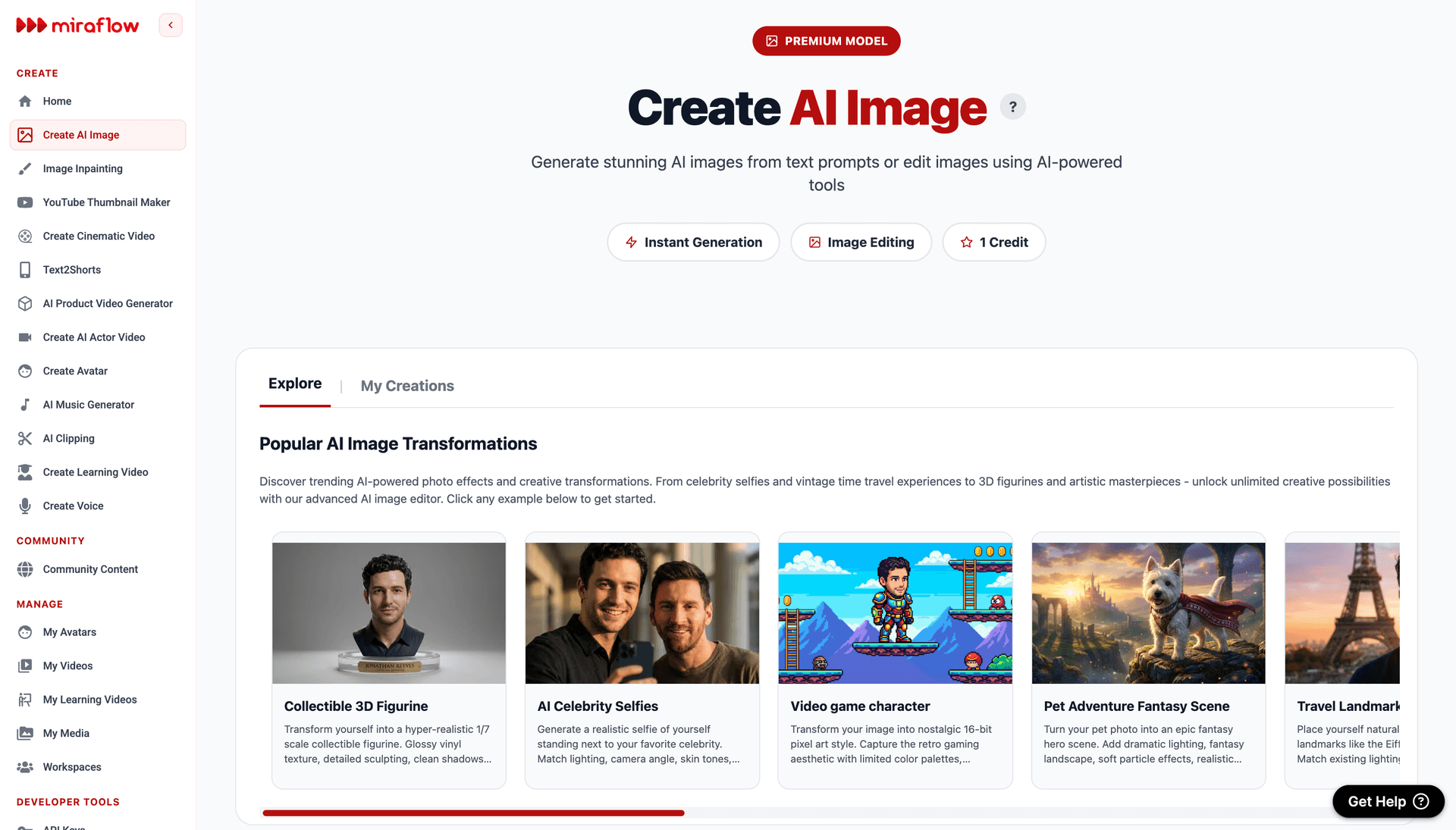
Platform-specific formatting is essential. Different marketing channels require different aspect ratios and compositions. For Instagram feed posts, generate at 4:5 vertical or 1:1 square. For Instagram Stories and Reels thumbnails, generate at 9:16 vertical. For website hero banners and blog post featured images, generate at 16:9 or 3:2 horizontal. For delivery platform menu images, check the specific platform's image requirements — many use square or 4:3 formats. For printed menus, generate at high resolution in the specific crop ratio needed for your menu layout. If you need the same dish image across multiple channels, generate separate versions optimized for each format rather than cropping a single image, because the composition that works in a horizontal format rarely works equally well when cropped to vertical. The Miraflow AI Image Generator allows you to specify the aspect ratio for each generation.
Build a consistent visual library. Rather than generating images one at a time as needed, invest a session in building a complete visual library for your menu, your recipe archive, or your product line. Generate images for every key dish or product, maintaining consistent lighting style, surface choices, and prop aesthetic across the entire set. This consistency is what makes your social media feed look cohesive, your menu look professionally designed, and your brand feel visually intentional. A library of 30 to 50 images generated in a single focused session gives you weeks of content to deploy across channels.
Use the Image Inpainting tool for targeted refinements. AI-generated food images occasionally produce artifacts: an unrealistic texture on a surface, an ingredient that does not look quite right, or a detail that needs adjustment. Rather than regenerating the entire image, use inpainting to fix localized issues while preserving the overall composition and quality of the image. This is particularly useful for food photography, where a single unrealistic element can undermine the credibility of an otherwise perfect shot.
Pair food images with video content. Static food photography is powerful, but short video content showing motion — steam rising, cheese stretching, sauce being drizzled, a cake being sliced — performs exceptionally well on social media. The Cinematic Video Generator can add subtle motion to generated food images, creating short clips with gentle camera movement or animated elements that bring still food photography to life for Reels, TikTok, and Stories. The Text2Shorts tool can combine multiple food images into short recipe or menu showcase videos with text overlays and AI-generated background music.
Disclosure and authenticity considerations. For restaurants and food businesses, AI-generated food images should accurately represent what the customer will actually receive. Using AI imagery that shows dishes substantially different from the actual product — in size, quality, presentation, or ingredients — creates a negative customer experience when the real food does not match the photograph. Generate images that represent your dishes at their best but within the realm of what you actually serve. Many businesses use AI-generated images for social media marketing and brand content while using actual photographs for delivery platform menus where customers are ordering based directly on the image. Find the balance that works for your business while maintaining customer trust.
Common Mistakes That Make AI Food Photography Look Artificial
Understanding these pitfalls helps you generate images that pass the credibility test and look genuinely appetizing rather than obviously computer-generated.
Unrealistic perfection kills believability. Real food is slightly imperfect. A genuine artisan bread loaf has asymmetric scoring and uneven crust color. A real plate of pasta has a few stray drops of sauce on the rim. A real steak has some fat and connective tissue variation. When AI-generated food looks too perfect — too symmetrical, too uniform, too idealized — it crosses into the uncanny valley of food photography and triggers the viewer's sense that something is not real. If your generated images look excessively perfect, add a few descriptive words about natural imperfections: "slightly irregular," "naturally varied," "rustic and imperfect" to introduce the visual noise that makes food look real.
Ignoring physics and food science. AI generators do not inherently understand how food behaves. They may generate ice cream that looks solid at room temperature, cheese that melts in physically impossible ways, or ingredients that would not plausibly coexist in a real dish. Review generated images with the eye of someone who cooks and eats. If the melted butter is defying gravity, if the garnish is physically impossible to balance where it sits, or if the ingredients would never appear together in a real dish, regenerate with more specific physical descriptions.
Flat lighting that eliminates texture. If a generated image comes back with flat, even lighting that eliminates the shadows and highlights needed to show food texture, the image will look like a product catalog shot rather than appetizing food photography. Add stronger lighting direction cues: "dramatic side lighting from the left," "strong directional light creating defined shadows," "raking light across the surface revealing texture." Directional light is what makes food look three-dimensional and tactile.
Wrong angle for the dish type. Shooting a flat dish like a pizza from eye level wastes its visual potential because you cannot see the toppings. Shooting a tall dish like a layered burger from directly overhead compresses its impressive height into a flat circle. Match the angle to the dish: overhead for flat compositions, eye-level for tall stacks, three-quarter for most plated dishes. The templates in this post specify the optimal angle for each dish type, but if you are creating custom prompts, angle selection is one of the most important decisions.
Backgrounds and surfaces that compete with the food. The food should always be the star of the image. Backgrounds and surfaces that are too busy, too colorful, or too visually interesting draw the eye away from the dish and dilute the appetite appeal. Dark, simple, naturally textured surfaces — dark wood, black slate, clean marble, simple linen — work because they provide contrast and context without competing for attention. Avoid pattern-heavy tablecloths, brightly colored surfaces, or cluttered backgrounds that fragment the viewer's focus.
Oversaturated colors that look unnatural. While rich, saturated colors are essential in food photography, there is a tipping point where oversaturation makes food look artificial — unnaturally vivid greens that no real lettuce ever achieved, tomato reds that look painted rather than organic, chocolate browns that look digitally darkened. If your generated images look like the color saturation has been pushed too far, add "natural realistic color saturation" or "true-to-life food colors" to your prompt to pull the palette back toward photorealism.
Beyond Marketing: Additional Applications for AI Food Photography
The templates in this post are designed primarily for marketing and content creation, but AI food photography has valuable applications across several other areas of the food industry and creative food space.
Menu design and visualization. Restaurants designing or redesigning their menus can generate images of every dish to create a visual menu or to guide the graphic designer's layout. This is especially valuable for new restaurants building their menus before opening, when the kitchen may not yet be producing the final versions of every dish. AI-generated images serve as high-quality placeholders that can be replaced with actual photography later or retained if the quality meets the standard.
Recipe development and cookbook planning. Cookbook authors and recipe developers can generate concept images during the planning phase to visualize how each recipe will look on the page. This helps with editorial planning — identifying visual variety and ensuring the cookbook's imagery is diverse in colors, angles, and moods — before committing to the expensive process of photo shoots. The generated images serve as detailed art direction references for the eventual photographer and food stylist.
Food packaging design. Food product packaging frequently features serving suggestion imagery — the finished dish prepared using the product. Generating these images through AI allows packaging designers to explore multiple visual concepts rapidly and inexpensively during the design phase, narrowing the options before investing in final production photography. For smaller food brands, AI-generated serving suggestion imagery may be the final product if the quality meets packaging print requirements.
Culinary education and training materials. Culinary schools, cooking class providers, and educational food content creators need extensive imagery showing techniques, finished dishes, ingredient preparations, and plating styles. AI generation enables these organizations to illustrate concepts without the logistical complexity of photographing every dish in a teaching kitchen.
Social media content calendars. Food businesses that maintain active social media presences need a constant stream of visual content. AI generation allows you to build weeks or months of content in advance, creating a visual content library that can be scheduled and posted consistently without the daily pressure of producing new photography. Combined with the AI prompts for Instagram post images and TikTok video backgrounds, you can create a comprehensive cross-platform visual content strategy powered entirely by AI-generated assets.
How Miraflow AI Supports Your Food Photography Workflow
Every template in this post can be generated inside Miraflow AI. Open the AI Image Generator, paste your customized prompt, select the appropriate aspect ratio for your deployment channel, and generate. The tool supports the high-resolution output needed for both digital marketing and print applications like menu design and packaging.
For food businesses creating video content — recipe videos, menu showcases, behind-the-scenes content, or promotional clips — the Cinematic Video Generator can transform generated food images into short video clips with subtle motion effects that bring the food to life. A slow zoom into a steaming bowl of ramen, a gentle pan across a charcuterie board, or a soft focus pull from background to a hero dish creates video content from still images that performs powerfully on Instagram Reels, TikTok, and YouTube Shorts.
The Text2Shorts tool enables food businesses to convert recipe descriptions, menu highlights, or food stories into short-form video content using generated images as the visual layer, paired with AI-generated background music that matches the food's cultural and emotional context — upbeat acoustic for breakfast content, smooth jazz for cocktail and fine dining, Latin guitar for Mexican cuisine, ambient café sounds for coffee content.
For localized adjustments — fixing a texture, adjusting a color, removing an artifact — the Image Inpainting tool provides targeted editing without regenerating the full image, saving time and preserving the compositions you have already approved.
The recommended workflow is to batch-generate your food image library in a focused session: work through your menu or recipe list, generate images for each item using the appropriate template, review at full resolution, refine any issues with inpainting, and export the complete set in the formats and resolutions needed for your marketing channels. This batched approach maintains visual consistency across your library and is far more efficient than generating images ad hoc as individual marketing needs arise.
FAQ
Can AI-generated food images replace traditional food photography?
For many applications, yes. Restaurant social media, food blog content, menu imagery for casual and mid-range establishments, delivery platform listings, and food brand marketing content can all be served effectively by AI-generated food photography. Where traditional food photography still holds a clear advantage is in situations where the specific, actual dish needs to be shown — such as a fine dining restaurant's tasting menu where plating artistry is part of the chef's creative expression and must be documented accurately — or in high-end editorial and advertising campaigns where the budget supports and the context demands physical production. Most food businesses will benefit from a hybrid approach, using AI-generated images for the high-volume, everyday content needs and reserving traditional photography for premium, specific-dish documentation.
What aspect ratio should I use for food photography?
The optimal aspect ratio depends on the deployment channel. For Instagram feed posts, 4:5 vertical is the most engaging format because it occupies maximum screen real estate. For Instagram Stories and TikTok, use 9:16 vertical. For blog featured images and website banners, 3:2 or 16:9 horizontal formats work best. For delivery platform menus, most platforms use square (1:1) or 4:3 formats. For printed menus, match the aspect ratio to your menu design layout. Generate separate versions for different channels rather than cropping a single image, as different aspect ratios require different compositional strategies.
How do I make AI-generated food look more realistic?
The key is specificity in your prompts. Rather than describing "a plate of chicken," describe the specific cut, cooking method, crust texture, internal doneness, sauce characteristics, plate type, garnish, and lighting angle. The more specific and visually detailed your prompt, the more realistic the result. Include imperfection cues — "slightly uneven," "naturally varied in color," "a small drip of sauce on the plate rim" — to avoid the uncanny perfection that makes AI images look artificial. Review generated images critically: if something looks physically impossible (food floating, impossible textures, wrong melting behavior), regenerate with more specific physical descriptions.
Can I use these templates for food product packaging?
The templates can be adapted for packaging serving suggestion imagery. The key consideration is resolution — packaging print typically requires higher resolution and specific color space settings (CMYK) that differ from digital marketing requirements. Generate at the highest available resolution and verify that the image quality holds up at print size. For final production packaging, many brands use AI-generated images as detailed concept references during the design phase and then re-create the finalized concept with traditional photography for the actual print production. For smaller brands or limited-run products, AI-generated imagery may serve as the final packaging image if the quality standard is met.
How many food images do I need for a restaurant social media strategy?
A restaurant maintaining an active Instagram presence typically needs three to five new food images per week. A food blog publishing weekly recipes needs two to five images per recipe post (hero shot, process shots, and alternate angles). A delivery platform menu needs one strong image per menu item. Building an initial library of 50 to 100 images — covering your full menu, seasonal specials, atmosphere shots, and close-up detail images — gives you a substantial content foundation to draw from. Supplement this library with new generations as your menu changes, seasons shift, or new marketing campaigns require fresh visuals.
What are the most important food photography angles to master?
Three angles cover the vast majority of food photography needs. The overhead flat lay (Template 2, 3, 7, 8, 15, 18, 20) works for flat compositions, spreads, and dishes where the surface arrangement is the visual story. The three-quarter angle at approximately 30 to 45 degrees (Template 5, 6, 9, 14, 17) works for most plated dishes where you want to show both the surface and the dimensional shape. The low eye-level angle (Template 1, 4, 10, 12, 13, 19) works for tall, stacked dishes where height and layers are the visual story. When customizing templates or creating your own prompts, choose the angle that best showcases the most visually impressive quality of the specific dish.
Should I disclose that food images are AI-generated?
Disclosure practices for AI-generated food imagery vary by platform, industry, and jurisdiction. On social media, there is currently no universal requirement to label AI-generated food images, but transparency builds trust, especially if your audience might assume they are looking at your actual dishes. For delivery platform menus, using images that do not represent what the customer will actually receive can lead to negative reviews, complaints, and potential platform policy violations. For food product packaging, regulatory requirements may apply depending on your market. As a general best practice, use AI imagery that accurately represents the food you actually produce, and be transparent with your audience when images are AI-generated, especially in contexts where they might reasonably expect to receive exactly what they see.
Can I use the same lighting and surface style across all my food images?
Consistency is valuable, but variety prevents visual monotony. Choose a primary lighting direction and surface type that defines your brand's visual identity, and use these as defaults for most of your images. Then introduce controlled variation — a seasonal shift to brighter lighting in summer, a moodier tone for evening menu items, a different surface for a special promotion — to keep your content fresh while maintaining recognizable visual branding. The balance is between enough consistency that your feed or menu feels cohesive and enough variety that individual images feel distinct and interesting.
Conclusion
Food photography is the language of appetite. It is how restaurants, food brands, content creators, and culinary businesses communicate the flavor, quality, freshness, and pleasure of their food to an audience that will never taste it before deciding to buy, cook, click, or visit. The quality of that visual communication directly determines the business outcomes that follow — the orders placed, the reservations made, the recipes saved, the products purchased. Professional food photography has always been a high-leverage investment. AI-generated food photography makes that investment accessible at the speed and scale that modern food marketing demands.
The 20 templates in this post cover the complete visual spectrum of food photography: hero shots of signature dishes from burgers to steaks to pasta, styled overhead spreads from breakfast tables to charcuterie boards, precise close-ups of sushi and desserts and cocktails, comfort food scenes with steam and warmth, and raw ingredient compositions that celebrate the beauty of food before it is cooked. Each template is engineered for the photorealistic quality, appetizing warmth, and textural detail that professional food photography requires.
Copy the templates that match your dishes and marketing needs, customize them with your specific ingredients, plating styles, and brand aesthetic, generate them inside Miraflow AI, and deploy them across your marketing channels. Build a visual library that makes every dish on your menu, every recipe in your archive, and every product in your line look as good as it tastes. The businesses that win in food marketing are the ones that make people hungry through a screen — and these templates give you the tools to do exactly that.