Google Local Services Ads Drops Featured Professionals and Makes Headshots Optional: What Law Firms Should Do (2026)

Written by
Aerin Kim
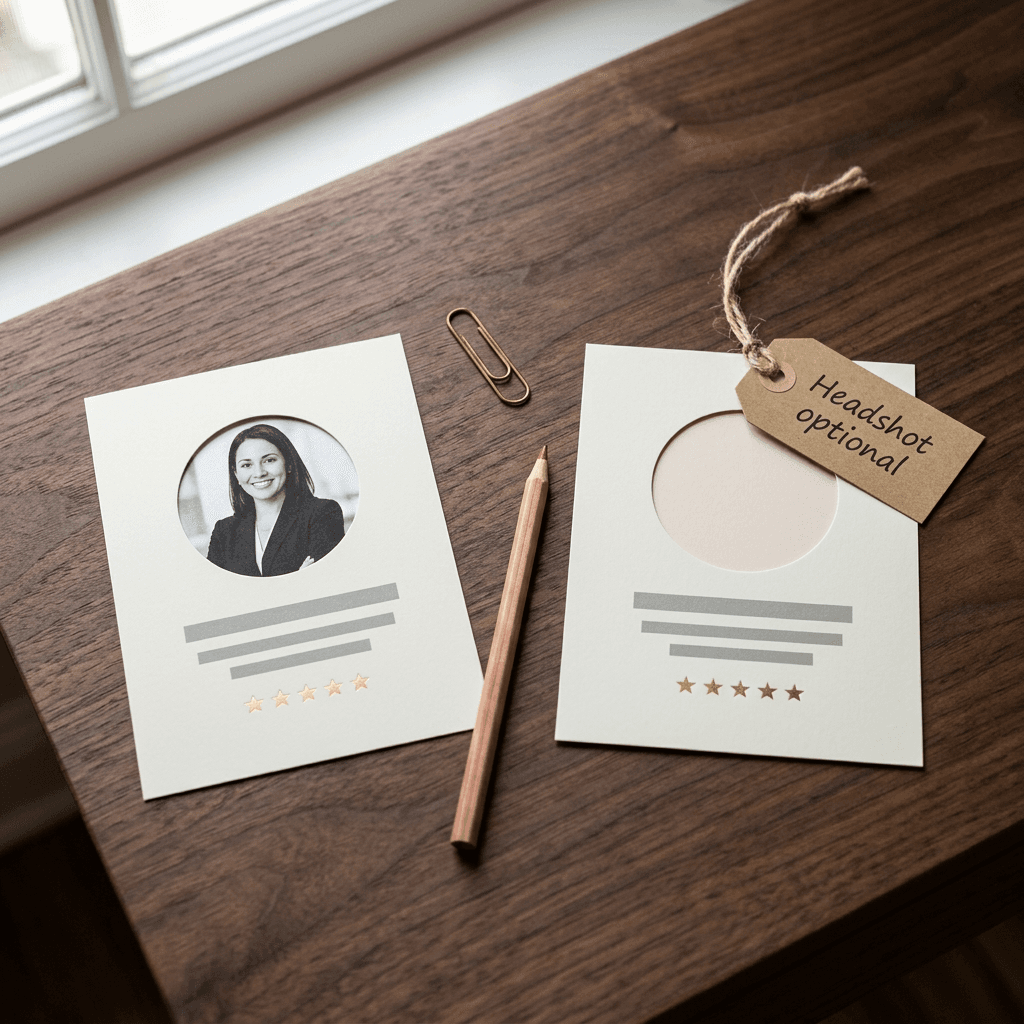
Google is removing featured professionals from Local Services Ads and making headshots optional, mainly affecting lawyers. See what changed, what is unknown, and how law firms should adapt their profiles, reviews and intake.
If you run Local Services Ads for a law firm, there is a good chance you recently noticed that your listing looks different, or that a client asked why the attorney headshot they liked is gone. Around October 19, 2026, Barry Schwartz reported at Search Engine Roundtable that Google is removing featured professionals from Local Services Ads and making the headshot optional. The change was first spotted by PPC professional Anthony Higman, who posted a screenshot of an in-account notice on X, and Search Engine Land covered it as well.
The practical worry is easy to state. For years, a law firm could put a named attorney with a face at the top of its Google Local Services listing, and many firms built their lead generation around that human element. Now the face is optional, the featured professional is going away, and Google has not yet explained why or what it means for performance. This guide walks through exactly what Google said, what the unit looks like now compared with before, what Google has documented about LSA ranking, four advertiser scenarios, a practical audit you can run this week, a client communication script for agencies, a measurement plan, and the mistakes I expect to see first. Where I am reasoning rather than quoting, I label it as analysis. When you reach the visual work for your website, social channels and video, the Miraflow AI image generator and the rest of Miraflow are where I would build those assets, with one important caveat about LSA photos that I cover below.
TL;DR
- Google is showing advertisers an in-account notice reading: "Starting in October, featured professionals will no longer show on your ads. Headshot is optional and won't affect ad serving. The rest of your ad, including photos, reviews, and more, won't change."
- The change appears to matter most to lawyers, who could previously add individual professionals to their profile and feature one in the ad.
- Per the notice, the headshot is now optional and Google says it will not affect whether your ad serves. Business photos, reviews and the rest of the ad are said to stay the same.
- Google has not published why it made the change, which verticals and countries are affected, or what it does to lead volume. The help page linked from the notice did not mention the change when it was reported.
- Google's own LSA documentation says ads are ranked in an auction using bid and overall profile quality, with ratings, review count, response time, images and completed verification among the inputs. None of those inputs is a headshot, so the durable work is reviews, responsiveness, hours and intake.
- Move the personal branding that the headshot used to carry onto channels you control: your website, Google Business Profile, YouTube and your regular Search or Performance Max ads.
- Record the date, annotate your reports, and compare lead volume, charged leads and dispute rates before and after, instead of assuming the change helped or hurt.
What Google actually announced
The source of the news is a notice shown inside Local Services Ads accounts. Higman posted a screenshot on X and called it a "Big LSA change for lawyers." The notice text, as reported by Search Engine Roundtable, says that starting in October featured professionals will no longer show on your ads, that the headshot is optional and will not affect ad serving, and that the rest of the ad, including photos, reviews and more, will not change.
Two details in the reporting are worth noticing. First, Higman said he had noticed something wonky with photos earlier in the month, and weeks before that he had posted LinkedIn screenshots of lawyer listings that appeared without headshots. That suggests the rollout was gradual and that some accounts may have seen the new layout before the notice reached everyone. Second, the notice links to a help document, Business screening and verification requirements for the US, which did not mention the change at the time of reporting. Adriaan Dekker's summary of the change reached the same conclusion: it mainly affects lawyers, who could feature individual professionals, and the help page had not been updated.
Here is what is not known, and I would rather say so plainly than guess. Google has not explained the reason for the change. There is no official list of the verticals or countries affected. We also do not have any data on whether listings without a featured professional get more or fewer leads. If you see confident claims about performance effects in the next few weeks, treat them as hypotheses until someone shows before and after data from a meaningful number of accounts.
What the listing looks like now versus before
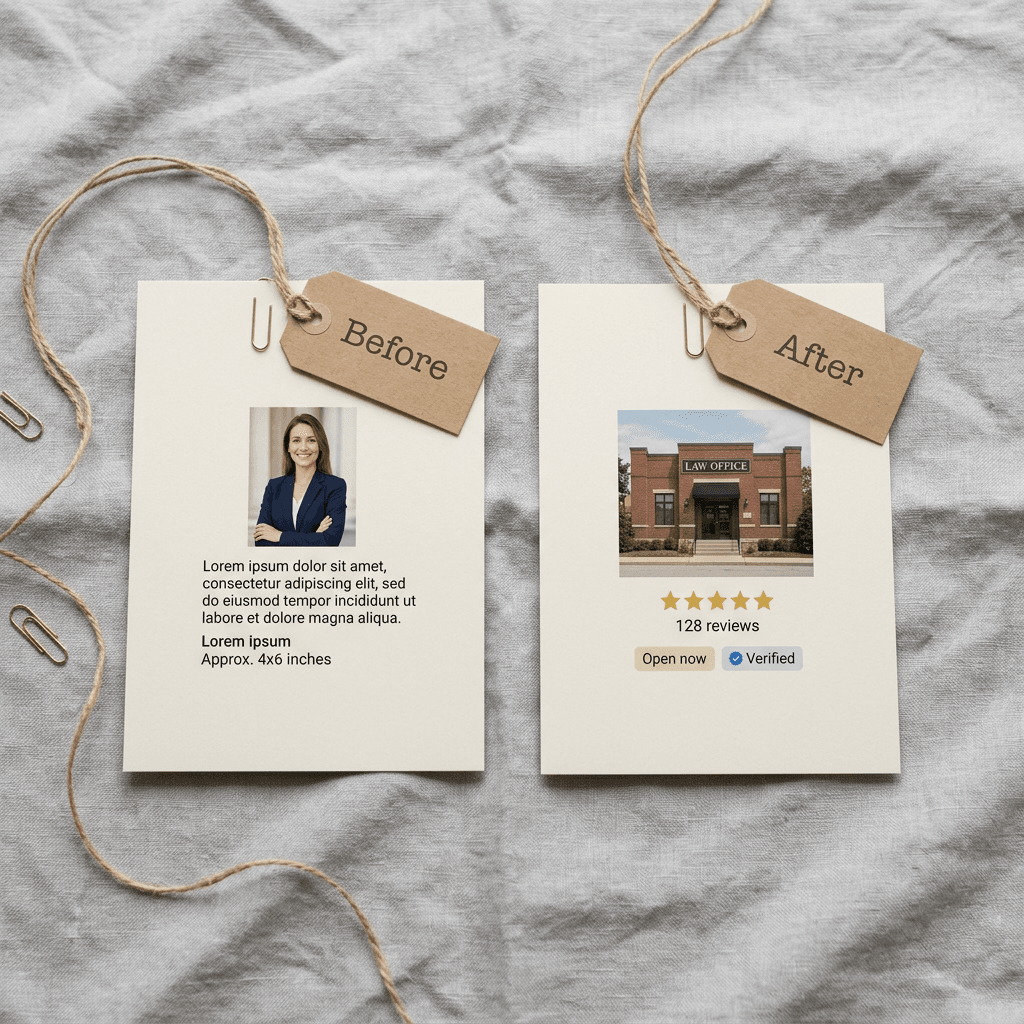
Before the change, a law firm's Local Services listing could present a named attorney. The firm could add its professionals to the profile, feature one of them, and show that person's headshot in the ad. For a solo practitioner, that made the listing feel like a person rather than a business name. For a multi-attorney firm, it let the firm lead with a partner who handled a particular practice area, such as a family law attorney in a firm that also did estate planning.
After the change, the featured professional is gone from the ad, and the listing leans on the business-level elements: the business name, the star rating and number of reviews, the service area, the business hours, the badges Google shows for screening and verification, and the photos the advertiser has uploaded for the business. The notice says photos and reviews will not change, so the firm-level card is intended to be the same unit minus the individual.
It helps to remember the earlier history here, because Google has been moving toward machine selection of visuals for a while. On August 7, 2024, Google Ads Liaison Ginny Marvin announced that Google would begin selecting photos from your LSA profile to show in your ads, based on their likelihood to increase engagement. Search Engine Roundtable reported it, noting that ads would not always include a photo, that Google recommended at least three high-quality, relevant, original photos, and that the help documentation said high quality photos may contribute to improved ranking. At the time, the AdsLiaison account also said ads with headshots would continue to show headshots. That promise has now been softened: the headshot is optional, and the featured professional does not appear.
Put differently, the 2024 change gave Google control over which business photo appears, and the October 2026 change takes the individual professional out of the unit. The direction of travel is a more standardized card where Google decides what to show and the advertiser supplies the raw material.
Why Google might have done this (analysis)
Google has not given a reason, so everything in this section is my reasoning, offered to help you plan rather than as fact. I see four plausible and not mutually exclusive explanations.
The first is simplification. A featured professional is one more field that has to be filled, moderated and kept current. When a card has a single shape across verticals, it is easier to test, easier to translate into other surfaces and easier to explain to advertisers.
The second is verification burden. Local Services Ads rely heavily on screening and verification, and individual professionals add another layer: each person has a license, a background check status and a photo that has to match. Fewer individuals on the card means fewer things that can go stale when an attorney leaves a firm, changes name or loses a license.
The third is consistency across verticals. Most LSA categories, such as plumbers, electricians and locksmiths, never had a lawyer-style featured professional. Removing it brings legal listings closer to everyone else's.
The fourth is the broader convergence of Local Services Ads with the rest of Google Ads. I covered one piece of that in our guide to the Local Services Ads and Performance Max migration, and the same pattern shows up in direct booking with 500 partners and in missed call charges. Each of these makes LSA more like a managed, standardized lead product. A card that does not depend on an individual's photo fits that direction, but I want to be clear that I have no evidence linking this specific change to the Performance Max work.
What Google documents about LSA ranking
The most useful anchor for your planning is what Google says about how ads are ranked. Google's help page on About ad rankings says provider listings in Local Services are ranked using an auction that takes into account the bid and overall profile quality. It describes the likelihood of producing a lead, which depends on things like whether messaging and booking options are enabled, and profile quality, which includes ratings, review count, response time, high-quality images, completed verification checks and other business details. It adds that higher quality profiles may rank higher and may also pay lower costs per lead. Google's bidding page explains how the bid fits in, and the page on reviews and ratings says that star ratings and review counts affect how your business ranks.
Agency blogs commonly add proximity to the customer, business hours, serious or repeated complaints and whether the business is open as factors. Those are widely repeated and consistent with Google's overall description, but I could not confirm the exact wording or weighting on Google's pages, so treat the specific lists and any numeric thresholds, such as response time targets, as industry folklore until you test them in your own account.
The takeaway is the one I would underline for any law firm: the documented inputs revolve around the business, not the individual's face. The notice also says the headshot will not affect ad serving. That does not mean a face never helped a person decide to click or call, since that is a human behavior question rather than a ranking question. It does mean you should not expect your auction position to change just because the headshot went away.

How this affects different advertisers
The impact is not uniform, so here is a breakdown by the kinds of accounts I see most often.
The solo practitioner whose brand is their face
This is the advertiser with the most to think about. If your name is on the door, your photo was probably the most distinctive thing in your listing, and clients may have contacted you because you looked approachable among a list of firm names. Losing that places more weight on your star rating, your review text, your business name and the first impression after the click. Start with the places where your face is still allowed to appear: your website, your Google Business Profile, your social channels and video. Make sure that the first thing a caller experiences, whether that is your voice, your intake team or your website, carries the personality that the headshot used to suggest.
The multi-attorney firm
For a firm with several lawyers, featuring one attorney always carried a quiet tradeoff, because the person in the photo might not be the one who takes the case. Removing the featured professional may reduce expectation mismatches. Your job is to make sure the firm-level card is strong: a consistent business name, a well-reviewed profile and photos that show the office, the team together and the community. Spread review requests across practice areas so that a review count built on one attorney does not hide the strength of another.
Home services and other LSA verticals
If you are a plumber, HVAC company or cleaner, this change probably does not touch you, since featured professionals were mainly a legal feature. Do not skip this section entirely, though. The same direction, where Google selects visuals and standardizes the card, applies to you through the 2024 photo change. Treat your photo library as an asset: at least three high-quality, relevant, original photos, per Google's earlier recommendation, preferably of real jobs, vehicles, uniforms and completed work.
Agencies managing many accounts
Agencies feel this as a communication problem. Several law firm clients may ask the same question in the same week, and some will have specific beliefs about headshots. Build a short explanation, a before and after checklist and an annotated reporting template once, and then reuse it. Also decide whether you will run a controlled review of performance for each account or an aggregated review across your book, since small accounts will have too few leads for a clean read on their own.
| Advertiser type | Likely effect of the change | Best first move |
|---|---|---|
| Solo practitioner | Loses the most recognizable personal element of the listing | Lean on reviews and intake tone, and show your face on your website, Business Profile and video |
| Multi-attorney firm | Firm-level card replaces a single featured attorney, which may reduce mismatched expectations | Strengthen business photos and spread review requests across practice areas |
| Home services (plumbing, HVAC, cleaning and similar) | Probably little direct effect, since featured professionals were mainly a legal feature | Keep at least three original photos of real jobs, vehicles and teams |
| Agency with many accounts | Many clients ask the same question at once, and small accounts give noisy data | Prepare one client script, one annotation template and grouped reporting |
What to do now: a practical audit
None of these steps is dramatic, and that is the point. The notice says serving is not affected, so the productive response is to strengthen the elements that Google does document as important and to relocate personal branding to places you control.
1. Audit your LSA profile photos
The headshot may be optional, but business photos are still part of the ad according to the notice. Open your profile and look at the photos the way a stranger would. Are they sharp, well lit and recent? Do they show the real office, the real team or the real work? Google's 2024 guidance asked for at least three high-quality, relevant, original photos, and for a law firm that can mean the reception area, a consultation room with the firm name visible on a door sign, and a team photo. Remove duplicates, stock images and anything with unreadable text.
One point I want to be firm about: LSA photos should be real photos of your real business. Google selects them for the ad, and the platform expects them to represent what customers will meet. This is a place to use a phone camera or a photographer, not an AI image generator. The guide to making AI images look like real photos is useful for other uses, but I would not generate an office or a team that does not exist and upload it to a verified listing.
2. Rebuild your review strategy
Reviews are the most clearly documented profile quality input and the only one that is also visible to the customer. Ask for reviews at a moment when the client feels the result is real, and make it simple: a short link, a printed card with a code that opens the review page, and a follow up message a few days later. Review requests must follow Google's rules, so avoid offering incentives or gating requests by sentiment. Respond to every review, positive or critical, in a calm and professional way that respects client confidentiality. For law firms, that last part is not optional: do not confirm that someone was a client or describe their matter in a public reply.
3. Protect responsiveness
Google lists response time among profile quality factors and says that failing to answer calls or messages can affect ranking. Missed calls also carry billing consequences, which I covered in the missed call charges guide. Answer every call during advertised hours, set up a backup number or answering service for after-hours overflow, and respond to messages quickly. Legal consumers often contact several firms in a row, and the first to answer usually has the advantage.
4. Check business hours and service areas
Make sure the hours in the LSA account match the hours your intake team can really staff. Hours that promise availability you cannot deliver create missed calls, and missed calls create both lost cases and lower profile quality. Re-check service areas and practice areas while you are in there, because the removal of a featured attorney is a good prompt to confirm that every listed category is something the firm wants.
5. Tune intake for calls and messages
Look at your intake script with fresh eyes. When the listing no longer introduces a named attorney, the first person who speaks to the caller does that job. Train intake staff to state the firm name, ask what happened, confirm location and urgency, and explain the next step. Record how many calls are qualified cases, how many are outside your practice area and how many are spam, because those categories feed the dispute process and your cost per qualified lead.
6. Move attorney branding to your website
Create or refresh a page for each attorney with a current professional photo, a short biography, practice areas, bar admissions, notable results where ethically allowed and a clear contact option. Add the attorneys to the landing pages where LSA, Search and Performance Max traffic arrives. The face that the listing no longer shows can reappear one click later, where you control the context and the compliance wording.
7. Update Google Business Profile
Your Business Profile is a separate surface that people encounter in Maps and Search, and its photos, services, hours and review replies shape trust there. Keep it consistent with the LSA profile so a person comparing the two sees the same firm. The timing is also a good excuse to review your business name versus domain policy alignment across your accounts, so your names do not trigger avoidable policy issues.
8. Use video where a face still helps
A short video of an attorney explaining what to do after a car accident, how a custody process generally works, or what to bring to a first consultation can do what the headshot only hinted at. Publish it on YouTube, embed it on the practice page and cut short clips for social channels. Miraflow's Text2Shorts can turn a script into a vertical explainer when an attorney does not have time to be on camera, and the YouTube Thumbnail Maker can create a clean thumbnail for the longer version. If the firm hosts webinars or community talks, AI Clipping can find the strongest moments and produce captioned vertical clips. Our guides on YouTube Shorts SEO and Opus Clip alternatives cover that workflow in more detail. Legal advertising rules vary by state and by bar, so have a compliant disclaimer reviewed before you publish anything that could be read as legal advice.
9. Extend into Search and Performance Max
The more you depend on a single paid unit, the more a layout change can hurt. Regular Search ads, Performance Max and lead forms let you control copy, assets and landing pages directly. If you are weighing a pay-per-lead or booking-based approach, read our guide to Performance Max bookings and pay per lead. For capturing better information at the form stage, qualifying responses in lead forms can screen out poor fits, and call assets replacing call-only ads is relevant if phone calls are your main goal. Those additional channels also give you somewhere to show attorney photography and personal copy that LSA no longer carries.
| Area | What to check | Why it matters | Owner |
|---|---|---|---|
| Business photos | At least three sharp, original photos of the real office, team and work | Photos remain part of the ad per the notice, and Google has said quality photos may help ranking | Marketing |
| Reviews | Request flow, reply routine, no incentives, no client details in replies | Star rating and review count are documented ranking inputs | Marketing and attorneys |
| Responsiveness | Calls answered in hours, backup number, message replies | Response time is a documented profile quality input and missed calls can be charged | Intake |
| Hours and service areas | Hours match real staffing, categories match wanted cases | Avoids missed calls and unwanted leads | Operations |
| Intake script | Firm name, case type, location, urgency, next step | The voice on the phone replaces the headshot as the first impression | Intake |
| Website attorney pages | Current photo, bio, practice areas, contact option | Moves personal branding to a surface you control | Web team |
| Business Profile | Photos, hours and services consistent with LSA | Shapes trust in Maps and Search | Marketing |
| Video | Short attorney explainers and clips from talks, reviewed for compliance | Gives a face and voice across YouTube and social | Marketing and compliance |
| Measurement | Annotate date, compare four weeks before and after: leads, charged leads, disputes | Separates real effects from noise | Analytics |
Where Miraflow fits (and where it should not)
Here is the honest division of labor. For the Local Services profile, use real photos taken in your actual office and with your actual team. That is where authenticity matters most because the listing is verified and the photos are chosen by Google for the ad.
For everything else, an image tool saves real time. You can use the Miraflow AI image generator to create clean website banners, practice area section graphics, social posts, blog headers and Performance Max or Search ad creative that does not pretend to be a photograph of a specific person or place. If you need polished professional portraits for a website or LinkedIn, our guides to AI headshot prompts and personal branding photos explain the options, but for an attorney profile I would still prefer a real photograph, since clients meet the actual person. Check your state bar's rules about images and advertising before using any AI-generated visual in marketing, and disclose where appropriate.
Video is the other strong fit. A weekly Short from Text2Shorts, a YouTube thumbnail for the longer explainer, and AI Clipping for recorded talks all give a firm a recognizable voice and face across the web without depending on one ad unit.
A script for telling clients (agency version)
Agencies often ask me for the wording, so here is a template in prose that you can adapt. Start with the facts: Google has told advertisers that featured professionals will stop appearing in Local Services Ads and that headshots are now optional. Explain that Google states the change does not affect whether the ad serves, and that photos, reviews and the rest of the ad are expected to stay the same. Then be candid about the unknowns: Google has not published a reason, the affected verticals and countries are not fully documented, and nobody outside Google yet knows the performance impact.
Next, describe what you are doing about it: auditing the profile photos, pushing for more reviews, checking responsiveness and hours, and moving attorney personality onto the website, Business Profile and video. Finish with the measurement plan, explaining that you are annotating the date and will compare lead volume, charged leads and dispute rates in the weeks before and after, and that you will report whatever the data shows, including a decline if there is one. This framing avoids promising an outcome you cannot control, and it makes clear that the client has a role in reviews and intake.

How to measure the impact
Because Google has not provided a performance statement, the only way to learn what happened in your account is to measure it carefully.
First, record the date you noticed the change, along with any screenshots of how your listing looks. Rollouts can vary by account, so note the date for each account separately instead of using one date for your whole book. Put an annotation in your reporting tool and keep a simple change log with other events, such as budget changes, a new intake service or a holiday, that could affect leads in the same window.
Second, compare like for like. Look at weekly lead volume, charged leads, cost per charged lead, booked or qualified cases and dispute rates for at least four weeks before and four weeks after the change. Weekly comparisons smooth out day-of-week effects, which are strong in legal intake. For small accounts with few leads, widen the window or group accounts of the same practice area so a few calls do not look like a trend.
Third, separate lead quantity from lead quality. If you see more leads but fewer qualified cases, the face may have been pre-filtering clients, and your intake and ad copy can compensate. If you see fewer leads, check responsiveness and review count first, because they are documented ranking inputs, before concluding the missing headshot is the cause.
Fourth, check other variables. A missed call rate that increased, a drop in review velocity or a seasonal change can look like a layout effect. Treat conclusions as provisional until a pattern holds across several weeks.

Common mistakes
- Assuming the headshot drove ranking. Google says it does not affect ad serving, and the documented ranking inputs are bid and profile quality.
- Uploading AI-generated office or team photos to a verified listing. LSA photos should reflect the real business.
- Changing everything at once. If you switch bids, hours, intake and photos in the same week, you will not know what caused any movement.
- Ignoring the intake call. Without a featured attorney, the voice on the phone does more work than before.
- Forgetting confidentiality in review replies. Law firms should never confirm or describe client matters publicly.
- Treating agency blog claims about exact response time thresholds or review weights as Google policy. Only the help center is authoritative, and even it does not publish exact weights.
- Declaring victory or disaster after three days. Legal lead volume is lumpy, and a week or two of data is rarely enough.
- Leaving attorney pages on the website outdated. If the headshot's job moves to your site, the site has to be ready.
Frequently Asked Questions
What exactly did Google change in Local Services Ads?
According to the in-account notice reported by Search Engine Roundtable, featured professionals will no longer show on your ads starting in October, the headshot is optional and will not affect ad serving, and the rest of the ad, including photos and reviews, will not change.
Does removing the headshot hurt my ad ranking?
Google says the headshot is optional and will not affect ad serving. Google's help page on ad rankings describes bid and profile quality, including ratings, review count, response time, images and verification, as the inputs. A headshot is not listed among them. Whether the changed layout affects click or call rates is something Google has not addressed.
Is this only for lawyers?
The reporting says the change mainly affects lawyers, because they could add individual professionals and feature one. Google has not published a list of affected verticals or countries, so check your own account for the notice and for how your listing looks.
Can I still add attorney photos anywhere in the LSA account?
The notice says the headshot is optional, which suggests you can still provide one, but featured professionals will not show on the ad. Because the help documentation had not been updated when this was reported, check your account interface and Google's help center for the current options.
Should I stop uploading business photos?
No. The notice says photos will not change, and Google's earlier guidance said high-quality photos may contribute to improved ranking. Keep at least three high-quality, relevant, original photos of the real business.
Can I use AI-generated images in my Local Services profile?
I would not. The profile is verified and photos are meant to represent the real business. Use AI tools for website graphics, social posts, video and ad creative on other surfaces, and keep LSA photos authentic.
Will this change my cost per lead?
Nobody has published data yet. Cost per lead is tied to the auction and profile quality in Google's documentation, so track charged leads and cost per charged lead before and after the date you saw the change.
How long should I wait before judging the results?
Use at least four weeks of before and after data where your volume allows, and compare weekly figures. Smaller accounts need a longer window or grouped analysis.
How do I use video if my attorneys are camera shy?
Start with a script covering one common question and turn it into a short vertical explainer with Text2Shorts. Attorneys who are comfortable speaking at events can record a webinar and let AI Clipping pull out the best segments. Have a compliance review before publishing.
Where can I get official updates?
Watch the Local Services Help Center and the account notice itself, and follow trade coverage such as Search Engine Roundtable and Search Engine Land.
Conclusion
Google's decision to drop featured professionals and make headshots optional is a small interface change with an outsized emotional effect for law firms, because the face of the attorney was often the most memorable part of the listing. What we know is limited: the notice text, the apparent gradual rollout, and Google's statement that serving, photos and reviews are not affected. What we do not know is the reason, the full list of affected markets and the impact on leads.
The wise response is to work on what Google documents as important and what you control. Keep real business photos strong, build reviews, answer fast, match hours to staffing, sharpen intake, and move the human side of your brand to your website, Business Profile, video and other ad channels. Annotate the date, measure before and after, and communicate honestly with clients. For the creative work around the edges, Miraflow offers the image, video, thumbnail and clipping tools to build those assets quickly, and the Miraflow blog will keep following Local Services Ads as Google documents more.