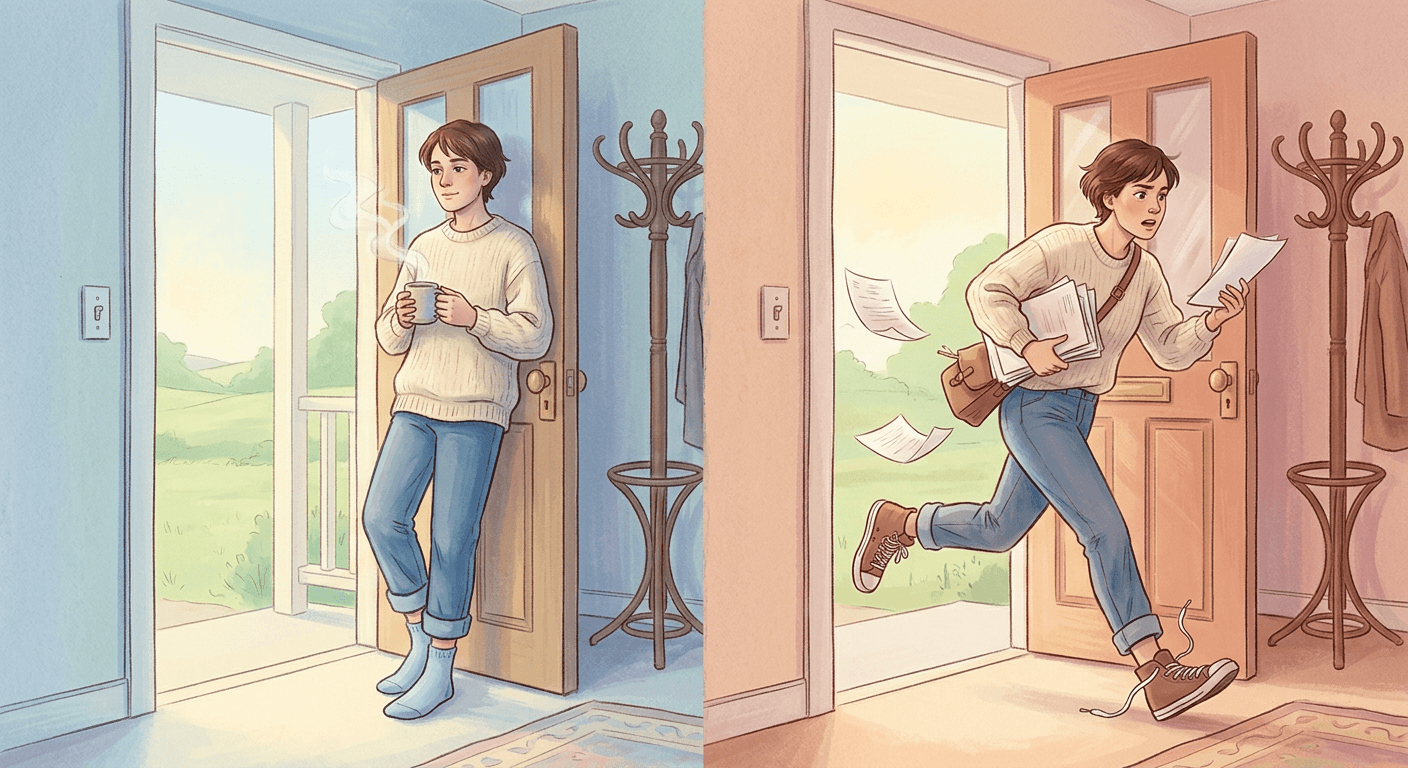
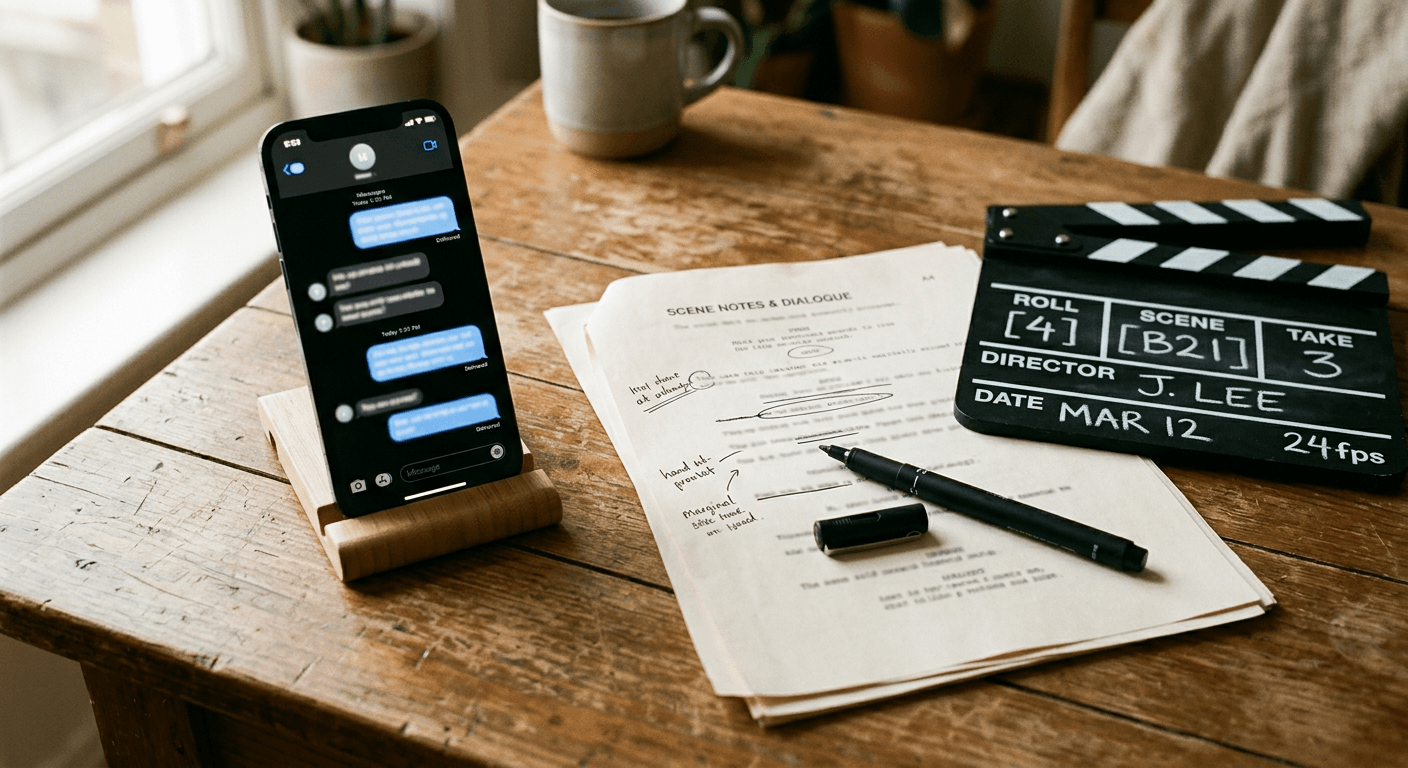
18 AI Prompts for the 'Saxophones Are Getting Louder' Trend (Copy & Paste)

Written by
Aerin Kim
The 'saxophones are getting louder' trend turns ordinary moments into cinematic doom with one audio cue. Here are 18 AI image and video prompts, grouped by category, to recreate the effect.
It started with a scene most people had not thought about in years. In Boyz n the Hood, the character Ricky, a high school running back with a real shot at a way out, gets chased down by rival gang members while a dramatic saxophone-heavy score builds underneath him, right before he is shot in the street. That musical cue, brassy, mournful, and unmistakable once you have heard it, has become the internet's shorthand for "something bad is about to happen," and creators are using it to soundtrack everything from missed emails to genuinely tense real-life moments.
The trend traces back to TikTok creator @foreverhumblemarc96, whose video captioned "POV: You in a 90s hood movie about to move out the trenches but you hear them saxophones going crazy so you know you finna get slimed" picked up roughly 800,000 views within about a week of posting. The clip first started circulating around December 2025, and it has held on far longer than most audio memes, still showing up constantly on TikTok and Instagram Reels through August 2026. Yahoo Entertainment, AOL, and Dictionary.com have all covered the format as it spread, which is part of why the phrase itself is now showing up in slang glossaries alongside the meme.
What makes the trend so reusable is the structure underneath it. A creator sets up something completely ordinary, a slow morning, a text left on read, a project that seemed fine, then cuts hard into the saxophone cue to signal that doom is arriving, whether the actual payoff is a genuine disaster or just a mildly annoying inconvenience played for maximum drama. That structure, calm setup into an ominous musical sting, is exactly the kind of visual beat that AI image and video generation is good at producing on demand, since the whole joke lives in lighting, framing, and timing rather than in any specific real footage.
Below are 18 ready-to-use prompts built around that structure, grouped into five categories: ominous buildup shots, freeze-frame doom moments, before-and-after contrast pairs, cinematic mock-trailer stills for the meta and parody angle, and a couple of prompts built around the saxophone cue itself as a visual motif. The image prompts are written for the AI Image Generator in Miraflow AI, and the video prompts are written for the Cinematic AI Video Generator in Miraflow AI, which handles the camera movement and tonal shift this trend depends on far better than a static image can.
1) Ominous Buildup Shots
This first group covers the setup: the seconds right before the saxophones kick in, where lighting, pacing, and framing all need to telegraph that something is about to go wrong, even though nothing has happened yet.
Prompt 1: Slow dolly-in down an empty hallway toward a closing door
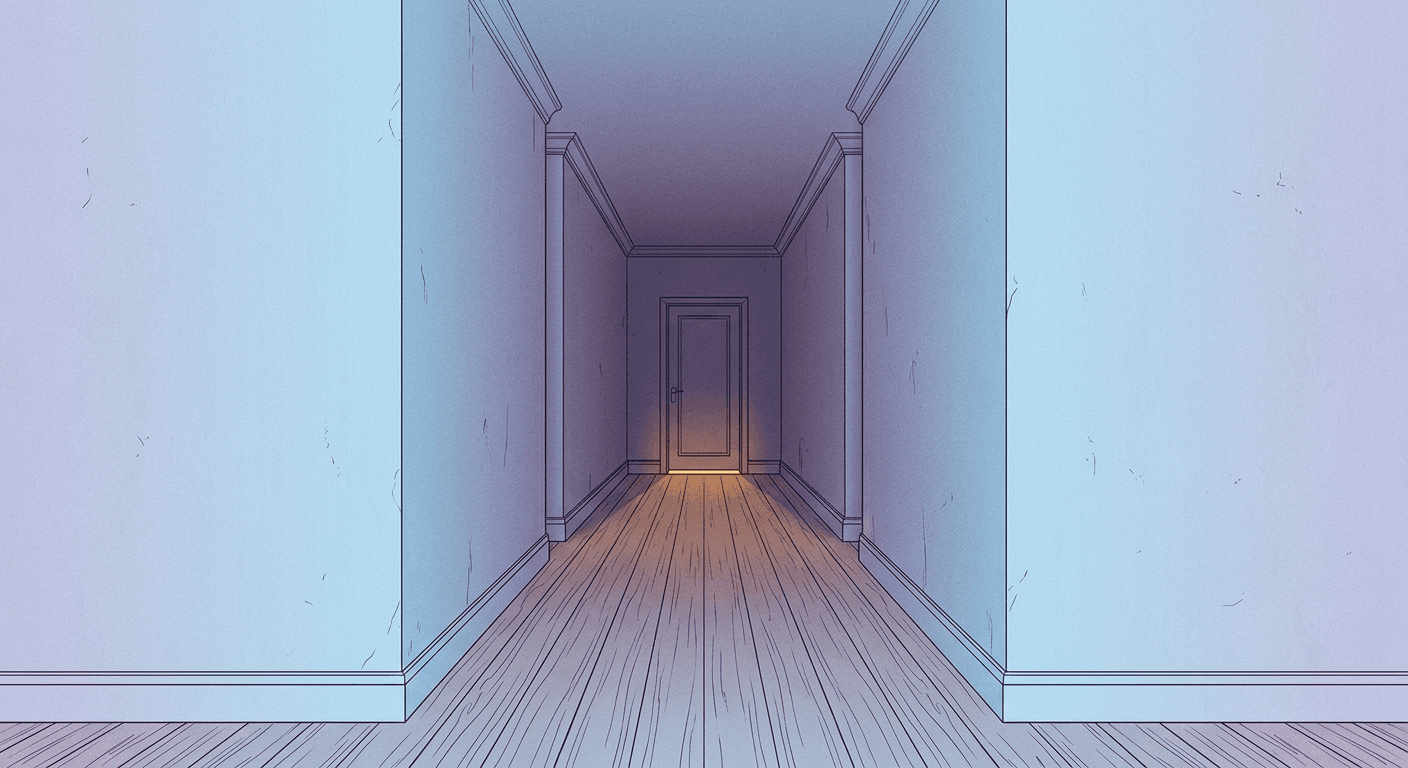
Slow cinematic dolly-in shot moving steadily down the center of a long empty hallway toward a single closed door at the far end, camera held perfectly level, warm dim amber light spilling from beneath the door growing very slightly brighter as the camera approaches, ambient light dimming subtly at the edges of the frame as the shot progresses, no music cue in the description itself, pacing slow and deliberate, four to five seconds, ending on a tight frame of the door before any cut.
Prompt 2: Long shadow stretching across pavement at golden hour
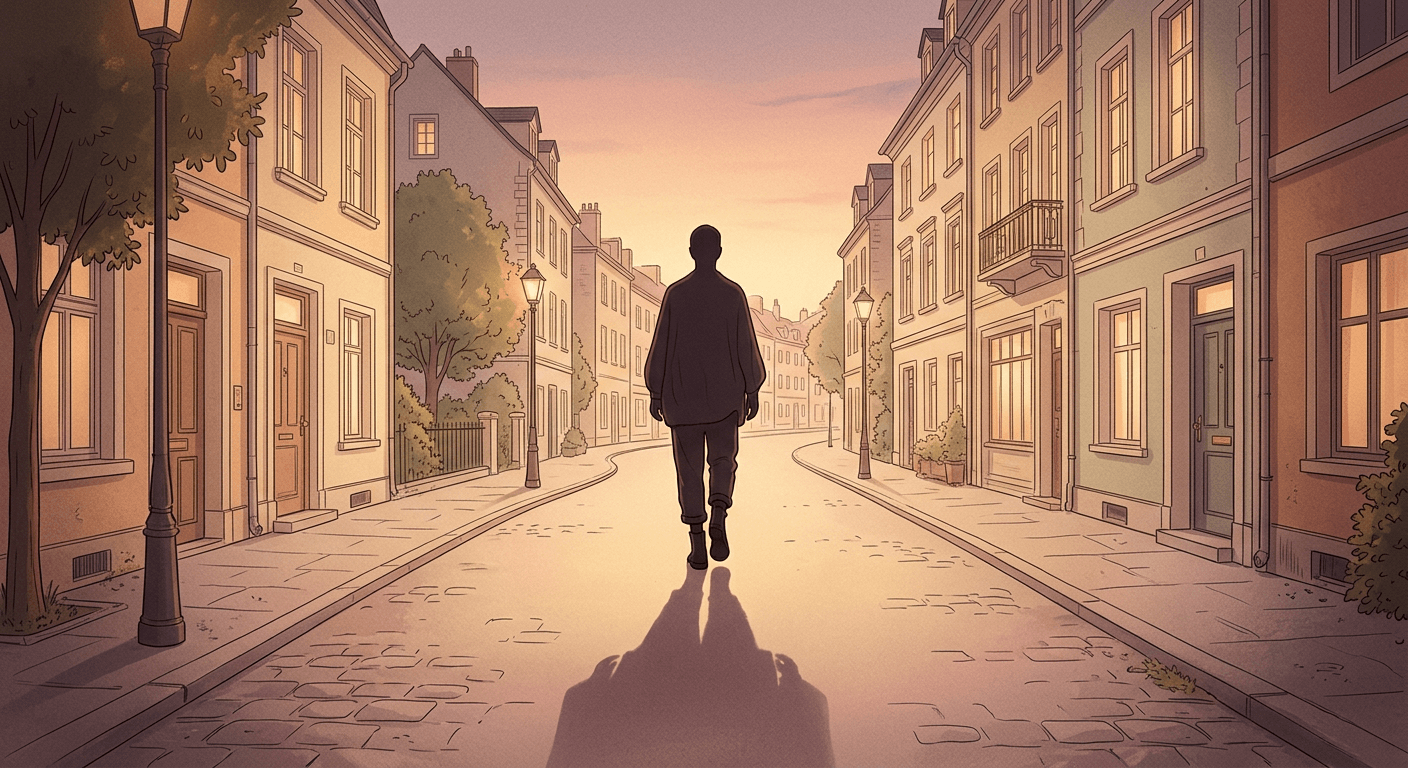
Static wide shot of a quiet street at golden hour, an ambiguous silhouetted figure walking calmly toward the camera from the far background, their shadow stretching unnaturally long behind them across the pavement as the light shifts from warm gold to a cooler dusky tone over the course of the shot, gender-neutral clothing with no distinguishing features, no visible face detail, slow steady pacing, subtle building tension through the changing light alone.
Prompt 3: Phone screen filling with notifications as the room dims
Close-up shot of a phone screen resting on a table, notification bubbles appearing one after another in quick succession, the ambient room light behind the phone dimming steadily from warm and even to shadowed and uneven as more notifications stack up, camera holding a static frame the entire time, no readable notification text, pacing accelerating slightly as the shot continues, ending on a screen full of stacked alerts.
Prompt 4: Distant figure jogging as storm clouds roll in
Extreme wide static shot of an open field or empty street, a single distant figure jogging steadily toward the camera, storm clouds visibly rolling and darkening across the sky behind them over the course of the shot, warm ground-level light gradually cooling into a flat gray-blue tone, no visible facial detail on the distant figure, slow deliberate pacing, ambient tension building purely through the changing sky and light.
Run the video prompts in this group through Miraflow's Cinematic AI Video Generator first, since the slow camera movement is what actually sells the dread, a still image of the same scene reads as calm rather than ominous without that motion.
2) Freeze-Frame Doom Moments
This is the actual punchline of the trend, the frozen instant right as the saxophones peak, where the video seems to pause on the worst possible moment before whatever happens next. These prompts are built for that exact beat.
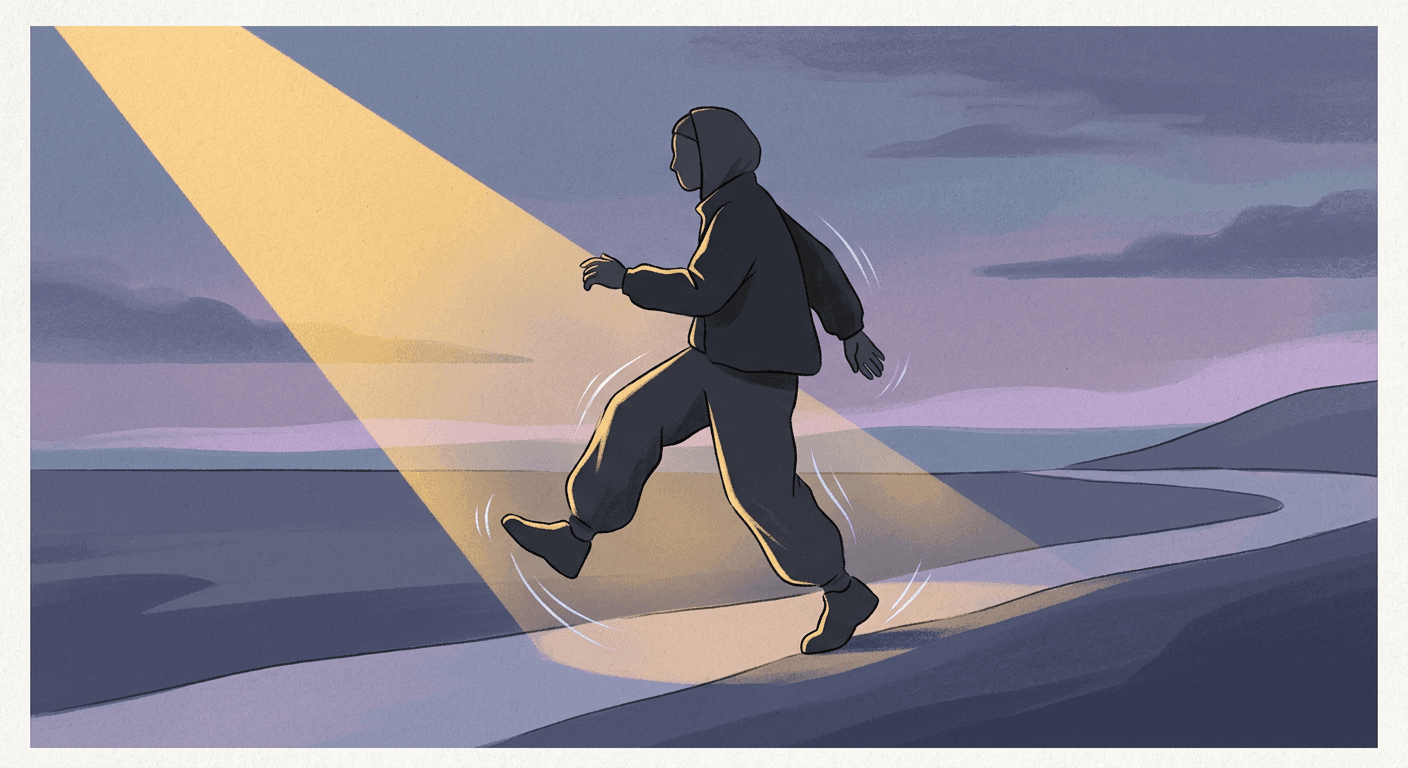
Prompt 5: Mid-step freeze with one foot still off the ground
A single ambiguous silhouetted figure caught in a hard freeze-frame mid-stride, one foot lifted just off the ground, gender-neutral clothing with no distinguishing features, sharp dramatic side lighting cutting a clean diagonal beam of warm light across an otherwise shadowed background, subtle motion-blur trail behind the raised foot suggesting the frame has just stopped rather than a fully static pose, high contrast, cinematic framing.
Prompt 6: Extreme close-up freeze on a hand stopped mid-reach
Extreme close-up freeze-frame on a single hand stopped mid-reach toward an object just out of frame, fingers slightly spread, dramatic rim lighting outlining the hand against a dark blurred background, warm key light on the skin fading into cool shadow at the edges, sharp focus on the hand itself with everything else softly out of focus, high contrast, cinematic still-frame composition, no visible face.
Prompt 7: Whip-pan freeze video, camera snapping around mid-motion
Fast cinematic whip-pan shot, camera snapping rapidly from a wide establishing angle to a tight close framing on a single subject mid-motion, motion blur streaking horizontally during the pan itself, landing hard on a crisp freeze-frame the instant the pan completes, warm even lighting shifting to a single dramatic side light exactly on the landing frame, one to two seconds total, sharp hard stop with no easing on the final frame.
Prompt 8: Dropped object frozen mid-fall with shattering debris
A single object, a mug or a small book, frozen mid-fall in the air with visible shattering fragments and droplets suspended around it, dramatic side lighting catching the falling debris against a plain dark shadowed background, sharp focus on the falling object and fragments, subtle motion-blur trailing above it to suggest the drop just happened, high contrast, cinematic still-frame composition, no readable text on the object.
For the whip-pan prompt specifically, generate it through the Cinematic AI Video Generator in Miraflow AI, since a whip-pan that lands on a hard freeze is a camera move that only reads correctly as actual video, not a single still frame.
3) Before/After Contrast Pairs
The trend often works best as a direct contrast, an ordinary calm version of a moment shown right next to, or right before, the saxophone-drenched doom version of the same exact moment. These four prompts are built to be generated as literal pairs.
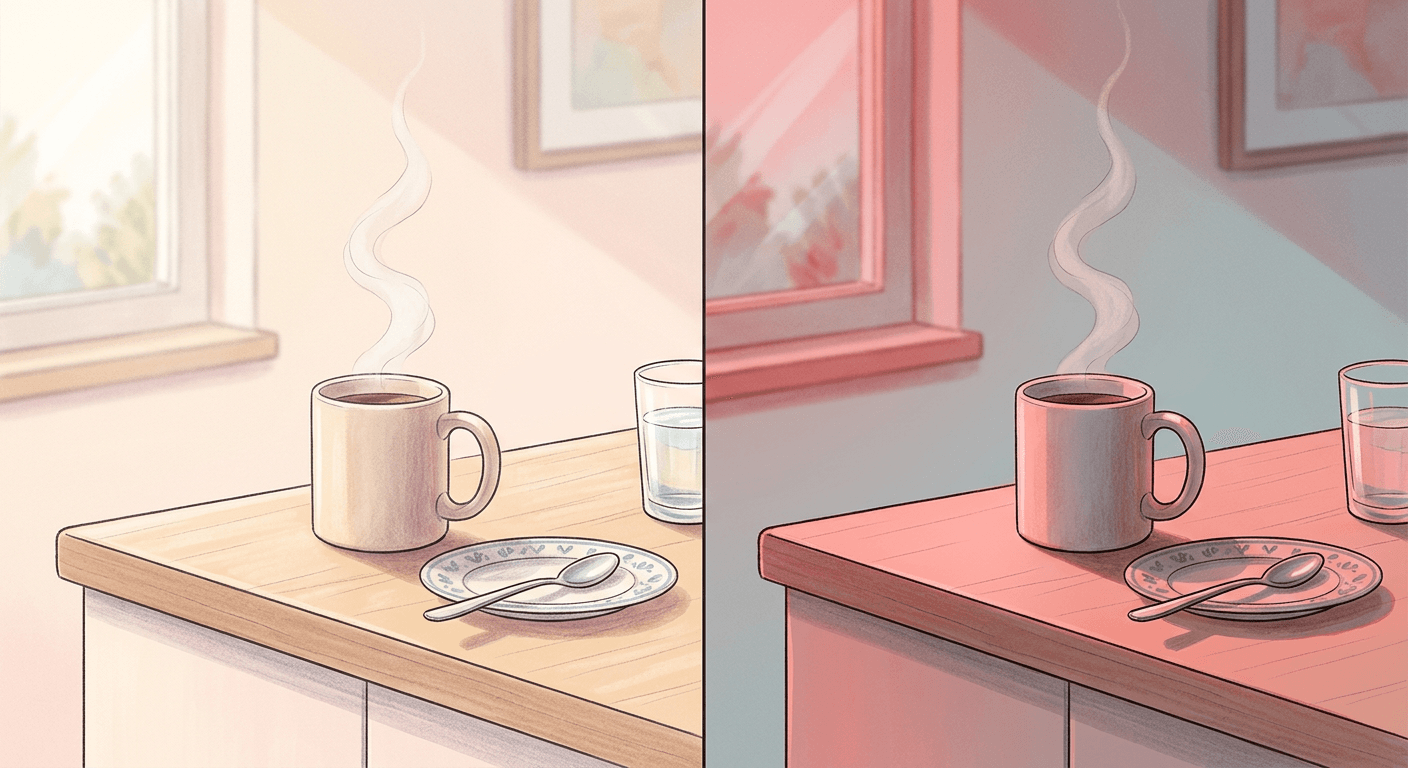
Prompt 9: Split composition, calm morning routine versus the same scene in red alert lighting
Split-frame composition divided by a thin vertical line, left half showing a calm kitchen counter with a coffee mug under warm even morning light, right half showing the identical counter and mug under harsh cool red-tinted alarm lighting with sharper shadow edges, both halves matching exactly in camera angle, framing, and object placement so only the lighting and mood differ, no people, no readable text.
Prompt 10: Video pair, three seconds of mundane scrolling hard-cutting into slow motion dread
Three-second handheld-style shot of a phone screen being scrolled casually under warm even indoor light, calm unhurried pacing, then a hard instant cut with no transition into a slow-motion shot of the same hand and phone under cold blue-red alarm lighting with dramatic side shadows, the scrolling motion suddenly reading as slow and heavy, sharp tonal snap exactly on the cut, no readable on-screen text.
Prompt 11: Tidy desk illustration beside the same desk swallowed in dramatic shadow
Diptych composition showing the same desk twice side by side, left version tidy and evenly lit under soft warm daylight with a small plant and a closed laptop, right version identical in layout but swallowed in deep dramatic shadow with a single narrow beam of cool light cutting across it, both versions matching exactly in camera angle and object placement, no people, no readable text, no logos.
Prompt 12: Video, an ordinary walk to the mailbox that hard-cuts into slow-motion trailer framing
Calm three-second static shot of a person's hand opening a mailbox under warm ordinary daylight, unhurried pacing, then a hard instant cut into slow-motion cinematic trailer framing of the same hand pulling out an envelope, camera now at a slight low angle with a subtle push-in, cooler dramatic lighting and shallow depth of field, sharp tonal shift exactly on the cut, no readable text on the envelope.
Generate the calm half and the doom half from the same base scene, since keeping the composition otherwise identical is what makes the contrast land, exactly the kind of consistent-scene work the AI Image Generator in Miraflow AI handles well when you reuse the same prompt with only the lighting and mood details changed.
4) Cinematic Mock-Trailer Stills (Meta and Parody Angle)
A big share of this trend now leans fully into parody, staging something completely mundane, folding laundry, waiting for a microwave, with the full over-the-top visual language of a movie trailer. These prompts are built for that meta, self-aware version of the joke.

Prompt 13: Mock movie poster staging, dramatic silhouette on a rain-soaked sidewalk
Dramatic mock movie-poster style composition, a single ambiguous silhouetted figure standing on a rain-soaked sidewalk at night, gender-neutral coat silhouette with no distinguishing features, wet pavement reflecting a single overhead streetlamp, exaggerated volumetric light beam falling from above like a spotlight, deep moody blue and amber color grading, cinematic vertical composition, no readable poster text, no logos, no real actors depicted.
Prompt 14: Video, laundry folding shot like an action movie trailer with lens flare and a slow push-in
A pile of laundry being folded on a bed, shot and lit exactly like a big-budget action movie trailer, dramatic low-angle slow push-in on the hands folding a single shirt, exaggerated warm lens-flare glow crossing the frame, deep contrasty shadow in the background, deliberately overwrought pacing for a completely mundane task, two to three seconds, ending on a tight dramatic close-up of the folded shirt.
Prompt 15: Spotlight cone illustration over an ordinary household object, staged like a heist reveal
A single ordinary household object, a stapler or a coffee mug, placed alone on a plain dark surface, lit from directly above by one exaggerated hard spotlight beam like a heist-movie reveal shot, everything outside the beam falling into deep shadow, faint dust particles visible drifting through the light, high contrast, cinematic still-frame composition, no readable text or logos on the object.
Prompt 16: Video, exaggerated slow-motion turn away from a beeping oven timer as if defusing a bomb
Close shot of an oven timer counting down and beeping steadily under plain warm kitchen light, then an exaggerated slow-motion turn as a figure's hand pulls back from the oven and their body pivots away, camera doing a slight low-angle push during the turn, dramatic side lighting suddenly cutting across the frame as if defusing a bomb, deliberately overwrought pacing, no visible face, no readable text on the timer display.
These mock-trailer prompts get funnier the more mundane the actual stakes are, so pick the smallest, most boring real inconvenience you can think of and let the staging do all the work. Once the visuals are ready, Text2Shorts in Miraflow AI can turn the setup and punchline into a fully paced short with the tonal shift timed against the cut.
5) Saxophone Cue Visual Motifs
The last two prompts are built around the actual sound cue itself, giving creators a visual stand-in for the saxophone sting that works even in a silent preview or a thumbnail, where the audio is not playing yet.
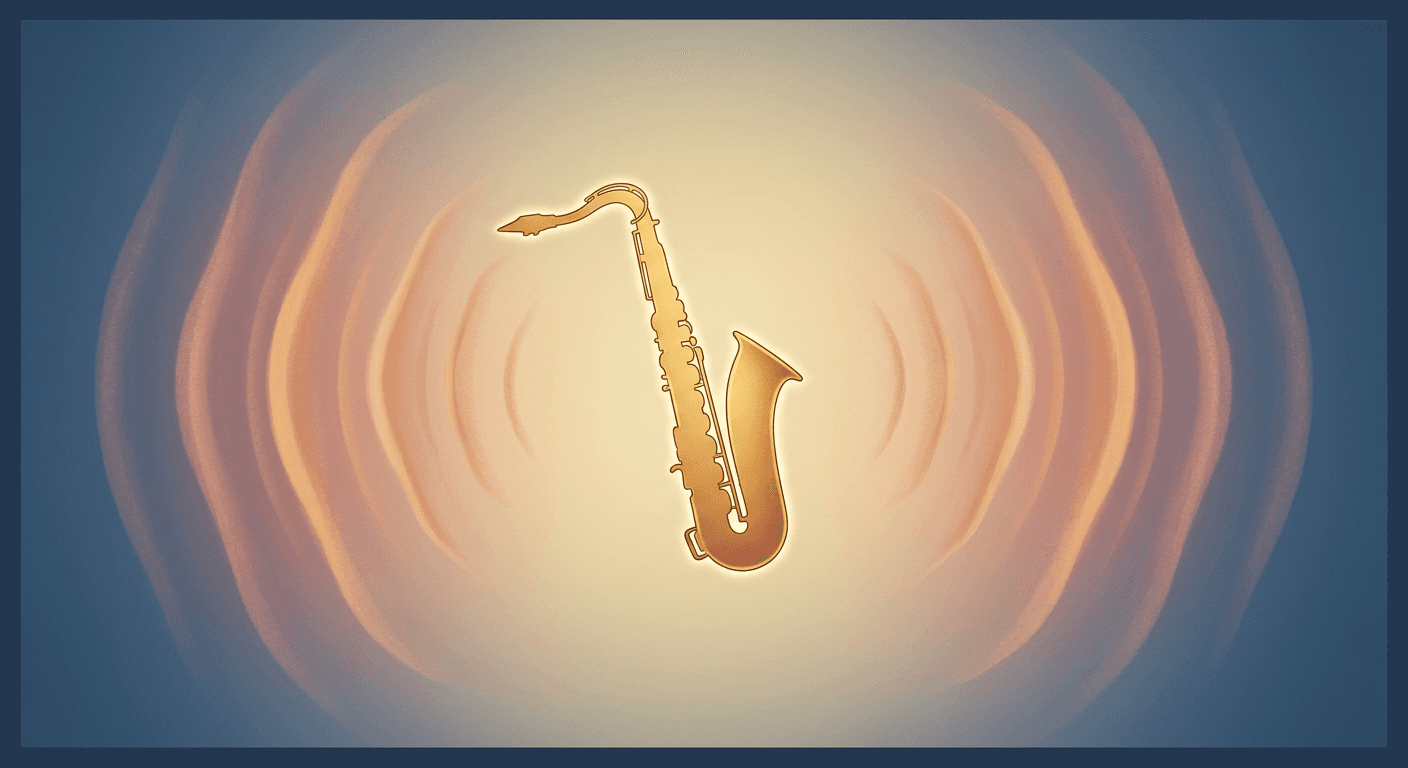
Prompt 17: Golden saxophone silhouette with sound-wave rings bursting from a speaker shape
A simple golden saxophone silhouette shown in profile, bold sound-wave rings bursting outward from its bell in warm amber and rose tones, background shifting from bright warm gold near the instrument to deep dusky blue at the edges of the frame, clean bold shapes, gentle glow around the sound-wave rings, high contrast, editorial illustration style composition, no readable text, no logos.
Prompt 18: Video, rippling sound-wave rings pulsing outward as the whole scene darkens
Concentric sound-wave rings pulsing steadily outward from a small golden saxophone silhouette held at the center of a static frame, each pulse growing larger and slightly softer at the edges, warm amber lighting across the whole scene gradually cooling and darkening toward deep dusky blue as the pulses continue, steady rhythmic pacing across three to four seconds, ending on the darkest, most dramatic version of the lighting.
Both of these work well as a quick opening or closing beat, a couple of frames layered right at the moment the audio cue actually hits, which is a small detail that makes the edit feel more intentional than a plain hard cut alone.
How to Customize These Prompts
Swap in whatever mundane setup actually matches your own content niche instead of reusing a generic one. A cooking account gets more mileage out of a boiling pot or a burnt dish than a hallway shot, and a finance or productivity account gets more out of an inbox or a spreadsheet than a rain-soaked street. The trend's structure, calm setup into an ominous cut, stays the same, only the specific object or scene needs to change.
Keep the lighting shift dramatic rather than subtle. The prompts above call for a hard change, warm and even in the calm half, cool or red-tinted and high contrast in the doom half, since a gradual mood shift undersells the joke compared to the sudden tonal snap the original trend is built around.
For the video prompts specifically, describe the camera movement explicitly rather than leaving it implied. "Slow push-in," "whip-pan," and "hard cut" are the three moves doing most of the work in this trend, and naming the exact move in the prompt gets a far more usable result out of the Cinematic AI Video Generator in Miraflow AI than a vague description of the mood alone.
Common Mistakes Creators Make
- Making the tonal shift too gradual. The saxophones cue is sudden by design, so a slow fade between calm and ominous undercuts the exact beat the trend depends on.
- Skipping the freeze-frame entirely. A lot of versions of this trend live or die on that one frozen instant right before the cut, not just the before and after.
- Using stakes that are too high or too low. The funniest versions of this trend treat something genuinely minor, like a forgotten email, with wildly disproportionate dramatic weight. Going for real danger instead of a mundane inconvenience usually reads as trying too hard.
- Forgetting the contrast half. A doom shot on its own is much weaker than a doom shot placed right against the calm version of the same exact scene.
- Overcomplicating the composition. The strongest examples of this trend keep the frame simple, one clear subject, one clear lighting shift, rather than a busy scene with too much competing for attention right as the cut lands.
Where to Generate These
The AI Image Generator in Miraflow AI covers every still prompt in the groups above, including image-to-image work if you want to build the calm and doom halves of a contrast pair from the same base scene. For anything involving camera movement, the slow push-ins, whip-pans, and hard cuts that make the freeze-frame and mock-trailer prompts actually work, use the Cinematic AI Video Generator in Miraflow AI, which supports the kind of deliberate, described camera motion this trend depends on. Once you have a setup shot and a doom shot, Miraflow's Text2Shorts can assemble the whole thing into a paced vertical short with the cut timed against the moment the audio hits.
This trend sits in good company with a few other audio-and-cut driven formats we have covered, including the I Never Told You This But trend prompts, the how different our lives are trend prompts, and the ChatGPT make us a script TikTok trend, all of which lean on a similar setup-and-cut structure. If character or costume work fits your version of this trend better than a plain contrast shot, our Italian brainrot character prompts and AI action figure and toy box prompt pack are both worth a look. For the visual texture side of things, the anti-AI film grain prompts pair naturally with the 90s film aesthetic this trend borrows from, and the decade progression prompts cover a related period-accurate look if you want the whole scene, not just the lighting, to feel like it belongs in a 90s movie. If you would rather build a tiny staged version of the doom scene instead of a full-size one, the miniature diorama prompts are a fun variation worth trying. You can browse every prompt pack like this one on the Miraflow AI blog, and every tool named above lives at miraflow.ai.
Frequently Asked Questions
Where does the "saxophones are getting louder" trend actually come from? It comes from Boyz n the Hood, specifically the scene where Ricky is chased through the street by rival gang members while a saxophone-heavy score builds right before he is shot. Creators use that musical cue as shorthand for impending doom, applied to situations that range from genuinely tense to completely mundane.
Who started the current wave of the trend? TikTok creator @foreverhumblemarc96 is widely credited with the video that pushed the format into wide circulation, a POV clip captioned about being in a "90s hood movie" right before "them saxophones" start going. It picked up around 800,000 views within about a week of posting, and the format has kept spreading since, still active on TikTok and Instagram Reels through August 2026.
Do I need to reference the actual movie scene in my content? No. Most creators using this trend never show or reference the film directly. The trend is really about the structure, an ordinary setup cut hard into an ominous musical sting, applied to your own situation rather than a recreation of the original scene.
Is this trend better suited to comedy or genuinely tense content? Both, and that flexibility is a big reason it has lasted. The comedic version plays disproportionate dramatic weight against a minor inconvenience, while the tense version uses the same structure for a genuinely dramatic reveal. Either direction works with the same prompt groups above, just adjust the stakes of the setup.
What is the difference between the freeze-frame prompts and the before/after prompts? The freeze-frame group is built for a single frozen instant right at the peak of the cue, while the before/after group is built as a literal pair, a calm version of a scene shown against a doom version of the same scene. Many finished videos in this trend actually use both, a calm setup, a freeze-frame right at the cut, then the doom reveal.
Can I make the video version of these prompts without any real footage of myself? Yes. Every prompt in this pack is written to work as pure AI-generated image or video content, no camera or footage required, which is part of why the format has been so easy for creators to scale once AI video and image tools handle the camera movement.
Conclusion
The "saxophones are getting louder" trend has stuck around since December 2025 because the structure underneath it is genuinely flexible, an ordinary setup cut hard into a dramatic musical sting works for a forgotten email just as well as it works for something with real stakes. The 18 prompts above cover the full arc of that structure, the ominous buildup, the frozen doom moment, the direct before-and-after contrast, the fully parodic mock-trailer version, and the sound cue itself as a visual motif. Start with the smallest, most mundane real setup you can find, keep the tonal shift sudden rather than gradual, and let the camera movement do the work in the video prompts, and this is one of the more durable audio-meme formats to build a whole series around right now.