Social Media Marketing Strategy for Small Businesses (2026 Guide)

Written by
Jay Kim

A complete social media marketing strategy for small businesses in 2026. Covers platforms, content formats, posting schedules, AI tools, and common mistakes to avoid.
If you run a small business and feel like your social media efforts are going nowhere, you are not alone. Most small businesses post inconsistently, use the wrong formats, and spend hours creating content that barely gets seen.
The problem is not that social media does not work for small businesses. The problem is that most small businesses approach social media the same way they did in 2020. The platforms have changed. The algorithms have changed. What audiences expect from brands has changed.
This guide breaks down a complete social media marketing strategy for small businesses in 2026. It covers which platforms to prioritize, what content formats actually perform, how to create content without a full production team, and how to build a system that runs without burning you out.
Why Social Media Marketing Looks Different for Small Businesses in 2026
The biggest shift in 2026 is that every major platform now prioritizes short-form video. Instagram, YouTube, TikTok, and even LinkedIn push video content more aggressively than static posts. For small businesses, this means the old approach of posting a photo with a caption twice a week simply does not generate the reach it once did.
At the same time, audiences have become more selective. They scroll faster, engage less with generic brand content, and respond more to content that feels authentic, useful, or entertaining. The bar for attention is higher, but the opportunity is also bigger. Small businesses that learn to create the right content consistently can reach thousands of potential customers without spending a dollar on ads.
The other major change is the availability of AI tools. What used to require a videographer, designer, and editor can now be handled by a single person using browser-based tools. This levels the playing field significantly for small businesses that cannot afford a dedicated marketing team.
Choosing the Right Platforms for Your Business
One of the most common mistakes small businesses make is trying to be active on every platform at once. This leads to thin, inconsistent content across five channels instead of strong, focused content on two.
The better approach is to pick two platforms maximum and go deep. Your choice should be based on where your target customers actually spend time, not where you personally spend time.
For local service businesses like restaurants, salons, fitness studios, and repair shops, Instagram and TikTok tend to perform best. Visual content drives discovery, and location-based features help you reach nearby audiences. For B2B businesses, consultants, and professional services, LinkedIn and YouTube are stronger choices. For e-commerce and direct-to-consumer brands, TikTok and YouTube Shorts offer the highest organic reach potential in 2026.
The key insight here is that you do not need to be everywhere. You need to be consistent and effective in one or two places. Once you build momentum on your primary platform, expanding to a second one becomes much easier because you can repurpose content.
The Content Formats That Actually Work in 2026
Static image posts still have a place, but they should not be your primary format. In 2026, the formats that generate the most organic reach for small businesses fall into a few categories.
Short-form vertical video is the highest-reach format across every major platform. This includes YouTube Shorts, Instagram Reels, and TikTok videos. These videos are typically 15 to 60 seconds long, filmed or generated in 9:16 aspect ratio, and designed to hook viewers in the first few seconds. If you are not creating short-form video yet, this is the single biggest change you can make to your strategy.
The first three seconds of any short-form video determine whether someone keeps watching or scrolls past. For small businesses, this means starting with a strong visual or statement rather than a slow logo intro or greeting.
Carousel posts work well on Instagram and LinkedIn for educational or step-by-step content. They encourage swipes, which signals engagement to the algorithm. Product showcases, before-and-after transformations, tip lists, and mini tutorials all perform well as carousels.
Stories remain important for maintaining daily visibility with your existing audience. They do not drive discovery the way Reels or Shorts do, but they keep your brand top of mind for people who already follow you.
Long-form video on YouTube serves a different purpose entirely. It builds trust, answers detailed questions, and drives search traffic over time. If your business benefits from education-based marketing, such as explaining how your service works or showing detailed product demos, YouTube long-form is worth investing in alongside Shorts.
Building a Content Strategy That Does Not Require a Team
The reason most small businesses fail at social media is not a lack of ideas. It is a lack of a repeatable system. When content creation depends on inspiration and free time, it happens inconsistently. And inconsistency is what kills social media growth.
A better approach is to build a simple content system around three pillars: a content calendar, a set of repeatable formats, and a production workflow you can actually maintain.
Your content calendar does not need to be complicated. Start by choosing how many times per week you will post. For most small businesses, three to five posts per week is a sustainable target. Assign each day a content type. For example, Monday could be a tip or educational post, Wednesday could be a behind-the-scenes video, and Friday could be a product showcase or customer story.
Repeatable formats are the key to speed. Instead of inventing something new every time, create three to five content templates that you rotate through. A template might be a 30-second video where you answer a common customer question, or a before-and-after carousel, or a quick product demo. Once you have these templates, creating content becomes a matter of filling in the details rather than starting from scratch.
For production, the goal is to remove as many bottlenecks as possible. Batch filming is one approach. Set aside two to three hours once a week to film all your content for the next seven days. This is more efficient than trying to create something every day.
AI tools offer another path entirely. Instead of filming, you can generate short-form videos from a topic or script. Tools like Text2Shorts let you enter a topic, and the system generates a complete vertical video with script, visuals, voiceover, and pacing. This is especially useful for businesses that want to post daily but cannot film daily.
7 Social Media Content Ideas for Small Businesses
Coming up with content ideas is one of the biggest time sinks for small business owners. Here are seven proven content types that work across industries and platforms.
Answer a common question. Think about the questions customers ask you most often. Each one is a piece of content. Film a 30-second answer or create a short explainer video. These perform well because they address real search intent, and viewers who find them useful are likely to follow for more.
Show your process. People are curious about how things are made, prepared, or done. A bakery can show bread being shaped. A mechanic can show a repair in progress. A consultant can walk through their workflow. Process content feels authentic and builds trust.
Share a customer result or testimonial. Social proof drives purchasing decisions. A simple before-and-after post, a screenshot of a positive review, or a short video of a happy customer is more persuasive than any ad copy.
Teach something small. Offer a quick tip related to your industry. A fitness studio can share a 20-second stretch routine. A skincare brand can explain how to layer products. A financial advisor can share a tax-saving tip. Educational content positions you as an expert and generates saves and shares.
Go behind the scenes. Show the real side of your business. Packing orders, setting up for the day, team meetings, even the messy moments. This humanizes your brand and builds connection.
React to a trend or news in your industry. When something relevant happens in your space, give your take. This positions you as current and informed. Keep it short and opinionated.
Feature your product in context. Instead of just showing a product on a white background, show it being used. A coffee brand can show someone making their morning cup. A clothing brand can show an outfit styled for a specific occasion. Context makes products feel relevant.
How to Create Social Media Visuals Without a Designer
Visual quality matters on social media, but that does not mean you need a professional designer. In 2026, AI image generation tools handle most of what small businesses need.
For social media graphics, promotional images, and even blog visuals, you can describe what you want in a text prompt and generate a polished image in seconds. The AI image generator in Miraflow AI supports text-to-image generation, image editing, and even inpainting, where you can mask a specific part of an image and replace just that area.
For example, if you have a product photo but want to change the background to something more seasonal or eye-catching, you can upload the image and describe the new background. The tool handles the rest.
For YouTube thumbnails and social media cover images, the YouTube thumbnail maker lets you generate professional-looking thumbnails from a prompt. While it is designed for YouTube, many small businesses use it to create social media visuals, blog thumbnails, and promotional graphics as well.
The important thing is consistency. Having a recognizable visual style across your posts helps people identify your brand in the feed. This means using similar colors, compositions, and image styles. You can achieve this by keeping a consistent thumbnail and visual style using AI, which applies the same principles whether you are creating thumbnails or social media images.
Using Short-Form Video as Your Primary Growth Channel
If you had to pick one format to focus on in 2026, short-form vertical video would be the answer. The reach potential for Shorts, Reels, and TikToks is significantly higher than any other organic format.
For small businesses, short-form video serves multiple purposes at once. It drives awareness by reaching new people who have never heard of your business. It builds familiarity through repeated exposure. And it can drive direct action when paired with clear calls to action.
The AI Shorts formats that tend to go viral in 2026 include question-and-answer formats, before-and-after transformations, step-by-step tutorials, and trend reactions. These formats are not limited to personal creators. Small businesses can adapt every one of them.
A restaurant could create a 20-second Reel showing a dish being plated, set to trending audio. A real estate agent could create a 30-second Short walking through a listing. A fitness coach could create a 15-second Reel demonstrating a single exercise with a tip.
The production does not need to be expensive. Many successful small business Shorts are filmed on smartphones. And for businesses that want to produce Shorts without filming at all, AI generation tools can create entire videos from a single topic prompt. You enter what the video should be about, and the tool generates the script, visuals, voiceover, and final edit automatically.
Social Media Advertising on a Small Budget
Organic reach is powerful, but pairing it with even a small advertising budget can accelerate results significantly. The good news is that social media advertising in 2026 rewards relevance and quality over budget size.
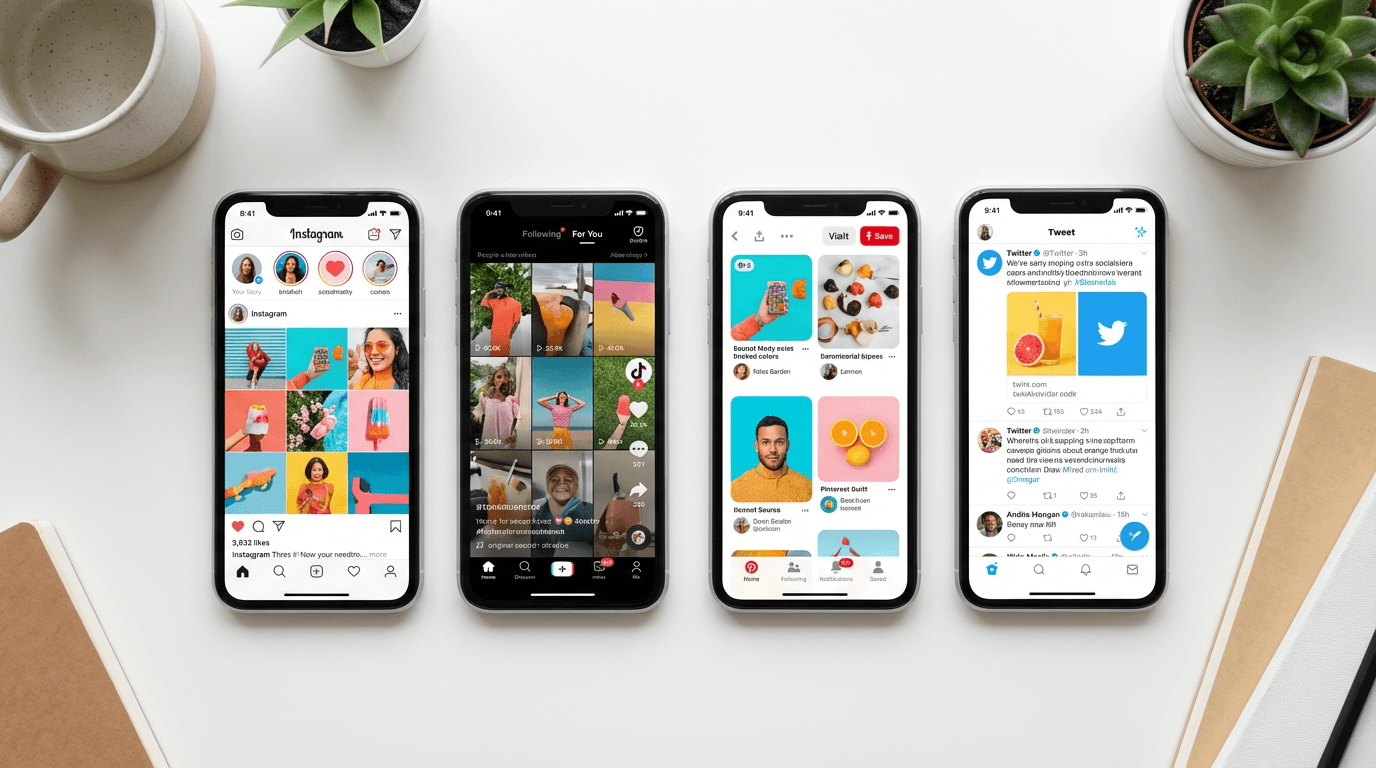
The most effective approach for small businesses is to create content organically first, identify which posts perform best, and then put ad spend behind those winners. This is cheaper and more effective than creating ads from scratch, because you already know the content resonates with your audience.
On Instagram and Facebook, boosting a high-performing Reel or post for as little as five to ten dollars per day can significantly expand its reach. On YouTube, promoting a Short that already has strong retention can bring in new subscribers at a low cost per view.
The key metric to watch is not impressions or reach. It is the action rate, meaning how many people took the next step after seeing your content. That could be visiting your profile, clicking your website link, sending a message, or making a purchase. If your ad spend is generating actions, it is working. If it is only generating views with no follow-through, the content or targeting needs adjustment.
For ad creative, the same visuals you create for organic content can often be repurposed. AI-generated product videos work well as ads, especially for e-commerce businesses. Cinematic product clips generated from prompts using Miraflow's cinematic video generator can serve double duty as both social media content and ad creative.
Building an Audience vs. Chasing Virality
One of the traps small businesses fall into is chasing viral moments instead of building a consistent audience. A single viral video can generate thousands of views, but if those viewers do not convert into followers or customers, the spike is meaningless.
The reason YouTube Shorts get views but no subscribers applies across all platforms. Views without follow-through happen when the content is entertaining but does not connect to your brand or give viewers a reason to follow.
For small businesses, the goal is not virality. The goal is building a loyal audience of potential customers who see your content regularly, trust your expertise, and think of you when they need what you sell.
This means every piece of content should either educate, entertain, or inspire in a way that is directly connected to your business. A fitness studio should not post meme videos about random topics just because they get views. Those views will not turn into memberships. A fitness tip video that gets fewer views but attracts the right audience is far more valuable.
Consistency is what builds audience. Posting regularly, even if each individual post does not perform spectacularly, compounds over time. The algorithm on every major platform rewards accounts that post consistently because consistent posting generates more data points for the recommendation system to work with.
Measuring What Matters: Social Media Metrics for Small Businesses
Vanity metrics like follower count and total likes can feel satisfying, but they do not tell you whether your social media efforts are actually driving business results.
The metrics that matter for small businesses are engagement rate, reach per post, profile visits, website clicks, and direct messages. These indicate whether your content is reaching new people, whether those people are interested enough to learn more, and whether that interest is converting into real business activity.
Engagement rate measures how many people interact with your content relative to how many see it. A post that reaches 500 people and gets 50 interactions is outperforming a post that reaches 5,000 people and gets 25 interactions. Higher engagement rates also tell the algorithm to show your content to more people.
Profile visits indicate curiosity. When someone visits your profile after seeing a post, it means the content interested them enough to want to know more. If your profile is optimized with a clear bio, contact information, and a link to your website or booking page, those visits can convert into customers.
Website clicks and direct messages are the closest thing to conversion that social media platforms track natively. If your posts are generating clicks and DMs, your content strategy is working.
Track these metrics weekly, not daily. Daily fluctuations are noise. Weekly trends show you whether your strategy is moving in the right direction.
Creating a Content Repurposing System
Creating content for social media does not mean creating something new for every platform. Repurposing is how small businesses maintain presence across multiple channels without multiplying their workload.

A single piece of content can be adapted into multiple formats. A 60-second Reel can become a YouTube Short and a TikTok with minimal editing. The script from that video can become an Instagram carousel or a LinkedIn text post. A key frame from the video can become a static post with a quote overlay.
The most efficient repurposing workflow starts with your highest-effort format, usually video, and breaks it down into simpler formats. Film one video, then extract shorter clips, pull quotes, and create static graphics from the same content. This gives you five to seven pieces of content from a single production session.
For businesses that use AI tools, the repurposing gets even more efficient. A single topic can generate a vertical Short through an AI tool, and the same topic can be turned into an AI-generated image for a static post. The AI image generator makes it easy to create matching visuals for the same content across different formats.
Adding Music to Your Social Media Content
Background music significantly affects how social media content performs. The right track sets the mood, increases watch time, and makes content feel more polished. The wrong track, or no track at all, can make the same content feel flat.
For small businesses, using copyrighted music is risky. Platforms can mute your video, restrict its reach, or even flag your account. Using trending audio from the platform's own library works for some formats, but it limits your creative control and does not translate across platforms.
AI-generated music solves this problem. You can create original tracks that match the mood of your content without any copyright concerns. The AI music generator in Miraflow AI lets you describe the style, mood, and instruments you want, and generates a track in under a minute. You can use it for Reels, Shorts, TikToks, and any other social media content without worrying about takedowns or restrictions.
For specific prompt ideas that work well for social media content, the AI music prompts guide for YouTube, Reels, and TikTok covers a range of styles from upbeat and energetic to calm and ambient.
Common Mistakes Small Businesses Make on Social Media
Understanding what not to do is just as important as knowing what works. Here are the mistakes that hold most small businesses back.
Posting without a plan. Random posting leads to random results. Without a content calendar and clear content types, your social media presence will feel scattered and your growth will stall.
Talking about yourself too much. Every post being a promotion or sales pitch pushes people away. The most effective ratio is roughly 80 percent value content, meaning education, entertainment, or inspiration, and 20 percent promotional content.
Ignoring video. If you are only posting static images in 2026, you are leaving the majority of potential reach on the table. Short-form video is not optional anymore. It is the primary distribution format on every major platform.
Being inconsistent. Posting five times in one week and then disappearing for three weeks signals to both the algorithm and your audience that your account is not active. Consistency beats intensity every time.
Not responding to comments and messages. Social media is a two-way channel. When someone comments on your post or sends you a message, they are raising their hand as a potential customer. Ignoring that interaction is like ignoring a customer who walks into your store.
Trying to be on every platform. Spreading yourself thin across five platforms produces mediocre results everywhere. Pick one or two, build momentum, then expand.
A Simple Weekly Social Media Schedule for Small Businesses
Here is a practical weekly posting schedule that most small businesses can sustain. Adjust the specifics to fit your industry and audience.

Monday: Educational post. Share a tip, answer a question, or explain something your customers often misunderstand. This works well as a short-form video or carousel.
Tuesday: Behind-the-scenes content. Show your process, your workspace, your team, or how you prepare for the day. This builds authenticity and connection.
Wednesday: Product or service feature. Highlight a specific product, service, or offer. Show it in context, explain its benefits, or share a customer result.
Thursday: Trend or industry reaction. Comment on something happening in your industry, share your perspective on a trend, or create a timely piece of content.
Friday: Customer story or social proof. Share a review, testimonial, case study, or user-generated content. End the week by letting your customers sell for you.
Saturday or Sunday (optional): Casual or personal content. Share something lighter, like a team photo, a weekend moment, or a fun fact about your business.
This schedule gives you five posts per week with clear variety. Each day has a purpose, which removes the daily question of what to post next.
How AI Tools Fit Into a Small Business Social Media Strategy
AI tools are not a replacement for authenticity. People follow small businesses because they connect with the people behind them. No AI tool can replicate that personal connection.
What AI tools can do is remove the production bottleneck. The part of social media that burns most small business owners out is not coming up with ideas. It is the time and effort required to turn those ideas into polished content. Writing scripts, creating graphics, editing videos, generating music, and designing thumbnails all take time that small business owners do not have.
This is where AI fits in. It handles the production steps so you can focus on the creative and strategic decisions. You choose the topics, the messaging, and the direction. The tools handle the execution.
Inside Miraflow AI, the entire content pipeline from idea to finished video, image, thumbnail, and music runs in the browser. You do not need separate tools for each step. You do not need design skills or video editing experience. The workflow is designed so that a single person can produce professional-quality social media content at a pace that used to require a team.
Conclusion
Social media marketing for small businesses in 2026 comes down to three things: choosing the right platforms, creating the right content, and showing up consistently.
Short-form video is the primary growth format. Visual quality matters but does not require a professional team. AI tools can handle production so you can focus on strategy and connection. And consistency always beats perfection.
Start with two platforms. Build a simple weekly schedule. Create three to five repeatable content formats. Use AI tools to speed up production. Measure what matters. Adjust based on results.
The businesses that grow on social media are not the ones with the biggest budgets. They are the ones that show up regularly with content that serves their audience. Everything else is a detail.