Instagram Reels Algorithm 2026: How It Works and How to Get More Views

Written by
Jay Kim
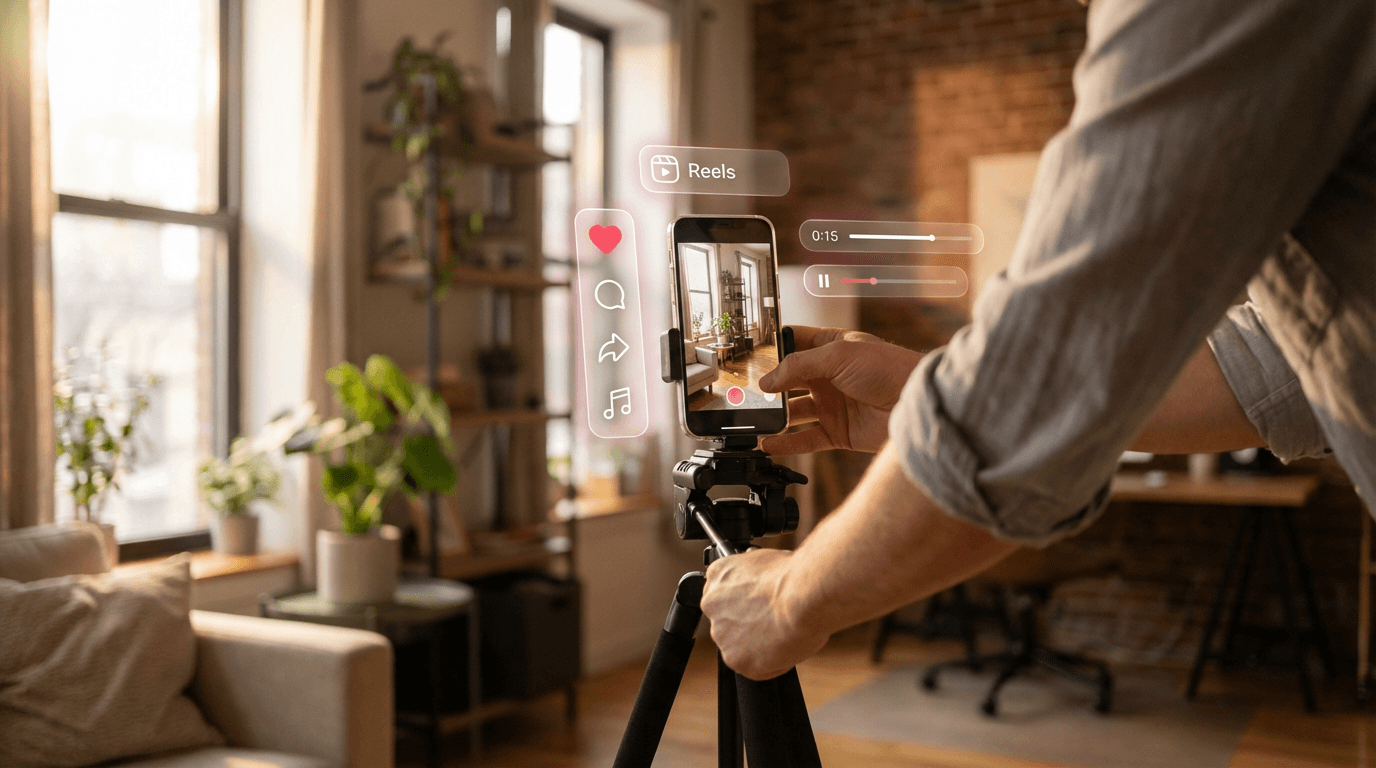
Most creators don't understand how Instagram actually decides which Reels to push. This guide breaks down the 2026 Reels algorithm stage by stage, explains the signals that matter most, and shares actionable strategies to get more views without burning out.
Instagram Reels have become the primary way new audiences discover creators on the platform. Whether you have 200 followers or 200,000, Reels give every creator a shot at reaching people who have never seen their content before.
But most creators don't actually understand how the Reels algorithm decides what to push and what to suppress. They post, hope for the best, and wonder why some Reels take off while others die with a few hundred views.
The algorithm is not random. It follows a specific evaluation process, relies on measurable signals, and rewards certain behaviors consistently. Once you understand how that system works, you can stop guessing and start creating Reels that the algorithm actually wants to distribute.
This guide breaks down exactly how the Instagram Reels algorithm works in 2026, what signals it prioritizes, why most Reels underperform, and what you can do to get more views starting today.
How the Instagram Reels Algorithm Works in 2026
The first thing to understand is that Reels have their own ranking system. Instagram does not evaluate Reels the same way it evaluates feed posts, Stories, or carousels. Each format has its own algorithm, and the Reels algorithm is specifically designed for discovery.
This means your Reel does not just compete with content from accounts your followers already follow. It competes with every other Reel being published at the same time, because the Reels tab and Explore page are designed to show people content from creators they have never seen before.
That is both the opportunity and the challenge. You do not need a big following to get reach. But you do need to create content that sends the right signals within a very short window.
The algorithm's job is simple: predict which Reels a specific viewer will enjoy, then show them those Reels. Everything Instagram measures is in service of that prediction.

The Signals Instagram Uses to Rank Reels
Instagram evaluates every Reel using a combination of behavioral signals. These are not weighted equally, and their importance has shifted over time. As of 2026, the most impactful signals are shares, watch-through rate, saves, and replay rate, roughly in that order.
Shares have become the single most important signal. When a viewer sends your Reel to someone via DM, Instagram interprets that as a strong endorsement. A Reel with a high share rate will almost always outperform a Reel with high likes but low shares, because sharing represents active distribution by the audience themselves.
Watch-through rate measures whether viewers watch your Reel all the way to the end. This is especially important for shorter Reels where completion is expected. If most viewers bail halfway through, the algorithm takes that as a sign the content is not holding attention.
Saves indicate long-term value. When someone saves a Reel, they are telling Instagram this content is worth returning to. Tutorials, tips, and reference-style content tend to accumulate saves, which can extend distribution over days or even weeks.
Replay rate measures whether viewers watch your Reel more than once. This is a powerful signal because it indicates the content was compelling enough to revisit, and it also increases total watch time per impression.
Beyond these primary signals, the algorithm also considers engagement rate (likes and comments relative to impressions), content relevance based on the viewer's interest graph, recency of the post, and whether the Reel uses trending audio. These secondary signals influence initial distribution, but the primary signals determine whether the Reel scales.
The interaction between these signals matters. A Reel with very high shares but mediocre watch-through rate can still get pushed heavily, because shares are weighted so strongly. Conversely, a Reel with perfect completion rate but zero shares may plateau after its initial test audience.
Instagram's head Adam Mosseri has publicly explained that Reels are ranked independently from feed posts and that shares are one of the strongest distribution signals. His breakdown of how Instagram ranking works provides additional context on the evaluation system.
How Reels Distribution Works Stage by Stage
Instagram does not push your Reel to millions of people immediately. Distribution happens in stages, and each stage is gated by the performance of the previous one.
In the first stage, your Reel enters an initial test pool. Instagram shows it to a small group that includes some of your followers and some non-followers whose interests align with your content. This stage typically lasts 30 to 60 minutes after posting.
In the second stage, Instagram evaluates the signals from that test group. Did people watch to the end? Did anyone share it? Did viewers engage or just scroll past? If the signals are strong relative to other Reels being tested at the same time, the algorithm moves your Reel to the next stage.
In the third stage, distribution expands. Your Reel starts appearing in the Reels tab and Explore page for a broader audience. This is where most of the views come from. If engagement continues to hold as the audience grows, distribution keeps expanding. If engagement drops, the algorithm slows down.
The fourth stage is evergreen resurfacing. Unlike Stories that disappear after 24 hours, Reels can re-enter distribution days, weeks, or even months after posting if they continue to receive engagement. Some creators see Reels spike weeks after publication because the algorithm found a new audience segment that responds well.
This staged model means that performance in the first hour matters enormously. But it also means a Reel that starts slow is not necessarily dead, if it gets picked up by a new audience later, it can still scale.
Instagram Reels Algorithm vs. YouTube Shorts Algorithm
If you create content on both Instagram and YouTube, understanding how these two algorithms differ can help you optimize for each platform instead of treating them identically.
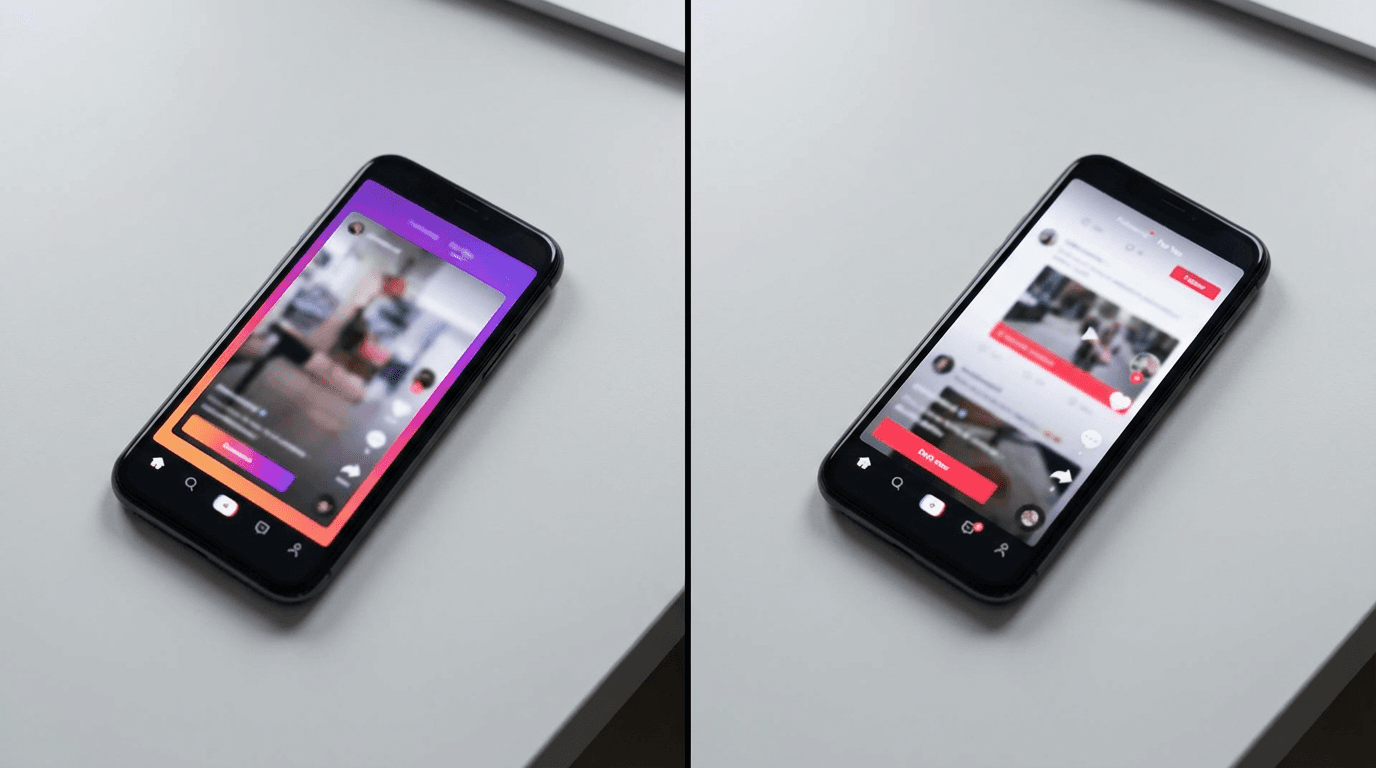
Both platforms use a staged distribution model. Both evaluate each piece of content independently, meaning your past performance does not guarantee future reach. And both reward consistency and volume over single-video perfection.
The biggest difference is what each algorithm weights most heavily. YouTube Shorts prioritize completion rate and early retention as the dominant signals. If viewers swipe away quickly, the Short stops being distributed. Instagram Reels weight shares and saves more heavily than raw retention, which means a Reel that gets heavily shared can succeed even if its watch-through rate is not perfect.
Another key difference is discoverability. YouTube Shorts benefit from search, people actively look for topics and Shorts can appear in search results. Instagram Reels are almost entirely recommendation-driven. There is no meaningful search component to Reels discovery, which means your content needs to be pushed to viewers rather than pulled by them.
Both platforms reward creators who post frequently and iterate based on results. The Reels and Shorts algorithms share a core principle: each video is treated as an independent test, and more tests mean faster learning for both the creator and the system. We explain exactly how this works on YouTube's side in our guide to how the YouTube Shorts algorithm responds to daily uploads.
Why Your Reels Are Getting Low Views
Understanding the algorithm is only useful if you can diagnose why your current Reels are underperforming. Most Reels fail for a small number of predictable reasons.
The most common issue is a weak opening. Instagram's scroll environment is even faster than YouTube Shorts. Viewers decide whether to stop scrolling within the first one to two seconds. If your opening frame is visually unclear, if the first second lacks motion or interest, or if the viewer cannot immediately understand what the Reel is about, they scroll past. The algorithm registers that as disinterest and reduces distribution.
This principle is identical to what happens on YouTube Shorts, where the first 3 seconds determine whether the algorithm keeps distributing your video. Our breakdown of why the first 3 seconds of YouTube Shorts matter covers the retention mechanics in detail, and the same logic applies directly to Reels creators who need to capture attention even faster.
Low originality signals are another frequent problem. Instagram actively deprioritizes content that appears recycled, reposted from other platforms with visible watermarks, or lightly edited from previously published Reels. The algorithm wants fresh content that was created for the platform.
Inconsistent posting patterns make it harder for the algorithm to learn who your audience is and when to test your content. Creators who post sporadically give the system less data to work with, which means slower audience matching and less predictable distribution.
Audience mismatch can also suppress views. If you posted a meme Reel that went viral but your usual content is educational, the algorithm may be confused about who to show your content to. Off-topic viral moments can actually hurt future distribution by attracting followers who do not engage with your core content.
Many of these issues mirror why YouTube Shorts get zero views as well. If you create on both platforms, our post on why videos get 0 views explains the distribution eligibility concept in depth.
How to Get More Views on Instagram Reels in 2026
Post Consistently, Minimum Four to Five Reels Per Week
Consistency is not about gaming the algorithm. It is about giving the system enough data to understand your content and match it to the right audience. Each Reel is evaluated independently, so more Reels means more chances for the algorithm to find your audience.
Creators who post once a week are essentially running one experiment per week. Creators who post five times a week run five experiments, learn five times faster, and give the algorithm five times more data to optimize against.
This does not mean every Reel needs to be perfect. It means volume and consistency compound over time in ways that single viral attempts do not.
Optimize the First Frame and First Second
Your opening needs to work as a standalone visual, it should be compelling even on mute, even as a still image in someone's feed. Use text overlays, strong colors, clear subjects, or immediate motion to stop the scroll.
Avoid opening with logos, slow fades, "hey guys" intros, or any framing that requires context to understand. The viewer has not committed to watching yet. Your job in the first second is not to hook them, it is to make them pause.
Design for Shares and Saves
Since shares are the most heavily weighted signal, create content that people want to send to someone. Think about what makes a viewer tap the share button: relatable moments, surprising information, useful tips they want someone else to see, or content that sparks a conversation.
Ask yourself before posting: "Who would someone send this to, and why?" If you cannot answer that question, the Reel may get likes but is unlikely to scale.
Saves follow a similar logic. Content that serves as a reference, tutorials, step-by-step guides, lists of tools or ideas, tends to accumulate saves because viewers want to return to it later.
Use Trending Audio Strategically
Trending sounds can boost initial distribution because Instagram surfaces Reels that use popular audio to viewers who have engaged with that audio before. However, the audio needs to match the content. Forcing a trending sound onto an unrelated Reel does not help and can actually confuse the recommendation signal.
Original audio can also perform well when engagement signals are strong. Do not feel pressured to use trending audio if it does not fit your content style.
According to Instagram's official creator recommendations, Reels filmed in vertical 9:16 format with original or trending audio receive preferential distribution over content reposted with watermarks from other platforms.
Keep Reels Short Enough to Loop
The ideal Reel length depends on the content type, but for most creators, the sweet spot is seven to fifteen seconds. At this length, viewers are more likely to watch to the end and loop, which dramatically improves both completion rate and replay rate.
Longer Reels in the 30 to 60 second range can work for tutorials, storytelling, or in-depth content, but they need significantly stronger hooks and pacing to maintain retention. If you are unsure, shorter is almost always safer for algorithmic performance.
Optimal length is one of the most debated topics in short-form video, and while Reels and Shorts have different sweet spots, the underlying principle is the same. Our analysis of how long YouTube Shorts should be in 2026 covers duration strategy in depth.
Write Captions That Drive Comments
Comments are a meaningful engagement signal. Captions that ask a genuine question, present a mild opinion, or invite viewers to share their experience generate more comments than generic calls to action.
Instead of "Follow for more," try "Which one would you pick?" or "This changed how I think about [topic], has anyone else tried this?" Specificity drives interaction. Generic CTAs get scrolled past.
Post When Your Audience Is Active
Timing matters because the first 30 to 60 minutes of a Reel's life determine whether it advances past the initial test stage. If you post when most of your audience is asleep or offline, the initial signals will be weaker simply because fewer people see the Reel during the evaluation window.
Check Instagram Insights to see when your followers are most active and schedule your posts accordingly. This does not guarantee success, but it removes a common disadvantage.
Think in Series and Formats, Not One-Offs
Recurring formats build familiarity, and familiarity builds followers. When a viewer sees a Reel they enjoy and then notices it is part of a series, they have an immediate reason to follow, they want to see the next one.
Series content also tends to get higher save and share rates because viewers anticipate future installments. And from an algorithm perspective, consistent formatting helps the system categorize your content more accurately, which improves audience matching over time.
This concept of thinking in series rather than singles is one of the biggest factors in converting viewers into followers. We explain this in depth in our post on why YouTube Shorts get views but no subscribers, and the same logic applies directly to Instagram Reels.
What Content Formats Work Best for Reels in 2026
Certain formats consistently outperform others on Reels because they naturally generate the signals the algorithm prioritizes.
Quick tutorials and how-to content work extremely well because they are inherently saveable and shareable. A 10-second tip that solves a common problem gets saved for future reference and shared with friends who have the same problem.
Before-and-after transformations are powerful because the visual contrast creates an immediate emotional response. The viewer sees the "before," anticipates the "after," and watches to the end to see the payoff. This drives high completion rates and replays.
Relatable POV content, "day in my life," "when you realize," and similar formats, tends to generate high share rates because viewers send them to friends who will relate. The shareability is built into the format.
AI-generated visuals and creative edits are increasingly popular because they stand out visually in a feed full of phone-recorded clips. Unique visuals stop the scroll in ways that standard footage often cannot.
Trending sound paired with a niche-specific twist combines the distribution boost of popular audio with the relevance of targeted content. This works best when the creator adds genuine value rather than just copying the trend.
Mini storytelling, setup, tension, payoff in under 15 seconds, drives high completion and replay rates because viewers want to see how it ends and often rewatch to catch details they missed.
Many of these formats also go viral on YouTube Shorts and TikTok. Our roundup of 10 AI Shorts formats that actually go viral in 2026 covers specific templates you can adapt for Reels as well.
How to Cross-Post Between Reels, Shorts, and TikTok
Most creators publish on multiple short-form platforms, and the temptation is to post the exact same video everywhere. This can work, but there are important caveats.
Instagram actively deprioritizes Reels that contain visible TikTok watermarks. If you create content on TikTok first and then upload the watermarked version to Instagram, expect reduced distribution. Always export from the original source or use a tool that produces clean vertical video without platform-specific branding.
Beyond watermarks, slight adjustments per platform improve performance. Captions, CTAs, and even pacing preferences differ between Instagram, YouTube, and TikTok audiences. A Reel that says "follow for more" works on Instagram but feels odd on YouTube, where the equivalent is "subscribe." Small adjustments like these signal that the content was made for the platform, which both the audience and the algorithm respond to positively.
The core video can absolutely be the same across platforms. The key is formatting and finishing touches. Smart creators are building workflows that let them produce content once and distribute across all three platforms with minimal rework. Our guide to the new creator stack for Shorts, Reels, and TikTok explains how AI tools fit into this multi-platform approach.
How AI Tools Help Creators Post More Reels Without Burnout
The biggest barrier to Reels growth is not creativity or ideas. It is production volume. The algorithm rewards frequent posting, but filming, editing, and publishing four to five Reels per week is exhausting using traditional workflows.

This is where AI-powered creation tools change the equation. Instead of scripting, filming, and editing each Reel manually, creators can use prompt-first workflows that generate complete vertical videos from a single topic. The AI handles script structure, visual generation, pacing, and formatting, leaving the creator free to focus on ideas, messaging, and iteration.
Miraflow AI's Text2Shorts feature is designed specifically for this workflow. You enter a topic, and the system produces a complete vertical video structured for Reels and Shorts, with scripting, visuals, and pacing handled automatically. You can review the output, adjust the prompt or script, and regenerate until it feels right.
This approach makes frequent posting sustainable. Instead of spending two hours editing one Reel, you can test multiple concepts in the same time and learn which ideas the algorithm responds to fastest.
If you want to see how prompt-first video creation works in practice, our walkthrough of how Text2Shorts turns a prompt into a finished reel shows the full process from idea to export.
Adding Music to Reels
Audio is a core component of Reels performance. Instagram uses audio as a signal for categorization and recommendation, and Reels with music or audio generally outperform silent Reels.
Trending audio provides a distribution boost because Instagram surfaces Reels to viewers who have previously engaged with that sound. However, trending audio is not always appropriate for every content type, and forcing it can feel inauthentic.
For creators producing original content, tutorials, explainers, AI-generated videos, or branded content, AI-generated music offers a practical alternative. AI music tools produce royalty-free tracks that you can use on Instagram without copyright concerns, and you can match the energy, tempo, and mood of the track to your specific Reel.
Finding the right audio without copyright issues is a common challenge. Our guide on the best free AI music generators for Shorts, Reels, and TikTok in 2026 covers tools that produce royalty-free tracks you can use directly on Instagram.
Tracking Reels Performance: What Metrics to Watch
Posting consistently is only half the strategy. The other half is learning from your results, and that requires knowing which metrics actually matter.
Plays tell you total reach, how many times your Reel was viewed. This is useful as a top-level indicator but does not tell you why a Reel performed well or poorly.
Accounts reached shows how many unique viewers saw your Reel. If this number is significantly higher than your follower count, the algorithm is distributing your Reel to non-followers, which means it passed the initial test stage.
Shares are the most actionable metric to track because they are the strongest signal for algorithmic expansion. If a Reel has high plays but low shares, the algorithm may plateau its distribution early. If shares are strong, the Reel is likely to keep scaling.
Saves indicate lasting value. Reels with high save rates tend to have longer distribution lifecycles because they continue to generate engagement over time.
Comments indicate active engagement and are especially useful for understanding audience sentiment. High comment counts signal to the algorithm that the content is generating conversation, which supports continued distribution.
Watch-through rate, available in Instagram's professional dashboard, tells you what percentage of viewers watched the entire Reel. This is critical for diagnosing whether your opening and pacing are working.
Check these metrics within 24 to 48 hours of posting to understand which Reels the algorithm is pushing and which ones stalled. Over time, patterns will emerge that reveal what content types, formats, and topics consistently perform best for your audience.
Reading analytics correctly is essential for improving over time. While the specific metrics differ between platforms, the analytical mindset is the same. Our post on how to read YouTube Shorts analytics graphs in 2026 explains retention curves and engagement patterns that translate directly to Reels analysis.
Conclusion
The Instagram Reels algorithm in 2026 is not mysterious. It is a system that tests content with small audiences, measures behavioral signals, and expands distribution for Reels that perform well. Shares, watch-through rate, saves, and replay rate are the signals that matter most.
Creators who succeed on Reels do not rely on luck or virality. They post consistently, optimize their openings, create content designed for shares and saves, and learn from their analytics. They treat every Reel as a test and every week as an iteration cycle.
The algorithm rewards creators who show up frequently with content that holds attention and gets shared. If production friction is what prevents you from posting enough, AI tools like Miraflow AI's Text2Shorts can help you maintain volume without burning out.
Views are not random. They are earned through understanding the system and creating content that works within it. Now that you know how the Reels algorithm evaluates your content, you have everything you need to start creating Reels that actually get pushed.