LTX 2.3 Explained: Features, Capabilities, and Why It Matters in 2026

Written by
Jay Kim
LTX 2.3 is Lightricks' fastest open-weight AI video model. This guide covers its features, architecture, real-world capabilities, and why it matters for AI video generation in 2026.
If you have been exploring AI video generation in 2026, you have probably noticed how crowded the space has become. New models seem to launch every few weeks, each one promising cinematic quality, faster rendering, or better prompt understanding. The problem is figuring out which models actually deliver on those promises and which ones are worth your time.
LTX 2.3, the latest open-weight video generation model from Lightricks, has been getting serious attention from developers, researchers, and independent users since its release. Unlike many competitors that lock everything behind APIs or subscriptions, LTX 2.3 is freely available, fast enough to generate video in real time, and capable enough to handle a wide range of use cases.
This guide covers everything you need to know about LTX 2.3, including how it works, what it can actually do, where it falls short, and how it compares to other models available in 2026.
What Is LTX 2.3
LTX 2.3 is the latest version of the LTX-Video model family developed by Lightricks, the Israel-based company behind popular consumer apps like Facetune and Videoleap. The LTX-Video project is Lightricks' most ambitious push into generative AI, focused specifically on text-to-video and image-to-video generation.
The model first gained traction because of its speed. Early versions of LTX-Video could generate video clips faster than their actual playback duration, which was a major differentiator in a space where most models took minutes to produce a few seconds of footage. Each new version refined the visual quality, motion coherence, and prompt understanding, and LTX 2.3 represents the most complete and capable release so far.
What makes LTX 2.3 particularly interesting is that it is open-weight. Anyone with the right hardware can download the model, run it locally, fine-tune it for specific use cases, or integrate it into custom workflows. This is a meaningful distinction from closed-source models offered by companies like Google or OpenAI, where access is limited to API calls and the model itself cannot be modified.
For anyone building AI-powered video workflows or exploring how generative video fits into content production, LTX 2.3 is one of the most accessible starting points available right now.
How LTX 2.3 Works Under the Hood
LTX 2.3 is built on a Diffusion Transformer architecture, commonly referred to as DiT. This architecture has become the standard foundation for high-performing generative video models in 2025 and 2026, replacing the older U-Net-based diffusion designs that earlier models relied on.
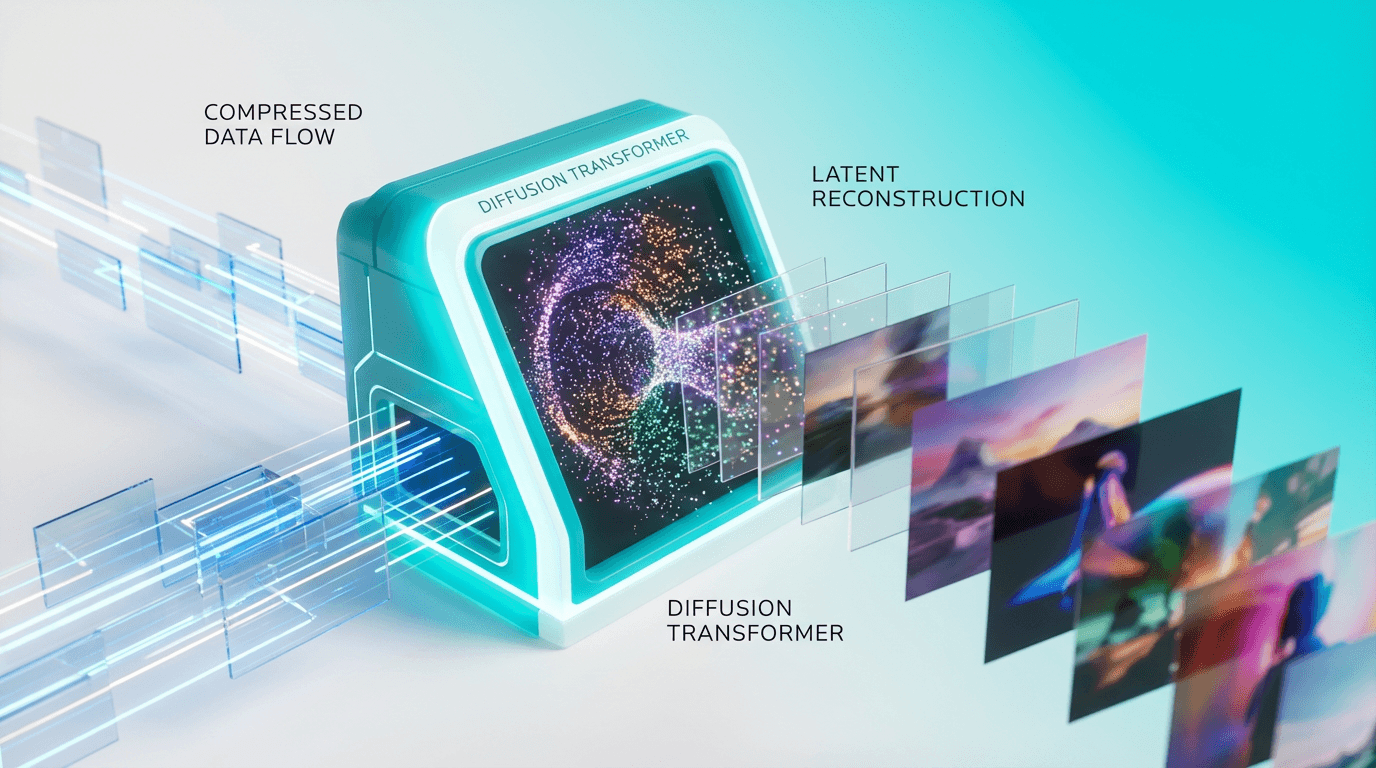
The transformer-based approach gives LTX 2.3 a significant advantage in capturing long-range dependencies across both space and time. In practical terms, this means the model is better at maintaining consistency across frames, understanding how objects should move through a scene, and keeping visual elements stable over the duration of a clip.
The generation process works in a compressed latent space rather than directly at the pixel level. A Video Variational Autoencoder (Video VAE) compresses the video data into a compact representation, the diffusion transformer handles the generation within that compressed space, and the VAE decoder reconstructs the final video output. This compression is one of the main reasons LTX 2.3 can achieve its speed advantages, because the model does far less computational work per diffusion step than it would if operating at full resolution.
For text conditioning, LTX 2.3 uses a text encoder that processes natural language prompts and feeds them into the generation process through cross-attention mechanisms. This allows users to describe scenes, actions, camera movements, and visual styles in plain language, and the model aligns its output accordingly.
If you are familiar with how prompting works for models like Veo3 or Veo3.1, many of the same principles apply to LTX 2.3. Clear, structured descriptions of what the camera should see tend to produce much better results than vague or overly abstract instructions.
Key Features of LTX 2.3
Faster-Than-Real-Time Video Generation
Speed has always been the standout feature of the LTX-Video family, and LTX 2.3 continues to lead in this area. On capable consumer-grade GPUs, the model can produce video clips faster than their actual playback duration. A five-second clip can be generated in under five seconds of compute time, which is a benchmark that very few competing models can match at similar quality levels.
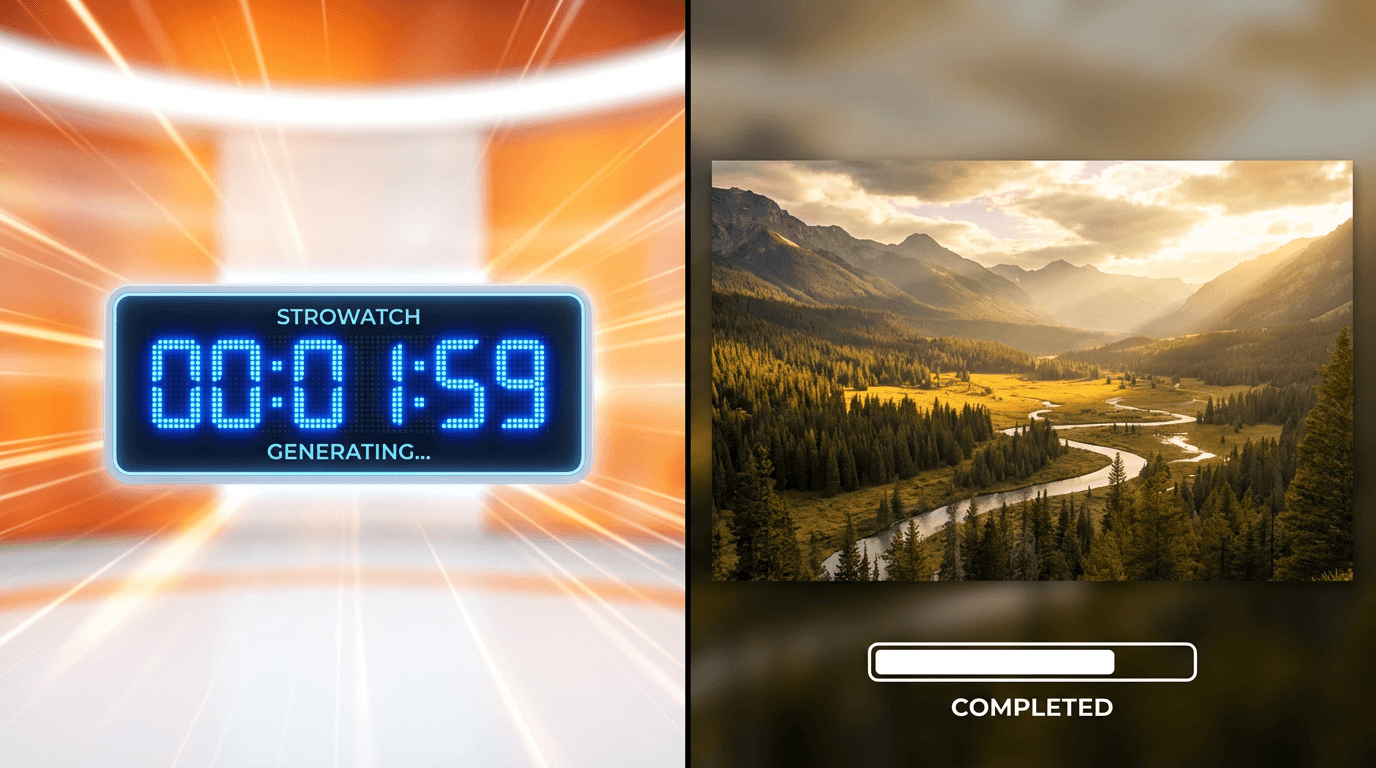
This speed is not just a technical flex. It fundamentally changes how people interact with the model. When generation is fast enough to iterate dozens of times in a few minutes, AI video becomes less of a batch rendering process and more of a conversational, exploratory tool. You can test ideas, tweak prompts, and compare outputs rapidly without waiting for long render queues.
Text-to-Video and Image-to-Video Generation
LTX 2.3 supports both text-to-video and image-to-video workflows. In text-to-video mode, the model generates an entire clip from a written description. In image-to-video mode, you provide a reference image as the starting frame, and the model animates it based on an accompanying text prompt.
The image-to-video capability is especially useful when you need visual consistency. If you already have a specific look for the opening frame, whether it is a product shot, a character portrait, or a landscape, you can lock that in and let the model handle the motion. Pure text-to-video generation does not always give you precise control over the appearance of the first frame, so the image-to-video option fills an important gap.
This kind of workflow pairs well with AI image generation tools. For example, you could generate a high-quality starting frame using an AI image generator and then feed that frame into LTX 2.3 to animate it into a full video clip.
Improved Temporal Coherence
One of the biggest upgrades in LTX 2.3 compared to earlier versions is temporal coherence. Previous LTX-Video releases occasionally struggled with flickering artifacts, objects morphing between frames, or sudden and unexplained changes in scene composition. These are common problems across AI video models, but they were more noticeable in earlier LTX versions because the model prioritized speed.
LTX 2.3 addresses these issues with architectural refinements and improved training strategies. The result is noticeably more stable motion, more consistent object persistence, and fewer visual glitches throughout the duration of a clip. Characters maintain their appearance more reliably, backgrounds stay anchored, and camera movements feel smoother.
Better Prompt Adherence
LTX 2.3 handles complex, multi-element prompts more effectively than its predecessors. Descriptions that include specific camera movements, lighting conditions, subject interactions, and stylistic choices are interpreted more faithfully by the model. While no current AI video model achieves perfect prompt fidelity every single time, LTX 2.3 narrows the gap between what you describe and what the model actually outputs.
This improvement matters because prompt adherence is one of the biggest frustrations in AI video generation. If you ask for a slow dolly-in and get a static wide shot, or if you specify golden hour lighting and the model gives you midday harsh shadows, the tool becomes much harder to use productively. LTX 2.3 significantly reduces these kinds of mismatches.
Multi-Resolution and Aspect Ratio Support
LTX 2.3 supports generation at multiple resolutions and aspect ratios, including standard 16:9 widescreen, 9:16 vertical format for Shorts and Reels, and square 1:1 formats. The specific resolution and duration you can achieve depends on available VRAM, but the model is designed to run efficiently across a range of consumer and professional hardware configurations.
This flexibility makes LTX 2.3 practical for a wide variety of output formats without needing to crop or reformat after generation.
Open Weights and Community Ecosystem
Because LTX 2.3 is open-weight, it has developed a growing community ecosystem. Developers and researchers have created custom fine-tunes for specific visual styles, LoRA adaptations for particular subjects or aesthetics, integrations with popular AI toolchains like ComfyUI, and various community-built interfaces that make the model easier to use for non-technical users.

The open-weight approach also means LTX 2.3 can be deployed in private, on-premises environments where data privacy is a concern. For businesses or organizations that cannot send video generation prompts to third-party APIs, the ability to run the model locally is a significant advantage.
What LTX 2.3 Does Well in Practice
When you actually use LTX 2.3 for real generation tasks, certain categories of output stand out as particularly strong.
Nature and landscape scenes tend to produce impressive results. Flowing water, wind-blown foliage, atmospheric lighting, fog, and cloud movement all look natural and visually appealing. The model handles these organic, continuous motion patterns well, likely because they are well-represented in training data and do not require precise anatomical accuracy.
Stylized and artistic video generation is another strong area. If you prompt for cinematic looks, animation-inspired aesthetics, or abstract visual compositions, LTX 2.3 generally delivers coherent and visually interesting results. The model responds well to style keywords and cinematic descriptors, which makes it useful for mood boards, concept visualization, and creative exploration.
For more technically demanding scenarios like realistic human faces, detailed hand movements, complex multi-character interactions, or physically accurate object dynamics, LTX 2.3 has improved but still shows limitations. These are challenges that the entire field continues to work on, and larger closed-source models with significantly more compute resources tend to handle them better. That said, the gap between open and closed models in these areas has been narrowing steadily.
If you are looking to combine AI-generated video with other content types like AI-generated music for background tracks, platforms like Miraflow AI's music generator let you create original tracks that you can pair with your video output, which is helpful for producing complete content pieces without licensing concerns.
Where LTX 2.3 Fits in the 2026 AI Video Landscape
The AI video generation space in 2026 is more crowded and more stratified than ever. Understanding where LTX 2.3 sits relative to other options helps clarify who should care about it and why.
At the top end, closed-source models from Google, OpenAI, and other major labs continue to push the ceiling on raw visual quality and photorealism. Models like Veo3 and Veo3.1 offer impressive cinematic quality and strong prompt adherence, especially for photorealistic human scenes and dialogue-driven content. These models are generally accessed through APIs or specific platforms, and they come with per-generation costs.
In the open-weight segment, LTX 2.3 competes with models like Wan 2.7 and other community-driven releases. The competitive dynamics here are different. Speed, hardware efficiency, community ecosystem, and customizability matter as much as raw output quality. LTX 2.3's real-time generation speed gives it a distinctive edge for workflows where rapid iteration is more valuable than maximum fidelity on a single output.
For users who want both quality and accessibility, the practical approach in 2026 often involves using multiple models for different purposes. You might use a premium model like Veo3.1 through a platform like Miraflow's cinematic video generator for hero content that needs to look its absolute best, and use LTX 2.3 locally for rapid prototyping, visual tests, or high-volume generation where speed matters more than polish.
The new creator stack in 2026 increasingly involves layering multiple AI tools together, and LTX 2.3 fits naturally into that kind of modular workflow.
How LTX 2.3 Compares to Closed-Source Alternatives
One of the most common questions about LTX 2.3 is how it measures up against the bigger, more expensive models. The honest answer is that it depends entirely on what you are optimizing for.
If your primary goal is the highest possible visual quality on a single hero shot, particularly for photorealistic human scenes, closed-source models still have an edge. They benefit from significantly larger training datasets, more compute during training, and more extensive post-processing pipelines.
If your primary goal is speed, cost efficiency, privacy, or customizability, LTX 2.3 has clear advantages. Running the model locally costs nothing per generation beyond electricity and hardware depreciation. You can fine-tune it for your specific visual needs. You can deploy it in environments where sending data to external APIs is not an option. And you can generate dozens of variations in the time it takes a cloud-based model to return a single result.
For short-form content production, where viral AI Shorts formats rely on volume and iteration speed, the ability to generate rapidly and test ideas quickly can matter more than squeezing out the last percentage of visual fidelity.
Common Misconceptions About LTX 2.3
It is only useful for developers
While LTX 2.3 does require some technical setup to run locally, the growing ecosystem of community interfaces and integrations with tools like ComfyUI has made it increasingly accessible to non-developers. You do not need to write code from scratch to use it, though you will need basic familiarity with running AI models on a GPU.
Open-weight means low quality
This was a reasonable assumption a year or two ago, but it no longer holds. The quality gap between the best open-weight models and their closed-source counterparts has shrunk dramatically in 2026. LTX 2.3 produces output that is genuinely usable for real content production, not just technical demos.
It can replace all other video generation tools
LTX 2.3 is excellent at what it does, but it is not a universal solution. For certain tasks, like generating dialogue-driven scenes with synchronized lip movement or producing extremely long coherent sequences, other tools may be more appropriate. The best workflow in 2026 typically involves combining multiple tools rather than relying on any single model for everything.
How to Get the Best Results from LTX 2.3
If you decide to use LTX 2.3, here are some practical tips for getting better output.
Write prompts that describe what the camera sees rather than abstract concepts. Instead of saying "a happy scene," describe the specific visual elements: the subject, the setting, the lighting, and the action. This aligns with how the model interprets text conditioning.
Use the image-to-video mode when you need visual consistency for the opening frame. Generating a strong starting image and then animating it gives you much more control over the final look.
Keep your prompts focused. LTX 2.3 handles moderate complexity well, but overloading a single prompt with too many simultaneous instructions can lead to confused output. Three to five clear sentences describing the key visual elements tend to work better than a paragraph packed with every detail you can think of.
Iterate quickly. The speed advantage of LTX 2.3 means you can afford to generate multiple versions and pick the best one rather than trying to get the perfect result on the first attempt. Treat generation as an exploratory process.
These prompting principles are similar to what works for other cinematic AI video models, so experience with one model tends to transfer well to others.
Building a Full Content Pipeline Around AI Video
One of the most powerful applications of AI video generation in 2026 is combining it with other AI content tools to build a complete production pipeline. LTX 2.3 fits naturally into this kind of workflow because of its speed and flexibility.

A typical pipeline might look like this: start with an idea or script, generate visuals using AI video, create a YouTube thumbnail to accompany the content, add AI-generated background music, and publish. Each step can be handled by specialized AI tools, and the entire process can happen in a fraction of the time traditional production would require.
For short-form content specifically, tools like Text2Shorts automate much of this pipeline by turning a single topic into a complete vertical video with script, visuals, voiceover, and pacing handled automatically. When combined with the ability to generate individual cinematic clips using models like LTX 2.3 or Veo3.1, you get a flexible system that can handle everything from quick social media posts to more polished standalone videos.
The key insight is that AI video generation is not a standalone activity anymore. It is one component within a larger content creation ecosystem, and models like LTX 2.3 are most powerful when integrated into that broader workflow.
Who Should Pay Attention to LTX 2.3
LTX 2.3 is particularly relevant for a few specific groups in 2026.
Developers and researchers who want to experiment with video generation models without usage-based pricing will find LTX 2.3 one of the best options available. The open weights allow for deep customization and integration into custom applications.
Independent content producers who want to prototype visual ideas quickly, test faceless YouTube Shorts concepts, or generate visual assets at scale without ongoing API costs benefit from the speed and zero per-generation cost.
Small teams and businesses building products that incorporate video generation can use LTX 2.3 as a foundation, fine-tuning it for specific visual styles or deploying it in private environments where data cannot leave the organization.
Anyone who wants to understand where the AI video field is heading should pay attention to LTX 2.3 because it represents the current state of what open-weight models can achieve. Tracking its progress gives a clear picture of how quickly the gap between open and closed models is closing.
Why LTX 2.3 Matters in 2026
LTX 2.3 matters because it demonstrates that high-quality, fast AI video generation does not have to be locked behind proprietary APIs or expensive subscriptions. The model makes advanced video generation accessible to a much wider audience than closed-source alternatives allow.
The speed advantage alone is significant. When video generation happens faster than real time, the entire creative process shifts. You spend less time waiting and more time experimenting, which leads to better results and more creative exploration.
The open-weight approach also has broader implications for the field. Lightricks' continued investment in open releases signals that commercially motivated companies see genuine value in community engagement, ecosystem building, and open research. In a space where there is constant tension between openness and competitive advantage, LTX 2.3 shows that both can coexist.
For the AI video ecosystem as a whole, LTX 2.3 raises the floor. It gives everyone access to a capable, fast, and flexible video generation model, which means the baseline for what you can create without significant resources keeps getting higher.
Frequently Asked Questions
Is LTX 2.3 free to use?
LTX 2.3 is open-weight, which means you can download and run it for free on your own hardware. There are no per-generation fees or subscription requirements. The main cost is the GPU hardware needed to run the model efficiently.
What GPU do I need to run LTX 2.3?
LTX 2.3 is designed to run on consumer-grade GPUs, though the specific resolution and duration capabilities depend on available VRAM. Higher-end consumer GPUs with more VRAM will support higher resolutions and longer clips.
How does LTX 2.3 compare to Veo3 or Veo3.1?
Veo3 and Veo3.1 generally produce higher fidelity output, especially for photorealistic human scenes and dialogue content. LTX 2.3 offers faster generation speed, open weights, and no per-generation cost. The right choice depends on whether you prioritize raw quality or speed, cost, and customizability.
Can I fine-tune LTX 2.3 for specific styles?
Yes. Because the weights are openly available, you can fine-tune the model or apply LoRA adaptations for specific visual styles, subjects, or aesthetic preferences. The community has already produced a range of custom fine-tunes.
What output formats does LTX 2.3 support?
LTX 2.3 supports multiple aspect ratios including 16:9, 9:16, and 1:1. It can generate clips at various resolutions and durations depending on hardware configuration.
Is LTX 2.3 good enough for production content?
For many use cases, yes. Nature scenes, stylized content, concept visualization, and social media content all fall within the model's strong areas. For premium photorealistic human scenes or long-form coherent sequences, you may want to use a complementary model alongside it.
Can I use LTX 2.3 commercially?
The model's license terms should be reviewed on the official Lightricks LTX-Video repository for the most current information on commercial usage permissions.
How long are the videos LTX 2.3 can generate?
LTX 2.3 can produce clips of varying lengths, though output quality and coherence are generally strongest at shorter durations. The maximum length depends on available VRAM and compute resources.
Conclusion
LTX 2.3 delivers an impressive balance of speed, quality, and accessibility that makes it one of the most practically useful AI video models available in 2026. It does not try to beat every closed-source competitor on raw visual fidelity, but it offers something that most of those competitors cannot match: real-time generation, open weights, zero per-generation cost, and a thriving community ecosystem.
Whether you are a developer building AI-powered products, an independent producer exploring generative video, or someone trying to understand where this technology is headed, LTX 2.3 is worth paying attention to. It represents a clear signal that the open-weight segment of AI video generation has matured into a genuinely competitive force, and the pace of improvement shows no signs of slowing down.
If you want to start experimenting with AI video generation right now without any local setup, you can try generating cinematic videos directly in your browser on Miraflow AI, which supports premium models like Veo3 and Veo3.1 alongside a full suite of content creation tools including AI image generation, Text2Shorts, and AI music generation.