Best Time to Post YouTube Shorts in 2026 (By Niche and Time Zone)

Written by
Jay Kim
Learn the best times to post YouTube Shorts in 2026. This guide covers how the algorithm tests new Shorts, niche-specific timing, and how to find your optimal posting window.
If you are uploading YouTube Shorts at random times and hoping the algorithm picks them up, you are leaving views on the table. Posting time does not guarantee virality, but it directly affects how your Short performs during its critical first hour of distribution.
YouTube tests every new Short with a small initial audience. If that test audience is asleep, at work, or not on the platform, your Short gets weaker early engagement. Weaker early engagement means YouTube is less likely to push it further. The content might be great, but the timing killed its chance before anyone saw it.
This guide covers when to post YouTube Shorts in 2026 based on how the algorithm actually distributes content, what time zones matter most, how to find your specific best posting window, and what to do if your audience spans multiple regions. No fake data. No made-up statistics. Just practical timing strategies that align with how the platform works.
Why Posting Time Still Matters for Shorts in 2026
There is a common belief that posting time does not matter for Shorts because the algorithm eventually finds the right audience. This is partially true for long-form videos that can surface in search and suggested feeds over weeks or months. But Shorts behave differently.
Shorts are primarily distributed through the Shorts feed, which is a real-time, swipe-based experience. YouTube cycles through an enormous volume of new Shorts every day. When your Short is published, it enters a pool of content being tested against active viewers. If the viewers currently on the platform are a good match for your content and they engage with it, the Short gets pushed to more people. If the timing is off and your ideal audience is not active, the Short may not get the early engagement it needs to gain momentum.
This does not mean a great Short posted at 3 AM will never get views. YouTube can resurface Shorts later. But posting when your target audience is most active gives your content the strongest possible start. And that strong start often determines whether a Short reaches hundreds of viewers or hundreds of thousands.
The YouTube Shorts algorithm update from January 2026 introduced changes to how Shorts are surfaced and sorted. Understanding these changes makes timing even more relevant than it was in 2025.
How YouTube Tests New Shorts After Upload
To understand why timing matters, it helps to know what happens behind the scenes when you publish a Short.
YouTube does not immediately show your Short to your entire subscriber base. Instead, it shows the Short to a small group of viewers who are currently active on the platform. This initial test group might be a mix of your subscribers and non-subscribers who watch similar content.
During this test phase, YouTube tracks several signals. How many viewers watch the Short all the way through. How many swipe away within the first few seconds. How many like, comment, share, or visit your channel afterward. These signals are weighted and compared against other Shorts being tested at the same time.
If your Short performs well relative to the competition during this window, YouTube expands distribution. If it does not, the Short gets deprioritized. This entire cycle can play out within the first 30 to 60 minutes after publishing.
The key insight is that the quality of your test audience depends on who is online when you publish. Posting at a time when your ideal viewers are actively scrolling the Shorts feed gives you a better test audience, which leads to better early signals, which leads to broader distribution.
For a deeper look at how daily uploads interact with this testing process, see the guide on how the YouTube Shorts algorithm responds to daily uploads.
General Best Times to Post YouTube Shorts in 2026
While every channel is different, certain posting windows consistently align with high platform activity. These are based on general viewer behavior patterns across YouTube, not invented statistics.

Weekday mornings between 8 AM and 10 AM (viewer's local time) tend to catch people during their morning routine. Many viewers scroll through Shorts while commuting, eating breakfast, or taking a break before starting work. This window works particularly well for educational, motivational, and news-style content.
Weekday lunch hours between 12 PM and 2 PM are another strong window. Viewers take breaks and check their phones. Short, entertaining content performs well during this period because people want quick, engaging videos they can watch in a few minutes.
Weekday evenings between 6 PM and 9 PM are peak activity hours across most regions. This is when the largest number of viewers are on the platform simultaneously. Competition is also highest during this window, which means your Short needs to be strong enough to stand out against more content being uploaded at the same time.
Weekend mornings between 9 AM and 11 AM work well because viewers tend to have more free time and scroll more casually. Engagement can be higher during weekends because viewers are more relaxed and willing to watch content all the way through.
Weekend evenings between 5 PM and 8 PM also show strong activity, though the specific window varies by niche and audience.
These are starting points. The actual best time for your channel depends on where your audience lives, what type of content you create, and when your existing viewers are most active.
How to Find Your Channel's Specific Best Posting Time
General guidelines are useful for new channels that do not have audience data yet. But if you have been posting Shorts for a few weeks or more, YouTube gives you the data to find your own optimal window.
Open YouTube Studio and navigate to the Analytics section. Under the Audience tab, you will find a chart showing when your viewers are on YouTube. This chart displays activity levels by day and hour, highlighted in darker or lighter shades to show peak and low-activity periods.

Look for the darkest clusters on this chart. These represent the times when the highest number of your specific viewers are active on YouTube. Your goal is to publish Shorts slightly before these peak windows so your Short is fresh and ready for testing when the most viewers come online.
If the chart shows your audience peaks at 7 PM on weekdays, try publishing at 5 PM or 6 PM. This gives the Short time to enter the testing pool and start accumulating early engagement signals right as your peak audience arrives.
Track this over time. The audience activity chart updates as your channel grows and your viewer base shifts. What works in March might shift by June if your audience composition changes. Check this chart at least once a month and adjust your posting schedule accordingly.
For help reading these analytics graphs effectively, the guide on YouTube Shorts analytics in 2026 breaks down each metric and what it means for your strategy.
Time Zone Strategy for Different Audiences
If your audience is concentrated in one region, timing is straightforward. Post before the peak activity window in that time zone.
But many creators have audiences spread across multiple time zones. A channel with viewers in the United States, the United Kingdom, and India faces a 10 to 13 hour spread between those audiences. Posting at the perfect time for one group means missing the others.

There are a few ways to handle this.
Prioritize your largest audience segment. Check YouTube Studio to see which countries your viewers are in. If 60 percent of your audience is in the United States, optimize your posting time for US time zones. The remaining 40 percent will still see the Short through later distribution if the initial test goes well.
Target the overlap window. Look for times when multiple audience segments are somewhat active. For a US and European audience, posting in the late morning US Eastern Time (around 10 AM to 12 PM ET) catches the afternoon in Europe and the morning on the US East Coast. The overlap is not perfect, but it reaches both groups during active hours.
Rotate posting times. If you post daily, alternate between time slots that favor different regions. Monday's Short goes live at 8 AM ET for the US audience. Tuesday's Short goes live at 2 PM ET to catch European evening viewers. This spreads your content across different time zones throughout the week.
Post more frequently. The most effective solution for multi-region audiences is simply posting more Shorts. If you publish two Shorts per day at different times, you cover more audience segments naturally. This is also where production efficiency becomes critical, because creating two quality Shorts per day manually is difficult for most solo creators.
Why Posting Time Alone Will Not Fix Low Views
Timing matters, but it is not a magic fix. If your Shorts are not getting views, changing when you post might help at the margins, but it will not solve fundamental content problems.
A Short posted at the perfect time will still fail if the first 3 seconds do not hook the viewer. It will still fail if the content is not relevant to the audience being tested. It will still fail if the visual quality, audio clarity, or pacing is off.
Think of posting time as a multiplier, not a solution. Good content posted at a good time performs better than good content posted at a bad time. But bad content posted at a perfect time is still bad content.
If your views have been stuck, check the other fundamentals first. The guide on why the first 3 seconds of YouTube Shorts matter covers the most common hook mistakes. And if your Shorts are getting literally zero views, the issue might be something more basic covered in the guide on why videos get 0 views.
Once the content fundamentals are solid, optimizing posting time becomes one of the highest-leverage adjustments you can make.
Best Posting Times by Niche
Different niches attract different viewer behaviors, and those behaviors affect when people are most likely to watch and engage.
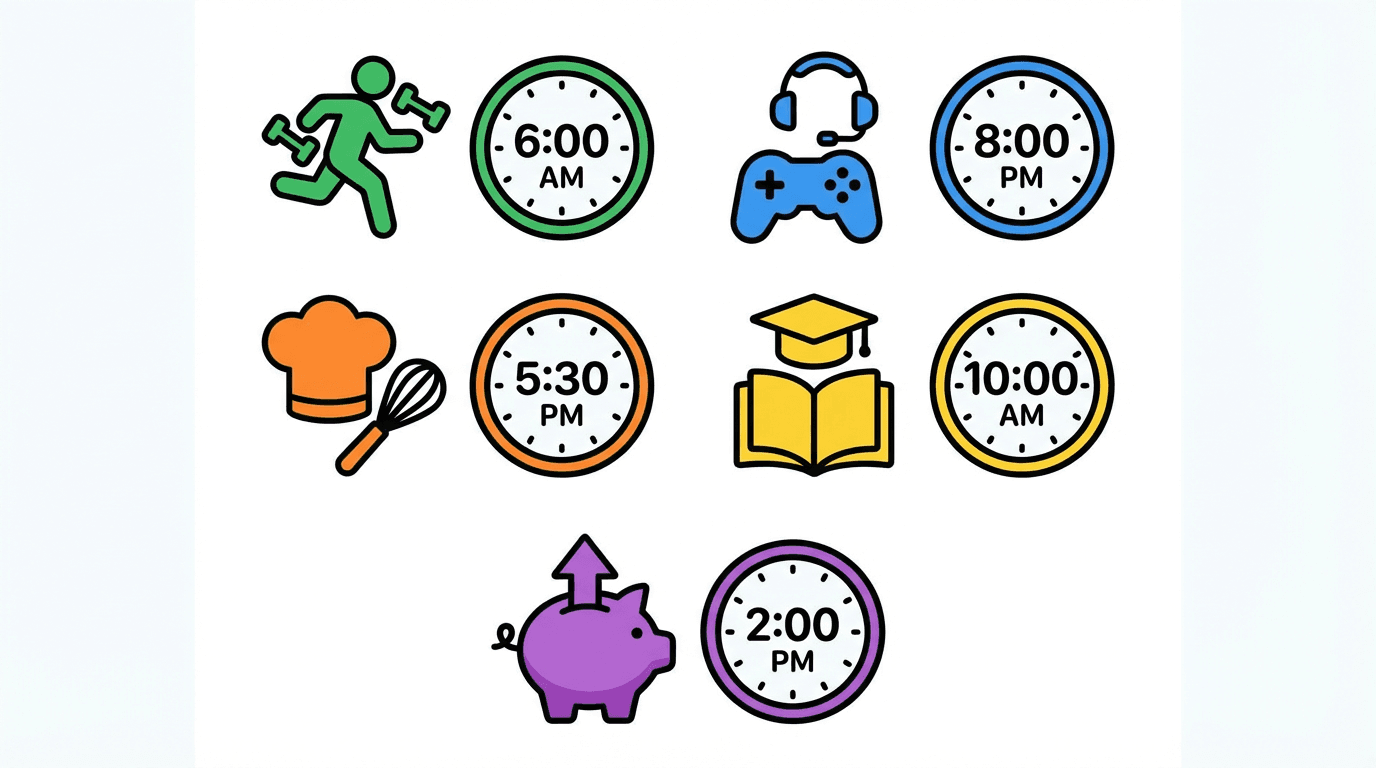
Education and how-to content performs well during morning hours and lunchtime on weekdays. Viewers looking to learn something tend to be active during work breaks or during their morning routine when they are in a productive mindset. Posting between 7 AM and 10 AM or between 12 PM and 1 PM (viewer's local time) tends to work well for this category.
Entertainment and comedy content peaks during evening hours and weekends. Viewers consume entertainment content when they are relaxing, which means the 6 PM to 10 PM window on weekdays and throughout the day on weekends tends to drive the best engagement.
Finance and business content often sees strong engagement during weekday mornings, particularly between 7 AM and 9 AM when viewers are checking market updates or thinking about money. There is often a secondary peak around lunchtime.
Fitness and health content performs well in the early morning (5 AM to 7 AM) when people are planning workouts, and again in the early evening (5 PM to 7 PM) when people are heading to or returning from the gym.
Gaming content has its strongest hours in the late afternoon and evening, roughly 4 PM to 11 PM, with weekends being particularly strong. The gaming audience tends to be most active in the late evening hours compared to other niches.
Cooking and food content shows peaks around meal planning times. Lunchtime posting (11 AM to 1 PM) and early evening posting (4 PM to 6 PM, when people are thinking about dinner) tend to perform well.
These are patterns, not rules. Your specific audience within a niche might behave differently. Always cross-reference with your own analytics data.
The Scheduling Strategy: How to Stay Consistent Without Being Online
You do not need to be at your computer at 6 PM every day to post at the right time. YouTube allows scheduled publishing, which means you can create your Short in advance and set it to go live at a specific time.
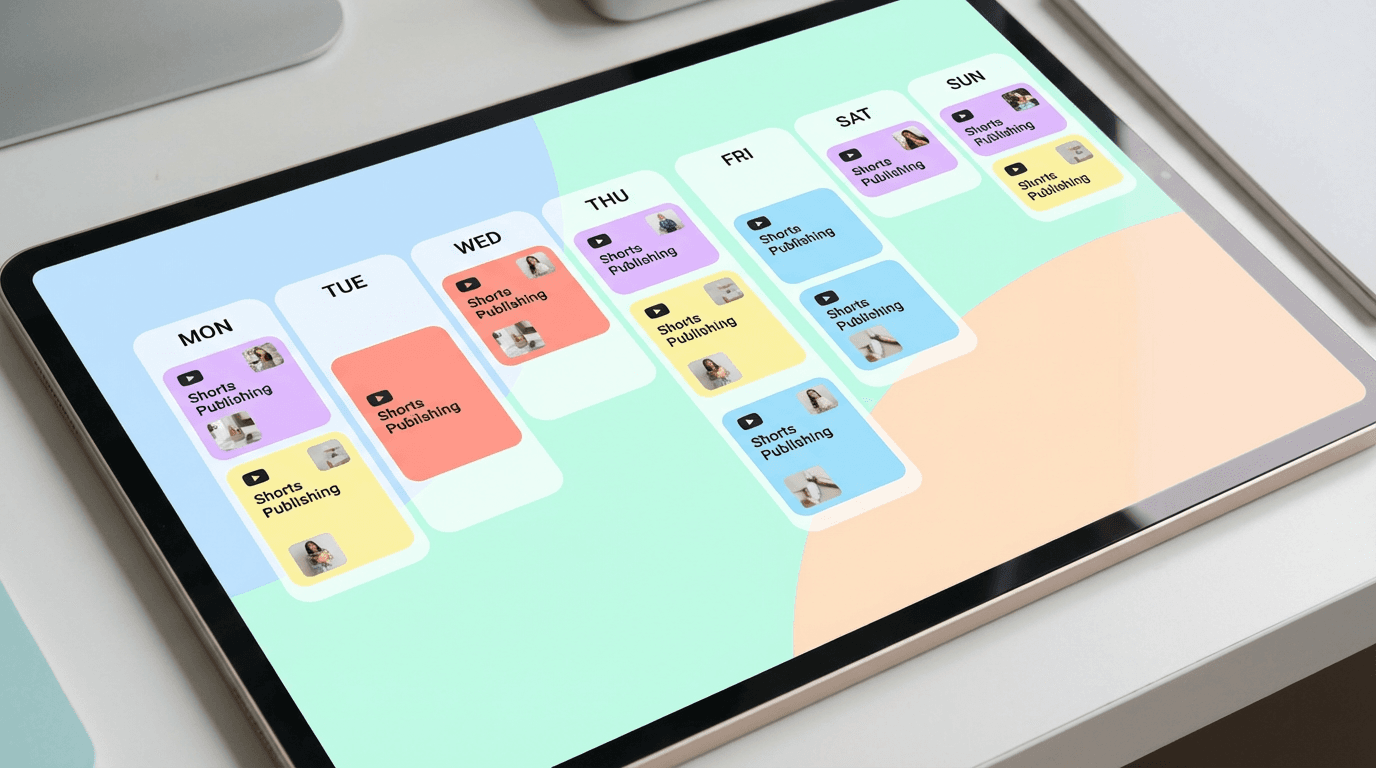
This is important for two reasons. First, it removes the pressure of being available at the exact moment you want to publish. Second, it lets you batch create content and schedule an entire week of Shorts in one sitting.
A typical weekly scheduling workflow looks like this. Set aside one production session to create 5 to 7 Shorts. Upload all of them to YouTube Studio. Schedule each one to publish at the optimal time for that day. Then move on and focus on other work while YouTube handles the publishing.
For creators who use Text2Shorts on Miraflow AI, this batching approach works particularly well. You can generate multiple Shorts from different topics in a single session, choosing between animation or realistic visual styles for each one. The generated videos can then be uploaded to YouTube Studio and scheduled across the week. This combination of AI-powered creation and scheduled publishing makes it realistic to maintain a daily posting schedule without spending hours every day on production.
The guide on building a 30-day YouTube Shorts plan covers how to structure this kind of batched workflow in detail.
What Happens When You Post at the Wrong Time
Posting at a suboptimal time does not mean your Short is dead. It means the Short starts with a disadvantage that it needs to overcome with strong content performance.
When you post during a low-activity window for your audience, the initial test group will be smaller and may not be your ideal viewers. If those viewers still engage well, YouTube will continue pushing the Short. But the bar is higher because you are starting with a weaker first impression.
Some Shorts that are posted at bad times still go viral hours or days later. YouTube's algorithm does resurface content when it finds the right audience, even if the initial distribution was slow. But relying on this is like hoping to catch a wave after missing the set. It can happen, but you are better off being in position when the wave comes.
The practical takeaway is that posting at the wrong time occasionally will not ruin your channel. But consistently posting at suboptimal times creates a compounding disadvantage. Over 30 or 60 days, those small timing inefficiencies add up to significantly fewer total views than you would have gotten with better scheduling.
How Posting Frequency Interacts with Timing
Creators who post once a day have one chance to hit the optimal window. Creators who post twice a day can cover two windows and reach more audience segments.
This creates an interesting dynamic where higher posting frequency partially solves the timing problem. If you post at 9 AM and 6 PM, you catch morning viewers and evening viewers. You are less dependent on picking the single perfect time because you have multiple shots at reaching your audience.
However, higher frequency only works if the content quality stays consistent. Posting twice a day with one strong Short and one weak Short can actually hurt your channel because the weak Short sends negative signals to the algorithm. YouTube evaluates each Short independently, but your channel's overall performance history influences how aggressively new content gets distributed.
The balance is to post as frequently as you can while maintaining quality. For most solo creators, this means 1 Short per day is sustainable. For creators using AI-powered tools to handle scripting, visuals, and editing, 2 per day becomes more realistic.
For a comprehensive guide on sustainable posting strategies, see the YouTube Shorts best practices for 2026.
Common Timing Mistakes Creators Make
- Copying someone else's posting schedule without checking your own data. A creator in Los Angeles posting at 5 PM Pacific might be a terrible time for your audience in London. Always base your timing on your own audience analytics, not on what someone else claims works.
- Changing posting times too frequently. Testing different times is smart, but switching your schedule every day makes it impossible to gather meaningful data. Stick with a posting time for at least two weeks before evaluating whether it works.
- Ignoring weekends entirely. Some creators only post on weekdays, assuming weekends are dead. Weekend engagement on Shorts is often higher than weekday engagement because viewers have more free time. Skipping weekends means missing strong distribution windows.
- Posting right at midnight when a new day starts. Some creators publish Shorts at 12:01 AM to "get ahead" of the day. This rarely works because almost no one is actively scrolling the Shorts feed at midnight. The Short sits with minimal engagement for hours before the audience wakes up, and by then the algorithm has already formed an early impression.
- Not accounting for daylight saving time shifts. If you schedule Shorts based on fixed clock times, your effective posting time shifts by an hour twice a year relative to viewers in regions that observe daylight saving. A small detail, but worth adjusting.
How to Test and Optimize Your Posting Schedule
Here is a simple framework for finding your best posting time over 4 weeks.
Week 1: Post all Shorts at the same time, such as 10 AM in your primary audience's time zone. Record average views, retention, and engagement for each Short.
Week 2: Shift to a different time, such as 3 PM. Keep everything else the same. Record the same metrics.
Week 3: Try an evening slot, such as 7 PM. Same process.
Week 4: Try a morning slot, such as 7 AM.
At the end of 4 weeks, compare the average performance across each time slot. The slot with the highest average views and retention is likely your best window.
This is not a perfect test because content quality varies between Shorts, and external factors like trending topics can influence views. But it gives you a directional answer that is far better than guessing. If one time slot consistently outperforms the others across multiple Shorts, the signal is meaningful.
Once you have identified your best slot, lock it in and focus your energy on content quality instead of timing experiments.
Thumbnails and Titles Still Matter for Discovery Outside the Feed
Even with perfect timing, your Shorts need to perform well outside the main Shorts feed to maximize views. YouTube now surfaces Shorts in search results, on channel pages, in the subscriptions feed, and in suggested content panels. In all of these contexts, the thumbnail and title are what determine whether someone clicks.
This means your Shorts strategy should include strong custom thumbnails and clear, specific titles. A Short with a compelling thumbnail will continue accumulating views from search and browse long after the initial posting window has passed.
Creators can generate custom Shorts thumbnails using the YouTube Thumbnail Maker on Miraflow AI, which supports both 16:9 video thumbnails and 9:16 Shorts thumbnails. You can enter a prompt describing what you want, upload a reference image, and add text overlay, then generate the thumbnail in seconds.
For more on how thumbnails affect Shorts performance specifically, see the YouTube Shorts thumbnail strategy for 2026.
Posting Time Checklist for YouTube Shorts in 2026
Use this as a quick reference when planning your schedule.
- Check your YouTube Studio audience activity chart to find when your specific viewers are online
- Post 1 to 2 hours before your audience's peak activity window so the Short is in the testing pool when traffic arrives
- If your audience is primarily in one time zone, optimize for that zone
- If your audience spans multiple zones, target the overlap window or rotate posting times across the week
- Post between 8 AM and 10 AM for morning audiences, 12 PM to 2 PM for lunchtime viewers, and 6 PM to 9 PM for evening peaks
- Do not skip weekends, as engagement on Shorts is often strong on Saturdays and Sundays
- Use YouTube's scheduling feature to publish at the right time without being online
- Stick with a consistent time for at least 2 weeks before testing a new slot
- Track performance by time slot over 4 weeks to find your best window
- Revisit your audience activity chart monthly as your channel grows
Building a Full Shorts Production and Publishing Workflow
The most effective approach to YouTube Shorts in 2026 combines good timing with efficient production and strong content fundamentals. Here is how the pieces fit together.

Start with topic selection. Choose topics that have audience demand and align with your niche. Plan at least a week of topics in advance so you are not scrambling for ideas every day.
Move to production. Script each Short with a strong opening hook, a clear middle, and a satisfying close. Generate visuals that keep the viewer engaged throughout. Add background music that matches the mood without overpowering the narration. Creators can generate copyright-safe tracks directly inside the AI Music Generator on Miraflow AI. For music prompt inspiration, the guide on AI music prompts for YouTube, Reels, and TikTok includes ready-to-use descriptions.
Create thumbnails for each Short. Even though Shorts primarily live in the feed, custom thumbnails help with search, browse, and channel page discoverability.
Upload all Shorts to YouTube Studio and schedule them for your optimal posting times across the week.
After publishing, check analytics to see which Shorts performed best and at which times. Feed those insights back into your planning for the following week.
This cycle of planning, creating, scheduling, publishing, and analyzing is what separates channels that grow consistently from channels that stay stuck. The timing piece is one part of it, but it connects to everything else.
What to Do Right Now
Open YouTube Studio. Go to Analytics, then Audience. Look at the chart showing when your viewers are on YouTube. Identify the top 3 peak activity windows for your audience. Schedule your next 3 Shorts to publish 1 to 2 hours before each of those peak windows.
If you are a new channel without audience data yet, start with the general guidelines from this post. Post your first week of Shorts at 10 AM and 6 PM in the time zone where you expect your audience to be. After a week, check your analytics and start refining from there.
Timing is not everything. But combined with strong hooks, good retention, consistent posting, and compelling thumbnails, it gives your Shorts the best possible chance to reach the audience they deserve.
Frequently Asked Questions About Posting Times for YouTube Shorts
What is the best time to post YouTube Shorts in 2026?
The best general posting windows are weekday mornings between 8 AM and 10 AM, weekday lunch hours between 12 PM and 2 PM, and weekday evenings between 6 PM and 9 PM, all in your primary audience's local time zone. Weekend mornings between 9 AM and 11 AM and weekend evenings between 5 PM and 8 PM also show strong engagement. These are starting points based on broad platform activity patterns. The actual best time for your channel depends on where your specific viewers are located and when they are most active, which you can find in the audience activity chart inside YouTube Studio.
Does posting time actually matter for YouTube Shorts?
Yes. When you publish a Short, YouTube tests it with a small group of viewers who are currently active on the platform. If your target audience is not online during that test window, the Short receives weaker early engagement signals, which makes YouTube less likely to push it to a wider audience. Posting time does not guarantee virality, but it directly affects the quality of the initial test audience and the strength of the early engagement signals that determine how far YouTube distributes the Short.
How do I find the best posting time for my specific YouTube channel?
Open YouTube Studio, go to the Analytics section, and select the Audience tab. You will see a chart showing when your viewers are on YouTube, broken down by day and hour. The darkest areas represent peak activity windows. Schedule your Shorts to publish one to two hours before those peak windows so the content is in the testing pool and ready for distribution when the most viewers come online. Check this chart at least once a month because your audience activity patterns can shift as your channel grows.
What time zone should I optimize for when posting YouTube Shorts?
Optimize for the time zone where the largest portion of your audience is located. You can check the geographic breakdown of your viewers in YouTube Studio under the Audience tab. If 60 percent or more of your audience is in one country or region, use that region's time zone as your primary scheduling reference. If your audience is spread across multiple time zones, target the overlap window where multiple segments are somewhat active, or rotate your posting times across the week to reach different regions on different days.
Should I post YouTube Shorts on weekends?
Yes. Weekend engagement on YouTube Shorts is often higher than weekday engagement because viewers have more free time and tend to scroll more casually. Saturday and Sunday mornings between 9 AM and 11 AM are particularly strong windows. Skipping weekends entirely means missing distribution opportunities during periods when viewers are more relaxed and more likely to watch Shorts all the way through, which improves your completion rate and engagement signals.
What happens if I post a YouTube Short at the wrong time?
Posting at a suboptimal time does not kill the Short permanently, but it starts the Short at a disadvantage. The initial test audience will be smaller and may not include your ideal viewers, which means the early engagement signals are likely to be weaker. YouTube can still resurface the Short later if it finds a responsive audience, but the chances of strong initial distribution are lower. Occasionally posting at a bad time will not ruin your channel, but consistently posting at suboptimal times creates a compounding disadvantage that adds up to significantly fewer total views over weeks and months.
Can I schedule YouTube Shorts to publish at a specific time?
Yes. YouTube Studio allows you to upload a Short and schedule it to go live at a specific date and time. This means you do not need to be online at the moment you want to publish. You can batch create multiple Shorts in one production session, upload them all to YouTube Studio, and schedule each one to publish at the optimal time for that day. This scheduling feature is essential for maintaining a consistent posting schedule without being tied to your computer at the same time every day.
How often should I post YouTube Shorts for best results?
Most solo creators find that one Short per day is a sustainable pace that gives the algorithm consistent content to test and distribute. Posting twice per day can be beneficial because it lets you cover two different time windows and reach more audience segments, but only if you can maintain content quality across both Shorts. Posting frequency partially solves the timing problem because more Shorts per day means more chances to reach your audience during their active hours. The key is to post as frequently as you can without letting quality drop.
Does posting time matter more than content quality for YouTube Shorts?
No. Content quality is the primary factor that determines whether a Short succeeds. Posting time functions as a multiplier. Good content posted at a good time performs better than good content posted at a bad time. But bad content posted at a perfect time will still fail because the initial test audience will swipe away quickly, sending negative engagement signals regardless of how many viewers were online. If your Shorts are consistently underperforming, check your hooks, retention, and content relevance before adjusting your posting schedule.
What is the best time to post YouTube Shorts for different niches?
Education and how-to Shorts perform well between 7 AM and 10 AM and during the 12 PM to 1 PM lunch window. Entertainment and comedy content peaks between 6 PM and 10 PM on weekdays and throughout the day on weekends. Finance and business Shorts see strong engagement between 7 AM and 9 AM on weekday mornings. Fitness content performs well in the early morning between 5 AM and 7 AM and again between 5 PM and 7 PM. Gaming Shorts are strongest between 4 PM and 11 PM with weekends being particularly active. Cooking and food content peaks around 11 AM to 1 PM and 4 PM to 6 PM when viewers are planning meals. These are general patterns and should always be cross-referenced with your own channel analytics.