Best Times to Post YouTube Shorts in 2026 (By Niche and Region)

Written by
Jay Kim
Find the best times to post YouTube Shorts in 2026 by niche and region. Practical schedules for finance, gaming, fitness, entertainment, and more with real timing strategies.
You can have a strong hook, clean visuals, and a topic that should perform well. But if you publish your Short when your audience is asleep or busy, the algorithm tests it with the wrong initial batch of viewers. That first batch underperforms. YouTube pulls back distribution. And a Short that could have taken off instead flatlines at a few hundred views.
Posting time is not the most important factor in Shorts performance. Hooks, retention, and content quality matter more. But timing is one of the easiest variables to optimize, and getting it right gives every Short a better chance during that critical first hour of distribution.
This guide breaks down the best times to post YouTube Shorts in 2026 by niche and by region, explains why timing works the way it does, and gives you a practical framework for finding the schedule that fits your specific audience.
Why Posting Time Still Matters for YouTube Shorts in 2026
There is a common belief that posting time does not matter for Shorts because the algorithm distributes them through the Shorts feed rather than through subscriptions. That is partially true. Unlike long-form videos where subscriber notifications drive early views, Shorts are primarily surfaced by the algorithm to non-subscribers browsing the feed.
But timing still matters for a specific reason: the algorithm tests every Short with a small initial audience before deciding whether to expand distribution. If that initial batch of viewers engages well (watches through, likes, comments, does not swipe away), YouTube pushes the Short to a larger group. If the initial test fails, distribution stops.
The composition of that initial test audience is influenced by when you publish. Post at 3 AM in your primary audience's timezone and the first viewers might be a random, low-intent group. Post when your target audience is actively scrolling and the initial test group is more likely to include people who care about your content.
This does not mean there is one magic time that guarantees views. It means that publishing when your audience is active improves the odds of a strong initial test, which improves the odds of broader distribution.
How the YouTube Shorts Algorithm Handles Timing
YouTube does not distribute Shorts the same way it distributes long-form content. Long-form videos often get a push from subscriber notifications and search within the first few hours. Shorts, on the other hand, can take anywhere from a few minutes to several days to start gaining traction in the feed.
That said, the initial performance window still matters. When a Short is published, YouTube begins testing it with small viewer groups. The speed and scale of those tests can vary, but early engagement signals are weighted heavily. A Short that gets strong retention and engagement in its first few hours has a much better chance of being pushed to larger audiences over the following days.
This is why understanding how the YouTube Shorts algorithm responds to daily uploads is useful context. The algorithm does not just look at individual Shorts in isolation. It considers your channel's recent publishing pattern and engagement history when deciding how aggressively to test new content.
The practical takeaway is that timing works as a multiplier. It does not replace good content, but it gives good content a better launchpad.
The General Framework: When People Watch Shorts
Before diving into niche-specific and region-specific breakdowns, it helps to understand the general patterns of when people consume short-form video.
Shorts consumption tends to peak during what you might call micro-break moments. These are small windows throughout the day when people pick up their phones and scroll without a specific purpose: morning commute time, lunch breaks, early evening wind-down, and late night before bed.
The broad patterns look something like this for most audiences. Morning engagement tends to start between 7 AM and 9 AM local time as people check their phones during breakfast or commute. There is often a midday bump between 12 PM and 2 PM during lunch. The strongest engagement window for most niches falls between 5 PM and 9 PM local time, when people are done with work or school and scrolling during downtime. Late night from 9 PM to midnight shows moderate engagement, especially for entertainment and lifestyle content.
These are starting points, not rules. Your actual best time depends on your niche, your audience's region, and what your analytics show. But if you are starting from zero with no data, these windows are a reasonable default.
Best Times to Post YouTube Shorts by Niche
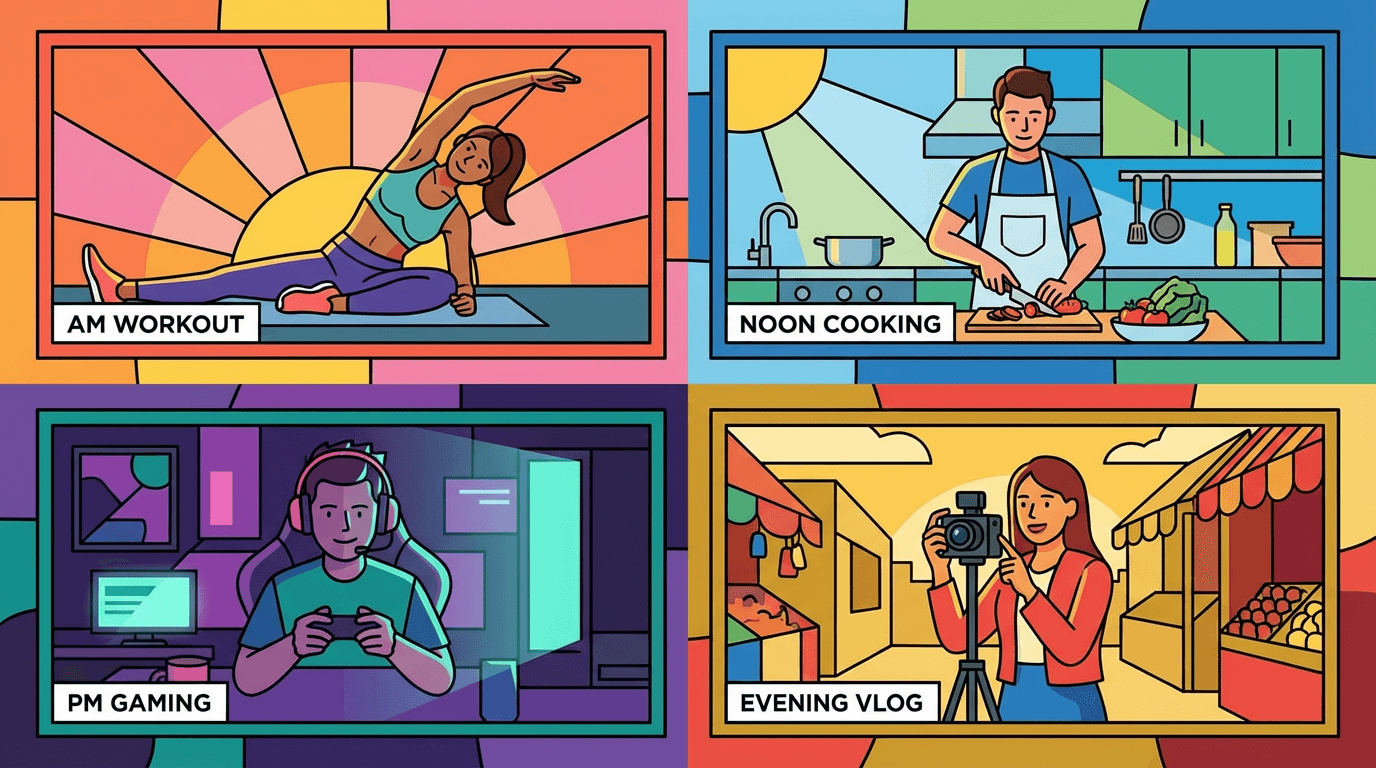
Different niches attract audiences with different daily routines. A finance audience has different scrolling habits than a gaming audience. Here are practical posting time recommendations for the most popular Shorts niches in 2026.
Finance and Business
Finance audiences tend to be professionals or aspiring investors who check content during specific windows. Early morning between 7 AM and 8 AM works well because many finance-focused viewers check news and updates as part of their morning routine. Lunch hour between 12 PM and 1 PM catches people during their midday break. Early evening between 5 PM and 7 PM performs well as people shift from work mode to personal time.
Weekday performance is generally stronger than weekends for finance content. Monday through Thursday tends to see the highest engagement because financial topics feel more relevant during the work week.
Gaming
Gaming audiences skew younger and tend to be most active later in the day. The strongest window is typically between 3 PM and 9 PM, after school or work ends. Late night from 9 PM to midnight is also strong for gaming content, especially on weekends. Weekends overall tend to outperform weekdays for gaming Shorts because the audience has more free time.
Friday evenings and Saturday afternoons are particularly good publishing windows for gaming content. These are moments when viewers are settling into extended leisure time and are more likely to engage with gaming content in their feed.
Fitness and Health
Fitness audiences often check content during motivation windows. Early morning between 6 AM and 8 AM catches people planning or starting their workouts. Late morning between 10 AM and 12 PM works for the post-workout crowd. Early evening between 5 PM and 7 PM catches people heading to or returning from the gym.
Monday tends to be the strongest weekday for fitness content. There is a well-documented pattern of higher fitness engagement at the start of the week when motivation peaks.
Education and How-To
Educational content performs well during study and learning windows. Late morning between 9 AM and 12 PM catches students and self-learners during focused hours. Early afternoon between 1 PM and 3 PM works well for tutorial content. Evening between 6 PM and 9 PM catches people learning after work or school.
Weekdays generally outperform weekends for educational Shorts, with Tuesday through Thursday showing the strongest engagement in most cases. This makes sense because learning-focused behavior tends to align with structured weekday routines.
Entertainment and Comedy
Entertainment is one of the broadest niches and audiences tend to be active across wider windows. The strongest period is typically evening to late night, from 6 PM to midnight. Weekend afternoons from 1 PM to 5 PM also perform well. Comedy and entertainment Shorts can perform at almost any time because the content is low-commitment and appeals to casual scrolling.
If you are in entertainment, consistency matters more than hitting a perfect window. Publishing at the same time each day helps the algorithm build a predictable pattern for your content.
Cooking and Food
Food content has natural peaks around mealtimes. Late morning between 10 AM and 12 PM catches people thinking about lunch. Late afternoon between 4 PM and 6 PM catches people planning dinner. Weekend mornings between 9 AM and 11 AM work well for brunch-style or recipe content.
Food Shorts also tend to perform well during holiday periods and weekends when people have more time to cook and are actively looking for inspiration.
Technology and Reviews
Tech audiences tend to be online during work hours and evenings. Late morning between 10 AM and 12 PM catches tech professionals during breaks. Evening between 6 PM and 9 PM is the strongest general window. Weekdays typically outperform weekends, though major product launches can shift this pattern temporarily.
Lifestyle, Beauty, and Fashion
These niches tend to see the highest engagement during late morning through early afternoon, roughly 10 AM to 2 PM, and again in the evening from 7 PM to 10 PM. Weekend engagement is generally strong for lifestyle content because viewers have more time to browse and shop.
For creators running faceless YouTube Shorts in AI-powered niches, these timing patterns still apply because the audience behavior is driven by the niche, not the production style.
Best Times to Post YouTube Shorts by Region
If your audience is concentrated in a specific region, optimizing for that region's active hours is straightforward. The challenge comes when your audience spans multiple time zones.

United States
The US spans four main time zones, which makes targeting tricky. The safest approach is to optimize for Eastern Time (ET) since it covers the largest population center and aligns reasonably well with Central Time.
Strong general windows for US audiences are 7 AM to 9 AM ET for morning engagement, 12 PM to 2 PM ET for lunchtime, and 5 PM to 9 PM ET for the evening peak. If you need to pick one time, publishing between 5 PM and 7 PM ET tends to catch the widest active audience because East Coast viewers are in prime evening time while West Coast viewers are finishing their afternoon.
United Kingdom and Western Europe
UK audiences show strong engagement between 12 PM and 2 PM GMT during lunch and 5 PM to 9 PM GMT in the evening. For Western Europe broadly, the patterns are similar but shifted by one hour for CET time zones. Weekend mornings from 9 AM to 11 AM tend to perform better in Europe than in the US for lifestyle and entertainment content.
India and South Asia
India is one of the largest YouTube markets and has its own distinct patterns. Strong windows include 9 AM to 11 AM IST for morning content, 1 PM to 3 PM IST during the afternoon lull, and 7 PM to 11 PM IST for the evening peak, which tends to be the strongest window overall. Late night engagement from 10 PM to midnight IST is also significant in India, especially for entertainment and comedy content.
Southeast Asia
Countries like Indonesia, Philippines, Thailand, and Vietnam show strong engagement in the evening from 7 PM to 10 PM local time. Lunch breaks between 12 PM and 1 PM are another peak. Mobile-first viewing habits in this region mean that Shorts consumption is high throughout the day, but evenings consistently win.
Latin America
Brazil, Mexico, and other Latin American markets tend to show peak Shorts engagement between 7 PM and 11 PM local time. The evening window skews later than in the US or Europe. Weekend afternoons from 2 PM to 5 PM are also strong for entertainment and lifestyle content.
Australia and New Zealand
For AEDT/AEST audiences, the evening window from 6 PM to 9 PM performs well. Lunch breaks between 12 PM and 1 PM provide a secondary peak. Due to the relatively smaller audience size compared to other regions, Australian creators often benefit from also targeting US or UK time zones if their content has global appeal.
What to Do When Your Audience Spans Multiple Regions
Many Shorts creators have audiences spread across two or more time zones. If you check YouTube Studio analytics and see that your viewers come from the US, UK, and India, optimizing for a single timezone becomes impossible.
The practical approach is to prioritize the region where the majority of your viewers are located. If 60% of your audience is in the US, optimize for US evening time even if it means your UK viewers see the Short at midnight. The algorithm will still push the Short to UK viewers later if the initial US engagement is strong.
For creators who want to serve multiple regions, posting twice per day at different times can help. One Short optimized for your primary region's peak hours and another optimized for your secondary region. This requires higher volume, but tools like Text2Shorts make it realistic to produce multiple Shorts per day without spending hours on each one.
You can find your audience's geographic breakdown in YouTube Studio under the Audience tab. This data tells you exactly which countries and regions your viewers come from, which takes the guesswork out of timezone optimization.
How to Find Your Own Best Posting Time Using Analytics
The niche and region guidelines above are starting points. Your actual best time depends on your specific audience, and the only way to find it is through your own data.
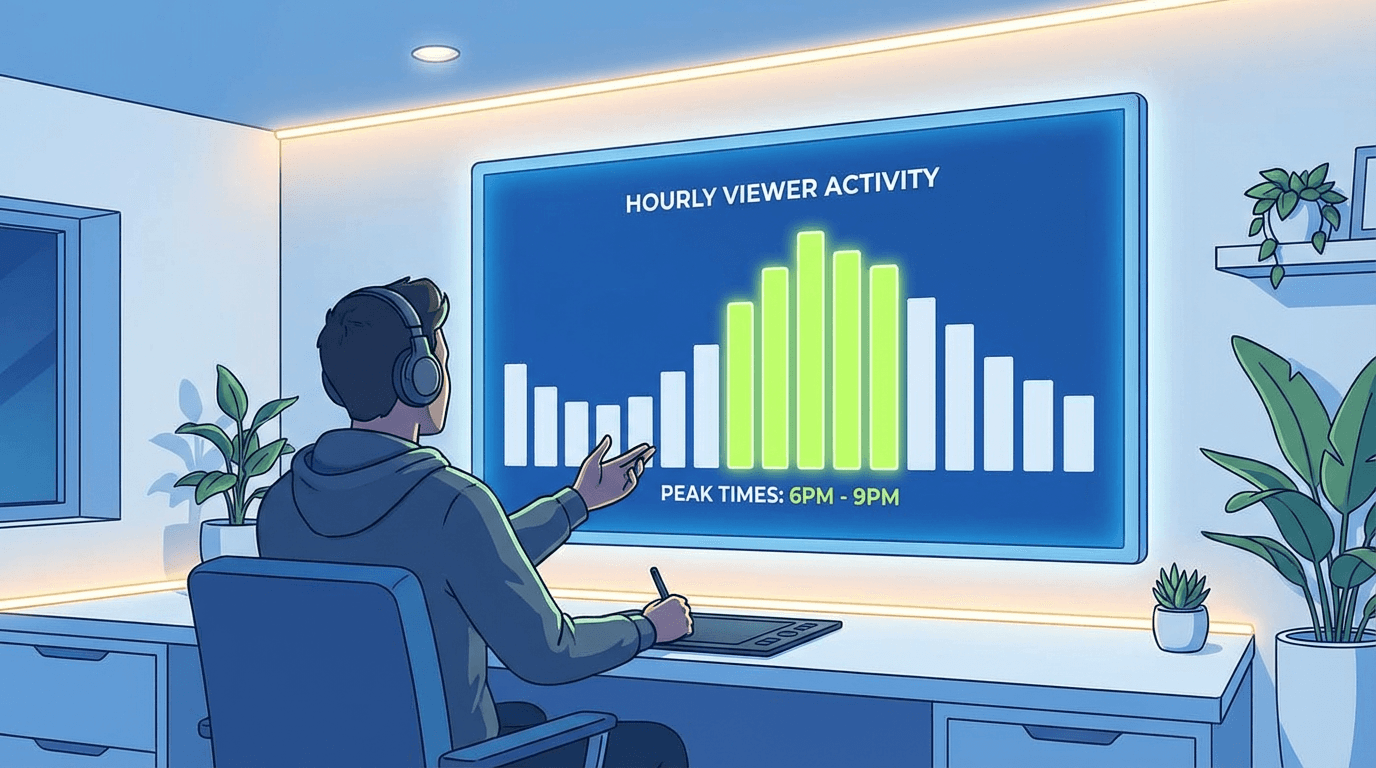
YouTube Studio provides two key pieces of information for this. First, the "When your viewers are on YouTube" chart shows hourly activity patterns for your audience. This tells you exactly when your subscribers and regular viewers are active on the platform. Second, the performance data for individual Shorts lets you compare how Shorts published at different times performed in their first 24 to 48 hours.
A practical testing approach looks like this. Spend two weeks publishing at the same time every day to establish a baseline. Then shift your posting time by two hours and maintain that for another two weeks. Compare average performance across the two periods. Repeat until you find the window that consistently delivers the strongest early engagement.
The key is to only change one variable at a time. If you change your posting time and your content style at the same time, you cannot attribute any performance difference to timing alone.
For a detailed walkthrough of reading and interpreting these analytics, check out our guide on YouTube Shorts analytics in 2026. Understanding what each metric means helps you make better decisions about timing and every other aspect of your Shorts strategy.
The Scheduling Mistake Most Beginners Make
The most common timing mistake is not about choosing the wrong hour. It is about being inconsistent.
Many creators obsess over finding the perfect posting time, then publish sporadically. They post at 6 PM on Monday, skip Tuesday, post at 11 AM on Wednesday, then disappear for a week. This inconsistency sends mixed signals to the algorithm and makes it harder for YouTube to build a reliable distribution pattern for your content.
A consistent posting schedule at a decent time will outperform perfect timing with an erratic schedule every time. If you publish every day at 5 PM, the algorithm learns to expect your content and begins testing it with your audience predictably. If you publish randomly, the algorithm has no pattern to work with.
This is why having a 30-day YouTube Shorts plan matters more than finding the theoretically perfect posting time. A plan gives you structure, keeps you consistent, and provides enough data to make timing optimizations meaningful.
Does YouTube's Scheduling Feature Help
YouTube allows creators to schedule Shorts in advance through YouTube Studio. This feature is useful for maintaining consistency because you can batch-create content and schedule it to publish at your chosen time, even when you are busy or in a different timezone.
Scheduled Shorts perform the same as manually published Shorts in terms of algorithm treatment. YouTube does not penalize or deprioritize scheduled content. The only thing that matters is when the Short becomes public, not when it was uploaded.
For creators using AI tools to produce Shorts efficiently, scheduling adds another layer of workflow optimization. You can generate several Shorts in one session using Miraflow AI, download them, and schedule them across the week at your optimal posting times. This separates the creation process from the publishing process and makes daily consistency achievable even with a busy schedule.
How Posting Frequency Interacts with Timing
Timing and frequency work together. If you post once a day, choosing the right time matters more because you only get one shot at catching the active audience. If you post three times a day, each Short has a different opportunity to catch viewers at different points.
For most creators in 2026, posting one to two Shorts per day is a sustainable and effective frequency. If you post once, optimize for your strongest window, which is usually the evening peak for your primary audience region. If you post twice, space them out. Publish one in the morning window and one in the evening window to capture two different engagement peaks.
Posting more than three times per day is generally not recommended unless you have a high-volume strategy with proven content formats. More frequent posting does not hurt your channel, but lower quality Shorts published just to hit a quota can drag down your overall engagement metrics.
The relationship between posting frequency and the algorithm is covered in more detail in our guide on YouTube Shorts best practices in 2026, which includes recommendations for different channel sizes and goals.
Timing and the First 3 Seconds Connection
Here is something most creators do not think about. Posting time does not just affect how many people see your Short. It affects how they see it.
Viewers scrolling during their morning commute have different attention levels than viewers browsing late at night. Morning viewers tend to scroll faster and are less patient. Evening viewers tend to be more relaxed and willing to watch longer. Late night viewers are often in a passive consumption mode and may watch more content but engage less through likes and comments.
This means your hook strategy might need to vary based on when you post. A Short published during a high-scroll morning window needs an even stronger visual hook in the first frame. A Short published during a relaxed evening window can afford slightly more setup time before the payoff.
Understanding why the first 3 seconds of YouTube Shorts matter becomes even more important when you factor in the attention state of viewers at different times of day. If you post during peak scroll hours, your hook has to work harder.
Best Times Quick Reference by Niche
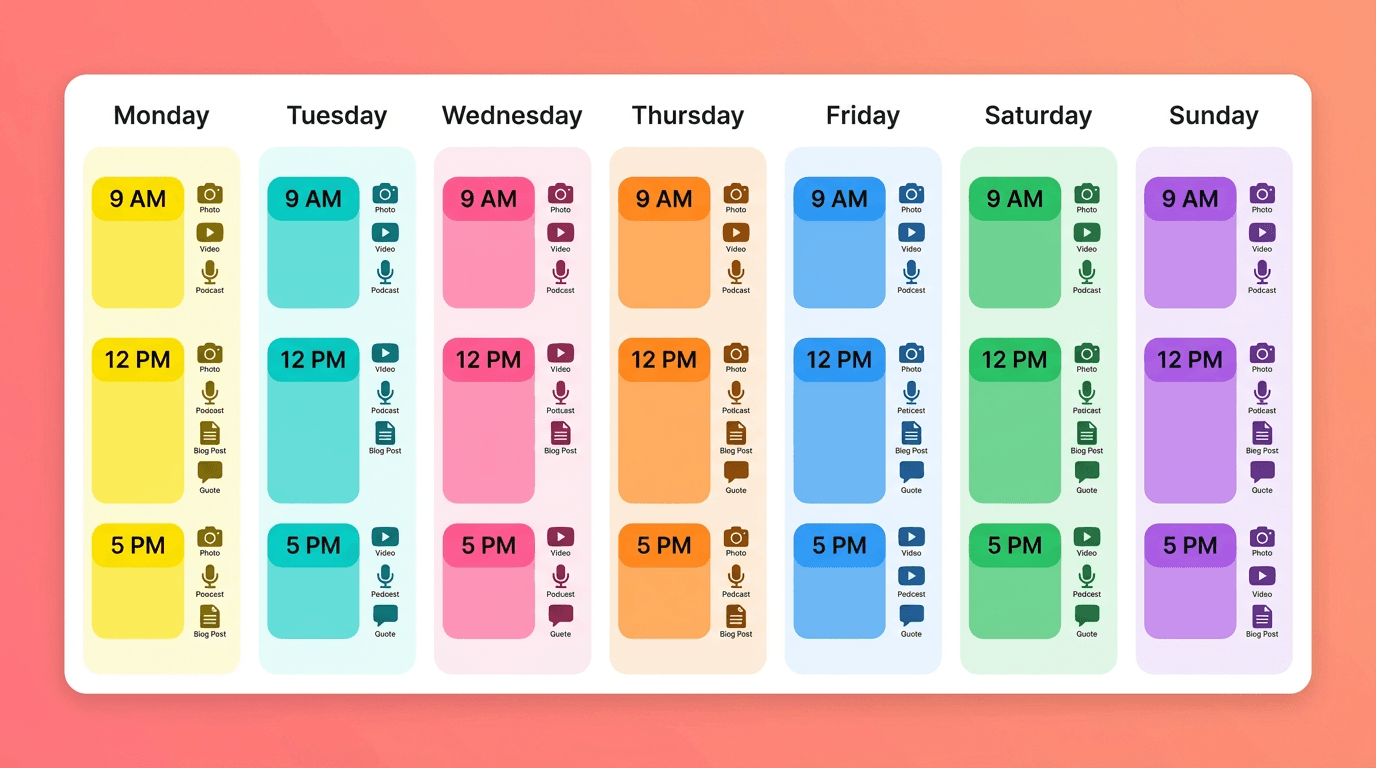
Here is a condensed reference table you can save and use when planning your posting schedule. All times are in the local timezone of your primary audience.
Finance and Business: Weekdays, 7 to 8 AM or 5 to 7 PM. Monday through Thursday strongest.
Gaming: Weekdays 3 to 9 PM, weekends 12 to 9 PM. Friday evening and Saturday afternoon peak.
Fitness and Health: Weekdays 6 to 8 AM or 5 to 7 PM. Monday strongest.
Education and How-To: Weekdays 9 AM to 12 PM or 6 to 9 PM. Tuesday through Thursday peak.
Entertainment and Comedy: Daily 6 PM to 12 AM. Weekend afternoons 1 to 5 PM also strong.
Cooking and Food: Daily 10 AM to 12 PM or 4 to 6 PM. Weekends 9 to 11 AM.
Technology and Reviews: Weekdays 10 AM to 12 PM or 6 to 9 PM.
Lifestyle, Beauty, and Fashion: Daily 10 AM to 2 PM or 7 to 10 PM. Weekends strong.
These are starting points based on general audience behavior patterns. Always validate with your own analytics and adjust based on what you observe.
Best Times Quick Reference by Region
United States (optimize for Eastern Time): 5 PM to 9 PM ET strongest. Secondary peaks at 7 to 9 AM ET and 12 to 2 PM ET.
United Kingdom: 5 PM to 9 PM GMT strongest. Lunch at 12 to 2 PM GMT secondary.
India: 7 PM to 11 PM IST strongest. Morning at 9 to 11 AM IST secondary.
Southeast Asia: 7 PM to 10 PM local time strongest. Lunch at 12 to 1 PM secondary.
Latin America: 7 PM to 11 PM local time strongest. Weekend afternoons secondary.
Australia: 6 PM to 9 PM AEST strongest. Lunch at 12 to 1 PM secondary.
Common Timing Mistakes to Avoid
Publishing at the same time regardless of daylight saving changes. If your audience is in the US and clocks shift, your 5 PM publish time might suddenly hit at 4 PM or 6 PM for your viewers. Adjust your schedule when daylight saving time changes occur.
Optimizing for your own timezone instead of your audience's. If you live in London but your audience is in New York, your posting schedule should follow Eastern Time, not GMT. Always check YouTube Studio to see where your viewers actually are.
Changing your posting time too frequently. Give each timing experiment at least two weeks before evaluating results. Switching every few days creates noise and makes it impossible to draw conclusions.
Ignoring the difference between weekdays and weekends. Most niches show different engagement patterns on weekdays versus weekends. If you use the same posting time seven days a week, you are likely suboptimal on at least two of those days.
Assuming viral Shorts follow timing rules. When a Short goes viral, timing becomes almost irrelevant because the algorithm pushes it to massive audiences across all time zones. Timing optimization matters most for the Shorts that are not viral, which is the majority of your content. Consistent good performance on non-viral Shorts is what builds a channel.
How to Build a Sustainable Posting Schedule
The best posting schedule is one you can actually maintain. Knowing that 6 PM is your optimal time does not help if you cannot reliably produce and publish content at 6 PM every day.

A practical approach is to separate creation from publishing. Batch-create your Shorts during a dedicated production session, then schedule them to publish at your optimal times throughout the week. This removes the pressure of daily production while maintaining daily consistency.
For creators using AI-powered workflows, this batch approach is especially efficient. You can generate multiple Shorts in one sitting with tools like Text2Shorts inside Miraflow AI, create matching thumbnails with the YouTube Thumbnail Maker, and generate background music with the AI Music Generator. Then schedule everything for the week ahead.
This workflow means you spend a few focused hours on content creation once or twice per week, but your channel publishes consistently every day at the right time. It is how many successful Shorts creators manage daily publishing without burning out.
The Role of Content Length in Timing Strategy
The optimal length of your Short can interact with your posting time. Shorter Shorts (under 30 seconds) tend to perform well during high-scroll windows like morning commutes because viewers can watch them quickly and loop them. Longer Shorts (45 to 90 seconds) tend to perform better during relaxed viewing windows like evenings when viewers are willing to invest more time.
This does not mean you need to create different length Shorts for different times of day. But if you naturally produce both short and longer Shorts, consider publishing the shorter ones during morning peaks and the longer ones during evening peaks.
For a deeper look at how length affects performance in 2026, our guide on how long YouTube Shorts should be covers the current best practices and how the algorithm treats different durations.
When Timing Does Not Matter
It is worth acknowledging the scenarios where posting time has minimal impact.
If your Short goes viral, timing becomes irrelevant. The algorithm pushes viral content to massive audiences across all time zones over days or even weeks. A viral Short posted at 3 AM can outperform a non-viral Short posted at the perfect time.
If your channel is brand new with no subscribers and no viewing history, there is no established audience to optimize timing for. In this case, focus on content quality and consistency first. Once you have a few weeks of data, you can start optimizing timing based on what the analytics reveal.
If you are getting zero views on your videos, the problem is almost certainly not timing. It is more likely a content, hook, or channel setup issue that needs to be addressed before timing optimization would make any difference.
Conclusion
Posting time is a lever, not a magic button. It improves the probability that your Short reaches the right viewers during its critical initial testing phase. Combined with strong hooks, good retention, and consistent publishing, optimal timing gives your Shorts the best possible chance in the algorithm.
Start with the niche and region guidelines in this guide. Publish at those times for two to three weeks. Then check your analytics, compare performance across different posting windows, and adjust. Over time, your data will tell you exactly when your audience is most responsive.
The creators who grow on Shorts in 2026 are the ones who treat timing as one piece of a larger system. They combine the right posting time with the right content length, strong first-second hooks, clean thumbnails, and a sustainable publishing schedule. Get the system right, and the algorithm does the rest.
FAQ: Best Times to Post YouTube Shorts in 2026
What is the best time to post YouTube Shorts in 2026?
The best time to post YouTube Shorts in 2026 depends on when your audience is actually active, but for many channels the strongest general window is in the evening, usually between 5 PM and 9 PM in your audience’s local timezone. Morning and lunch-hour windows can also perform well, especially for certain niches. The best approach is to use these common peak periods as a starting point, then refine based on your own analytics.
Does posting time matter for YouTube Shorts?
Yes, posting time still matters for YouTube Shorts, even though Shorts are distributed through the feed instead of mainly through subscribers. Timing affects the first group of viewers YouTube tests your Short with. If you post when your target audience is active, that first test is more likely to get stronger retention and engagement.
What is the best time to post YouTube Shorts for views?
For general view growth, the safest starting point is usually your audience’s evening downtime, often between 5 PM and 9 PM local time. That is when many viewers are done with work or school and are more likely to scroll. Secondary good windows are often 7 AM to 9 AM and 12 PM to 2 PM.
What is the best day and time to post YouTube Shorts?
There is no single best day for every channel, but weekdays often work well for education, business, fitness, and tech content, while weekends tend to be stronger for gaming, entertainment, food, and lifestyle content. In many cases, the best time on a strong day is still the evening window, especially if your audience is most active after work or school.
What is the best time to post YouTube Shorts in the US?
For US audiences, evening Eastern Time is often the safest default because it overlaps well with the country’s largest population base and still catches later afternoon users on the West Coast. A common strong posting window is 5 PM to 9 PM ET, with 7 AM to 9 AM ET and 12 PM to 2 PM ET as secondary windows.
What is the best time to post YouTube Shorts by niche?
Different niches tend to perform best at different times because audience routines vary. Finance and business content often works well in the morning or early evening, gaming performs better in the afternoon and late evening, fitness often peaks early morning and after work, and entertainment usually performs strongest from evening to late night. The best niche-specific schedule is the one that matches when your target viewer naturally scrolls.
Should I post YouTube Shorts in the morning or at night?
Both can work, but they often serve different audience behaviors. Morning posting can perform well for fast, easy-to-consume Shorts, especially in niches like finance, fitness, or productivity. Night posting tends to work better for entertainment, gaming, storytelling, and other content people consume when they are more relaxed.
How do I find the best time to post YouTube Shorts for my channel?
The best way is to use YouTube Studio analytics and test consistently. Look at when your viewers are on YouTube, then publish at one fixed time for about two weeks before comparing results to another time slot. This gives you real data from your own audience instead of relying only on general advice.
Should I post YouTube Shorts at the same time every day?
Yes, consistency usually matters more than chasing a perfect hour. Posting at the same time each day helps build a predictable pattern for both your audience and the algorithm. A solid, repeatable schedule often outperforms random posting, even if the random times are sometimes technically “better.”
What if my YouTube Shorts audience is in different countries?
If your audience is spread across multiple regions, prioritize the timezone where most of your viewers are located. If one country clearly dominates your audience, optimize for that region first. If your audience is split across major regions, posting more than once a day at different times can help you reach multiple active windows.
Is it bad to post YouTube Shorts late at night?
Not always. Late-night posting can work well for niches like gaming, entertainment, and comedy, especially if your audience is younger or naturally active later in the day. But if your main audience is professionals, students, or region-specific viewers who are usually offline at that time, late-night posting may weaken your initial performance.
Can the wrong posting time hurt a YouTube Short?
Yes, the wrong posting time can hurt a Short’s early performance if it causes YouTube to test the video with viewers who are less active or less interested at that moment. That does not mean the video is doomed, but it can reduce the chances of a strong initial push. Timing will not save weak content, but poor timing can make strong content harder to launch.