The Future of Content Creation: What Changes in 2026 and Beyond

Written by
Jay Kim
How AI is reshaping content creation in 2026. Covers video, images, thumbnails, music, new formats, creator workflows, and what to expect beyond 2026.
Most creators are still producing content the same way they did in 2023. Write a script. Film something. Edit for hours. Upload. Hope the algorithm picks it up.
That workflow is not broken. But it is increasingly slow compared to what the tools now allow.
2026 is the year where AI content creation stopped being experimental and became the default production method for a growing number of creators, marketers, and businesses. Not because AI replaced creativity. But because it removed the bottleneck between having an idea and publishing it.
This guide breaks down the biggest shifts happening in content creation right now, what is changing across video, images, music, and distribution, what new formats are emerging, and how creators who adapt early are building real advantages over those who wait.
If you create content in any form, understanding these shifts is not optional. It is the difference between leading and catching up.
The Core Shift: From Production-Heavy to Idea-Heavy
For most of content creation history, the hard part was production. You needed cameras, editing software, design skills, and time. Lots of time.
The bottleneck was never ideas. Most creators have more ideas than they can execute. The bottleneck was turning those ideas into finished content.
That bottleneck is disappearing.
In 2026, the production layer is increasingly handled by AI. Video generation, image creation, thumbnail design, music composition, and even script writing can be done from a browser in minutes. Platforms like Miraflow AI let creators move from idea to script to visual to video to thumbnail to music in a single workflow without switching tools.
This means the competitive advantage is shifting. It is no longer about who has the best camera or the most editing skills. It is about who has the best ideas, the clearest strategy, and the fastest iteration cycle.
Creators who understand this shift are publishing more, testing more, and learning faster. Those who are still spending three days editing a single video are falling behind, not because their content is bad, but because their output velocity cannot keep up.
What Changed in AI Video Creation
AI video has made the biggest leap of any content category in the past 12 months.

A year ago, AI-generated video looked artificial. Movements were stiff, faces were inconsistent, and anything longer than a few seconds fell apart. That is no longer the case.
Models like Veo3 and Veo3.1 now produce 8-second clips with smooth cinematic motion, realistic lighting, and photorealistic textures. These clips are being used in product ads, social media content, storytelling videos, and even short films.
The key development is not just visual quality. It is promptability. Creators can now describe a scene the way a filmmaker would describe a shot, and the model produces something usable on the first or second try.
For example, a prompt like "a young woman walks through a neon-lit city street at night, reflections on wet pavement, slow dolly shot, cinematic color grading" produces output that looks like it came from a real production.
If you want to understand how to write these prompts effectively, the guide on how to write effective prompts for Veo3, Veo3.1, and Sora 2 covers the exact formula including subject, setting, camera, lighting, and mood.
The practical impact is enormous. Creators who previously could not afford video production now have access to cinematic visuals. Solo creators can produce content that looks like it had a team behind it.
Short-Form Video Is Now Prompt-First
Short-form video dominates every platform. YouTube Shorts, Instagram Reels, and TikTok are where attention lives. But the production model for short-form content has fundamentally changed.
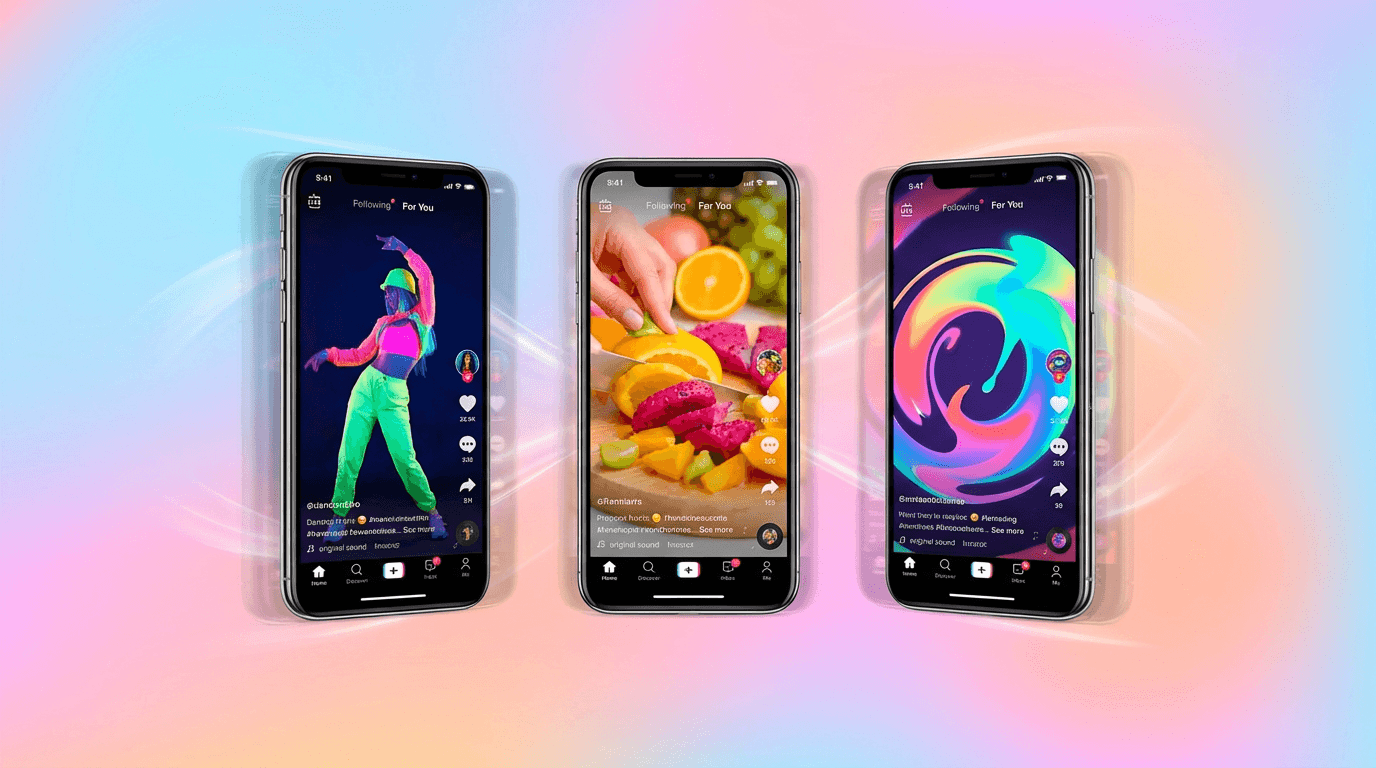
The traditional workflow for creating a 60-second reel involved scripting, filming or sourcing footage, editing on a timeline, adding music, captioning, and exporting. Even a simple reel could take one to two hours.
The prompt-first workflow flips that entirely. You describe a topic. The system generates a script, creates matching visuals for each scene, and combines everything into a finished vertical video.
Text2Shorts on Miraflow AI is built around this exact model. You enter a topic, choose a visual style (animation or realistic), select a voice, pick a length, and generate. The entire reel is produced automatically. You can use one-click generation for speed or step-by-step mode when you want more control over the script and individual scenes.
This shift matters because short-form platforms reward volume and iteration. The YouTube Shorts algorithm responds well to daily uploads, and creators who can publish consistently outperform those who publish sporadically with higher production value.
When production time drops from two hours to ten minutes, the math changes. You can test five ideas in the time it used to take to produce one. That speed of experimentation is what separates growing channels from stagnant ones.
AI Image Generation Reached Professional Quality
AI-generated images are no longer a novelty. They are a production tool.
In 2026, AI image generators produce outputs that are used commercially for blog thumbnails, YouTube thumbnails, social media posts, product visuals, marketing materials, and digital products.
The quality threshold crossed a critical line. Images now have accurate hands, consistent faces, clean backgrounds, and natural lighting. The old tell-tale signs of AI images, like extra fingers or melted text, are increasingly rare with well-written prompts.
What makes the current generation of image tools different is the combination of text-to-image and image-to-image capabilities. You can start from a text description and generate something from scratch. Or you can upload an existing photo and transform it, changing the style, background, clothing, or setting while preserving the person's identity.
The AI Image Generator on Miraflow AI supports both workflows along with image inpainting, where you mask a specific area of an image and replace only that region. This is especially useful for editing product photos, swapping backgrounds, or adjusting details without regenerating the entire image.
Popular use cases that have gone viral include collectible 3D figurines, time-travel aesthetic portraits, celebrity selfie composites, and before-and-after glow-up transformations. If you want to see the exact prompts behind these formats, the Nano Banana prompt guide includes 12 proven templates you can copy and customize.
The bigger trend here is that visual content creation is no longer gated by design skill. Anyone who can describe what they want can produce it.
Thumbnails Are Now a Generative Process
YouTube thumbnails have always been one of the highest-leverage assets a creator can optimize. A better thumbnail directly improves click-through rate, which directly influences how the algorithm distributes a video.
In 2026, the thumbnail creation process has shifted from manual design to generative iteration.
Instead of opening Photoshop, cutting out a face, adding text, and arranging layers, creators now enter a prompt, upload a reference image, and generate multiple thumbnail options in seconds. They pick the best one, adjust if needed, and publish.
The YouTube Thumbnail Maker on Miraflow AI handles this workflow. You can enter a prompt describing the thumbnail you want, upload a photo of your face or a product, add text that should appear on the thumbnail, and even paste a YouTube URL to pull in your existing thumbnail for editing.
This generative approach changes how creators think about thumbnails. Instead of designing one thumbnail and hoping it works, you can generate ten variations and A/B test the best performers.
If you want prompt inspiration, the guide on best AI prompts for YouTube thumbnails in 2026 includes ready-to-use templates across multiple niches.
The creators who are winning the CTR game in 2026 are not better designers. They are better at iterating quickly and letting data guide their choices. AI makes that iteration almost free.
AI Music Removes the Last Production Barrier
Background music was one of the last remaining friction points in content creation. Finding the right track meant browsing royalty-free libraries, hoping something fit the mood, and dealing with licensing restrictions.
AI music generation has eliminated that step entirely.
In 2026, creators can describe the music they want and have it generated in under a minute. Need a lo-fi study track for a YouTube background video? Describe it. Need an upbeat electronic track for a product ad? Describe it. Need a calm acoustic piece for a podcast intro? Describe it.
The AI Music Generator on Miraflow AI offers two modes. Simple mode lets you type a description and toggle instrumental if you do not want vocals. Custom mode gives you control over lyrics structure, duration, BPM, key, and scale.
This matters beyond convenience. It means every piece of content a creator produces can have a unique, purpose-built soundtrack. No more generic stock music that five thousand other videos also use.
The guide on AI music prompts for YouTube, Reels, and TikTok covers genre-specific prompt templates if you want to start generating music that fits specific content types.
For creators building YouTube music channels, playlists for studying, sleeping, or working are a growing category. The guide on AI music for YouTube playlists covers how to approach this format.
7 Content Formats That Are Emerging in 2026
The tools are new, but what matters more is how creators are using them. Several content formats have emerged or accelerated this year that did not exist or were not practical before.
AI-generated explainer Shorts. Creators are using Text2Shorts to turn complex topics into 30 to 60 second visual explainers. These perform well in education, finance, and science niches because the visual generation makes abstract concepts tangible.
Cinematic micro-stories. 8-second cinematic clips generated with AI are being used as standalone content on social media. A single dramatic scene with a caption or voiceover can generate millions of views. These require nothing more than a well-written prompt.
AI thumbnail A/B testing at scale. Creators are generating dozens of thumbnail variations for a single video and testing them against each other. This was always theoretically possible with manual design, but the time cost made it impractical. AI makes it trivial.
Prompt-driven music channels. YouTube channels that publish AI-generated lo-fi, ambient, or study music playlists are growing rapidly. The content is entirely generated, and the channels monetize through ads and listener retention.
Faceless vertical series. Instead of one-off Shorts, creators are building narrative series with consistent characters and themes, all generated with AI. The AI Shorts formats that go viral in 2026 guide covers which structures perform best.
Visual prompt packs as products. Creators who master AI image prompts are packaging their best prompts into downloadable packs and selling them. This is a digital product that costs nothing to produce and has unlimited inventory.
AI-assisted course content. Online educators are using AI to generate visual aids, animated explanations, and even full video lessons. The production time for an online course has dropped dramatically, making it viable for more creators to enter the education market.
What the Algorithm Rewards Has Not Changed
Here is something important to remember. While production methods are changing rapidly, what the algorithms reward has stayed remarkably consistent.
YouTube still prioritizes watch time, click-through rate, and viewer satisfaction. Instagram still rewards engagement and shares. TikTok still favors content that keeps people watching.
AI changes how you produce content. It does not change why content performs well.
A video with great production value but a weak hook will still underperform. A thumbnail that looks stunning but does not create curiosity will still get skipped. A reel that looks cinematic but has no clear point will still get swiped past.
The creators who are succeeding with AI tools in 2026 are the ones who combine fast production with strong content strategy. They use AI to remove the production bottleneck, but they invest their saved time into understanding what their audience wants, testing different hooks, analyzing performance data, and refining their approach.
If you want to understand how to align your content with what platforms actually reward, the guide on why YouTube Shorts first 3 seconds matter explains the mechanics behind retention and how to capture attention immediately.
The Creator Workflow of 2026
The daily workflow of a content creator in 2026 looks fundamentally different from even two years ago.
Morning: Ideation and scripting. The creator reviews analytics, identifies what is performing, and brainstorms new content angles. This is the human-driven part that AI cannot replace.
Mid-morning: Production. Using AI tools, the creator generates the day's content. This might include three to five YouTube Shorts via Text2Shorts, a set of thumbnails for upcoming videos, a batch of social media images, and background music for a longer video project.
Afternoon: Publishing and optimization. Content goes live across platforms. Titles, descriptions, and thumbnails are optimized based on data from previous posts. Multiple thumbnail variations might be tested.
Evening: Analysis and iteration. The creator reviews performance metrics. Which Shorts gained traction? Which thumbnails had the highest CTR? What topics resonated? These insights feed into the next day's ideation.
The key difference is where the creator's time goes. In 2023, most time was spent on production. In 2026, most time is spent on strategy and iteration. Production happens in the background, handled by AI tools.
This is not a theoretical future. This is what productive creators are doing right now.
What This Means for Different Types of Creators
The impact of these changes varies depending on where you are in your creator journey.

New creators have the biggest advantage. The entry barrier has never been lower. You do not need equipment, software expertise, or a production team. You need an idea, a browser, and consistency. If you are just starting, the guide on getting your first 1,000 YouTube subscribers covers the practical steps.
Mid-level creators with established audiences can use AI to dramatically increase output volume without increasing effort. If you are currently posting twice a week, AI tools might let you post daily while spending the same amount of time. That volume increase compounds over time as the algorithm has more content to distribute.
Established creators benefit most from the iteration speed. They already have an audience and data. AI lets them test more variations, optimize faster, and maintain consistency during periods when they might otherwise burn out.
Businesses and marketers can now produce content at a fraction of the traditional cost. A small business that could not afford a video production agency can now generate product videos, social media content, and thumbnails in-house using AI tools.
5 Predictions for Content Creation Beyond 2026
Based on current trajectories, here is where things are heading.
Real-time content generation will become standard. Instead of producing content in advance, creators will generate content on the fly based on trending topics, audience requests, or real-time data. The production time will shrink from minutes to seconds.
AI-generated content will become platform-native. Major platforms are already building AI creation tools directly into their apps. This will make AI-assisted content the default rather than the exception. Creators who resist AI tools will be at a structural disadvantage.
Personalized content at scale will emerge. Creators and businesses will generate multiple versions of the same content, optimized for different audience segments, platforms, or languages. A single video idea might automatically become a YouTube Short, an Instagram Reel, and a TikTok, each with platform-specific adjustments.
Quality expectations will rise. As AI makes production easier, the baseline quality level goes up. Content that looked good in 2024 will look average in 2027. Creators will need to continuously level up their prompting skills, creative vision, and storytelling ability.
Strategy becomes the only real moat. When everyone has access to the same production tools, the differentiator is creative strategy, audience understanding, and brand identity. The creators who invest in understanding their audience and developing a unique voice will outperform those who rely on tools alone.
Common Mistakes Creators Make During This Transition
Understanding what to avoid is as valuable as knowing what to do.
Waiting for the tools to be perfect. No AI tool is perfect. But the creators who start using imperfect tools today are building skills, audiences, and workflows that compound over time. Waiting for perfection means missing the window.
Using AI as autopilot instead of an assistant. AI handles production. It does not handle strategy. Creators who generate content without thinking about audience, hooks, pacing, or platform dynamics produce a lot of content that nobody watches.
Ignoring the fundamentals. AI does not change the fundamentals of good content. You still need strong hooks, clear value propositions, effective thumbnails, and engaging storytelling. AI just makes it faster to produce the content once you have those fundamentals right.
Not iterating on prompts. The first prompt rarely produces the best result. The creators who get the best outputs are the ones who generate, review, adjust their prompt, and regenerate. Treat prompting as a skill that improves with practice, not a one-and-done task.
Over-producing without analyzing. Publishing ten Shorts per day means nothing if you never look at which ones performed and why. The feedback loop between publishing and analyzing is what turns volume into growth.
How to Start Adapting Today
If you are reading this and realizing your workflow needs an update, here is a practical starting point.
First, pick one AI tool and learn it well. If you create video content, start with Miraflow AI's Cinematic Video Generator or Text2Shorts. If you focus on visuals, start with the AI Image Generator. If thumbnails are your priority, start with the YouTube Thumbnail Maker. Do not try to learn everything at once.
Second, run a one-week experiment. Commit to publishing AI-assisted content every day for seven days. Track what happens. Note what works, what does not, and where the workflow feels smooth versus clunky.
Third, study what is already working. Look at creators in your niche who are using AI tools effectively. Analyze their content. Reverse-engineer their approach. The community content section on Miraflow AI lets you explore what other creators are making and gather inspiration.
Fourth, invest time in learning to write better prompts. Prompting is the new core skill for content creators. The better your prompts, the better your outputs, and the less time you spend on revisions. This skill compounds over time and applies across every AI tool you use.
Conclusion
The future of content creation is not a distant concept. It is happening right now, in 2026, in browsers and phones around the world.
The creators who thrive will be the ones who treat AI as a production layer that frees them to focus on what actually matters. Strategy, storytelling, audience connection, and creative vision.
The tools will keep improving. The quality ceiling will keep rising. But the fundamental principle stays the same. Great content starts with a clear idea and a deep understanding of who it is for.
AI just makes it possible to bring that idea to life faster than ever before.
Start building your workflow now. The gap between creators who adapted early and those who waited is only going to widen.