How to Go Viral on YouTube Shorts in 2026

Written by
Jay Kim

Learn how to go viral on YouTube Shorts in 2026. This guide covers the algorithm, 12 viral content strategies, hook techniques, retention tips, and a production workflow for consistent growth.
You are posting YouTube Shorts consistently, maybe even daily, and most of them barely break a few hundred views. Then one random Short hits 50,000 views overnight. You try to replicate it. It does not work. You try again. Nothing.
This is the most frustrating part of YouTube Shorts in 2026. Virality feels random until you understand the mechanics behind it. And that is exactly what this guide is for.
Going viral on YouTube Shorts is not about luck or timing. It is about understanding what the algorithm measures, how viewers behave in the Shorts feed, and what content structures consistently trigger high engagement. Some of these principles are obvious. Others are counterintuitive and overlooked by most creators.
This guide covers the full picture: how the Shorts algorithm decides what to push in 2026, the 12 content strategies that consistently produce viral Shorts, the hook and retention techniques that separate 500-view Shorts from 500,000-view Shorts, and a practical workflow for producing Shorts at the pace virality demands.
What 'Going Viral' Actually Means on YouTube Shorts in 2026
Before diving into strategy, it helps to define what viral actually means in the context of Shorts.
On long-form YouTube, viral usually means millions of views over days or weeks, often driven by external sharing and suggested video recommendations. On Shorts, the dynamics are different. A Short can reach 100,000 views in 24 hours through the Shorts feed alone, without a single external share. It can also spike to millions if the algorithm keeps pushing it through multiple cycles.
Viral on Shorts typically means a video that significantly outperforms your channel average. If your Shorts normally get 1,000 views, a Short that hits 50,000 is effectively viral for you. If you are already averaging 50,000, viral might mean 500,000 or more.
The reason this distinction matters is that the path to virality is the same regardless of channel size. YouTube tests every Short with a small initial audience, measures how that audience responds, and either expands distribution or stops it. Your subscriber count does not determine whether a Short goes viral. The viewer response does.
This is why creators with 200 subscribers can get a million views on a Short while creators with 200,000 subscribers can post Shorts that stall at 3,000. The algorithm treats each Short as an independent test.
How the YouTube Shorts Algorithm Works in 2026
Understanding the algorithm is the foundation of everything that follows. If you do not know what the system measures, you cannot optimize for it.

YouTube's Shorts algorithm evaluates each video through a testing process. When you upload a Short, it gets shown to a small batch of viewers in the Shorts feed. Based on how those viewers respond, the algorithm decides whether to show it to a larger batch. This process repeats in waves. Each wave is larger than the last, but only if the engagement signals remain strong.
The primary signals the algorithm measures include watch-through rate, which is the percentage of viewers who watch the entire Short. It also tracks the swipe-away rate, which is how quickly viewers swipe past your Short after it starts playing. Engagement actions like likes, comments, shares, and subscribes are factored in. And replay rate, meaning how often viewers watch the Short more than once, is a strong positive signal.
In early 2026, YouTube also rolled out updates that consolidated viewer feedback signals. The January 2026 algorithm update introduced changes to how dislike and not interested signals work, giving viewers a cleaner way to tell the algorithm when content misses the mark. This means negative feedback now carries more weight in killing distribution, which makes the first impression of your Short even more critical.
The most important thing to understand is that the algorithm does not care about your intent, your production budget, or how long the video took to make. It only cares about how viewers respond. A Short filmed on a phone in 30 seconds can outperform a Short that took two days to produce if the viewer response is stronger.
The First 3 Seconds Decide Everything
If there is a single factor that separates viral Shorts from forgettable ones, it is the opening. The first three seconds determine whether a viewer keeps watching or swipes away. And since swipe-away rate is one of the strongest negative signals, losing viewers in the opening seconds effectively kills your Short before the algorithm has a chance to expand distribution.
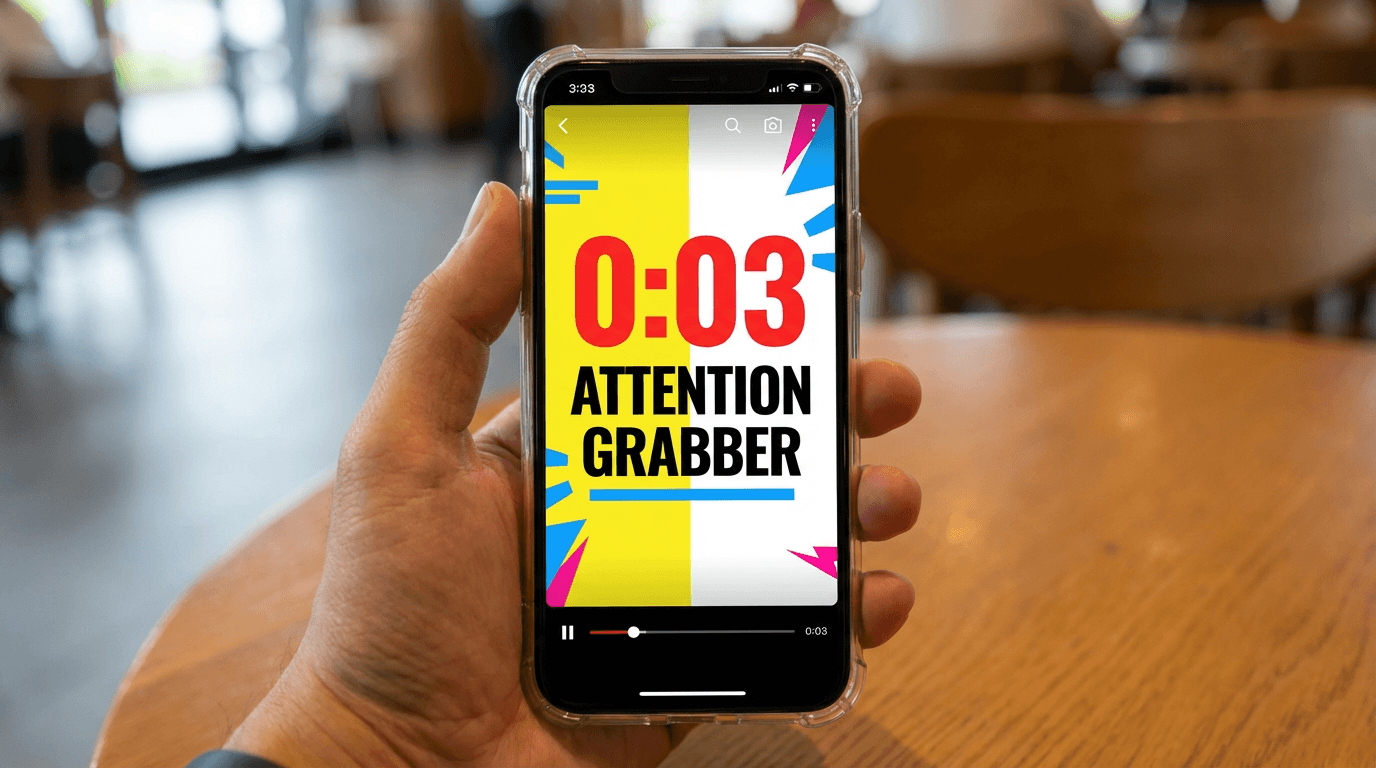
Most viewers make a stay-or-leave decision almost instantly. They are not reading your title. They are not checking your channel name. They are reacting to what they see and hear in the first moment the Short appears on screen.
Strong opening patterns that reduce swipe-away include starting with motion or action already happening, opening with a bold visual or unexpected image, leading with a question or statement that creates curiosity, and showing the result or payoff before explaining the process.
Weak openings that kill Shorts include static frames, long logo intros, slow build-ups, and text-only screens that require reading before anything happens visually.
We covered the psychology and mechanics behind this in detail in our guide on why the first 3 seconds of YouTube Shorts matter. If your Shorts consistently stall at low view counts, the opening is the first place to look.
12 Content Strategies That Consistently Go Viral on Shorts
Not all content types perform equally in the Shorts feed. Some formats have structural advantages that make them more likely to trigger high engagement and sustained distribution. Here are 12 strategies that consistently produce viral results in 2026.
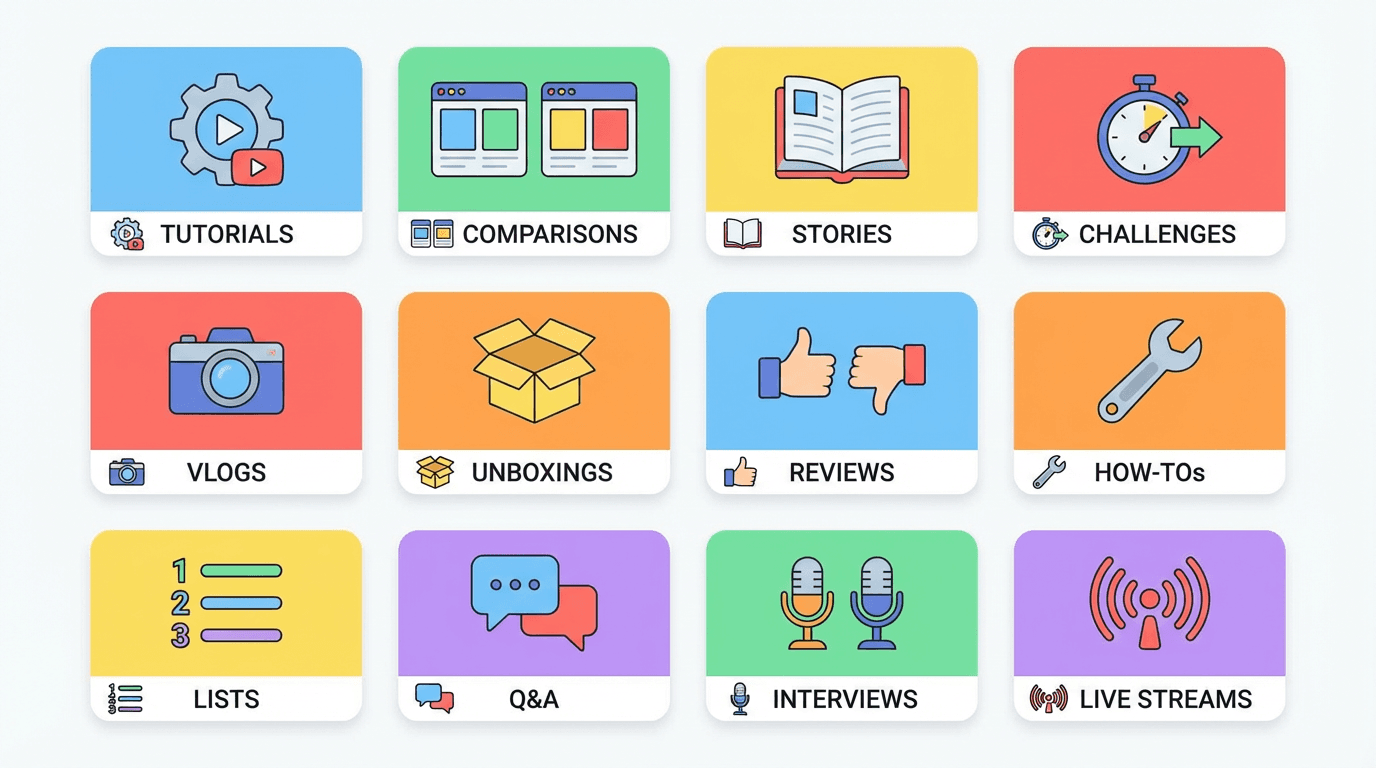
1. The Instant Payoff
Show the result immediately, then walk backward through the process. This works for tutorials, transformations, cooking, art, and before-and-after content. The payoff in the opening stops the swipe, and the explanation that follows keeps viewers watching to understand how it happened.
2. The Pattern Interrupt
Start with something visually unexpected. An object falling, a sudden cut, an unusual angle, or something that breaks the visual rhythm of a typical Shorts feed. Pattern interrupts work because the Shorts feed creates a predictable scroll pattern, and anything that breaks that pattern triggers attention.
3. The Unresolved Loop
Open with a question or situation that creates curiosity but do not resolve it until the end. This is one of the most reliable retention techniques because viewers feel compelled to watch through to get the answer. The key is making the question genuinely interesting, not clickbaity.
4. The Relatable Scenario
Recreate a common experience that your target audience instantly recognizes. The recognition itself creates engagement because viewers feel seen. These Shorts tend to generate high like and share rates because people share content that reflects their own experience.
5. The Satisfying Process
Show a visually satisfying process from start to finish. Cleaning, organizing, building, painting, cooking, and similar activities all fall into this category. The satisfaction comes from watching the process complete, which drives high watch-through rates and replays.
6. The Contrarian Take
Challenge a commonly held belief or practice in your niche. Contrarian content generates comments because people either agree strongly or disagree strongly. Both reactions count as engagement, and high comment rates are a powerful signal for the algorithm.
7. The Mini Story
Tell a complete story in 30 to 60 seconds with a beginning, middle, and end. Story-driven Shorts stand out because most Shorts are informational or reactive. A narrative arc with a clear resolution gives viewers a reason to watch through and creates an emotional response that drives shares.
8. The Comparison
Place two things side by side and show the difference. This works for products, techniques, tools, before-and-after results, and almost any niche. Comparisons are inherently engaging because the viewer's brain is constantly evaluating both options, which keeps attention locked in.
9. The Secret or Hack
Reveal something that feels exclusive or insider. Frame it as information that most people do not know. This triggers curiosity in the opening and delivers a feeling of value at the end. When viewers feel like they learned something useful, they are more likely to like, save, and share.
10. The Challenge or Trend Participation
Participate in a trending challenge or format, but add your own twist. Trend participation gives you a built-in audience because people are already searching for and watching that trend. Adding a unique angle makes your version stand out from the dozens of identical copies.
11. The Emotional Trigger
Create content that evokes a strong emotion: surprise, nostalgia, inspiration, humor, or awe. Emotional responses drive shares more than any other factor. People share content that makes them feel something, and shared Shorts get massive distribution boosts.
12. The Educational Shortcut
Compress a genuinely useful piece of knowledge into the shortest possible format. One tip, one trick, one explanation. Educational Shorts that deliver real value in under 30 seconds get saved and shared at disproportionately high rates, which signals quality to the algorithm.
For a deeper look at which AI-powered formats are working best right now, check out our breakdown of 10 AI Shorts formats that actually go viral in 2026.
Retention Techniques That Keep Viewers Watching to the End
Getting viewers to start watching is only half the challenge. Keeping them until the end is what drives the watch-through rate that the algorithm uses to decide whether to keep pushing your Short.
High-retention Shorts share a few common traits. They maintain visual momentum, meaning something is always moving, changing, or progressing on screen. They avoid dead space, which includes pauses, filler phrases, and static frames where nothing happens. They use pacing that matches the content type, where tutorial content moves at a steady pace and entertainment content moves faster.
One technique that works across all content types is the breadcrumb approach. Drop small hints or promises throughout the Short that keep the viewer anticipating what comes next. Instead of delivering all the value in the first five seconds and leaving nothing for the rest, distribute the value across the entire runtime.
Another reliable technique is visual variety. Change the camera angle, background, or visual element every few seconds. The human eye is drawn to change. When the visual stays the same for too long, attention drifts and viewers swipe.
Choosing the right duration also affects retention directly. A Short that is too long for its content loses viewers at the end, which drags down the watch-through rate. A Short that is too short might not deliver enough value to generate likes and shares. Our guide on how long YouTube Shorts should be in 2026 covers the ideal durations for different content types.
Why Consistency Matters More Than One Viral Hit
One viral Short is exciting but it does not build a channel. What builds a channel is consistent output that gives the algorithm enough data to understand your content and find the right audience for it.
YouTube's recommendation system learns from patterns. The more Shorts you publish in a consistent niche, the better the algorithm gets at matching your content with viewers who are likely to engage. This is why channels that post Shorts daily or near-daily tend to have more frequent viral spikes than channels that post sporadically.
Consistency also increases your chances simply through volume. If every Short has, say, a small percentage chance of going viral based on topic timing and audience response, posting more Shorts gives you more chances. Creators who publish one Short per week get 52 chances per year. Creators who publish daily get 365.
The challenge, of course, is maintaining that pace without burning out or sacrificing quality. This is where production workflows matter. If each Short takes two hours to produce, daily posting is unsustainable for most solo creators. If each Short takes 15 minutes, it becomes manageable.
Our deep dive into how the YouTube Shorts algorithm responds to daily uploads covers the data and logic behind daily posting frequency and how to make it sustainable.
The Role of Thumbnails, Titles, and Descriptions
Most Shorts views come from the Shorts feed, where the video itself is the hook, not the thumbnail or title. But thumbnails and titles still matter for two important reasons.
First, YouTube now has a dedicated Shorts filter in search results. When someone searches for a topic and filters by Shorts, your title and thumbnail are what they see before deciding to click. Search traffic for Shorts is growing in 2026, and optimizing for it means more long-tail views over time.
Second, thumbnails show up on your channel page. When a viewer discovers one of your Shorts and visits your profile, the thumbnails of your other Shorts influence whether they explore further or leave. A consistent, clean thumbnail style signals professionalism and makes your content look worth exploring.
For titles, include the main keyword or topic clearly and keep it under 60 characters. Avoid vague or overly clever titles that sacrifice clarity for personality. Search-friendly titles help your Short get discovered beyond the feed.
For descriptions, write two to four sentences that reinforce the topic of the Short and include relevant keywords. Add two to four hashtags including #Shorts. Do not leave the description blank.
Creators who want to generate thumbnails quickly can use the YouTube Thumbnail Maker in Miraflow AI, which lets you enter a prompt, upload a reference image, and add overlay text to produce clean thumbnails in seconds. For a full strategy breakdown, see our guide on YouTube Shorts thumbnail strategy in 2026.
Audio and Music Selection for Viral Shorts
Sound is one of the most underappreciated factors in Shorts performance. The right audio can elevate a mediocre Short into something that feels professional and engaging. The wrong audio, or no audio at all, can make even great visuals feel flat.
Trending audio can give your Short a distribution boost because YouTube recognizes when a particular sound is gaining traction and may prioritize Shorts that use it. But trending audio is only effective if it fits your content. Forcing a mismatched sound into your Short just because it is trending usually hurts more than it helps.
For many niches, especially educational, tutorial, and storytelling content, background music that sets the right mood without distracting from the message works best. The music should support the pacing and energy of the Short without overpowering the voiceover or visual content.
Copyright is also a real concern. Using copyrighted music in Shorts can lead to muted audio, copyright claims, or limited monetization. If you want full control over the audio in your Shorts and the ability to monetize without restrictions, generating original music is the safest approach. The AI Music Generator in Miraflow AI lets you describe the mood, style, and instruments you want, and generates a royalty-free track in under a minute.
For more detail on how to use AI-generated music in your Shorts legally and effectively, check our guide on how to generate no-copyright music for YouTube with AI.
How to Produce Viral-Quality Shorts at Scale
The biggest bottleneck for most creators is not strategy. It is production speed. Knowing what makes Shorts go viral does not help if you can only produce two Shorts per week.

Viral Shorts do not require expensive equipment or complex editing. Most of the highest-performing Shorts are simple in production but strong in concept. The value comes from the idea, the hook, the pacing, and the delivery, not from cinematic camera work or elaborate post-production.
That said, there are ways to speed up the production pipeline dramatically without losing quality.
Batch your scripts and ideas. Spend one session brainstorming and scripting 10 to 15 Short concepts at once. This is faster than trying to come up with an idea, script it, and produce it all in the same session. Batching separates the creative thinking from the execution, which makes both faster.
Use templates for recurring formats. If you have a Short format that works, like a tip series, a comparison format, or a daily challenge, create a template for it. Same structure, same pacing, same visual style. Just change the content each time. Templates reduce decision fatigue and speed up editing.
Leverage AI for parts of the pipeline. Tools like Text2Shorts on Miraflow AI let you enter a topic, automatically generate a script and matching visuals, and produce a complete vertical Short with narration. This is especially useful for faceless channels, educational content, and niches where visual variety matters more than on-camera presence.
For creators who want to add cinematic clips to their Shorts, the Cinematic Video Generator on Miraflow AI can produce high-quality 8-second clips from text prompts. These clips can serve as intros, B-roll, or standalone Shorts that look polished without any filming.
The Posting Schedule That Maximizes Viral Potential
When you post matters less than most creators think, but it is not irrelevant. The Shorts algorithm does not rely on upload timing the way long-form YouTube does, because Shorts are distributed through the feed rather than through subscriber notifications. Your Short can go viral three days after you post it if the algorithm picks it up during a later testing cycle.
That said, posting when your audience is most active can improve the initial engagement signals from the first testing batch. If your first batch of viewers is highly engaged, the algorithm expands distribution faster. Check YouTube Studio analytics to see when your audience is online and schedule your posts accordingly.
The more important factor is posting frequency. For most creators aiming for viral growth on Shorts, publishing at least once per day is the target. If you cannot manage daily, aim for at least four to five Shorts per week. Below that threshold, the algorithm has less content to test, fewer data points to learn from, and fewer opportunities to find a breakout.
If daily production sounds overwhelming, our 30-day YouTube Shorts plan provides a structured calendar with topic ideas, format rotations, and pacing strategies that make daily posting sustainable.
What to Do After a Short Goes Viral
A viral Short is an opportunity, not just a metric. How you respond to a viral moment determines whether it becomes a one-time spike or a growth inflection point.
The first thing to do is analyze why it worked. Check the analytics. Look at the watch-through rate, the traffic sources, the audience demographics, and the engagement breakdown. Compare these metrics against your non-viral Shorts to identify what was different. Was it the topic? The hook? The length? The visual style?
The second step is to make a follow-up immediately. When a Short goes viral, there is a window where new viewers are visiting your profile and watching your other content. If they see another Short that is similar in quality and topic, they are more likely to subscribe. Posting a related follow-up within 24 to 48 hours captures that momentum.
The third step is to build a series around what worked. If a specific topic or format drove the viral moment, do not treat it as a one-off. Turn it into a recurring series. Viewers who discovered you through one video on that topic will come back for more, and the algorithm will learn that your channel consistently produces content on that theme.
Understanding your analytics is critical during these moments. Our guide on how to read YouTube Shorts analytics in 2026 walks through exactly what each graph means and how to extract actionable insights from your data.
Common Mistakes That Prevent Shorts From Going Viral
Several recurring mistakes hold creators back from viral performance. Knowing what to avoid is just as important as knowing what to do.
Posting without a hook. If your Short does not grab attention in the first second, most viewers will never see the rest of it. Every Short needs an intentional opening that stops the swipe.
Inconsistent niche. Jumping between unrelated topics confuses the algorithm. YouTube is trying to figure out who your content is for. If you post fitness content one day and gaming content the next, the system has no clear audience to target.
Ignoring comments. Comments are a strong engagement signal. When viewers comment and you reply, it can trigger additional engagement on the same Short. It also builds community, which increases the likelihood that your existing viewers will watch and engage with future Shorts.
Copying viral Shorts exactly. Recreating someone else's viral Short rarely works because the original already captured the audience for that exact format. Instead of copying, extract the principle behind why it worked and apply that principle to your own content.
Overproducing. Spending hours on effects, transitions, and editing for a Short that only needs to be 20 seconds long is inefficient. Viral Shorts are about the idea and the execution of the hook, not about production polish.
Giving up after a few posts. The Shorts algorithm needs data to learn your content. Most channels do not see consistent viral results until they have published at least 30 to 50 Shorts. The first batch is effectively training the algorithm. If your Shorts are getting zero views early on, it does not necessarily mean the content is bad. It may mean the algorithm has not yet identified the right audience for your channel.
A Practical Weekly Workflow for Viral Shorts
Here is a simple weekly workflow that balances production efficiency with viral potential.
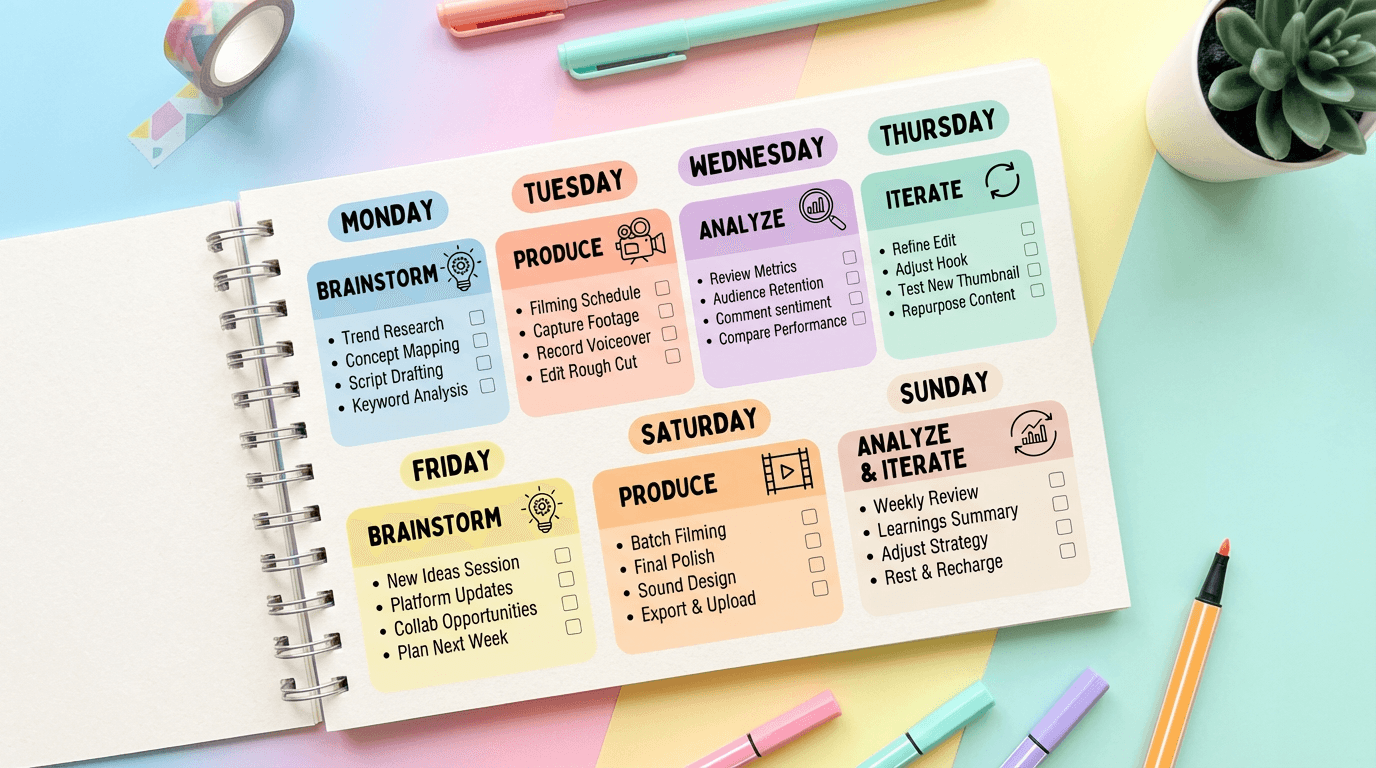
Monday: Brainstorm and research. Spend one session identifying 7 to 10 Short ideas for the week. Use YouTube search suggest, trending topics in your niche, and your own analytics to find topics with high potential. Write one-line hooks for each idea.
Tuesday through Friday: Produce and publish. Batch-produce Shorts using the ideas from Monday. Aim to publish at least one Short per day. Use templates for recurring formats to speed up production.
Saturday: Analyze and iterate. Review the week's analytics. Identify which Shorts performed best and worst. Note what the top performers had in common: hook style, topic, length, visual approach.
Sunday: Plan follow-ups. Based on the week's data, plan follow-up Shorts for your best performers. Schedule any series content and prepare scripts for the upcoming week.
This workflow keeps production manageable while building the consistency and volume the algorithm needs to test and promote your content effectively.
Turning Viral Views Into Subscribers and Long-Term Growth
Views alone do not build a sustainable channel. The real value of viral Shorts is the audience they expose you to. Converting those viewers into subscribers and long-term fans is what turns a viral moment into lasting growth.
The most effective conversion strategy is simple: make your content worth subscribing to. If every Short delivers value, entertains, or teaches something, viewers naturally want to see more. A clear niche helps because viewers subscribe when they believe future content will be similar to what they just enjoyed.
End your Shorts with a reason to follow. This does not mean begging for subscribers. It means teasing what is coming next, referencing a series, or ending on a cliffhanger that makes viewers want to see the continuation.
Link your Shorts to longer content when relevant. A Short that delivers a quick tip can point viewers to a full tutorial on the same topic. This extends session time, which YouTube rewards, and builds deeper engagement with your audience.
If you are getting views but struggling to convert them into subscribers, our analysis of why YouTube Shorts get views but no subscribers breaks down the specific reasons this happens and how to fix it.
Conclusion
Going viral on YouTube Shorts in 2026 is not random. It is the result of understanding what the algorithm measures, creating content structures that maximize those signals, and publishing consistently enough that the algorithm has plenty of opportunities to find your breakout moments.
The formula is straightforward even if the execution takes practice. Hook viewers in the first second. Keep them watching until the end. Create content that triggers engagement through emotion, curiosity, or value. Publish frequently. Analyze what works. Do more of it.
The creators who go viral most often are not the ones with the best equipment or the largest existing audience. They are the ones who understand the system, create efficiently, and iterate quickly.
If production speed is your bottleneck, platforms like Miraflow AI can help you generate scripts, visuals, music, and thumbnails for Shorts directly in your browser, removing the technical barriers that slow most creators down. The ideas and strategy still come from you. The execution just happens faster.
Start with one strong idea today. Turn it into a Short. Post it. See how the audience responds. Then do it again tomorrow. That is how viral channels are built, one Short at a time.