Meta Ended Llama and Built Muse Spark (Why That Changes Everything)

Written by
Jay Kim
Meta abandoned its open-source AI commitment and launched the proprietary Muse Spark model. Here is why it happened, what it means for creators, businesses, and developers, and how to adapt.
For three years, Meta positioned itself as the champion of open-source AI. While OpenAI locked its models behind API paywalls and Google kept Gemini proprietary, Mark Zuckerberg stood on stages and wrote open letters arguing that AI should be open, that open-source development produces better and safer models, and that Meta's Llama family of models would remain freely available for the world to build on.
Then, on April 8, 2026, Meta launched Muse Spark — its first proprietary, closed-source AI model — and the entire narrative collapsed.[1]
Muse Spark is not a minor product update or a side experiment. It is the debut model of Meta Superintelligence Labs, a new division led by former DeepMind researcher and Llama team leader Joelle Pineau, built specifically to pursue what Meta calls "personal superintelligence." The model is natively multimodal, processes text, images, video, and audio as integrated inputs, operates in three distinct reasoning modes, and is available exclusively through Meta's own platforms — Meta AI, Instagram, Facebook, WhatsApp, Messenger, and Ray-Ban Meta AI glasses.[2]
No weights released. No open license. No community access to the underlying model.
If you are a developer who built applications on Llama, a content creator whose workflow depends on open AI tools, a small business using Meta's ecosystem, or simply someone who cares about whether the most powerful AI systems in the world are controlled by a handful of corporations, this decision matters. It changes the competitive landscape, the economics of AI development, and the practical tools available to everyone who works with AI.
Here is exactly what happened, why Meta made this choice, and what it means for every stakeholder in the AI ecosystem.
The Rise and Fall of Meta's Open-Source Promise
Understanding why Meta's shift to closed-source matters requires understanding how central Llama became to the global AI ecosystem and how explicitly Meta committed to the open-source philosophy.
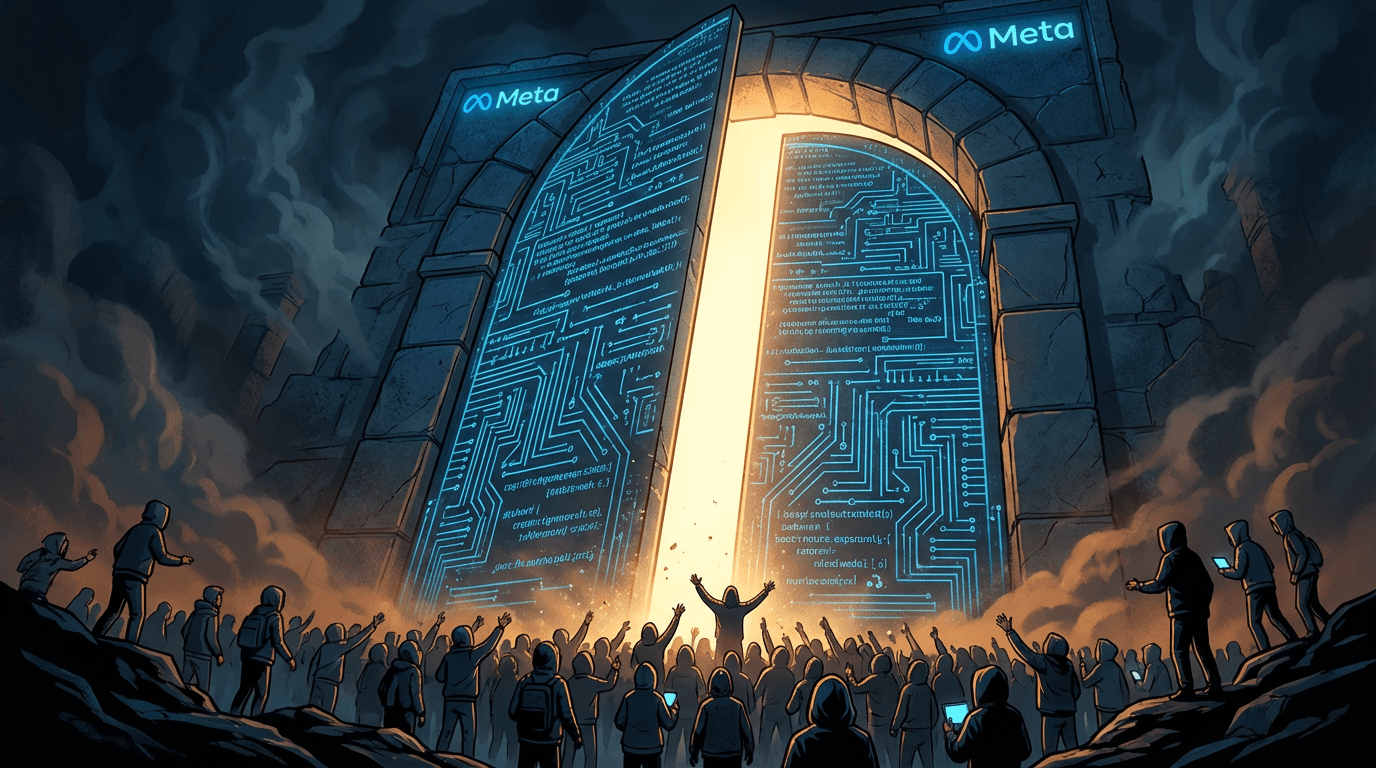
Meta released the original Llama model in February 2023, initially through a limited research access program. Within weeks, the model weights leaked online, and the open-source AI community exploded. Developers around the world began building on Llama, fine-tuning it for specific use cases, running it on consumer hardware, and creating derivative models that pushed the boundaries of what open AI could do.[3]
Meta leaned into this. Rather than fighting the leak, the company embraced the open-source community and released Llama 2 in July 2023 with an explicit open license that allowed commercial use. Llama 3 followed in April 2024, and by the time Llama 4 launched in April 2025, Meta had established itself as the most important open-source AI company in the world. Llama models had been downloaded over a billion times. They powered thousands of applications, startups, and research projects. They gave developers an alternative to paying OpenAI or Google for API access.[3]
Zuckerberg himself was the most vocal advocate for this approach. In a widely shared open letter in July 2024, he argued that open-source AI was not just good for the community but was strategically superior — that it produced safer models through collective scrutiny, drove faster innovation through distributed development, and prevented dangerous concentration of power in a few companies. He positioned Meta as the counterweight to OpenAI's closed approach.[4]
The rhetoric was not subtle. Meta's AI leadership regularly described open-source as a core philosophical commitment, not a temporary strategy. The company invested billions in training Llama models and releasing them freely, absorbing the cost as a long-term bet on ecosystem influence.
And then, without warning or transition period, Meta launched Muse Spark as a fully closed model and announced that all future frontier AI development would occur under Meta Superintelligence Labs with no commitment to open release.[1]
What Actually Changed and Why
The question everyone in the AI industry asked on April 8 was simple: why? Why would Meta abandon the strategy that had earned it enormous goodwill, a billion downloads, and a central position in the open-source ecosystem?
The answer involves several converging pressures that made the economics and strategy of open-source AI increasingly untenable for Meta at the frontier level.
The first and most significant factor is cost. Meta is investing between $115 billion and $135 billion in capital expenditure in 2026, a staggering increase from previous years and nearly double its 2025 figure.[5] Training frontier AI models now costs billions of dollars per run. Releasing the resulting model weights for free means competitors — including well-funded companies like Chinese AI labs, hyperscalers, and startups backed by sovereign wealth funds — can build on Meta's investment without sharing the cost.
The competitive dynamics shifted dramatically when Chinese AI labs began using Llama weights as the foundation for their own models. Reports surfaced throughout 2025 that multiple Chinese companies had fine-tuned Llama 4 into competitive commercial products without any reciprocal contribution back to Meta or the open-source community. Meta was effectively subsidizing its competitors' AI development.[4]
The second factor is monetization pressure. Meta's AI investment needs to generate returns, and the company's primary revenue model — advertising — depends on keeping users within Meta's ecosystem. An open-source model that anyone can deploy anywhere does not drive users to Instagram, Facebook, or WhatsApp. A proprietary model available only through Meta's platforms creates a powerful reason for users to stay within the ecosystem and for businesses to maintain their presence on Meta's commerce and advertising platforms.[6]
The third factor is the nature of the model itself. Muse Spark is natively multimodal and deeply integrated with Meta's proprietary data — the social graph, user interaction history, commerce data, and content from across Instagram, Facebook, and WhatsApp. Releasing a model trained on this data as open-source would raise enormous privacy and legal concerns. The model's capabilities are inseparable from the proprietary data that powers them.[7]
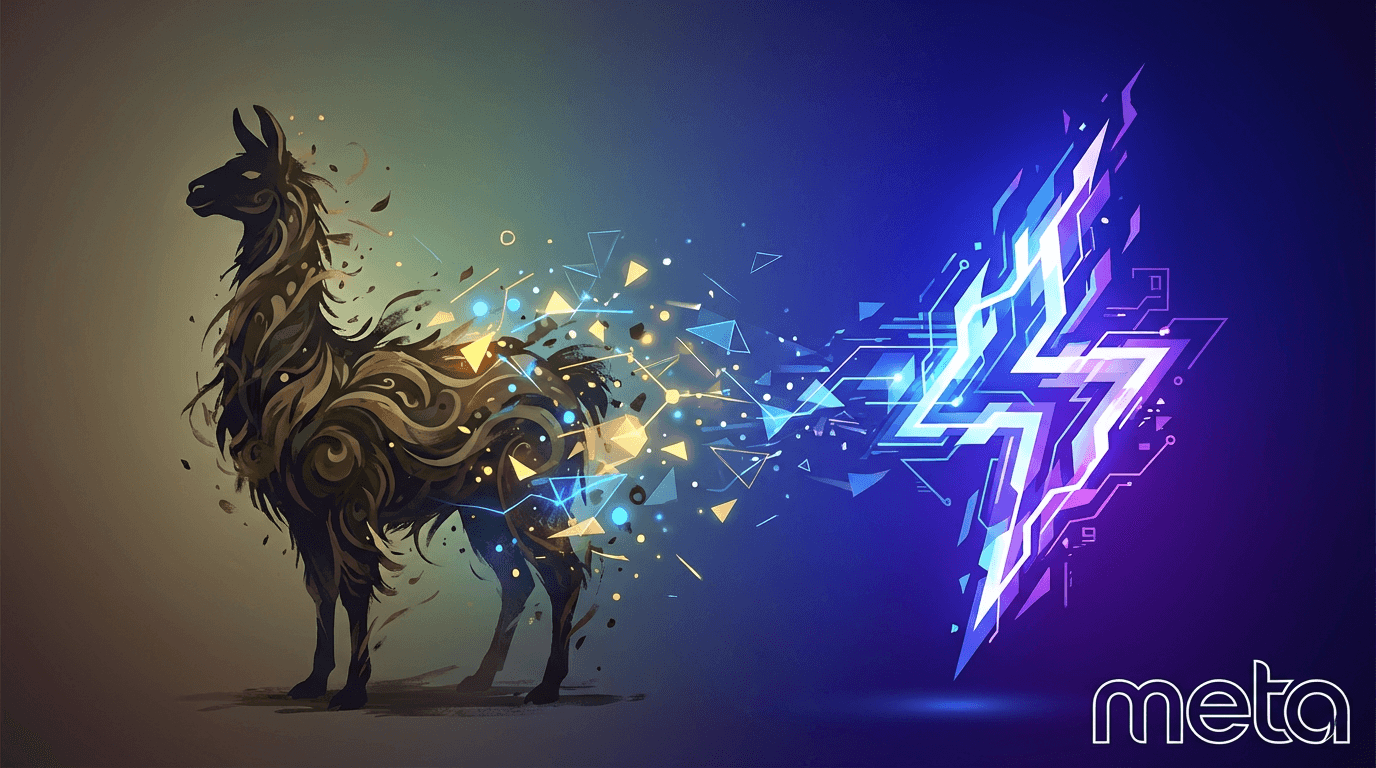
The fourth factor, perhaps the most forward-looking, is Meta's stated goal of building "personal superintelligence." Meta Superintelligence Labs is not pursuing general-purpose AI for the research community. It is building AI that knows individual users intimately, that understands their preferences, relationships, and behaviors, and that can act on their behalf across Meta's platforms. This is inherently a proprietary product, not an open research artifact.[2]
Meta has not explicitly killed Llama. The existing Llama models remain available, and Meta has indicated it will continue supporting the Llama ecosystem in some capacity. But the frontier of Meta's AI development, the most capable models with the most resources behind them, is now closed. Llama may continue to exist as a community project, but it is no longer the cutting edge.[3]
What Muse Spark Can Actually Do
To understand why the open-to-closed shift matters practically, you need to understand what Muse Spark offers that previous models — including Llama 4 — could not.
Muse Spark is a natively multimodal model, meaning it was trained from the ground up to process text, images, video, and audio as integrated inputs rather than handling each modality through separate components stitched together after training. This is a meaningful architectural distinction because natively multimodal models develop richer cross-modal understanding. They do not just see an image and describe it in text; they understand the relationship between visual, auditory, and textual information in the way humans do.[7]
The model operates in three distinct reasoning modes. Instant mode provides fast responses for straightforward queries and everyday tasks where speed matters more than depth. Thinking mode engages multi-step reasoning for complex problems that require careful analysis, planning, or creative generation. Contemplating mode orchestrates multiple reasoning agents working in parallel for the most demanding tasks, synthesizing different analytical perspectives into a comprehensive response.[3]
In terms of benchmarks, Muse Spark outperforms GPT-4.5 and Gemini 2.5 Pro on most standard AI benchmarks, ranking among the top five globally at launch.[5] It has demonstrated particular strength in image understanding, video analysis, and tasks that require integrating information across multiple modalities. On pure language reasoning tasks, it is competitive with the best models from OpenAI and Google, though the margins at the frontier are narrow enough that benchmark comparisons alone do not tell the full story.
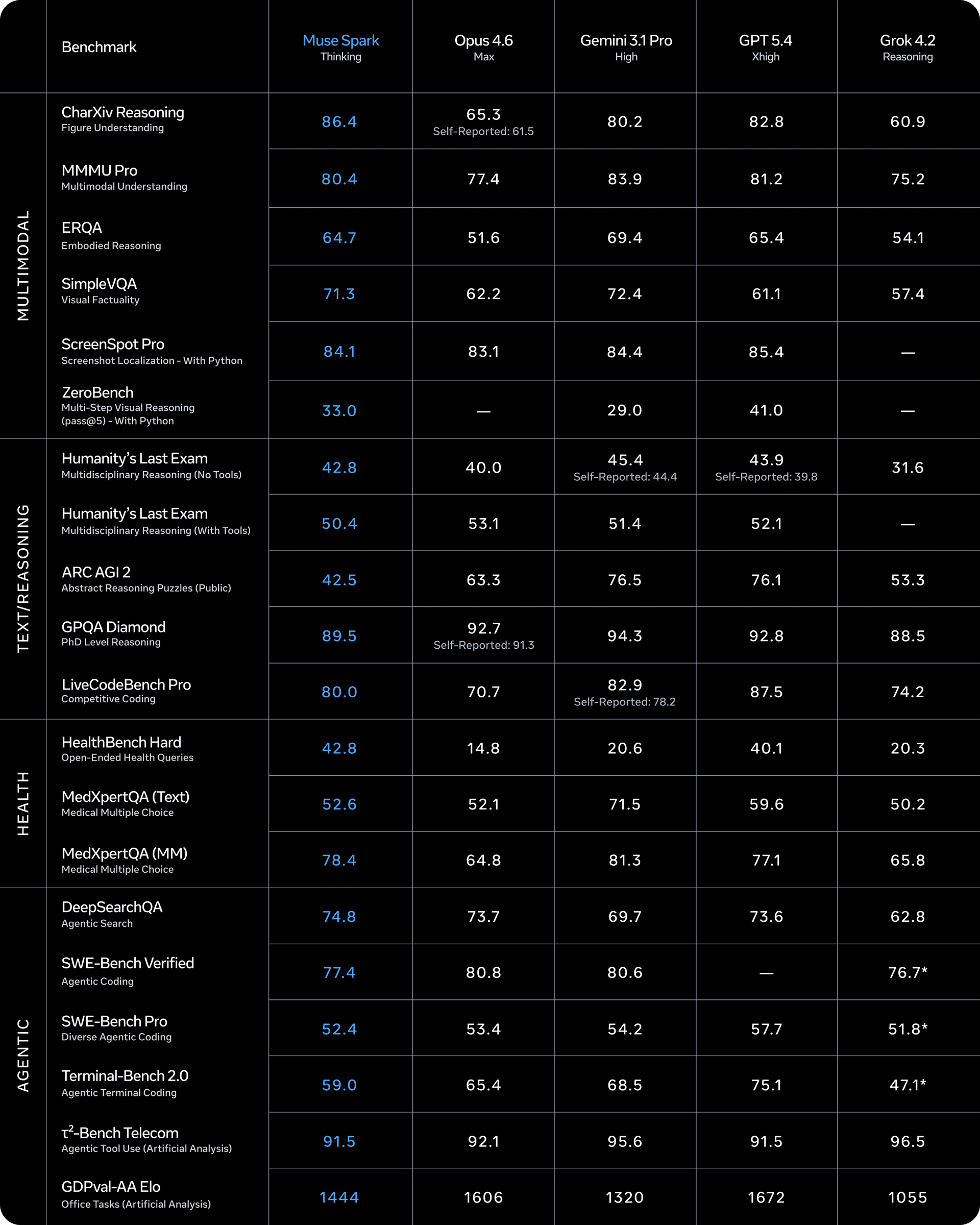
What differentiates Muse Spark from competitors is not raw benchmark performance but its integration with Meta's platform ecosystem. The model has access to the world's largest social graph, real-time content from Instagram and Facebook, commerce data from Meta's shopping platforms, and the communication context of WhatsApp and Messenger. No other AI model has this kind of real-world data integration, and it enables capabilities that cannot be replicated by running an open-source model on your own hardware.[2]
Among the most commercially significant features is Shopping Mode, a full conversational commerce experience that lets users discover, evaluate, and purchase products through AI conversation. The model surfaces product recommendations drawn from real merchant inventory and creator content across Meta's platforms, complete with visual styling suggestions and cited references back to the creator content that informed the recommendation.[8]
For content creators, Muse Spark offers enhanced content understanding and generation capabilities that could improve how their content is discovered, categorized, and recommended across Meta's platforms. For businesses, the model enables more sophisticated advertising targeting, automated customer service through WhatsApp Business, and AI-powered commerce experiences that keep customers within Meta's ecosystem.
The Developer Community Reaction
The developer community's response to Meta's closed-source pivot has been sharp and divided, revealing deep tensions about the future of AI development.
One camp views the move as a betrayal. Developers who invested time and resources building on Llama, who contributed to the ecosystem, reported bugs, created fine-tuned variants, and built businesses around the assumption that Meta would continue providing open-source frontier models feel that Meta used the open-source community to build its AI capabilities and then pulled the ladder up behind it.[4]
This sentiment is not purely emotional. Thousands of startups built products on Llama models with the expectation that Meta would continue releasing improved versions. Some raised venture capital based on the availability of open-source frontier AI. Others built internal tools and workflows around Llama that now face an uncertain future as the gap between Meta's closed Muse Spark and the last open Llama release widens.
The other camp argues that Meta's shift was inevitable and that the developer community should have seen it coming. The argument here is that training frontier AI models costs billions of dollars, no company can sustain that investment indefinitely without capturing the value it creates, and expecting Meta to subsidize the global AI ecosystem forever was naive. Proponents of this view point out that Meta never had a legal obligation to release model weights and that the company's "open-source" licenses always included restrictions that true open-source advocates criticized.[3]
The practical impact on developers depends on their specific situation. For those building applications that require frontier-level AI capabilities, the options are now clearer and more constrained: pay OpenAI, pay Google, pay Anthropic, or use Meta's platforms. The era of having a genuinely competitive open-source option at the frontier appears to be over, at least from Meta.
For developers building tools and applications for content creators, small businesses, and the broader creative economy, this shift means that the AI capabilities available through Meta's ecosystem will be tightly coupled to Meta's business interests. Tools built on open Llama models could be deployed anywhere, integrated with any platform, and customized without restrictions. Tools built on Muse Spark can only operate within Meta's ecosystem, subject to Meta's terms and priorities.
Several open-source alternatives remain viable for non-frontier applications. Mistral, Alibaba's Qwen, and other open-weight models continue to improve. But none currently match the capabilities of Muse Spark, particularly in multimodal understanding and platform integration. The gap between open and closed AI at the frontier has widened significantly with this launch.
For content creators who use AI tools in their workflows — for generating thumbnails, creating short-form video content, producing AI-generated images, or composing background music — the practical impact is that the best AI tools may increasingly be locked within specific platform ecosystems rather than available as universal capabilities you can use anywhere. Choosing tools that maintain cross-platform flexibility, like Miraflow, becomes more important as platform lock-in accelerates.
What This Means for the AI Industry
Meta's shift from open to closed does not just affect Meta's users and developers. It reshapes the competitive dynamics of the entire AI industry in several important ways.
The Open-Source AI Movement Loses Its Biggest Champion
When the world's fifth most valuable company with the deepest commitment to open-source AI decides that the economics no longer work, it sends a powerful signal to every other company considering an open approach. If Meta, with its billions in resources and its genuine philosophical commitment to openness, concluded that frontier AI must be proprietary, smaller companies have even less reason to release their best models openly.
This does not mean open-source AI is dead. It means open-source AI is unlikely to compete at the very frontier going forward. Open models will remain valuable for many applications — fine-tuning for specific use cases, running AI locally for privacy reasons, building products that need to work offline, and serving as the foundation for academic research. But the most capable models, the ones that set the benchmarks and define what AI can do, will increasingly be proprietary products controlled by a small number of companies.[3]
The implications for AI safety are debated. Open-source advocates argue that closed models are less safe because they cannot be independently audited, tested for biases, or scrutinized by the research community. Proponents of closed development argue that the most dangerous capabilities should not be freely distributed and that responsible development requires control over how the model is deployed. Meta has positioned its shift as partially motivated by safety concerns, though critics view this as a convenient justification for a financially motivated decision.[4]
The Big Five AI Race Crystallizes
With Muse Spark's launch, the frontier AI landscape has consolidated around five major players: OpenAI with GPT, Google with Gemini, Anthropic with Claude, Meta with Muse Spark, and xAI with Grok. Each is pursuing proprietary models integrated with their respective platform ecosystems.[5]
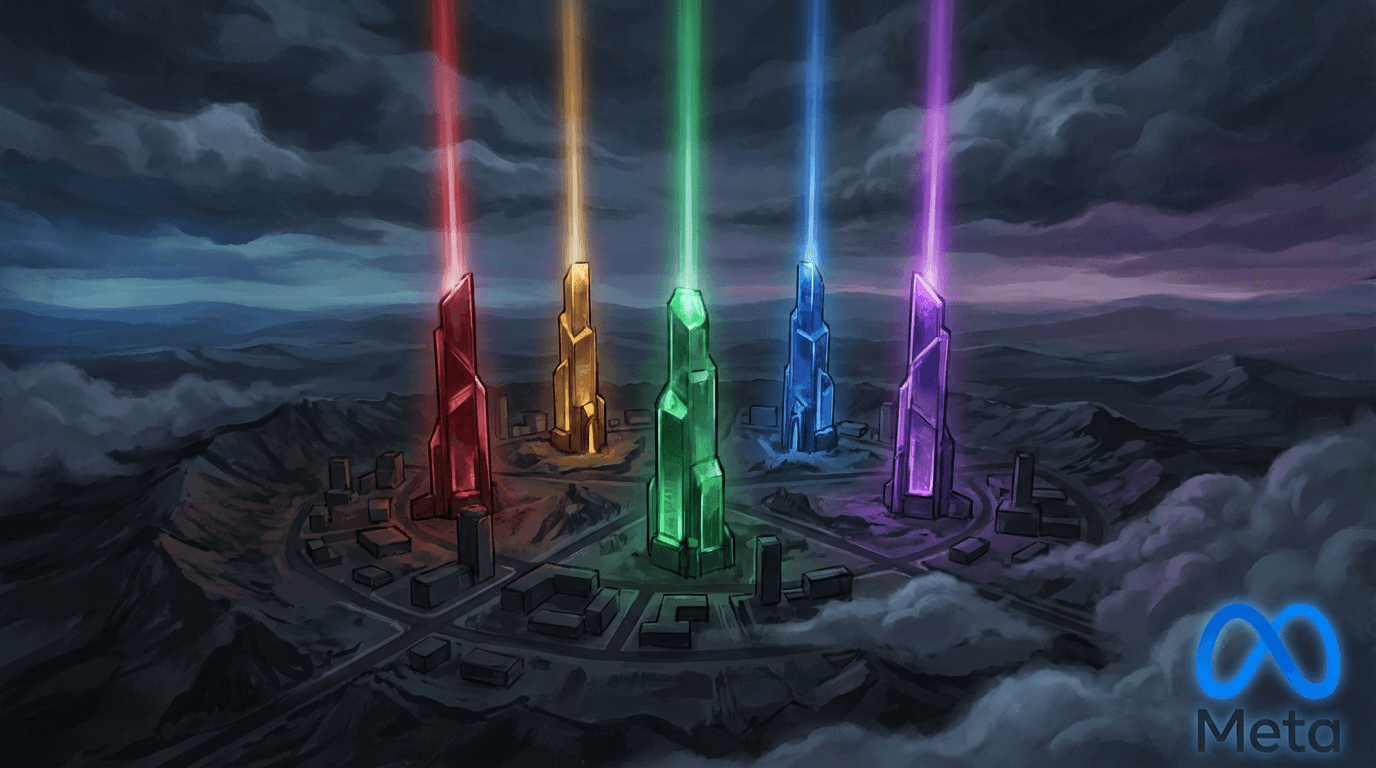
Meta's entry into this race as a fully proprietary player changes the competitive dynamics significantly. Unlike OpenAI and Anthropic, which are primarily AI companies that sell model access, Meta is a platform company with three billion users, the world's largest advertising business, and dominant positions in social media and messaging. Muse Spark does not need to generate revenue by selling API access. It generates revenue by making Meta's existing platforms more valuable, more engaging, and more commercially productive.
This means Meta can deploy Muse Spark in ways that competitors cannot match. A shopping recommendation that draws on your entire social graph, a content suggestion informed by every Reel you have ever watched, a business assistant that understands your customer conversations on WhatsApp — these are capabilities that require Meta's specific combination of AI capability and platform data. They cannot be replicated by an API call to a general-purpose model.
For the competitive landscape, this suggests an era of AI differentiation based on platform integration rather than raw model capability. The benchmarks that compare models on standardized tests matter less than the real-world utility each model provides within its native ecosystem. Muse Spark may or may not be the "best" model by abstract measures, but it may be the most useful model for the three billion people who spend their time on Meta's platforms.
The Geopolitical Dimension Intensifies
Meta's decision to close its frontier model has immediate geopolitical implications that are being closely watched by governments, regulators, and competing AI labs worldwide.
When Llama was open, AI capabilities developed by an American company were freely available to developers around the world, including in China, Russia, and other nations with competitive AI ambitions. This created a complex dynamic where American AI research was simultaneously advancing global capabilities and potentially empowering strategic competitors.
With Muse Spark closed, Meta has effectively chosen to keep its frontier capabilities within its own controlled ecosystem. Chinese AI labs that were fine-tuning Llama for competitive products no longer have access to Meta's latest model weights. This aligns with increasing pressure from U.S. policymakers to restrict the flow of AI capabilities to geopolitical competitors, pressure that was reportedly a factor in Meta's decision.[4]
However, this also means that developers in allied nations, developing countries, and academic institutions worldwide lose access to what was previously the best open-source foundation model available. The global AI development ecosystem becomes more centralized around a handful of American and Chinese companies, with fewer options for independent development.
What This Means for Content Creators
For content creators, the shift from Llama to Muse Spark has both direct and indirect implications that affect how you create content, how it is distributed, and how you monetize your work.
Your Content Feeds a Closed System
The most immediate implication is that your content on Instagram and Facebook now feeds into a proprietary AI system that you have no access to, no visibility into, and no control over. Muse Spark was trained on data from Meta's platforms, which includes the content you have posted, the interactions your audience has had with that content, and the engagement patterns across your entire creative output.[7]
When Llama was open, there was at least a theoretical transparency about how Meta's AI models worked. Researchers could examine the model weights, test for biases, and understand how content was being processed. With Muse Spark closed, the system that processes, categorizes, recommends, and potentially generates responses based on your content is a black box.
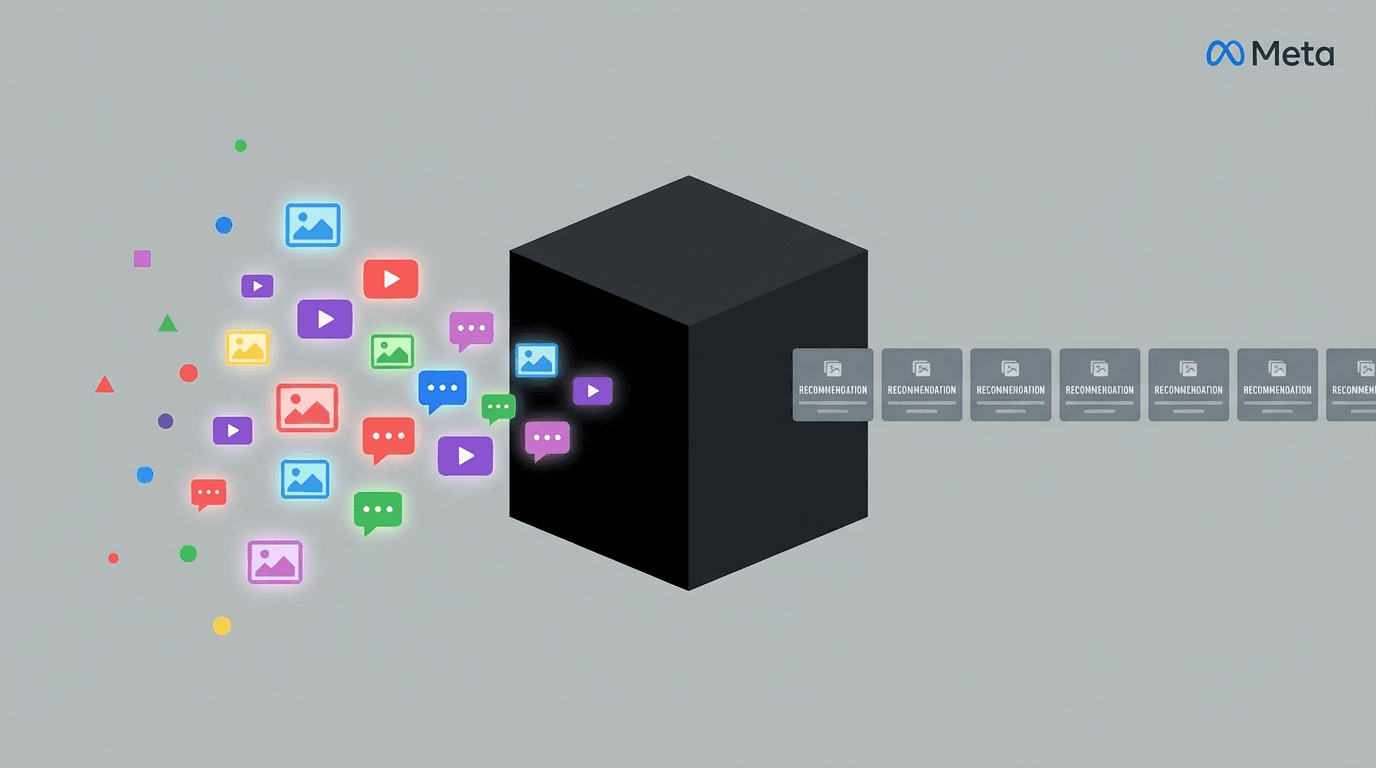
This matters practically because Muse Spark powers the algorithms that determine how your content is distributed. The model's understanding of your content — what it is about, who it is relevant to, how it compares to competing content — directly affects your reach, your engagement, and ultimately your income. And you cannot see or influence how that understanding works.
AI-Powered Discovery Changes Your Reach
Muse Spark introduces new ways for users to discover content through conversational AI rather than traditional feed browsing. When a user asks Meta AI "What are the best travel creators for Southeast Asia?" or "Show me someone who does minimalist home decor content," the AI draws on its understanding of creator content across Meta's platforms to generate recommendations.[2]
This creates a new discovery channel that operates on different principles than the feed algorithm. Feed algorithms optimize for engagement signals — likes, comments, shares, watch time. AI conversational discovery optimizes for relevance to a specific query. A creator who produces highly engaging but vaguely categorized content might perform well in the feed but poorly in AI discovery. A creator who produces clearly themed, informative, and well-tagged content might be surfaced frequently in AI conversations even if their feed engagement is modest.
The strategic implication for creators is that content clarity and specificity matter more than ever. The AI needs to understand exactly what your content is about, who it is for, and what value it provides. This means being deliberate about your content pillars, consistent in your theming, and thorough in your use of tags, descriptions, and metadata.
Building a content pillar strategy that is clear enough for an AI system to categorize and recommend your work is no longer optional — it is a core requirement for discovery on Meta's platforms. Tools that help you maintain visual consistency across your content, like creating cohesive thumbnail styles and branded video formats, make your content more recognizable to both human audiences and AI systems.
The Creator-Platform Power Balance Shifts
When Meta's AI was based on open-source Llama models, there was an implicit constraint on how aggressively the company could use creator content. If Meta treated creators unfairly, the open nature of the technology meant alternatives could emerge relatively easily. Developers could build competing platforms using the same underlying model, and creators could migrate to those alternatives.
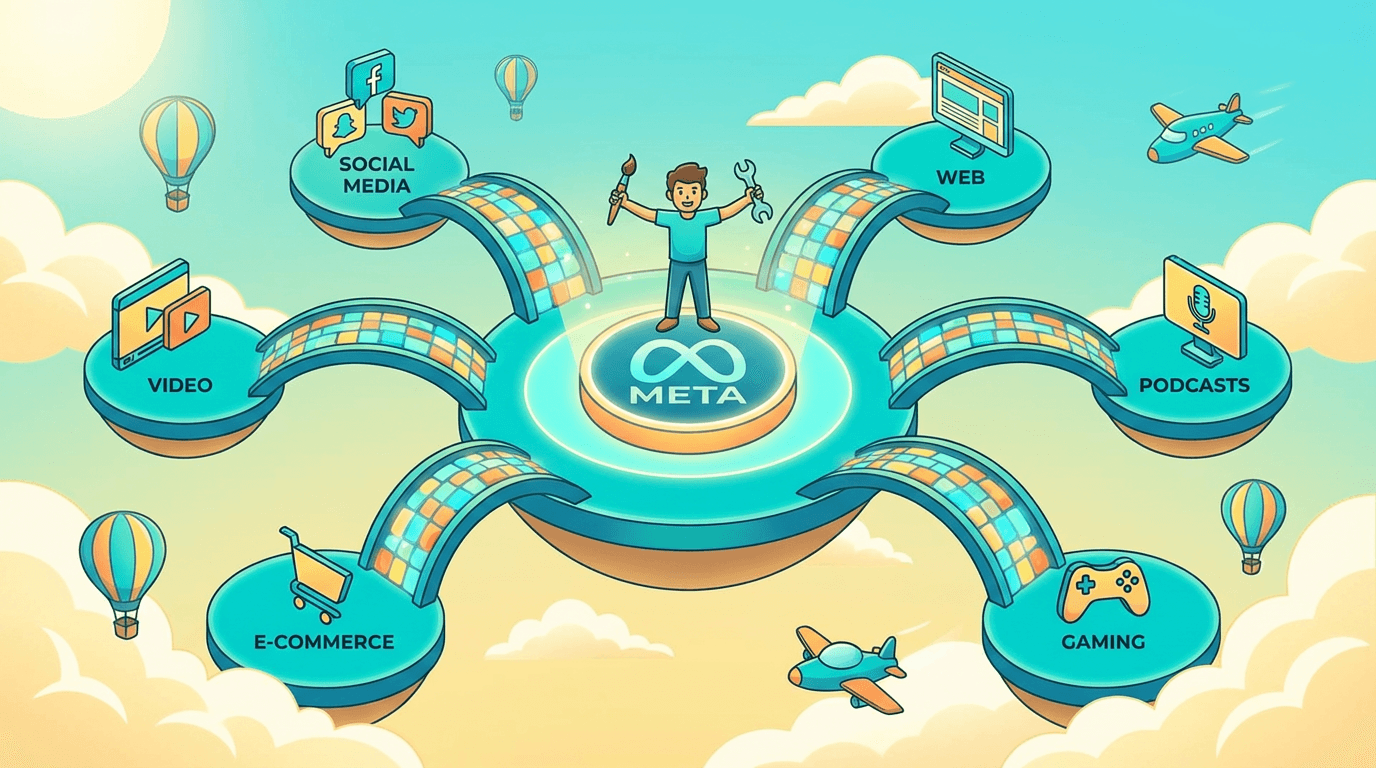
With Muse Spark closed, Meta's AI capabilities become a proprietary moat. No competitor can offer the same level of AI-powered content discovery, recommendation, and commerce integration without building their own comparable model from scratch — a multi-billion-dollar, multi-year undertaking. This shifts the power balance further toward Meta and makes it harder for creators to leave if they are unhappy with the platform's terms.
This is not a hypothetical concern. Meta has a documented history of changing the rules for content distribution in ways that disadvantaged creators. The Facebook organic reach collapse of 2014-2016, where Pages that had built large followings suddenly found their content reaching a tiny fraction of their audience, is the most prominent example. Creators who had built businesses on Facebook's platform found their reach throttled as the company shifted toward pay-to-play advertising.
The lesson then applies now: building your business entirely within Meta's ecosystem is risky, and the risk increases as Meta's proprietary advantages grow. Maintaining strong presence on YouTube, TikTok, and owned channels like email newsletters ensures you are never entirely dependent on a single platform's AI-driven decisions about your reach.
Content Creation Tools Are Evolving Rapidly
The Llama-to-Muse-Spark shift is part of a broader transformation in how AI tools are available to creators. During the Llama era, the open-source model enabled a flourishing ecosystem of AI creation tools — image generators, video editors, writing assistants, and content planning tools built by independent developers using Llama as a foundation.
With frontier capabilities moving behind closed walls, many of these tools will need to either pay for API access to proprietary models or fall behind in capability. This means the cost of advanced AI creation tools may increase, and the tools may become more tightly integrated with specific platform ecosystems.
For creators who want to maintain tool independence, platforms like Miraflow that provide AI-powered content creation — including thumbnail generation, short-form video creation, AI image generation, cinematic video production, and music creation — across platforms rather than within a single ecosystem offer a hedge against platform lock-in. The content you create with platform-agnostic tools works everywhere, regardless of which company controls which AI model.
What This Means for Small Businesses
Small businesses that use Meta's platforms for advertising, commerce, and customer communication face a set of implications that are distinct from those affecting individual creators.
The AI Advantage Is Now Platform-Exclusive
When Llama was open, a small business could theoretically build or access AI tools comparable to what Meta offered internally. Open-source models meant that the AI capabilities powering Meta's advertising optimization, content recommendation, and customer service tools were available as building blocks for anyone.
With Muse Spark closed, the AI capabilities available within Meta's ecosystem are proprietary advantages that cannot be replicated outside of it. The advertising AI that optimizes your campaigns on Facebook and Instagram now runs on Muse Spark's superior reasoning capabilities. The customer service AI available through WhatsApp Business has access to conversational understanding that no external tool can match. The shopping AI that surfaces your products to potential customers operates on a model no competitor can access.[6]
This creates a stronger pull toward Meta's ecosystem. Businesses that advertise on Meta's platforms will see better AI-powered campaign optimization. Businesses that sell through Instagram and Facebook Shops will benefit from Shopping Mode's AI-powered product discovery. Businesses that handle customer service through WhatsApp will have access to AI assistants that understand context and nuance at a level no open-source alternative currently matches.
The flip side is increased dependency. As Meta's AI capabilities become more deeply integrated with its business tools, switching costs rise. A business that builds its customer service workflow around WhatsApp Business AI, trains the AI on its product catalog, and relies on Shopping Mode for commerce discovery will find it increasingly difficult to move to a competing platform.
WhatsApp Business Becomes a Strategic Imperative
Meta has emphasized that Muse Spark's integration with WhatsApp Business is one of the most commercially significant aspects of the launch. Industry analysts see the biggest leverage in WhatsApp Business with its more than two billion users: the messenger could turn into something like an autonomous digital employee for millions of SMBs.[5]

For small businesses, particularly in markets where WhatsApp is the primary communication platform, this means that Muse Spark-powered WhatsApp Business could handle product inquiries, process orders, manage customer service, and even upsell related products — all within the messaging interface customers already use.
The capability is genuinely impressive and could be transformative for businesses that currently lack the resources for dedicated customer service or e-commerce infrastructure. But it also means that these businesses' customer relationships become mediated by Meta's proprietary AI, which Meta controls entirely.
Advertising Gets Smarter but Less Transparent
Muse Spark's advanced reasoning capabilities will make Meta's advertising platform more effective at targeting, optimizing, and converting. The model's ability to understand user intent, predict purchase behavior, and match advertising creative to individual preferences will likely improve advertising ROI for businesses on Meta's platforms.[6]
However, the closed nature of the model means that businesses have less visibility into how advertising decisions are being made. When the AI decides which users see your ad, what bid to set, and how to optimize your campaign, the reasoning behind those decisions is locked inside a proprietary model you cannot examine.
For small businesses with limited advertising budgets, this creates a trust-but-verify challenge. The AI may produce better results, but you have less ability to understand why specific choices are being made or to identify when the AI's decisions do not align with your business interests.
Meta is expected to overtake Google as the company with the most net ad revenue in 2026.[9] Muse Spark is central to how that happens, and businesses that advertise on Meta's platforms are both beneficiaries of and participants in this shift.
The Broader Implications for AI Development
Beyond the immediate effects on Meta's users, the Llama-to-Muse-Spark transition has implications for how AI develops globally over the coming years.
Concentration of Power Accelerates
The fundamental concern that open-source advocates have raised is simple: when the most powerful AI systems are controlled by a handful of companies, those companies gain disproportionate influence over the information, commerce, and communication systems that society depends on.
With Meta closing its frontier model, the number of organizations capable of building and deploying frontier AI shrinks further. Training a model competitive with Muse Spark requires tens of billions of dollars in compute, access to massive datasets, and engineering talent that only a few organizations can attract. The barrier to entry has never been higher, and the closure of the last major open-source frontier effort makes it higher still.[5]
This concentration is not inherently bad — it can enable responsible development and prevent dangerous capabilities from proliferating. But it places enormous trust in a small number of corporate decision-makers whose incentives may not always align with public interest. Meta's primary obligation is to its shareholders, not to the global AI community or to the three billion users who now depend on its platforms.
The Research Community Loses a Critical Resource
Academic AI researchers have relied on Llama models as the most capable open foundation for their work. Llama enabled research that would have been impossible otherwise, allowing university labs with modest budgets to study frontier AI capabilities, test safety interventions, and develop new techniques.
With Muse Spark closed, researchers lose access to the most capable open model from the company that was their most important industrial partner. Meta has indicated it will continue supporting research through other channels, including API access programs and research grants, but these are gated and conditional in ways that open-source access was not.[3]
The long-term effect on AI research diversity is concerning. When the best models are only accessible through corporate partnerships, research agendas inevitably shift toward questions that align with corporate interests. Independent, critical, and adversarial research — the kind that identifies biases, uncovers vulnerabilities, and challenges corporate narratives — becomes harder to conduct.
Regulatory Pressure May Increase
Meta's shift to closed-source comes at a time when regulators worldwide are debating how to govern AI systems. The European Union's AI Act, the U.S. executive orders on AI, and various national AI strategies all grapple with questions about transparency, accountability, and access.
When Meta's AI was open-source, the company could argue that its models were subject to the most rigorous external scrutiny possible — anyone could examine them. With Muse Spark closed, that argument evaporates. Regulators who want to understand how Meta's AI makes decisions about content distribution, advertising targeting, and commerce recommendations now have to rely on Meta's self-reporting or demand access through regulatory authority.
This may accelerate calls for mandatory AI auditing, algorithmic transparency requirements, and access provisions that give regulators visibility into closed AI systems. The EU has already signaled that AI systems with significant societal impact, which Muse Spark clearly qualifies as given Meta's three-billion-user footprint, may face additional disclosure requirements.
For businesses and creators operating on Meta's platforms, increased regulation could be either helpful or burdensome. Transparency requirements that force Meta to explain how its AI distributes content and recommends products would benefit everyone who depends on the platform. But compliance requirements that increase costs or restrict AI capabilities could affect the tools and features available to users.
How to Navigate This Shift as a Creator or Business
The transition from open Llama to closed Muse Spark is not something you can reverse or opt out of. It is a structural change in how the AI ecosystem works, and the practical question is how to position yourself advantageously within the new reality.

Diversify your platform presence aggressively. This has always been good advice, but the Muse Spark transition makes it urgent. Your visibility on Meta's platforms is now determined by a proprietary AI system you cannot see or influence directly. Building strong presence on YouTube, TikTok, and owned channels ensures that no single AI system controls your entire reach.
Invest in content quality and clarity. Muse Spark's multimodal understanding means it evaluates your content at a deeper level than previous algorithms. High-quality visuals, clear thumbnails, well-structured short-form videos, and consistent thematic focus all help the AI understand and appropriately recommend your content.
Build owned audience relationships. Email lists, community memberships, and direct audience connections that do not depend on any platform's algorithm are your most valuable asset in a world of proprietary AI gatekeepers. Every follower on Meta's platforms is a rented relationship; every email subscriber is an owned one.
Use platform-agnostic creation tools. As AI capabilities become locked within platform ecosystems, the tools you use to create content matter more. Platforms like Miraflow that produce content working across all platforms — thumbnails, short videos, AI images, cinematic videos, and music — ensure your creative workflow is not tied to any single ecosystem.
Understand your data relationship with Meta. Every piece of content you publish on Meta's platforms feeds into Muse Spark's training and recommendation systems. Be intentional about what you share, how you share it, and what metadata you attach. The AI's understanding of your content shapes your discoverability, and you have more influence over that than you might think through thoughtful tagging, description writing, and content structuring.
Stay informed about policy changes. Meta's relationship with creators and businesses will evolve as Muse Spark matures and as regulatory frameworks develop. Following platform algorithm updates, new commerce features, and policy changes ensures you can adapt quickly when the rules shift.
Experiment with Meta's AI tools directly. Even as you diversify, understanding how Muse Spark works from a user perspective is valuable. Use Meta AI's Shopping Mode, test its content recommendations, and observe how it surfaces creator content. Understanding the AI's behavior from the user side informs how you create content on the creator side.
Looking Ahead: What Happens to Llama?
One of the most frequently asked questions since Muse Spark's launch is what happens to the existing Llama models and the ecosystem built around them.
Meta has stated that Llama will continue to be maintained and that existing models will remain available.[3] However, "maintained" is different from "actively developed at the frontier." The practical expectation within the AI community is that Llama will receive incremental updates and support but will not receive the massive investment in training and capability advancement that Meta is directing toward Muse Spark.
This creates a situation where Llama models will remain useful for many applications — perhaps for years — but will fall increasingly behind the state of the art. Developers who built on Llama will need to decide whether to continue building on an aging open foundation, switch to a competing open-source model like Mistral or Qwen, or migrate to proprietary API access from one of the major providers.
For the open-source AI community, the loss of Meta as the primary champion creates a leadership vacuum. No other company has the resources and willingness to invest at the level Meta did in open-source frontier models. Organizations like Mistral and Hugging Face continue to push open development forward, but their resources are orders of magnitude smaller than what Meta committed. The community may need to organize differently, perhaps through consortia, government-funded initiatives, or cooperative structures, to maintain competitive open-source AI development.[3]
The most optimistic scenario is that Meta's shift catalyzes a response from other stakeholders — governments, academic institutions, and coalitions of smaller companies — that creates new sources of funding and development for open-source AI. The most pessimistic scenario is that the open-source frontier gradually fades as the cost of competing with proprietary models becomes prohibitive.
Reality will likely fall somewhere between these extremes, but the direction of the trend is clear: frontier AI development is consolidating around a small number of proprietary players, and the open-source ecosystem must adapt to this new reality.
Conclusion
Meta's decision to abandon open-source AI and build Muse Spark as a proprietary model is one of the most consequential strategic shifts in the AI industry to date. It marks the end of an era where the most powerful AI models were freely available for anyone to build on, study, and deploy. It consolidates the frontier of AI development within a closed circle of corporate players. And it reshapes the relationship between three billion users, millions of creators, and the AI systems that increasingly mediate how they discover, create, and transact.
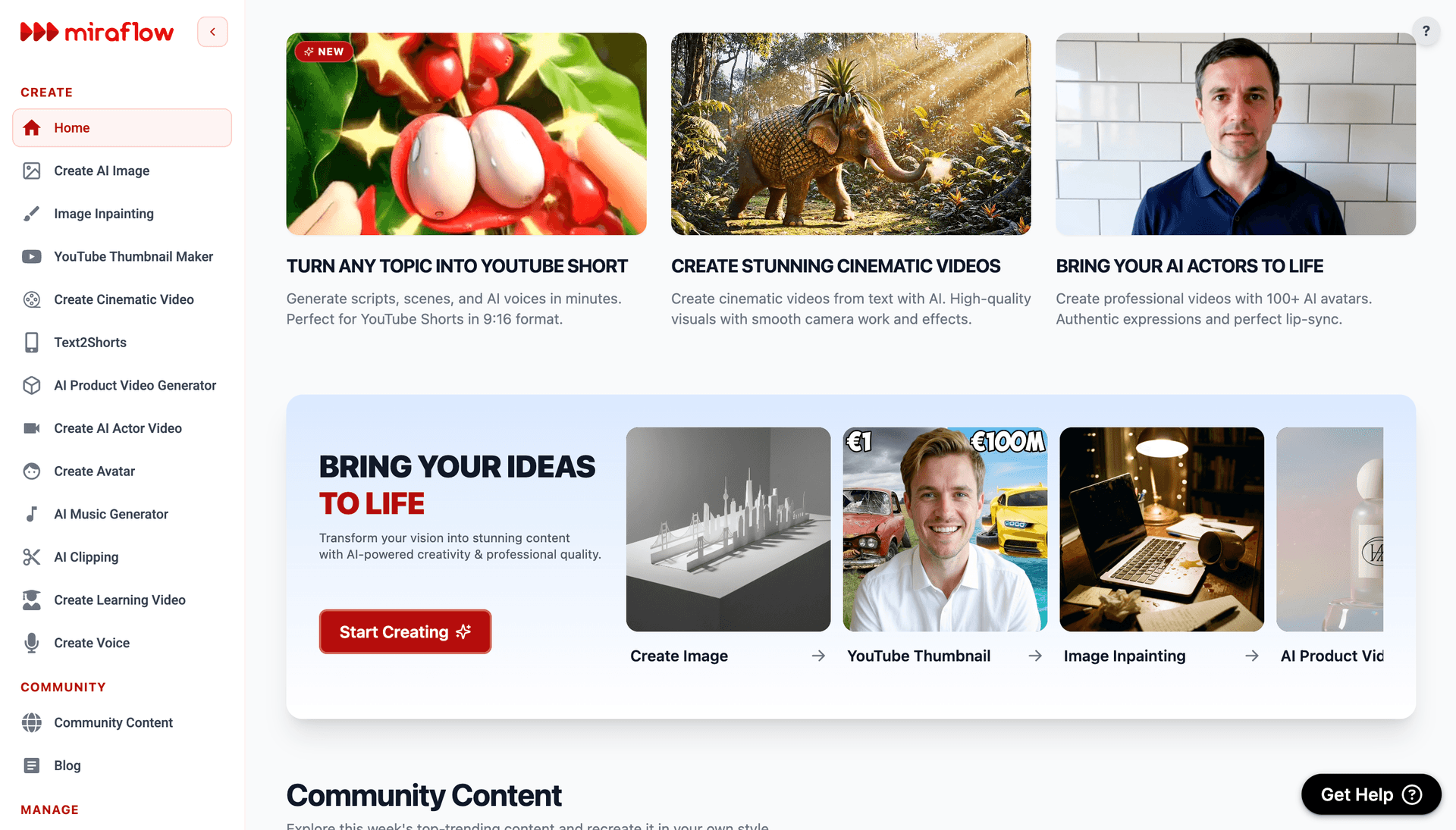
For content creators, the implications are practical and immediate. Your content now feeds into a proprietary AI system that determines your discoverability on the world's largest social platforms. The quality, clarity, and strategic framing of your content directly affects how that AI surfaces your work to audiences and commerce customers. Diversifying across platforms, building owned audience relationships, and using cross-platform creation tools like Miraflow for thumbnails, videos, images, and music is not just a best practice — it is risk management against platform dependency.
For small businesses, Muse Spark's integration with Meta's commerce and advertising platforms offers genuinely powerful new capabilities, from AI-powered customer service on WhatsApp to conversational shopping experiences on Instagram. But these capabilities come with increased dependency on a platform whose proprietary AI you cannot examine, replicate, or leave without significant cost.
For the AI industry and society broadly, the shift raises fundamental questions about who controls the most powerful technology of our era and what accountability mechanisms exist for that control. These questions do not have easy answers, but they are questions that everyone who builds, creates, or does business in the AI age needs to be asking.
Meta killed Llama. It built Muse Spark. And whether you see that as progress or power consolidation, it changes everything about how you should think about your relationship with AI and the platforms that control it.
Frequently Asked Questions
Did Meta completely kill Llama?
Meta has not formally discontinued Llama, and existing Llama models remain available for download and use.[3] However, Meta's frontier AI development has moved entirely to the closed-source Muse Spark model under Meta Superintelligence Labs. The practical expectation is that Llama will receive maintenance updates but will not see the massive investment in capability advancement that defined it during 2023-2025.
Why did Meta switch from open-source to closed-source?
Multiple factors drove the decision: the escalating cost of training frontier models (Meta is spending $115-135 billion in capex in 2026), concerns about competitors — particularly Chinese AI labs — building commercial products on Llama's open weights, the need to monetize AI investment through platform integration, and the nature of Muse Spark itself, which is deeply integrated with Meta's proprietary user data.[5][4]
What is Muse Spark and how is it different from Llama?
Muse Spark is Meta's first proprietary AI model, developed by Meta Superintelligence Labs. Unlike Llama, it is natively multimodal (processing text, images, video, and audio as integrated inputs), operates in three reasoning modes (Instant, Thinking, and Contemplating), and is deeply integrated with Meta's platform data. It is only available through Meta's own platforms and apps.[7][2]
How does this affect content creators?
Content creators on Meta's platforms now have their content processed, categorized, and recommended by a proprietary AI they cannot examine. Muse Spark powers content discovery, shopping recommendations, and audience matching on Instagram and Facebook. Creators should focus on content quality, clear thematic focus, proper tagging, and maintaining platform diversity using tools like Miraflow for cross-platform content production.
How does this affect small businesses?
Small businesses gain access to more powerful AI tools within Meta's ecosystem — better advertising optimization, AI-powered customer service on WhatsApp, and Shopping Mode's conversational commerce. However, these capabilities increase dependency on Meta's platform and are not available outside of it. The AI that powers these tools is proprietary and cannot be independently examined.[6]
Are there still open-source AI alternatives?
Yes. Mistral, Alibaba's Qwen, and other organizations continue to release open-weight models. However, none currently match Muse Spark's frontier capabilities, particularly in multimodal understanding and platform integration. The gap between open and closed AI at the frontier has widened with Muse Spark's launch.[3]
What happened to developers who built on Llama?
Developers who built applications on Llama can continue using existing Llama models, which remain available. However, as the gap between Llama and Muse Spark widens, developers will need to decide whether to continue on an aging open foundation, switch to competing open-source models, or migrate to proprietary API access from major AI providers.
Is Muse Spark better than GPT and Gemini?
Muse Spark outperforms GPT-4.5 and Gemini 2.5 Pro on most standard benchmarks and ranks among the top five AI models globally.[5] Its primary advantage over competitors is not raw benchmark performance but deep integration with Meta's platform ecosystem, social graph, and commerce data — capabilities that general-purpose API models cannot replicate.
Will this increase the cost of AI tools for creators?
Potentially. During the Llama era, many affordable AI creation tools were built on free open-source foundations. As frontier capabilities move behind proprietary walls, tool developers may face higher costs that get passed to users. Using platform-agnostic creation tools like Miraflow for thumbnails, videos, images, and music helps manage costs while maintaining quality.
What should I do right now to prepare?
Diversify your platform presence across YouTube, TikTok, and owned channels. Audit and improve your product content on Meta's platforms with proper tagging and high-quality visuals. Build email lists and owned audience relationships. Use cross-platform creation tools. And stay informed about Meta's evolving AI features and policies to adapt quickly as the landscape changes.
References
- Goodbye, Llama? Meta launches new proprietary AI model Muse Spark | VentureBeat
- Introducing Muse Spark: Meta's Most Powerful Model Yet
- Did Meta Sacrifice Its Open-Source Identity for a Competitive AI Model?
- Meta's First Closed-Source AI Model Arrives — and It Breaks Every Promise Zuckerberg Made About Open AI
- Meta's Comeback: Muse Spark Puts Zuckerberg Back in the AI Race, Breaks With Open Source
- Can Meta's new AI model Muse Spark make money?
- Introducing Muse Spark: Scaling Towards Personal Superintelligence
- Meta introduces new shopping upgrades under AI model Muse Spark
- Meta's Muse Spark AI Model: Features, Risks, What's Next | Built In
- Meta Just Ended Open-Source AI (2026) — Muse Spark Explained - YouTube