Muse Spark Shopping Mode: How Meta Wants AI to Replace Your Entire Shopping Experience

Written by
Jay Kim

Meta's Muse Spark Shopping Mode lets users discover, style, and buy products through AI conversation. Here is how it works, what it means for creators and businesses, and how to prepare.
On April 8, 2026, Meta launched Muse Spark, its first proprietary AI model and the debut product of Meta Superintelligence Labs. While most coverage focused on the closed-source controversy and benchmark performance, one feature flew under the radar that may ultimately matter more to Meta's bottom line than anything else the model can do.
Meta built a full shopping experience directly into its AI assistant.
It is not a chatbot that links you to a product page. It is not a search bar with filters. Meta built what it calls Shopping Mode, a conversational AI layer that can understand what you want to buy, show you visual options pulled from real merchant and creator content across Instagram and Facebook, and guide you from vague inspiration to completed purchase without ever leaving the Meta AI interface.[1]
If you are a content creator, a brand, or a small business selling products online, this is the feature you need to understand. Shopping Mode changes the relationship between content, discovery, and purchase on the platforms where three billion people spend their time. Here is exactly what it does, how it works, and what it means for anyone who makes money through online commerce or content.
What Shopping Mode Actually Is
Shopping Mode is a dedicated shopping experience within Meta AI that activates when users ask product-related questions or express purchase intent. Rather than returning a list of links or redirecting users to a separate app, the AI generates a visual, conversational shopping experience that keeps users inside Meta's ecosystem from start to finish.[1]
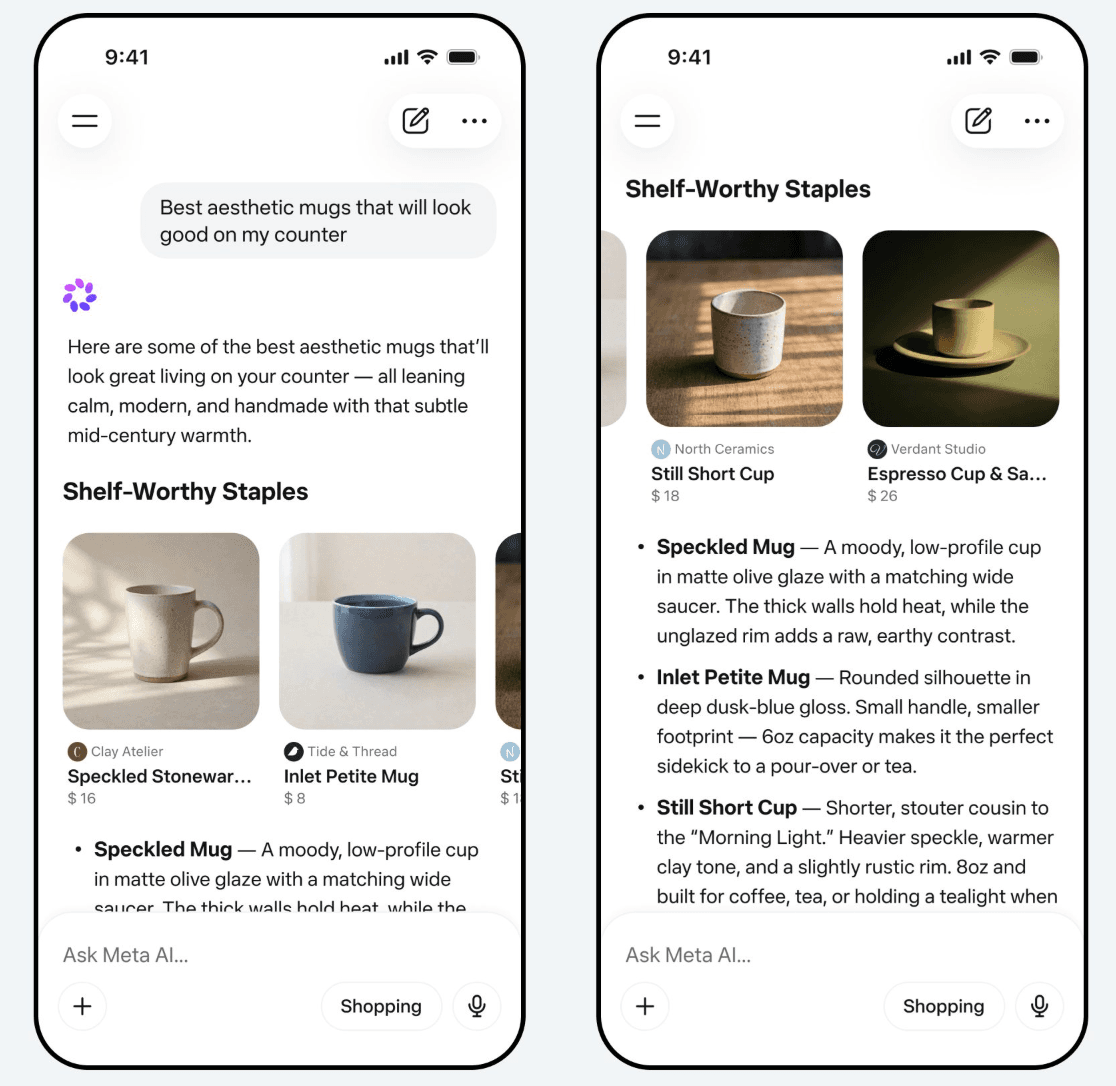
When a user asks something like "What should I wear to a summer wedding in Tuscany?" or "Help me redesign my living room on a budget," Muse Spark does not simply return text suggestions. It generates a curated visual feed of product recommendations drawn from real inventory across Meta's commerce partners, overlaid with styling advice and contextual reasoning about why each item fits the request.[2]
The system works across three primary interaction patterns. First, conversational product discovery, where users describe what they need in natural language and the AI interprets intent, budget signals, style preferences, and occasion context to surface relevant products. Second, visual styling and curation, where the AI assembles complete looks, room designs, gift bundles, or collections rather than showing individual items in isolation. Third, creator-informed recommendations, where the AI draws on posts, Reels, Stories, and product tags from creators and brands the user already follows or that match their interest graph.[1]
The practical significance is that Meta is collapsing what used to be a multi-step, multi-platform journey — searching on Google, browsing on Instagram for inspiration, reading reviews on Amazon, comparing prices on another site — into a single conversational flow inside its own AI.
For content creators who build audiences around product recommendations, fashion, home decor, tech reviews, or any commerce-adjacent niche, this is both an opportunity and a threat. Your content may become part of the AI's recommendation engine, surfacing your posts and Reels as trusted sources within shopping conversations. But the AI also becomes a layer between your content and the consumer, potentially absorbing the attention and the transaction that used to flow directly through your profile.
How the Technology Works Behind the Scenes
Understanding what powers Shopping Mode requires looking at how Muse Spark processes information differently from previous AI models.
Muse Spark is a natively multimodal model, meaning it was trained from the ground up to understand text, images, video, and audio as integrated inputs rather than processing them separately and combining the results.[3] This matters for shopping because product discovery is inherently visual. When a user shows the AI a photo of a dress they saw at a party and asks "Where can I find something like this?", Muse Spark can analyze the image, identify stylistic elements like fabric type, cut, color palette, and pattern, and then match those attributes against product catalogs and creator content across Meta's platforms.
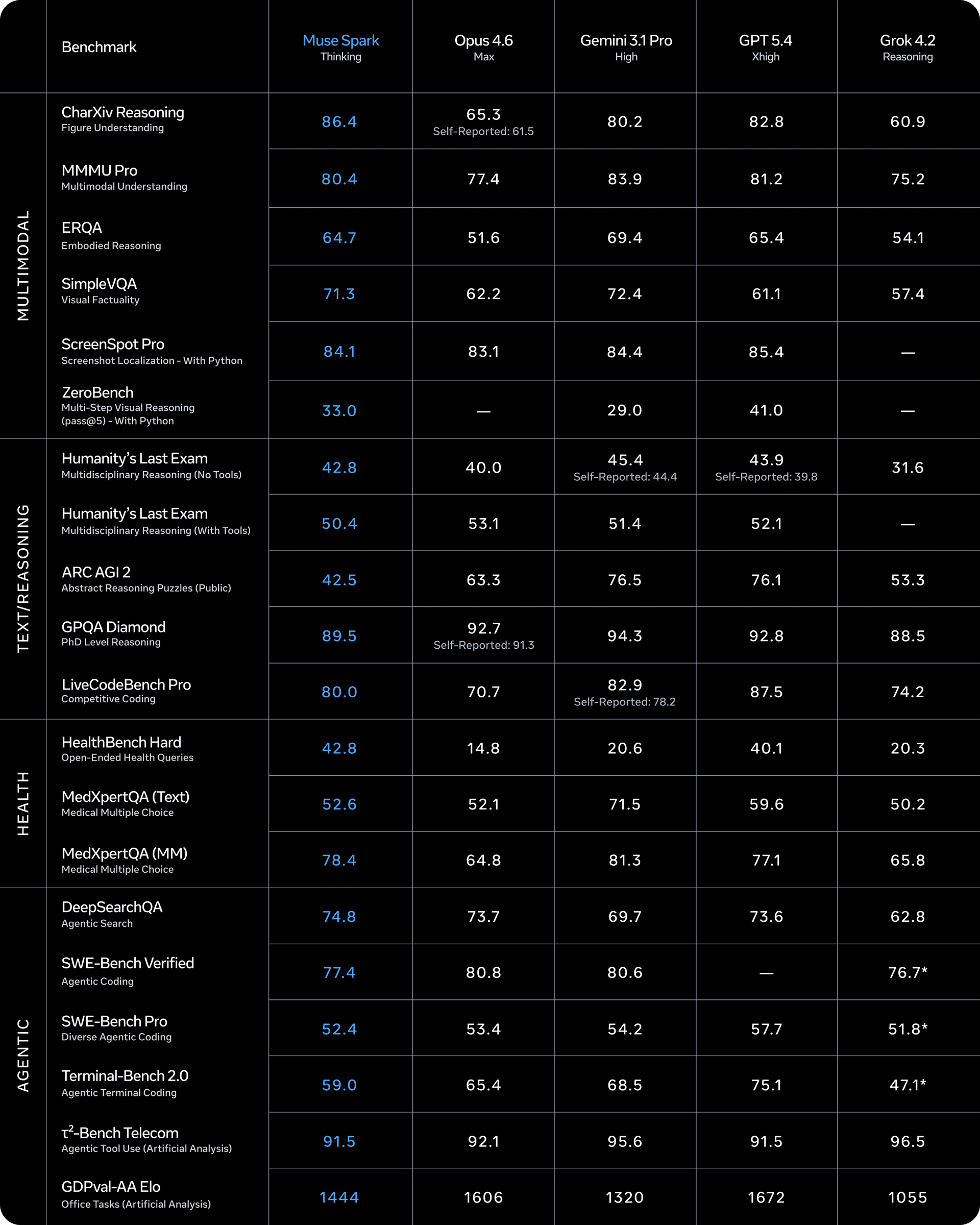
The model operates in three distinct reasoning modes. Instant mode provides quick answers for straightforward product queries. Thinking mode engages multi-step reasoning for more complex shopping scenarios, such as planning a complete wardrobe for a vacation or assembling a gift list for multiple people. Contemplating mode orchestrates multiple reasoning agents in parallel for the most demanding tasks, like comparing dozens of options across categories while balancing budget constraints, style preferences, and availability.[4]
What makes this technically distinct from existing shopping AI is the integration with Meta's social graph. The model does not just know what products exist. It knows what products your friends have liked, what creators in your interest graph have recommended, what brands you have engaged with, and what visual styles you tend to respond to based on your interaction history across Instagram, Facebook, and WhatsApp. Meta's internal data on user preferences, accumulated over two decades, becomes the recommendation engine's foundation.
The model also introduces what Meta calls "cited recommendations," where AI-generated shopping suggestions include direct references back to the creator content, brand posts, or user reviews that informed the recommendation.[2] This is a critical design choice because it creates a visible credit trail from the AI's suggestion back to the human content that influenced it.
For creators producing product review content, high-quality thumbnails, and engaging short-form videos about products, the cited recommendations feature means your content could be surfaced in millions of shopping conversations across Meta's platforms, but only if the AI considers it relevant, trustworthy, and visually compelling.
What Shopping Mode Can Actually Do Right Now
Based on Meta's announcements and early user reports, Shopping Mode launched with several concrete capabilities that go well beyond what any previous AI shopping assistant has offered.

Outfit and Style Recommendations
Users can describe an occasion, show a reference image, or specify a budget, and the AI assembles complete outfit suggestions with real purchasable items. The system understands layering, color coordination, seasonal appropriateness, and occasion codes. It can adjust recommendations in real time as the user provides feedback, such as "I like that jacket but want something in a warmer tone" or "Show me options that work for someone who runs cold."[1]
Room and Space Design
The home decor functionality works similarly. Users can upload a photo of their room and ask the AI to suggest furniture arrangements, color schemes, or specific product swaps. Muse Spark can interpret spatial context from photos, understanding room dimensions, existing furniture styles, and lighting conditions to make contextually appropriate suggestions.[1]
Gift Planning
The AI can help users figure out what to buy for friends and family by asking clarifying questions about the recipient's interests, the occasion, the budget, and the relationship context. It then generates curated gift suggestions drawn from products available on Meta's commerce platforms, including options tagged or recommended by creators the user follows.[1]
Visual Search and Match
Users can take a photo of any product they encounter in the real world, through Meta's AI glasses or their phone camera, and Shopping Mode will identify similar items available for purchase. This works across fashion, furniture, electronics, and home goods. The visual understanding capabilities of Muse Spark, which benchmarks well on image processing tasks, make this feature significantly more accurate than previous visual search tools.[5]

Creator Content Integration
Perhaps the most strategically important feature is how Shopping Mode weaves creator content into the shopping experience. When the AI recommends a product, it can surface the Instagram Reel, Story, or post where a creator demonstrated that product, styled it, or reviewed it. Meta's shopping model pulls from creator content and brand storytelling already on Instagram and Facebook that users follow.[1]
This creates a feedback loop where creator content becomes the social proof layer for AI-powered commerce. The AI handles the product matching and logistics; the creator provides the trust and visual demonstration that drives conversion.
For anyone building a content business around product reviews, fashion, lifestyle, or any commerce-adjacent topic, understanding how to create content that gets picked up by this system is now a core skill. The fundamentals remain the same: high-quality visuals, genuine product demonstrations, and authentic voice. But the distribution channel has fundamentally changed, as your content may now reach consumers through AI conversations rather than just through their feed scroll.
The Business Model Behind Shopping Mode
Meta's motivations for building Shopping Mode go deeper than improving user experience. This feature sits at the intersection of Meta's two most pressing business needs: monetizing its AI investment and building a commerce platform that can compete with Amazon.
Meta is investing between $115 billion and $135 billion in capital expenditure in 2026, nearly double its 2025 figure.[6] That number is staggering, and it needs a return. Shopping Mode is one of the clearest paths to generating that return because it creates multiple revenue opportunities within a single interaction.
The first revenue stream is advertising within AI conversations. When a user asks Muse Spark for product recommendations, the AI's response becomes a new kind of ad placement. Brands can pay to be included in or prioritized within shopping recommendations. This is fundamentally different from traditional display advertising because the user has explicitly expressed purchase intent, making every impression significantly more valuable.[5]
The second revenue stream is transaction fees. By keeping the entire shopping journey within Meta's ecosystem, from discovery through purchase, Meta can capture a percentage of each sale. Previous attempts at social commerce on Instagram and Facebook struggled because users would discover products on Meta's platforms but complete purchases elsewhere. Shopping Mode eliminates that leakage by making the AI conversation the storefront itself.
The third revenue stream is merchant tools and analytics. Businesses that want their products surfaced by Shopping Mode will need to maintain their presence on Meta's commerce platforms, tag products correctly, and potentially pay for enhanced visibility within AI recommendations.
Industry analysts see the biggest leverage in WhatsApp Business with its more than two billion users: the messenger could turn into something like an autonomous digital employee for millions of SMBs.[6] In markets across Southeast Asia, Latin America, and Africa, where WhatsApp is the primary communication platform for small businesses, an AI shopping assistant that can answer customer questions, show product options, and process orders within the chat interface represents a massive commerce opportunity.
Meta is expected to overtake Google as the company with the most net ad revenue in 2026.[7] Shopping Mode is a key part of how that happens. When AI becomes the storefront, the platform that owns the AI owns the customer relationship, and the advertising budget follows.
For content creators, this business model means that your commerce-related content is becoming more valuable to Meta, not less. The company needs authentic, trusted creator content to power its shopping recommendations. A generic product listing does not drive conversions the way a creator's genuine review or styling video does. But the terms of that relationship, how much visibility your content gets, how credit and compensation flow back to you, are entirely controlled by Meta's algorithms and business decisions.
How Shopping Mode Compares to Existing AI Shopping
To understand why Shopping Mode matters, it helps to compare it against the AI shopping experiences that already exist across competing platforms.

Google has been integrating shopping capabilities into its AI Overview and Gemini assistant throughout 2025 and 2026. Google's approach leverages its Shopping Graph, which aggregates product data from across the web, and presents AI-summarized product recommendations within search results. The strength of Google's approach is its breadth, drawing from every retailer on the internet. The weakness is that Google does not own the social proof layer. It can show you products, but it cannot show you your favorite creator styling that product in a Reel.
Amazon has been developing its AI shopping assistant, Rufus, which launched in 2024 and has expanded significantly since. Rufus excels at answering specific product questions within Amazon's ecosystem, like comparing the thread count of two sheet sets or explaining the difference between air fryer models. But Rufus operates within a traditional retail context. It helps you choose between products you are already considering. It does not inspire the way a styled outfit photo or a room design concept does.
TikTok Shop has perhaps the closest conceptual parallel to what Meta is building. TikTok merged content and commerce more successfully than any platform before it, proving that users will buy products directly from entertaining video content. But TikTok's shopping experience is still primarily feed-driven — you see a product in a video, you tap to buy. Meta's Shopping Mode inverts this by making the AI conversation the starting point, with creator content serving as supporting material within the AI's recommendations.
Apple Intelligence has added some shopping-related capabilities through its on-device AI, but Apple's approach is focused on privacy-first product suggestions and integrating with Apple Pay rather than building a full commerce platform.
What makes Meta's approach uniquely powerful is the combination of three assets no other company fully possesses: a three-billion-user social graph with deep preference data, the largest creator content ecosystem in the world through Instagram and Facebook, and a conversational AI model capable enough to orchestrate complex shopping scenarios. Shopping Mode is Meta leveraging all three simultaneously.
For creators who sell products or earn through affiliate marketing across multiple platforms, this competitive landscape means that content optimized for shopping discovery is becoming platform-specific. The thumbnail that performs well on YouTube, the Reel that drives engagement on Instagram, and the product video that converts on TikTok Shop may each need different approaches as AI shopping layers reshape how consumers discover products on each platform.
What This Means for Content Creators
The implications of Shopping Mode for content creators depend on your niche, your monetization model, and how deeply your business intersects with commerce. But several themes apply broadly.
Your Content Becomes AI Shopping Inventory
This is the single most important shift. When Meta says Shopping Mode pulls from creator content and brand storytelling already on Instagram and Facebook, it means every product-related Reel, Story, carousel, and post you have published is now potential inventory for an AI shopping assistant serving three billion users.[1]

The AI does not just surface your content to people who follow you or who the algorithm would have shown it to organically. It surfaces your content in response to specific purchase-intent queries from any user whose preferences match. This is a fundamentally different distribution model than the feed algorithm, and it can dramatically expand or contract your reach depending on how well your content fits the AI's recommendation criteria.
The implication is clear: the quality, clarity, and informativeness of your product-related content now matters in ways it did not before. A Reel where you hold up a product and say "love this" with no context may perform well in a feed scroll. But it gives the AI very little information to work with when deciding whether to surface it for a user asking "What is a good moisturizer for dry skin in winter?" A Reel where you demonstrate the product, discuss its texture, explain who it is best for, and compare it to alternatives gives the AI rich contextual data to match against user queries.
Cited Recommendations Create a New Attribution Channel
Meta's decision to include citations back to creator content within Shopping Mode recommendations is significant. It creates visible credit when your content influences a purchase, which is something that does not happen on most AI platforms today. When ChatGPT or Google's AI Overview recommends a product, the creator whose review influenced that recommendation gets no attribution or traffic.
Meta's approach appears to work differently, at least in theory. The cited recommendation model means users can see which creator's post or Reel informed the AI's suggestion and tap through to that content.[2] If this works as described, it creates a powerful feedback loop: better product content leads to more AI citations, which leads to more profile visits and followers, which leads to more influence over future shopping recommendations.
However, it is important to be realistic about how this will play out. Meta controls the algorithm that decides which content gets cited. The company has a history of changing how it distributes creator content, and there is no guarantee that the citation model will remain as generous as it appears at launch. Building your entire monetization strategy around Shopping Mode citations would be risky. Treating it as one channel among many is prudent.
Affiliate and Commission Structures May Shift
For creators who earn through affiliate marketing, Shopping Mode introduces both opportunity and uncertainty. On the opportunity side, if your content is surfaced within AI shopping recommendations and drives purchases, the volume of potential conversions expands dramatically beyond your existing follower base. On the uncertainty side, the commission structures for AI-driven purchases have not been clearly defined by Meta.
Traditional affiliate marketing works through tracked links. A creator shares a link, a user clicks it, and the creator earns a commission on the resulting purchase. Shopping Mode may bypass this model entirely if the AI recommends products based on creator content but routes the purchase through Meta's own checkout flow rather than through the creator's affiliate link. How Meta handles attribution and compensation in this scenario will determine whether Shopping Mode is a windfall or a disruption for affiliate-dependent creators.
The smart play for creators right now is to diversify their commerce revenue across multiple channels. Building a presence on YouTube through product review content and optimized thumbnails, maintaining an email list where you control the relationship with your audience, and using platforms like Miraflow to create high-quality product videos and visual content that works across all channels ensures you are not dependent on any single platform's commerce features.
Visual Quality Becomes a Commerce Skill
Shopping Mode's reliance on visual content processed by a multimodal AI means that the visual quality of your product content directly affects whether the AI surfaces it. Muse Spark can analyze images and videos at a level of detail that previous recommendation algorithms could not. It can distinguish between a well-lit, clearly composed product photo and a blurry, poorly styled one. It can assess whether a fashion video shows how a garment actually fits and moves versus just displaying it on a hanger.
This raises the bar for product content creation significantly. Creators who invest in learning how to produce professional-quality visuals, whether through better photography, better editing, or AI-assisted tools for thumbnail creation and video production, will have a structural advantage in getting their content surfaced by Shopping Mode.
The good news is that producing high-quality visual content has never been more accessible. AI tools can now generate professional product images, create background music for product videos, and help you design thumbnails that drive clicks. The skills you build for one platform transfer directly to others, and investing in visual quality pays dividends across every channel where you distribute content.
What This Means for Small Businesses and Brands
Small businesses and brands face a parallel set of implications, and for many, Shopping Mode may represent the most significant shift in digital commerce since the rise of social media advertising.
The Storefront Becomes the Conversation
For two decades, digital commerce has been organized around the storefront metaphor. You build a website, list your products, drive traffic through ads or SEO, and hope visitors convert. Social media added discovery to this model but did not fundamentally change it — users discovered products on social platforms and then navigated to external storefronts to buy.
Shopping Mode collapses this. The AI conversation is the storefront. There is no separate website to navigate to, no checkout flow to optimize, no landing page to A/B test. The user tells the AI what they want, the AI shows them options drawn from Meta's commerce ecosystem, and the purchase happens within the conversation.[1]
For small businesses, this means that your presence within Meta's commerce platforms, how well your products are tagged, photographed, and described, becomes the primary determinant of whether the AI recommends you. Having a beautiful standalone website matters less if the customer never visits it because the AI completed the entire purchase journey within Meta AI.
Product Data Quality Becomes Critical
When a human browses a website, they can interpret a mediocre product photo, read between the lines of a vague description, and fill in the gaps with their own judgment. An AI shopping assistant cannot. Muse Spark relies on structured product data, clear images, detailed descriptions, and accurate tags to match products against user queries.
Businesses that invest in high-quality product photography, comprehensive and accurate product descriptions, proper categorization and tagging within Meta's commerce tools, and rich content like styling videos and use-case demonstrations will be systematically favored by Shopping Mode's recommendation algorithm. This is not speculation — it is how any AI-driven recommendation system works. Better data inputs produce better matching outputs.
The practical takeaway for small businesses is that producing excellent product visual content is no longer optional. Using AI tools to generate professional product images, create product demonstration videos, and design compelling visual assets for your catalog is an investment that directly impacts your discoverability within the AI shopping ecosystem.
WhatsApp Business Becomes an AI Sales Channel
For small businesses in markets where WhatsApp is the primary communication tool, the integration of Muse Spark into WhatsApp Business may be the most transformative aspect of this entire announcement.

Industry analysts see the biggest leverage in WhatsApp Business with its more than two billion users: the messenger could turn into something like an autonomous digital employee for millions of SMBs.[6] Imagine a small clothing boutique in São Paulo where a customer messages on WhatsApp asking "Do you have anything good for a beach vacation?" and the AI responds with a curated selection from the store's inventory, styled into complete outfits, with the ability to complete the purchase directly in the chat.
This is not hypothetical. It is the explicit direction Meta has outlined for WhatsApp Business integration with Muse Spark. For small businesses that cannot afford dedicated sales staff or sophisticated e-commerce platforms, an AI assistant that handles product discovery, styling recommendations, and purchase facilitation within WhatsApp is genuinely transformative.
The Privacy and Data Implications
Any discussion of an AI shopping assistant built on decades of social media data must address the privacy implications directly, because they are significant and underreported in most coverage of Shopping Mode.
Shopping Mode's recommendations are powered by Meta's social graph, which means the AI's understanding of your preferences is derived from your entire history of interactions across Facebook, Instagram, WhatsApp, and Messenger. Every post you have liked, every account you have followed, every product page you have visited, every message you have sent through Meta's platforms contributes to the AI's model of what you want to buy.
This creates an incredibly powerful recommendation engine, arguably more accurate than any competitor's, because Meta has been collecting this data for over twenty years across multiple platforms. But it also means that Shopping Mode's effectiveness is directly proportional to how much of your personal data Meta can leverage.
Users in the European Union benefit from GDPR protections that limit how this data can be used and require explicit consent. Users in other jurisdictions have fewer protections. The regulatory landscape around AI-powered commerce is evolving rapidly, and Meta's Shopping Mode will likely become a test case for how much personal data an AI shopping assistant should be allowed to use.
For content creators and businesses, the privacy implications are practical as well as ethical. If users become uncomfortable with how much the AI knows about their preferences and begin limiting data sharing, Shopping Mode's recommendations will become less personalized and potentially less effective. The long-term success of the feature depends on Meta maintaining user trust around data use — something the company has struggled with historically.
How to Position Your Content for Shopping Mode
For creators and businesses looking to maximize their visibility within Shopping Mode, several concrete strategies emerge from how the system works.
Optimize product tagging in every post. When you create product-related content on Instagram or Facebook, use Meta's product tagging features comprehensively. Tag specific products, include accurate pricing, and link to purchase pages. The AI uses these tags as structured data to match your content against user queries. Content without product tags is significantly harder for the AI to include in shopping recommendations.
Create context-rich product content. Move beyond simple product showcases. Create content that shows products in use, in specific contexts, for specific occasions, and for specific body types or room sizes. The more contextual information your content provides, the more queries it can match against. A Reel showing a dress at a garden party gives the AI different matching data than the same dress photographed flat on a table.
Build consistent visual quality standards. Muse Spark is a visual-first model. It evaluates image and video quality as part of its recommendation logic. Invest in better lighting, cleaner compositions, and professional-grade editing. Use AI image generation tools to create supplementary visual assets and thumbnail templates that maintain consistent quality across your content.
Produce comparison and "best of" content. When users ask Shopping Mode questions like "What is the best running shoe for flat feet?" or "What are the top kitchen gadgets under $50?", the AI looks for content that directly addresses comparative questions. Creating well-researched comparison content with clear rankings and explanations positions your content as a primary source for these queries.
Maintain authentic voice and genuine recommendations. Meta's cited recommendation system is designed to surface trusted content. If your product recommendations consistently lead to returns or negative feedback, the AI will learn to deprioritize your content. Authentic, honest reviews that help users make good purchase decisions will be rewarded over time. The same principles that build audience trust directly, transparency, honesty, and genuine expertise, also build AI trust within recommendation systems.
Cross-promote across Meta's platforms. Shopping Mode draws from content across Instagram, Facebook, and eventually WhatsApp and Messenger. Creators who maintain active presence across multiple Meta platforms give the AI more content to work with and more data points to establish relevance. Repurposing your product videos and visual content across all of Meta's platforms maximizes your surface area within Shopping Mode.
The Creator Economy Implications
Shopping Mode represents a fundamental shift in how the creator economy intersects with commerce, and the implications extend beyond individual creators to the entire ecosystem.
For the past decade, the creator-commerce pipeline has worked roughly the same way across all platforms. A creator builds an audience, brands approach the creator for sponsored content or the creator joins affiliate programs, the creator produces content featuring products, and some percentage of the audience converts into buyers. The creator's value in this pipeline is their audience and their ability to influence purchase decisions.
Shopping Mode potentially disrupts this by inserting an AI layer between the creator's content and the consumer's purchase decision. Instead of a user seeing a creator's post in their feed, clicking through, and buying, the user asks the AI what to buy, and the AI may surface the creator's content as part of its recommendation alongside content from other creators, brand content, and product data. The AI becomes the curator, and the creator's content becomes one input among many.
This changes the power dynamics in several ways. First, creators who produce excellent product content may reach far more consumers than their follower count would suggest, because the AI can surface their content to any user whose query matches, regardless of whether that user follows the creator. This is democratizing in the sense that a small creator with exceptional product knowledge could be surfaced alongside major influencers.
Second, the flip side is that creators lose some control over how their content is presented. When your Reel appears in a user's feed, it appears in its entirety, with your branding, your voice, and your narrative. When your content is cited within a Shopping Mode conversation, it may appear as a clip, a screenshot, or a brief reference alongside competing recommendations. The full creative experience you designed may be compressed or fragmented.
Third, the metrics that matter shift. Follower count and engagement rate have been the primary currencies of the creator economy. Shopping Mode introduces a new metric: AI citation frequency. How often is your content surfaced in shopping conversations? What is the conversion rate when it is? These metrics may not be visible to creators at launch, but they will almost certainly become part of how brands evaluate creator partnerships.
For creators who want to maintain control over their content distribution and monetization, the strategy is clear: do not put all your commerce content on Meta's platforms exclusively. Build parallel content pipelines on YouTube, maintain your own website or newsletter, and use tools like Miraflow to produce content that works across all channels. Shopping Mode is an opportunity to be leveraged, not a dependency to be built on.
What Comes Next for AI Shopping
Shopping Mode in its current form is the first iteration of what Meta envisions as a much larger AI commerce platform. Several developments are likely in the coming months and years based on the technical capabilities of Muse Spark and the strategic direction Meta has outlined.
The integration with Ray-Ban Meta AI glasses will enable what Meta has been calling "see and shop" — the ability to look at something in the physical world, ask the AI about it through your glasses, and receive instant shopping recommendations. This bridges offline discovery with online commerce in a way no previous technology has achieved at scale. Walking past a restaurant with a beautiful interior and asking your glasses "Where can I get furniture like this?" is a use case Meta is explicitly designing for.
Voice-based shopping through WhatsApp and Messenger will expand the accessibility of Shopping Mode to users who are more comfortable speaking than typing, which includes a large percentage of users in developing markets where WhatsApp dominates. A user voice-messaging "I need a birthday gift for my ten-year-old nephew who likes dinosaurs" and receiving AI-curated gift suggestions within seconds represents a fundamentally new shopping modality.
Multi-agent orchestration, Muse Spark's Contemplating mode, suggests future capabilities where the AI does not just recommend products but actively negotiates, compares, and optimizes across multiple merchants simultaneously on the user's behalf. This is closer to a personal shopping agent than a recommendation engine, and it is technically possible with Muse Spark's architecture today.
The personalization will deepen as Muse Spark learns from each user's shopping conversations over time. The AI that knows you bought a mid-century modern sofa last month will suggest matching side tables this month. The AI that knows you prefer sustainable brands will filter its recommendations accordingly. This level of continuity and learning across sessions is something no current e-commerce platform offers.
For businesses and creators, the strategic implication is that AI-powered commerce is not a feature — it is the future of how products are discovered and purchased on Meta's platforms. Treating Shopping Mode as an experiment or a gimmick would be a mistake. Preparing for it as a primary commerce channel is the appropriate response.
How to Prepare Your Business or Content Strategy Today
Whether you are a content creator, a small business owner, or a brand marketer, there are concrete steps you can take right now to position yourself for the AI shopping landscape Meta is building.

Audit your existing product content on Instagram and Facebook. Review every product-related post, Reel, Story, and carousel you have published. Are products tagged correctly? Are descriptions accurate and detailed? Is the visual quality consistent? This existing content is the inventory Shopping Mode will draw from, and improving it now means better results when the feature reaches your market.
Invest in video content production. Shopping Mode appears to weight video content heavily, consistent with broader trends across Meta's platforms where Reels and video content receive preferential distribution. If you have been creating mostly static images for product content, now is the time to build video production skills and start producing short-form product videos that demonstrate products in context.
Build your presence across all Meta platforms. Shopping Mode integrates content from across Meta's ecosystem. If you are only on Instagram, you are leaving content surface area on the table. Expanding to Facebook, particularly Facebook Shops, and preparing for WhatsApp Business integration maximizes how much of your content the AI can access and recommend.
Create content that answers specific shopping questions. Think about what your target audience asks when they are shopping. "What is the best moisturizer for oily skin in summer?" "How do I style wide-leg pants for the office?" "What kitchen tools do I actually need as a beginner cook?" Create content that directly and thoroughly answers these questions. This is the content Shopping Mode will surface in response to matching queries.
Track Meta's commerce feature announcements closely. Shopping Mode is rolling out gradually and new capabilities are being added on a regular basis. Features like enhanced creator attribution, commerce analytics for Shopping Mode referrals, and integration with Meta's checkout flow will all affect how your content is discovered and monetized. Following Meta's official announcements and adapting quickly will give you an early-mover advantage.
Maintain channel diversification. For all the opportunity Shopping Mode represents, building your business exclusively on Meta's AI commerce platform would be repeating the mistake many businesses made with Facebook Pages a decade ago. Maintain strong content presence on YouTube through optimized Shorts and long-form videos, build on TikTok, nurture your own audience through email and owned channels, and use platform-agnostic tools like Miraflow for content production so you are never locked into a single platform's ecosystem.
Conclusion
Meta's Shopping Mode is not simply a new feature within an AI assistant. It is a deliberate attempt to reimagine how three billion people discover and purchase products, with an AI conversation replacing the multi-platform, multi-step shopping journey that has defined e-commerce for the past two decades.
The technology is genuinely impressive. By combining Muse Spark's multimodal reasoning capabilities with Meta's unmatched social graph and the largest creator content ecosystem in the world, Shopping Mode offers a shopping experience that is more personalized, more visual, and more conversational than anything currently available from Amazon, Google, or any other competitor.
For content creators, the opportunity is real but comes with important caveats. Your product content may now reach millions of users through AI shopping conversations, far beyond your existing audience. Creator citations within recommendations create a new attribution channel that could drive significant profile growth and commerce revenue. But the AI sits between you and the consumer, Meta controls the algorithm, and the long-term terms of the creator-platform relationship in an AI-mediated commerce world are not yet defined.
For small businesses and brands, Shopping Mode may be the most significant development in digital commerce since the rise of social media advertising. The businesses that invest in product data quality, visual content production, and presence across Meta's commerce platforms will be systematically favored by the AI's recommendation engine. The businesses that ignore this shift will find themselves invisible to an AI that is increasingly mediating how consumers discover what to buy.
The practical response is the same one that has served creators and businesses well through every platform shift: invest in quality content creation using versatile tools like Miraflow for thumbnails, short-form video, AI images, and music; diversify your presence across platforms; build owned audience relationships you control; and treat every new platform feature as an opportunity to leverage, not a foundation to depend on.
Meta wants AI to replace your entire shopping experience. Whether that is an opportunity or a threat for your business depends entirely on how you prepare for it starting now.
Frequently Asked Questions
What is Muse Spark Shopping Mode?
Shopping Mode is a dedicated shopping experience within Meta AI powered by the Muse Spark model. It allows users to discover, compare, and purchase products through natural conversation with the AI, which surfaces visual recommendations drawn from real merchant inventory and creator content across Instagram and Facebook.[1]
How does Shopping Mode use creator content?
Meta's shopping model pulls from creator content and brand storytelling already on Instagram and Facebook that users follow.[1] When the AI recommends a product, it can cite the specific creator post, Reel, or Story that informed the recommendation, creating a visible attribution trail from the AI's suggestion back to the creator who influenced it.
Is Shopping Mode available on all Meta platforms?
Shopping Mode launched within the Meta AI app and meta.ai website and is rolling out to WhatsApp, Instagram, Facebook, and Messenger in the coming weeks.[2] The WhatsApp Business integration is expected to be particularly significant for small businesses in markets where WhatsApp is the primary communication platform.
How can content creators optimize for Shopping Mode?
Creators should focus on thorough product tagging in every post, creating context-rich product content that shows items in specific use cases, maintaining high visual quality standards, producing comparison and recommendation content that answers specific shopping questions, and maintaining presence across multiple Meta platforms. Using tools like Miraflow for professional product visuals and videos helps maintain the quality standards the AI favors.
Will Shopping Mode replace traditional e-commerce?
Shopping Mode is not replacing traditional e-commerce but is adding a new AI-mediated layer on top of it. Users who prefer browsing websites, comparing prices across retailers, or shopping on Amazon will continue to do so. But for the three billion users who spend significant time on Meta's platforms, Shopping Mode creates a new path to purchase that may capture an increasing share of commerce over time.
How does Shopping Mode affect affiliate marketing?
The impact on affiliate marketing is still unclear. If Shopping Mode routes purchases through Meta's own checkout flow rather than through traditional affiliate links, creators who depend on affiliate commissions may see disruption. However, Meta's cited recommendation feature creates a new form of attribution that could evolve into a compensation model. Diversifying commerce revenue across multiple platforms and channels is the prudent strategy.
Does Shopping Mode work with Meta's AI glasses?
Meta has outlined plans for Shopping Mode integration with Ray-Ban Meta AI glasses, enabling a "see and shop" experience where users can look at products in the real world and receive instant AI-powered shopping recommendations through their glasses. This feature is expected to roll out as part of the broader Muse Spark platform expansion.
How does Shopping Mode handle user privacy?
Shopping Mode's recommendations are powered by Meta's social graph, meaning the AI draws on your interaction history across Facebook, Instagram, WhatsApp, and Messenger to personalize suggestions. Users in the EU benefit from GDPR protections that limit data use. The privacy implications of an AI shopping assistant built on decades of social media data are significant and will likely face regulatory scrutiny.
Can small businesses benefit from Shopping Mode?
Small businesses stand to benefit significantly, particularly through WhatsApp Business integration where the AI can function as an autonomous sales assistant. Businesses that invest in product data quality, accurate tagging, high-quality photography, and active presence on Meta's commerce platforms will be systematically favored by Shopping Mode's recommendation algorithm.
How does Meta make money from Shopping Mode?
Meta's revenue from Shopping Mode comes through three primary channels: advertising within AI shopping conversations where brands pay for priority placement, transaction fees on purchases completed within Meta's ecosystem, and merchant tools and analytics for businesses seeking enhanced visibility within AI recommendations. Meta is expected to overtake Google as the top ad revenue company in 2026, and AI commerce is a key driver of that growth.[7]
References
- Meta introduces new shopping upgrades under AI model Muse Spark
- Introducing Muse Spark: Meta's Most Powerful Model Yet
- Introducing Muse Spark: Scaling Towards Personal Superintelligence
- Did Meta Sacrifice Its Open-Source Identity for a Competitive AI Model?
- Can Meta's new AI model Muse Spark make money?
- Meta's Comeback: Muse Spark Puts Zuckerberg Back in the AI Race, Breaks With Open Source
- Meta's Muse Spark AI Model: Features, Risks, What's Next | Built In
- Goodbye, Llama? Meta launches new proprietary AI model Muse Spark | VentureBeat
- Meta's First Closed-Source AI Model Arrives — and It Breaks Every Promise Zuckerberg Made About Open AI
- Meta Just Ended Open-Source AI (2026) — Muse Spark Explained - YouTube