Meta Just Went Closed Source. Here's Why That Changes Everything About AI.

Written by
Jay Kim

Meta abandoned open-source AI after three years of championing it. Here is why the Muse Spark shift to closed source changes the AI landscape for developers, creators, and businesses in 2026.
For three years, Meta was the biggest company in the world fighting for open AI. Mark Zuckerberg published manifestos about it, criticized OpenAI for going proprietary, and spent billions building Llama into the most downloaded AI model family on the planet. By early 2026, the Llama ecosystem had reached 1.2 billion downloads, averaging about 1 million per day.[2]
Then on April 8, 2026, Meta shipped its first-ever closed-source model and changed the entire equation.
Meta launched Muse Spark, its first major new AI model in a year and the first product from its newly formed Meta Superintelligence Labs. It is capable in ways Llama 4 never was, benchmarks well against the current frontier, and is completely proprietary. No free download. No open weights. No building on it unless Meta decides you can.[2]
If you are a content creator, a developer, or someone running a business on tools powered by open-source AI, this shift affects you directly. Here is exactly what happened, why it happened, and what you need to do about it.
What Meta Actually Announced
Muse Spark is the first in the Muse family of models developed by Meta Superintelligence Labs, a natively multimodal reasoning model with support for tool-use, visual chain of thought, and multi-agent orchestration. It is the first step on Meta's scaling ladder and the first product of a ground-up overhaul of its AI efforts.[5]
In practical terms, this model can process text, images, and speech as input. It offers three modes of interaction: Instant mode for quick answers, Thinking mode for multi-step reasoning tasks, and Contemplating mode, which orchestrates multiple agents' reasoning in parallel to compete with the most demanding reasoning modes from Gemini Deep Think and GPT Pro.[2]
Muse Spark currently powers the Meta AI app and website, and will be rolling out to WhatsApp, Instagram, Facebook, Messenger, and AI glasses in the coming weeks.[1] Meta will also be offering the model in private preview via API to select partners.[1]
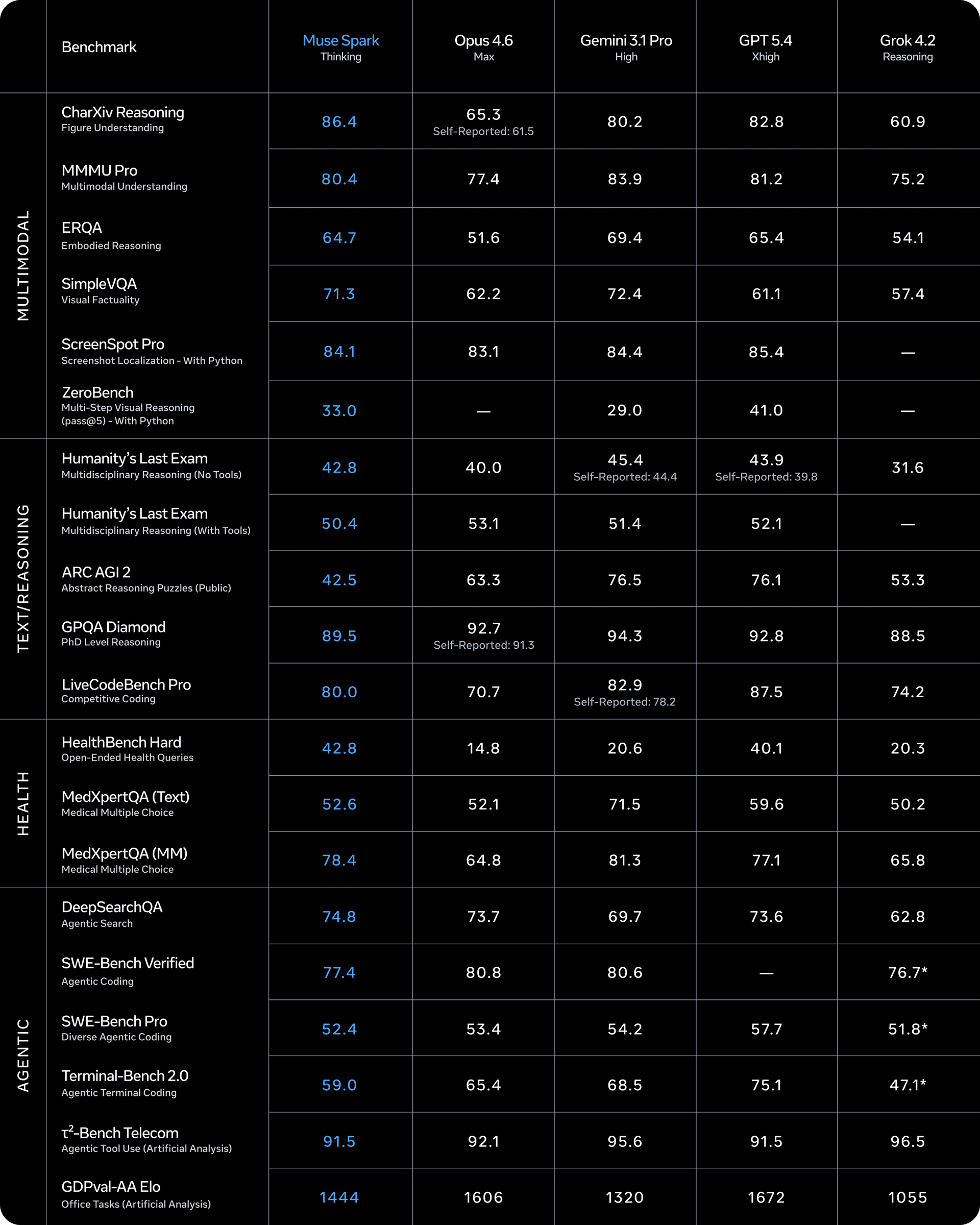
The performance numbers are legitimate. On the Artificial Analysis Intelligence Index, Muse Spark scores 52, placing it fourth worldwide behind only Gemini 3.1 Pro, GPT-5.4, and Claude Opus 4.6.[10] For context, Llama 4 Maverick debuted in 2025 with a meagre 18 points, meaning Meta has nearly tripled its performance.[10]
And the efficiency story is striking. To complete the Artificial Analysis Intelligence Index run, Muse Spark used 58 million output tokens. Claude Opus 4.6 used 157 million. GPT-5.4 used 120 million. Muse Spark reaches roughly the same tier of performance while spending less than half the thinking time of its closest competitors.[10]
For content creators who spend their days generating YouTube thumbnails, short-form videos, and AI images, the capabilities of Muse Spark are relevant because the AI powering Instagram, Facebook, and WhatsApp just got significantly smarter at understanding and recommending visual content.
What Open Source Meant for Llama and Why It Mattered
To understand why this shift is seismic, you need to appreciate what Meta's open AI strategy actually achieved over the past three years.
The open-source AI movement has never lacked for options. Mistral, Falcon, and a growing field of open-weight models have been available to developers for years. But when Meta threw its weight behind Llama, something shifted. A company with three billion users, vast compute resources, and the credibility of a tech giant was now building openly, and the developer community responded.[2]
This widespread adoption provided businesses with significant economic sovereignty, as self-hosting Llama models offered an 88% cost reduction compared to using proprietary API providers.[1] That number was not a lab experiment. Real businesses running customer support, content moderation, and internal tools on self-hosted Llama saved enormous sums compared to paying per-token for models from OpenAI or Anthropic.
The open-source AI ecosystem that runs on Llama 2 and Llama 3 derivatives is vast, including thousands of fine-tuned models, dozens of commercial products, and research papers at every major ML venue. None of that disappears because Muse Spark is closed. But the upgrade path, the expectation that Meta's frontier would continue to be available for download, is gone.[8]
The cultural impact went beyond economics. Even when critics pointed out that Llama was more accurately open-weight than fully open-source in the strict OSI sense, Meta still benefited from being seen as the big lab willing to let developers download, fine-tune, host, and adapt major models themselves.[9]
And Zuckerberg did not hedge when he spoke about this. His July 2024 manifesto stated: "Open source AI is the path forward — it distributes power rather than centralizes it." Muse Spark closes that path at the frontier layer.[8]
For anyone building content workflows across platforms, this history matters because many of the free and affordable AI tools you use for creating content, from script generators to image editors to voice cloning tools, were built on top of Llama's open weights. The downstream effects of this shift will take months to fully play out.
The 3 Real Reasons Meta Went Closed Source
The surface explanation is that Meta needed a better model and decided to keep it proprietary. But the actual reasons are more layered, and each one tells you something about where the AI industry is heading in 2026.
Reason 1: The Llama 4 Failure Destroyed Trust
Llama 4 had launched in April 2025 to mixed reviews, internal turmoil painted an unflattering picture in public, and disillusionment was spreading through the developer community — not least because Meta had been caught bench-maxxing.[10]
The benchmark manipulation scandal was the trigger event. Meta submitted modified versions of Llama 4 to leaderboard benchmarks while releasing a different, less capable version publicly. When independent researchers tested the public version, the results fell dramatically short of what Meta had claimed. For the LMArena benchmarks, Meta had used a special, unreleased "experimental chat version," which lastingly undermined the company's credibility.[10]
The fallout was severe internally. Meta's outgoing Chief AI Scientist Yann LeCun confirmed that the results were manipulated, and Zuckerberg "sidelined the entire GenAI organisation" in response. The open-source brand that took three years to build was destroyed in a single news cycle.
Reason 2: Adversarial Distillation Made Open Weights Strategically Costly
Three converging reasons explain the shift: Llama 4's benchmark-gaming controversy destroyed the credibility that made open weights valuable; the $14.3 billion Scale AI investment created a proprietary data pipeline best preserved with closed weights; and adversarial distillation, where competitors feed open weights with prompts to train knockoff models, made open-source strategically costly at the frontier tier.[8]
This third point is the one most coverage glosses over, but it is the one that probably sealed the decision. As of April 2026, Meta's role as the undisputed leader of the open-weight movement has transitioned into a highly contested multi-polar landscape. While the United States accounts for 35% of global Llama deployments, Chinese models from labs like Alibaba and DeepSeek began accounting for 41% of downloads on platforms like Hugging Face by late 2025. Throughout early 2026, new entrants such as Zhipu AI's GLM-5 and Alibaba's Qwen 3.6 Plus have outpaced Llama 4 Maverick on general knowledge and coding benchmarks.[1]
When your open weights are being used by competitors to train models that overtake yours on benchmarks, the strategic calculus of openness changes entirely.
Reason 3: Meta Needs a Business Model for AI
Meta's shift from open-source AI to proprietary models comes with business implications, as the company needs to find a path to new revenue.[3]
For Meta's business model, the move makes sense: anyone planning to equip each of their billions of users with a personal AI agent wants to keep control over the model.[10] Running frontier-class AI for three billion daily users is astronomically expensive. Meta is investing on a scale that stands out even amid the AI hype. For 2026, the company has announced capex of $115 to $135 billion, nearly double the 2025 figure.[10]
You cannot spend $135 billion a year on infrastructure and give the resulting product away for free. Meta's pivot sends a clear signal: the era of tech giants giving away their best models for free is ending. Frontier models are becoming paid products.[4]
The parallel to content creation is direct. Just as platforms like YouTube have shifted from paying creators generously to tightening monetization, AI companies are shifting from giving away models freely to monetizing them. Understanding the economics of the platforms you depend on, whether it is YouTube Shorts RPM, TikTok RPM, or AI API pricing, is essential to building a sustainable content business.
How Closed This Model Actually Is
The degree of restriction on Muse Spark is worth spelling out because it goes further than most people expect.
Muse Spark is proprietary. No downloadable weights. No self-hosting. Right now it powers Meta AI across the company's apps — the Meta AI website, and soon WhatsApp, Instagram, Facebook, Messenger, and Ray-Ban AI glasses. External developers can apply for a private API preview. That is it. This is more locked down than OpenAI or Anthropic's models, which at least offer public API access.[4]
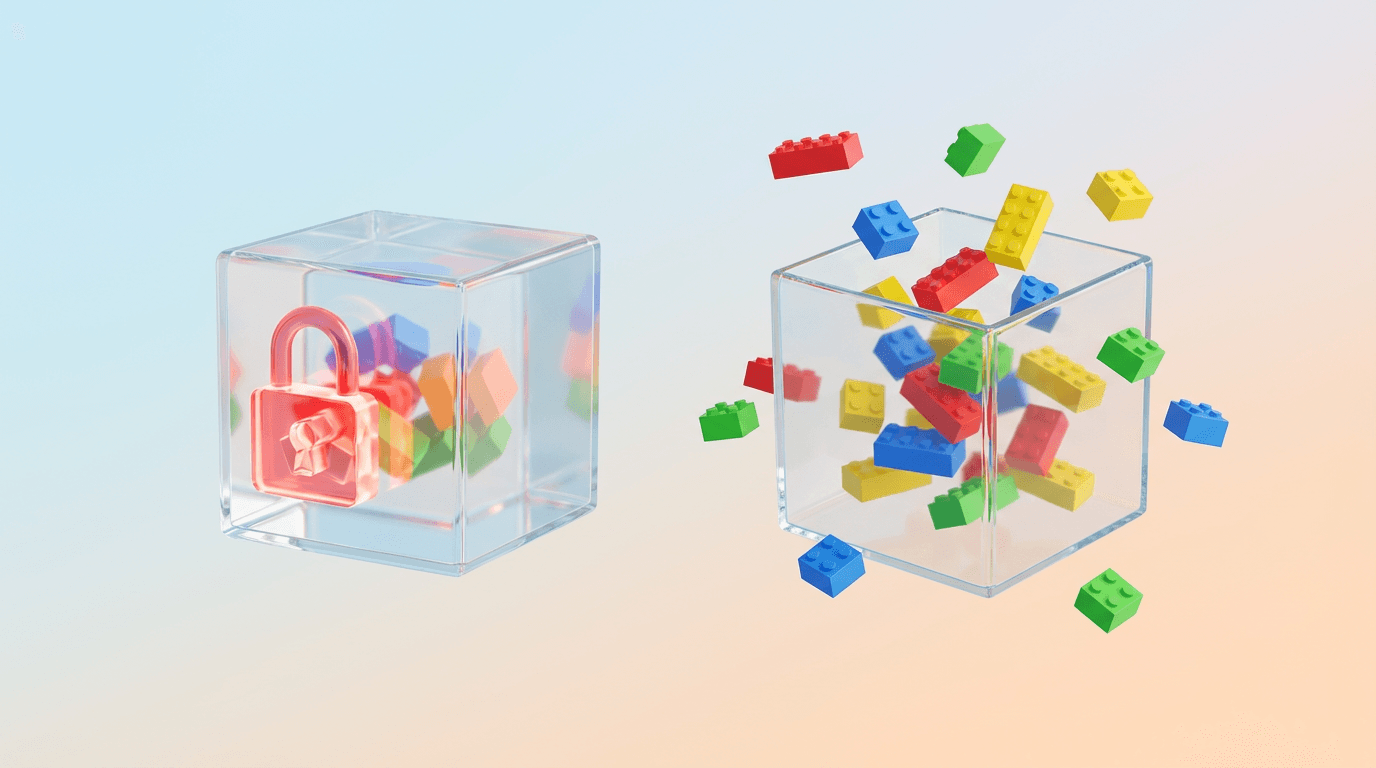
The company said it will offer the model in a private preview to select partners through an API, making Muse Spark even more proprietary than the paid models offered by Meta's rivals.[2]
In its official Introducing Muse Spark post, Meta says the model is available in Meta AI and the Meta AI app, with a private API preview for select users. That is a very different access model from the official Llama 4 announcement, where Meta said openness drives innovation and made Llama 4 Scout and Llama 4 Maverick downloadable on llama.com and Hugging Face. That difference is why the story matters.[9]
The practical implication for content creators is that while you will interact with Muse Spark every time you use Instagram, Facebook, or WhatsApp going forward, you will not be able to build independent tools or workflows on top of it. If you want control over your content creation pipeline, tools, models, and prompts for thumbnails, music generation, or short-form video, you need to use platforms that operate independently of any single AI company's licensing decisions.
What Happens to Llama
This is the question every developer and tool builder is asking right now, and the answer is frustratingly ambiguous.
For now, Muse Spark runs exclusively in the Meta AI app, on meta.ai, and in a private API preview. When asked by VentureBeat, Meta merely stated that the existing Llama models would remain available as open source — whether the Llama family will continue to be developed at all was left open.[10]
Future investment in Llama is uncertain. If Meta's best researchers are now working on proprietary Muse models at Superintelligence Labs, who is still working on Llama? Meta has not clarified how resources will be split between the open-source Llama roadmap and the proprietary Muse roadmap.[5]
If you are running Llama 4 Scout or Maverick in production today, nothing has changed operationally. The weights are still on Hugging Face. The community fine-tunes still work. Your infrastructure does not need to move.[4]
But the long-term outlook is different. What closed is Meta's frontier tier — the best models, going forward, will be proprietary. The community still has access to what Meta built through Llama 4; it no longer gets access to what Meta builds next.[8]
Meta has made vague promises about future openness. As Fortune noted in their coverage, Muse Spark is "even more proprietary than the paid proprietary models offered by Meta's rivals." Zuckerberg wrote on Threads about plans to release "increasingly advanced models that push the frontier of intelligence and capabilities, including new open source models." Wang mentioned open-sourcing future versions on X. But there is no timeline and no specific commitment about which model or when.[4]
The Open Source AI Landscape Without Meta at the Frontier
One of the most important stories happening simultaneously is that open-source AI is thriving without Meta's frontier contributions. The ecosystem did not collapse when Meta went closed. It redistributed.
The good news: open source AI is not dead. It is just moving. As of April 2026, 5 of the 6 major open source model families use MoE architecture and ship under permissive licenses. The landscape has never been richer — with or without Meta.[4]
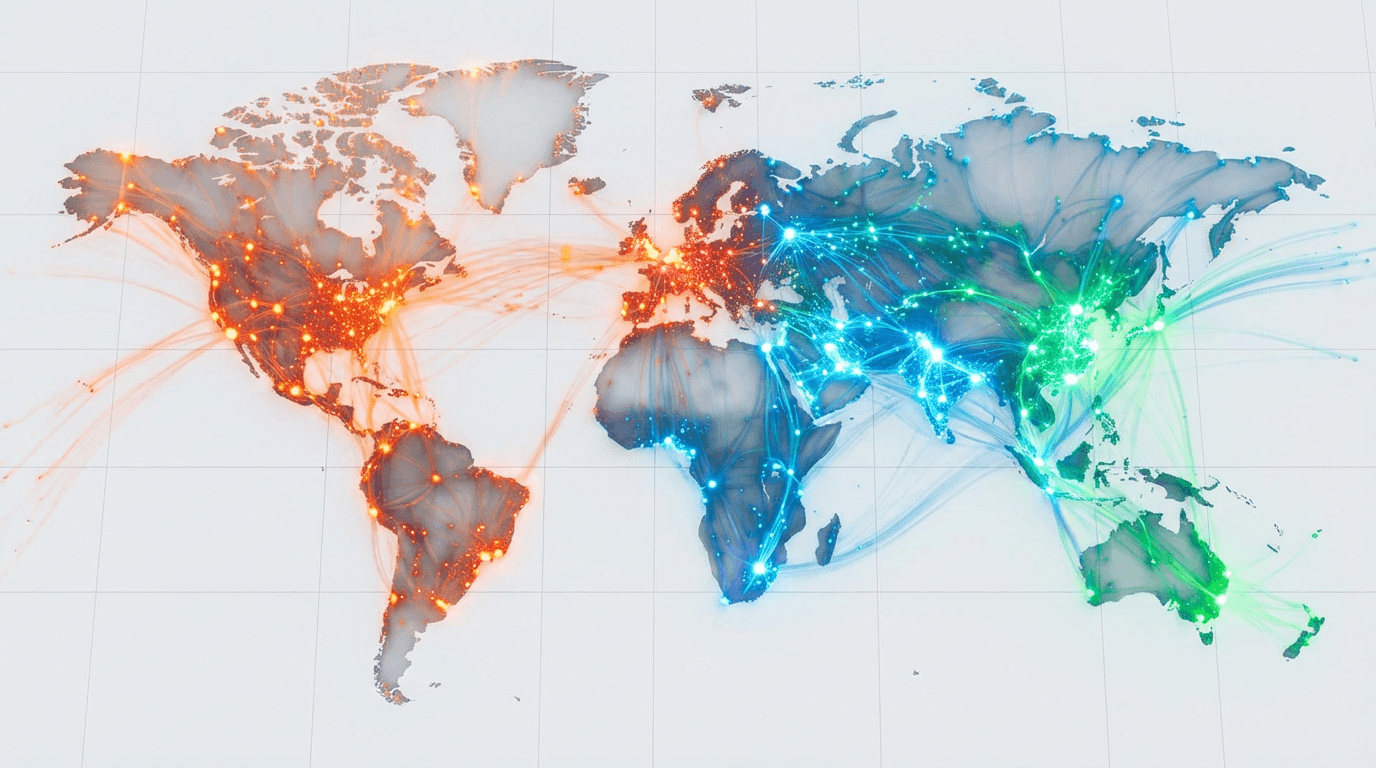
By April 2026, the gap between open-weight and proprietary models has collapsed. Six labs — Google (Gemma 4), Alibaba (Qwen 3.6), Meta (Llama 4), Zhipu AI (GLM-5.1), DeepSeek (V4), and Mistral (Small 4) — now ship competitive open-weight models that rival or surpass closed alternatives on practical workloads.[4]
Here is what the competitive landscape actually looks like for anyone choosing models in 2026.
The best open source LLM right now is GLM-5 (Reasoning) from Zhipu AI, scoring 85 on BenchLM.ai's overall leaderboard. GLM-5.1 follows at 84, Qwen3.5 397B (Reasoning) sits at 81, and GLM-5 rounds out the next tier at 77. Two years ago, Llama dominated the open source conversation. Today, Chinese labs — Zhipu AI, Alibaba, Moonshot AI, and DeepSeek — hold most of the top positions among open weight models, with Google's Gemma 4 31B breaking into the top 5. The best open source LLMs in 2026 are not where most people expect them to be.[7]
The company that criticized OpenAI for being closed is now adopting an even more restrictive model, while Chinese labs pick up the open source torch.[4]
For content creators who do not need to deploy their own AI models but who care about having access to affordable, powerful creative tools, this redistribution is actually positive. More competition among open-source model families means more options for the tools and platforms you use every day. When you generate a YouTube thumbnail, create AI music, or produce a cinematic video clip, the underlying models powering those features have more competitive alternatives than ever before.
What This Means for Content Creators and Small Businesses
The impact of Meta going closed source hits different groups in different ways, and if you are a content creator or small business owner, the effects are both immediate and long-term.
AI-Powered Features on Meta Platforms Will Improve
Muse Spark is purpose-built for Meta's products. It will power a smarter and faster Meta AI, and over time unlock new features that cite recommendations and content people share across Instagram, Facebook, and Threads.[1]

Based on the technical benchmarks Meta released comparing Muse Spark to rivals, the new AI model appears to excel in areas related to image and video processing. Those are important characteristics for advertisers seeking to make dynamic campaigns for an audience that has grown accustomed to viewing short-form videos on Reels or gawking at cat photos on Facebook and Instagram.[3]
If you are creating Reels content, this means the algorithm that recommends your content will be better at understanding what your videos actually show, not just the metadata and text you attach to them. Understanding the Instagram Reels algorithm in 2026 and how it evaluates visual quality matters more now that the underlying AI is significantly more capable.
Shopping and Commerce Integration Will Accelerate
Meta has a new shopping experience built within Muse Spark. The AI can suggest outfits, help users style a room, or figure out what to buy for friends and family. Meta's new shopping model pulls from creator content and brand storytelling already on Instagram and Facebook that users follow.[2]
Ultimately, Meta is combining product discovery with creator content, targeting, and direct purchase intent signals, all within its own ecosystem. This means shopping without leaving Meta's family of apps.[2]

For creators who monetize through brand deals, affiliate links, or product promotions, this is a direct opportunity. The AI-powered shopping features will surface creator content as part of purchase journeys, which means high-quality product content and thumbnails become even more valuable. Learning how to create compelling visuals through AI thumbnail templates and product video generation becomes a direct revenue skill.
The Tools You Use May Shift Beneath You
This is the less obvious but more important implication. Many content creation tools, caption generators, script writers, and image editing apps were built on top of Llama's open weights because they were free to use. This does not mean open-source AI dies. Llama, Gemma, Mistral, and others will continue to improve. The community around open-weight models is massive and self-sustaining. But the gap between the best open-source and the best proprietary models is likely to widen, not shrink.[5]
The smartest response is to use content creation platforms that are model-agnostic and can switch between different underlying AI providers without disrupting your workflow. Miraflow operates this way by design, giving creators access to a complete pipeline from AI images and thumbnails to short-form videos, cinematic clips, and music without requiring you to worry about which model powers each feature.
The Vendor Lock-In Risk Is Real
For businesses and creators who had deeper Llama integrations, the cost implications of moving to proprietary APIs are substantial and worth understanding even if you are not a developer, because these costs eventually get passed on to users.
In the era of Llama open source, your primary cost was server rental. You paid a predictable, fixed monthly cost for electricity and compute power, regardless of whether your AI processed ten words or ten million words a day. But the arrival of Meta Muse Spark fundamentally flips this equation. When you are forced into a proprietary ecosystem, your costs transition from fixed to variable, charged strictly by the token.[3]
Building your core business on land someone else lets you use for free means you have no right to complain when they eventually build a fence and start charging rent.[3]
This lesson applies broadly to content creators too. If your entire content workflow depends on a single platform, a single AI tool, or a single model provider, you are always one policy change away from a disruption. The creators who thrive in this environment are the ones who diversify their tools, their platforms, and their revenue streams. This is why understanding the cross-platform monetization landscape and building workflows that work across YouTube, TikTok, and Instagram simultaneously is the most resilient strategy.
The Industry Pattern: Why Every AI Lab Is Going Closed
Meta's shift is not happening in isolation. It is part of a broader pattern that has been accelerating throughout 2025 and into 2026.
OpenAI started as a nonprofit dedicated to open AI research and became a capped-profit company, then restructured into a for-profit entity. Google open-sourced smaller Gemma models while keeping Gemini Pro and Ultra proprietary. Anthropic has never released open weights for any Claude model. And now Meta, the last remaining big-tech champion of open AI at the frontier, has closed the gates.
For the AI industry, the Muse Spark launch is a signal: 2026 is the year the AI race moved from "build the best model" to "build the best business." And businesses are built on proprietary advantages, not shared infrastructure. The open-source AI era is not ending, but the frontier is going proprietary, and Meta just made that official.[5]
As one of the few companies with the resources and computing infrastructure necessary to create and maintain big AI models, Meta wants to ensure that it remains relevant in the hottest market on the planet. "It is about AI sovereignty and being a player in the game," said Ulrik Stig Hansen, co-founder of Encord. "They want to be perceived and known as an AI company."[3]
This pattern has direct implications for the tools and services content creators rely on. As frontier models become proprietary and expensive, the tools built on top of them will increasingly charge subscription fees or per-usage costs. The free tier of AI tools that many creators have enjoyed over the past two years is shrinking, and that trend will continue. Building content creation skills now, learning effective AI prompts, mastering thumbnail design, and understanding what makes content go viral, gives you a competitive advantage regardless of which AI models power the tools you use.
How to Protect Your Content Workflow in a Closed-Source World
The shift toward proprietary AI does not require panic, but it does require strategic adjustments. Here are the practical steps that matter most.
Build on platforms, not on models. The distinction is important. If you built a workflow around Llama specifically, you have a problem. If you built a workflow around a platform like Miraflow that can swap underlying models without changing your experience, you are insulated from these shifts. Choose tools based on what they do for you, not which AI model they use internally.
Diversify your content distribution. Meta going closed source and investing $135 billion in proprietary AI infrastructure means their platforms will push harder for user attention and engagement. The algorithms on Instagram, Facebook, and WhatsApp will become more sophisticated. But putting all your eggs in Meta's basket when the company just demonstrated it is willing to make radical strategic pivots overnight is risky. Maintain presence across YouTube Shorts, TikTok, and Instagram Reels simultaneously.
Own your creative assets. When you generate content through AI image generators, music generators, and video tools, download and store your outputs locally. Models, APIs, and platforms can change their terms of service, but the content you have already created and downloaded is yours.
Invest in prompting skills. Whether the underlying model is Llama, Muse Spark, GPT, Claude, or Gemini, the ability to write effective prompts translates across all of them. Posts on AI prompts for YouTube thumbnails, video prompts, and AI title prompts teach skills that remain valuable regardless of which model sits behind the interface.
Monitor the Muse Spark rollout for creator-facing features. As Meta expands these features, expect richer, more visual results, with Reels, photos, and posts woven directly into answers, with credit back to the content creators.[1] This is a potential opportunity if Meta follows through on surfacing and crediting creator content within AI-powered responses across their platforms.
What Content Creators Should Actually Watch For
The coming months will reveal how deeply Muse Spark's capabilities translate into features that affect content visibility, discovery, and monetization on Meta's platforms.
Improved content recommendations. "Compared to like Claude and Gemini, I think it definitely feels like it has more of a consumer bent," said Doris Xin, CEO of AI startup Disarray, about Muse Spark.[3] The consumer focus means the model is optimized for the kinds of interactions that happen on social media, including content discovery, visual search, and product recommendations. Creators who optimize for visual quality and strong thumbnails will benefit disproportionately as these systems get smarter at evaluating visual content.
AI-powered creation tools inside Meta apps. Muse Spark excels at visual coding, letting users create custom websites and mini-games straight from a prompt. Ask Meta AI to build a dashboard, spin up a retro arcade game, or launch a whimsical flight simulator.[1] While these specific features are not content creation tools, they indicate the direction Meta is heading: making AI creation accessible to everyone directly inside their apps. For professional creators, this means the barrier to entry for competition is dropping, which makes your expertise in content strategy, audience building, and algorithm understanding even more valuable.
Agent-powered business tools. Industry analysts see the biggest leverage in WhatsApp Business with its more than two billion users: the messenger could turn into something like an autonomous digital employee for millions of SMBs.[10] If you are a small business using content marketing to drive sales, Meta's push into AI-powered business agents on WhatsApp could fundamentally change how customer interactions work.
Ad targeting improvements. Meta is expected to overtake Google as the company with the most net ad revenue in 2026.[10] Better AI means better ad targeting, which means higher RPMs for creators who monetize through ads on Meta's platforms. But it also means Meta's platforms become more competitive for attention, making the quality bar for content even higher.
The Bigger Picture for AI in 2026
Meta's open-source identity does not look weaker because the company suddenly forgot how to build good AI. It looks weaker because Muse Spark is competitive enough to matter and closed enough to change expectations. That is the real tension in the story. Meta may have repaired its frontier credibility faster than many expected, but it is doing so through a model that looks more like a controlled product asset than a community-building release.[9]

The most important insight for content creators to take away from this story is that the AI ecosystem is bifurcating. On one side, you have powerful but closed frontier models from Meta, OpenAI, Google, and Anthropic, all competing for market share. On the other side, you have a thriving and increasingly capable open-source ecosystem led by Chinese labs and Google's Gemma team.
Both sides are advancing rapidly, and both sides will power the tools you use to create content. The winners in this environment will be the creators who focus on the things AI cannot replace: authentic perspective, audience understanding, strategic thinking, and consistent execution.
Whether you are building faceless YouTube channels, growing an Instagram presence, or learning to monetize short-form content, the fundamentals remain the same. AI models come and go, licensing strategies shift overnight, and tech companies change their minds about openness when the economics demand it. Your skills, your audience, and your content library are the assets that nobody can take away or make proprietary.
Conclusion
Meta going closed source is the most consequential AI strategy shift of 2026 so far. The company that spent three years and billions of dollars convincing the world that open AI was the future has now decided that its future lies in proprietary models deployed across its three-billion-user ecosystem.
For the AI industry, the Muse Spark launch is a signal: 2026 is the year the AI race moved from "build the best model" to "build the best business."[5] The model itself is genuinely impressive, ranking fourth globally and doing so with remarkable efficiency. But the model is less important than what it represents: the end of the era where the most powerful AI tools were available for anyone to download and use.
For content creators, the practical takeaways are clear. The AI powering Meta's platforms is getting significantly better, which creates both opportunities and a higher quality bar for content. The tools and platforms you depend on may shift as the open-source landscape rebalances around non-Meta model families. And the smartest strategy is to use platform-agnostic creation tools like Miraflow that let you generate thumbnails, videos, images, and music without dependency on any single AI provider's licensing decisions.
The open-source AI movement will survive this, carried forward by labs in China, Europe, and Google's Gemma team. But the frontier layer of AI development has gone definitively proprietary in 2026, and the content creation ecosystem will need to adapt accordingly.
Frequently Asked Questions
Did Meta completely abandon open source AI?
Meta's Llama 4 weights remain publicly available. The open-source pipeline for prior models continues. What closed is Meta's frontier tier — the best models, going forward, will be proprietary.[8] Meta has said it hopes to open-source future versions of Muse, but there is no timeline or firm commitment attached to that statement.
Is Muse Spark better than ChatGPT and Claude?
Muse Spark is competitive but does not surpass Claude Opus 4.6 or GPT-5.4 on most benchmarks. It excels in healthcare (HealthBench Hard: 42.8%) but falls behind in advanced reasoning and coding.[4] Its primary advantage is efficiency, completing benchmark tasks using roughly half the output tokens of its competitors, which matters enormously at the scale Meta operates.
Can I still use Llama for my projects?
If you are running Llama 4 Scout or Maverick in production today, nothing has changed operationally. The weights are still on Hugging Face. The community fine-tunes still work. Your infrastructure does not need to move.[4] What is uncertain is whether Meta will continue developing new Llama versions now that its best researchers are focused on Muse.
What are the best open source AI alternatives to Llama in 2026?
The open-source landscape has expanded significantly. Six labs — Google (Gemma 4), Alibaba (Qwen 3.6), Meta (Llama 4), Zhipu AI (GLM-5.1), DeepSeek (V4), and Mistral (Small 4) — now ship competitive open-weight models that rival or surpass closed alternatives on practical workloads.[4] For most creator-focused applications, any of these model families can power effective content tools.
How does this affect Instagram and Facebook creators?
Muse Spark is purpose-built for Meta's products and will power a smarter and faster Meta AI, unlocking new features that cite recommendations and content people share across Instagram, Facebook, and Threads.[1] Creators should expect improved content discovery, better visual search, and new AI-powered shopping features that surface creator content within purchase journeys.
Will Meta charge for Muse Spark access?
Currently, all Muse Spark features are free within Meta's consumer apps. Meta aims to eventually offer third parties paid API access to Muse Spark after an initial "private API preview" with "select parties."[3] API pricing has not been announced yet.
Should I switch my content tools because of this change?
The shift does not require immediate changes for most creators. The most important step is to use content creation platforms that are model-agnostic. Tools like Miraflow that operate independently of any specific model provider will continue working regardless of what happens in the open-source versus closed-source battle.
What does "personal superintelligence" mean?
Zuckerberg's vision is "Personal Superintelligence": every single person should get their own AI agent, one that thinks, plans, communicates, and acts on their behalf in everyday life.[10] In practical terms, this means Meta envisions an AI assistant deeply integrated into your daily activities through its apps, glasses, and messaging platforms.
Is the open source AI movement dying?
No. April 2026 is the most competitive month in open-source AI history. Six major labs now ship models that compete with or match proprietary alternatives.[8] The movement is thriving, but its leadership has shifted from Meta toward Chinese labs, Google, and European companies like Mistral.
How does this relate to AI content creation and YouTube?
The AI models powering recommendation algorithms, content discovery, and creation tools across all platforms are getting more capable. For YouTube creators specifically, this means the algorithm is getting smarter at evaluating content quality, thumbnails matter more, and building efficient AI-assisted production workflows for Shorts, titles, and descriptions is increasingly important for staying competitive.
References
- Goodbye, Llama? Meta launches new proprietary AI model Muse Spark — first since Superintelligence Labs' formation | VentureBeat
- 10 Best Open-Source LLM Models (2025 Updated): Llama 4, Qwen 3 and DeepSeek R1
- Introducing Muse Spark: Meta's Most Powerful Model Yet
- Did Meta Sacrifice Its Open-Source Identity for a Competitive AI Model?
- Open-Source LLMs Compared 2026 – 25+ Models… – Till Freitag
- Meta introduces new shopping upgrades under AI model Muse Spark
- Can Meta's new AI model Muse Spark make money?
- The Llama Trap: How Meta's Pivot to Closed-Source 'Muse Spark' Upends Thai Enterprise AI - DEV Community
- Open Source AI Models 2026: Top 6 Compared on Cost | AI:PRODUCTIVITY
- Meta Muse Spark: The End of Open Source AI at Meta?
- Muse Spark vs Llama 4: Meta's Strategic Shift | WaveSpeedAI Blog
- Best Open-Source LLMs April 2026: Benchmarks, Licensing & Deployment Guide | Lushbinary
- Meta debuts the Muse Spark model in a 'ground-up overhaul' of its AI | TechCrunch
- Introducing Muse Spark: Scaling Towards Personal Superintelligence
- Meta Hasn’t Given Up on Open Source: Muse Spark Launches as Open-Weight Plans Continue
- Meta Muse Spark: Why Meta Abandoned Open-Source AI (And What It Means) | by Shubham Vedi | GenAI | Apr, 2026 | Towards AI
- Best Open Source LLM Leaderboard 2026 | Open Source Model Rankings and Tier List | Onyx AI
- Meta Just Ended Open-Source AI (2026) — Muse Spark Explained - YouTube
- Meta Launches Muse Spark, Its First Proprietary AI Model — Explosion
- The Best Open-Source LLMs in 2026
- Meta Introduces Muse Spark AI: Complete Feature Breakdown 2026
- With Muse Spark, Meta Pivots Away From its Open-Weights Llama Strategy
- Best Open Source LLM in 2026: Rankings, Benchmarks, and the Models Worth Running | BenchLM.ai
- Meta Muse Spark : Meta is back after Llama debacle | by Mehul Gupta | Data Science in Your Pocket | Apr, 2026 | Medium
- Meta's First Closed-Source AI Model Arrives — and It Breaks Every Promise Zuckerberg Made About Open AI
- Qwen 3.6 vs Gemma 4 vs Llama 4 vs GLM-5.1 vs DeepSeek V4 Comparison | Lushbinary
- Meta’s Muse Spark Is Reshaping Social AI: A Practical Image Creator Playbook for April 2026 - AI Photo Generator
- Meta Open-Source Identity Weakens: 7 Critical Facts About Muse Spark and Meta's AI Shift - Progressive Robot
- Meta’s Muse Spark is here – and it’s closed source
- Open Source LLM Comparison Table (2026) | ComputingForGeeks
- Meta just provided its clearest look yet at its AI plan. It’s about time | CNN Business
- Meta's Comeback: Muse Spark Puts Zuckerberg Back in the AI Race, Breaks With Open Source
- Meta Muse Spark: What Meta Is Actually Betting On - DEV Community
- 15 Best Open Source AI Models & LLMs in 2026 (Tested and Reviewed)
- Meta’s Muse Spark AI Model: Features, Risks, What’s Next | Built In