Threads Algorithm 2026: How to Grow on Meta's Text Platform

Written by
Jay Kim
Learn how the Threads algorithm works in 2026 and how to grow on Meta's text platform. Covers ranking signals, content formats, posting strategy, and common growth mistakes.
Most people who joined Threads in 2023 or 2024 posted a few times, got inconsistent reach, and quietly stopped using it. The platform felt unpredictable. Some posts reached thousands of people for no obvious reason, while thoughtful posts got buried with zero engagement.
In 2026, Threads is a different platform. Meta has refined the algorithm significantly, introduced new features, and positioned Threads as a serious content distribution channel rather than just a Twitter alternative. The algorithm now has clear patterns, and creators who understand those patterns are growing faster than on almost any other text-based platform.
This guide breaks down how the Threads algorithm works in 2026, what content formats perform best, how to grow a following from scratch, and the mistakes that keep most accounts stuck.
What Changed on Threads in 2025 and 2026
Threads launched in July 2023 with massive initial signups but limited retention. Through 2024 and into 2025, Meta steadily added features including a chronological feed option, improved search, topic tagging, and better integration with Instagram. But the most important changes were algorithmic.
In its early days, Threads heavily favored accounts that already had large Instagram followings. The feed was noisy, and content discovery felt random. By mid-2025, Meta shifted toward a recommendation-driven feed that surfaces content based on engagement signals, topic relevance, and conversation quality rather than just follower count.
This shift matters because it means smaller accounts can now reach large audiences organically if they understand what the algorithm rewards. The playing field is more open than it was a year ago, and the creators seeing the fastest growth are the ones treating Threads as its own platform with its own rules rather than a place to cross-post Instagram captions.
How the Threads Algorithm Works in 2026
The Threads algorithm in 2026 operates on a recommendation system similar in philosophy to what Instagram and TikTok use, but adapted for text-first content. Understanding the key signals helps you create content that gets distributed instead of ignored.

Engagement velocity matters more than total engagement. The algorithm measures how quickly a post receives replies, likes, reposts, and quotes after it is published. A post that gets 20 replies in the first 30 minutes will be distributed more aggressively than a post that accumulates 50 replies over 24 hours. This means timing and hook quality are critical.
Replies carry more weight than likes. Threads is designed to be a conversation platform. Meta has consistently signaled that reply-driven engagement is the strongest ranking factor. A post that generates genuine back-and-forth conversation will outperform a post with many likes but few replies. This is a fundamental difference from platforms where passive engagement like likes and saves drives distribution.
Topic relevance influences who sees your content. Threads uses topic classification to match posts with users who have shown interest in similar subjects. If you consistently post about marketing, your content gets surfaced to people who engage with marketing-related threads. This is why niche consistency matters more than posting about random topics.
Conversation depth signals quality. The algorithm does not just count replies. It evaluates how deep the conversation goes. A thread where people reply to each other, not just to the original poster, signals a high-quality discussion. Posts that spark multi-level conversations get extended distribution.
Content freshness is weighted heavily. Threads favors recent content more than most platforms. A post from three hours ago is significantly less likely to be recommended than a post from 30 minutes ago. This means posting frequency and timing both play important roles in your overall reach.
Cross-platform signals from Instagram influence early distribution. Your Instagram engagement history still influences how Threads surfaces your content initially. Accounts with active, engaged Instagram followings tend to get a head start on Threads because Meta uses cross-platform data to estimate content quality.
What Content Performs Best on Threads in 2026
Threads rewards content that starts conversations. That sounds obvious, but it has specific implications for how you structure your posts.
Opinion-driven posts outperform informational posts. A post that states a clear opinion and invites agreement or disagreement generates more replies than a post that simply shares a fact. The difference is engagement friction. Opinions create a natural reason to respond. Facts do not.
For example, a post that says "Most small businesses waste money on Facebook ads before they have a content strategy" will generate more conversation than "Facebook ads can be part of a small business marketing strategy." Both convey similar information, but the first one invites a reaction.
Questions that people actually want to answer. Generic questions like "What do you think?" get ignored. Specific questions that tap into personal experience perform well. "What is one marketing tactic you stopped using in 2026 and why?" gives people a concrete prompt to respond to.
Threads that build on each other. Multi-post threads where each post adds a new point or builds on the previous one tend to perform well because they keep readers engaged longer. The algorithm notices when people read through an entire thread rather than just the first post.
Hot takes with nuance. Pure contrarian takes without substance get initial attention but do not sustain conversation. The posts that perform best state something unexpected, then explain the reasoning. This invites thoughtful replies rather than just reactions.
Behind-the-scenes and real talk. Threads has developed a culture of authenticity. Posts where creators share real numbers, honest struggles, or lessons from failure tend to generate strong engagement. The platform rewards vulnerability more than polish.
Timely commentary on industry events. When something significant happens in your industry, being one of the first to share your perspective on Threads gets amplified by the freshness signal. Speed matters here.
The Threads Content Formula That Drives Replies
Most high-performing Threads posts in 2026 follow a loose but recognizable structure. Understanding this pattern helps you create posts that consistently generate engagement rather than relying on luck.

The formula works like this: Hook, Context, Position, Invitation.
The hook is the first line. On Threads, only the first two to three lines are visible before the "more" truncation. If those lines do not create curiosity or tension, most people will scroll past. Strong hooks often start with a surprising statement, a contrarian claim, or a specific result.
The context provides just enough background for the reader to understand your point. This should be concise. Two to three sentences maximum. Threads users scroll fast, and long paragraphs lose attention.
The position is your actual take or insight. This is the core of the post. State it clearly and specifically. Avoid hedging with too many qualifiers.
The invitation is where you prompt a response. This does not need to be a literal question. Sometimes a statement like "Curious if anyone else has seen this" or "Would love to hear how others approach this" is enough. The key is giving people a reason and a direction to reply.
Here is an example of this formula in practice:
Hook: "I stopped posting carousels on Instagram for 30 days and my reach went up."
Context: "I was spending two to three hours per carousel. Switched to Reels and short video instead."
Position: "For most small accounts, carousels are a time trap. The reach per hour invested is much lower than short video."
Invitation: "Has anyone else noticed this, or is my niche just different?"
This structure works because it gives people something specific to react to while making it easy to respond.
How to Grow From Zero on Threads in 2026
Growing on Threads when you have no following requires a different approach than growing on a platform where you already have an audience. The algorithm can surface your content to people who do not follow you, but only if the engagement signals are strong enough.
Start by engaging before you post. Before publishing your own content, spend time replying to popular threads in your niche. Thoughtful, specific replies that add value get noticed by both the original poster and other readers. Many people discover new accounts through replies, not through the feed. This is the fastest way to build initial visibility.
Post at least once daily for the first 60 days. Consistency signals to the algorithm that your account is active and worth distributing. The freshness weighting on Threads means that accounts that post regularly get more opportunities for their content to be surfaced. Skipping days early on slows momentum significantly.
Stick to one or two topics. Topic consistency helps the algorithm classify your account and match your content with the right audience. If you post about marketing on Monday, cooking on Tuesday, and fitness on Wednesday, the algorithm does not know who to show your content to. Pick your lane and stay in it.
Use the first line as a hook every single time. Treat the first line of every post the way a creator treats the first three seconds of a YouTube Short. It determines whether anyone engages. Write the hook first, then build the rest of the post around it.
Reply to every comment on your own posts. Especially when you are small, replying to every comment does two things. It increases the total reply count on your post, which boosts distribution. And it builds relationships with early followers who are more likely to engage with future content.
Cross-promote from Instagram strategically. If you have an Instagram following, mention your Threads presence occasionally. A simple "I have been sharing more detailed thoughts on Threads" in an Instagram Story can drive initial followers who already know and trust you.
Threads vs. X vs. LinkedIn: Where Text Content Works Best
Small businesses and creators often wonder whether Threads is worth the time compared to X (formerly Twitter) or LinkedIn. The answer depends on your audience and your goals.
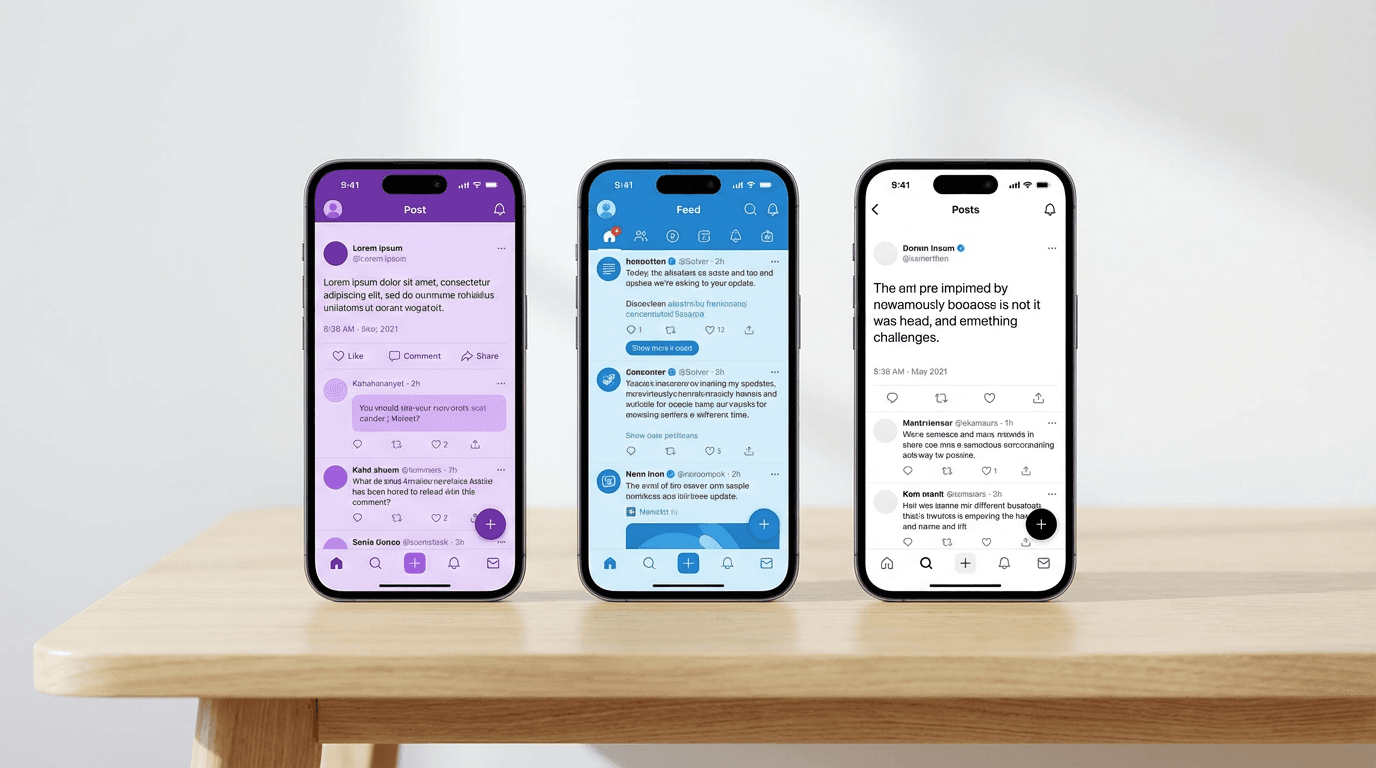
X in 2026 has a large user base but increasingly fragmented attention. The platform's recommendation algorithm favors engagement bait and controversy, which makes it effective for reach but less effective for building trust. For brands, X works best for real-time commentary and news-driven content.
LinkedIn has become the dominant platform for B2B content and professional personal branding. Its algorithm rewards long-form posts, document shares, and professional storytelling. If your business sells to other businesses or you are building a professional reputation, LinkedIn offers strong organic reach.
Threads sits between the two. It has the casual, fast-paced feel of X but with less toxicity and a stronger connection to the Instagram ecosystem. For consumer-facing brands, creators, and small businesses that already have an Instagram presence, Threads offers a natural extension. The conversation-driven algorithm rewards depth over virality, which tends to attract a more engaged audience.
The practical recommendation for most small businesses is to pick one text platform and commit to it. If you are already active on Instagram, Threads is the easiest to add because your Instagram followers can find you there instantly.
Posting Frequency and Timing on Threads
How often and when you post on Threads directly affects your reach because of the freshness weighting in the algorithm.
For frequency, one to three posts per day is the sweet spot for most accounts in 2026. Posting once daily is the minimum to maintain algorithmic visibility. Posting two to three times daily, spread across different time windows, maximizes your chances of catching different audience segments.
Posting more than five times per day can dilute engagement per post. When you publish too frequently, your own posts compete with each other for attention. The algorithm may also reduce per-post distribution if it detects that engagement per post is declining.
For timing, the general best practice is to post when your target audience is most active. For US-based audiences, mornings between 7 and 9 AM and evenings between 6 and 9 PM tend to perform well. For global audiences, staggering posts across time zones helps.
The more important timing principle is consistency. Posting at roughly the same times each day trains the algorithm and your audience to expect your content. Over time, your followers develop a habit of checking for your posts, which increases early engagement velocity.
How to Use Threads for Business Without Sounding Like a Brand
The biggest mistake businesses make on Threads is posting the same way they post on their website or in email campaigns. Threads has a conversational, human tone. Posts that sound corporate or promotional get scrolled past immediately.
The shift is subtle but important. Instead of announcing features or promotions, talk about the problems your product solves as if you were explaining it to a friend. Instead of sharing polished marketing copy, share real stories about customers, challenges, or behind-the-scenes decisions.
A software company that posts "We just launched our new analytics dashboard" will get ignored. The same company posting "We spent three months arguing about whether to show daily or weekly metrics by default. Here is what we learned from watching 200 users" will spark genuine conversation.
For small businesses, this is actually an advantage. You are closer to your customers than large brands. You can share real stories, respond personally, and show the human side of your business in a way that feels natural rather than forced.
Combining Threads With Visual Content on Other Platforms
Threads is a text-first platform, but that does not mean your overall strategy should be text-only. The most effective approach in 2026 is using Threads as part of a broader content ecosystem where text and visual content reinforce each other.
A common workflow looks like this: Create a visual piece of content, such as a short-form video or an AI-generated image, and share it on Instagram, YouTube Shorts, or TikTok. Then use Threads to share the thinking behind that content, expand on the topic, or start a conversation about it.
For example, if you create a Reel showing a product in action, you could post a Thread discussing why you made that product, what problem it solves, or what feedback you have received. The visual content drives awareness, and the Thread deepens the relationship.
Creators building across multiple platforms are increasingly using what some call the new creator stack, where AI tools handle visual production and the creator focuses on storytelling and distribution strategy. This approach works particularly well with Threads because you spend your creative energy on writing and conversation rather than production.
For generating visual content to pair with your Threads posts, AI image generation tools let you create eye-catching visuals directly in your browser. These can be used on Instagram to drive traffic to related Threads discussions.
10 Threads Post Templates You Can Use Today
Having a library of proven post structures removes the friction of starting from scratch every day. Here are ten templates that work consistently on Threads in 2026.
The Contrarian Take
"Most people think [common belief]. But here is what actually happens when you [specific action]. I tested this for [time period] and here is what I found."
The Specific Number
"I [did specific thing] for [number] days. Here are [number] things I learned that I was not expecting."
The Honest Admission
"I used to [common mistake]. It cost me [specific consequence]. Here is what I do instead now and why it works better."
The Question Prompt
"Genuine question for [specific audience]: What is the one [topic] decision you made this year that changed your results the most?"
The Micro Tutorial
"Quick tip that took me way too long to figure out: [One specific tactic explained in three to four lines]. Try it and let me know if it works for you."
The Observation
"Something I have noticed in [industry/niche] lately: [specific trend or pattern]. Anyone else seeing this?"
The Behind the Scenes
"Here is something we do not talk about enough in [industry]: [honest insight about the work, business, or process]. It is not glamorous but it matters."
The Before and After
"Six months ago I was [previous state]. Today I am [current state]. The biggest change was not what you would expect. It was [unexpected factor]."
The Prediction
"By the end of 2026, I think [specific prediction] will happen in [industry]. Here is why and here is how I am preparing for it."
The Resource Share
"I have been using [tool/method/framework] for [time period] and it has [specific result]. Here is exactly how I use it. [Brief explanation]."
These templates are starting points. Adjust the language to match your voice and fill in details from your own experience. The structure is what matters. It gives readers a clear reason to engage.
Common Threads Growth Mistakes
Understanding why most accounts stall helps you avoid the same traps.
Cross-posting identical content from other platforms. Content written for Instagram captions or LinkedIn posts does not perform the same way on Threads. Each platform has its own tone and format expectations. Threads rewards conversational, opinion-driven content. A polished LinkedIn post will feel out of place.
Writing long posts without a hook. If your first line does not create curiosity or tension, the rest of the post does not matter because nobody will expand it. Spend more time on your opening line than on any other part of the post.
Posting only promotional content. Threads users can detect brand promotion quickly and they scroll past it. If more than one in every five or six posts is promotional, your engagement will decline.
Ignoring replies on your own posts. The algorithm counts total replies, and your own replies to comments count toward that total. Not replying to comments is leaving free algorithmic boost on the table.
Being too broad in topic selection. Accounts that post about everything grow slower than accounts that focus on one or two areas. Niche consistency builds audience trust and helps the algorithm classify your content correctly.
Expecting overnight results. Threads growth compounds over time. Most accounts that grow to significant followings took 60 to 90 days of consistent posting before momentum kicked in. If you quit after two weeks of low engagement, you left before the algorithm had enough data to distribute your content effectively.
Repurposing Threads Content Into Visual Formats
One of the underused strategies on Threads is turning your best-performing text posts into visual content for other platforms. A thread that generates strong engagement is proof that the idea resonates. That makes it an ideal starting point for a Reel, Short, or carousel.
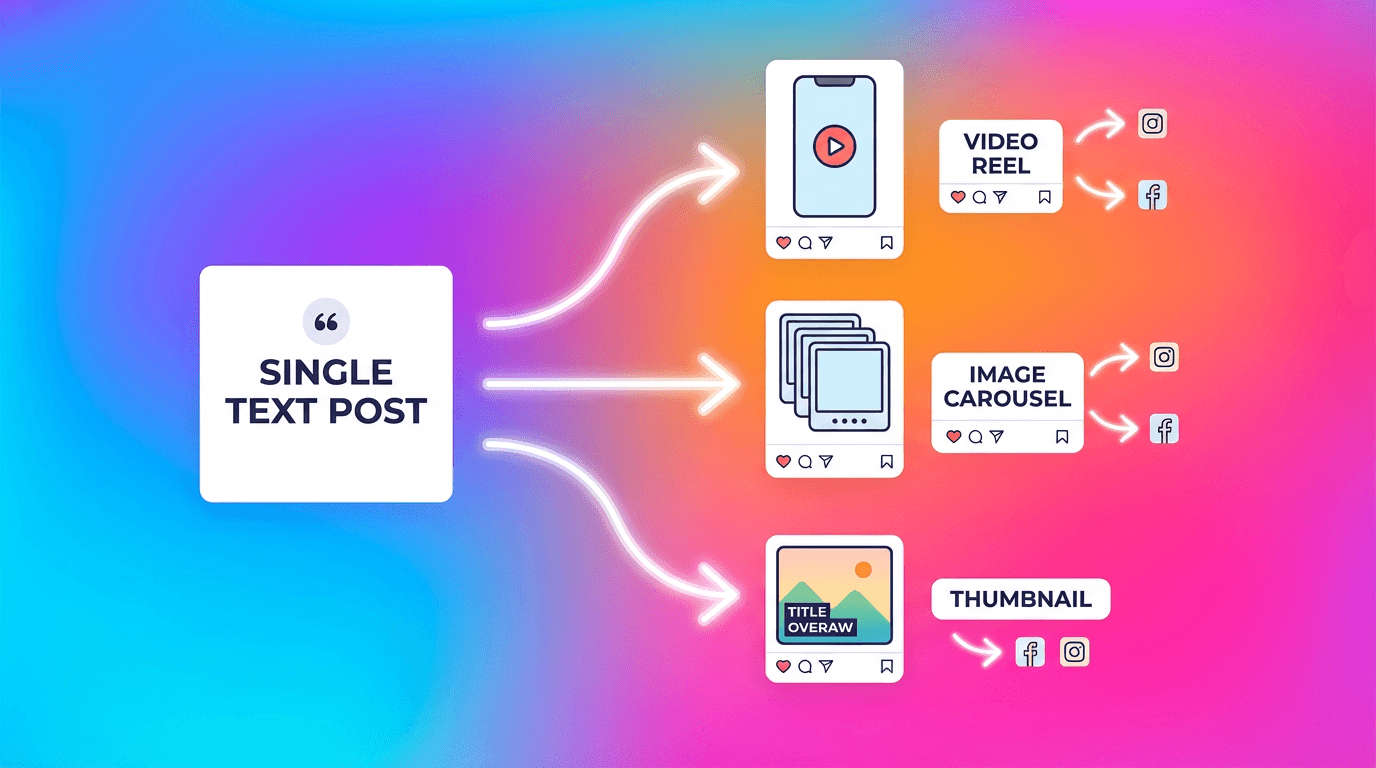
The workflow is straightforward. Take a Threads post that performed well, identify the core idea, and turn it into a visual format. A contrarian take can become a 30-second talking-head Reel. A micro tutorial can become a step-by-step carousel. A list of lessons learned can become a YouTube Short.
For creators who want to generate visual content quickly, Text2Shorts lets you enter a topic and automatically generates a complete vertical video with script, visuals, and voiceover. If your Threads post about marketing mistakes got 200 replies, you already know the topic works. Turning it into a Short for YouTube or a Reel for Instagram extends the life of that content.
You can also turn high-performing Threads posts into visual quote cards or illustrated graphics using AI image generation. A strong one-liner from a popular thread, placed on an eye-catching background, becomes a shareable Instagram post.
This repurposing loop creates a system where content flows across platforms. Threads becomes your idea testing ground. Posts that resonate get turned into visual content. Visual content drives people back to your Threads profile. The cycle builds momentum across every channel.
How AI Tools Support a Threads-First Content Strategy
Threads itself is a text platform, so writing is the core skill. But a Threads-first strategy becomes much more powerful when paired with visual content tools that handle the production side of repurposing.
When you identify a Threads post that resonated, you can generate matching visual content without filming or designing anything manually. A topic that performed well as a thread can be turned into a cinematic video clip using Miraflow's cinematic video generator, a YouTube thumbnail using the thumbnail maker, or a blog visual using AI-generated blog thumbnails.
The key is not to force AI tools into the Threads writing process itself. Writing authentic, conversational posts is something you should do manually. Your voice, your opinions, and your experience are what make Threads content work. Where AI tools add value is in everything that happens after the text is written: creating visuals, generating video, producing thumbnails, and building out the content across other platforms.
Inside Miraflow AI, the entire pipeline from image generation to video creation to thumbnail design and music runs in the browser. This means a single person can take a successful Threads post and turn it into a full multi-platform content package without hiring anyone or learning complex editing software.
Building a Weekly Threads Routine
Consistency is the single most important factor in Threads growth. A simple weekly routine removes decision fatigue and ensures you show up every day.
Here is a practical weekly structure for a small business or creator on Threads.
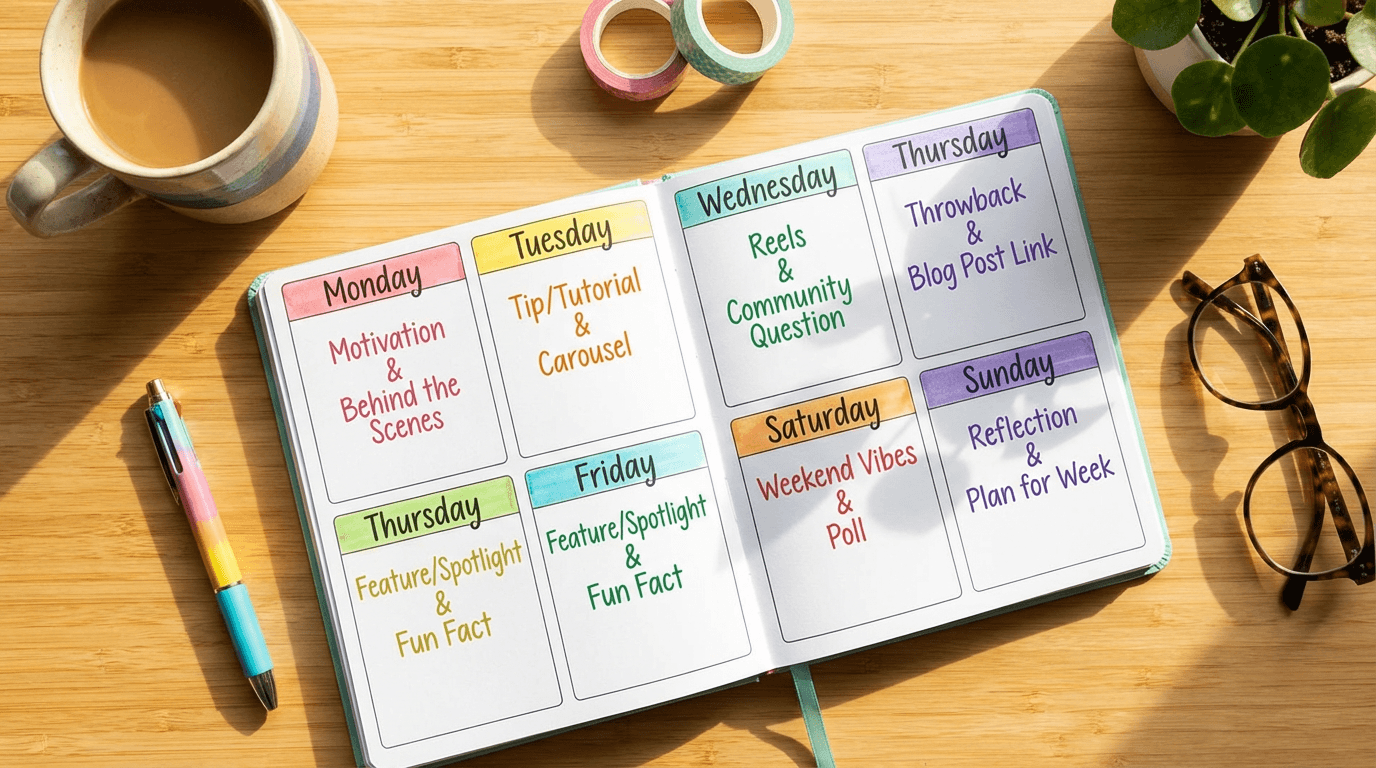
Monday: Share a lesson or insight from the previous week. Reflect on something you learned, tested, or observed. This sets a thoughtful tone for the week.
Tuesday: Post an opinion or hot take related to your niche. State your position clearly and invite responses.
Wednesday: Ask a question. Make it specific enough that people feel compelled to answer from their own experience.
Thursday: Share a behind-the-scenes look at your work. This could be a decision you made, a challenge you faced, or a process you use.
Friday: Post a practical tip or micro tutorial. Give your audience something they can use immediately.
Saturday (optional): Share something personal or reflective. Threads audiences respond well to authenticity on weekends when the tone is more relaxed.
In addition to posting, spend 10 to 15 minutes each day replying to other people's threads in your niche. This is not optional. Engaging with others is how you get discovered by new audiences and build relationships that lead to follows.
Measuring Threads Growth
Threads analytics in 2026 are more developed than they were at launch, though still simpler than Instagram or YouTube analytics. The metrics you should track weekly are reach per post, replies per post, follower growth rate, and profile visits.
Reach per post tells you how many people the algorithm is showing your content to. If reach is consistently low, your hooks need work or your posting times need adjustment.
Replies per post is the most important engagement metric on Threads because the algorithm weights replies so heavily. Track this as a ratio: replies divided by reach. A post that reaches 1,000 people and gets 30 replies is outperforming a post that reaches 5,000 people and gets 20 replies.
Follower growth rate shows whether your content is converting viewers into followers. If reach is high but follower growth is flat, people are seeing your content but not finding enough reason to follow. This usually means your profile bio needs improvement or your content lacks a consistent theme.
Profile visits indicate curiosity. A spike in profile visits after a specific post tells you that post created interest in who you are. Study what those posts have in common.
Track these numbers weekly in a simple spreadsheet. Look for patterns over 30 and 60 day windows rather than reacting to daily fluctuations.
Conclusion
Threads in 2026 is a real growth opportunity for small businesses, creators, and marketers who are willing to show up consistently with opinion-driven, conversation-starting content.
The algorithm rewards replies over likes, freshness over evergreen, and niche focus over broad posting. Growth comes from strong hooks, genuine engagement, and a posting rhythm that builds momentum over weeks and months.
Start with one post per day. Focus on your niche. Write hooks that create curiosity. Reply to every comment. Engage with others in your space. Once you find what resonates, repurpose those ideas across visual platforms using AI content tools to multiply your reach without multiplying your workload.
The brands and creators growing fastest on Threads right now are not the ones with the biggest budgets or the most followers. They are the ones who understand how the algorithm works and create content designed for conversation.