How to Go Viral on Instagram Reels: 10 Proven Strategies

Written by
Jay Kim

Learn 10 proven strategies to go viral on Instagram Reels in 2026. From hooks and formats to AI-powered content creation, this guide covers what actually works for creators.
Most creators posting Instagram Reels are stuck in the same loop. They spend hours filming, editing, and posting, only to see their view count flatline at a few hundred. Meanwhile, other accounts seem to go viral effortlessly, racking up millions of views with content that looks simple.
The difference is rarely about production quality or follower count. It comes down to understanding how the Instagram Reels algorithm decides what to push, and then building content around those signals.
This guide breaks down 10 proven strategies that help Reels go viral in 2026. Each one is based on how the algorithm actually works, what content patterns consistently perform, and how creators can use AI tools to produce Reels faster without sacrificing quality.
Whether you are a solo creator, a brand, or someone who just wants more eyes on your content, these strategies give you a repeatable system for growing through Reels.
How the Instagram Reels Algorithm Works in 2026
Before getting into specific strategies, it helps to understand what Instagram actually measures when deciding which Reels to push to a wider audience.
Instagram has been transparent about the fact that Reels are ranked independently from feed posts and Stories. The algorithm evaluates each Reel based on a set of engagement signals, and those signals determine whether the Reel stays small or gets distributed to the Explore page and Reels tab.
The primary signals include watch time and replays, likes and comments, shares and saves, follows driven by the Reel, and whether viewers watch through to the end. Among these, watch time and completion rate carry the most weight. A Reel that gets watched all the way through, or rewatched, sends a strong signal that the content is worth distributing further.
This is similar to how the YouTube Shorts algorithm responds to daily uploads and viewer retention. Both platforms reward content that keeps people watching.
Shares also matter more than most creators realize. When someone sends a Reel to a friend through DMs, Instagram interprets that as a high-quality engagement signal. Saves function similarly because they indicate the content has lasting value.
The algorithm also considers your relationship with the viewer, the timeliness of the post, and the relevance of the content to the viewer's interests. But for new or small accounts, the initial engagement burst in the first 30 to 60 minutes after posting is what determines whether the Reel enters wider distribution.
With that foundation, here are 10 strategies that align with how the algorithm actually works.
1. Win the First Second
The single biggest factor separating viral Reels from ignored ones is the opening moment. If a viewer scrolls past your Reel in the first second, none of the other strategies matter.
Instagram's feed moves fast. Users are swiping through dozens of Reels per session, and the algorithm is watching how many people stop scrolling when your content appears. That initial pause is your first metric. If most viewers keep scrolling, the algorithm stops distributing the Reel almost immediately.
The most effective hooks for Reels fall into a few categories. Visual shock works well, where the first frame shows something unexpected or visually striking that makes people stop. Direct questions also perform, such as opening with a question that targets a specific pain point or curiosity. Pattern interrupts are another approach, using a sudden zoom, a dramatic cut, or an unusual camera angle right at the start. Text hooks that appear on screen in the very first frame, saying something like "Stop scrolling if you..." or "Nobody talks about this..." also grab attention effectively.
The principle behind this is the same one that drives why the first 3 seconds matter on YouTube Shorts. Both platforms measure early retention aggressively, and losing viewers in the opening moment kills distribution before it starts.
One practical tip is to watch your own Reels with the sound off. If the first frame does not visually communicate something interesting, most viewers will never turn sound on or stick around.
2. Keep Reels Between 15 and 45 Seconds
Reel length affects completion rate, and completion rate affects distribution. The relationship is straightforward. Shorter Reels are easier to watch all the way through, which generates stronger algorithmic signals.
In 2026, the sweet spot for most viral Reels sits between 15 and 45 seconds. That range is long enough to deliver a complete idea but short enough that viewers are likely to finish watching, or even rewatch.
Reels under 10 seconds can work for memes or visual gags, but they often lack enough substance for Instagram to distribute them broadly. Reels over 60 seconds tend to see significant drop-off unless the content is exceptionally engaging throughout.
The key is matching length to content type. A quick tip or visual transformation works well at 15 to 20 seconds. A mini tutorial or story works at 30 to 45 seconds. An in-depth breakdown might justify 60 seconds, but only if the hook is strong enough to carry viewers through.
If you are creating AI-generated Reels, tools like Text2Shorts let you control video length during generation, which makes it easy to test different durations without re-editing manually.
3. Design for Shares, Not Just Likes
Likes are nice, but shares are the real growth driver on Instagram Reels. When someone shares your Reel to their Stories or sends it via DMs, Instagram treats that as a stronger signal than a like or even a comment. Shares indicate that the content was valuable enough for someone to attach their own identity to it by passing it along.
Content that gets shared tends to fall into specific categories. Relatable content, where viewers think "this is so me" or "my friend needs to see this," gets shared frequently. Useful content that teaches something practical and worth saving for later also performs well. Surprising content that shows something unexpected or counterintuitive triggers shares, as does emotional content that makes people feel something strongly enough to send it to someone.
The easiest way to design for shares is to ask yourself one question before posting: "Who would someone send this to, and why?" If you cannot answer that clearly, the Reel probably will not get shared.
A practical format that consistently drives shares is the "tag someone who..." style of content. Even without explicitly saying it, if the content naturally makes viewers think of a specific person, the share rate goes up.
4. Use Trending Audio Strategically
Trending audio has been a core part of Instagram Reels since the feature launched, and in 2026 it still matters. When you use a trending sound, Instagram is more likely to surface your Reel to users who have already engaged with content using that same audio. This gives your Reel a built-in distribution boost.
However, the strategy is not just about slapping trending audio onto any piece of content. The audio needs to fit the content naturally, or viewers will feel a disconnect and scroll away. The best approach is to find trending audio that aligns with the mood or message of your Reel, then build the content around the audio's rhythm and tone.
To find trending audio, check the Reels tab regularly and look for the small arrow icon next to audio names, which indicates rising trends. You can also save audio clips from Reels you see in your feed and use them later.
One important distinction: original audio can also go viral. If you are creating educational or talking-head Reels, your own voice becomes the audio. In these cases, the content itself drives engagement rather than the sound. For creators using AI-generated content, you can add original voiceovers or music. Platforms like Miraflow AI's music generator let you create custom background tracks that are original and royalty-free, which avoids copyright issues entirely.
5. Post Consistently and Frequently
Volume matters on Instagram Reels. The algorithm favors accounts that post regularly because consistent publishing gives Instagram more content to test and distribute. Each Reel is an independent opportunity to reach new viewers, so posting more frequently increases your chances mathematically.
In 2026, creators who post Reels daily or near-daily consistently outperform those who post once or twice a week. This does not mean every Reel needs to be a masterpiece. The goal is to maintain a steady output so the algorithm keeps testing your content with new audiences.
The challenge, of course, is that creating Reels takes time. Scripting, filming, editing, and posting every single day burns out most creators within a few weeks. This is where AI-powered workflows become practical. Instead of manually producing every Reel from scratch, creators can use prompt-based tools to generate visuals, scripts, and even full short-form videos automatically.
The new creator stack for Shorts, Reels, and TikTok explains how smart creators are combining AI tools across the entire pipeline. From generating thumbnails and visuals to producing full video clips, the workflow has shifted from manual editing to idea-first creation where AI handles execution.
Consistency does not require perfection. It requires showing up regularly with content that is good enough to engage viewers. Over time, the algorithm rewards that pattern.
6. Use Text Overlays and Captions on Every Reel
A significant percentage of Instagram users watch Reels with the sound off, especially when browsing in public or during commutes. If your Reel relies entirely on audio to communicate its message, you are losing a large portion of potential viewers before they even understand what the content is about.
Text overlays solve this. Adding readable text on screen ensures that viewers can follow the content regardless of whether sound is on. This increases watch time because people who would otherwise scroll past can now engage silently.
Beyond accessibility, text overlays also function as hooks. A bold statement or question appearing on screen in the first frame gives viewers a reason to keep watching. This is especially effective for educational, listicle, or tip-based Reels where the value proposition can be summarized in a short line of text.
Instagram's own captioning tools have improved, but many creators still prefer to add custom text overlays using editing apps or AI tools for more control over font, size, color, and timing. The key is keeping text large enough to read on mobile, using high contrast colors so it stands out against the background, and timing the text to appear in sync with the visual content.
7. Leverage AI to Produce Reels Faster
The biggest bottleneck for most Reel creators is not ideas. It is production. Filming, editing, adding effects, syncing audio, and exporting takes time that most solo creators or small teams do not have, especially when trying to post daily.
AI tools have changed this equation significantly in 2026. Instead of building each Reel manually, creators can now generate entire short-form videos from a single text prompt. The process works by describing a topic or concept, and the tool automatically generates a script, creates matching visuals for each scene, and stitches everything into a cohesive vertical video.
This is exactly how Text2Shorts turns a prompt into a finished reel. You enter a topic, choose a visual style, and the system handles script generation, visual creation, and final assembly. The result is a ready-to-post vertical video that would have taken hours to produce manually.
For creators who want more control over individual visual elements, AI image generators and cinematic video tools offer another layer. You can generate specific scenes, product shots, or visual backgrounds using text prompts and then assemble them into Reels. The guide to writing effective prompts for Veo3, Veo3.1, and Sora 2 covers how to describe scenes, camera movements, and lighting in a way that produces cinematic-quality clips.
The point is not to replace creative thinking with automation. It is to remove the mechanical friction so you can focus on ideas, messaging, and strategy while the tools handle execution.
8. Follow Proven Reel Formats That Already Work
Not every Reel needs to reinvent the wheel. In fact, most viral Reels follow recognizable formats that viewers already understand and engage with. Using a proven format reduces the cognitive load on the viewer, which means they are more likely to watch through to the end.
Some of the formats that consistently perform well on Instagram Reels in 2026 include transformation or before-and-after videos, where you show a clear visual change from start to finish. Step-by-step tutorials that teach something specific in under 60 seconds also perform reliably. POV content, where the viewer sees the scenario from a first-person perspective, continues to drive strong engagement. Day-in-the-life content and behind-the-scenes footage feel authentic and generate curiosity. Reaction-style content, where you respond to trends, comments, or other content, is another format with consistent performance.
The AI Shorts formats that go viral in 2026 breaks down which content structures are generating the most views and engagement across platforms. Many of those same formats translate directly to Instagram Reels because the audience behavior is similar.
When you find a format that works for your niche, do not be afraid to repeat it. Slight variations on a proven structure perform better than constantly switching formats, because returning viewers start to recognize and expect your style.
9. Create Visually Striking Thumbnails and Cover Images
Instagram allows you to choose a cover image for each Reel. This cover is what appears on your profile grid and can influence whether someone browsing your profile decides to watch. A strong cover image works like a thumbnail. It communicates the content of the Reel and creates curiosity.
Many creators skip this step and let Instagram auto-select a frame from the video. The result is usually an unflattering mid-action shot that communicates nothing about the content. Taking 30 seconds to choose or create a custom cover image significantly improves how your profile looks and how often profile visitors watch your Reels.
For creators who want to go further, AI-generated thumbnails can produce professional-quality cover images without any design skills. You describe what you want, and the tool generates a polished image that matches your content.
Here are a few thumbnail prompt examples you can use or adapt:
Reel cover for a fitness tip video
Prompt: energetic person mid-workout in a bright modern gym, bold dynamic lighting, fitness equipment in background, vibrant colors, clean composition, eye-catching social media thumbnail style
Reel cover for a cooking tutorial
Prompt: hands plating a colorful healthy meal on a white plate, warm kitchen lighting, fresh ingredients scattered on wooden counter, overhead camera angle, appetizing food photography style
Reel cover for a travel Reel
Prompt: person standing at a scenic mountain overlook at golden hour, warm sunlight, dramatic landscape stretching to horizon, adventurous mood, bright vivid colors, vertical social media thumbnail style
You can generate cover images like these directly inside Miraflow AI's image generator. The tool supports custom aspect ratios including 9:16 for vertical Reel covers, and you can iterate on prompts quickly to find the right visual.
10. Cross-Post and Repurpose Across Platforms
One of the most efficient growth strategies in 2026 is creating content once and distributing it across multiple platforms. A Reel that performs well on Instagram can often perform equally well as a YouTube Short or TikTok video, because the audience behavior and algorithm signals are similar across all three platforms.
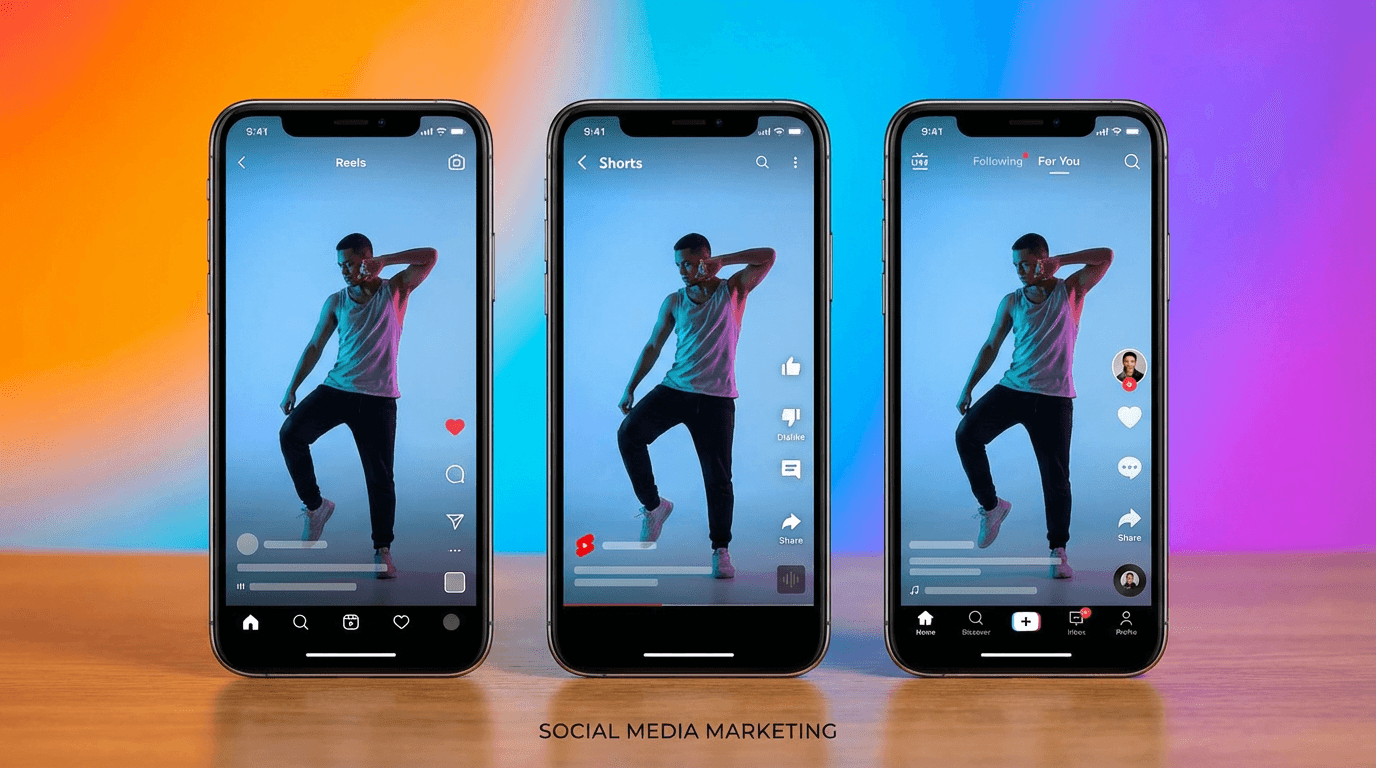
The key is making sure the content feels native to each platform. Instagram Reels, YouTube Shorts, and TikTok all favor 9:16 vertical video with strong hooks and high completion rates. If your content is built around those fundamentals, it translates naturally.
However, there is one important rule: do not repost content with watermarks from other platforms. Instagram has confirmed in the past that Reels with visible TikTok watermarks are deprioritized in distribution. Always upload clean, watermark-free versions to each platform.
For creators using AI tools, this cross-posting workflow becomes even easier. A single prompt in Text2Shorts can generate a vertical video that works on all three platforms without modification. The Nano Banana prompt guide also covers how to create visuals that work across different content types, from Reels to thumbnails to Stories.
Repurposing does not mean being lazy. It means being strategic about maximizing the reach of every idea you produce.
Common Mistakes That Kill Reel Performance
Even with the right strategies, certain mistakes can undermine your Reels before they get a chance to go viral. Avoiding these pitfalls is just as important as following the strategies above.
Posting without a hook is the most common mistake. If the first frame does not give viewers a reason to stop scrolling, the algorithm never gets a chance to distribute the Reel. Always lead with something visually interesting or a compelling text overlay.
Using irrelevant hashtags is another issue. Stuffing Reels with generic hashtags like "viral" or "explore" does not help distribution and can actually confuse the algorithm about what your content is about. Use 3 to 5 specific, relevant hashtags that describe your actual content.
Inconsistent posting kills momentum. The algorithm tests your content more aggressively when you post regularly. Long gaps between posts mean you have to rebuild momentum each time. If daily posting feels unsustainable, use AI tools to batch-create content so you always have Reels ready to publish.
Ignoring analytics wastes valuable data. Instagram provides detailed insights for each Reel, including reach, plays, likes, comments, shares, and saves. Reviewing these metrics regularly helps you understand which formats, topics, and hooks are working. Double down on what performs and cut what does not.
Overproducing content is a subtler mistake. Reels that feel overly polished or corporate often underperform compared to content that feels authentic and slightly imperfect. Viewers on Instagram respond to content that feels real, not content that looks like a commercial.
How to Build a Repeatable Reel Creation Workflow
Going viral once is exciting. Going viral consistently requires a system. The creators who sustain growth on Instagram Reels are not getting lucky repeatedly. They are following a repeatable process that maximizes their chances with every post.

A practical weekly workflow looks something like this. Start by spending time at the beginning of each week reviewing what performed well in the previous week and identifying trending formats or audio in your niche. Then batch-create your content for the week. If you are using AI tools, this might mean generating 5 to 7 Reels in a single session using different prompts and topics. Schedule your posts for consistent daily publishing. After each Reel is live, monitor the first hour of engagement to see if the algorithm picks it up. At the end of the week, review analytics and adjust your approach for the following week.
This workflow removes the daily pressure of coming up with ideas and filming on the spot. It turns Reel creation into a structured process that you can sustain long-term without burning out.
Creators using Miraflow AI can generate multiple Reels in a single sitting using Text2Shorts for full video creation, the cinematic video generator for individual clips, and the image generator for cover images and visual assets. The entire pipeline from idea to finished Reel can happen inside one platform.
Conclusion
Going viral on Instagram Reels is not random. It is the result of understanding how the algorithm evaluates content, creating Reels that align with those signals, and publishing consistently enough to give the algorithm multiple chances to distribute your work.
The 10 strategies in this guide cover every part of that equation. Strong hooks win the first second. Optimal length maximizes completion rates. Share-worthy content drives distribution. Trending audio gives you a built-in boost. Consistency keeps you in the algorithm's testing pool. Text overlays capture silent viewers. AI tools remove production bottlenecks. Proven formats reduce guesswork. Strong cover images improve profile conversions. And cross-posting multiplies your reach.
Pick three or four strategies to focus on first. Implement them this week. Review your results. Then layer in the rest over time.
The creators who grow fastest on Instagram Reels are not the ones with the biggest budgets or the best cameras. They are the ones who understand the system, produce content efficiently, and keep publishing.
Start with an idea. Turn it into a Reel. Post it. Learn from the data. Repeat.