YouTube Monetization with AI Content: What's Allowed and What Gets You Demonetized in 2026

Written by
Jay Kim

Learn what YouTube allows and what gets you demonetized when using AI content in 2026. Covers inauthentic content policy, disclosure rules, and safe workflows.
If you are building a YouTube channel using AI tools for videos, thumbnails, music, or voiceovers, there is one question that keeps coming up in every creator community: can I actually monetize this content, and what happens if YouTube decides I have crossed the line?
The short answer is that AI-generated content can absolutely be monetized on YouTube in 2026. The platform's policies do not penalize AI usage. They penalize low-quality, repetitive, or misleading content, regardless of how it was made.[5] But the longer answer involves understanding several overlapping policies, knowing exactly where YouTube draws the line, and building a workflow that keeps your channel safe from demonetization while still using AI to speed up production.
This is the complete guide to YouTube monetization with AI content in 2026. It covers every policy that matters, the real enforcement actions that have already happened, the types of AI content that remain safe to monetize, and a practical workflow for staying compliant while creating content efficiently.
Why YouTube Changed Its Monetization Rules Around AI Content
To understand where the rules are today, it helps to know what triggered the changes.

Through 2024 and into early 2025, YouTube saw an enormous surge of channels publishing mass-produced AI content. Some operators were launching 150 new YouTube channels in a single day using automated bots. They scrape viral videos, spin the scripts through AI, generate visuals, add stock music, and publish, sometimes uploading 6 to 7 videos per channel per day.[1]
The result was a flood of low-value content clogging the recommendation algorithm, degrading viewer experience, and making advertisers nervous about where their ads were showing up. In January 2026, YouTube CEO Neal Mohan confirmed that the platform was aggressively targeting what he called "AI slop," the low quality, mass produced content created to exploit the algorithm rather than serve viewers.[4]
YouTube's response came in several phases. On July 15, 2025, YouTube renamed its "repetitious content" policy to "inauthentic content" to better clarify that this includes content that is repetitive or mass-produced.[3] This was followed by increasingly aggressive enforcement through late 2025 and into 2026.
January 2026 brought YouTube's largest single enforcement move against AI generated content. According to reporting from Tubefilter, YouTube terminated 16 channels in a single wave. Those channels had collectively accumulated 4.7 billion lifetime views and 35 million subscribers. The estimated annual advertising revenue erased from the platform was approximately $10 million.[4]
This enforcement wave was not random. It targeted a very specific pattern of content creation that every AI creator needs to understand.
The 3 YouTube Policies Every AI Creator Must Understand
YouTube's monetization framework is built on several overlapping policies. For creators using AI tools, three specific policies matter more than any others.
1. The Inauthentic Content Policy
This is the policy that has caused the most demonetizations in 2026. Inauthentic content refers to mass-produced or repetitive content. This includes content that looks like it's made with a template with little to no variation across videos, or content that's easily replicable at scale.[3]
Inauthentic content on YouTube refers to videos that are mass produced, template driven, or generated with minimal human creative input. The policy targets content designed to mimic genuine creator work while relying on automated processes, including AI tools, to replace rather than assist human creativity.[4]
The key word here is "replace." YouTube is specifically targeting AI content where the AI does the work and the creator simply publishes the output. If you use AI as a creative tool and bring your own ideas, perspective, and editorial judgment, you are on the right side of this policy.
According to YouTube's own guidelines, if you're making money on YouTube, your content should be original and "authentic." This means that YouTube expects your content to be your original creation. If you borrow content from someone else, you need to change it significantly to make it your own. It should not be mass-produced or repetitive, and should be made for the enjoyment or education of viewers, rather than for the sole purpose of getting views.[3]
2. The Reused Content Policy
The reused content policy is separate from the inauthentic content policy, but it catches AI creators who rely on recycling existing material. The reused content policy was clarified in 2026 to explicitly cover AI audio, with re-uploads and near-duplicates disqualifying channels from the YouTube Partner Program.[2]
This means that running existing articles, blog posts, or news feeds through a text-to-speech engine and publishing the result is a direct violation. Even if you use AI to rephrase the source material, YouTube's review process checks whether you have added meaningful value beyond what the original source already provides.
For creators making compilations, reactions, or commentary-based content, YouTube allows videos that follow a format but offer a new take, fresh information, or entertainment value in each upload. It also allows compilations or clip videos where you explain the connection between items and add commentary, reused content that includes meaningful commentary, critique, or educational context, and AI-assisted videos where a human steers the creative direction and injects personality and perspective.[7]
If you are building a channel around AI-generated Shorts or long-form content, the YouTube Shorts best practices 2026 guide covers how to structure content that provides genuine value per upload.
3. The AI Disclosure Requirement
YouTube requires creators to disclose when their content contains realistic altered or synthetic material. YouTube requires creators to disclose meaningfully altered or synthetically generated content that seems realistic.[1]
Here is what triggers the disclosure requirement:
Realistic depictions of real people doing or saying things they never did, including deepfakes, AI voice clones of identifiable individuals, and face swaps. If a viewer could reasonably believe the person in the video said or did what is shown, disclosure is mandatory.[7]
Altered footage of real events or places. Making it appear that a building caught fire, a protest occurred, or a natural disaster hit a specific city when none of that happened triggers the requirement. The alteration must be to real-world footage or locations.[7]
Synthetically generated scenes that appear to depict real events. Creating realistic footage of fictional scenarios, such as a tornado approaching a real town or a public figure being arrested, falls under this category, even if the entire scene is generated from scratch.[7]
Equally important is understanding what does not require disclosure. If your videos use motion graphics, animated text overlays, or stylised visual formats, they are not attempting to pass as real-world footage. YouTube explicitly states that unrealistic content, animations, special effects, and production assistance (such as using AI for scripts, thumbnails, or outlines) do not require disclosure. The platform drew the line at misleading realism, not at whether AI was involved in the production process.[7]
This means that using AI to generate thumbnails, write scripts, create animated visuals, generate background music, or produce stylized video content does not require disclosure. Tools like the AI Image Generator on Miraflow AI or the YouTube Thumbnail Maker fall squarely in the "production assistance" category that YouTube exempts from disclosure.
Disclosing content as altered or synthetic won't limit a video's audience or impact its eligibility to earn money.[1] So even when disclosure is required, it does not hurt your monetization. What hurts your monetization is failing to disclose when you should have.
When content is undisclosed, YouTube may take action by proactively applying a label that creators will not have the option to remove. Additionally, creators who consistently choose not to disclose this information may be subject to penalties from YouTube, including removal of content or suspension from the YouTube Partner Program.[1]

What Actually Gets You Demonetized: 8 Patterns YouTube Targets
Understanding the general policies is important, but knowing the specific patterns that trigger enforcement is what actually keeps your channel safe. Based on the enforcement actions that have already happened in 2026, here are the content patterns that YouTube is actively targeting.
1. AI Slideshow Channels with No Commentary
One of the most flagged formats right now is AI-only slideshows, which are static AI-generated images without motion, edits, or pacing, just auto visuals under music or text. An example is a video like "Top 10 Unknown Planets" with nothing but AI images fading in and out.[10]
This format provides zero creative input beyond typing a prompt into an image generator. YouTube's review teams look at whether the creator added any value that the AI could not have produced on its own.
2. Generic Text-to-Speech Narration Over Stock Footage
Generic TTS narration with synthetic voices reading AI-written scripts with no emotion, insight, or opinion[10] is another primary enforcement target. If your videos consist of an AI voice reading an AI-written script over stock or AI-generated footage, with no personal commentary or creative editing, this is exactly the pattern YouTube now calls inauthentic.
3. Template-Based Mass Production
Content that can generate 50 versions by simply swapping nouns falls into the danger zone. A channel posting daily "Amazing Facts About [Country]" videos using identical scripts with only place names changed exemplifies this problem. The structure remains identical while only surface-level details change.[4]
This applies even when each individual video might be technically well-produced. YouTube is now evaluating channels as a whole, and if the pattern across your uploads looks like an assembly line, the channel itself gets flagged.
4. Multi-Channel Clone Farms
One operator running 5 to 20 channels with the same script skeletons and different voices is a clear pattern. What reviewers see is that one channel confirms the pattern, and account-level signals surface the others.[6]
If you operate multiple AI channels, each one needs a genuinely distinct editorial identity, visual style, and content approach. Simply changing the voice or the color scheme is not enough differentiation.
5. AI Music Dump Channels
Generic beat compilations and raw AI music dumps are effectively dead from a monetization standpoint. In contrast, cinematic, sleep, lofi with original visuals, and commentary channels still earn reasonable RPMs in premium niches.[2]
If you are building an AI music channel, the guide on whether you can monetize videos with AI music covers exactly what YouTube allows and what it flags.
6. Deepfake and Voice Clone Content Without Disclosure
YouTube now treats deepfake-style content very seriously. If you create an AI-generated scene of a real person doing or saying something they never did, you must label it as artificial. This protects viewers and prevents misunderstandings. Failing to disclose can lead to removal or restrictions.[4]
7. Content Made for Kids Using AI Characters
Made-for-Kids AI avatars or storylines with no editorial voice are harder to defend. A reported AI kids channel earning significant revenue was pulled in the same enforcement wave.[6] The kids and family content space faces even stricter scrutiny because YouTube applies additional quality standards to content aimed at children.
8. High Upload Velocity with Uniform Structure
Enforcement patterns suggest that channels uploading 10 or more structurally similar Shorts daily attract suppression. Channels that upload large volumes of nearly identical AI-generated content risk having their channel demonetized. The enforcement pattern is consistent: if your Shorts are structurally identical at high upload velocity, you are in the suppression zone.[9]
For guidance on how often to post Shorts without triggering these signals, the should you post daily Shorts in 2026 guide covers optimal upload cadence.
What Remains Safe to Monetize with AI in 2026
Now that the risk patterns are clear, here is the content that YouTube explicitly welcomes and continues to monetize, even when AI tools are involved in the production process.

AI as a Production Tool (Not a Content Replacement)
Creators who use AI as a tool for editing, generating thumbnails, cleaning up audio, or drafting research are not targeted. The policy draws the line at replacement, not assistance. A creator who writes an original script and uses AI to polish the audio mix is operating within the rules.[4]
This is the fundamental distinction. When you use AI to handle production tasks while you bring the creative direction, topic selection, editorial judgment, and personal perspective, YouTube treats your content the same way it treats any other human-created content.
Faceless Channels with Genuine Editorial Voice
Several faceless YouTube channels that openly use AI have successfully achieved monetization and built large audiences, proving the model works when executed correctly.[7] Faceless channels are still viable as long as each video demonstrates clear human judgment in topic selection, script quality, visual composition, and editorial perspective.
The faceless YouTube Shorts with AI niches 2026 guide covers 10 niches where faceless AI content works well, along with the specific approach needed for each niche to stay monetizable.
AI-Generated Music with Proper Context
AI-generated music channels can still be monetized on YouTube in 2026, but only if you pass all five of YouTube's overlapping policies (inauthentic content, reused content, AI disclosure, advertiser-friendly, and Content ID), add meaningful human curation, and pick the right niche.[2]
Channels that pair AI music with original visuals, timestamped structure, human narration, or commentary continue to earn, often at RPMs of $3 to $8 in premium niches like lofi, sleep, and cinematic.[2]
The free AI music generator for YouTube Shorts and Reels guide covers how to generate music that meets YouTube's standards. And the AI Music Generator on Miraflow AI lets you create tracks with detailed control over mood, BPM, key, and structure, producing unique tracks that are not simple prompt-to-output dumps.
AI Thumbnails and Visual Assets
Using AI to generate YouTube thumbnails is classified as production assistance and requires no disclosure. This is one of the safest and most effective uses of AI for YouTube creators, because strong thumbnails directly improve click-through rate, which improves your revenue.
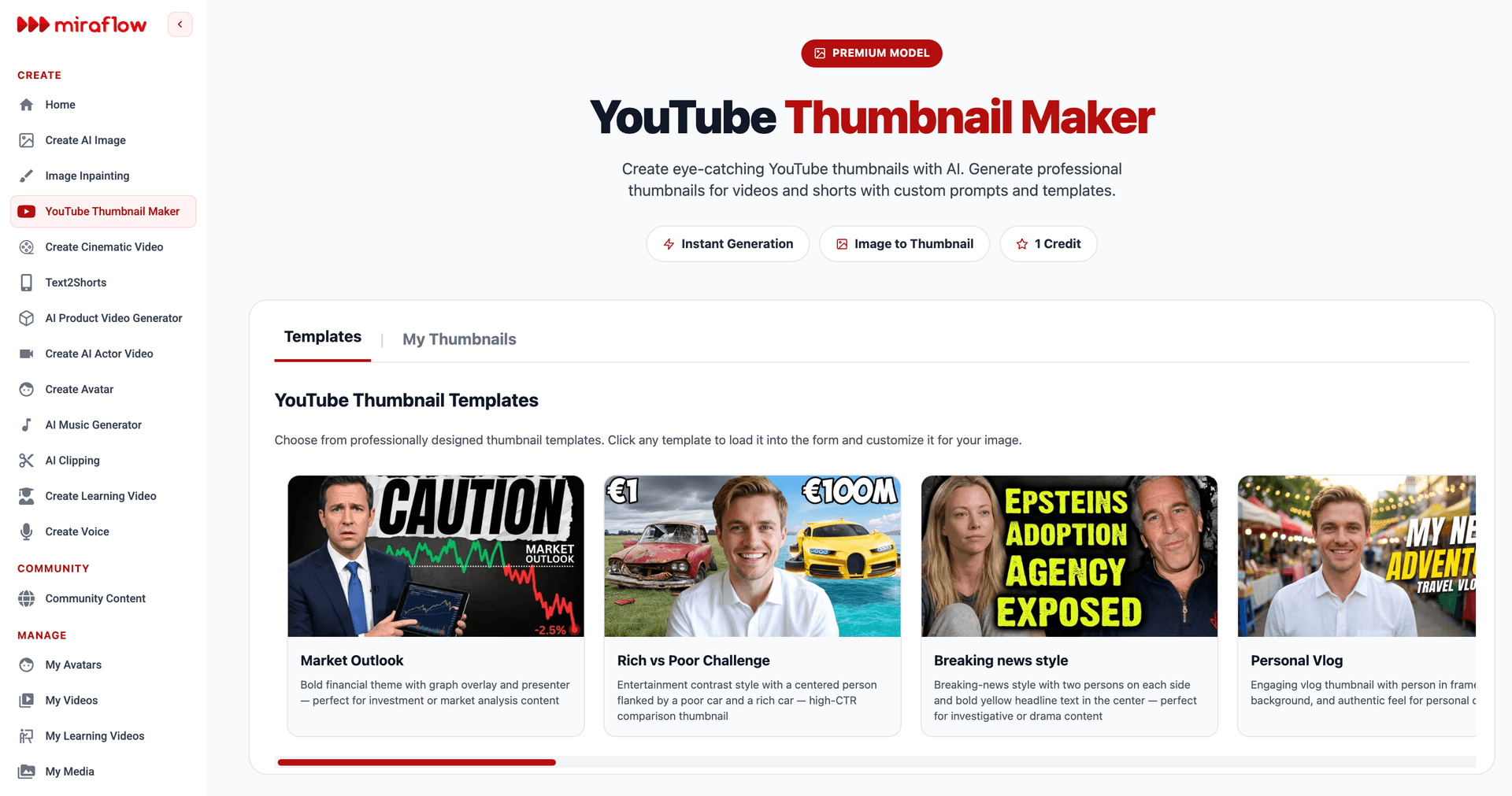
The AI YouTube thumbnail styles that get more views guide covers the visual patterns that drive the highest CTR in 2026. And the YouTube Thumbnail Maker on Miraflow AI lets you generate professional thumbnails from prompts, with optional face upload and text overlay, in about a minute.
AI-Assisted Scripts and Research
YouTube explicitly exempts "production assistance" uses of AI from disclosure requirements. Using AI to generate scripts, content ideas, video outlines, titles, descriptions, or captions does not trigger the disclosure requirement. Only the final video content, specifically realistic synthetic or altered media, matters for disclosure purposes.[8]
This means you can use AI freely for brainstorming topics, drafting scripts, optimizing titles, writing descriptions, and planning content calendars. The critical step is reviewing and editing everything the AI generates before it goes into your final video.
How YouTube Reviews AI Channels for Monetization in 2026
Understanding how YouTube's review process works gives you a practical framework for building a channel that passes inspection.
Enforcement scope is channel-wide, meaning one bad pattern can pull monetization across every video.[6] YouTube does not just evaluate individual videos in isolation. Reviewers look at your channel as a complete body of work and assess whether the overall pattern feels authentic and creator-driven.
In 2026, YouTube applies clearer criteria: videos where on-screen or voiceover commentary is less than 30% of total runtime trigger review.[3]
Five or more videos with the same visual template and less than 20% script variation can get bulk-demonetized.[3]
YouTube's systems now evaluate channels as a whole. Upload frequency, format similarity, lack of commentary, and minimal editing all stack up as risk signals under the inauthentic content policy.[10]
For creators building AI-powered channels, the practical takeaway is to vary your content structure across uploads, include your own perspective or commentary, mix up visual styles and formats, and keep your upload pace at a level that a genuinely creative process could produce.
The how the YouTube algorithm works in 2026 guide explains how YouTube evaluates new channels and how the algorithm distributes content based on viewer satisfaction signals.
Real Demonetization Cases: What Actually Happened
Looking at documented enforcement cases reveals exactly what YouTube targets and how the consequences unfold.
Case 1: Bible Stories Channel (588K Subscribers)
A Bible Stories channel with approximately 588K subscribers and roughly $30K per month in reported revenue was demonetized channel-wide in early 2026, making it the canonical example of the inauthentic content policy in action.[6]
The channel had 588,000 subscribers and $30,000 per month in ad revenue. The reason YouTube gave was "inauthentic and mass-produced content."[1]
This case is significant because the content was not random spam. It had a genuine audience and provided biblical education. But the production pattern, with uniform AI narration, templated visuals, and repetitive structure across hundreds of uploads, triggered the inauthentic content flag.
Case 2: Exam Prep Channel ($7,500/month)
Another exam prep education channel earning $7,500 per month, content that genuinely helped people pass real estate licensing exams, received the same treatment.[1] This shows that even genuinely useful content can get flagged if the production pattern looks automated and templated to YouTube's review systems.
Case 3: Multi-Channel Portfolio
A creator portfolio of twelve AI-generated faceless channels had seven demonetized for "reused content," three flagged for guideline violations, and the remaining two saw algorithmic reach collapse, all within a compressed window.[2]
These cases illustrate that YouTube's enforcement is aggressive and affects channels of all sizes. The common thread is not the use of AI itself, but the absence of visible human creativity and editorial judgment in the final content.
The AI Music Monetization Rules in Detail
AI music is one of the most nuanced areas of YouTube monetization in 2026, and it deserves specific attention because the rules interact with multiple policies at once.

YouTube's AI disclosure rule has been mandatory since 2024 and is enforced more strictly in 2026. You should toggle the "Altered or synthetic content" setting in YouTube Studio for every video that uses AI-generated music. Failure to disclose is treated as a policy violation and can result in demonetization independent of topic eligibility. However, disclosing AI use does NOT automatically disqualify a video from monetization.[2]
The licensing terms of your AI music tool also matter. Some tools grant full commercial rights to generated music, while others retain partial ownership or restrict commercial use. Before monetizing videos with AI music, check the licensing terms of whatever tool you used to generate the tracks.[5]
As of March 2026, AI-generated music is generally not registered in the Content ID database, so uploads using AI music tools typically receive no Content ID claim.[9] This is good news for creators, but it also means you need to keep your own records of how each track was generated in case of any future disputes.
For a detailed breakdown, the guide on generating no-copyright music for YouTube covers the legal landscape and practical workflow for using AI music safely.
How to Disclose AI Content in YouTube Studio (Step by Step)
If your content requires disclosure, here is exactly how to do it.
Go to YouTube Studio. Follow the steps to upload content. In the Details section, under "Altered content," select "Yes" if your content meets the disclosure requirements.[9]
If creators select "Yes" to indicate that their content is altered or synthetic, YouTube will add a label to their video's description field.[9]
For sensitive topics such as elections, health crises, finance, and major world events, YouTube may apply a more prominent label directly on the video player, not just in the description. This upgraded label appears regardless of whether the creator disclosed voluntarily.[7]
Creators who make a post or YouTube Short using one of YouTube's own generative AI tools don't need to take extra steps to disclose, because the tool will automatically disclose the use of AI for creators. For other AI tools, creators need to disclose their use during the upload flow.[1]
The bottom line: when in doubt, disclose. The disclosure label does not hurt your reach or revenue, but failing to disclose when you should can have serious consequences.
A Monetization-Safe AI Content Workflow
Here is a practical workflow for creating YouTube content with AI tools while staying fully compliant with every monetization policy.
Step 1: Choose Your Topic with Human Judgment
Start every video by choosing a topic based on your own research, your understanding of your audience, or your personal experience. AI can help brainstorm ideas, but the final topic selection should reflect your genuine editorial judgment about what your audience needs.
The YouTube Shorts SEO guide covers how to find topics that have search demand, which helps ensure each video serves a real audience need rather than being produced for the sake of volume.
Step 2: Write or Heavily Edit Your Script
If you use AI to draft a script, treat it as a first draft that needs substantial editing. Add your own examples. Include your perspective on why the topic matters. Insert personal anecdotes, opinions, or unique angles that a machine cannot generate on its own. The script should sound like you wrote it, even if AI helped structure it.
Step 3: Create Visuals with Intentional Direction
Use AI to generate visuals, but make specific creative choices about composition, color palette, lighting, and style. Do not just accept the first output from an image generator. The AI Image Generator on Miraflow AI supports multiple aspect ratios and allows you to upload reference images, which gives you precise control over the visual output.
For video content, Text2Shorts on Miraflow AI generates complete vertical videos, but the workflow includes steps where you review the script, edit the visual prompts for each scene, and choose voice settings. This human review loop is exactly what keeps AI-assisted content on the right side of YouTube's policies.
Step 4: Generate Custom Music
Instead of using the same royalty-free tracks that thousands of other channels use, generate custom background music for each video. The AI Music Generator creates unique tracks from descriptive prompts in under a minute. In Custom Mode, you can control lyrics structure, BPM, key, and duration to match each video precisely.
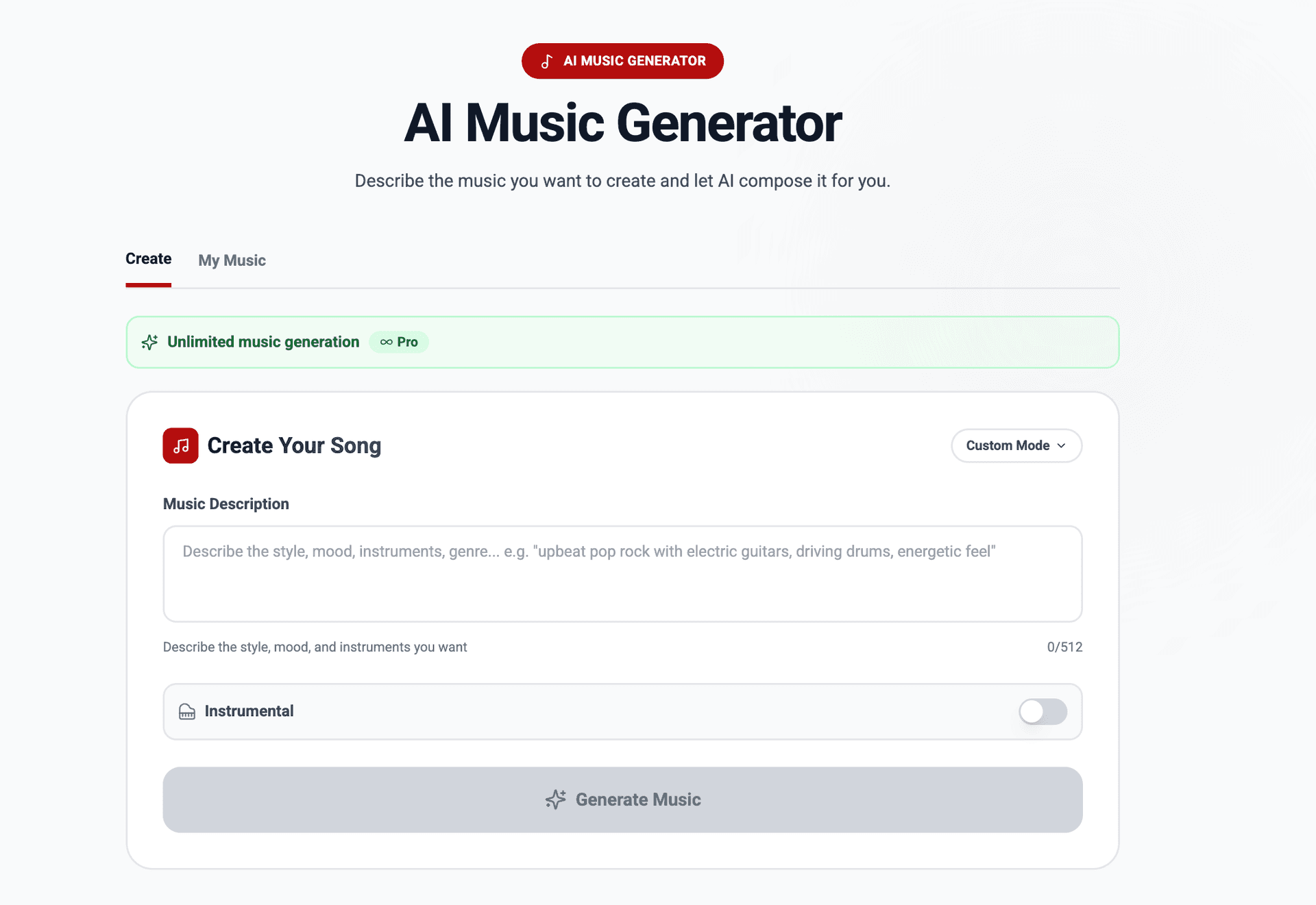
Custom AI music adds a unique audio identity to your channel that distinguishes it from template-based competitors. The AI music prompts for YouTube, Reels, and TikTok guide has prompt templates organized by mood and content type.
Step 5: Design Thumbnails That Stand Out
Strong thumbnails improve your click-through rate, which directly increases ad impressions and revenue. Use the YouTube Thumbnail Maker to generate thumbnails with bold visual hierarchy, optional face upload, and custom text overlay.
The YouTube CTR benchmarks in 2026 guide covers what CTR to aim for by niche and how thumbnails influence the algorithm's distribution decisions. And the best AI prompts for YouTube thumbnails 2026 guide provides copy-paste prompt templates organized by content category.
Step 6: Vary Your Content Format Across Uploads
One of the strongest signals of authenticity is format variety. Instead of publishing the same type of video structure every time, rotate between different formats: explainers, listicles, case studies, tutorials, reaction-style commentary, and storytelling formats.
The AI Shorts formats that go viral in 2026 guide covers 8 distinct content formats that perform well, each with a different structure and pacing.
Step 7: Disclose When Required
Before publishing, check whether your video contains any realistic synthetic content that requires disclosure. If it does, select "Yes" under the Altered Content section in YouTube Studio. If your content is clearly stylized, animated, or uses AI only for production assistance, no disclosure is needed.
Step 8: Monitor Your Analytics
Watch for sudden drops in impressions or reach, which can indicate algorithmic suppression before a formal demonetization review. The YouTube Shorts analytics 2026 guide covers how to read your analytics graphs and spot early warning signs.
What to Do If Your AI Channel Gets Demonetized
If your channel has already been flagged, the situation is not necessarily permanent, but recovery requires a clear, structured response.
Start with your most-watched or most recent videos. Update the titles, thumbnails, and descriptions to reflect real human input. Tweaking metadata in batches of 10 to 15 per day is safe.[10]
If you're using AI narration, rewrite your scripts to include your opinion or perspective.[10]
When filing an appeal, explain how you now meet the inauthentic content policy, covering human commentary, structured editing, personal opinions or insights, and a visible shift from templated, low-effort formats. Attach links, examples, or even a short video showing what you've fixed.[10]
YouTube reviews don't happen overnight. Most take 3 to 6 weeks, especially if your case involves system-detected violations.[10]
Channels that recover show consistent change across their next 5 to 10 uploads. That's what tells YouTube's systems, and real reviewers, that you've shifted your process, not just your metadata.[10]
YouTube Shorts Monetization with AI: What's Different
Shorts have their own monetization mechanics that interact with AI content policies in specific ways.
To qualify for full ad revenue, channels still need 1,000 subscribers and either 4,000 watch hours or 10 million Shorts views.[7] The same inauthentic content and reused content policies apply to Shorts just as they do to long-form content.
The enforcement pattern is consistent: if your Shorts are structurally identical at high upload velocity, you are in the suppression zone. The test YouTube applies is not "is this AI-generated" but "does each piece add distinct value."[9]
For Shorts creators, the YouTube Shorts monetization guide covers exactly how the Shorts revenue share works, what RPMs to expect by niche, and how to maximize earnings.
And if you want to understand how the Shorts algorithm decides which content gets distributed, the how the YouTube Shorts algorithm responds to daily uploads guide explains the mechanics behind impression distribution.
Building a Long-Term Monetizable AI Channel
The path to monetization with AI content follows the same principles as any YouTube channel: pick a niche, create valuable content, post consistently, and build an audience. AI tools just make the production side faster and more accessible.[5]
The creators who will thrive in 2026 and beyond are the ones who use AI as a production multiplier while maintaining genuine creative authorship. Use AI to multiply your strengths. Do not use it to manufacture a version of content that any channel could publish with the same prompts, the same assets, and the same structure. Because once your channel starts to feel interchangeable, the platform has very little reason to protect it.[8]
Practically, this means developing a content creation workflow where AI handles the time-consuming production tasks like generating visuals, composing music, editing thumbnails, and formatting scripts, while you bring the topic expertise, creative direction, and unique perspective that makes your channel worth watching.
The entire production pipeline, from scripts to visuals to video to thumbnails to music, can be built inside Miraflow AI. Whether you are creating AI images, generating vertical Shorts with Text2Shorts, producing cinematic video clips, composing custom music, or designing YouTube thumbnails, the tools support a workflow where AI speeds up production while you maintain creative control.
Conclusion
The YouTube AI policy update is not a ban on AI. It's a crackdown on mass-produced, inauthentic content. Creators who use AI thoughtfully and bring human perspective will continue to be monetizable.[7]
The rules in 2026 are clear. YouTube welcomes AI as a production tool. It penalizes AI as a content replacement. The line between the two comes down to visible human creativity, editorial judgment, format variety, and genuine value per upload.
Every enforcement action that has happened in 2026 targeted channels where AI was doing all the creative work and the creator was simply pressing publish. Every channel that has stayed monetized, including faceless channels and AI-assisted channels, showed clear evidence of human creative involvement in the final product.
If your content demonstrates that a real person made intentional choices about topic, script, visuals, and editing, YouTube has no reason to flag you, regardless of how many AI tools you used in the process. Build with AI. Create with intention. And let the tools handle production while you focus on what makes your channel worth watching.
Frequently Asked Questions
Does YouTube ban AI-generated content from monetization?
No. YouTube has explicitly stated that AI-assisted content is allowed. What they're cracking down on is fully automated, low-effort, and interchangeable content that could be produced by anyone using the same AI tools with the same templates.[1] If your content has genuine human creativity and oversight, AI tools are welcome.
Do I need to disclose AI-generated thumbnails on YouTube?
No. Disclosure is only required for realistic altered or synthetic media that could mislead viewers. You don't need to disclose AI used for production assistance like scripts, editing, or thumbnail ideas. YouTube's disclosure requirement focuses on content that makes viewers believe something real happened that didn't.[4]
Can faceless YouTube channels still get monetized in 2026?
Yes, but they face higher scrutiny under the inauthentic content policy. Faceless channels that demonstrate clear editorial voice, format variety, meaningful commentary, and unique perspective in each upload can still qualify for monetization. The channels getting demonetized are the ones using identical templates across every video with no visible human creative input.
Does AI-generated music trigger Content ID claims on YouTube?
As of March 2026, AI-generated music is generally not registered in the Content ID database, so uploads using AI music tools typically receive no Content ID claim. The risk is manual claims if the output closely resembles a specific copyrighted track, and potential future registration as AI music platforms reach legal settlements with rights holders.[9]
What happens if I forget to disclose AI content on YouTube?
YouTube may take action by proactively applying a label that creators will not have the option to remove. Additionally, creators who consistently choose not to disclose this information may be subject to penalties from YouTube, including removal of content or suspension from the YouTube Partner Program.[9]
How many AI videos can I upload per day without getting flagged?
There is no official limit, but there is no official YouTube guidance on upload caps. Enforcement patterns suggest that channels uploading 10 or more structurally similar Shorts daily attract suppression.[9] The safer approach is to post at a pace that allows genuine creative input per video rather than maximizing volume.
Can I appeal a demonetization for AI content?
Yes. Reviews typically take 3 to 6 weeks.[10] The most effective appeals demonstrate specific changes you have made to your content process, with examples of videos that show human commentary, varied formats, and editorial intent. Simply changing metadata without changing the actual content approach is unlikely to succeed.
Is AI voiceover content still monetizable on YouTube?
AI-generated voiceover videos can still be monetizable in 2026, but the bar is clearer: your channel needs to demonstrate authentic production value and real variation from video to video, not mass-produced repetition. If you treat AI narration as one tool inside a larger filmmaking workflow with strong writing, intentional visuals, credible sourcing, and transparent disclosure when content is realistically synthetic, you'll be operating inside YouTube's expectations for monetized channels.
References
- YouTube AI Demonetization 2026: How to Protect Your Channel - Fliki
- Disclosing use of altered or synthetic content - Android - YouTube Help
- YouTube Targets Inauthentic Content With Policy Changes | iMusician
- AI-Generated Music on YouTube: Monetization Policy, RPM, and Which Niches Still Work in 2026 | OutlierKit Resources
- YouTube AI Content Policy 2026: What Creators Need to Know About AI Disclosure Rules
- The Faceless YouTube Playbook Just Broke: What YouTube’s 2026 Inauthentic Content Policy Actually Says | by Aman Singh | Apr, 2026 | Medium
- YouTube monetization requirements for 2026 – MilX
- YouTube channel monetization policies - YouTube Help
- YouTube Demonetization 2026: Why Channels Lose It & Recover
- YouTube Altered or Synthetic Content Disclosure - MiniMatters | Video Production Washington DC Stories That Inspire Action: Professional Video Production for Nonprofits, Associations & Agencies
- YouTube AI Monetisation Policy 2026: What Changes, What’s Allowed and What’s Banned | Boss Wallah Blog
- Can You Monetize AI Videos on YouTube? Policy Guide 2026 - Build My Plays
- YouTube Inauthentic Content Policy: AI Enforcement Wave 2026 - Flocker | Streaming News & Creator Insights
- How we're helping creators disclose altered or synthetic content - YouTube Blog
- Can AI-Generated Content Get Monetized on YouTube?
- YouTube's New AI Rules 2025: What Creators MUST Disclose | Subscribr
- YouTube Policy Update: What Counts as Inauthentic Content and Who May Lose Monetization
- YouTube AI Monetization Compliance Playbook 2026 | Lucy - Alici.AI
- YouTube's AI Disclosure Requirements: The Complete 2025 Guide | Onewrk
- YouTube Monetization Update 2026: New Rules Every Creator Must Know
- Can You Monetize AI YouTube Videos? 2026 Policy Guide
- YouTube AI Monetization Crackdown: How Creators Can Stay Safe
- YouTube Synthetic Content Disclosure Policy 2026 Guide
- YouTube’s AI content crackdown in 2026: What changed, who is at risk, how to adapt – ScaleLab
- youtube policy on ai generated content disclosure 2026: avoid penalties, boost trust
- Instavar
- Disclosing use of altered or synthetic content - Computer - YouTube Help
- YouTube’s New Standards for Inauthentic Content and Creator Likeness
- AI slop on YouTube and how to protect your channel in 2026 – MilX
- Why YouTube Is Demonetizing AI Content in 2026 — Creators Are Losing Money | Last Play Distro
- YouTube in 2026: Is AI-Generated Voice Content Still Monetizable?