YouTube Shorts AI Remix in 2026: How Reimagine Could Change Viral Content

Written by
Jay Kim
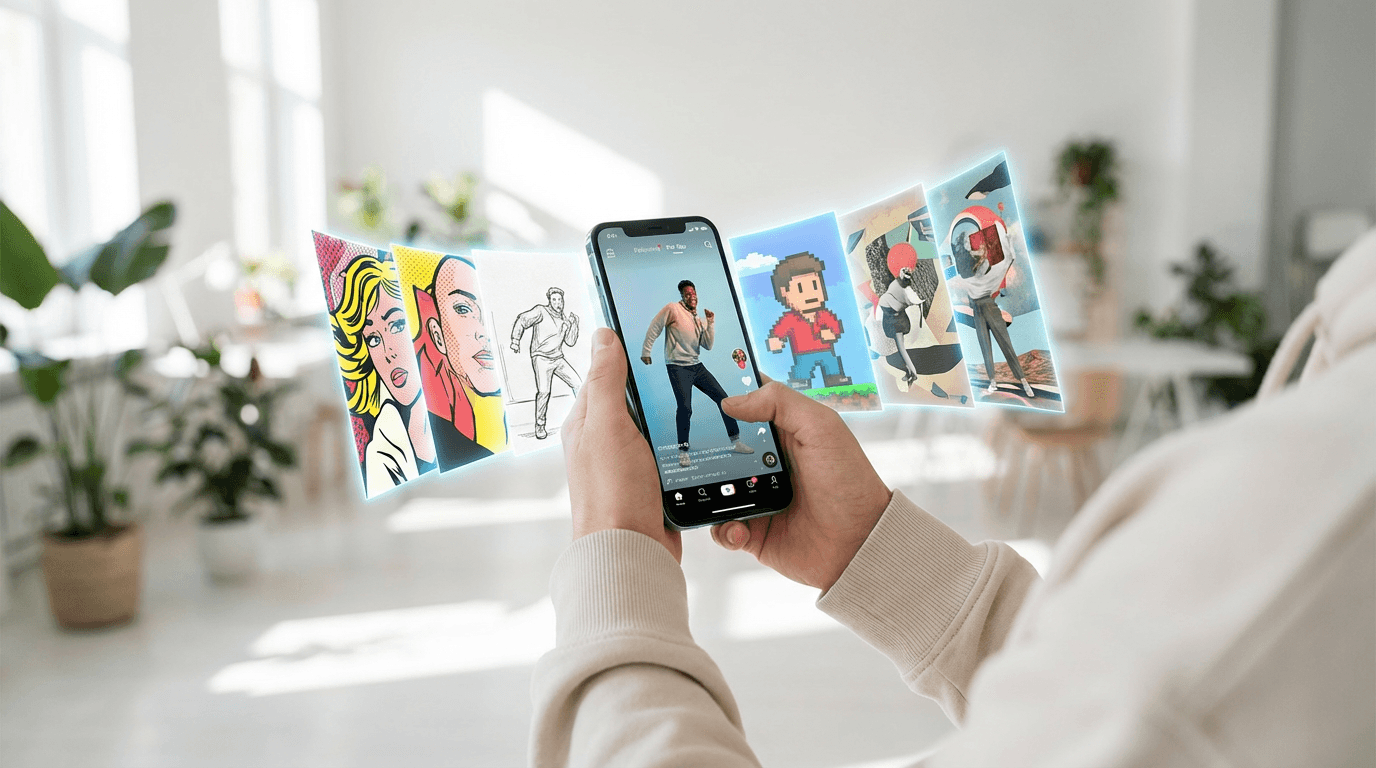
Learn what YouTube Reimagine is in 2026, how AI remixing works in Shorts, and why it could change how viral formats spread, saturate, and get credited.
If you post YouTube Shorts, one of the hardest problems now is not just coming up with ideas.
It is keeping up with how fast formats mutate.
A sound takes off. Then a visual style takes off. Then someone remixes the concept, flips the scene, inserts themselves into it, and suddenly the “trend” is no longer one format. It becomes a branching tree of versions.
That is why Reimagine matters.
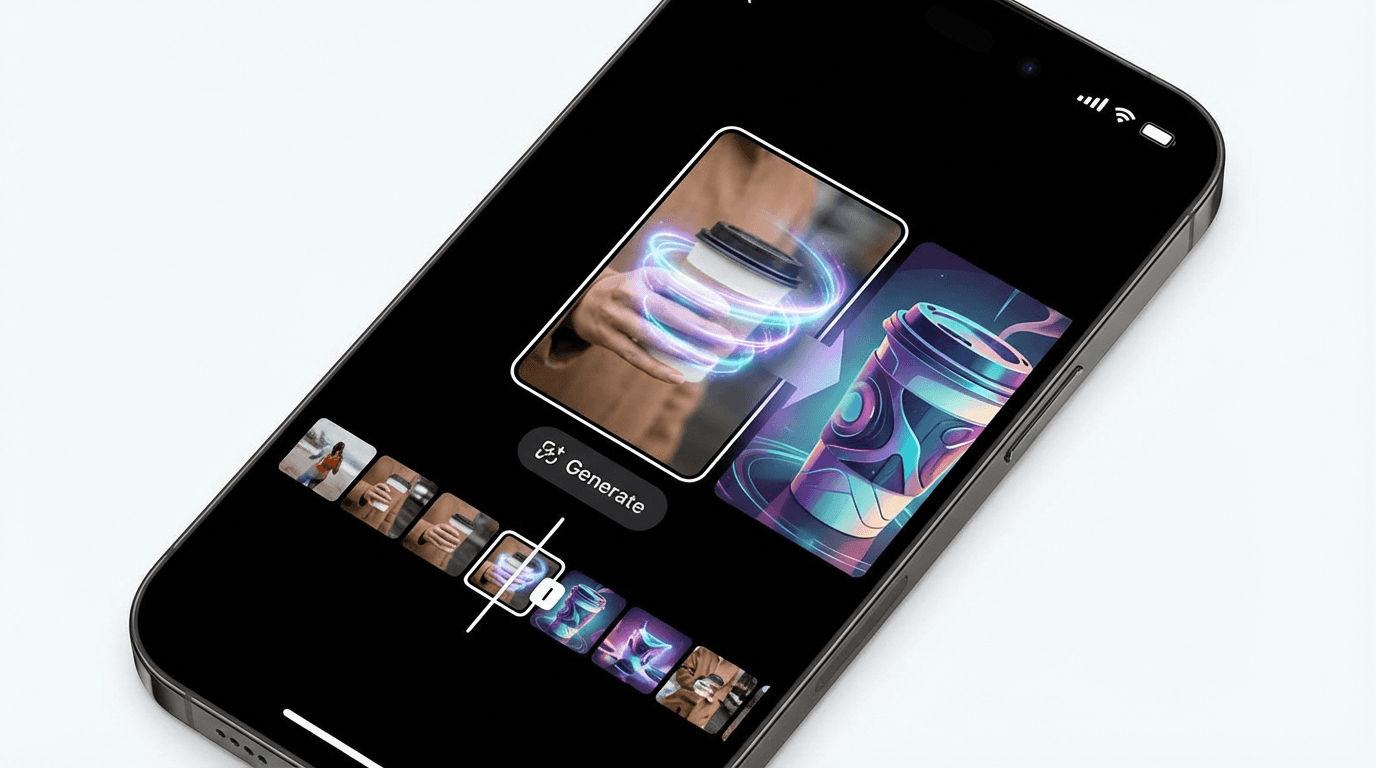
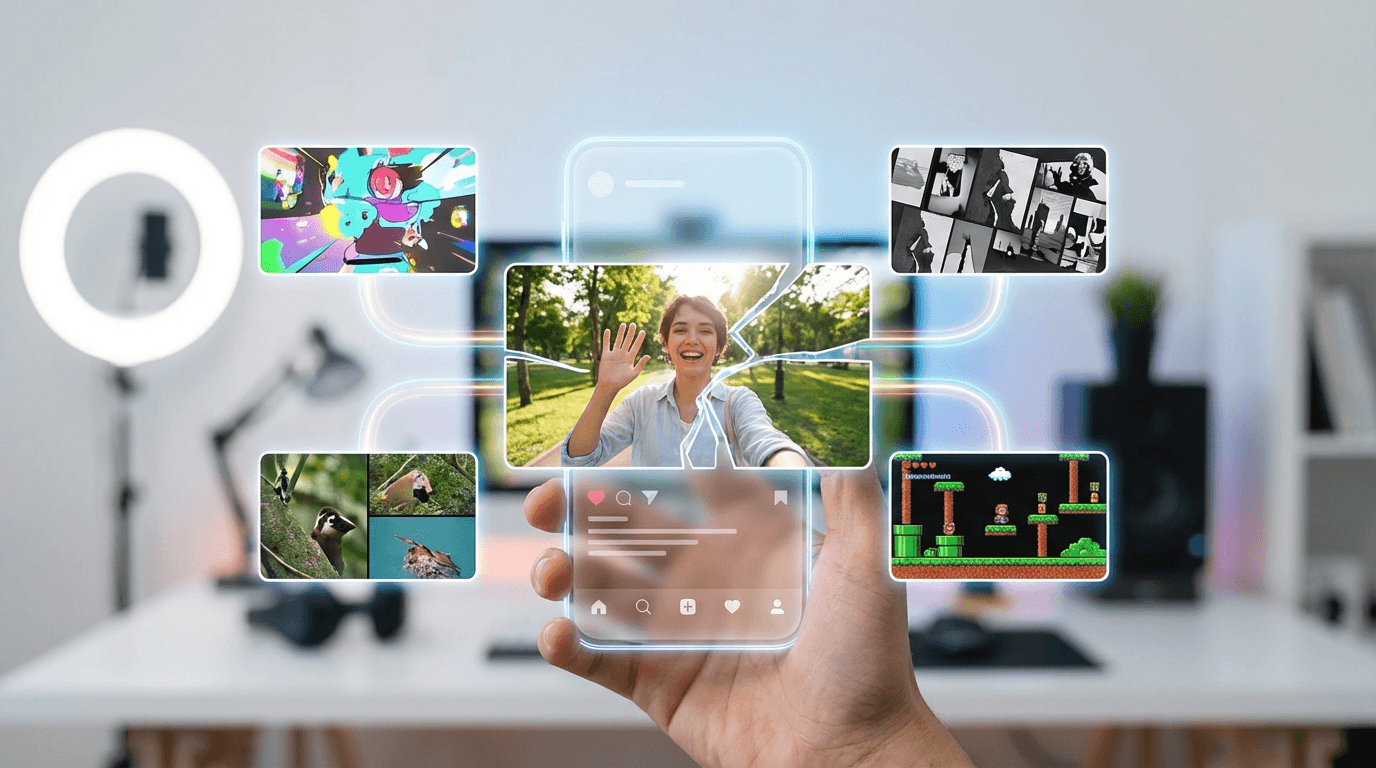
In March 2026, YouTube introduced Reimagine, a new Shorts remix tool that lets viewers transform a single frame from an eligible YouTube Short into a new 8-second clip using prompts, optional reference images, and generated audio. Every Reimagined Short links back to the original work, which means attribution is built into the remix flow.
That may sound like just another AI feature. It is not.
Reimagine could change viral content because it lowers the friction between seeing a Short and spinning out a new version of it. Instead of only reusing audio, cutting a segment, or doing a green screen response, creators can now start from a frame and transform the scene itself. That is a real shift in remix behavior.
In this guide, you will learn:
- what Reimagine actually does
- how it differs from older Shorts remix tools
- why it could change how viral formats spread
- what kinds of creators may benefit most
- the risks and mistakes creators should watch
- how to use the feature strategically instead of lazily
If you want the broader Shorts system first, start with YouTube Shorts Best Practices in 2026 and YouTube Shorts Algorithm Update January 2026.
What Reimagine actually is
YouTube describes Reimagine as a new AI-powered Remix tool in Shorts. It lets a creator or viewer take a single scene from an existing eligible Short, choose a frame from that scene, and then use either suggested prompts or custom prompts to turn that frame into a new video. The generated result includes new audio, and users can also upload up to two reference photos to insert themselves, objects, or animals into the scene.
That matters because Reimagine is not only an editing shortcut.
It is a new type of creative starting point.
Older remix tools on Shorts were already useful. YouTube supports remixing with Use this sound, Cut, Green screen, Collab, and Templates. But those tools mostly sample existing audio or video more directly. Reimagine goes one step further by letting the creator transform the source scene into something new from a prompt.
A good official starting point is YouTube’s Reimagine announcement and the YouTube Help page for Create YouTube Shorts with remixed content.
Why this matters more in 2026
This feature did not appear in a vacuum.
Over the last two years, YouTube has been building a broader AI creation stack for Shorts. In 2025, YouTube expanded Dream Screen with AI-generated video clips, added more generative creation tools, and said those creations would include clear labels and watermarks. In 2026, Reimagine pushes that further by applying AI generation directly inside the remix workflow of existing Shorts.
That is why Reimagine is strategically important.
It moves Shorts remixing from:
- audio-first copying
- simple cut-based reaction
- template-based reuse
toward:
- scene-first transformation
- reference-based personalization
- faster branching versions of a format
That last point is partly an inference, but it is a grounded one. If a creator can start from one frame, add a prompt, insert themselves or an object, and generate a new 8-second clip with sound, the number of possible variants around one successful Short grows quickly.
If you want the trend side of Shorts strategy, AI Shorts Formats That Go Viral in 2026 and Why Is YouTube Shorts Trending in 2026 fit well with this topic.
How Reimagine is different from older Shorts remixing
This is the part most creators will misunderstand at first.
They will think Reimagine is just another version of “Use this sound” or “Cut.”
It is not.
Here is the practical difference.
Use this sound
This is audio-led. You are building around an existing soundtrack or sound behavior.
Cut
This is segment-led. You take a short piece of the source video and build around it.
Green screen
This is background-led. You place the source visual behind your new recording.
Collab
This is response-led. You place yourself alongside the original Short.
Reimagine
This is transformation-led. You start with a frame from the original Short, then generate a new clip from it using prompts, optional references, and AI-generated audio.
That shift matters because Reimagine is much closer to concept remixing than to simple sampling.
Instead of asking “How do I react to this Short?” creators can ask “How do I twist this scene into a new visual idea?”
That makes viral content more likely to become branching visual families, not just repeated audio chains.
How Reimagine could change viral content
This is the part creators should care about most.
I would not frame Reimagine as “this will make every Short viral.” That would be lazy and wrong.
But it could change the structure of virality in a few important ways.
1. Viral trends may become more scene-based, not just sound-based
A lot of Shorts virality has been driven by sounds because sounds are easy to reuse. Reimagine introduces a fast way to reuse and transform a scene instead. Since it starts from a frame and can generate fresh audio around that new clip, it may create more trends where the core unit is a visual premise, not just a song or spoken line. That is an inference, but it follows directly from how the tool works.
That means creators should start paying closer attention to:
- iconic frames
- recognizable visual setups
- scene compositions that invite reinterpretation
- Shorts that already feel like templates even before YouTube labels them as templates
2. Trend branching could happen faster
Once a creator can insert themselves, objects, or animals into an existing scene using reference photos and text prompts, it becomes easier to create many variations around the same core concept. That lowers remix friction. It also means a single successful Short may produce more second-order remixes than before.
For creators, that changes the question from:
- “Can this Short trend?”
to:
- “Can this Short become a source frame for many future versions?”
That is a very different design mindset.
3. Original creators may gain more discovery from remix chains
One of the strongest details in YouTube’s announcement is that every Reimagined Short links back to the original work. YouTube also already attributes remixed Shorts back to the original content in other remix flows.
That suggests a good source Short may not only perform well on its own. It may also become a remix seed.
If that happens, creators who make remix-friendly visuals could benefit from secondary discovery through attribution trails.
This does not guarantee a growth spike. But it does make “being remixed” more strategically interesting than before.
4. Saturation may happen sooner
The upside of easier remixing is more participation.
The downside is faster copy pressure.
If it becomes easier to branch one visual idea into many derivatives, a format can crowd out faster too. The lifecycle of a visual trend may get shorter because more creators can generate acceptable variations quickly. That is an inference, but it is a reasonable one given the tool’s low-friction creation flow.
So creators who want to benefit from Reimagine should think in terms of:
- faster publishing
- better first-mover framing
- stronger source scenes
- follow-up variants before saturation hits
For related timing strategy, YouTube Shorts Titles and Descriptions 2026 Templates and Why YouTube Shorts First 3 Seconds Matter are worth reviewing.
5. “Originality” will get judged differently
This is a subtle but important point.
When remix tools become more powerful, viewers stop asking only “Did you copy this?” They start asking “Did you add enough of your own angle?”
That raises the standard for good remix content.
A lazy Reimagine Short will probably feel disposable. A good one will feel like a clear creative leap from the original seed frame.
That means the winning creators will usually not be the ones who just use the tool. They will be the ones who use it with:
- a niche angle
- a clearer joke
- a stronger reveal
- a more specific audience
- better packaging around the result
What kinds of creators could benefit most
Reimagine will not help every creator equally.
It is most promising for creators who already work well with visual concepts.
1. Meme and comedy creators
They can take a recognizable frame and push it into an exaggerated new direction quickly.
2. Storytelling creators
They can turn one strong scene into alternate worlds, alternate outcomes, or fast branching narratives.
3. Faceless creators
They may be able to build more Shorts around concept visuals without needing new live footage every time.
4. Product and marketing creators
They can test remixable visual setups faster, especially if a scene or concept is already resonating.
5. Educational creators with visual hooks
They can use a recognizable setup and transform it into a stronger “before/after” or “wrong vs right” payoff.
That is one reason faceless and workflow-based Shorts strategies still matter. If that is relevant to your content, read Faceless YouTube Shorts AI Niches 2026 and From Prompt to Reel: Text2Shorts AI Shorts.
The biggest mistakes creators will make with Reimagine
Every new creator tool gets overused in predictable ways.
Reimagine will be no different.
1. Treating the tool like the idea
The tool is not the content strategy. The angle still matters more.
2. Choosing a weak source frame
Not every Short is remix-friendly. The best seed frames are visually clear, emotionally readable, and easy to reinterpret.
3. Making generic prompt changes
If every creator prompts “make it cinematic” or “turn this into a fantasy world,” the content will blur together.
4. Ignoring attribution dynamics
If original creators can receive discovery through remix links, then making remix-worthy source content becomes part of strategy too.
5. Forgetting policy and disclosure
YouTube says AI-generated creations from its tools must still follow Community Guidelines, and creators using YouTube’s own generative AI tools do not need to add disclosure manually because the tool handles that automatically. YouTube also says disclosing altered or synthetic content does not limit audience or monetization eligibility by itself.
That last point is important because many creators still overestimate the downside of labeling AI-assisted content.
What creators should do instead
A better Reimagine strategy looks like this.
Start by identifying remixable source scenes
Look for Shorts with:
- a clear visual premise
- a scene viewers instantly understand
- a layout that can be twisted into multiple directions
- a moment that feels like a visual template
Then ask what new layer you can add
Do not settle for surface change.
Add one of these:
- new role
- new context
- new niche
- new joke
- new tension
- new reveal
Then publish in clusters
If one source frame works, test:
- one faithful remix
- one niche remix
- one exaggerated remix
- one search-friendly remix
That is how you learn whether the idea is truly flexible.
7 formats that could work especially well with Reimagine
These are the formats I would watch closely.
1. Alternate-universe remix
Take the original scene and place it in a new context.
2. Insert-yourself remix
Use reference images to put yourself into the moment and make the Short more personal.
3. Product-object swap
Insert a product or object into a known scene and build the hook around the contrast.
4. Wrong-vs-right scene flip
Turn the original visual into the “bad example,” then remix the improved version.
5. Meme escalation
Keep the same starting frame but push the outcome further.
6. Niche translation
Take a general viral scene and reinterpret it for creators, ecommerce sellers, students, marketers, or a specific audience.
7. Search-friendly explanation
Use a remixable scene to answer a common question with a more visual hook.
Those kinds of formats tend to work best when paired with clear packaging. For that side of strategy, YouTube Thumbnail Strategy 2026 and How to Generate YouTube Thumbnails with AI are useful companion reads.
Copy-paste prompt pack for Reimagine-style content planning
These prompts are meant to help creators think beyond “make it cooler.”
prompt-1-remix-angle-generator
Prompt
I found a YouTube Short that feels remixable.
Describe 12 ways to reimagine one frame from it into a new 8-second Short.
Split the ideas into:
- 4 funny ideas
- 4 niche-specific ideas
- 4 visually surprising ideas
For each one, explain:
- what changes in the scene
- why people would stop scrolling
- how the new version feels meaningfully different from the source
prompt-2-source-frame-checker
Prompt
Evaluate whether this Short has a strong source frame for remix-based virality.
Score it from 1 to 10 for:
- visual clarity
- emotional readability
- remix flexibility
- niche adaptability
- originality potential
Then explain what kind of remixes would work best from that frame.
prompt-3-branching-trend-builder
Prompt
Take this visual concept and generate 10 remix branches for YouTube Shorts.
Make each branch suitable for a different creator category:
- meme
- education
- faceless
- productivity
- ecommerce
- beauty
- fitness
- storytelling
- creator advice
- local business
Keep each idea short, visual, and easy to understand in under 8 seconds.
prompt-4-title-and-hook-pack
Prompt
Generate 20 YouTube Shorts title ideas for a remix-based AI Short.
The Short is based on a transformed version of an existing scene.
Make the titles:
- clear
- curiosity-driven
- easy to understand fast
- natural for 2026 creator language
Also give me 5 opening hook lines and 5 pinned comment ideas.
prompt-5-safe-originality-check
Prompt
I want to turn this existing Shorts idea into something that feels original, not lazy.
Give me a checklist to improve originality in:
- context
- joke
- audience targeting
- visual twist
- payoff
Then rewrite my idea into 3 stronger versions.
How Reimagine fits into a faster content workflow
The real value of a feature like this is speed.
A creator sees a source idea. They identify the strongest frame. They generate a variation. Then they package it and publish while the concept still feels fresh.
That is why connected creator workflows matter more now than disconnected ones.
A practical workflow looks like this:
- find a strong source Short
- identify the most remixable frame
- define your angle
- generate one or more visual directions
- build a Short around the best variation
- create supporting thumbnail or blog visuals if needed
- publish fast and compare versions
That is also where Miraflow AI can fit naturally into the broader creator stack. A creator may spot the concept on Shorts, then use a browser-based workflow to turn the idea into scripts, visuals, short-form edits, supporting images, and even soundtrack elements without rebuilding everything manually in separate tools.
If you build around multiple short-form assets, Free AI Music Generator for YouTube Shorts Reels 2026 and AI Music Prompts for YouTube Reels TikTok can also help.
Availability, limits, and practical caveats
Creators should know the current limits.
YouTube’s help documentation says Reimagine currently supports English language and English prompts only, and it is not currently available for users in the European Economic Area, the United Kingdom, and Switzerland. YouTube also says feature availability may vary by country and language more broadly across its AI features.
That means if you are writing a broad creator guide, it is better to say:
- available on eligible Shorts
- check local availability
- English prompts only for now
rather than assuming every creator can use it immediately.
YouTube also says users are responsible for the content they create and publish with these AI features, prompts and related content may be stored in YouTube AI Feature Activity, and AI-generated images may include a C2PA manifest that external platforms can access if the content is reused or shared outside YouTube.
That may matter more for advanced creators and brands than for casual users, but it is worth knowing.
Conclusion
Reimagine probably will not replace the rest of Shorts strategy.
But it could change what a viral Short turns into after it takes off.
Instead of one sound producing endless similar copies, one powerful frame may now produce many AI-assisted visual branches. That could speed up participation, increase remix-based discovery, and shorten the time before a format feels crowded.
So the creators who benefit most will probably not be the ones who simply use Reimagine first.
They will be the ones who understand which source scenes invite remixing, which angles actually feel new, and how to publish those variations before the idea gets saturated.
That is the real opportunity.
Not just AI remixing.
AI remixing with timing, taste, and a point of view.
FAQ
What is Reimagine on YouTube Shorts?
Reimagine is a Shorts remix tool introduced by YouTube in March 2026. It lets users transform a single frame from an eligible Short into a new 8-second clip using prompts, optional reference photos, and generated audio.
How is Reimagine different from Cut, Green screen, or Use this sound?
Cut samples a segment, Green screen uses the source as a background, and Use this sound reuses audio. Reimagine instead transforms a selected frame into a newly generated clip, which makes it more of a scene-transformation tool than a direct sample tool.
Does Reimagine give credit to the original creator?
Yes. YouTube says every Reimagined Short links directly back to the original work, and remixed Shorts are attributed back to the source content.
Is Reimagine available everywhere?
No. YouTube’s help page says Reimagine currently supports English language and English prompts only, and it is not currently available in the European Economic Area, the United Kingdom, or Switzerland. Feature availability may also vary by country and language.
Do creators need to disclose AI use manually when using Reimagine?
No extra manual step is needed when creators use YouTube’s own generative AI tools for Shorts. YouTube says the tool automatically discloses the use of AI for creators.
Does AI disclosure hurt monetization on YouTube?
YouTube says that disclosing altered or synthetic content does not limit audience reach or monetization eligibility by itself.
Why could Reimagine affect viral content?
Because it lowers the friction to transform an existing scene into a new Short. That could increase the number of remix branches around one successful piece of content and make visual trend cycles move faster. This is an inference based on how the feature works and how attribution is built into the remix flow.